Death, Hollywood and the Duersons' Complicated Relationship with Football
On the television stand in the bedroom of Tregg Duerson's home is a burgundy leather Bible.
A name is embossed in gold on the cover.
David R. Duerson.
TOP NEWS
1 Reason Why Commanders' Fans Should Be Optimistic 🙏

Bold Trade Predictions Before Season Kickoff 🏈
Mel Kiper Predicts 1st Rd QBs
The book belonged to Tregg's father, a former NFL safety who took his life nearly five years ago. It was found on a bed in a condominium in Sunny Isles Beach, Florida, next to Dave Duerson's body.
Dave, who played for the Bears, Giants and Cardinals in an 11-year career, was one of the last people many would have expected to kill himself. He was a captain and an All-American at Notre Dame. He was a four-time Pro Bowler and a two-time Super Bowl champion.
A well-spoken leader in the locker room and the community, Duerson was voted the NFL's Man of the Year in 1987. After football he had success as a businessman, taking over Fair Oaks sausage company and growing sales from $24 million to $63.5 million. He had dreams of running for mayor of Chicago or of becoming executive director of the NFL Players Association.
Then he hit a rough patch of life. He lost both of his parents over a six-year stretch. He sold Fair Oaks and started another company, but it ran into trouble in 2006 and was forced into receivership. That same year, he pleaded guilty to a misdemeanor charge of domestic battery and subsequently lost his position as a trustee for Notre Dame. In 2007, he filed for divorce from Alicia, his wife of 24 years. He eventually went bankrupt.
During this period, he developed memory loss and blurred vision. He couldn't spell simple words or remember how to drive to familiar destinations. And there were headaches. In particular, he had pain on the left side of his brain.
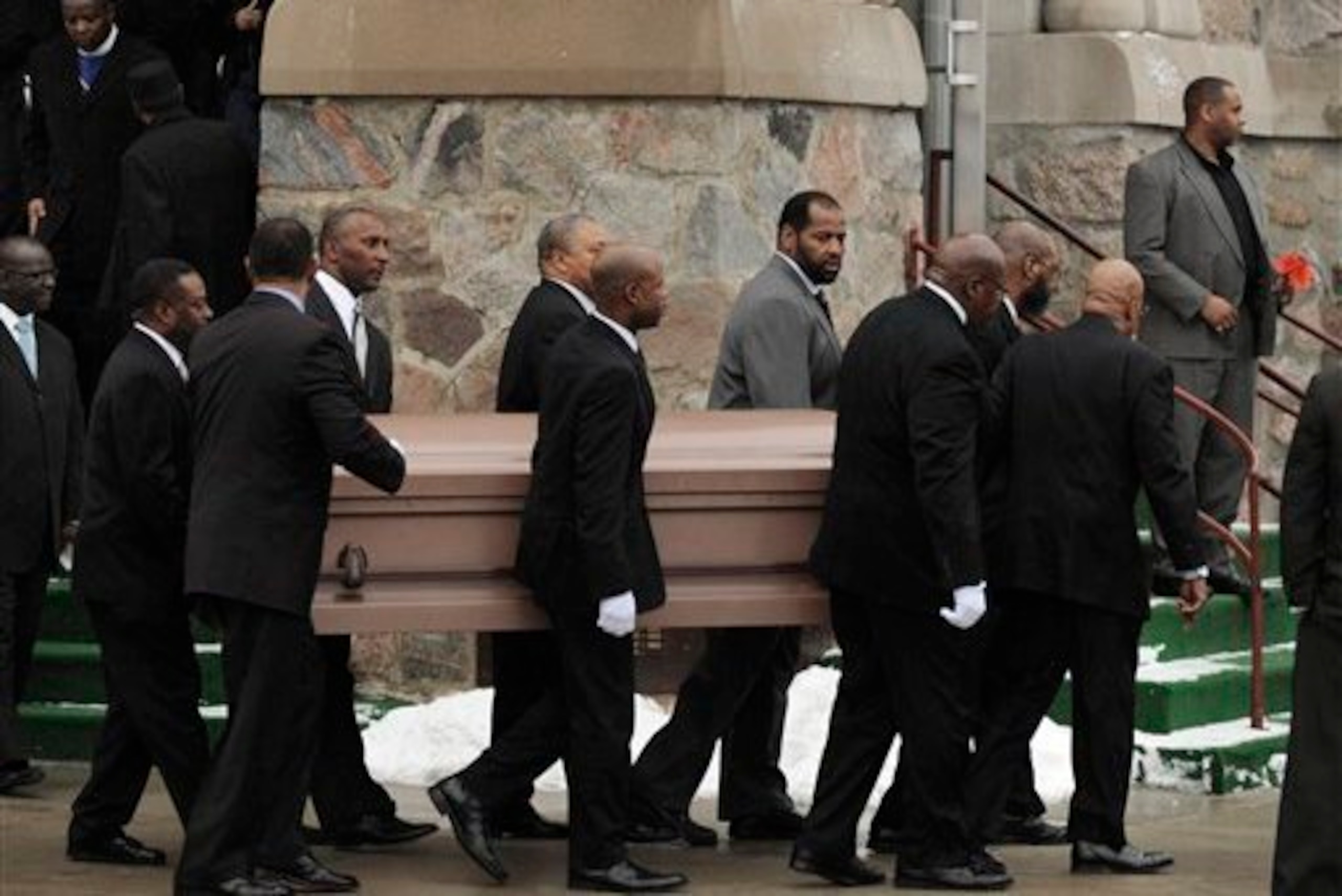
It all ended with a bullet in the heart.
The aftermath has been difficult in many ways for Tregg; his brothers, Chase and Brock; his sister, Taylor; and their mother, Alicia.
When Tregg shows his ID at an airport or at a bar, he braces for the question.
"Are you related to Dave Duerson?"
If he's not in the mood to talk, he says yes, puts his head down and walks. Other times, a conversation starts. Some express condolences or tell him how they enjoyed watching his dad play. Some have asked about his father killing himself.
"Since my dad died, our last name is much more famous than it had been," Tregg said. "You would never have fathomed that."
The name is about to become more famous.
In the movie Concussion, opening this week, Dave Duerson is played by Adewale Akinnuoye-Agbaje. The movie mostly is about pathologist Bennet Omalu, played by Will Smith, and his quest to uncover the effects of brain trauma. Duerson's story is a subplot.
Tregg and Alicia attended a private advance screening of the movie, which includes a scene depicting the final moments of Dave's life. "Difficult to watch," Tregg said.
Neither appreciates how Dave was portrayed.
"They show him being hostile to Andre Waters [another former NFL player who committed suicide] and the doctor, Bennet Omalu," Tregg said. "They made him look like a villain. He didn't even meet them or have conversations with them. A lot of it was fabricated. They made him interact with people he didn't interact with to keep the story going. Somebody who doesn't know his story can't tell you who he was, what he stood for."
Said Alicia, "He wasn't that kind of person. He was a caring, loving guy."
Dave's survivors feel blindsided by the movie. They were never consulted about Dave's story or asked for permission to tell it.
"To think they can accurately capture who my father was on screen without talking to people closest to him is insulting and laughable," said Tregg, a wealth adviser for J.P. Morgan. "It shows a complete lack of respect to my father and my family. They are going to blatantly profit off my family's tragedy."
The movie will focus more attention on head injuries and football safety, and for that, the Duersons are grateful.
"Anything to bring awareness is good," Alicia said. "The more we talk about it, the better."
For Dave's life and death to have an impact on the future of the sport, it needs a voice. Tregg, 30, has become an advocate for football safety in the hope he can help the next generations. To him, being silent would be a waste of the resources, connections and knowledge at his disposal.
Because of rule changes, treatment changes and technology, Tregg believes football is a safer game than it was when his father played. But he wants to see it safer still.
He recently joined the Illinois High School Association's Advisory Council on Player Safety, which reviews policies and makes recommendations. He testified at a hearing for an Illinois bill that made it more difficult for high school players to re-enter games after suffering concussions. The Duerson Foundation, which Tregg helps manage, has donated 200 concussion test kits to Chicago public schools. He has given speeches on suicide prevention and mental health issues associated with injuries.
Tregg played football at Notre Dame like his father and feels fortunate to have no lingering issues despite suffering a couple of concussions. If he has a son, he probably will not allow him to play football, he said.
Understandably, Tregg fears Dave Duerson's grandson and football might be a dangerous mix.
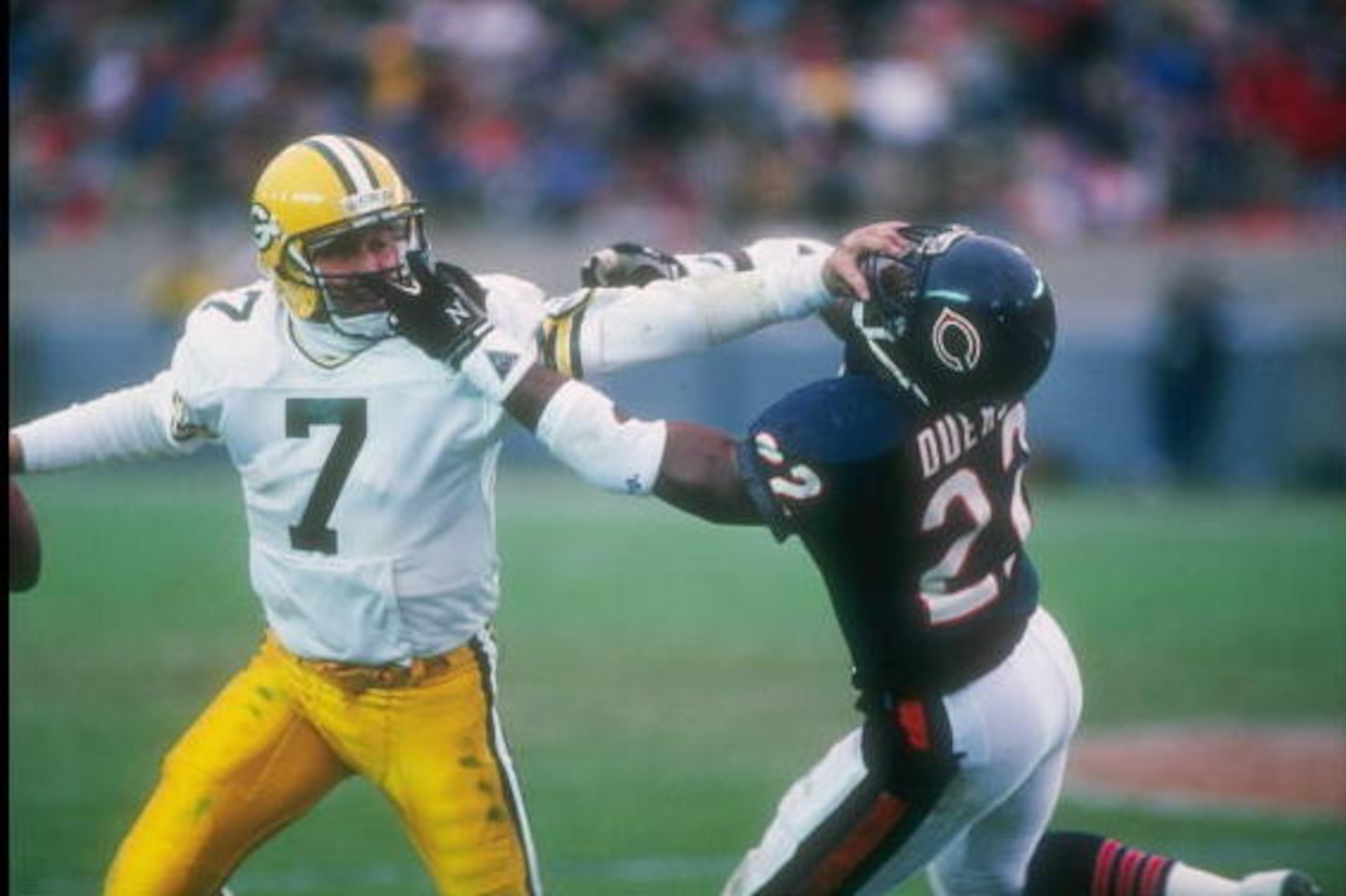
Football has given the Duersons so much. And it has taken so much. How should they feel about it?
"I'm pretty conflicted with football right now," Tregg said. "It's at a point now where I'm not sure how safe you can make the game, regardless of rule changes and new technology."
Dave's remains were cremated. His resting spot is in the Cedar Grove Cemetery mausoleum on the Notre Dame campus. Tregg usually stops by to pay his respects during an annual trip to South Bend, Indiana, to watch the Fighting Irish play on a fall afternoon. It can be a day of strong emotions.
He didn't go this year. He finds himself less interested in football these days, drifting from the sport. This season, he has watched just two games on TV. There are other things he would rather do.
Alicia wrote off football once the Boston University researchers who studied Dave's brain concluded he had developed CTE, the degenerative disease linked to many former football players that compromises neural activity.
"Right then, I was done with it," she said.
But the diagnosis gave the Duerson family some clarity. When their suspicions were confirmed, they stopped wondering why Dave would grow so desperate to take his life.
"It gave us a sense of peace about why he left," said Alicia, to whom Dave professed his love in a text before he took his life. "His brain was not functional. Dave never ran from problems. He looked head on at problems; he solved them, conquered them. This was one he couldn't work through and solve and be who he really was."
CTE can be detected only after death. Dave's dying wish—conveyed through multiple texts and notes—was for his brain to be studied by researchers at Boston University as part of a larger study of former NFL players.
Alicia wishes the NFL had been more forthcoming with players of her former husband's generation.
"I don't hate the NFL," she said. "I hate that they were not truthful to the players, and that they didn't let them decide to play or not. I wish he had the knowledge that's out there today. Knowing Dave like I do, he still would have played. Would he have played so many years? Probably not. He would have used it to get a start in life and moved on. He had so many other things he wanted to accomplish in life."
If time is going to heal this wound, the Duersons would like to know when.
They are part of the proposed billion-dollar concussion settlement with the NFL, which is in the U.S. Court of Appeals. As long as the proceedings are ongoing, and they could be ongoing for a while, the family will not feel closure.
"I think it's going to be a long time before it's over," Tregg said. "It's difficult to see an ending here. We need to live our lives as if this is not going to happen. So it takes an emotional toll."
Tregg thinks of his father often. Whenever he sees an athlete wearing a No. 22 jersey, his father comes to mind.
Taylor was 15 when she lost her father. She's 20 now. Navigating her teens without Dave was hard on her and Alicia. Brock, 26, probably took it harder than anyone. He still is searching for answers. He talks about it often, but only with his family.
"We all went through formative years, early adult years without him," Tregg said. "They were years when a father can give some pretty amazing advice. To have that void there is difficult. It's difficult when you have life accomplishments and he's not there, like my sister's graduation from high school. The holidays are tough."
Thanksgiving time is especially tough. Dave's birthday was November 28, so Thanksgiving usually was a double celebration in the Duerson home. Friends and family visited from out of town. Dave also lost his mother a day before Thanksgiving. He buried his father on his birthday another year.
Chase, 31, was on leave from the Army this Thanksgiving. It was comforting to have the family together.
The burgundy leather Bible that sits on Tregg's television stand is worn on the outside and marked up on the inside. There are highlighted verses and stickers in it. His father noted his favorite passages. Psalms 23 and 24, Ecclesiastes 5, Mark 5:25, Luke 8:45, Romans 8:28. On and on his notes go.
Some of the passages are noted for their personal applications. Next to Psalm 38, Dave wrote, "DAVID'S PRAYER FOR FORGIVENESS." Next to Luke, Chapter 7, he wrote, "The Selling of Fair Oaks."
Dave left a note for his children by the Bible. He wanted them to know Isaiah 40:31 was his favorite verse.
It reads, "But those who trust in the Lord will find new strength. They will soar high on wings like eagles. They will run and not grow weary. They will walk and not faint."
Some days, Tregg needs to read those words.
Dan Pompei covers the NFL for Bleacher Report.
.jpg?w=2560 "Colts Patriots Football")





.jpg?w=2560 "Picks for Irish, Every Week 1 Game 🔮")