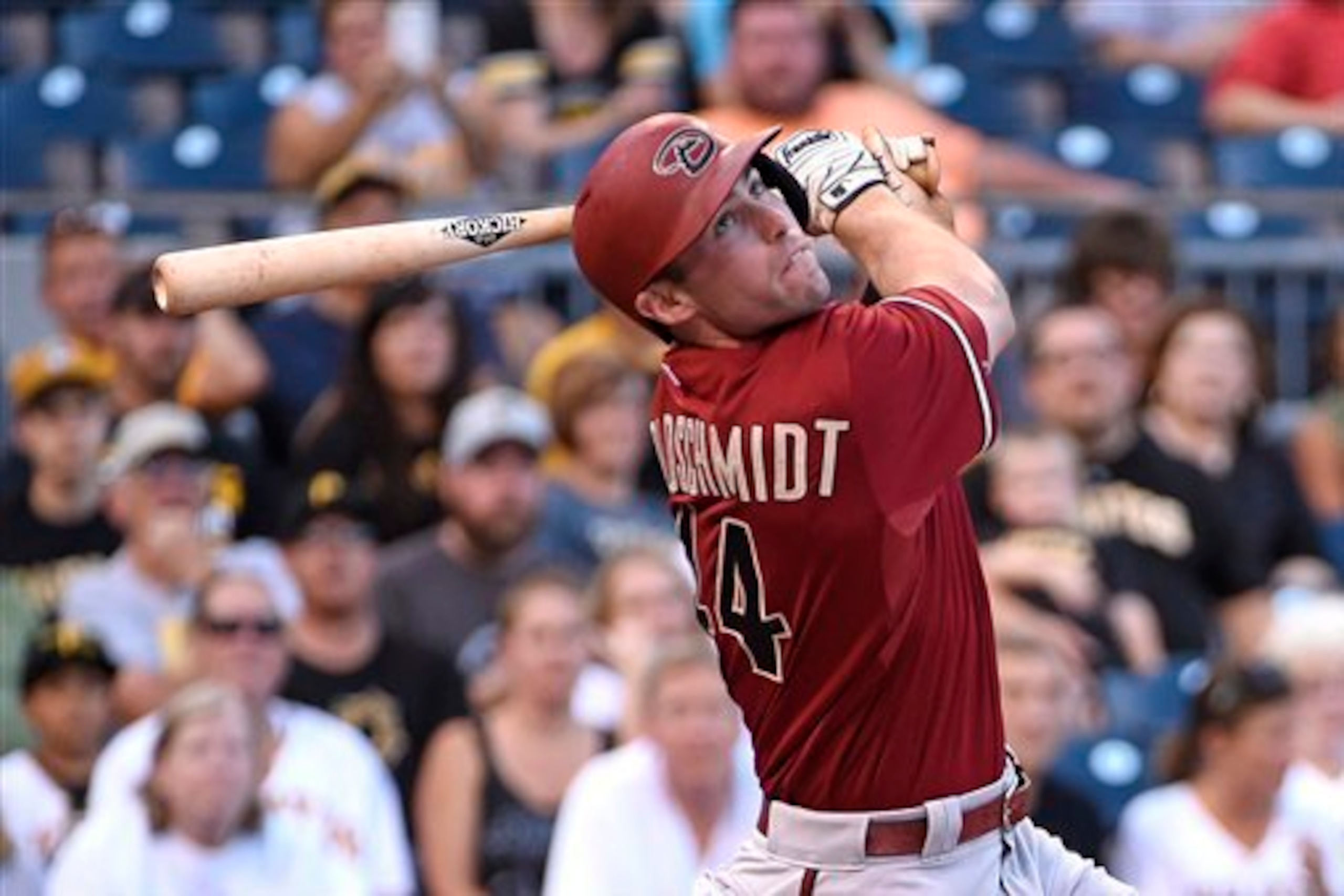

B/R MLB 300: Ranking the Top 25 First Basemen
After getting the ball rolling behind the dish, the B/R MLB 300 now moves up 90 feet to the most power-packed position in baseball: first base.
We analyzed many first basemen, but the final list consists of 25 names, with each player rated on a scoring system that adds up to 100.
First, there are 35 points for hitting. Our focus is on how well each player is equipped to hit for average and get on base. This means looking not only at how they hit the ball, but also at how consistently they make contact and whether they have the discipline to draw walks.
Then, there are 40 points for power. We concentrated on how well each player collects extra-base hits, which means looking at how often they put the ball in the air—ground balls don't tend to go for extra-base hits, after all—how hard they hit it and how much of the field they can use for power.
Next, there are 10 points for baserunning. It's not a priority for first basemen, but we'll still look at whether they can steal bases as well as whether they're capable of running the bases aggressively.
Lastly, there are 15 points for defense. It's a small category because first base is the least important defensive position on the diamond, but we'll still look at what the defensive metrics say and at how each player has earned his rating.
As for how the scoring works, it's important to note that a number in the middle is meant to denote average, not failing. For example, a 20 out of 40 for power means the player has merely average power, whereas 15 out of 40 means clearly below average and 25 out of 40 means clearly above average.
Before we begin, here's an important reminder that while we're using what's happened in 2015 as a foundation for the scores, this list projects performance for the 2016 season. Players are evaluated based on the staying power of each category with progression, decline and past luck in mind—creating a different ranking system than simply judging where each player stands today.
You may now start the show.
Notes on Sources, Stats and Links
1 of 26
Putting together these rankings did require some good, old-fashioned video scouting. But for the most part, it involved digging deep into baseball's treasure chest of statistics.
The primary sources for these statistics were Baseball-Reference.com, FanGraphs, Brooks Baseball, Baseball Prospectus and Baseball Savant. The various links you'll find throughout will take you to relevant data on these sites. Clicking on them is not mandatory. They're there for your pleasure.
As for the stats referenced within, there are some you may not be familiar with. These would be:
- Soft% and Hard%: These show the rate at which a hitter makes soft and hard contact, allowing for a picture of how well each hitter barrels up the ball. The average first baseman has a 16.5 Soft% and 33.2 Hard%.
- ISO: This is isolated power, which is a measure of raw power. It's what you get when you take slugging percentage and subtract batting average. The average first baseman is at .185.
- XBT%: This is extra bases taken percentage, which looks at how often runners advance more than one base on a single or more than two bases on a double. It's not perfect, but it works as a go-to measurement for baserunning aggressiveness. At least among the players on this list, the average first base XBT% is around 35.
- UZR and DRS: Ultimate zone rating and defensive runs saved are the two most prominent defensive metrics and will be our guiding stars for defensive scores. Regardless of the position, zero represents league average.
The averages noted above are reference points that will often come in handy throughout the piece, but know that they're among many plucked from FanGraphs to help inform the rankings.
Lastly, bear in mind that the season is still ongoing. With final edits taking place the day before publication, the statistics within are accurate through play on Monday, September 21.
Now then. Let's get started.
25. Ben Paulsen, Colorado Rockies
2 of 26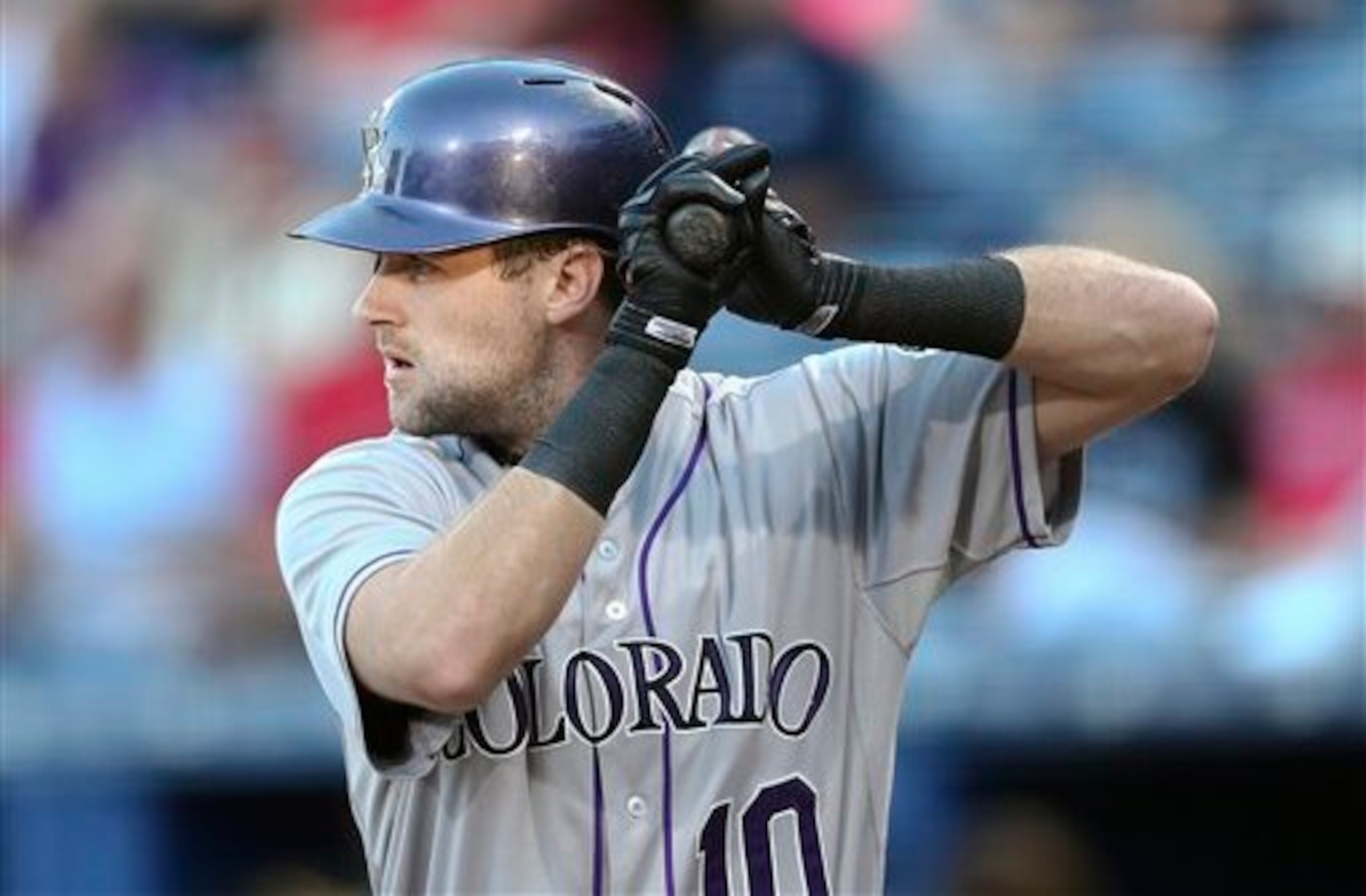
Hitting
You'll find Ben Paulsen hitting .271 with a .320 OBP, making him roughly an average-ish hitter relative to the first base norms of .259 and .336. But that's without considering his bad platoon split and mediocre hitting away from Coors Field. And with an approach that features a whole lot of aggression and a whole lot of whiffs, improvements on either front will be hard to come by. The only bright side is that Paulsen is OK when he hits the ball, showing off decent bat control and a non-terrible ability to make hard contact.
Power
Paulsen has clubbed 10 homers with a .182 ISO, putting him right at the first base average of around .185. But not surprisingly, his power takes a considerable dive when the Rockies hit the road. He also doesn't put himself in a position to pad his power stats. Only about 55 percent of his batted balls go in the air, compared to 57 for the average first baseman. And whereas your average first baseman has a Hard% rate around 45 on fly balls and around 50 on line drives, Paulsen is below those numbers on both fronts at 40.3 and 48.0, respectively.
Baserunning
Like a lot of first basemen, Paulsen isn't about the stolen-base life. He's attempted only two steals in 2015 and failed on both. What he does have, however, is a 57 XBT% that jumps off the page. That dwarfs this list's average of about 35 percent. It's admittedly hard to look at a figure like that and take it at face value, but it'll work as a sign of solid baserunning to come.
Defense
With zero DRS and a 1.7 UZR, the metrics are convinced that Paulsen has been merely adequate around the bag. That's likely an accurate depiction of his defense, as he appears to have neither great hands nor particularly great range away from the bag. But relative to some of the league's lesser first basemen, he at least offers good footwork and a feel for the position. He's not good, but not bad, either.
Total
Nobody's going to mistake Paulsen for a truly special talent at first base anytime soon, as he doesn't do any one thing particularly well. He does, however, offer talents that are at least playable on offense and defense.
24. Justin Smoak, Toronto Blue Jays
3 of 26
Hitting
Justin Smoak is once again struggling with consistency to the tune of a .226 average and .301 OBP. His biggest issues include a whiff habit against slow stuff and an inability to hit breaking balls, as well as heavy pull habit with a Pull% near 50. But Smoak has redeeming qualities. Those include a patient approach and a sharp eye, as well as Soft% and Hard% rates that easily top the first base norms. Smoak still isn't a good hitter, but he's at least turned himself into a more reliable hitter than usual.
Power
Smoak is finally translating his raw power into in-game power with 16 homers and a .244 ISO. This may seem like a bit much, given that barely only about 57 percent of his batted balls go in the air, but he hasn't been wasting those. His Hard% rate on fly balls is a solid 47.0, and his Hard% on line drives is even better at 55.8. As a bonus, he's finally discovered some power to the opposite field as a left-handed batter. The only shame, really, is that his power isn't featured on an everyday basis.
Baserunning
Smoak has just two stolen bases in his career, the last of which came in 2012. He hasn't tried any this year and has posted an XBT% of 7. That makes him the only player on this list with an XBT% in the single digits, which is...well, not good. Not good at all.
Defense
Unlike in recent years, Smoak's DRS (3) and UZR (1.2) show the metrics are fine with his defense at first base. As always, his hands qualify as his best asset, affording him no issues on easy plays and allowing him to save his fellow infielders with timely scoops. It's therefore too bad he has limited range around the bag, mainly because he's often slow to react. Still, as a semi-part-time first baseman, he'll do.
Total
By now, it's pretty clear Smoak isn't going to become the superstar he was once promised to become. Nonetheless, he has turned a corner in 2015. His bat isn't as full of holes as it usually is, and there's plenty to like about how he's been driving the ball.

23. Mike Napoli, Texas Rangers
4 of 26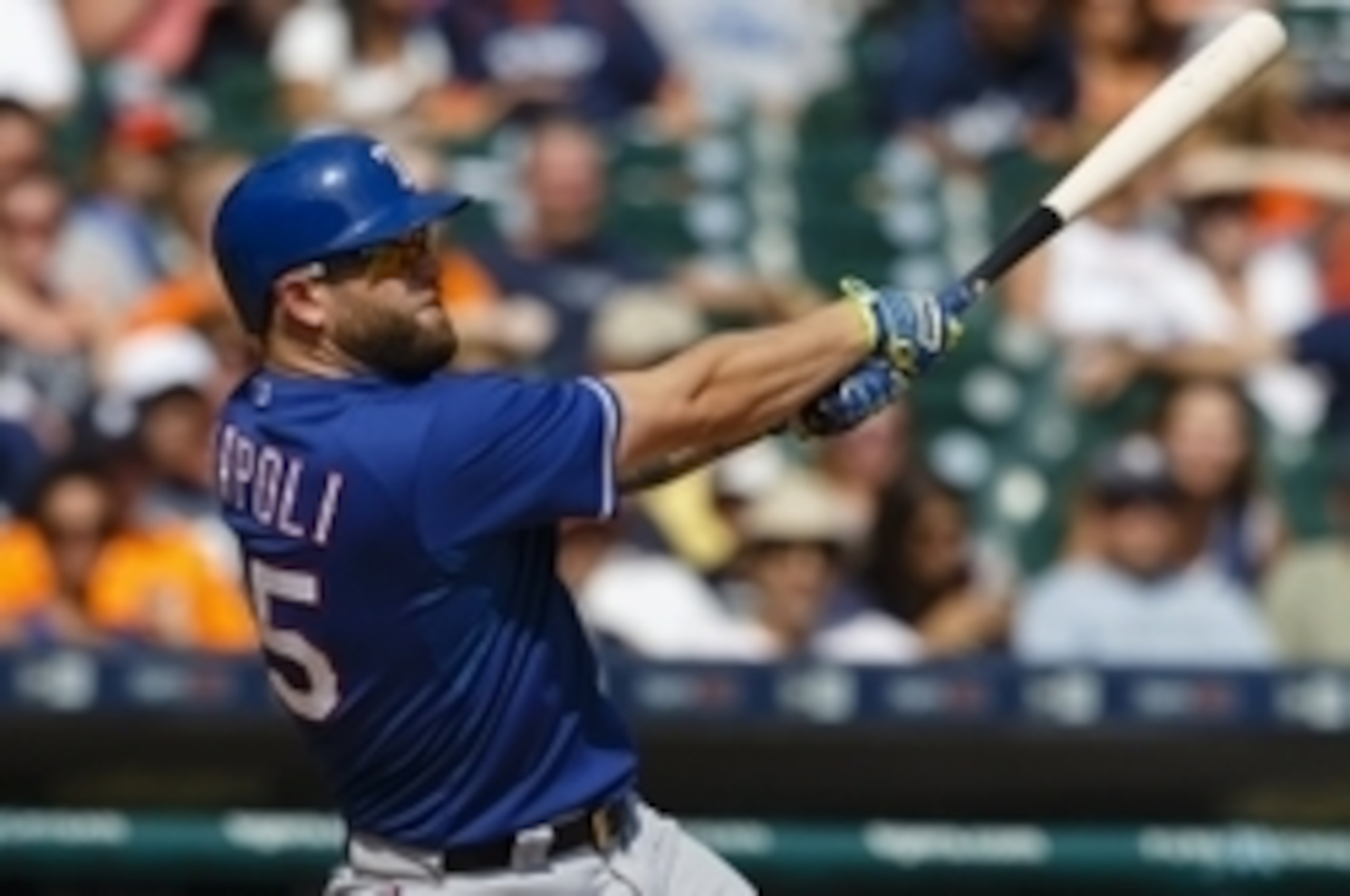
Hitting
Mike Napoli has rebounded enough from a slow start to find himself hitting .219 with a .318 OBP, but both of those figures are still well below par by first base standards. His major malfunction has been his sudden inability to hit right-handers, mainly because they've dominated him on pitches away. A seemingly related note is how Napoli simply hasn't barreled up the ball like his usual self. On the bright side, at least he still boasts an excellent batting eye and a decent ability to use the whole field.
Power
It feels like Napoli hasn't hit for any power at all this year, so seeing him with 17 homers and a decent enough .186 ISO is actually a welcome sight. The problems he's had driving the ball have limited him in the power department, as his Hard% rates on fly balls and line drives are below par at 36.5 and 44.4, respectively. But he's at least giving himself plenty of chances with a fly-ball rate over 40 percent, and he can still give the ball a ride to all parts of the yard. His power is fading but it isn't dead yet.
Baserunning
With three steals in five tries, Napoli is once again showing he can still sneak a stolen base if you let him. But his approaching 34th birthday casts some doubt on whether he can continue that, and then there's his modest 27 XBT%. That's easily below this list's average of 35 percent and likely isn't about to rebound at his age.
Defense
Napoli seemed to be dragging his offensive struggles into the field earlier in the year, but the metrics show he's rebounded nicely with two DRS and 4.3 UZR. This is no surprise, as it's been evident for three years that he has solid hands and a good feel for first base despite all his seasons spent behind the dish. And thanks to surprisingly quick feet, he also has better range than your typical first baseman.
Total
Thanks to solid power production and defense at first base, Napoli's 2015 season hasn't been the disaster it seemed to be while he was in Boston. But because serious question marks have sprung up around his bat, his status as a reliable everyday first baseman is very much in limbo.
22. Mark Canha, Oakland Athletics
5 of 26
Hitting
Mark Canha is hitting .255 with a .313 OBP, with only the former passing as solid. This is not to say he doesn't have good qualities, as his include solid discipline and a more consistent contact habit than most first basemen. But he doesn't hit the ball harder than your typical first baseman and offers pitchers some exploitable holes. Anybody can beat him with an inside fastball, and he might as well curl up in a ball against breaking stuff from left-handers. So, don't expect too much from him going forward.
Power
Canha has shown off passable power with 15 home runs and a .172 ISO. The biggest favor he does himself is hitting roughly 40 percent fly balls, giving himself plenty of chances to hit the ball over the fence. But with a Hard% rate of just 34.2 on those fly balls, he's not in the habit of threatening the fences. And as his spray chart shows, a likely unsustainable cluster of well-hit balls down the left field line skews his power production. His current power showing is probably his ceiling, not his floor.
Baserunning
Canha boasts more athleticism than your typical first baseman, so it's not surprising to see him doing well in this department. He's among the better base-stealing first basemen with seven steals in nine tries, and he's outperforming his position peers on this list with a 44 XBT%. And despite all that aggression, he hasn't run into an out on the basepaths. Good stuff.
Defense
With one DRS and 0.0 UZR, Canha isn't doing much to impress the metrics with his work at first base. But these figures exaggerate. Canha has hands and instincts that are just fine for the position, with his only real shortcoming being limited range away from the bag. And though he doesn't excel out there, he gets a bonus point for being able to play competently in left field.
Total
One gets the sense that Canha has overachieved at the dish in his first season of regular action, particularly where his power is concerned. But his bat is at least playable, and it comes with strong baserunning and capable defense.
21. Pedro Alvarez, Pittsburgh Pirates
6 of 26
Hitting
With a .243 average and .313 OBP, Pedro Alvarez is pretty much right where he was last year. This is not a good thing. For while Alvarez can still hit fastballs fine and generally crush anything he puts in play, that's about the extent of his skill set. His approach features neither good discipline nor a consistent contact habit, he can't hit anything that's not fast and he's still a pull hitter who's now developed a ground-ball tendency. By now, it's clear that a roughly .240/.310 hitter is all he can be.
Power
As always, power remains Alvarez's redeeming quality. After a down year in 2014, he's rebounded nicely with 25 homers and a .224 ISO. That he's done this despite hitting over 50 percent of his batted balls on the ground is a testament to his raw power, which has produced Hard% rates over 50 on both fly balls and line drives. And though he's primarily a pull hitter, no part of the yard is safe. As much as he struggles with consistency, he still packs real 25-30 homer power.
Baserunning
Alvarez was a surprise base-stealing gem in 2014 with eight swipes in 11 tries, but he's come back down to earth in 2015. He's stolen only two bags in two tries. He's also posted an 18 XBT% that's well below his career norm and far below this list's average of 35 percent. Somebody must have slipped him a memo that first basemen are station-to-station runners and forgot to add an "optional" disclaimer to it.
Defense
After all the issues he had at the hot corner in 2014, a move across the diamond seemed like exactly what Alvarez needed. Apparently not. The metrics make a case for him as baseball's worst defensive first baseman with a minus-13 DRS and a minus-12.1 UZR. He has seemingly gotten more comfortable at the position with time but still lacks an acceptable feel for first base, and his astonishing amount of errors point to a case of the yips that's apparently still there. So yeah. He needs more work.
Total
Due to his inconsistent hitting and downright poor defense at first base, Alvarez is barely worth playing. It's a good thing, then, that he still offers more than enough power to earn his keep as a regular.
20. Joe Mauer, Minnesota Twins
7 of 26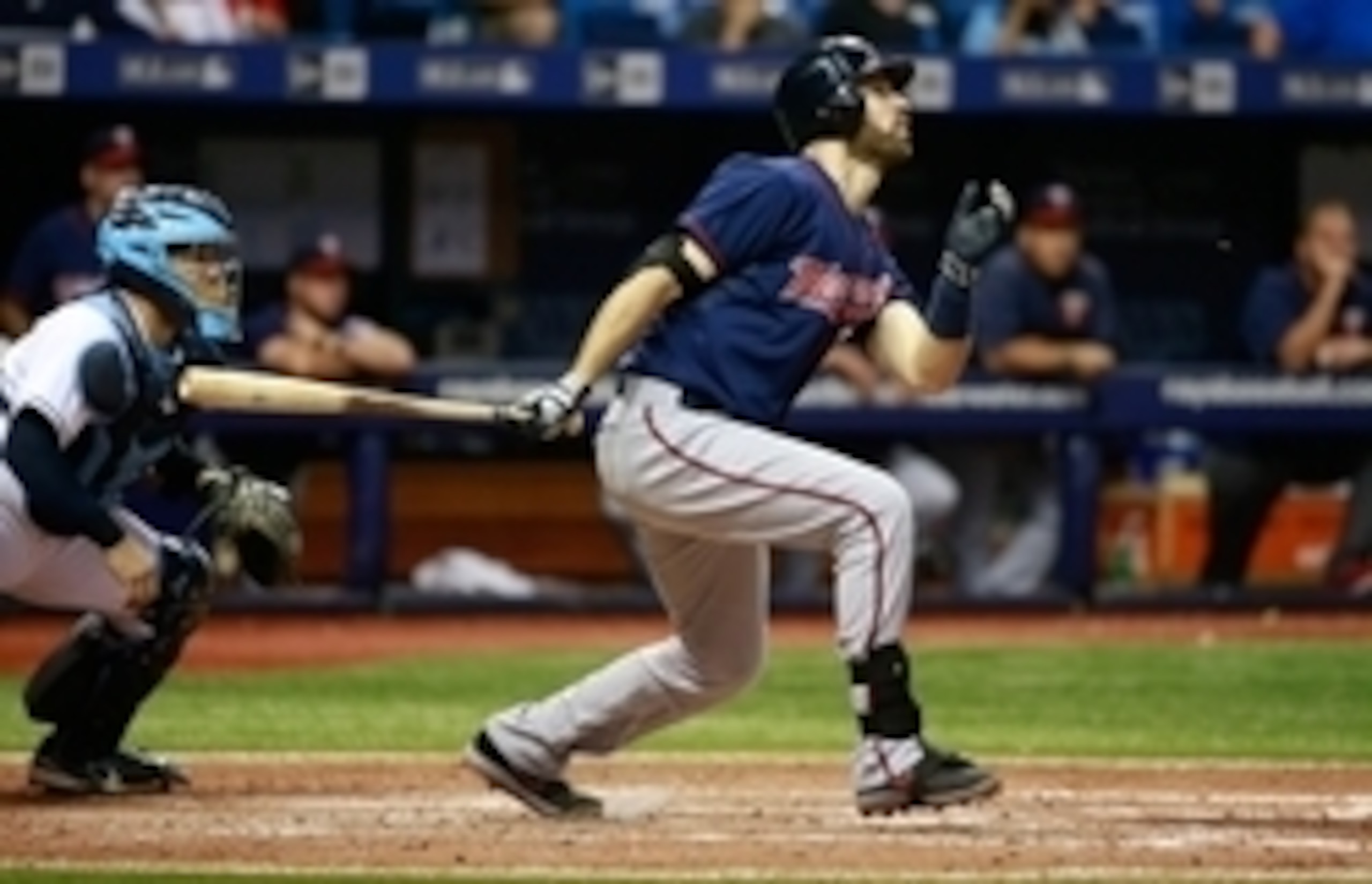
Hitting
After taking a step back in 2014, Joe Mauer has continued to look less like his vintage self, with just a .266 average and .339 OBP in 2015. His strengths haven't changed, as he still offers an ideal combination of patience, discipline, consistent contact and good bat control. But the escalating rate at which he's seeing pitches in the zone is rendering his discipline moot, which shows that pitchers no longer fear him. Until he starts hitting the ball as squarely as his fellow first basemen, that won't change.
Power
Mauer's nine homers and .109 ISO represent a small improvement from where he was in 2014. He does well to make the most of his fly balls, with a Hard% rate of 46.7, and he's clearly shown he can still knock the ball over the left fielder's head. He has limited power beyond left field, however, and the fact that over 55 percent of his batted balls are on the ground means there's a huge limitation on his power potential. By first base standards, his power is sorely lacking.
Baserunning
Mauer has a longstanding, well-deserved reputation as a smart, crafty baserunner, but it's not applying so well to his 2015 season. His days of stealing bases appear done, as he has just one steal in two attempts. And though his 36 XBT% is solid, it's below his career standard and not quite big enough to make up for the five outs he's run into on the basepaths.
Defense
The metrics were split on whether Mauer's transition to first base was successful last year. He's doing better this season with a one DRS and 1.7 UZR, signifying he's at least average. That's probably the best compliment his first base defense can be given. For though Mauer has the hands to play first base, he's limited by a slow first step and instincts that don't seem to have evolved much over the last two years.
Total
Watch Mauer play, and you'll still see a hitter who can put on a clinic with the bat. But without the ability to make consistent hard contact, run the bases well or play particularly strong defense, that's about the extent of his impact these days.
19. Yonder Alonso, San Diego Padres
8 of 26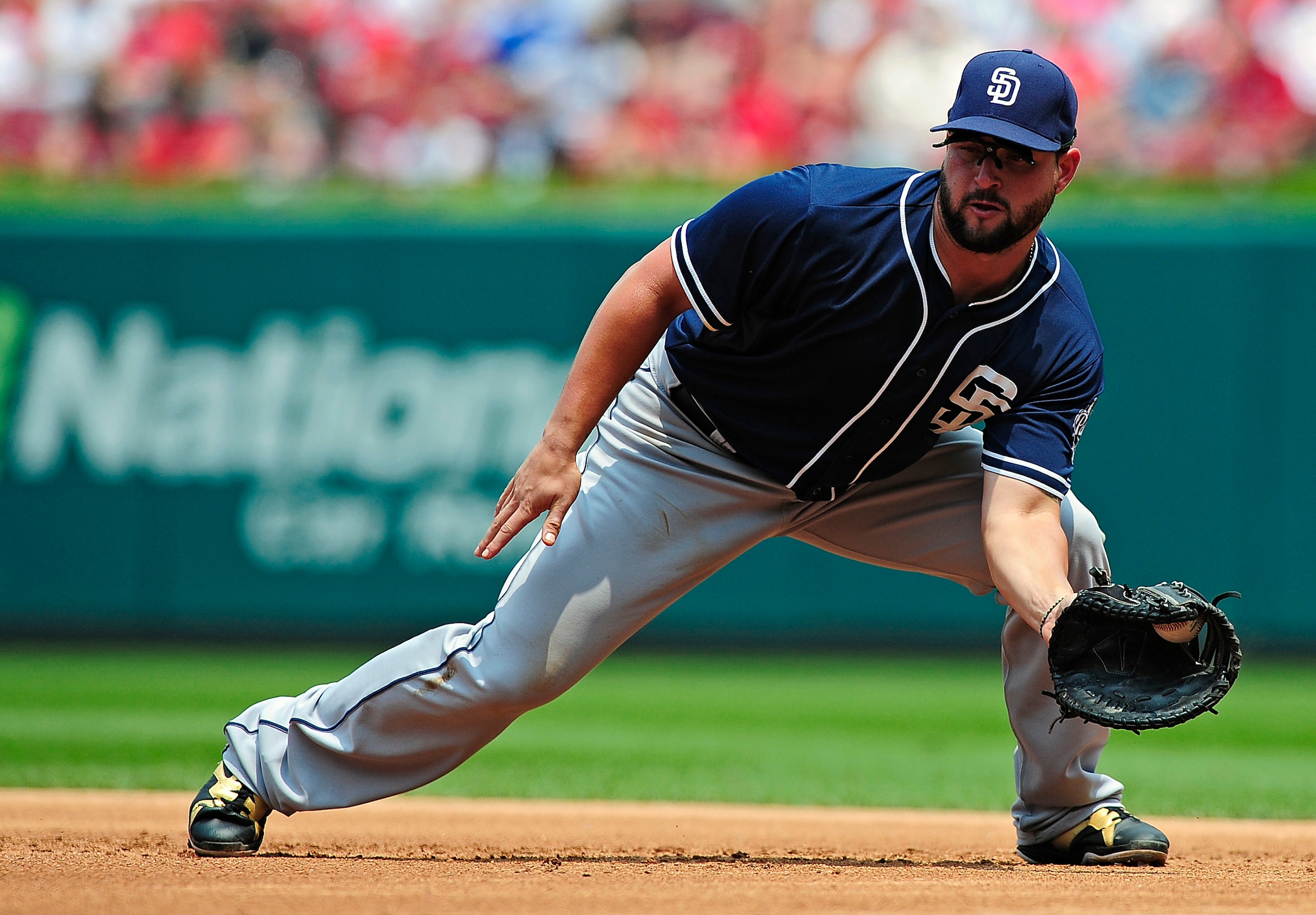
Hitting
Yonder Alonso's season is finished thanks to a back injury, but the good news is that he wrapped up with a rock-solid .282 average and .361 OBP. He's much like Joe Mauer in that he offers an ideal mix of patience, discipline and contact to go with good bat control, with one welcome difference being that Alonso doesn't hit as many ground balls. But like Mauer, Alonso has an issue making hard contact regularly. And though he keeps his swings confined to the zone, he doesn't cover it that well. So, what Alonso did this season represents his ceiling more so than his floor.
Power
Alonso also finished with five homers and a .099 ISO; uninspiring numbers, to be sure. His main issue is that he just doesn't drive the ball. Only about 50 percent of his batted balls are in the air, and he doesn't excel at punishing fly balls (30.2) or line drives (46.5) with Hard% rates below par on both. To boot, it doesn't help that his main power alley is up the middle. All told, he's a strong candidate for the "Least Powerful First Baseman" award, and his growing list of injuries won't help him gain any power.
Baserunning
Alonso stole six bases apiece in 2013 and 2014 but has succeeded in only two of seven tries in 2015. And though he has an above-par 43 XBT%, he's still struggling to erase his track record of running into outs on the basepaths. That he's aggressive at all is appreciated, but he needs to work on his efficiency.
Defense
The metrics have tended to approve of Alonso's defense, but it's once again DRS (9) that thought especially highly of it this season. And it's easy to see where DRS is coming from. Alonso's hands allow him to be one of MLB's leading scoop artists, and his strong instincts help translate into some range (not a lot) around the bag. He's not a flashy defender but is plenty capable.
Total
Alonso is likely the least powerful everyday first baseman in the majors, which is a problem that stands out relative to the demands of the position. As such, it's a good thing he's a capable hitter and defender.
18. Carlos Santana, Cleveland Indians
9 of 26
Hitting
Carlos Santana's .236 average and .362 OBP show that he hasn't changed much from last year, which is a good thing as far as the latter number is concerned. Santana is an OBP merchant for the reason you'd expect: He's extremely choosy with his swings, which leads to plenty of walks. And as a bonus, he doesn't often swing and miss. But because he also has spotty plate coverage, an extreme pull habit and an increasingly pedestrian ability to make hard contact, his technique only gets him so far.
Power
Though Santana's approach hasn't changed much, his mere 16 homers and .153 ISO show that his power has—and not in a good way. That he's hitting over 55 percent of his batted balls in the air is fine, but far too many are going to waste. His Hard% rate on fly balls is easily below average at 30.4, and his Hard% on line drives is only average at 50.0. About the only thing saving him this year is his pull habit, which has especially helped him as a left-handed batter. One wants to believe he can bounce back from this, but it's not like he's just plain been unlucky this year.
Baserunning
After teasing as much in 2014, Santana has broken out as a base stealer with 11 swipes in 12 tries this year. He also has an acceptable 35 XBT%, with only a handful of outs on the basepaths. All this has a "too good to be true" vibe about it, but it does highlight that Santana has quietly turned into a solid baserunner in recent years.
Defense
This is Santana's first full season as a regular first baseman, and the metrics are split on how it's going. Where UZR puts him at a solid 1.4, DRS puts him well below par at minus-four. It's the latter that has the right idea. Though Santana's hands are good enough for first base, he can only make so much of an impact due to slow reactions limiting his range.
Total
Thanks to one of the most selective approaches you're going to find anywhere, Santana is still earning his keep as an OBP merchant. He also runs the bases well. But look past that, and all you see is suddenly subpar power and defense, making him a pedestrian overall product.
17. Mitch Moreland, Texas Rangers
10 of 26
Hitting
Mitch Moreland finds himself hitting .280 with a .330 OBP, the latter of which puts him in average-ish territory by first base standards. It doesn't help that the Rangers haven't platooned him as much as they should have, as his poor platoon split still stands. In addition, he has an approach that isn't particularly disciplined or good at producing regular contact. He also has more of a pull habit than he's had in years past. It's a good thing, then, that he still specializes in making loud contact. That habit can make up for a lot, and it's certainly Exhibit A for why he should play exclusively against right-handers.
Power
After an injury-marred 2014, Moreland's power has returned to where it was in 2013, to the tune of 22 homers and a .210 ISO. Only about 55 percent of his batted balls have been in the air, but he's made good use of the fly balls he hits. His Hard% rate on those is a solid 46.9. And though Moreland favors his pull side, his power stroke applies to all fields. He has but one limitation: Because he's not a sure thing to be an everyday player going forward, his power potential only goes so high.
Baserunning
Moreland has stolen his first base since 2012 this year, and he's posted a 38 XBT% that's quite a way above his career rate of 30. But while this is solid stuff by first base standards, it's likely to prove an outlier rather than the start of something. Beyond the fact that Moreland is outperforming his career norms, he's also now on the wrong side of 30.
Defense
The metrics have tended to be fine with Moreland's defense, which is once again the case this year with three DRS and a 5.3 UZR. His hands have always been fine for the position, and he affords himself decent range away from the bag with quick reactions at the crack of the bat. He's well short of being one of the game's top defenders at first base, but he's pretty good for a semi-full-time player.
Total
Moreland is the kind of player who's hard to get excited about, but he's also one you'd be glad to have on your side. He can do plenty of damage against right-handed pitching and plays a solid first base.
16. Ryan Zimmerman, Washington Nationals
11 of 26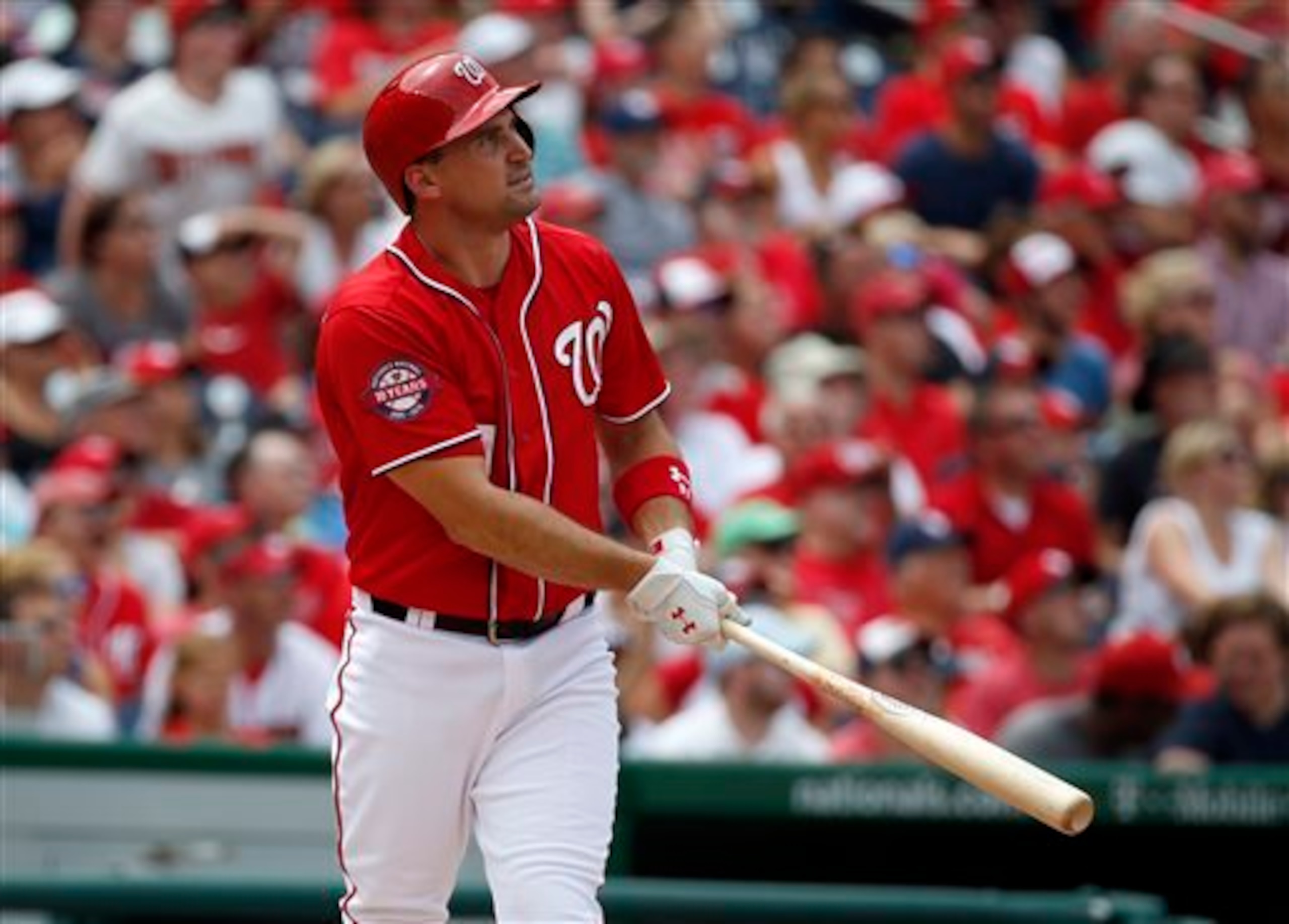
Hitting
If Ryan Zimmerman's season is over because of his oblique injury, it will have ended with him hitting an unspectacular .249 with a .308 OBP. Howeverm the torrid numbers he's put up in the second half are a better reflection of what he can do. He may have spotty plate coverage, but he's a hitter who blends patience with good discipline and doesn't whiff often. And when he does make contact, he's the rare type of hitter who can handle strong bat control while making consistent loud contact. In reality, Zimmerman's a career .283/.349 hitter who hasn't changed much.
Power
After getting off to a slow start, Zimmerman's power come on strong enough to produce 16 homers and a .217 ISO. He may have hit barely over 50 percent of his batted balls in the air, but he didn't waste those. His Hard% rates on fly balls and line drives both finished over 50, and he showed he was still capable of using the whole field for power. This leaves but one question: With his track record of injuries continuing to grow, how much longer can Zimmerman's power remain truly explosive?
Baserunning
Speaking of injuries, Zimmerman went through a particularly nasty one earlier this year as he battled a bout of plantar fasciitis. In light of that and the fact that he's now on the wrong side of 30, it's no surprise that he attempted only one steal and authored an unspectacular 34 XBT%. Given the circumstances, this is likely the start of a baserunning downswing.
Defense
This was Zimmerman's first year as a full-time first baseman, and the metrics (minus-1 DRS, minus-2.2 UZR) don't think it went so well. The hands that served him well at third base seem to be fine at first base, and he seems to have a grasp on the footwork for the position. But his general feel for it needs maturing, and it's still an adventure every time he throws the ball.
Total
Zimmerman has his limitations, chief among them his inability to stay healthy and his work-in-progress defense at first base. But the good news is that he's not done yet as a hitter, as he still has the goods to get on base and hit for power.
15. Adam Lind, Milwaukee Brewers
12 of 26
Hitting
With a .291 average and a .375 OBP, Adam Lind's performance jumps off the page. The big catch, of course, is that he's basically unplayable against left-handed pitching, making him a true platoon player. And though he gets his share of walks, he's not more disciplined than the typical first baseman. But lest we bash him too much, we should also point out that he offers right-handers no safe quarter within the zone, while his consistent contact habit includes hits to all fields and plenty of loud contact. A platoon player he may be, but he's a darn good one.
Power
After a down 2014, Lind's power has come back with a vengeance to the tune of 20 homers and a .195 ISO. He only hits about 55 percent of his batted balls in the air but makes the most of the balls he does hit aloft. His Hard% on fly balls is an impressive 48.9, and his Hard% rate on line drives is even better at 55.4. Also, he's been using the whole field for power. It's a shame he's not quite an everyday player, or he could otherwise make the grade as a legit threat for 25-30 homers.
Baserunning
Lind hasn't attempted a stolen base since 2013, a trend that could have lasting power now that he's 32 years old. He's also seen his XBT% fall from over 48 to just 33, which is just a tick below this list's average. At his age, that might be the first step down of many.
Defense
Lind's move to the National League has required him to play first base more regularly, and both metrics (4 DRS, 3.3 UZR) think this has been a good thing for him. This is likely overstating how much better he's gotten, as his hands still appear merely adequate, while his lack of quickness results in limited range away from the bag. But the metrics do reflect how he's played a largely mistake-free first base, which is worth something.
Total
Lind is a platoon first baseman all the way, so there's only so much of an impact he can make. But with a strong approach to hitting and dangerous power, he has a place among the game's more prominent platoon players.
14. Albert Pujols, Los Angeles Angels
13 of 26
Hitting
A brutal second half has left Albert Pujols with a .236 average and .299 OBP. His approach still features a solid mix of discipline and contact, and he still hits the ball as hard as the next first baseman. Thus, the good news. But his plate coverage is still getting spottier with time, and it's getting harder to ignore his declining bat speed. That's most evident in his performance against inside heat, which is another thing that's getting worse every year. He's not terrible, but he can no longer be mistaken for a good hitter.
Power
This is where Pujols' renaissance has really taken place, as his 35 homers and .223 ISO mark a welcome return to form in the power department. This is mainly due to his embracing the fly-ball lifestyle with a fly-ball rate over 40 percent, and his spray chart confirms he's made the most of his pull habit. The big catch, however, is that Pujols has a Hard% rate under 40 on his fly balls at 38.4. What we're seeing is therefore more along the lines of a flare-up than a true return to form, so be careful about trusting it.
Baserunning
Pujols may be 35 and more rickety than he used to be, but he's hardly been a corpse on the bases this year. He's swiped four bags in seven tries and has posted a better XBT% than most first basemen, with a 41 percent mark. Still, skepticism is warranted. He's only getting older, and his recent foot troubles are reminders that his lower half can't take the grind as well as it used to.
Defense
The metrics have long liked Pujols' defense at first base, and they still do, to the tune of four DRS and a 3.2 UZR. He plays low-risk defense, as he combines good hands with a feel for the position bolstered by years of experience to create a total package that features few mistakes. But because he no longer has the spring in his step he once did, he's limited in the range department. He's still a good defender, but his days of flashy glove work are likely over.
Total
Pujols was one of the season's great comeback stories for the majority of 2015, but the passing of time has revealed that his decline from true greatness is still ongoing. Most notably, he's fallen pretty far from his perch as the game's best hitter. But with plenty of power and a good glove still working for him, he hasn't fallen from the ranks of the league's top first basemen just yet.
13. Lucas Duda, New York Mets
14 of 26
Hitting
Lucas Duda finds himself hitting .240 with a .346 OBP, both of which are just OK by first base standards. His potential is limited by default, as his insistence on being such an extreme fly-ball hitter means he's going to have to live with consistent easy outs. He's also continued to hit below standard on anything that's not a fastball of some sort. Still, Duda affords himself a solid foundation thanks to his strong patience and discipline, and he's among first base's hardest hitters. As such, he does enough to get by.
Power
It took some time for Duda's power to show up in 2015, but you can now find him with 22 homers and a .218 ISO. He hits 70 percent of his batted balls in the air and manages Hard% rates on fly balls and line drives in the 40-50 range. His one big limitation is that his power is only truly explosive to his pull side. But despite that, he's done enough to show that last year's 30-homer outburst was no fluke. Duda's game is decidedly geared toward power. All he has to do is stay healthy.
Baserunning
You're certainly not going to mistake Duda for one of the position's faster runners. He's 0-for-2 stealing bases this year, and his 33 XBT% is below par by the position's standards. On the bright side, at least he's continuing a tradition of not running into many outs. After running into only three last year, he's run into only one this year. It's not worth much, but it's worth something.
Defense
This is Duda's second straight year of regular first base action, after previously being forced to make a mockery of himself in the outfield. The metrics say it's going well enough, giving him four DRS and a minus-0.5 UZR. It's easy to notice he's the league's leading pick artist, which speaks well of his hands. And though he may not run well, he's quicker around the bag than you'd expect. If anything, the metrics underrate his defense.
Total
Duda can only be so much of an OBP merchant thanks to the various limitations he has, but his patience and tendency toward hard-hit balls in the air allow him to save face as a true power threat. He's also better than he gets credit for on defense.
12. Freddie Freeman, Atlanta Braves
15 of 26
Hitting
Freddie Freeman's .277 average and .369 OBP put him right about where he usually is, which is a compliment. He has his limitations, including a whiff habit against off-speed stuff that he can't quite cure. He also doesn't have enough reach to handle pitches below the zone. But his strengths remain the same. He's the rare hitter who can balance aggression and discipline. In addition, he's a freakishly consistent line-drive machine who barrels the ball almost as well as any first baseman. The guy can hit.
Power
Despite missing some time this year, Freeman has still hit 16 homers with a .186 ISO. And as per usual, one wonders why he hasn't done better. He's still hitting over 60 percent of his batted balls in the air and is consistently hitting them with force, with Hard% rates near 50 on both his fly balls (49.1) and line drives (48.2). Rather than his performance, the real red flag here is the wrist injury Freeman suffered back in June. His power hasn't been the same since, which is something that could linger.
Baserunning
You don't necessarily see a fast runner when you look at Freeman, but his long strides make him deceptively quick. That generally translates to a few stolen bases every year and is doing so again with three steals in four tries this season. It's also his ticket to being aggressive, which he's doing this year to the tune of a 43 XBT%. He's short of being a great baserunner, but he's pretty good.
Defense
The metrics have generally approved of Freeman's defense in recent years, and the trend is holding with two DRS and a 4.4 UZR. His best assets are his hands, which are among the smoothest first base has to offer. He also has strong instincts that give him an excellent feel for the position. The only thing he really lacks is range, as there's a point where his instincts end and his subpar quickness begins.
Total
You can be forgiven if Atlanta's overwhelming mediocrity has led you to forget about Freeman, but he's still there and still good. Though his wrist injury raises questions about his power, he's still an excellent pure hitter and a strong baserunner and defender to boot.
11. Eric Hosmer, Kansas City Royals
16 of 26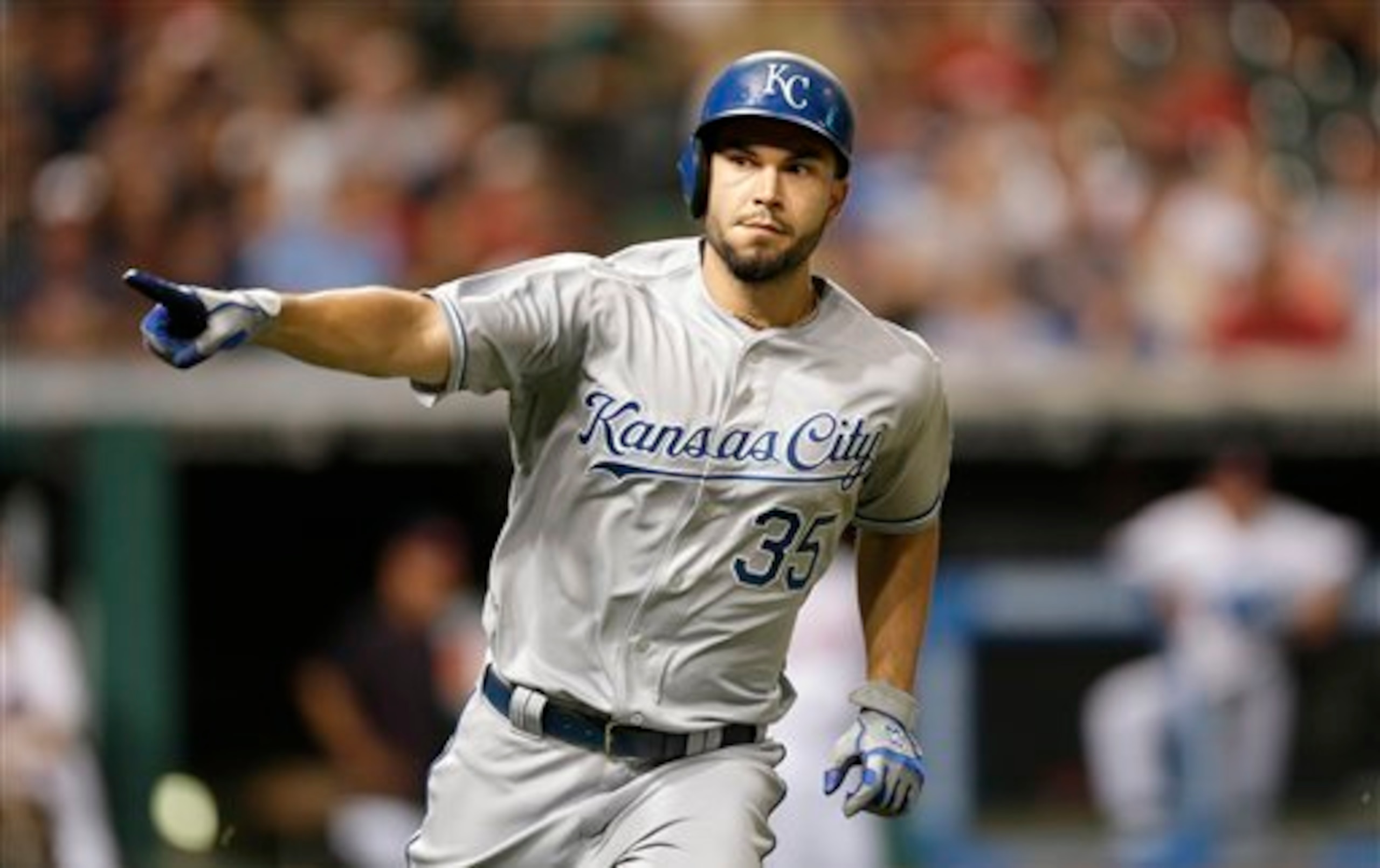
Hitting
After a rough 2014, Eric Hosmer has turned the clock back to 2013 by hitting .302 with a .365 OBP. His best assets are his strong plate coverage and a batted-ball profile that looks custom-designed for high-average hitting. He hits mostly line drives and ground balls, and he does so with good bat control and a strong ability to barrel the ball. But he has his limitations. He's not among the hardest-hitting first basemen, and his approach includes just a modest blend of discipline and consistent contact.
Power
It's still looking like Hosmer's power peaked in his rookie season in 2011 (19 home runs), as this year's 15 homers and a .150 ISO leave much to be desired for the position. Hitting the ball hard isn't the issue, as his Hard% rates on fly balls and line drives are solid at 44.4 and 53.3, respectively. But he's limited by the fact that under 50 percent of his batted balls go in the air, and by how he's an all-fields hitter who doesn't have explosive power to all fields. Power hitting just isn't his thing.
Baserunning
It looks like Hosmer's days of swiping double-digit bags are done, but he's far from being a station-to-station runner. His six steals in nine tries will do, and the 52 XBT% he's working on is the best of his career and a standout mark by the position's standards. The trade-off is that he will run into a few outs—six this year—but not enough to suggest his aggression should be tamped down.
Defense
The metrics are once again lukewarm on Hosmer's defense, as he boasts just two DRS and a 0.4 UZR. But these numbers don't do him justice. He has a strong pair of hands that's once again put him among the league's leading scoop artists, and he often saves Kansas City infielders from further bad throws with clever footwork around the bag. But for whatever reason, he does have trouble coming up with the proper footwork for good range away from the bag.
Total
The biggest knock against Hosmer is that he packs subpar power for a first baseman, which is a pretty big flaw relative to the demands of the position. It's a good thing he sports a quality bat and glove to go with good baserunning, allowing him to save par as an above-average regular.
10. Jose Abreu, Chicago White Sox
17 of 26
Hitting
After a breakout 2014, Jose Abreu has been humbled a bit to the tune of a .295 average and .353 OBP. Pitchers have been a bit more aggressive in attacking him with fastballs in the zone. They've also been more successful at exploiting his long swing with inside heat. But Abreu has actually improved in his own right. He's upped his discipline and cut down on his whiffs, all while maintaining strong bat control and his ability to hit the ball on the sweet spot. The dude can still hit.
Power
As much as it feels like Abreu's power has fallen far from 2014, his 29 homers and .222 ISO are still very impressive. He doesn't sell out for power, hitting short of 55 percent of his batted balls in the air, but he makes solid use of what he does hit aloft. His Hard% rates on fly balls and line drives fall in the high 40s, and he can still drive the ball from foul line to foul line. He might not make a run at 40 homers again, but at least 30 is pretty much a certainty with his power.
Baserunning
At 6'3" and 255 pounds, you're not going to mistake the hulking Abreu for a burner. We therefore shouldn't be surprised that he hasn't attempted a steal after trying four in 2014, and his 34 XBT% is only about average. And while that's not bad on its own, it would be better if it didn't come with the six outs Abreu has run into. He should try being a mere station-to-station runner next year.
Defense
The metrics think Abreu's defense has improved from where it was in 2014, but they're still not sold. DRS puts him at two, while UZR puts him at minus-0.7. The one thing he's gotten better at is scooping balls in the dirt, but that's a case of his hands going from "bad" to "playable." And because he's not exactly quick at the crack of the bat, he doesn't have a ton of range away from the bag.
Total
Abreu hasn't been the monstrous offensive presence he was in his Rookie of the Year season in 2014, and his subpar running and fielding make him a decidedly one-note player. But make no mistake: He's still the kind of hitter who would look right at home in the middle of any lineup.
9. Mark Teixeira, New York Yankees
18 of 26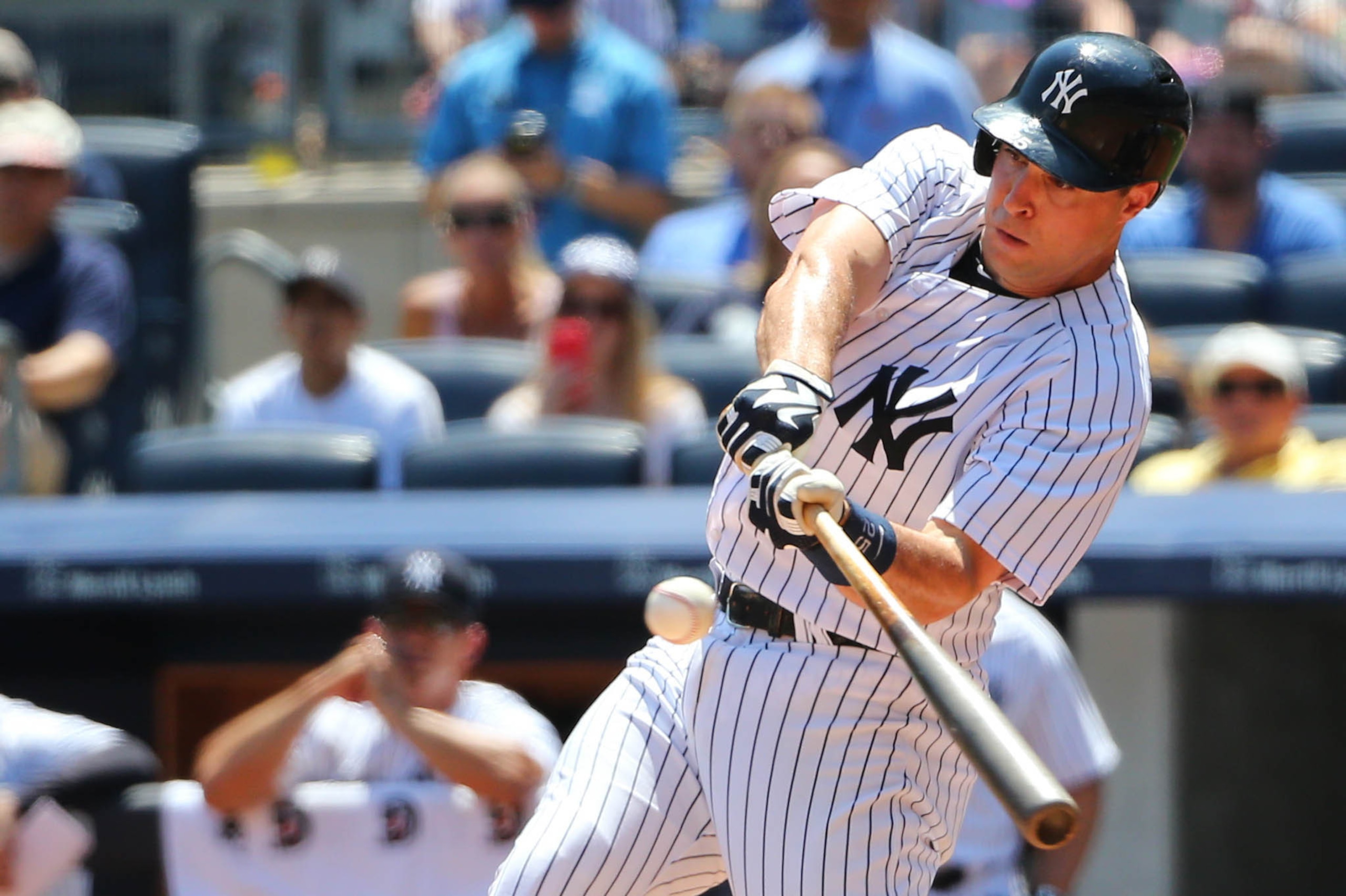
Hitting
Though Mark Teixeira's season ended early due to a fractured shin, his .255 average and .357 OBP were his best in years, proving that it was a darn good showing. He didn't do much differently but did get close to the level of extreme discipline he had back in his prime. He also made a lot of contact for a power-oriented hitter and continued to make regular loud contact. But lest anyone get too excited, Teixeira remained limited by his pull and fly-ball habits, as well as his ongoing struggle to hit anything slow.
Power
Teixeira returned to form here as well, hitting 31 homers and posting a career-high .293 ISO. This is what you get when you hit over 60 percent of your batted balls in the air and when you don't rely too heavily on your pull habit for home runs. As a left-handed batter, the whole field was in play for Teixeira. However, that he only had a 40.2 Hard% on fly balls shows that his power was more about volume than efficiency. And thanks to his broken leg, it's now been four years since his last full season. I wouldn't count on that trend changing, meaning his power potential will likely stay limited.
Baserunning
Though Teixeira managed to steal a couple of bases this year, it's hard to say his new diet and subsequent weight loss granted him any additional speed. He was still a slow runner, which is reflected best in his subpar 20 XBT%. And now that he's on the wrong side of 35 and coming off yet another leg injury, that number probably won't rise.
Defense
The metrics once again approved of Teixeira's defense with five DRS and a 0.1 UZR, but it's been a while since they considered him a truly superb defender. That's no surprise, as he no longer has the same explosive quickness that helped make him arguably the game's best defensive first baseman for so many years. However, he still moves better than most and still combines quality hands with excellent instincts for how to play first base.
Total
Teixeira ultimately failed to prove that his problem with injuries is behind him, but 2015 is going into the books as a success. He turned back the clock a bit with his approach and power, all while playing a characteristically strong first base.
8. Adrian Gonzalez, Los Angeles Dodgers
19 of 26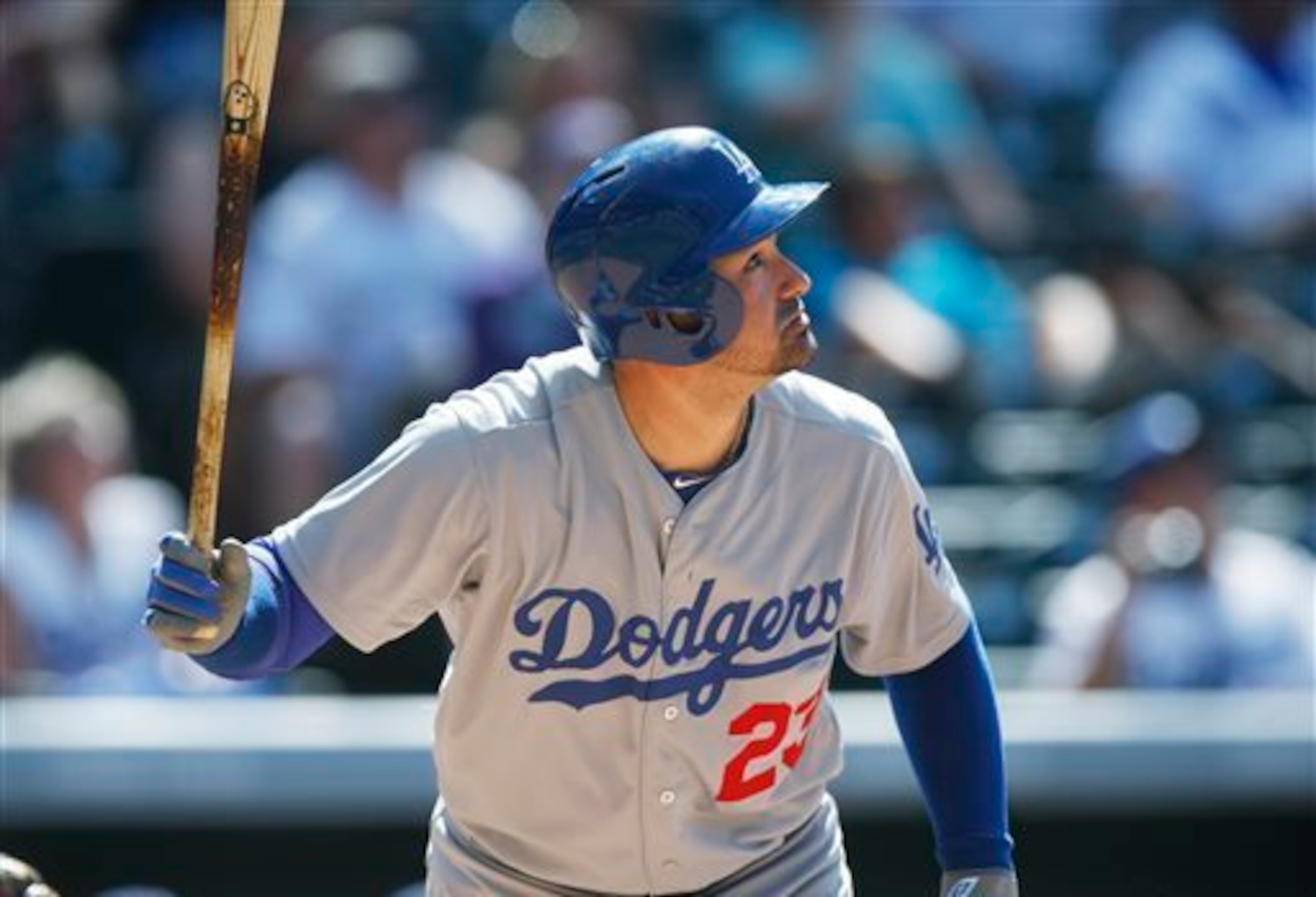
Hitting
It's nothing out of the ordinary to see Adrian Gonzalez hitting .281, but his .357 OBP is a bit of a throwback. More walks are mainly responsible for that, which points to how he's finally cut down on his late-career aggression. In the meantime, he's remained a hitter with strong plate coverage who specializes in hard contact. The only catches are that he's still not disciplined relative to his fellow first basemen, and he's still not the opposite-field specialist he used to be.
Power
Meanwhile, Gonzalez's power is also a bit of a throwback. He's hit 28 home runs with a .218 ISO, his best showing in years. It helps that he's put over 60 percent of his batted balls in the air, and he's made particularly good use of his fly balls with a Hard% rate of 51.2. But unlike earlier in his career, his power does get less explosive as you move farther beyond right field. He's not strictly a pull-power hitter, but that's still firmly entrenched as his MO.
Baserunning
It's no secret by now that Gonzalez is one of the slowest baserunners in MLB and arguably the slowest first base has to offer. Given that, it's a welcome sight that his XBT% isn't considerably worse than 24 percent. While that's not good, it goes to show that he does what he can with what he has.
Defense
Gonzalez is once again living up to his strong reputation, as the metrics give him 11 DRS and 3.7 UZR. The best things he has going for him are some of the best hands at the position. Those and his instincts around the bag explain why he's once again one of the league's leading pick artists. Where he's limited, however, is with his range. He has hands and instincts, but those don't make him any quicker.
Total
Gonzalez is still far from the player he was in his prime, but he's made enough adjustments to at least pass as an acceptable substitute. He still hits and does so for power, and he can still get it done around the bag.
7. Edwin Encarnacion, Toronto Blue Jays
20 of 26
Hitting
It took some time for Edwin Encarnacion to get going, but you can now find him with a par-for-the-course .278 average and .371 OBP. His best talents remain his blend of patience, discipline and consistent contact, as well as his ability to make plenty of hard contact. As always, he's especially dangerous on mistake pitches across the middle. However, his extreme pull and fly-ball habits still limit him, and his suddenly increased whiff rate on heaters could be his 32 years starting to show.
Power
It also took a while for Enarnacion's power to show up, but there he is with 34 homers and a .269 ISO. And certainly, you'd expect nothing less from a guy whose batted-ball profile includes over 50 percent pulled balls and over 60 percent fly balls and line drives. Given that, his spray chart looks like you'd expect. The only gripe, really, is that Encarnacion isn't terribly efficient when it comes to Hard% on fly balls, which is only 37.1. But despite that, you better believe he still has 35-homer power.
Baserunning
Encarnacion stole 13 bases in 2012, but it appears those days are done. He's stolen only two bases in four tries this year. And though his 40 XBT% is solid, it's a step below where he was at his 2012-2013 peak. Given his age, we have to figure another step down is coming.
Defense
Encarnacion has appeared more at designated hitter than first base this year, but he's played too much first base for us to feel comfortable putting him in the DH rankings. Not that his first base defense is any good, mind you, as the metrics (minus-1 DRS, 2.0 UZR) say he's adequate at best. That's putting it kindly, as he possesses neither great hands nor great range nor a particularly good feel for the position.
Total
Encarnacion is a one-note player, as he's only of use when he's in the batter's box. But when he's there, you're going to see a delightful combination of an advanced approach and some of the most explosive power in the majors.
6. Brandon Belt, San Francisco Giants
21 of 26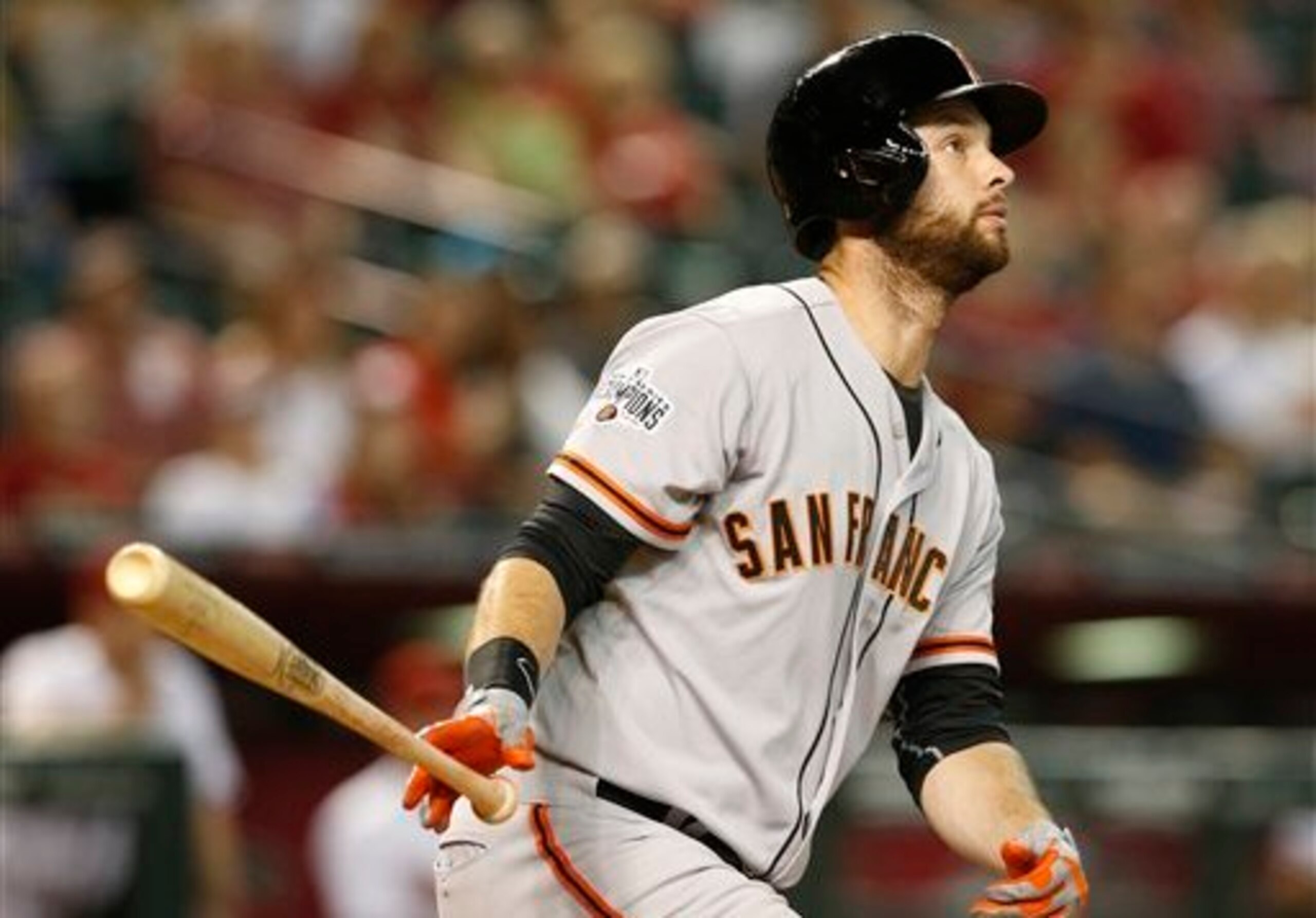
Hitting
After a largely lost 2014 season, Brandon Belt has rebounded to hit a rock-solid .280 with an equally fine .356 OBP. He still has his limitations, namely a bad swing-and-miss habit and an inability to hit anything up and away thanks to his stiff, uppercut swing. But he's also the rare hitter who can be aggressive without expanding the zone too often, and this season has seen him show off solid bat control while making hard contact at a rate that puts him among the position's elite. So, cheers.
Power
It looks as though Belt has had a modest power breakthrough with 18 homers and a .197 ISO, but those numbers undersell how well he's hit the ball. He's given himself plenty of chances to generate power by hitting darn near 70 percent of his batted balls in the air, and he's hit them well, with Hard% rates near 50 on both fly balls and line drives. He's also taken to barraging all parts of the yard. The only thing that's held him back is AT&T Park, which still hates power hitting.
Baserunning
Belt has always moved more quickly than the average first baseman and once again put that quickness to good use by stealing nine bags in 12 tries. That's not as impressive as the 12 steals he posted in 2012, but the trade-off is a better XBT% (37) and far fewer outs on the basepaths. He's no Paul Goldschmidt, but he's one of the best baserunners the position has to offer.
Defense
The metrics have always liked Belt, and this year they think he's among baseball's best defensive first basemen with an eight DRS and an 8.7 UZR. This is his reward for being the total package on defense, combining good hands with good instincts and quickness. The latter two skills give him more range than many first basemen, and the first means a largely mistake-free experience.
Total
Because he's not one of the big boppers at first base, Belt is easy to overlook. But his bat is more potent than many seem to realize, and he pads his value by being a better baserunner and defender than the majority of first basemen. There are few more well-rounded at the position than he is.
5. Chris Davis, Baltimore Orioles
22 of 26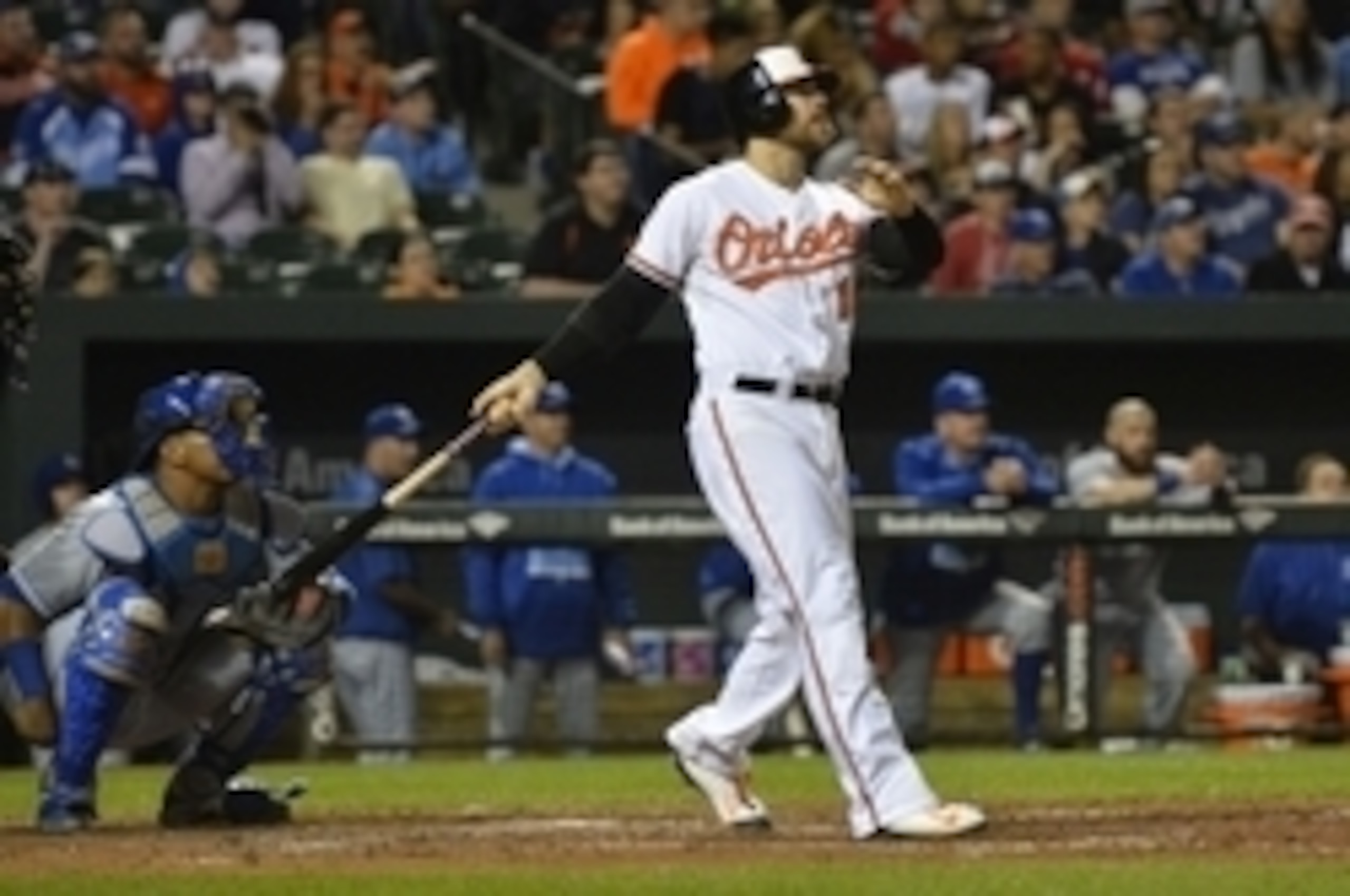
Hitting
After a horrid 2014, Chris Davis has bounced back with a vengeance to the tune of a .264 average and .360 OBP. He's still a big-time whiff artist who grants pitchers additional easy outs with his extreme fly-ball habit. But he's also corrected last year's platoon split, in part because he's been a wee bit more disciplined. And though his tendency for fly balls isn't the best thing for his batting average, there's no arguing with how well he hits the ball. No first baseman crushes it as much as Davis does.
Power
Like in 2013, Davis is again one of baseball's elite power hitters, with 43 home runs and a .294 ISO. That's what you can do when 70 percent of your batted balls go in the air, and when you make a habit of crushing fly balls in particular. Davis' Hard% rate on fly balls is a whopping 59.0. And though his power doesn't extend from foul line to foul line quite like it did in 2013, it still encompasses the whole field. All told, this is what a pure power hitter looks like.
Baserunning
Your stereotypical slugger is slow and lumbering, a reputation Davis is living up to a lot more this year than he did back in 2013. He's failed in three of his five steal attempts and is underperforming compared to the first base norm with just a 28 XBT%. Given that all this is in line with what he did last year, it sure looks like his aggressive baserunning back in 2013 was an outlier.
Defense
The metrics are once again on board with Davis' defense, giving him four DRS and a 2.7 UZR. His big limitation is that he has just OK hands, but he's able to downplay that with good footwork and a long reach around the bag. What he can't downplay as much is his modest range around the bag, which stems from modest first-step quickness.
Total
We may never see Davis have another year like he had in 2013, but he's come pretty close with his performance in 2015. His approach has been a lot tighter than it was last season, which has helped him make the most of his explosive raw power. But lest another confuse him for a one-note player, he also plays a pretty good first base.
4. Miguel Cabrera, Detroit Tigers
23 of 26
Hitting
Oh, that's just Miguel Cabrera doing his thing, hitting .337 with a .439 OBP. It looked for a minute there like he was getting too aggressive and whiff-happy, but that's no longer the case. And whether it's due to improved health or proper adjustments, good velocity can't beat him easily anymore. Meanwhile, he still does a good job of using the whole field with a well-balanced batted-ball profile and is among the hardest hitters first base has to offer. So, he's still himself. Huzzah.
Power
As for Cabrera's power, well, that part still isn't up to his former standards. His 17 homers and .200 ISO are certainly solid, and he's earned those. Despite hitting short of 60 percent of his batted balls in the air, his Hard% rates on fly balls and line drives are fine at 42.0 and 52.5, respectively. He's also continued to use the whole field for power. Age and injuries, however, have clearly rendered the 32-year-old's power less explosive than it once was, and are also making it tough for him to stay on the field. He's still a dangerous power hitter, but he's no longer among the elites.
Baserunning
Nobody's going to mistake Cabrera for the fastest runner. Any stolen bases he provides are bonuses, and this year he has a 31 XBT% that's below both his own career norm and the first base norm. That would be acceptable without any outs on the basepaths, but Cabrera still has a habit of running into those. And at his age, this is just how things are.
Defense
The metrics thought Cabrera's defense at first base was passable last year, and the same is pretty much true this season with his three DRS and minus-0.8 UZR. His lack of first-step quickness keeps his range at a minimum, and he doesn't possess particularly good hands. But it's fair to say his hands are at least good enough, and he does exhibit better instincts at first base than he did at the hot corner.
Total
There's little question that we're watching the downswing of Cabrera's career, which is most evident in how age and injuries have eroded his once-mighty power. But because that power is still pretty good and Cabrera is still arguably the game's best pure hitter, even the downswing of his career is a sight to behold.
3. Anthony Rizzo, Chicago Cubs
24 of 26
Hitting
Anthony Rizzo's .286 average and .397 OBP look a lot like the numbers he put up last year, which is obviously a good thing. Mind you, all the beanballs he's graciously accepted have inflated his OBP. In addition, his slight pull tendency and fly-ball habit limit his ability to hit for average. Nonetheless, Rizzo gets credit for remaining reasonably disciplined despite getting little to hit, and he's one of the best at making consistent contact while also making regular hard contact. The HBPs mislead a little, but not too much. Rizzo knows how to hit.
Power
Behold another area where Rizzo is replicating his 2014 season, as his 30 dingers and .244 ISO look awfully familiar. This is partially because he makes the most of both his pull and fly-ball habits, as he has little trouble bombarding straightaway right field. And though the catch is that his Hard% on fly balls is only 36.1, he grants himself quite a bit of doubles power by also being a strong line-drive hitter with a 51.9 Hard% on the liners he hits. His power is quite well-rounded.
Baserunning
Rizzo made it clear earlier in the year that he wanted to be a complete player, so he's stolen some bases this year. Exactly 17 in 23 tries, in fact, which goes to show that he is more athletic than your typical first baseman. But we should stop short of calling him a truly great baserunner. His XBT% is an unspectacular 36, and he's once again made a few too many outs on the basepaths for comfort. Between his caught-stealings and his other outs on the basepaths, those add up to 16.
Defense
With a seven DRS and a 1.0 UZR, the metrics are split on what to think of Rizzo's defense. But between the two, it's DRS that has the right idea. Rizzo has a good pair of hands that allow him to play a largely mistake-free first base while helping his fellow infielders with plenty of picks. He also has a bit more range than your typical first baseman, thanks to both quick reactions and his natural athleticism.
Total
Rizzo's big breakthrough in 2014 has proven to be the real deal. He's one of the most well-rounded hitters you're going to find in MLB and completes his value with solid work on the basepaths and on defense.
2. Joey Votto, Cincinnati Reds
25 of 26
Hitting
Oh, the beauty of Joey Votto with healthy legs. That's what we're being reminded of now, as he hits .313 with an absurd .462 OBP. The beating heart of those numbers is, as always, an approach that combines a freakishly acute eye for the strike zone and very few swings and misses. Votto is also maintaining his strong bat control, but the real difference this year is that a pair of healthy legs is allowing him to hit the ball a lot harder. Few first basemen are making better contact than he is. All in all, he's back.
Power
Because Votto does indeed have his legs under him again, it's no surprise to see his power has rebounded, to the tune of 28 homers and a .242 ISO. The main thing standing in the way of his power is that he doesn't sell out for it, hitting fewer than 60 percent of his batted balls in the air and posting a modest 44.6 Hard% rate on line drives. But he doesn't miss when he does want to drive the ball, posting a Hard% rate of 56.4 on fly balls and using the whole field for his attack. In this, too, he's back.
Baserunning
Votto's best baserunning days appear to be behind him, as he owns just a 24 XBT% and has run into a few too many outs on the basepaths. But with 11 steals in 14 tries, he's showing that he's still perfectly willing to steal a base if a pitcher sleeps on him. This will be a hard performance to repeat now that he's 32 years old, but it's yet another example of what he can do with healthy legs.
Defense
The metrics have long considered Votto a strong defender and continue to this year with five DRS and a 5.2 UZR. His status as one of the league's leading scoop artists seemingly has more to do with his instincts and anticipation than the quality of his hands, but those are still good talents to have. His legs' being healthy has also allowed him to regain some range away from the bag, allowing him to be pretty much the whole defensive package once again.
Total
Votto's injury-marred 2014 robbed baseball of one of its great players and made it easy to wonder if he would ever return. But return he has. Votto has shown this year that he's still arguably the game's best pure hitter. He's also shown he can still hit for power, run the bases and play defense with the best of 'em at first base.
1. Paul Goldschmidt, Arizona Diamondbacks
26 of 26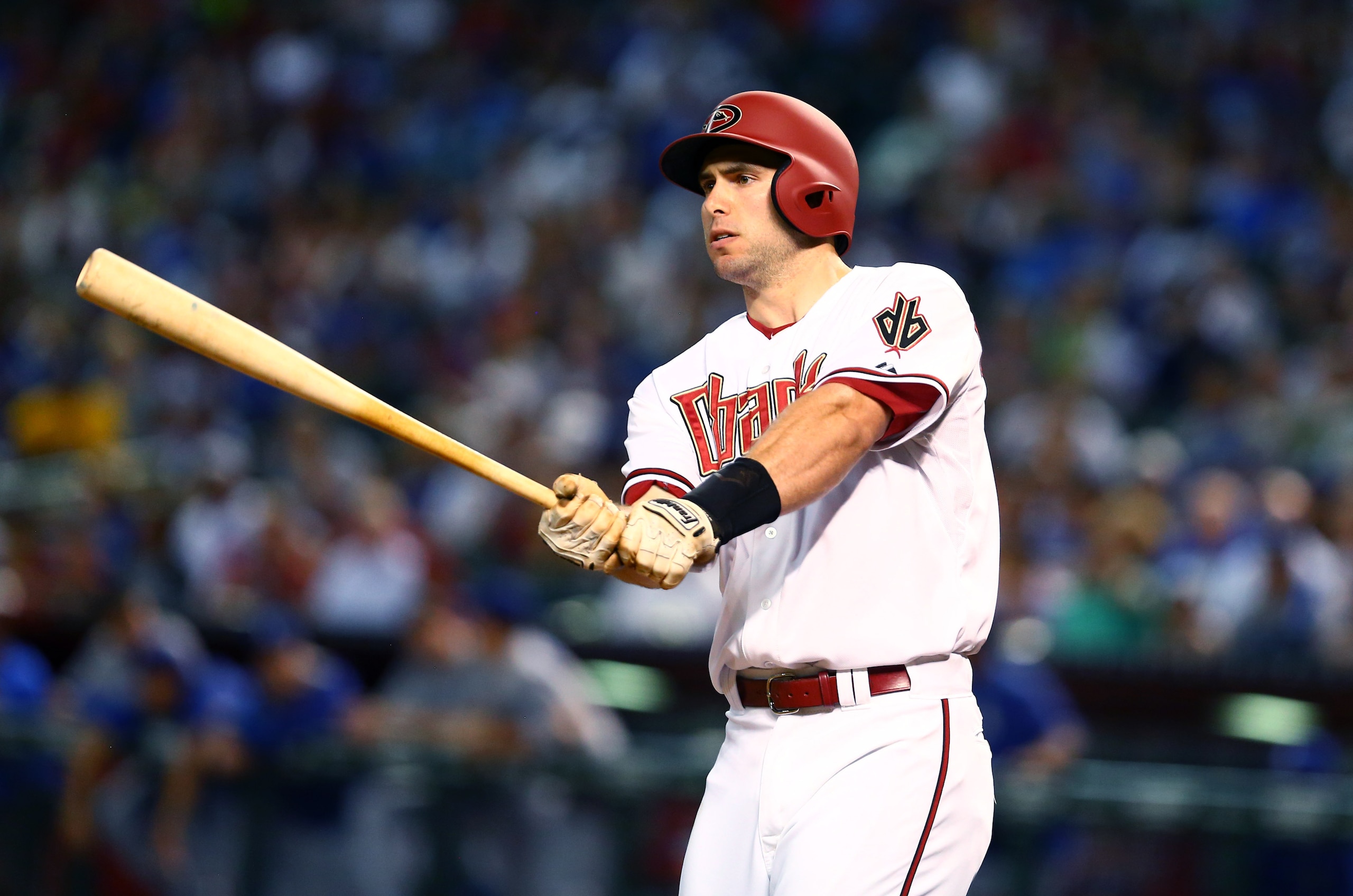
Hitting
Paul Goldschmidt has gone from being very good to being truly elite, hitting .316 with a .435 OBP. There are tangible reasons for this, chief among them career-best discipline and a batted-ball profile that includes a completely unpredictable spray pattern and superb levels of hard contact. Maybe more so than any other hitter, he perfectly blends brawn and brains. Really, the only complaint to make is that he gives pitchers a safe haven on the outer third, doing little in the way of swinging or producing out there.
Power
It's looking like Goldschmidt's power peaked back in 2013, but he's still doing very well with 29 homers and a .239 ISO. His immense raw power has no trouble showing up in games, as his Hard% rates on fly balls (52.9) and line drives (51.7) are both over 50 and he's perfectly capable of spraying well-hit fly balls all over the yard. Like above, there's only one gripe worth making: With less than 60 percent of his batted balls going in the air, Goldschmidt doesn't sell out for power.
Baserunning
While Goldschmidt is only arguably the best hitting first baseman, he's unquestionably the best baserunning first baseman. He's stolen 21 in 26 tries this season and further padded his value on the basepaths with a 45 XBT%. And even despite that extra aggressiveness, he's run into few outs. This is what you get when you combine natural athleticism with a heaping helping of good sense.
Defense
Both UZR (5.8) and DRS (16) approve of Goldschmidt's defense, but the latter is convinced that he's far and away the best defensive first baseman in MLB. That's a reasonable position. Goldschmidt has the hands to be an elite scoop artist, as well as the instincts, quick reactions and athleticism to cover as much or more ground than any other first baseman. So he's the total package here, too.
Total
One can't help but wonder if Goldschmidt would be the game's most celebrated superstar if he played somewhere other than Arizona. He's basically a modern-day Jeff Bagwell, combining an excellent feel for hitting with huge raw power and the athleticism to stand out on the basepaths and on defense. Without question, no first baseman does it all quite like him.

.jpg?w=2560 "Sports Leagues Ask for Protections from Bettors' Threats (AP)")

.jpg?w=2560 "Mahomes Reacts to Bettors Vid 😂")