
B/R MLB 300: Ranking the Top 20 Catchers
The B/R MLB 300 gets underway with the most important position on the diamond: catcher.
Being a backstop is so difficult to master, in fact, that our list consists of only 20 of the 300 overall players we'll be evaluating over the next few weeks. As for how this list of 20 came to be, we subjected each player to a scoring system that adds up to a total of 100 possible points.
First, there are 25 points for hitting. Our focus is on how well each player is equipped to hit for average and get on base. This means looking not only at how they hit the ball, but also at how consistently they make contact and whether they have the discipline to draw walks.
Then, there are 30 points for power. We concentrated on how well each player collects extra-base hits, which means looking at how often they put the ball in the air—ground balls don't tend to go for extra-base hits, after all—how hard they hit it and how much of the field they can use for power.
Next, there are five points for baserunning. It's not a priority for catchers, but we'll still look at whether they can steal bases as well as whether they're capable of running the bases aggressively.
Lastly, there are 40 points for defense. It's a big category because catcher is baseball's most important defensive position. And while a backstop's list of responsibilities are long, our focus is on receiving and throwing skills that can actually be quantified.
As for how the scoring works, a score in the middle is meant to denote average, not failing. For example, a 15 out of 30 for power means the player has merely average power, whereas 10 out of 30 is clearly below average and 20 out of 30 is above average. It's also important to note that if two or more players end up with the same final score, the priority goes to the player we'd choose if we had to pick.
Before we begin, here's an important reminder that while we're using what's happened in 2015 as a foundation for the scores, this list projects performance for the 2016 season. Players are evaluated based on the staying power of each category with progression, decline and past luck in mind—creating a different ranking system than simply judging where each player stands today.
You may now start the show.
Notes on Sources, Stats and Links
1 of 21
Putting together these rankings did require some good, old-fashioned video scouting. But for the most part, it involved digging deep into baseball's treasure chest of statistics.
The primary sources for these statistics were Baseball-Reference.com, FanGraphs, Brooks Baseball, Baseball Prospectus and Baseball Savant. The various links you'll find throughout will take you to relevant data on these sites. Clicking on them is not mandatory. They're there for your pleasure.
As for the stats referenced within, there are some you may not be familiar with. These would be:
- Soft% and Hard%: These show the rate at which a hitter makes soft and hard contact, allowing for a picture of how well each hitter barrels up the ball. The average catcher has an 18.2 Soft% and 27.9 Hard%.
- ISO: This is isolated power, which is a measure of raw power. It's what you get when you take slugging percentage and subtract batting average. The average catcher is right at .140.
- XBT%: This is extra bases taken percentage, which looks at how often runners advance more than one base on a single or more than two bases on a double. It's not perfect, but it works as a go-to measurement for baserunning aggressiveness. The average catcher's XBT% is around 30 percent.
- Z-Strike% and O-Strike%: These look at the percentage of times each catcher gets called strikes inside the zone (Z-Strike%) and outside the zone (O-Strike%). I calculated these for each player and for MLB catchers as a whole using data pulled from Baseball Savant. The average Z-Strike% is predictably high at 90.6, and the average O-Strike% is predictably low at 15.0.
The averages noted above are reference points that will often come in handy throughout the piece, but know that they're among many plucked from FanGraphs to help inform the rankings.
Lastly, bear in mind that the season is still ongoing. With final edits taking place the day before publication, the statistics within are accurate through play on Saturday, September 19.
Now then. Let's get started.
20. Jason Castro, Houston Astros
2 of 21
Hitting
Like in 2014, Jason Castro is making the average catcher (.239 AVG, .303 OBP) look good by hitting .219 with a .287 OBP. He does have a disciplined approach and an ability to make consistent hard contact. But he also suffers from a bad platoon split and swing-and-miss habit, particularly on anything that's even remotely up. Also, that he pulls darn near 50 percent of his balls in play (40 percent is average) makes him easy to defend. He's been doing this for two years now, so change likely isn't in order.
Power
Castro has rebounded from a disappointing 2014, as he's hit 11 homers and posted a .172 ISO. With just a 36.1 ground-ball percentage, almost 65 percent of his batted balls are in the air. And he hits them well with a 38.3 Hard% on fly balls and a 50.0 Hard% on line drives, numbers that compare well to the catcher averages of 40 and 42 percent. He's also capable of giving the ball a ride to both left and right field. All this leaves one red flag: With his history of leg injuries, it's hard to count on too much power.
Baserunning
You know those banged-up legs we just referenced? Well, they don't do Castro any favors here either. He was capable of circling the bases a couple of years ago, but not so much anymore. He has one stolen base attempt combined over the last two years, and his 30 XBT% puts him right at this list's average. As he inches closer to age 30, this is likely the 28-year-old's life on the bases for good.
Defense
Castro is one of few catchers who has become known for his outstanding framing skills, and they are indeed legit. With a 92.3 Z-Strike% and a 16.7 O-Strike%, he's terrific at securing strikes both in and out of the zone. It's too bad he's one of the worst catchers in the majors at blocking balls, and the 35 CS% he has this year oversells his throwing talent a little. He doesn't have much in the way of arm strength, and he's inconsistent at making up for that with his throwing mechanics.
Total
Castro's explosive breakthrough in 2013 now looks like an outlier, in large part because his swing has way too many holes in it. But on the bright side, his solid power and excellent framing at least make him playable.
19. Matt Wieters, Baltimore Orioles
3 of 21
Hitting
You'll find Matt Wieters hitting .247 with a .289 OBP, with only the former looking good relative to the average catcher's .239 batting average. He's earned that mainly by authoring a well-balanced batted-ball profile that includes plenty of line drives and hard contact and not too many pulled balls. But an aggressive approach that expands on an already big strike zone limits him. So does his need to get his arms extended to beat right-handed pitching from the left side. And lest anyone blame rust after he missed most of 2014, remember that he authored a very similar performance in 2013.
Power
Wieters' power hasn't been the same in his return from Tommy John surgery. He's hit only six homers and posted a .139 ISO. And yet, there is room for optimism. Though only 55 percent of his batted balls have been in the air, he's crushed his fly balls with a 44.4 Hard% and posted a solid 38.5 Hard% on line drives. These numbers are fine relative to the catcher averages, and it's safe to assume Wieters will regain some old power as he gets further removed from his surgery.
Baserunning
Nobody's ever accused Wieters of being a burner, and now he's pushing 30. So, we shouldn't be surprised that he hasn't even attempted a steal, nor that he has a 25 XBT% that's below this list's norm of 30. As baserunning catchers go, he's not particularly good and likely to stay that way.
Defense
Wieters won back-to-back Gold Gloves in 2011 and 2012, but his defense hasn't lived up to that reputation this year. His 89.7 Z-Strike% and 14.7 O-Strike% are characteristically below average, and he hasn't rated well in terms of blocking balls. On the bright side, he does have a 32 CS%. That's solid, and it reflects well on him that he's been able to do that without his usual throwing strength in his return from surgery. Going forward, at least that part of his game should be solid.
Total
Wieters has looked like a shell of his old self in the limited action he's seen this year, particularly in the power and defense departments. But don't write him off yet. The bat is still solid, and it's a stretch to call him a liability behind the dish.


18. Salvador Perez, Kansas City Royals
4 of 21
Hitting
Right now, you can look up and see Salvador Perez hitting .256 with a .277 OBP, which is...not good. He's fine at putting the ball in play, but his subpar Soft% and Hard% rates vouch that it's mostly bad contact. He doesn't help himself by pursuing bad contact through his wild approach, and pitchers exacerbate things by targeting the hole Perez has at and below his knees. He's a bad hitter, and he's unfortunately getting worse every year. Barring unforeseen adjustments, the pattern should continue.
Power
With 20 homers and a .167 ISO, Perez is doing fine from a power standpoint. For this, he can thank both a strong fly-ball habit and a steady pull habit, resulting in a spray chart that perfectly captures how dangerous he is on balls in the air to left field. The downside is that Perez's 31.4 Hard% on fly balls is well short of being up to par with the other catchers on this list. This is to say he hits for power with volume more so than efficiency, making his power potential a bit of a mixed bag.
Baserunning
Perez has tied last season's career high of one stolen base, but that's about all the good he's done on the basepaths. His XBT% has fallen from 31 to 18, which is well below par relative to his fellow catchers on this list. You can't help but wonder if his insane workload is catching up to him. But since he's still only 25, it'll be a surprise if he finds a way to get any worse.
Defense
Perez's reputation as a game-changing defender precedes him, but it is becoming increasingly misplaced. He still has excellent arm strength, but his release seems to be another casualty of his workload. Hence why his CS% is a modest 30 for a second straight year. In addition, he's had trouble blocking balls, and his 13.4 O-Strike% is more below average than his 90.7 Z-Strike is above average. At this point, the best thing he has going for him on defense is also his curse: stability.
Total
Perez still offers good power and a consistent presence behind the plate, but his reality is now worse than his reputation. His bat has more holes than a piece of Swiss cheese, and he's really not the defensive wunderkind he's so often portrayed as.
17. Wilson Ramos, Washington Nationals
5 of 21
Hitting
With a .233 average and .265 OBP, Wilson Ramos is making even the average catcher look very, very good. That he has just a 35.8 pull percentage shows he can use the whole field, but he also puts way too many balls on the ground with a much-too-high 56.3 GB%. Beneath all this is a hyper-aggressive approach that features a bad swing-and-miss habit on pretty much anything that's not right down the middle. And just speaking in general, his hitting is on a bad path.
Power
Despite his commitment to the ground-ball life, Ramos is once again managing surprisingly decent power with 13 dingers and a .123 ISO. His trick is to wallop anything he puts in the air, posting Hard% rates in the mid-40s on both fly balls and line drives. He can also hit the ball out in any direction. He's not a good power hitter, but he's about as good a power hitter as somebody who hits so many grounders can be.
Baserunning
Ramos came into 2015 lighter and more flexible, but that hasn't resulted in increased activity on the basepaths. He still hasn't attempted a stolen base since 2013, and his 32 XBT% represents a rate that has become par for the course. It's just above this list's average of 30 percent, but it confirms that Ramos is no longer the guy who once took the extra base over 40 percent of the time. Fortunately, he's still young enough at 28 to keep from falling off much further than this.
Defense
Ramos typically isn't counted among the league's game-changing defenders, but he's been a hidden gem in 2015. He's been framing strikes well with a 90.5 Z-Strike% and a 15.9 O-Strike%, and nobody's been better at blocking balls. He's also boosted his CS% from 38 to an NL-best 44, mainly through what looks like much-improved throwing accuracy. In all, he's turned into a quality all-around defender behind the plate, ensuring that he'll remain playable even if his bat remains largely futile.
Total
There's not a whole lot to like about Ramos' approach at the plate, which needs all sorts of work. But he has better-than-expected pop in his bat and has been very helpful to both Nationals pitchers and Washington's defense as a whole. In short, he's better than you think.
16. Blake Swihart, Boston Red Sox
6 of 21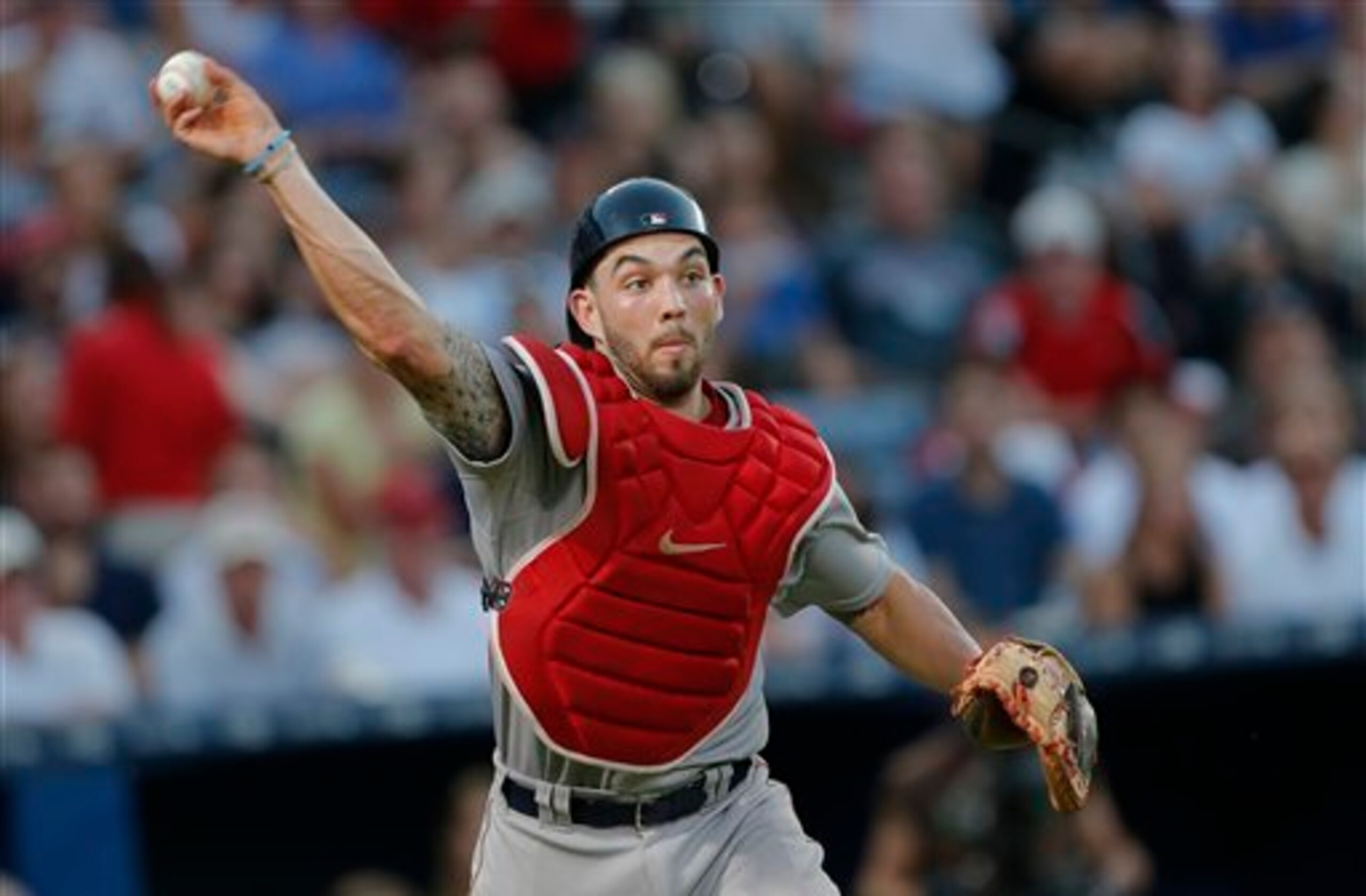
Hitting
A hot second half has pushed Blake Swihart's average to .276 and his OBP to .321. It remains hard to ignore how hard he's struggled from the right side, but it's also hard to ignore his adjustments. The second half has seen him become more disciplined and more consistent at making contact, particularly against breaking stuff. And though he hasn't been crushing the ball, he's developed a consistent line drive stroke that uses the whole field. This is a promising foundation for him to build on
Power
Swihart is turning himself into a solid hitter, but his power remains iffy. He's hit just two homers and compiled an .097 ISO. He hits enough balls in the air, as about 55 percent of his batted balls have been either line drives or fly balls. But he's much more of a line drive guy than a fly ball guy, and his modest 39.6 Hard% rate on line drives goes to show how he doesn't sell out for power. One can assume more gap power will come, but likely not enough for him to pass as even a decent power hitter.
Baserunning
Baseball America is among many publications that have observed how Swihart has excellent athleticism for a catcher. That's shown through on the basepaths in his rookie season. Beyond swiping four bags in six tries, he's posted a 39 XBT% that's easily better than the average around these parts. This is likely the best the 23-year-old can do, but he fortunately doesn't need to do any better.
Defense
If Swihart has exhibited a fatal flaw in his debut season, it's his ability to keep the ball in front of him. When it comes to passed balls and wild pitches, he's one of the worst in MLB. But on the bright side, his 91.6 Z-Strike% and 13.6 O-Strike% highlight his quality framing skills, and his 29 CS% undersells his throwing talent. He doesn't have the quickest release, but he's fast out of the crouch and has a good, accurate arm. We don't want to get too carried away, but he's shown real defensive potential.
Total
Swihart looked out of his depth in the first few months of his major league career, but not anymore. He's looked more and more like a solid hitter seemingly by the day, and he's also flashed potential on the basepaths and on defense. Looking forward, he's a guy to watch.
15. Nick Hundley, Colorado Rockies
7 of 21
Hitting
Before a neck injury ended his season, Nick Hundley surprised most everyone by hitting .301 with a .339 OBP. But sadly, his terrible road numbers reflect how he's still a flawed hitter. Certainly, his biggest flaw is how often he hacks away. But on the bright side, we can give Hundley credit for at least keeping his swings mainly confined to the strike zone, and also for using more of the whole field while continuing to make good contact. As such, his big breakout isn't all thanks to Coors Field, which is indeed a good sign.
Power
It looks good on the surface that Hundley hit 10 dingers and posted a rock-solid .167 ISO, but this is where the Coors Field caveat really applies. He did hit over 55 percent of his batted balls in the air, but his 40.4 Hard% on fly balls and 32.2 Hard% on line drives look a bit low for a Rockies hitter. So as good as it looks that he's sprayed hard-hit balls all over this year, it's easier to notice his home ISO (.208) is nearly double his road ISO (.118). His power production therefore must be taken with a grain of salt.
Baserunning
Hundley didn't get the message that catchers are supposed to chill on the basepaths, and that led to both bad and good. What's bad is that he was only been successful in five of 11 steal attempts. What's good is that he also had a well-above par XBT% of 43. But while that's enough damage to make up for the caught-stealings, here's the real question: Can a 32-year-old catcher possibly do that again?
Defense
Hundley was one of the worst strike framers in the majors this year, posting an 88.6 Z-Strike% and 13.2 O-Strike%. Suffice it to say, Rockies pitchers don't need that. So, it's a good thing he's helped them with good blocking and a 34 CS%. The latter is likely too high to last given that he doesn't have much of an arm, but he does account for that somewhat with quickness out of the crouch and a good transfer.
Total
A solid player in the past, Hundley has been born again in Colorado. And while playing at Coors Field most certainly helped in 2015, he also helped himself by becoming a different (i.e. better) kind of hitter while making up for his poor framing with good blocking and throwing.
14. Caleb Joseph, Baltimore Orioles
8 of 21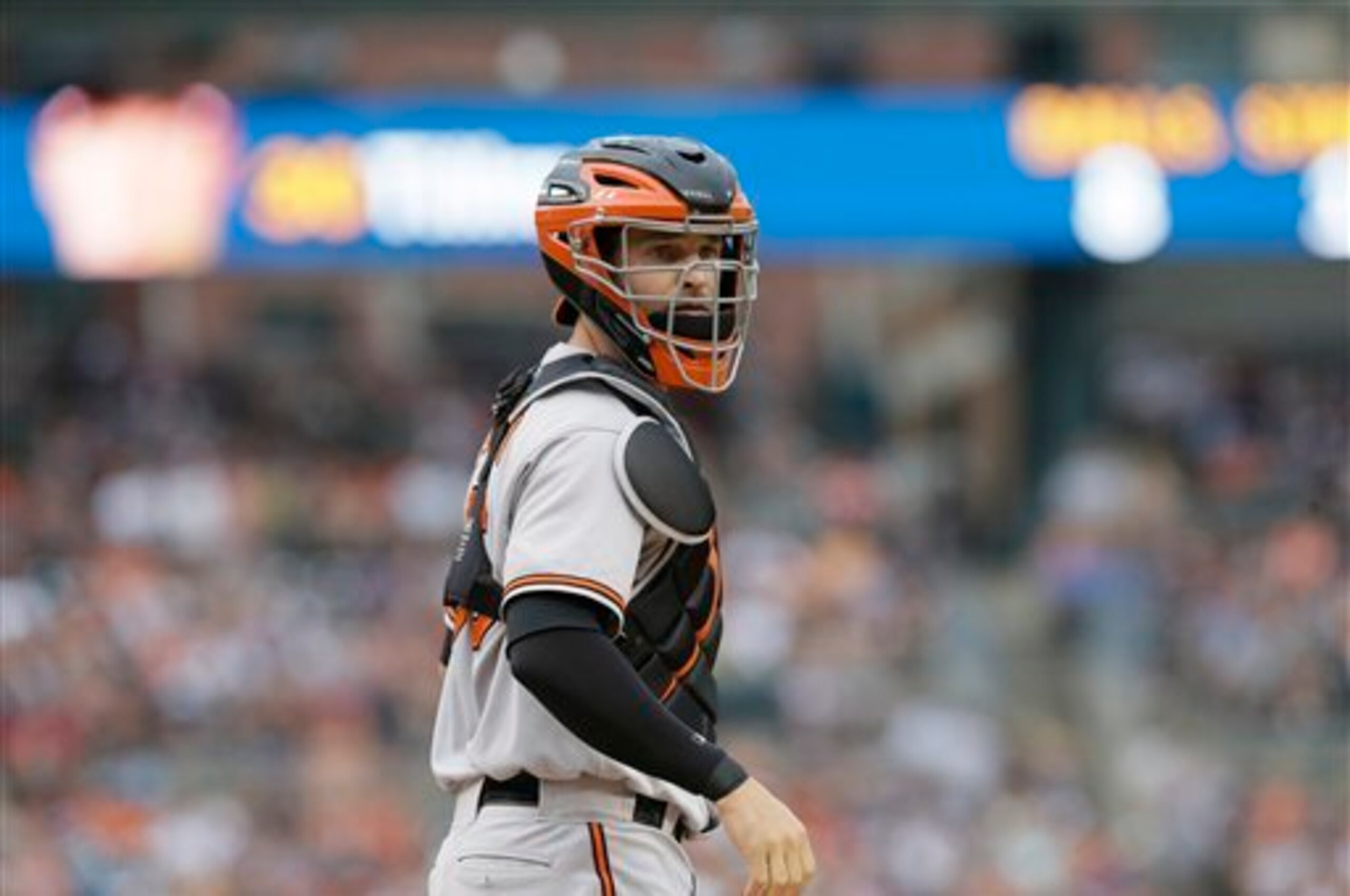
Hitting
You'll find Caleb Joseph doing a few ticks better than the average catcher, hitting .249 with a .312 OBP. The best things he has going for him are his strong line-drive stroke and his ability to barrel the ball to all fields. But that's about it. He's no better than the typical catcher in terms of discipline or making contact, and his plate coverage is confined to the inner two-thirds of the strike zone. One supposes we're seeing the best Joseph is capable of, rather than the least.
Power
Joseph is following up on the solid pop he teased last year by hitting 11 homers and posting a solid .169 ISO. To this end, it helps that he puts darn near 70 percent of his batted balls in the air. And with a 37.0 Hard% on fly balls and a 41.8 Hard% on line drives, he makes pretty good use of a batted ball approach like that. He is limited by the fact that his power is focused more toward center field, however, and exactly how much playing time he can get to pad his power production is another question.
Baserunning
Joseph is about as active on the bases as the next catcher, which is to say he's not very active at all. He has no stolen bases on his ledger, as well as a 24 XBT% that's a tick below this list's average of 30. He's your garden-variety baserunning catcher. And at 29 years of age, that's certainly the reality of his baserunning ability going forward.
Defense
Joseph doesn't excel at any one thing behind the dish, but he does the important things well. His 90.4 Z-Strike% is close enough to average, allowing his 16.1 O-Strike% to qualify him a solid overall framer. He's also in the positive in blocking pitches, and his solid 31 CS% is a product of good footwork and accurate arm. But like with his power, the complication is that it's not certain that he can play quality defense on an everyday basis.
Total
Joseph is one of the league's more invisible catchers, at least in part because he shares space with Matt Wieters. But he's not to be underestimated, as he packs a decent bat with solid power and can play well-rounded defense behind the dish.
13. Derek Norris, San Diego Padres
9 of 21
Hitting
Derek Norris' hitting has fallen off the proverbial cliff, as he finds himself meddling in mediocrity with a .243 average and a .291 OBP. At the heart of this is the downfall of his approach, which has gotten less patient, less disciplined and has produced less contact. Next to that, there's how his plate coverage stops in the middle third of the zone and how he's a fly-ball hitter with a pull habit. The bright side is that his approach has gotten bad only by his standards, but he's still dug himself a hole to get out of.
Power
As much as Norris has struggled, his power has actually rebounded to the tune of 13 homers and a solid .152 ISO. As his spray chart can vouch, this is the trade-off of being a fly-ball hitter with a pull habit. But it's a good thing he hits his fly balls in volume, as his Hard% on all the fly balls he hits is only . 33.6 percent. Because of that and what's clearly a pull-power emphasis, he can only be so good.
Baserunning
Norris doesn't have the look of a guy who would be much of a baserunner, but he's not to be underestimated. He's swiped four bags in five tries this year, a performance reminiscent of his first two seasons. He's also no station-to-station runner, putting many others on this list to shame with a 37 XBT%. So as far as catchers go, he can actually run a bit.
Defense
Norris isn't known for his defense, and that allows him to slide into the "Better Than You Think" camp. He's a solid framer with a 90.5 Z-Strike% and 16.5 O-Strike%, and he's also rating as one of the game's top blockers despite his 12 passed balls. And though his 34 CS% likely oversells his throwing talent, he does get off accurate throws thanks to smooth mechanics. In all, he does pretty much everything well.
Total
Norris' bat has taken quite a few steps back after it helped put him in the All-Star Game last year, and his overall game looks worse as a result. But the power and (surprisingly) the defense are still there, and don't sleep on his baserunning.
12. Welington Castillo, Arizona Diamondbacks
10 of 21
Hitting
Things got off to a hectic start for Welington Castillo, but he's settled down enough with the Diamondbacks to be hitting .247 with a .310 OBP overall. He still has limitations, chief among them being his swing-and-miss habit and his preference for fly balls and his pull side. But at the same time, he's also a disciplined hitter who crushes the ball when he does make contact. In fact, he does the latter better than nearly any other catcher. So though his hitting isn't pretty, it's become good enough.
Power
This is where Castillo has really found himself in Arizona, as his power explosion as a D-Back has given him 19 homers and a monstrous .240 ISO overall. Given that he's a pull-heavy fly-ball hitter who routinely makes loud contact, that's not surprising. And there really isn't a catch here, either. His Hard% rates on fly balls and line drives are both in the 45-50 range, and he doesn't need to rely on his pull habit to hit for power. He's no Kyle Schwarber—more on him shortly—but he's made himself very dangerous.
Baserunning
Castillo doesn't look any faster than the typical catcher, so it's not surprising that he hasn't even attempted a steal since 2013. But with a solid 36 XBT%, he could finish with an XBT% over 40 for the second time in three years. And at just 28 years of age, this is a performance that should be sustainable going forward.
Defense
If there's one thing Castillo can do really well behind the dish, it's keep the ball in front of him. But his other skills lag behind. His solid 91.0 Z-Strike% isn't good enough to make up for his easily-below-par 14.0 O-Strike%, and he's been just OK at controlling the running game with a 28 CS%. But for what it's worth, that figure seemingly undersells what Castillo is working with in terms of release quickness and arm strength. So though he's not special on defense, he's playable.
Total
If Castillo isn't on your radar, you better put him there. He's gone from being a castoff to being one of the most dangerous hitters the catching position has to offer—specifically in regard to his power, which looks legit from several different angles.
11. Kyle Schwarber, Chicago Cubs
11 of 21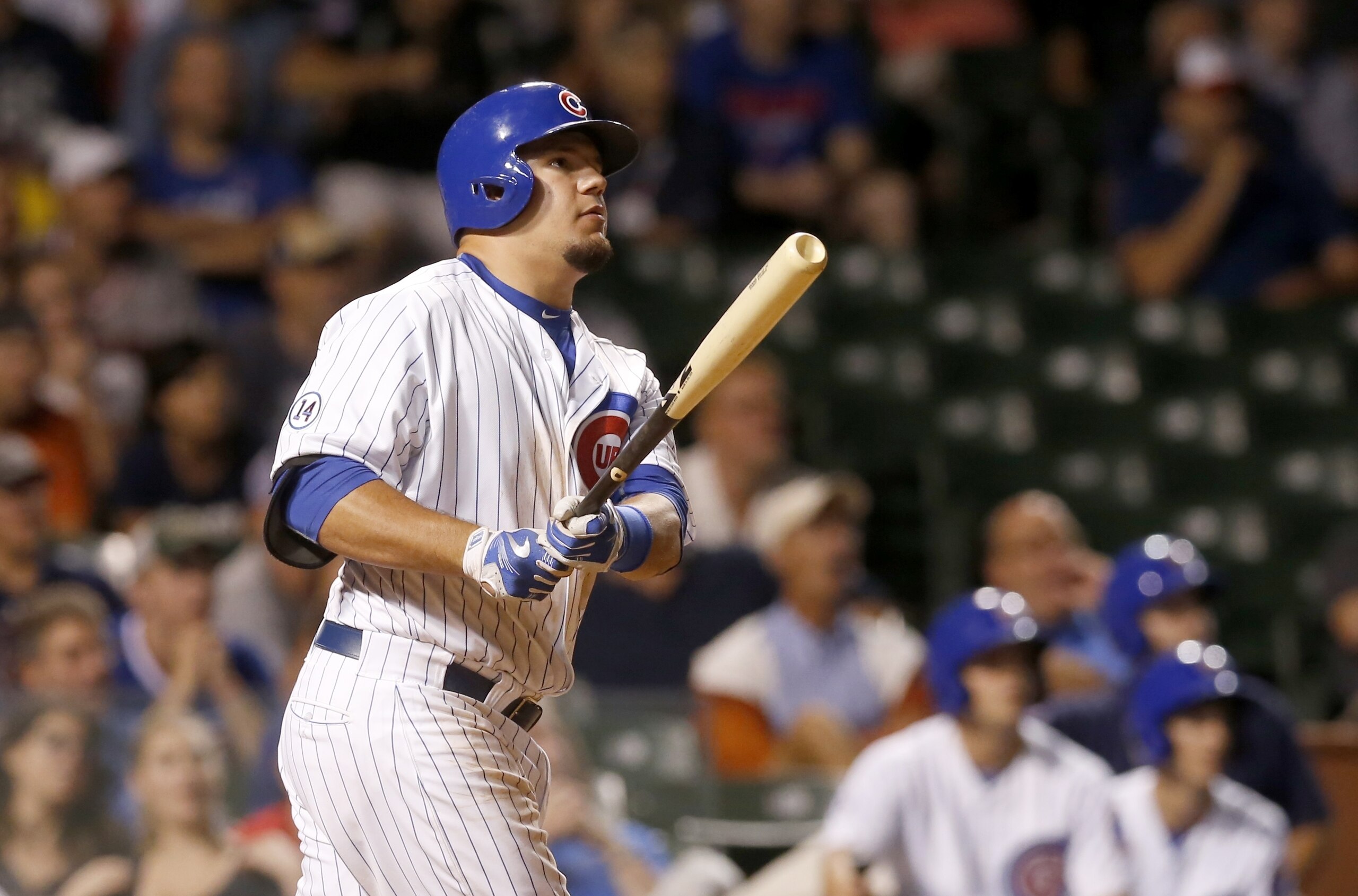
Hitting
He hasn't played a huge amount of games, but Kyle Schwarber finds himself hitting a respectable .251 with a .352 OBP. As you might have noticed, his primary talent is whacking the daylights out of the ball, something he can do better than any other catcher. Apart from that, though, he needs more work than his average and OBP let on. His problems include a bad platoon split, iffy discipline, a bad whiff habit and too much of a pull habit. Temper your expectations for him going forward.
Power
We can poke holes in Schwarber's approach, but not in his power. He's slugged 16 homers and racked up a .282 ISO in not even half a season. Over 60 percent of his batted balls are in the air, and his Hard% rates on both fly balls (49.2) and line drives (60.0) are way above average. And though he's a pull hitter, he certainly doesn't need to pull the ball in order to knock it over the fence. He has the look of a guy who has legit line-to-line power, and it could easily equate to 30-plus homers over a full year.
Baserunning
Schwarber was billed as an "average" runner by Baseball America coming into the season, which is a compliment where catchers are concerned. He's lived up to that on the basepaths, swiping three bags in five tries and posting a truly excellent 65 XBT%. Of course, we should stop short of projecting these numbers out over a full season. But as a kick-starter for optimism, they'll do nicely.
Defense
Full disclosure: No, we don't know if Schwarber has a future at catcher. But if he does, there's clearly work for him to do. He's teased himself to be a poor framer with an 87.3 Z-Strike% and 15.1 O-Strike%, and he hasn't salvaged any dignity by blocking balls. He's also managed just a 19 CS%, which highlights merely average arm strength and easily non-elite throwing mechanics. It's therefore a good thing that at least Ultimate Zone Rating thinks he can cut it in left field, as catcher doesn't look like the place for him.
Total
The Schwarber love fest that had everyone enthralled has faded a bit, and rightfully so. The holes in his bat have been found, and his future defensive home is a question mark. But if nothing else, everyone can still love his very real potential as an elite power hitter.
10. Francisco Cervelli, Pittsburgh Pirates
12 of 21
Hitting
It all seems out of place, but Francisco Cervelli has actually picked up where he left off in 2014 with his .296 average and .376 OBP. And he has indeed done his utmost to earn such strong production, putting forth an excellent approach that features good patience and discipline and lots of contact. To boot, that contact is primarily solid, and with good bat control as well. The only real downside? Cervelli skews heavily toward ground balls with a 52.7 GB%; so, what we're seeing is likely his ceiling.
Power
Cervelli's quality hitting unfortunately hasn't come with much power, as he has only six homers and a below-average .108 ISO. When you're a hitter who favors bat control and ground balls, that's life. And yet, Cervelli's power isn't a lost cause. He's capable of giving the ball a ride to any field. And with a Hard% rates over 40 on both fly balls and line drives, he doesn't waste his time when he does put the ball in the air. He's not a power hitter, but he has solid power for a hitter of his particular brand.
Baserunning
Cervelli teased a decent base-stealing ability back when he swiped four bags in 2011, but it's been just one apiece over the last two years. He does, however, have a 31 XBT% that's right at this list's average, and he's racked that up with minimal damage with just three outs made on the basepaths. As far as catchers go, he's solid.
Defense
Cervelli's reputation as an outstanding strike framer is not misplaced. His 91.1 Z-Strike% is above par, and his 17.7 O-Strike% is the best of anyone on this list. Therefore, it's a darn shame that he's struggled so mightily with blocking pitches and with throwing out runners. He owns just a 22 CS%, the price he pays for not having the arm strength to complement his solid throwing mechanics. As great as his framing is, that's really the only tool in his belt.
Total
Cervelli's first season as an everyday catcher has given him a chance to show what he can do with his bat and his framing skills, which have both been excellent. But his modest power holds him back, as does his lack of defensive skills outside of his framing.
9. Yadier Molina, St. Louis Cardinals
13 of 21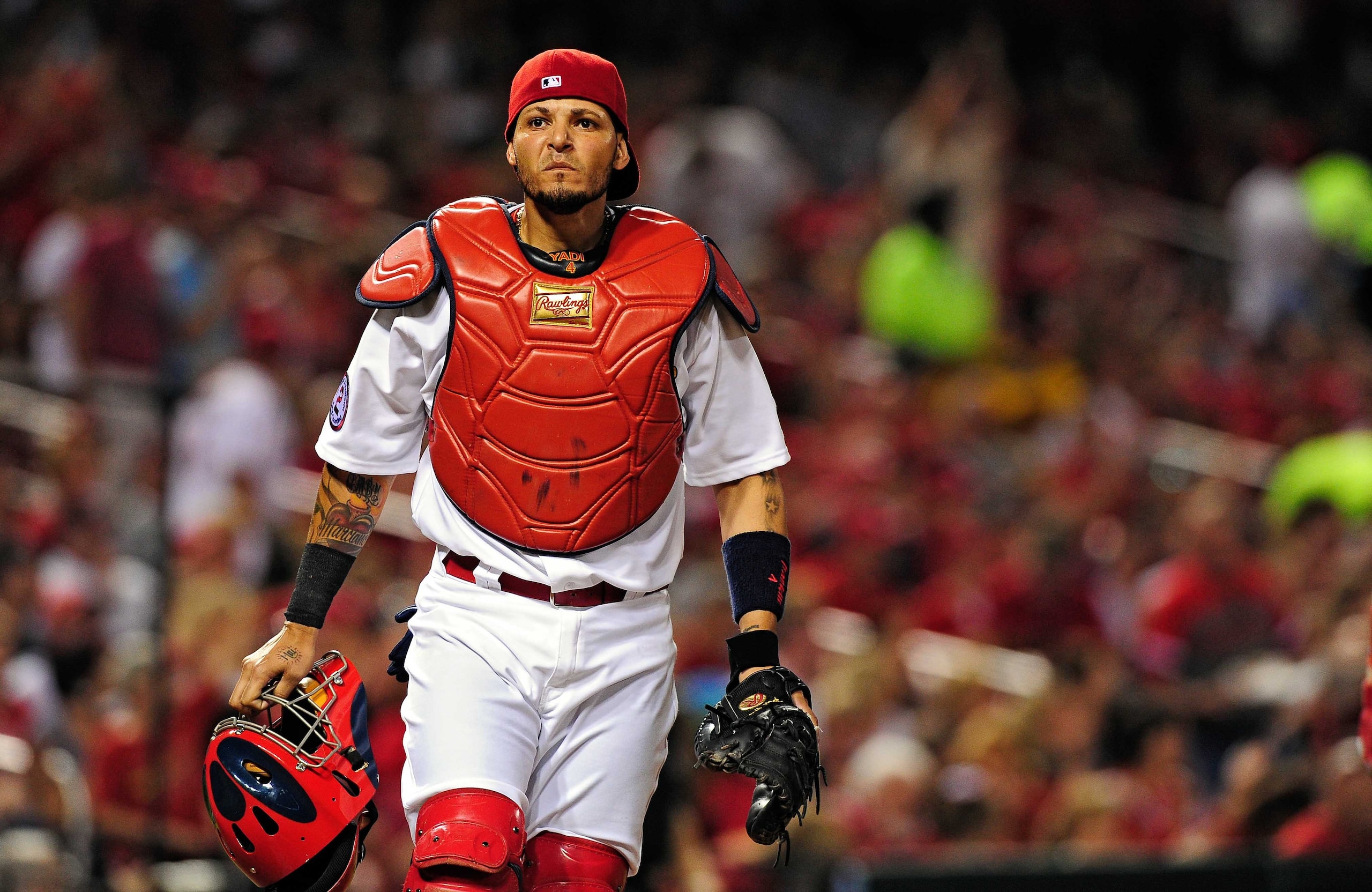
Hitting
After falling down a notch last year, Yadier Molina has taken another step toward mediocrity with a .270 average and .310 OBP. This is life when you're still an aggressive hitter but no longer capable of making hard contact like you could in your prime. It also appears he's done catching up to 95-plus heat. However, Molina is still a strong contact hitter with good bat control and decent plate coverage. His bat is clearly trending in the wrong direction, but at least it's not doing so in a hurry.
Power
This is where it becomes notably harder to be optimistic. The 33-year-old Molina has only hit four homers with a .080 ISO, which is nowhere close to being up to par. He doesn't help himself by putting more balls on the ground than most catchers with a 47.8 GB%, and he doesn't punish what balls he does put in the air. His Hard% rates on flies and liners are both below 40. This is age at work. Boo age.
Baserunning
It was as recently as 2012 that Molina stole a dozen bases, and he's showing with three steals in four tries this year that he can still catch pitchers napping. But next to that is just a 21 XBT% that's easily below this list's average, highlighting how Molina has become a station-to-station runner. And no, that's likely not changing now that he's 33 with over 12,000 innings (!) in the squat behind him.
Defense
Molina might be the best defensive catcher ever, and he's still going strong. With a 91.6 Z-Strike% and 15.5 O-Strike%, his framing is safely above average. He's also one of the game's top blockers and is still death on baserunners with a 41 CS%. That comes courtesy of his absurd arm strength and accuracy, two things that allow him to occasionally give his aging legs a rest even when he needs them. He's not as good as he once was, to be sure, but even a lesser Molina is still arguably the class of the league.
Total
With his bat declining like it is, Molina no longer has a firm place in the discussion of the best all-around catchers in MLB. But because that bat isn't totally dead yet and his defense is still superb, Molina is at least still extremely good.
8. Brian McCann, New York Yankees
14 of 21
Hitting
With a .241 average and .326 OBP, Brian McCann has hit a few ticks better than the average catcher. He's helped himself by cutting down on his swing rate while maintaining decent discipline, and he makes a good amount of contact. And when he does, it's mainly loud contact. But he's still a big-time pull hitter who hits mainly fly balls, and who has very limited plate coverage. Given all that, whether he can even repeat a performance as modest as this one is a very good question.
Power
McCann has treated himself to a big-time power rebound with 26 homers and a .224 ISO, and we shouldn't be surprised at that. A guy with major fly-ball and pull habits may have a limited consistency ceiling, but that makes for an outstanding power ceiling—especially at Yankee Stadium. It's too bad that McCann's power largely vanishes on the road. That points to how his Hard% on all those fly balls is just 36.7, making it hard to take his power production at face value.
Baserunning
If you're familiar with McCann's "speed," you won't be surprised to hear he hasn't attempted a stolen base since 2013. And though he's raised his XBT% from 13 to 21, that's still safely below this list's average. And with his age-32 season due up, no, he's likely not finding any additional speed moving forward.
Defense
McCann has done well to rebound on offense in 2015, but one skill that's gone the opposite direction is his framing. He only boasts an 89.7 Z-Strike% and a 15.0 O-Strike%, neither of which is better than average. Fortunately, he's still blocking balls fine and is catching would-be base stealers at a 37 percent clip. The latter is due to him still making up for fringe arm strength with quick feet and a quick release. So in all, he's still a strong-enough defender.
Total
McCann looked like he was done as a useful player in 2014, but he's rebounded well in 2015. By calming his approach, launching plenty of fly balls and holding on to some (not quite all) of his defensive skills, he's turned himself back into one of the game's top two-way catchers.
7. Stephen Vogt, Oakland Athletics
15 of 21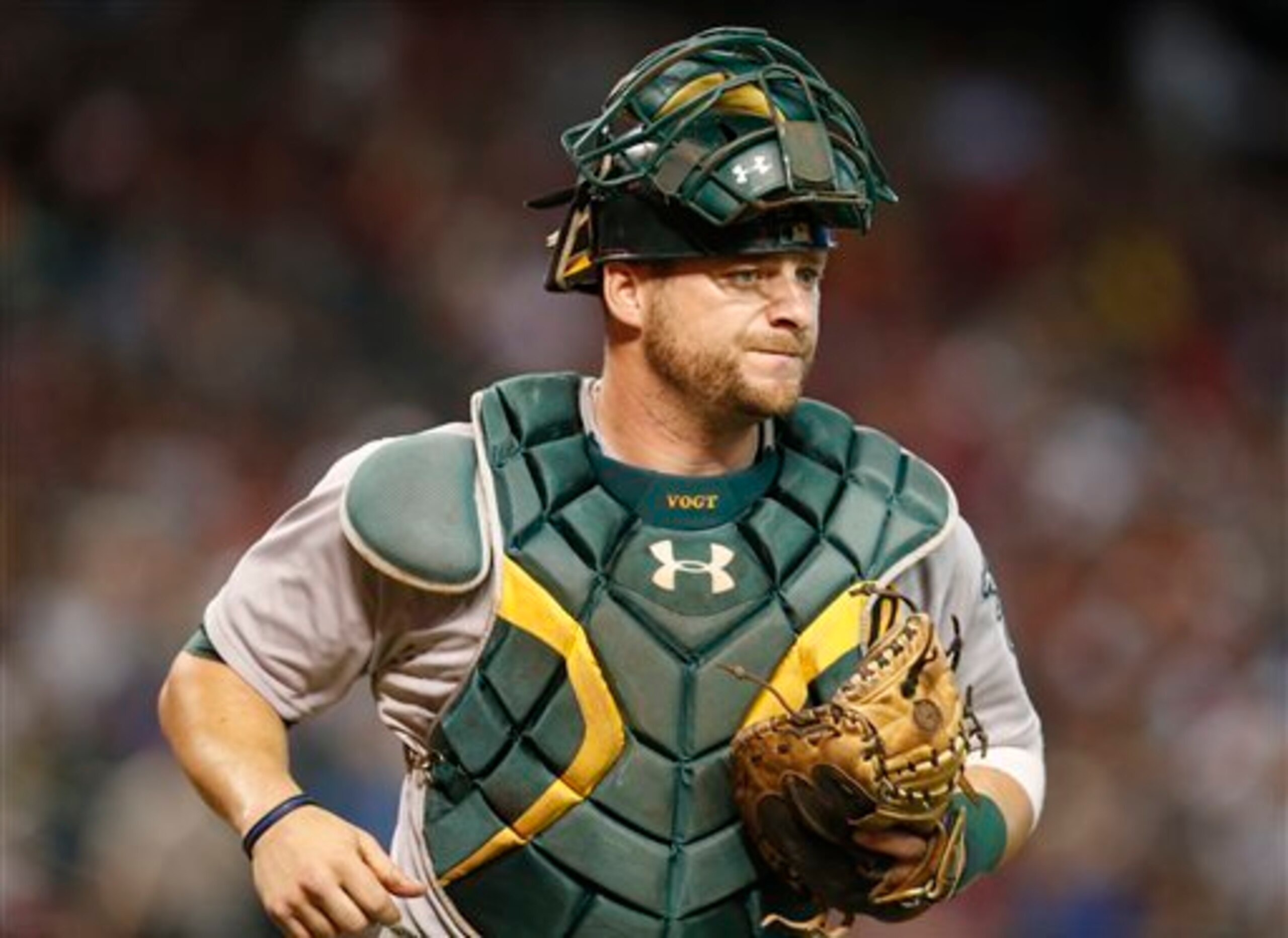
Hitting
Stephen Vogt has cooled down since his torrid start, but he's still easily outperforming the average catcher by hitting .271 with a .349 OBP. His main weakness is his platoon split, which looms larger now that he's a full-time player. But apart from that, Vogt is a hitter with solid discipline and a strong ability to make contact, and he offers few safe havens within the strike zone. And though he's a pull-heavy hitter, he makes enough solid contact to help account for that. Maybe he's not great, but he's plenty good.
Power
Power has come easily for Vogt, as he's slugged 18 homers and posted a .196 ISO. It helps that over 60 percent of his batted balls end up in the air, and his hit chart can vouch that he's made good use of his pull habit. The big catch is that Vogt doesn't crush everything he puts in the air, posting Hard% rates easily below 40 on both fly balls and line drives. In addition, a second look at that hit chart will reveal that he's gotten lucky with some fence-scrapers. Odds are he won't be this good again.
Baserunning
You're not going to mistake Vogt for a burner anytime soon, and he's certainly not a base stealer with just an 0-for-2 showing on his resume this year. But he demonstrated last season that he could aggressively take extra bases, and he's continued that in 2015 with a solid 36 XBT%. Vogt may not be a burner, but he's no station-to-station guy, either.
Defense
Vogt has gotten to stick largely to his natural position this year after moving around a lot in 2014, but the results haven't been great. His solid 15.5 O-Strike% isn't nearly good enough to make up for his cringe-worthy 88.2 Z-Strike%, as getting those strikes is what really matters. He's also been one of the worst at blocking pitches, and his lack of plus throwing skills makes his solid 33 CS% seem a bit suspect. Still, he's far from unplayable at catcher, and he gets bonus points for filling in capably at first base.
Total
Vogt looked like a huge breakout star early in 2015, but it didn't take long for reality to set in after that. Even still, he's at least established himself as one of the better offensive threats the catching position has to offer.
6. Jonathan Lucroy, Milwaukee Brewers
16 of 21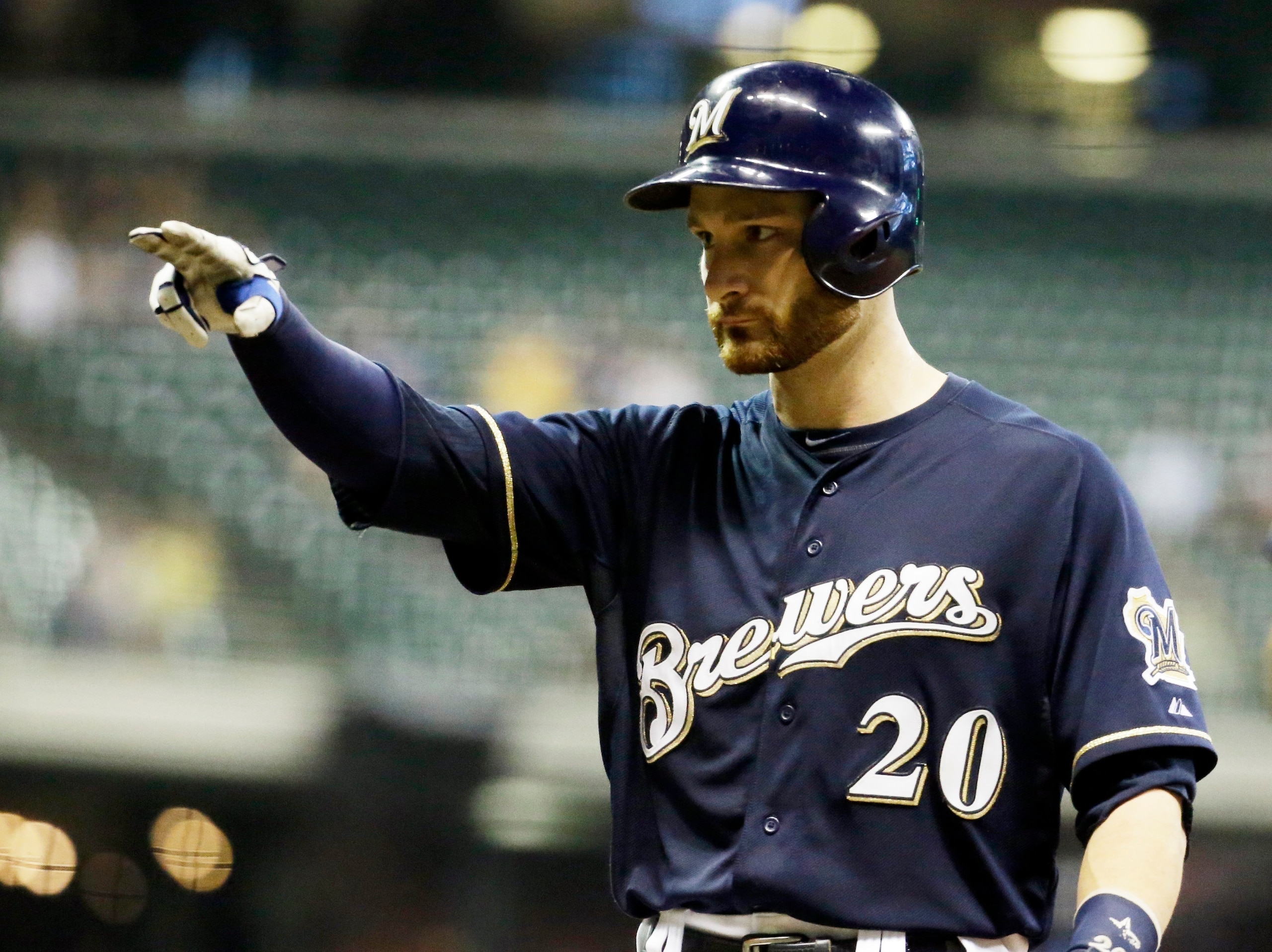
Hitting
Jonathan Lucroy's concussion likely means an early end to what looks like a forgettable season, but his .259 average and .322 OBP overstate how bad things were. Look underneath the surface, and you'll see a hitter who's still very disciplined and excellent at making contact, and who also boasts strong bat control and an ability to easily barrel up the ball. He really hasn't changed much from the hitter who hit .301 with a .373 OBP in 2014, so don't be surprised if he enjoys a rebound next season.
Power
This is where Lucroy legitimately doesn't look as good, as he's only hit seven homers and posted a .131 ISO. One of his primary problems is that only about 55 percent of his batted balls are in the air, and another is that he focuses what power he does have up the middle of the field. The lone bright side is that he's at least efficient with the balls he puts in the air, posting a decent 38.5 Hard% on fly balls and an excellent 55.1 Hard% on line drives. Moving forward, at least average power should be in store.
Baserunning
It was only a couple of years ago that Lucroy swiped nine bases in 10 tries, but he doesn't look like that guy anymore. He's attempted only one steal this year and has posted a good-not-great 33 XBT% on the side, down from 44 percent just a year ago. With his age-30 season due up and this year's injury woes behind him, it's probable that the basepaths is an area where he'll choose not to push it going forward.
Defense
Lucroy's defensive game is centered on his ability to frame pitches, but that's something he's actually had a tough time with in 2015. With a 90.3 Z-Strike% and a 15.0 O-Strike%, he's basically been average. Same goes for his throwing, as his average-ish 28 CS% reflects how his solid throwing accuracy can only make up for so much. The lone bright side is that he still rates as excellent at blocking pitches, but otherwise this year has seen Lucroy's defense take a step back.
Total
It looks on the surface like Lucroy has suffered a tremendous fall from grace in 2015, and to some extent that is true. But he's still one of the more advanced hitters in the catcher ranks, and he's also handled himself reasonably well behind the dish. Don't write him off as broken goods.
5. Miguel Montero, Chicago Cubs
17 of 21
Hitting
Miguel Montero's performance has improved over what he did in 2014, as he finds himself hitting .248 with a .348 OBP. The latter shines light on how he's slightly more disciplined than the typical catcher. He further helps himself by making good use of the balls he puts in play, showing off strong bat control and an ability to consistently hit the ball on the screws. Montero's downfall is that he has a whiff problem that includes too much of the strike zone. And at his age (32), that problem may only get worse.
Power
After down years in 2013 and 2014, Montero's power is in the midst of a revival with 15 homers and a .173 ISO. This is no joke. About 60 percent of his batted balls go in the air, and he's crushed his fly balls in particular with a Hard% of 56.8. To boot, his power applies to both sides of center field. So while he is at that age where you have to wonder how healthy he can be, his renewed power otherwise looks legit.
Baserunning
Montero has seemingly gotten the message from last year's 0-for-4 showing in the stolen base department, as he's gone back to not even attempting any steals. He does have a solid 28 XBT%, though, which is in line with his career norm and close to this list's average. But now that he's 32, you wonder if this may be his last year of that kind of aggression.
Defense
Montero is another guy who's living up to his reputation as an excellent framer, posting a 92.0 Z-Strike% and 15.8 O-Strike% that are both safely above average. His receiving skills don't stop there, as he also rates well from a blocking perspective. Where he struggles, however, is with controlling the running game. He has only a 22 CS%, and that appears to be due to his being slower out of the crouch than he used to be. Once again, boo age.
Total
Montero is past his peak by now, but one can argue that's allowed him to slip into underrated territory. He still packs a potent bat relative to other catchers and is one of the better receivers you're going to find anywhere in the game.
4. Russell Martin, Toronto Blue Jays
18 of 21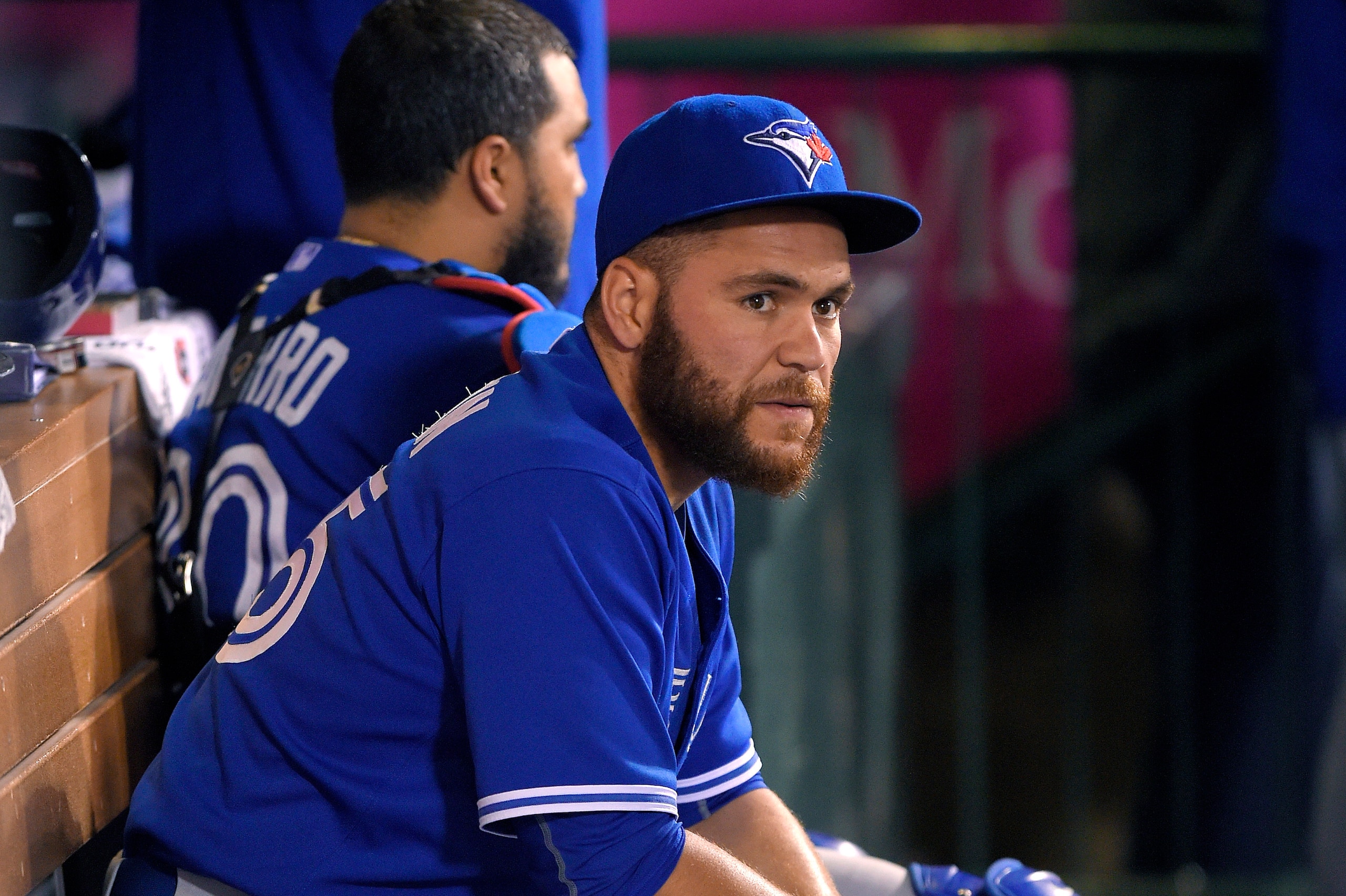
Hitting
Russell Martin isn't doing terribly with a .239 average and .325 OBP, but those numbers are a far cry from what he did in 2014. The fact that he suddenly has a platoon split again isn't helping, largely because he's been hopeless against anything low from right-handers. Still, it's not all bad. Martin's approach still blends discipline and contact, and he partially makes up for his ground-ball habit with good bat control and consistent solid contact. He's a better hitter than his average-ish numbers indicate.
Power
His hitting has become less consistent, but Martin's power has experienced a revival to the tune of 20 homers and a .205 ISO. These figures look out of place on a guy who hits over half his batted balls on the ground, but Martin makes up for that with efficiency. He owns Hard% rates over 40 on both fly balls (43.1) and line drives (45.1), and he can use the whole field for power. This will be a hard performance to repeat with his 33rd birthday nearing, but he'll still be dangerous even if he regresses.
Baserunning
By now, Martin's days as a double-digit stolen base guy are long gone. And with four steals in nine tries, the writing is on the wall that he should probably just give up altogether. It's a good thing he's showing he can still manage a respectable XBT% at 34, which is close to where he's been the last four years.
Defense
Martin came into 2015 with a reputation as a game-changing defender, and he's lived up to that on the throwing side of things with an AL-best 44 CS%. That's reflective of how he still blends strong mechanics with a strong arm. But with a 90.4 Z-Strike% and a 15.2 O-Strike%, Martin's framing has been surprisingly pedestrian. He also rates as easily the worst pitch blocker in the majors. He's still a good guy to have behind the dish, but this is a year he'll have to bounce back from.
Total
Martin hasn't turned out to be the all-around catcher dynamo the Blue Jays thought they were getting when they signed him. But as long as his bat is still potent and his defense is at least still respectable, there's a place for him among the game's more talented catchers.
3. Yasmani Grandal, Los Angeles Dodgers
19 of 21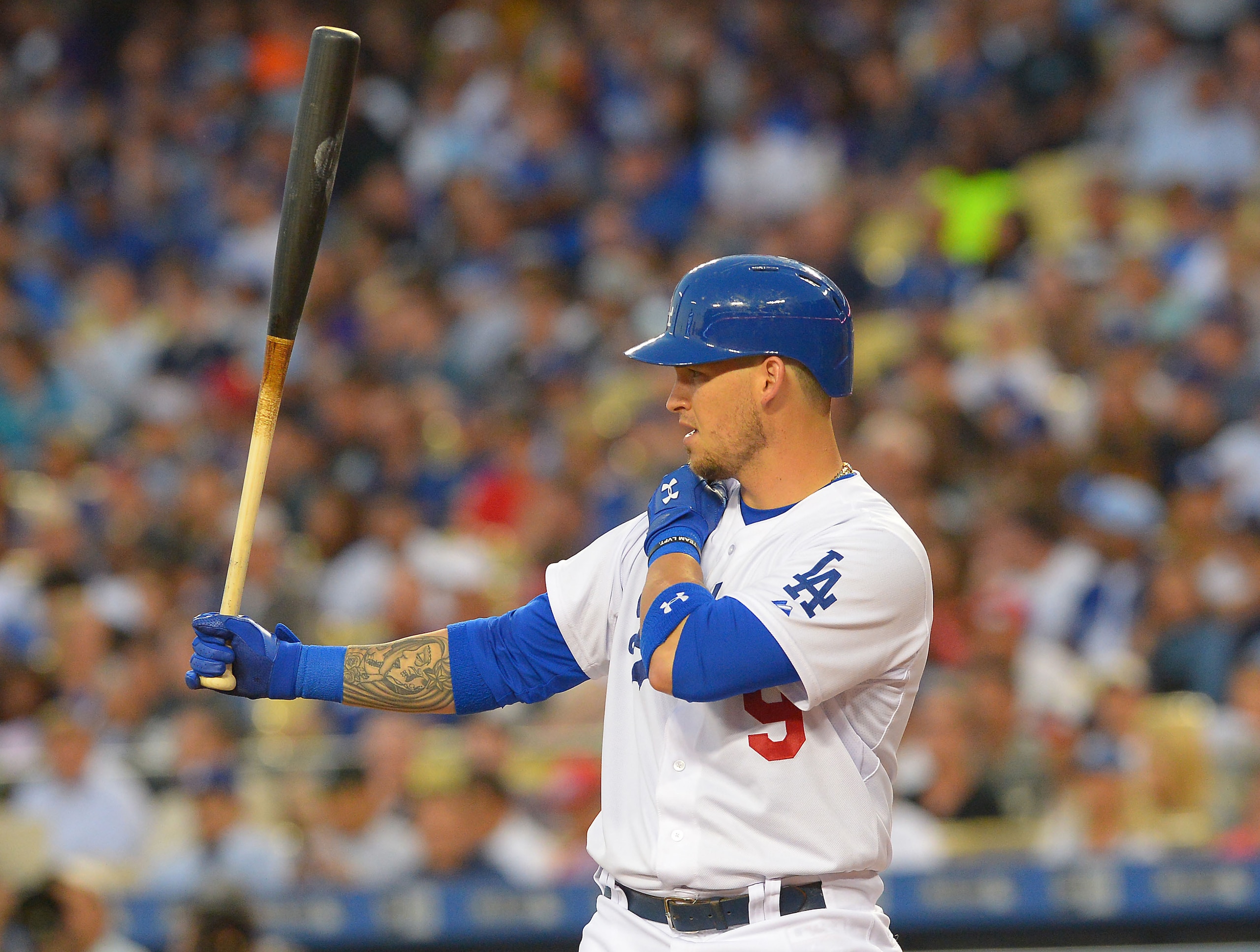
Hitting
The switch-hitting Yasmani Grandal has been nearly as consistent as any catcher in 2015, hitting .252 with a .365 OBP. It's the latter of those figures that jumps out, and Grandal has earned it in part by being patient and disciplined to the extreme. But he's also made contact at a solid rate, and it's been loud contact with good bat control to boot. Things have obviously taken a dive since his left shoulder started bothering him. But overall, Grandal has figured plenty of things out in 2015.
Power
Power wasn't an issue for Grandal last year, and he's kept up the good fight with 15 homers and a .175 ISO. He makes things a bit tough on himself by hitting almost 50 percent of his batted balls on the ground, but he's a guy who doesn't waste what he puts in the air. His Hard% on fly balls is 41.9, and his Hard% on line drives is 53.5. And though he may be weaker from the left side, his power from there goes in all directions. The big red flag is that he hasn't been able to drive the ball since his left shoulder started barking, and that could hurt his potential in this category more so than the one above.
Baserunning
After going 3-for-3 in steals last year, Grandal has slowed down and is 0-for-1 in 2015. And though he's upped his XBT% from 22 to a solid 32, an offshoot of his added aggressiveness is a career-high number of outs on the bases (six). As such, he might want to cool it going forward.
Defense
With a 92.1 Z-Strike% and a 17.5 O-Strike%, Grandal offers the best of both worlds as a strike framer behind the dish. And because he can make up for his slow release with decent arm strength and accuracy, his solid 28 CS% passes the smell test. The only thing Grandal hasn't done well is block pitches, where he rates in the negative. Otherwise, he offers a steady defensive presence and ranks among the elites in strike framing.
Total
Grandal has flown a bit under the radar in 2015, but he's carved out a spot as one of the game's more well-rounded catchers. He can hit and do so for power on offense, and his world-class framing allows him to make the grade as a quality defender.
2. Travis D'Arnaud, New York Mets
20 of 21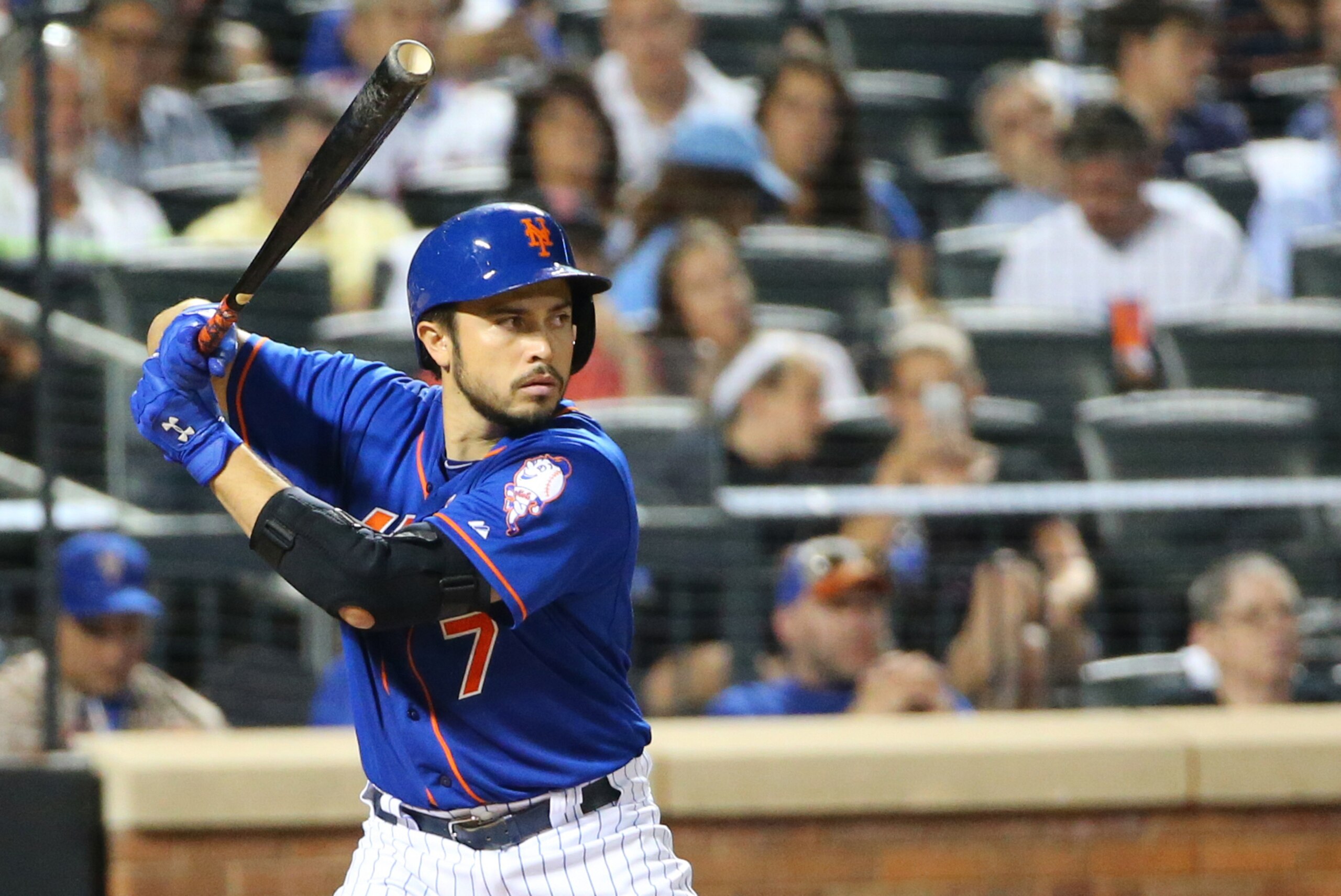
Hitting
Albeit in a limited sample due to injuries, Travis d'Arnaud has built on last year's strong finish by hitting .286 with a .352 OBP this year. Everything begins with a patient, disciplined approach and solid habit of making hard contact. What's not as good is how d'Arnaud has continued to have issues with pitches away from him, and it's also a bit suspicious that a fly-ball hitter with a pull habit like his could hit for such a solid average. He's good, but maybe not this good.
Power
Even in a small sample, d'Arnaud's power looks legit. He's crushed 12 homers and put up a .251 ISO, which puts him up there with Welington Castillo and Kyle Schwarber. He's helped his cause by putting over 60 percent of his batted balls in the air, and his spray chart shows how he's made good use of his pull habit. He'll need to keep this up if he wants to continue to hit for elite power, as one red flag is a modest 33.3 Hard% on fly balls. But beyond that, the only other question relates to his playing time.
Baserunning
Nobody ever promised that d'Arnaud would be a base-stealing catcher, so it's no surprise that he hasn't attempted a steal this season. But he's been aggressive to the tune of a 39 XBT% and hasn't run into any outs on the bases in the process. We're talking about a sample size too small to get too excited about, but what he's done is worthy of at least some optimism.
Defense
It's easy to notice d'Arnaud's offense, but don't overlook what he can do behind the dish. He's continued to be one of baseball's top framers with an excellent 93.6 Z-Strike% (best of anyone on this list) and a solid 15.7 O-Strike%, and he's also in the positive in terms of blocking pitches. But though he has a 32 CS%, that could be tough to maintain due to something of a long wind-up and non-elite throwing strength. Despite that, he's a guy Mets pitchers must love throwing to.
Total
Maybe this comes off as a bit too high for a guy who has played relatively little in 2015, but d'Arnaud's sample size is one of the few things about his season worth complaining about. He's been one of the game's top two-way catchers on a game-to-game basis, and he's played in just enough contests for it to be believable. If he can manage a full season in 2016, watch out.
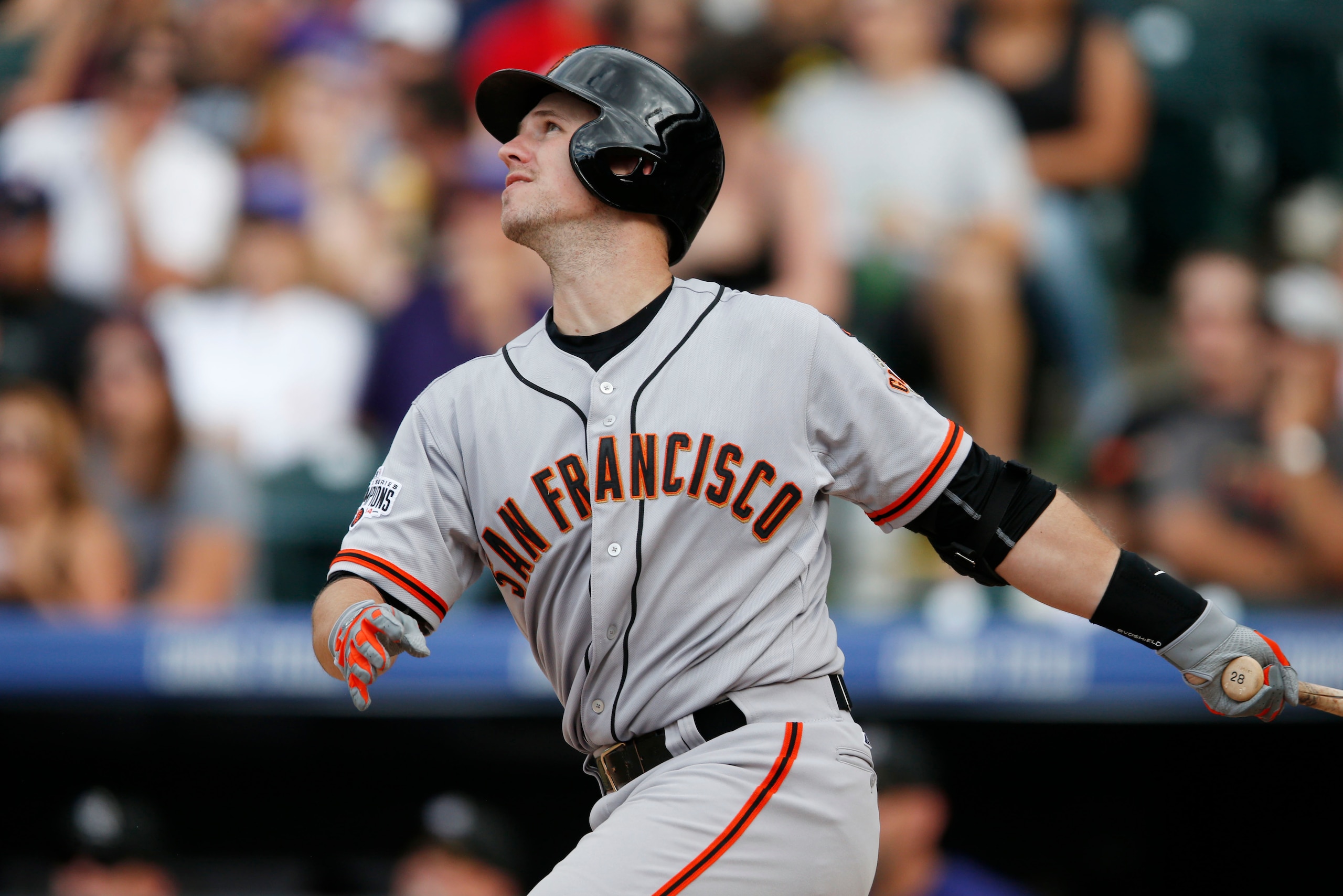
1. Buster Posey, San Francisco Giants
21 of 21
Hitting
Oh, that's just Buster Posey doing his thing with a .327 average and .391 OBP. And how he's gotten there is a master class in hitting. Through an approach that features a strong balance between discipline and contact, he's walked more often than he's struck out. He's also showcased outstanding coverage of the strike zone. And when the ball is in play, he's consistently used the whole field and hit the ball right on the screws. Never mind a great hitting catcher. He's a great hitter, period.
Power
Posey's power production looks like a mixed bag, as his 18 homers are quite good and his .157 ISO is not as impressive. But the latter figure is the more misleading of the two. Over 55 percent of his batted balls are in the air, and his Hard% on fly balls in particular is strong at 44.7. To boot, his power extends to all parts of the field. Rather than a lack of talent on his part, what really holds his power down is AT&T Park's huge dimensions.
Baserunning
Nobody's going to confuse Posey for a fast runner anytime soon, but he's no more hopeless on the basepaths than the next catcher. This season has seen him swipe a couple of bags and post a 29 XBT% that's right in line with his career norm and this list's average.
Defense
Surprised at this? Don't be. Posey is as good as any other catcher at framing, posting an excellent 93.3 Z-Strike% and an excellent 16.7 O-Strike%. He also rates well at blocking pitches, and he's achieved a career-best 37 CS% through strong footwork and what's always been a good arm. We also can't overlook how, when he's not catching, Posey has turned himself into an above-average first baseman. He's not Yadier Molina's equal strictly in terms of catcher defense, but he is in terms of overall value.
Total
Posey is the best catcher in baseball, and it's not all that close. He's still the best hitting catcher the game has to offer, and he's turned himself into MLB's most well-rounded defensive backstop to boot. With all this in mind, you can indeed make a case for him as baseball's best player.

.jpg?w=2560 "Mahomes Reacts to Bettors Vid 😂")

.jpg?w=2560 "Week 1 Fantasy Duds 👎")