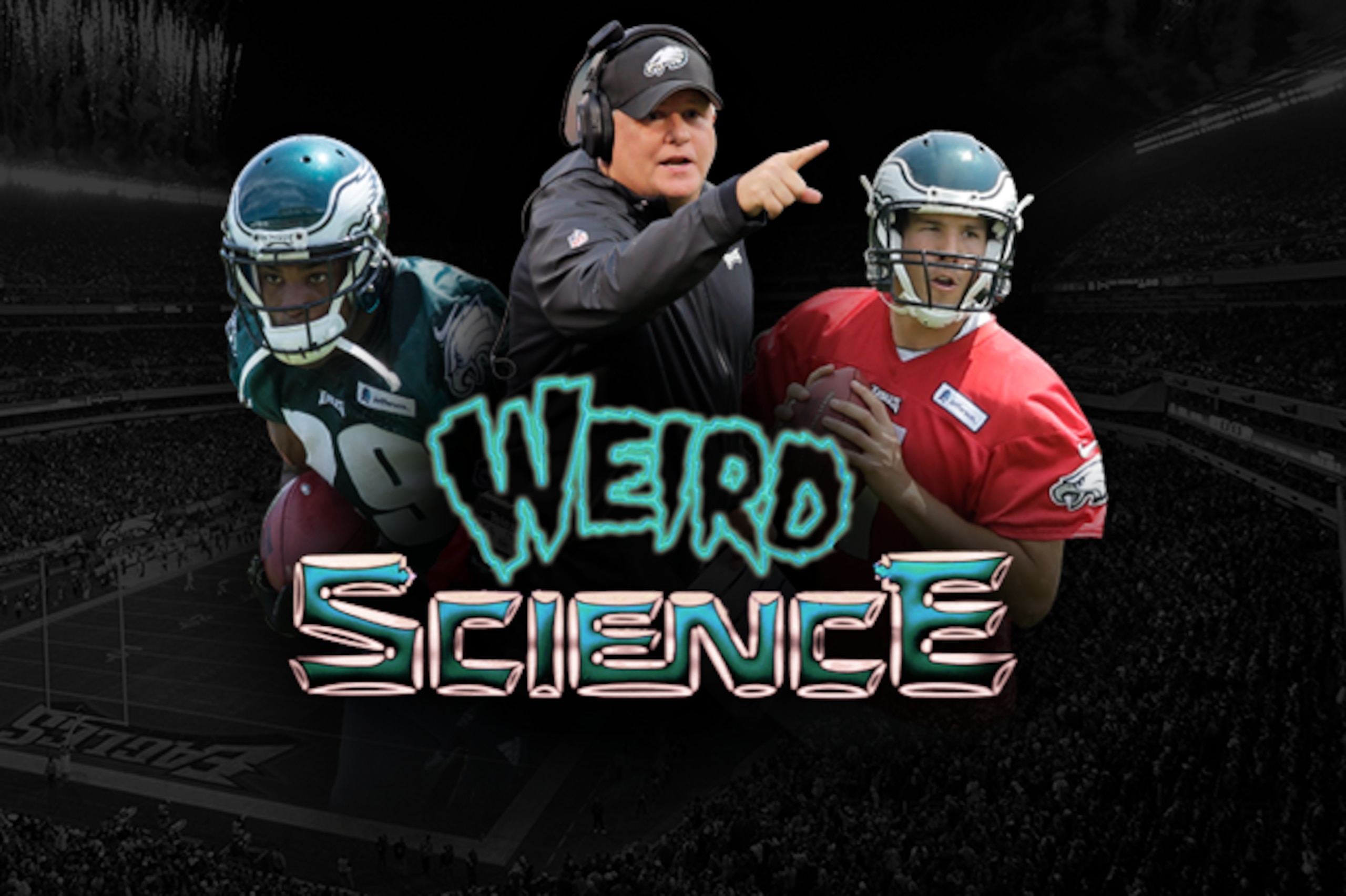

Chip Kelly and His Relentless Assault on the Status Quo
Understanding Chip Kelly’s plan for the Philadelphia Eagles requires abandoning everything you thought you knew about football.
It’s not a simple plan. It’s certainly not a conventional one. But it’s not just some ego trip or scattershot player grab, either.
“It was perceived as if this was random, all over the place, but I think this was a well-thought-out, clear plan,” said Joe Banner, former Eagles president and general manager.
Kelly’s plan is holistic. It weaves together elements of NFL management—player acquisition, scheme, sports science, cap spending, coaching, practice techniques—that are rarely connected in any meaningful way. It’s also bolder and more aggressive than anything the NFL has seen in decades.
Kelly has attracted some skeptics, but he has also inspired his share of believers. “I think Chip’s approach is new,” said former Eagles, Rams and Chiefs coach Dick Vermeil. “It’s energizing. It’s stimulating to me as a coach.”
To truly fathom Kelly’s Grand Football Unification Theory, we must examine his Eagles from multiple angles and untangle seemingly unrelated threads. If we take the pieces apart, re-examine the familiar and put the puzzle back together, Kelly’s vision may become clearer.
Kelly’s new method of building a Super Bowl champion could actually work. If it does, it will change everything.
The Personnel Plan
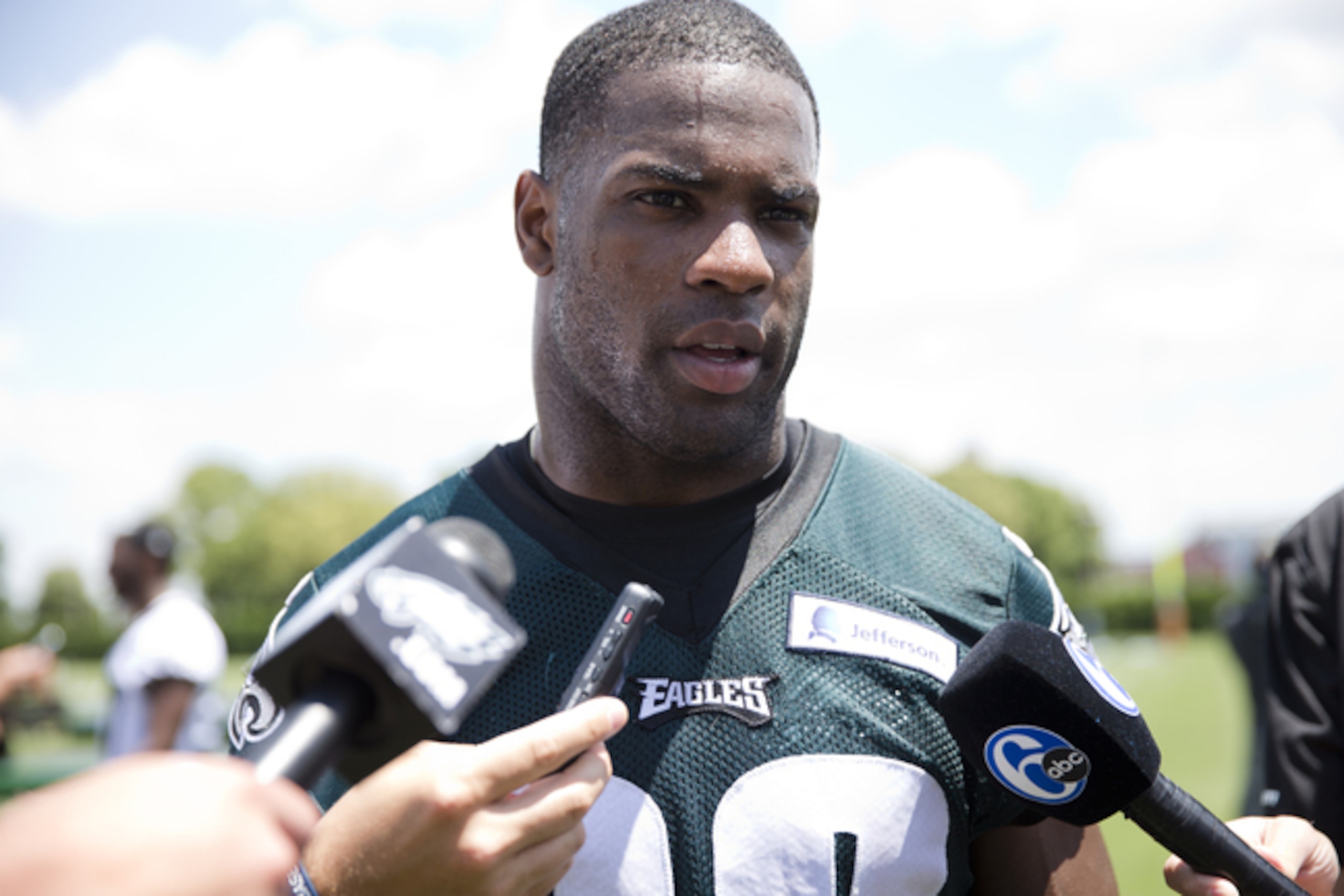
DeMarco Murray looks sharp in June OTAs. But then, the reigning Offensive Player of the Year, executing no-contact, no-pads drills, cannot help but look sharp. Murray should be the least controversial of the Eagles’ many offseason acquisitions: a perfectly healthy bona fide superstar with a no-nonsense personality. But at this practice, Murray is bombarded with questions, many of them about comments to ESPN by LeSean McCoy, Murray’s predecessor, that Kelly got rid of “all the good black players.”
“I’m looking around,” Murray said, looking around and chuckling. “There are a lot of us out here.”
While Murray discusses race, quarterback Sam Bradford patiently answers questions about his knee and his contract. Cornerback Byron Maxwell talks about the transition from Seahawks role player to Eagles leader. Center Jason Kelce, one of the few familiar faces to draw a crowd, talks about absent linemate Evan Mathis.
A horde surrounds Tim Tebow, who discusses Tebow things. You need a program to tell one new Eagles acquisition from another, and the team provided one—well, a front-and-back sheet with color head shots of the newcomers, anyway.
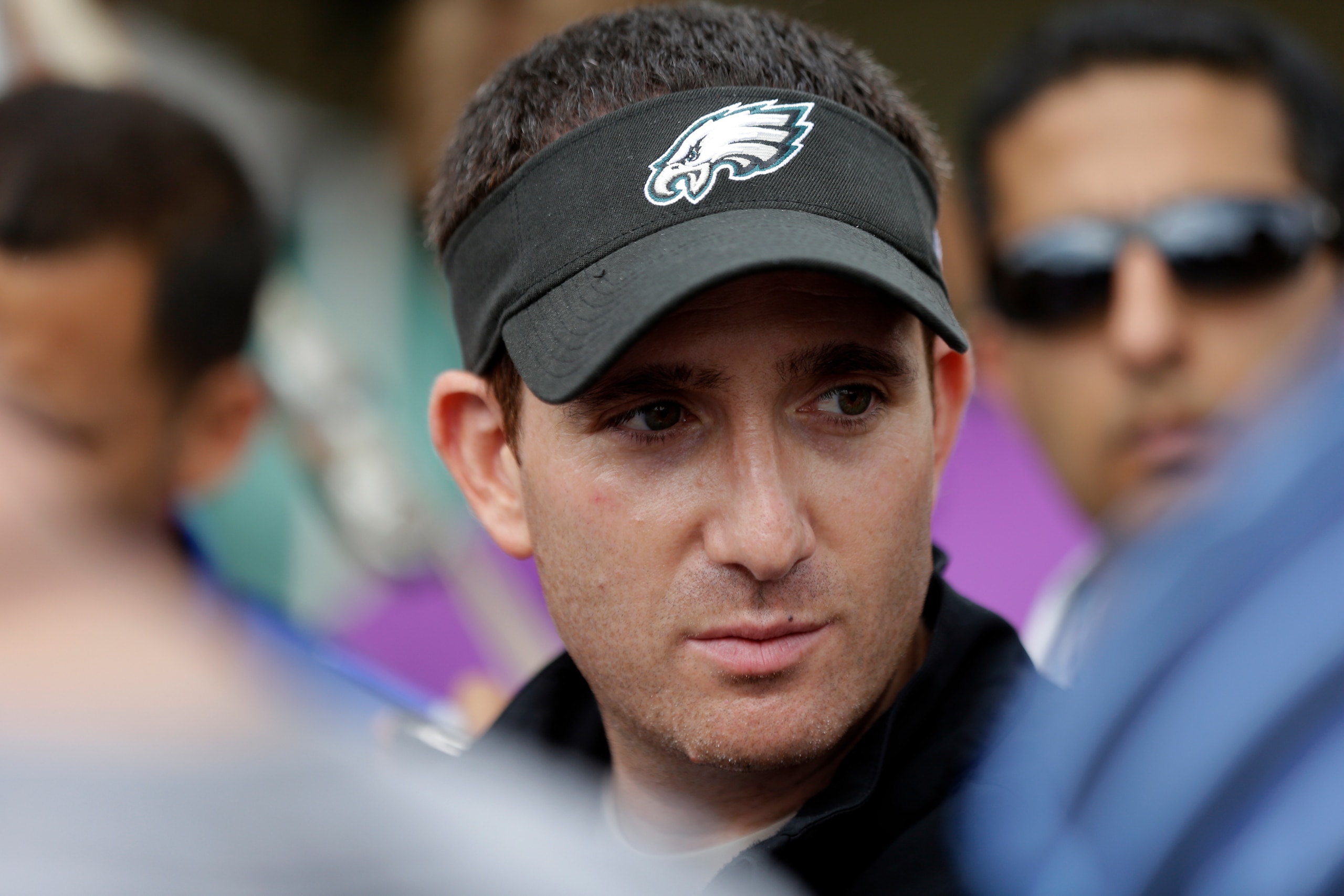
The new faces brought excitement and skepticism, among fans and reporters alike. Kelly seized personnel power from general manager Howie Roseman at the start of the year—Kelly, like Julius Caesar, claimed that the power was actually thrust upon him—and within a few weeks, football equilibrium in Philadelphia was toppled from its axis.
Observers are equally excited, confused and terrified. Are the new Eagles any better? Can any team absorb this many changes? Did Kelly, newly invested with full personnel control, go off the deep end?
Banner doesn’t think so. “Assuming they stay healthy—which in this case is a pretty big assumption—they have made the team meaningfully better,” he said.
Banner believes that we missed the big picture while itemizing the trades, signings and departures of the Eagles' offseason and gawking at the sheer amount of change. “I think it’s unique, but not in the ‘conventional wisdom’ way,” Banner said.
The personnel turnover made headlines, but Kelly’s underlying vision—and his determination to pursue it—is the real story. “What’s unique is the extent of the willingness to turn over and start with new players, trust that you can coach them up quickly and get them to function as one group. Most coaches are afraid to do that.”
Kelly’s plan was hard to perceive during the blizzard of Eagles transactions in March. When the storm cleared, the Eagles had swapped out starting quarterbacks (Nick Foles for Bradford), starting running backs (McCoy for Murray), their top wide receiver (Jeremy Maclin for a committee) and both starting cornerbacks (Cary Williams and Bradley Fletcher for Byron Maxwell and, eventually, rookie Eric Rowe).
Repercussions lingered until mid-June, when Mathis was released over a contract dispute, leaving the Eagles with a new pair of starting guards (Allen Barbre and an undetermined successor in place of Mathis and Todd Herremans).
The first hours of training camp brought yet another controversial transaction: Kelly traded cornerback Brandon Boykin to the Steelers, prompting Boykin to echo McCoy's racial allegations. Kelly is "uncomfortable around grown men of our culture," Boykin texted to Comcast SportsNet's Derrick Gunn, a Philadelphia reporter. He also told Gunn that Kelly "can't relate" to some players.
Boykin soon clarified his remarks, telling reporters, "I'm not saying [Kelly is] a racist in any way."
But Kelly's training camp press conferences began the way his offseason press conferences ended, with unexpected trade news, troubling allegations and the inscrutable head coach deflecting most of the difficult questions.
The Eagles' offseason was so tumultuous that some of the stranger details were easy to forget. Frank Gore agreed to contract terms then backed away to sign with the Colts instead. Murray and Ryan Mathews arrived at Eagles headquarters at the same time to apply for the same job; both were hired.
Also, there were nonstop rumors about a Marcus Mariota trade. And then Tebow. The final haul was heavy on players coming off major injuries (Bradford, Kiko Alonso), players with hefty price tags (Bradford, Murray, Maxwell), Kelly’s former Oregon players (Alonso, Walter Thurmond), major risks and baffling questions.
The Eagles’ offseason transactions flew in the face of both conventional wisdom and the football management survival instinct. A new coach on a rebuilding team might swap quarterbacks, running backs, and much more to jump-start his regime. But coaches of 10-win teams are hardwired to keep the team intact for 10 more wins so everyone stays employed. Gamble big and lose big, and the house goes on the market, the kids get pulled out of school, and everyone’s careers go (at best) sideways.

“The conventional wisdom in the league is: ‘No, no, you can’t have this much change.’ I personally don’t agree with that,” Banner said. “I think if you have the right coach, he should be able to manage the cultural challenges. If you have the right position coaches, they should be teaching well enough to get them ready.”
The Foles-McCoy-Maclin Eagles were safely poised for another 10-win season. But it was hard to imagine them doing more. Kelce was frank about the problem: The Eagles lacked talent at a few key positions. “We started off really, really good. But we got lucky quite a few times early to win games that we probably should not have been in.
“The fact that we ended the season the way we did, didn’t make the playoffs, in hindsight was almost a good thing. It forced the organization to re-evaluate what we had.”
Massive changes like the ones Kelly made usually result in a salary-cap catastrophe. But Kelly mitigated the long-term financial risks by acquiring players coming off injuries, like Bradford and Alonso, and by absorbing hefty one-year contracts instead of doling out long-term extensions.
“Philadelphia is in great cap shape even with all of the transactions and all of the turnover they’ve incurred,” said former Redskins cap analyst J.I. Halsell, who lived through his share of financial disasters.
Kelly spent rollover money from the Roseman and Banner regimes to absorb Bradford’s salary and sign Murray and Maxwell. But because he made tough decisions on veterans like Maclin and Mathis, there is still a cap surplus to roll over into next year.
“It’s not like they blew their cushion,” Halsell said. “They still have a fair amount of cushion.”
But while Banner said he would not make all the moves Kelly made, he said they can still result in a cohesive locker room.
“This is where the head coach, and Chip’s belief in himself, allow him to do this,” Banner said. “He believes that he can manage the locker room and that he will keep people sticking together and working hard for the greater good.”
So the Eagles improved their roster without breaking the bank. Assuming everyone stays healthy. And meshes as a team. And adjusts to the most unique scheme in the NFL, one that requires Kelly’s Eagles to run the league's most unusual practices.
Every element of Kelly’s plan relies on every other element: For the personnel plan to work, the science must keep high-injury-risk players healthy, the culture must integrate the newcomers, and the up-tempo scheme must prove that, over 16 games and the playoffs, it is more advantageous than exhausting. And each of those elements, in turn, must inform and support the other.
The Schematic Theory
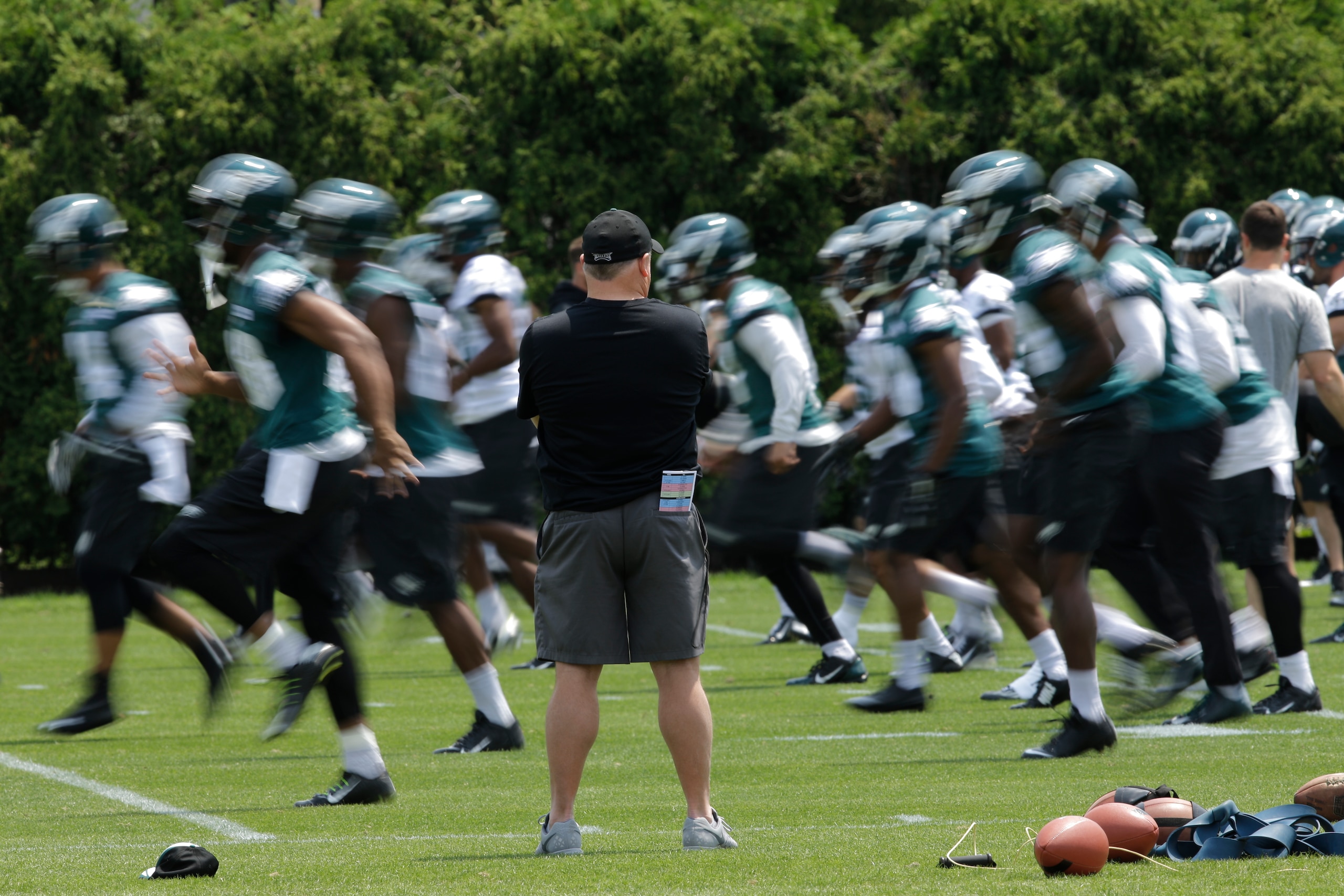
Kiko Alonso is tired after a steamy early-June OTA practice. Alonso played linebacker for Kelly at Oregon and should be familiar with the pace of a Kelly practice, but he has been away from the system for a few years.
“I didn’t forget about it. I knew what to expect,” Alonso said. “But I thought I was more in shape. I was wrong.”
Everyone knows about the up-tempo Eagles. Pace, not option wrinkles or running quarterbacks, is the defining characteristic of Kelly’s offense, the element of his system that translated directly from Oregon to the NFL.
The Eagles do not huddle, except in unusual circumstances. They are the fastest-paced team in the NFL, with no close competition. They averaged 21.95 seconds per play last season, per Football Outsiders. The Patriots were the second-fastest team at 25.54 seconds per play. The margin between the Eagles and Patriots is larger than the margin between the Patriots and Chiefs, the fourth-slowest team in the NFL.
The Eagles' tempo dictates practice habits, as well as conditioning habits, coaching habits and personnel needs. Eagles practices, from spring OTAs to training camp, are unlike any other practices: blaring music, speedy transitions from task to task, dozens of short sessions instead of a handful of long sessions, and no huddling—ever—on offense or defense.
To a man, players and coaches say that the tempo is the biggest adjustment for veteran players. It creates both learning and conditioning curves. But it also gives the Eagles a competitive advantage, one Alonso appreciates after two years with the Buffalo Bills.
“When I was in Buffalo, I was like: ‘I can’t imagine if we played the Eagles, going against that pace,’” he said. “Because if you don’t practice like that, it’s brutal.
“They did a little bit of hurry-up [in Buffalo]. But this hurry-up is pretty fast.”
The NFL has been slow to react to Kelly's system and even slower to embrace it. Many of Kelly's peers are skeptics, a few of them vocal skeptics.
Cardinals head coach Bruce Arians has called the read-option "a great college offense," and Seahawks general manager John Schneider joked at the combine about systems where quarterbacks are "looking at cards with turtles and colors and stuff," a reference to the no-huddle play-calling system.
Carroll's Seahawks have had plenty of read-option success, and all NFL teams use the no-huddle in certain situations. Like Kelly's extreme approach to trades and free agency, his up-tempo absolutism is a clear push beyond the NFL establishment's comfort level.
But innovators of past generations can see the logic behind Kelly's approach. Vermeil was known for his cutting-edge (and brutal) practice regimens when he took over the Eagles 40 years ago. He believes that the practice tempo provides a simple, obvious edge. “He’s getting about three times as many reps throughout an entire practice in the same amount of time that somebody else is. That correlates to an advantage.”
Not everyone was a fan of the pace. Cornerback Cary Williams, now with the Seahawks, complained last September to NJ.com that after exhausting practice weeks, some players “don’t have legs” on Sunday. He revisited those comments on an ESPN Radio interview in June, saying that “we were exhausted and we got outcoached” and “we got our teeth kicked in” in the Eagles’ late-season games.
Kelly brushed off Williams’ remarks as a “minority opinion.” As for the training techniques: “It’s all based on science.” Kelly even mentioned, as off-the-cuff as anything is mentioned in a press conference, that players fill out daily questionnaires about fatigue level.
Yes, questionnaires, with how are you feeling today-type questions. “We fill out daily surveys so we always have open dialogue,” said linebacker Connor Barwin. “Coaches can look at them and understand where the group’s at. Does everybody feel fresh? It’s not just that they are out here looking at us, deciding how they think we feel.”
Barwin said players feel comfortable admitting they are fatigued on surveys, and that coaches adjust workloads based on the survey results. “It only works if you are honest,” he said.
There’s more to the Eagles’ fatigue feedback system than multiple-choice questionnaires; players take regular dehydration tests and other sports-scientific examinations, for example. But the surveys peel back the veil on a facet of Kelly’s philosophy that we don’t expect to see.
Kelly isn’t a tyrant forcing weary players through endless drills. He’s using a culture of player feedback to inform the science that drives the conditioning that makes his scheme feasible; the uniqueness of the scheme, practice habits and conditioning science all feed back into the culture.
It all requires personnel willing to both buy into and enhance the culture.
The Cultural Theory
Every team in the NFL claims to be seeking smart, high-character players who also happen to be top athletes. The Eagles make the same claim, though they appear to practice what they preach more than other teams.
“All the players they drafted are high-character, smart guys,” Banner noted. Kelly targets draft choices who have earned or are on track for their college degrees, and he stresses academics in player interviews.
But the Eagles have their own buzzword that is not often heard elsewhere: open-mindedness. “We’ve added through free agency guys who are high-character, open-minded guys who want to learn and be part of the team,” Kelce said. “I don’t think we have gotten any guys that are selfish, close-minded, aren’t gonna be ready to take on the new system.”
It’s a common refrain among Kelly’s players and his assistants: Openness to new ideas is essential for an Eagles newcomer.
“He’s not a fixed-mindset guy. He’s not someone who thinks he has all the answers,” defensive backs coach Cory Undlin said when asked about the positive traits of Maxwell. “One organization doesn’t necessarily mirror another,'' said inside linebackers coach Rick Minter. “We have our way of doing things that are different this time of year compared to other organizations...A veteran has to get used to it from the moment he steps in the door.”
Veterans like the ones Kelce describes—closed-minded, unready for new ideas—are indeed out there. Eagles players have not singled out Williams, McCoy or any other departed player as being in the closed-minded category; in fact, they have been quick to downplay suggestions that any of the departed players “didn’t fit” in some philosophical sense.
But the Kelly system met early skeptics. “Definitely in the first year there were,” Kelce said. “They were few and far between—two, maybe three guys.”
There’s nothing unusual about that, according to Vermeil. When a coach takes a team in a new direction, “the young and insecure jump right on. The older, senior veterans who feel very secure sometimes reserve the right to continue the evaluation process to see if it is going to work or not.”
It’s hard to imagine there are any veterans left in the Eagles locker room who feel secure enough to reserve judgment. The smart, open-minded players are expected to create a culture that embraces the conditioning required for the scheme. But newcomers must master the unique scheme while improving their conditioning and, in the cases of key arrivals like Alonso and Bradford, recovering from injury.
That’s where science—and even a culture of science—re-enters the equation.
The Science Theory
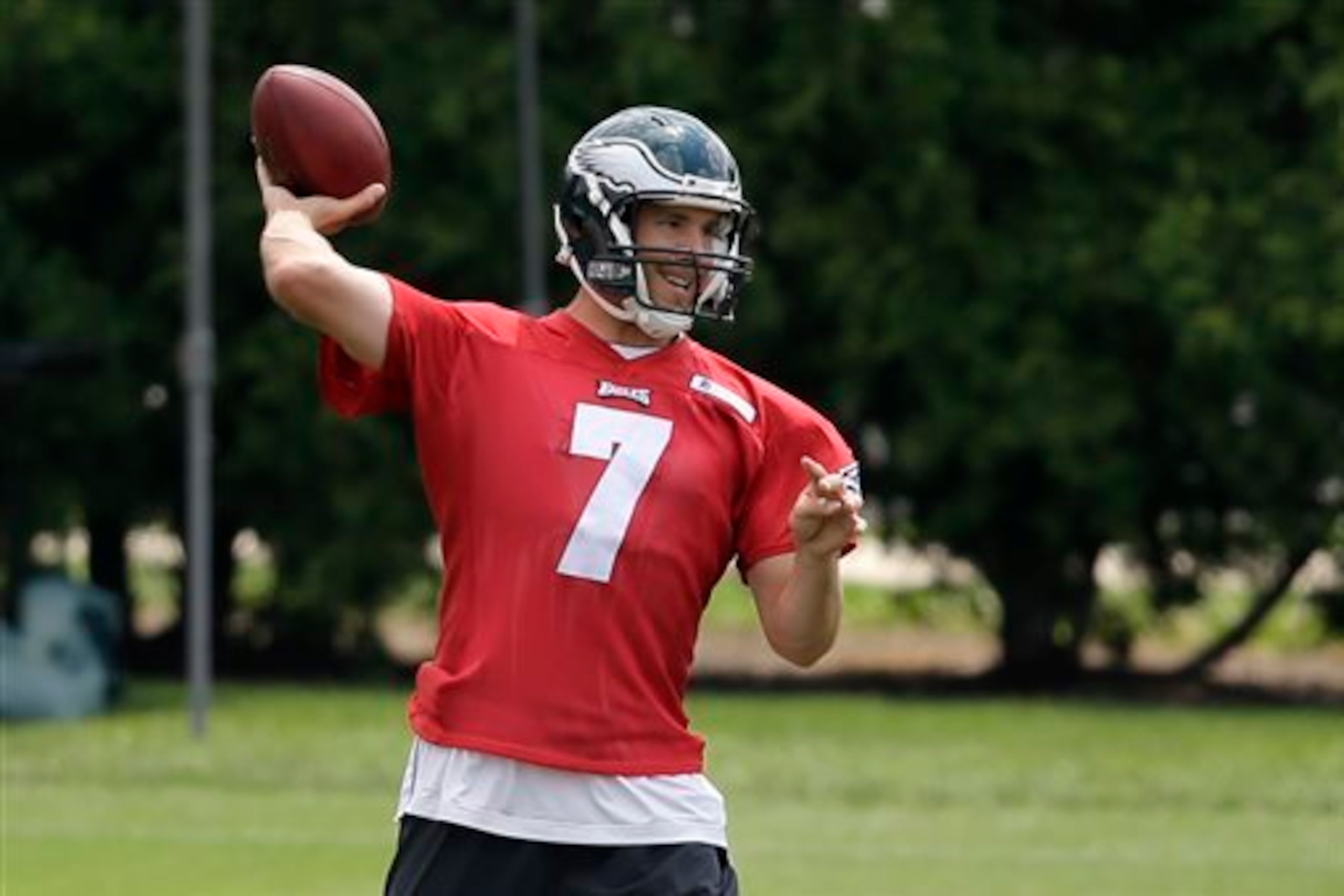
Sam Bradford participated in individual drills and seven-on-seven passing drills throughout June minicamp. He was held out of full-squad activities, however. Bradford tore his left ACL in October 2013 and tore it again in August 2014. He is slated to earn nearly $13 million in the final year of a contract he signed with the Rams. He was Kelly’s biggest gamble in an offseason of high-stakes craps, and he had yet to fully participate in a practice.
Bradford's status for training camp hung nervously over the Eagles in those June minicamps. “If I’m not ready for 11-on-11 by training camp, then something has gone horribly wrong,” he said after that first practice.
His coach sounded less confident when asked if Bradford would be a full participant in those first sessions. “God, I hope so,” Kelly said.
He delivered that remark like a punchline, with a coy grin and a hasty retreat from the press conference podium to the practice field. He was clearly needling the press corps a bit.
Perhaps Kelly knew that Bradford would be fully medically cleared by mid-July; he was a full participant when Eagles camp opened August 2. Even if Bradford's status really was uncertain in June, Kelly doesn’t often invoke higher powers on any topics, particularly health-related topics. His religion is science.
Earlier in camp, Kelly’s statements about Bradford’s knee revealed a detailed, procedural approach with a little more nuance behind it than the typical head coach’s we’re waiting for him to get better injury assessment.
“We all think there's three phases: There's medical rehab, there is performance rehab and then there's prepared to play. He's probably right at the tail end of medical rehab.”
Kelly believes the Eagles’ 21st-century rehabilitation and conditioning techniques can get injured players healthy and keep them that way. If it works, Kelly gets excellent players like Alonso and safety Walter Thurmond at bargain prices and, potentially, a franchise-caliber quarterback, which is a bargain at any price.
Banner thinks sports science could, in fact, give the Eagles an edge when rehabilitating injured newcomers. “Chip is betting on his sports science, which so far does seem to have the ability to at least mitigate the injury risk,” Banner said.
Kelly’s Eagles have, in fact, been one of the NFL’s least-injured teams for the past two seasons. Football Outsiders ranked them as the best team in the NFL in avoiding injuries in 2013, fifth-best in 2014. It’s a small sample, and some injuries are unavoidable, but the data suggests that there may be merit to all of the energy drinks, fast-paced drills, high-tech monitoring and other elements of the Eagles’ sports science regimen.
The Eagles have a Sports Science Team, not a training staff. Shaun Huls is Director of Sports Science and Reconditioning, not head trainer. The lab-coat stereotype, as you might guess, is a long way from the truth. The Eagles are not pushing any theoretical envelopes by monitoring players more carefully and adjusting workout habits.
“We’re not creating new science for these applications,” said Mike Hahn of the Bowerman Sports Science Clinic at the University of Oregon. “We’re taking science that has been well-vetted, well-validated over the last 50 years or so. The technology is now such that we can actually start combining them on to a mechanical and physiological interpretation.”
Bowerman is one of the leading sports science research and application centers in the nation. Bowerman trained one of the top lieutenants on Kelly’s sports science team, performance analyst James Hanisch.
The principles beneath the “sports science” banner have been adopted around the world since the 1976 Olympics, when Australia was shut out of the gold-medal podium and decided to do something about it on a governmental level. The Australian Institute of Sport was founded, grant money became available and Australia soon grew into a world leader in athletic nutrition, conditioning, physiology and biomechanics. Hanisch studied and worked both in Australia and at Bowerman before joining the Eagles staff.
“What James has brought back to the U.S. from the Australian system is the all-inclusive look, not just at whether they ate well or bench-pressed well that week, but did they sleep well, did they recover from the activity the way you would expect? Were they sore the next day, beyond the way they should be?” Hahn said.
The Bowerman model fits what we know of Kelly’s model: energy drinks, sleep monitors and so on.
Catapult is one of the corporations that grew out of the Australian Institute of Sport initiative. Catapult designs high-tech performance monitors for athletes. The University of Oregon was one of Catapult’s first American football customers. The Eagles became one of the first NFL teams to do business with Catapult as soon as Kelly became head coach.
“Our biggest competition is the status quo: the inability of old-school coaches to move beyond doing what they’ve always done,” said Gary McCoy, director of sports science at Catapult. “Change is frightening, especially in a sport like pro football.”
Hiring Australian-educated trainers and buying fancy equipment won’t do much good if coaches and players are reluctant to put theory and data into practice. McCoy mentioned one NFL client that has been highly receptive to sports science but collected three years of data before they began applying it.
Applying sports science on the field is all about, you guessed it, culture. “The biggest thing that makes the difference in the NFL is not having the data," McCoy said. “It’s having a culture from the top down that supports the use of it.”
Huls doesn’t just have a fancy title, but also a complicated mandate: get Bradford healthy, keep others healthy and retrain professional athletes to play a very different style of football. “He knows he has to get those guys lighter, but stronger,” McCoy said. “That’s almost an oxymoron. How do you do it?”
The culture makes the science effective. But the personnel has to buy in, and so do the coaches: not just Kelly, but the coordinators and position coaches who spend the most time indoctrinating newcomers about the finer points of the Kelly philosophy.
The Coaching Theory

Outside linebacker coach Bill McGovern has 29 years of college and pro experience. The coach is talking to a tiny cluster of reporters at a scheduled media event, the kind designed to provide cookie-cutter quotes for insertion into articles about Connor Barwin and Marcus Smith. McGovern is talking about how Kelly changed his philosophy. Not of coaching, but of child rearing.
“With Chip, you are always trying to better yourself, open your mind to something else,” McGovern said. “It makes me think about how I’m raising my child: How can I give them a little bit of an advantage about how they think, how they approach something, how they go to school, how they wake up, how they go to bed at night?”
Inside linebacker coach Rick Minter is another lifer: His coaching career started at Henderson State University in 1977. He looks and sounds like a traditional, run-a-lap, hit-the-dummy coach of yesteryear. He is explaining a concept any experienced teacher would instantly recognize by its buzzy 21st-century name: differentiated instruction.
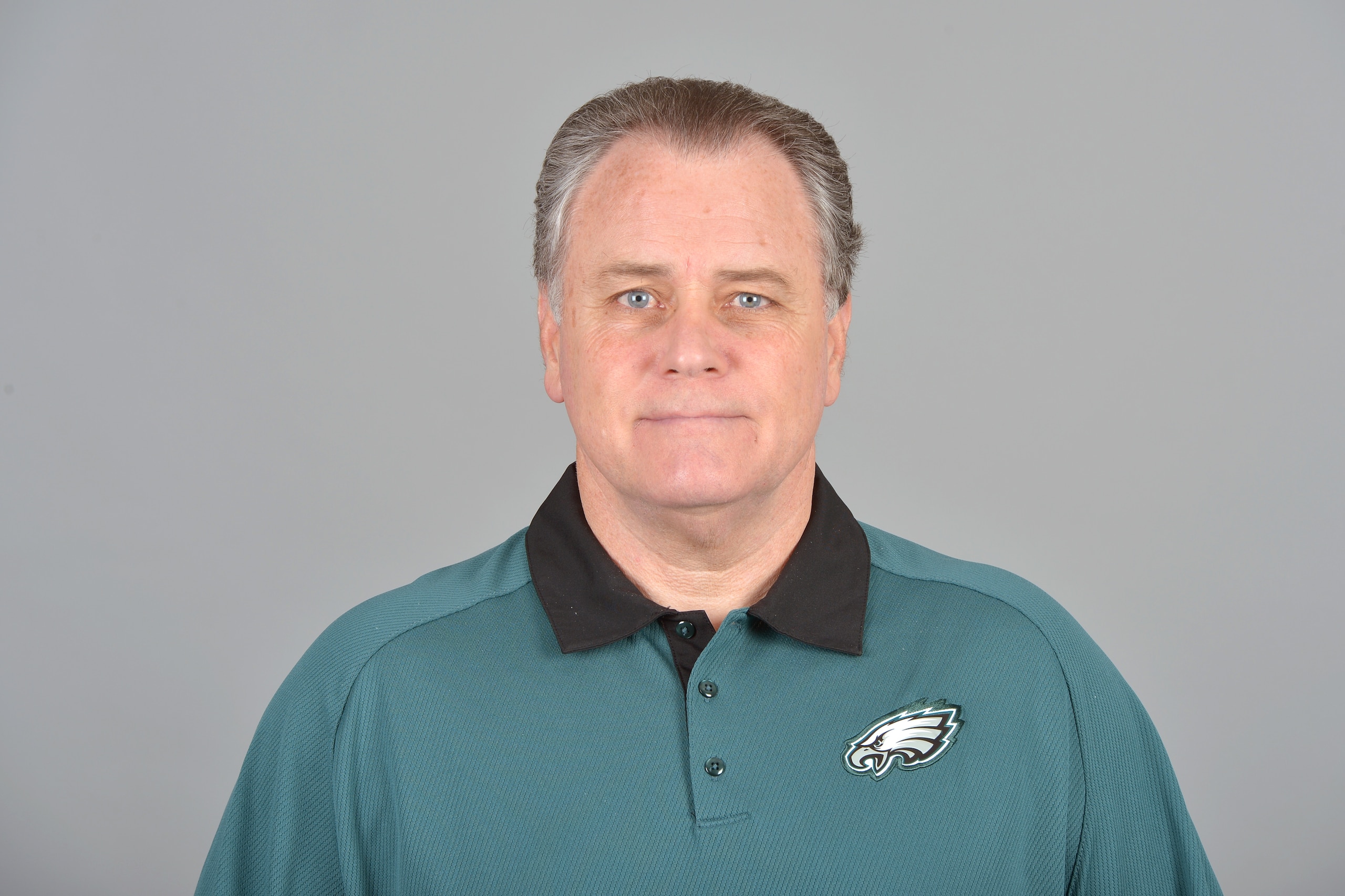
“As you are trying to become a better and better teacher, you have to say, ‘Who am I tailoring my teaching techniques and/or materials to?’” Minter said. “Is it DeMeco [Ryans], who knows everything? Or Jordan Hicks, who doesn’t know anything? Or is it Brad Jones, who has been in the NFL, knows the ropes, has been around some systems, but has to learn new information? It’s the task of the teacher.”
Add pedagogy to the list of sports sciences. Kelly studies teaching techniques when not studying conditioning techniques. When asked about a report that the 49ers have shortened meetings and incorporated cellphone breaks—millennials these days with their short attention spans—Kelly revealed the Eagles are even ahead of the scheduling curve.
“We understand exactly how much time a meeting should be devoted to,” he said. “We've never met for more than an hour; we've never had an hour‑and‑a‑half meeting, which I think was the norm in this league.”
Kelly’s lieutenants don’t speak like typical NFL coaches. There’s plenty of patois about trusting the process and giving 110 percent. But they also casually drop principles of Bowerman-style sports science into their discussions of players when not talking about pedagogy or early-childhood development.
“He talks about everything: how you teach guys, how you talk to people. He gets you reading different articles,” McGovern said of Kelly. Yes, articles.
Eagles coaches receive magazine, journal and newspaper articles by email, and they get book recommendations from the head coach himself. These aren’t books about Bill Walsh or bulletin-board updates on what the Cowboys are doing. “Me and Azzer [assistant head coach Jerry Azzinaro] had one we read the other day. It’s just something about the mind,” McGovern said.
“I don’t want to give that one away.”
Coaches reading articles about the mind, players filling out daily surveys, coaches truncating meetings to accommodate the real attention spans of 24-year-olds: None of this is standard NFL operating procedure. Just like an offense without huddling and an offseason without obvious boundaries, this is new. It’s scientific, it impacts the team culture, and it’s designed to better integrate new personnel.
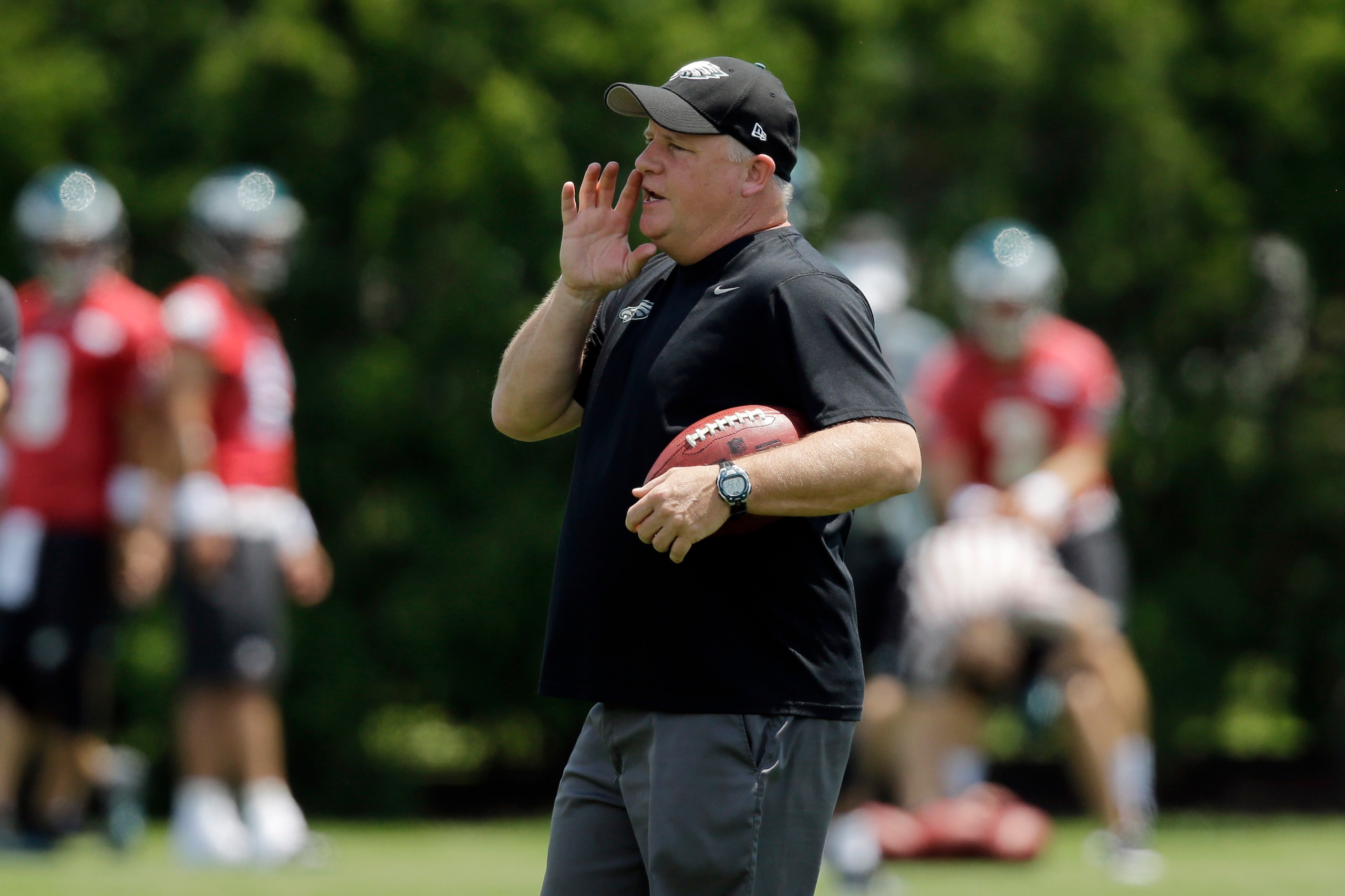
Ryan Day is the Eagles' new quarterbacks coach. He was Kelly’s quarterback in New Hampshire. He was there when the Kelly system was in its infancy. Those Wildcats might switch from the run ‘n’ shoot to an option-heavy veer offense with minimal notice.
“One week, we threw it six times,” Day remembered. “The next week, we threw it 65 times. Coach kinda had a laboratory there, and it was a lot of fun to be around.”
The Kelly of a decade ago has not changed much, according to Day. Then, as now, Kelly researched successful systems and methods, applied them and made adjustments. The offensive playbook may have stabilized, but methods themselves have not stagnated, and coaching autonomy is still a critical aspect of the system.
“He gives you a job to do, and then he lets you do your job,” Day said. “When he says something to you, you better listen, because when he’s saying it to you, there’s thought behind it, and it’s calculated...And he knows where to put his thumb, where it’s supposed to be. That’s one of his gifts.”
There’s a contradiction at the core of Kelly’s system that makes it so difficult to grasp. It’s an absolute adherence to open-mindedness, a strict doctrine of flexibility. Kelly demands the complete loyalty of creative free-thinkers.
The my-way-or-the-highway side of Kelly’s system is easy to spot when he is seizing management power and waiving even the mildest dissidents. But Kelly is no dictator or control freak, not in the sense that NFL observers are used to. The Eagles sometimes sound more like Apple or Google than a conventional NFL team, with Kelly as the Steve Jobs who kicks down cubicles and encourages innovation, all the while inspiring—and demanding—absolute fealty.
Veteran leaders, like coaches, can also act autonomously within the Kelly system. Kelce will snap to a new quarterback this season, with two new guards on either side of him; he needs to make sure everyone knows the play, knows the adjustments, knows where to line up.
Kelce seized the role of veteran mentor without waiting for permission or instructions. “If you have a good locker room, the leaders know what’s expected of them,” Kelce said.
“If you have to explain to someone that they should help some other guys out, you probably have a pretty piss-poor locker room.”
Or perhaps the culture has not seeped down through the coaching to the personnel.
The Theory of Everything
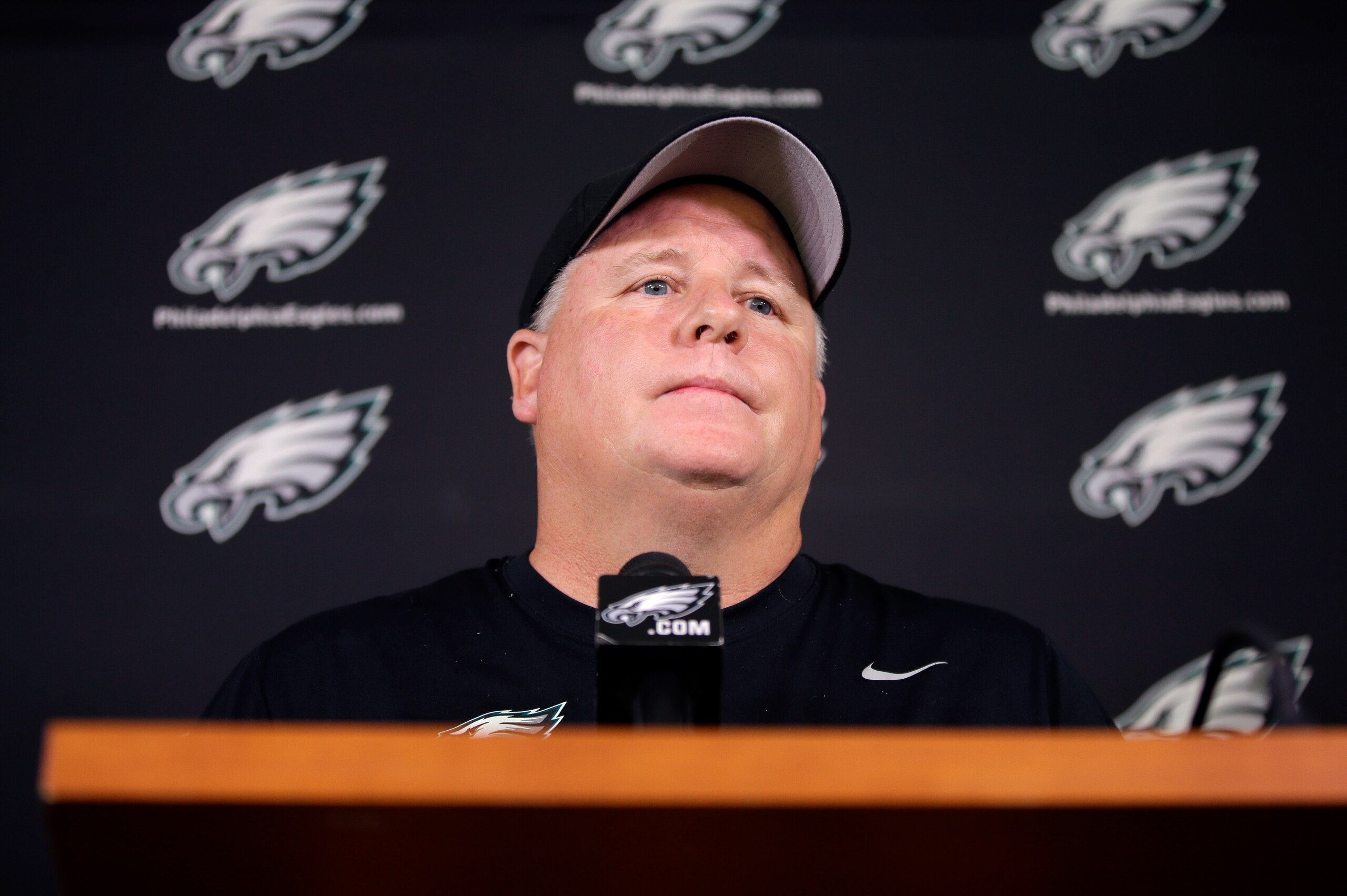
Good luck defining “culture.” Anthropologists and philosophers have a hard time with it. Coaches and sportswriters don’t stand a chance. “I don't think about what it is,” Kelly said when asked directly about his culture. “There are a bunch of guys that are working very hard, and that's what we're looking for.”
Granted, the pre-practice press conference setting is not conducive to serious discussions of culture. And Kelly doesn’t grant one-on-one interviews. That culture concept has hung tantalizingly outside the realm of definition since Kelly dropped his “culture will beat scheme every day” wisdom last fall.
Perhaps the Kelly culture is just the air the Eagles breathe: the no-huddle, energy shakes, speedy practices, short meetings, journal-reading coaches, player surveys, science-based workouts. It’s the result of taking apart those old coaching traditions, studying them and putting them back together in new ways—and it’s the act of deconstructing those old traditions itself.
Or maybe “culture” is just a buzzy new term for “team chemistry,” a modernized way to trigger us-versus-them camaraderie among players who only became “us” a few weeks ago, while shaking out any doubts about strategy or methodology.
“There’s no substitute for camaraderie. We found that out in all the wars we fought in,” Vermeil joked.
Vermeil was Kelly once: a hotshot coach from a West Coast college striving to change the way a complacent team (and league) approached its daily business. Vermeil understands NFL culture as well as anyone.
“Their attitudes have to be reshaped and reformed,” Vermeil said of the Eagles' newcomers. “Once the attitudes are reshaped and reformed as one solid team attitude, then culture is developed. They all think alike. They all believe alike.”
“They’ll find it a very homogeneous locker room: a locker room full of believers,” Vermeil said of the newcomers so critical to the Eagles’ success. “Those kind of attitudes permeate a locker room. And then the guy who doesn’t believe it, his voice is so weak that no one listens to him.”
That environment of believers can sound a little cultish, or even totalitarian, when a veteran like Kelce speaks broadly about veterans of the past who were not with the program.
“Resistance is not buying in and not being part of the team’s culture, the team’s ideals and the team’s direction,” he said. Kelce then echoed Vermeil’s sentiment about the weak voice. “When you have leaders around who are all going in one direction, it makes those little resistances less frequent.”
There was one leader whose voice was not in harmony with the others: Howie Roseman, former general manager, current executive vice president of football operations with no tangible authority over football operations. The overthrow of Roseman, once the team’s most visible spokesman (he had his own radio show), was the first battle in the Eagles' cultural revolution.
Kelly always controlled the pace of the offense and the volume of the minicamp music, but it is hard to imagine the Eagles making such extreme personnel changes this offseason with Roseman holding both the transaction telephone and the purse strings. (The Eagles have not made Roseman available for comment).
New vice president of player personnel Ed Marynowitz, by contrast, is a trusted lieutenant, not a holdover from a past regime with his own business model. “For everybody in the organization, our role is to support Chip and his vision,” Marynowitz said at his first press conference.
It all starts with Kelly. But it doesn’t end with him. Autonomous, collegial coaches shape the culture and the players. Scientific principles inform the coaches and condition the players, who are willing to accept the science because they have embraced the culture. The tempo grew from research, dictates the practice methods embraced by the coaches and necessitates the science. Unique practice methods entrench the culture.
It’s cyclical. It’s complicated. And it’s unlike anything the NFL has seen before, which is what makes it so confusing and easy to dismiss as a doomed experiment.
“Chip’s approach is different, so it is being evaluated more thoroughly,” Vermeil said. If the Eagles succeed this season, it will upset the NFL managerial status quo: Owners will comb the college ranks in search of their own Chip Kellys. If the Eagles fail, they will take a whole philosophy—up-tempo offense, sports science concepts, bold departures from the traditional build-slowly roster model—down with them.
“It takes a lot of guts and confidence to go 10-6 and feel like, ‘We’re good, but we’re trying to be great, and we have to really make a bunch of changes to get to great.’” Banner said.
“Whenever you make a bunch of changes, there’s a chance of going backwards. That’s something the league is so allergic to.”
But Kelly believes in himself, and in a culture he cannot articulate, enough to take that chance. “To me, that’s refreshing,” Banner said. “He was bold enough to prove he means it.”