
NFL Draft 2015: Matt Miller's Latest Scouting Notebook
We are 33 days away from the 2015 NFL draft, and that means it's getting serious in the world of scouting and team building.
Pro days, private workouts and final grades are being assigned to players across the NFL—and at Bleacher Report we're doing the same thing. As part of an upcoming NFL Draft 400 series—scouting, grading and ranking the top 400 players in the class—notes are changing daily. The repercussion of that is a lot of movement up and down the board as the draft nears.
Who is moving up, who is moving down and how does the top 50 look today? Find out below.
TOP NEWS
.jpg?w=2560 "Colts Football")
Jonathan Taylor Landing Spots
.jpg?w=2560 "NFL Paris Football")
NFL House in Paris Closes for Protests (AP)
.jpg?w=2560)
B/R's Expert Week 7 NFL Picks 🔮
The Scout's Report
— Nebraska edge-rusher Randy Gregory admitted to a failed drug test at the NFL Scouting Combine. How does that affect his draft stock? On my board, it won't move Gregory from his spot at No. 7 overall, and one college scouting director I reached out to said it won't change him on his board either. "Everyone already knew this was an issue," he told me. There were rumors dating back to August about Gregory and marijuana, so teams were prepared for this news to break.
— The team drafting Gregory can look at recent examples like Justin Houston (who also failed a combine drug test) as a positive, but you can bet the Josh Gordon situation will hang over the decision to select the talented Nebraska pass-rusher.
— Brandon Scherff dominated the Iowa pro day this week, posting a 32.5-inch vertical jump, a 7.07-second three-cone drill and an amazing 4.41-second short shuttle in front of 31 NFL teams.
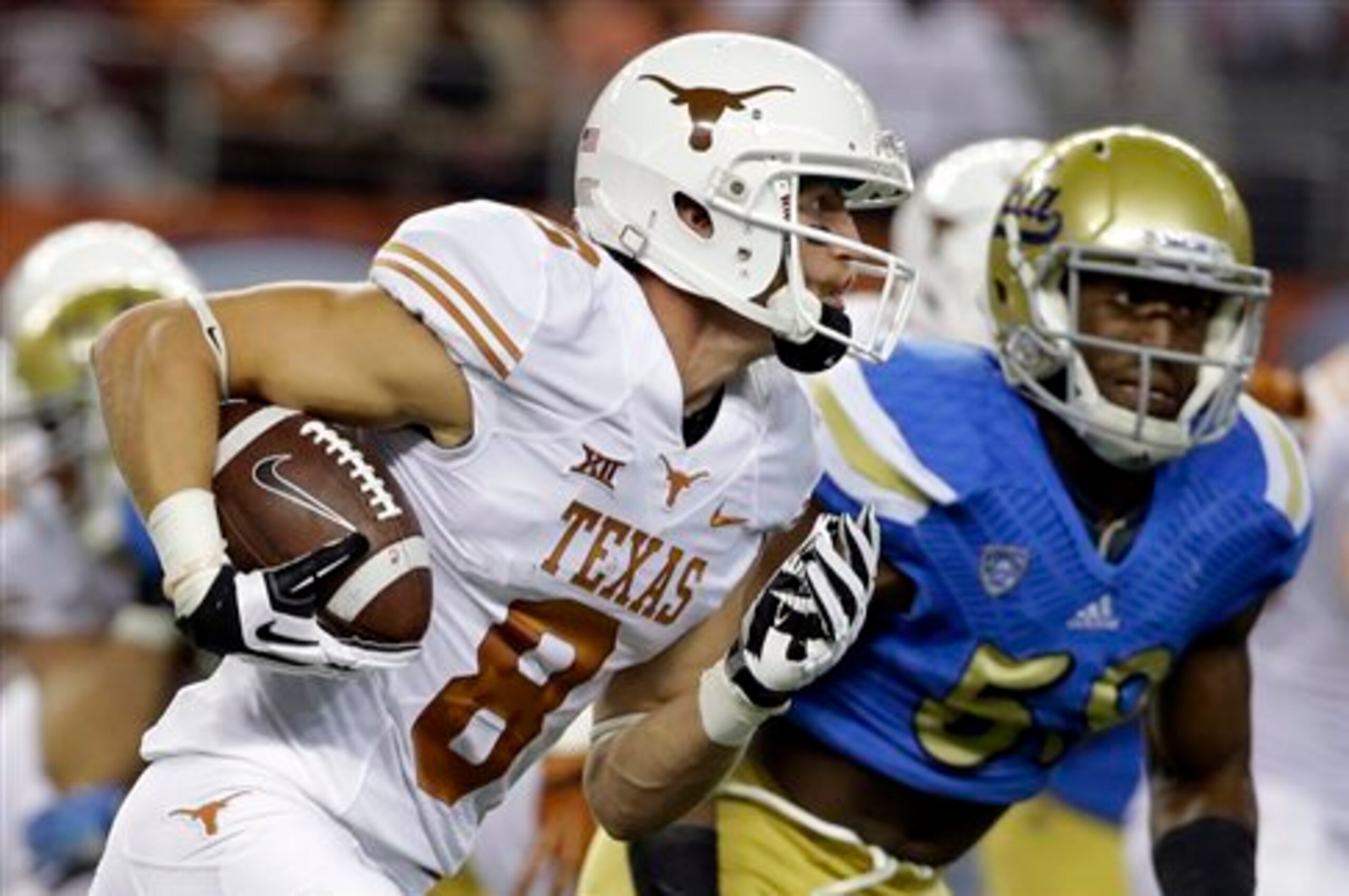
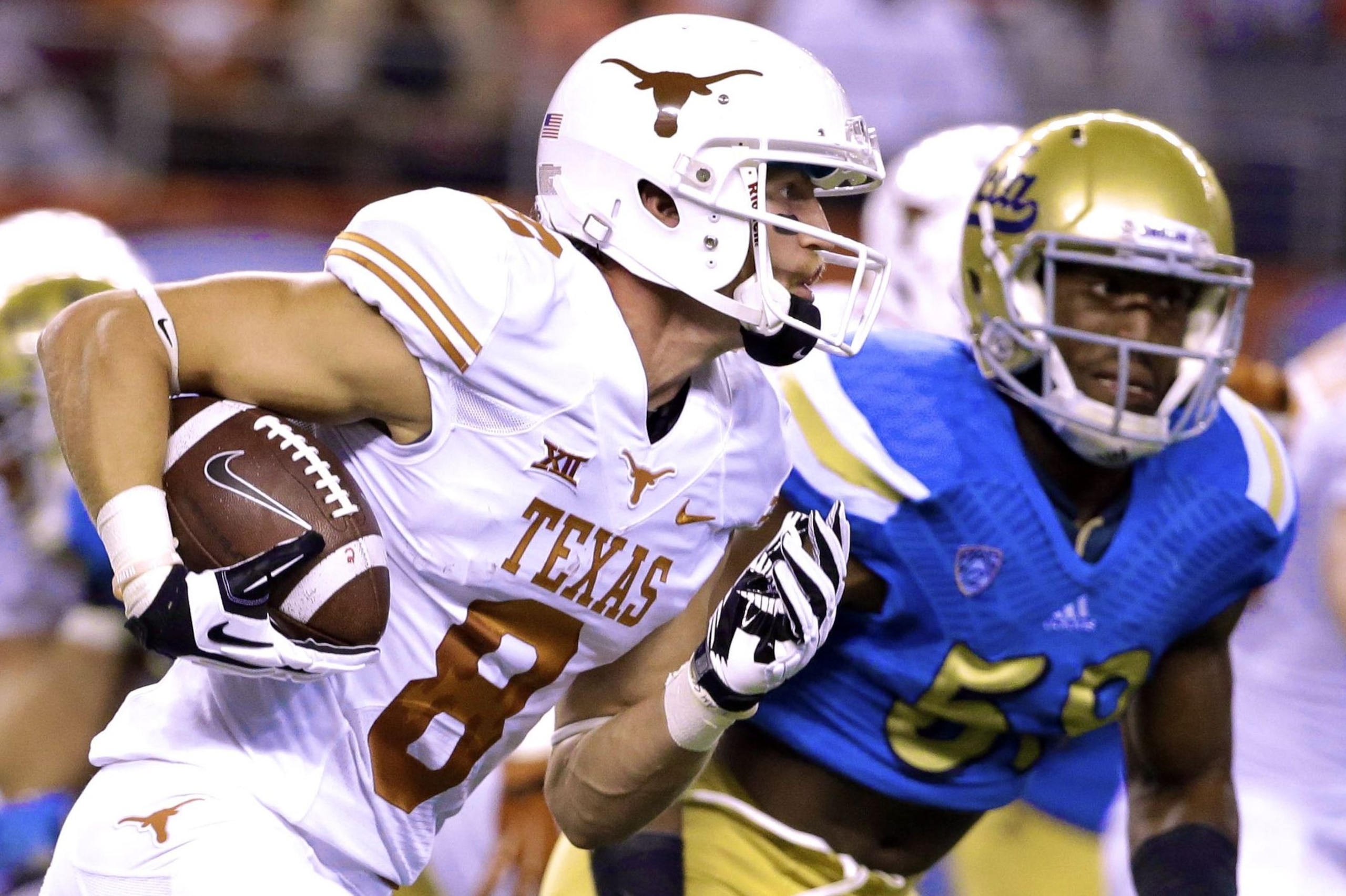
— The University of Texas pro day created a buzz thanks to wide receiver Jaxon Shipley. He wowed with a 4.49-second 40-yard dash, a 35-inch vertical jump, a 10-foot broad jump, a 4.4-second short shuttle and 6.93-second three-cone drill. Those are all top-tier numbers for the 6'0", 190-pound receiver.
— One player who didn't participate at the Texas pro day was defensive end Cedric Reed, as he's still recovering from a meniscus injury. Reed's camp told me that he will have an individual workout for teams closer to the draft.
— Breshad Perriman did his best to break the Internet when his agent, Drew Rosenhaus, tweeted that the Central Florida receiver ran a 4.26-second 40-yard dash at his pro day. Here's the story from his pro day, as relayed to me by a scout in attendance: "So on the first run he crushes it. We're all in the 4.22-4.24 range. So he doesn't want to run the second 40 and ruin his time, so he says his hammy (hamstring) is tight. But he ran it anyway, and I had him at 4.26."
— Duke wide receiver Jamison Crowder improved his 40 time with a 4.39 at his pro day, but on film he still looks like a small receiver who struggles to create separation. That was on display at the Senior Bowl, too. Crowder is fast, but is he field fast? That remains to be seen.
— TCU linebacker Paul Dawson told me this week he has "at least" five meetings lined up with teams before the April 30 draft. He also relayed that every team has talked to him about playing middle linebacker, not on the outside. It won't be a surprise if Dawson sneaks into the end of Round 1.

— Ready for a bold prediction from one general manager? "Bryce Petty WILL go Round 2."
— If you're looking for a sleeper cornerback prospect, there's one in my backyard: DeVante Bausby from Pitt State—the college that produced wide receiver John Brown. He's raw, but his numbers are jaw-dropping. At his pro day Thursday he recorded a 37.5-inch vertical jump, an 11-foot broad jump, 14 reps of 225 pounds on the bench, a 7.09-second three-cone drill, a 4.24-second short shuttle and a mic-drop 4.42 seconds in the 40-yard dash in front of the Seahawks, Chiefs and Washington.
Five Up, Five Down
With the 2015 NFL draft approaching, here's a look at five players moving up and five players moving down my board after extended film review.
5. RB Melvin Gordon, Wisconsin
I am not a flip-flopper—sometimes to a fault. But it takes a lot for a player to move even a tiny amount on my rankings, so to come out in late March and say I was flat-out wrong about a player in-season? That's a credit to the player. I was wrong about Melvin Gordon.
When scouting running backs, it's too easy sometimes to give credit to the offensive line, play-calling and/or competition while focusing on traits over production. But with Gordon you have to acknowledge the production because it came on the back of his traits (vision, balance, speed and agile hips). I'm not ready to put him over Todd Gurley, but Gordon has captured the No. 2 running back spot in this draft and isn't letting go of it.
4. CB Byron Jones, UConn
A dominant combine performance meant going back to the tape on Byron Jones—and that meant digging to get 2013 film since he was injured for a large part of 2014. Jones is a physical, big cornerback with the ability to play press coverage in the NFL—and that's what teams crave with the Seattle Seahawks being the model everyone is following.
Jones' electric athletic numbers aside, he's a good football player with toughness, sound footwork and the length to jam at the line of scrimmage. That puts him in the top of Round 2.
3. DT Grady Jarrett, Clemson
The Clemson defense was loaded with athletes in 2014, and most of them are draft-worthy. One player moving way up the board is defensive tackle Grady Jarrett.
When watching Stephone Anthony, I couldn't get over how consistently clean his paths to the ball were. That's something you make a note of and check out later. When it was time to watch the defensive tackles, Jarrett stood out as the reason for all those clean paths to the football for the middle linebacker. He's able to eat blocks but has the quickness to penetrate and give chase. As a three-year starter at nose tackle, he's valuable to what the NFL wants as a 0 or 1-technique lineman.
2. EDGE Markus Golden, Missouri
Shane Ray gets all the attention along the Missouri defensive line, but Markus Golden turned heads at his pro-day workout and may have quieted doubters who pegged him as a 'tweener in this year's class.
Golden needs to show he can play in space given his 6'2", 260-pound frame. He accomplished the first step by posting a 4.74 40 time, but more importantly his 4.57 short shuttle and 7.38 three-cone drill were improvements over what was expected. Golden also looked good in position drills, and his stock is on the rise as a result.
1. S/CB Adrian Amos, Penn State
Just 4.37 seconds. That's how long it took the 6'0", 218-pound Penn State defender to run 40 yards at his pro day. And that's the kind of number you go back and check your notes on.
Amos is versatile, showing the ability to play safety or cornerback, and that 40 time will have many looking at him as a nickel cornerback or safety because of his ability in space as a tackler. He's a high-character player with great football IQ. And in a weak safety class, his combination of tape and workouts will push him up the board.
1. EDGE Randy Gregory, Nebraska
No matter how you feel about the legalization of marijuana, it's always a concern when a prospect knows he's going to be tested at the combine and still fails the test. Gregory isn't moving down on my personal big board, but teams around the league right now are taking his name from Round 1 and moving it to Round 2 or lower.
2. FS Cody Prewitt, Ole Miss
In a bad safety class, Cody Prewitt had a chance to make some money in the draft process, but too often he leaves you wanting more. Prewitt flashes impressive athleticism and big-time plays, but he also struggles to make routine plays consistently. He's among the more maddening prospects because of that all-or-nothing style, and that's moving him down the board.
3. CB Anthony Jefferson, UCLA
Anthony Jefferson's first move should be to tell NFL teams he wants to play safety. That's the best medicine for his 4.72-second 40-yard dash and tight, stiff movements on film. He didn't display the athleticism in short-area movements or burst to pass the grade as a cornerback—especially at 6'1" and 198 pounds. He should start eyeing a move to free safety to boost his draft stock.
4. G Tyler Moore, Florida
Why did Trent Moore leave Florida early? It's tough to imagine there being a good football reason other than the departure of head coach Will Muschamp.
Watching Moore's film this week, he doesn't look like an NFL-caliber guard and could have benefited greatly from another year in the Gators' system and program. He does have some developmental qualities, but Moore needs a ton of work before he's game-ready.
5. TE Jean Sifrin, UMass
Pass-catching tight ends are trendy right now, and UMass' Jean Sifrin is definitely that. But he's also 27 years old and didn't do anything to impress at the combine (4.84 40-yard dash) as a hybrid tight end. Sifrin has a great story—he dropped out of high school in 2005, earned his GED and worked to support his son before getting noticed playing flag football by a recruiter—but he's raw and an old prospect with limited athleticism.
Scouting Report: Stephone Anthony, Clemson
Throughout the 2015 draft season, one draft prospect will be highlighted each week with a first-look scouting report.
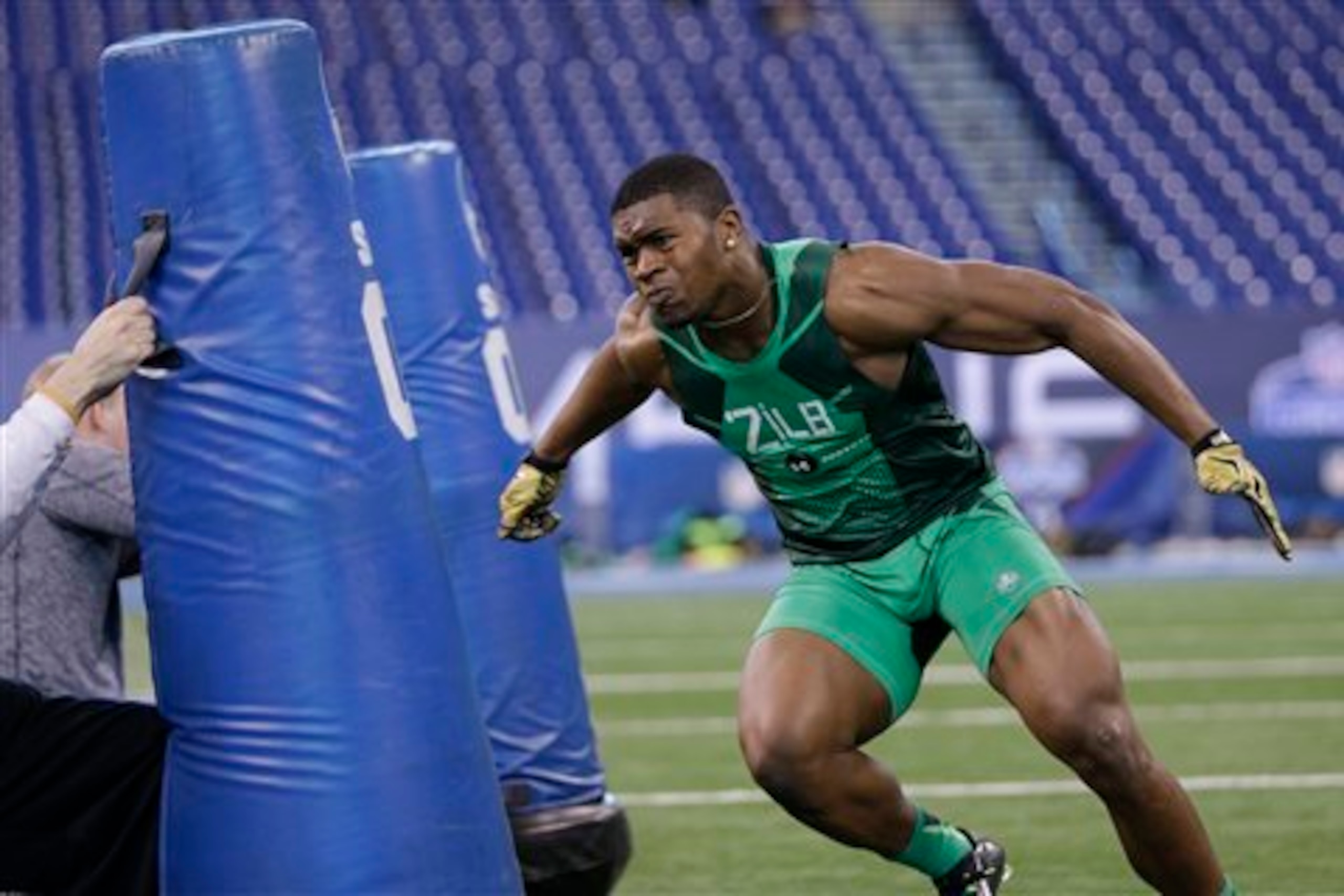
Linebacker Stephone Anthony, Clemson (6'3", 243 pounds)
STRENGTHS: An easy-moving linebacker who jumped off the field at the Senior Bowl and quickly made an impact, Stephone Anthony looks like an NFL starter on the hoof. He has an athletic, solid build backed up by impressive agility and speed. He’s a producer as a tackler and shows the lateral ability to make plays outside the tackle box. He’s smooth enough as a mover to play well in coverage and can lock up tight ends or jam slot receivers. Coaches rave about his work ethic.
WEAKNESSES: In his junior season, Anthony lost his starting job and had to earn it back. He gets too shy when asked to shut down a run lane and will hesitate to close the hole. When engaged by blockers in the lane, he’ll get hung up and can tie himself to blockers too often. His instincts are only average, and he’ll get caught watching the play.
PRO COMPARISON: Karlos Dansby, Cleveland Browns
A tall, lean, athletic linebacker with great movement skills and coverage potential, Anthony looks a lot like Karlos Dansby did coming out of Auburn and how he looks now in Cleveland.
The Big Board
The 2015 NFL draft is closing in on us. Here are the top 50 players for the class with just seven weeks left.
| Rank | Player |
| 1 | QB Jameis Winston, FSU |
| 2 | DL Leonard Williams, USC |
| 3 | EDGE Dante Fowler, Florida |
| 4 | WR Kevin White, West Virginia |
| 5 | WR Amari Cooper, Alabama |
| 6 | CB Marcus Peters, Washington |
| 7 | EDGE Randy Gregory, Nebraska |
| 8 | G Brandon Scherff, Iowa |
| 9 | WR DeVante Parker, Louisville |
| 10 | RB Todd Gurley, Georgia |
| 11 | QB Marcus Mariota, Oregon |
| 12 | DL Danny Shelton, Washington |
| 13 | EDGE Shane Ray, MIssouri |
| 14 | EDGE Vic Beasley, Clemson |
| 15 | WR Dorial Green-Beckham, Missouri |
| 16 | SS Landon Collins, Alabama |
| 17 | CB Ronald Darby, FSU |
| 18 | EDGE Bud Dupree, Kentucky |
| 19 | DL Arik Armstead, Oregon |
| 20 | DL Malcom Brown, Texas |
| 21 | DL Eddie Goldman, FSU |
| 22 | RB Melvin Gordon, Wisconsin |
| 23 | LB Shaq Thompson, Washington |
| 24 | T D.J. Humphries, Florida |
| 25 | T La'el Collins, LSU |
| 26 | CB Kevin Johnson, Wake Forest |
| 27 | LB Eric Kendricks, UCLA |
| 28 | T Jake Fisher, Oregon |
| 29 | T Cedric Ogbuehi, Texas A&M |
| 30 | CB Trae Waynes, Michigan State |
| 31 | CB Jalen Collins, LSU |
| 32 | EDGE Eli Harold, Virginia |
| 33 | WR Jaelen Strong, Arizona State |
| 34 | RB Duke Johnson, Miami (Fla.) |
| 35 | EDGE Owa Odighizuwa, UCLA |
| 36 | TE Maxx Williams, Minnesota |
| 37 | C Cam Erving, FSU |
| 38 | LB Benardrick McKinney, Miss. State |
| 39 | LB Paul Dawson, TCU |
| 40 | T Andrus Peat, Stanford |
| 41 | WR Devin Funchess, Michigan |
| 42 | T T.J. Clemmings, Pitt |
| 43 | WR Devin Smith, Ohio State |
| 44 | LB Denzel Perryman, Miami (Fla.) |
| 45 | CB P.J. Williams, FSU |
| 46 | CB Byron Jones, UConn |
| 47 | WR Breshad Perriman, Central Florida |
| 48 | WR Nelson Agholor, USC |
| 49 | DT Carl Davis, Iowa |
| 50 | DT Michael Bennett, Ohio State |
Parting Shots
10. I cannot type this enough during draft season: Draft analysts work in the "should" department, not the "will" department. I can't tell you what Ozzie Newsome will decide to do when the Baltimore Ravens are on the board, but I can tell you what I think he should do.
9. Good luck decoding this exchange between Tampa Bay Buccaneers head coach Lovie Smith and Rick Stroud of the Tampa Bay Times:
"When asked at the NFL owners meeting Wednesday if it would be an "erroneous assumption," to believe the Bucs will choose Winston over Oregon quarterback Marcus Mariota or another player, Smith shook his head.
"No, I wouldn't say it's an erroneous assumption,'' Smith said. "I would say when people make that assumption, we haven't had the pro workout (for Winston) yet. But we've done a lot of research, have watched a lot of video and had both of them in and talked with them individually and had them on the board. But the process, the game isn't over yet. I think you can have a leader, but you have to let the game play out and we're doing that.
"We're excited about this final stage almost to decide exactly which direction to go.''
"
By all logic this sounds like the Buccaneers know where they're going with the No. 1 pick, and Winston is the most likely option. Welcome to the silly season of coachspeak.
8. The Chicago Bears caught my criticism when they hired Ryan Pace as general manager over Chris Ballard, but you have to hand it to Pace for the work he's done so far. Not only did he hit a home run by hiring head coach John Fox and defensive coordinator Vic Fangio, but his player movement has been smart. The Bears are now in position to use the No. 7 overall pick on their highest-rated player at any position and not feel backed into a corner where they have to draft for needs.
7. Why do pro day 40 times vary so much from combine 40 times? For one, not every college is equipped with electronic testing, so the official numbers from pro days come from hand times generated by scouts.
If you're ever at a pro day, watch the scouts huddle up after players finish running the 40s. A common practice is to discard the lowest time and highest time and average the rest to find an "official" time.
6. Sleepers. We all want to be the analyst to identify a late-rounder with the potential to be a star or even a starter. In this class, Washington State quarterback Connor Halliday is my guy. If Halliday hadn't suffered a broken tibia and fibula courtesy of Leonard Williams when the two teams met, he'd be more well-known. Halliday has NFL height at 6'3", but lacks bulk and needs to strengthen up in the pros, but his production, vision and arm strength are worth building around.
5. Dropped passes are one area that has to be charted and analyzed when evaluating wide receivers. You can ignore catches and yards and touchdowns and chalk them up to scheme, but drops are drops. Period. Can a player improve them? It's rare, and most will point to Kelvin Benjamin as a player who improved his drops in the NFL—but let's remember that Benjamin still dropped 11 passes in 2014 (second most in the NFL, per Pro Football Focus).
Some attributes can be coached or conditioned, but drops are very hard to overlook if they're an issue on film.
4. The NFL awarded 32 compensatory picks this week, which led many people to ask what the heck a compensatory pick is.
In short, when a team loses a key free agent, it's awarded a compensatory pick in the next year's draft as compensation for the loss. As an example, defensive end Michael Johnson signed a free-agent contract with the Tampa Bay Buccaneers last year. Since the Cincinnati Bengals didn't sign a free agent of his caliber (based on salary, playing time and postseason honors), they were awarded a third-round compensatory pick.
The NFL has provided a PDF here if you're interested in learning more about the process.
3. In a rare move, the NFL admitted a mistake and revised three compensatory draft picks that were awarded. Per the NFL, the Panthers' sixth-round compensatory pick is now a fifth-rounder, the Broncos' sixth-rounder is now a seventh-rounder and the Steelers' seventh-rounder is now a sixth-rounder.
2. Each NFL team is allotted 30 private workouts (or visits) with prospects between now and the NFL draft. If you put stock into these, it's worth acknowledging that the New England Patriots have been associated with a lot of wide receivers and tight ends.
The Patriots met with tight ends Cameron Clear (Texas A&M) and Clive Walford (Miami, Fla.) and have attended pro days or worked out wide receivers Sammie Coates (Auburn), Jamison Crowder (Duke), Devin Gardner (Michigan), Breshad Perriman (UCF) and Tyrell Williams (Western Oregon).
1. If you work in the media as a player evaluator and are on Twitter for any amount of time, someone is going to ask you why you don't work for an NFL team—and that may be an honest question, an insult or both.
Scouting is an exceptional job and a dream for most fans who would love to be paid to watch football all day. But the generalization of what scouts do—and make—seems to be fantasized and not based in reality often enough.
I asked a friend of mine who scouts for an NFL team what the annual starting pay is right now in the NFL: $15,000 for scouting interns, $25,000-30,000 for scouting assistants (full-time) and $50,000-60,000 for area scouts. That's actually a big jump from when I was offered $25,000 in 2010 to be an area scout, but this will vary based on each team and the cost of living in the area.
Scouting is a grind with little job security and 300 days per year on the road. You are paid to watch football, but there is a reason many NFL scouts (like Daniel Jeremiah, Louis Riddick and John Middlekauff) are going from the league to the media.
NFL Pro Day stats and results can be found here.
.jpg?w=2560 "Seahawks Chiefs Football")
.jpg?w=2560 "Malik Beasley Negotiating Plea Deal (AP)")