Beginner's Guide to Understanding the 2015 NFL Draft
The NFL draft is still over two months away, but unless you are a hardcore draftnik, you might already feel hopelessly behind.
The Twitter chatter is already diving deeply into whether some defensive tackle you never heard of has the footwork to transition from a "shade 2i-technique" in college to a "3-technique" (whatever that means) in the NFL.
Your typical draft analyst already has a couple of zillion prospects ranked and talks about them like he knows their aunt's maiden names and their favorite frozen yogurt flavors. Around the water cooler, the office experts ask if you think the home team should trade up and select Jordan Phillips in the first round. Jordan Phillips? Wasn't that some folkie girl group in the 1980s?
.jpg?w=2560)
.jpg?w=2560 "Steelers Texans Football")

No, you are thinking of Wilson Phillips. Jordan Phillips is a huge, athletic defensive lineman from Oklahoma. It's OK not to know that yet. Not everyone who loves the NFL is ready for a seven-round mock draft just yet. But with the scouting combine starting this week, now is the time to at least get caught up on the top prospects, biggest names and most intriguing characters in this year's draft.
This Beginner's Guide assumes that you watch enough college football and SportsCenter to identify Jameis Winston and your basic Heisman candidates. After that, you get the first-level tutorial treatment.
Read this, and you will be ready to graduate to more advanced draft coverage without feeling like you just got tossed into the aquarium shark tank. You can watch this week's combine coverage and tell one player from another when they are running three-cone drills in compression shirts.
Who's going first overall in this year's draft?
The Buccaneers will select Jameis Winston, quarterback, Florida State.
Wait, aren't you media types supposed to build drama and suspense? Create a horse race? Won't there be some Jameis Winston vs. Marcus Mariota controversy?
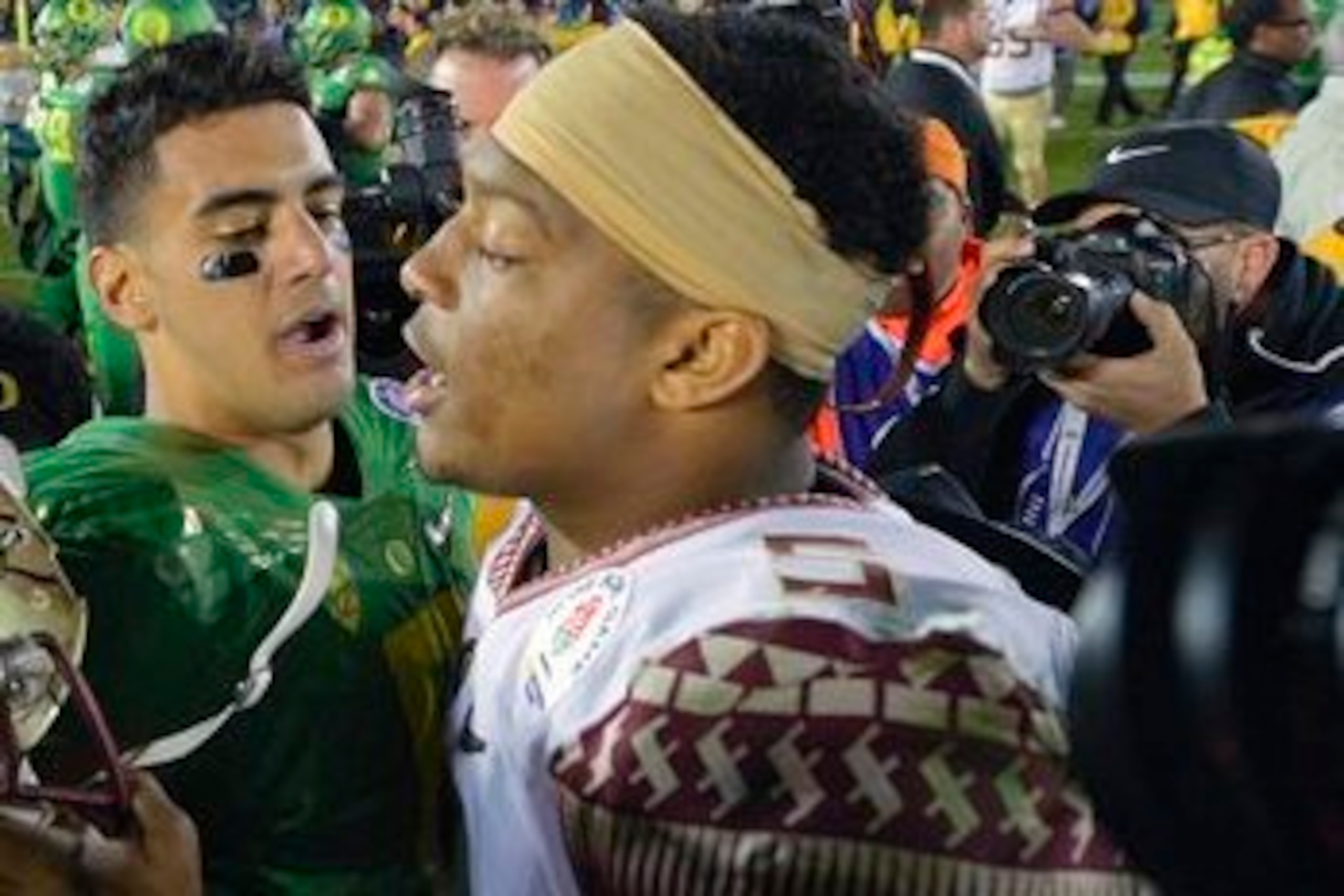
Creating suspense around the Buccaneers' top pick is like trying to push a school bus up a freeway on-ramp. Lovie Smith's desire to select Winston is an open secret.
The Buccaneers need a quarterback desperately and just released Josh McCown to pave the way for a newcomer. And Winston is just a demonstrably better size-speed-arm prospect than Oregon's Marcus Mariota, who has more of an Alex Smith skill set.
Is Winston the best player in this year's draft?
Bleacher Report draft expert Matt Miller thinks so; you can check out his Big Board as you further your draft study. Other experts disagree. I prefer Leonard Williams, defensive tackle for USC, and have heard experts express preference for wide receivers Amari Cooper (Alabama) and Kevin White (West Virginia), pass-rusher Randy Gregory (Nebraska) and some others.
What I have never heard from anyone is a preference for Mariota based on game film or physical attributes. It's also hard to imagine a scenario where the Buccaneers trade down. There are too many teams clamoring for a quarterback among the top 15; if a team moves up, it will be moving up for Winston.
Winston has the tools to develop into an All-Pro quarterback, and he is battle-tested after two seasons at a huge, highly successful program. He's not Andrew Luck, but far weaker quarterback prospects have been selected first overall.
I noticed the "game film or physical attributes" qualifier you placed on the Winston-Mariota comparison. Won't teams be scared away by Winston's off-field problems and maturity issues?
The Buccaneers won't be. Lovie Smith is the kind of coach who will address a character issue head-on.
With all of the problems the NFL faced last season, from the domestic-violence incidents to Johnny Manziel's troubles, does it make sense for a team to take a chance on a guy like Winston, particularly at a position as critical as quarterback?
Congratulations! You just asked the question we are going to spend the next two weeks asking each other to fill time on talk shows!
Just to make sure that we are all on the same page, Winston's personal/legal troubles include: a) a sexual assault investigation which ended (as such investigations so often do, for better or worse) in a legal boondoggle, with no charges filed; b) a pair of shoplifting incidents involving crab legs and sodas; and c) some minor acts of immaturity involving crude language or BB guns.
We have all learned in the last year that "cleared of all charges" is not the same as "totally innocent," and Winston's pattern of behavior must be taken seriously. Based on what I have been told about him, he is not as "risky" as his worst detractors might claim him to be or as "safe" as his boosters might attest.
Other NFL quarterbacks have outgrown similar maturity/entitlement issues to become great players and leaders. Ben Roethlisberger leaps to mind. Smith is not the kind of coach who will sweep Winston's issues under the rug or hope they go away on their own. I would worry about Winston joining a team with a weaker support structure.
In response to the "with all the problems the NFL faces" branch of questioning: The NFL will not solve its domestic-violence issues by never, ever drafting a player with a blotch on his record again. Talented players like Winston are going to be drafted, and drafted early. It's what they and their employers do next that will matter.
Will Chip Kelly draft Mariota as the Eagles quarterback?

That's what would happen if this were a movie and Kelly were Kevin Costner. It also might happen if Philadelphia selected earlier than 20th. The Eagles will probably have to slip past the Jets at No. 6 overall, and perhaps the Redskins at No. 5, to reunite Kelly and Mariota.
Imagining a blockbuster trade that makes it possible can be a fun exercise, but so can trying to build a time machine in your garage. No, the Jets or Redskins won't swap picks with the Eagles to acquire Nick Foles. Trades don't really work like that, even when the Jets or Redskins are involved.
So Winston is a top talent with baggage and Mariota is Sarah Plain and Tall. I'm bored already! What about the other quarterbacks?
They're terrible.
Oh come on, it cannot be that bad.
It is.
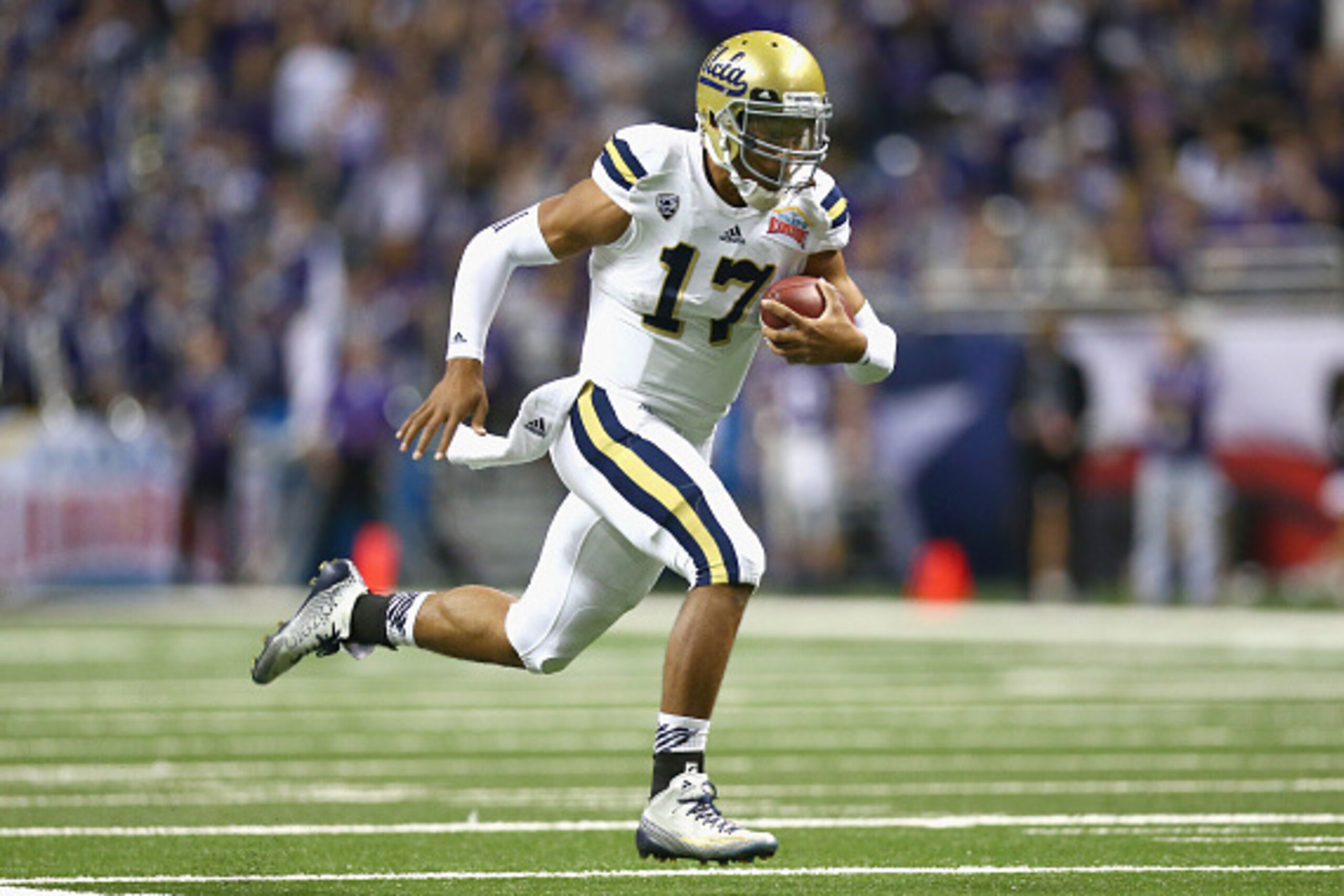
UCLA's Brett Hundley is the consensus third quarterback. He's a pretty good size-speed-arm guy, but he has a slow delivery and so-so accuracy, and his blitz-recognition strategy consists of tucking the ball and running straight ahead.
Hundley skipped the Senior Bowl, which was a big mistake for him: A lot of scouts wanted to see him compete in a different environment, and he would have looked like King Kong next to the unimpressive physical specimens in Mobile, Alabama.
Look for Hundley to get talked into the first round before the draft after we talk ourselves sick about Mariota and Winston. He's more of a third-round developmental quarterback.
Quarterbacks like Garrett Grayson (Colorado State) and Shane Carden (East Carolina) looked and played like late-round picks in Mobile. These are fine young men who simply lack the raw tools to be anything more than backups unless they suddenly blossom when they reach some training camp.

Bryce Petty (Baylor) is more toolsy than Grayson or Carden, but he has had some back injuries, and it shows when he moves around. He looks stiff, even when walking to the line of scrimmage: Think Cam Newton circa midseason when he was nursing a dozen injuries.
Alabama's Blake Sims is smart, accurate and competitive, but the tape measures hate him. He's short and stocky (5'11", 223 lbs at the Senior Bowl), with average speed and arm strength. And no, every short, determined quarterback to apply for the NFL draft is not automatically Russell Wilson.
So if this draft is weak at quarterback, where is it strong?
Running back. This is one of the best running back classes in years. We might see two or three ball-carriers drafted in the first round. This is also a great defensive line class, but we will get to that later.
I thought drafting a running back in the first round is a bad idea nowadays.
Taking a running back in the top 10 certainly is, because of the high bust rate and the simple fact the value gap between a top running back prospect and the guys that are readily available in middle rounds just isn't very wide. But a running back with special qualities can still be a good value later in the first round.
Besides the quality of the top prospects, the variable that determines how many running backs (if any) get drafted in the first round is the number of teams that have a need at the position late in the round.
This year, the Cardinals and Colts have obvious running back needs at the 24th and 29th spots in the first round, respectively. If Marshawn Lynch retires, the Seahawks will have a need at 31. If the Ravens lose Justin Forsett and/or the Cowboys lose DeMarco Murray to free agency, two more needs open up at 26 and 27, respectively, though if Forsett or Murray moves, it will likely fill one of those other needs.
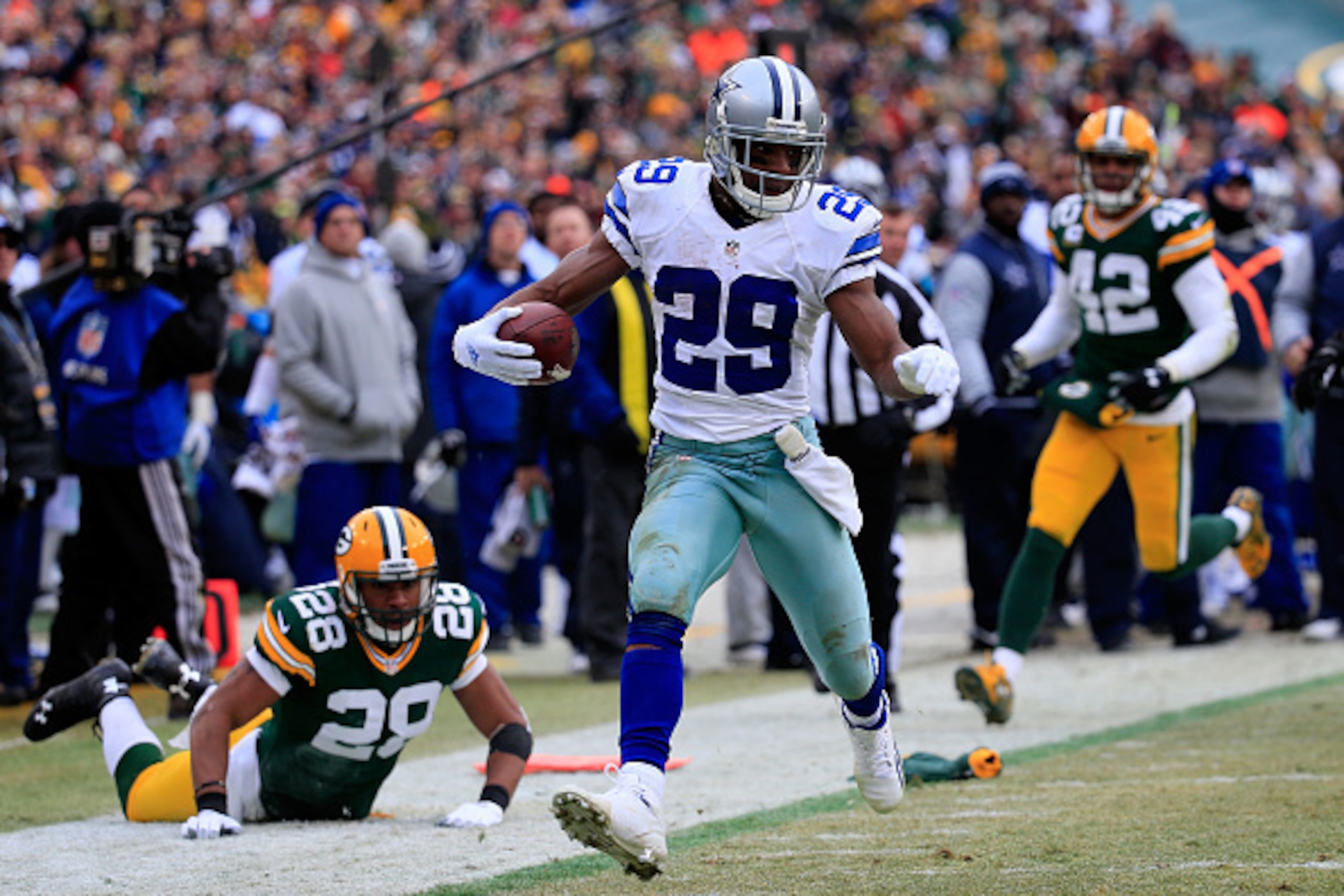
There are also late-round teams that may be seeking change-up runners, like the Packers or Seahawks if Lynch stays (they could use a speedy complement). These teams aren't desperate at other positions and could invest in a luxury. The Patriots are sitting at 32, and they will be happy to trade down if some team (say, the Raiders) needs a workhorse back but does not want to draft one early in the first round.
It all depends on free agency, of course. But 10 weeks out, I would wager that the jockeying for running backs late in the first and early in the second will be more interesting than the quarterback horse race at the start of the draft.
So who are these running backs?
Todd Gurley, Georgia: Old-fashioned workhorse, great all-around runner, the kind who would have been taken third overall 15 years ago. Gurley is coming off an ACL tear in November.
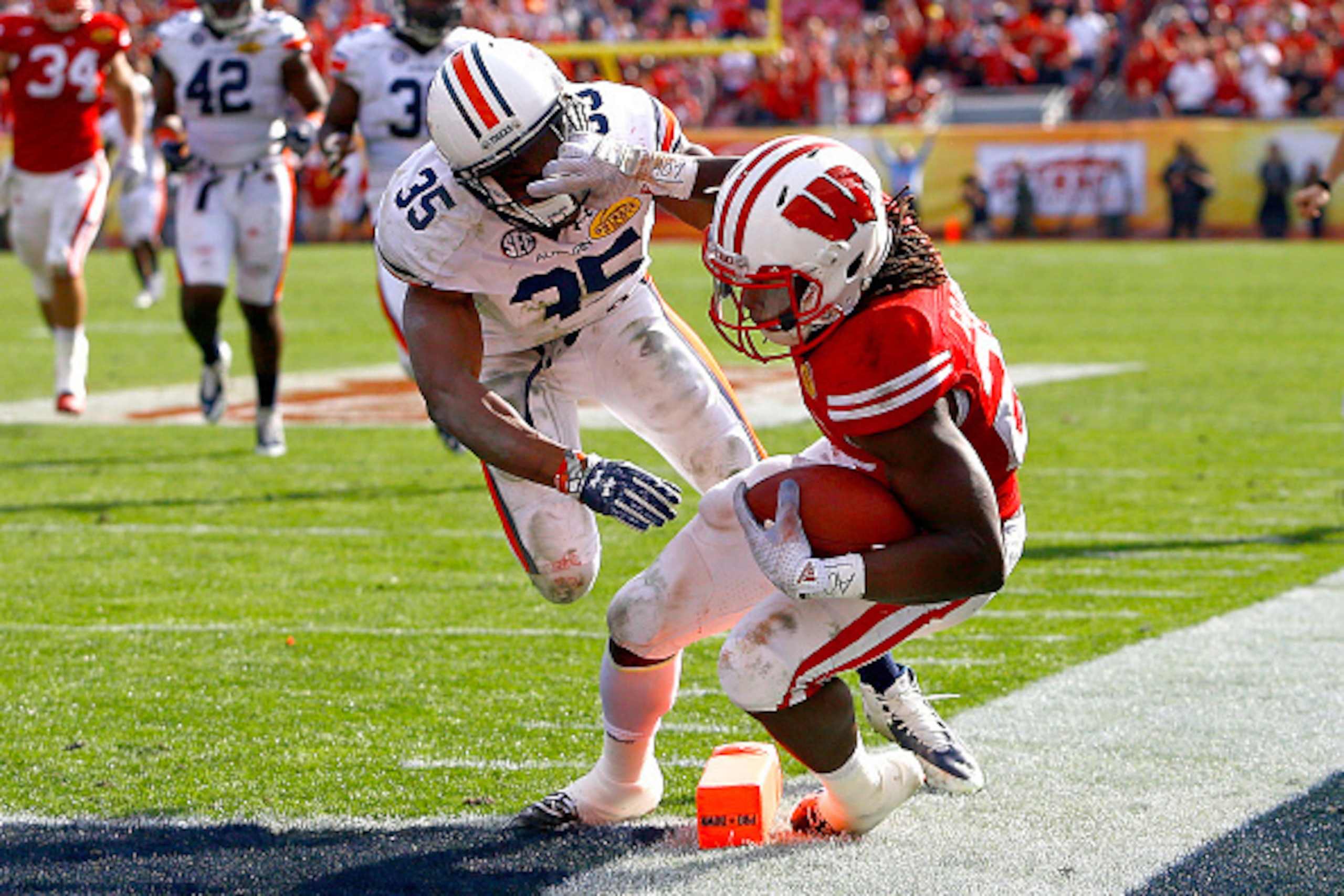
Melvin Gordon, Wisconsin: Ran for 2,587 yards last year. Your basic nuttin'-fancy, one-cut, between-the-tackles rusher with a fine power-speed combination. Wisconsin churns out running backs like this, and Gordon is one of the school's better products.
Tevin Coleman, Indiana: Another 2,000-plus-yard rusher in 2014. Coleman also blocks and catches well. He will appeal to teams like the Colts and Cardinals that need a jack-of-all-trades who can play immediately.
Ameer Abdullah, Nebraska: Draws Warrick Dunn comparisons because he's a speedy playmaker on the field with a great reputation off it. Abdullah is more of the "speedy luxury" type, but he may have played his way out of first-round consideration during Senior Bowl practices. Abdullah can run like the wind but could not block a drizzle with a beach umbrella, which is a big deal for a guy marketed as a passing-down back.
Duke Johnson, Miami: Averaged 6.7 yards per carry over three seasons with the Hurricanes; also a good all-purpose receiver and a decent blocker. Johnson is fun to watch because he's fast, determined and has swiveling Elvis hips that help him make surprise cuts.
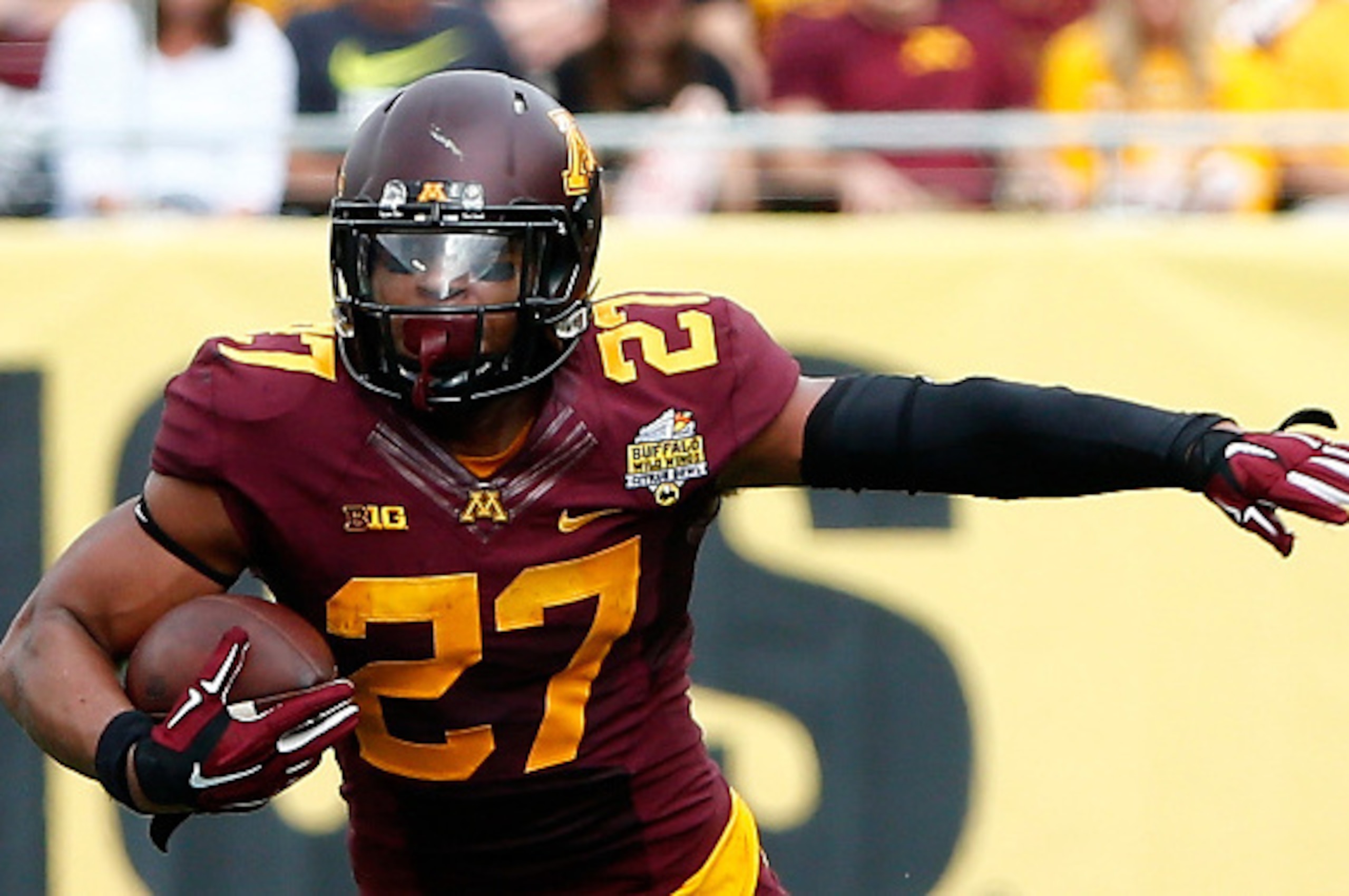
There are others. T.J. Yeldon is the latest model to roll off the Alabama assembly line; he is more of an Eddie Lacy than a Trent Richardson. Senior Bowl star David Cobb (Minnesota) compares himself to Eddie George, and the resemblance is obvious.
Didn't Gurley get into some trouble in college?
He was suspended for a few games for violating NCAA rules: He signed some memorabilia to make a little money, the fiend. No one cares about NCAA rules except the NCAA.

Gurley returned from that suspension and promptly tore his ACL. He will undergo a full physical at this week's combine (the physicals are actually the point of the combine), so we will know more about his health status once his confidential health information leaks out.
In a weaker running back class, he would probably have been a mid-to-late first-rounder, injuries and draft trends aside. Teams with immediate needs are more likely to happily settle on someone like Gordon or Coleman.
I just read in the Miami Herald that an NFL scout thinks Duke Johnson is nothing more than a third-down back at the next level. What should I make of that?
There are several hundred scouts, personnel experts and "sources close to NFL teams" in this world. If they all agreed, the draft would be perfect.
When a scout tells me or a colleague something we have already heard a dozen times, we generally don't report it, because "projected first-rounder is properly rated" is not exactly news. If a scout says something controversial about a popular player, well, your clicks equal our food.
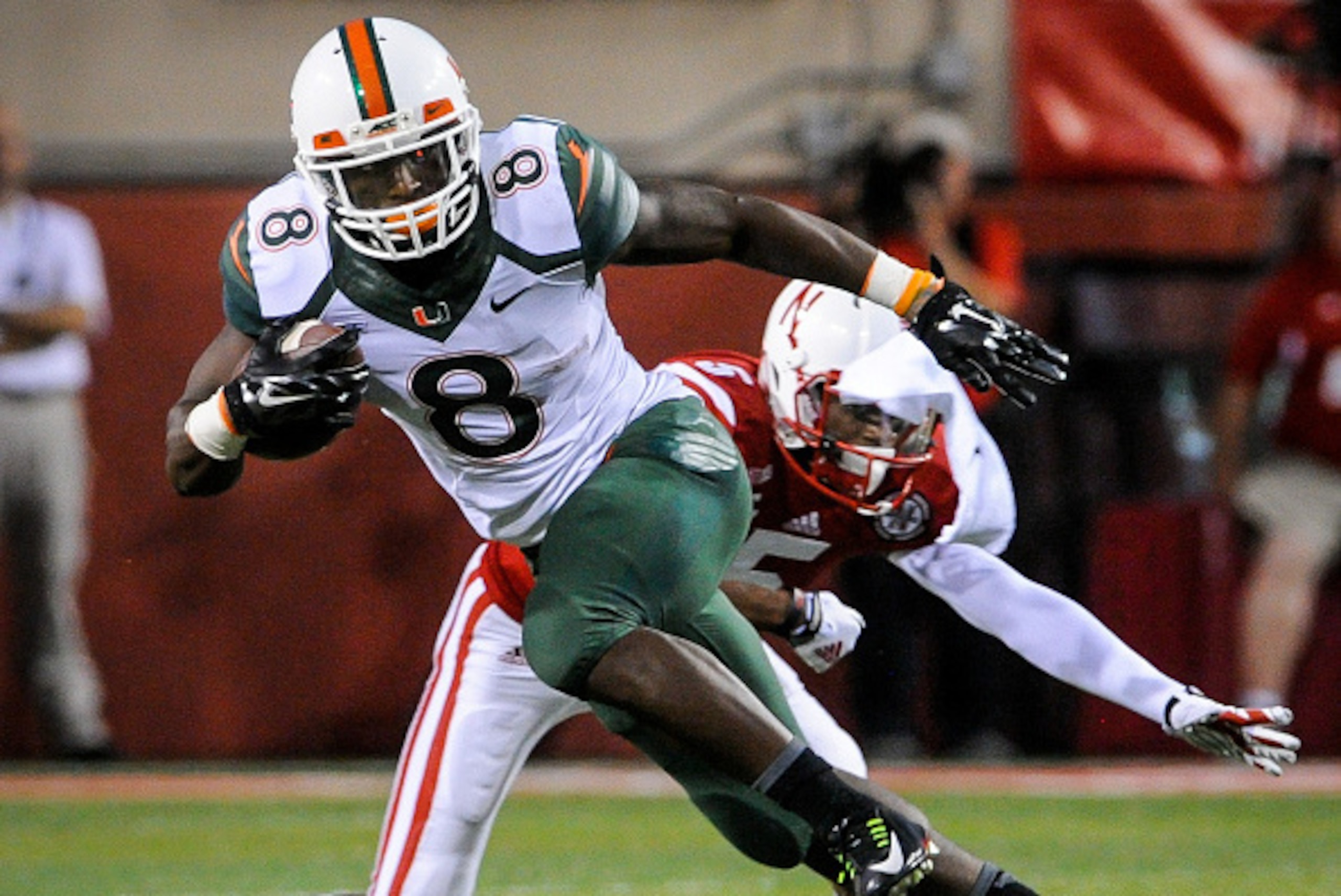
I'm not sure what "third-down back" is supposed to mean. Twenty years ago, the small back who played on passing downs was the backup. Now, he's likely to get more than half of the snaps. It's not like Johnson is Darren Sproles-sized; he's listed at 5'9" and 206 pounds. So yeah, maybe 25 carries per game would be a bad idea, but no one does that anymore, anyway.
You probably want to take a grain of salt anytime you read an "Anonymous Scout Calls Famous Player a Weenie" headline for the next nine weeks. It's not that real experts totally avoid saying these things. It's just that they are usually not majority opinions.
Is Washington's Shaq Thompson a running back? A linebacker? A safety? An outfielder?
Thompson is a linebacker now. He also played running back and safety in his college career, and he went 0-for-39 during a brief, weird stint in the Red Sox organization. He told USA Today last week that he is focused on playing linebacker.

Thompson absolutely flies around the field, and with a listed weight around 230 pounds, he is big enough to play outside linebacker. He moved around the defense so much in college that he never looked comfortable doing traditional "linebacker stuff" like taking on offensive linemen to plug gaps between the tackles.
That may be like harping on Duke Johnson's limits as a "third-down back": We are reading from a 20-year-old script. There are plenty of roles in modern defenses for a player halfway between a linebacker and a strong safety.
What do you think of this year's wide receiver class?
It's very good, but last year's was historic. If you are looking for guys like Odell Beckham, Sammy Watkins, Mike Evans, Kelvin Benjamin and Jarvis Landry to kick the NFL doors down and put up a bunch of 90-catch, 12-touchdown seasons, you are going to be disappointed.
The obvious first-rounders in this draft are:
Amari Cooper, Alabama: Not huge or blazingly fast, but much more polished and complete than your typical rookie wide receiver. We would have called Cooper a prototypical West Coast-offense receiver back in the day when it was cool to talk about the West Coast offense.
Kevin White, West Virginia: A size-speed big-play machine. If Beckham's rookie season has you dreaming of one-handed catches in the corner of the end zone, White is your guy. Though again, what rookie receivers did last year was unprecedented.
Others, like Louisville's DeVante Parker and Dorial Green-Beckham (Oklahoma by way of Mizzou), could also end up in the first round. There are lots of intriguing day two talents, like Miami's Phillip Dorsett (a burner who impressed at the Senior Bowl), Duke's Jamison Crowder (a smart, prolific slot receiver in the Patriots mold) and Michigan's toolsy 6'5" Devin Funchess (who has serious hops).
Is Dorial Green-Beckham Odell Beckham's brother?
No relation. Green-Beckham is a size-speed prospect with baggage: two marijuana arrests and a campus incident on his record in which he allegedly tried to force entry into an apartment that belonged to a girlfriend's friend. Green-Beckham was dismissed from the Missouri program as a result last April.
His pattern of behavior is an obvious concern for NFL teams.
But if he had a clean record, he would be the top receiver in the draft, right?
There's a tendency to overstate a troubled player's talent level, because it dramatizes ordinary scouting into a "deal with the devil" narrative. DGB caught 59 passes (12 touchdowns) in a wide-open system in 2013. He did not play at all last year.
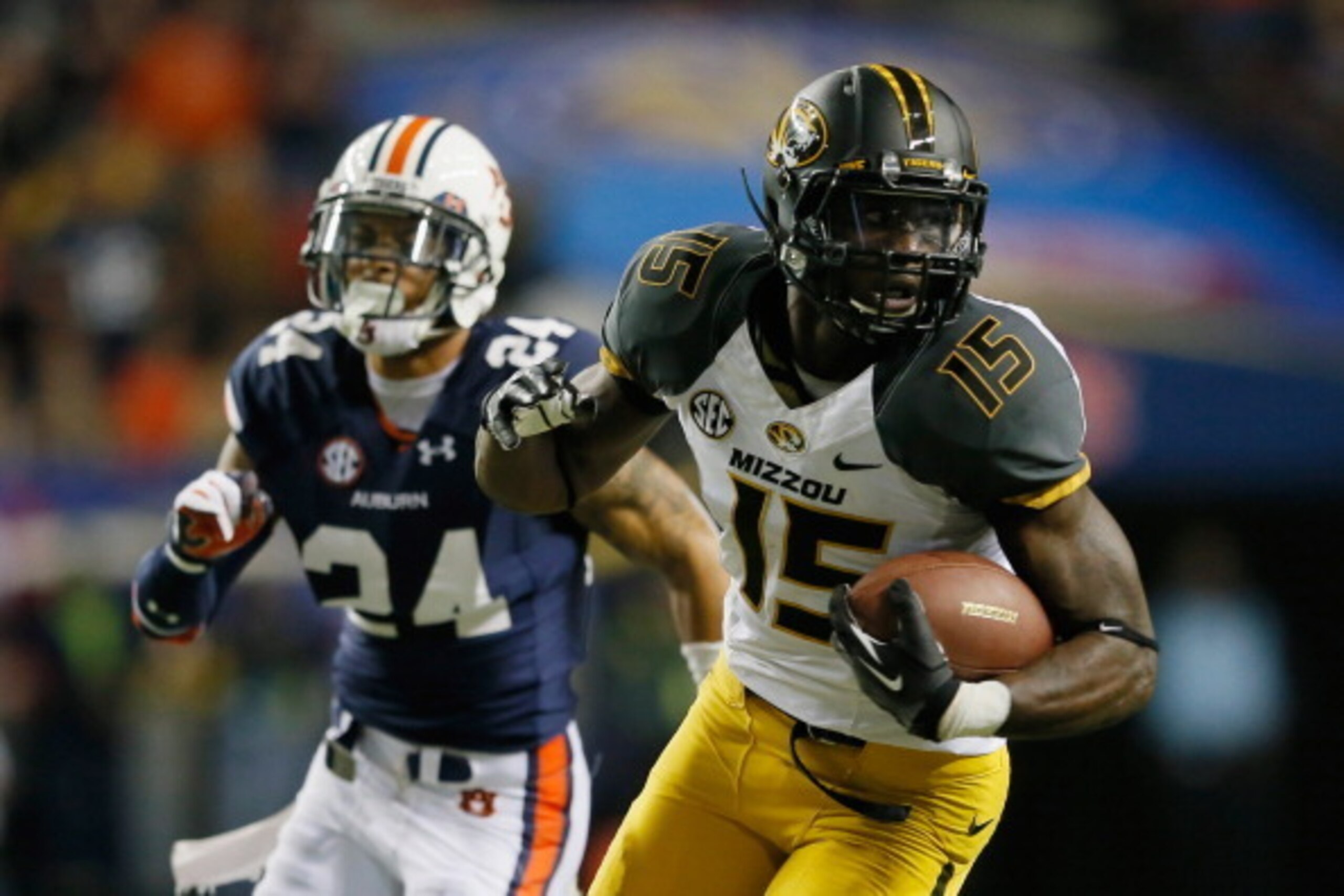
The tape shows a 6'6" giant who can just go up and get passes the defenders cannot reach and can glide past the typical NCAA cornerback on a deep route. There's no spit polish, and DGB had neither a junior nor a senior season to develop.
He has obvious tools, but he's a project at a position where a lot of younger players who get by on pure talent fall by the wayside when they face pro defenders.
Will these running backs and receivers put on a thrill show during the scouting combine 40-yard dashes?
Most of the receivers in this class are bigger guys who just need to stay in the vicinity of 4.5 seconds. Cooper and White make their livings with technique and leaping ability, respectively, and are not expected to set track records.
A smaller receiver like Dorsett should be shooting for a time in the low-4.4 range. Look for a track and field burner like Central Florida's Rannell Hall (who looked pretty good at the Senior Bowl) to win the track meet with a time in the 4.35 range. That will only solidify his status as a late-to-middle-round pick, not blast him into the top 25.
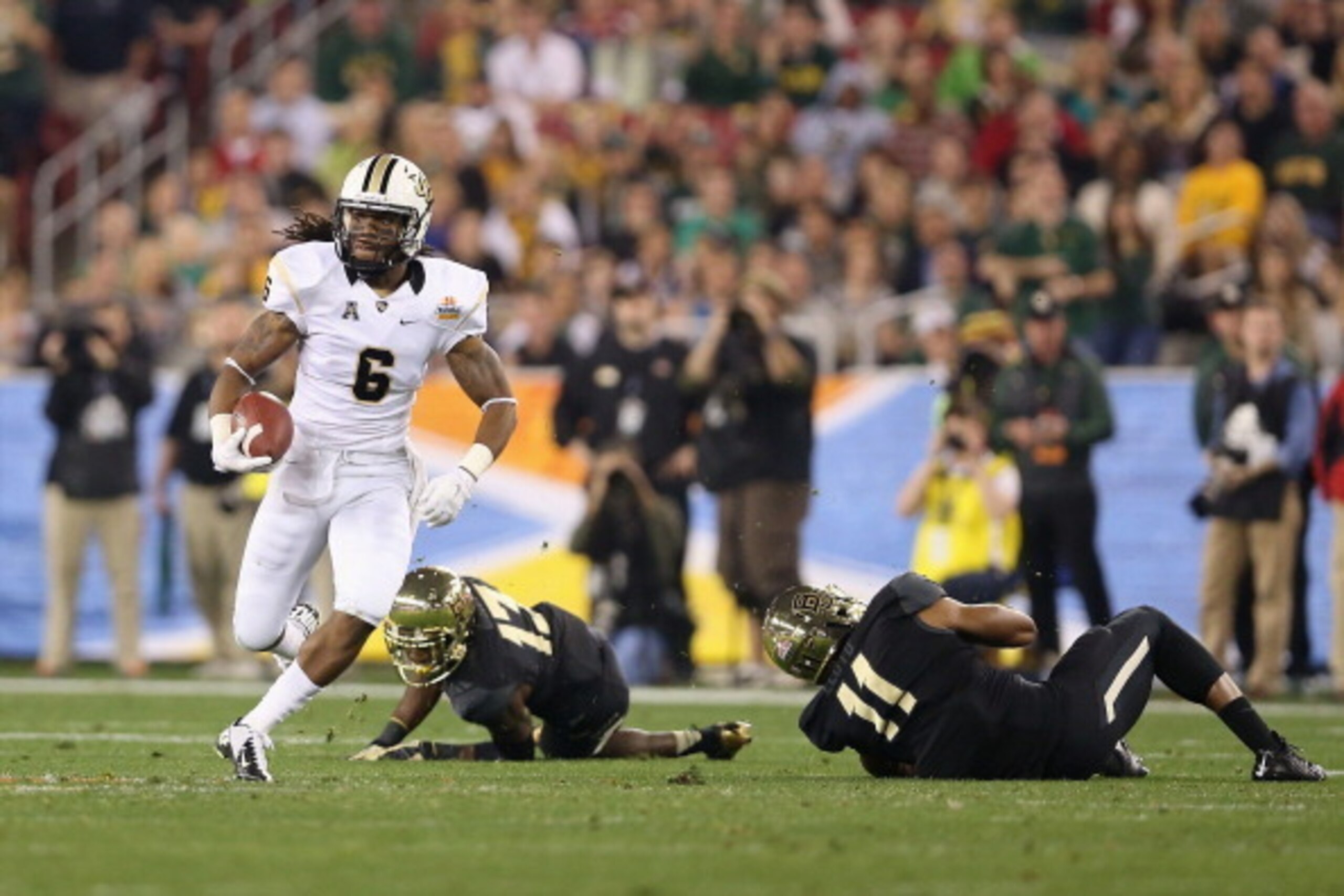
The situation is similar at running back. Burners like Johnson and Abdullah will want to be south of 4.5 seconds. Everyone else has the size and skills to get by with a time not too far north of 4.6 seconds.
As is always the case with 40-yard dashes, players must strive to stay ahead of the benchmark numbers some teams use to toss players into a "don't draft" bin. Mid-tier prospects and small-program guys (like Hall) also want to post numbers that compel scouting departments to go back and take a second look at their film.
No one wants a receiver with 4.8 speed, and no one wants to overlook a receiver with 4.3 speed because he slipped through the cracks at Nowhere Valley State. After that, the hundredths of a second are more for our amusement than for serious scouting.
Are there any Jimmy Graham or Rob Gronkowski types in this draft class?
Nope. There are some solid players, but no one who is going to come in and change an offense. All of the tight end action will be on the free-agent market, where Julius Thomas, Jordan Cameron and others will likely be looking for work.
You mentioned that Leonard Williams tops your draft board. Are you one of those people who compare Williams to J.J. Watt?
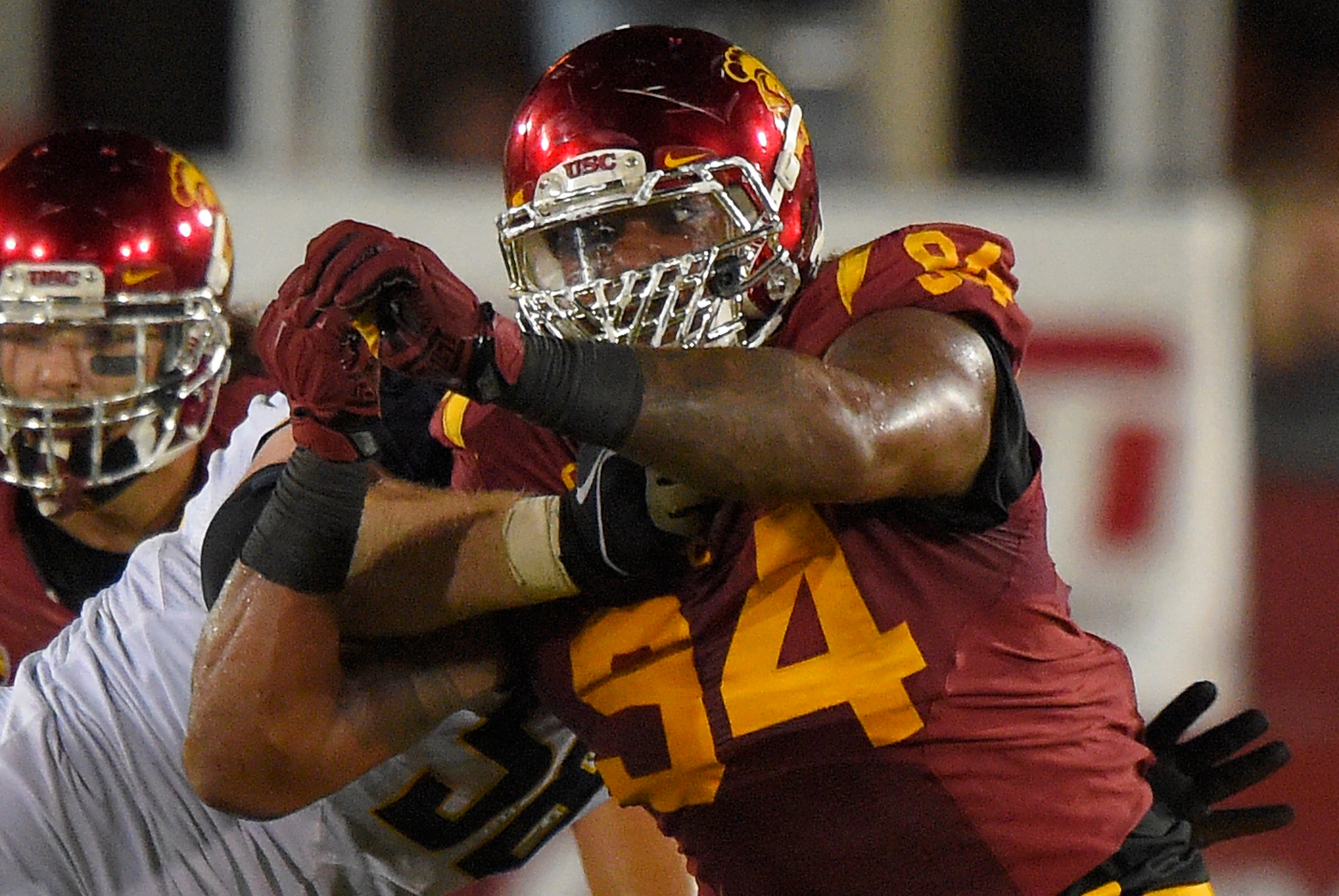
I have never heard anyone compare Williams to J.J. Watt. I have heard people say that they have heard other people compare him to J.J. Watt. I am wary of any comparison that is always delivered secondhand. Also, J.J. Watt did not look like J.J. Watt when he came out of college (he was just another solid starter), and it is never a good idea to compare any prospect to one of the most unique players in the NFL.
Williams can play tackle in a 4-3 scheme or end in a 3-4. He has a tremendous mix of raw power and technique. He is not incredibly quick, but he can be impossible to block because he is so crafty with moves and can toss aside blockers who make mistakes. He also hustles.
I love him as a down lineman in today's NFL, where the defense might be playing a 2-3-6 on third down and the big guys need to be able to avoid getting engulfed by blockers while still applying some pressure.
Who else is worth getting excited about on the defensive line?
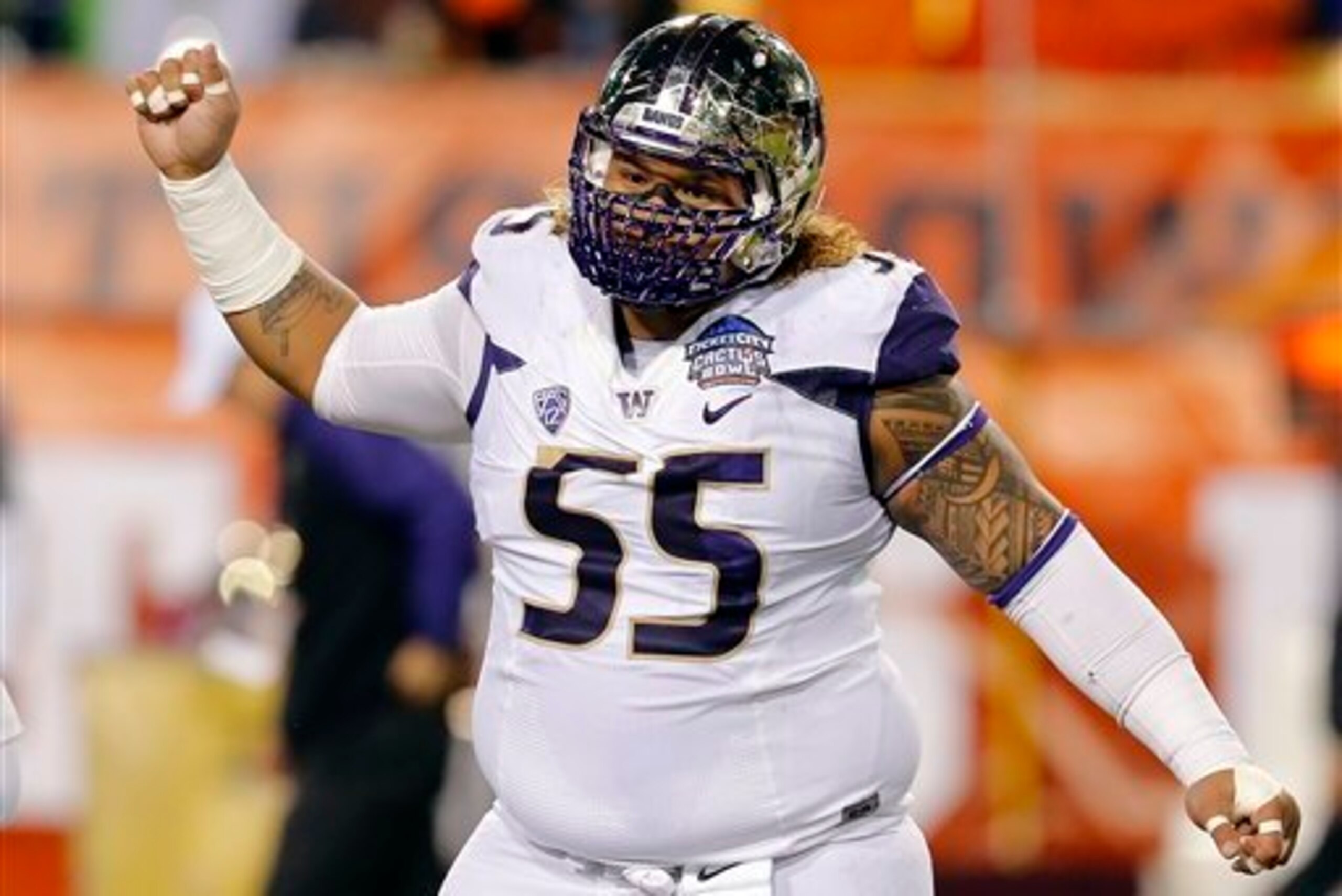
Danny Shelton of Washington is a 350-pounder who looks like a glob of mayonnaise stuck to a spatula. Despite the lack of sculpting, Shelton is surprisingly quick, and he hustles like a 175-pounder.
Oklahoma's Jordan Phillips is 6'6", weighs about 330 pounds and can do a standing backflip.
How many quarterback sacks result from standing backflips?
In NFL history, approximately zero. But as a proxy for the overall athleticism of a man who weighs over 300 pounds, a standing backflip tells you something.
There are other impressive defensive tackles. A recurring theme among them is their quickness, athleticism and tenacity. This is a class full of huge men who can stay on the field for three downs because they have the speed and stamina to be useful on 3rd-and-long.
What about outside pass-rushers?
This is a great draft for 3-4 defenses.
Big guys like Williams can play end in a 3-4 scheme. And there are plenty of edge-rushers in the 245-pound range: too small to play end in a traditional 4-3 but perfect for outside linebacker.
Best of all, many of these edge-rushers are smart and versatile, as opposed to the stereotypical college sack specialist who simply charges full-speed at the left tackle's outside shoulder and racks up a dozen sacks without getting blocked.
Randy Gregory of Nebraska is a top-five pick in most books, though he is something of an old-fashioned, one-dimensional rusher. Gregory beats a lot of blockers to the edge and can use some inside moves and hand techniques to win matchups.

He's suffered all manner of injuries in his college career, however, and opponents could frustrate him with double-teams and chip blocks. I have him penciled in as the Jaguars pick at No. 3 in my brain. Gus Bradley could develop Gregory as the hybrid pass-rusher in his Seahawks-flavored defense.
Shane Ray of Missouri is more multifaceted than Gregory. He recognizes plays quickly and can change direction on a dime. Ray can be an all-purpose 3-4 outside linebacker. Gregory, who's listed at 6'6", has the potential to bulk up.
Alvin Dupree of Kentucky has more coverage experience than Ray and Gregory. He also has a variety of pass-rush moves. Dupree lacks the dozen-sack potential of some of the other top rushers but could be the kind of edge-defender who does lots of things well and starts for a decade.
Why do I keep hearing about Arik Armstead?
Armstead shuttled back and forth between Oregon's football and basketball teams, committing fully to football in 2014. He stands 6'7" and 296 pounds, and while I hate the term "freakish," he flashed a combination of strength and athleticism that would make him a top-10 selection if he were more consistent and polished.
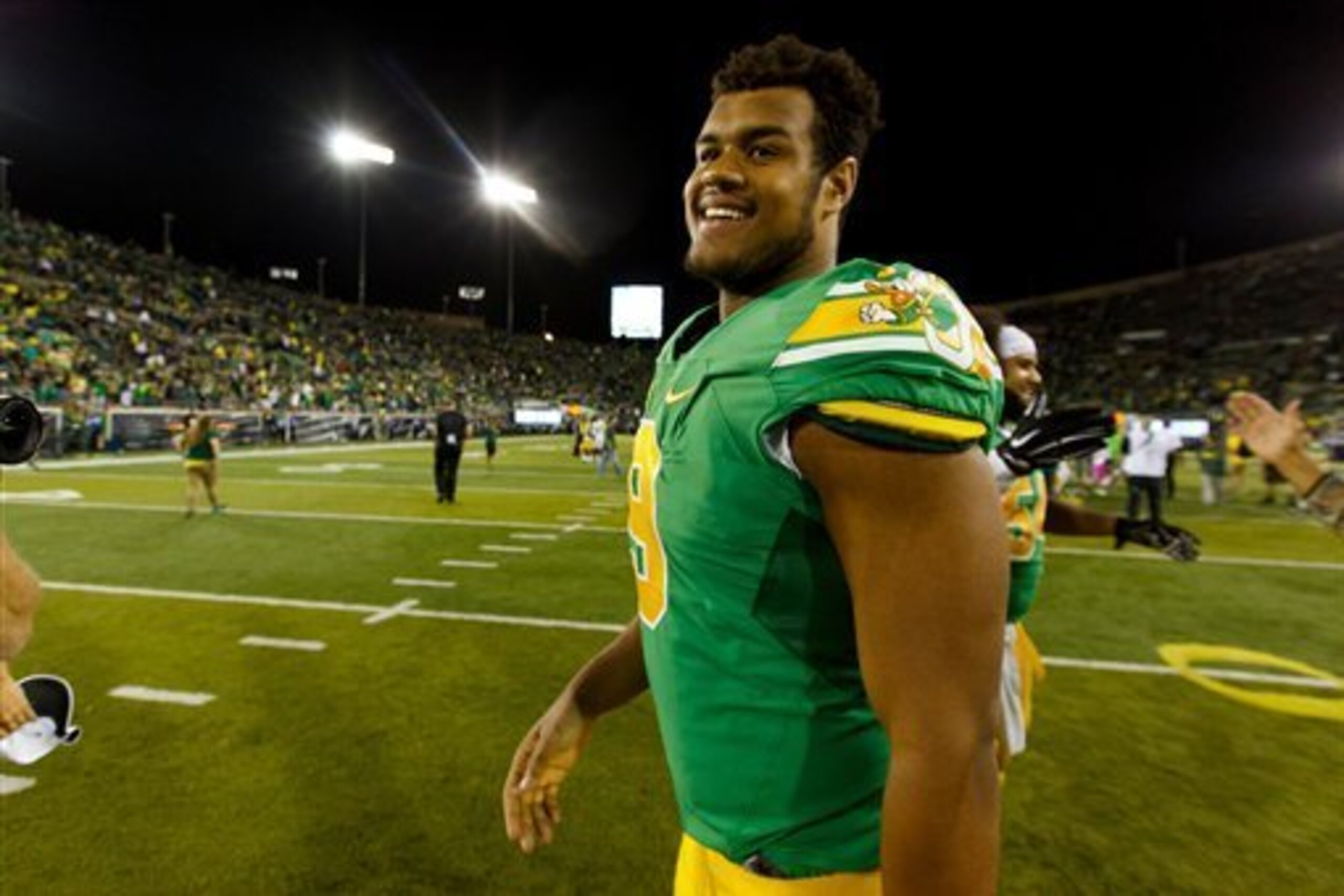
Armstead battled ankle injuries in 2014, and he recorded just 4.5 career sacks, in part because of the basketball commitment in past seasons. He doesn't fit the mold as a defensive end—players as tall as he is often have a hard time maintaining leverage and get blown backward by blockers—and he isn't built to move inside to defensive tackle.
He's a project and a square peg, but I don't see Armstead slipping out of the first round because there are too many clever defensive coaches hanging around at the end (Pete Carroll, Bill Belichick) who will stash him away and tinker with his talent.
Armstead could be a Jevon Kearse or Jason Pierre-Paul type.
How many of this year's cornerbacks can be called "the next Richard Sherman"?
All of the ones who are over 6'0" tall, unfortunately. Many of them currently list at exactly 6'0", so the combine will give us a great chance to see how many of them were standing on a stack of college media guides.
There's no obvious superstar in this class, but cornerback-hungry teams picking in the middle of the first round, like the Eagles and Ravens, should be able to grab someone who can be plugged directly into their defense.
Michigan State's Trae Waynes lists at 6'1", and he wasn't measured while standing on a box of fudge; he's tall, though he is also a little lanky and skinny. Waynes has fine cover skills and is your typical "safe" first-round cornerback. His "floor" is as a capable starter. His "ceiling" if he muscles up a bit and cuts down on penalties and mistakes? Take a guess.
P.J. Williams of Florida State plays like a big cornerback: heavy hands, a knack for bump 'n' run. Williams' coaches praise his intelligence, competitiveness and preparation as well; a November car accident appears to have been an honest mistake, not a sign of a character issue. Williams is another safe choice who will be able to contribute quickly to an NFL team.
On the other side of the risk-reward spectrum, there's Marcus Peters.
Peters was the guy Washington dismissed in the middle of the year. Another bad apple?
More like a crab apple. Peters did not get along with his coaches and was dismissed after a confrontation (which may have been physical) with an assistant coach. He's definitely high-strung, but this is a different kind of "character issue" than the typical off-field problems. Chris Petersen reportedly runs a very tight ship in Washington, and Peters may have had a hard time fitting in.
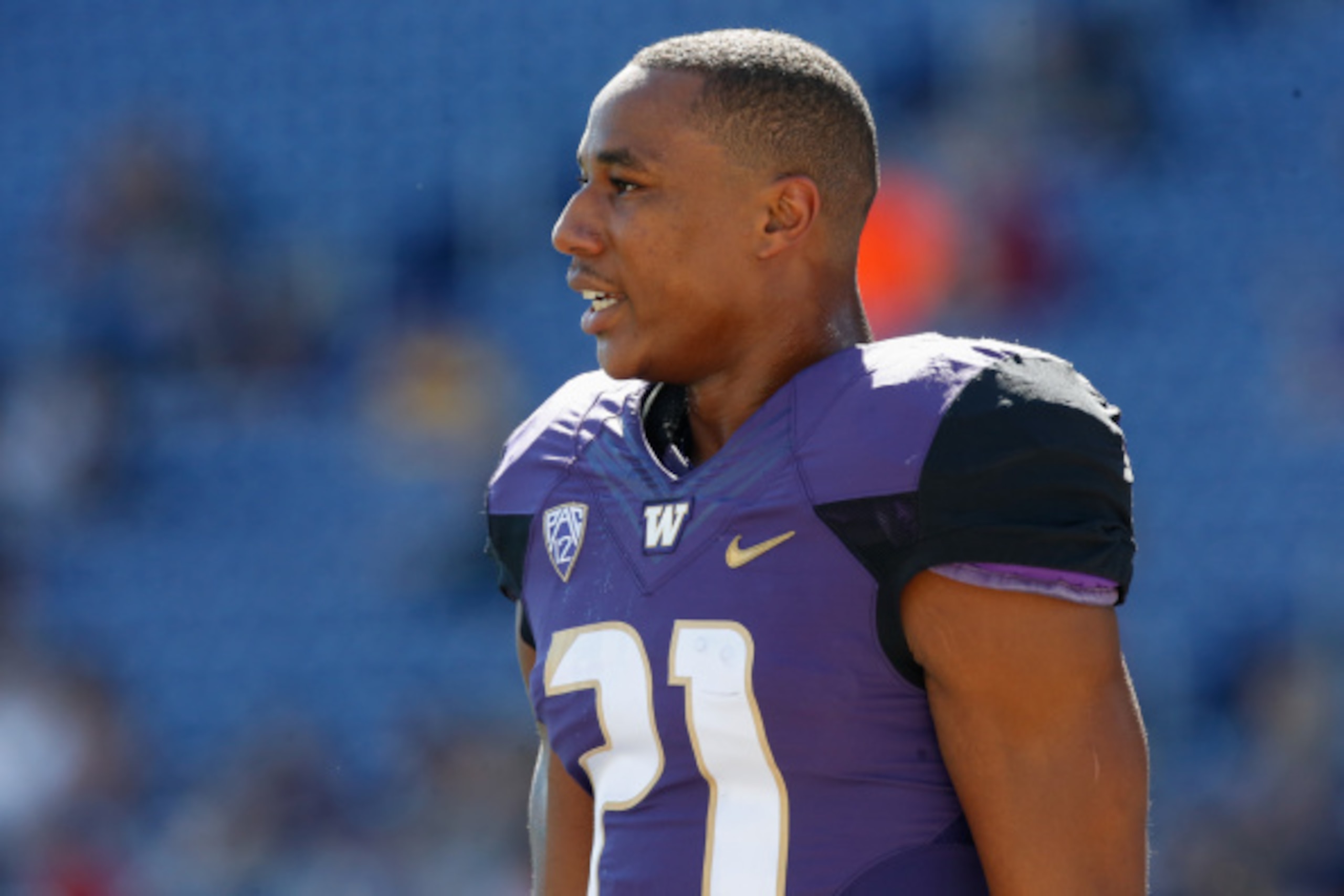
It's important to note that Peters apologized to Petersen and will participate in Washington's pro day. His "character issues" are starting to sound like a personality conflict that got out of hand.
Peters is a close friend of Marshawn Lynch and may be a little of a Lynch type: serious and competitive, but averse to smiling and playing nice-nice just because he is supposed to. Some teams will shy away from a guy like that. Rex Ryan might try to draft him twice.
Peters is big for his position (6'0", 198 lbs), strong and incredibly competitive. If he is also outspoken and a bit of a pill, he may be more Sherman-like than Sherman.
What about the offensive line?
This is a solid year at offensive tackle, though nothing like 2013, when three tackles were taken with the first four picks. Those tackles—Luke Joeckel, Eric Fisher and Lane Johnson—have not turned into Jonathan Ogden, Walter Jones and Orlando Pace just yet, but that's another matter.
Iowa's Brandon Scherff is the star of the tackle class. Iowa head coach Kirk Ferentz churns out prospects like Scherff on a regular basis—well-coached, fundamentally sound blockers who are also huge and strong, even by tackle standards. Scherff is Ferentz's best offering in years.
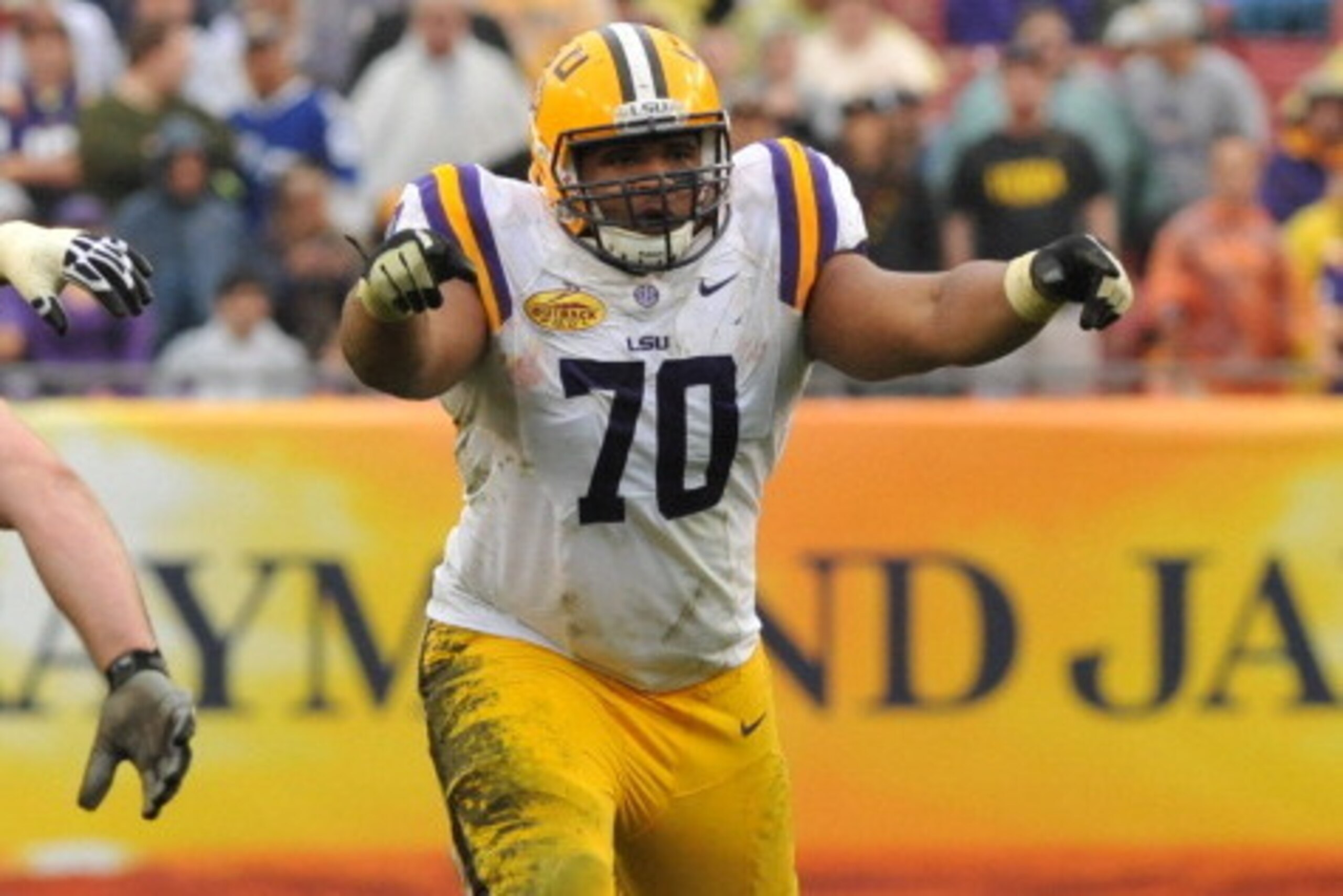
LSU's La'el Collins is a powerful brawler whose technique is still improving. Collins looked solid at the Senior Bowl (despite practicing through some nagging injuries) and should go in the first half of the first round. There's plenty of depth at tackle.
This draft is not deep in high-end guards or centers. My favorite guard of the group is Duke's Laken Tomlinson, a 320-pounder with decent quickness who looked very good in Senior Bowl practices.
As was the case for years, before guards like Zack Martin and Chance Warmack brought a little glamour to the position, the best guards in this draft class could end up being converted tackles like Pitt's T.J. Clemmings, a Steady Eddie type who may lack the athleticism for the edge of the line of scrimmage.
Can I expect a media circus at this year's scouting combine?
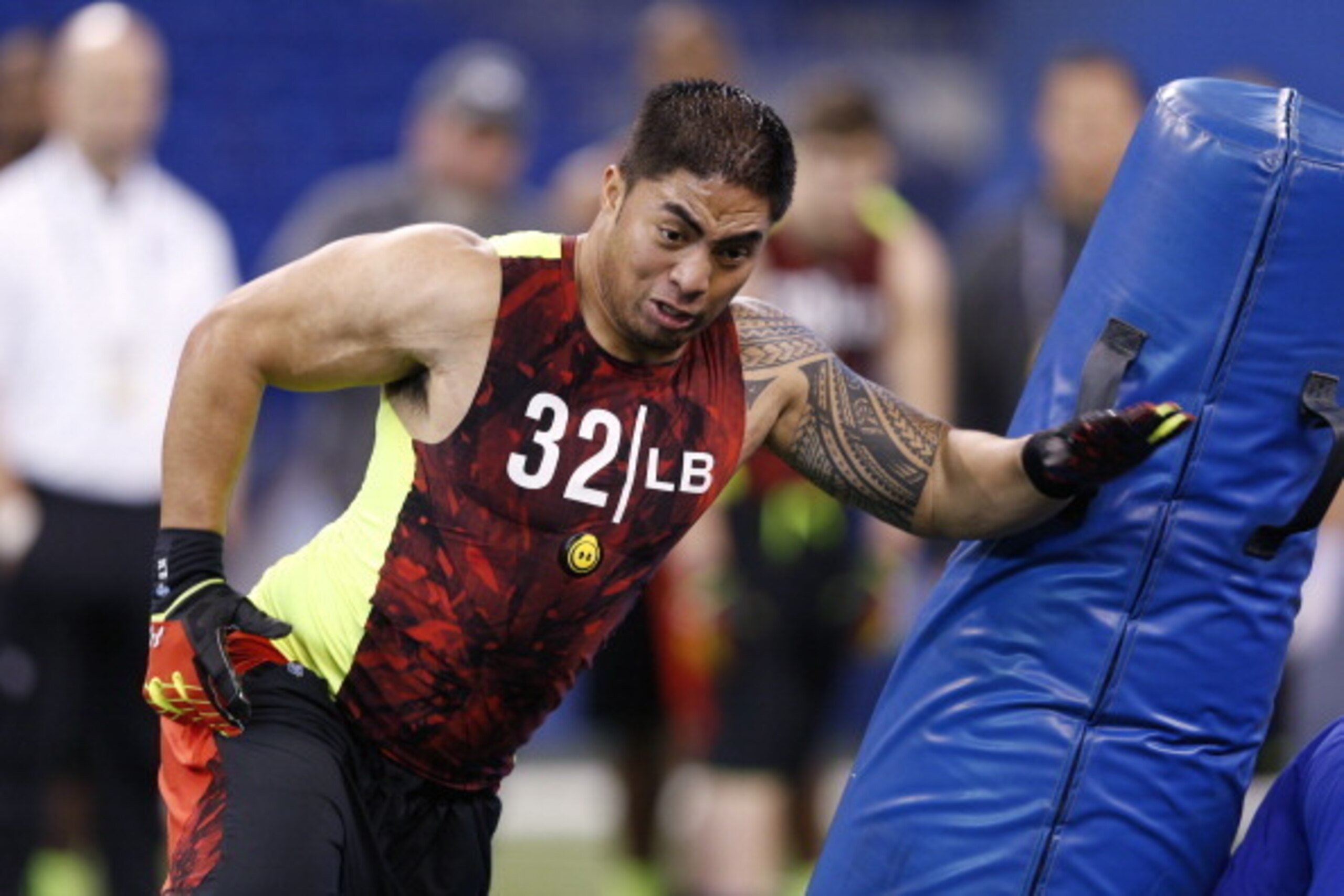
There are no openly gay players in this year's draft class to make us all trip over each other's microphone cables in search of the scoop. There is no weird Manti Te'o controversy to fan into a big deal, either.
Other than Winston and Mariota, no prospect is likely to get undue attention for non-football matters. Players like Green-Beckham and Peters will draw a crowd, but mouthy receivers and defenders with some blemishes on their record are par for the combine course.
So can I tune out for combine week?
Only crazy people watch every press conference and obsess over every drill. We will distill the most vital, interesting and hilarious tidbits for you.
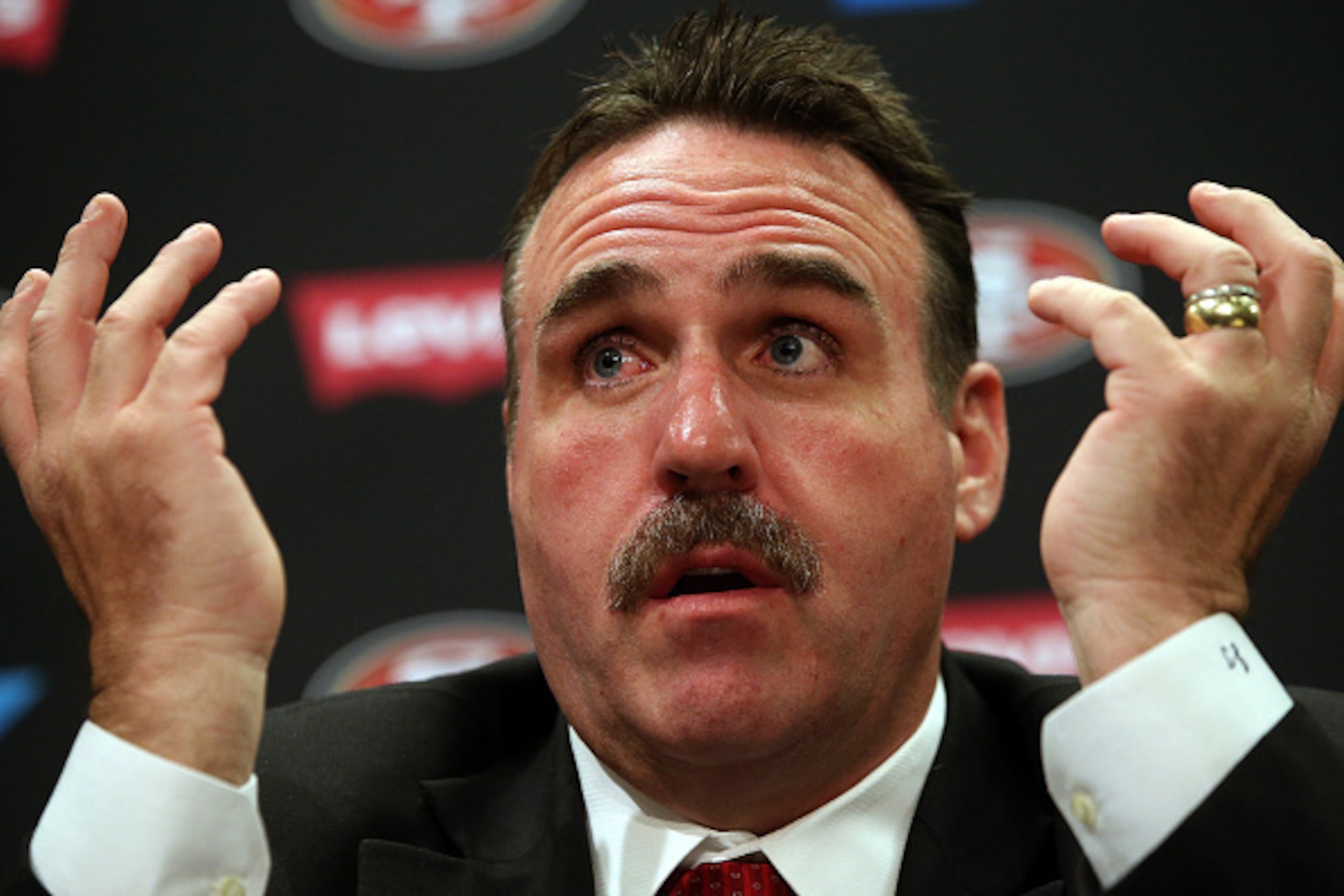
That said, the combine provides a great opportunity to reboot your NFL processor. If you have never laid eyes on new 49ers coach Jim Tomsula, his combine press conference will help you attach a face and voice to a name.
It's worthwhile to hear what Winston and Peters have to say or see what Green-Beckham runs in the 40. The combine is the beginning of the NFL hot-stove league, not an end in itself. Use it to get more informed and excited about what's to come, even if the event itself is not scintillating.
So don't feel bad if you are a little bit behind. You have 10 weeks to get caught up.
Mike Tanier covers the NFL for Bleacher Report.
.jpg?w=2560 "Ravens Titans Football")