How Soon Do MLB Teams Regret Blockbuster, $100 Million Free-Agent Deals?
It's Major League Baseball's offseason, which means the following are all but guaranteed: rampant rumors, ceaseless speculation and at least one free agent landing a nine-figure contract.
That's right, someone—probably even someones—on the open market are going to sign for $100 million or more, as has been the case every year dating back to 2007.
This winter, there are a handful of candidates to receive a check with seven zeroes on it, including pitchers Max Scherzer and Jon Lester, as well as position players Hanley Ramirez, Pablo Sandoval or even Cuban import Yasmany Tomas.
TOP NEWS
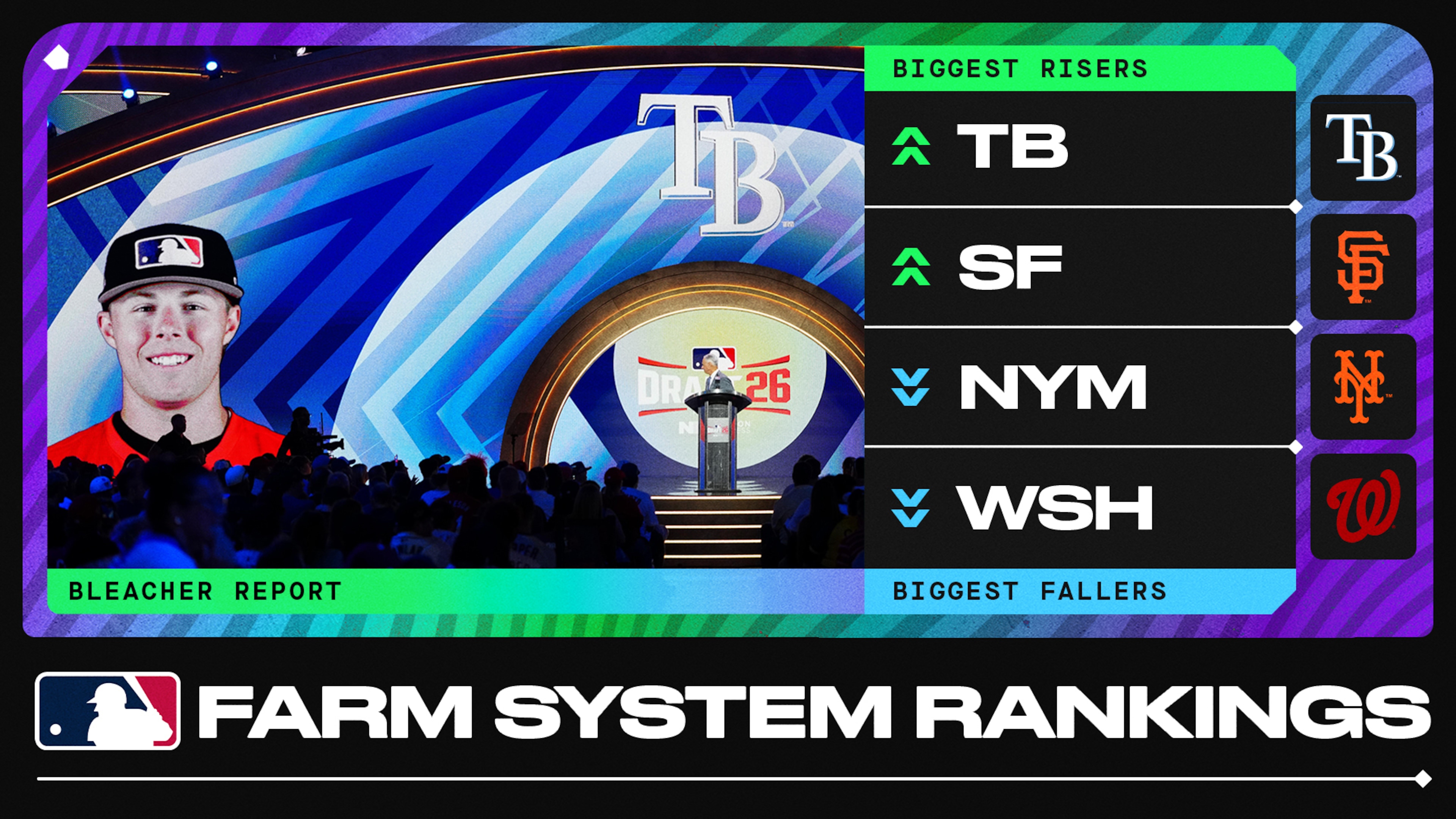
Ranking Farm Systems After Draft 📊
HR Derby Winner's Payout More Than Salary
Report: No. 1 Pick Gets Record Signing Bonus
It's merely a matter of when they sign, with whom and exactly how much north of $100 million they get.
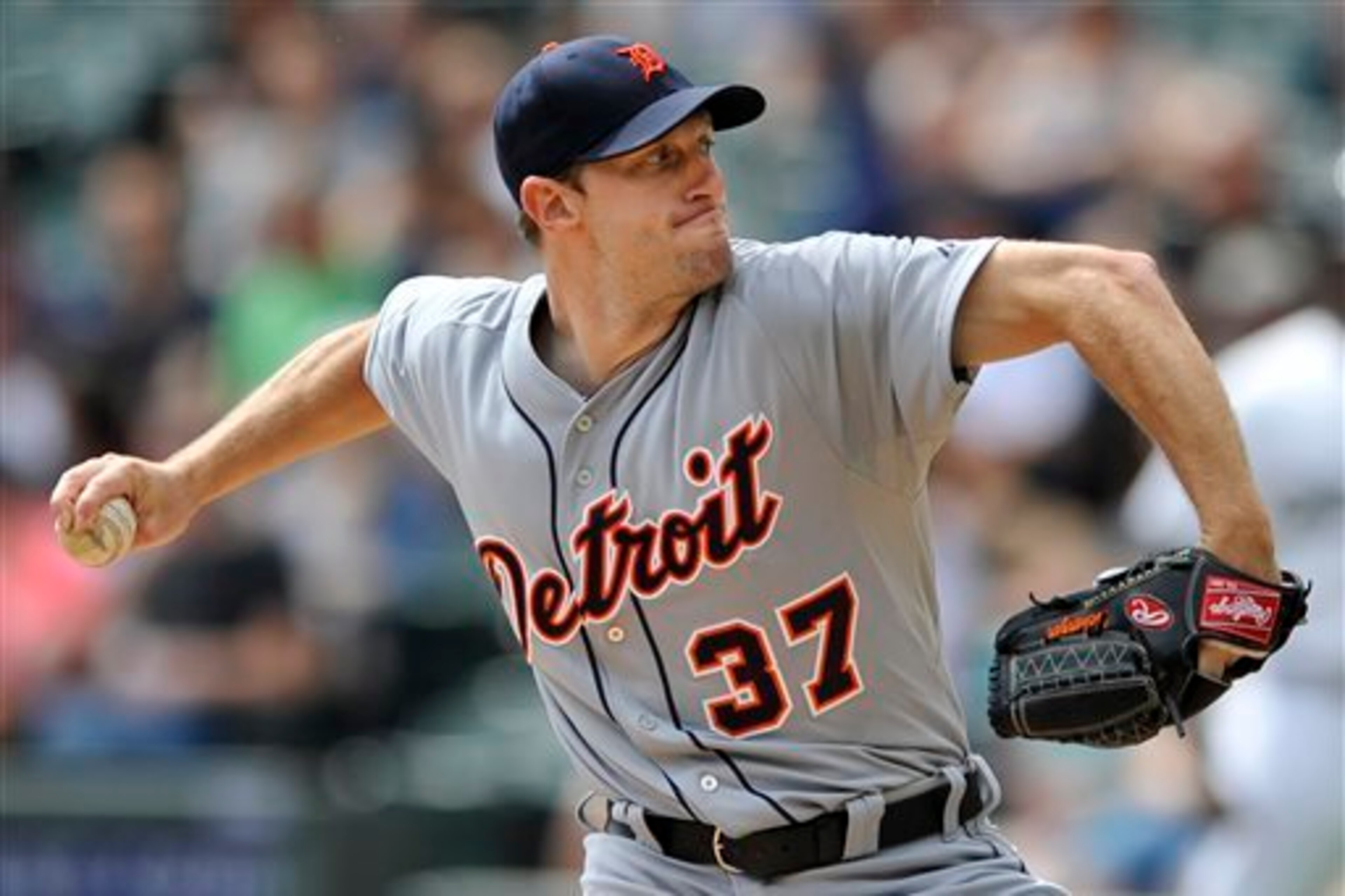
That got us to wondering: When, over the course of these pacts, should the teams that pony up that kind of money expect to start regretting they did so?
While it's widely known and accepted that lengthy, $100 million free-agent signings are bound to go bad at some point, just when—as in, how many years in—does that point come?
To figure this out, first we needed to do what anyone would: follow the money.
In the history of baseball, there have been 55 $100 million contracts handed out overall, starting with Kevin Brown's seven-year, $105 million deal with the Los Angeles Dodgers in December 1998, according to MLB Trade Rumors' handy-dandy transaction tracker.
Of those, there have been 25 such deals signed by free agents; the rest were long-term extensions inked while the players remained under contract.
Since we're focusing on free-agent contracts only, seeing how the offseason is prime time for this sort of thing, let's hone in on those 25.
Here they are, in all their glory—or, you know, not:
| 1999 | Kevin Brown | Dodgers | 34 | 7 | $105 M |
| 2001 | Alex Rodriguez | Rangers | 25 | 10 | $252 M |
| 2001 | Manny Ramirez | Red Sox | 29 | 8 | $160 M |
| 2001 | Jason Giambi | Yankees | 28 | 8 | $120 M |
| 2001 | Mike Hampton | Rockies | 31 | 7 | $121 M |
| 2005 | Carlos Beltran | Mets | 28 | 7 | $119 M |
| 2007 | Alfonso Soriano | Cubs | 31 | 8 | $136 M |
| 2007 | Carlos Lee | Astros | 31 | 6 | $100 M |
| 2007 | Barry Zito | Giants | 29 | 7 | $126 M |
| 2008 | Alex Rodriguez* | Yankees | 32 | 10 | $275 M |
| 2009 | CC Sabathia | Yankees | 28 | 7 | $161 M |
| 2009 | Mark Teixeira | Yankees | 29 | 8 | $180 M |
| 2010 | Matt Holliday* | Cardinals | 30 | 7 | $120 M |
| 2011 | Jayson Werth | Nationals | 32 | 7 | $126 M |
| 2011 | Carl Crawford | Red Sox | 29 | 7 | $142 M |
| 2011 | Cliff Lee | Phillies | 32 | 5 | $120 M |
| 2012 | Jose Reyes | Marlins | 29 | 6 | $106 M |
| 2012 | Albert Pujols | Angels | 32 | 10 | $240 M |
| 2012 | Prince Fielder | Tigers | 28 | 9 | $214 M |
| 2013 | Zack Greinke | Dodgers | 29 | 6 | $147 M |
| 2013 | Josh Hamilton | Angels | 32 | 5 | $125 M |
| 2014 | Jacoby Ellsbury | Yankees | 30 | 7 | $153 M |
| 2014 | Robinson Cano | Mariners | 31 | 10 | $240 M |
| 2014 | Shin-Soo Choo | Rangers | 31 | 7 | $130 M |
| 2014 | Masahiro Tanaka | Yankees | 25 | 7 | $155 M |
| AVERAGE | 29.8 | 7.4 | $154.9 M |
[*Note: Both Alex Rodriguez and Matt Holliday re-signed with the same team, but each did so only after actually becoming a free agent. These were not extensions.]
Simply from looking at the names and dollar figures as a refresher, do you have a sense of how bad things are going to get—and how quickly—just yet?
Quite possibly, but first let's pause here to point out that on average, these 25 $100 million deals have been signed by free agents just shy of their age-30 season (29.8) and call for roughly $155 million over seven-plus seasons (or about $22 million in average annual value).
Moving on to the good stuff, let's add in the performance aspect to the same table.
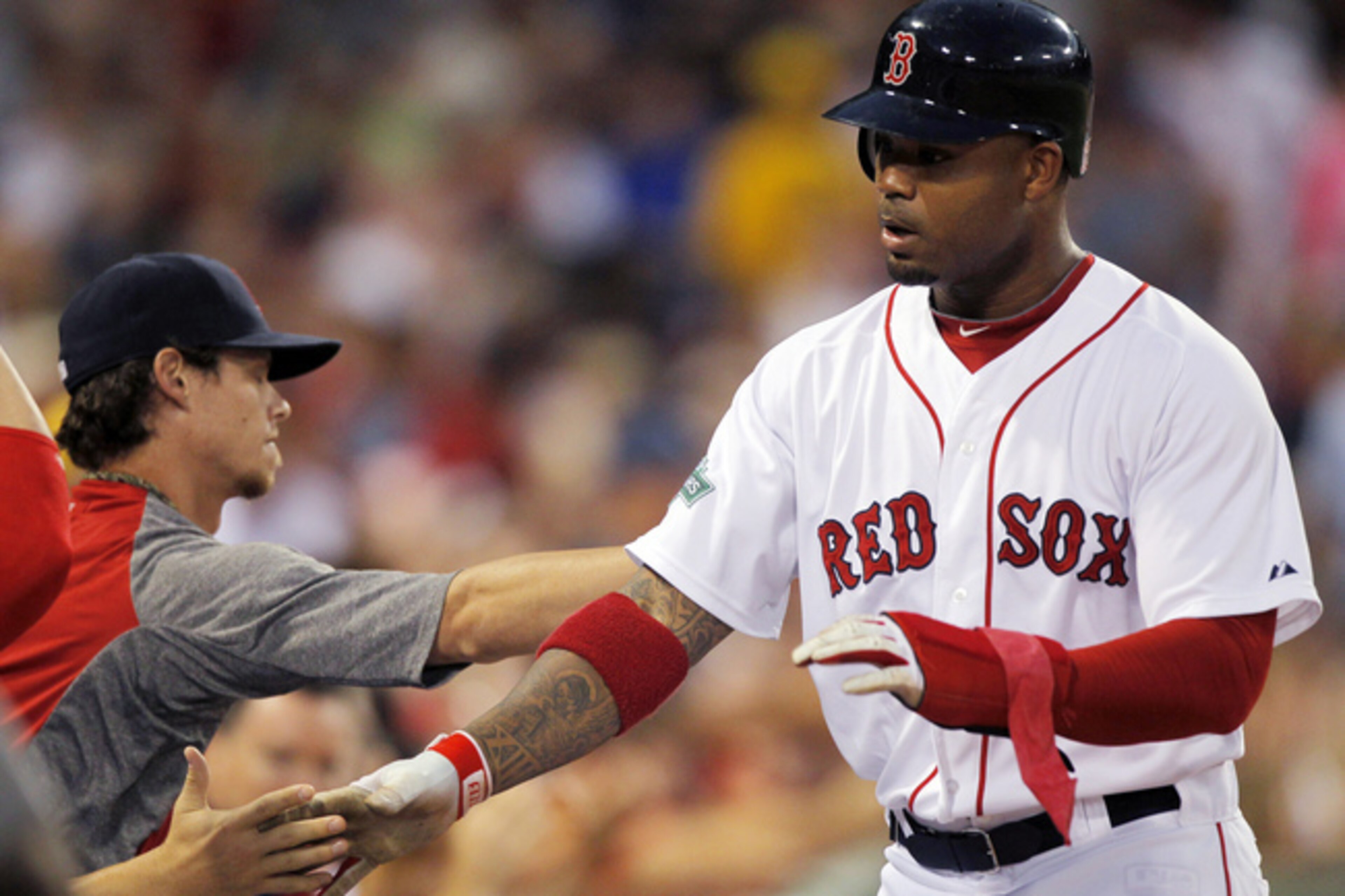
There are a number of statistics that could be used to rate a player's production throughout a contract. But the best and most all-encompassing metric for this is—you guessed it—wins above replacement (WAR), according to FanGraphs.
After all, this requires comparing pitchers and position players in addition to factoring in all other variables like position, defense, park factors and league averages. WAR covers all of the above.
| Kevin Brown | 6.6 | 6.0 | 2.6 | 0.3 | 5.4 | 2.5 | 1.5 | |||
| Alex Rodriguez | 7.8 | 9.8 | 9.2 | 6.7 | 8.8 | 3.9 | 9.6 | OPT OUT | ||
| Manny Ramirez | 5.2 | 5.3 | 6.0 | 3.5 | 3.0 | 2.9 | 1.4 | 5.8 | ||
| Mike Hampton | 2.7 | 1.0 | 2.5 | 1.7 | 0.9 | 0.0 | 0.0 | 0.2 | ||
| Jason Giambi | 6.6 | 4.8 | 0.0 | 4.1 | 2.8 | 0.5 | 2.1 | |||
| Carlos Beltran | 2.2 | 7.6 | 5.1 | 7.2 | 2.9 | 0.7 | 4.3 | |||
| Alfonso Soriano | 6.6 | 3.8 | -0.2 | 2.8 | 1.0 | 3.7 | 3.0 | -1.1 | ||
| Carlos Lee | 2.9 | 3.3 | 0.9 | -1.5 | 2.9 | 0.0 | ||||
| Barry Zito | 1.5 | 1.2 | 2.0 | 1.7 | -0.7 | 0.7 | -0.6 | |||
| Alex Rodriguez | 6.0 | 4.0 | 3.7 | 4.0 | 1.9 | 0.5 | 0.0 | ? | ? | ? |
| CC Sabathia | 6.1 | 4.9 | 6.5 | 4.6 | 2.7 | 0.1 | ? | |||
| Mark Teixeira | 4.9 | 3.2 | 4.0 | 2.7 | -0.2 | 0.8 | ? | ? | ||
| Matt Holliday | 6.2 | 4.8 | 4.5 | 4.4 | 3.8 | ? | ? | |||
| Jayson Werth | 2.3 | 0.6 | 4.6 | 4.8 | ? | ? | ? | |||
| Carl Crawford | -0.2 | 0.3 | 2.9 | 2.5 | ? | ? | ? | |||
| Cliff Lee | 6.5 | 4.8 | 5.1 | 1.7 | ? | |||||
| Jose Reyes | 4.1 | 2.1 | 3.3 | ? | ? | ? | ||||
| Albert Pujols | 3.7 | 0.7 | 3.3 | ? | ? | ? | ? | ? | ? | ? |
| Prince Fielder | 4.8 | 2.3 | -0.3 | ? | ? | ? | ? | ? | ? | |
| Zack Greinke | 2.9 | 3.9 | ? | ? | ? | ? | ||||
| Josh Hamilton | 2.0 | 1.1 | ? | ? | ? | |||||
| Jacoby Ellsbury | 3.6 | ? | ? | ? | ? | ? | ? | |||
| Robinson Cano | 5.3 | ? | ? | ? | ? | ? | ? | ? | ? | ? |
| Shin-Soo Choo | 0.2 | ? | ? | ? | ? | ? | ? | |||
| Masahiro Tanaka | 3.2 | ? | ? | ? | ? | ? | ? | |||
| AVERAGE | 4.1 | 3.6 | 3.5 | 3.2 | 2.7 | 1.4 | 2.4 | 1.6 |
The first thing that must be mentioned here is that a large portion of these contracts cannot yet be fully evaluated because several still have at least three, four, even five years left on them.
While it's safe to call Mike Hampton's eight-year, $121 million deal in 2001 an epic disaster because it's complete, anything negotiated between, say, 2012 and 2014 certainly hasn't had enough time or performance to be labeled as "worthy" or "regrettable" just yet.
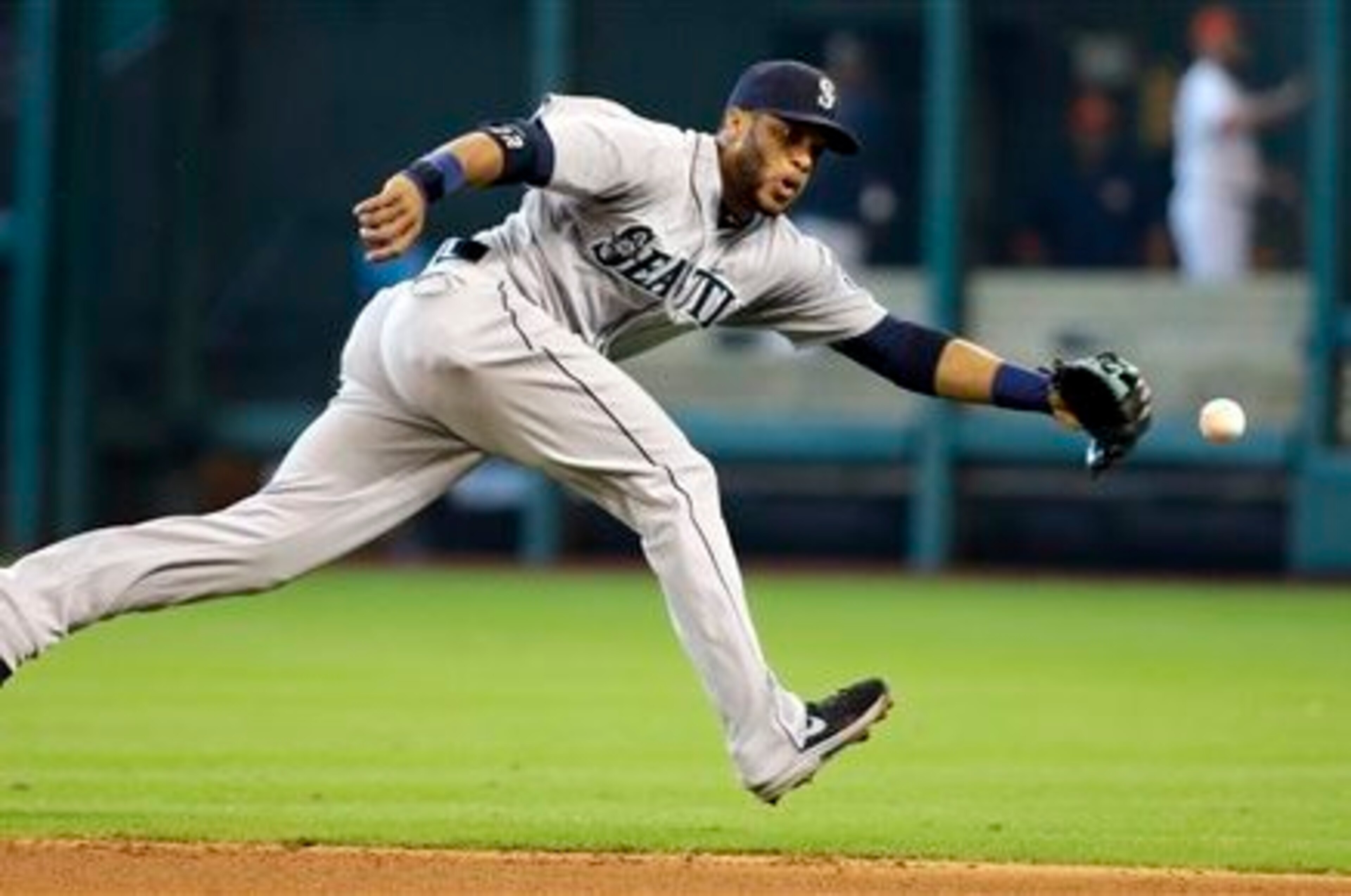
But what are the key takeaways from all the data?
Well, here's how FanGraphs classifies each range for WAR:
| < 1 | Scrub |
| 1-2 | Role Player |
| 2-3 | Solid Player |
| 3-4 | Good Player |
| 4-5 | All-Star |
| 5-6 | Superstar |
| > 6 | MVP |
Based on the second table ("fWAR by Contract Year of $100 Million Free Agents"), teams that have signed a free agent to a $100 million-plus pact have received All-Star production (4-5 fWAR) in Year 1 (4.1 fWAR), followed by above-average output for Years 2-4 (3.6, 3.5, 3.2 fWAR, respectively), on average.
After that, however, the nine-figure players have more or less turned into fringe starter-worthy types from Year 5 on: 2.7 fWAR, 1.4 fWAR, 2.4 fWAR and 1.6 fWAR.
Another way to look at this is to identify the contract year in which a player experienced his "cliff season"—the campaign in which performance dropped to "role player" status or worse (2 WAR or below).
| 1 | 4 |
| 2 | 3 |
| 3 | 4 |
| 4 | 2 |
| 5 | 2 |
| 6 | 2 |
| 7 | 1 |
Again, not every one of the recently signed contracts has had a chance for a cliff season yet. It applies to Albert Pujols' 0.7 fWAR in 2013, Josh Hamilton's 2.0 fWAR in 2013 and even Shin-Soo Choo's 0.2 fWAR this past season.
But we've yet to see significant drop-offs from Robinson Cano and Jacoby Ellsbury, both of whom signed last winter, or Zack Greinke from the one before. And props to Matt Holliday, who inked his $120 million pact in 2010 and has yet to see his production fall off the cliff.
In total, however, 11 of these 25 players—that's a lofty 44 percent—experienced their cliff seasons within the first three years after putting their John Hancocks on the dotted line.

As Barry Svrluga writes in a Washington Post column that includes further detailed analysis of the history of $100 million contracts:
"The game is healthy, with the past decade producing the 10 highest attendances ever, and lucrative local television rights packages keeping the money flowing further.
But if your team signs one of those nine-figure deals, hold your breath. The money is guaranteed. The payback is not.
"
As for applying all of this to Scherzer, Lester and the rest of this year's crop of potential $100 million men, here's the point: Any team ready to pay up better be in position to contend right away, or at least within the next two or three seasons.
Within that window, history and the data indicates nine-figure free agents have fared well enough.
But anything beyond that, and the performance really isn't close to being worth the pay. That's when the regret starts to set in.
Statistics are accurate through the 2014 season and courtesy of MLB.com, Baseball-Reference.com and FanGraphs unless otherwise noted.
To talk baseball or fantasy baseball, check in with me on Twitter: @JayCat11.
.png?w=3840)

.jpg?w=3840 "Inside Donald's Rams Workout")