B/R NFL 1000: Top 34 Centers
Editor's note: This is the fifth installment in Bleacher Report's NFL 1000 for the 2013 season. This signature series runs through April 24, with NFL Draft Lead Writer Matt Miller ranking the best players at every position. You can read more about the series in this introductory article. See the NFL 1000 page for more rankings.
The center position isn’t sexy. Your friends probably don’t know the name of the other team’s starting center each week. Yet it’s one of the most important positions on offense. We take a look at the top centers in the league—based not on their total career, but on the 2013 season.
Throw away the past, the potential and the future. Look at just this year. Who was the best? Who was the worst? That’s what the NFL 1000 aims to identify. Throw out the narratives and the fantasy football stats and dig into the film. Then we’ll see who comes out on top.
The B/R 1000 metric is based heavily on scouting each player and grading the key criteria for each position. The criteria are weighted according to importance for a possible best score of 100.
Potential is not taken into consideration. Nor are career accomplishments.
Centers are judged on pass-blocking (50 points), run-blocking (50) and all of the technique, athletic ability and football intelligence needed to do both.
In the case of ties, our team asked, "Which player would I rather have on my team?" and set the rankings accordingly.
Subjective? Yes. But ties are no fun.
Each player was scouted by me and a team of experienced evaluators, with these key criteria in mind. The following scouting reports and grades are the work of months of film study from our team.
All statistics from Pro Football Focus (subscription required). Players' heights, weights and seasons from NFL.com.
34. Samson Satele, Indianapolis Colts
1 of 34
Pass Block
Samson Satele (6’3”, 300 lbs, seven seasons) can be beaten in a variety of ways. He isn’t an impressive athlete, and his technique in terms of his footwork and hand placement is consistently poor. Satele doesn’t have the body control, strength or quickness to be an effective pass-blocker.
Run Block
Satele can deliver a hit at the point of contact and is able to seal running lanes when he begins the play in an advantageous position. He doesn’t push defenders off the line of scrimmage, and he isn’t able to work in space effectively. Satele’s sloppy technique negates any strength or power he could create. He spends too much time losing his footing or falling to the ground completely.
Overall
Satele is a veteran player who needs to be replaced if the Colts are to properly protect Andrew Luck.
33. Brad Meester, Jacksonville Jaguars
2 of 34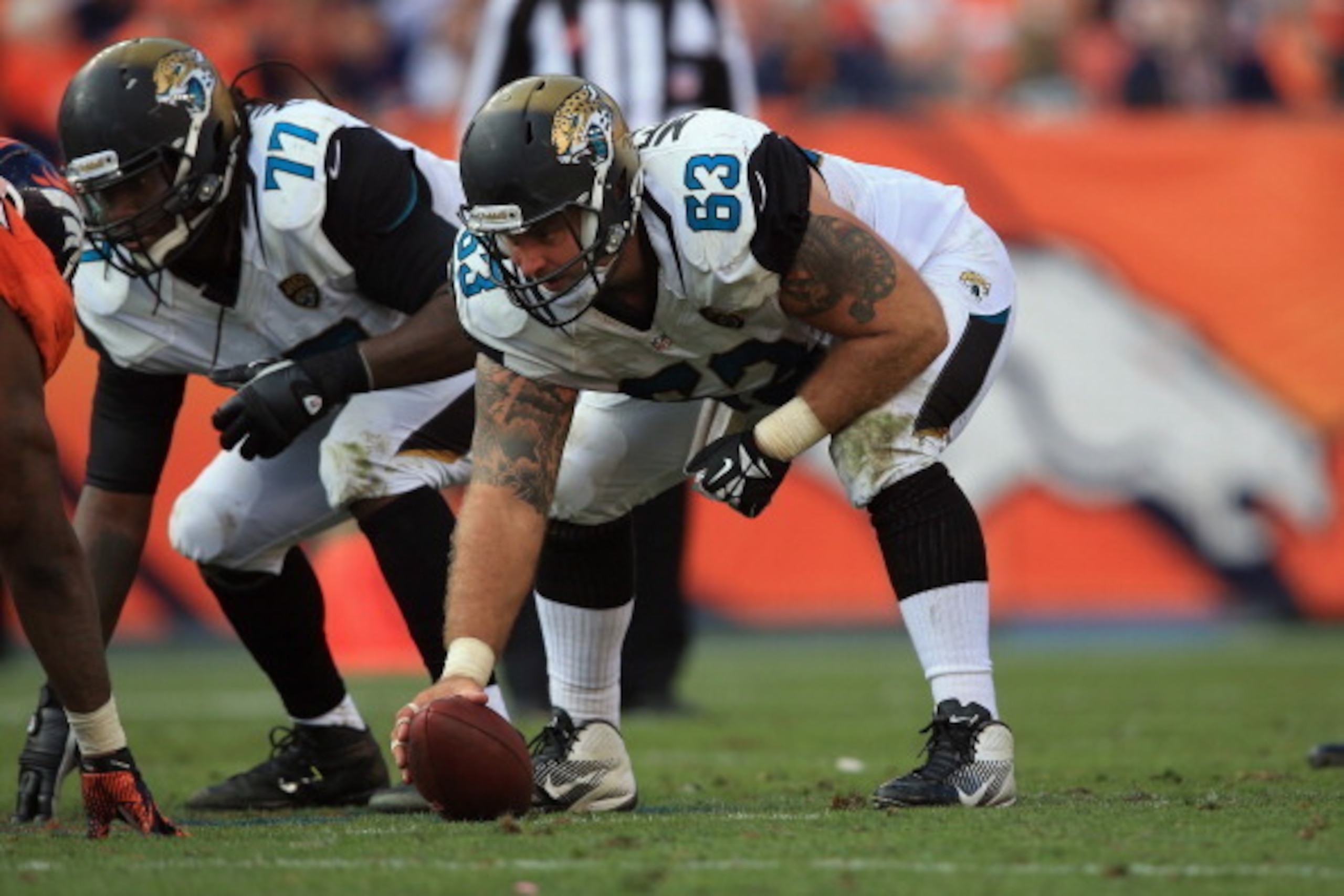
Pass Block
At 36 years of age, Brad Meester (6’3”, 292 lbs, 14 seasons) played his final season in the NFL. Meester’s age showed last season. He set his feet well and consistently played with good hand placement, but his below-average upper-body strength limited his effectiveness when he tried to anchor defensive tackles. Meester’s lateral quickness made him a liability in one-on-one situations.
Run Block
He was still able to move in space, but his lack of agility meant he often overshot his targets in space. Outside of sealing off running lanes from already advantageous positions at the snap, Meester didn’t carry much value as a run-blocker. He simply wasn’t athletic enough to be effective anymore.
Overall
The Jaguars’ long-term starter had faded by the time the 2013 season came around. He had an impressive career, but his final season won’t be considered a highlight.
32. Gino Gradkowski, Baltimore Ravens
3 of 34
Pass Block
Matt Birk retired after the 2012 season, leaving the Baltimore Ravens with a vacancy at the center position. Gino Gradkowski (6’3”, 300 lbs, two seasons) beat out A.Q. Shipley for the starting job but failed to impress. Gradkowski is a stereotypical undersized center who has quick feet but lacks the size or strength to handle big defensive tackles. He plays with inconsistent technique and shows little awareness of his surroundings when engaged at the line of scrimmage.
Run Block
Gradkowski is able to comfortably pull into space or escape to the second level. He can locate and engage defenders, but he doesn’t have the body control or strength to consistently move them off spots. Gradkowski’s size works against him in the running game. He tries to make up for it with leverage and aggression, but he is overwhelmed too often.
Overall
Retooling the offensive line in Baltimore should be general manager Ozzie Newsome’s top priority this offseason. Newsome will likely replace Gradkowski, but he also fits Gary Kubiak’s scheme, so he should at least be a favorite to stick around as a backup.

.jpg?w=2560 "Senior Bowl Football")
31. Ryan Wendell, New England Patriots
4 of 34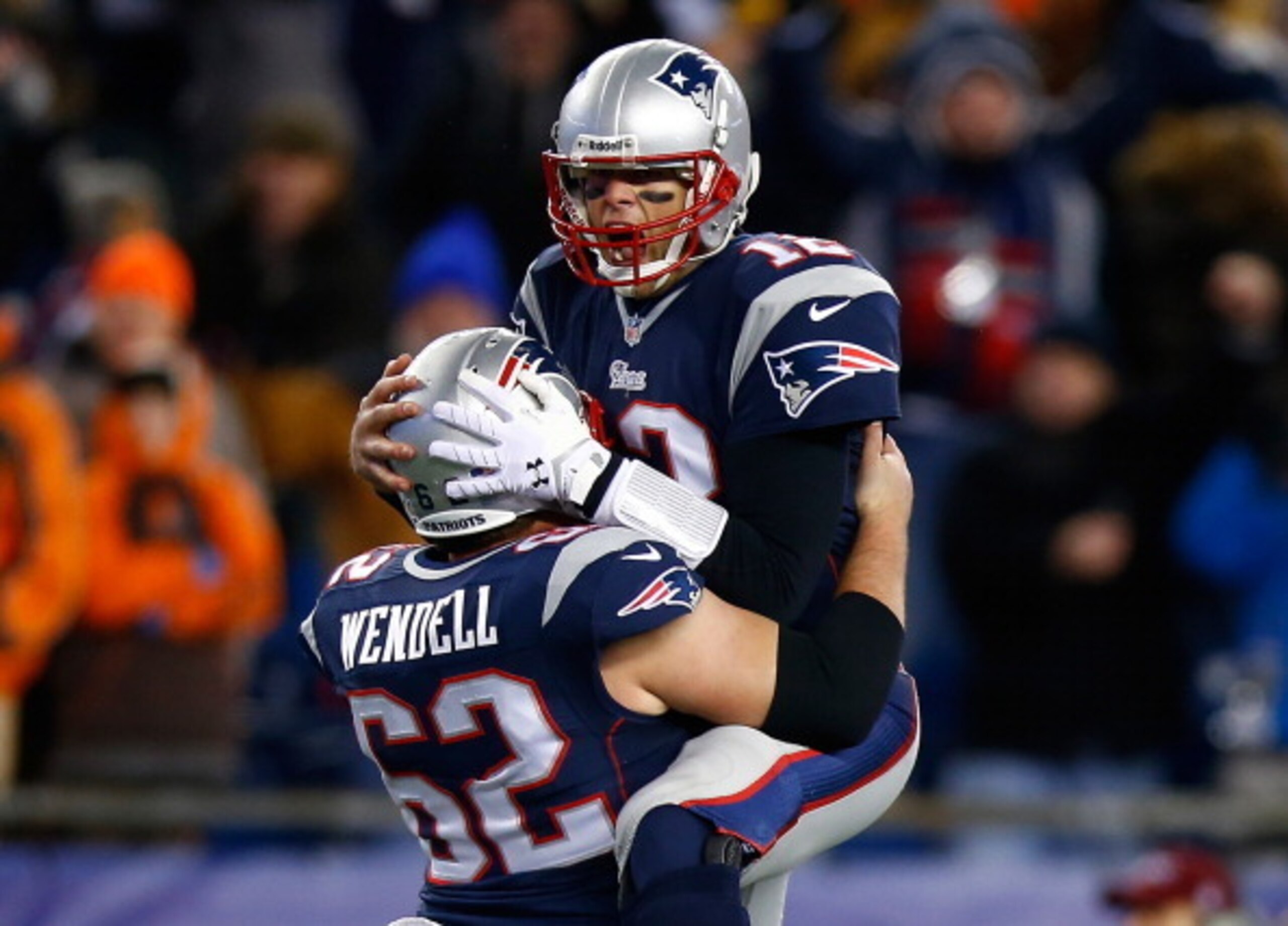
Pass Block
Ryan Wendell (6’2”, 300 lbs, five seasons) is best suited to give help to guards in double-teams. He does show quick feet and at times has good hand usage, but his balance is poor. Too often Wendell is battling himself while trying to engage defenders because his upper-body momentum drags him too far forward.
Run Block
Wendell is a decent run-blocker. He has enough bulk and body control to deliver big hits on initial contact, and he can sustain blocks against lesser defenders. He moves comfortably around the field but could improve his consistency when trying to locate defenders in space.
Overall
Wendell has the physical talent to be a good player, and his technique doesn’t need major work. He is 27 years of age, though, so he can’t afford to have another season like he had in 2013.
30. Peter Konz, Atlanta Falcons
5 of 34
Pass Block
Peter Konz (6’5”, 317 lbs, two seasons) has relatively quick feet that allow him to work in space as a pass protector. He uses his hands well to punch defenders and engage them on the move. However, Konz lacks the physical ability to counter bigger, stronger defensive tackles.
Run Block
Konz is aggressive when initiating contact, but he doesn’t pack a punch that impacts defenders. He fails to sustain blocks or control the positioning of the defender when engaged with defensive linemen. Konz can move in space, but he doesn’t locate and engage defenders well.
Overall
Much more was expected of Konz when he was coming out of college. He is still relatively young, but the former second-round pick has already accumulated a lot of bad tape in Atlanta.
29. Brian Schwenke, Tennessee Titans
6 of 34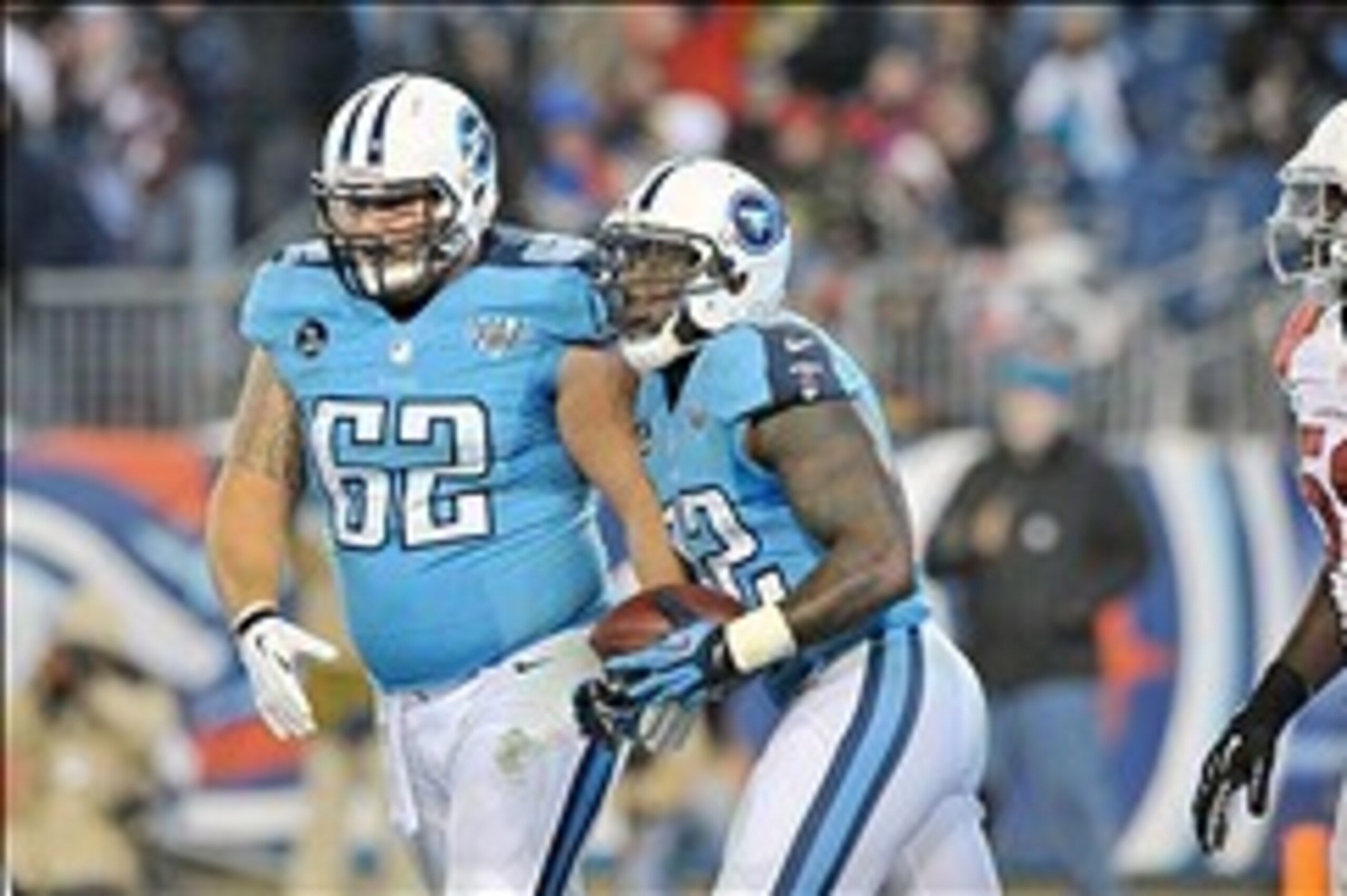
Pass Block
After entering the season with Robert Turner as the starter, the Titans turned to Brian Schwenke (6’3”, 318 lbs, one season) during the regular season. Schwenke failed to seize his opportunity. He played too tall in pass protection, and his feet were too slow when he tried to move laterally. Too often defenders got into his chest because he didn’t play with active hands.
Run Block
Schwenke won’t consistently push defenders off the line of scrimmage because he doesn’t have overly impressive upper-body strength. He plays with good technique in the running game, which allows him to seal off running lanes and maintain blocks. Schwenke can move around the field, but he isn’t quick and doesn’t deliver impact hits on initial contact.
Overall
Schwenke is still very young, so he has enough time to develop into a quality player. He was a fourth-round pick in the 2013 draft who wasn’t expected to start as a rookie.
28. Robert Turner, Tennessee Titans
7 of 34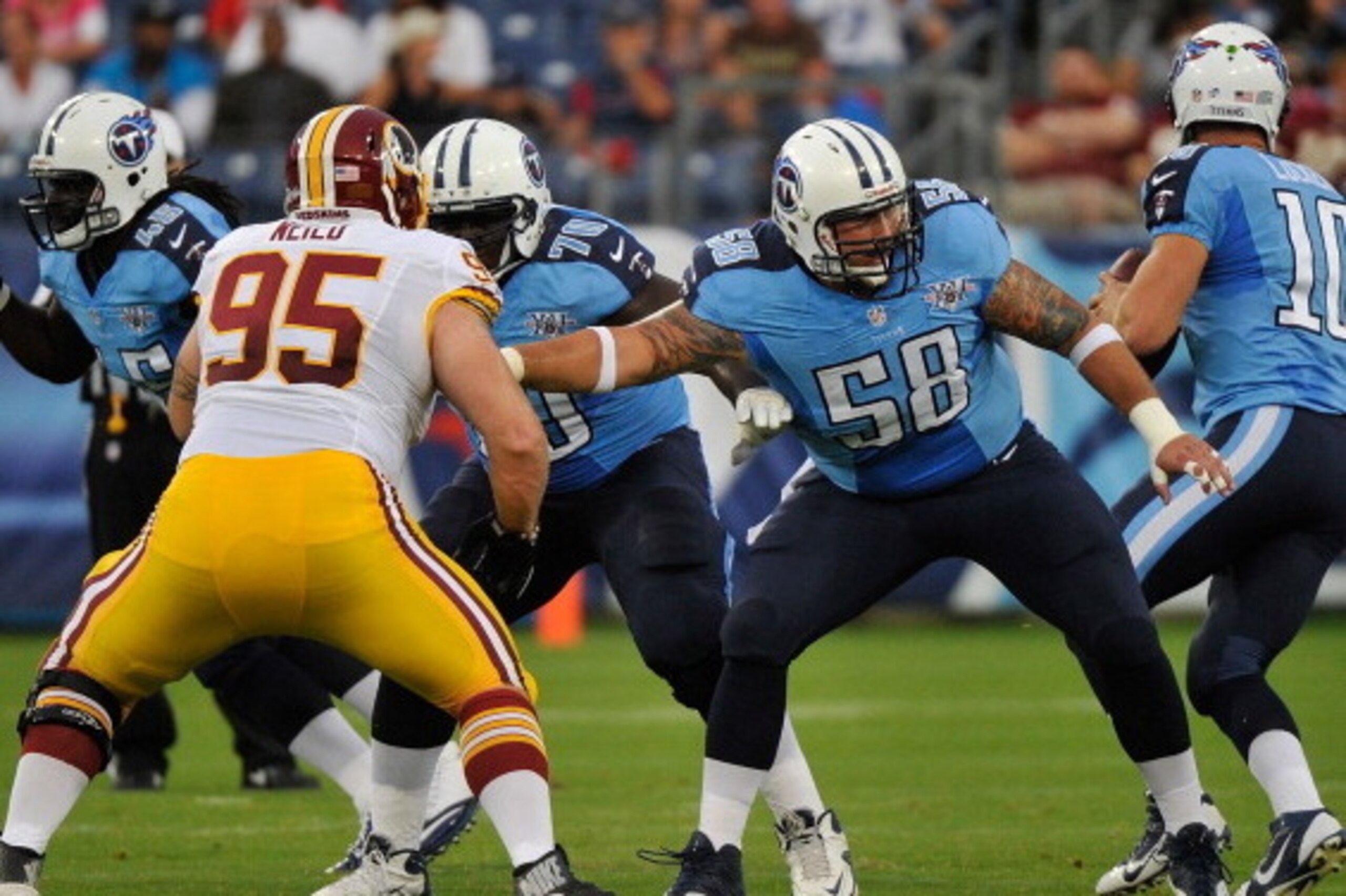
Pass Block
Robert Turner (6’4”, 308 lbs, six seasons) is quick out of his position and swiftly establishes himself in his stance. However, he is too easily overwhelmed because of his poor upper-body strength and slow feet. Turner is able to get in positions and engage defenders, but he can’t prevent them from going where they want to go.
Run Block
Turner slides off his blocks too easily because he isn’t able to control his momentum. Better hand usage would help, but the key lies in his technique. Turner is unable to consistently find the perfect combination of aggression and balance. He needs to improve his footwork so he can deliver a hit on initial contact and drive through blocks.
Overall
Turner played relatively well in St. Louis during the 2012 season, but Tennessee deservedly benched him in 2013. The Titans likely regretted replacing Fernando Velasco with him before the season started.
27. Fernando Velasco, Pittsburgh Steelers
8 of 34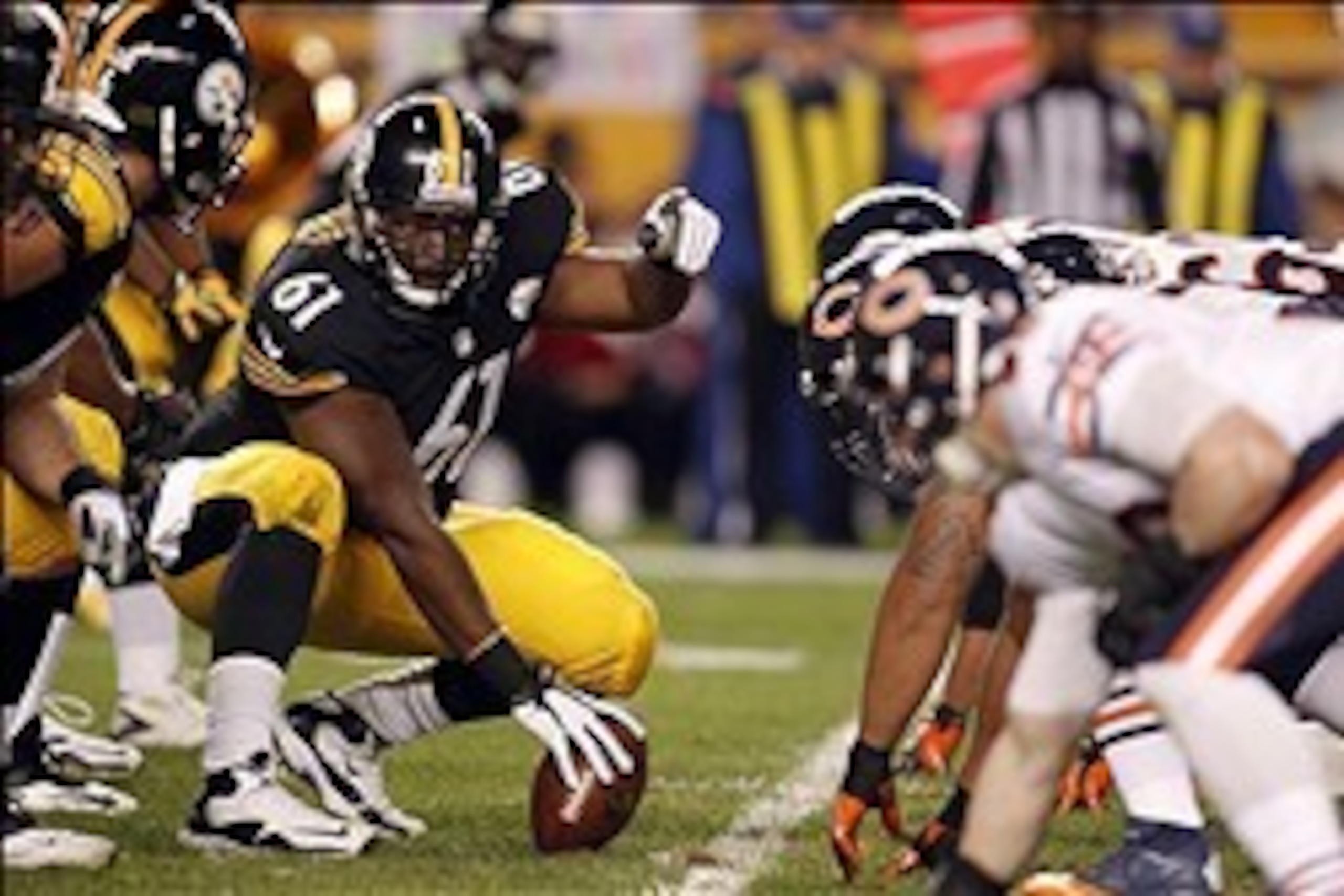
Pass Block
The Pittsburgh Steelers lost starter Maurkice Pouncey during Week 1 of the 2013 season. Fernando Velasco (6’4”, 312 lbs, four seasons) was a late veteran addition who solidified the position. Velasco is an average athlete who was an effective but limited pass protector. He showed good technique and excellent awareness that somewhat offset his heavier feet.
Run Block
Velasco can get from one point of the field to the other relatively quickly, and he keeps his legs moving through contact on the line of scrimmage. However, his below-par athleticism curtailed his impact in 2013. Velasco struggled to handle bigger defensive linemen inside and didn’t consistently locate defenders in space.
Overall
For a late veteran addition, Velasco gave the Steelers more than they expected. However, he wasn’t even an average starter.
26. Kyle Cook, Cincinnati Bengals
9 of 34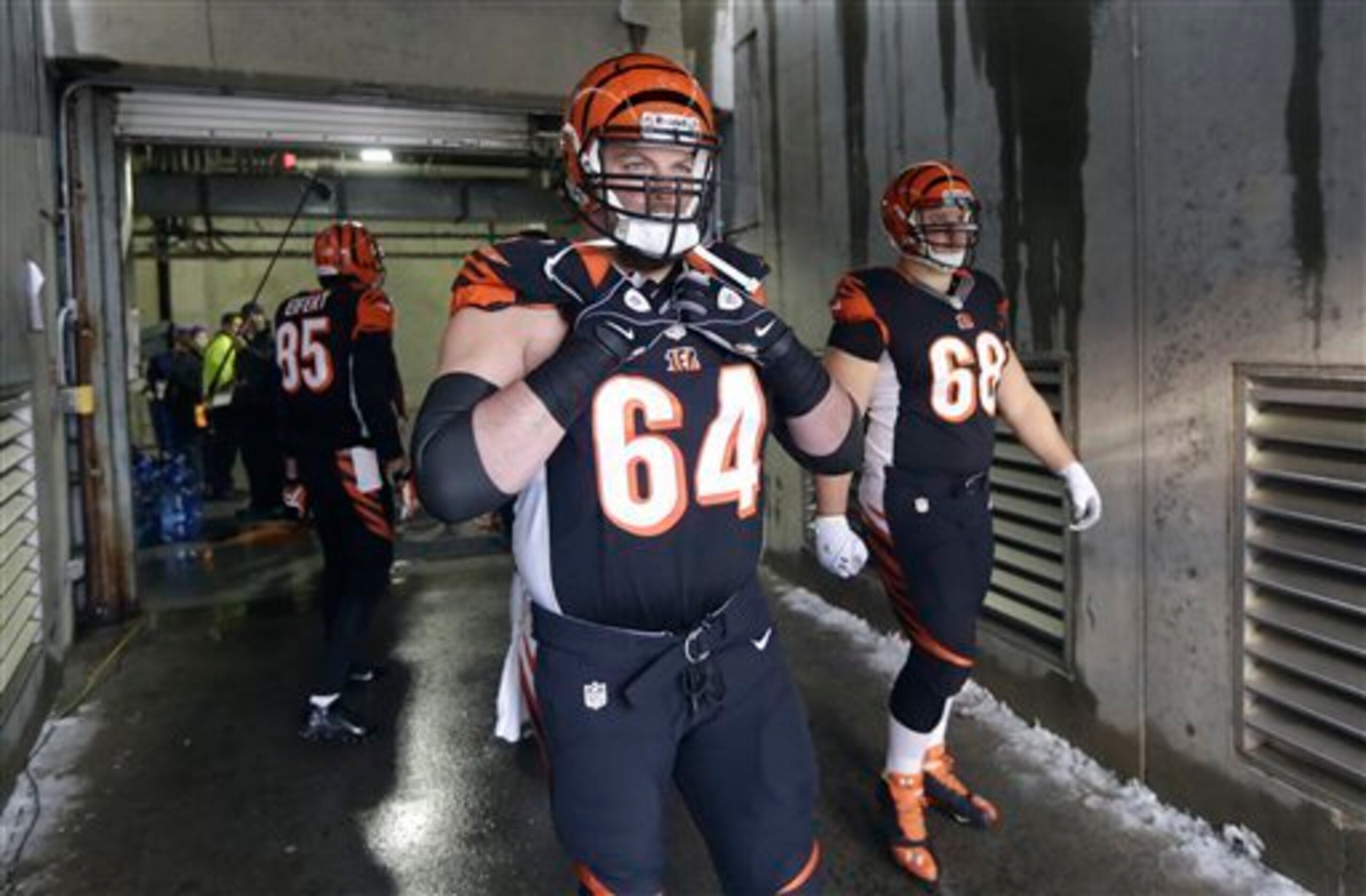
Pass Block
Kyle Cook (6’3”, 310 lbs, six seasons) uses his hands well and is quick to get to his stance at the snap. He has decent athleticism that allows him to succeed at times in one-on-one situations. Cook’s two most pressing issues in pass protection are his lack of consistency and awareness.
Run Block
Cook doesn’t carry the bulk or aggressive streak to be a punishing run-blocker. He doesn’t deliver big hits on initial contact and isn’t able to consistently push defenders off the line of scrimmage. He does have the quickness and body control to move in space behind the line of scrimmage and to the second level, but he routinely fails to engage defenders properly with his hands.
Overall
Cook is a replaceable piece and clearly the weak link on the Cincinnati Bengals offensive line.
25. Jim Cordle, New York Giants
10 of 34
Pass Block
In the NFL today, there’s one thing no center wants: slow feet. Jim Cordle’s (6’3”, 320 lbs, three seasons) slow feet are exposed when he’s put into space. He can’t slide laterally to be effective in one-on-one situations. When he’s not asked to move laterally, Cordle can be effective in tight situations.
Run Block
Cordle is an effective run-blocker in the right situations. He has the strength to push defenders off the line of scrimmage when he locks on with his hands and drives his legs through contact. Because of his limited athleticism, Cordle is ineffective in space.
Overall
At just 26 years of age, Cordle could still develop into a solid starter. However, it’s hard to find a quality starter in this league with such slow feet.
24. Scott Wells, St. Louis Rams
11 of 34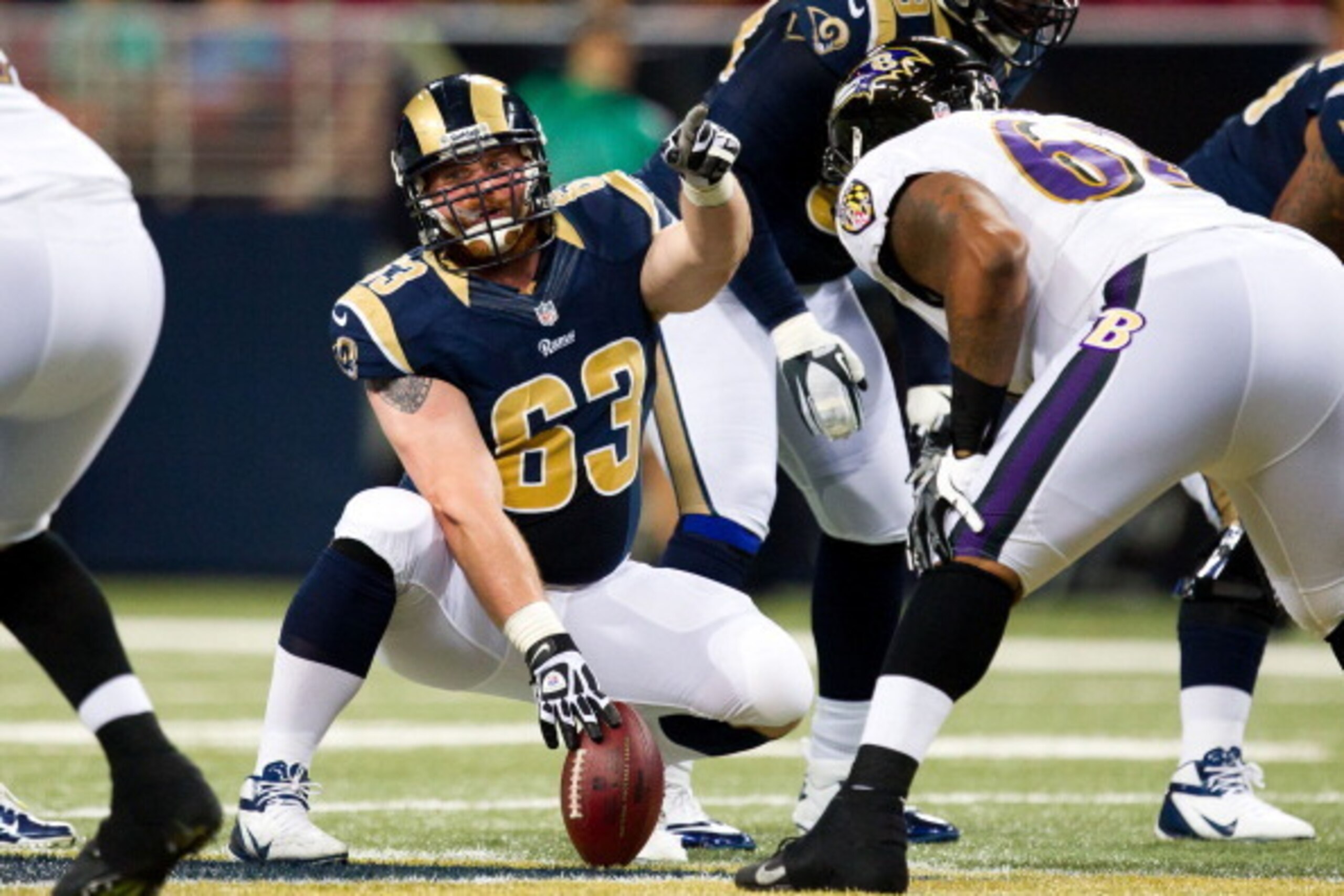
Pass Block
Scott Wells’ (6’2”, 302 lbs, 10 seasons) value to the St. Louis Rams definitely comes in his pass-blocking ability. Wells isn’t the biggest or the strongest athlete, but he has quick feet and uses his hands well. Wells is capable of being effective in one-on-one situations because he keeps his head up, fully extends his arms and maintains his balance.
Run Block
Wells is able to move and is most effective when run-blocking in space. But even then, he isn’t overly impressive. Wells needs to be more consistent locating defenders in space and latching on with his hands to sustain blocks. It was too easy for defenders to evade him in space. Because he isn’t physically imposing, Wells also can’t consistently push defenders off the line of scrimmage. He is best suited to double-team defenders or seal off running lanes when he starts plays in advantageous positions.
Overall
The Rams have a few things to sort out on their offensive line. Wells will probably be the starter at center next season, but the Rams definitely won’t feel 100 percent committed to him.
23. Joe Hawley, Atlanta Falcons
12 of 34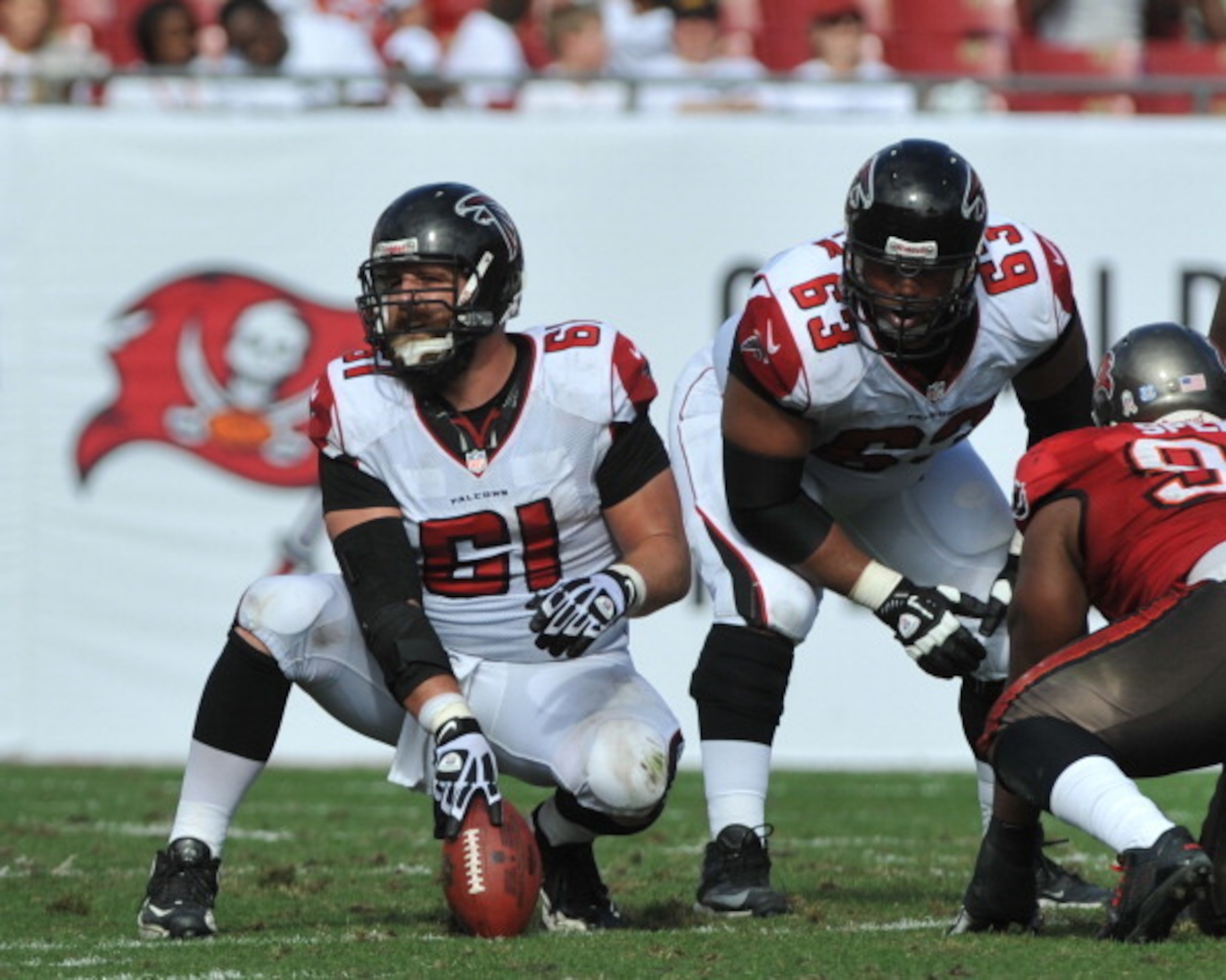
Pass Block
Joe Hawley (6’3”, 302 lbs, four seasons) has active hands, and his feet are quick enough that he should be able to have success in one-on-one situations. However, he struggles with stronger defensive linemen, and his reaction time is often slow. Hawley needs to develop better technique and show more body control on the field. Added upper-body strength would also be a plus.
Run Block
Hawley is mobile and capable of delivering a heavy hit on initial contact. He gets good leverage and attacks blocks with the aggression required to knock defenders backward. He struggles at times to locate defenders in space and needs to use his hands better when moving laterally, but overall he is a good run-blocker with the potential to get better.
Overall
Hawley is just 25 years of age and hasn’t started a full 16 games in his career. He played right guard and center in 2013 but won’t be assured of a starting spot in 2014 if the Falcons invest in their offensive line.
22. Lyle Sendlein, Arizona Cardinals
13 of 34
Pass Block
Lyle Sendlein (6’3”, 308 lbs, seven seasons) is an undersized center who plays the game with an aggressive streak. At times he can be too aggressive in pass protection and loses his balance by being too quick to try to initiate contact. Sendlein is quick in space, but his feet become heavy when he drops back into his stance. He isn’t an impressive athlete, which is a big reason why he can’t be relied upon in one-on-one situations.
Run Block
In spite of his limited athleticism, Sendlein is an impact blocker who can drive defenders off the line of scrimmage. He is able to move defenders by quickly gaining positional and leverage advantages before driving his legs through contact. Sendlein is also able to sustain blocks while moving laterally or escape to the second level to make impact blocks.
Overall
Sendlein is a limited athlete who gets the most out of his ability with tenacity and aggression.
21. Jeremy Zuttah, Tampa Bay Buccaneers
14 of 34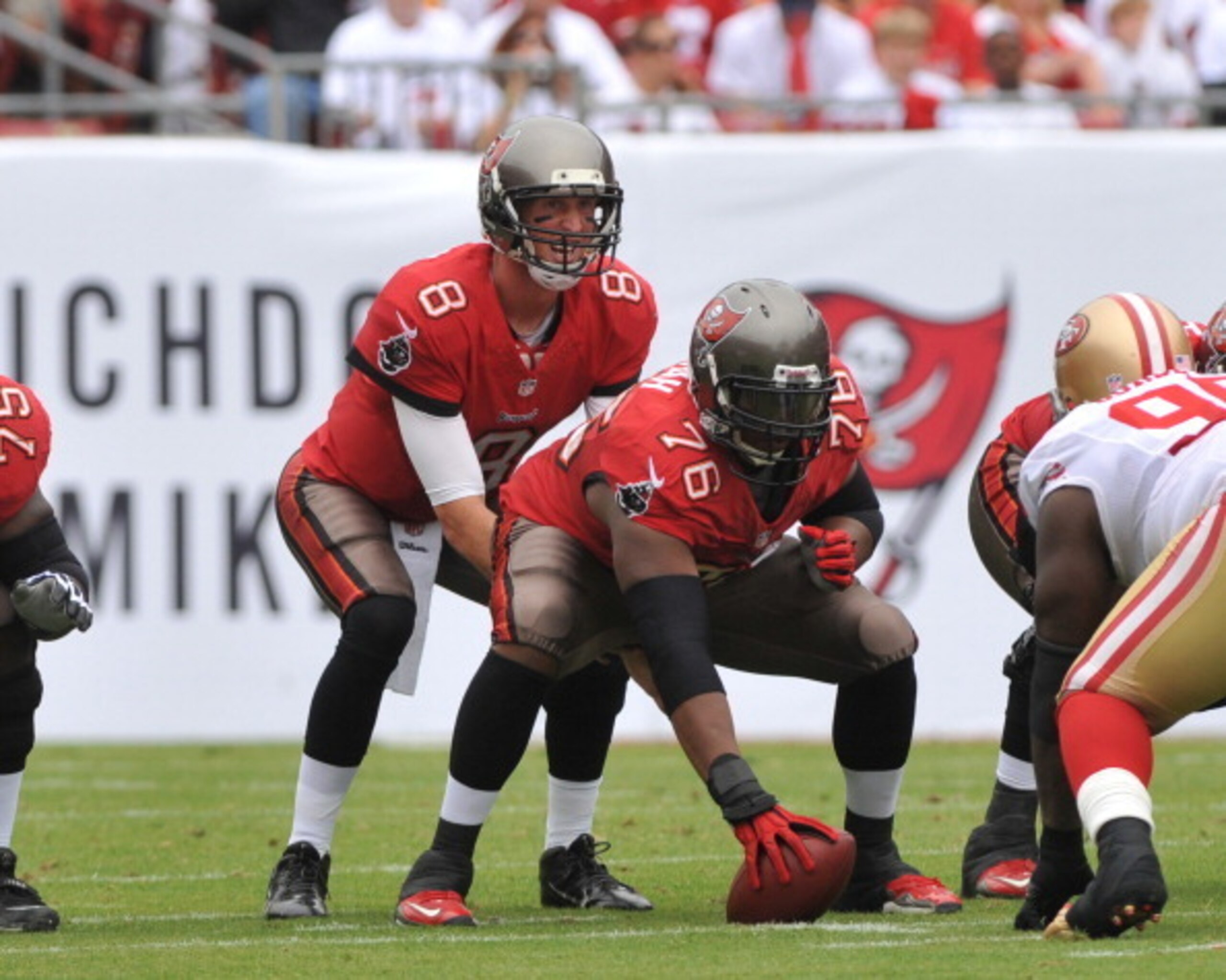
Pass Block
Jeremy Zuttah (6’4”, 308 lbs, six seasons) is a versatile player who started 15 games at center in 2013 and one at left guard. He is an all-around athlete who plays with quick feet and good balance. Zuttah’s primary concern in pass protection is his inability to counter bigger defensive tackles because of his upper-body strength. He struggles to anchor or withstand bull rushes even when he plays with good technique.
Run Block
Zuttah is a somewhat inconsistent run-blocker. His lack of upper-body strength limits what he can do on the field, but his impressive feet allow him to be effective in space. He pulls behind the line of scrimmage well and is able to sustain blocks with his hands while he is on the move. Playing with precise technique and winning the leverage battle are important for Zuttah because he isn’t capable of simply overpowering defenders.
Overall
Zuttah is an established starter in his prime. He likely won’t improve dramatically, but he doesn’t desperately need to because of his all-around ability.
20. Eric Wood, Buffalo Bills
15 of 34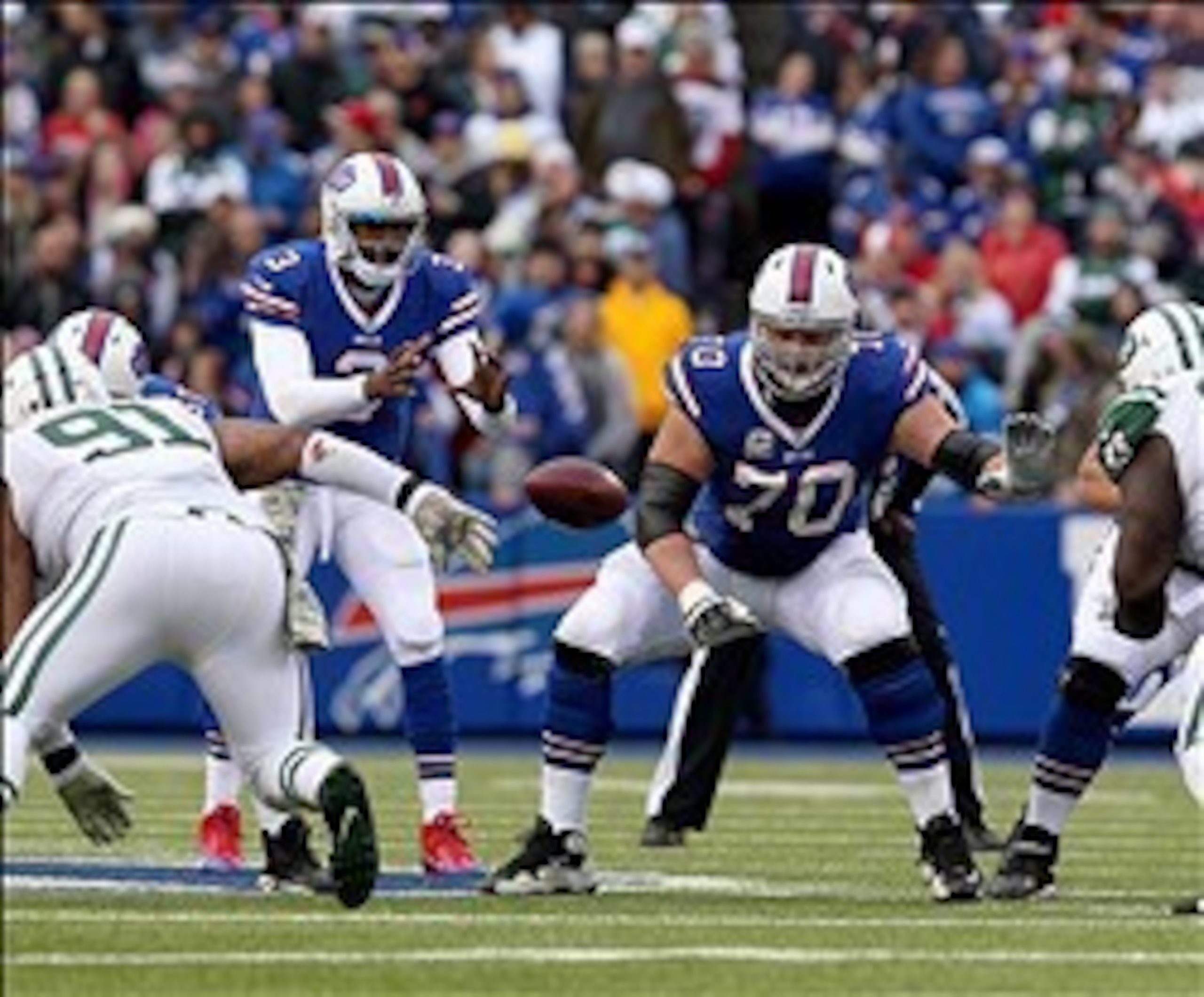
Pass Block
Eric Wood (6’4”, 310 lbs, five seasons) is quick out of his stance and to engage defenders with his hands. Despite his speed, Wood also shows off excellent body control as he keeps his balance in his stance. That allows him to engage defenders at a distance, punch when necessary and react to any moves the defenders make. He is an impressive player who can only really be exposed by bigger, stronger defensive tackles.
Run Block
Wood is unable to impose himself on defenders. When he attempts to push defenders off spots, he often loses his balance. When he attempts to seal running lanes and sustain blocks, he is too easily pushed aside. Wood needs to show off a stronger upper body, but improved footwork would help him get more out of what strength he has.
Overall
Even with how effective he is as a pass protector, Wood can’t afford to continually struggle as a run-blocker if he wants to be considered a valuable starter.
19. Brian De La Puente, New Orleans Saints
16 of 34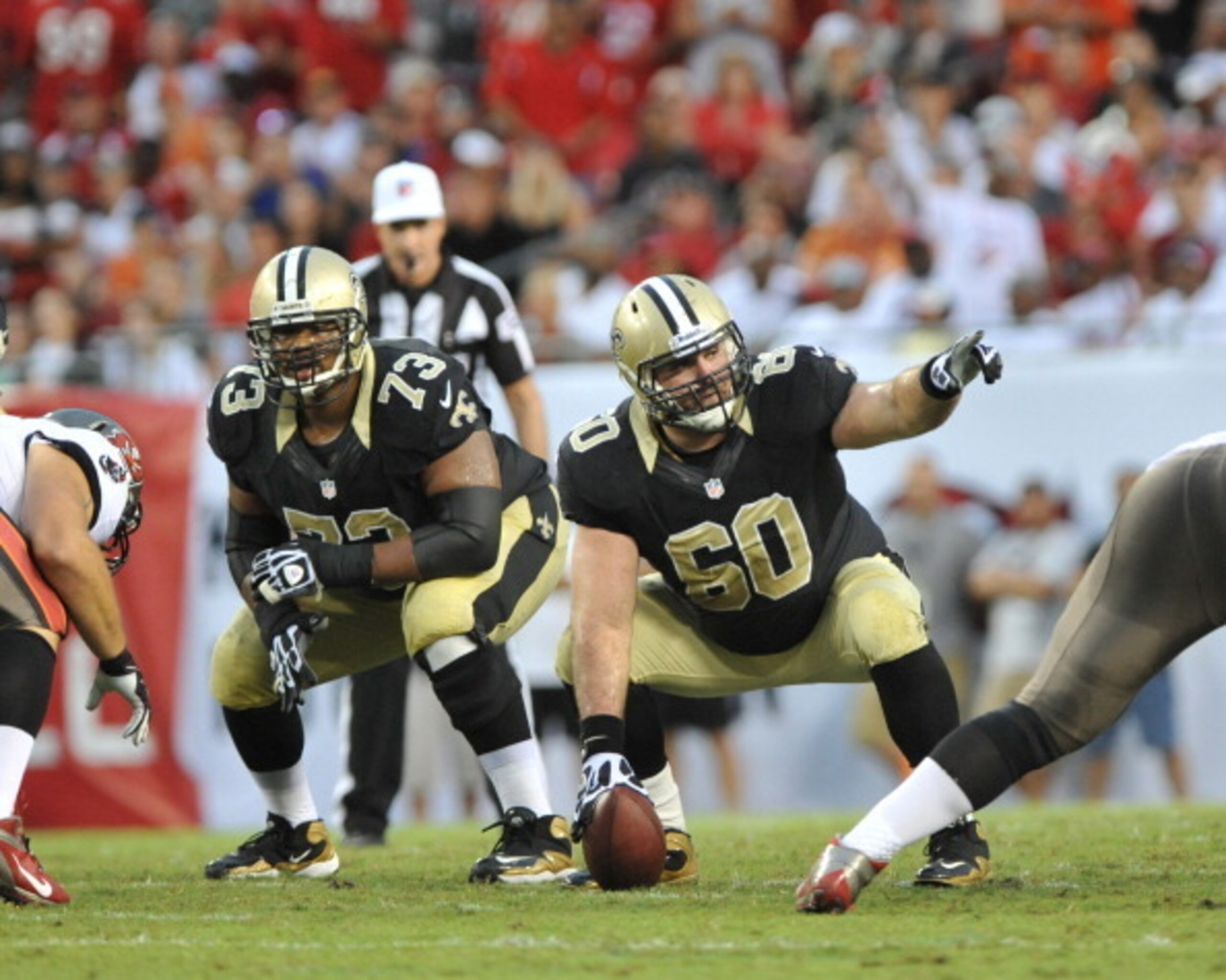
Pass Block
Brian De La Puente (6’3”, 306 lbs, four seasons) is a very quick center who can be used in a variety of ways. He can be left in space in one-on-one situations, and he uses his hands well after establishing himself in his stance. However, De La Puente struggles at times with bull rushes because of his weak upper body. He needs to be stronger in all aspects of the game.
Run Block
The Saints ask their center to do an awful lot. He often carries out a key role in a variety of toss, stretch and screen plays that the offense specializes in. De La Puente fits well in this role because he is spatially aware and has the quickness that allows him to be effective in space. However, his body control is inconsistent, and his lack of power makes it tougher for him to make impact blocks. He doesn’t initiate contact with any presence or consistently sustain blocks at any level of the field.
Overall
De La Puente fits what the Saints like to do on offense. He carries the skill set many offenses are looking for in their offensive linemen these days. At 28 years of age, he likely won’t improve his strength, but that won’t prevent him from being a valuable starter.
18. Rodney Hudson, Kansas City Chiefs
17 of 34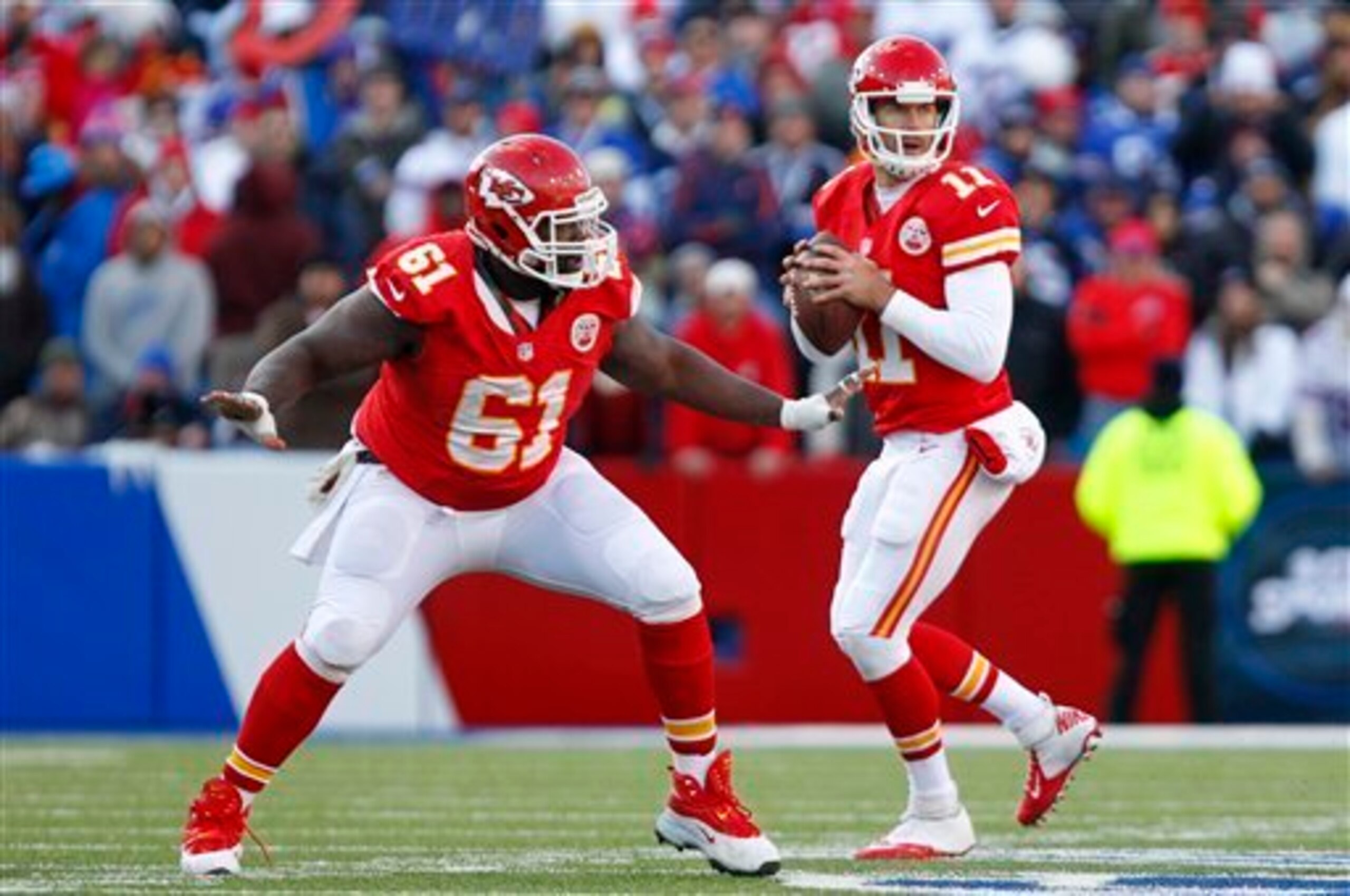
Pass Block
Rodney Hudson (6’2”, 299 lbs, three seasons) is an impressive athlete. He doesn’t have exceptionally quick feet, but he is able to widen his base and maintain his balance while making contact with defenders. This allows him to stay in front of his assignment even when he is slow to react. Hudson’s comfort level in pass protection is obvious, and it’s the result of his excellent awareness. He fluidly picks up assignments or surveys his surroundings while engaged with his assignment.
Run Block
Stylistically, Hudson fits perfectly in Andy Reid’s offense. He can quickly reach different spots on the field and understands how to locate defenders in space effectively. However, he struggles with his technique and body control once engaged with defenders. He doesn’t consistently push defenders off the line of scrimmage, and linebackers/defensive backs are able to escape from his reach too easily.
Overall
Hudson is a good, not great center who needs to speed up his footwork. He is just 24 years of age, so he has plenty of time to improve. He obviously has an abundance of physical talent and is already an effective niche player because of his pass-blocking ability.
17. Max Unger, Seattle Seahawks
18 of 34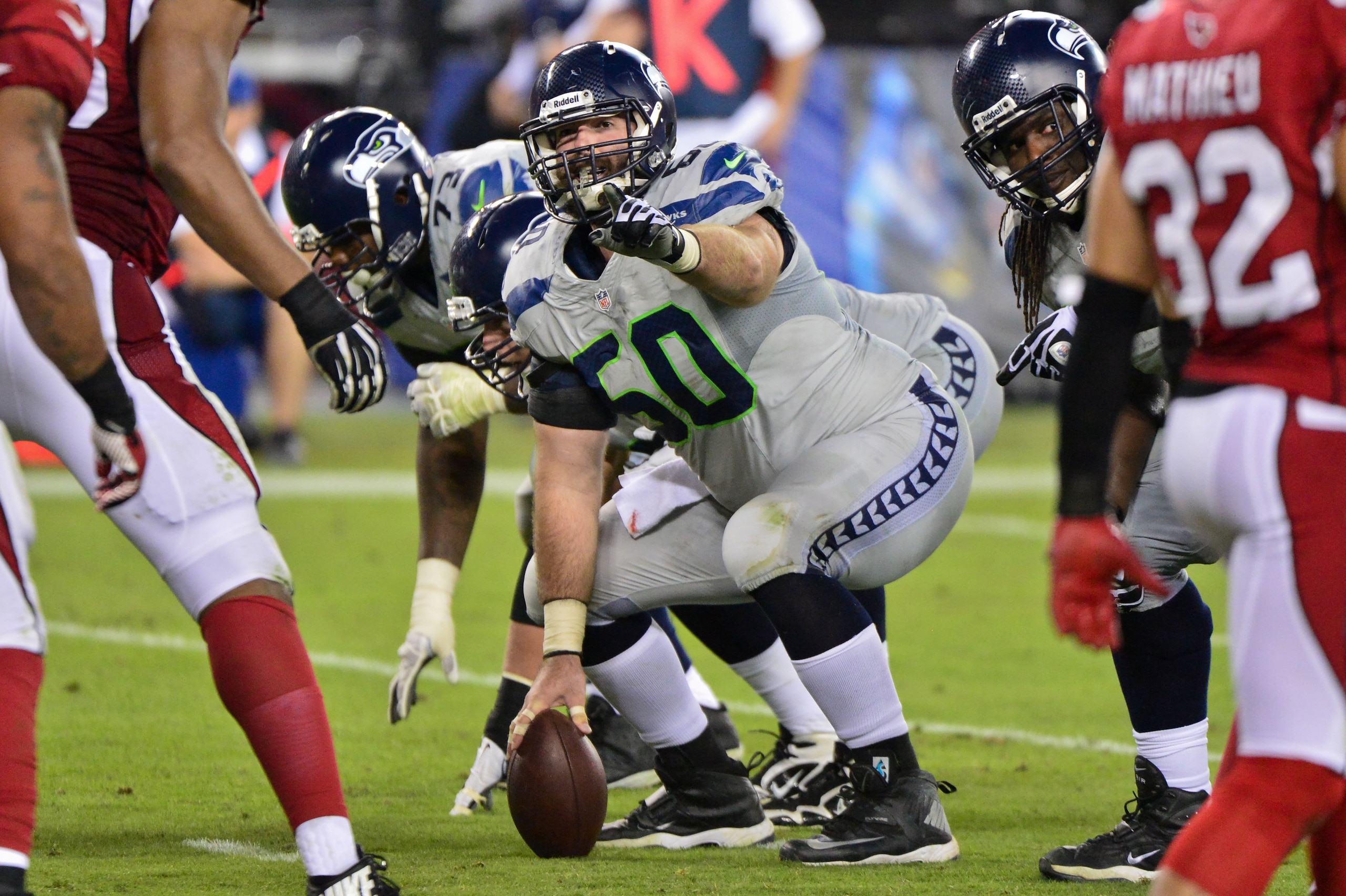
Pass Block
Max Unger (6’5”, 305 lbs, five seasons) is a very strong center who understands how to use his hands to manipulate bigger defensive tackles. It’s difficult to beat Unger without making him move his feet. Although he has the physical agility to be effective in space, Unger’s feet sometimes appear stuck on the ground when he tries to move laterally.
Run Block
Unger is a great fit in the Seahawks’ run-blocking scheme. His agility and technique allow him to excel when moving horizontally or to the second level. Unger’s footwork allows him to keep his balance when fighting defenders for position whether he is working in tight areas or moving in space. He has consistent and effective hands but needs to be more consistent when using leverage to move defenders off the line of scrimmage.
Overall
Although the Seahawks offensive line wasn’t overly impressive in 2013, Unger had another decent season. The Seahawks need to surround him with better pieces at the guard positions.
16. Nick Mangold, New York Jets
19 of 34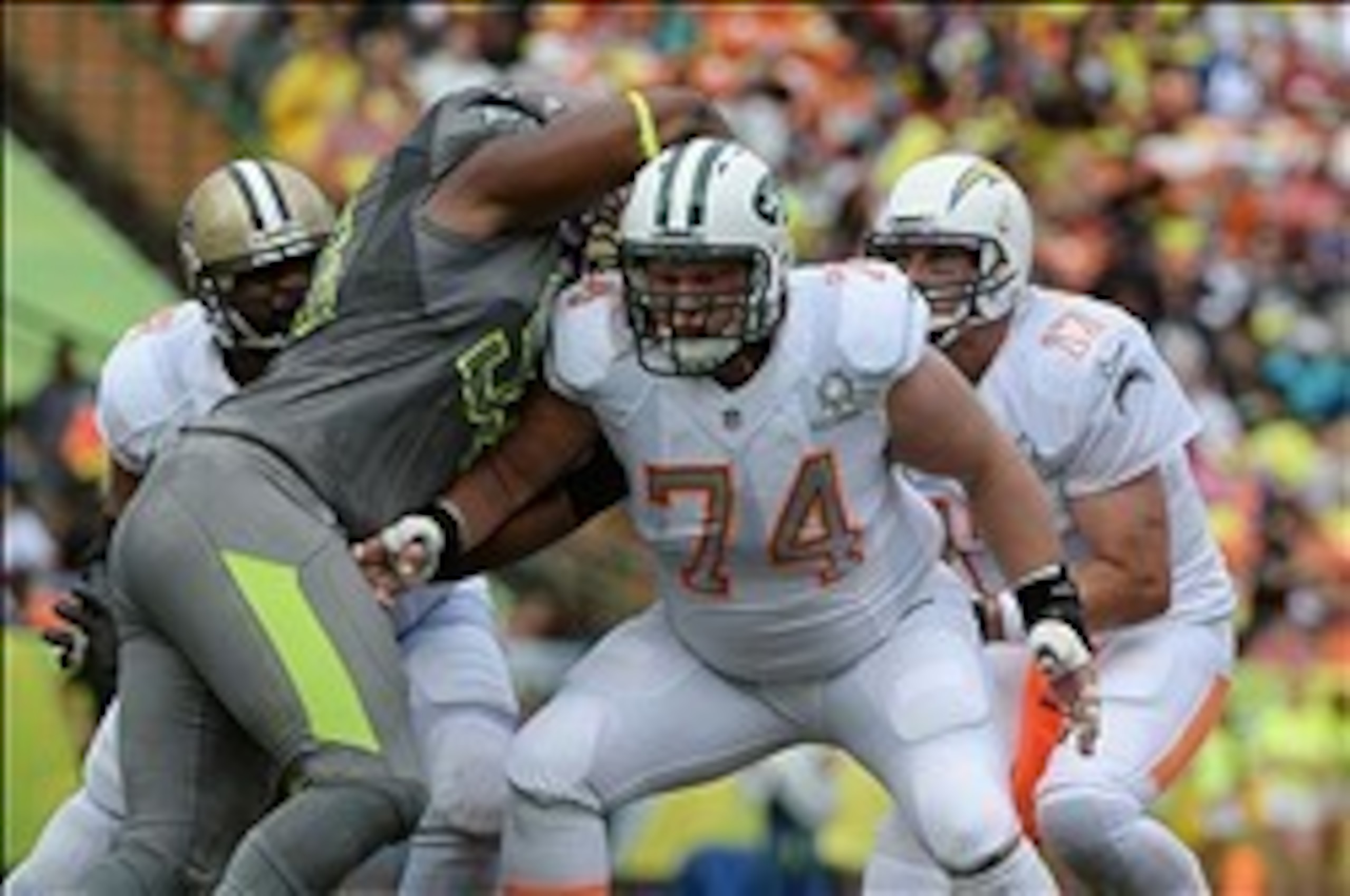
Pass Block
Nick Mangold’s (6’4”, 307 lbs, eight seasons) awareness as a center is exceptional. He is rarely surprised by any movement a defensive lineman makes, and he excels at picking up delayed blitzes from the second level. Mangold’s awareness combined with his impressive hand usage and precise footwork make him an effective and consistent pass protector.
Run Block
Mangold is able to move in space, but he is physically unable to absorb hits on initial contact without losing his positioning. Strength is a major concern for Mangold at this point in his career. He is unable to sustain blocks in spite of his active hands, and he tends to play too high in the run game. Mangold is most effective when playing as part of a double-team opposed to working in one-on-one situations.
Overall
At 30 years of age, Mangold is showing signs of physical decline. He wasn’t one of the best centers in the league in 2013, but he still has a lot of value as a pass protector.
15. Will Montgomery, Washington
20 of 34
Pass Block
Will Montgomery (6’3”, 304 lbs, eight seasons) is a quick-footed center with subpar strength. He has inconsistent technique as a pass protector, but his quick feet allow him to be effective in space. Montgomery struggles with bull rushers more than speed rushers. He can offset his lack of strength with good hand usage, but he is unable to recover when defenders get into his chest.
Run Block
Montgomery is exactly the type of center you would expect to see in a Mike Shanahan offense. He is very quick and has the ability to reset his feet when engaging defenders on the second level. He moves well laterally and can reach the outside shoulders of defensive linemen to get his body between them and the running back. He is less effective at pushing defenders off their spots.
Overall
It’s unlikely that Jay Gruden dramatically changes the Washington offense in 2014, so Montgomery should return as a valuable starter.
14. Nick Hardwick, San Diego Chargers
21 of 34
Pass Block
Nick Hardwick (6’4”, 305 lbs, 10 seasons) is an impressive pass-blocker. He understands how to anchor defenders after quickly dropping into his stance after the snap. Hardwick has the rare combination of aggression and discipline that allows him to be effective in a variety of ways. His quick feet and good hand usage are understated but impressive aspects of his play.
Run Block
Hardwick is an aggressive run-blocker who gets good leverage and drives his legs through contact. He could be better at holding his position while driving his feet, but he is an all-around impressive blocker when working on the line of scrimmage. He is athletic enough to move in space and engage defenders on the second level as well.
Overall
Save for a handful of disappointing displays this past season, Hardwick proved to be a reliable center for Philip Rivers and the San Diego Chargers. He is versatile and effective enough to combat different styles and different levels of defensive linemen.
13. Jonathan Goodwin, San Francisco 49ers
22 of 34
Pass Block
Jonathan Goodwin (6’3”, 318 lbs, 12 seasons) is a technical pass-blocker with enough functional strength to be trusted in one-on-one situations. He moves his feet well and concentrates his power through his arms when battling against big defensive tackles. Goodwin isn’t an incredible athlete, but his technique gets the most out of the athleticism he does have, which allows him to be an effective pass protector.
Run Block
Goodwin isn’t a powerful or overly intimidating run-blocker. He is a good, not great athlete who has the strength to sustain blocks against bigger defensive tackles. He doesn’t punish defenders with an initial punch, but he does use his hands well to contain defenders from a well-established base. Goodwin moves well to the second level. He won’t consistently sprint into the secondary, but he will move quickly to linebackers before using his body control to help create running lanes.
Overall
Although he is a less heralded member of the San Francisco 49ers offensive line, Goodwin has proven to be a valuable member of the offense since he became a starter. This past season wasn’t his best by any means, but he was still one of the better centers in the league.
12. Travis Frederick, Dallas Cowboys
23 of 34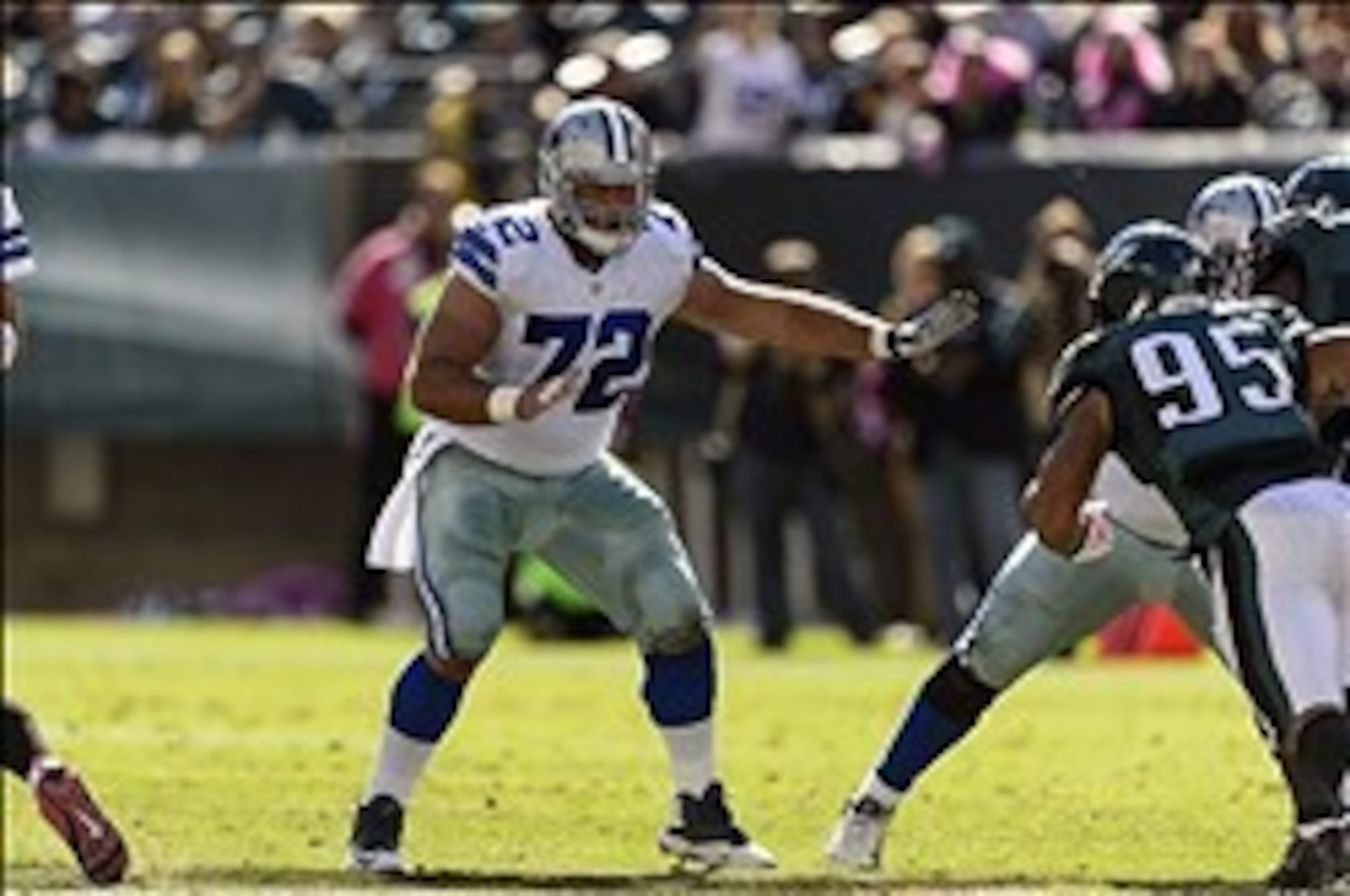
Pass Block
When Travis Frederick (6’3”, 311 lbs, one season) sets his feet properly, he is tough to beat in pass protection. However, he needs to become more consistent with his footwork to improve his balance. He was exposed too often in 2013 because of his inability to anchor on defensive linemen. Frederick has all of the physical talent and solid enough technique to be one of the better pass-blocking centers in the NFL, but he needs to develop greater consistency. That starts with his feet.
Run Block
Frederick’s run-blocking is what makes him a potentially special center. He is a perfect fit in the Cowboys’ zone-blocking scheme. He moves laterally as well as any other center in the league. But most importantly, he maintains excellent technique and strength while on the move. Even when he must reach the outside shoulder of the defensive tackle from an unfavorable position, Frederick is quick enough and smart enough with his hands to ride the defender away from the running lane.
Overall
When the Dallas Cowboys selected Frederick in the NFL draft, there was widespread derision of the selection, the primary concern being value. But as a rookie, Frederick proved to be very valuable for the Cowboys, and he appears to have been worth that high draft pick.
11. Ryan Kalil, Carolina Panthers
24 of 34
Pass Block
Ryan Kalil (6’2”, 300 lbs, seven seasons) can struggle at times with the upper-body strength of bigger defensive linemen. However, he is quick enough, strong enough and plays with enough discipline to recover if he is initially knocked off balance. Kalil’s quickness in space allows him to be used in a variety of ways, with different play-action assignments, for example. But it’s his quickness and willingness to lay out for a big hit against second-level blitzers that stand out.
Run Block
The Panthers have a creative rushing attack that centers on Cam Newton and DeAngelo Williams. Kalil is an important piece because of his versatility as a run-blocker. He works better in space than in close quarters, but he still has enough strength to knock defensive linemen off their spots when he gets leverage. In space, Kalil has exceptional acceleration and locates defenders well. He doesn’t just engage them; he often delivers a blow on initial contact without losing his balance as well.
Overall
Kalil is an important piece for the Panthers offense. His versatility and refined technical ability allow him to get the most out of his physical ability.
10. Chris Myers, Houston Texans
25 of 34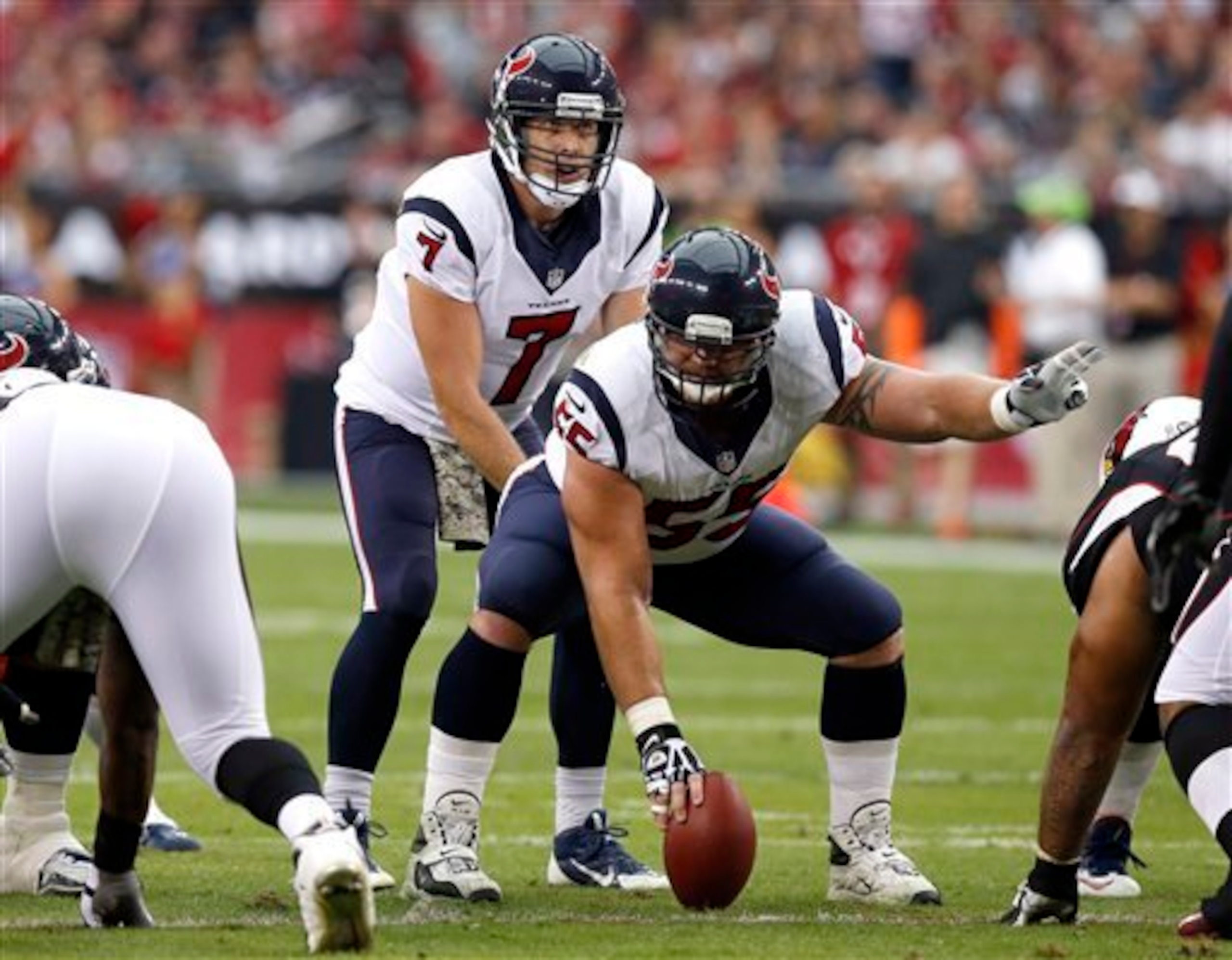
Pass Block
Chris Myers (6’4”, 286 lbs, nine seasons) has good functional strength as a pass-blocker. He is able to use his hands to contain bigger defensive linemen in space, but he can struggle at times in one-on-one situations. He struggles primarily because of his feet. They aren’t consistently quick or precise, and that takes away from his balance. Myers is a good enough pass protector, but his real value comes in the running game.
Run Block
Myers has the perfect combination of athleticism, aggression and technique that allows him to be an outstanding run-blocker. His understanding of positioning and leverage was crucial to his success in the Texans’ zone-blocking scheme. He showed off the ability to get underneath defensive tackles and drive them sideways while keeping his balance. Myers was also able to escape to the second level and locate defenders in space before driving through contact.
Overall
Myers is 32 years of age. He will likely begin to decline physically soon, and he may not perfectly fit in Bill O’Brien’s offense. However, in 2013 he was still a very valuable player for the Texans.
9. Stefen Wisniewski, Oakland Raiders
26 of 34
Pass Block
Stefen Wisniewski (6’3”, 307 lbs, three seasons) isn’t exceptionally strong, but he compensates for his lack of upper-body strength by playing with good leverage and technique. Wisniewski sits back in his stance and allows the defender to come to him while playing with precise, quick hands. His hands and his balance allow him to counter defenders in space. Furthermore, his swift feet give him the ability to recover if he is beaten early in the play.
Run Block
Wisniewski is a nimble center who relies on his quickness and technique to be effective as a run-blocker. He works well in space and can locate defenders consistently before engaging them with his hands. Wisniewski powers his legs through contact and aggressively looks to attack defenders no matter the situation. He has carried over the positive traits he developed as a left guard early in his career to his play as a starting center.
Overall
At 24 years old, Wisniewski is entering that stretch of his career where he is still young but is also a seasoned veteran. Next year will be his fourth year in the league, and he will hope to elevate his status even further.
8. Roberto Garza, Chicago Bears
27 of 34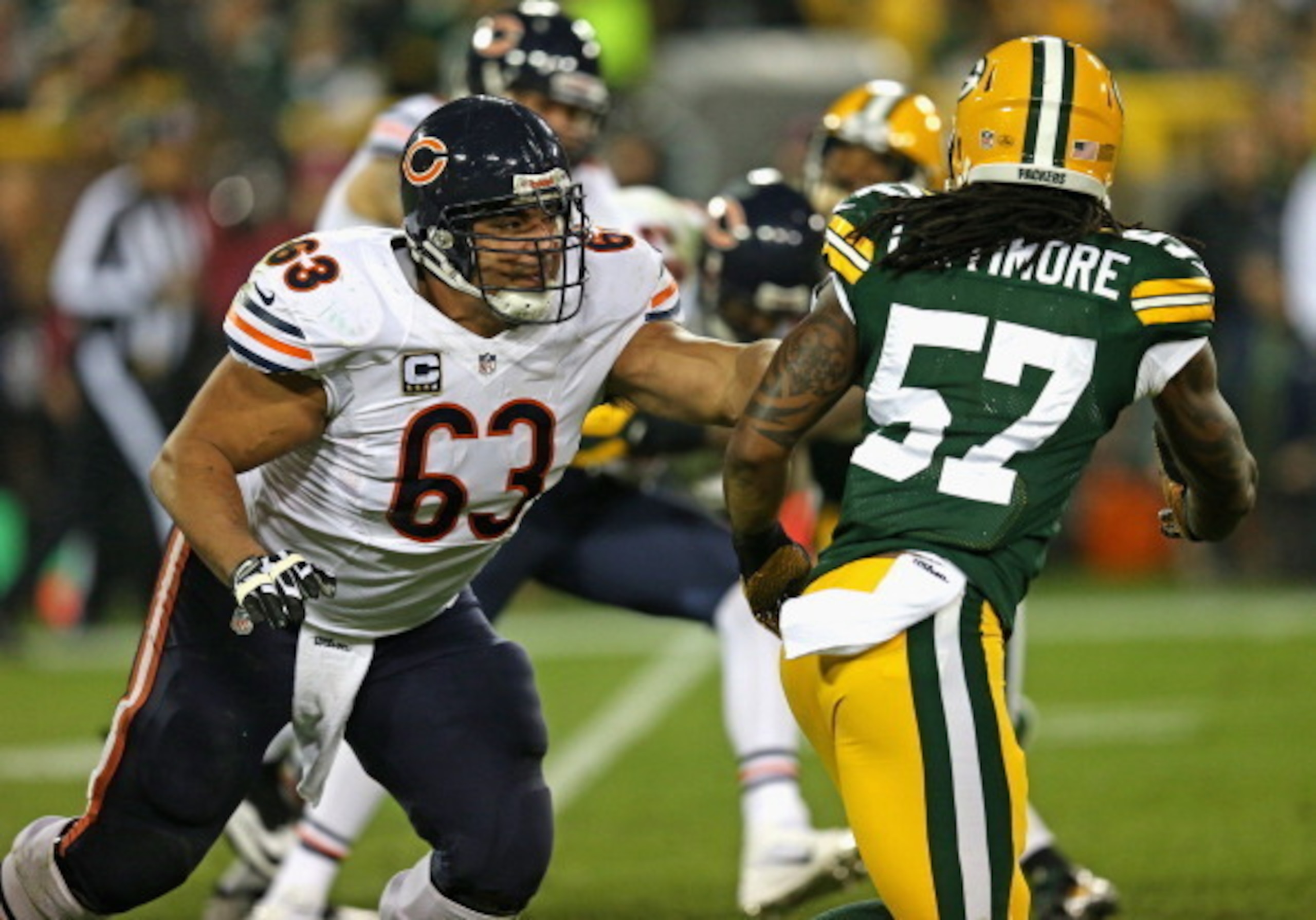
Pass Block
Although Alshon Jeffery and Josh McCown stole most of the headlines, the biggest turnaround on the Bears' offense this season came in the trenches. Roberto Garza (6’2”, 310 lbs, 13 seasons) wasn’t one of the new additions, but he definitely elevated his play along with those around him. Garza has active and relatively quick feet. He keeps his balance in space and is quick to latch on to defenders with his hands. He doesn’t have a consistent punch, but he is able to anchor bigger defensive tackles.
Run Block
Garza aggressively engages defenders in the run game and powers his feet through contact. He is a strong player who is able to use the defender’s momentum against him when the opportunity arrives. Garza won’t consistently make plays in space, but he has the intelligence, clean footwork and strength to be effective working against bigger defensive linemen in tight spaces.
Overall
He may have benefited from playing on a better offensive line, but it’s clear that Garza is a very talented player in his own right.
7. Manny Ramirez, Denver Broncos
28 of 34
Pass Block
The Broncos expected veteran Dan Koppen to be their starter, but an injury before the season eventually led to Manny Ramirez (6’3”, 320 lbs, seven seasons) starting every game at that spot. Ramirez isn’t an overly impressive athlete. He doesn’t have the quickness to be left in one-on-one situations with the better pass-rushing defensive tackles. However, he does excel in tight spaces because of his technique and upper-body strength. Ramirez is able to anchor successfully against bigger defensive tackles, and his awareness is impressive when picking up blitzes.
Run Block
Ramirez doesn’t have great consistency as a run-blocker, but his strength allows him to dominate opponents at times. He shows the ability to maul defenders to the ground or push them back off the line of scrimmage without help from his teammates. He also comes off double-teams well to pick up defenders arriving from the second level. Much like his play in pass protection, Ramirez isn’t a natural player in space. He fails to consistently locate defenders because of his feet and his body control.
Overall
When used properly, Ramirez is a very effective player. The Broncos got the most they possibly could have out of him in 2013.
6. Mike Pouncey, Miami Dolphins
29 of 34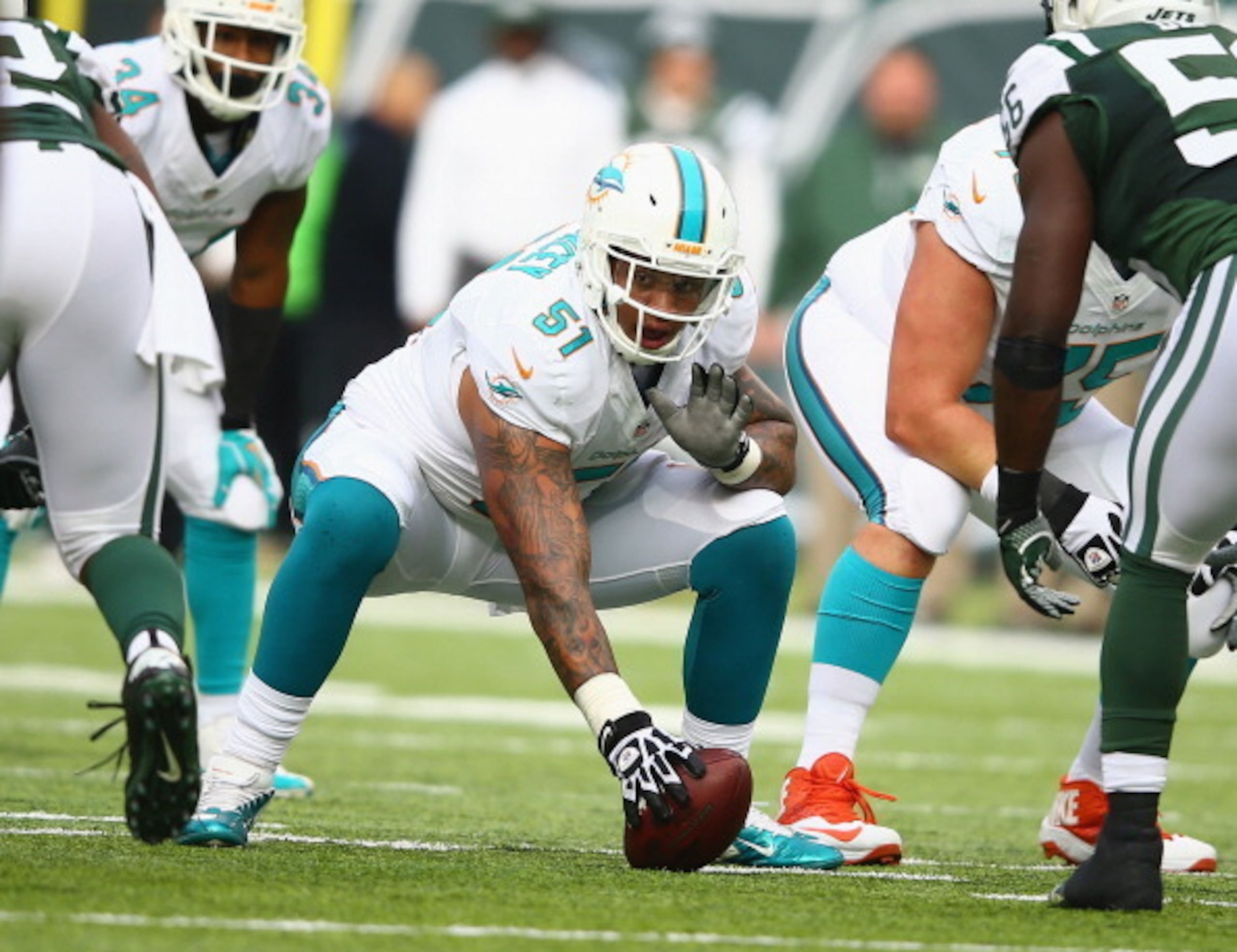
Pass Block
In spite of the Miami Dolphins’ inability to protect Ryan Tannehill, Mike Pouncey (6’5”, 305 lbs, three seasons) had another stellar season in pass protection. Pouncey’s athleticism is incredible, and it translates throughout every aspect of his game. His quick feet in pass protection allow him to always stay in front of defenders, even in one-on-one situations, while his hand usage is precise and strong when engaging defenders. Pouncey is aware of his surroundings, and he can anchor on bigger defensive linemen. He has everything a team looks for in a pass-blocking center.
Run Block
With his fluidity and quick feet, Pouncey is able to comfortably move to every area of the field. He pulls behind the line of scrimmage and advances to the second level with ease before locating defenders in space. Pouncey can engage linebackers or defensive backs on the second level before sustaining blocks, but he doesn’t deliver a heavy blow at initial contact, and he can be knocked backwards by bigger linebackers. On the line of scrimmage, Pouncey is best suited to sealing off running lanes or taking part in double-teams instead of trying to drive defenders off the line.
Overall
The only concerns the Dolphins have about Pouncey come off the field. On the field, he is the anchor of their offensive line, and they need him to provide stability as they try to revamp the unit.
5. Evan Dietrich-Smith, Green Bay Packers
30 of 34
Pass Block
The Packers had problems staying healthy on the line in 2013, but Evan Dietrich-Smith (6’2”, 308 lbs, four seasons) did Pro Bowl-caliber work in the middle. Dietrich-Smith played with patience and poise in pass protection—no matter the quarterback Green Bay asked him to protect. He doesn’t have excellent length, but his feet are always balanced, and he’s able to slide to get in position to stop pass-rushers without having to throw his hands out or lunge at them. His raw power isn’t top level, but his timing and placement are.
Run Block
Not quite as effective in the run game, Dietrich-Smith struggles when asked to make plays in space. He is a good athlete but doesn’t excel when required to locate defenders. His hand placement is good, but his consistency and accuracy when asked to hit a moving target don’t match up with his excellent pass protection. If you need him to handle a nose tackle at the point of attack, he’ll do it, but movement blocking is a weakness.
Overall
The Packers need a consistent, stable player to anchor the middle of their line, and they have one in Dietrich-Smith. No matter who lined up around him or who took his snaps, his play was at a high level week after week.
4. John Sullivan, Minnesota Vikings
31 of 34
Pass Block
The anchor of the line for Minnesota, John Sullivan (6'4", 301 pounds, six seasons) controls one of the most balanced offensive lines in the league. In pass protection, he’s able to reach gaps and use his hands to stop the rush. He moves his feet well to slide and has a punch that’s good at stunning defenders off the ball.
Run Block
Not the strongest guy in the league, Sullivan is able to seal off defenders and move the line of scrimmage with his feet and core. His hand use is top-notch and allows him to handle blockers without having the best strength or athleticism.
Overall
Sullivan is one of the smarter centers in the NFL and does a great job running the Vikings’ line. He’s patient, shows great balance and has the strength to be a factor opening rushing lanes for Adrian Peterson, the game’s most athletic running back.
3. Dominic Raiola, Detroit Lions
32 of 34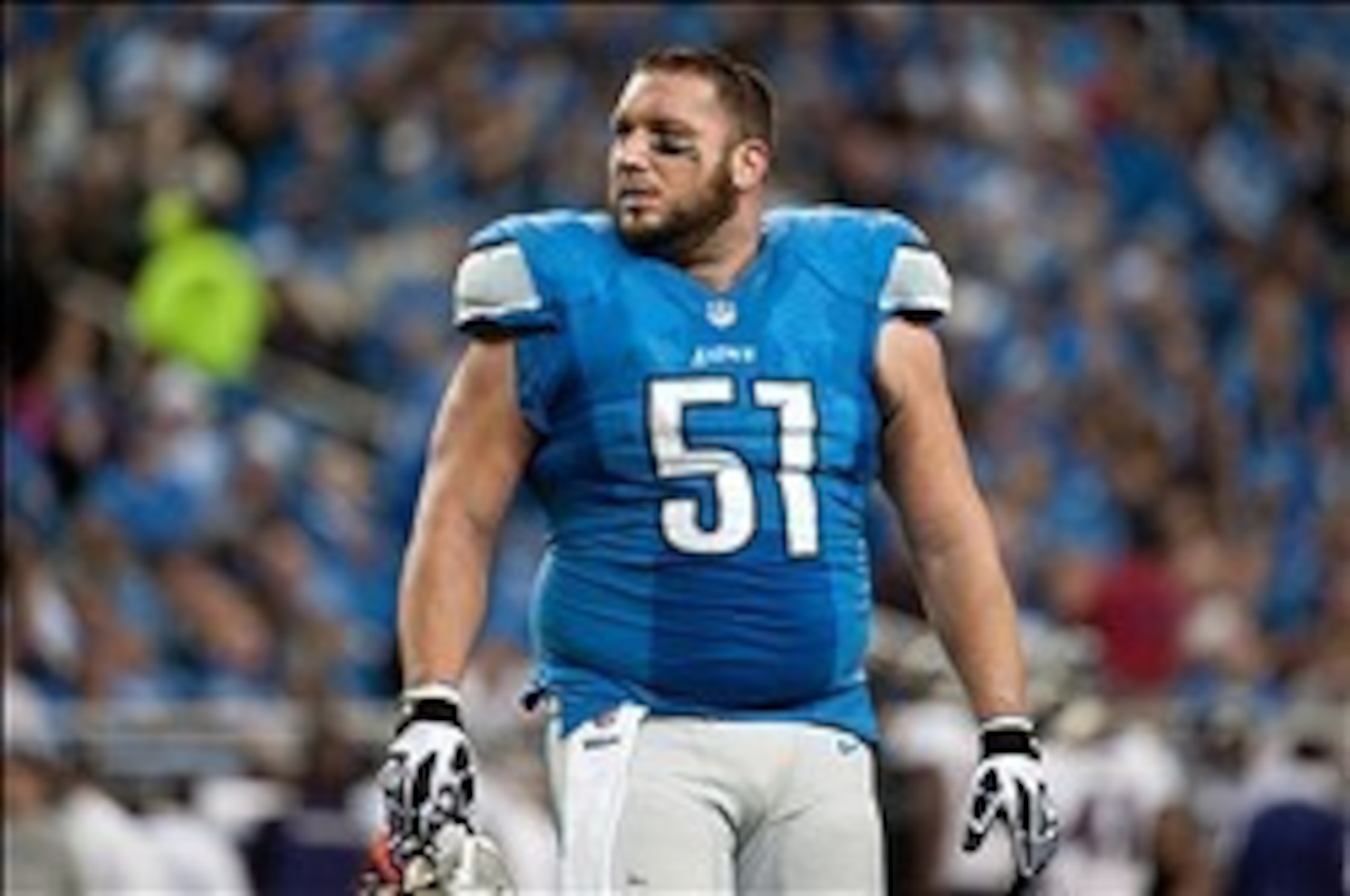
Pass Block
Who would have thought Dominic Raiola (6'1", 295 lbs, 13 seasons) would still dominate the NFL in 2013? But he did. Despite not being the biggest center in the league, Raiola’s patience and leverage make him a stud against pass-rushers. When facing a 3-technique, he can handle guys one-on-one. No longer a great athlete or super strong, Raiola wins with leverage and impeccable hand placement.
Run Block
Raiola doesn’t have great movement skills, but he can be excellent in one-on-one blocking situations. He’ll lock on and turn the shoulders of a defender. He also works well when stepping down to wash out tackles. Getting to the second level can be a problem, but his angles are ideal.
Overall
Ranked at No. 14 in our last series, Raiola came back strong and showed that experience, angles and leverage are just as valuable as youth and strength. His 2013 season showed patience and near-dominance in pass protection.
2. Jason Kelce, Philadelphia Eagles
33 of 34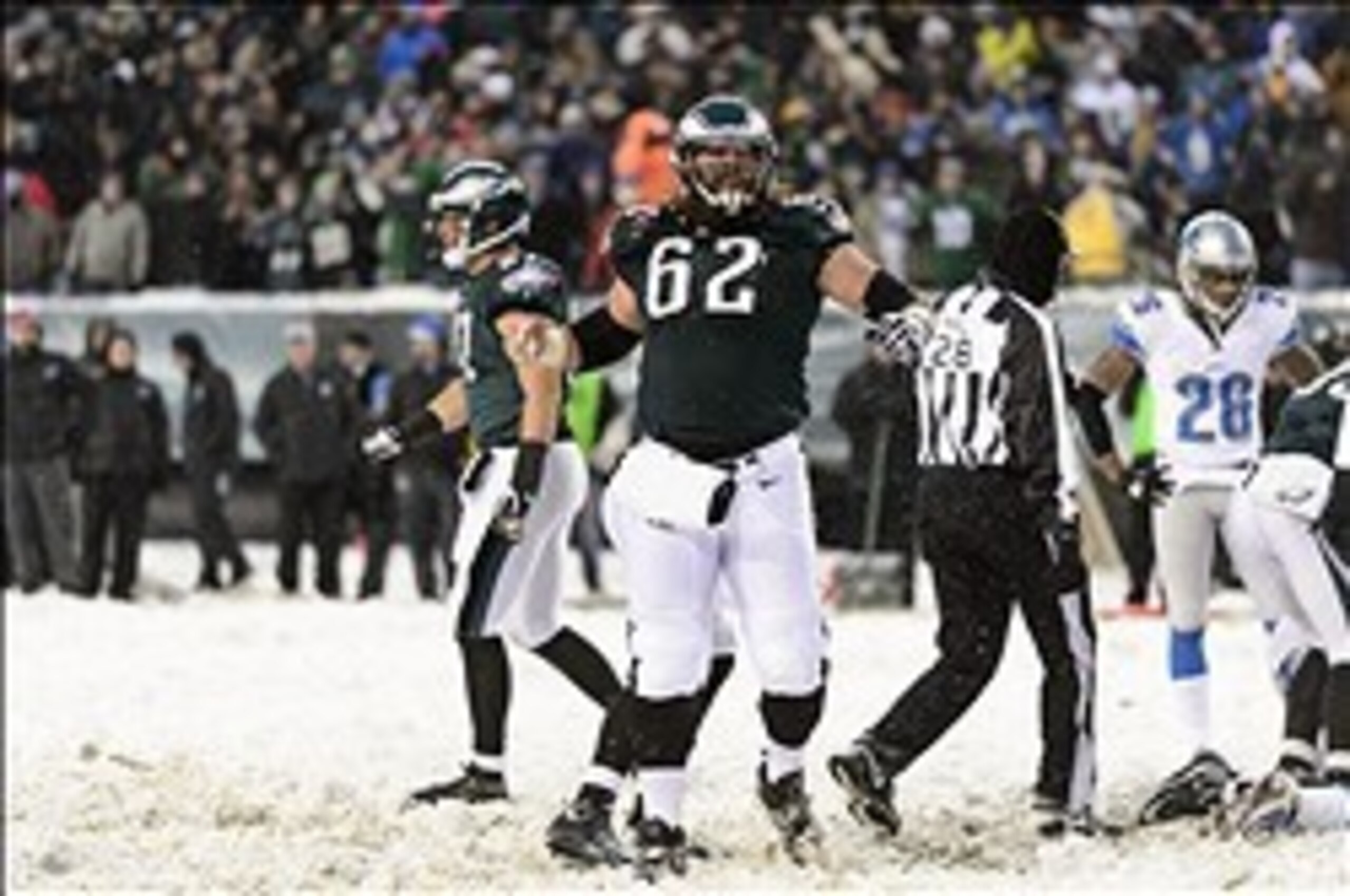
Pass Block
Jason Kelce (6’3”, 295 lbs, three seasons) came on strong in 2013 as the anchor of the Philadelphia offensive line. In pass protection, Kelce does a great job moving to pick up A-gap blitzes and stepping down on 3-technique rushers. When met with a nose tackle, he can struggle to sit and hold his ground, but he does well when helped by a chipping guard.
Run Block
Agility and leverage are the keys to good run-blocking, and Kelce has both. He moves off his spot well and can be asked to pull or trap. Kelce is patient, balanced and composed when needed to block in space. He also hits defenders and locks on with top-level consistency and accuracy. He’s strong enough to move defenders, but that largely comes from his core and lower-body movement.
Overall
Not even ranked in our 2013 series, Kelce was the ideal center for the Eagles’ offensive scheme. Chip Kelly wants an agile mover in space, and Kelce does that as well as anyone. He’s one of the best up-and-coming centers in the league.
1. Alex Mack, Cleveland Browns
34 of 34
Pass Block
Alex Mack (6’4”, 311 lbs, five seasons) has the length, timing and strength to be excellent at center in pass protection. As good as he is at closing the door on pass-rushers, he’s just as good at getting the offensive line organized and calling the adjustments for the front five. Mack has the speed to slide and move at center and is among the most agile at the position.
Run Block
Mack uses his athleticism to get off the ball and attack defenders. Not only is his first step good, but he’s also agile enough to find his way into space and get to the second level. One of the most important traits for a center in run-blocking is balance, and Mack does a great job playing controlled in space.
Overall
Mack’s placement atop the list of NFL centers is because of his balance as a player. No matter the down, distance or situation, he excels as a blocker. That ability to dominate the defense on every type of play has huge value.
.jpg?w=2560 "Eagles Football")
.jpg?w=2560 "Cowboys Commanders Football")
.png?w=2560 "Ranking the Best Shooters of All Time 🎯")