Fantasy Baseball 2012: Players to Buy Low, Sell High Using Sabermetrics
Baseball is a great sport for fantasy owners because everything can be quantified. Every at bat is an individual event and can be meticulously scrutinized to the point where we can use sabermetric statistics to predict future success or failures.
Using some of these principles, we’re going to look at two players that are good “buy low” candidates and two pitchers that are good “sell high" candidates.
Buy Low: Ike Davis
1 of 4As many of his owners know, it’s been a rough year for Davis who is currently batting .161 through the first quarter of the season. But fear not, the baseball Gods have simply been unkind to him and his average should steadily rise throughout the rest of the year.
The past two years Ike Davis has had a BABIP of .321 and .344 respectfully. While it’s true that hitters will try to pull the ball or hit it opposite field; more often than not, hit locations are purely random. This season, Davis has a BABIP of .187, nearly half of his 2011 average. An unusually high or low BABIP is a great indicator of an eventual regression to the mean since batted ball locations are based more on luck than on skill.
Davis has also increased his line drive rate to 18.8 percent compared to 17 percent last season, which is a good indicator of future success. His current slump appears more like a blip than a trend.
As we head into the second quarter of the season, the one thing that Davis’ owners need to be wary of is his struggles with the curveball. He’s seeing more than double the amount that he saw last year (19.7 percent compared to 7.5 percent), and it carries the lowest runs above average of any pitch he has faced.
If Davis can work on his struggles with the curveball, expect a significant swing upward with the expectation of his BABIP improving.
Buy Low: Adam Wainwright
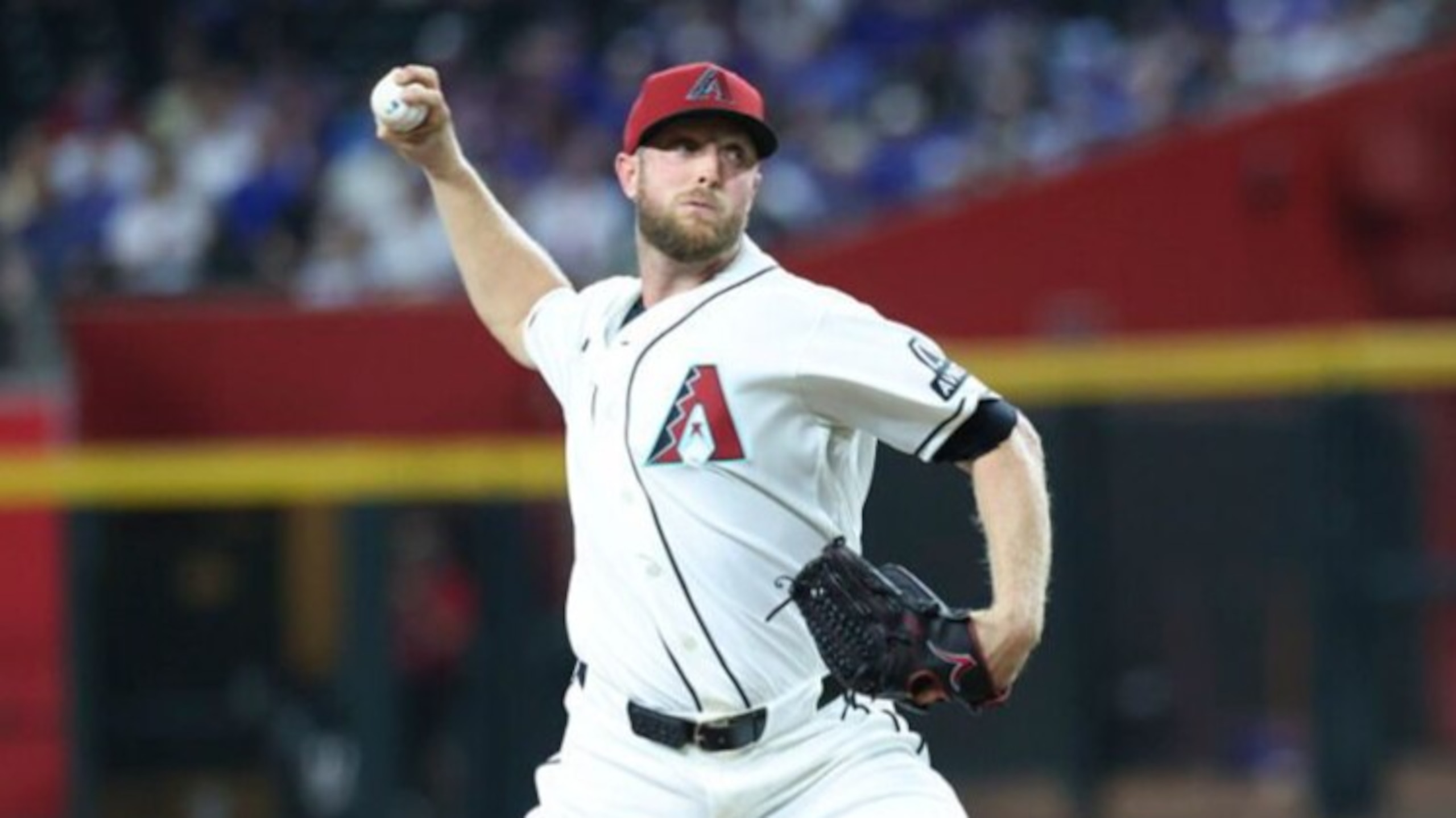
2 of 4Wainwright has had a rough go of it so far with an ERA of 5.77 through eight starts, well above his career average of 3.11. The good news for Cardinals fans and fantasy owners is that Wainwright is likely to turn it around.
xFIP is perhaps the best indicator we have to indicate future success for a pitcher. It is a regressed version of FIP (Fielding Independent Pitching) which attempts to remove all of the dependent factors a pitcher faces and only takes into account the things to which a pitcher can control. FIP calculates what a pitcher’s ERA should be with only those factors. xFIP calculates what a pitcher’s ERA should be with those factors while also normalizing the pitcher’s home run rate to the approximate league average.
Wainwright's current xFIP is 3.30 through eight starts, suggesting that his 5.77 ERA is likely to plummet fairly soon.
Wainwright currently sports a HR/FB ratio of 21.9 percent, which is unbelievably high and will not continue throughout the season. His career HR/FB ratio is 8.2 percent even when factoring in this season's horrid start.
Expect a significant regression to the mean. Hitters have a BABIP of .341 against Wainwright which is also unusually high. As all of these numbers regress, his ERA and overall numbers should also improve, making him a great candidate to buy now while his perceived value is low.
Sell High: Ted Lilly
3 of 4Lilly has been a hot pickup as of late, and I don’t blame you given his 1.79 ERA and 5-0 record. But be wary as his ERA is not indicative of how he’s truly been pitching. He sports an xFIP of 4.33 since he’s only given up two home runs in 45.1 innings
A pitcher like Lilly is easier to predict since he has such a long track record in the majors. The larger the sample size, the easier it is to predict his future regression. Perhaps the most concerning thing should be that his strikeout rate has fallen below his career average while his walk rate has actually risen above it. Lilly is only striking out 5.56 batters per nine innings, well below the 7.64 he has averaged throughout his career.
With fewer strikeouts, this means there are more balls being hit into play. While Lilly carries a career BABIP against of .268, this year it’s sitting at .189. This is likely to increase as the season wears on.
He’s throwing roughly the same percentage of pitches as he has throughout his career, so there’s no reason to expect his results would be this different from his career averages.
It’s possible that Lilly will continue his success for a few weeks, but I’d expect his numbers to start to regress sooner rather than later. ZiPs which does player projections using sabermetrics, currently projects Lilly’s ERA for the rest of the season to be 3.69 while compiling an 8-7 record.
Try to sell him now while he’s looking like a potential ace rather than later when he’s just another guy on your staff.

Sell High: Derek Lowe
4 of 4Like Lilly, Lowe has been around for a long time, so it’s easier to project his future numbers. He’s currently one of baseball’s hottest pitchers, sporting a 2.15 ERA in 58.2 innings and carrying a first-place Indians squad. However, these are much better numbers than anybody expected and sabermetric statistics predict a regression is soon in his future.
Lowe’s ERA of 2.15 is great, but his xFIP of 4.33 leaves much to be desired. Lowe’s career HR/FB ratio is 12.3 percent, but this year he’s sitting at 5.1 percent, by far the lowest of his career. He’s also carrying a ridiculous left on base percentage of 83.7 percent. League average for a pitcher is around 70 percent, so he’s been getting out of a lot of jams and not giving up home runs.
While that is great for the short term when predicting future success, it is more likely that Lowe will start giving up home runs and his ERA is likely to spike as a result.
Lowe’s strikeout and walk rates are also very concerning. He is currently striking out 2.3 batters per nine innings and walking 2.76 batters per nine innings for a K/BB ratio of 0.83, by far the worst of his career. Considering he’s putting up career numbers through his first eight starts but carrying some of his worst peripheral numbers, it’s safe to say that he’s likely to regress very soon.
_2.png?w=2560)



.jpg?w=2560 "Joey Porter Jr. Trade Packages")
.jpg?w=2560 "Players with Shocking Career Earnings 😳")
.jpg?w=2560 "Source: Freedom, White Not Eligible for WNBA Draft (AP)")