
NBA Playoffs 2011: A Thorough Response to the Chicago Bulls Toughest Critics
The voting is over but the results aren't in yet. It appears that Derrick Rose will soon be named the league's MVP for 2010-2011. He said at the beginning of the year that he didn't see why he couldn't be. Some will still point at some metrics, but enough agree now that he probably did.
The Bulls turned out to be a lot better than everyone thought they were. Their 62-20 record was the best in the NBA.
Yet for some reason there still remains with a large percentage of people that the Heat, not the Bulls, are the favorite to get out of the East.
People have given a lot of reasons for dismissing the Bulls. I was wondering if those reasons were valid. Some of them are right, some of them are wrong, some of them are misleading and with some of them, it's just impossible to say whether it's accurate because there's just not enough data to make the determination.
I hope you can take the time to read this opening slide because it's something of a disclaimer.
I understand that not everyone is a Bulls fan. I am a Featured Columnist for the Bulls and a large part of the reason for that is that I am a Bulls fan. However neither being a Bulls fan nor not being a Bulls fan are a sound basis for an opinion on the Bulls.
Opinions should be formed on objective facts or data. The data I've looked at is objective. It's not a fan of the Bulls or the Heat or any other team.
I haven't gone through this data in two or three minutes, I've been researching it for about four days.
I also understand that stats only say so much. Your eyes tell part of the story, too. I've only missed one Bulls game this season, so I've watched a large enough sample size of the Bulls to know what the "eyes" say as well as what the data says.
I point this out merely to say that these arguments are not slapped together haphazardly. I've tried to be thorough, do my due diligence in researching everything, and in part, this is out of respect to you—the reader. I just hope you pay the same respect if you respond by addressing not just the topic, but the arguments themselves in your comments.
I've tried to critique my own arguments the same as reasonable reader might, or I might were it someone else's article. I have at least attempted to make theories of certain things "falsifiable" to use a scientific term. I've looked at the data to see whether my own arguments are valid too. In short, I've at least tried to be intellectually honest.
I also want to point out that this is to address whether the Bulls have a chance. It's not to compare them with other individual teams or to say that the Bulls are the "only" team that has a chance.
It is merely looking at specific criticisms and whether those prohibit the Bulls from being a legitimate contender. No one should take my saying the Bulls are a contender as an indication that another team is not.
Critique One: The Chicago Bulls Aren't Built for the Playoffs
1 of 6
This argument has several variants, "the playoffs are different" or "just because you win in the regular season doesn't mean you're going to win in the postseason."
Usually, this argument is not followed up by anything. One is left to wonder what exactly the arguer intends to relay with this argument other than some vague and impossible to disprove (because there's no actual argument there) generality.
Saying something impossibly vague doesn't mean they can't win either.
But in general, let's think about this. How does the postseason actually change? How are the Bulls constructed? Will the way the Bulls are constructed help or hinder their postseason chances? In other words are they constructed in a way that lends itself to postseason play or not?
One way is to look at it is to compare them to previous postseason teams. Generally there are two ways to win in basketball.
The first way is to try and score more points than your opponent (the offensive approach) and the other way is to try and keep your opponents from scoring more points than you (the defensive approach).
Here are two former No. 1 overall seeds and the Bulls. Which one is not like the others?
| Team | Offensive Rating | Defensive Rating |
| A | 108.3 (11th) | 100.3 (1st) |
| B | 110.2 (10th) | 98.9 (1st) |
| C | 111.3 (2nd) | 103.2 (5th) |
Team A is this year's Bulls. Team B is the 2008 Boston Celtics. Team C is the 2007 Dallas Mavericks. If you want to compare teams, you have to compare them with like teams not just like seeds. The 2007 Mavericks are a very different team in both philosophy and practice than this year's Mavericks. The 2008 Boston Celtics are not.
In fact, the Bulls from this year are very similar to the 2008 Celtics. They run the exact same defense because it was designed by the exact same person.
Doc Rivers when asked about preparing for them late in the season said, (and I'm going off of memory here, but I think this is it) "We don't need to do much to prepare for them because their sets are our sets. Seventy percent of the plays they run are our plays."
Sure, there are some differences in personnel, but a lot of that cancels out. Derrick Rose right now is a better defender than Rajon Rondo was then (and if you go by his points per play against, better than Rondo right now).
At the wings, I don''t think that there's much controversy that the Keith Bogans/Ronnie Brewer combination (who combined average about as many minutes a typical starter with Korver's shooting guard minutes being their "backup") and Luol Deng are at least comparable defensively with the 2008 versions of Ray Allen and Paul Pierce.
That's not a slight to Allen or Pierce either, as both Brewer and Deng have been mentioned as getting consideration somewhere on the All-Defense team.
In the middle there's a bit of a change in terms of position. Joakim Noah provides what Kevin Garnett does in terms of extending and providing help defense.
The similarities are pretty apparent. Garnett's 19.5 defensive rebound percentage, 3.1 block percentage, and 94 defensive rating are comparable with Noah's, 18.5 defensive rebound percentage, 3.5 block percentage and 97 defensive rating.
Carlos Boozer provides some of what Kendrick Perkins did—stay in the lane and basically worry about being strong rather than fast. Perkins was superior to Boozer, and that's hard to deny. He had a better block percentage (4.9 to 0.7) and rebound percentage (19.3 to 17.6).
However, defending the center position, Boozer is better than you might think. His opponent PER at the center position (which he does about half the time) is 14.2. Compare that to Perkin's oPER of 16.5.
Yes, he's horrible guarding the power forward position, I'm not going to argue that. However, his weaknesses are limited when he guards the center spot and his strength (which is ironically, actually strength) can shine guarding the five spot.
In the paint, the 2008 Celtics' opponents made 17.2 shots on 30 attempts and had an opponent field goal percentage of .573. This year's version of the Bulls give up 17.5 field goals on 32.9 attempts for an opponent field goal percentage of .539.
I do feel there's a bit of a need to qualify this with the fact that Kurt Thomas and Taj Gibson both started a number of games and along with Omer Asik played significant minutes, so that does play into all of this as well.
In terms of both interior defense and defending the perimeter, the Bulls are among the best, if not the best in the NBA. They are a really good and really complete team. I apologize for the use of the extraneous word "really" but I really don't see any way around it.
If you want to read a great piece on the Bulls' defense and how complete they are look at Jeff Fogle from Hoopdata's piece comparing the Eastern Conference playoff teams. If you just want the synopsis though, it's this.
"It's like Derrick Rose is playing with four Troy Polamalu's! They deny inside shooting. They deny outside shooting. They force a lot of turnovers. They grab your missed shots.
"
The maxim "defense wins championships" has a lot of truth to it. In the last 33 years (since the merger) the NBA champion has had a top three defense 16 times, a top five defense 23 times, and a top 10 defense 32 times.
There is a looser correlation with the offenses, 28 of 33 champions have been top 10, and 17 have been in the top five, but that's not nearly as compelling as the evidence on the defensive end.
Logically this makes sense. Consider that this year the Boston Celtics led the NBA in field goal percentage at .486. The league average is .459. Much less than half of all shots go through the net; ergo, it's a much more difficult task to make the ball go in that to prevent it from going in.
Defense wins championships. The Chicago Bulls have a championship level defense. Not only that, they have a defensive system that has won a championship.
The critique that the Bulls are not built for the playoffs is wrong. Now granted, there are some questions regarding their offense, but I will get to those in later slides.
Generally though, they are built to be defensively dominant, they are defensively dominant and defensive dominance wins championships. Therefore, they are built to win championships.
Critique Two: The Bulls Don't Have Enough Playoff Experience
2 of 6
This argument says that the history of the NBA shows that a team needs the "heartbreak" first before they can win an NBA championship. Most teams that have won had to be together for a deep playoff run and get denied before they learned how to playoff basketball and take home Larry O'Brien.
This is the question I had though. Is it that teams don't win championships because they didn't have a deep run ending in a heartbreaking loss, or did they not win championships because they weren't good enough?
The example that is usually used is the Michael Jordan Bulls who finally got past the Pistons and won their first ring 20 years ago. The problem with that comparison is that the 1992 Bulls won 55 games, were a three seed and made it to the Conference finals, where they lost to the top-seeded and eventual champion Detroit Pistons.
Did the 1991 Bulls win because they got their hearts broken the year before, or did they get their hearts broken the year before because they weren't good enough to win a Championship? It seems an argument that you can slant either way, particularly if you just use a limited sample set.
This year's Bulls team is in some pretty unique company in that they are a 60-win team that bypassed that proverbial 50-win season. They are only the 12th team to do it, and of those only three teams had fewer wins the prior year.
My thought is this: if it's true that playoff experience is necessary to win championships, then the teams that have won 60 games and had deeper playoff runs the year before should win a higher percentage of championships than teams that did not.
In all of the 26 NBA Champions in the present format, 16 of them had 60 wins or more. Also, 16 of the 30 teams who have won at least 60 games have gone on to win the NBA Championship. Therefore, it's not an unreasonable conclusion to say that winning 60 is a good indicator of championship potential.
I categorized the teams in three ways. First, if the core group of players had won a championship before I counted them as "Champions." If the core group had never won a championship together but had gone beyond the first round of the playoffs together, I labeled them "Heartbreak Kids." If as a group they hadn't gone deep into the playoffs or won 50 games I labeled them as "New Kids." This is how it breaks out.
| Category | Teams | Championships | Percentage Won |
| Champions | 10 | 13 | 76.9 |
| Heartbreak Kids | 5 | 19 | 26.3 |
| New Kids | 1 | 4 | 25.0 |
The initial problem here is that the sample size is so tiny as to be relatively meaningless. Only four teams in the current playoff format have done what the Bulls have done, i.e. win 60 without having won 50 the year before or made a deep playoff run. At first brush, they have roughly the same winning percentage as the "Heartbreak Kids."
However, the problem is that there's just too small of a sample size to make much out of it. I looked back further into NBA history and found a total of eight teams that won 60 games with neither having gone deep into the playoffs without three players in the core group having gone deep into the playoffs together before.
Again, I see similarities with the Boston Celtics. There's a tendency to try and parse between the Celtics experience and the Bulls experience, but it's not accurate. On Boston, the big three had all been to the conference finals, but Perkins and Rondo had never been to a playoff game.
On Chicago, Carlos Boozer has been to the finals, Keith Bogans and Luol Deng were both starters into the second round, and Joakim Noah and Derrick Rose have both had two series in the first round.
You could actually argue based on the fact that the starting five had all been in the playoffs, and that three of the five had been in the playoffs together before, the Bulls actually have more experience than the Celtics had.
Furthermore with their key players, Rose, Noah, Boozer and Deng, the four key starters have better playoff numbers than regular season numbers. Therefore I don't feel that categorizing the Bulls with the Celtics is unreasonable.
So what does history show about the need for deep playoff experience and getting your hearts broken together? At best, you can say it doesn't prove it's not true. It's hard to say that does prove it is true though.
Most honestly, you have to say that it's too small to really say much at all, but what is there shows it's not that relevant.
However when it comes to the experience of actually winning it, that's a different story. If you see that 10 of 13 teams with their core still together, a 60-win team on the season, and a prior championship to speak have won it all and you don't think of the Spurs, you should. That history is pretty darned telling.
Critique Three: The Bulls Don't Have a Second Scorer
3 of 6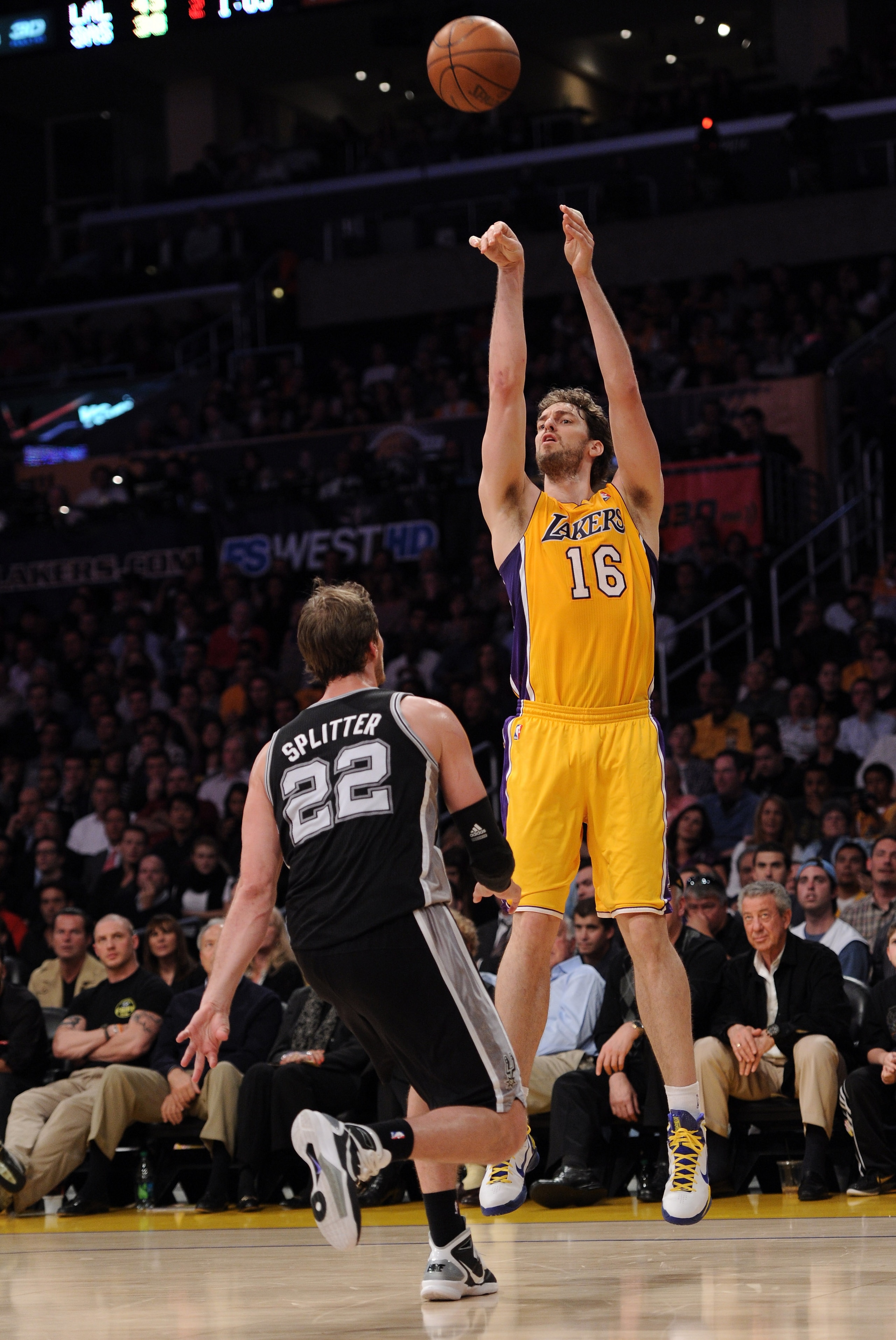
The next criticism of the Bulls is more complicated. Well the criticism isn't so complicated, the answer is. The reason is that there are actually two separate arguments melded together and to understand the actual situation, these two separate components need to be taken separately.
If either of these two components is working, the Bulls are fine. If neither of these components work, then the Bulls struggle. The first component is that of the "second scorer" and the second is that of the "shooting guard situation." I'll use the next two slides to address those two criticisms.
The basic premise is that the offense depends too much on Rose or that Rose is the only one who can score and/or create his own shot. The argument is scattershot and general, but generally it boils down to, "the offense is Rose and a bunch of other guys." That's not true.
Nor is it true that if you shut down Rose you can beat the Bulls. In games in which Rose has scored 20 or more points the Bulls are 48-14 (.775), and that is a heck of a winning percentage.
However when he has been held to less than 20 points the Bulls are 14-5, or .737. That is a tad less (.038) of a winning percentage. but it's still pretty good.
It's hardly surprising that there'd be at least some slippage when holding down any team's leading scorer, but it's not a huge difference which shows the team does not need Rose to score in order to win.
Let's compare that to the team with the Thunder, who have not only the NBA's leading scorer, but also one of the best second scorers in the NBA, Russell Westbrook.
By comparison the Thunder are 49-22 (.690) when Kevin Durant scores 20, and they are 3-5 (.357) when he scores less than 20. That's a lot more pronounced difference than we see with the Bulls.
What about the Miami Heat? When LeBron James scores over 20 they are 47-20 (.701), when he scores less than 20, they are 8-2 (.800). That's better. However when Wade scores 20 or more they are 43-14 (.754) and when he doesn't they are 11-8 (.579). That's worse.
How do they compare with a championship team?
In games where Rose played and there is a 20-point scorer other than Rose (regardless of whether Rose scored 20), the Bulls are 44-11. Compare that with the Lakers, who are 48-10 when someone other than Kobe Bryant scores 20 points or more. The Bulls' numbers aren't that far off. They compare just fine.
All of this shows that the Bulls really aren't any more dependent on Rose scoring than teams with the other elite scorers in the league. I'd also like to point out that with all of them, the real problem is that they are rarely kept under 20.
I'm not trying to argue that the Bulls are the Heat or the Knicks in terms of a one-two punch , but I would say they're deep enough at the the two and three to be qualified as honest title contenders.
In the chart below, I compare the top four seeds in each conference in terms of their top scorer, and the production from their next two scorers as well.
For each team, listed are the teams average points, how much they get from their No. 1 scorer, what they get from their second and third scorer combined, and what percentage of their offense they get respectively. The list is ordered by the percent of offense supplied by the second and third scorers.
| Team | Team Points | 1 Points | 1 Percent | 2+3 Points | 2+3 Percent |
| Miami | 102.1 | 26.7 | 26.15% | 44.2 | 43.29% |
| Chicago | 98.6 | 25.0 | 25.35% | 34.9 | 35.40% |
| Lakers | 101.5 | 25.3 | 24.93% | 33.2 | 32.71% |
| Oklahoma City | 104.8 | 27.7 | 26.43% | 34.1 | 32.54% |
| Boston | 96.5 | 18.9 | 18.9% | 31.4 | 32.54% |
| San Antonio | 103.7 | 17.5 | 16.88% | 30.8 | 29.70% |
| Dallas | 100.2 | 23.0 | 22.95% | 28.3 | 28.48% |
| Orlando | 99.2 | 22.9 | 23.08% | 25.3 | 25.50% |
In terms of their top three scorers, the Bulls are set up as well as anyone in the NBA except Miami, who might actually be too top-heavy.
The team they most closely resemble in terms of distribution is the Los Angeles Lakers, who are the reigning NBA champions. There is absolutely nothing here to indicate the Bulls can't win a championship.



Critique Four: The Bulls Don't Have a Shooting Guard
4 of 6
The Chicago Bulls get 13.3 points from the shooting guard position, which is by far the worst in the NBA. They are almost three full points worse than the 29th team. That same difference is the difference between 29th and 21st.
In other words the Bulls don't just get the least amount of scoring from the two, they by far are the worst. The climb to average would require a near 67 percent improvement in scoring.
You know there's a but coming and here it is. BUT, there's something that needs to be said. The Bulls don't need nearly as much from their shooting guard position.
If someone made a drinking game out of Tom Thiobdeau's press conferences where you had to drink every time he said the word "spacing" then they would die of alcohol poisoning. That would be a bad idea.
To Thibs, everything comes down to spacing. When there's spacing, there's open shots. I have tried like the dickens to try and find a commonality in the Bulls losses and here's the best that I can do.
The Bulls are 19-11 when they score seven points off of a long Derrick Rose assist. That's almost 60 percent of the games that Rose lost.
By "long assist," I mean an assist that led to points from at least 16 feet away.
When Rose uses 30 or more possessions and has fewer than seven points on long assists they are 3-8. I know eight losses doesn't sound like a lot, but remember that's 42 percent of the losses that Rose experienced this year.
He doesn't lose often and that's about the only pairing of instances I can find where the Bulls have a losing record.
When the perimeter players are giving him basically nothing and he's forced to do virtually everything, the Bulls win. He doesn't need a lot, but he does need something.
When I say perimeter players I mean Deng or Korver too, but I'm only including the shots they get off of Derrick Rose passes from 16 feet or more.
The reason I am looking for long assists is they indicate spacing. So many of those come out of the kick. When his teammates are sinking those shots, opposing team's have to respect it and can't sag back to stop Rose from penetrating.
When he has at least eight points on long assists the Bulls are 43-8.
When the perimeter players are hitting their perimeter shots off of Derrick Rose assists, that opens the court up for Rose to be Rose and when that happens...well, you know.
When the court is spread more though, things get ridiculous.
Let me say that I am not a stat geek—I'm a stat junkie. I love just looking at numbers and thinking about them. I look at a lot of stats. This next stat might be one of the most ridiculous things I've ever seen. If you want to see a stat that will make you say "THAT IS UN-(INSERT YOUR FAVORITE EXPLETIVE HERE)-BELIEVABLE!!!" here it is.
The Chicago Bulls are 40-3 when Keith Bogans and Ronnie Brewer combine for at least two three pointers.
I'm going to say that again, because the impact of it is easy to miss if you don't think about it.
The Chicago Bulls are 40-3 when Keith Bogans and Ronnie Brewer combine for at least two three pointers.
Forty and three. FORTY AND THREE!!!
Translated into an 82-game season that's 76-6. Can you imagine if they had a knock-down three point shooter?
Do the Bulls "need" a shooting guard? Not really. They need to have their shooting guards give them a little production at the right times, but when they get it, it's just silly.
But does that mean they couldn't get better without an upgrade? There's some dissension among Bulls fans as to whether they need a guy who can create his own shots, or a guy who can knock threes and stretch the court. I think that 40-3 should settle that discussion.
On that note, I was just pondering this thought today. Ray Allen's going to be a free agent this summer.
He might be unhappy with Boston over the Perkins trade and want another ring that if Boston doesn't win this year, they'll be a long shot next. He also knows Tom Thibodeau and likes him. He also knows Chicago's defense.
Imagine Ray Allen as a Bull.
Critique Five: The Bulls Do Not Have a Good Enough Offense
5 of 6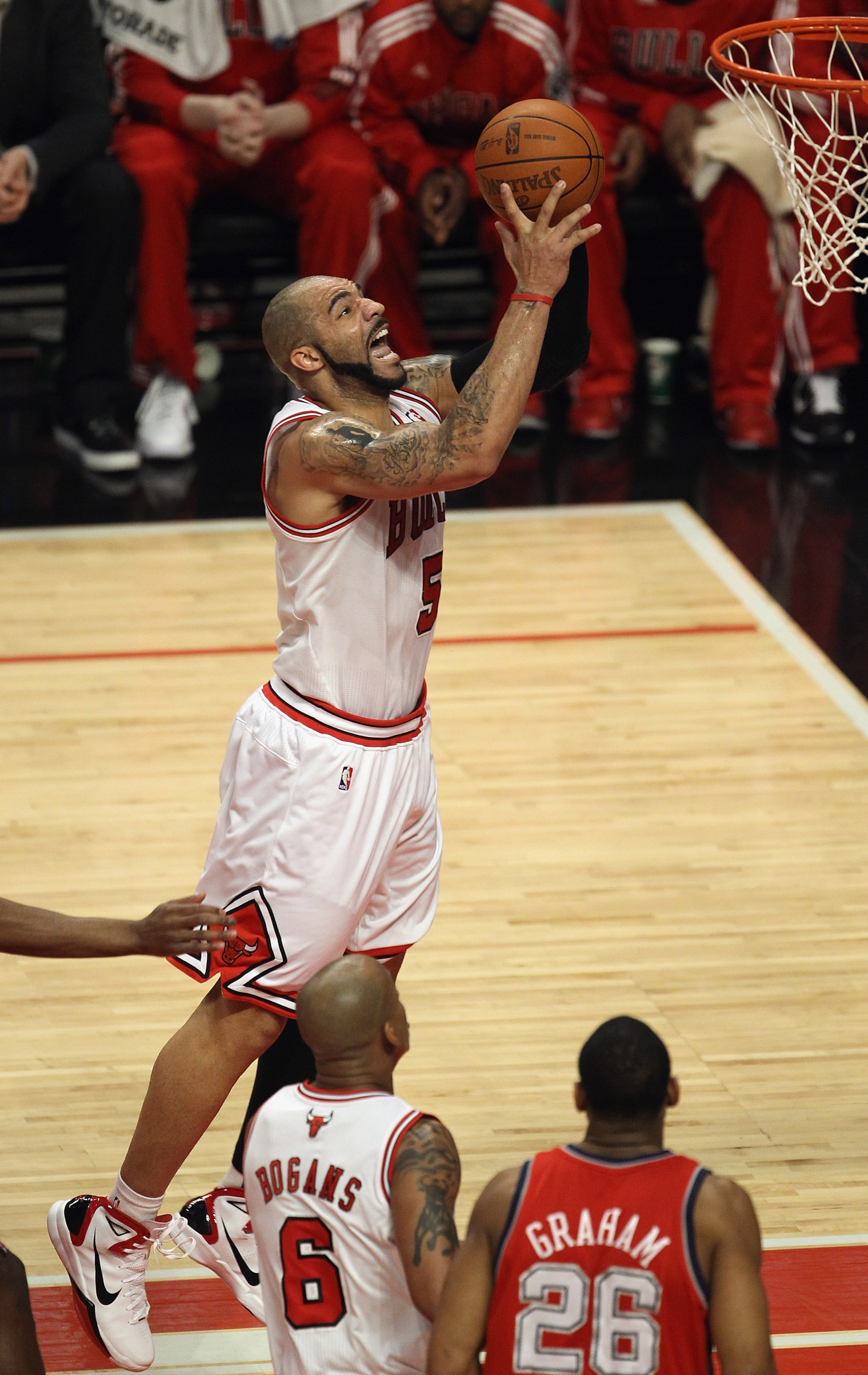
The Bulls get a lot of criticism for not being a good enough offense. With 98.6 points scored per game, they are 20th in the NBA in scoring, so on the surface it seems a valid criticism.
However, most knowledgeable NBA fans know that offense is better measured by efficiency than by total points scored.
The reason is that different teams run different paces, so a team that runs a fast pace but scores less often is actually not as good as a team that runs a slower pace, but scores on a higher percentage of their possessions.
In other words it's not how much you score, so much as it is how often you score. The reason is that your opponent is going to get roughly the same number of possessions as you since you take turns with possessions. If they score on more of theirs than you do, they win.
That's why you'll hear a lot of basketball talk about "offensive rating" which is how many points are scored per 100 possessions.
The Bulls offense has grown this year significantly. The offense right now is not the same offense that started the season. They are a team which has grown throughout the season, but you can basically break their development down into four chapters.
In the first chapter, we'll call it the "pre-Boozer era" there were a few things working against them. First, they were a team which for the most part had not played together as a total unit, though the "Jazz" players and the "Bulls" players knew one another already.
Second, they didn't have Boozer. Third, they had literally the toughest schedule in the NBA to open the season with 11 of their first 17 opponents eventually making the playoffs.
Their offensive rating in the pre-Boozer era was 105.6 and their record was 9-8. It runs from the start of the season and runs to Boozer's second game back against Boston.
As Boozer begin to acclimate himself, the offense steadily improved. From Dec. 6-30 the Bulls offensive rating improved slightly to 106.1 and their record improved significantly. Their record over that frame was 11-2 and included wins over the Thunder and the Lakers. However, most of their competition in that span was very weak.
However, Derrick Rose was having trouble getting to the line and only drawing fouls seven percent of the time (hear that, Frank Vogel?). The frustration both Rose and the fans grew until he got whistled for the first technical of his life.
After the Christmas Day game, Rose hit the video tape. On the day before New Year's Eve, Rose was watching the tape to try and figure out why he couldn't get to the line. He looked at his won games and he looked at players like Kevin Durant, Russell Westbrook and LeBron James to see what they were doing that he wasn't.
He figured out that he needed to actually slow down a bit. What looked like "avoiding contact" was actually Rose just going so fast that players weren't getting enough contact. He learned to hesitate slightly going into the paint to give the opponent time to foul him (fast don't lie!).
In the Bulls first 30 games, Rose had at least six free-throw attempts 15 times, and they won 11 of those games. In games where he had five or fewer, the team was 10-6. Rose had 10 or more free throws only twice in those 30 games and won both.
Since that time, Rose has had at least six trips to the charity stripe 37 times and the Bulls are 30-7 in those games. He's had 10 or more free throw attempts 13 times (14 if you count Game One) and the Bulls are 10 (or 11) and 3 in those games.
In the "Free Throw era" which runs from Dec. 31 to Feb. 7, the Bulls were 14-6 against a tougher schedule and their offensive rating was 107.3 That improvement is almost exclusively attributable to the bump in foul calls. Victims over that era included Boston, Dallas, Miami and Orlando.
There was still a problem that Rose was having, though. When teams with two quick guards played the Bulls they could trap him and suffocate him. He didn't know how to read or react to teams that did that.
After losing a pair of games to Golden State and Portland on the road, he was laying awake trying to figure out what went wrong.
He called Tom Thibodeau and started asking him questions. "What should I have done here? What should I have done there?" He went through all different manner of plays and just peppered Thibodeau with every possible thing he could think of.
Rose had never called his own plays in high school, college or as a pro. Thibodeau wanted him to do it though. He's wanted Rose not just to run the plays, but to understand the offense as well.
He's felt like ultimately if the player running the offense knows the system, then the team is in better hands than if the plays are getting called by someone on the sideline.
Something in that conversation gave Rose an epiphany, so I'm going to call it the "Epiphany Era." It seemed more than just learning how to break down traps but he figured out the offense. His passing has gotten better, just everything about the offense is better.
That's not just "being a homer" either. Since that time the Bulls offense has had an offensive rating of 112.1 and has been the sixth best offense in the NBA.
Their record over that span is 28-4. In that span they've beaten Miami twice, Orlando twice, Atlanta twice, New Orleans twice, New York once, San Antonio once, and Boston once.
Prior to that time, their road record was 12-13. Since then it's been 13-3.
And before you bring up the Pacers game, their offensive rating was 122.4 in that game. Their offense was fine. Weirdly, it was their defense that struggled.
That does underscore the argument though. The question about their offense has been whether they had the offense to carry them if their defense struggled. The answer is yes.
| Era | Dates | Offensive Rating | Record |
| Pre-Boozer | 10/27-12/6 | 105.6 | 9-8 |
| Boozer Integration | 12/7-12/30 | 106.1 | 11-2 |
| Free Throw | 12/31-2/7 | 107.3 | 14-6 |
| Epiphany | 2/8-Present | 112.1 | 24-4 |
Critique Six: No One Has Won with a "Score First" Point Guard in over 20 Years
6 of 6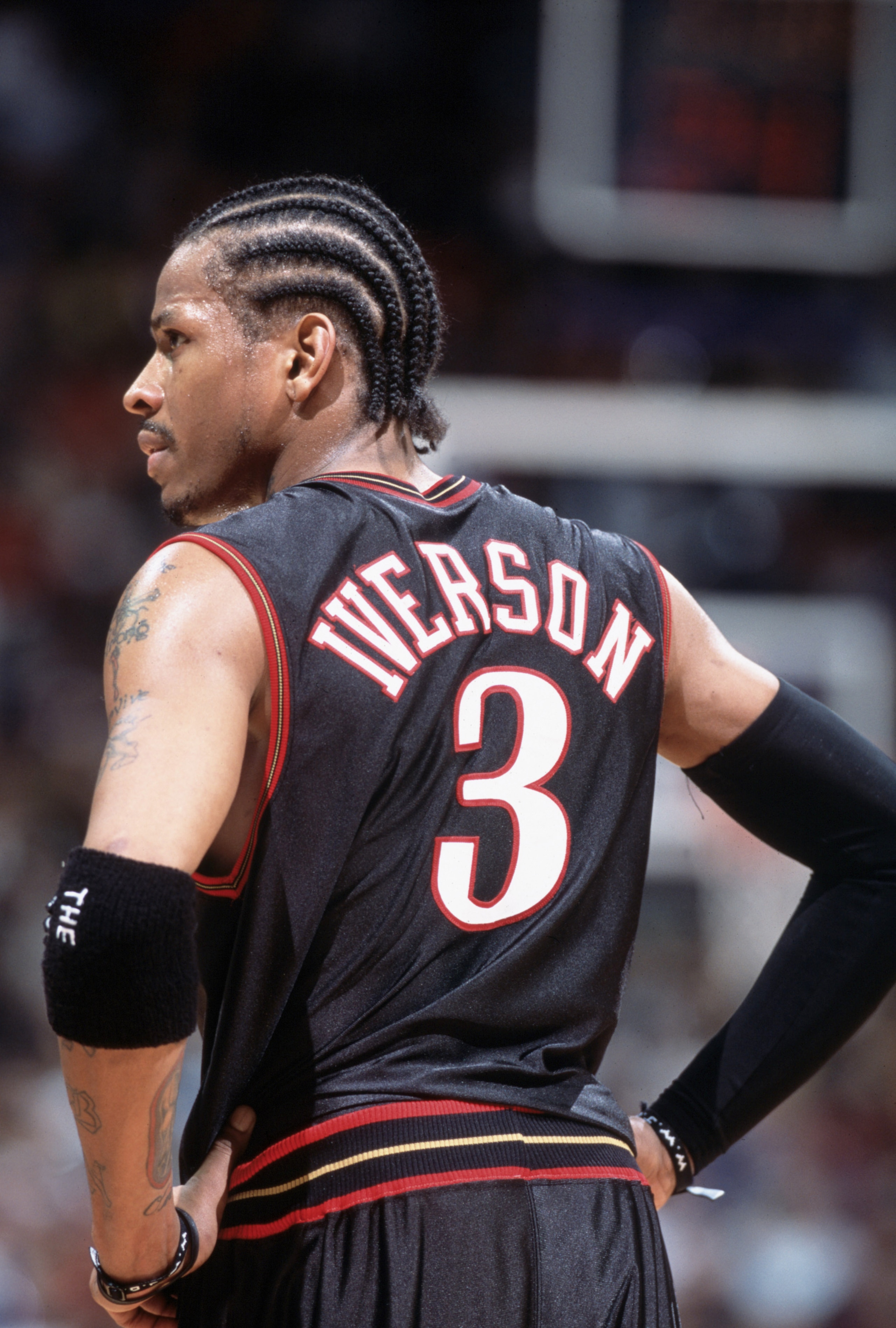
This critique tends to run along the line of "no team has won an NBA Championship with a score first point guard since the Pistons won with Isiah Thomas. The argument is flawed on several counts.
First, it lumps all "score-first" point guards together, second it ignores how few "score-first" point guards there really are that score on the scale of Derrick Rose, and third it assumes the reason that the teams didn't win is that they had a score first point guard.
It also ignores Rose's passing. While it is true that if the Bulls win the championship this year Rose would be the highest scoring point guard in NBA history (that I can find anyway) to win an NBA championship.
But while you're sitting on that thought consider this. He would also have the most assists per game of any point guard since Thomas.
So the Isiah argument just needs to be a little tweaked. Rose would be the best passing point guard since Thomas to win an NBA championship.
Let's look at a couple of players that didn't though. There are only two that scored 24 and dished 7 per game since the Pistons won, Allen Iverson and Gary Payton each did it once.
The problem is that in the years those players did it, neither of their respective teams won more than 45 games, and Payton's SuperSonics were the better defensively, but even they only ranked 10th in the NBA.
Comparing Rose's championship potential with theirs is a bad comparison. You can't compare the chances of a 45-win team with those of a 62-win team, or those of a second-level defense with the best in the NBA. The reason Seattle lost wasn't Gary Payton, it was the rest of the team.
Furthermore, how many point guards score like Derrick Rose? Jon Barry was asked that in Game One of the Bulls and Pacers series and he said no one. He mentioned a passing resemblance to Thomas, but then added that Rose was stronger and faster.
When you're looking at how Rose gets his points and aren't worrying about what his position is, the only names that come to mind in terms of being able to get through traffic, finish at the rim, and draw contact are Kobe Bryant and Michael Jordan, and last I checked they had the bling.
If someone has a valid, basketball argument that actually pertains to Derrick Rose being a point guard and how that actually costs the Bulls games, I'm all ears (or eyes, technically), but mere sweeping generalizations that offer no more than a facade of an argument aren't really credible arguments.
Whatever position he plays Derrick Rose can win a championship because he plays the type of basketball that wins championships.
.jpg?w=2560 "NFL investigating 2 referees for separate viral exchanges")
.jpg?w=2560 "OBJ Calls Out Giants After Release")
.jpg?w=2560 "Report: Chiefs Contact Hill's Agent")
.jpg?w=2560 "Tyreek makes another cryptic post amid Chiefs rumors")