New York Mets: Top 10 Mets Catchers of All Time
In part three of this 13-part series of the greatest Mets of all time, we move on to position players, beginning with catchers.
Over their history, the Mets' most stable non-pitching position has arguably been their catchers. These catchers may have worn the tools of ignorance, but there was nothing ignorant about how they played. The Mets have had all kinds of catchers, from premier home run-hitting machines to speedsters and defensive wizards. In fact, some of the catchers the Mets have had became arguably some of the best offensive catchers in history.They have all called good games and helped the Mets become a team that almost always has had an arsenal of pitchers.
Due to the fact that the Mets have not had ten actual legitimate everyday catchers through the first 49 seasons, the rest of the spots could only be filled by backups. Nonetheless, backup catchers have played important roles in Mets history as well. The Mets have certainly been blessed for having solid backup catchers in addition to a premier starting catcher.
Josh Thole this year will become a regular catcher for his first full season. He has a good bat, a great contact swing and can get on base at a good rate. He lacks power, but also has good defense and a good arm. However, because he has not played a thoroughly full season with the Mets, he does not qualify at this point as a Top 10 Mets catcher. In time though, barring any injuries, he should get up there later in his career.
As for right now, here they are: The Top 10 Catchers in Mets history.
Honorable Mention: J.C. Martin
1 of 11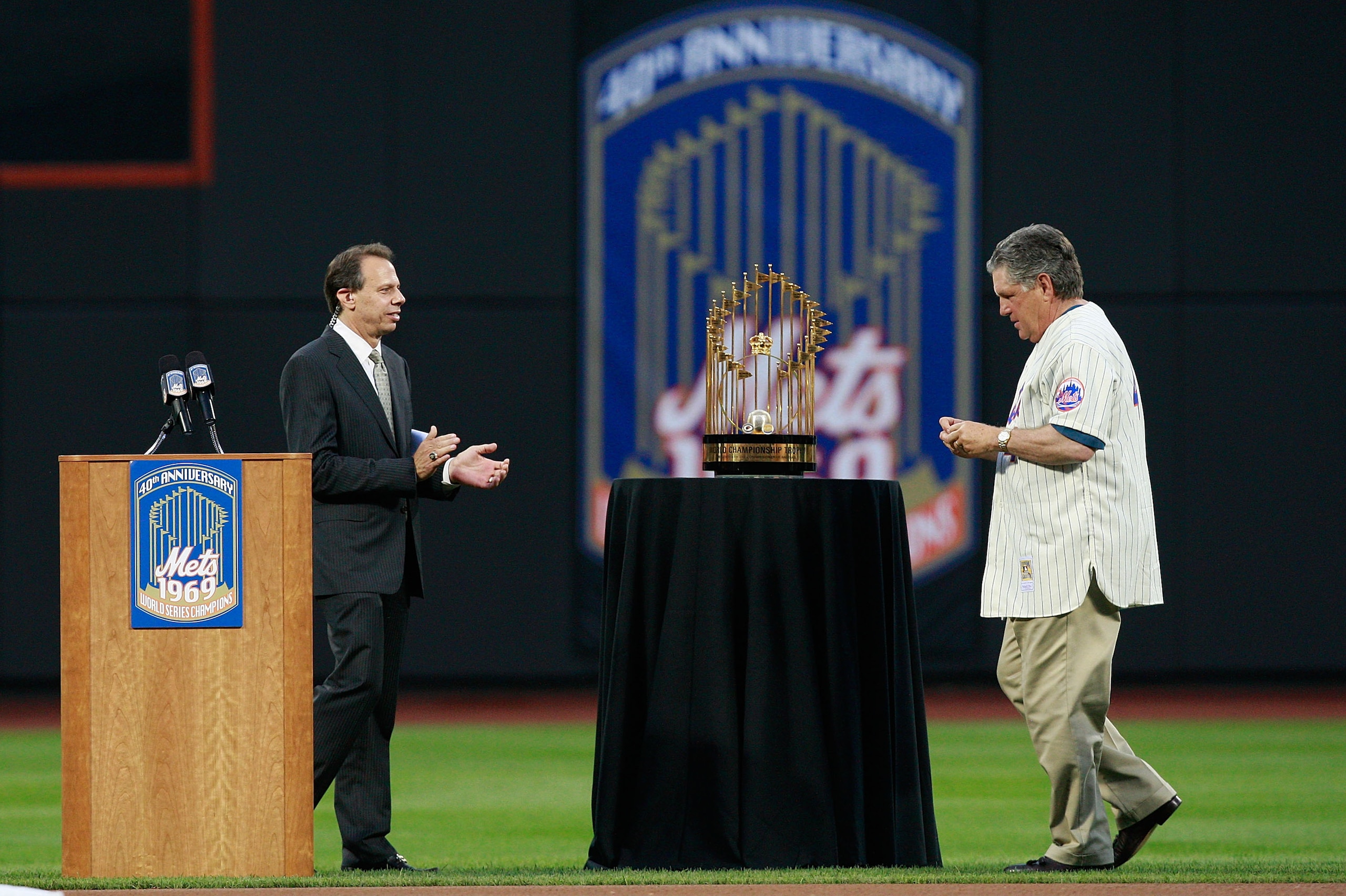
J.C. Martin fell short of the Top 10 as he only played two seasons with the Mets in 1968 and 1969 as more or less the third-string catcher behind Jerry Grote and Duffy Dyer. Nonetheless, there are two very significant moments in Mets history that Martin was a part of and he needs to be recognized properly.
After the Miracle Mets won the NL East in 1969, their first postseason test was against the Atlanta Braves. In the first game, Martin was sent to pinch-hit for Tom Seaver in the eighth inning against the knuckleballer Phil Niekro. Martin ended up driving in two runs during the five-run inning as the Mets won the game 9-5 and soon won the NL Pennant.
In the World Series that year, Martin was even more clutch at an even bigger moment. During Game 4, the Mets and Orioles were tied 1-1 at the bottom of the 10th inning. Martin was again sent to pinch-hit for Seaver with pinch-runner Rod Gaspar on second base. He was apparently told to bunt Gaspar over to third, but when he bunted, the ball went right back to the pitcher's mound. Orioles pitcher Pete Richert fielded the ball and hit Martin in the arm in his throw. This error allowed Gaspar to score the winning run and the Mets clinched the series the very next game.
Later, replays showed that Martin was running inside of the baseline, which meant that he could have been called out for interference. However, the umpires did not change the call because they felt Martin did not mean to do so intentionally. As a result, a new running lane halfway down the first base line to the base itself was created throughout Major League Baseball, all thanks to Martin's efforts. Now, a runner can run in that lane and not be called for interference if he is hit by a thrown ball.
Despite helping the Mets win it all in 1969, Martin did not make many other contributions.In his two seasons as a Mets backup catcher, he hit just .219 with 7 home runs and 52 RBI combined. He was subsequently traded to the Cubs after the season.
J.C. Martin was not a great catcher altogether, but the contributions he made in two important postseason games cannot go unnoticed and this why he is an Honorable Mention.
10. Vance Wilson
2 of 11
Vance Wilson begins the list at the No. 10 spot. One of the better defensive catchers in the league at the time, Wilson was Mike Piazza's backup during the latter portion of Piazza's Mets tenure. In addition to his defense and strong throwing arm, Wilson handled the bat pretty well for a backup catcher and even showed some power.
Wilson was originally drafted by the Mets in 1993, but was marred by injuries and stuck around exclusively in the minors through 1998. Todd Hundley's hitting did not help Wilson's case either. He made his major league debut on April 24, 1999 as a defensive replacement, but was immediately sent back down to Norfolk (the Mets' Triple A affiliate at the time). He also appeared in four games during 2000, but did not come up for good until late 2001.
Popular backup catcher Todd Pratt got traded to the Phillies for Gary Bennett at the deadline. Once Bennett himself was traded exactly a month later, this finally opened the door for Wilson to remain with the Mets. He hit .298 in 32 games that year.
2002 was Wilson's first season spent entirely with the Mets. While Piazza had another monstrous season, Wilson did just fine as his backup/occasional defensive replacement. In 74 games, he batted just .245 but hit his first 5 major league home runs and drove in 26 RBI.
2003 was Wilson's best year as a Met, but this was mostly because Piazza missed most of the season with a groin injury. With Piazza hurt, Wilson became the primary catcher and appeared in a career high 96 games. He also set more career highs with 8 home runs and 39 RBI, despite a .243 average. He collected his first major league triple and stolen base that year as well.
2004 ended up being the last year Wilson was a Met. Piazza was healthier, so Wilson did not play as much this time. Nonetheless, he raised his average to .274 in 79 games. His production though fell off with just 4 home runs and 21 RBI. He was also hampered by injuries at the end of the season, prompting the front office to trade him to the Tigers for infielder Anderson Hernandez.
Wilson backed up another future-Hall of Famer in Ivan Rodriguez during his two seasons with the Tigers from 2005-2006. He did not appear in a major league game after 2006. In 2007, he was marred again with injuries and eventually needed Tommy John surgery. 2008 was injury-riddled for Wilson as well. He suffered from Plantar fasciitis beginning in the offseason and after Rodriguez was traded, did not get a callup to the Tigers.
In 2009, Wilson signed a minor league deal with the Royals, but opted out a year later and chose to retire. He will spend this season managing the Royals' Class A affiliate, the Kane County Cougars.
Vance Wilson is not the most well-known catcher in Mets history, but he is definitely one of the best backups and defensive catchers the Mets have had in recent years.
9. Ron Hodges
3 of 11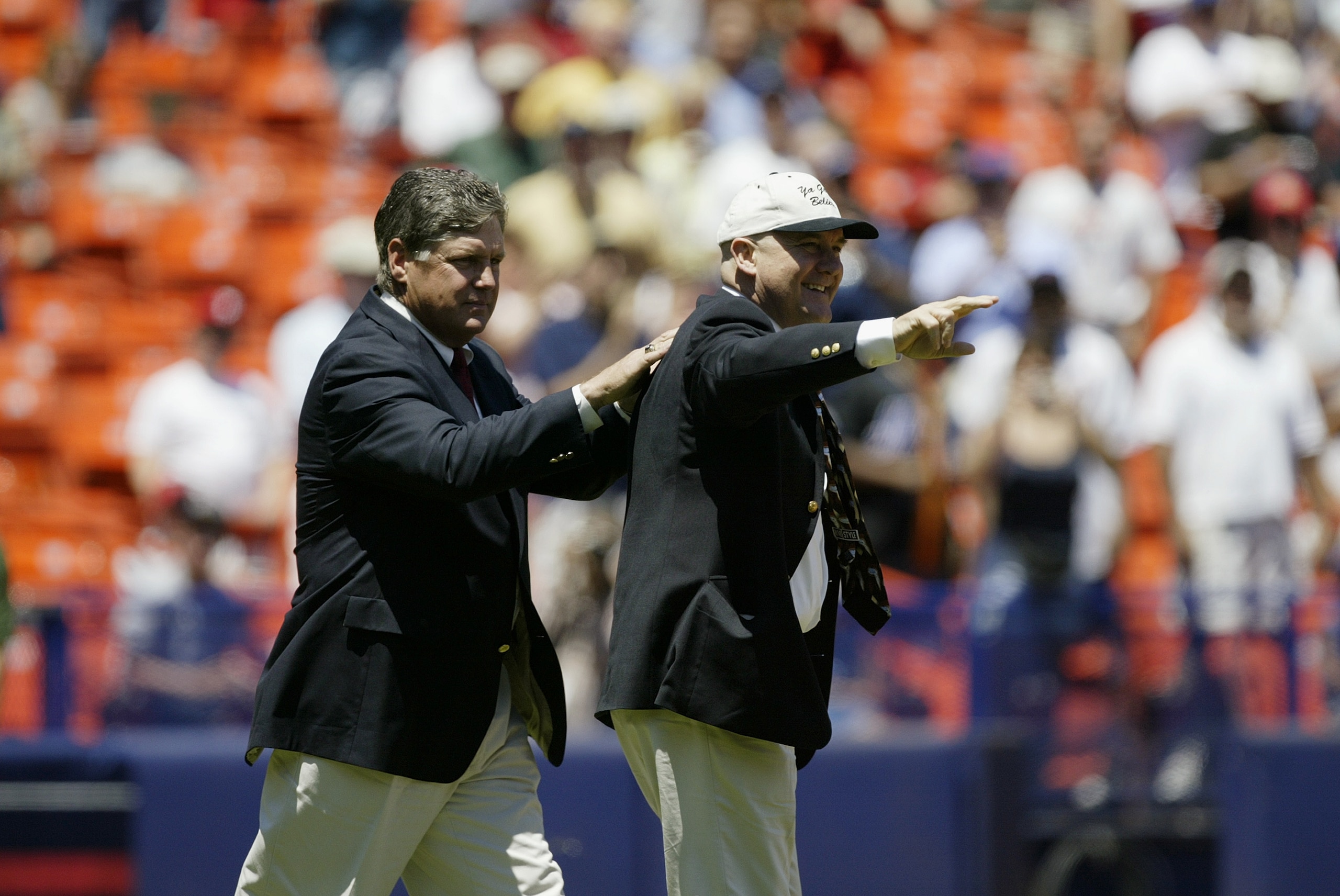
Ron Hodges was a longtime backup catcher from the Mets from 1973-1984. In fact, he spent his entire career with the Mets. He was not always on the major league team each year, but his longevity and the fact that he spent his whole career with the Mets should be taken into account.
Hodges first appeared in 1973 as an injury replacement for Jerry Grote and Duffy Dyer. Although his stint with the Mets that year was brief, his most memorable play occurred. On September 20, he was the catcher that shockingly tagged out Richie Zisk and then singled in the winning run later in the game. He made the postseason roster, but walked in his only at bat.
He got into a similar number of games in 1974, but hit just .221 in 136 at bats. After spending most of 1975 in the minors, he again put up similar numbers as Grote's backup by batting .226, but increased his RBI total to 24, the second highest of his career.
In 1977, Grote was traded to the Dodgers and John Stearns became the everyday catcher through the next few seasons. Hodges still kept bouncing back and forth between the minors and majors, but his hitting at the majors never really improved. The Mets though liked the fact that he batted left-handed and never gave up on him altogether.
After struggling offensively from 1978-1980 (17 combined RBI and no home runs), Hodges finally improved his hitting in 1981. Although he was only in 35 games, he batted .302, by far his career high. Although his average slipped back down to .246 in 1982, he had his productive offensive season, setting career highs with 5 home runs and 27 RBI in 80 games.
In 1983, Stearns was hurt for most of the year, which led to Hodges finally getting more of a starting role, as he played in a career high 110 games. He improved his average to .260 that year, but hit with almost no power and drove in just 21 RBI.
After another dismal season in 1984, the Mets finally decided to release Hodges and Gary Carter became the Mets' new catcher. In 666 career games, he batted .240 with 19 home runs and 147 RBI across 12 seasons. He did have a decent OBP at .342 though.
Hodges currently sells real estate in his native Virginia, but some of the older Mets fans will remember him as the catcher that never gave up, despite being a third-string lefty-swinging, and sometimes emergency backup catcher during most of his career. The fact that he makes the Top 10 list is a testament to his years of service with the Mets, the only team he ever played for.


8. Duffy Dyer
4 of 11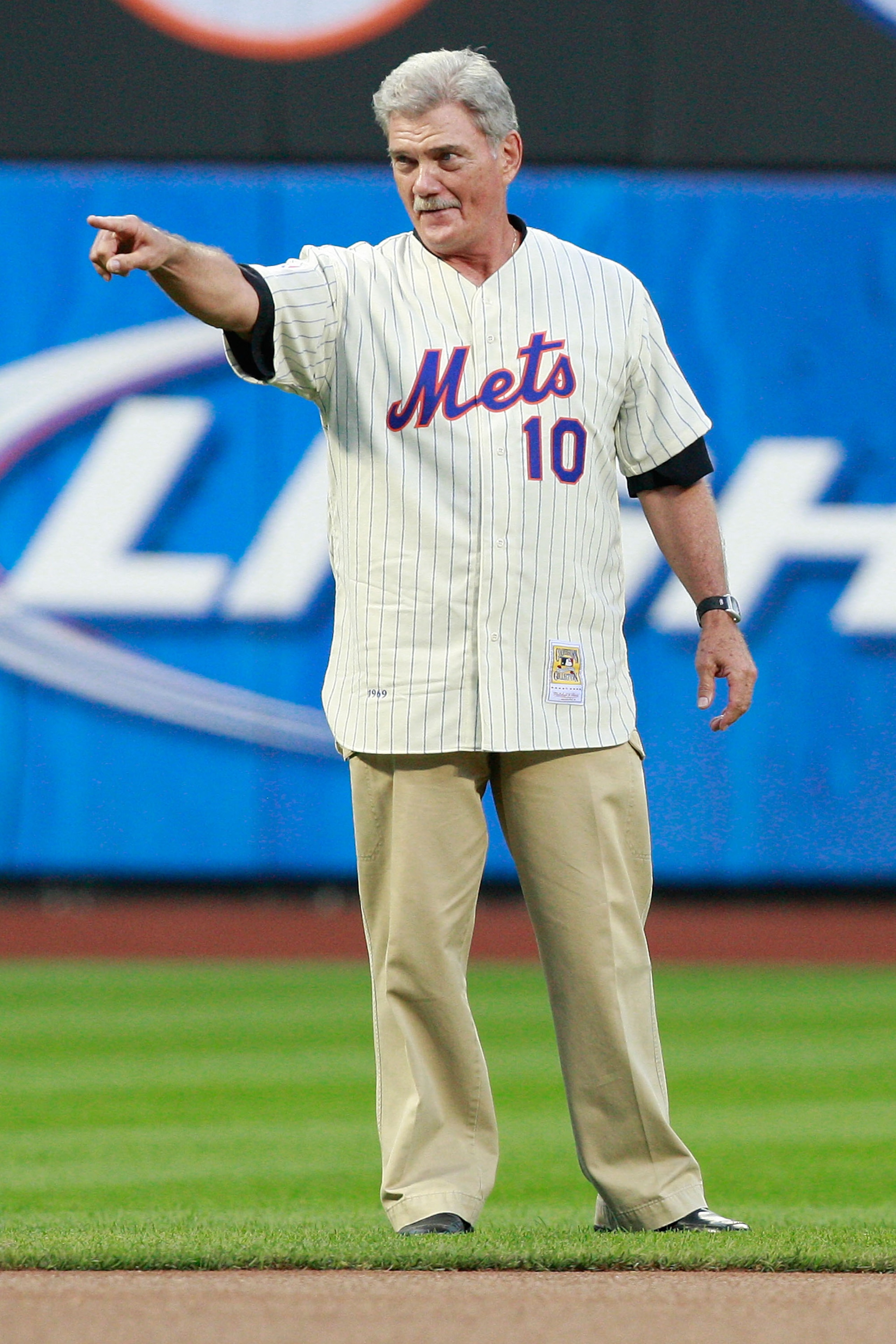
The Mets' first notable backup catcher was Duffy Dyer, a member of the 1969 World Champions and the 1973 National League Champions.
Drafted by the Mets in 1966, Dyer first came up in 1968 and played one game. In 1969, he became the backup for Jerry Grote. In 74 at bats that year, Dyer batted .257 with 3 home runs and 12 RBI as the Miracle Mets won the World Series that year.
Dyer played more in 1970, but his average dropped to just .209. He improved that to .231 in 1971, but had a lot of trouble getting on base with a mere .292 on-base percentage. Drawing just ten unintentional walks that year did not help either.
Dyer's career year occurred in 1972, thanks to Grote's injuries. As the new starter, Dyer set career highs with 8 home runs and 36 RBI in 325 at bats. His home run total was actually the most by a Mets' catcher until John Stearns and Gary Carter came around. He still had trouble getting on base though with only 28 total walks.
In 1973, with a healthy Grote, Dyer returned to his backup role. He played a key role that year by hitting a pinch-hit RBI double in the bottom of the 9th in the famous "Ball on the Wall" game that the Mets won en route to an unexpected pennant. His production declined with just a .185 average and 9 RBI.
1974 would be Dyer's last season as a Met. He played in just 63 games that year and hit .211 with 10 RBI. After the season, he was traded to the Pirates for outfielder Gene Clines. He played with the Pirates from 1975-1978 and caught one-time Met John Candelaria's no-hitter in 1976. He then spent 1979 with the Expos and 1980-1981 with the Tigers before retiring.
After his playing career, Dyer became a coach at various levels. He spent time as a major league coach with the Cubs, Brewers, and A's. He also managed some minor league teams. More recently, he was hired in 2007 to be the Padres' catching coordinator.
Duffy Dyer was the Mets' first notable backup catcher and a better hitter than Jerry Grote ever was and that is why he should be recognized for his contributions.
7. Paul LoDuca
5 of 11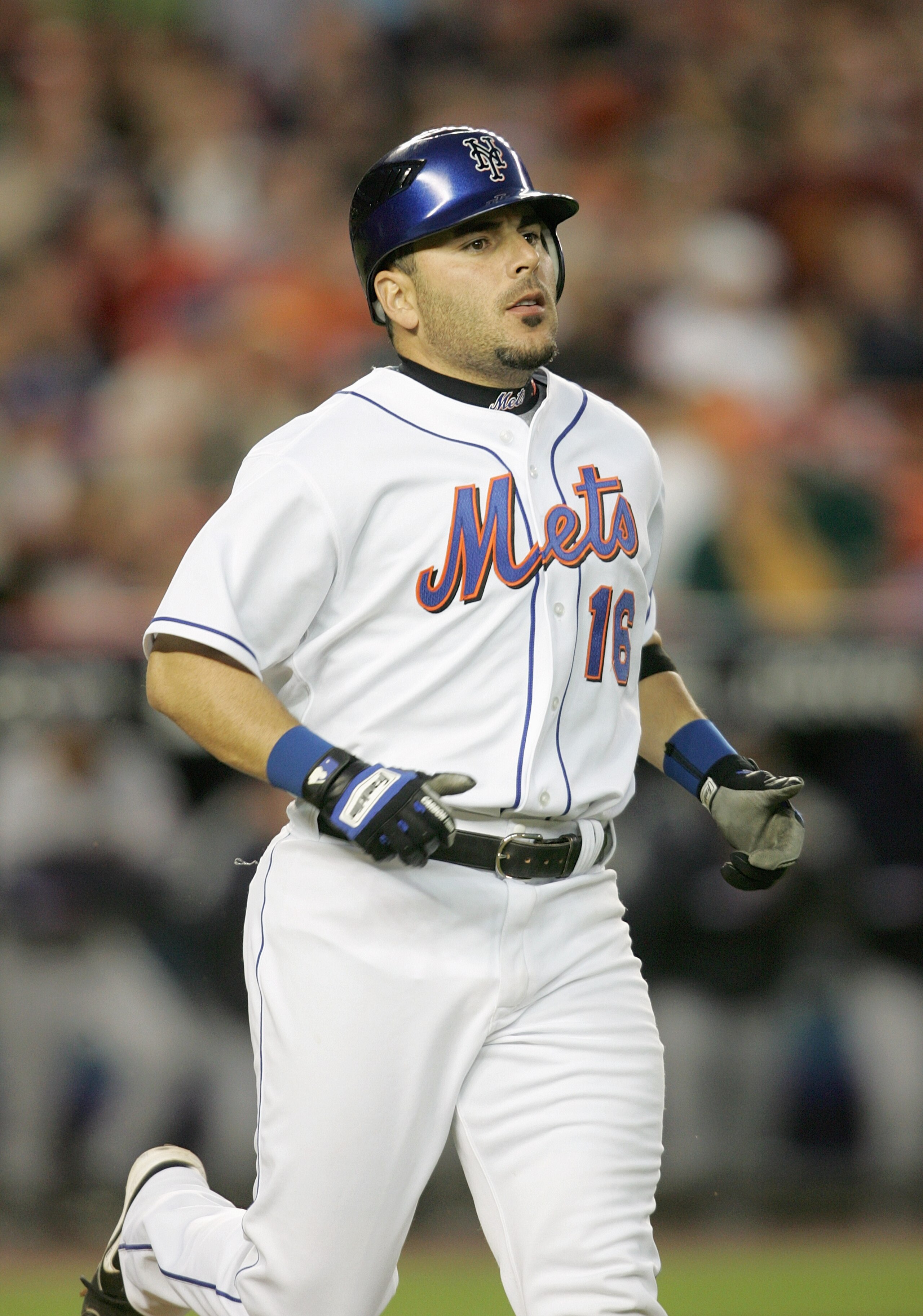
Although he spent just two seasons as a Met, Paul LoDuca instantly became one of the more popular catchers the Mets have ever had. Widely known for his short temper and humorous "Captain Red" jokes, LoDuca became an integral part of the 2006 Mets offense during their postseason run. This was particularly significant because the man was replacing was none other than Mike Piazza. LoDuca ironically ended up replacing Piazza and eventually, another former Met, Todd Hundley in the early 2000s with the Dodgers.
After spending 1998-2004 as a Dodger, LoDuca was traded to the Marlins at the 2004 trade deadline, where he spent the rest of that season, as well as 2005. In the following offseason, Omar Minaya made a brilliant trade by sending two prospects to the Marlins for LoDuca during one of the Marlins' many "fire sales", in which they try to dump all their larger contacts.
LoDuca had one of his best career seasons in 2006 as he helped the team to a division title. The Mets had not won the NL East title since 1986. That year, LoDuca made the All-Star team as the starting catcher, once again replacing Piazza's usual post. He led the Mets with a .318 average, but his contributions were also bigger than his 5 home runs and 49 RBI may suggest.
He was an ideal No. 2 hitter and was very good at getting on base and moving runners over, so that Carlos Beltran, Carlos Delgado and David Wright could drive them in. He was also one of the toughest players in baseball to strike out. LoDuca's fiery temper was evident in games as he was one of the most common players on the team to get ejected in his tenure. But the fiery LoDuca also became a clubhouse leader and motivator by energizing his team and propelling them to success. Many teams in any sport need someone like that to be successful, and LoDuca certainly fit the description.
After the Mets failed to win the National League pennant, the team's 2007 goal was to actually get to the World Series, which ultimately turned out worse than anyone could imagine thanks to the infamous collapse the team endured. That year, LoDuca failed to repeat his 2006 numbers. His home runs and RBI improved to 9 and 54, respectively, but his average dropped to .272 and his on-base percentage slipped 44 points down to .311. He also spent a few weeks on the disabled list in August with a strained hamstring.
Despite his ability to prevent himself from striking out often, LoDuca was not the most patient of hitters. He only drew 24 walks in each of his two seasons. Only four of these 48 walks were intentional.
After the 2007 season, the Mets decided to not re-sign LoDuca. Instead, the team traded Lastings Milledge to the Nationals for Brian Schneider and outfielder Ryan Church. The Mets were very happy to get rid of Milledge, who had become mostly a distraction at that point, but Schneider was a disappointment for the next two seasons and spent significant time on the disabled list. Keeping LoDuca may have been a better move.
It turned out LoDuca's career after 2007 was not spectacular either. He signed a one-year deal with the Nationals, but got released at the 2008 trade deadline and was signed by the Marlins a few weeks later, where he finished the season. LoDuca did not get a contract in 2009 and spent the year as an announcer for the TVG Network, which specializes in horse racing.
In January 2010, he signed a minor league deal with the Rockies, but got released at the end of May. He subsequently went back to the TVG Network.
One reason why the Mets may have not decided to bring back LoDuca was because of his name being mentioned in the Mitchell Report at the end of 2007. He allegedly received over $3,000 worth of HGH from Kirk Radomski during his time with the Dodgers. The report also claimed that he introduced other Dodgers to Radomski, including Eric Gagne and Kevin Brown. LoDuca has not officially responded to the claims.
Despite just playing two seasons with the Mets, LoDuca instantly became one of the more popular backstops the Mets have had over the years. His hitting and fiery temper were both positive assets towards the Mets' 2006 postseason run and he filled Mike Piazza's shoes better than anyone expected. Hopefully, Josh Thole can develop into a similar hitter for the Mets in the coming years.
6. Todd Pratt
6 of 11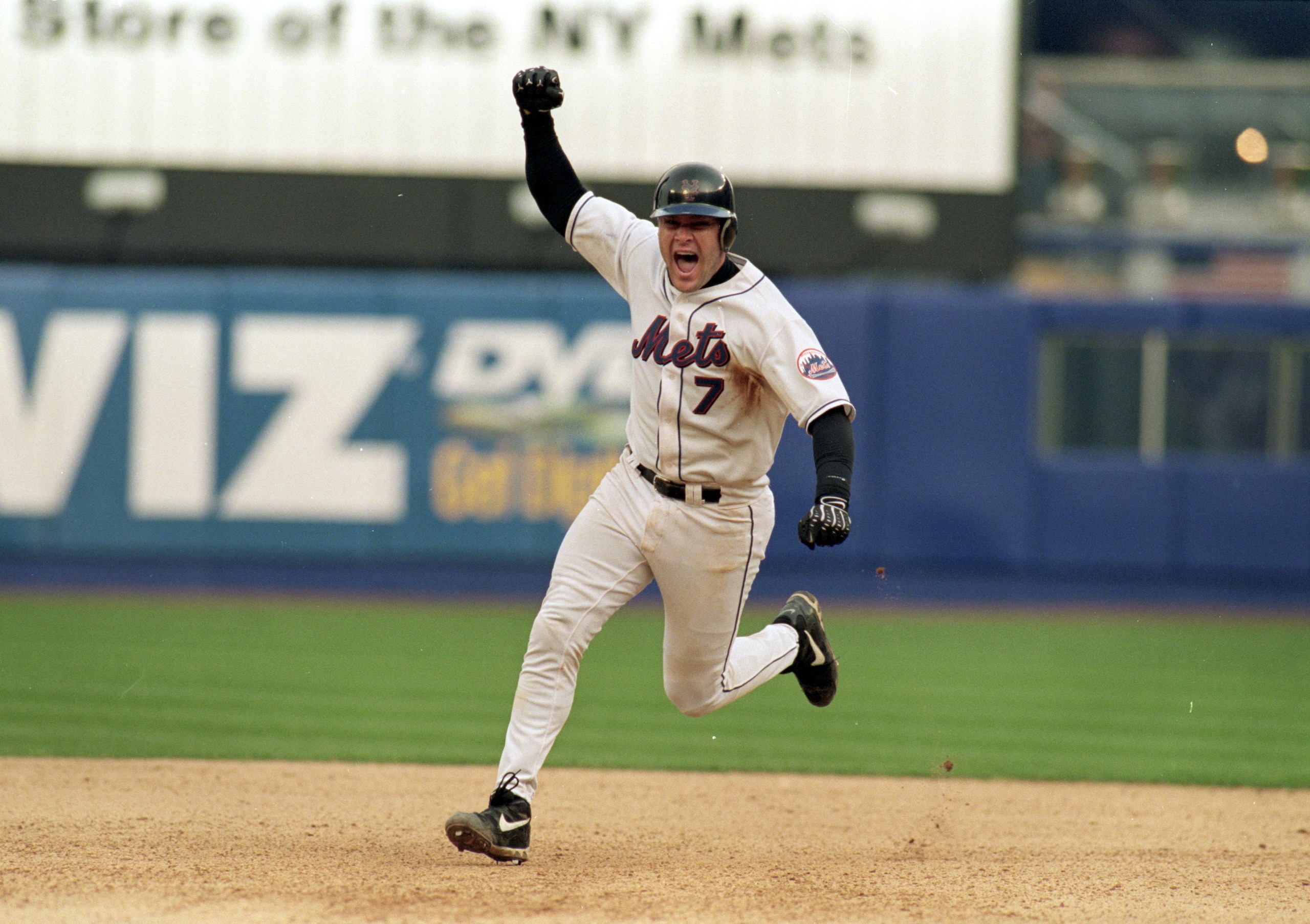
From 1997-2001, Todd Pratt became by far the best backup catcher the Mets have ever had. His contributions were high enough to even rank him over a one-time Mets' starting catcher. Playing under Todd Hundley and Mike Piazza was not the most enjoyable job, but when he had his opportunities, Pratt certainly made the most of them and will always be considered a fan favorite.
Pratt was originally drafted in 1985 and spent time in the minors with the Indians, Red Sox and Orioles before making his major league debut with the Phillies in 1992. He played there for three years and even made the 1993 World Series roster as a backup to Darren Daulton.
He spent 1995 as a backup catcher for the Cubs. In early 1996, he joined the Mariners, but got released after Spring Training. This period was very depressing for Pratt and he ended up going to Bucky Dent's baseball school and working as a Domino's manager for the rest of the year.
In December 1996, Pratt received his big break. The Mets were looking for a veteran catcher and signed Pratt prior to the 1997 season. He ended up spending most of the year in the minors, before getting called up in early July as the Mets' new backup. By the end of the season, Pratt was getting a lot more playing time due to Todd Hundley's recurring elbow injury, which eventually required surgery. Pratt finished the major league portion of his season with a respectable .283 average, 2 home runs and 19 RBI in just 39 games and 106 at bats.
During 1997, Pratt wore the No. 43, but changed to his more familiar No.7 beginning in 1998. He again started the season in the minors as the Mets tried out four other catchers in the first month of the season. After the interim starter Tim Spehr got injured, Pratt was called up and shared playing time with the defensive-oriented Alberto Castillo. This did not last long as Pratt spent time on the disabled list from May 7-June 24. The Mets by then had made a huge trade in May and acquired Mike Piazza, who brought stability back to the position. Castillo did not last the full season, but Jorge Fabregas was also acquired at the trade deadline to share backup duties with Pratt.
In 41 games and just 69 at-bats that year, Pratt put up similar numbers with a .275 average, 2 home runs and 18 RBI. His on-base percentage dropped from .372 to .296, but his slugging percentage dramatically increased from .396 to .522.
The 1999 season saw Pratt reach new career heights as he had arguably his most memorable season. He caught the game in which John Franco notched his 400th save in April and became the full-time backup catcher. In 71 games and 140 at-bats, Pratt batted a career high .293 with 3 home runs and 21 RBI. His reputation had grown and he started becoming a fan favorite that year. But everything in Pratt's career was nothing compared to his defining moment later in the season.
After the Mets had defeated the Reds in the Wild Card play-in game, they faced the Diamondbacks in the division series. During the middle of the series, Piazza was nursing a bad thumb and Pratt became the starting catcher in the biggest games he had ever played in. However, he made the most of it in Game 4 of the series.
With the score tied at the bottom of the 10th inning, Pratt went to bat against Diamondbacks closer Matt Mantei. He ended up hitting a deep drive to center field, but one that initially did not look deep enough. Diamondbacks center fielder Steve Finley ran back and appeared to make the catch. But when Finley put his hands on his legs, Pratt and everyone else knew it was a home run. Pratt triumphantly ran around the bases in shock and was mobbed by teammates. For once, the attention was on a Mets catcher not named Piazza and this became Pratt's biggest career moment by far. It was certainly one that a former pizza manager could never have imagined.
In the 1999 NLCS against the Braves, Pratt drew a bases-loaded walk in the bottom of the 15th inning to tie the game. The very next batter, Robin Ventura crushed what was supposed to be a game-winning grand slam to send the series back to Atlanta. As Ventura rounded first base, Pratt turned around and ran towards Ventura, and was the first to hug him in celebration. Ventura gestured him to keep running the bases, but it was too late. The grand-slam ended up becoming a one-of-a-kind "grand-slam single".
Pratt had another strong season in 2000. he played in a career high 80 games and collected 160 at bats. He made the most of it with a career high 8 home runs and 25 RBI, while batting .275. The 2000 postseason was not as memorable for Pratt specifically, but the team's end result was better because the Mets had made it to the World Series. This World Series was definitely more memorable for Pratt because he played a bigger role with the Mets than he ever did with the Phillies.
Speaking of the Phillies, that was where Pratt ended up at the end of the 2001 season. Pratt struggled with the Mets that year by batting just .163 in 45 games with just 2 home runs and 4 RBI. At that point, Steve Phillips decided to swap him for Gary Bennett, who played in one game as a Met before getting traded again a month later. Vance Wilson succeeded Pratt's role as Piazza's backup, while Pratt stayed with the Phillies through 2005 as Mike Lieberthal's backup.
He spent 2006 with the Braves and signed a minor league deal with the Yankees in 2007, but was beat out by Wil Nieves and retired after being cut.
Todd Pratt's career was one heck of a roller coaster experience, but his most memorable moments were with the Mets and no one at the time could have asked for a better backup than Pratt. It certainly paid off for Pratt when it came to believing in himself. And his postseason home run is still one of the greatest moments in team history.
5. John Stearns
7 of 11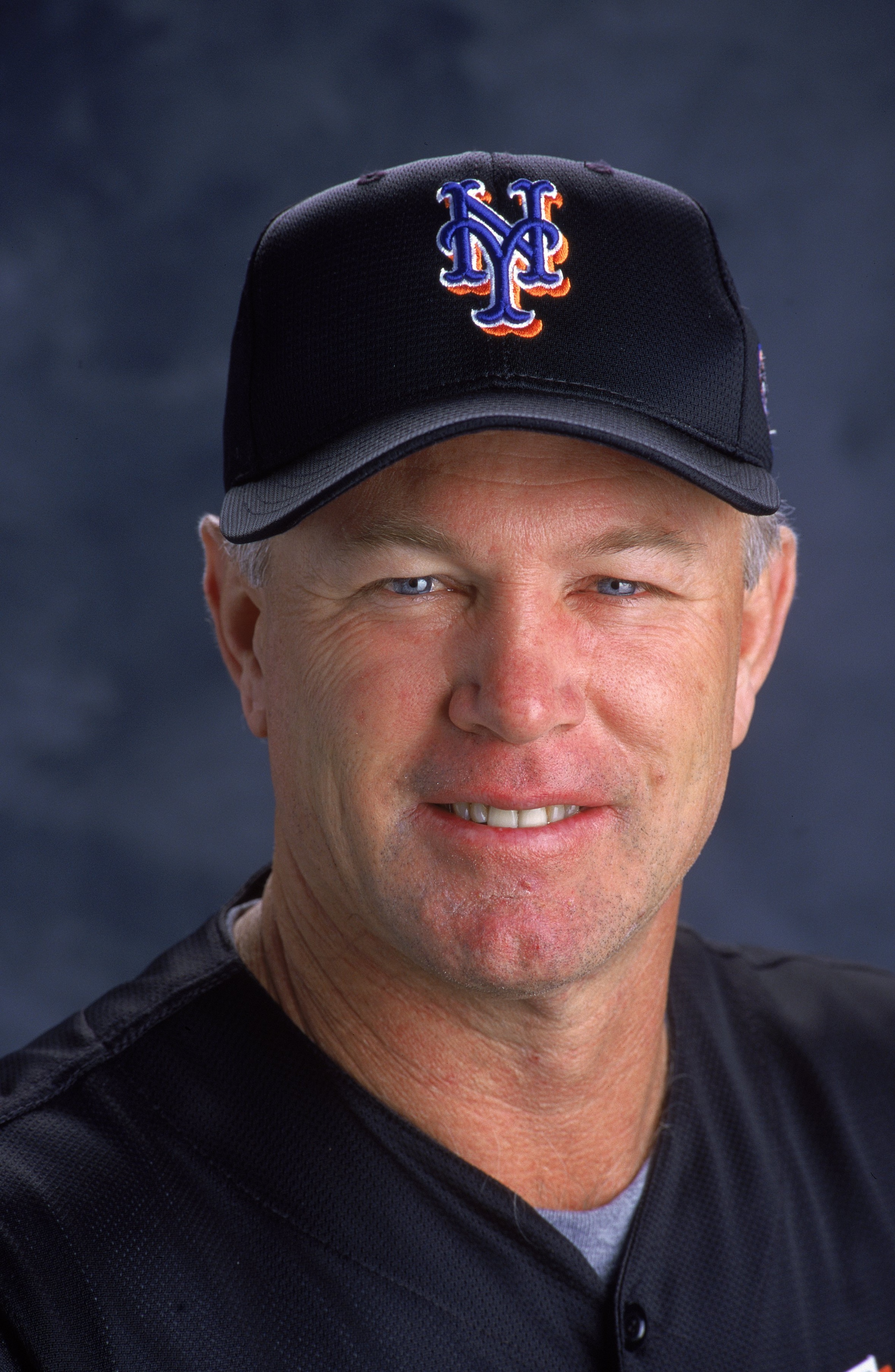
Known to everyone as "Bad Dude", John Stearns succeeded Jerry Grote's post as the everyday catcher beginning in 1977. He ended up becoming one of the best players during the down years of the late 1970s and by far one of the fastest catchers the Mets have ever had.
Stearns was acquired from the Phillies in the infamous Tug McGraw trade. As a former No. 2 overall draft pick, Stearns was the main player the Mets got, along with Del Unser and Mac Scarce, both of whom contributed next to nothing with the Mets.
Stearns became Jerry Grote's new backup in 1975 and hit just .189 in his first season with the Mets. In 1976, Stearns hit poorly again at the beginning of the season and was sent down to the minors, while Ron Hodges was called up. Stearns hit very well that year in the minors, while Hodges struggled. In September, Stearns was recalled and hit well for the month and even took over Grote's starting job, a position Grote had had since 1966.
In 1977, Stearns started off as the starting catcher, while Grote and Hodges shared backup duties. Grote was getting older and apparently, his time had come as he got traded to the Dodgers at the end of August. In this year, Stearns had a breakout season, batting .251 with 12 home runs and 55 RBI. He also made his first trip to the All-Star game. In June, he collected 4 RBI in a game twice and hit his only career grand slam. However, Stearns struggled in the second half, batting .125 and .167 in August and September, respectively. He also led the team with 25 doubles. But Stearns' most memorable moment that season was when he became annoyed and chased the Braves' mascot, Chief Noc-a-Homa, off the field before a game.
1978 was an even better year for Stearns. He batted .264 and set career highs with 15 home runs, 73 RBI, 191 total bases and 25 stolen bases. The 25 stolen bases set a new record for National League Catchers, which was broken in 1998 by Jason Kendall. Stearns though had a slow start and did not make the All-Star team in what was his career season.
That year, Stearns also made more headlines when he tagged out the Pirates' Dave Parker to end the game. Parker had previously run over two other catchers, but suffered a broken cheekbone in his collision with Stearns. Stearns became quickly well known for his intense style of playing, and was instantly a fan favorite.
In 1979, Stearns' numbers weren't as good, despite appearing in a career high 155 games. His average slipped to .243 and he hit just 9 home runs and drove in 66 RBI. This ended up being Stearns' last productive season and he did not appear in over 100 games for a season the rest of his career. He made the All-Star team again, but did not play. The Mets' season that year was so bad that manager Joe Torre decided to put Stearns at first base, third base and the outfield.
Stearns once again made headlines in another collision in April, this time with Expos catcher Gary Carter. A perfect throw nailed Carter, but Stearns began a fight after he thought Carter had unnecessarily elbowed him. Both benches and bullpens emptied, and both catchers were ejected in a game the Mets ended up losing 3-2 in extra innings.
In 1980, Stearns' power apparently disappeared. He did not hit a single home run all year, but raised his average to .285. Nonetheless, he made the All-Star team and even got into the game. However, at the end of July, Stearns suffered a broken finger on a foul tip, which ended his season. More injuries would later follow.
Stearns' short temper was evident yet again in two 1980 occasions. On June 12, two fans jumped onto the field. After security was unable to catch, Stearns got upset, ran from home plate towards the third base side of the infield and tackled one of the fans.
The second occurence happened on July 4, which happened to be the first fireworks night ever at Shea Stadium. A rookie Expos pitcher threw a pitch above Mike Jorgenson's head in the second game of a doubleheader. Jorgenson was the victim of a dangerous beanball incident in 1979 with the Rangers and did not appreciate the pitch he saw and motioned towards the pitcher with complete disapproval. Then, all of a sudden, Stearns, who did not start the second game after catching the first game, sprinted out of the dugout towards the Expos pitcher and welcomed him to the major leagues by slamming him to the ground.
Nothing as memorable would happen for Stearns after 1980. He started the 1981 season on the disabled list, and when he returned, he did not start regularly until late May. He then hit well until the mid-season strike. When baseball resumed in August, Stearns ended up batting .271 for the year, but his run production regressed with just 1 home run and 24 RBI.
In 1982, Stearns had a bounceback year, batting a career high .293, with 4 home runs and 28 RBI. He got selected to his fourth All-Star game and hit well to begin the second half. However, in mid-August, Stearns was bothered with elbow tendinitis, which outside of three pinch-running appearances ended his season, and ultimately his career.
1983 was a lost year for Stearns. Because he was unable to throw, he appeared in just four games, all as a pinch-runner, and spent almost the entire season on the disabled list. 1984 was not much better. That year, Stearns spent time in the minors for most of the season, before being called up in September and only playing occasionally.
After the season, the Mets realized that with Stearns' injuries, they needed an upgrade at catcher, which led to the Gary Carter trade. Stearns then became a free agent and tried to make a comeback in the Winter League, but he ended up hurting his elbow again.
Stearns ended up signing a minor league deal with the Reds for 1985. His minor league comeback was going okay, but after being hit by a pitch in May, Stearns decided to retire. After his playing days, Stearns stayed connected with baseball under various capacities, such as scouting and managing minor league teams. He was even a one-time ESPN broadcaster in 1993.
In 1999, Stearns returned to the Mets as a scout, and a year later, Bobby Valentine named Stearns his bench coach. That year, Stearns was best known for yelling "The Monster is outta the cage!" when Mike Piazza hit in RBI double in Game 1 of the NLCS. In 2001, he became the third base coach, and a year later, was reassigned as a scout.
Stearns then managed the Binghamton Mets in 2003 and Norfolk Tides in 2004 before spending 2005 as a roving catching instructor. He then cut ties with the Mets and has most recently become a Nationals' minor league manager.
Stearns is definitely one of the top five catchers to wear a Mets uniform, with the numbers he put up for some dreadful late-1970s Mets teams. His intensity and hard-nosed play helped him become a fan favorite and he was arguably one of the best catchers of his era. Had he been healthier in the 1980s, Stearns' overall legacy could have been even greater.
4. Todd Hundley
8 of 11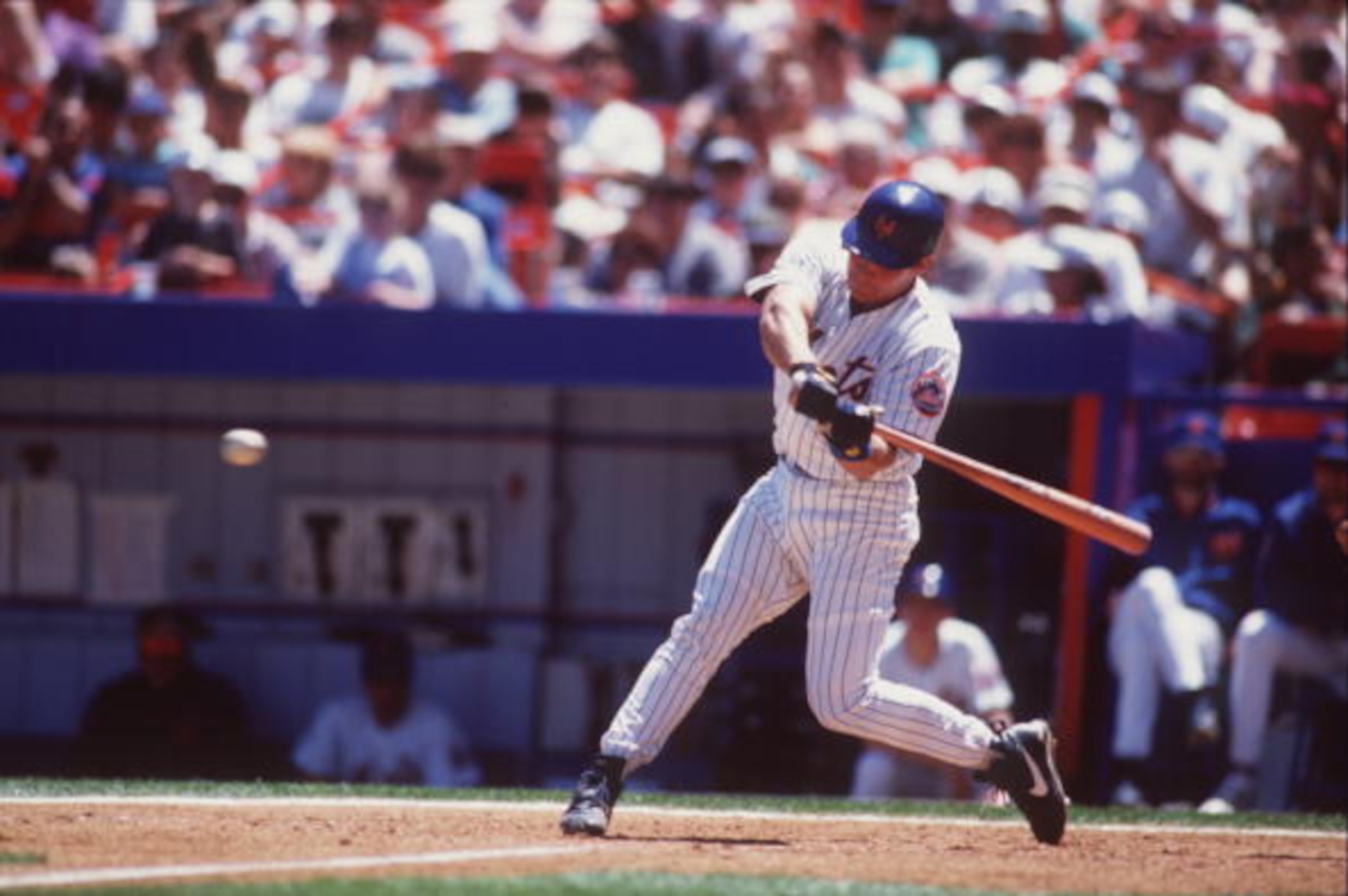
Todd Hundley may not have had a legendary overall career, but he was arguably one of the Mets' best hitters throughout the 1990s and became by far the best power-hitting catcher the Mets have ever developed.
Hundley first came up in 1990, but did not start regularly until 1992. He was originally a light hitting catcher who possessed good defensive skills. 1992 and 1993 did not show much of Hundley's ultimate potential, as he hit below .230 in both years and did not show a lot of power (7 home runs in 1992, 11 in 1993) as the Mets fell to one of baseball's most underachieving teams those years.
Hundley started to turn the corner in 1994 with a .237 average, 16 home runs and 42 RBI until the strike wiped out the rest of the season. He finished his 1995 season with a career high .280 average, 15 home runs and 51 RBI. Those numbers, however, may have been deceiving because he missed well over a month that year with a sprained wrist. After 1995, the waiting period for Hundley to blossom was finally over.
1996 showed Hundley adding a new dimension to his game that transformed him from an average catcher to one of baseball's best. As he made his first All-Star team that year, Hundley became a clubhouse leader by hitting a Mets record 41 home runs, while driving in a career high 112 RBI.His home run total also set a Major League single season record for both catchers and switch-hitters, which have both since been broken.
What was interesting about this season was that the vast majority of Hundley's success came against right-handed pitching, as he hit 35 of the 41 homers against righties and also hit .286 against them, in comparison to 6 home runs and just .194 against southpaws. This was always the case for Hundley, who consistently struggled from the right side. In fact, just 18 of his 124 career home runs as a Met were against lefties.
Thanks to this monstrous season, Hundley was rewarded with a new four-year $21 million contract. Hundley followed up his career year with another very solid season in 1997 as he led the Mets to coming within a few games of a playoff berth before a nagging elbow injury he had most of the season became too painful. Hundley raised his average to .273, hit 30 home runs and drove in 86 RBI as he made another All-Star team.
The other 1996 stars, Bernard Gilkey and Lance Johnson, both struggled and Hundley was the only one of the three to have a successful follow-up season, which raised his Mets' legacy above that of a traditional one-year wonder.
This year was also tumultuous for Hundley as he clashed with new manager Bobby Valentine over rumors that he was drinking and partying too late at night throughout the year, and as a result, not getting enough rest. Hundley denied all of this and was very outspoken in the local papers. He ended the year making a cameo appearance on a Saturday Night Live sketch.
Through most of 1998, Hundley had to recover from the elbow injury and watched the Mets trade for Mike Piazza, which infuriated him. Hundley finally returned in July, but this time as a left fielder. This experiment did not work out well as he played in only 53 games and hit just .161 in that span. At the end of the season, Hundley was mostly pinch-hitting as a backup catcher.
In the offseason, the Mets decided to sign Piazza long-term and sent Hundley packing to the Dodgers. He spent time there and with the Cubs before retiring after the 2003 season. In 2007, he was listed on the Mitchell Report, which raised questions as to whether his best years in 1996 and 1997 were tainted by steroid use. Hundley has not addressed the rumors.
Although Hundley only had two particularly strong seasons during his career, he became a fan favorite and team leader, especially in 1997 when the Mets started contending once again. His eventual loss halfway through that September affected the Mets offense, and that may have been a huge reason why they missed the postseason.
Hundley's numbers among Mets catchers have been one of the best, of course largely due to his 1996 and 1997 success. In 829 games, he batted just .240, but hit 124 home runs and drove in 397 RBI. He is third among Mets catchers in appearances, second in home runs (seventh overall), RBI (12th overall) and runs scored, and fourth in hits.
Some may be curious about his supposed steroid use, but Hundley was the Mets' first offensive superstar since Darryl Strawberry and Howard Johnson, and gave the fans one reason to care about the Mets during the mid-1990s. By far the most productive homegrown switch-hitting catcher in team history, Hundley will always be remembered for his memorable 1996 season and hard-nosed style of playing.
3. Jerry Grote
9 of 11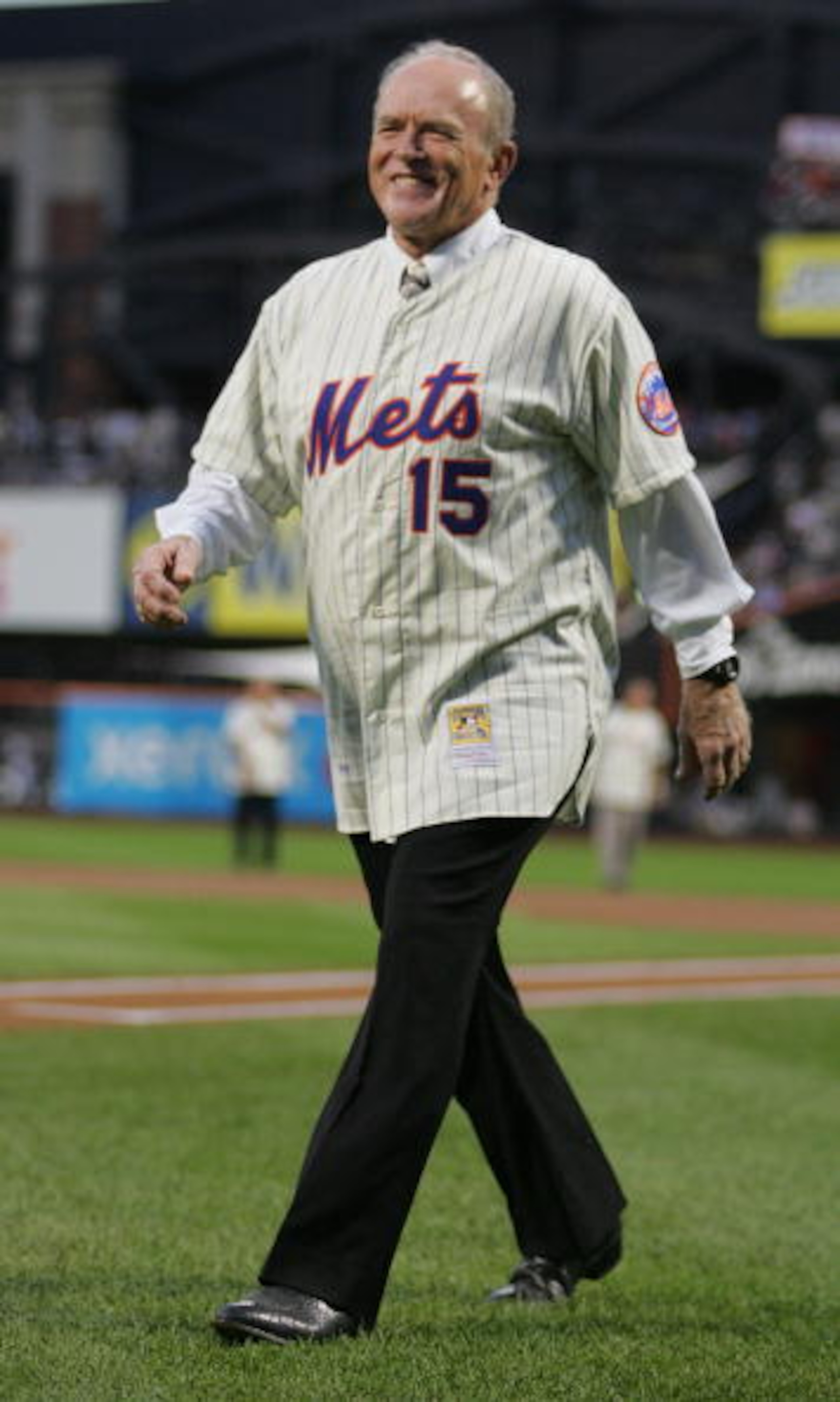
The first of many great catchers in Mets history, Jerry Grote anchored both one of the best defensive teams in his era and one of the best pitching staffs in baseball history. He was also one of the best defensive catchers and had one of the best arms behind the plate throughout the league. A two time All-Star and Mets fan favorite, Grote was the originator of what has become one of the team's most productive positions throughout its history.
After spending his first two professional seasons in 1963 and 1964 with the Astros, Grote spent all of 1965 in the minor leagues, and was traded to the Mets at the end of the season. This turned out to be one of the best trades in Mets history.
Grote was never a strong hitter, but then-manager Wes Westrum always liked his defensive skills, which immediately paid dividends as the Mets' pitching staff ultimately became one of the strongest in the league. At the plate though, Grote batted .237 in 1966 with just 3 home runs and 31 RBI. His 1967 numbers included a low .195 average, 4 home runs and 23 RBI. The Mets struggled those two seasons, but the team, along with Grote's hitting got better with time.
Grote made his first All-Star team in 1968, mostly thanks to him anchoring a staff that included Tom Seaver, Jerry Koosman, Nolan Ryan, Ron Taylor and Tug McGraw. He also raised his average to .282, with 3 home runs and 31 RBI.
1969 was an even better season for Grote, and not just because the Mets won their first World Series that fall. Despite his batting average falling 30 points to .252, Grote set career highs with 6 home runs and 40 RBI. Compared to other catchers on this list, these numbers weren't necessarily much, but Grote's defense and leadership certainly made up for the lack of offense. He caught every inning of the postseason.
In 1970, Grote again anchored a strong pitching staff, but despite batting .255, he finished with just 2 home runs and 34 RBI. Grote's 1971 season was quite similar with a .270 average, 2 home runs and 35 RBI.
Grote did not play much in 1972 due to injuries that eventually required bone chips to be removed from his elbow. However, in just 64 games, Grote did hit 3 home runs and 21 RBI, despite a .210 average.
Grote's injuries continued in 1973 when he was forced to miss two months due to a broken arm he suffered after getting hit by a pitch. When Grote returned, the Mets had started winning and eventually went to the playoffs, despite a record barely above .500. Grote's offense that year was not particularly good ,as he batted .256 with only 1 home run and 12 RBI. However, he once again caught every inning of the postseason, even though the Mets this time failed to win the World Series.
Grote made his second and final All-Star appearance in 1974, thanks to a good first half. However, in the second half, he was banged up and split time with backup Duffy Dyer. He finished the year with a .257 average, 5 home runs and 36 RBI.
Grote had a strong bounce-back year in 1975. He batted a career high .295, but finished with just 2 home runs and 39 RBI. He also led National League catchers with a .995 fielding percentage.
Grote's last full season with the Mets was in 1976. His numbers weren't bad, as he batted .272 with 4 home runs and 28 RBI. However, thanks to the infamous Tug McGraw trade, the Mets had a young catcher named John Stearns on the bench, and the Mets wanted him to get more playing time. Grote at that point was starting to age and his injuries were certainly taking a toll.
Back injuries in 1977 plagued Grote's Mets career and he appeared in just 42 games with 115 at-bats before getting traded to the Dodgers at the end of August for two minor leaguers that never appeared in a major league game with the Mets. By then, Stearns had been starting for most of the season and Grote became expendable.
Grote spent the last month of 1977, as well as 1978 with the Dodgers as a veteran backup before retiring. However, in 1981, the Royals were able to lure him out of retirement due to a shortage of catchers. He spent most of the season in Kansas City, and the remainder in his second stint with the Dodgers before retiring for good.
As a Met, Grote's offensive numbers were not particularly strong. Over 12 seasons, he batted .256 and finished with just 35 home runs and 357 RBI. However, he has caught more games as a Met than anyone else, and by a long shot.
Had it not been for the popularity of Johnny Bench, Grote probably would have won at least a few National League Gold Gloves. Bench, who won the award ten consecutive years from 1968-1977 later admitted that Grote's defense was so good that if both were on the same team, Bench would have to play third base, which goes to show how good, yet underrated Grote's defense was.
Grote was later inducted into the Mets' Hall of Fame in 1992, becoming the first Mets catcher to receive the honor. More recently, he makes occasional appearances at Citi Field and remains a fan favorite even today.
Jerry Grote may not have had the overall reputation that Johnny Bench, for example had as a catcher. However, Mets fans will always think highly of Grote's career and how the position has been a strength for the Mets ever since his playing days.
2. Gary Carter
10 of 11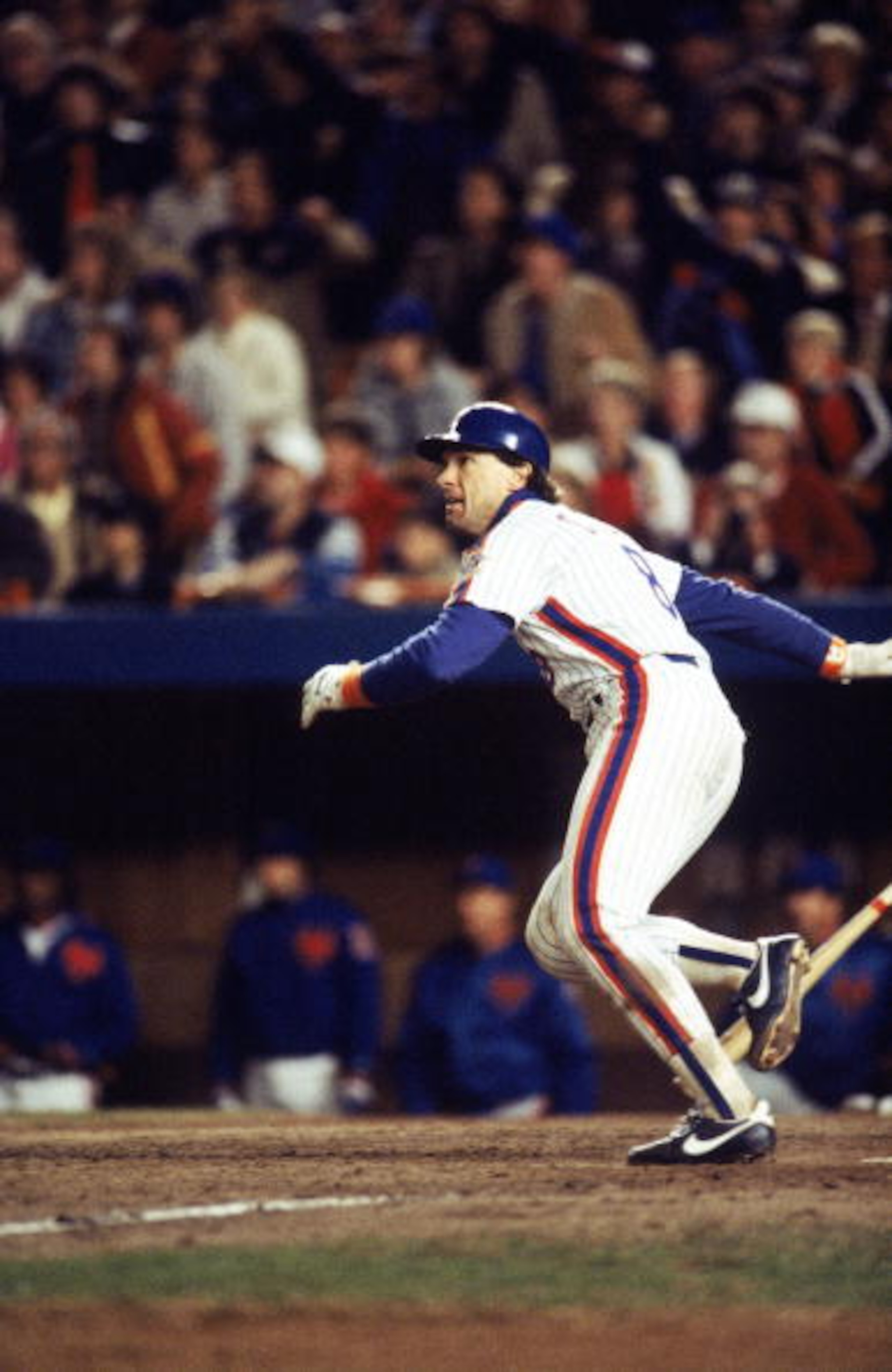
The final piece of the Mets' 1986 championship team arrived when Gary Carter was traded from the Montreal Expos to the Mets in 1985.
Arguably one of the best catchers of his era, Carter gave the Mets the offensive boost they needed with 32 home runs and 100 RBI in 1985.
He dropped to 24 home runs the following year but still collected 105 RBI and delivered some of the most clutch hits during the 1986 postseason. It was Carter's single that started the Mets' Game 6 rally vs. the Red Sox, and he hit a crucial home run in the deciding Game 7.
A three-time All-Star, Carter's hitting declined after the World Series, and he had poor offensive seasons in 1988 and 1989 before he got cut loose. He spent a year each with the Giants, Dodgers and Expos again before retiring.
Defensively, Carter was pretty good and successfully handled one of the best pitching staffs the Mets have ever had. But his clutch hits in 1985 and 1986 are what Mets fans will remember most.
Among Mets catchers, Carter is fifth in games played, third in home runs, fourth in RBI, and fifth in hits and runs scored. It should be noted though that among the Mets' top 5 overall catchers, Carter's tenure was the shortest.
As a Met, Carter batted .249, with 89 home runs and 349 RBI. Why Carter made the #2 spot though was because of his much-needed offense in 1985 and 1986, as well as the clutch postseason home runs he hit. His leadership should not be forgotten either, as he was named a team co-captain alongside Keith Herenandez in 1988.
For his career, Carter hit 324 home runs and drove in 1,225 RBI. He was inducted into the Baseball Hall of Fame in 2003. He wanted to go in as a Met, but the Hall of Fame committee ended up denying his request and inducted him as an Expo. Most likely, this was done because the Expos eventually moved to Washington and became the Nationals in 2005. The Mets ended up giving him a replica plaque depicting him as a Met.
At the time of his retirement, Carter was the best all-around catcher the Mets had ever had. He got inducted into the Mets Hall of Fame in 2001 and is still a fan favorite today.
1. Mike Piazza
11 of 11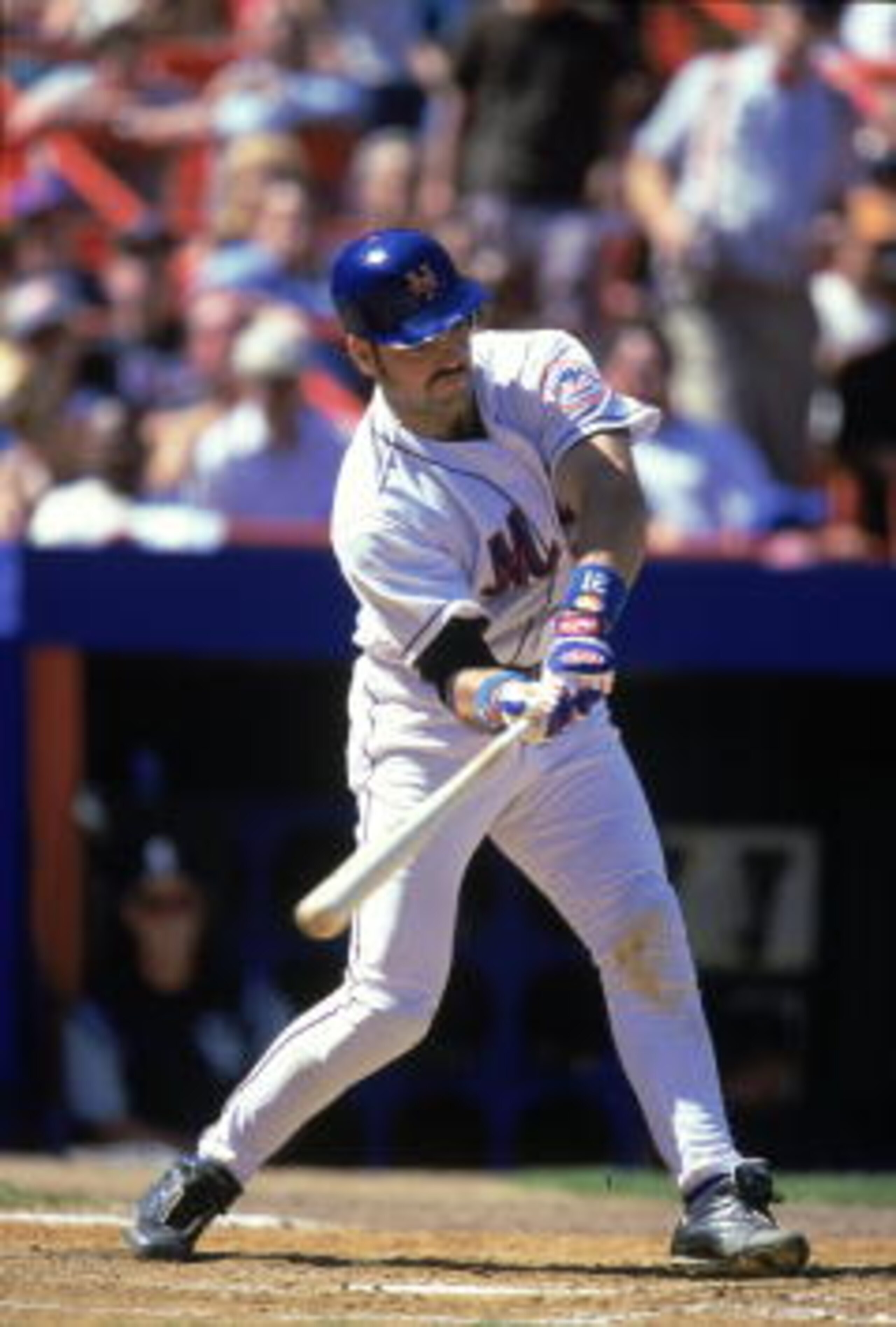
The greatest offensive catcher of all time happened to also be the best catcher to ever wear a Mets uniform.
Already with a reputation as one of the game's most feared power hitters during his Dodgers years, Piazza came to New York in 1998 when the Mets were in dire need of a catcher while Todd Hundley was hurt. They got all that and a lot more.
Teammates welcomed him with open arms. John Franco gave up his No. 31 for Piazza and moved to No. 45. Hundley became an outfielder when he returned so Piazza could remain the catcher.
After a solid 1998 season, the Mets decided to trade Hundley and sign Piazza to a seven-year, $91 million deal, which instantly transformed the Mets into dangerous contenders. Piazza continued to produce during his prime and hit .303 with 40 home runs and 124 RBI in 1999, as he led the Mets to their first postseason since 1988. The RBI total set a new Mets record.
He followed that up with an even better season in 2000, hitting .324 with 38 home runs and 113 RBI. He led the team to its first World Series since 1986, and Piazza certainly did his part during those two postseasons by hitting clutch home runs and being the one feared hitter the Mets had at the time.
Despite the wonderful moments he had during the 2000 season, fans will also never forget about the rivalry he had with Yankees pitcher Roger Clemens. In July, during a doubleheader, Clemens threw a pitch that hit Piazza in the head, which caused Piazza to miss the All-Star game. Later, in the World Series, Clemens threw a piece of Piazza's bat at him as Piazza jogged to first base on a foul ball. Piazza picked up the piece of the bat and walked towards Clemens, but nothing happened as both benches cleared and no fights occurred.
Piazza had two more great seasons in 2001 and 2002 before injuries and his knees in particular began to affect his playing. He missed most of the 2003 season with a groin injury and played half of 2004 as a first baseman, which did not turn out as well as the Mets had hoped. At that point, his offensive numbers were down and the team realized it could no longer expect him to carry the offense as much as he used to.
His last year in 2005 was bittersweet because he was such a fan favorite, but the fans also knew that he would not be the feared hitter he was ever again, and Piazza spent his last two seasons in San Diego and Oakland, respectively, before retiring.
Countless home runs and clutch hits will forever remain etched in the minds of Mets fans that were fortunate enough to watch him play, none more significant than the home run he hit against the Braves in 2001 during the first sports game in New York after 9/11.
Throughout his career, Piazza's hitting was one of the best in baseball. He finished his remarkable career with a .308 average, 427 home runs and 1,335 RBI. No other catcher has ever hit over 400 career home runs. As a Met, in 972 games, he batted .296 with 220 home runs and 655 RBI. Those numbers probably would have been even higher, had Piazza not missed most of the 2003 season.
Piazza is 11th in team history in games and second among catchers behind Jerry Grote. He is also ninth in runs scored, eighth in hits, sixth in doubles, second in home runs, third in RBI and fourth in total bases. All of those numbers are also records for Mets catchers, as Piazza's legacy has set the new standard for what it takes to be considered a great offensive catcher.
A soon-to-be Hall of Famer, Mike Piazza transformed the Mets from underachievers into successful contenders when he arrived in New York, and his Mets legacy has instantly become one of the greatest ever, not just amongst catchers, but amongst all players throughout the team's history.




.png?w=2560 "Week 8 Winners & Losers 📊")


.jpg?w=2560 "Jonathan Taylor Landing Spots")