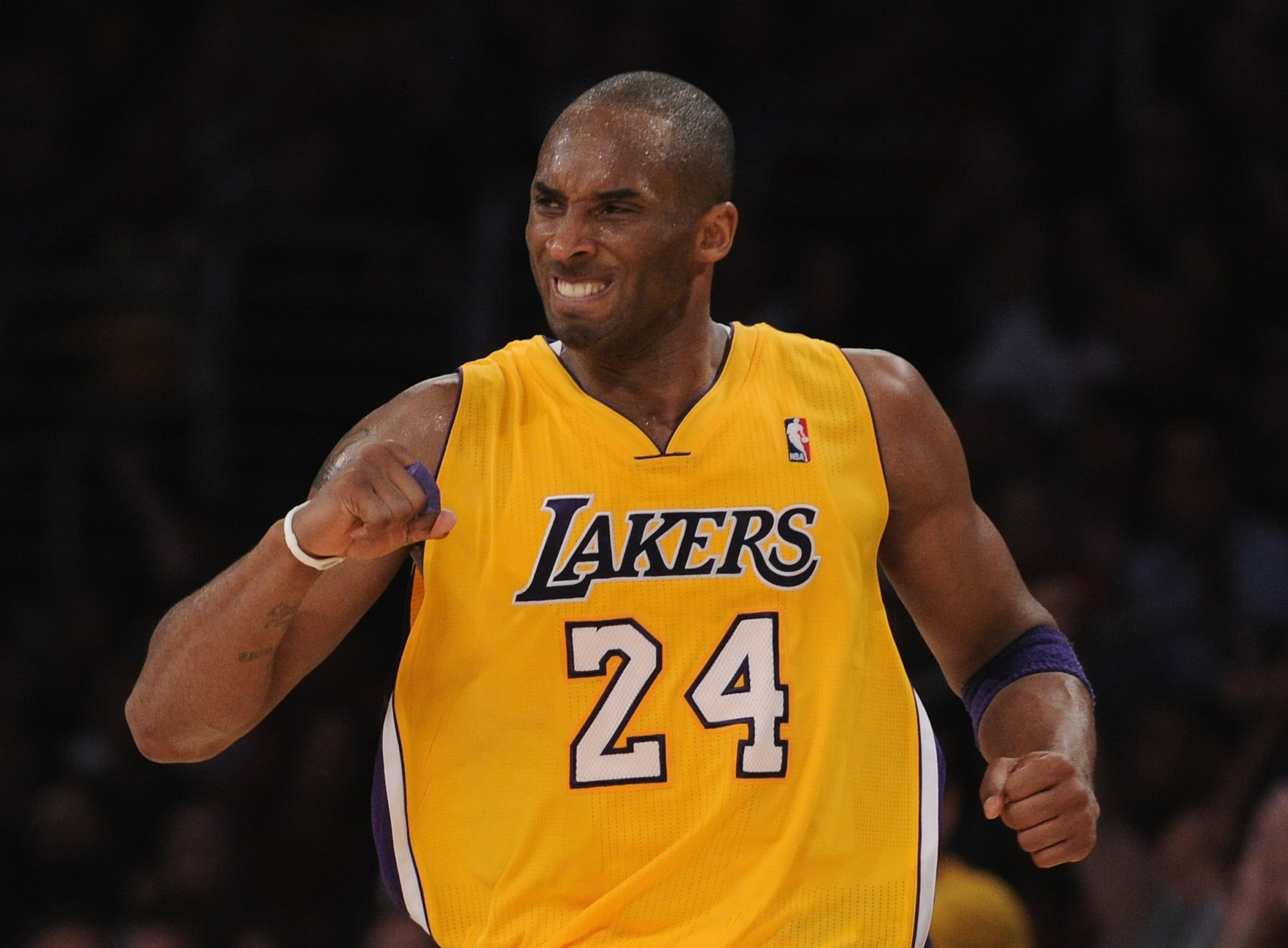

Los Angeles Lakers: 25 Greatest Statistical Seasons In Franchise History
Attempting to rank the top 25 statistical seasons in Los Angeles Lakers history is like trying to rate the best Seinfeld episodes.
You know there’s a lot of them that you really liked and probably a handful that were totally brilliant and memorable. “The Contest”, “Puffy Shirt”, “Chinese Restaurant” and “The Pick” come to mind.
Think of the Lakers superstars and you’ll quickly realize just how difficult it is to pick the best of the best: Kobe Bryant, Shaquille O’Neal, Magic Johnson, Kareem Abdul Jabbar, Wilt Chamberlain, Jerry West, Elgin Baylor, James Worthy, George Mikan, Gail Goodrich, Pau Gasol, Byron Scott…the list seems endless.
So, while the current crop of Lakers go through their pregame practice before battling the Boston Celtics on Thursday, the rest of us can sit back and reminisce a little about a franchise that has produced a string of incredible individual season performances, not to mention 16 World Championships in their 63 year history.
Who among these great Lakers had a season to remember? Take a look and discover some magic.
25. Paul Gasol: 2008-2009
1 of 25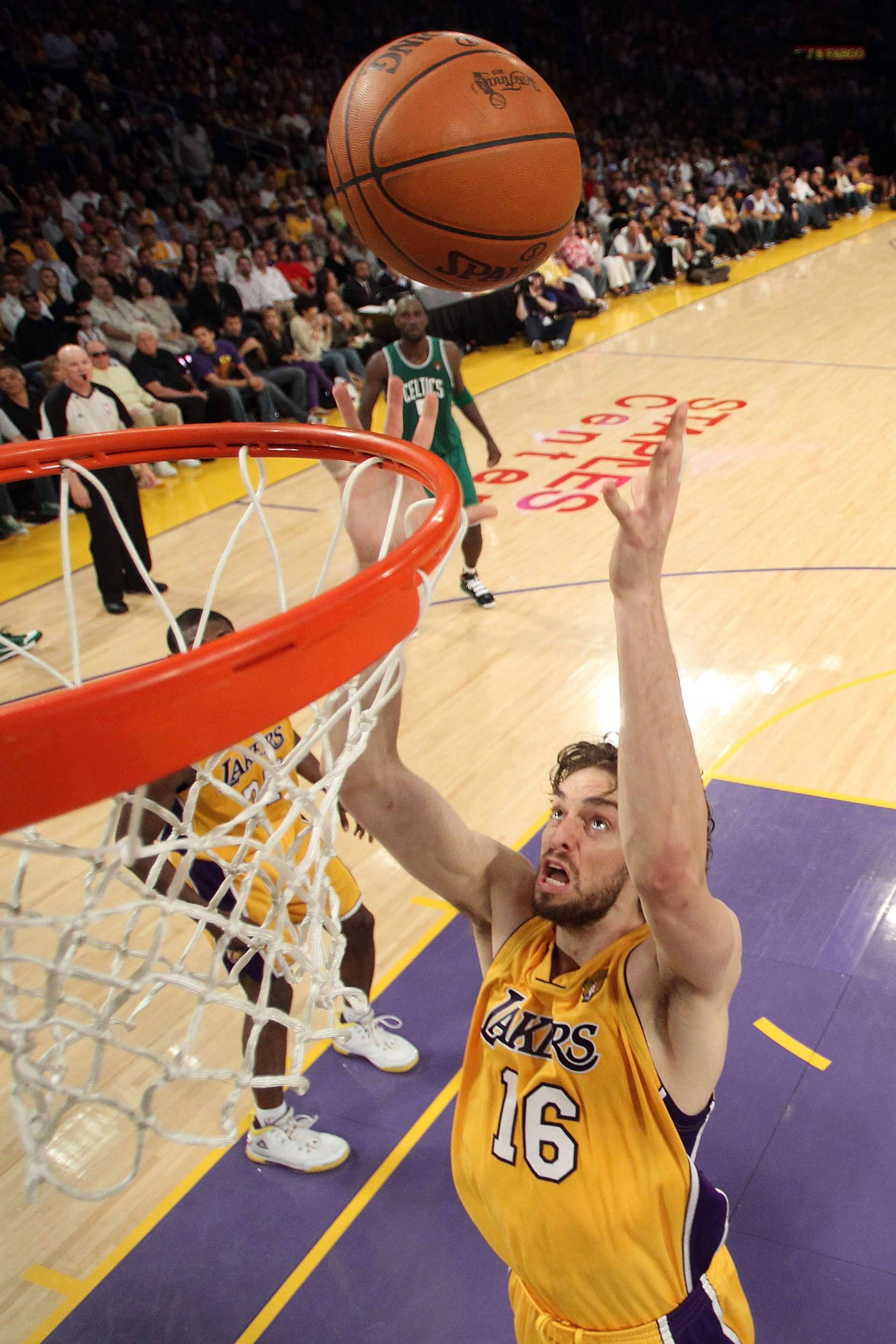
In his first full season with the team, Gasol put up some numbers that truly reflected his brilliance as one of the top big men in the NBA. Critics of the 7'0" Spaniard say he's "soft" and doesn't always perform well against heavier, more physical players.
But then you look at his stats for the year and you discover just how truly talented this guy is:
18.3 points per game on 54 percent shooting, to go along with 11.3 rebounds, 1.7 blocks and 3.4 assists.
Gasol had 40 double-doubles on the year and scored 20 or more points 28 times. He also grabbed 10 or more rebounds in 40 of the 65 games he played in.
Gasol scored 13 points and had six rebounds in the All-Star Game in just 20 minutes of action. In what turned out to be the perfect ending to a great season, Gasol helped the Lakers to a World Championship, averaging 19.1 points, 11.1 rebounds, 3.5 assists and 2.09 blocks in 25 playoff games.
Not too shabby for a guy the critics label as soft.
24. Wilt Chamberlain 1970-71
2 of 25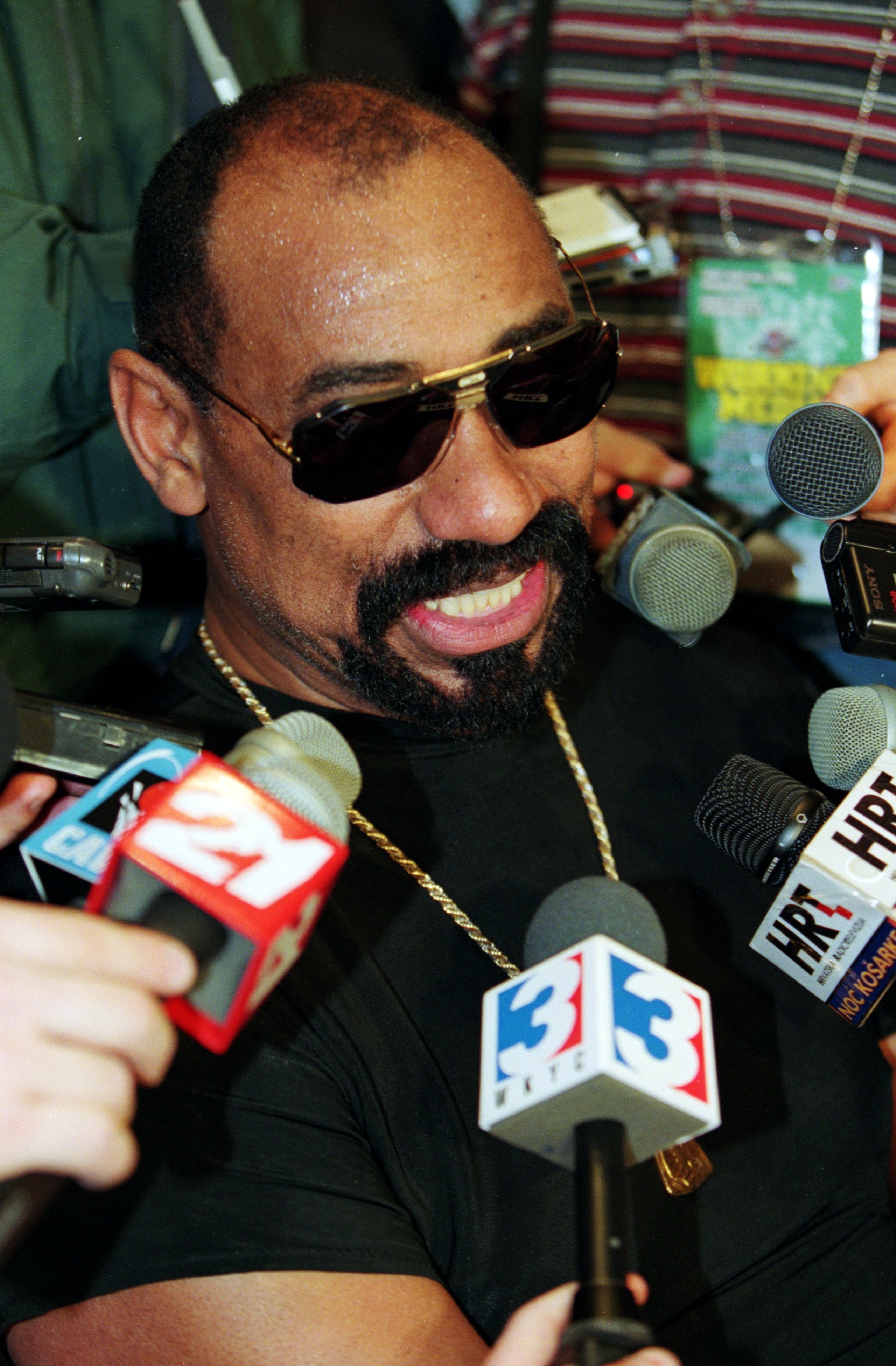
Chamberlain's best years were earlier in his career and not with the Lakers. He once averaged 50.4 points per game for an entire season while with Philadelphia in 1961-62, the same year he scored 100 points in a single game. Two records that probably never will be broken.
The 1970-71 campaign proved to be the best for the 7'2" center. At age 34, and with bad knees, he could still out rebound and outscore most every other big man in the NBA. He played in all 82 games, led the league with 1493 rebounds, a remarkable 18.2 per game average.
Chamberlain shot 55 percent from the field and averaged 20.7 points during the regular season. The year was also made the more remarkable during the playoffs when he went up against the Milwaukee Bucks in the Finals and more than held his own against their 24 year old superstar center, Kareem Abdul Jabbar.
Chamberlain was outscored by Jabbar, 32-22, in a game one loss, but was equal to the task in game two, with 26 points to Jabbar's 22. And in game four, Chamberlain had 24 points and 24 rebounds in a Lakers victory. Los Angeles lost the series, but Chamberlain proved his worth as one of the game's greatest players.
23. Elgin Baylor 1968-69
3 of 25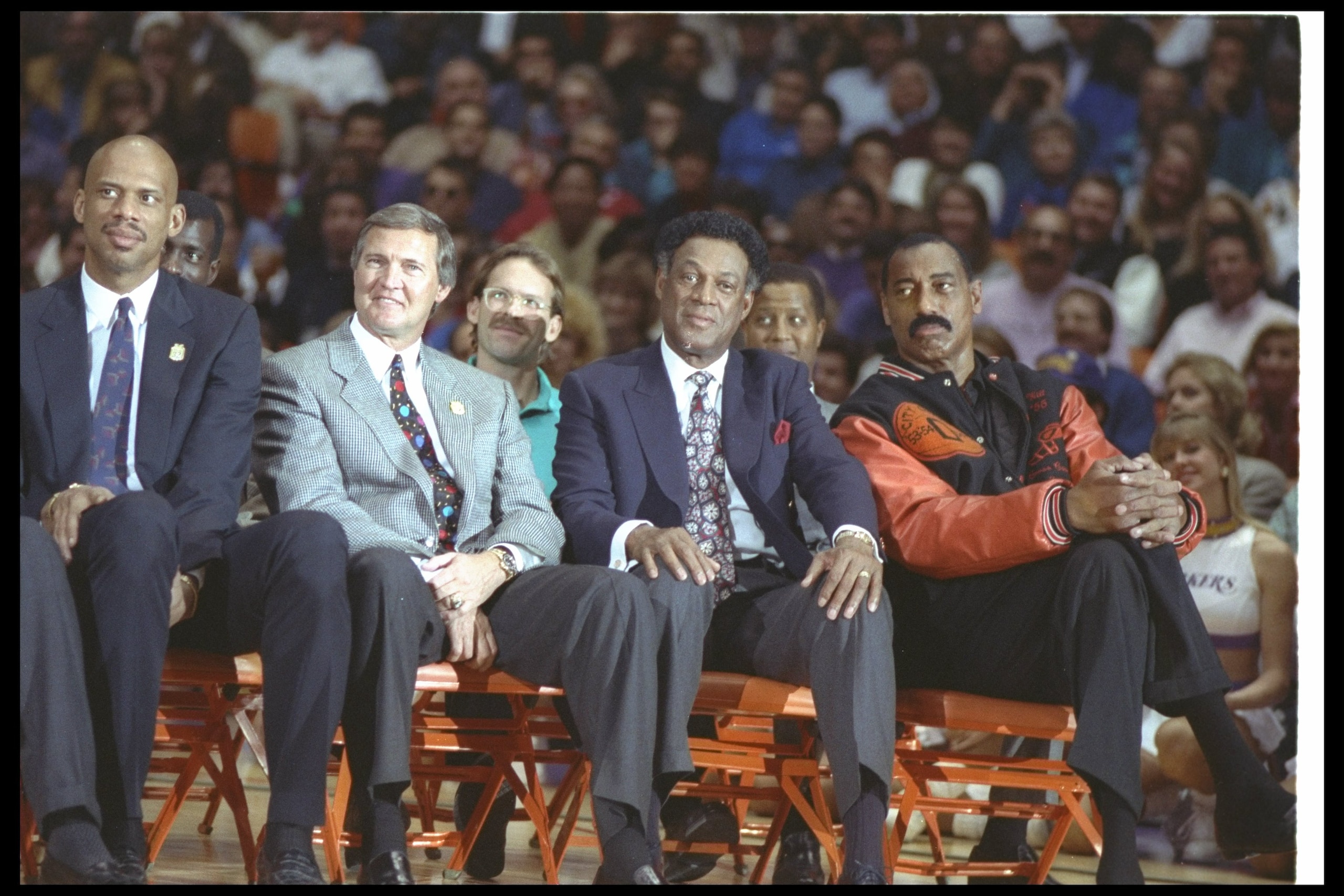
Long before Kobe Bryant, Michael Jordan and Julius Irving, Elgin Baylor was the original human highlight film.
In 1968, at the age of 34, Baylor had already played 10 seasons in the NBA and established himself as one of the all-time greatest forwards the game has ever seen. What made this season truly astonishing was the fact that, when most players his age had either retired or were reduced to watching from the bench, Baylor was performing at a level that surpassed most superstars still in their prime.
In 76 games, Baylor averaged 40.3 minutes, scoring at a 24.8 clip on 45 percent from the field. He dished out 5.4 assists and pulled down 10.6 rebounds for the Lakers.
During that season, the Lakers won the Western Division with a 55-27 record, thanks in large part to the amazing play of the veteran 6'5" Baylor. All this from an aging veteran who was playing on weak knees.
Los Angeles actually led Boston, 3-2, in the Finals that season before losing two consecutive games and the World Championship to their arch rival.


22. George Mikan 1948-49
4 of 25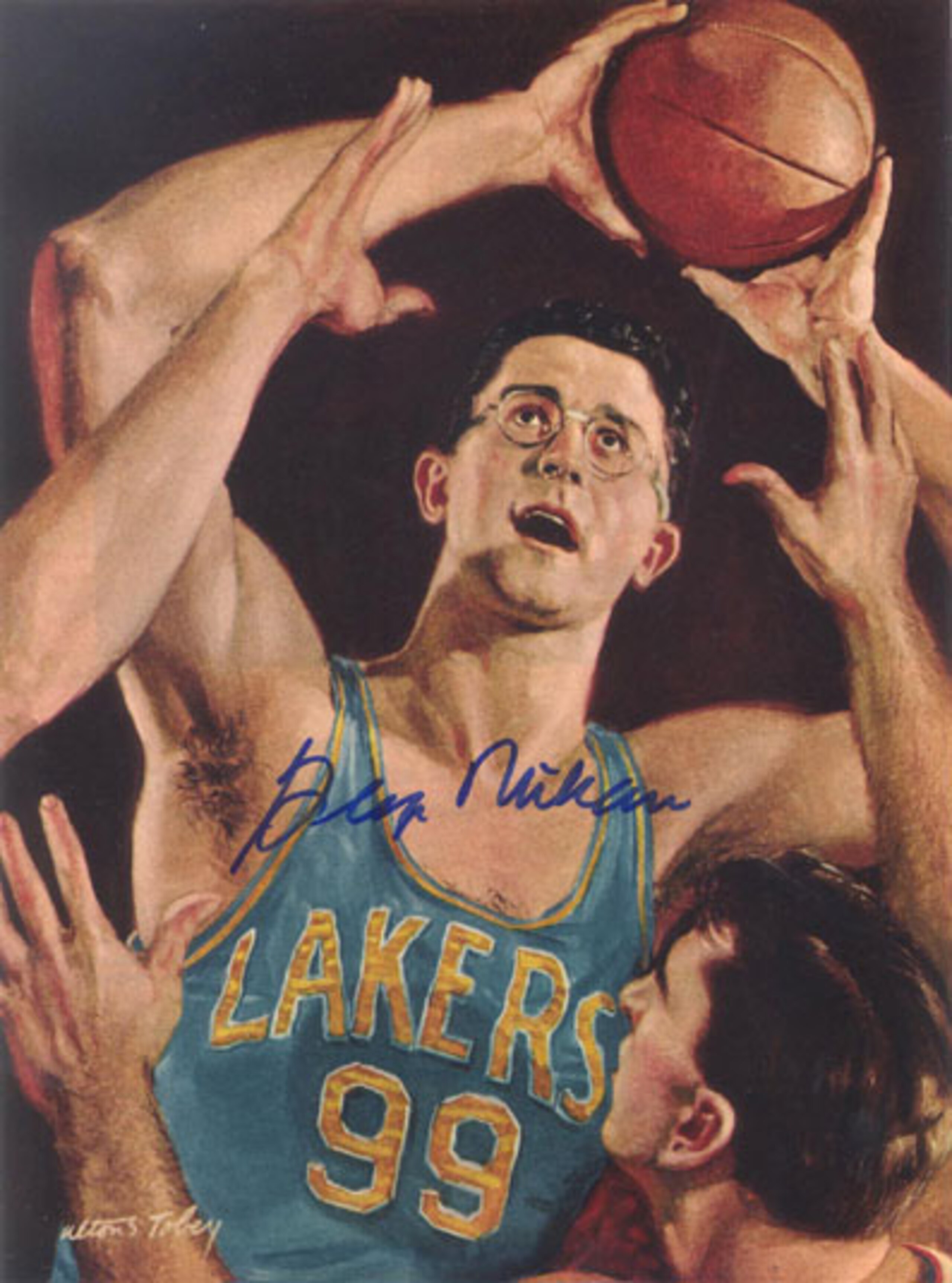
They called him "Mr. Basketball". George Mikan, at 6'10", ushered in the era of the big man into a sport that up until then was known for it's smaller, quicker athletes.
Mikan helped lead the Minneapolis Lakers to five championships in six years. Perhaps the greatest year came during the 1948-89 season when the league was known as the Basketball Association of America and the Lakers and Rochester Royals battled for the top spot.
Mikan averaged an unheard of 28.3 points per game that season. Only two other players in the league managed to average more than 20 points that season. Mikan's point total was one third of what the entire Lakers team averaged for the year.
The Lakers went all the way to the finals that season where they played the Washington Capitols and coach Red Auerbach. Minneapolis took the first three games but lost game four when Mikan broke his wrist. The broad shouldered center played with a cast in game five and manged to score 22 but Washington won that game as well.
The Lakers and Mikan prevailed in game six with a 77-56 victory and the championship. Mikan averaged 30.3 points per game in 10 playoff contests that year.
21. Gail Goodrich 1971-72
5 of 25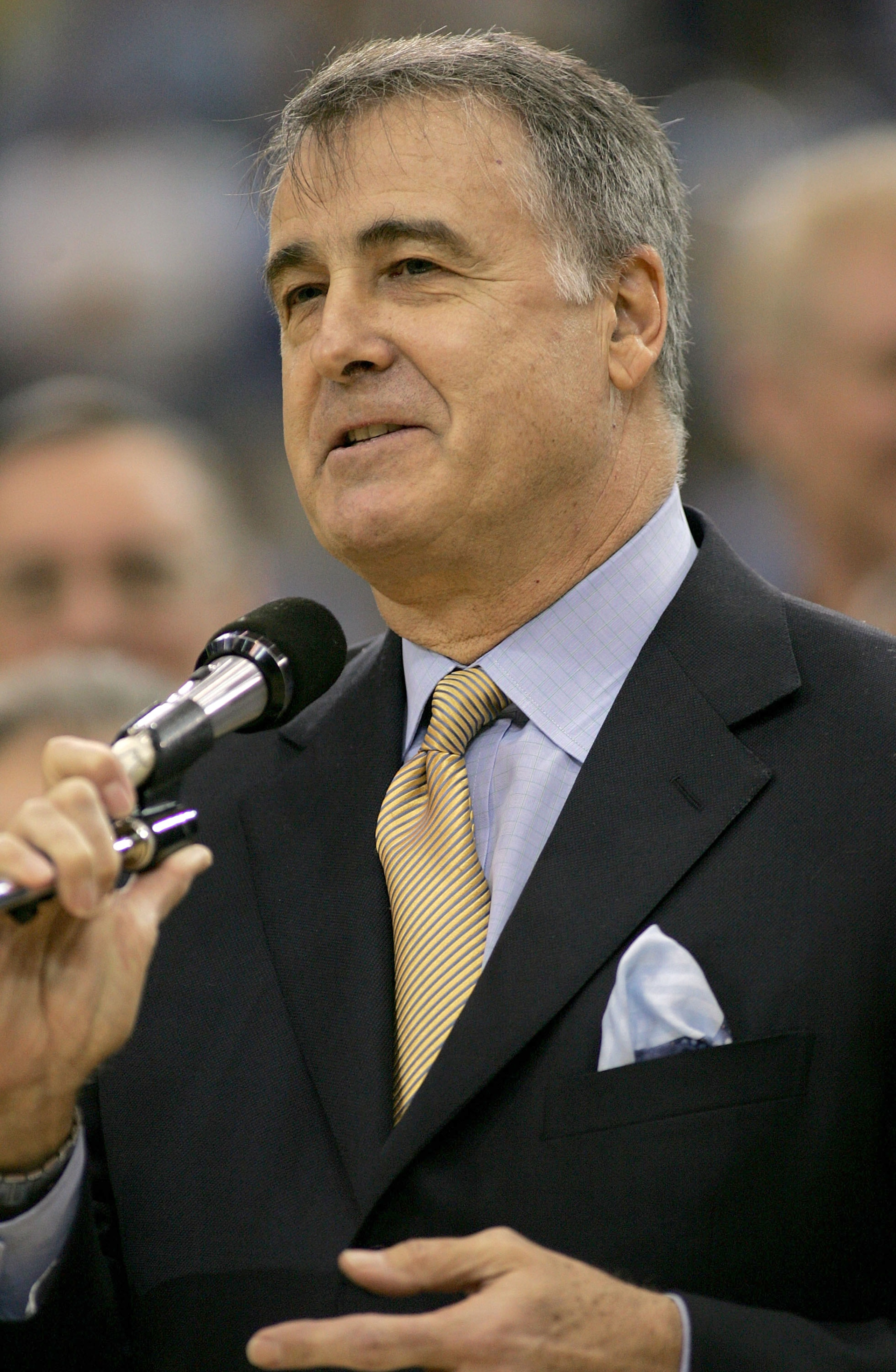
Often overlooked because he happened to play alongside the iconic Jerry West, Lakers guard Gail Goodrich had several of the best seasons in team history.
He really came into his own during the 1971-72 season, the year in which the Lakers bulldozed their way to a 69-13 regular season record before steamrolling through the playoffs en route to their first World Championship since moving to Los Angeles from Minneapolis.
Goodrich led the Lakers in scoring that season, averaging 25.9 points per game, good enough for fifth in the entire league. Goodrich ranked third in the NBA in free throw shooting (85 percent) and was a member of the All-Star team for the second time in his career.
The Lakers won a then NBA-record 33 games in a row during the regular season. Goodrich had a lot to do with that amazing streak.
20. Gail Goodrich 1973-74
6 of 25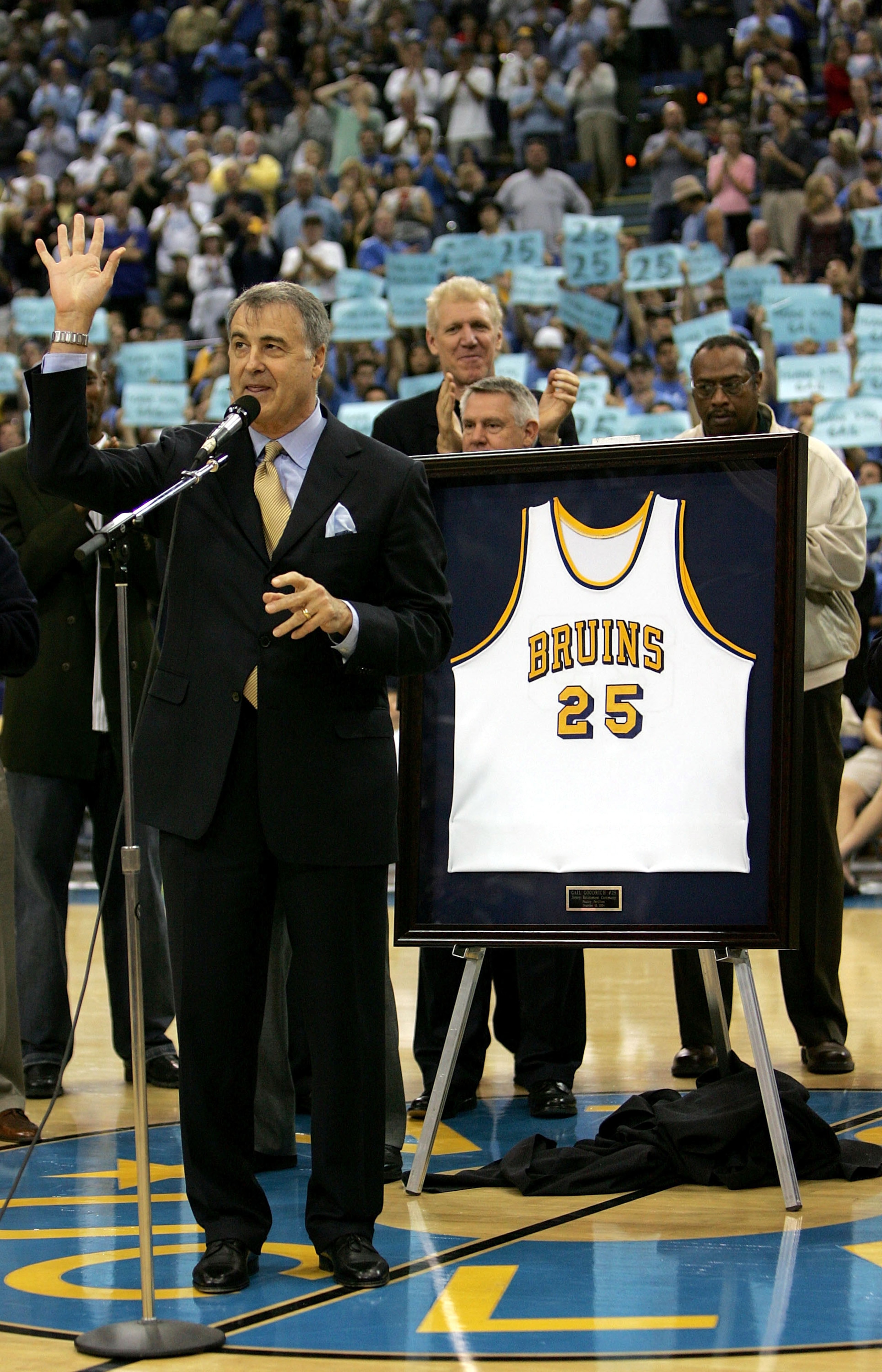
For the third consecutive year, Goodrich was the team leader in scoring. Playing in all 82 regular season games, the 6'1" former UCLA great averaged 25.3 points, led the league in free throws made with 508 and attempted (588) and was named All-NBA First Team.
He drove to the basket with consistency as he scored 2,000 points and went to the charity stripe more than anyone in the league.
Goodrich was instrumental in leading the Lakers to the Pacific Division title with a 47-35 record. They lost in the Western Conference Semifinals to the Milwaukee Bucks who were led at the time by Kareem Abdul Jabbar.
19. James Worthy 1987-88
7 of 25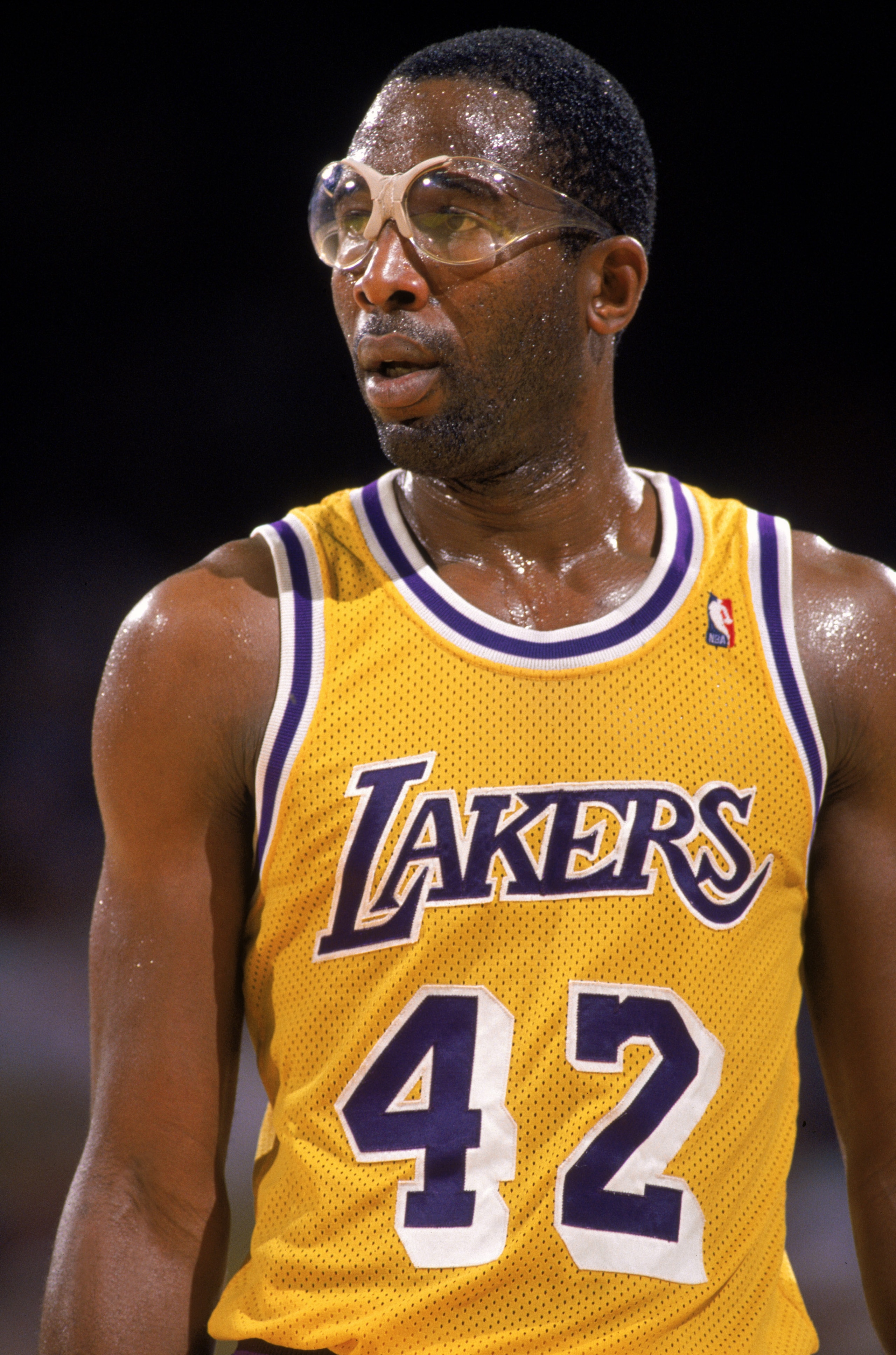
"Big Game" James Worthy was the recipient of many passes from teammate Earvin "Magic" Johnson during the glory years of the 1980s, better known as Showtime.
From the time he put on a Lakers uniform in 1982, Worthy was a star. He was lightning quick with and without the ball and his first step to the basket was always a marvel to watch. Worthy's slam dunks became legendary, more for their ferocity than anything.
Worthy put together a fantastic season in 1987-88 when he averaged 19.7 points on 53 percent shooting to go along with 3.9 assists per game. In the playoffs Worthy rose to the occasion, securing a triple-double in game seven to lead Los Angeles to a 108-105 win over Detroit and become the first team to repeat as NBA champions since the Celtics did it in 1968-69.
18. James Worthy 1985-86
8 of 25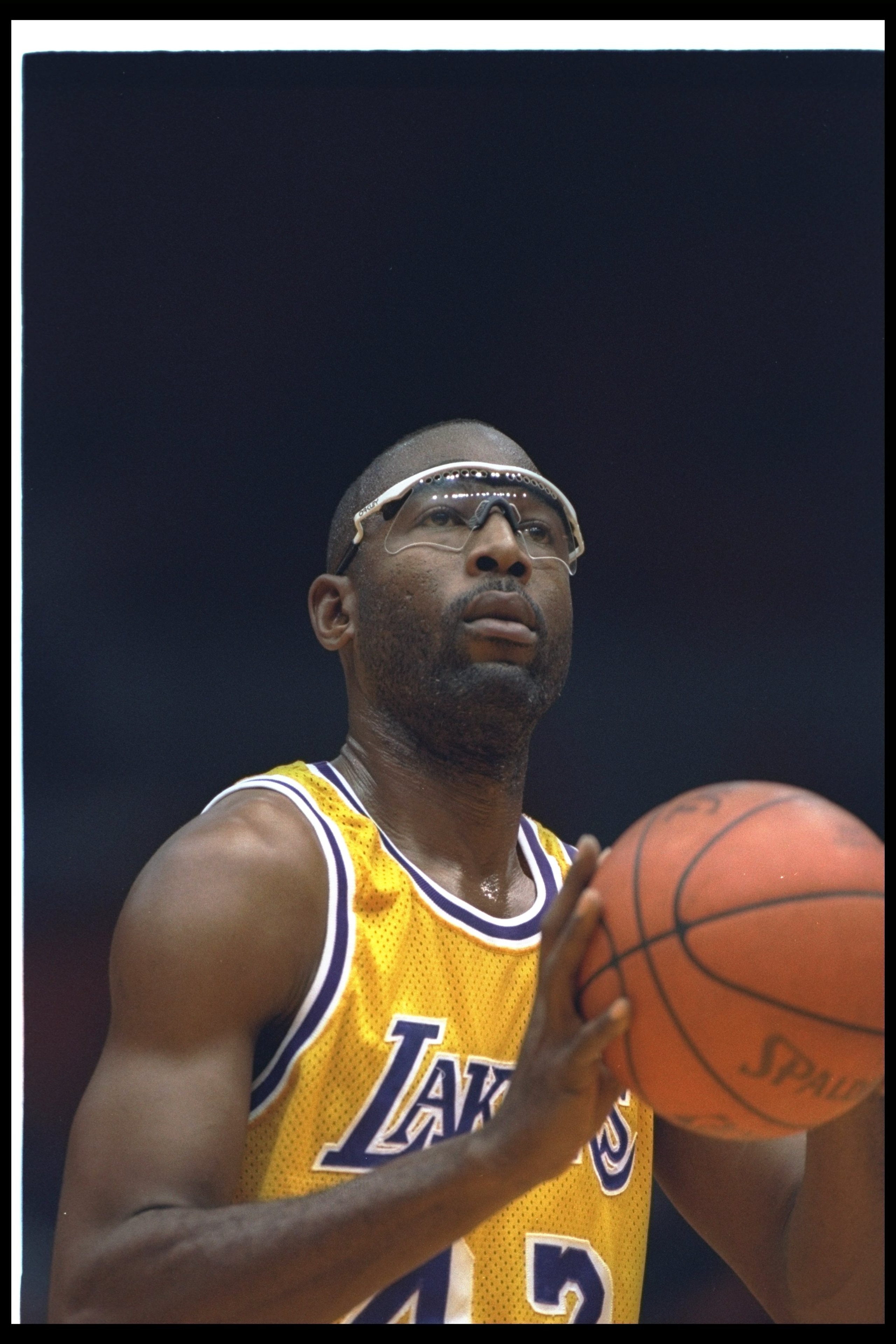
What's remarkable about this year for the seven time All-Star and NBA Hall of Famer is that Worthy played an average of 32.7 minutes per game, which turned out to be his career average. This season really showcased just how efficient Worthy was as a complete player.
In 73 games, Worthy averaged 20 points on 58 percent shooting. He also had 5.2 rebounds, 2.7 assists, 1.09 steals and 1.03 blocked shots per game.
17. Pau Gasol 2009-10
9 of 25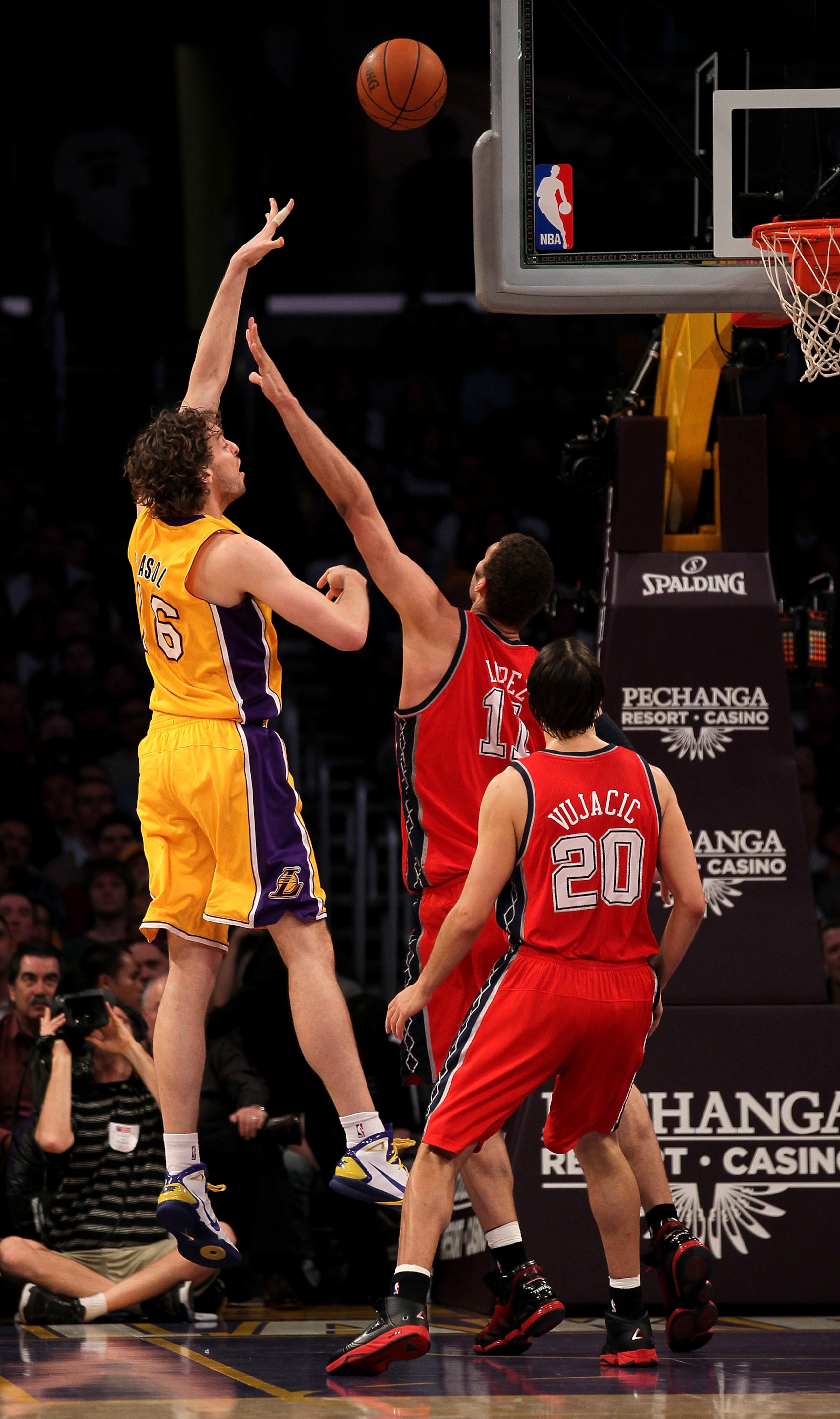
Pau Gasol is arguably the top, all-around forward in the NBA today. He's an All-Star this year and his statistics from the 2009-10 campaign rank as one of the Lakers' best in their history.
In helping lead the team to its 16th World Championship, Gasol put up the numbers that team brass expected when they traded for him in February 2008. Consider: 18.3 points, 11.3 rebounds, 54 percent from the field, 3.4 assists and 1.74 blocks per game.
Gasol had 40 double-doubles last year, scored 30 or more on two occasions and 20 points or more 28 times. He also had 10 or more rebounds in 40 games, led the team in assists 13 times, steals six times and blocks 34 times.
In last year's 23 playoff games, the smooth shooting, slick passing 7'0" Spaniard averaged 19.6 points in just over 37 minutes per contest on 54 percent shooting and 3.5 assists. He also had 11.1 rebounds.
Although critics sometimes call him soft, Gasol is truly one of the most consistent big men in the game today. The numbers don't lie—this guy can play and may eventually end up in the Hall of Fame.
16. Jerry West 1969-70
10 of 25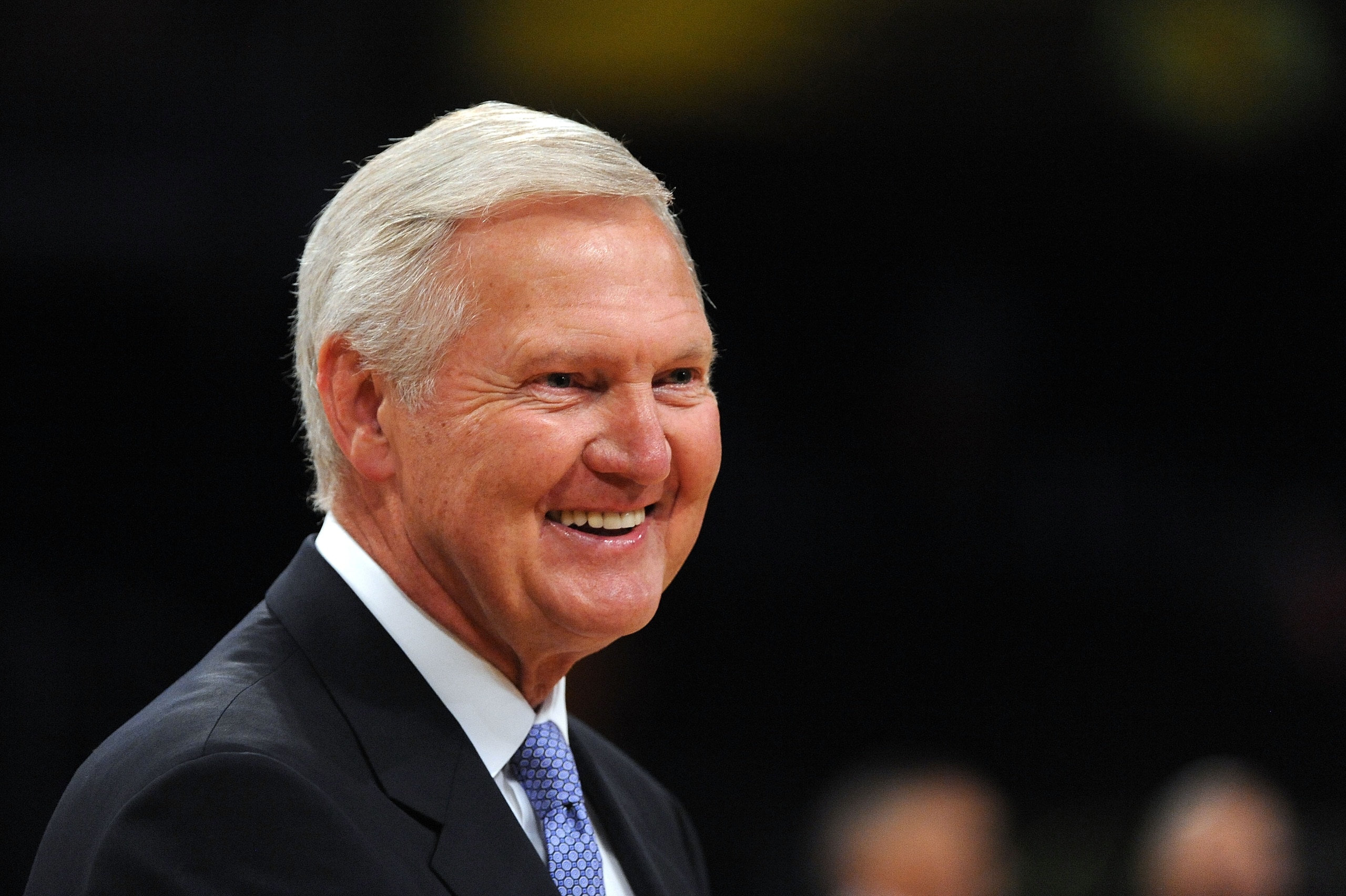
The unofficial "logo" of the NBA, Jerry West was the quintessential guard and a perfectionist in every regard. Over 11 years, from 1961-71, West never averaged less than 25.8 points per game for a season, an incredible accomplishment in any era.
The 1969-70 season was an extra special one for the former West Virginia Mountaineer. He averaged 31.2 points, 7.5 assists and 4.2 rebounds per game during a season in which the Lakers lost in the Finals to the New York Knicks.
Although the title was won by New York, many fans remember the incredible three-quarter length bomb that West let fly and made to send game three into overtime. At the time, New York's Walt Frazier recalled watching West heave this prayer of a shot and thinking, "The man's crazy. He looks determined. He thinks it's really going in!"
"It was a beautiful thing wasted," West later said. On some levels, there are those who feel the same about his career. West did play on one championship Lakers team (1971-72) but he also suffered through countless Finals defeats, most notably to the Boston Celtics.
15. Magic Johnson 1979-1980
11 of 25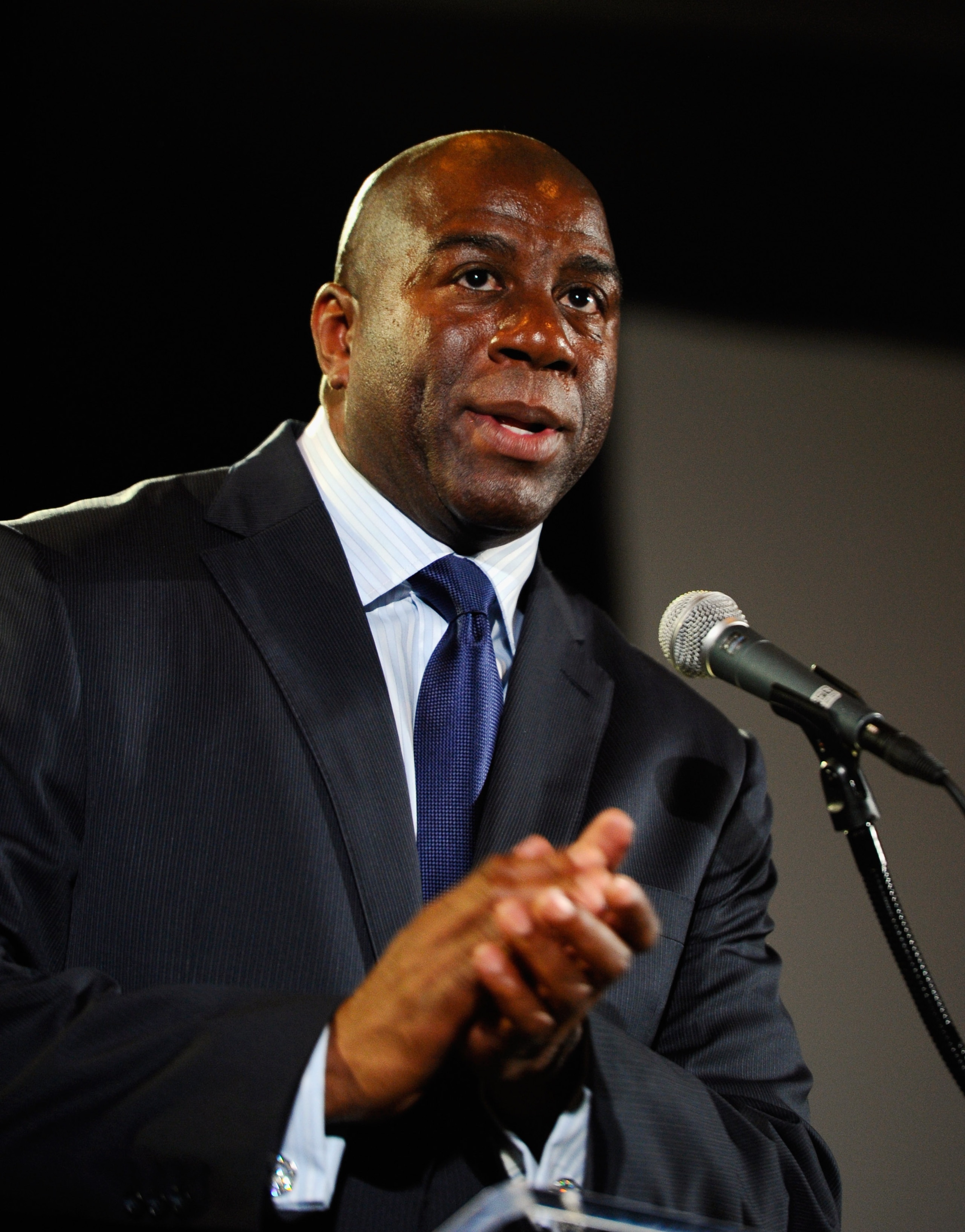
There were probably more great overall years produced by this once in a generation superstar than any Lakers in history.
Magic Johnson's rookie year was a sight to behold. Although he lost out to Boston's Larry Bird for Rookie of the Year honors, Johnson's first year was a great one. The former Michigan State point guard seemed to reawaken the NBA that very first year.
The 6'9" Johnson poured in 18 points per game and had 7.3 assists and 7.7 rebounds to go along with it. He blocked 41 shots, shot 53 percent from the field and his 187 steals ended up being the second most of his career.
Johnson also reinvigorated his team with his infectious smile and passion for the game. After the Lakers beat the San Diego Clippers on opening night on a buzzer beater sky hook from Kareem Abdul Jabbar, Magic went crazy, high-fiving everyone and giving "Cap" a huge bear hug. It was the first night of his first year in the NBA and many thought this kid from East Lansing, Michigan would burn himself out in no time, including Jabbar.
They obviously were wrong. It was only the beginning of the magic.
Johnson capped off an amazing first year that saw the team win 60 games and an NBA championship. The team lost just four of 16 playoff games and Magic was truly magic in Game 6 of the Finals against Philadelphia.
Jabbar scored 40 points to help the Lakers win game five but was injured and could not take the court for game six. So, Johnson the point guard, became Magic the center, and had one of the most remarkable games in Lakers history: 42 points, 15 rebounds and 7 assists in the team's 123-107 win.
It was his first year and you could not have asked for more.
14. Kareem Abdul Jabbar 1975-76
12 of 25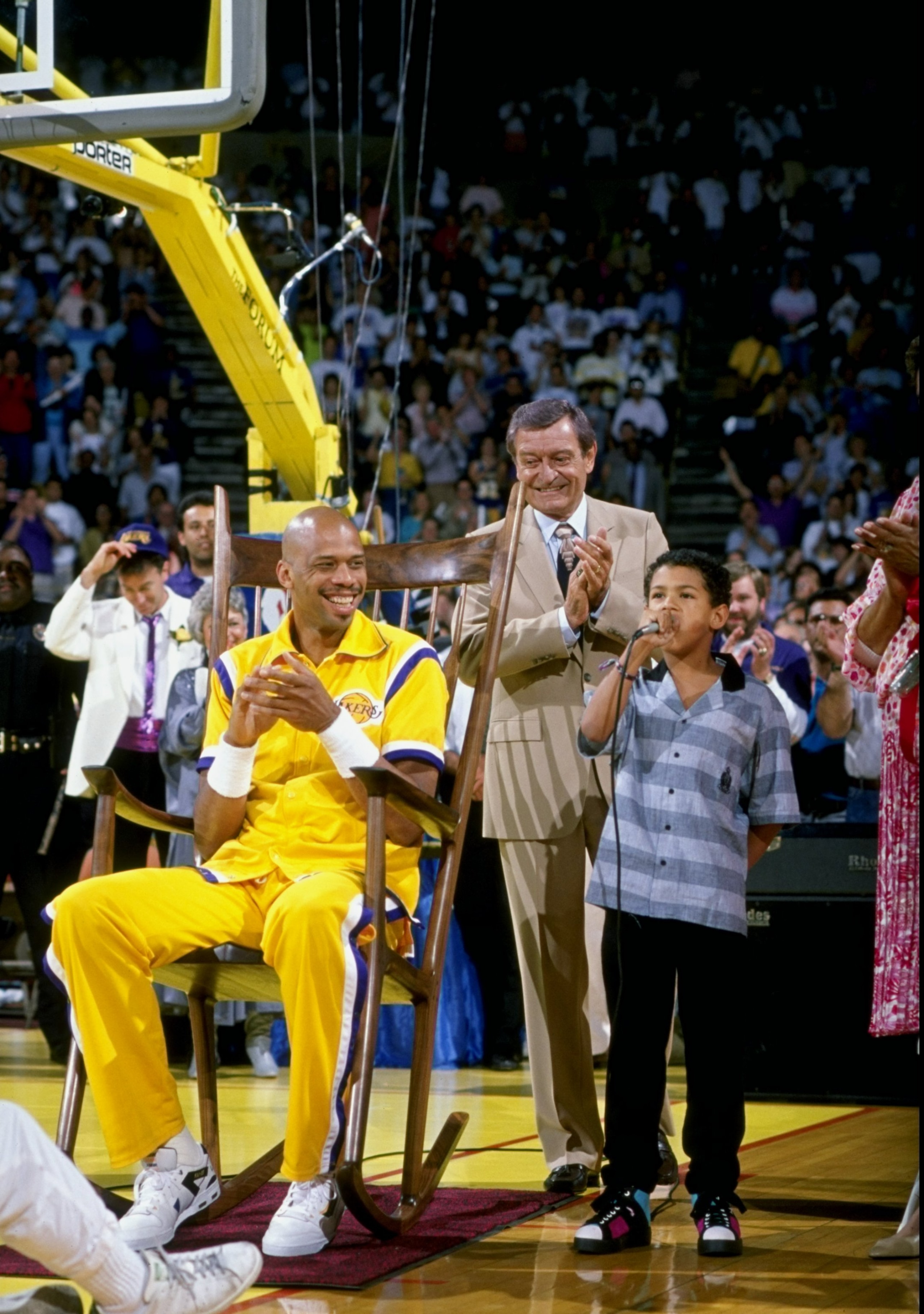
It was Jabbar's first season as a member of the Los Angeles Lakers and he did not disappoint the faithful. On his way to winning the league's Most Valuable Player award, Jabbar passed, scored and rebounded with incredible consistency. He averaged 41.2 minutes per game.
That year Jabbar put up the kind of numbers that got him into the NBA Hall of Fame and consideration as the best center and one of the top five players in league history. He averaged 27.7 points, 16.9 rebounds, five assists and shot 53 percent from the floor. He also blocked a career high 4.12 shots every game.
The Lakers won 10 more games that year under the leadership of their new center after going 30-52 the year before. Wilt Chamberlain had retired two years prior to that which explained why the team finished last in 1975.
The addition of Jabbar instantly elevated the club, but it would be a few years and a player named Magic before they would challenge for the title again.
13. Kareem Abdul Jabbar 1984-85
13 of 25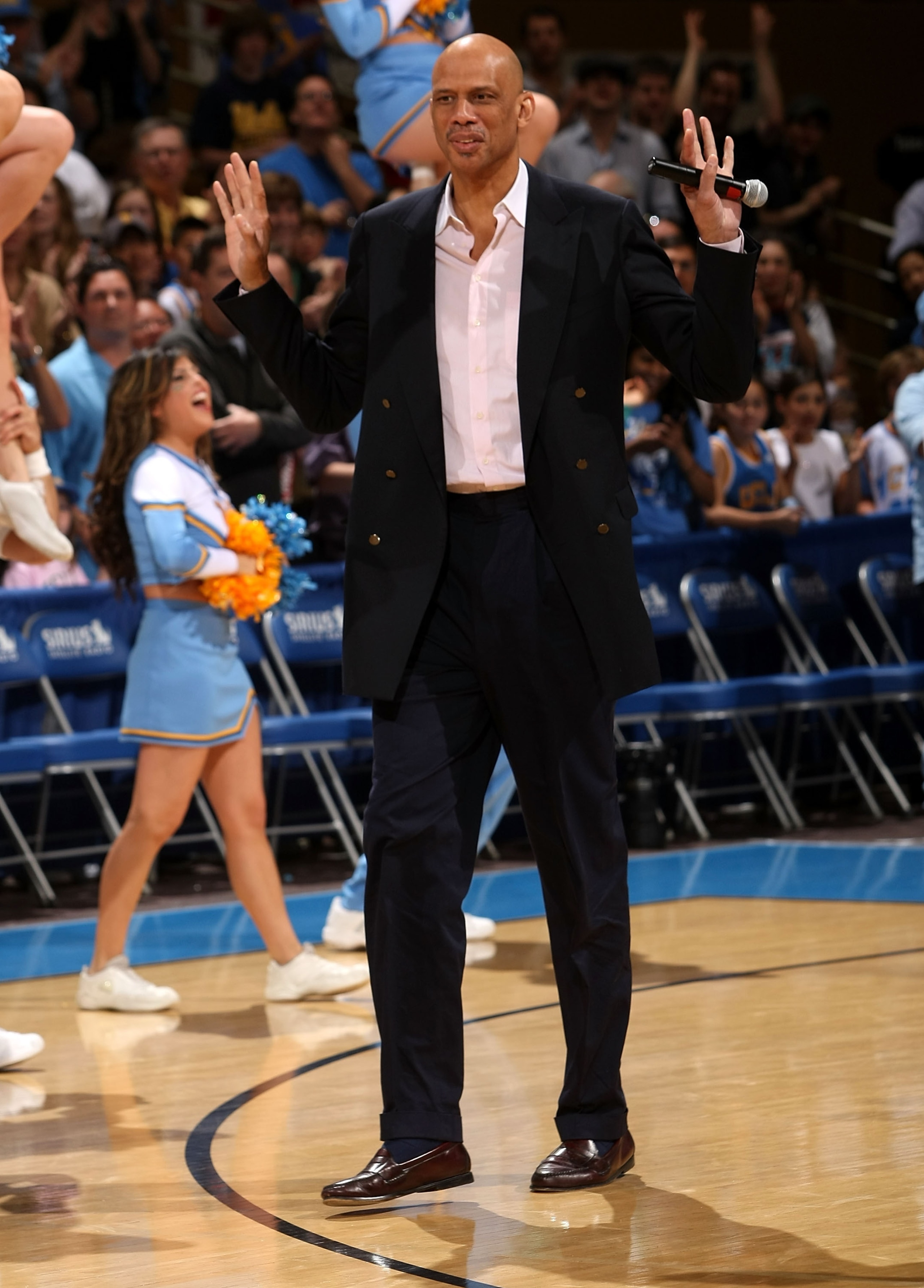
Jabbar played in the NBA until the age of 42. He stayed in great shape by practicing yoga and martial arts and he meditated before each game to control stress.
Jabbar was 38 in this season when he averaged 22 points per game on 60 percent shooting from the floor to go along with eight rebounds. He averaged 33 minutes on the court each and every game.
What made the season even more remarkable was the 1985 Finals against the Boston Celtics. Many critics wrote that Jabbar's career was over, that he had seen his best days. In game one, playing against the tough Robert Parish, Jabbar only accounted for 12 points and three rebounds. The Celtics destroyed the Lakers that night, 148-114, in what became known as the Memorial Day Massacre.
Jabbar took it upon himself to practice longer and harder in preparation for game two. He turned it around with 30 points, 17 rebounds, eight assists and three block shots as the Lakers won, 109-102.
Los Angeles went on to win the series and the championship in six games. In the Lakers four victories over Boston, Jabbar averaged 30.2 points, 11.3 rebounds, 6.5 assists and two blocks. He ran up and down the court, diving after loose balls and playing with a renewed purpose and passion.
The year and the Finals victory against Boston was probably the greatest and sweetest of Jabbar's 19 year career.
12. Elgin Baylor 1962-63
14 of 25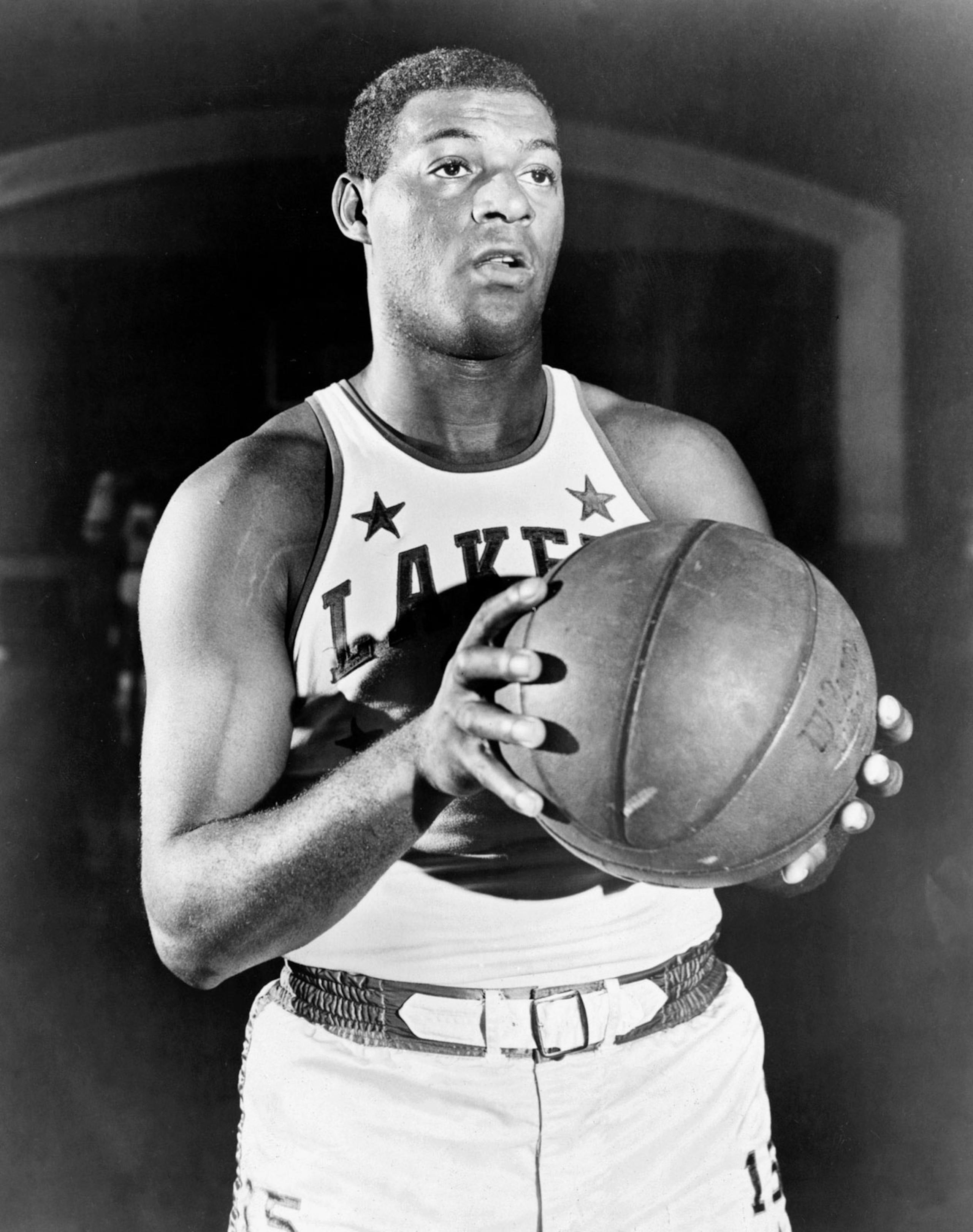
Elgin Baylor, at 28, was in the prime of his amazing career when the 1962-63 season rolled around.
For one of the few times, Baylor was injury free for an entire year. He played in a career high 80 games, averaging 34 points, 14.3 rebounds, 4.8 assists and 45 percent shooting from the floor. He was the first NBA player to finish in the top five in four different categories—scoring, rebounding, assists and free-throw accuracy (84 percent).
In 13 playoff games, including another Finals setback to the Celtics, Baylor averaged 32.6 points and 13.6 rebounds per contest. He doled out 4.5 assists in 42 minutes of action and made 83 percent of his free throws.
Statistically, Baylor had some of the most incredible numbers by any Lakers player in history. During the 1960-61 season, he not only averaged 34.8 points per game but also grabbed 19.8 rebounds and had 5.1 assists. Still, the 1962-63 season was probably his most consistent.
11. Kobe Bryant 2006-07
15 of 25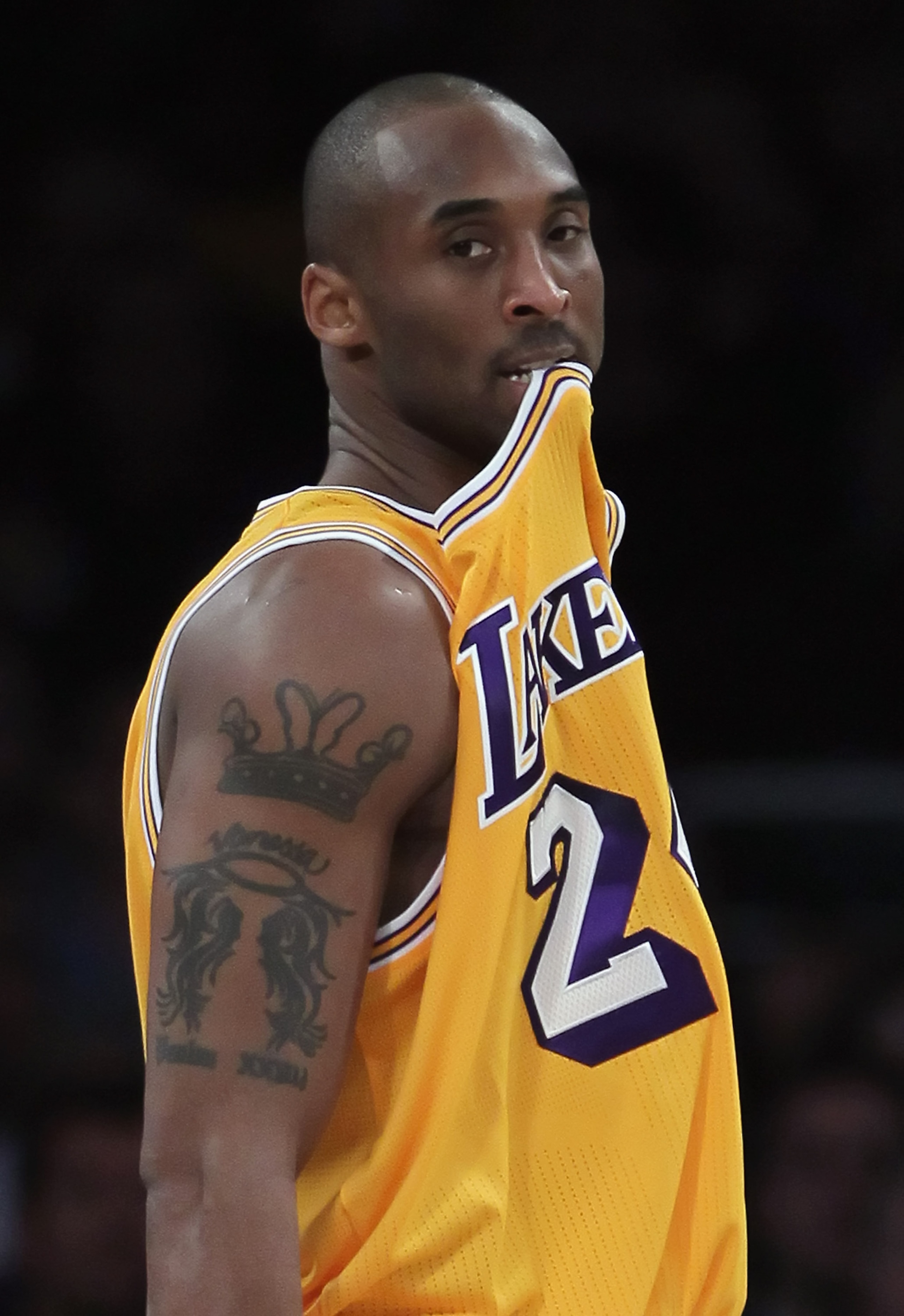
No one player exemplifies hard work and dedication better than Kobe "Bean" Bryant. Almost every one of Bryant's 15 NBA seasons has been great statistically but several of them stand out for their sheer numbers, consistency, brilliant shot making and winning.
Kobe averaged 31.6 points, 5.7 rebounds, 5.4 assists and 1.44 steals per game that year. He ranked number one in the league in points, 12th in free throw accuracy (87 percent) and fourth in minutes (40.8).
He led the Lakers in 70 of the 77 games he played, in rebounds 14 times and in assists 45 times. Some of his individual games are legendary, although 40 and 50 point games have piled up over the years with regularity.
Kobe scored 52 in a game against Utah, with 30 coming in just the third quarter. He also scored 58 points in a career-high 54 minutes against Charlotte and topped that with 65 points on 23 of 39 field goals (including eight 3-pointers) versus Portland.
Bryant not only lit it up offensively all season, he did double duty with his outstanding defense. He was named to both the All-NBA First Team and All Defensive First Team that year. In five playoff games, Kobe averaged 32.8 points, 5.2 rebounds and 4.4 assists.
10. Jerry West 1965-66
16 of 25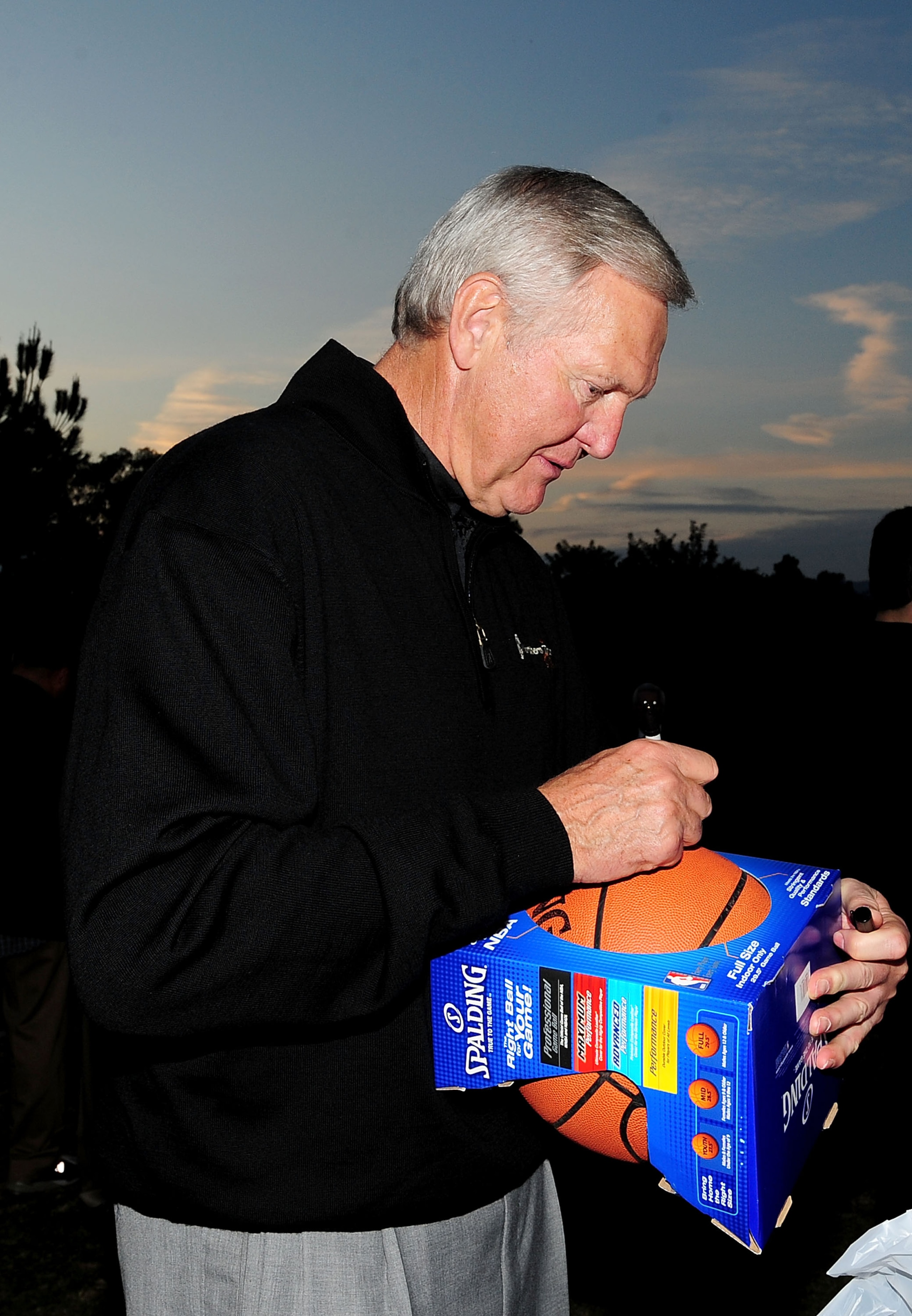
This may have been West's finest year as a Laker.
For the season, West averaged 31.3 points, 6.1 assists, 7.1 rebounds and shot 47 percent from the floor. He also made 86 percent of his free throws, played 40.7 minutes per game and totaled 2,476 points, the most in a season for his career.
West was on fire throughout the season and into the playoffs. Once again the Lakers faced the Celtics in a Finals showdown series.
West averaged 34.2 ppg over 14 games. But, as was their luck, Boston prevailed in the NBA Finals, winning game seven at Boston Garden, 95-93.
9. Magic Johnson 1988-99
17 of 25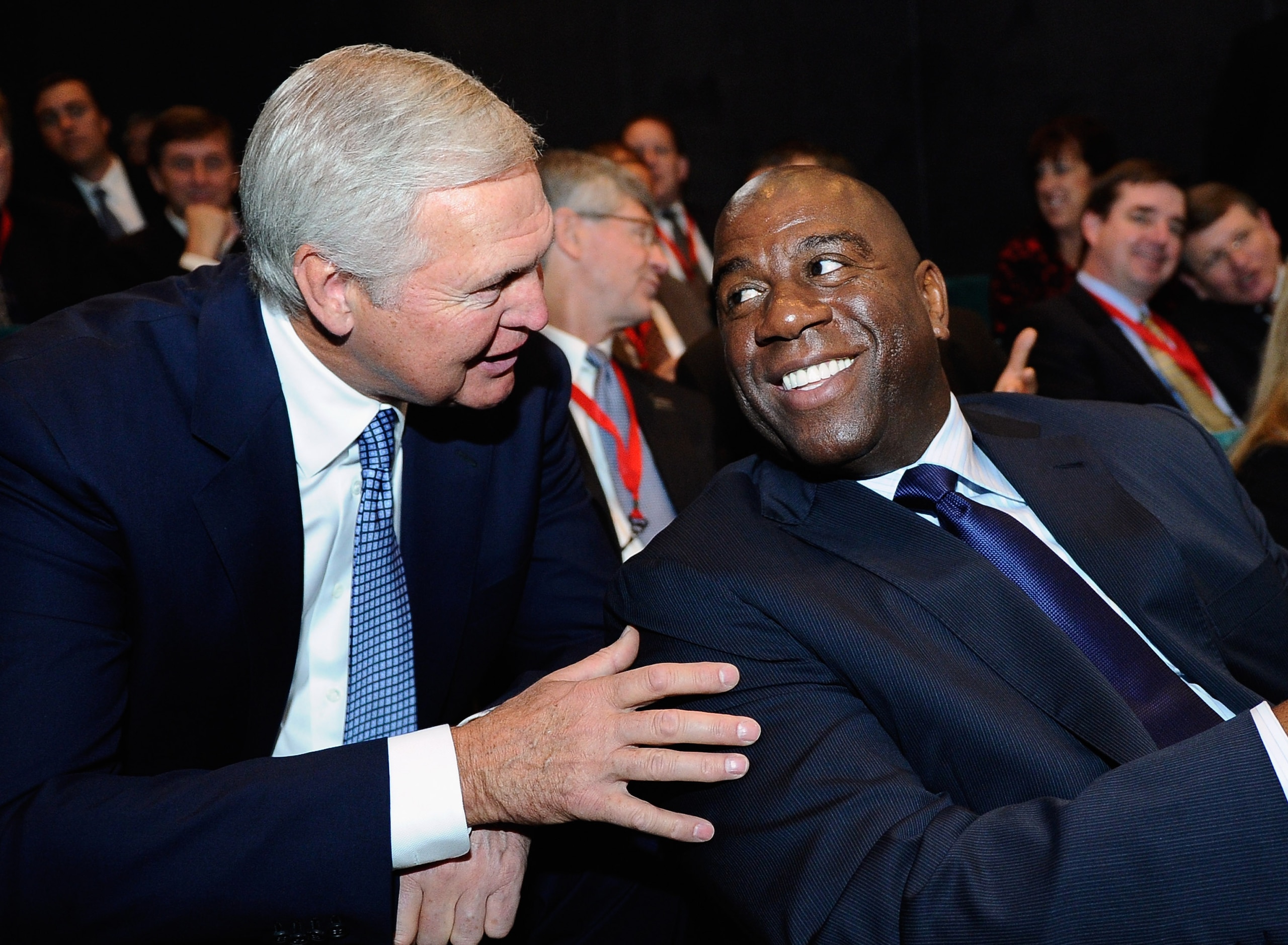
This was Magic at his best. The NBA agreed and made him its MVP for the season.
Johnson did it all in 1988-89. He averaged 22.5 points, 7.9 rebounds, 12.8 assists and made 91 percent of his free throws.
Magic stepped it up in the playoffs, scoring at a 25.2 points per game clip in nine games. He also dished out just under 13 assists per contest.
Unfortunately, Johnson injured a hamstring in the playoffs and so he was limited to just nine games. The Lakers swept Portland, Seattle, and Phoenix. No other team in NBA history had ever earned sweeps in three series in one year.
But with Johnson and Byron Scott both injured for the Final against Detroit, the Lakers went down to defeat. It would be the end of a long career for teammate Kareem Abdul Jabbar, at age 42.
8. Shaquille O'Neal 1997-98
18 of 25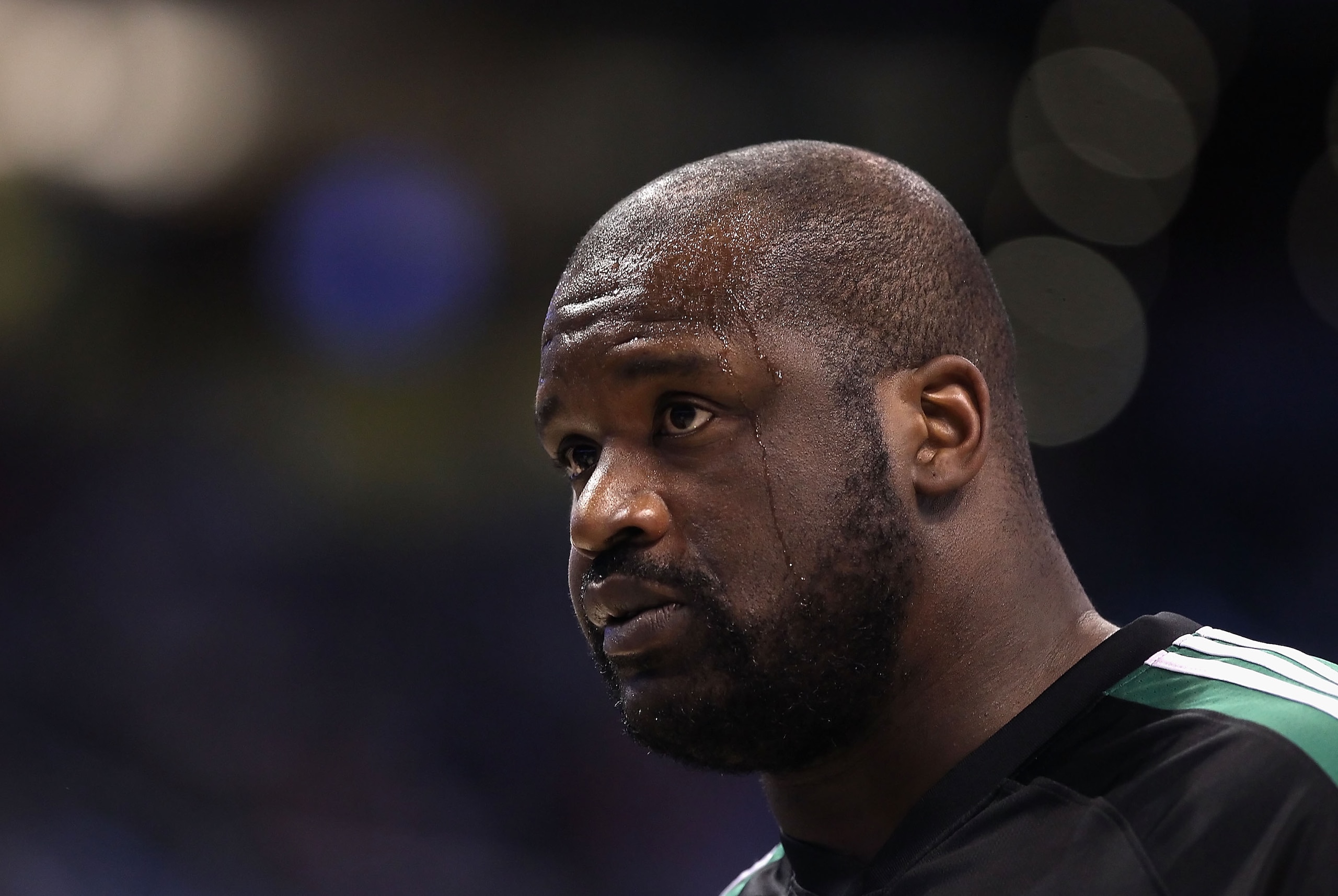
The Big Diesel was in his second season with the Lakers when he put together this incredible regular campaign.
Young and quick, the huge, overpowering 7'0" center averaged 28.3 points on 58 percent shooting. He also had 11.4 rebounds and 2.4 assists per game. He finished second in the scoring race to Michael Jordan (28.7).
Shaq was saving up the best for the playoffs. He upped his scoring average in 30.4, 15.4 rebounds and 3.2 assists as the Lakers steamrolled through Portland and Seattle on their way to the Western Conference Finals where they lost to Utah.
Still, their 61-21 regular season record served notice to the rest of the league that these new look Lakers were going to be a force for years to come.
7. Jerry West 1970-71
19 of 25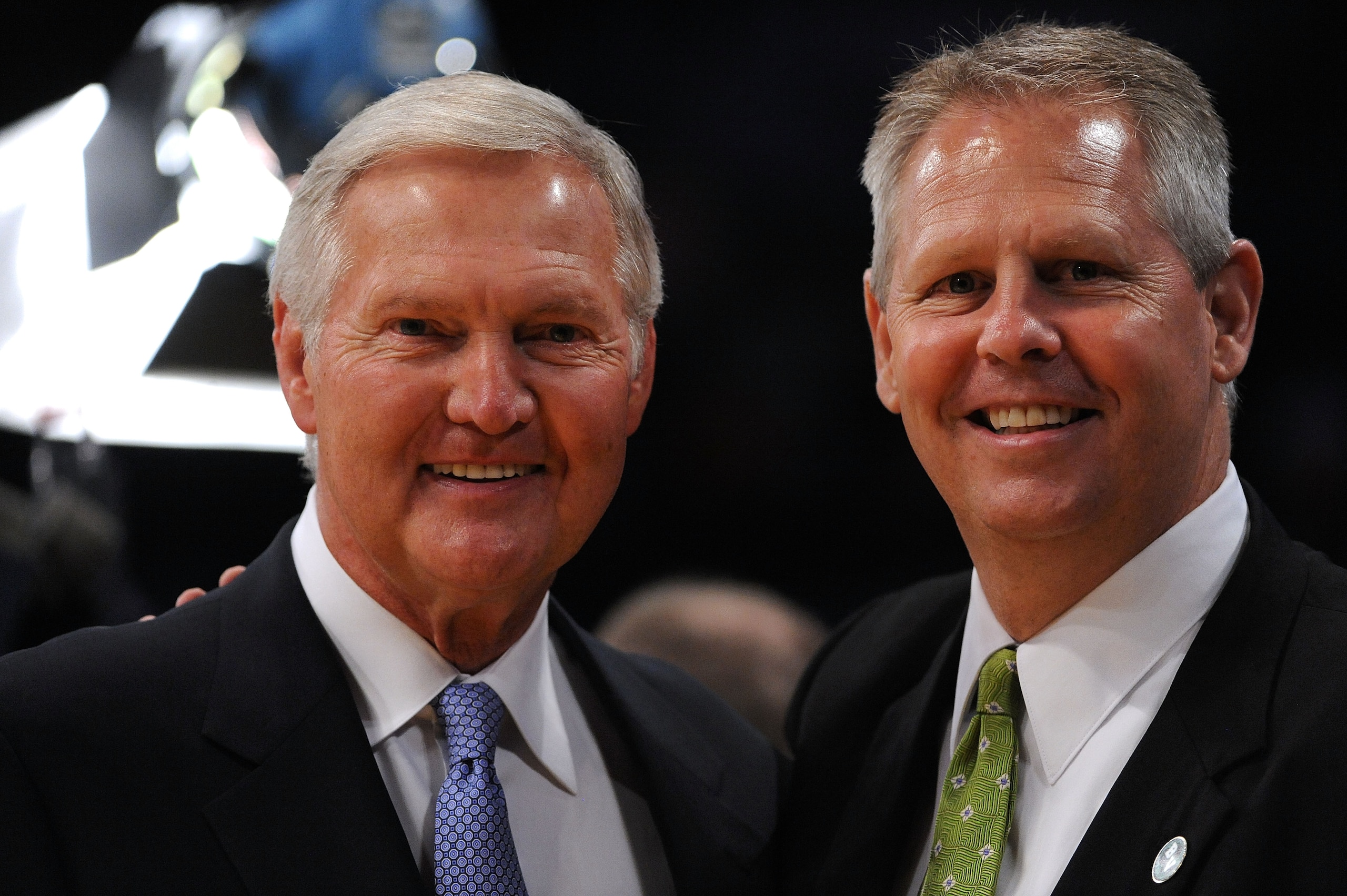
Jerry West's years with the Lakers were so consistently great that put together they almost look mundane. Almost.
Separate each year, however, and you begin to see just how incredible "Zeke from Cabin Creek" was. West averaged 26.9 points, 9.5 rebounds and 4.6 assists during the season as the Lakers finished atop the newly created Pacific Division of the Western Conference.
Once again, the team disappointed in the playoffs, losing in the conference finals to Lew Alcindor (now Kareen Abdul Jabbar) and the Milwaukee Bucks.
6. Kobe Bryant 2007-08
20 of 25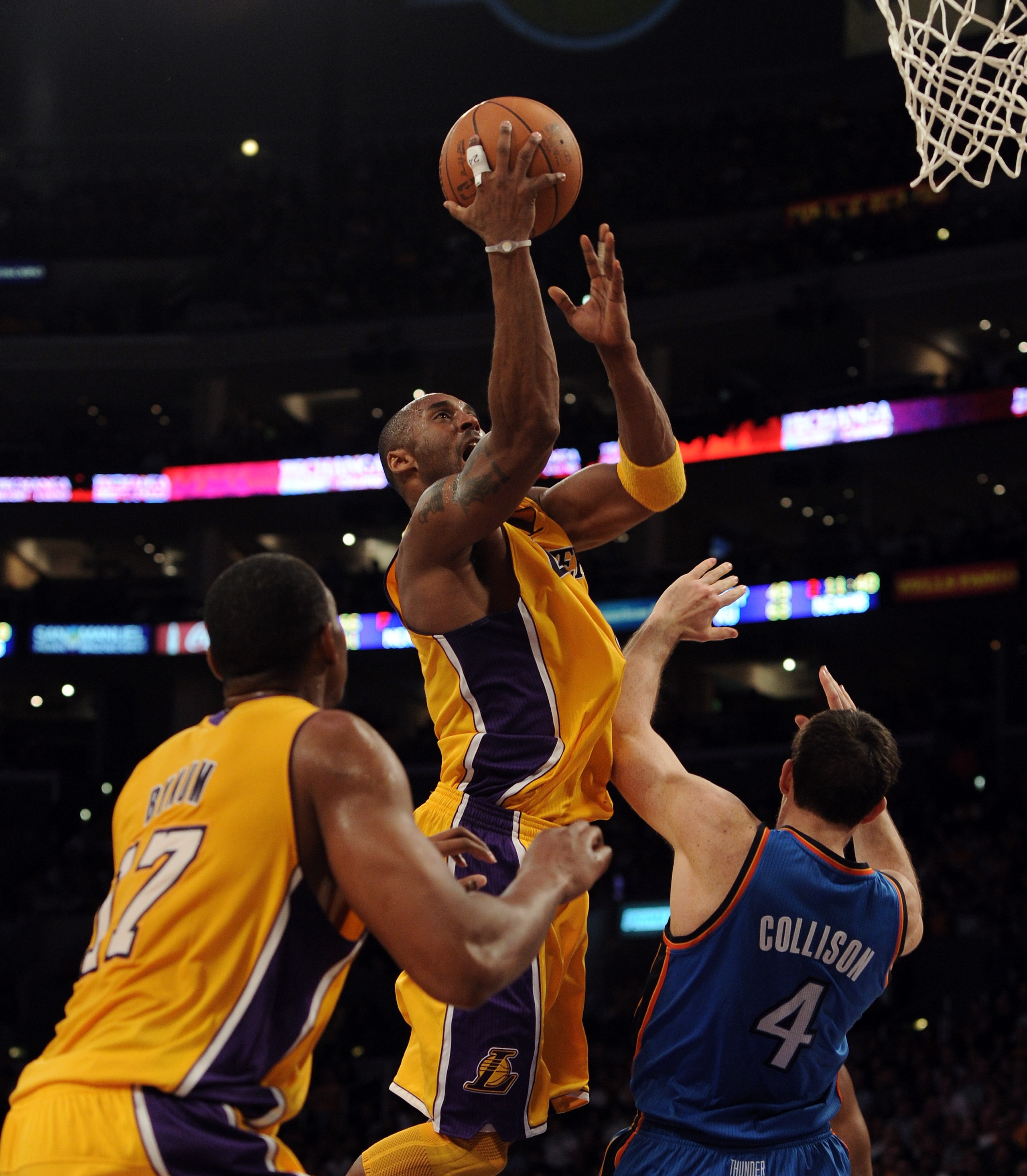
Kobe Bryant's spectacular seasons almost seem to blend into each other—is how dominant a player he has been for the last decade.
Kobe's 28.3 ppg ranked him second in the NBA that year and his 1.84 steals ranked him ninth. He became the youngest player in NBA history to reach 20,000 career points after scoring 39 against the Knicks.
Bryant was league MVP, All-NBA First Team and All Defensive First Team. In addition to his scoring, Kobe averaged 6.3 rebounds, 5.4 assists and scored 40 or more points in seven games. His high was 53 points against Memphis and became the16th player in league history with 21,000 points and 4,000 assists.
Kobe also averaged 30.1 points, 5.7 rebounds and 5.6 assists in 21 playoff games.
5. Magic Johnson 1981-82
21 of 25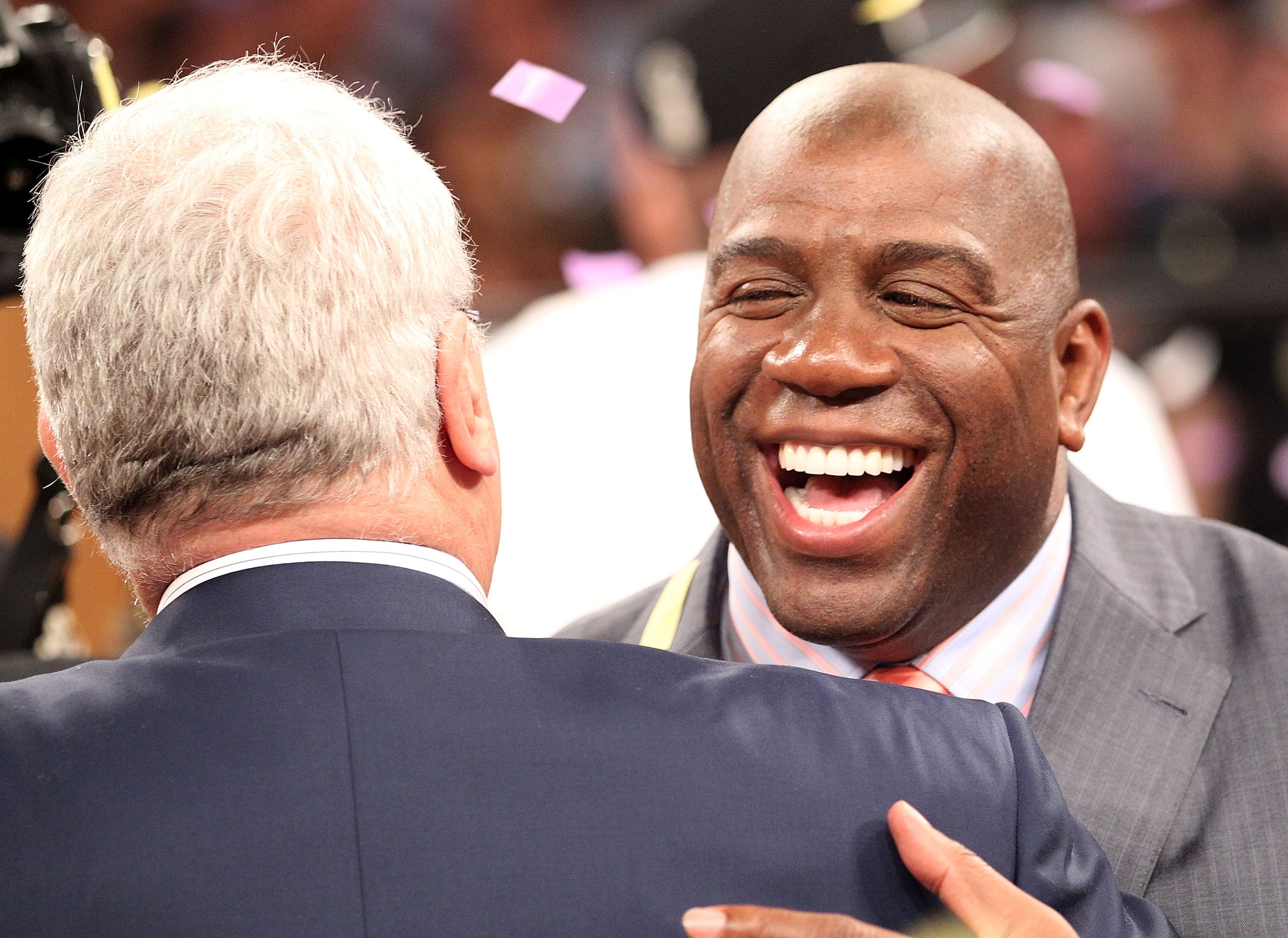
Great players have great seasons and Magic Johnson could do it with amazing frequency. His teams could always feel his contributions on almost all phases of the game: scoring, passing, rebounding, defense.
This season, Magic averaged a league leading 2.67 steals per game. His 9.6 rebounds were the best of his career.
Johnson also averaged 18.6 points on 54 percent shooting and had 9.5 assists per contest.
4. Shaquille O'Neal 1999-2000
22 of 25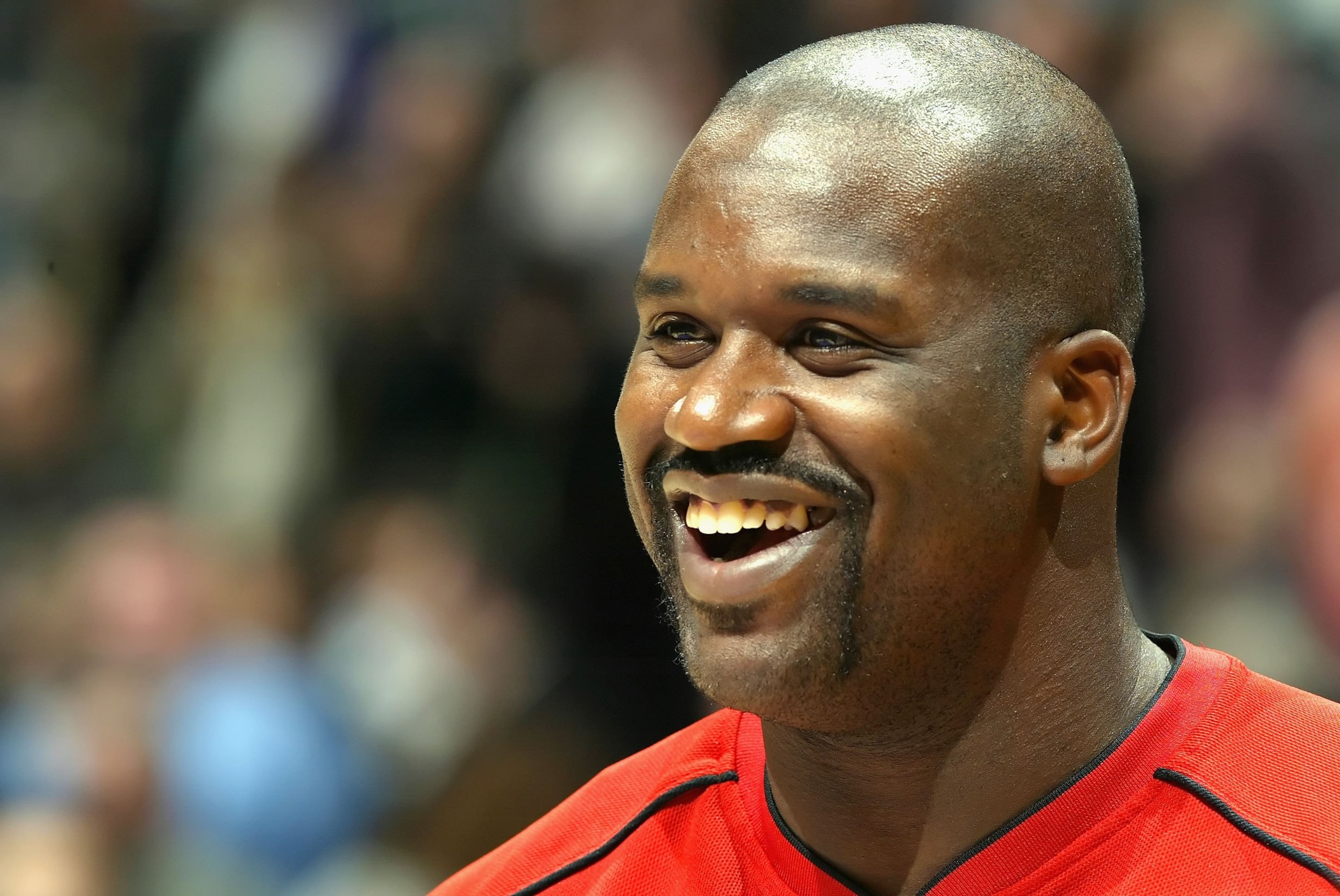
What a banner year for Shaq and the Lakers.
O'Neal became only the third player in league history to be named MVP of the regular season, All-Star Game and the NBA Finals.
His 29.7 ppg were the most of his Lakers career, as were his 13.6 rebounds and 3.8 assists. Shaq hit on 57 percent of his shots, played in 79 games and averaged 40 minutes per contest on the court.
in his 23 playoff games, Shaq upped his scoring average to 30.7, 15.4 rebounds, 3.1 assists and 44.5 minutes. He carried the team on his broad shoulders.
The Lakers defeated the Indiana Pacers in six games to win their first NBA Championship since 1988. Shaq made the league's All Defensive Team and was it's Player of the Month three times during the regular season.
3. Kobe Bryant 2009-10
23 of 25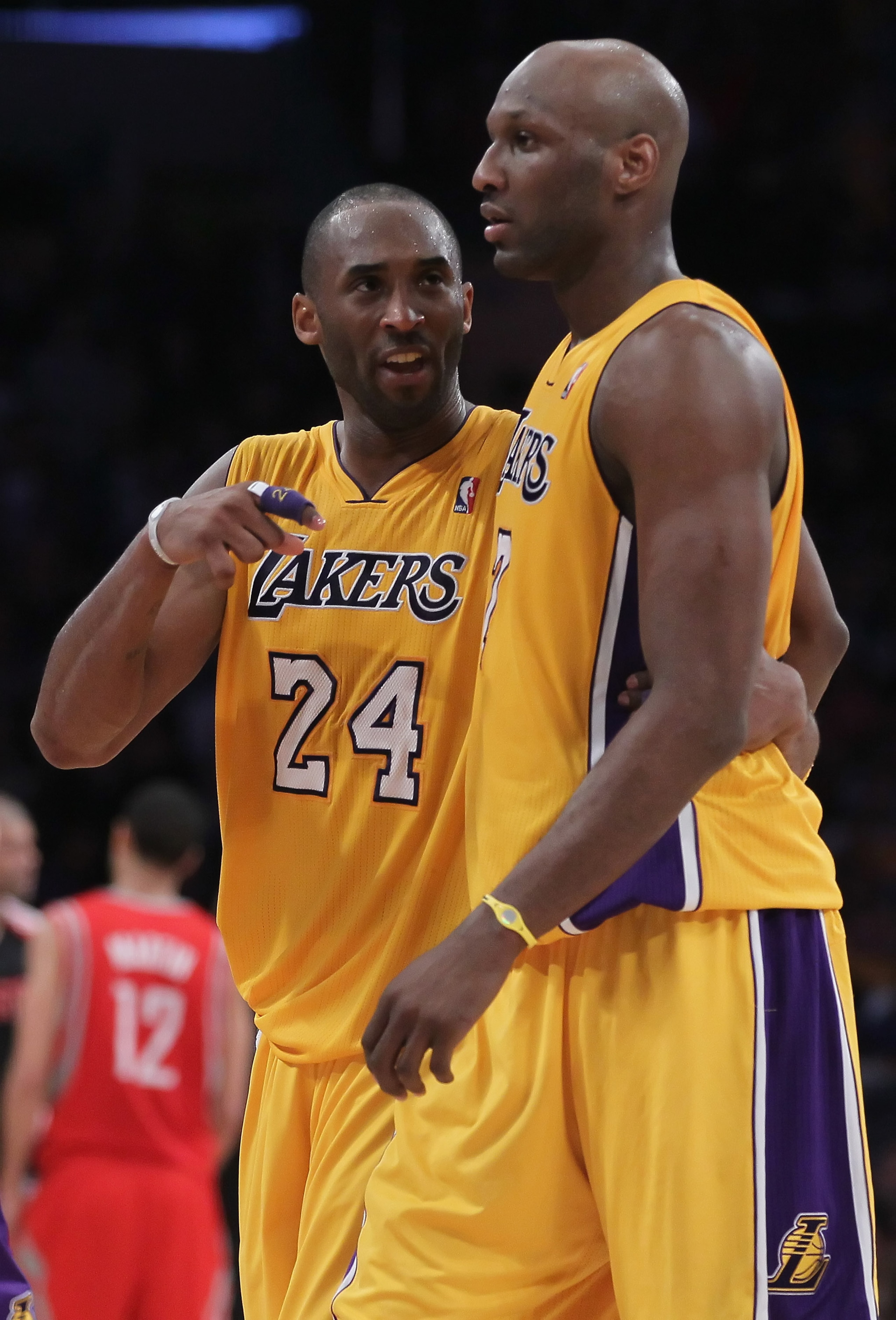
Last year's run to their second consecutive championship was a memorable one for number 24.
He played in 73 regular season games, averaging 27 points, 5.4 rebounds, 5 assists and 1.55 steals in 38.8 minutes. Kobe hit six game winning field goals, the most by any player in a single season over the last decade.
Bryant also was the NBA Final MVP—though game seven against the Celtics is more remembered for the play of Pau Gasol and Ron Artest, Bryant still averaged 29.2 points, 6 rebounds, 5.5 assists and 1.35 steals in 23 playoff games. He had 30 or more points in 14 of those games.
2. Magic Johnson 1986-87
24 of 25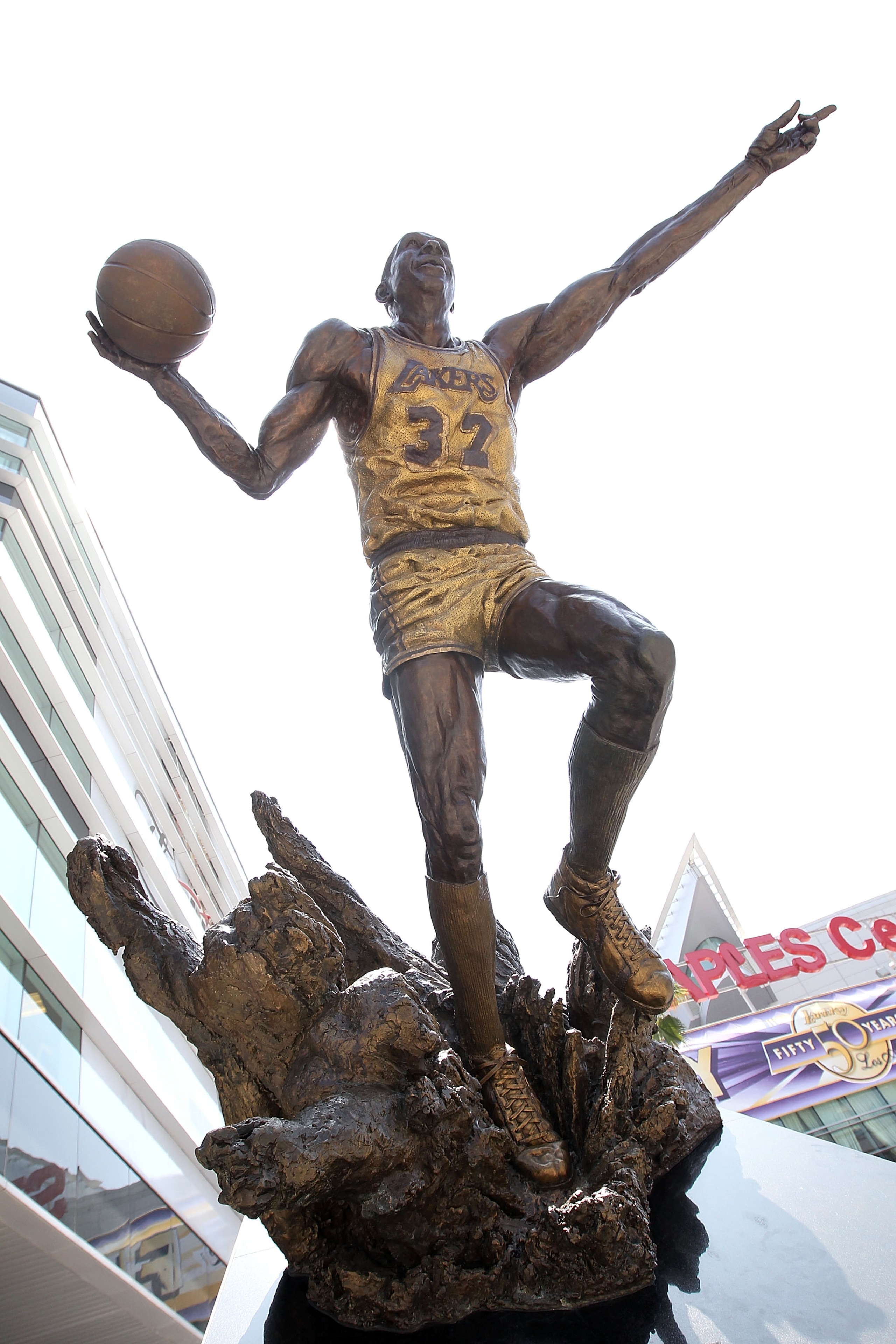
When you're this good, they make you a statue and place it in the middle of the courtyard outside your former arena.
Magic Johnson played in 80 games this year, recording 61 double doubles and 11 triple doubles. He led the team to a 65-17 record, second best in franchise history.
Magic averaged a career best 23.9 points on 52.2 percent from the floor, to go along with 12.2 assists (977 total) and 7.2 rebounds.
This was the year that Magic took over as team leader from Jabbar. When Cap was briefly sidelined with an eye infection, Magic took over the scoring load for a couple of games, getting 38 against Houston and 46 against Sacramento.
In the playoffs, Johnson continued his incredible season. He averaged 21.8 ppg and 12.2 assists during the playoffs and was named Series Final MVP against the Celtics. This time the Lakers triumphed in six games.
Magic was also named league MVP.
1. Kobe Bryant 2005-06
25 of 25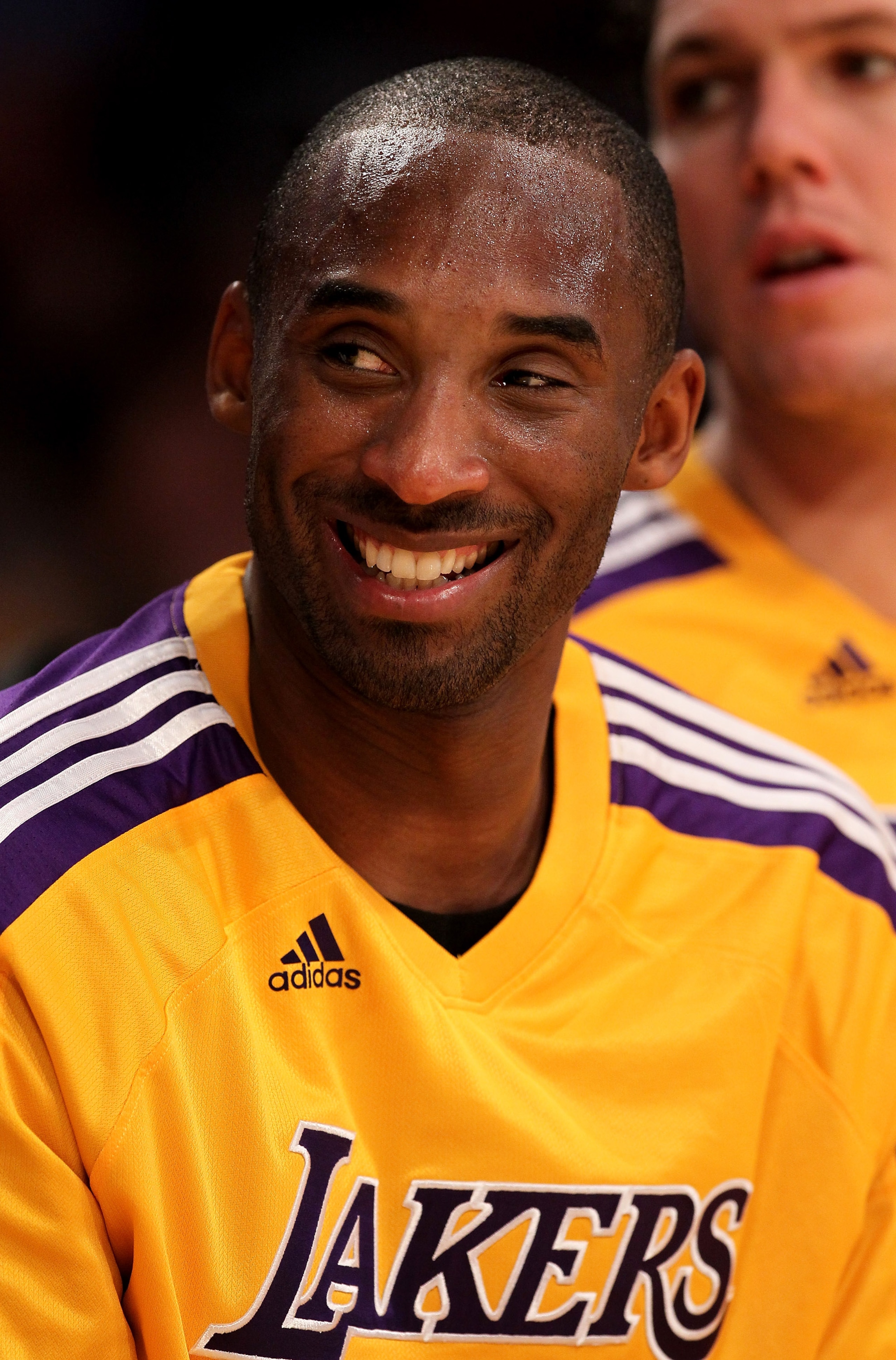
This was a statistical season for the ages.
Kobe Bryant averaged a career high 35.4 ppg. He also recorded 5.3 rebounds, 4.5 assists and 1.84 steals in 80 games.
What stands out are his individual performances. Most NBA players will spend an entire career and never achieve what Bryant did in one campaign.
Perhaps the greatest single game performance by a Lakers player came on January 22, 2006 against the Toronto Raptors. Kobe went off for 81 points (55 in the second half) on 28 of 46 shooting. The 81 points have only been surpassed by Philadelphia Warrior Wilt Chamberlain's 100 back in March of 1962.
Kobe scored in huge bunches for the Lakers that year—in an equally impressive game against Dallas, Bryant put in 62 points in 33 minutes on 18 of 31 shots from the field, including 22 of 25 free throws.
Kobe also scored 45 plus points in four consecutive games, becoming just the third player in Lakers history to accomplish this feat (Chamberlain and Baylor were the other two).
Bryant scored 51 points at Phoenix, 50 points against Portland and in the process established a new season record for points by a Lakers player.
What an amazing year by one of the top two Lakers of all time. But Kobe Bryant will be the first to tell you that what matters most to him are not the individual stats. It's the championship rings.



.jpg?w=2560 "Viral Rams Coach Vid 🖕")
.jpg?w=2560 "Injury-stricken Seahawks signing veteran RB")
.jpg?w=2560 "2 NFL Officials Suspended")
.jpg?w=2560 "Grading WWE Raw 🔠")
.jpg?w=2560 "Mahomes' Wife Trolls Kubiak 💀")
