

Searching for Flaws with James Harden, CP3 and the Houston Rockets
To hear head coach Mike D'Antoni tell it, the Houston Rockets are in crisis.
Caught in the middle of the rest-or-rust dilemma, the league's best team is also in, by its unreasonably elevated standards, a slump.
"That's why at the end of the year, you've got to be careful taking guys out and just resting them. Everybody wants rest, rest, rest. Well, they've got to play," D'Antoni told reporters after Houston suffered its worst loss in months on Sunday, a 100-83 slog against the San Antonio Spurs.
TOP NEWS

LeBron's Special Helicopter Deal

MJ Makes Record-Setting Donation 🙌
Shams: KAT, Hart Could Be Trade Names
"Otherwise, we're going to lose the advantage of what you worked for for 80 games, and it's scary times for us. You've got to play. You've got to bring it, and you've got to bring it every day. We'll get it back."
For the record, Houston is 15-2 since March 1 with a plus-8.8 net rating right in line with its full-season figure of plus-8.9. Sure, the Rockets played some suspect foes closer than D'Antoni might have preferred (wins over Phoenix, Detroit and the Clippers were all by single digits), but the victories piled up anyway. If 15-2 constitutes a skid, most of the league would gladly trade its misfortune for Houston's.
James Harden and the Spurs Problem
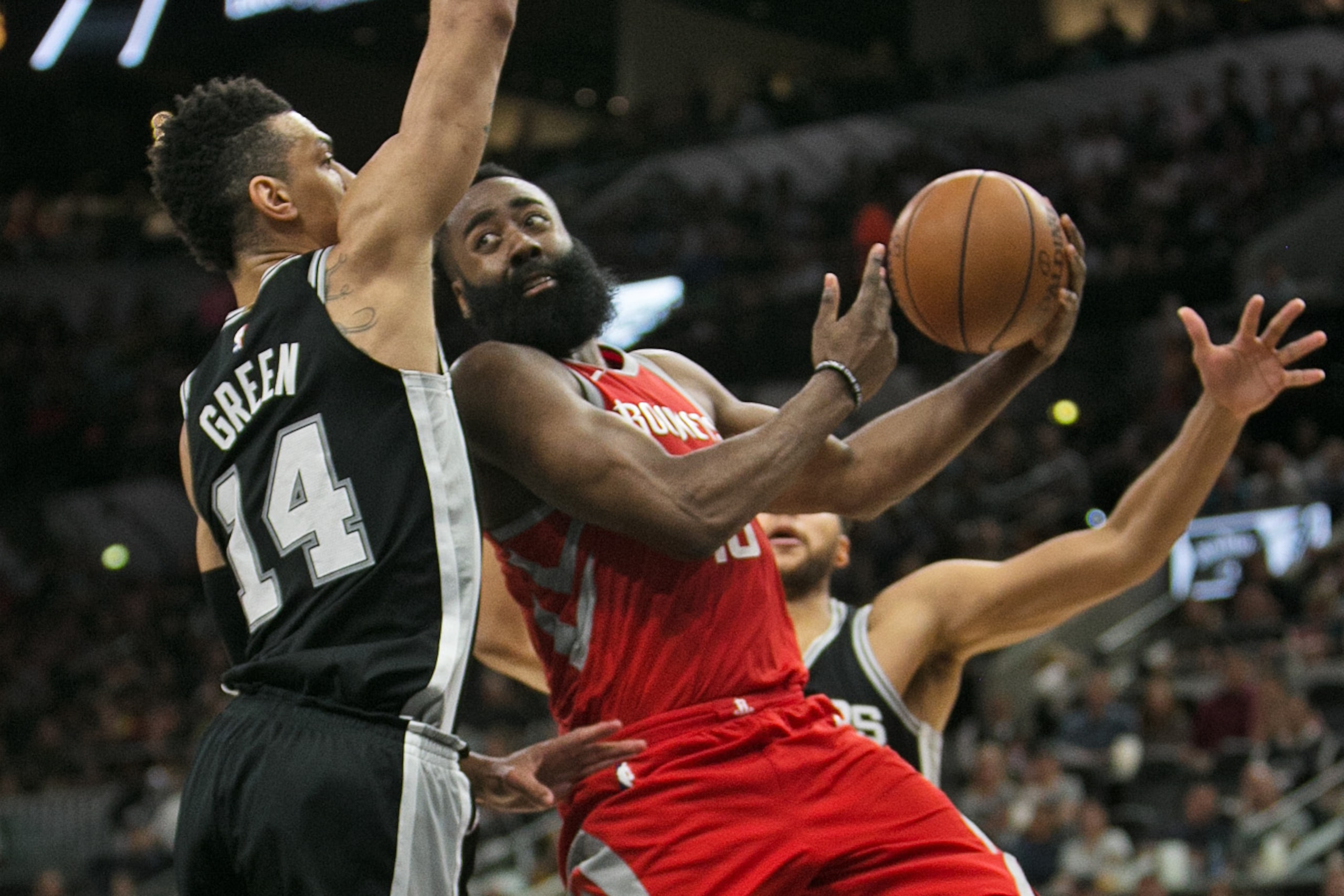
D'Antoni's concern seems tied to that conspicuous Spurs loss—which is defensible in light of Gregg Popovich's penchant for eliminating D'Antoni's teams in the playoffs.
James Harden hit just one of his six attempts from long range against San Antonio and has struggled from long range since the All-Star break, shooting only 28.8 percent after hitting 38.4 percent beforehand. Part of the justification is simple: He takes a lot of difficult threes, and since the break, he's had a harder time hitting them.
Harden hit 40.3 percent of his pull-up treys before the break but has made only 34.1 percent since. In addition, since the break, 16.2 percent of his shots have been threes within the last four seconds of the shot clock. Before the break, he was at 10.4 percent. Those are often last-resort, low-expected-value attempts.
There's some normal regression in there, not to mention some potential fatigue. Harden's usage percentage leads the league and is on track to be his career high. Though he's playing his fewest minutes per game since becoming a full-time starter in 2012-13, he's still taking the pounding associated with 10-plus trips to the foul line every night and hasn't exactly seen his share of the offensive load diminish with Chris Paul around.
Of course, since D'Antoni's comments about his team's sharpness came after the loss to San Antonio, it's also fair to mention the Spurs have a history of making the Rockets look shaky. Employing similar tactics to the ones that bounced Houston from last year's postseason, San Antonio limited the Rockets to a season-low seven threes. Notably, the Spurs allowed just 17 "wide-open" looks from long range and only nine deemed "open" by NBA.com's measurement of defender proximity. On the year, Houston averages 18.7 wide-open attempts and 16.6 open ones.
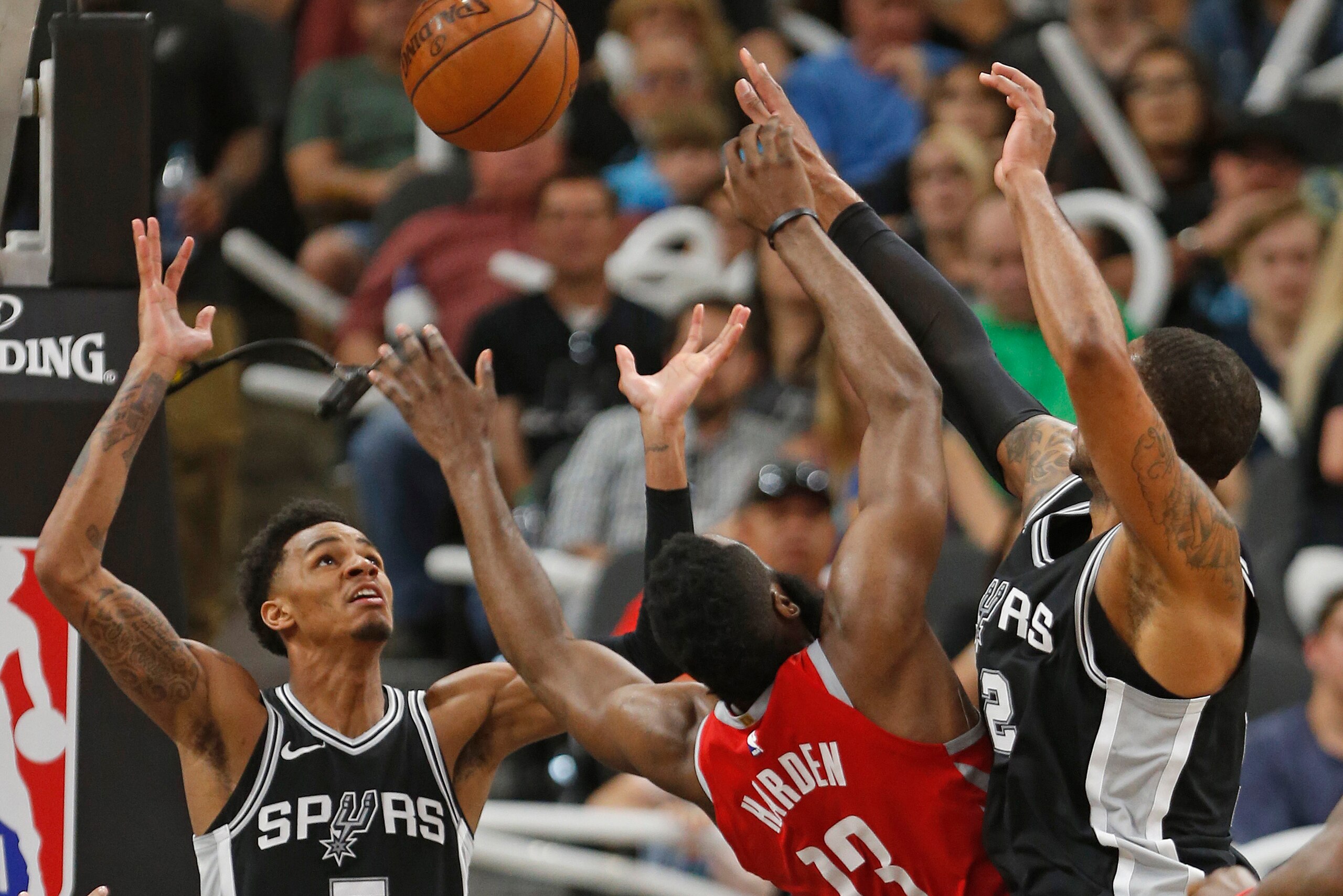
We should be wary of one-game samples, but the Rockets aren't shy about acknowledging what San Antonio does well.
"They do a good job," Harden told Jonathan Feigen of the Houston Chronicle. "They try to run us off the line."
The best way to play Houston isn't complicated. The Rockets like threes and layups, and a smart opponent will try to make sure they don't get many of either. The Spurs just happen to be better at executing the plan than most—staying disciplined in their closeouts, sinking bigs into the lane, not reaching on Harden and begging anyone in a Houston uniform to take a mid-range jumper.
In theory, Rudy Gobert's Utah Jazz, Anthony Davis' New Orleans Pelicans, and Jusuf Nurkic's Portland Trail Blazers (top defensive field-goal percentage at the rim in the NBA) should be able to do something similar.
CP3 and D'Antoni's Double-Talk
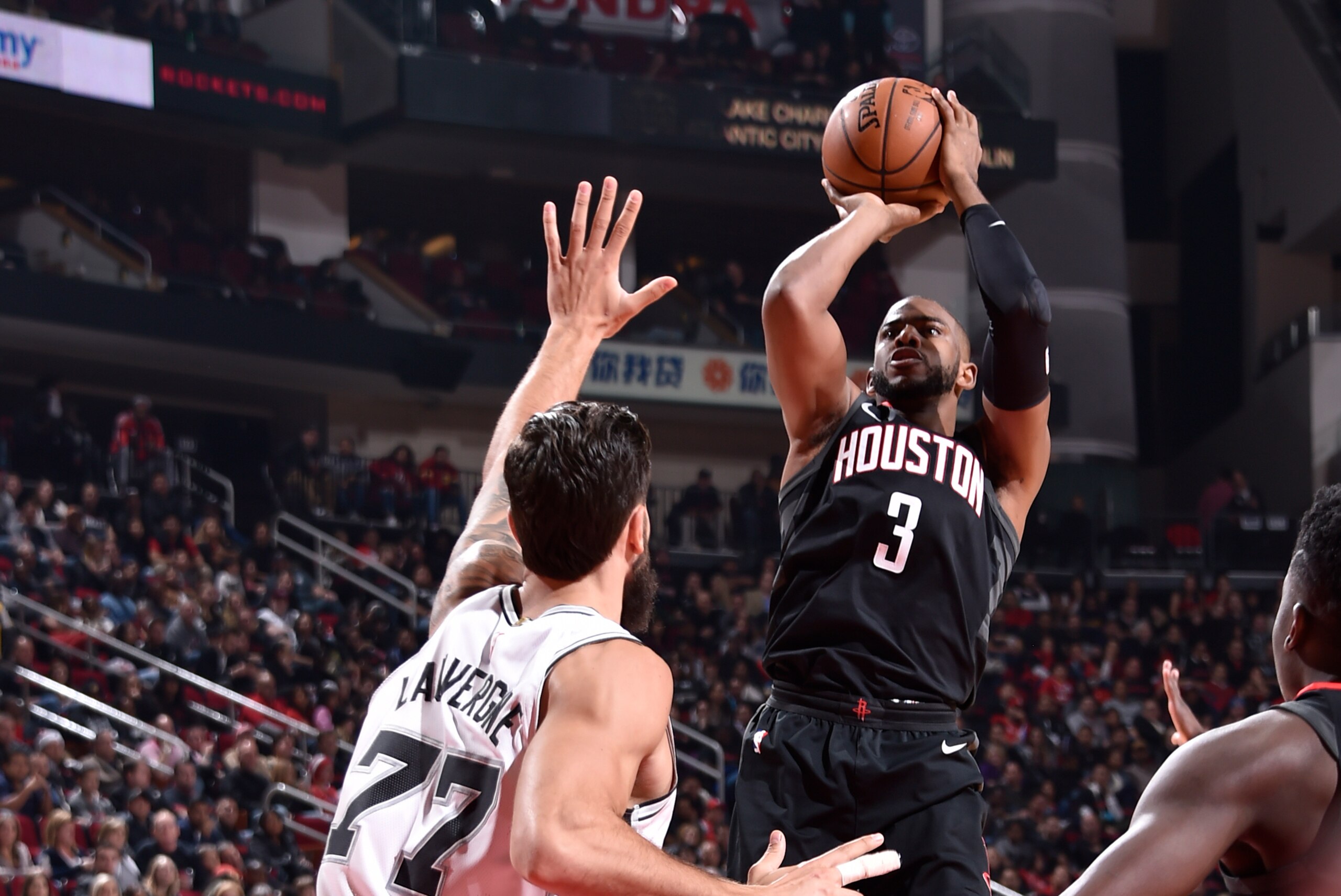
The key against San Antonio, and perhaps for the Rockets as a whole, is Paul. He didn't play in Sunday's loss, which meant Houston didn't have its mid-range answer. Kelly Iko of ESPN 97.5 Houston tweeted:
CP3, who had missed five of Houston's last six games with a hip injury entering Tuesday, loves those in-between looks. In his last three seasons with the Clippers, he earned between 29.0 and 32.1 percent of his points from the mid-range area. Though he's down to 17.7 percent this season, that figure still leads all Rockets regulars by a significant margin. For reference, Harden scores only 4.6 percent of his points in the mid-range.
D'Antoni won't use Paul's absence as an excuse, even if the data suggests he could.
Houston won all three games Paul played against the Spurs (by an average of 14 points) prior to Sunday's defeat.
Knowing that, we can circle back to D'Antoni's comments on rest and view them for what they are: strategic double-talk.
If playing well to close the season was more important than getting critical players healthy (and possibly losing games or performing below expectations in the process), wouldn't Paul have played against the Spurs?
And don't D'Antoni's post-loss sentiments clash with statements like this, via Feigen, about CP3?: "Until it's 100, 100, 100 percent, we’re not going to do it [bringing Paul back]. He's not quite there. ... We're erring on the side of caution."
D'Antoni is relaying a broader "shape up" notification to his players while managing them in ways that conflict with the message. If preservation weren't a concern, would the Rockets' pace be trending consistently downward since November? Would they be milking possessions and taking an increasing number of shot attempts in the final few seconds of the shot clock?
If the more deliberate approach isn't about avoiding fatigue, it might be an experiment to simulate the grind-it-out nature of postseason basketball. Either way, D'Antoni and the Rockets are clearly open to taking the long view if it costs them a few games in the short term. That applies to strategic tweaks like possession length and pace, as well as caution levels with injury.
Having It Both Ways
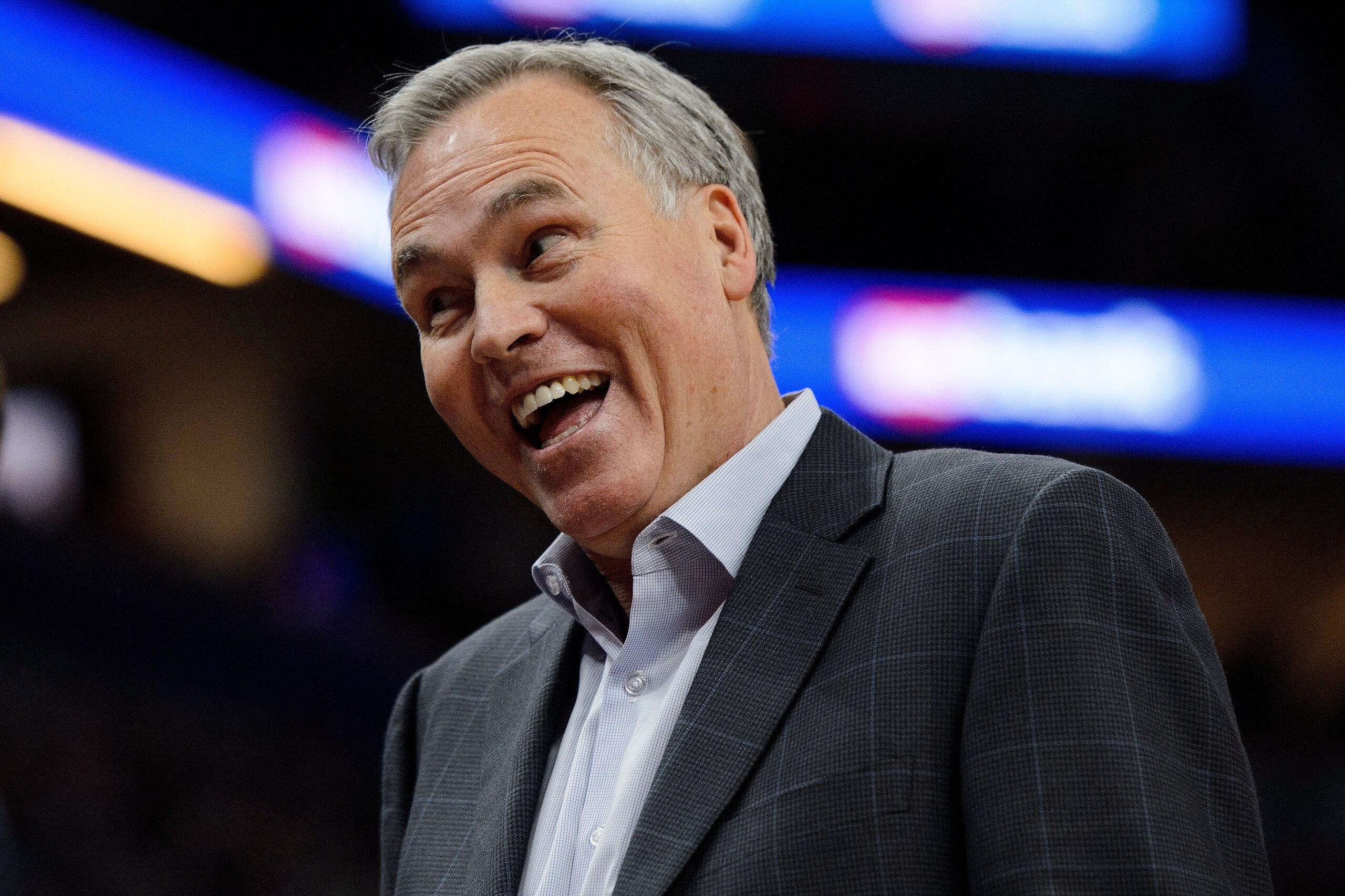
Harden, Paul and the Rockets all have playoff baggage. At the tail end of a dominant season that so often looked effortless, of course D'Antoni is preaching focus and attention to detail. Of course he's reminding his guys how fragile things can become when attention slips. Of course he's outwardly railing against complacency of any kind—even if it's about a concept as widely accepted as the value of rest.
And of course he's doing all that while quietly preserving their health.
"We definitely don't want to go into the playoffs playing the way that we've been playing these past few games," Trevor Ariza, who just participated in a 14-1 month of March, told reporters. "Just stay greedy."
Greedy like D'Antoni, who's doing whatever he can to capitalize on the natural late-season complacency of a team with nothing left to prove by reminding the players they've proved nothing.
D'Antoni's trying to have it both ways. Trying to be greedy. He wants his Rockets to relax for their physical well-being while also sharpening up mentally. It's a tough double-move to pull off, but just about everything D'Antoni has tried this season has been successful.
Why not this, too?
Stats courtesy of Basketball Reference, Cleaning the Glass or NBA.com unless otherwise specified. Accurate through games played Tuesday.

.jpg?w=2560 "Grading WWE Raw 🔠")

.jpg?w=2560 "Bijan's INSANE 1st Half 🤩")
.jpg?w=2560 "Viral Rams Coach Vid 🖕")
.jpg?w=2560 "Injury-stricken Seahawks signing veteran RB")

.jpg?w=2560 "2 NFL Officials Suspended")