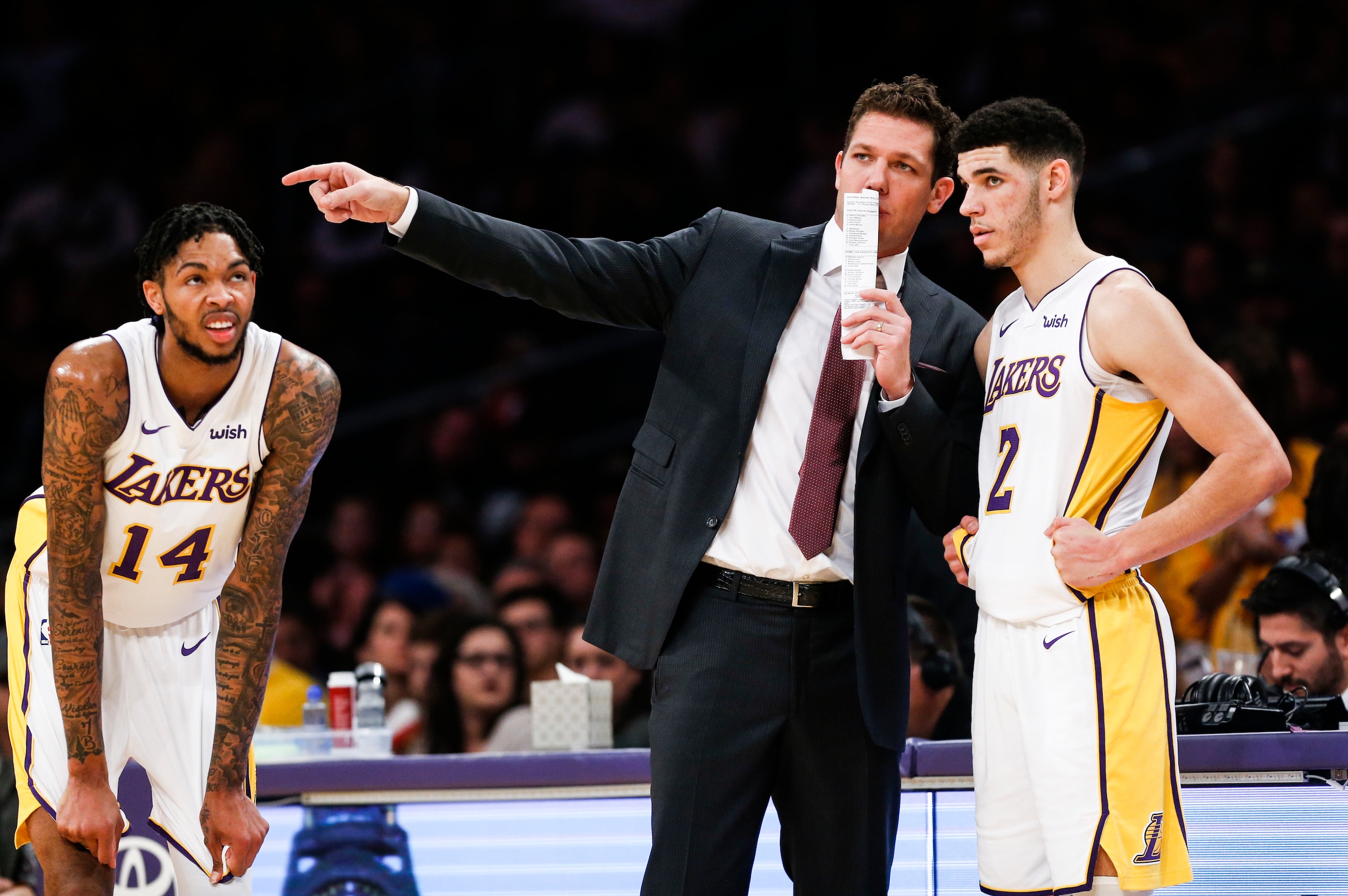


It turns out LaVar Ball can't speak all of his daring declarations into existence.
Despite previous proclamations from the Big Baller Brand patriarch, the 2017-18 Los Angeles Lakers are not playoff-bound. That hasn't been mathematically set in stone, but all evidence points in that direction.
The Lakers own the Association's longest losing streak at eight games and counting. They rank second-last in winning percentage (.297) and sit fifth from the bottom in net efficiency rating (minus-4.9).
The next four months, then, won't be determined by wins and losses. L.A.'s goals for this season's second half exist away from the standings. As a rebuilder with major roster holes and even bigger free-agency dreams, the Lakers must use the upcoming stretch to lay the groundwork for their next era.
Find the Right Salary Dump(s)
1 of 5
As hard as the Lakers have worked to increase their buying power for this summer (or future summers), there's no reason to back off that aggressiveness leading up to the Feb. 8 trade deadline—not when they have reasonably attractive assets to sell and the motivation to clear out as much money as possible.
Unfortunately, the "reasonably attractive" caveat debunks the pipe dream of shedding Luol Deng. He would be too cost prohibitive to deal, something ESPN's Adrian Wojnarowski reported L.A. has already accepted (via Lakers Nation's Harrison Faigen).
But Jordan Clarkson and Julius Randle should be heavily shopped. According to Tania Ganguli of the Los Angeles Times, the Lakers "would love to trade" the pair if the right deal is out there.
Randle, who's seen the majority of his minutes as a backup 5, is approaching restricted free agency. And Clarkson, who's posting a joint-personal-best 16.9 player efficiency rating, is the only other veteran signed beyond this season.
The sooner L.A. finds a suitor for Randle, the better. He's a tricky trade candidate as a modern big man who neither stretches the floor nor protects the rim. But he's also physically gifted and productive when he plays (20.9 points, 10.6 rebounds and 2.9 assists per 36 minutes). He should have a market—even if it's not robust—and there are incentives for both the Lakers and their trade partner to act quickly.
"Randle's Bird rights (and, thus, the ability to exceed the cap) have appeal based on the majority of the teams not having cap space next summer," ESPN.com's Bobby Marks wrote. "If the Lakers fail to trade Randle, they run the risk of losing him for nothing in free agency while they go star chasing."
With L.A. well outside the playoff picture, the need for a spark-plug scorer such as Clarkson is minimal. But his instant offense might address a contender's second-team deficiencies while also clearing the requisite cap space for the Lakers to potentially splurge on a star or two.
Lonzo Ball Captures Rookie Assist Title
2 of 5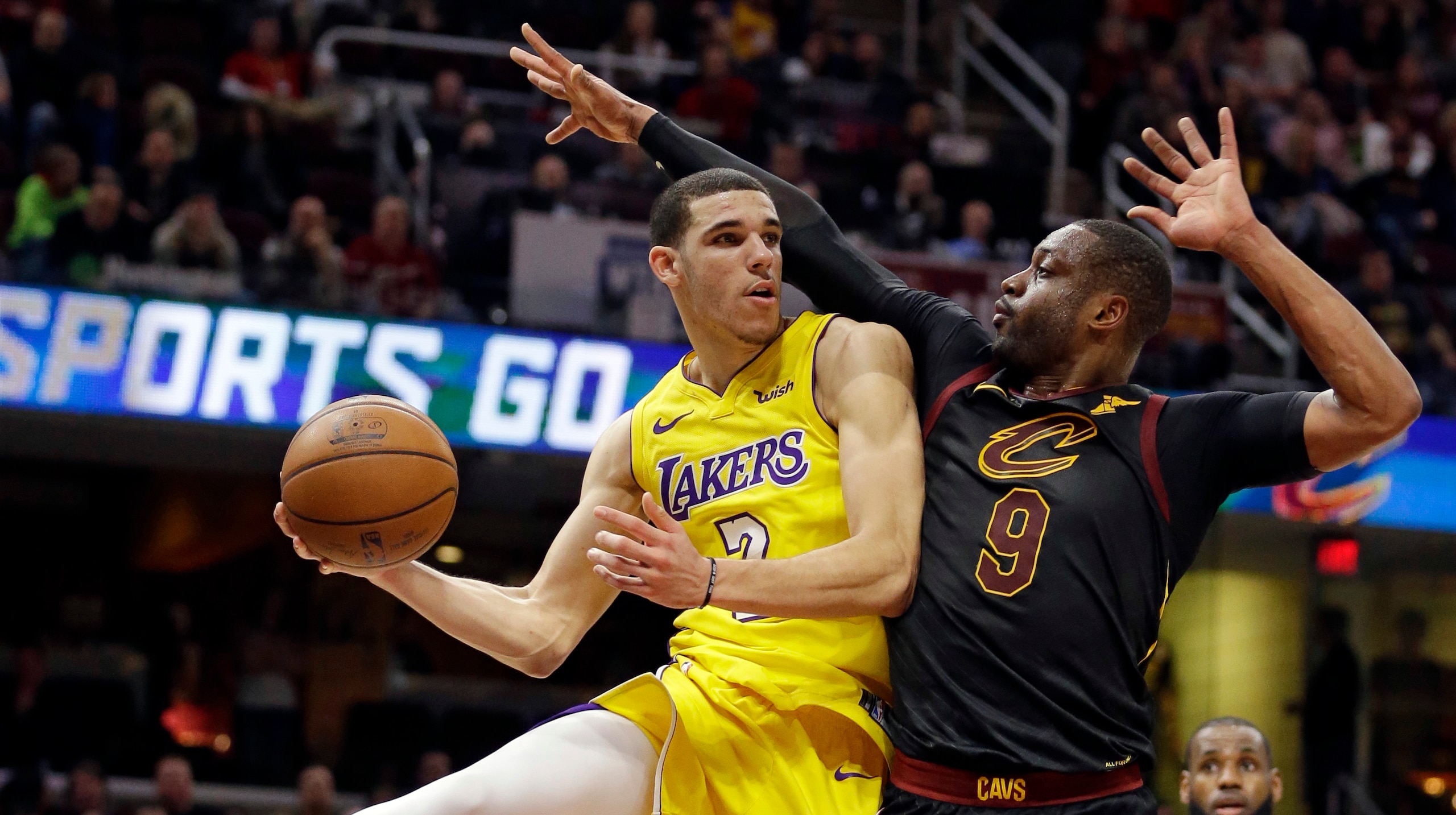
Lonzo Ball's shooting woes aren't going away anytime soon. And if you were paying close enough attention, you could have seen them coming.
Maybe not to this extreme—his slash line is a hideous .349/.297/.480—but there were red flags raised beneath his seemingly stellar collegiate marks (55.1 percent overall, 67.3 outside).
He entered the Association lacking elite burst or yo-yo handles, limiting his avenues around big league defenders. And as Bleacher Report's Jonathan Wasserman noted, only 12 of Ball's field goals at UCLA weren't layups, dunks or triples.
So if you were expecting 20-plus points per night, you were setting yourself up for disappointment.
Ball needs to become a much better shooter, but his immediate focus should be on joining the upper echelon of table-setters. It's evident his tools are up for the task.
"Lonzo makes the right pass 98 percent of the time," a veteran scout told Yahoo Sports' Chris Mannix. "A lot of times, they are passes most guys don't see."
Ball is 10th on the league's assist list, boasting 7.1 helpers a night, but that only puts him second among freshman floor generals behind the Philadelphia 76ers' lead passer, Ben Simmons (7.4). Ball should aim at least that high, especially since he's so reliant on distributing to make a positive impact.
The Lakers have already positioned him as their centerpiece. And even if that's only a temporary post—ideally, that tag would go to the prized pull(s) from free agency—it still requires him to have at least one elite skill they can sell to their targets.
It's easier to deliver that pitch if prospective players don't have to scroll down the list of rookie assist leaders to find Lonzo's name.
A(nother) 2nd-Half Surge for Brandon Ingram
3 of 5
Over the previous five seasons, 175 rookies logged at least 500 minutes. Only 34 finished with a lower PER than Brandon Ingram's 8.5. If you are trying to argue the former No. 2 pick's debut campaign was disastrous, that's all the ammunition you need.
However, the spindly swingman still accomplished the basic goal for first-year players: He noticeably improved over the course of the season.
The Lakers need that pattern to continue, though, for Ingram to approach his designated status as an untouchable building block. While he's much better this year (15.9 points on 44.2 percent shooting) than last (9.4 on 40.2), he still grades out below average (11.9 PER) or even worse (minus-2.69 real plus-minus, 81st among 89 small forwards, per ESPN.com).
That may be partly due to L.A. plugging him into a featured role that neither his body nor his game are quite ready to handle.
He paces the team in minutes (35.1) and sits second in field-goal attempts (13.3) even though he's still honing his jump shot and building up the strength to finish inside. It's possible this exposure will increase his development, but he's still in the growing-pains portion of the process.
"The Lakers are laying the first piece of the foundation down with Ingram this season," The Ringer's Jonathan Tjarks wrote. "There's a lot of work to do before they are finished."
The scope of this project is fascinating. Ingram has a skyscraper's ceiling—Kevin Durant told reporters he has seen a resemblance between himself and the sophomore—and it's impossible to overstate his impact on the organization's future.
But L.A.'s ambitious offseason strategy gives the need for Ingram's development a sense of urgency.



Create Offensive Chemistry
4 of 5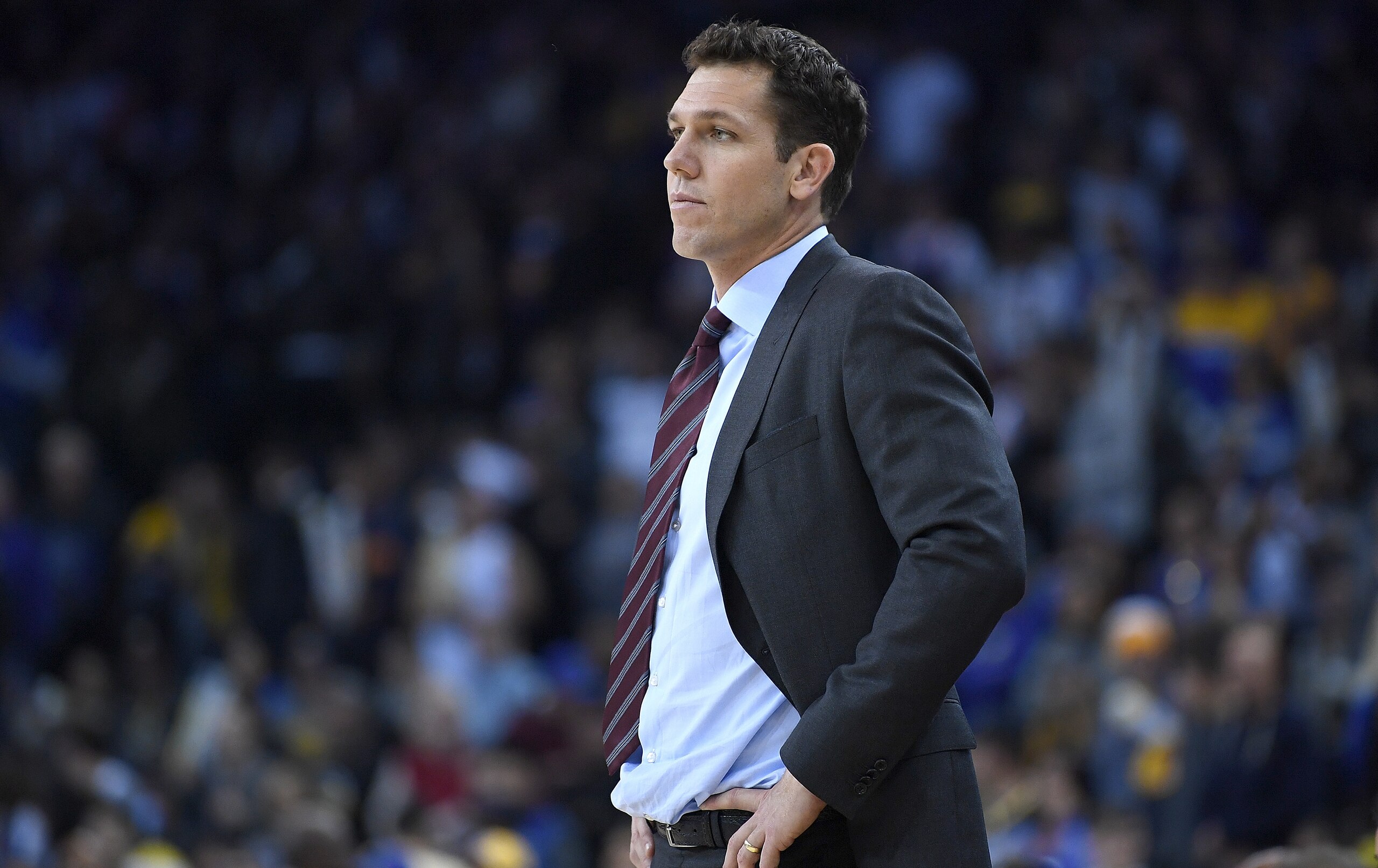
The Lakers haven't given head coach Luke Walton the easiest hand to play. They essentially tasked him with creating harmony in an ensemble built largely with placeholders.
Save for a select few prospects, no players have a firm grasp on their futures with the franchise. The team meeting sandwiched between their losing streak hinted at frustrations perhaps boiling over, and that sentiment seemed to echo in the locker room.
"Everyone knows what is going on with the salary-cap situation next season and all that," Andrew Bogut said, per ESPN.com's Ohm Youngmisuk. "This is just distractions that we can't let affect us. That is part of the league, the business decisions that front offices and coaches make. So if that is distracting guys, that is going to be like that your whole career."
It's a tough environment to navigate, particularly when Walton emphasizes an egalitarian system built around sharing, movement and tight-knit chemistry.
The only identity L.A.'s offense possesses is speed; no one plays at a more blistering pace (103.78 possessions per 48 minutes). But the ball doesn't hop around how Walton would like. The Lakers only average the 24th-most passes per game (283.8) and are tied for 20th in assist percentage (56.7). They are also on the wrong side of the turnover rankings (15.7 turnover percentage, tied for 27th).
This isn't all on Walton. The best strategic plans still require certain levels of talent and execution, which are probably over the heads of transitioning teams such as this.
But since L.A. isn't swaying any free agents with its record, it at least needs a presentable blueprint in which those players can picture themselves. This roster might look like it's mostly starting from scratch, but the implementation of this system shouldn't, given this is Walton's second season at the helm.
Build the Best Possible Free-Agent Pitch
5 of 5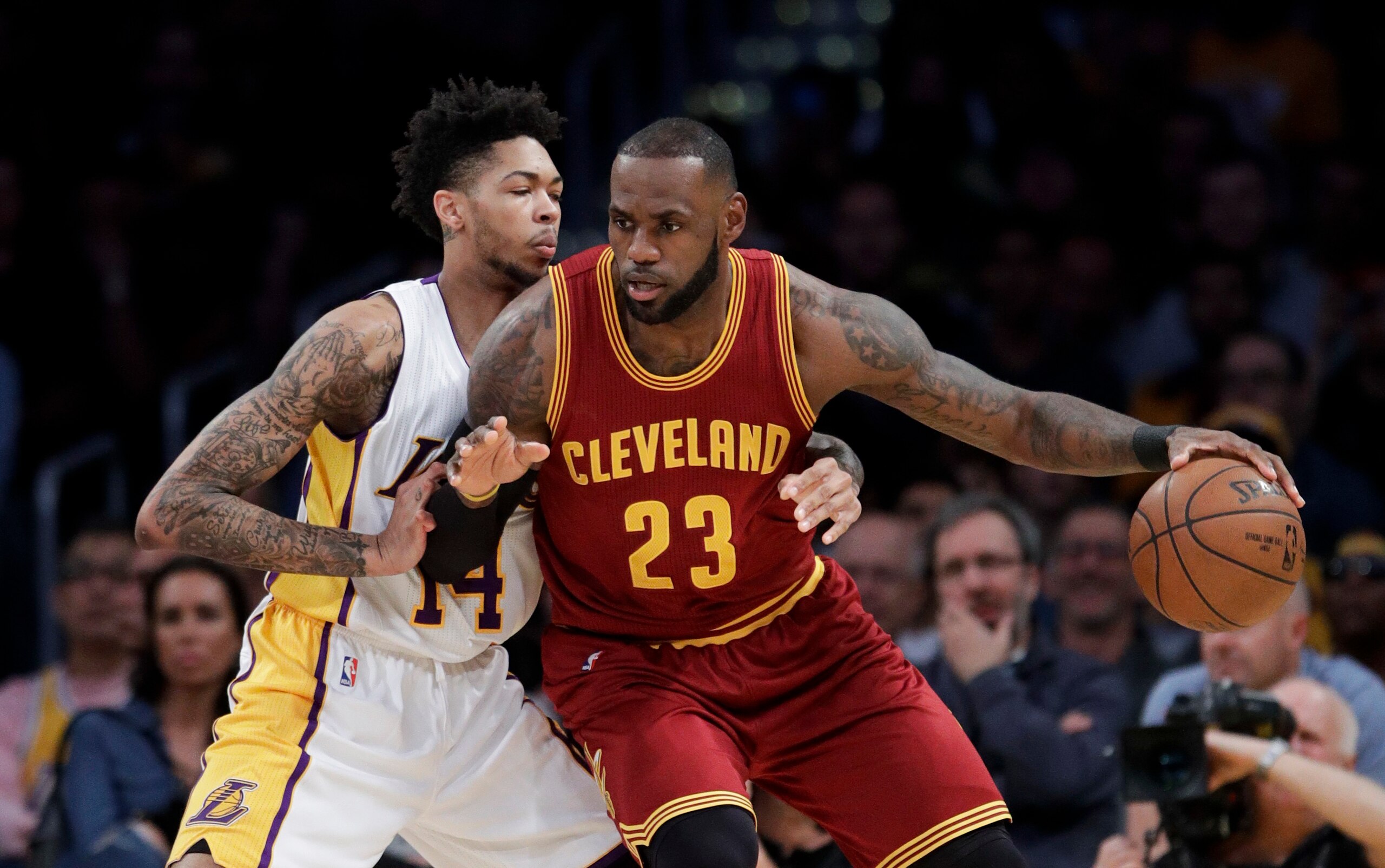
This isn't the first time L.A. has taken a grandiose view of free agency. But when was the last time it worked?
Dwight Howard didn't stay in 2013. LeBron James and Carmelo Anthony didn't come in 2014. LaMarcus Aldridge declined overtures in 2015. Last summer, Kevin Durant wouldn't even give the Lakers a meeting. Russell Westbrook—once a popular potential target—took an extension before even reaching the market.
This path is littered with potholes, and the Lakers have seemingly been stuck in them since before Kobe Bryant walked away in 2016. It doesn't mean the plan is doomed to fail, but recent history suggests they need more than their major market and famed history to lure in at least one big fish.
"This will be about Brandon Ingram, who has made significant strides from his rookie season," Dylan Hernandez of the Los Angeles Times wrote. "This will be about Kyle Kuzma, who came out of nowhere to become one of the team's best players. And this will be about Lonzo Ball, who has made clear in his absence that the Lakers are a better team with him in the lineup."
If that trio shows enough potential over the second half of the season, then L.A. might finally have its quick-fix free-agency period.
Even if the Lakers have come up empty before, they still have a certain allure. Starring in Staples Center is unlike starring anywhere else, and whoever returns this organization to glory would have a permanent place in the NBA annals.
Plus, L.A. is fueled by more than blind optimism. Paul George readily admits he's intrigued by the idea of playing for his hometown team. James is seen as a "long shot," according to ESPN.com's Ramona Shelburne and Brian Windhorst, but that means the Lakers have a chance. DeMarcus Cousins' risk-reward ratio could make him more obtainable than his All-Star stats say he should be.
But the meat of the Lakers' recruiting pitch will be made between now and April. They don't need to win now; they just need their youngsters to showcase how they will help the team win eventually.
Unless otherwise indicated, all stats are from Basketball Reference or NBA.com.
Zach Buckley covers the NBA for Bleacher Report. Follow him on Twitter: @ZachBuckleyNBA.
.jpg?w=2560 "Raiders Could Start Mendoza")

.jpg?w=2560 "Rodgers Iced Out on Plane 💎")

.jpg?w=2560 "🚨 Week 8 AP Top 25 Poll")