


The NBA, more than just about any other major American sports league, demands that a team favor talent over fit on draft day. A great prospect at any position can change the fortunes of a franchise, and an incumbent player at the same spot as said prospect can always be moved.
It’s still important for a team to strike the proper balance between adding the best guy and the right guy in the event that the two aren't one in the same. Culture and need are difficult to ignore—or, rather, should only be ignored at an organization's own peril.
The 2017 draft, for all of its touted talent, figures to be as rife with potential mismatches as any class in recent memory. In theory, the depth of quality youngsters across positions should afford clubs more leeway to more closely consider factors beyond pure basketball ability when picking between the best available at any given point.
But the science of the draft remains inexact, at best, regardless of how big or small the margin for error may be. With that in mind, here's a look at the one prospect projected to land in each team's range that the squad in question should strongly consider passing up, based on the various risks that could be involved.
Atlanta Hawks: OG Anunoby, Forward, Indiana
1 of 30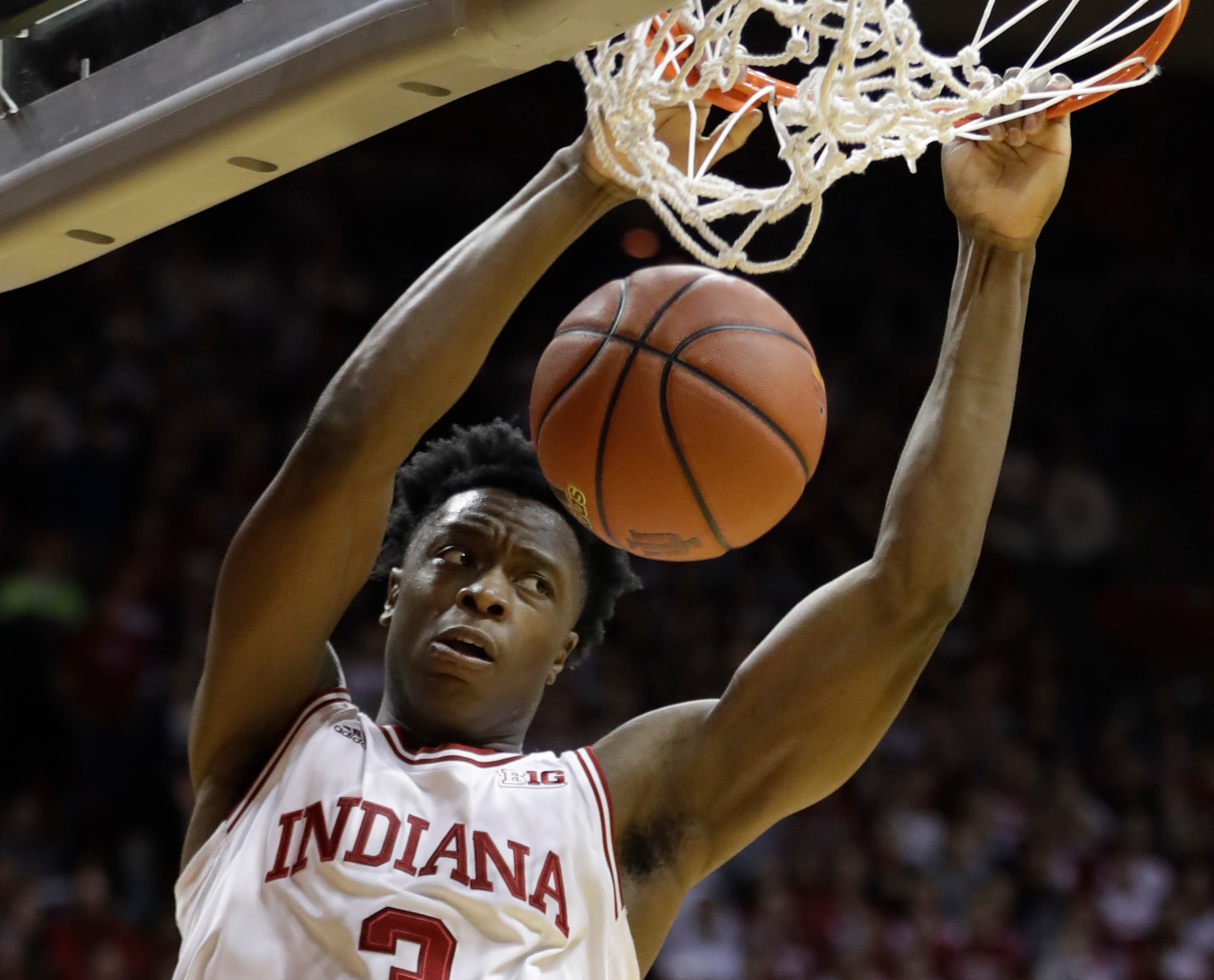
There's a lot to like about OG Anunoby.
His size, at 6'8" with a wingspan of 7'2 ¼". His defensive versatility. And for the Atlanta Hawks' purposes, his ability to play either forward spot, with Paul Millsap potentially on his way out and Tim Hardaway Jr. ticketed for restricted free agency on the wing.
Anunoby, though, is no surefire stud at either spot. For one, the Hawks (and everyone else in the NBA) will have to be wary of his right knee, an injury to which ended his sophomore season at Indiana.
"I'm in no pain, I'm doing a lot more," Anunoby said, per RealGM's Andrew Perna. "I feel like I'll be cleared to play October-November."
Should that sap Anunoby of any athleticism, his value as a defensive stopper could take a hit. Even if he's fully recovered, he'll have to prove that he can shoot, after hitting just 31.1 percent of his three-pointers and 56.3 percent of his free throws this past season in Bloomington.
What's more, with Dwight Howard out the door, Atlanta may be better served spending their top pick (No. 19 overall) on one of the handful of bigs (i.e. UCLA's Ike Anigbogu, Kentucky's Bam Adebayo, Creighton's Justin Patton, Texas' Jarrett Allen) projected to land in their lap.
Boston Celtics: Josh Jackson, Small Forward, Kansas
2 of 30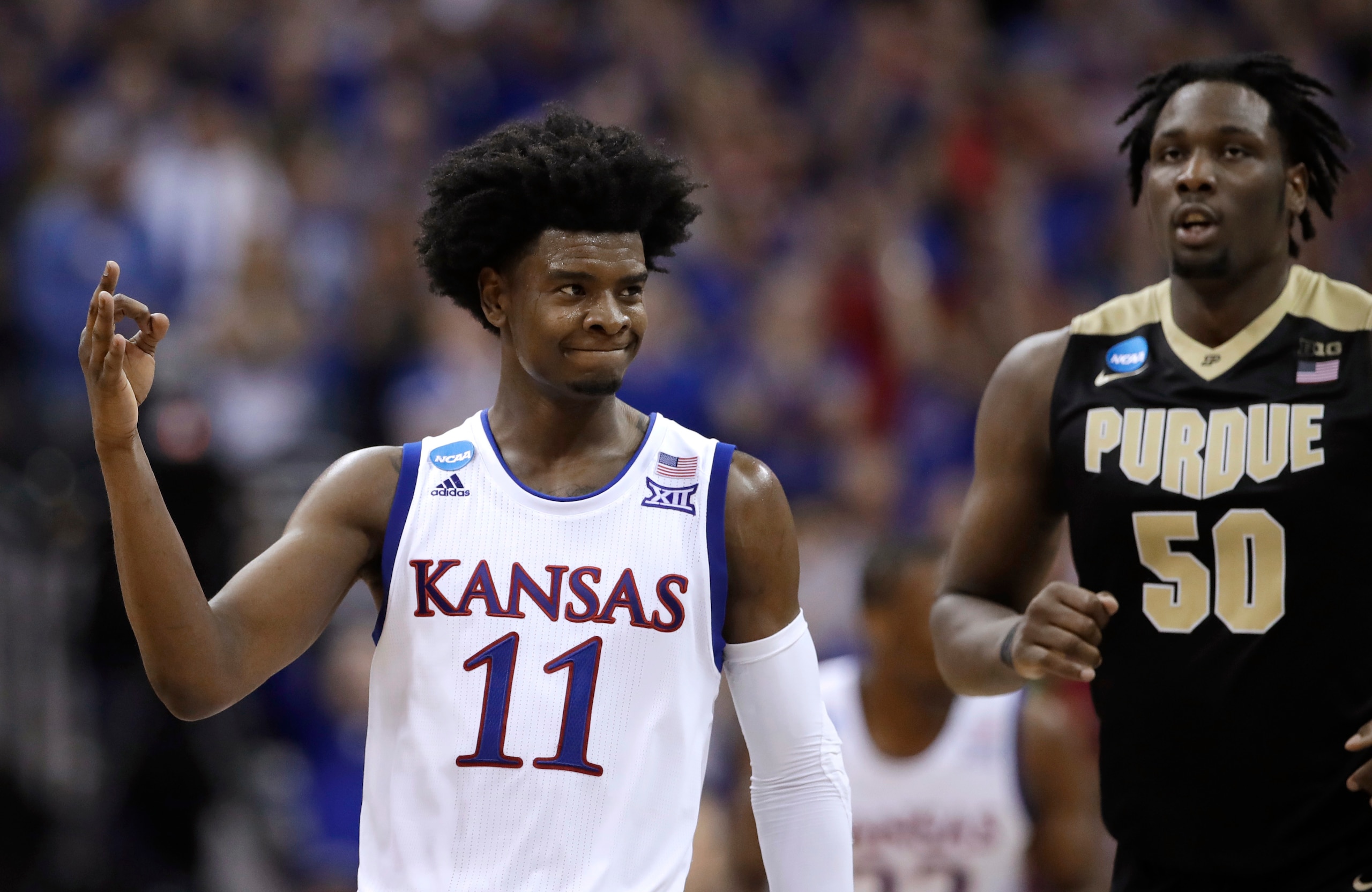
The Boston Celtics roster is already full of defensive-minded wings with spotty shots, including Marcus Smart, Jaylen Brown and (to some extent) Jae Crowder.
To that end, Josh Jackson might blend in a bit too seamlessly. The Detroit native knocked down a solid 37.8 percent of his triples at Kansas but converted just 56.6 percent of his free throws.
To be sure, Jackson might have more offensive upside than all of those guys combined. The 6'8" swingman has shown an ability to make plays and create shots off the dribble for himself and his teammates. Combine that with a burgeoning basketball IQ, and Jackson could develop into an all-around stud down the line.
But there's at least one more wing in this draft whose scoring skills might make him a better fit for Boston right away: Jayson Tatum. Duke's latest one-and-done phenom can operate inside and out, and though his three-point percentage in college (34.2 percent) isn't particularly impressive, his sharpshooting from the stripe (84.9 percent on free throws) portends eventual improvement from long range.
The Celtics, it seems, are leaning toward Tatum over Jackson anyway. According to RealGM's Andrew Perna, Boston liked the former's workout for them enough to make him the team's top choice for the No. 3 pick earlier this week.
Jackson, on the other hand, finished the predraft process without audtioning for Danny Ainge and company.
Brooklyn Nets: Caleb Swanigan, Power Forward/Center, Purdue
3 of 30
Size and scoring ability are two areas in which the Brooklyn Nets now find themselves especially thin after sending Brook Lopez and the No. 27 pick to the Los Angeles Lakers in exchange for D'Angelo Russell and Timofey Mozgov.
Granted, Mozgov is a massive human being and Russell can fill it up, but if the Nets are going to see any progress in terms of wins and losses before the 2020 election, they'll need to add a legitimate threat to their frontcourt.
At first glance, Caleb Swanigan would seem to be the answer to Brooklyn's prayers at No. 22. The reigning Big Ten Player of the Year averaged 18.5 points, 12.5 rebounds and 3.0 assists while shooting 52.7 percent from the field, 44.7 percent from three and 78.1 percent from the free-throw line during his sophomore season at Purdue.
Swanigan, though, plays primarily below the rim. That's not necessarily a bad thing, and it might actually allow him to last longer in the league since he doesn't lean on his athleticism to get by.
But without anything approaching elite speed or leaping ability, Swanigan, who's projected by most to go between the late first and early second round, could have a tough time scoring inside in the NBA. Plop him into Nets head coach Kenny Atkinson's speedy style of play, and Swanigan could find himself left behind on both ends.



Charlotte Hornets: Justin Jackson, Small Forward, North Carolina
4 of 30
There figures to be all kinds of clamor around the Queen City for the Hornets to target Justin Jackson with the No. 11 pick. After all, Charlotte is a Tar Heel town, and Jackson, as the ACC Player of the Year and a national champion at the University of North Carolina, would walk in as a favorite son.
And, in some respects, Jackson would be a good fit for the what the Hornets have built under head coach Steve Clifford. With his size (6'8" with a 6'11" wingspan) and athleticism, Jackson has the makings of a pesky perimeter defender—one with an improving outside shot (36.8 percent from three as a junior), no less.
But if shooting is the priority in Charlotte—and it may be now that Dwight Howard will be manning the middle—the Hornets should have better options at their spot. Duke's Luke Kennard, for one, looks like a viable option who also brings a bit more juice as a playmaker off the bounce.
And if the Hornets are comfortable proceeding with Nicolas Batum and Michael Kidd-Gilchrist as their top wings, they could look toward another Tobacco Road product (Wake Forest's John Collins) to fortify their frontcourt.
Chicago Bulls: Bam Adebayo, Center, Kentucky
5 of 30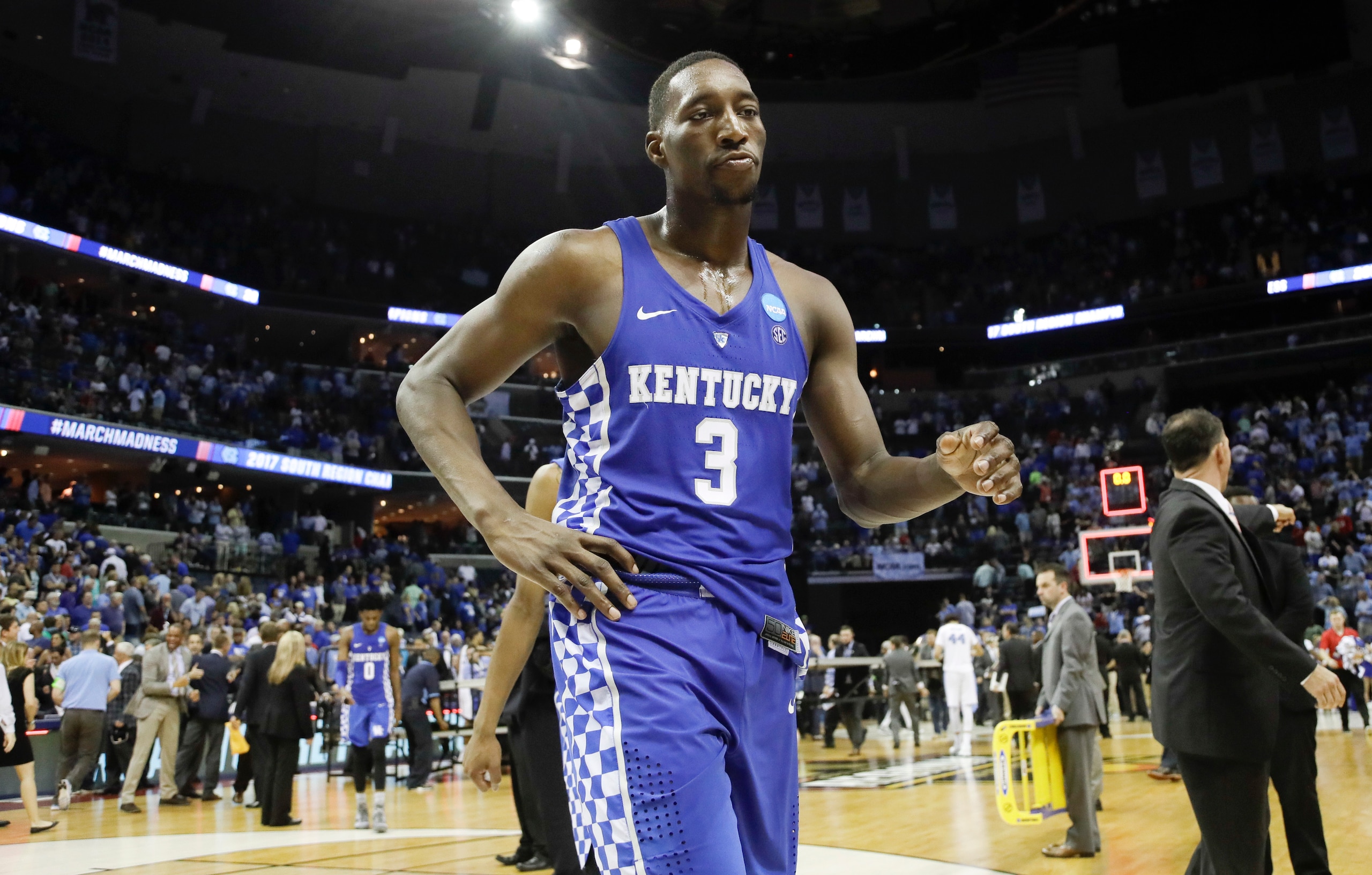
For all the kerfuffle surrounding Jimmy Butler's future in Chicago, there's at least one player on the roster who seems likely to stay awhile: Robin Lopez. The 7-footer set a solid place for himself in the Windy City during his first campaign with the Bulls (10.4 points, 6.4 rebounds in 28.0 minutes per game) and will have more opportunities to strengthen his position over the next two years on his contract.
So why, then, does Sam Smith of the Bulls website have the team eyeing so many bigs at No. 16, including Kentucky's Edrice "Bam" Adebayo?
He's more of a physical specimen who is dunking everything. And hard. He's a broadcaster's dream being able to say "bam" on a regular basis. He's not a good shooter who also is raw in basketball ability—some say the next Tristan Thompson.
Surely, there would be more to this selection than Bulls color commentator Stacey King's desire for a new catch phrase. But unless Chicago is keen to trade Lopez and/or decline to re-sign Cristiano Felicio this summer, adding an offensively limited big like Adebayo seems an odd fit.
Cleveland Cavaliers: Nigel Williams-Goss, Point Guard, Gonzaga
6 of 30
The Cleveland Cavaliers don't have a pick in this year's draft, though they could look to buy their way into the top 60.
At present, there's no telling who or what they would target with a selection. For one, their front office remains in flux in the wake of David Griffin's departure as general manager. There's also the not-so-small matter of deciding whether the Cavs would spend a pick on someone who might be able to help the right away or place their bet on someone to groom for a potential post-LeBron James future.
In light of Deron Williams' impending free agency and James' frequent gripes from last season about a lack of ball-handers on Cleveland's roster, it may behoove the next regime to bring in another point guard to groom behind Kyrie Irving—assuming the Cavs aren't yet enamored with Kay Felder.
Cleveland could target Nigel Williams-Goss, the 6'4" junior floor general out of Gonzaga. He can score inside, conduct the pick-and-roll and hit the occasional jumper from distance.
But Williams-Goss isn't the sharpest shooter (36.8 percent from three this past season) and tends to pound the ball when he has it. If the Cavs would prefer a pass-first type who can keep the rock moving and the defense honest when he's on the floor, they may do better taking a flier on Iowa State's Monte Morris in the second round.
Dallas Mavericks: Lauri Markkanen, Power Forward/Center, Arizona
7 of 30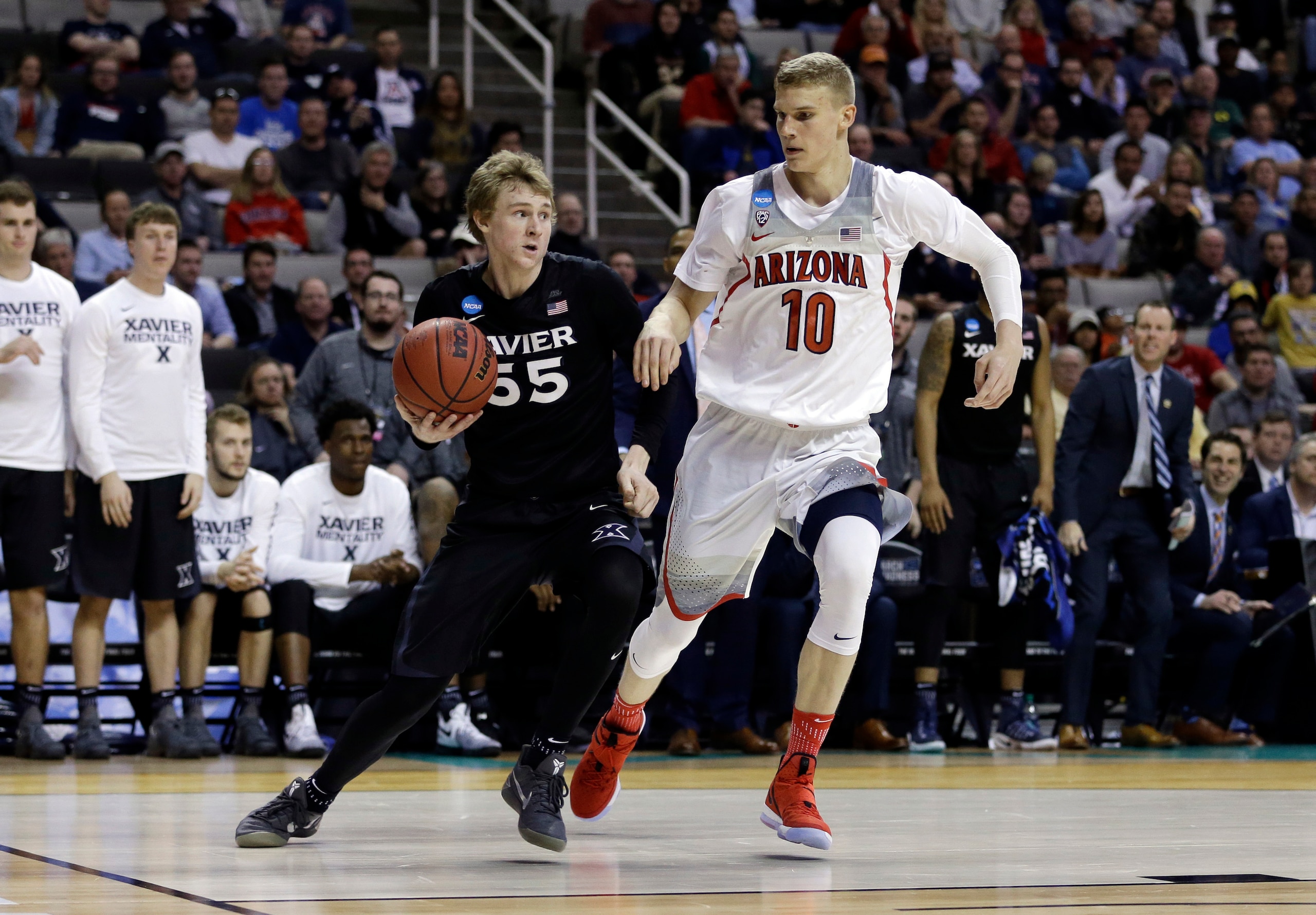
There may be temptation in the Metroplex to find Dirk Nowitzki's successor before the future Hall of Famer hangs up his sneakers for good.
And, indeed, Lauri Markkanen looks like the latest best clone of the giant German. The Finn's size (7'), shooting ability (42.3 percent from three on 4.4 attempts per game at Arizona) and all-court scoring skill make him as close to a spitting image of Nowitzki as the Dallas Mavericks have yet seen within their drafting range. So do his so-so athleticism, middling impact on the glass (7.2 rebounds per game in college) and subpar defensive prowess.
But Markkanen's inherent pros and cons aren't quite as germane to the Mavs' priorities with the No. 9 pick as the more glaring needs on their roster—namely, at point guard. Dallas has sifted through 18 floor generals since Jason Kidd last suited up for owner Mark Cuban's squad in 2012.
(And you thought the Cleveland Browns had bad luck with quarterbacks!)
It's about time then that the Mavs managed to land a point guard who can not only help them make the most of Nowitzki's waning years, but also set them up for success when he retires.
Dallas hasn't been shy to telegraph its interest in French teenager Frank Ntilikina, from meeting with him in Italy during Adidas Eurocamp to hiring his club coach (Strasbourg's Vincent Collet) to run the Mavs' Orlando Summer League squad. If Ntilikina is off the board by then, Cuban and company can only hope they'll have a shot at North Carolina State's Dennis Smith Jr.
Denver Nuggets: TJ Leaf, Power Forward, UCLA
8 of 30
The Denver Nuggets could double down on offensive skill up front if they so desired. If that's the goal, UCLA's TJ Leaf looks like a fine fit next to rising star Nikola Jokic. During his lone season in Westwood, Leaf showed off a deft shooting touch inside (64.4 percent shooting on twos) and out (46.6 percent from three-point range) along with an array of moves and a willingness to pass the ball. His scoring skill could be essential for the Nuggets if Danilo Gallinari decides to leave in free agency.
If that's how the Nuggets go, though, fans in the Mile High City are bound to see head coach Michael Malone's blood boil over with how poorly the team's defense fares. Leaf struggled against stronger, quicker forwards in college and figures to find plenty more such foes in the pros. Jokic, meanwhile, posted the second-worst defensive field-goal percentage (56.9 percent) among players who contest at least seven shots per game and appeared in no fewer than 10 contests, per NBA.com.
In truth, Leaf looks like a reach at No. 13, where the Nuggets might have a shot at, say, Gonzaga's Zach Collins depending on how the top 10 picks shake out.
Detroit Pistons: Donovan Mitchell, Shooting Guard, Louisville
9 of 30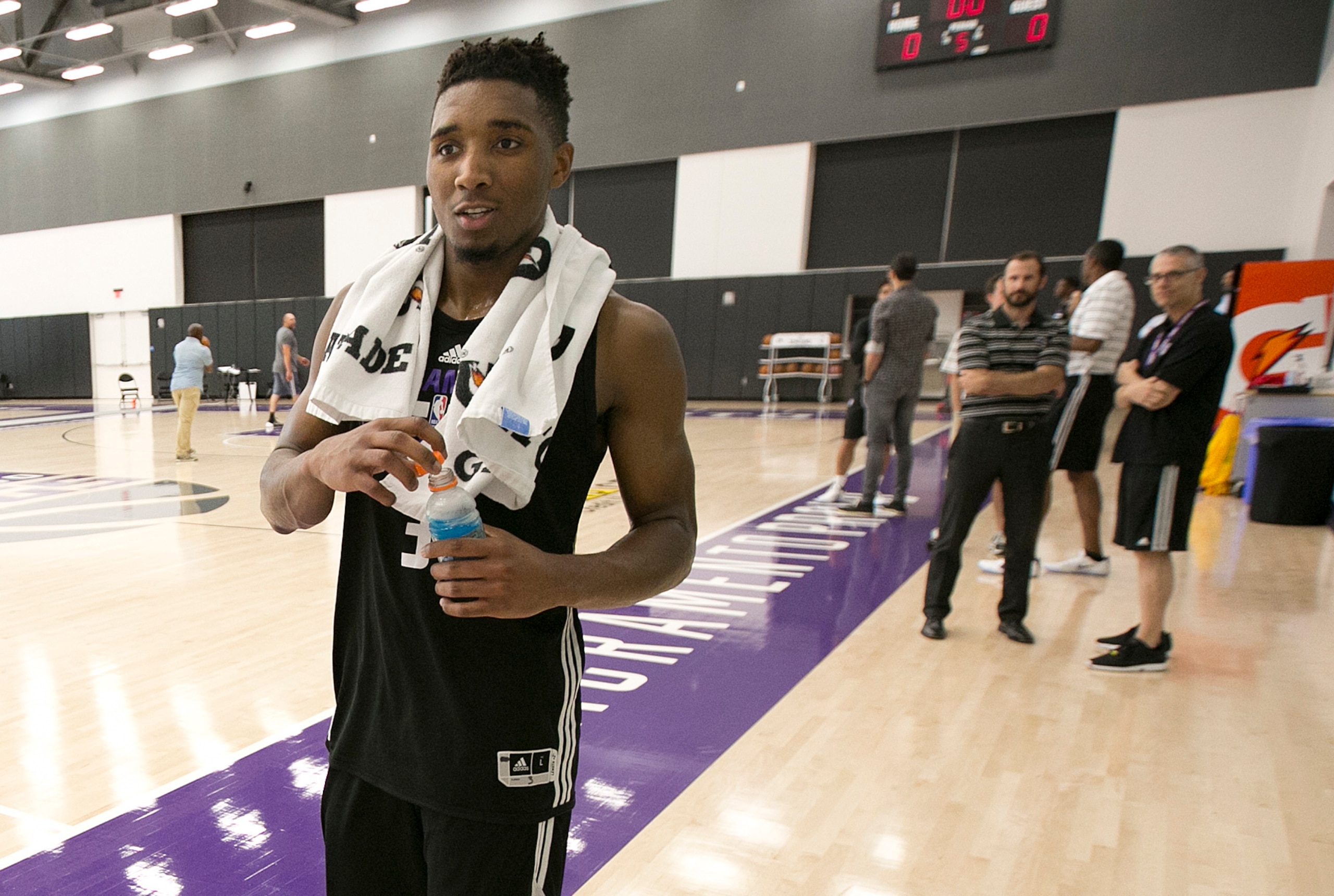
If the Detroit Pistons intend to build around the duo of Andre Drummond and Reggie Jackson over the long haul, they'd do well to stack up all the shooters they can find. And if they don't intend to build with Kentavious Caldwell-Pope, a restricted free agent, landing a wing with range at No. 12 would make plenty of sense, assuming the Pistons keep the pick.
Duke's Luke Kennard could be available. So could North Carolina's Justin Jackson.
Louisville's Donovan Mitchell might be an option as well. At 6'3" and 210 pounds with a 6'10" wingspan, he could become a dogged defender at the next level, despite what his height would suggest.
Mitchell's case for the Motor City, though, could fall apart on the offensive end. He wasn't a particularly efficient shooter from two-point (46.3 percent) or three-point range (35.4 percent) during his sophomore season. Nor did he get to the free-throw line all that often (3.2 times in 32.3 minutes).
As much as Mitchell has been flying up draft boards of late, the Pistons would seem best suited to not assist him in his rise on Thursday.
Golden State Warriors: Dwayne Bacon, Small Forward, Florida State
10 of 30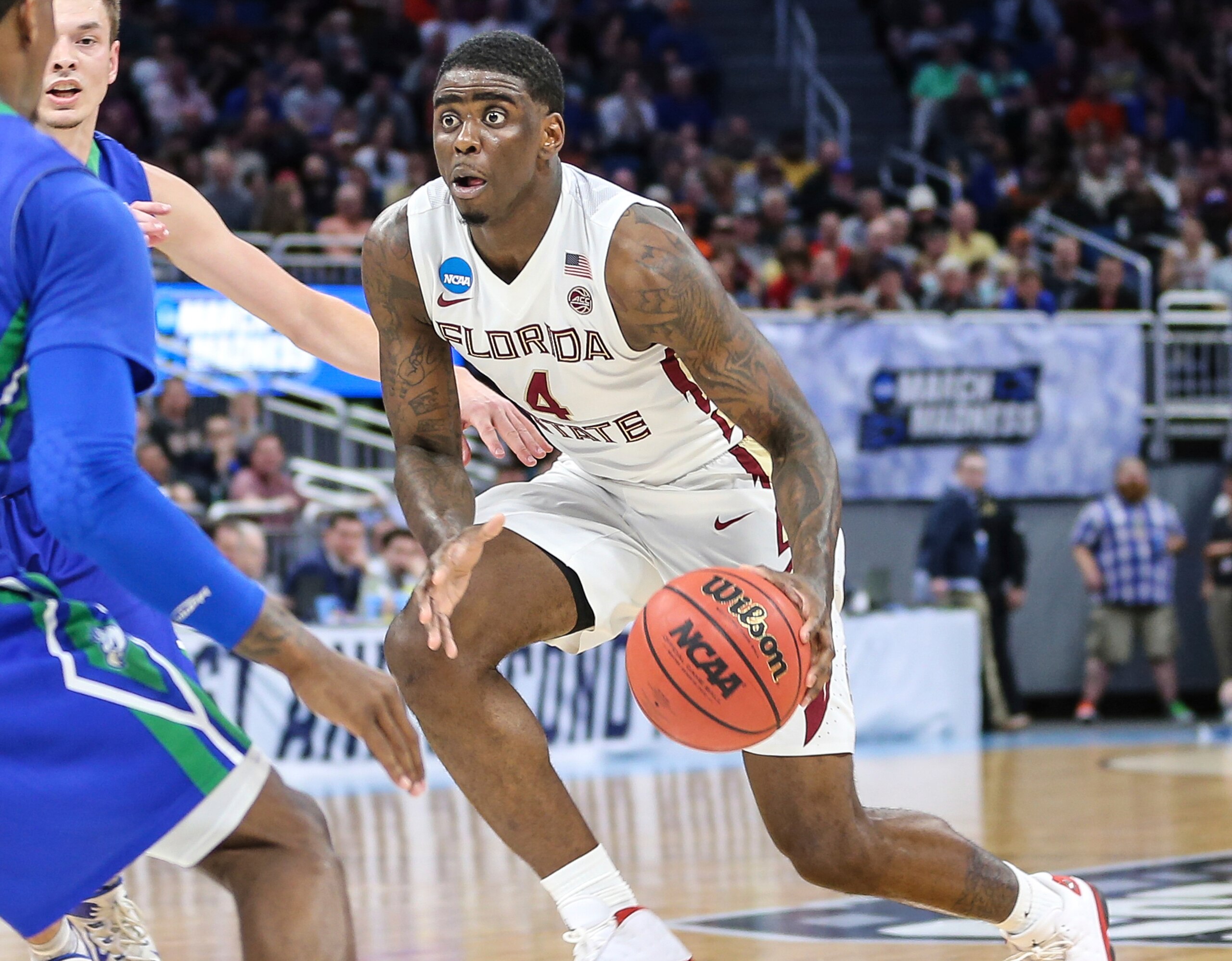
What do you get the team that has everything? Maybe a second-round pick, if the Warriors choose to buy one.
"In there on our board, we have a 'B' next to our players who we would buy a pick for, in red," general manager Bob Myers told the San Jose Mercury News' Anthony Slater. "So there are guys we would buy a pick for. If you snuck in there, it would be fun to see."
Who he has on his board is anybody's guess, though if Golden State's track record of snagging versatile wing/forwards who can shoot and defend is any indication, Florida's Devin Robinson might be ideal.
A less ideal option? Florida State's Dwayne Bacon. The sophomore swingman has the length (6'10" wingspan on a 6'5" frame) to be a bother defensively and showed an ability to slash for scores in college (16.5 points per game, 51.0 percent on two-pointers).
But Bacon struggled to connect from the shorter NCAA three-point line (31.2 percent over two seasons). Without much lift on his jumper, he could have an even tougher time finding his range in the NBA.
Houston Rockets: P.J. Dozier, Shooting Guard, South Carolina
11 of 30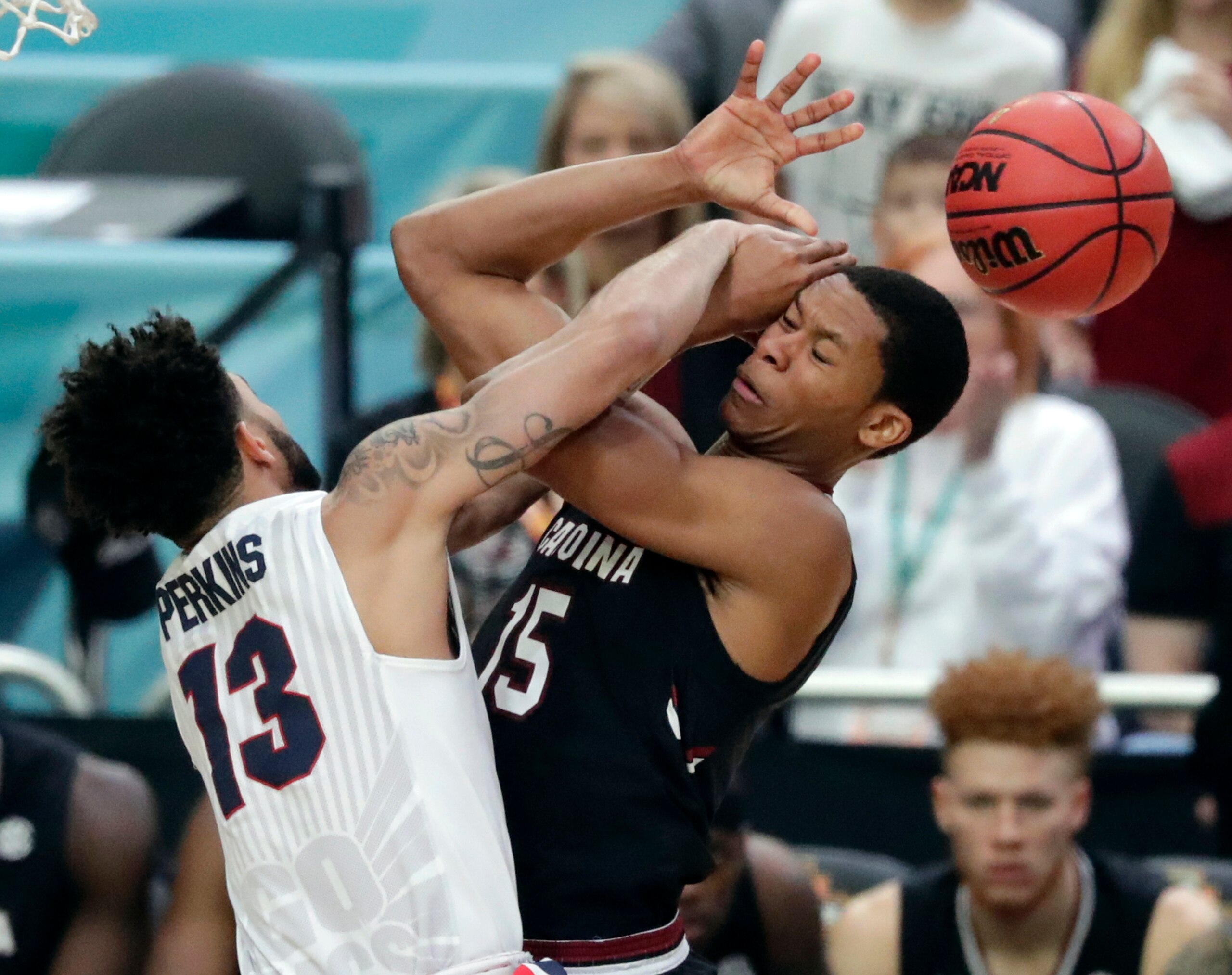
The Houston Rockets have not one, but two second-round picks (Nos. 43 and 45) currently in their arsenal. Considering the Rockets' desire to be players in free agency this summer, don't expect them to spend more than one of those selections on a player who might make their roster this coming season—and, thus, would occupy even a sliver of precious cap space.
Still, another wing wouldn't hurt, preferably one who would be comfortable launching threes ad nauseum in Mike D'Antoni's spread pick-and-roll system.
Which is to say, not P.J. Dozier. The South Carolina product fell well short of the 30 percent mark from three as a freshman (21.3 percent) and came up a hair under it (29.8 percent) as a sophomore. Both marks qualify as subpar for a swingman in today's NBA, especially one who would end up in D'Antoni's employ.
Sure, Houston could use another long-armed defender to groom, what with Trevor Ariza heading into a contract year. But at the expense of the Rockets' impeccable offensive spacing? Don't count on it.
Indiana Pacers: Tyler Lydon, Forward, Syracuse
12 of 30
If this is, indeed, the end of Paul George's stay in the Circle City, the Pacers would do well to target another wing with the No. 18 pick. Indiana's OG Anunoby would make sense if the team would prefer a more local flavor to their next top rookie. SMU's Semi Ojeleye has the size and strength to become a solid two-way wing in the NBA, if not something more.
Syracuse's Tyler Lydon, on the other hand, might be a trickier option. The 6'10" forward can shoot—he hit 39.8 percent of his threes in college—but his success was largely the product of spot-up opportunities. According to DraftExpress, he hit just seven of 24 in the half court off the dribble as a sophomore.
With Jeff Teague bound for free agency and George likely on his way out, the Pacers will need someone who can create offense for himself and his teammates. Lydon, for all his shooting prowess, doesn't fit the bill.
Los Angeles Clippers: Jaron Blossomgame, Small Forward, Clemson
13 of 30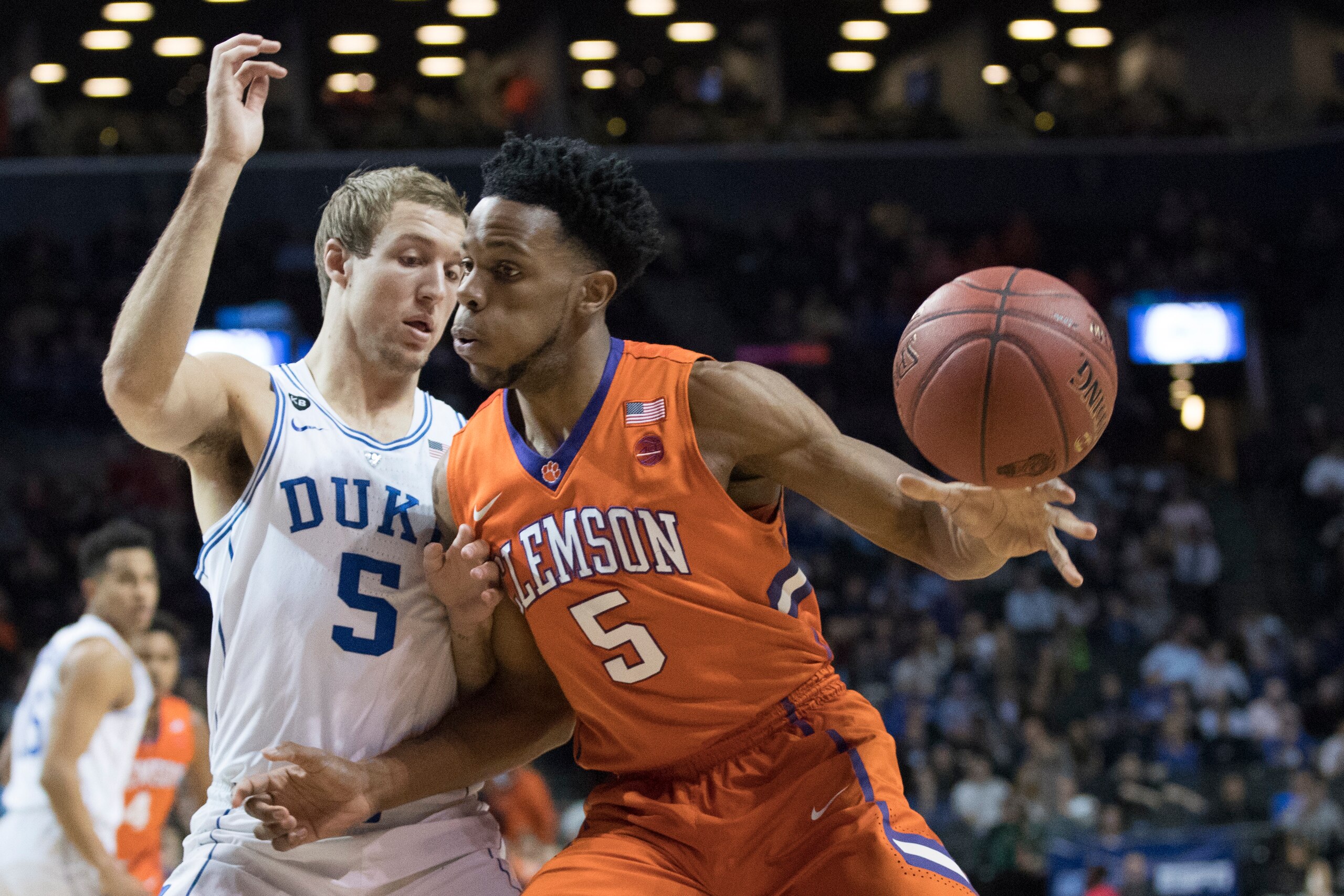
Just because the Los Angeles Clippers don't have any picks in this year's draft doesn’t mean they're going to spend Thursday evening sitting on their hands.
"We're going to be active, I'll just say that," head coach Doc Rivers said, per the Orange County Register's Bill Oram. "Whether that means getting in (to the draft) or not, but we want to be active."
According to ESPN.com's Chris Haynes, the Clippers have already tried to pry the No. 4 pick from the Phoenix Suns in a deal involving DeAndre Jordan. Short of that sort of blockbuster, L.A. could look to buy a pick in the second round, perhaps to find a diamond in the rough to groom on the wing.
Among those who could be available later on: Jaron Blossomgame. The Clemson grad worked out for the Clippers last year before pulling out of the draft process.
L.A. may like his size (6'7", 214 pounds) and wingspan (6'10"), but his poor outside shooting (25.5 percent from three as a senior) would make him yet another liability at small forward on offense.
Los Angeles Lakers: De'Aaron Fox, Point Guard, Kentucky
14 of 30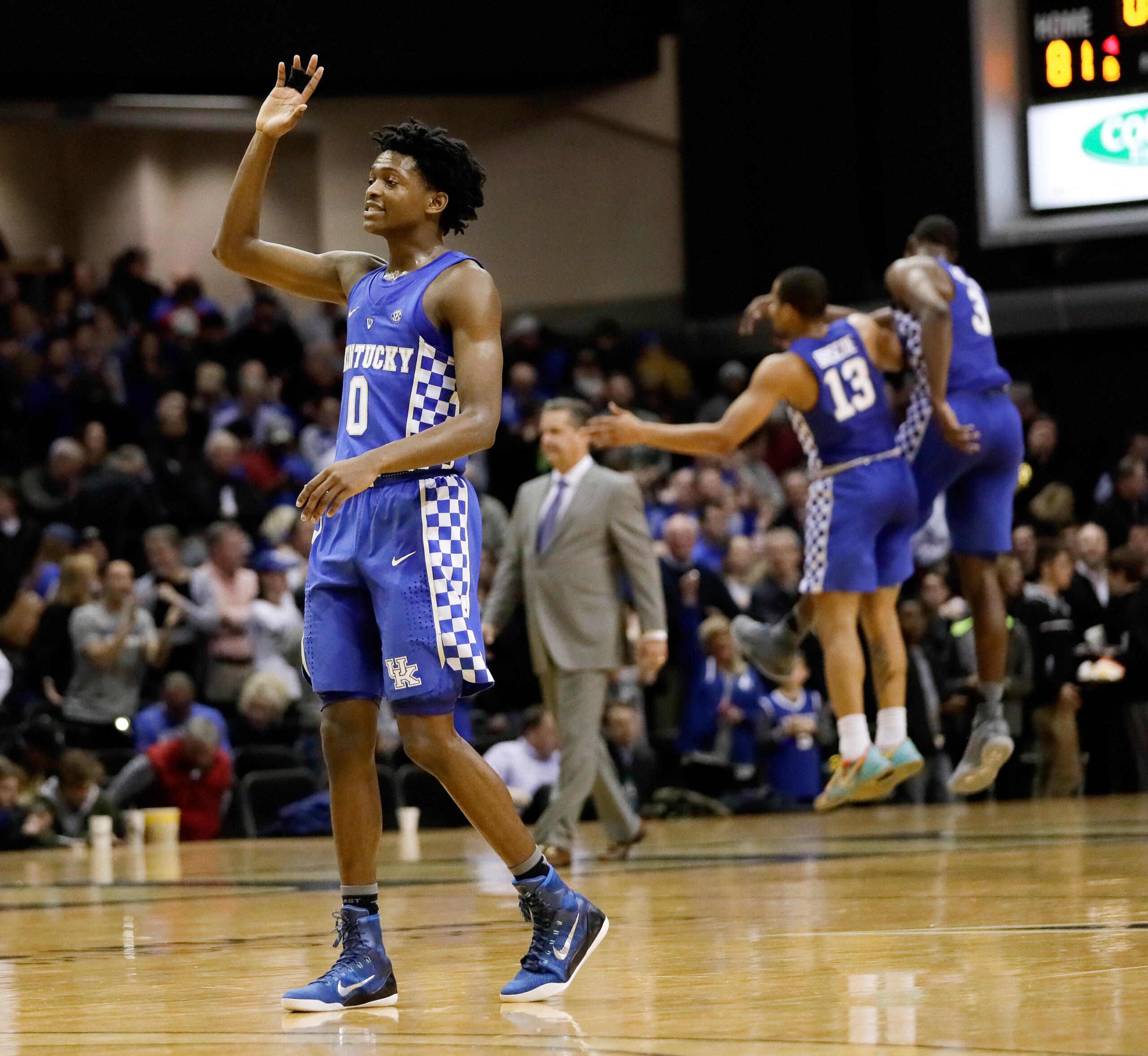
There's nothing inherently wrong with De'Aaron Fox as a pick for anyone, the Los Angeles Lakers included. He has good size (6'4" with a 6'6 ½" wingspan) and great athleticism for his position, and, by all accounts, a good head on his shoulders.
As far as the Lakers are concerned, Fox's success in head-to-head matchups with UCLA's Lonzo Ball might be worth noting. So could the budding rivalry between LaVar Ball and Aaron Fox. The elder Fox told Bleacher Report's Jonathan Abrams:
"My son already ate his ass up twice. [LaVar] can say what he wants to say. I just tell him to go back and watch the film. That's it. All that yap, yap, yapping, I don't even got to respond to that. We played them twice. Twice his son got outplayed. I always tell [De'Aaron], let your game speak for it. You ain't got to talk. You ain't got to fuss."
The divide for L.A., beyond Ball's local roots and Fox's back in Houston, comes in passing and shooting. Where Ball led the nation in assists (7.6 per game) and shot 41.2 percent from three as a freshman, Fox racked up 4.6 helpers per outing and struggled mightily from deep (24.6 percent from three).
For what it's worth, Fox is acutely aware of the impact a better shooting season could've had on his draft-day fate.
"I feel like if I would have shot the ball [better], it would have been a no-brainer for me to be the No. 1 pick," Fox told Abrams, "but I didn't shoot the ball well, so it's something that I'm going to have to prove to people."
Memphis Grizzlies: Davon Reed, Shooting Guard, Miami (FL)
15 of 30
The Memphis Grizzlies have some major holes to fill this summer and only scant cap space with which to do so.
Among those spots could be the one of wing stopper, owned for so long by the Grindfather himself, Tony Allen. According to the Memphis Commercial Appeal's Peter Edmiston, the Grizzlies hope to retain Allen on a veteran's minimum contract.
If that's the case, Memphis would be smart to buy its way into the second round to secure another young perimeter player.
Someone like Miami's Davon Reed might seem a solid choice to jump in line as a potential successor to Allen in the River City. At 6'6" with a 7' wingspan, Reed could be a difference-maker across positions defensively. And after draining 39.5 percent of his triples in college, Reed has the look of a three-and-D steal.
But if the Grizzlies are going to pay to play in this year's draft, they might do even better to target South Carolina's Sindarius Thornwell. Like Allen, Thornwell looks like a tough-minded, hard-nosed defender willing to take on just about any assignment. Better yet, he did all that while scoring 21.4 points per game and taking home SEC Player of the Year honors.
Miami Heat: Jarrett Allen, Power Forward/Center, Texas
16 of 30
With Chris Bosh's contract on its way off the books and Justise Winslow on the mend, the Miami Heat could use a new youngster at power forward to pair with Hassan Whiteside up front. The two top Collinses in this year's draft—Gonzaga's Zach and Wake Forest's John—look like solid fits at 4 if the Heat can land either one: Zach for his outside stroke and defensive prowess, John for his ability to battle inside.
If those players are gone by No. 14, Miami would do well to tread carefully around the big men projected to land in the middle of the first round. Chief among those is Jarrett Allen, a slight-of-frame 6'11" forward/center from the University of Texas. Allen’s length (7'5 ¼" wingspan) is incredibly appealing, as his ability to finish in the pick-and-roll.
But in today's NBA, putting two non-shooting bigs next to each other—as would be the case with Allen and Whiteside—is death to just about any otherwise functional offense.
Milwaukee Bucks: Justin Patton, Center, Creighton
17 of 30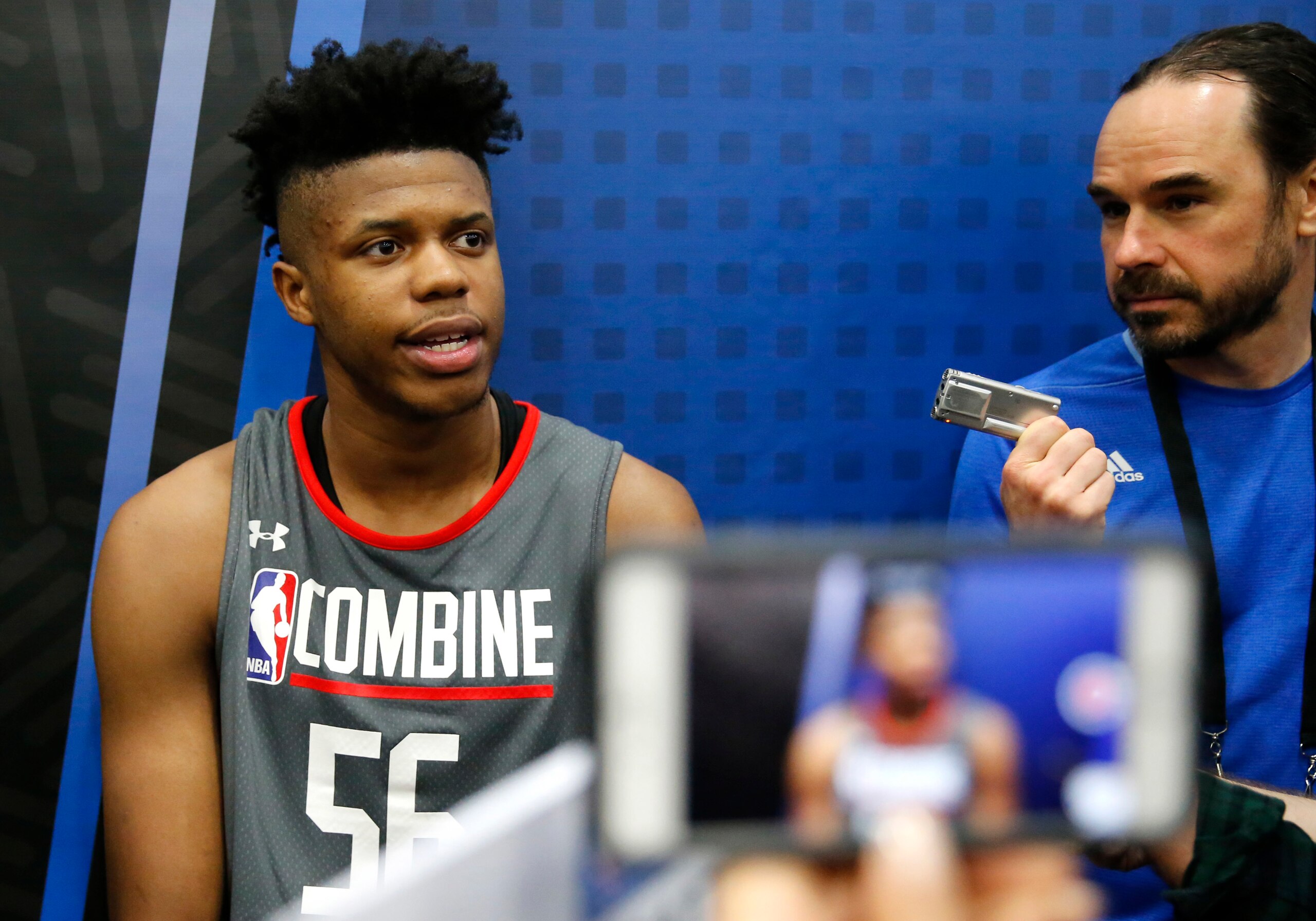
Time will tell what Jon Horst, the Milwaukee Bucks' newly promoted general manager, values in a draft pick. Considering he's been with the franchise since 2008, he may see eye-to-eye with former GM John Hammond's yearly vision of going after young bigs with raw talent.
To that end, Creighton's Justin Patton would seem a solid fit for the franchise. At 7' with a 7'3" wingspan, Patton proved to be a tough cover during his redshirt freshman season, when he shot a scorching 67.6 percent from the field.
Patton wouldn't be a poor choice for Milwaukee, per se. But given the Bucks' glut of wiry bigs (Giannis Antetokounmpo, Thon Maker, John Henson), it might make more sense to go in another direction. Should there be any concern in Brew Town about Tony Snell's impending raise, Milwaukee might want to consider a budding two-way wing like Indiana's OG Anunoby.
Minnesota Timberwolves: Luke Kennard, Shooting Guard, Duke
18 of 30
The Minnesota Timberwolves seem eager to do something with their pick other than sit tight at No. 7. According to ESPN.com's Tim MacMahon, the Wolves talked about swapping spots with the Mavericks while sending Ricky Rubio to Dallas and welcoming Wesley Matthews to Minneapolis.
If Minnesota is, indeed, looking for another shooting guard—a reasonable tack, considering Zach LaVine's impending comeback from an ACL tear—the team could find a good one in this year's draft.
Duke's Luke Kennard, though, might not be the best choice for the Wolves. The 6'6" swingman has tremendous skill with the ball and a dead-eye shooting stroke to boot (43.8 percent from three as a sophomore).
But head coach and team president Tom Thibodeau demands hard-nosed defense from his wings, and Kennard, for all his offensive ability, is chock-full of red flags on the other end, between his subpar length, so-so athleticism and spotty positioning.
New Orleans Pelicans: Edmond Sumner, Point Guard, Xavier
19 of 30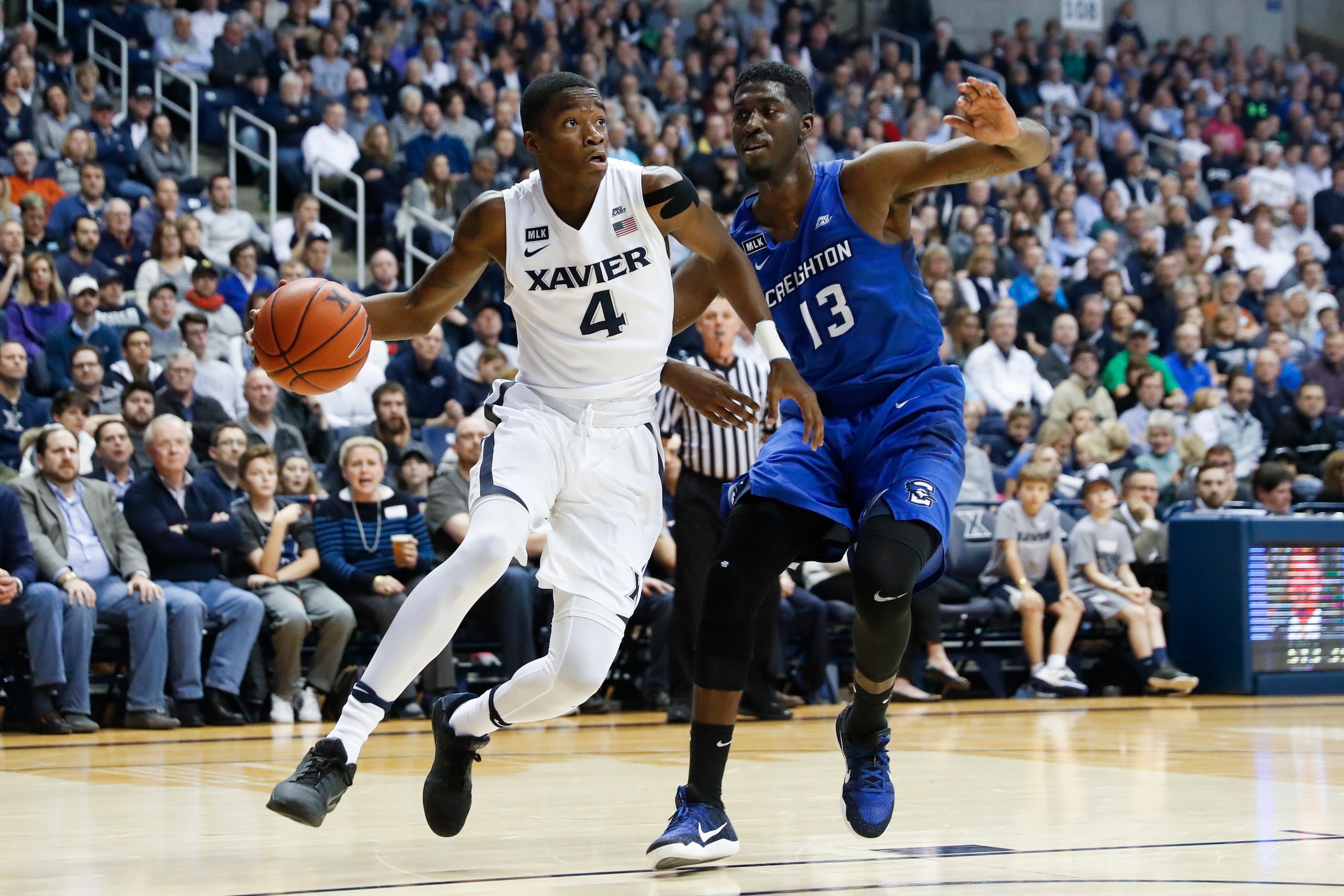
Where do the New Orleans Pelicans even begin? They have only the 40th pick and a sliver of cap space with which to find shooters and ball-handlers who could complement the frontcourt combination of Anthony Davis and DeMarcus Cousins.
The Pelicans could bet what little they have on Edmond Sumner. The junior point guard out of Xavier boasts tremendous size (6'5"), length (6'9"), quickness and explosion for a player at his position. Under normal circumstances, Sumner might've been a first-round lock.
But Sumner's situation is a tricky one. He redshirted most of his freshman season on account of knee tendinitis, missed the second half of his sophomore campaign after tearing his ACL and may have a shoulder injury to attend to as well.
Throw in Sumner's uninspiring stroke (28.5 percent from deep in college), and the Pelicans would do well not to gamble what little they have on the former Musketeer.
New York Knicks: Lauri Markkanen, Power Forward/Center, Arizona
20 of 30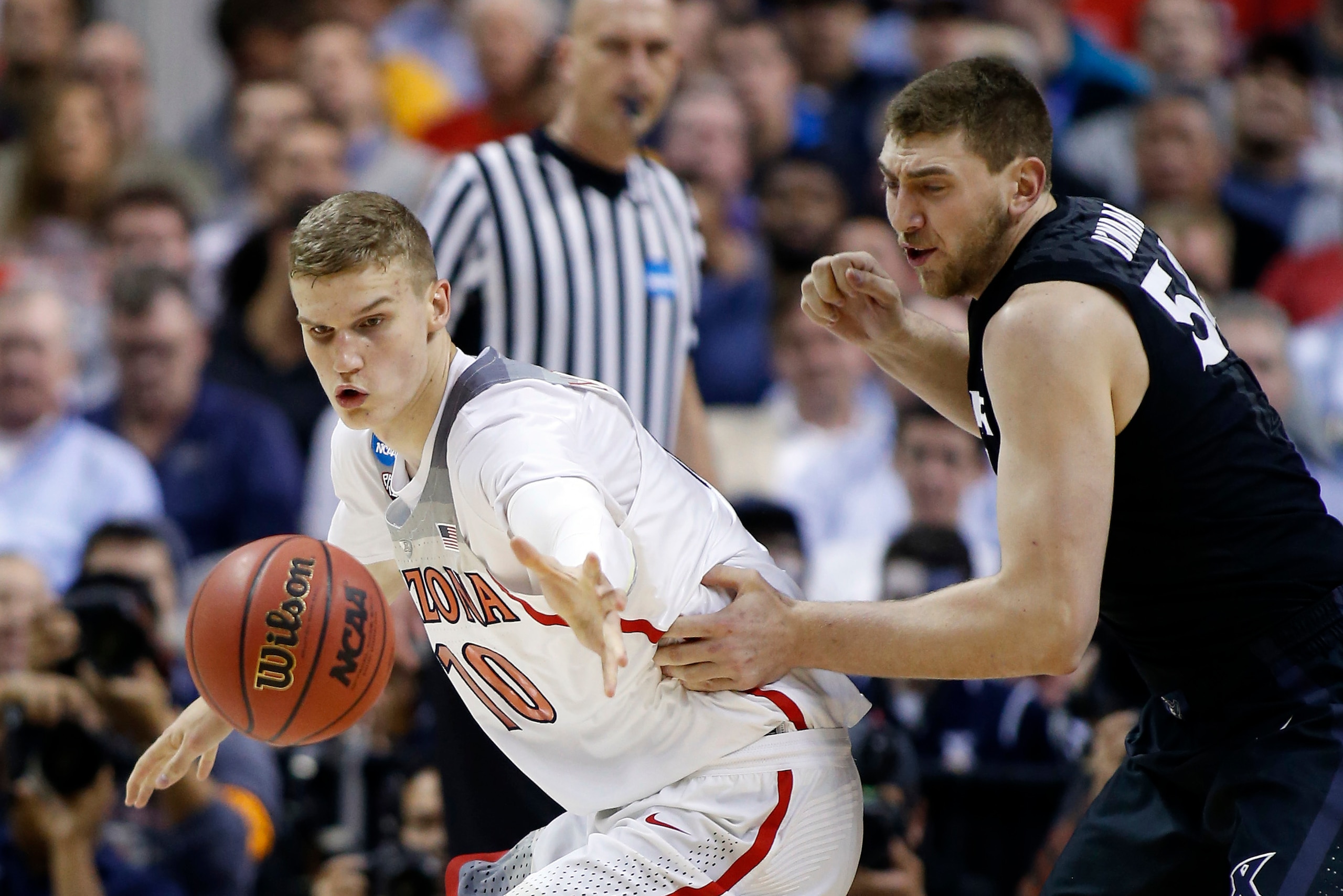
The notion that the New York Knicks should avoid Lauri Markkanen if he lasts to No. 8 is less about him and more about what that might mean for Kristaps Porzingis.
According to The Vertical's Adrian Wojnarowski, Knicks president Phil Jackson sees Markkanen as "a replacement for Porzingis" in the event that he opts to deal the future of the franchise.
Markkanen, for his part, would be as fine a choice for such a role as you'll find in this year's draft. The 7-footer from Finland is a tremendously skilled offensive big, with a smooth shooting touch from deep (42.3 percent on 4.4 three-point tries per game at Arizona) and the ability to operate with his back to the basket.
Markkanen, though, lacks the same height, length and athleticism that make Porzingis such a unique prospect.
More importantly, the Knicks don't need to move on from the 21-year-old Porzingis. As strained as relations may be between player and organization, they reached this point largely out of New York's desire to build around the lanky Latvian. Shipping him out now—and replacing him with Markkanen—would only deepen the hole the Knicks have already dug for themselves.
Oklahoma City Thunder: Ivan Rabb, Power Forward, Cal
21 of 30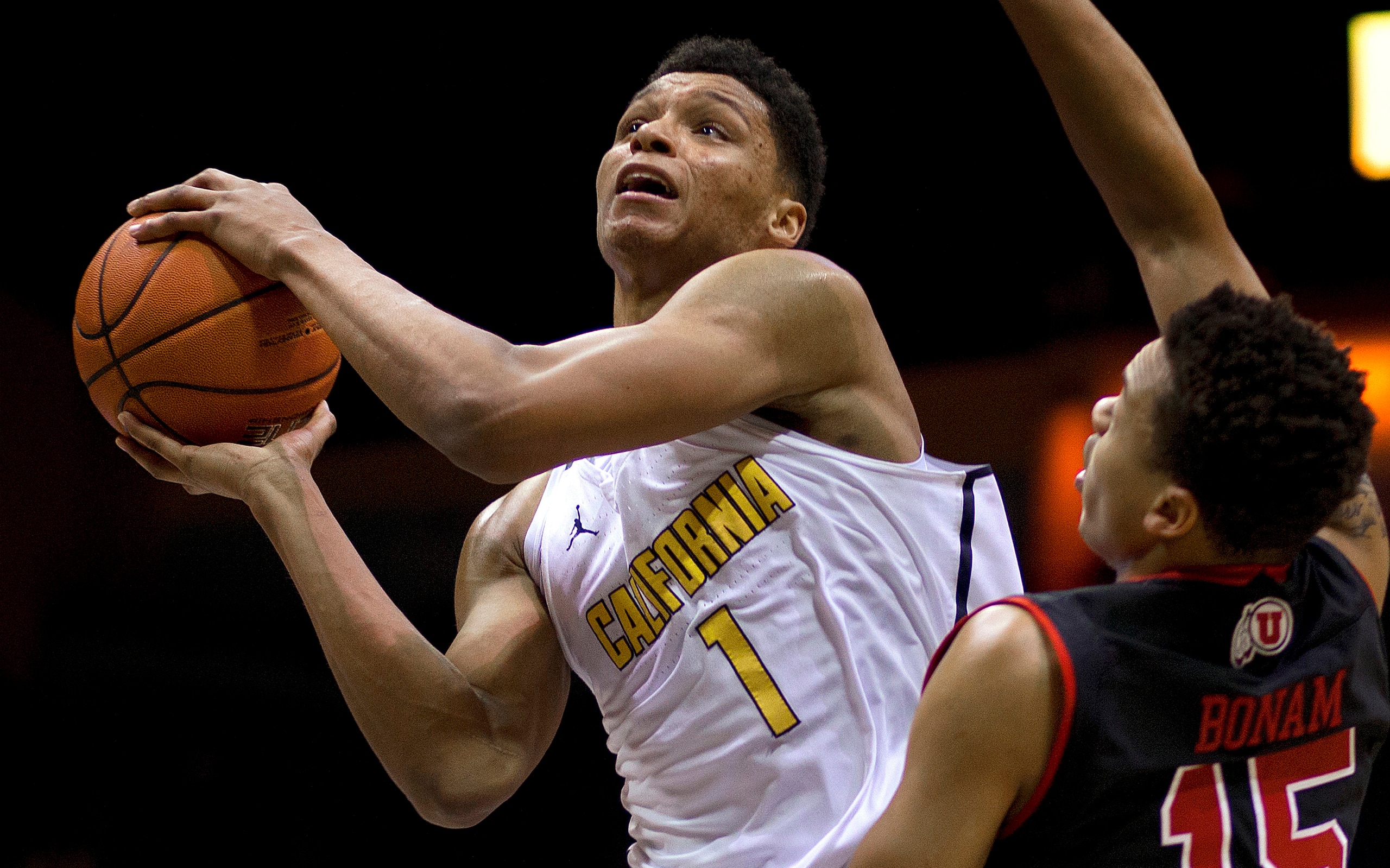
With Taj Gibson hurtling toward free agency, the Oklahoma City Thunder would be wise to cover their bases by adding another power forward to their arsenal. It would also behoove OKC to see if their potential 4 of the future can also stretch the floor for Russell Westbrook's manic basket attacks.
Cal's Ivan Rabb projects as a fine rebounder at the next level. At 6'10", with a 7'1 ½" wingspan, Rabb can board with the best of them in this year's draft class. He ripped down 8.5 caroms per contest as a freshman and another 10.5 a night as a sophomore.
Rather, it's Rabb's shabby shooting that could cost him a spot with the Thunder at No. 21. After converting 61.5 percent of his two-point field goals as a frosh, Rabb saw his efficiency plummet—to 48.4 percent overall—as he attempted to stretch his shot this past season, during which he knocked down eight of 20 triples.
Rabb's range, then, is no better than that of any of OKC's incumbent forwards. And with his slight frame, he may have trouble crashing the glass against grown men in the pros quite as well as he did opposite fellow college kids.
Orlando Magic: Jonathan Isaac, Forward, Florida State
22 of 30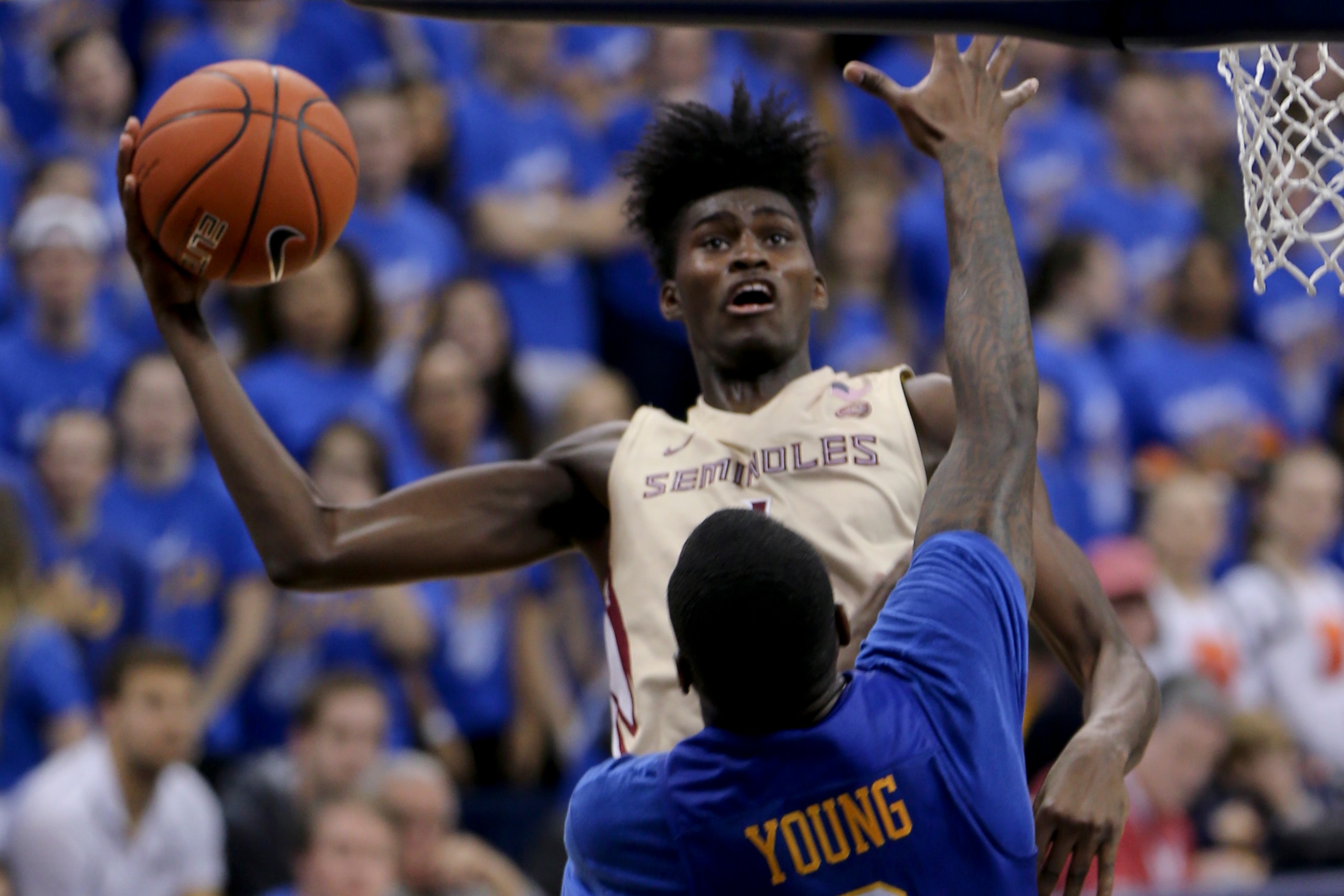
Stop me if you've heard this before: The Orlando Magic spend a lottery pick on a long, athletic forward who's either versatile enough to play multiple positions or lacks a clear skill set to fill any specific spot.
In 2014, it was Aaron Gordon. In 2015, it was Mario Hezonja. Last year, the team passed up the opportunity to draft another such prospect by dealing the No. 11 pick to Oklahoma City in an ill-fated trade for Serge Ibaka.
The front-office turnover in Central Florida isn't likely to change that approach—not entirely, anyway. John Hammond, the Magic's new general manager, made his most recent bones in Milwaukee by betting big on the freakish tools of Giannis Antetokounmpo and Thon Maker.
Florida State's Jonathan Isaac would add to that stockpile of mysterious prospects in Orlando. The 6'11" Bronx native has the length, athleticism and foot speed to guard multiple positions, as DraftExpress' Mike Schmitz noted: "Isaac is a small-ball heavy, defensive-oriented coach's dream. Despite his slight frame, at 6'11" with the reach of many NBA centers (9' ½"), and the feet of a 2-guard, Isaac has the defensive versatility to check at least four positions maybe even stealing some minutes at the [5] once he fills out."
Trouble is, head coach Frank Vogel has never shown an inclination to go small, dating back to his days with the Indiana Pacers. And while Isaac may have the chops to defend opposing wings, manning that same spot on offense may be a chore without some serious work on his offensive game.
Philadelphia 76ers: Lonzo Ball, Point Guard, UCLA
23 of 30
In pure basketball terms, there would be nothing wrong with the Philadelphia 76ers spending the No. 1 pick they pried from the Boston Celtics on Lonzo Ball. You could argue that Ball's deep shooting range, playmaking prowess and ability to affect the game with or without the ball in his hands would make him just as comfortable a fit in Philly's process as Washington's Markelle Fultz figures to be.
The turnoff for the Sixers with Ball concerns everything else—namely, his father, LaVar Ball. The Father of Balls made it clear from the get-go that he wanted his eldest son to play for the Lakers, going so far as to have him work out only for the Purple and Gold.
Do the Sixers like what they saw from Ball on tape and in person at UCLA enough to risk incurring the wrath of his dad?
Chances are, that question won't likely come up, since Philly seems to have already inducted Fultz into The Process.
Phoenix Suns: Malik Monk, Shooting Guard, Kentucky
24 of 30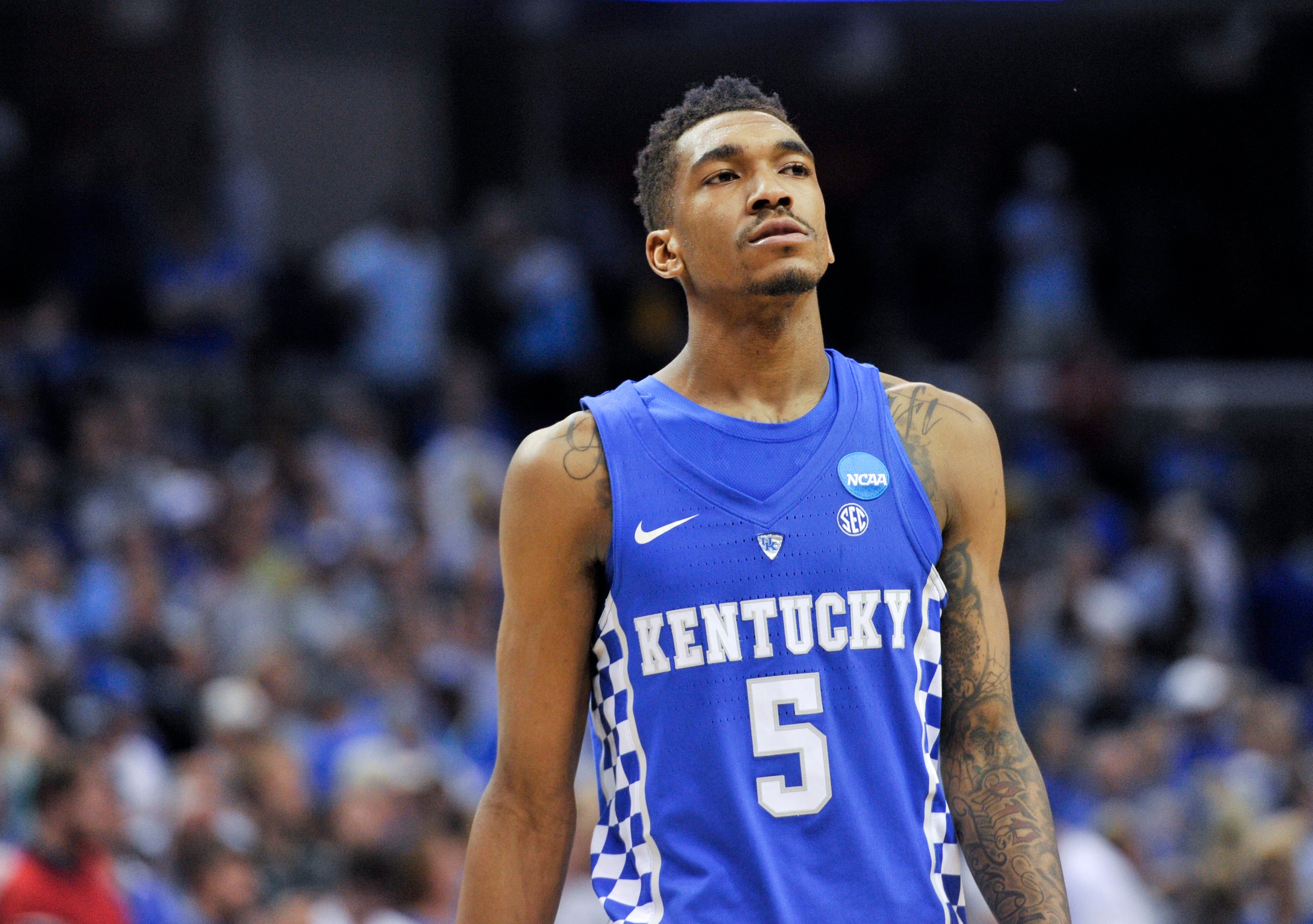
If there's anything Suns general manager Ryan McDonough likes to acquire, it's guards with Kentucky pedigrees. He already has four such Wildcats on his roster— Eric Bledsoe, Brandon Knight, Devin Booker and Tyler Ulis—and will be well-positioned to add another with the No. 4 pick if he so chooses.
Perhaps a fourth floor general, in De'Aaron Fox, would be too much even for McDonough's taste…but what about an explosive scoring guard like Malik Monk?
In some respects, Monk would make sense in Phoenix. The Suns could use a microwave scorer off their bench, and Monk, at 6'4" and a scoring average near 20 points per game as a freshman, fits that bill.
Of course, Knight would too, if he were so inclined. The same could turn out to be true for Derrick Jones Jr.
The biggest problem with the Suns going after another guard? Their glaring need on the wing, where T.J. Warren and Jared Dudley are their best in-house options, and the likely availability of either Duke's Jayson Tatum or Kansas' Josh Jackson at Phoenix's slot.
Portland Trail Blazers: D.J. Wilson, Power Forward, Michigan
25 of 30
To say that the Portland Trail Blazers should avoid D.J. Wilson here isn't to question the former's needs for a player of his ilk. The Blazers could use a legit power forward after spending the last two seasons plugging holes up front with small-ball options (e.g. Al-Farouq Aminu).
Nor is it to cast doubt on Wilson's credentials and talents. Combine Wilson's size (6'10", 240 pounds with a 7'3" wingspan) with his shooting ability (37.3 percent from three as a junior at Michigan) and athleticism, and you've got the makings of a modern stretch 4.
But Portland should be wary of any big man with a noteworthy injury history, and Wilson has that. He missed all but five games of his freshman season after suffering a knee injury and didn't hit his stride in Ann Arbor until he became a redshirt sophomore.
Not that the Blazers should ignore a talented player with a medical rap sheet. But given Rip City's uniquely tortured lineage of gifted prospects betrayed by their own bodies (e.g. LaRue Martin, Bill Walton, Sam Bowie, Greg Oden, Brandon Roy, etc.), the team has every reason to proceed with caution when considering a potential draftee, even at No. 15.
Sacramento Kings: Dennis Smith Jr., Point Guard, North Carolina State
26 of 30
The first thing the Sacramento Kings need is a point guard to build around. The last thing they need is to throw another talented player with questions about his character into their three-ring circus.
Dennis Smith Jr. fits both bills. The 6'3" freshman is a gifted athlete with explosive scoring ability, as he made clear by tallying 18.1 points and 6.2 assists per game at North Carolina State.
What's less clear is how consistently he'll look to dominate. Smith scored in single digits three times over his final 11 games, including a seven-point stinker in the ACC tournament.
He's got the ability to be a bulldog at the next level if he so chooses. He could also collapse physically if his past knee problems come back to bite him.
The Kings may be tempted to take Smith if Kentucky's De'Aaron Fox is off the board at No. 5. If Smith's issues persist in the pros, he could become just the latest talented prospect to deepen the quagmire in California's capital.
San Antonio Spurs: Frank Mason III, Point Guard, Kansas
27 of 30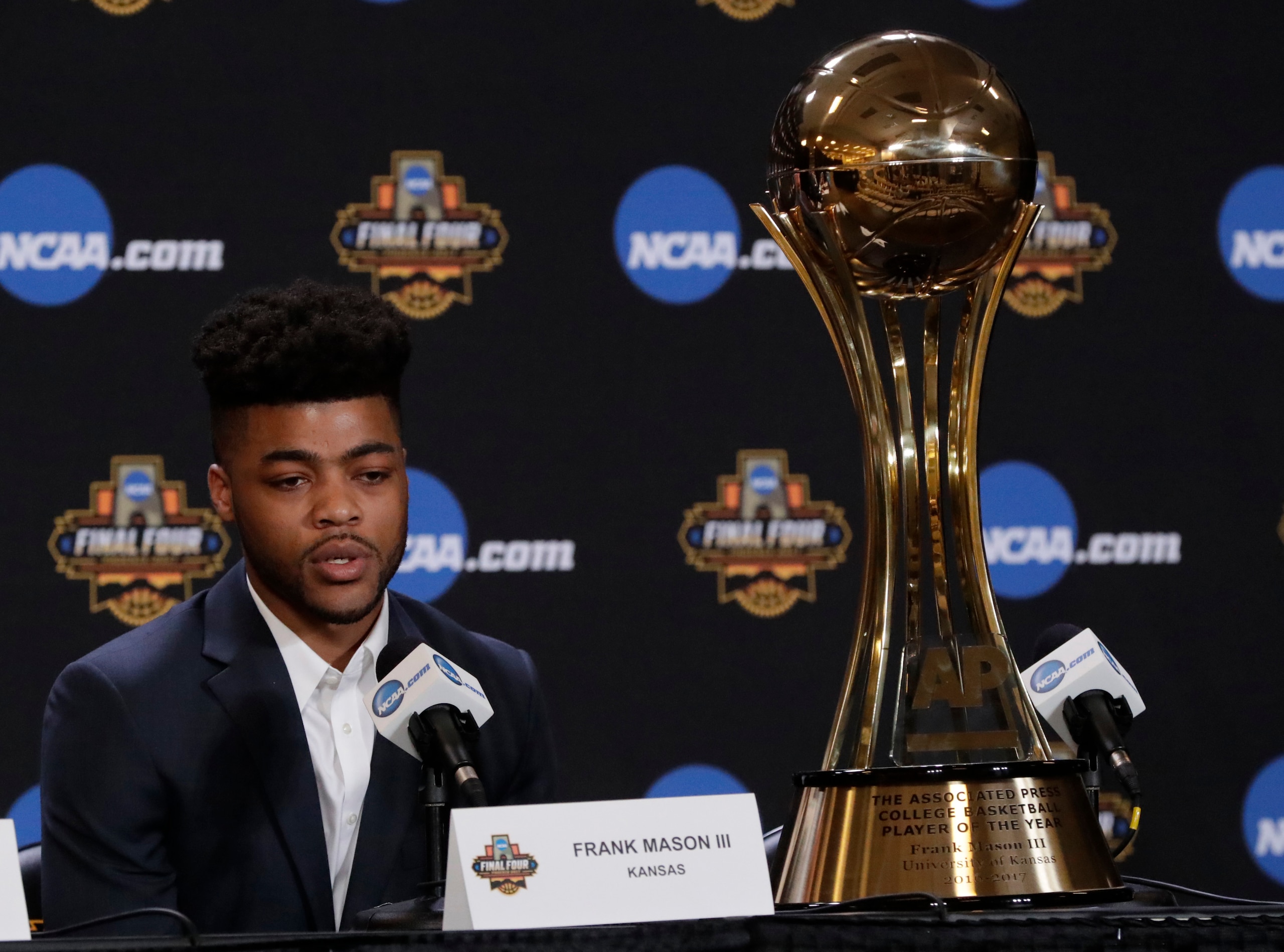
Is it possible for the San Antonio Spurs to go wrong, even when they've got the second-to-last slot in the first round.
Well...when you've turned picks that late into rotation players, All-Stars and future Hall of Famers, yes it is possible to go wrong—even more so if San Antonio were to flip LaMarcus Aldridge for a top-five pick, as Arizona Sports' John Gambadoro reported the team had attempted to do.
The Spurs have a lengthy to-do list they could begin to address with their own first-rounder. They could pick up a center to convert from a project into a rotation player or aim for a wing to fill Danny Green's shoes in the event that he gets moved.
Adding a point guard like Kansas' Frank Mason III wouldn't be the worst thing in the world, either. With Tony Parker potentially out of action until deep into the 2017-18 season and Patty Mills facing unrestricted free agency this summer, San Antonio could use someone like the 23-year-old Mason, the national player of the year, as a stopgap to Dejounte Murray, who doesn't turn 21 until September.
That is, unless they're able to lure Chris Paul to the Alamo City and clear the requisite cap space to sign him, in which case any floor general taken by the Spurs this season would spend an awful lot of time with the G League affiliate in Austin.
Toronto Raptors: Dillon Brooks, Small Forward, Oregon
28 of 30
The Toronto Raptors are decently insulated for the potential departures of Kyle Lowry and Serge Ibaka. Between Cory Joseph, Norman Powell and Delon Wright at the point and Jakob Poeltl, Pascal Siakam and Bruno Caboclo at power forward, the Raptors have enough reinforcements to sustain a reshuffling around DeMar DeRozan and Jonas Valanciunas.
In truth, Toronto could use another versatile wing. As much as they may hope DeMarre Carroll comes around over the final two years of his contract, the Missouri product just hasn't been the same two-way menace since suffering a knee injury during his final playoff push with the Atlanta Hawks in 2015.
The Raptors will have options at No. 23 and could be seduced into spending that pick on a native Canadian—namely, Dillon Brooks. The Mississauga, Ontario, native saw a sizeable uptick in three-point percentage as a junior, when the wing-forward drained 40.4 percent of his triples.
Brooks is a fierce competitor and a willing shot-taker in crunch time. But at 6'7" and 215 pounds, he won't be able to bully opposing perimeter players in the pros like he used to in college. And while Brooks has the tenacity to get after his foes defensively, his relative lack of length and athleticism could keep him from being anything close to a multipositional monster on that end.
Utah Jazz: Terrance Ferguson, Small Forward, Adelaide (Australia)
29 of 30
The nerves concerning Gordon Hayward's future with the Utah Jazz seem to grow more frayed by the day. According to CSN Chicago's Vincent Goodwill, the Boston Celtics' pick swap with the Philadelphia 76ers opened up enough cap space in Beantown to accommodate Hayward's potential arrival.
Should Hayward take the bait in Boston, Miami or anywhere else, the Jazz wouldn't be caught completely flatfooted, even without adding another prospect at his position with the Nos. 24 and 30 picks in this year's draft. Joe Johnson, Rodney Hood and Alec Burks can all offer cover at small forward, albeit not to the All-Star degree that Hayward has.
Still, it wouldn't hurt Utah to steel itself for a stinging departure. Whether Terrance Ferguson is the right choice to fortify the Jazz's wing rotation is another story.
Ferguson took his talents from the American Southwest to Southern Australia, only to find that he maybe wasn't the three-and-D prospect for which he had once been billed. His shot betrayed him down under (38.1 percent from the field, 31.3 percent from three), and at 6'7" and 186 pounds, he struggled to contain grown men on the wing.
In time, Ferguson could develop into a fine NBA player the way Hayward did year over year. But the Jazz, fresh off a 51-win season and a trip to the second round of the playoffs, should be looking not for another project, but a potential role player who can help them win tomorrow.
Washington Wizards: Alec Peters, Power Forward, Valparaiso
30 of 30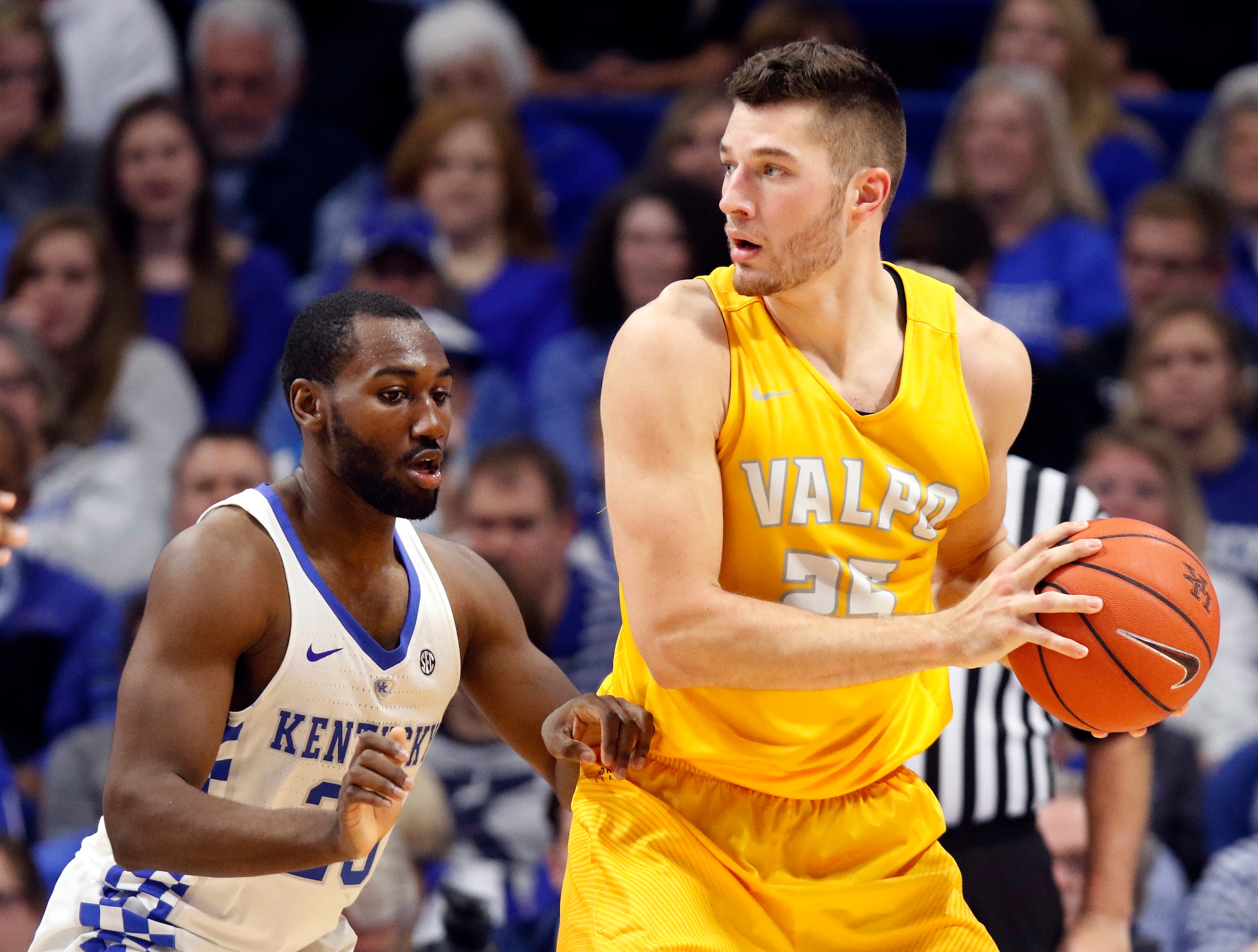
The Washington Wizards know a thing or two about stress fractures. They've had to help Bradley Beal navigate his fair share of those setbacks since drafting him third overall in 2012.
Perhaps then the Wizards will tiptoe around the possibility of picking up Alec Peters should they decide to buy back into the second round, after dealing the 52nd pick for point guard Tim Frazier. Peters could be of service at power forward, where Markieff Morris, for all his inconsistencies and confrontational tendencies, remains Washington's best option.
The Valpo product sports a proven three-point stroke (41.6 percent for his collegiate career) and, at nearly 6'9" and 225 pounds, won't get pushed around on the interior as easily as some younger prospects might.
But Peters isn't exactly teeming with upside and athleticism. Nor could D.C. rest easy knowing that his senior season ended early on account of a stress fracture in his right leg.
All stats via NBA.com and Basketball Reference unless otherwise noted.
Josh Martin covers the NBA for Bleacher Report. Follow him on Twitter, Instagram and Facebook, and listen to his Hollywood Hoops podcast with B/R Lakers lead writer Eric Pincus.


.jpg?w=2560 "Raiders Could Start Mendoza")
.jpg?w=2560 "Rodgers Iced Out on Plane 💎")
.jpg?w=2560 "🚨 Week 8 AP Top 25 Poll")
