

5 Biggest X-Factors for Golden State Warriors in 2017 NBA Finals
The pass/fail portion of the Golden State Warriors' 2016-17 campaign has finally arrived.
For the third consecutive season, the Dubs' success and legacy hinge on a seven-game showdown with LeBron James and the Cleveland Cavaliers. While the health and performance of former MVPs Stephen Curry and Kevin Durant will presumably have the biggest say in Golden State's outcome, these championship collisions are often decided by overlooked X-factors.
Five leading candidates stand out for that exact role in the 2017 NBA Finals, ranked here by their level of importance. The role-playing reserves might spark runs that swing a quarter or even an entire game. Those higher up the list have the requisite opportunities and skill sets to sway the series.
But all five also enter this rubber match with questions surrounding their effectiveness, health or mentality. The answers to those inquiries will go a long way toward crowning this year's rulers of the hoops world.
5. JaVale McGee
1 of 5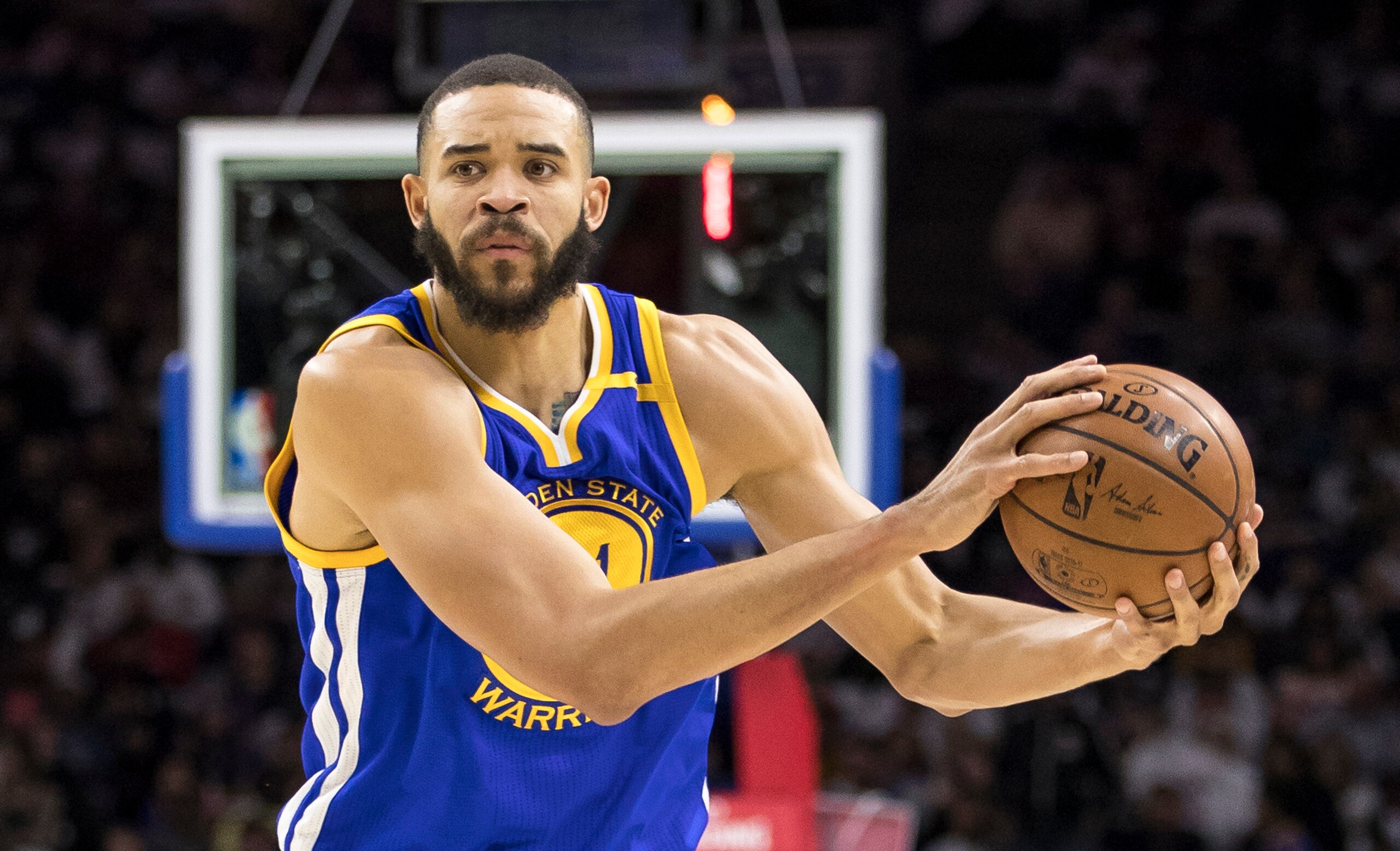
For all of the progress JaVale McGee has made during his transformational season with the Dubs, there's still a point of diminishing returns when playing the bouncy 7-footer. Because he expends so much energy and fills such a specialized role, he's best utilized in short bursts.
But that limited leash—he played a career-low 9.6 minutes per game during the regular season—has helped him thrive as an instant-energizer. When he's wreaking havoc, the Warriors almost always follow his lead.
"That's what I'm in there for, for a spark of energy," McGee said, per Daniel Brown of the Bay Area News Group. "I definitely come in there looking for a dunk, blocks, offensive rebounds and just try to get the crowd into it."
McGee's gravitational pull as a lob threat is obvious and significant. His 125.4 postseason offensive rating easily paces the club. His full-throttle rim-running and glass attacks have also yielded the group's second-highest rebound percentage (15.1) and second-fastest pace (105.55).
Provided McGee sticks to this script, he can have an effective series—anonymous Cavs detractor be damned. If his explosive rolls draw defenders toward the middle, Warriors wings will have an even easier time exploiting Cleveland's soft spots on the perimeter. McGee can also help fight against any attempts to control pace and the athletic rebounding machine that is Tristan Thompson.
Don't be surprised if McGee traverses across peaks and valleys throughout the series. His good can be game-breaking good. His rough nights, though, will make him a liability in both pick-and-roll and three-point coverages.
4. Shaun Livingston
2 of 5
The Warriors have spent most of their journey to this point making Shaun Livingston look expendable. Even as the 6'7" point guard was converting field goals at a career-best 54.7 percent clip, he struggled to see the floor. Backing up one of the strongest perimeter collections in NBA history didn't help, and neither did having younger, better-shooting guards on the bench next to him.
But quietly, Livingston is seamlessly moving back into his essential role. Only the Hamptons Five have averaged more playoff minutes than Livingston's 16.1 per game, and his absurd 61.3 percent shooting trails just Golden State's dunk king, McGee.
Livingston's stock should continue to climb. Those younger, better-shooting bench counterparts don't have his experience or defensive instincts, both of which are desperately needed on this stage. The Cavs roll into the Finals with the best player and the postseason's best offense; Livingston will be called upon to help neutralize both.
His penchant for playmaking can help increase the tempo or survive it slowing down. His mechanical mid-range jumper could give Cleveland's undersized guards fits (remember, he erupted for 20 points on 10 shots in Game 1 last year). His length and basketball IQ will make him part of the stable of stoppers Golden State throws at LeBron.
The regular season lied—Livingston might be more important than ever. With concerns over Andre Iguodala's health, Patrick McCaw's inexperience and Ian Clark's lack of size, Livingston could be Golden State's most trustworthy reserve.
3. Andre Iguodala
3 of 5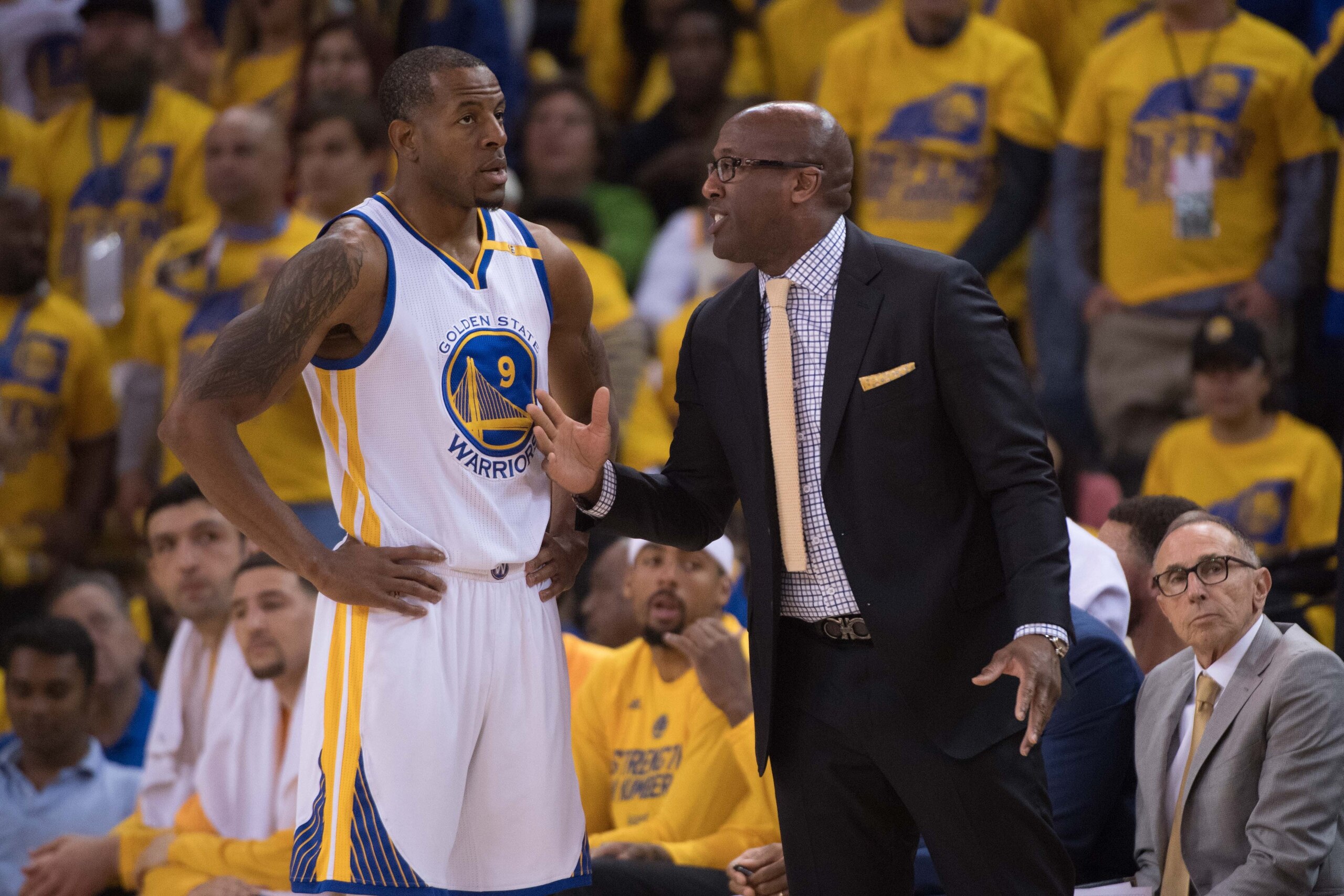
A healthy Andre Iguodala is both a postseason star and Golden State's best option to defend LeBron. Iguodala's 2015 Finals MVP award validates both of those statements.
But the 33-year-old's uncertain health made him a no-brainer selection here. He sputtered more often than normal in the regular season, then missed time in the Western Conference Finals with left knee soreness.
As the Bay Area News Group's Anthony Slater observed, Iguodala's health stands as one of this series' biggest potential swing points:
"If Iguodala's sore knee affects him similarly to how his bothersome back sapped him of power late in last year’s Finals, LeBron is more freed to produce a similarly stunning upset. But if Iguodala instead shakes off his recent playoff rust, arrives in Game 1 like the Iguodala we saw in March, then LeBron is staring at a tag-team of [Kevin] Durant, Draymond [Green] and spry Iguodala, which is about as good of a defensive wing trio as you could create to try to contain the league's greatest player."
Iguodala's health wasn't the only difference between the 2015 and 2016 Finals, but it still helped explain James' dramatically different field-goal rates: 39.8 percent in '15, 49.4 percent last year. The Warriors have more defensive weapons this time around, but the longer Durant is on LeBron duty, the less energy he'll have for the offensive end.
Beyond defense, Iguodala must find his way out of a playoff-long shooting funk—41.8 percent from the field, 3-of-27 from three. The Death Lineup needs all five players to be offensive threats. If that happens, the Cavs have nowhere to hide their defensive liabilities.


2. Klay Thompson
4 of 5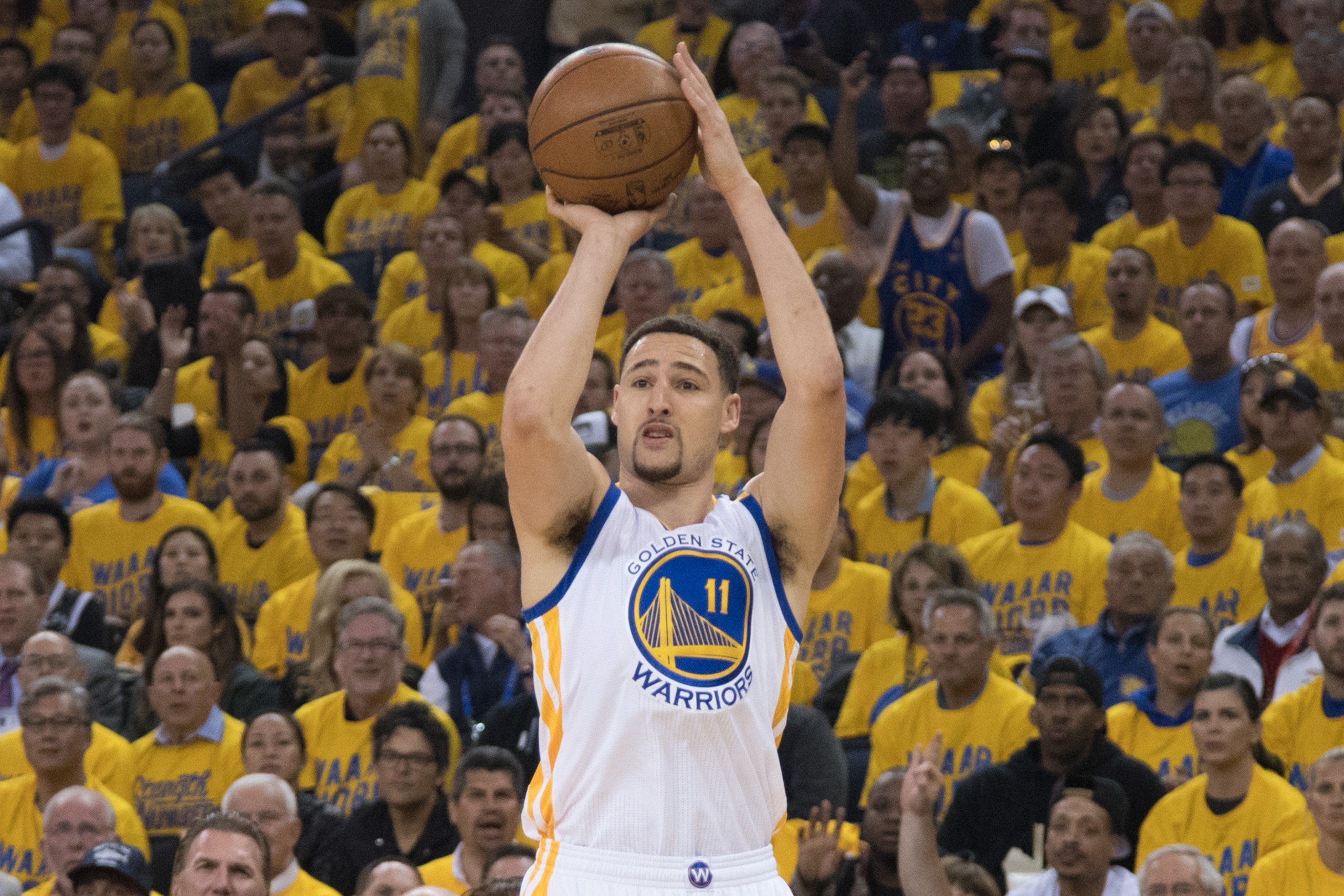
Three consecutive sweeps couldn't push Klay Thompson's shooting woes under the rug, so imagine how they looked over a nine-day lull on a team without any other glaring weakness.
Patience has always been the best method of processing his precipitous fall from 22.3 points on 46.8 percent shooting (41.4 from three) in the regular season to 14.4 on 38.3 percent (36.4) in the playoffs. But with no time left to figure things out, it's now or never for the fiery gunslinger.
"I'd like to see the ball go in the basket," Thompson said, per CSN Bay Area's Monte Poole. "It has, just not as frequently as I want. But that means nothing now. ... Now that we're here, it's a clean slate. It's time to go."
If Thompson rediscovers his stroke, he'd do more than quiet his critics—the suddenly forgotten man on offense could greatly shorten this series. But his bigger challenge in the championship round will come at the other end, where he'll be the Warriors' primary option to cool off Kyrie Irving.
Cleveland's All-Star point guard torched Golden State for 27.1 points per game in last year's Finals and enters this tussle even hotter. He singed the Boston Celtics for 29.5 points on an absurd 66.7 percent shooting (55.6 outside) over the final four contests of the Eastern Conference Finals.
Sure, the Warriors would prefer if Thompson weren't their worst shooting regular, as he has been so far this postseason. But if he continues defending at an elite level—slicing 6.3 points off his opponents' average field-goal percentages—then Golden State might survive another round of uncharacteristically erratic sniping.
1. Draymond Green
5 of 5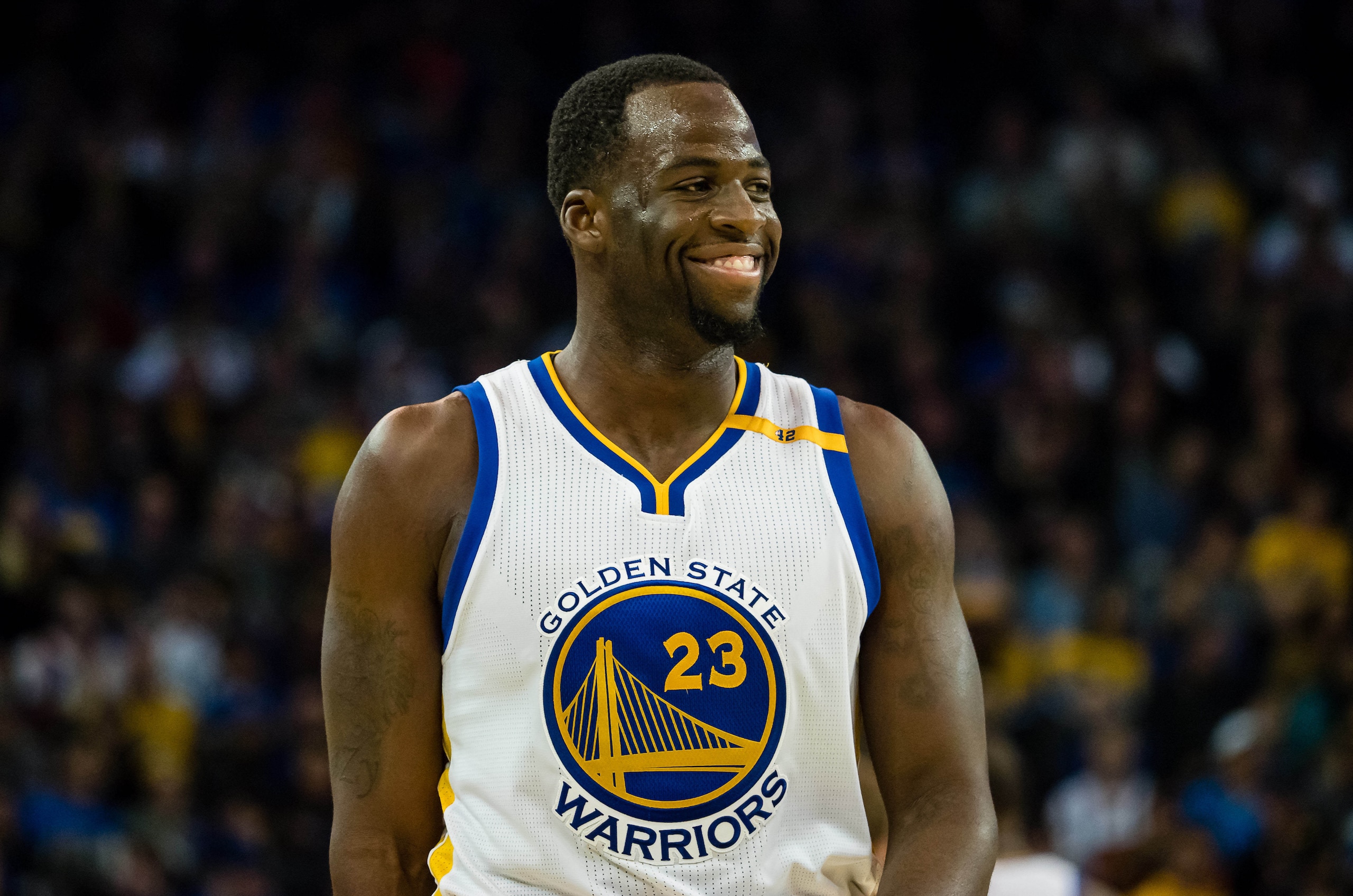
On the surface, Green lacks the variance of a typical X-factor. This postseason, he's been at his stat sheet-stuffing best, grabbing a spot on our All-Playoff Team with sterling per-game marks of 13.9 points (on 50.0 percent shooting), 8.7 rebounds, 7.2 assists, 2.1 blocks and 1.9 steals. He holds or shares the team lead in each of the latter four categories.
And yet, returning to this stage highlights why he holds the No. 1 spot. It was only one year ago when his emotions got the best of him, resulting in a one-game suspension and setting the table for a historic collapse. Considering his importance has held steady or even grown since that series—only Stephen Curry and LeBron have a higher postseason plus/minus—another ill-timed meltdown could be just as catastrophic.
"Green's the key to this series because he can do everything, including combust," Stefan Bondy of the New York Daily News wrote. "If Green can keep himself in the game and be a force on both ends, the Warriors will win this rubber match."
Emotions aside, Green stands as an X-factor given his exhaustive list of series tasks.
He must contain the attacks of James and Irving while spending time on both in this switch-heavy scheme. Green must also hold off Tristan Thompson and Kevin Love on the offensive glass. His passing is a critical element of the Warriors screen game, and he'll either create or clog space depending on whether his shooting holds up (47.2 percent from three this postseason, 33.4 for his career).
Green has paths in front of him leading to the Finals MVP, the series goat (not the acronym) and a lot of middle ground. The better he plays, the better the Warriors' odds become of claiming their second title in three years.
Statistics used courtesy of NBA.com and Basketball Reference.
Zach Buckley covers the NBA for Bleacher Report. Follow him on Twitter: @ZachBuckleyNBA.

.jpg?w=2560 "Grading WWE Raw 🔠")

.jpg?w=2560 "Viral Rams Coach Vid 🖕")
