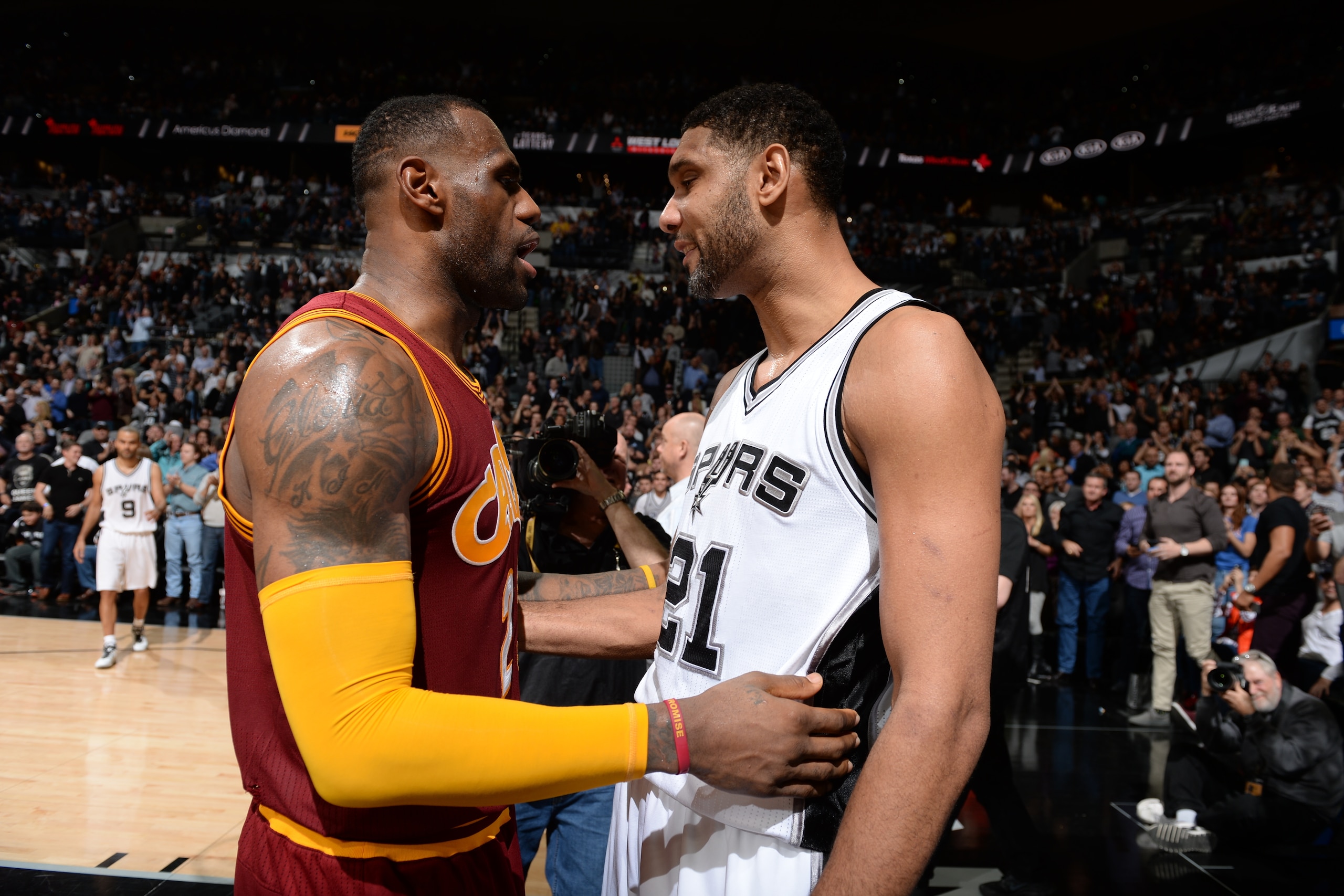

Metrics 101: Ranking Every NBA No. 1 Pick in the Lottery Era
On June 22, NBA Commissioner Adam Silver will stride across a stage at the Barclays Center and announce the newest No. 1 pick. That player, whether it's Markelle Fultz, Lonzo Ball or a surprise selection, will immediately be both blessed and cursed.
The blessing is obvious. That top pick gets the most money, as well as the prestige associated with being the first overall selection. He'll be a strong candidate for big endorsement deals, and he'll immediately be considered a player capable of becoming the face of the franchise.
But the curse exists too. Expectations can be tough to deal with, and saddling a youthful player with too many can negatively impact his career. That's how busts are created, after all.
During the lottery era, which dates back to 1985, 31 of the 32 top picks have been subjected to both the blessings and the curses. The former has helped more than the latter for plenty of them, but expectations have fed into bust status for a number of others. And then there's Ben Simmons, who won't be included here because he has yet to appear in a single NBA game.
Which of them has had the best career? What about the worst? We're looking at everything that happened on the court here, ranging from their rookie seasons to final campaigns, but not including the future for players whose careers are still in progress.
31. Anthony Bennett, 2013
1 of 31
Career Per-Game Stats: 4.4 points, 3.1 rebounds, 0.5 assists, 0.4 steals, 0.2 blocks
Career Advanced Metrics: 10.2 player efficiency rating (PER), 45.7 true shooting percentage (TS%), 0.5 win shares (WS), minus-210.31 total points added (TPA)
Career Accolades: None
Anthony Bennett just never had it.
After the Cleveland Cavaliers made him the surprising No. 1 pick over Victor Oladipo, Ben McLemore, Cody Zeller, Nerlens Noel, Otto Porter and Alex Len—stacked class, right?—the combo forward didn't take long to prove he didn't belong. It took him five games to make his first field-goal attempt and eight to drain his second, and he finished his rookie campaign with a 6.9 player efficiency rating (PER) and minus-7.3 box plus/minus (BPM).
Perhaps disheartened by increased expectations and his unrelenting failure to meet them, Bennett could never recover. He floundered on both ends throughout that initial season, failed to make an impact with the Minnesota Timberwolves after being dealt in the Kevin Love trade before his sophomore go-round, then couldn't stick with either the Toronto Raptors or Brooklyn Nets.
Playing on four teams in four years is never a good thing for a No. 1 pick. And even that might be overselling Bennett's production, since it was his pedigree that gave him more opportunities, not his play.
Among all the players who have suited up in at least 150 games since the 2013 draft, only Stanley Johnson has a worse true shooting percentage (45.1) than Bennett's 45.7 lifetime mark. And at least the Detroit Pistons forward can hold his own on defense.
30. Michael Olowokandi, 1998
2 of 31
Career Per-Game Stats: 8.3 points, 6.8 rebounds, 0.7 assists, 0.5 steals, 1.4 blocks
Career Advanced Metrics: 10.7 PER, 45.7 TS%, 2.5 WS, minus-1120.76 TPA
Career Accolades: All-Rookie Second Team
Working in Michael Olowokandi's favor is the length of his career. The 7-footer was able to play into his 30s, suiting up for three different franchises—the Los Angeles Clippers, Minnesota Timberwolves and Boston Celtics—over the course of nine years and exactly 500 games.
He even had a few solid years as an interior defender, though his atrocious offensive exploits always managed to negate his efforts.
Even while blocking shots and protecting the rim during the 2003-04 campaign (his first with the 'Wolves), he averaged just 10.8 points per 36 minutes while shooting 42.5 percent from the field and 59.0 percent from the stripe. Throw in his complete inability to pass out of the blocks, and you have a whopping amount of point-producing trouble.
Olowokandi's relative longevity pushes him ahead of Bennett, but NBA Math's TPA metric still makes it clear just how bad he was throughout his professional career. Not only did his rookie season produce the league's worst score since 1973 (with room to spare), but only four players among the 3,167 in the modern era have produced worse career marks: Kevin Duckworth, Kevin Willis, Jeff Malone and James Edwards.
29. Kwame Brown, 2001
3 of 31
Career Per-Game Stats: 6.6 points, 5.5 rebounds, 0.9 assists, 0.5 steals, 0.6 blocks
Career Advanced Metrics: 12.5 PER, 52.3 TS%, 20.8 WS, minus-532.53 TPA
Career Accolades: None
Kwame Brown gets more flak than he deserves.
Yes, he was a massive bust after Michael Jordan pushed the Washington Wizards to select him at No. 1 in the 2001 NBA draft. It doesn't help that Tyson Chandler, Pau Gasol, Jason Richardson, Shane Battier and Joe Johnson were also picked in the top 10 that year.
But the big man was actually a decent defender throughout his lengthy career. Without his preventing prowess, he never would've lasted in the league so long; he played for the Wizards, Los Angeles Lakers, Memphis Grizzlies, Detroit Pistons, Charlotte Bobcats, Golden State Warriors and Philadelphia 76ers before falling out of the league in 2013, more than a decade after he made the prep-to-pro jump.
He's likely done after a failed comeback effort in the summer of 2016, but there's no shame in playing that much NBA basketball.
Brown was never Anthony Bennett. He demonstrated enough skill to stick around for much longer, and he played a legitimate part in more than a few rotations. Brown was never Michael Olowokandi. Whereas his predecessor had the worst TPA score since 1973, per NBA Math, Brown doesn't even have one of the 1,000 worst single-season marks.
But unlike the rest of the players selected at No. 1 during the lottery era, he was never anything more than a fringe rotation member. That lack of upside dooms him to a bottom-three spot, putting him a tier below all the rest.



28. Greg Oden, 2007
4 of 31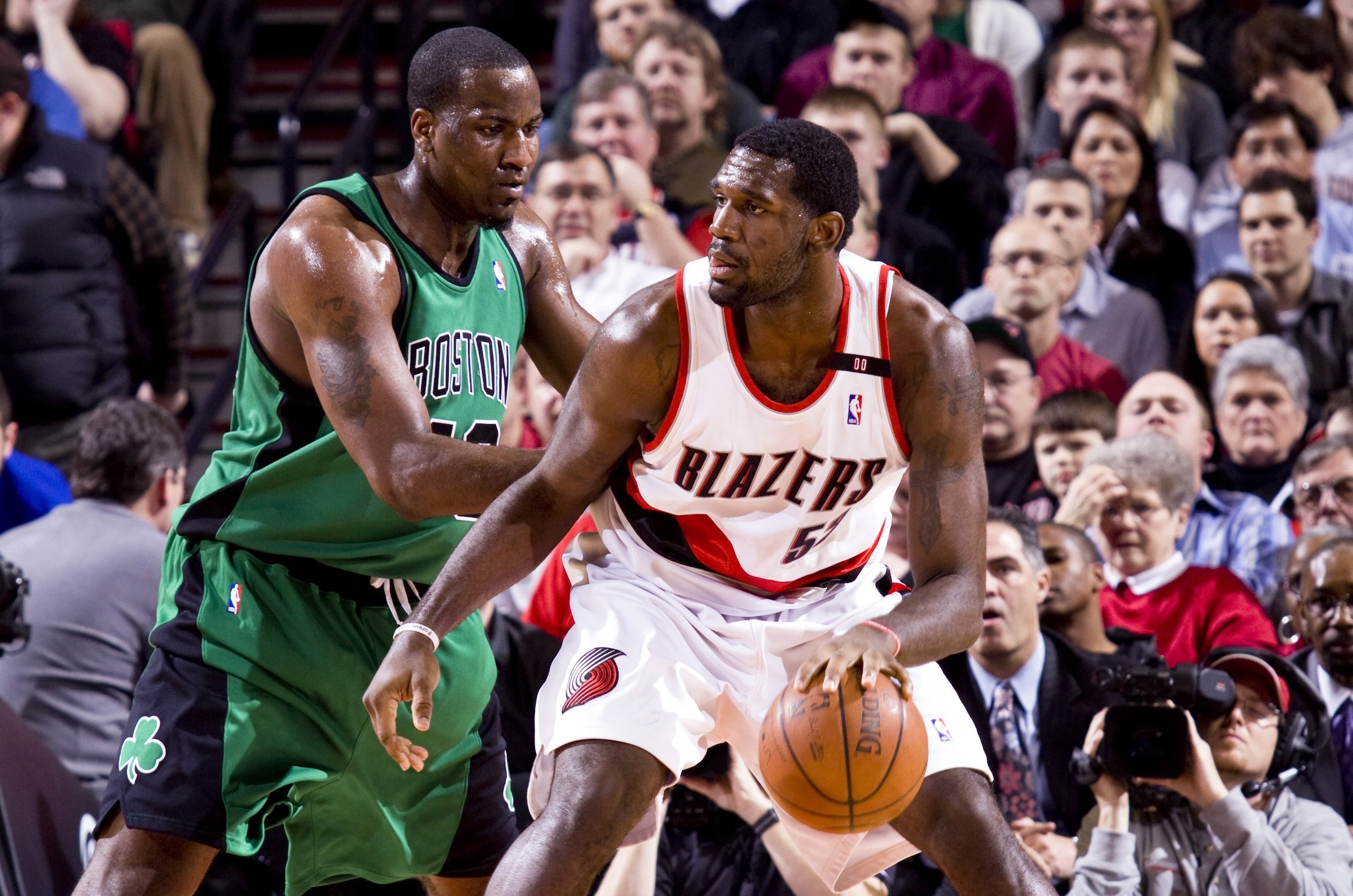
Career Per-Game Stats: 8.0 points, 6.2 rebounds, 0.5 assists, 0.4 steals, 1.2 blocks
Career Accolades: None
"I'll be remembered as the biggest bust in NBA history," Greg Oden told Outside the Lines in 2016, per ESPN.com's Jeff Goodman. "But I can't do nothing about that."
Perhaps we can, though.
Oden is indeed one of the bigger busts in league history, and his status only grows as Kevin Durant continues to make the Portland Trail Blazers' decision look worse and worse. But unlike the three men listed behind him in these rankings—as well as many others who weren't drafted in the top overall spot—Oden flashed superstar ability whenever he was healthy.
Make no mistake: It was only injuries that held him back. His knees never let him enjoy the NBA career he deserved, even though he looked the part of a franchise centerpiece whenever he was allowed on the floor. Per 36 minutes, he averaged an impressive 14.9 points, 11.6 rebounds and 2.3 blocks while shooting 57.4 percent from the field throughout his professional tenure.
That 18.7 PER looks impressive, as do the rest of his advanced metrics. He posted a positive lifetime TPA, which some of the No. 1 picks ranked ahead can't even claim. But his knees never allowed him to capitalize on the potential that once made Durant vs. Oden a legitimate debate.
27. Andrea Bargnani, 2006
5 of 31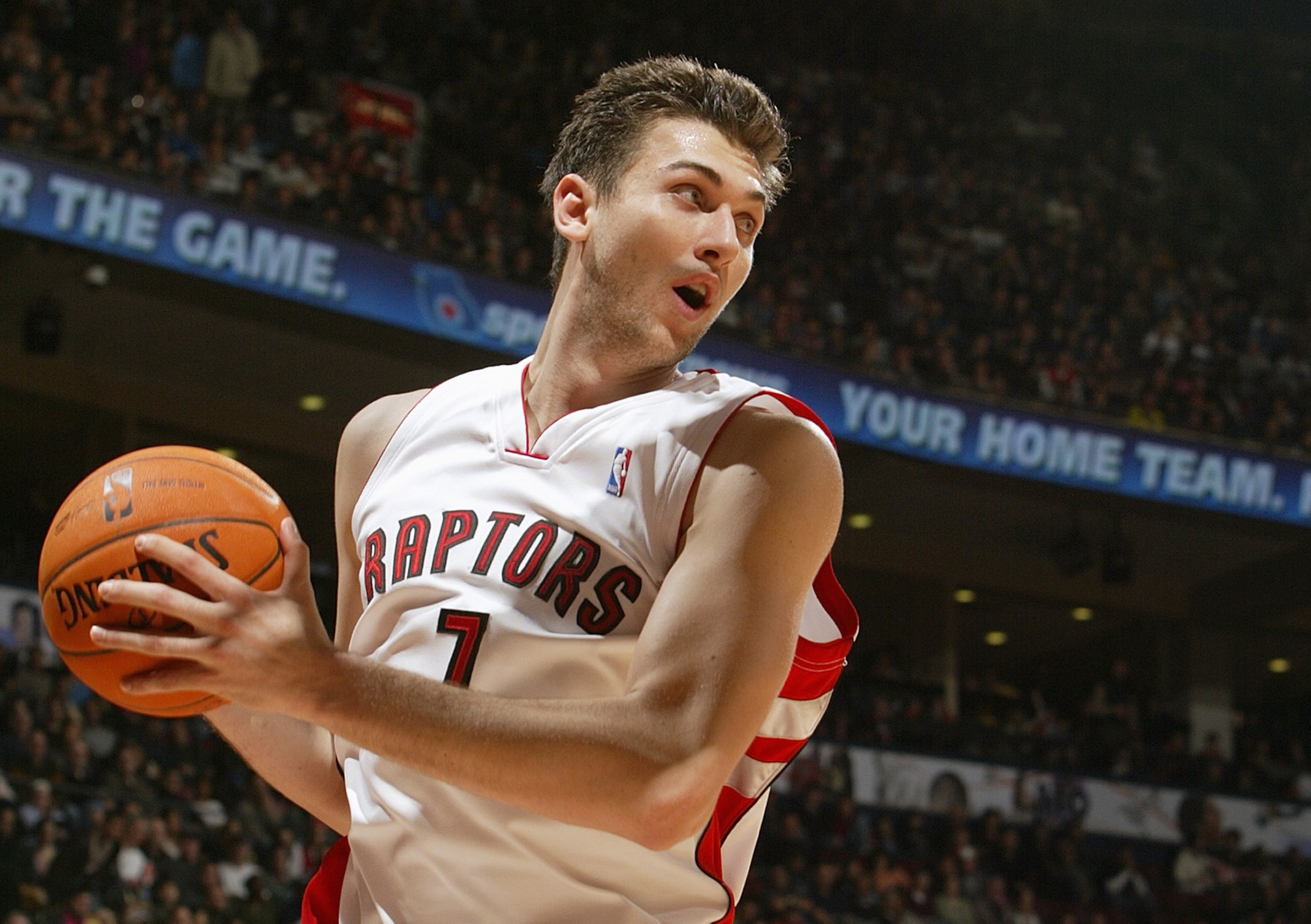
Career Per-Game Stats: 14.3 points, 4.6 rebounds, 1.2 assists, 0.4 steals, 0.9 blocks
Career Advanced Metrics: 14.4 PER, 53.1 TS%, 18.9 WS, minus-679.62 TPA
Career Accolades: All-Rookie First Team
Andrea Bargnani came around a bit too soon.
An atrocious defender and lackluster rebounder, the 7-footer from Italy fell short of earning superstar status even while averaging 21.4 points for the Toronto Raptors in 2010-11. He was a gunner who quickly received the "soft" label, and it stuck with him throughout his career.
But imagine if he'd debuted a decade later, playing out his NBA lifespan in the pace-and-space era that has taken hold of the league in recent years. Which team wouldn't value his ability to knock down 40.9 percent of his triples while taking 3.7 attempts per game, as he did during his 2008-09 campaign?
Bargnani would still have had his flaws.
He was always overmatched on the interior, never displayed much as a facilitator and struggled to make an impact when his perimeter jumper wasn't falling. But even during the slowed-down mid-2000s game that featured more isolation basketball and less focus on floor-spacing, he still made a positive offensive impact consistently.
26. Pervis Ellison, 1989
6 of 31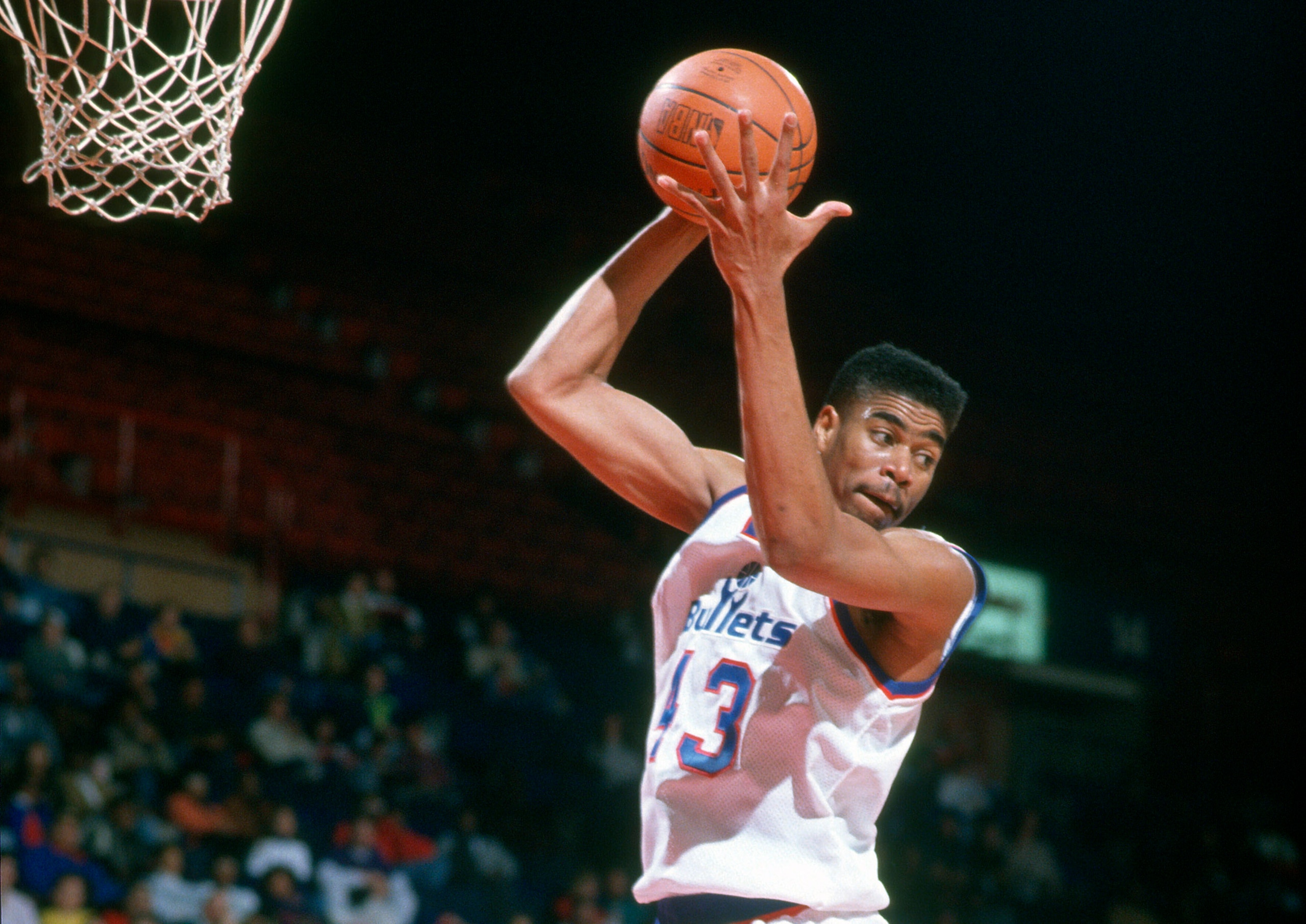
Career Per-Game Stats: 9.5 points, 6.7 rebounds, 1.5 assists, 0.6 steals, 1.6 blocks
Career Advanced Metrics: 15.2 PER, 54.6 TS%, 21.8 WS, 129.07 TPA
Career Accolades: Most Improved Player
During the 1991-92 campaign, Pervis Ellison averaged 20.0 points, 11.2 rebounds, 2.9 assists, 0.9 steals and 2.7 blocks while shooting 53.9 percent from the field. It was enough for him to win Most Improved Player, giving him a season far more impressive than any posted by the top picks already appearing in this countdown.
But Ellison's success didn't last long.
He regressed substantially during the follow-up season, then his production dropped off after another year. By the time he was playing for the Boston Celtics and struggling to earn a major role in the rotation, his exploits with the Washington Bullets looked more like flukes than signs of burgeoning stardom.
There's an easy scapegoat: injuries.
Ellison only played 34 games during his rookie season with the Sacramento Kings, and he was only healthy after the trade to the Bullets, which allowed for his junior-year breakout. But shortly thereafter, knee problems, broken toes and other various maladies consistently kept him sidelined, preventing him from establishing on-court rhythm and dooming him to a forgettable career.
25. Joe Smith, 1995
7 of 31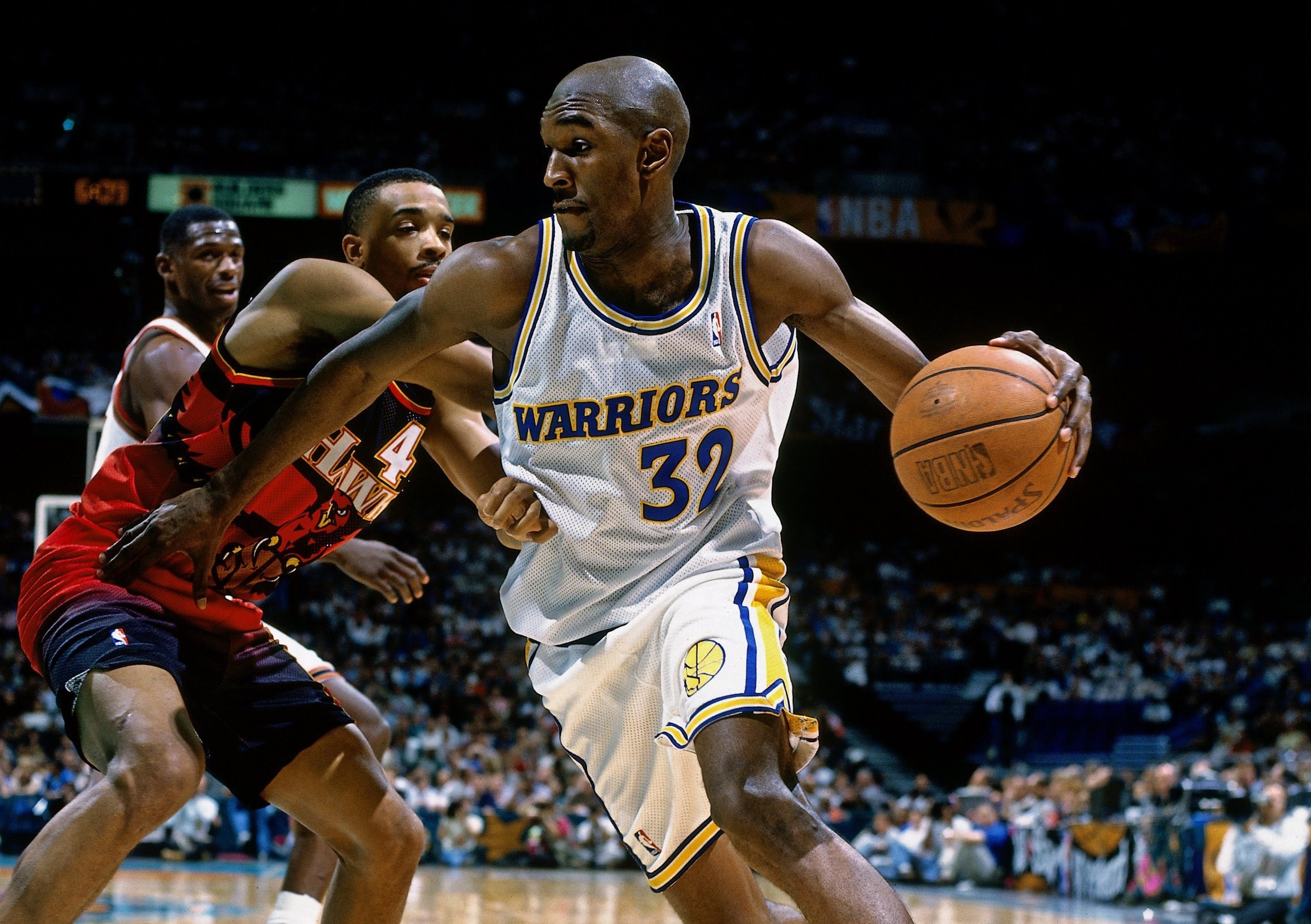
Career Per-Game Stats: 10.9 points, 6.4 rebounds, 1.0 assists, 0.6 steals, 0.8 blocks
Career Advanced Metrics: 15.4 PER, 51.3 TS%, 60.3 WS, minus-601.02 TPA
Career Accolades: All-Rookie First Team
Joe Smith's career began in fantastic fashion. He lost out on Rookie of the Year to Damon Stoudamire (also finishing behind Arvydas Sabonis), but proved it wasn't a huge mistake to select him at No. 1. Averaging 15.3 points and 8.7 rebounds as a rookie is a great beginning to a career, and Smith would only get better during his sophomore season.
But he began to decline after that.
Smith pushed his way from the Golden State Warriors to the Philadelphia 76ers before he hit free agency, and he was never able to earn another featured role. Instead, he focused his energies on playing better defense and more efficient offense, and the changes worked.
Even though the power forward never scored 14 points per game again—he topped out at 13.7 with the Minnesota Timberwolves in 1998-99—he enjoyed a lengthy career as a journeyman. Teams kept picking him up for his ability to contribute in a number of different areas, allowing him to stick around until the end of the 2010-11 campaign.
Though the star power fizzled quickly, playing in 1,030 career games has to count for something.
24. Andrew Wiggins, 2014
8 of 31
Career Per-Game Stats: 20.4 points, 4.1 rebounds, 2.1 assists, 1.0 steals, 0.5 blocks
Career Advanced Metrics: 15.7 PER, 53.2 TS%, 10.4 WS, minus-415.01 TPA
Career Accolades: All-Rookie First Team, Rookie of the Year
Andrew Wiggins should keep moving up the ranks as his career progresses. But in order to do so, he must prove he can provide actual value rather than empty production.
Few players are capable of averaging 20.4 points through the first three years of their professional careers. Only 71 have ever done so, in fact. And Wiggins' mark is even more impressive because his scoring average has increased during each season with the Minnesota Timberwolves.
But he must soon start doing more, or else his role will inevitably undergo a steep decline.
Wiggins isn't an efficient enough offensive player. He has posted true shooting percentages below the league average during each of this three years. He also doesn't aid the Minnesota cause in other areas, given his lackluster distributing ability, dearth of effort on the glass and atrocious off-ball defense. That's why his value, based on many advanced metrics, is antithetical to the reputation earned by his points-per-game tallies.
The talent is clearly there. It's far too soon to call him a bust, even if he hasn't pushed the 'Wolves into the playoff picture or asserted himself as one of the league's better all-around players. But the production needs to come soon for the 22-year-old, or else he could risk a fall in these rankings rather than the rise he's hinted at on so many different occasions.
23. Kenyon Martin, 2000
9 of 31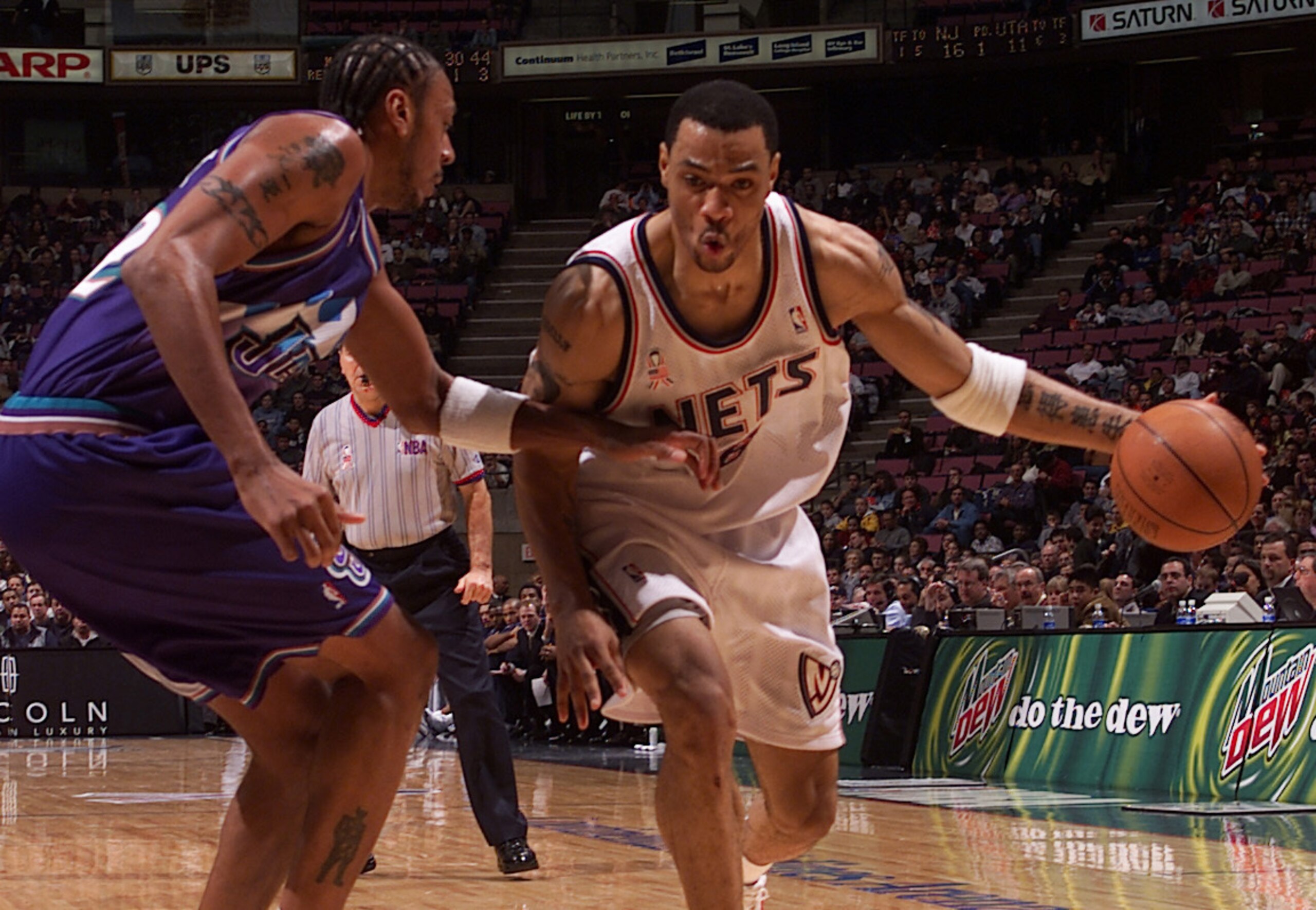
Career Per-Game Stats: 12.3 points, 6.8 rebounds, 1.9 assists, 1.2 steals, 1.1 blocks
Career Advanced Metrics: 15.0 PER, 51.3 TS%, 48.0 WS, 288.11 TPA
Career Accolades: All-Star, All-Rookie First Team
And so we come to the first All-Star.
Kenyon Martin represented the Eastern Conference during his fourth professional season, averaging 16.7 points, 9.5 rebounds, 2.5 assists, 1.5 steals and 1.3 blocks for the New Jersey Nets. It was the most he'd ever produce on the offensive end, though that was never the primary source of his value to any of the five squads he suited up for throughout his 15-year career.
First and foremost, Martin was a stud on the defensive end.
Only once did he post a defensive box plus/minus (DBPM) below zero, and that came during the 2006-07 season for the Denver Nuggets, when he played in only two games after recovering from offseason microfracture surgery on his left knee. In fact, his consistent excellence on the less glamorous side allows him to stack up rather nicely on some all-time leaderboards.
According to NBA Math's defensive points saved, only 77 players since 1973 have added more defensive value during their careers. But unfortunately, offense matters too. In offensive points added, Martin ranks just No. 3,091 out of 3,167.
Now, the rationale behind his placement outside the top 20 should be much more obvious.
22. Karl-Anthony Towns, 2015
10 of 31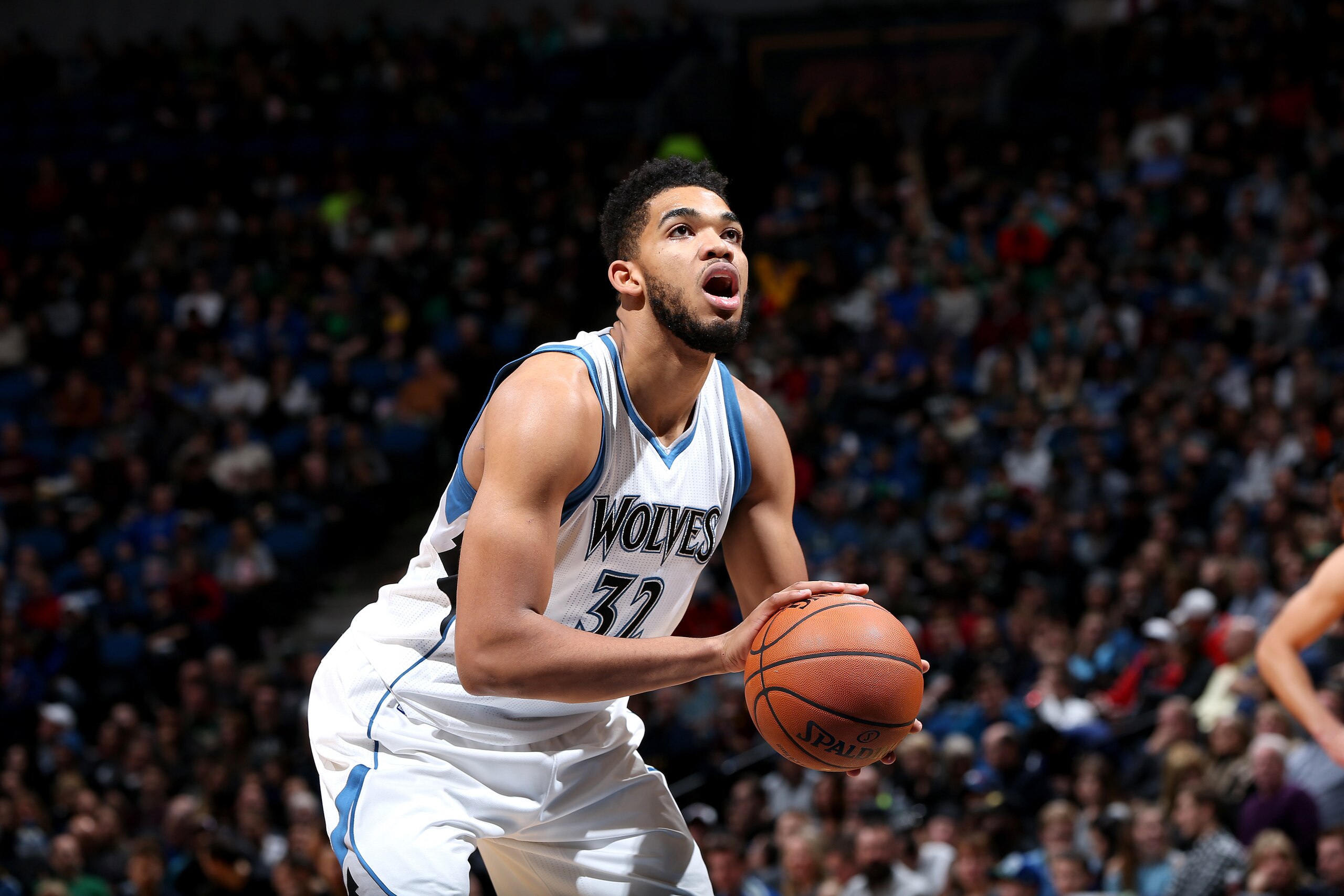
Career Per-Game Stats: 21.7 points, 11.4 rebounds, 2.3 assists, 0.7 steals, 1.5 blocks
Career Advanced Metrics: 24.4 PER, 60.6 TS%, 20.9 WS, 450.38 TPA
Career Accolades: All-Rookie First Team, Rookie of the Year
Karl-Anthony Towns has already reached a level to which few No. 1 picks have ascended during the lottery era. According to NBA Math, he added 304.55 points during the 2016-17 campaign, which ranks No. 259 since 1973. Among the 32 top selections dating back to 1985, only nine have ever posted a better single-season score.
But Towns doesn't have the volume necessary to move into the top 20. We're ranking careers, not peaks.
Thus far, he only has two years under his belt. He's thrived as an individual during both years, but neither led the Minnesota Timberwolves into the playoffs. That won't happen until Towns starts playing better interior defense, though it also wouldn't hurt for the rest of the 'Wolves to grow along with him and lend him a stronger supporting cast.
Still, it will be downright shocking if Towns doesn't eventually ascend far higher into these rankings. The 21-year-old center has already reached a dizzying level, to the point that I had him listed as the No. 20 player at the end of 2016-17.
He's only going to keep getting better.
21. Danny Manning, 1988
11 of 31
Career Per-Game Stats: 14.0 points, 5.2 rebounds, 2.3 assists, 1.1 steals, 0.9 blocks
Career Advanced Metrics: 16.9 PER, 55.2 TS%, 55.1 WS, 755.02 TPA
Career Accolades: Two-time All-Star, Sixth Man of the Year
If Danny Manning's career with the Los Angeles Clippers was all that counted, he'd be a lock for the top 20.
During those 5.5 seasons of his NBA tenure, the power forward averaged 19.1 points, 6.4 rebounds and 3.0 assists while shooting 51.8 percent from the field and thriving on the defensive end. He was a two-time All-Star, set to become the next big thing at his position.
But shortly after the second selection to the midseason festivities, LAC traded him to the Atlanta Hawks for a 34-year-old Dominique Wilkins and a first-round pick that would eventually turn into Greg Minor. Manning was never the same in his new digs, struggling to finish plays around the rim and calling off his ceaseless attacks on the hoop that once drew so many fouls.
After less than half a season with the Hawks, he joined the Phoenix Suns in free agency. And though he won Sixth Man of the Year there, knee issues forced him into a premature decline. He went under the knife twice more—he'd already had his ACL repaired during his rookie campaign with the Clippers—and couldn't ever find the stardom he'd gained early in his career.
Manning once seemed destined for a far more stellar career. But it's not like he's even close to earning a "bust" label, especially since Rik Smits, Charles Smith and Chris Morris were the three players selected directly after him in the 1988 NBA draft.
20. Andrew Bogut, 2005
12 of 31
Career Per-Game Stats: 10.0 points, 8.9 rebounds, 2.3 assists, 0.6 steals, 1.6 blocks
Career Advanced Metrics: 16.4 PER, 54.5 TS%, 49.9 WS, 906.41 TPA
Career Accolades: NBA Champion, All-NBA Third Team, All-Defensive Second Team, All-Rookie First Team
When the Milwaukee Bucks elected to select the Australian center over Marvin Williams, Deron Williams and Chris Paul, they presumably did so under the assumption that he would eventually become a two-way player. But even during his younger, spryer years, he was still plagued by injuries and never managed to develop into someone who could average even 16 points.
Let's not be too harsh on Andrew Bogut, though.
He was a fantastic defender during his Bucks tenure, constantly shutting down the interior of their schemes while showing off the instincts necessary to switch onto smaller players. Throw in his rebounding prowess and ability to pass out of a double team, and he was undoubtedly a valuable presence.
That value has persisted into the later stages of his career, as Bogut remains (when healthy) a vital defensive piece who can hit cutters and set bruising screens. He was an important member of the dominant Golden State Warriors' defense during the last few years, though the 2016-17 campaign looked like the beginning of the end as he struggled with the Dallas Mavericks and then lasted just one minute with the Cleveland Cavaliers before injury struck.
Bogut's career was never glamorous. It was just quietly impressive, and the overall body of work makes it a bit less off-putting that he was selected in front of a surefire Hall of Famer like Paul.
19. Derrick Coleman, 1990
13 of 31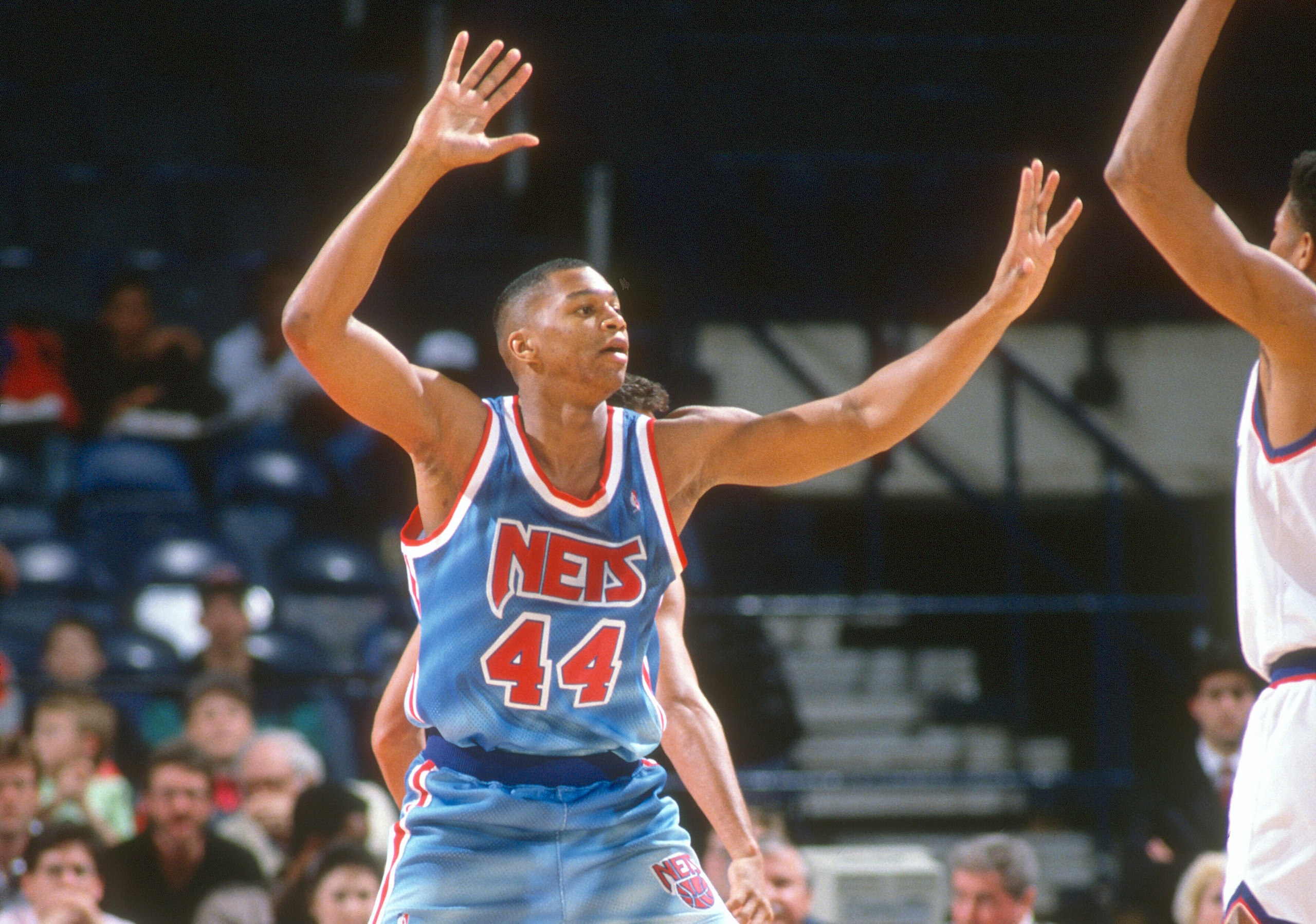
Career Per-Game Stats: 16.5 points, 9.3 rebounds, 2.5 assists, 0.8 steals, 1.3 blocks
Career Advanced Metrics: 18.0 PER, 52.6 TS%, 64.3 WS, 682.71 TPA
Career Accolades: All-Star, Two-time All-NBA Third Team, All-Rookie First Team, Rookie of the Year
"The Nets place great value on Derrick Coleman as one of the superstars in the NBA," New Jersey Nets general manager Willis Reed said in 1993 after his organization offered Coleman an eight-year extension that would have made him the league's highest-paid player, per Al Harvin of the New York Times. "We always want Derrick to be a Net for his career and we have made an offer that certainly shows that faith in him."
That contract was extended to the big man just before the start of the 1993-94 campaign, but he turned it down, citing its backloaded nature and the non-guaranteed salaries at the end of the deal. Even though he'd make the All-Star squad during the ensuing season and then average another 20-point double-double one year later, the Nets should be glad he vetoed the offer.
Up to that point in Coleman's career, he did look like a burgeoning superstar.
But the Nets traded him to the Philadelphia 76ers before the 1995-96 campaign, then watched as he started forcing up too many three-point attempts and dealt with numerous injuries. The decline was both steep and quick, aided, at least in part, by Coleman's notoriously poor attitude and desire to seek riches rather than increased production.
Before too long, Coleman's story was a could-have-been tale, rather than a narrative buoyed by a bevy of accolades.
18. Glenn Robinson, 1994
14 of 31
Career Per-Game Stats: 20.7 points, 6.1 rebounds, 2.7 assists, 1.2 steals, 0.6 blocks
Career Advanced Metrics: 17.5 PER, 52.9 TS%, 39.8 WS, minus-192 TPA
Career Accolades: Two-time All-Star, NBA Champion, All-Rookie First Team
If offense were all that mattered, Glenn Robinson would fare even better.
The small forward started off his professional career with a bang, immediately averaging 21.9 points and 2.5 assists for the Milwaukee Bucks while shooting 45.1 percent from the field and 79.6 percent from the stripe. He went on to average at least 20 points in eight of his 11 NBA seasons, even building up his three-point stroke during his athletic prime and slashing 45.9/39.2/87.0 during the 1998-99 campaign—one of the three in which he failed to meet that arbitrary benchmark.
Offense wasn't the problem. Defense was.
Robinson would occasionally get his hands on the rock, but his aggressiveness and lack of fundamental play consistently hampered him on the preventing end. Even during his second All-Star season, the Bucks allowed an additional 5.5 points per 100 possessions while he was on the floor.
Defense is the reason Robinson's TPA score remains in the red. It's the reason he didn't find as much team-oriented success, only winning a title with the San Antonio Spurs in 2004-05, when he played just 8.7 minutes per game in the postseason. It's the reason he can't move past anyone else in these rankings, relegating him to a spot just outside the tier of players with Hall of Fame aspirations, which begins at No. 16 in the countdown.
17. Elton Brand, 1999
15 of 31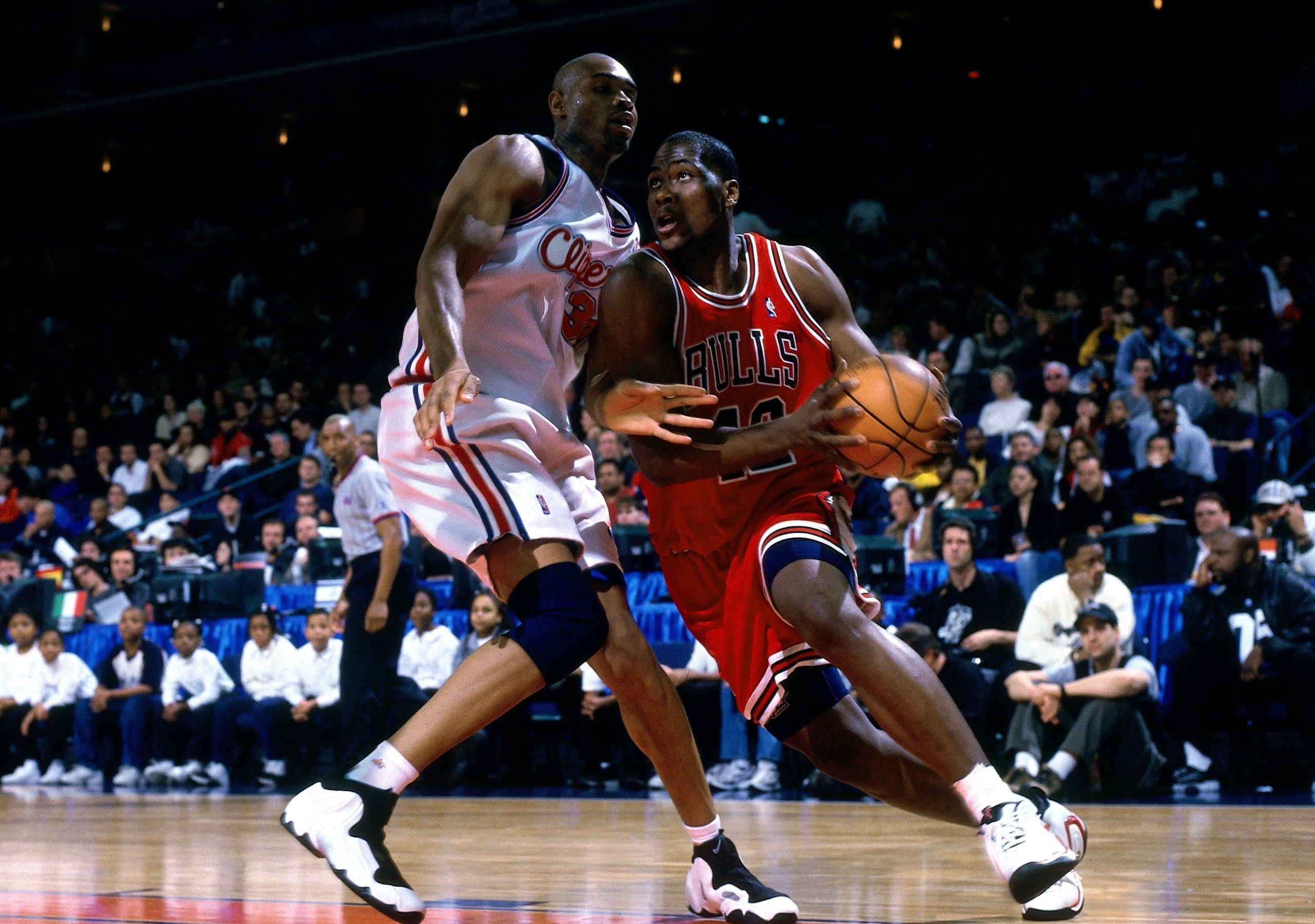
Career Per-Game Stats: 15.9 points, 8.5 rebounds, 2.1 assists, 0.9 steals, 1.7 blocks
Career Advanced Metrics: 20.5 PER, 54.8 TS%, 109.6 WS, 2,056.5 TPA
Career Accolades: Two-time All-Star, All-NBA Second Team, All-Rookie First Team, Rookie of the Year
If the only version of Elton Brand you remember is the one who suited up for the Philadelphia 76ers, Dallas Mavericks and Atlanta Hawks late in his career, you might be surprised to see him hold such lofty standing. But lest we forget, the power forward was a bona fide stud during the portion of his NBA life that came with the Chicago Bulls and Los Angeles Clippers.
Through his first eight seasons, Brand averaged 20.3 points, 10.2 rebounds, 2.7 assists and 2.1 blocks while shooting 50.5 percent from the floor. Though his range didn't extend out to the three-point arc, he was a two-way star on a Hall of Fame trajectory.
Then he ruptured his Achilles and was never the same. Though he remained a solid defensive presence, he didn't have enough explosiveness to finish as many plays around the hoop, which limited him to a non-featured role and handed him a sharply declining stock.
Still, he'd already done enough to have two All-Star selections under his belt, and he currently sits at No. 46 in NBA Math's standings for career TPA, sandwiched directly between luminaries such as Artis Gilmore and Jeff Hornacek. He just should've done even more, but the lack of longstanding excellence makes it hard to cancel out his limited postseason success and lack of All-NBA recognition.
16. Kyrie Irving, 2011
16 of 31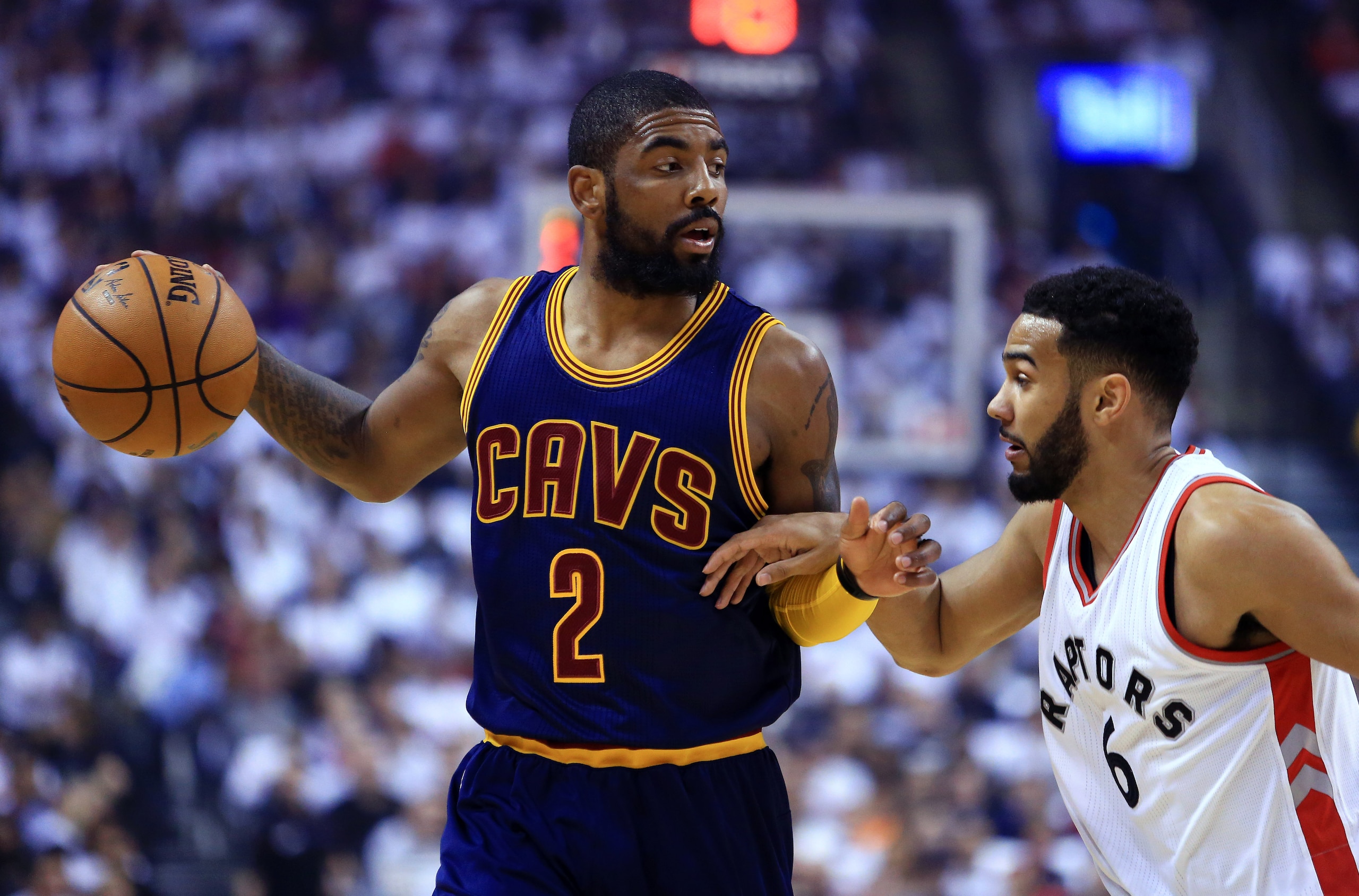
Career Per-Game Stats: 21.6 points, 3.4 rebounds, 5.5 assists, 1.3 steals, 0.3 blocks
Career Advanced Metrics: 21.3 PER, 56.1 TS%, 40.4 WS, 731.29 TPA
Career Accolades: Four-time All-Star, NBA Champion, All-NBA Third Team, All-Rookie First Team, Rookie of the Year
Kyrie Irving's resume is rather impressive for a point guard who's only been in the league since 2011.
He's served as the integral part of a championship team, and even hit the series-clinching Game 7 dagger against the Golden State Warriors to complete the monumental comeback. He's proved himself one of the league's most dangerous scoring threats, and even averaged 25.2 points during the 2016-17 campaign.
Few (if any) have better handles, and he routinely puts them on display by dancing past defenders and finishing creatively around the hoop.
But his resume isn't complete.
Irving still needs to develop on the defensive end, and his work as a distributor lags behind that of many positional counterparts. Part of that is by design—the Cleveland Cavaliers put the ball in LeBron James' hands frequently while asking Irving to serve as a score-first guard—but it's still concerning that he's been unable to spark victories without his superstar teammate.
Rest assured that these are minor knocks. Irving's offensive acumen demands respect, and he's getting it here by virtue of his top-20 placement after just six professional seasons.
15. John Wall, 2010
17 of 31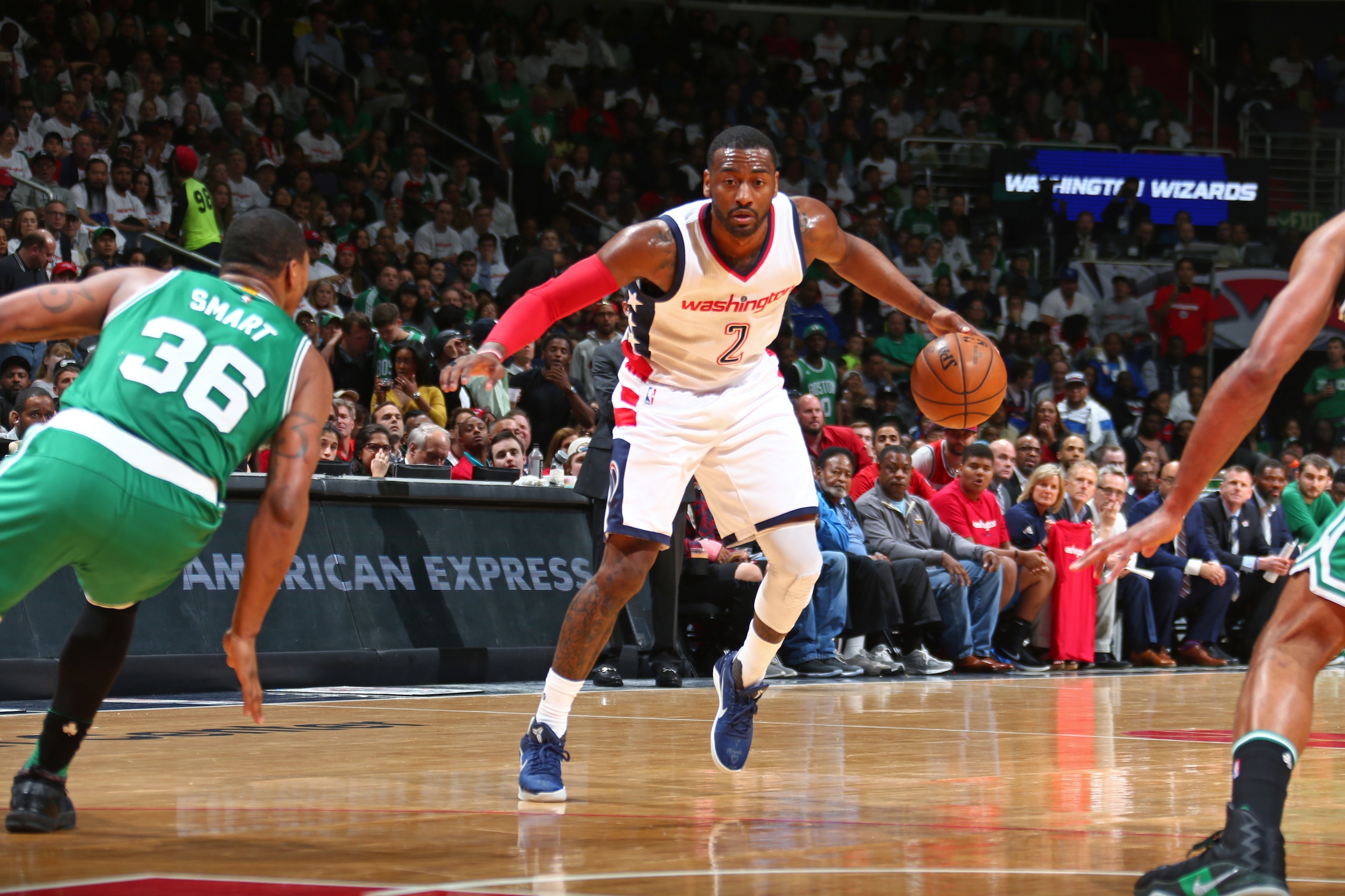
Career Per-Game Stats: 18.8 points, 4.4 rebounds, 9.2 assists, 1.7 steals, 0.6 blocks
Career Advanced Metrics: 19.5 PER, 51.8 TS%, 40.4 WS, 890.55 TPA
Career Accolades: Four-time All-Star, All-Defensive Second Team, All-Rookie First Team
If you'd prefer to think of Kyrie Irving as 15b to John Wall's 15a, that's perfectly fine. The two superstar point guards are separated by a hair, and the Cleveland floor general sparking another championship run would push him ahead of his Washington counterpart.
But right now, Wall has put together the (slightly) superior career, and not just because his game-winning triple in Game 6 of this year's Eastern Conference Semifinals kept his Wizards alive. His all-around ability has made him the more valuable commodity throughout his career, especially because he's had an extra season to develop and prove himself at the professional level.
Just take a peek at the two players' career breakdowns (and career highs) in NBA Math's TPA metric:
| Kyrie Irving | 1,123.49 | minus-392.2 | 731.29 | 246.75 (2014-15) | minus-43.57 (2013-14) | 173.25 (2014-15) |
| John Wall | 715.83 | 174.72 | 890.55 | 218.45 (2016-17) | 60.92 (2014-15) | 241.45 (2016-17) |
Wall is now coming off the best season of his career, one in which he averaged a scorching 23.1 points and 10.7 assists. The Kentucky product is only getting better, giving him plenty of opportunities to continue his ascent up the top-pick leaderboard.
14. Anthony Davis, 2012
18 of 31
Career Per-Game Stats: 22.4 points, 10.2 rebounds, 1.8 assists, 1.3 steals, 2.4 blocks
Career Advanced Metrics: 26.6 PER, 57.6 TS%, 48.8 WS, 922.68 TPA
Career Accolades: Four-time All-Star, All-NBA First Team, All-Defensive Second Team, All-Rookie First Team
Kyrie Irving has never played like a top-10 performer for a full season. Ditto for John Wall, though he came awfully close during the 2016-17 campaign.
Anthony Davis has—and then some.
Though injuries have slowed his development, his 2014-15 campaign was one of the best in NBA history, to the point that some (myself included) seemed ready to anoint him the league's premier player. He hasn't re-ascended to that level yet, but even a diminished version of Davis has been a two-way terror for the New Orleans Pelicans.
He remains one of the best building blocks in the Association, especially now that he's playing more disciplined defense and leading an improved bunch of stoppers in NOLA.
Of course, playoff success is almost a requirement for a great career.
That's the one big knock on Davis at this stage of his career, as his lone postseason appearance was quickly ended at the hands of a Golden State Warriors juggernaut. There will be more to come, of course. His supporting cast is finally getting stronger after the acquisition of DeMarcus Cousins, and it's tough to hold the lottery appearances against him when his teammates were so unremarkable for years.
Davis might not have the longevity of Wall and Irving (yet), but the peak he's reached is quite a bit higher than either of his contemporary stars'.
13. Yao Ming, 2002
19 of 31
Career Per-Game Stats: 19.0 points, 9.2 rebounds, 1.6 assists, 0.4 steals, 1.9 blocks
Career Advanced Metrics: 23.0 PER, 59.6 TS%, 65.9 WS, 665.56 TPA
Career Accolades: Hall of Fame, Eight-time All-Star, Two-time All-NBA Second Team, Three-time All-NBA Third Team, All-Rookie First Team
The first two listed accolades are slight exaggerations.
Yao Ming is indeed a Hall of Famer, but his induction wasn't just about his on-court prowess, so much as his importance to the growing international game and his work overseas. He was selected to eight All-Star games, but that was partially because of his international popularity; he even represented the Western Conference during the final season of his career, in which he played just five games.
However, while Yao's resume is slightly more impressive than it should be, it's not that misleading.
Before foot injuries cut his career short, the 7'6" center was a legitimate two-way force.
He averaged 25 points per game in 2006-07 while shooting 51.6 percent from the field and 86.2 percent from the free-throw line. He was a gigantic deterrent when allowed to guard the paint, even if quicker players could take advantage of his limited mobility. He even showed some skill as a passer and allowed the Houston Rockets to build more sets around him.
Yao's peak may not have put him at an MVP level, but he was a legitimate All-Star. And best of all, his peak lasted nearly his entire NBA career, with only his final stint serving as a true exception.
12. Brad Daugherty, 1986
20 of 31
Career Per-Game Stats: 19.0 points, 9.5 rebounds, 3.7 assists, 0.8 steals, 0.7 blocks
Career Advanced Metrics: 18.9 PER, 59.0 TS%, 65.2 WS, 1,025.31 TPA
Career Accolades: Five-time All-Star, All-NBA Third Team, All-Rookie First Team
It's truly a shame Brad Daugherty had to cut his career short. After entering the league as a 21-year-old fresh out of North Carolina, the big man was only getting better with age.
His best performance came during his age-27 season, in which he averaged 20.2 points, 10.2 rebounds and 4.4 assists while shooting 57.1 percent from the field and 79.5 percent from the stripe. That was his 1992-93 campaign, when the league was overflowing with big names and future Hall of Famers. But according to NBA Math's TPA, Daugherty (276.39 TPA) outplayed everyone but Michael Jordan, Hakeem Olajuwon, Charles Barkley, Karl Malone and David Robinson that year.
Two years later, he was out of the league.
A bad back limited him to just 50 games during his final season with the Cleveland Cavaliers, and he retired shortly thereafter.
The bad news was that his career came to a premature conclusion, preventing him from moving further up legacy leaderboards and potentially earning some Hall of Fame hype. Basketball-Reference's Hall of Fame Probability model gives the big man a 15.6 percent chance of induction based on his numbers, though it's obviously never going to happen.
The good news is that he retired as one of only 14 players in NBA history with lifelong averages of at least 19 points, nine rebounds and three assists.
11. Larry Johnson, 1991
21 of 31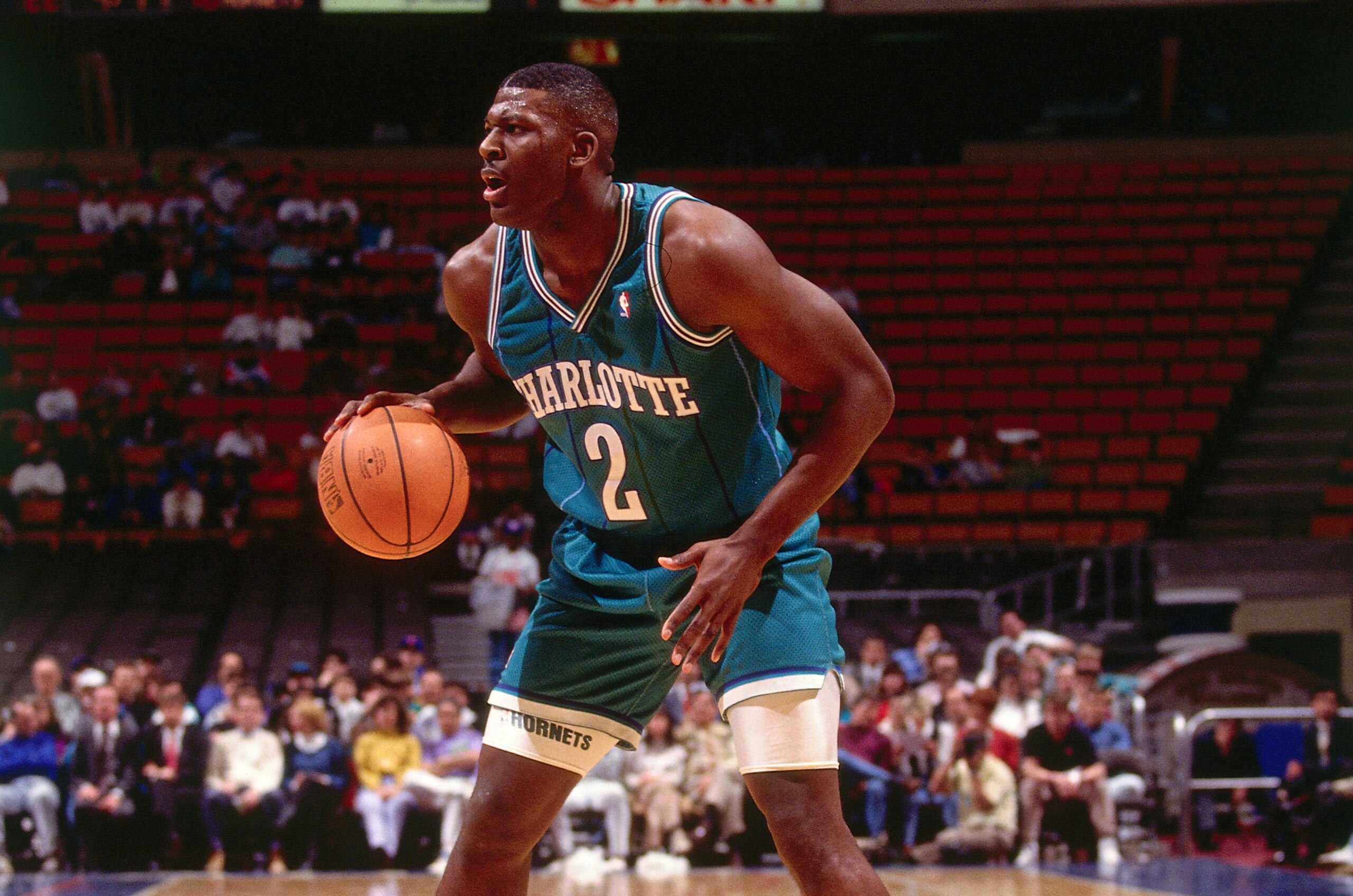
Career Per-Game Stats: 16.2 points, 7.5 rebounds, 3.3 assists, 0.7 steals, 0.4 blocks
Career Advanced Metrics: 16.3 PER, 55.1 TS%, 69.7 WS, 1,187.86 TPA
Career Accolades: Two-time All-Star, All-NBA Second Team, All-Rookie First Team, Rookie of the Year
Sensing a trend yet?
Larry Johnson is yet another former top pick whose career was derailed by injuries. This forward was one of the league's most explosive players at the beginning of his career, but back troubles forced him to stop slamming the ball home as frequently and instead develop a perimeter jumper and all-around game.
Unfortunately, Johnson's three-point stroke never quite clicked. From the 1994-95 campaign through the end of his career, he took a pair of triples per game and connected at just a 34.2 percent clip, which was far less than ideal for a man who was adjusting while the league was experimenting with a shorter arc.
Nevertheless, he retained immense value. Even when he wasn't hitting from the perimeter, his skill as a secondary distributor and defender insured his importance to the Charlotte Hornets and New York Knicks. He remained an overall positive until he hung up the sneakers after the 2000-01 campaign, even if he could never replicate the success from his early years.
Those first few seasons were both the best and worst things for Johnson. On one hand, they established Grandmama as a household name and bona fide superstar. But on the flip side, perhaps he'd have been better served playing fewer than 40 minutes per game and occasionally taking a break from his rim-rattling proclivities.
10. Blake Griffin, 2009
22 of 31
Career Per-Game Stats: 21.5 points, 9.4 rebounds, 4.1 assists, 1.0 steals, 0.6 blocks
Career Advanced Metrics: 22.8 PER, 56.2 TS%, 62.4 WS, 1,327.69 TPA
Career Accolades: Five-time All-Star, Three-time All-NBA Second Team, All-NBA Third Team, All-Rookie First Team, Rookie of the Year
If the full extent of Blake Griffin's historical excellence hasn't yet sunk in, it's only because his career is currently framed as a disappointment. He hasn't lived up to the full promise of his stellar rookie campaign, and the narrative most prominently centers around his unfortunate tendency to get injured or flame out of the postseason.
But Griffin is still close to establishing himself as an all-time great.
Just look at those lifetime numbers. He's one of only four players with career per-game averages of at least 21 points, nine rebounds and four assists, joining Elgin Baylor, Larry Bird and Wilt Chamberlain. His advanced metrics are nothing short of exemplary across the board, especially since he's spent the last few years becoming a more adept defender and expanding his offensive arsenal to include unorthodox post moves and a deadlier mid-range jumper.
Oh, and he's still just 28 years old.
Griffin's game may not age gracefully, since he remains dependent on his jaw-dropping athleticism. But he's also one of the best passing bigs the game has ever seen, to the point that the Los Angeles Clippers have sometimes let him serve as a makeshift floor general when Chris Paul is injured. That skill should give him staying power, even if he's not throwing up nightly double-doubles.
9. Derrick Rose, 2008
23 of 31
Career Per-Game Stats: 19.5 points, 3.7 rebounds, 6.0 assists, 0.8 steals, 0.4 blocks
Career Advanced Metrics: 18.1 PER, 52.1 TS%, 34.4 WS, 162.12 TPA
Career Accolades: Three-time All-Star, All-NBA First Team, All-Rookie First Team, MVP, Rookie of the Year
Derrick Rose may be the toughest player to place throughout the entirety of these rankings.
His peak was incredibly short for the Chicago Bulls, and he's functioned as a decisive negative during each of the last four seasons. In fact, he has more seasons as a minus (five, including his rookie campaign and the atrocious defense that came with it) than as a beneficial presence (three).
But on the flip side, his peak is ridiculously high.
Rose won MVP for the Bulls in 2010-11, then was on pace to have a comparable campaign before the first of his many knee injuries limited him to only 39 appearances. He's the first player to appear in this countdown with an MVP on his resume, and that's an honor only five other top picks from the lottery era can claim.
All you need to see is his TPA progression to understand the counteracting influence of the dizzying highs and the perilously low points of his NBA life:
| TPA | minus-34.92 | 22.27 | 336.24 | 125.05 | minus-29.78 | minus-35.49 | minus-137.97 | minus-83.28 |
With a peak that only lasted for a little more than two seasons, Rose can only rise so high.
8. Chris Webber, 1993
24 of 31
Career Per-Game Stats: 20.7 points, 9.8 rebounds, 4.2 assists, 1.4 steals, 1.4 blocks
Career Advanced Metrics: 20.9 PER, 51.3 TS%, 84.7 WS, 2,394.54 TPA
Career Accolades: Five-time All-Star, All-NBA First Team, Three-time All-NBA Second Team, All-NBA Third Team, All-Rookie First Team, Rookie of the Year
What couldn't Chris Webber do?
The versatile forward was a tremendous scoring threat, capable of dominating out of the post while occasionally stepping out to the perimeter for a jumper. He was one of the best pound-for-pound rebounders the sport has seen, nearly averaging double-digit rebounds for his career in spite of his 6'9" frame and even leading the league in 1998-99 with 13 boards per game. He was a stretch 4 before the position became popular, and often led the charge on fast-break attempts and always found the open man.
As if that weren't enough, he was an active defender who loved jumping passing lanes and wreaking havoc with athletic blocks. Though he never competed for Defensive Player of the Year, he more than held his own on that end.
So what's holding Webber back?
He experienced a drastic drop-off during his final full season with the Sacramento Kings and never recovered once he was traded to the Philadelphia 76ers. That left him without a peak quite as long as those of the remaining players in this countdown, even if his prime pointed toward him eventually becoming a first-ballot Hall of Famer.
There's no shame in finishing No. 8 among lottery-era top picks. Webber is one of the 100 greatest players in the sport's history, even if he falls a decent bit behind the seven top-50 players populating this countdown.
7. Dwight Howard, 2004
25 of 31
Career Per-Game Stats: 17.5 points, 12.7 rebounds, 1.5 assists, 1.0 steals, 2.0 blocks
Career Advanced Metrics: 21.7 PER, 60.0 TS%, 121.5 WS, 1,674.39 TPA
Career Accolades: Eight-time All-Star, Five-time All-NBA First Team, All-NBA Second Team, Two-time All-NBA Third Team, Four-time All-Defensive First Team, All-Defensive Second Team, All-Rookie First Team, Three-time Defensive Player of the Year
Allow emotion to leave the evaluation.
Dwight Howard has rubbed plenty of people the wrong way after leaving the Orlando Magic on an unceremonious note. His lone season with the Los Angeles Lakers was a disaster (even if he still made the All-Star squad), he disappointed with the Houston Rockets and he failed to make a postseason impact during his first go-round with the Atlanta Hawks. Now, there's no telling what kind of player he'll become, since he's no longer a huge difference-maker on the offensive end and often seems unmotivated on defense.
But even examining just the Orlando portion of Howard's career should make him a lock for the Hall of Fame.
Not only did the big man win Defensive Player of the Year three times, he also single-handedly carried the Magic past LeBron James and into the 2009 NBA Finals. At his peak, he was the game's best defender, as well as an interior presence so physically dominant that opponents would have to scheme around him, even allowing him to post monstrous numbers so they could focus on stopping his teammates. And that was all without Howard ever developing into a significant post-up threat.
Howard is no longer the popular, crowd-pleasing, goofy figure he was early in his career. But don't let that distract you from the superiority of his numbers and overall resume. Naming 50 players who had more success in the Association is an impossible task.
6. Patrick Ewing, 1985
26 of 31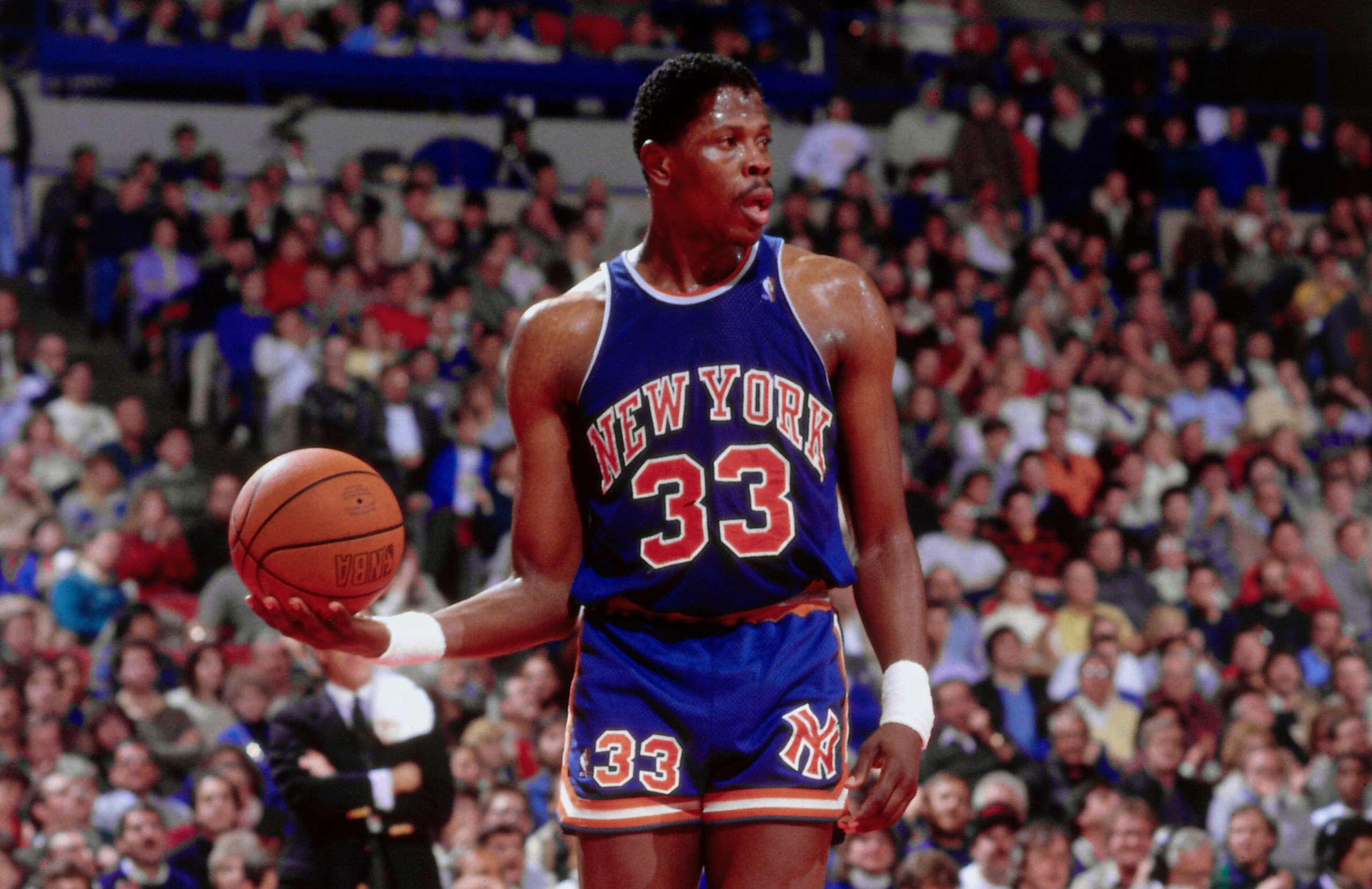
Career Per-Game Stats: 21.0 points, 9.8 rebounds, 1.9 assists, 1.0 steals, 2.4 blocks
Career Advanced Metrics: 21.0 PER, 55.3 TS%, 126.4 WS, 1,626.73 TPA
Career Accolades: Hall of Fame, 11-time All-Star, All-NBA First Team, Six-time All-NBA Second Team, Three-time All-Defensive Second Team, All-Rookie First Team, Rookie of the Year
Patrick Ewing is a legitimate legend, but his career is still a story of what could have been.
He was always one of the league's best centers, though he never quite ascended to the top of the positional hierarchy. Among David Robinson, Hakeem Olajuwon and Shaquille O'Neal, there was always someone a bit better. He came close to winning MVP, but he never got over the hump. Instead, he just finished in the top five on six different occasions.
Defensively? Ewing made the All-Defensive squad three times, but he never made the First Team or won Defensive Player of the Year. In the playoffs? Ewing couldn't get the Knicks their first title since the 1970s, but he performed admirably as an individual.
Ewing undoubtedly belongs in the Hall of Fame, and he's one of the greatest talents the sport has ever seen. Right after leaving Georgetown, he took the Association by storm, winning Rookie of the Year while averaging 20 points and nine rebounds. And he didn't slow down until the late-90s.
But what's his primary calling card? The remaining men in this countdown were legendary in at least one aspect of the game, and Ewing falls slightly short of that status.
5. Allen Iverson, 1996
27 of 31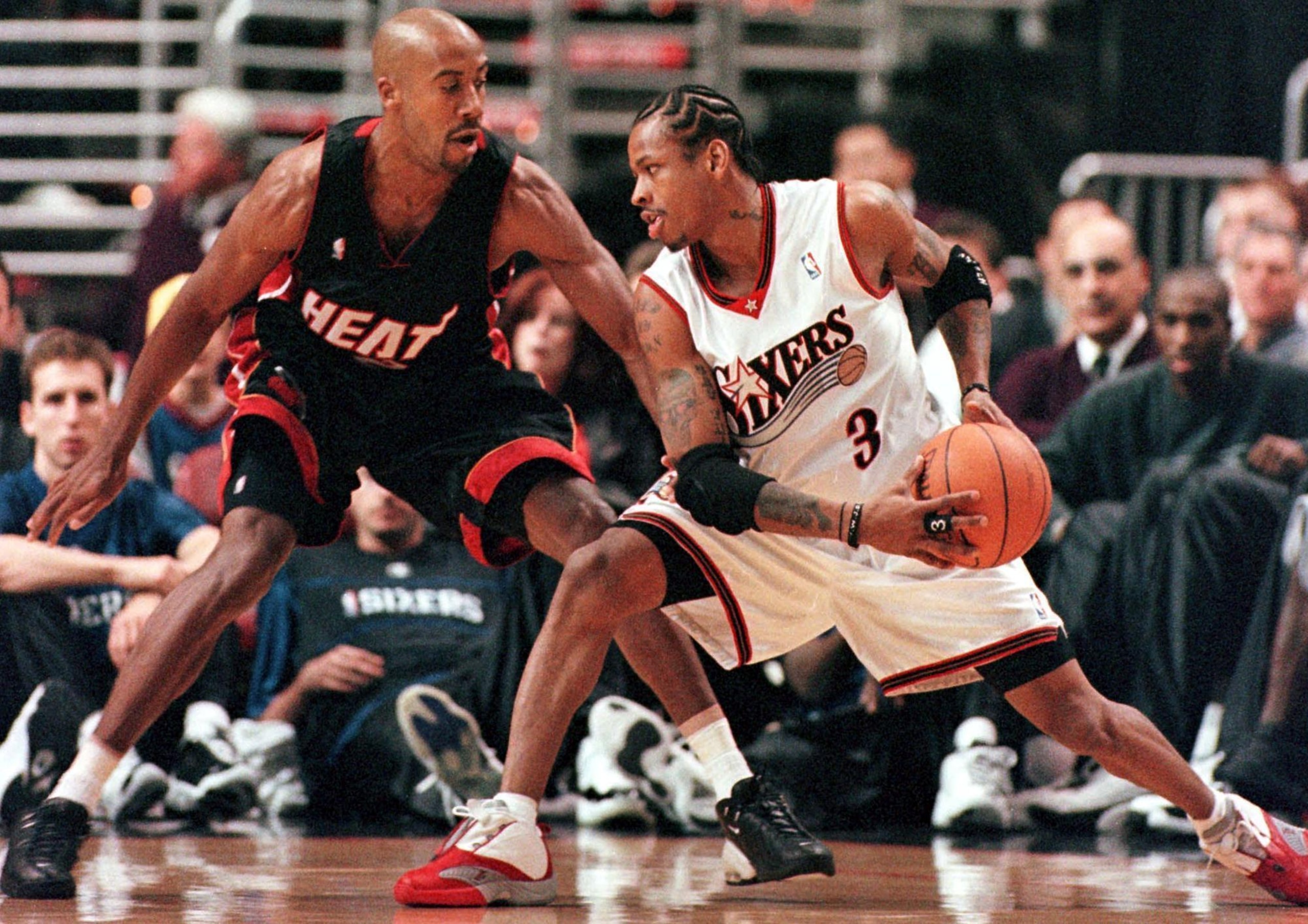
Career Per-Game Stats: 26.7 points, 3.7 rebounds, 6.2 assists, 2.2 steals, 0.2 blocks
Career Advanced Metrics: 20.9 PER, 51.8 TS%, 99.0 WS, 1,902.45 TPA
Career Accolades: Hall of Fame, 11-time All-Star, Three-time All-NBA First Team, Three-time All-NBA Second Team, All-NBA Third Team, All-Rookie First Team, MVP, Rookie of the Year
The NBA has never seen a scorer quite like Allen Iverson, whose pound-for-pound excellence and entertaining style made him one of the most popular players of all time. Whether he was crossing up defenders or showing off his bounce, he was always producing points.
Sure, Iverson wasn't that efficient. He doesn't fare as well in many advanced metrics as some might expect.
But that's largely a product of the time. He played during the hero-ball era, in which it was perfectly permissible for a player to commandeer possessions over and over. Give him better teammates or a coaching staff that would force him to adapt to modern methods, and he'd surely have found a different way to torment defenses with his scoring acumen.
And even though Iverson's lackluster efficiency levels hold him back, the advanced metrics are still rather impressive. The undersized guard sits at No. 51 in career PER among all qualified players throughout NBA history, No. 82 in career win shares and No. 52 in career TPA.
Throw in the heart with which he played, his indisputable value to the Philadelphia 76ers squads he led and his habit for thieving the ball away from other handlers, and those numbers should be viewed as the floor when ascertaining Iverson's overall standing. He might not be one of the 20 best players in league history, but thinking he's anything other than a top-50 lock is farcical.
4. David Robinson, 1987
28 of 31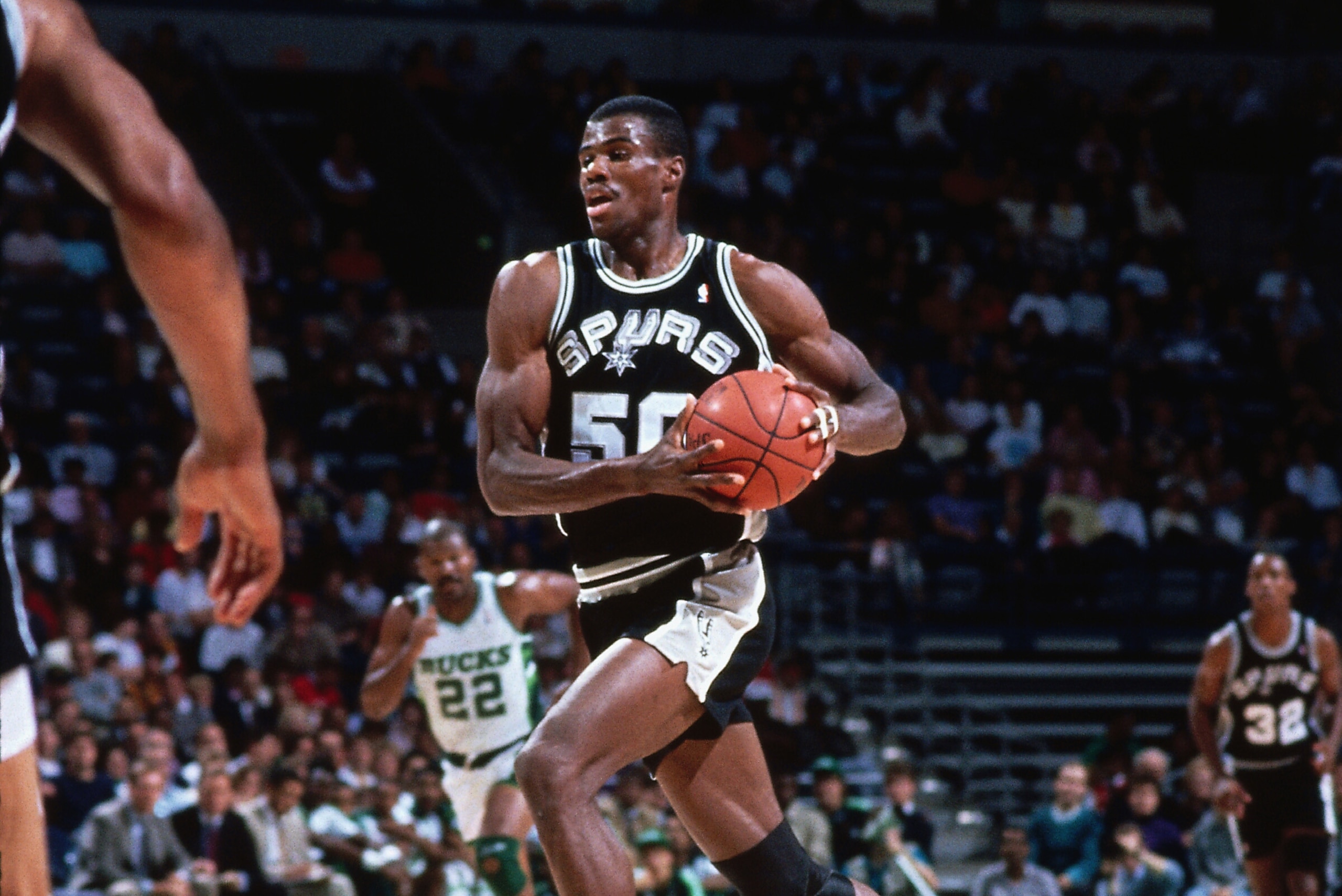
Career Per-Game Stats: 21.1 points, 10.6 rebounds, 2.5 assists, 1.4 steals, 3.0 blocks
Career Advanced Metrics: 26.2 PER, 58.3 TS%, 178.7 WS, 4,906.31 TPA
Career Accolades: Hall of Fame, 10-time All-Star, Two-time NBA Champion, Four-time All-NBA First Team, Two-time All-NBA Second Team, Four-time All-NBA Third Team, Four-time All-Defensive First Team, Four-time All-Defensive Second Team, All-Rookie First Team, Defensive Player of the Year, MVP, Rookie of the Year
Even without a three-point stroke, David Robinson established himself as one of the most versatile players in NBA history.
The big man used his skill and spring-loaded athleticism to thrive for the San Antonio Spurs. He was a scoring champion, a Defensive Player of the Year, an MVP and even a passing ace out of the frontcourt when he averaged 4.8 assists during the 1993-94 campaign.
To this day, searching for unique combinations of box-score totals tends to pull up Robinson and Hakeem Olajuwon's exploits from a few decades ago. Those centers were rivals on the floor and in the box scores, and established themselves as stat-sheet stuffers capable of sparking victories in so many different ways. Who was better is debatable, but there's no doubt both were surefire Hall of Famers, among the best of all time at their position.
Thanks to his per-minute efficiency and ability to avoid mistakes like the plague, Robinson is actually closer to moving past the No. 3 player in this countdown than falling behind Allen Iverson. Perhaps he might have gotten there if he'd entered the NBA sooner than his age-24 season, losing years of his prime while serving in the Navy.
3. Shaquille O'Neal, 1992
29 of 31
Career Per-Game Stats: 23.7 points, 10.9 rebounds, 2.5 assists, 0.6 steals, 2.3 blocks
Career Advanced Metrics: 26.4 PER, 58.6 TS%, 181.7 WS, 4,057.11 TPA
Career Accolades: Hall of Fame, 15-time All-Star, Four-time NBA Champion, Eight-time All-NBA First Team, Two-time All-NBA Second Team, Four-time All-NBA Third Team, Three-time All-Defensive Second Team, All-Rookie First Team, MVP, Rookie of the Year
The knocks you've heard against Shaquille O'Neal are probably true.
He stuck around for too long and played well past his prime with the Cleveland Cavaliers and Boston Celtics to drop his career numbers. Even while in his prime, he often played himself into shape, sacrificing some regular-season success so he could be at full strength during the playoffs.
But that's about where the list ends.
O'Neal was a thoroughly dominant two-way monster capable of doing anything and everything on the basketball court—so long as "anything and everything" didn't require making free throws or shooting from outside the paint. Few big men have ever been more skilled around the hoop, and fewer still have been so physically imposing.
It's the combination of those assets that made O'Neal so special and allowed him to post some of the greatest seasons by a center the Association has witnessed. His 1999-00 campaign with the Los Angeles Lakers remains the standard by which individual go-rounds from big men should be evaluated, and it's not like he was too shabby before or after.
2. Tim Duncan, 1997
30 of 31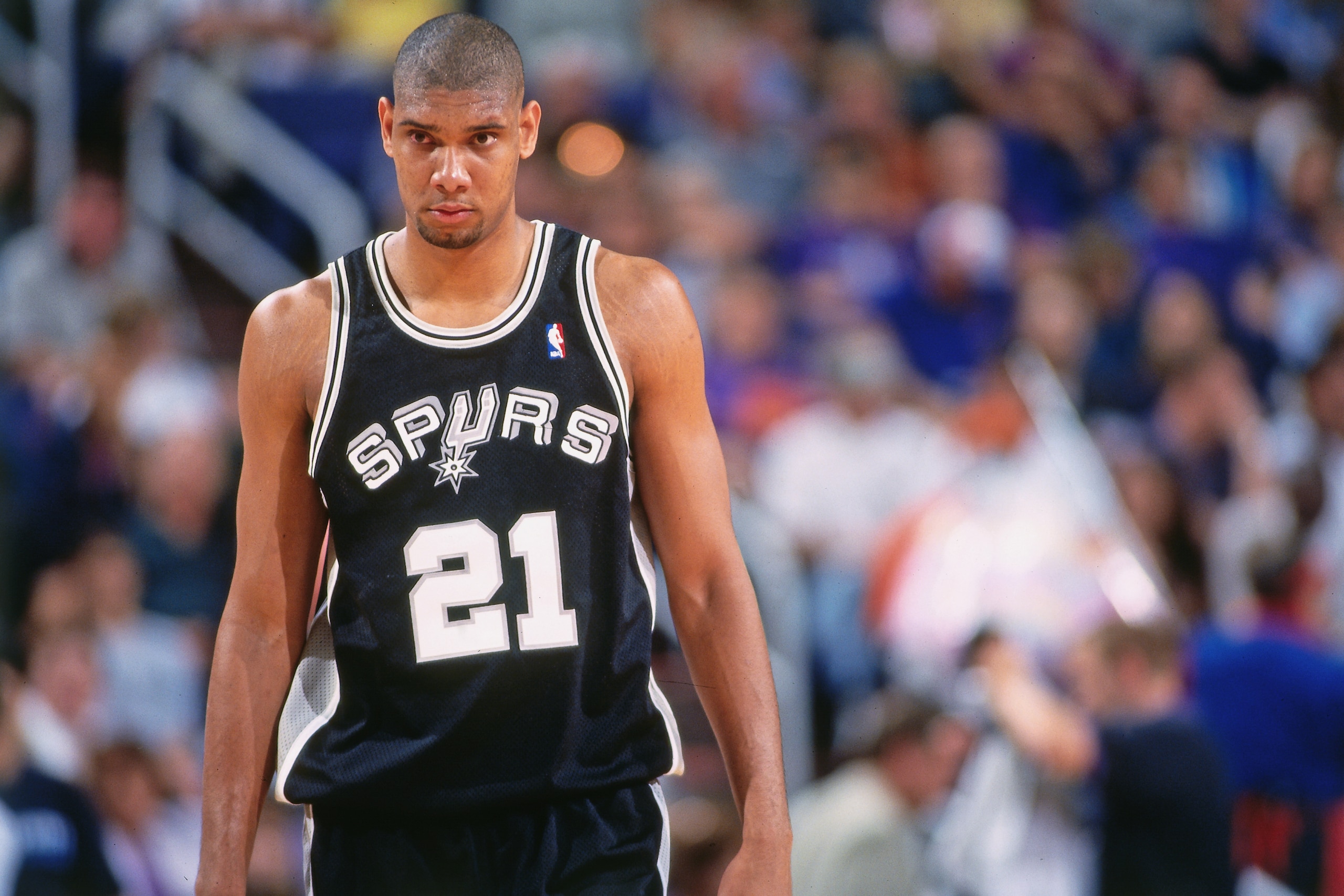
Career Per-Game Stats: 19.0 points, 10.8 rebounds, 3.0 assists, 0.7 steals, 2.2 blocks
Career Advanced Metrics: 24.2 PER, 55.1 TS%, 206.4 WS, 4,887.29 TPA
Career Accolades: 15-time All-Star, Five-time NBA Champion, 10-time All-NBA First Team, Three-time All-NBA Second Team, Two-time All-NBA Third Team, Eight-time All-Defensive First Team, Seven-time All-Defensive Second Team, All-Rookie First Team, Two-time MVP, Rookie of the Year
Tim Duncan may well be the definition of consistent excellence.
His legacy isn't about serving as the league's best player during any given season, so much as him being close to the title for well over a decade. Even after Father Time sapped some of his athleticism late in his career, he remained an undeniably positive presence for the San Antonio Spurs by playing fundamentally perfect defense and protecting the rim with aplomb.
Duncan was a great passer. He was a devastatingly effective offensive threat, capable of hitting banks from the elbows and thriving in the post. He was one of the greatest defenders in NBA history, even if he somehow never won Defensive Player of the Year. He could simply do everything, and he was still willing to make sacrifices whenever necessary, and often accepted lesser individual numbers for the sake of the team.
With 206.4 win shares in his career, Duncan trails only Kareem Abdul-Jabbar, Wilt Chamberlain, Karl Malone, Michael Jordan and John Stockton. His 4,887.29 TPA mark leaves him behind just nine other players, and bringing the playoffs into the stat's purview moves him past everyone but Abdul-Jabbar, Charles Barkley, Larry Bird, LeBron James, Magic Johnson, Jordan and Malone.
His resume is unimpeachable.
1. LeBron James, 2003
31 of 31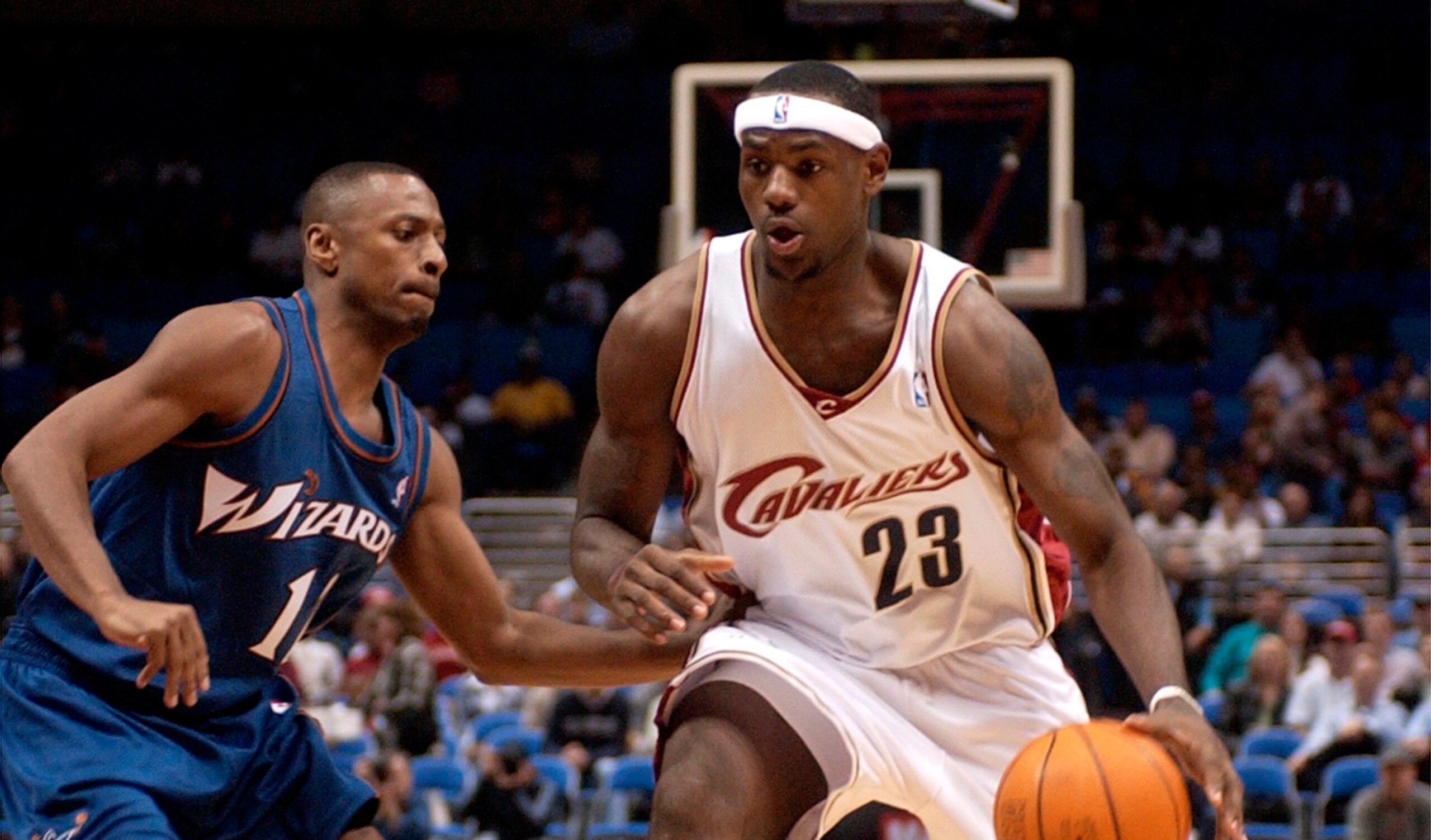
Career Per-Game Stats: 27.1 points, 7.3 rebounds, 7.0 assists, 1.6 steals, 0.8 blocks
Career Advanced Metrics: 27.6 PER, 58.4 TS%, 205.4 WS, 7179.59 TPA
Career Accolades: 13-time All-Star, Three-time NBA Champion, 10-time All-NBA First Team, Two-time All-NBA Second Team, Five-time All-Defensive First Team, All-Defensive Second Team, All-Rookie First Team, Four-time MVP, Rookie of the Year
Michael Jordan was the No. 3 pick of the 1984 NBA draft, making him ineligible for inclusion both because he wasn't the top overall selection and because he was taken outside the lottery era, which began in 1985.
That's all the justification necessary to give LeBron James the top spot.
At this point, he's almost unquestionably one of the two best players in NBA history, and the other reasonable candidates for a top-two spot (Kareem Abdul-Jabbar, Bill Russell, Wilt Chamberlain, Magic Johnson and Larry Bird) are also ineligible for this countdown, as they were drafted before the lottery era. James still has plenty of high-quality years left ahead of him, but he's already accomplished everything.
He'll tell you himself.
"Seriously, what else would I have [to do]?" James said after Game 3 against the Toronto Raptors, per Cleveland.com's Joe Vardon. "I've won championships, I won my first one and I've won for my teammates, I came home and won. There isn't anything I have left to prove."
The four-time MVP is right. He's functioned as the league's best player for much of his career, though one-off seasons from various superstars have consistently tested his grip on the crown.
He's won championships, dominated as an individual and even played different styles to best fit his teammates. Whether an unstoppable scorer during his first stint with the Cleveland Cavaliers, an efficient shooter who shared the ball with Chris Bosh and Dwyane Wade for the Miami Heat or a pass-first point forward during his return to the Cavs, he's kept thriving.
At this point, it's a perfectly valid opinion to think that while Jordan had the NBA's greatest career, the league has never seen a talent on the same level as James. It's also increasingly valid to think that the first part of that previous opinion may no longer be true.
Adam Fromal covers the NBA for Bleacher Report. Follow him on Twitter: @fromal09.
Unless otherwise indicated, all stats from Basketball Reference, NBA.com, ESPN.com or NBA Math and accurate heading into games Monday, May 15.


.jpg?w=2560 "Love's Body Already 'Tired'")
.jpg?w=2560 "Tyreek Deal May Come Soon")
.jpg?w=2560 "Ward Nearly Walks Out of Presser ▶️")



.jpg?w=2560 "NFL investigating 2 referees for separate viral exchanges")