


In some respects, the Toronto Raptors took some important steps forward during the 2016-17 NBA season.
Kyle Lowry and DeMar DeRozan both enjoyed career years. Norman Powell, Delon Wright and rookies Pascal Siakam and Jakob Poeltl showed plenty of promise and progress. Serge Ibaka and P.J. Tucker turned around Toronto's faltering defense after the trade deadline. The team followed up its first-ever 50-win campaign in 2015-16 with another this year.
But all of that went out the window with another dispiriting playoff exit against the Cleveland Cavaliers. With Lowry reduced to a sideline spectator following a Game 2 ankle injury, the Raptors succumbed to a four-game sweep at the hands of the defending champs.
This, despite seemingly coming into the series with a roster that was arguably superior to the one that claimed two wins from the Cavs in last year's Eastern Conference Finals.
Toronto's offseason was shaping up to be thorny either way. Now, the Raptors will have to consider these five points through a much murkier lens.
To Pay or Not to Pay Kyle Lowry
1 of 5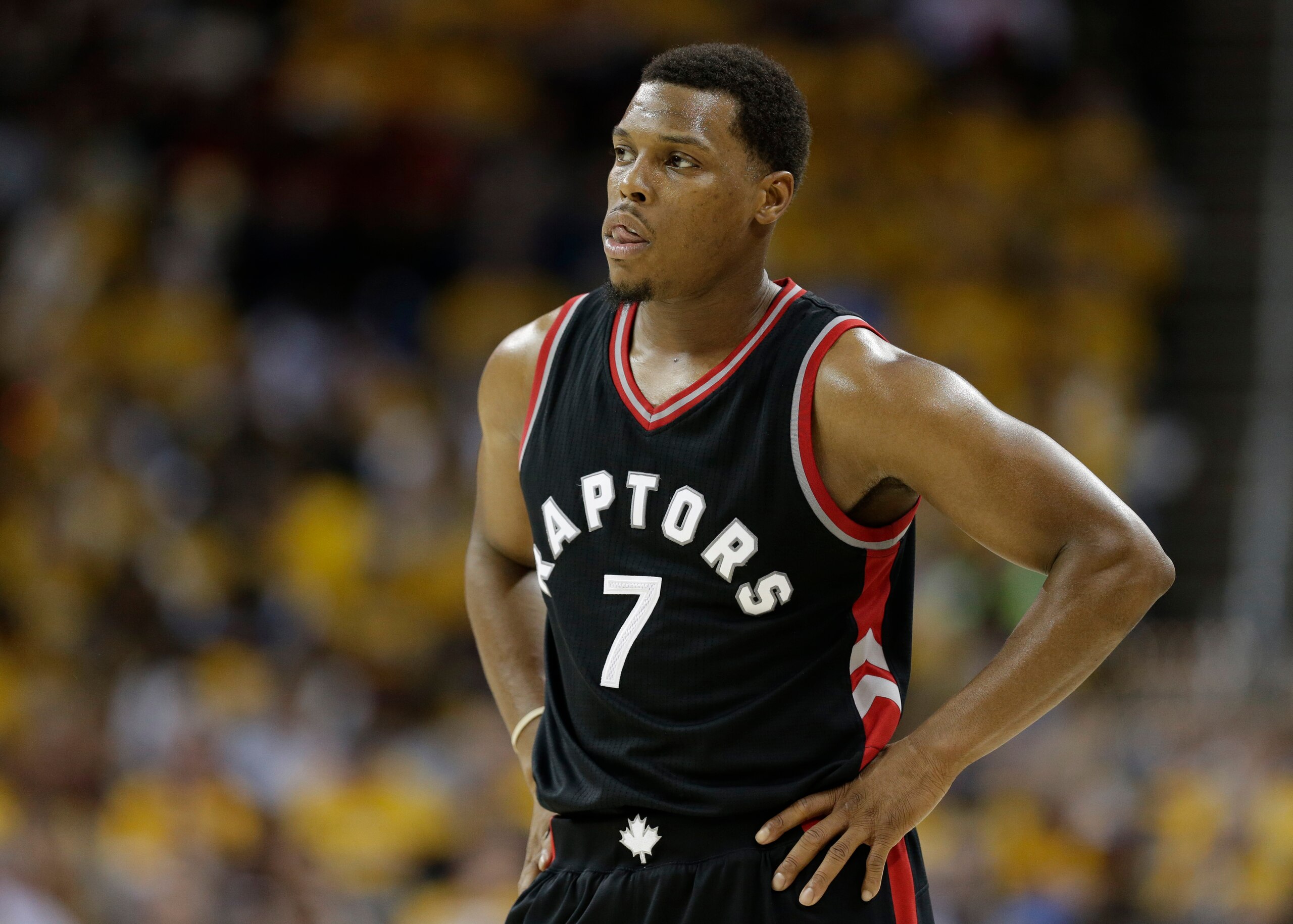
Before the 2016-17 season began, Lowry told The Vertical's Adrian Wojnarowski that he intended to decline his $12 million option for 2017-18 but hoped to return to Toronto.
"For me, I think that at 12:01 a.m. on July 1 – something should be close," Lowry told Woj. "If not, I'm open to seeing what else is out there."
At this point, it's no slam dunk that Lowry will have a max deal worth mega millions on his door step so quickly, if at all, from the Raptors. He just turned 31, and though he'll be coming off his finest season as a pro—with career highs in points (22.4), rebounds (4.8), field-goal percentage (.464) and three-point percentage (.412)—the track record of point guards his age sustaining their peaks (if not raising their games) drops off dramatically after Steve Nash and John Stockton.
Moreover, Toronto now has even more proof that it's not prepared to compete with the East's elite. Lowry sat out the last two games the Raptors' sweep at the hands of the Cleveland Cavaliers with an ankle injury. Even so, it's tough to imagine him changing the tenor of the series entirely had he been healthy, especially after his difficulties on the court during Games 1 and 2.
"They've got LeBron James," Lowry told Wojnarowski after Game 3. "Nobody's closing the gap on him."
Toronto will have trouble narrowing that chasm by committing $30 million or more per season to Lowry. Then again, the Raptors wouldn't be in any position to challenge the Cavs without Lowry, and won't likely be next season if he walks—though, with Cory Joseph and Norman Powell waiting in the wings, Toronto won't be entirely screwed in his absence.
The Raptors, then, may wind up as the East's answer to the Los Angeles Clippers out West: a pseudo-contender stuck between a rock and a hard place when it comes to considering the upside (or lack thereof) of some expensive retainers.
Bring Back Serge Ibaka
2 of 5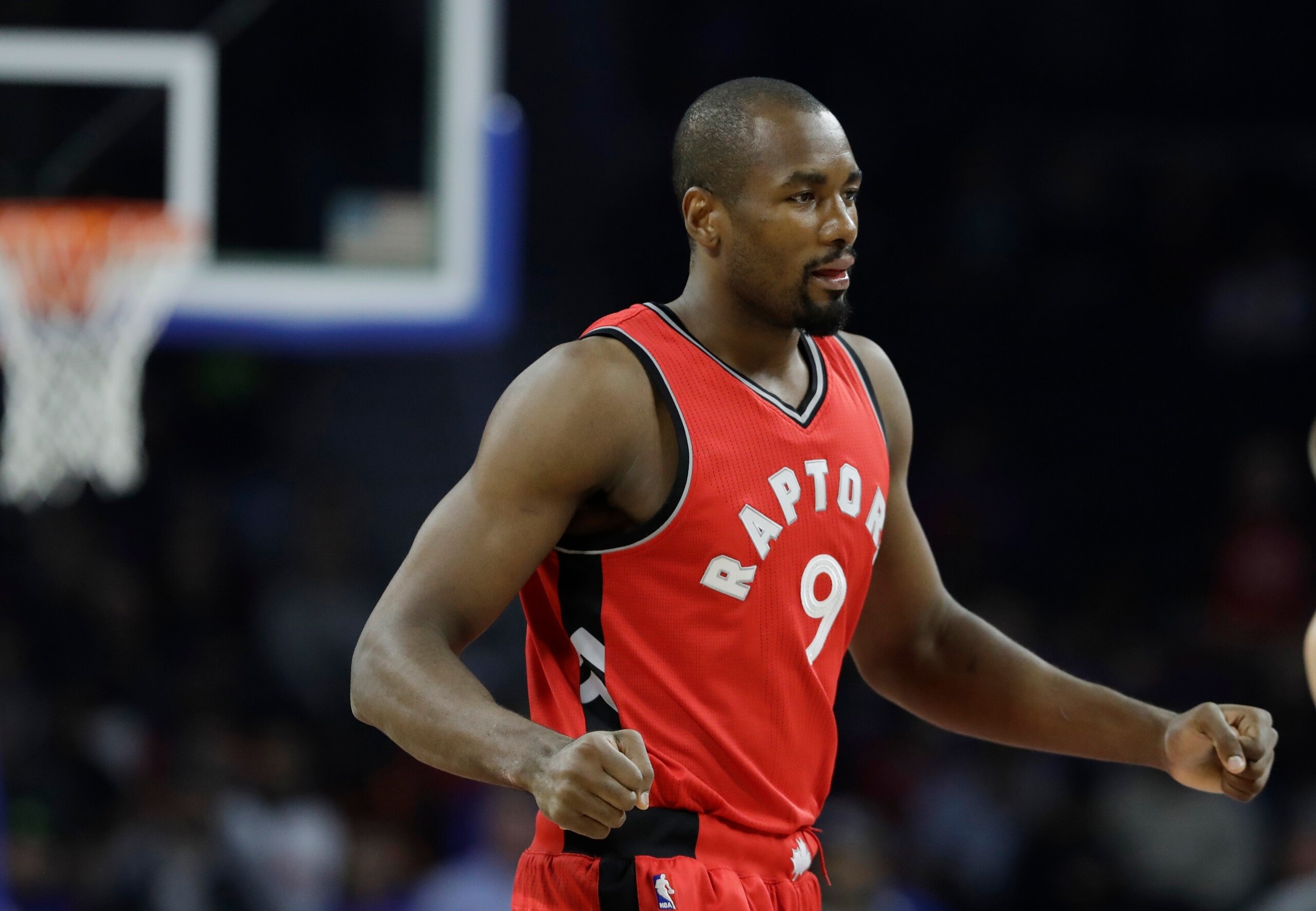
The question of Serge Ibaka's future north of the border could be much clearer, at least from Toronto's perspective.
The 27-year-old Congolese big man was a game-changer upon arrival from the Orlando Magic. With Ibaka at power forward after the All-Star break, the Raptors posted the fourth-best defensive rating (102.3 points allowed per 100 possessions, per NBA.com) and the second-most wins (18), behind only the Golden State Warriors.
Ibaka was plenty productive in his own right. In 23 regular-season games with the Raptors, he averaged 14.2 points, 6.8 rebounds and 1.4 blocks while nailing 39.8 percent of his threes. His playoff scoring average (14.3 points) was nearly identical, as were his rebounding (6.5 per game) and block numbers (1.7 per game), though his three-point shooting plummeted (31.6 percent).
Still, Ibaka did well to stabilize a frontcourt that had labored with rookies (Pascal Siakam, Jakob Poeltl) and ho-hum options (Jared Sullinger) filling in at power forward. Siakam and Poeltl showed enough potential in Year 1 to make expanding their roles next season a palatable option if the need arises.
But if the Raptors want to remain among the top teams in the East, they'll need a seasoned veteran like Ibaka at that spot. And with no clear path to the kind of cap space required to sign a max-level power forward (i.e. Blake Griffin, Paul Millsap), Toronto's best avenue to continued contention may be exceeding the cap to keep Ibaka.
Quandaries on the Wing
3 of 5
P.J. Tucker would seem a no-brainer to return to Toronto, too. The 32-year-old shot 40 percent from three after a midseason trade with the Phoenix Suns, gave Toronto a much-needed dose of toughness and defense on the wing and played well enough to supplant DeMarre Carroll in the starting lineup by Game 4 of the team's series against the Cavaliers.
Tucker's promotion didn't change the outcome for Toronto. However, he did acquit himself well with 14 points and team highs in rebounds (12), steals (four) and three-point makes (four) in the Raptors' postseason finale.
Carroll, on the other hand, has largely disappointed in the two seasons since he became the most significant non-incumbent free-agent signing in franchise history. He landed in Canada fresh off of knee surgery, missed 56 games in 2015-16 following an uneven recovery and has yet to look like the tenacious two-way force he'd been in Atlanta that his $60 million payday with the Raptors.
At this point, Tucker may be a better, more reliable option on the wing than Carroll. But 3-and-D types like Tucker don't come cheaply in today's shooting-obsessed, perimeter-oriented NBA.
Can the Raptors afford to pony up for another forward who might already be past his prime? Will they stick with the one they have, or could they find a way to offload the old and clear room for the new?

Jonas, Brother
4 of 5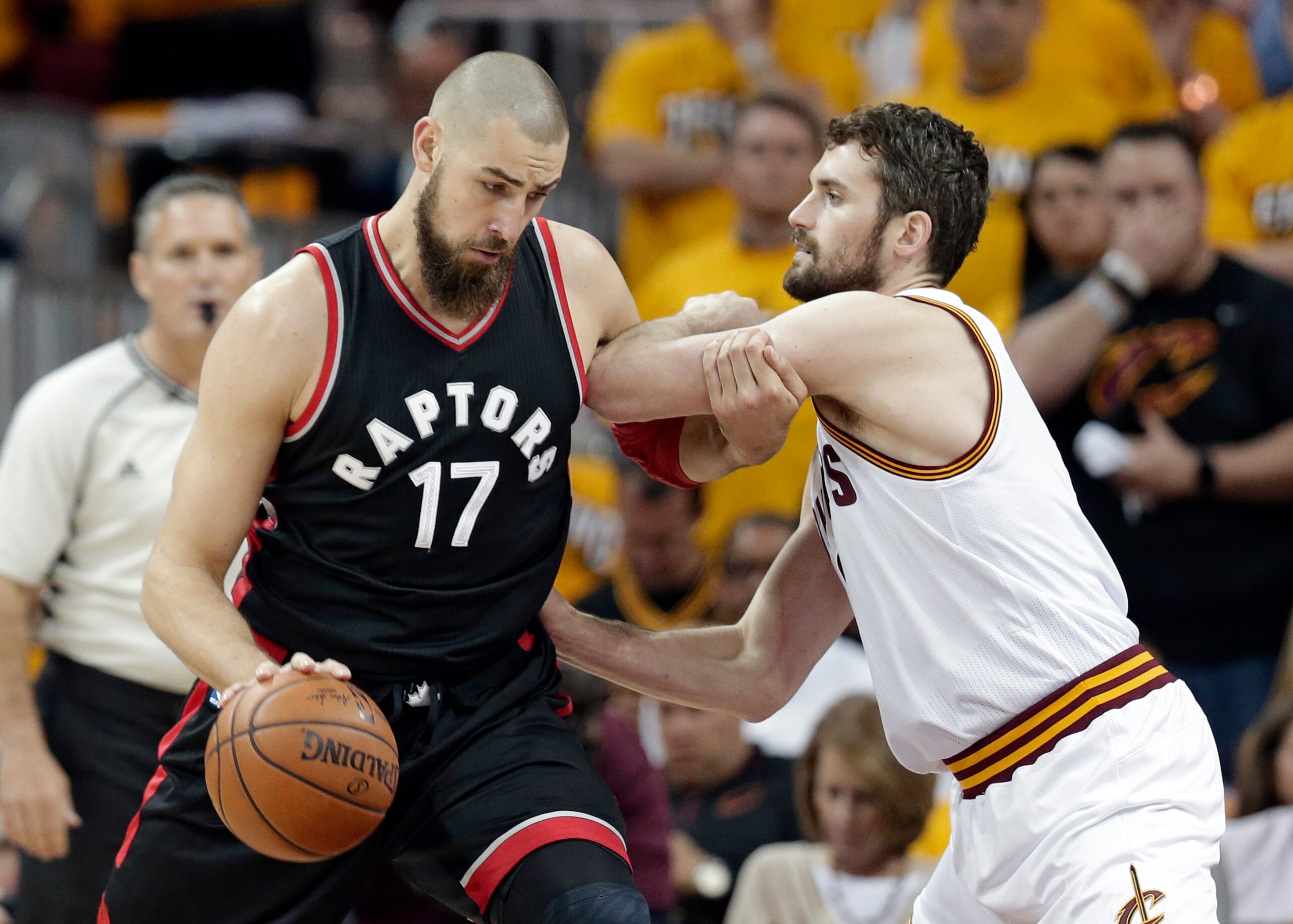
Toronto's potential cap crunch could land Jonas Valanciunas squarely in the front office's crosshairs.
As anachronistic as DeMar DeRozan's inside-the-arc game may seem, Jonas Valanciunas' tendencies are even more of a hoops Luddite's delight. The 7-foot Lithuanian is primarily a low-post big who doesn't protect the rim (0.8 blocks per game) and doesn't defend well in the pick-and-roll (45th percentile, per NBA.com).
The Milwaukee Bucks, the East's #TeamFuture, played into a bench role during the first round of the playoffs. The Cavs, with their plethora of small-ball options, pushed Valanciunas back into Toronto's second unit.
Not that Valanciunas is just another tall drink of water. During the regular season, he racked up 29 double-doubles and shot better than 40 percent from every range—not including his 1-of-2 showing from beyond the arc, per Basketball Reference. At 25, he's the youngest member of Toronto's core and might not be done improving.
In the fiscal realities of the NBA, Valanciunas' salary ($15.5 million next season, $16.5 million in 2018-19, a player option for $17.6 million in 2019-20) isn't bad. But the Raptors could find themselves pressed up against the luxury tax—if not well into it—depending on how they approach the retention of their own free agents this summer.
Thus, every dollar directed into Valanciunas' pocket could cut into Toronto's long-term flexibility. Those cuts could dig that much deeper if the Raptors determine that their former lottery pick is no longer a viable fit with a team looking to contend for hardware in the modern NBA.
A New Contract for 2Pat?
5 of 5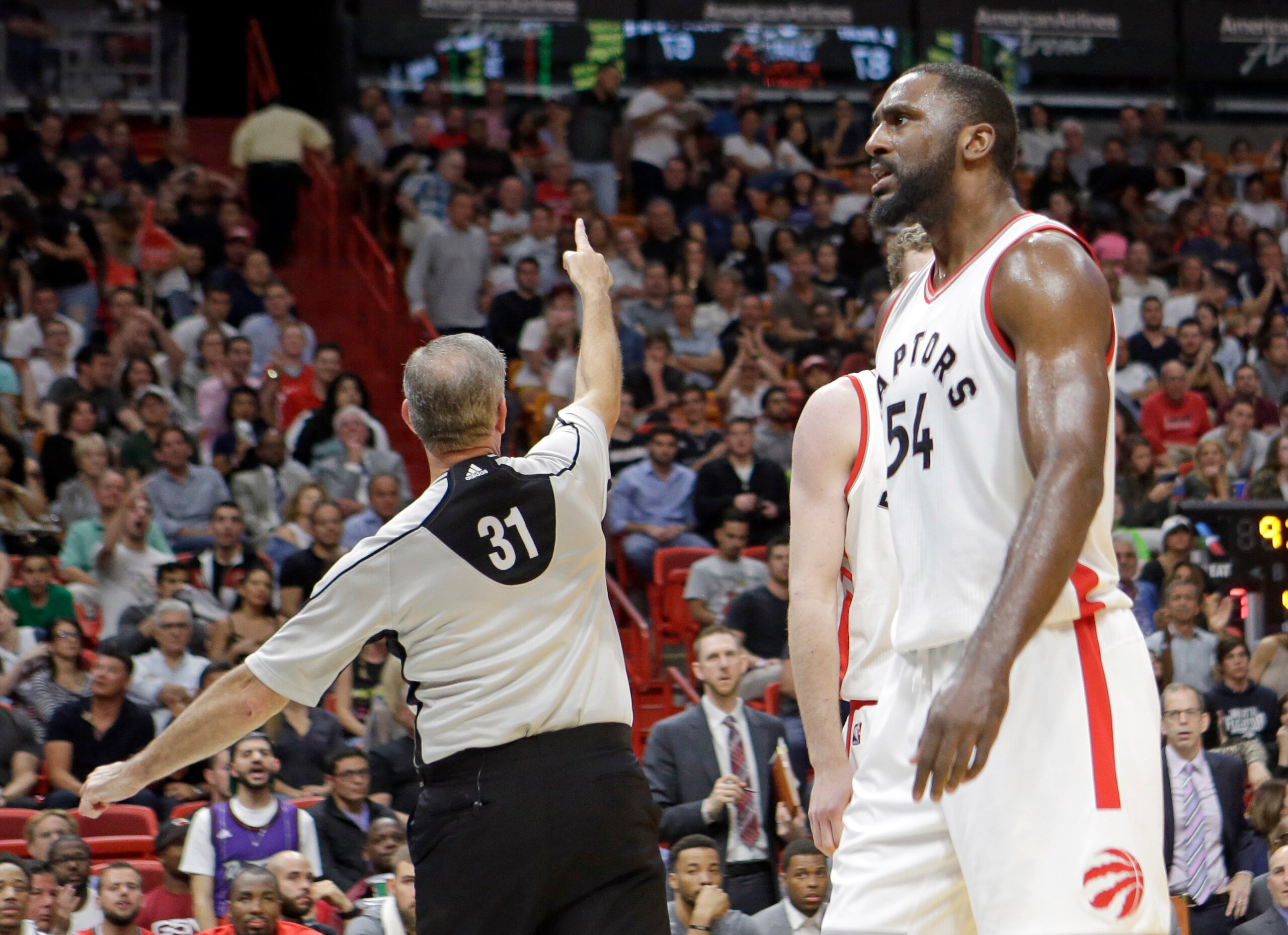
Patrick Patterson replaced Valanciunas as a starter for Game 2 in Cleveland, though he wasn't exactly the answer Toronto sought. That night, he made one shot (a three), grabbed two rebounds, dished four assists and wound up as a minus-12 in his 17:33.
By and large, though, Patterson has been an important part of Toronto's rotation during his three-and-a-half seasons with the Raptors. At 6'9" with a respectable three-point stroke (36.8 percent for his career), he's filled both frontcourt spots in Lowry-centric second units that have done exemplary work for Toronto during the team's ongoing golden age.
That doesn't mean he'll come back at a discount. Outside of two-way wings, stretch 4s like Patterson are arguably the hottest commodity on the NBA's open market. Chances are, the 28-year-old won't have much trouble reeling in lucrative offers as a free agent this summer.
If the Raptors retain some of their pricier pieces during the offseason, they won't have the means to replace Patterson with an equal option, much less a superior one. That calculus could change, should Toronto alter its trajectory with Lowry, Ibaka and Tucker.
Which is to say: If the Raptors go for the status quo, Patterson figures to be a pivotal part of that plan.
All stats via NBA.com and Basketball Reference unless otherwise noted.
Josh Martin covers the NBA for Bleacher Report. Follow him on Twitter, Instagram and Facebook, and listen to his Hollywood Hoops podcast with B/R Lakers lead writer Eric Pincus.
.jpg?w=2560 "Mahomes Told Teammate to Leave Meeting")
.jpg?w=2560 "🚨 Week 8 AP Top 25 Poll")
.jpg?w=2560 "Baker Gets Glove From Rays 🧤")
.jpg?w=2560 "Steelers Roll Saints in Paris")
.jpg?w=2560 "NFL investigating Eagles")
.jpg?w=2560 "Updates from EVERY Game")
.jpg?w=2560 "5 Teams Eyeing Jonathan Taylor")