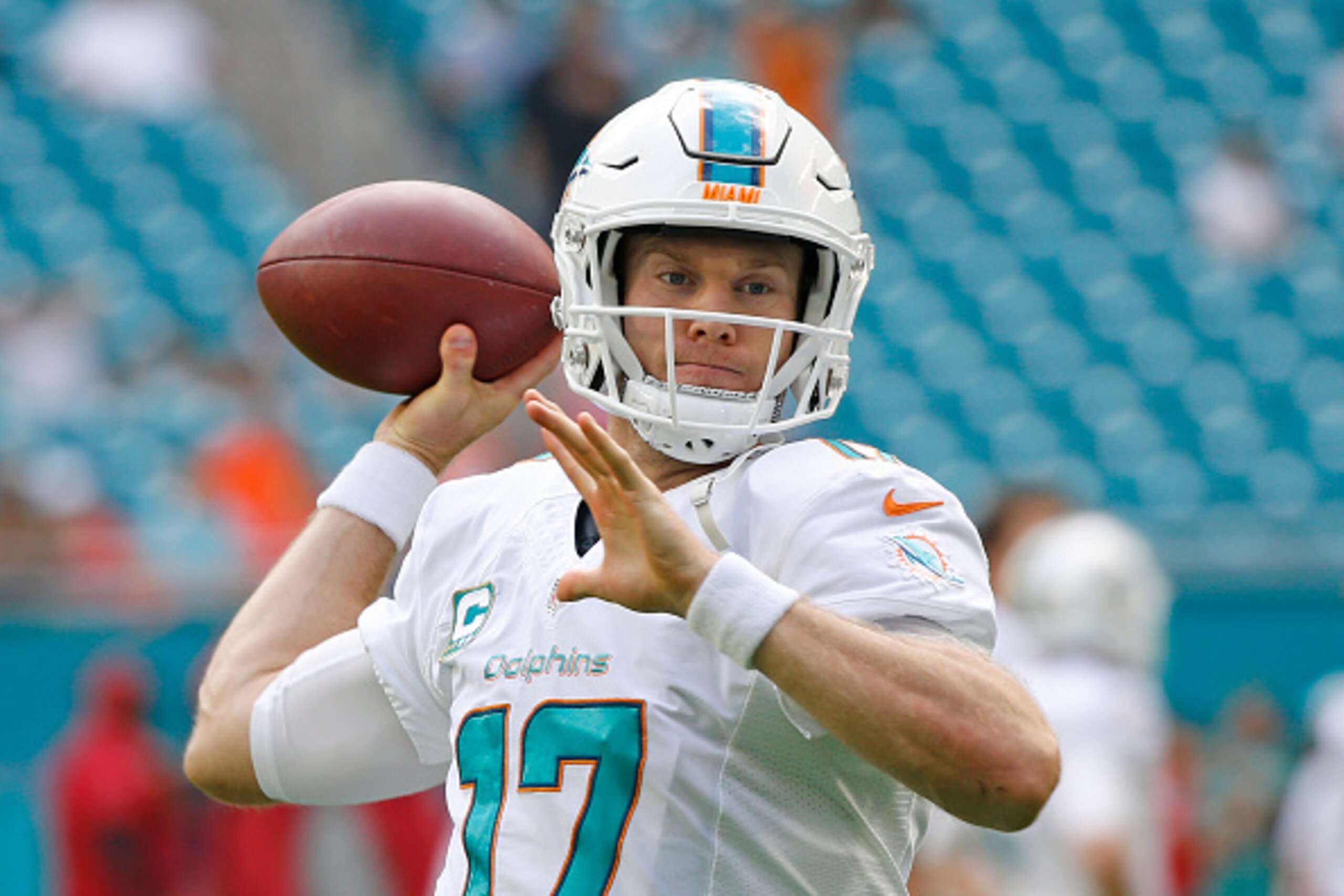

NFL1000: Miami Dolphins 2017 NFL Draft Preview
The Miami Dolphins made the playoffs last season, an occurrence that hadn't happened since 2008, when Tony Sparano and his coaching staff surprised the NFL with the Wildcat, and Tom Brady was out for the season. This time around, it was more than a fluke, as first-year head coach Adam Gase stabilized the offense, and defensive coordinator Vance Joseph started to simplify the defense. With Joseph off to coach the Broncos, former linebackers coach Matt Burke was bumped up to Joseph's old position.
Gase's primary project in year one was to take the great athletic potential of quarterback Ryan Tannehill and turn him into a more consistent signal-caller. Tannehill was always good for a few splash plays, but he struggled to keep things together on a consistent basis.
Gase worked with Tannehill on his mechanics and took away the deep ball to a considerable degree, leaving the 28-year-old with easier, more repeatable throws. Before Tannehill went out in December with a partially torn ACL, it worked—his 67.1 percent completion rate was the highest of his career. And with Jay Ajayi becoming a true franchise back, and the receiver triumvirate of Jarvis Landry, Kenny Stills and DeVante Parker, the Dolphins had a dynamic, well-rounded offense.
Miami's defense was decent against the pass but finished 30th in yards allowed and last in yards per attempt against the run. It's clear the team needs a dominant nose tackle to pair with Ndamukong Suh, and though Cameron Wake and Andre Branch combined well to give the team two consistent pass-rushers, adding more young blood along the defensive line is an important consideration in the 2017 draft. The linebacker group could also use upgrading.
The Dolphins are in a relatively strong position for the first time in a long time; to keep improving, they need to continue Tannehill's development, hope the offensive line performs at a higher level and restock the front seven. A division championship is probably out of the question as long as Brady and Bill Belichick are still around, but the Dolphins are trending up.
Methodology
1 of 18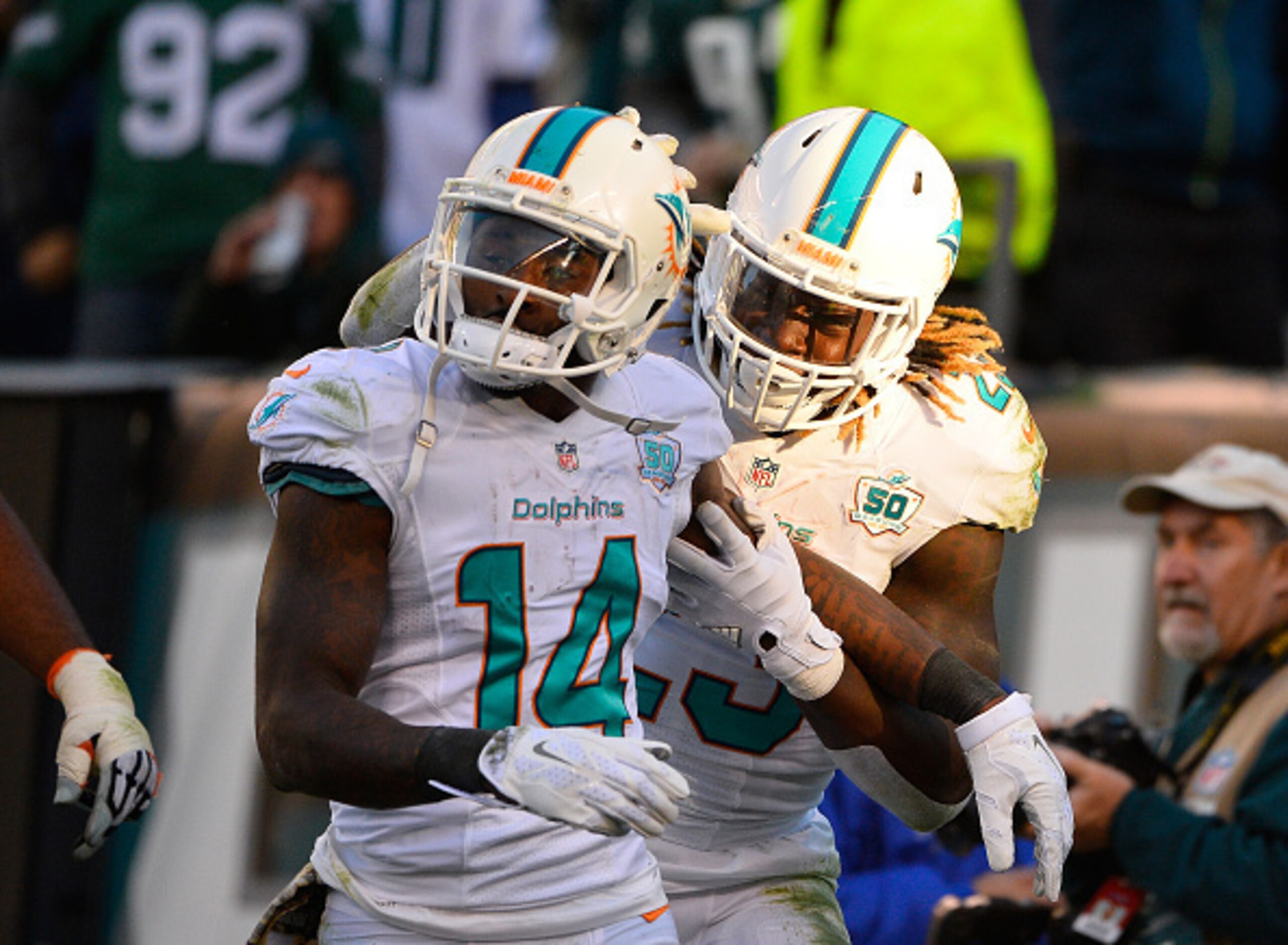
The NFL1000 team of scouts graded a series of important attributes for every player in their positional review. Using a scale starting at zero and going up to anywhere from five to 50 based on the position and the attribute, our scouts graded each player based on their own expertise and countless hours of tape review over the years. Our evaluators had specific positional assignments based on their proven fields of expertise.
- Doug Farrar: Lead scout/quarterbacks
- John Middlekauff: Running backs/fullbacks
- Marcus Mosher: Wide receivers/tight ends
- Mark Schofield: Wide receivers/tight ends
- Duke Manyweather: Offensive tackles
- Ethan Young: Offensive guards
- Joe Goodberry: AFC defensive ends
- Justis Mosqueda: NFC defensive ends
- Charles McDonald: Defensive tackles
- Zach Kruse: 3-4 outside linebackers
- Derrik Klassen: 4-3 outside linebackers
- Jerod Brown: Inside linebackers
- Kyle Posey: Cornerbacks
- Ian Wharton: Cornerbacks
- Mark Bullock: Safeties
- Chuck Zodda: Special teams
Each corresponding position slide was written by the assigned scout.
Quarterback
2 of 18
Scheme: Erhardt-Perkins/spread/zone
Starter: Ryan Tannehill
NFL1000 Score: 74.5/100
NFL1000 QB Rank: 8/38
Ryan Tannehill missed the final three games of the season with a knee injury, but before that, he showed a new degree of efficiency under first-year head coach Adam Gase. That was in part because Gase took away a lot of the deep-passing game and made Tannehill more of a possession quarterback.
It was a good move in the short term, given the level of randomness and unpredictability that's always been present in Tannehill's game. The plan now is to make him more of a pocket passer, per the Miami Herald's Armando Salguero—perhaps Tannehill can regain his touch with the deep ball there and become a complete quarterback.
The athletic ability is all there; it's up to Gase to teach Tannehill the fine points and to the QB apply those points.
Backup: Matt Moore
NFL1000 Score: Did not have enough snaps to qualify
Matt Moore started his first games for the Dolphins since 2011 after Tannehill suffered a partially torn ACL late in the season. He had a four-touchdown outing against the Jets in his first start, and found it slightly tougher going against the Bills and Patriots to end the regular season.
The Dolphins face-planted against the Steelers in the playoffs, but even there, Moore was reasonably efficient. He's an ideal backup—smart, tough and pretty good under pressure. There's not a lot of deep passing to his game, and he's far from athletically transcendent, but you could do a lot worse for a backup and spot starter.
Backup: Brandon Doughty
NFL1000 Score: Did not have enough snaps to qualify
Brandon Doughty turned heads at the 2016 scouting combine with some remarkable quotes from the podium and a throwing session that upped his stock a bit. Before he's able to succeed at the NFL level, though, he'll have work on a hitchy delivery. He's also not always efficient when he's on the move.
Backup: David Fales
NFL1000 Score: Did not have enough snaps to qualify
Signed by the Dolphins in April, David Fales spent the 2015 season as a backup for the Bears with then-Chicago offensive coordinator Gase. He's a smart player with iffy mechanics and an average arm who will compete for a backup job.
Team Need: 4/10
Potential Draft Fits: Jerod Evans, Virginia Tech; C.J. Beathard, Iowa
Running Back
3 of 18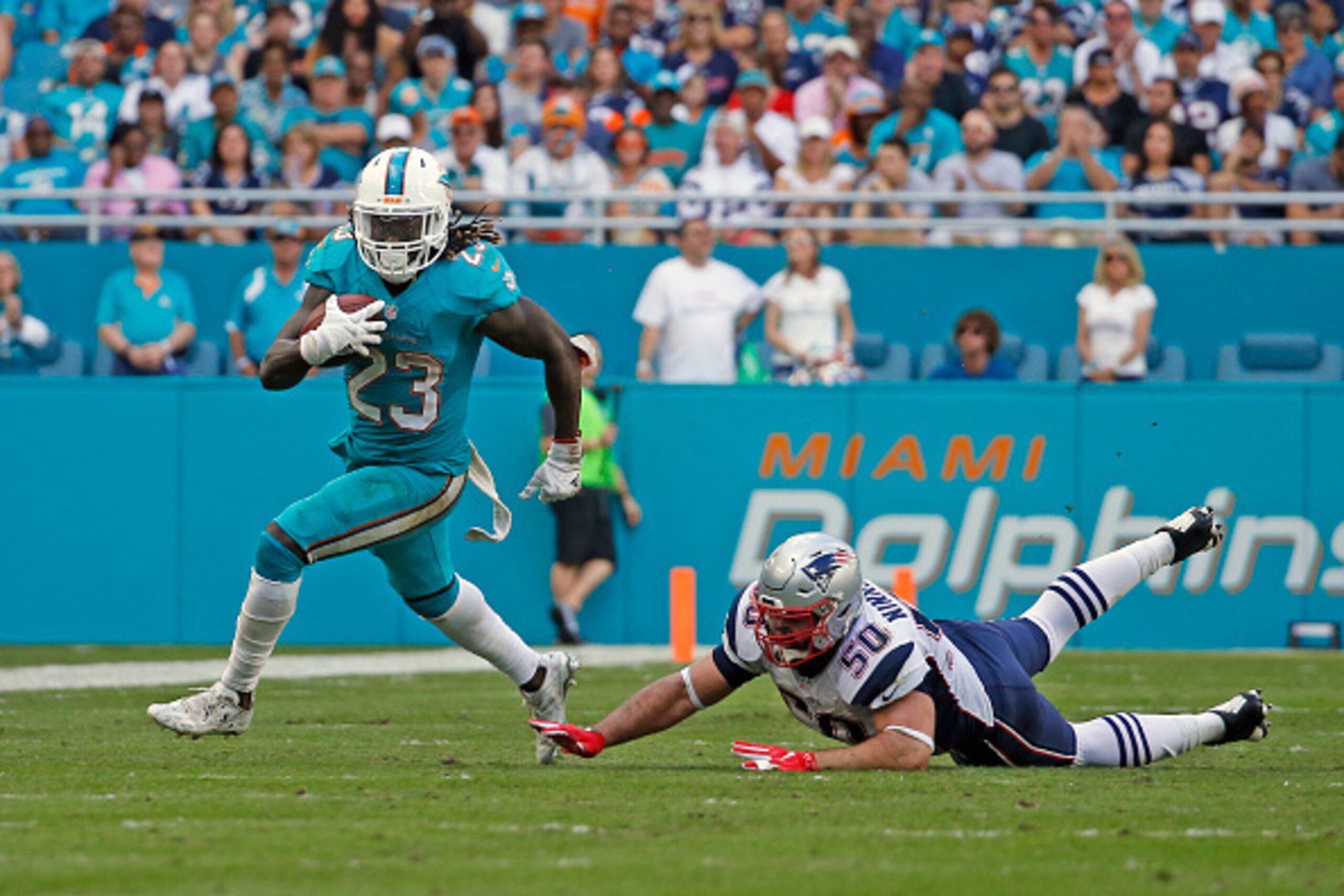
Scheme: Erhardt-Perkins/spread/zone
Starter: Jay Ajayi
NFL1000 Score: 72.5/100
NFL1000 Position Rank: 17/82
Jay Ajayi had a great sophomore season for the Miami Dolphins, rushing for 1,272 yards and eight touchdowns. He broke out in Weeks 6 and 7, with back-to-back 200-yard rushing performances. Ajayi's season got off to a rocky start when Adam Gase left him home for a Week 1 road game in Seattle, though.
Ajayi's style fits perfectly with the Dolphins' newly implemented zone running scheme. He has a one-cut, downhill style and the power to run through defenders at the second level. He is a powerful runner on contact and will gain yards after that contact.
Ajayi has good vision and patience for the outside zone and a natural feel for constantly falling forward. While he doesn't have blazing speed, he does play fast and can break off big runs. He's also a solid pass-catcher who keeps defenses honest with his ability to work the flat out. The Dolphins have one of the more exciting young running backs in the NFL with Ajayi.
Backup: Kenyan Drake
NFL1000 Score: 67.2/100
NFL1000 Position Rank: 69/82
Kenyan Drake was drafted in the third round in 2016 and played a limited role in the offense as a rookie. Drake only had 33 carries but did show flashes of potential. He also showed the ability to be an exciting kickoff return man, and he even returned one kick for a touchdown.
It's hard to envision him as a bell-cow back, but Drake could develop into a good change-of-pace runner. He has the speed and explosive qualities to get outside the tackles, with the change of direction to make defenders miss. He needs to develop as an inside runner, but his one-cut style should work well with Gase's zone scheme.
His value should come in the passing game as a receiver. Overall, Drake could take a big step in year two, becoming a dependable backup to Ajayi and a difference-maker on special teams.
Backup: Damien Williams
NFL1000 Score: 67.3/100
NFL1000 Position Rank: 68/82
Damien Williams is an average backup who doesn't bring much to the table. He averaged 3.3 yards per carry in 2016. Williams has limited speed and explosion that hurts his ability in between the tackles. He is an average outside runner, but did add some value in the passing game.
Williams had 23 catches and three touchdowns, and proved to be a valuable checkdown option. He has reliable hands and doesn't waste time dancing around once he gets the football in space. Williams is a cheap backup but will need to produce more if the Dolphins bring in help via the draft.
Backup: Storm Johnson
NFL1000 Score: Did not have enough snaps to qualify
Storm Johnson is a backup with some power who could find himself on the field in a few preseason short-yardage situations.
Backup: Chris Pantale
NFL1000 Score: Did not have enough snaps to qualify
Chris Pantale is a fullback/tight end hybrid who will have to show out in camp.
Team Need: 4/10
Potential Draft Fits: Samaje Perine, Oklahoma; James Conner, Pitt
.jpg?w=2560 "Colts Football")
.jpg?w=2560 "Chiefs Giants Football")
.jpg?w=2560 "Titans Colts Football")
Wide Receiver
4 of 18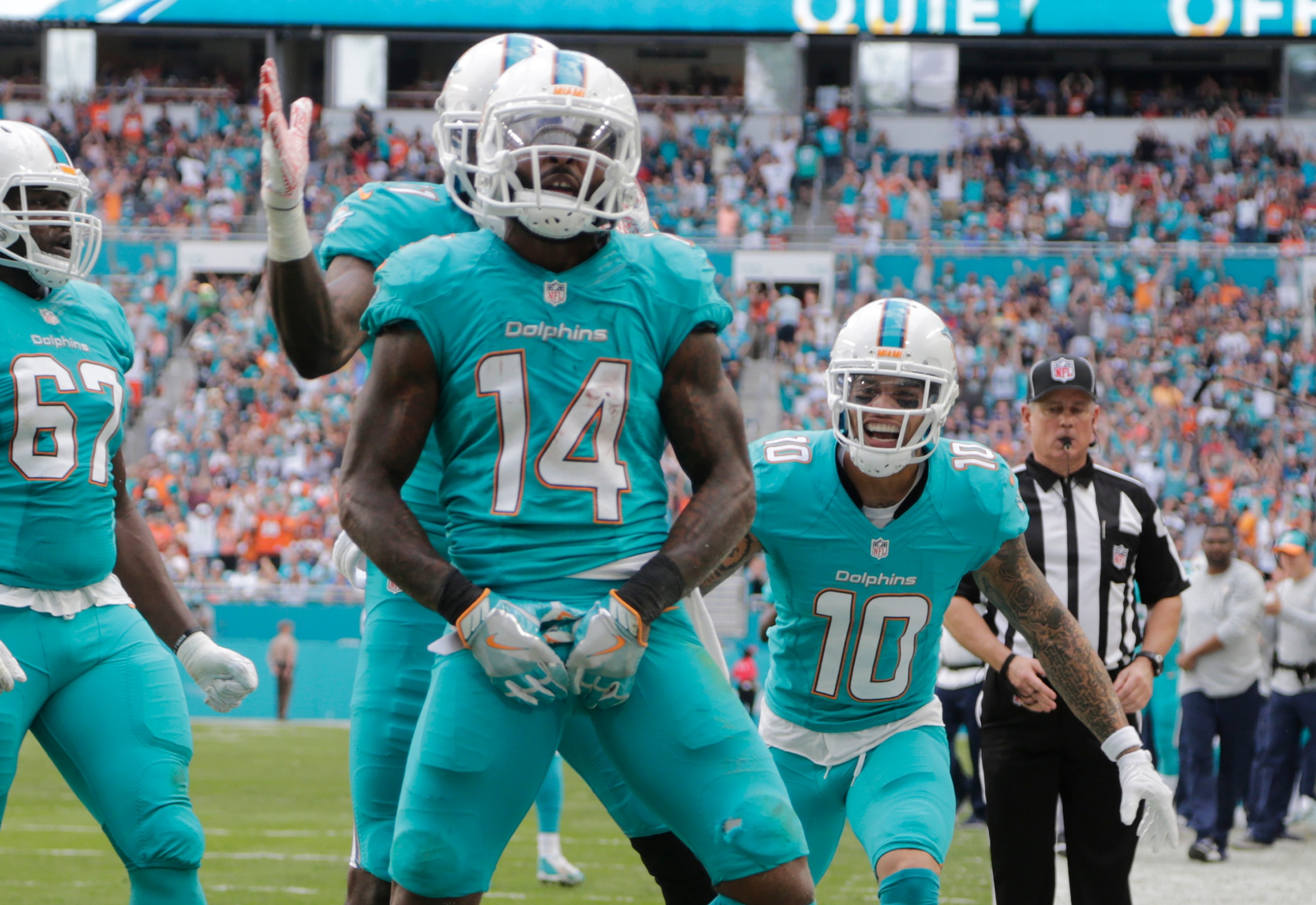
Scheme: Erhardt-Perkins/spread/zone
Starter: DeVante Parker
NFL1000 Score: 66.5/100
NFL1000 Position Ranking: 57/155
Taken in the first round of the 2015 NFL draft out of Louisville, DeVante Parker was largely missing in action during his rookie season. The wide receiver was coming off foot surgery and was a minimal contributor as a rookie, catching 26 passes in 14 games.
Parker was on track to return to full-time duty for the start of the 2016 season, but he missed the opener with a hamstring injury suffered in training camp. But he came back for Week 2 and notched eight receptions for over 100 yards in a loss against the Patriots. Parker finished the season with 56 receptions for 744 yards and four touchdowns.
Coming out of Louisville, he ran solid routes, both underneath (on slants and crossing routes) as well as down the field. He is a good fit for Adam Gase's offense and showed what he can bring to the scheme in Week 16 on a 56-yard touchdown against the Buffalo Bills. On that play he ran a shallow crossing route on a mesh concept—a staple of Miami's offense this past season—and broke multiple tackle attempts on his way to the end zone.
As with the rest of the Dolphins receivers, his ability after the catch goes a long way to making the Miami offense work.
Starter: Jarvis Landry
NFL1000 Score: 71.6/100
NFL1000 Position Ranking: 10/155
For many wide receivers, a season that ended with 94 receptions for 1,136 yards and four touchdowns would be career-high numbers. But for Jarvis Landry, they were a step back from the stats he posted in 2015, when he caught 110 passes for 1,157 yards and four scores.
Entering his fourth year in the league out of LSU, Landry has grown into the focal point for Miami's passing game, and his play on the field and the traits he displayed throughout 2016 landed him in the top 10 when the NFL1000 wide receiver rankings were tabulated.
He is developing into a complete wide receiver. He is capable of getting separation on every route in the passing tree and can beat the press at the line of scrimmage with quick feet on his release or even play strength when necessary.
Another area where he excels is after the catch—both as a ball-carrier and as a blocker. His blocking grade last season was in the top three among wide receivers. But his ability with the football in his hands makes him an effective weapon on underneath routes as well as in the screen game, and the Miami passing game runs through him at times.
Starter: Kenny Stills
NFL1000 Score: 65.8/100
NFL1000 Position Ranking: 66/155
Rounding out this trio of talented starters is Kenny Stills. The former New Orleans Saint caught 42 passes for 726 yards but led the Dolphins with nine receiving touchdowns, including one in each of Miami's final four regular-season games.
Similar to Landry, Stills has demonstrated the ability to be a complete wide receiver, as he's capable of getting open on underneath routes as well as deeper plays in vertical passing concepts. Stills was also the big playmaker for the Dolphins last season, catching touchdowns of 74 yards (against the Bengals on a deep corner route), 66 yards (against the Bills on a vertical route) and 52 yards (against the Jets on a shallow route where he showed his ability after the catch).
Stills was one of the more interesting free agents available this offseason, but he signed a four-year deal to stay in Miami. This is evidence of just how important Stills is to this offense, as he is another versatile piece for Ryan Tannehill and Gase in this hybrid passing attack.
Backup: Leonte Carroo
NFL1000 Score: 59.7/100
NFL1000 Position Ranking: 135/155
Drafted in the third round of the 2016 NFL draft out of Rutgers University, Leonte Carroo caught two passes in the season opener for 14 yards as Parker sat out with the hamstring injury. But those two receptions made up two-thirds of his entire season's production, as he caught only one more, which did go for a touchdown against the San Francisco 49ers.
Coming out of Rutgers, Carroo was considered a solid route-runner who had the ability to win at the catch point whether on shallow or short routes, as well as routes down the field in the vertical passing game. His size (6'0", 217 lbs) and play strength make him a solid fit for the X-receiver in Gase's offense, and while his rookie campaign was not what he or Dolphins fans were hoping for, he is a strong option behind Parker as the X-receiver but has the ability to move around the field and provide depth at the Z-receiver position as well.
Team Need: 3/10
Potential Draft Fits: JuJu Smith-Schuster, University of Southern California; Carlos Henderson, Louisiana Tech; Zay Jones, East Carolina; ArDarius Stewart, Alabama
Tight End
5 of 18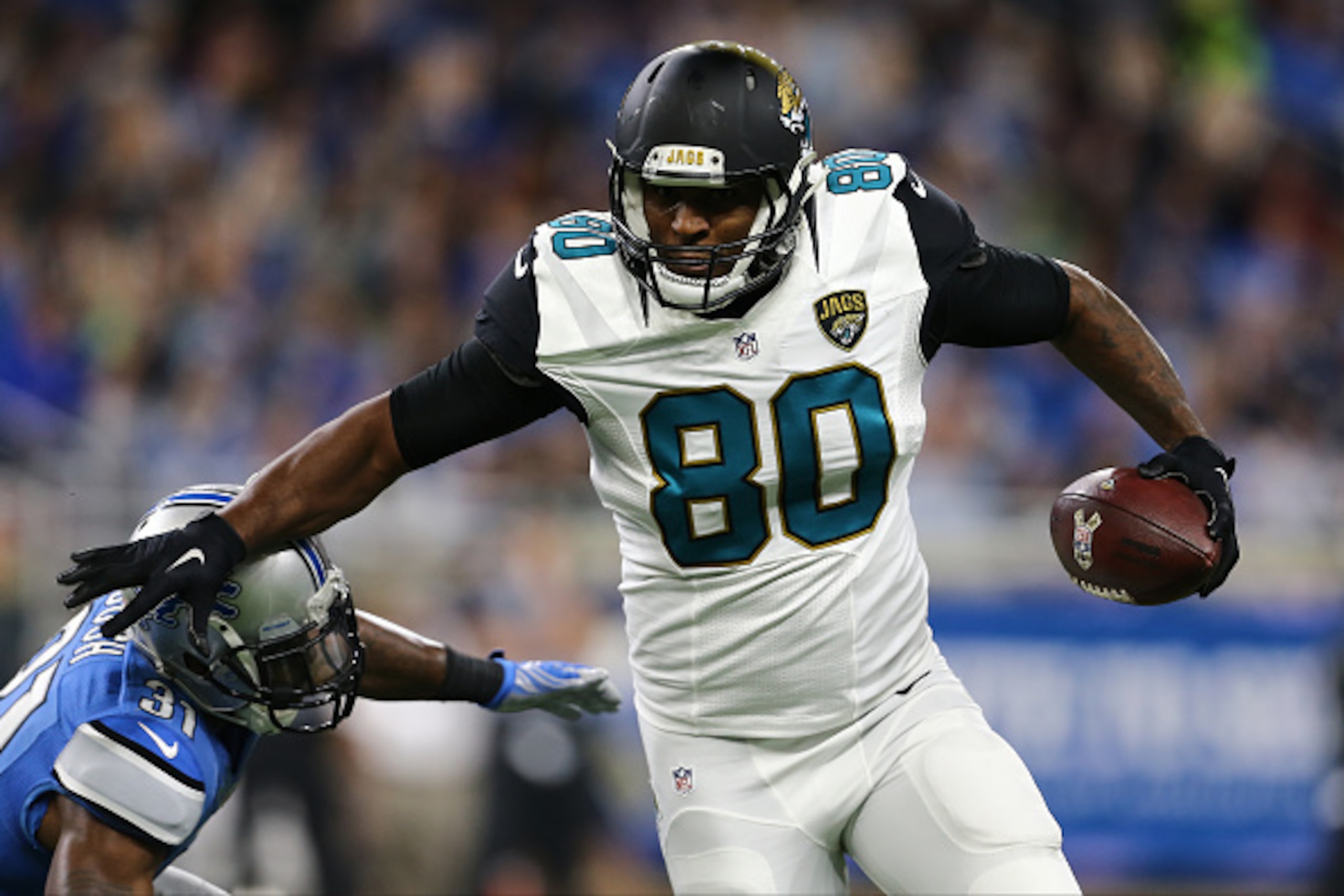
Scheme: Erhardt-Perkins/spread/zone
Starter: Julius Thomas
NFL1000 Score: 63.7/100
NFL1000 Position Ranking: 37/96
Following a successful stint with the Denver Broncos, Julius Thomas signed a five-year, $46 million contract as a free agent in March 2015 with the Jacksonville Jaguars. That year, he appeared in 12 games, catching (perhaps appropriately) 46 passes for 455 yards and five touchdowns. But last season, Thomas' numbers dipped as he battled injuries, and the tight end only secured 30 receptions for 281 yards, and four scores. The Jaguars decided to part ways with Thomas, sending him to Miami for a seventh-round pick in February.
When used as a target in the passing game, Thomas can be effective. The Jaguars used him in the flats often as an outlet for Blake Bortles, and while that gets him space, he is best served as a target in the intermediate passing game, running in cuts or crossing routes against linebackers or safeties.
He may be a better fit for Miami's hybrid-West Coast passing scheme, where he can run those routes and free up space for the speedy receivers underneath.
Backup: Anthony Fasano
NFL1000 Score: 61.4/100
NFL1000 Position Ranking: 49/96
Anthony Fasano returns to where he first had success on the NFL stage. When the Dolphins first implemented the Wildcat attack, Fasano was an effective component of that scheme. The past few seasons with the Titans, he served as more of a blocking tight end while Delanie Walker handled the majority of targets.
But in that role as a blocker, Fasano was effective. He can handle both zone- and power-blocking schemes well, including making some good reach blocks on defensive ends shaded to his outside or on outside linebackers. He was also adept at executing slice blocks to the back side on split zone designs.
In the passing game, Fasano has capable hands and runs decent routes in the quick game. He was limited to 83 receiving yards on the year, despite appearing in all 16 games, but he managed to catch two touchdown passes. This is more a result of scheme and usage by the Titans than it is a reflection of Fasano's ability.
In the right system he can still be an effective receiving threat. With Miami, he likely serves again as more of a blocking tight end, given his skill set in that area combined with Thomas' ability as more of a receiving threat. But when Miami employs multiple-tight end looks, Fasano can be a capable outlet for Tannehill in the passing game.
Backup: MarQueis Gray
NFL1000 Score: 59.5/100
NFL1000 Position Ranking: 70/96
Expected to be the third-string tight end last season for the Dolphins, MarQueis Gray was pressed into more immediate action given the injury to Jordan Cameron. Gray became the team's No. 2 tight end, after Dion Sims, and in his action last season he caught 14 passes for 174 yards. He is best suited in that third-tight end role, where he can serve as an extra blocker in big formations or in short-yardage situations.
Team Need: 3/10
Potential Draft Fits: O.J. Howard, Alabama; Evan Engram, Mississippi; Jake Butt, Michigan; Gerald Everett, South Alabama; Jordan Leggett, Clemson
Left Tackle
6 of 18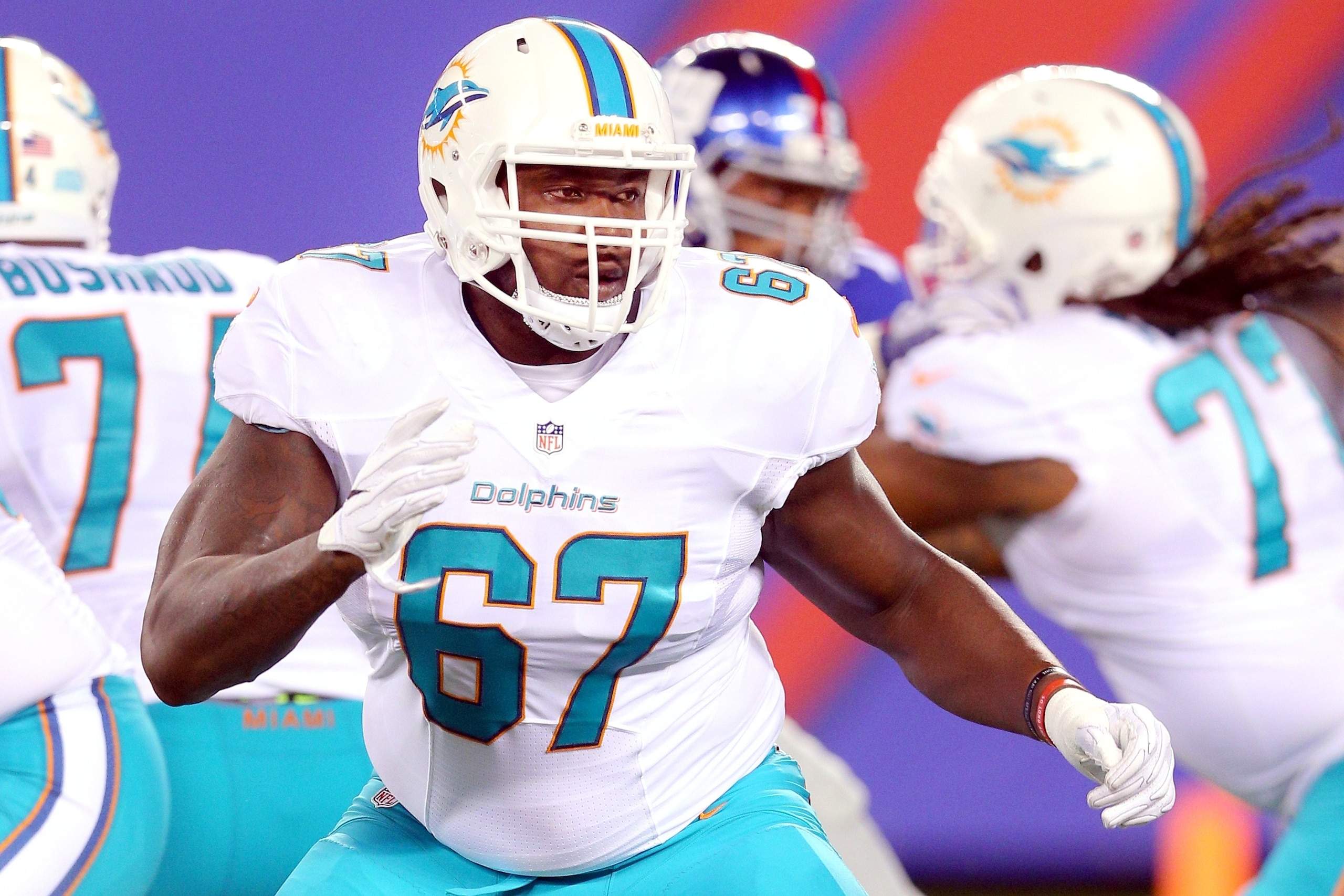
Scheme: Erhardt-Perkins/spread/zone
Starter: Laremy Tunsil
NFL1000 Score: 71.1/100
NFL1000 Position Rank: 26/78 (Graded at OG)
Despite having Branden Albert at left tackle, Miami drafted Laremy Tunsil 13th overall in the 2016 NFL draft with the future in mind. Upon declaring for the draft out of Ole Miss, Tunsil was viewed as possessing rare physical traits. Had it not been for conflicting reports about medical red flags and a draft-night social media mishap, the Dolphins likely would not have had a shot at taking him.
Tunsil started 14 regular-season contests and the AFC Wild Card Game as a rookie. Of those games, two starts were at left tackle, and the others were at left guard.
The small sample size Tunsil gave at left tackle allowed a glimpse of what the near future holds when he takes over as the full-time starter at the position in 2017.
Backup: Terry Poole
NFL1000 Score: Did not have enough snaps to qualify
Seattle selected Terry Poole in the fourth round with the 130th overall pick in the 2015 draft out of San Diego State. He bounced between Seattle's practice squad and injured reserve before being released prior to the 2016 season.
Miami signed Poole to its practice squad in the middle of the 2016 campaign. He then signed a reserve/future contract and provides the team with depth and position flexibility, as his skill set also translates well to offensive guard.
Backup: Avery Young
NFL1000 Score: Did not have enough snaps to qualify
Avery Young was an undrafted free agent out of Auburn who spent the 2016 season with New Orleans. Miami signed Avery to a reserve/future contract in hopes he provides quality depth at both tackle spots.
Team Need: 0/10
Potential Draft Fits: None. The team could consider bringing in camp competition with undrafted free agents.
Right Tackle
7 of 18
Scheme: Erhardt-Perkins/spread/zone
Starter: Ja'Wuan James
NFL1000 Score: 70.8/100
NFL1000 Position Rank: 18/38
Ja'Wuan James found success in 2015 but struggled early in 2016 as a pass protector and run-blocker, which is typically a strong area for him. James was benched a few weeks into the season, and it got the point across as he started to turn it around.
Down the stretch James did have some close calls, but he went 11 weeks without surrendering a sack. Miami has a choice to make on whether it can count on his being consistent. Miami's decision will be made clear if it chooses to pick up his fifth-year, $8 million option.
Backup: Sam Young
NFL1000 Score: Did not have enough snaps to qualify
Sam Young will be entering his eighth season in 2017, and before signing with Miami in 2016, he spent time with Dallas, Buffalo and Jacksonville. Young has 14 career starts. One of those came in Week 12 of last season against San Francisco. He provides veteran depth with experience at right and left tackle.
Team Need: 5/10
Potential Draft Fits: Justin Senior, Mississippi State
Offensive Guard
8 of 18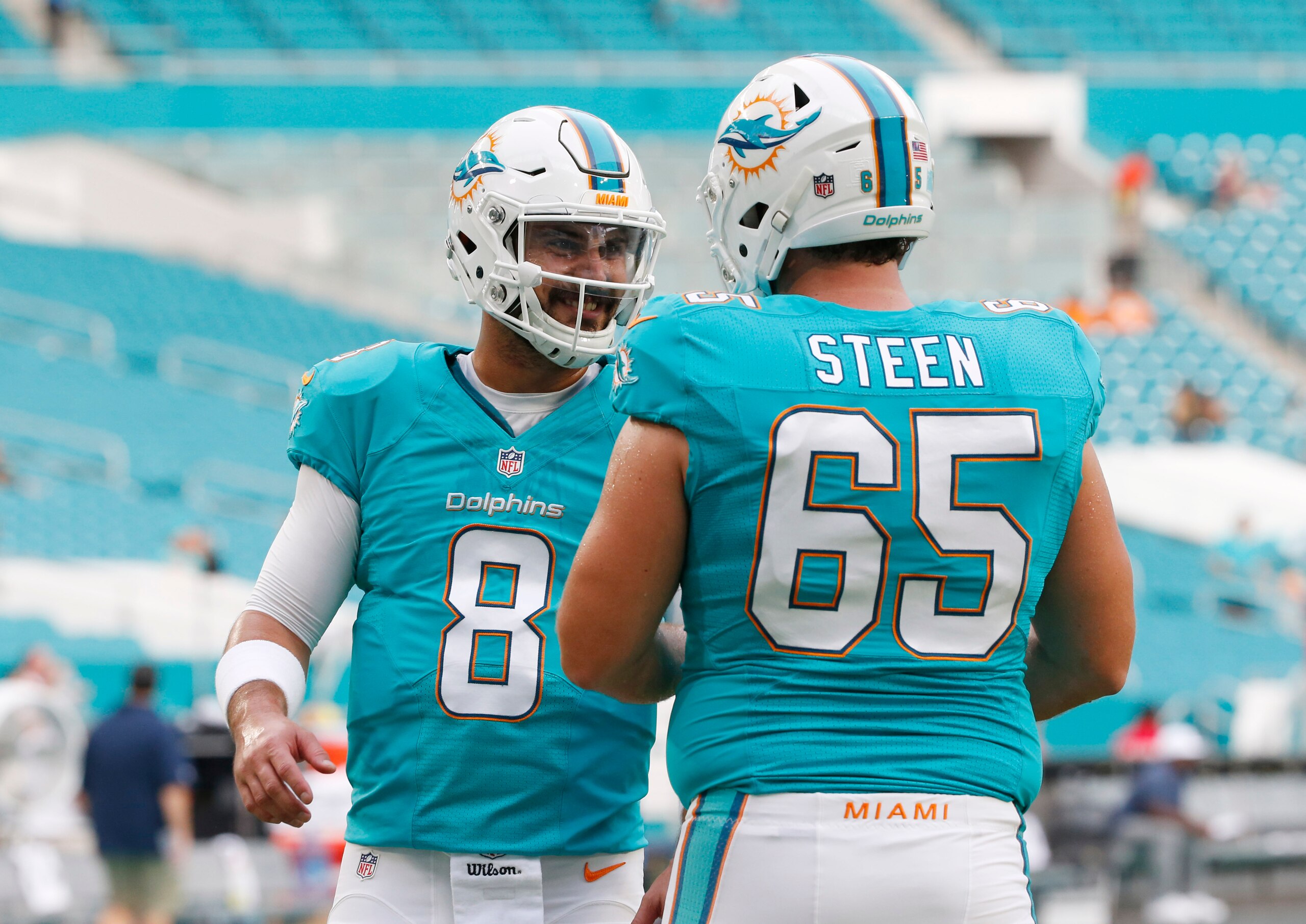
Scheme: Erhardt-Perkins/spread/zone
Starter: Ted Larsen
NFL1000 Score: 67.9/100
NFL1000 Position Rank: 62/78
When I wrote the Dolphins needed to revamp the guard position this offseason in the free-agency preview, bringing in Ted Larsen and re-signing Jermon Bushrod wasn't what I had in mind. Larsen is a decent depth option whose interior versatility adds to his value, but relying on him as the starter at left guard won't be good for Jay Ajayi and this zone-heavy run attack. He's a bridge option at best, and the Dolphins should be looking at drafting one or even two interior offensive linemen early to find the answer.
Starter: Jermon Bushrod
NFL1000 Score: 67.1.100
NFL1000 Position Rank: 68/78
Jermon Bushrod is another depth player, and the right guard spot is one the Dolphins should look to upgrade in the draft. Even though he has impressive length and decent movement ability, Bushrod's technical flaws are a major detriment to his game.
Backup: Kraig Urbik
NFL1000 Score: Did not have enough snaps to qualify
Kraig Urbik is ideally a depth option who should be closer to fighting for a roster spot than potentially competing for the left guard spot. There weren't many guards who graded worse than Urbik last year, and having that in the mix going into the season isn't promising.
Team Need: 10/10
Potential Draft Fits: Forrest Lamp, Western Kentucky; Dan Feeney, Indiana
Center
9 of 18
Scheme: Erhardt-Perkins/spread/zone
Starter: Mike Pouncey
NFL1000 Score: 70.5/100
NFL1000 Position Rank:20/38
The lesser of the two Pouncey brothers, Mike Pouncey is still a solid starter and the only proven option up front for Miami, as Laremy Tunsil is sliding outside to left tackle. But his medical issues are starting to stack up, and upgrading the backup role may make sense for the Dolphins, given how bad the depth behind him is.
Backup: Anthony Steen
NFL1000 Score: 64/100
NFL1000 Position Rank: 38/38
Anthony Steen had the worst NFL1000 grade among all eligible centers last year. His lack of strength at the point of attack made Jay Ajayi's breakout even more impressive, given that the A-gap was rarely cleared out for him down the stretch.
Team Need: 2/10
Potential Draft Fits: Kyle Fuller, Baylor; Cameron Tom, Southern Miss
Defensive End
10 of 18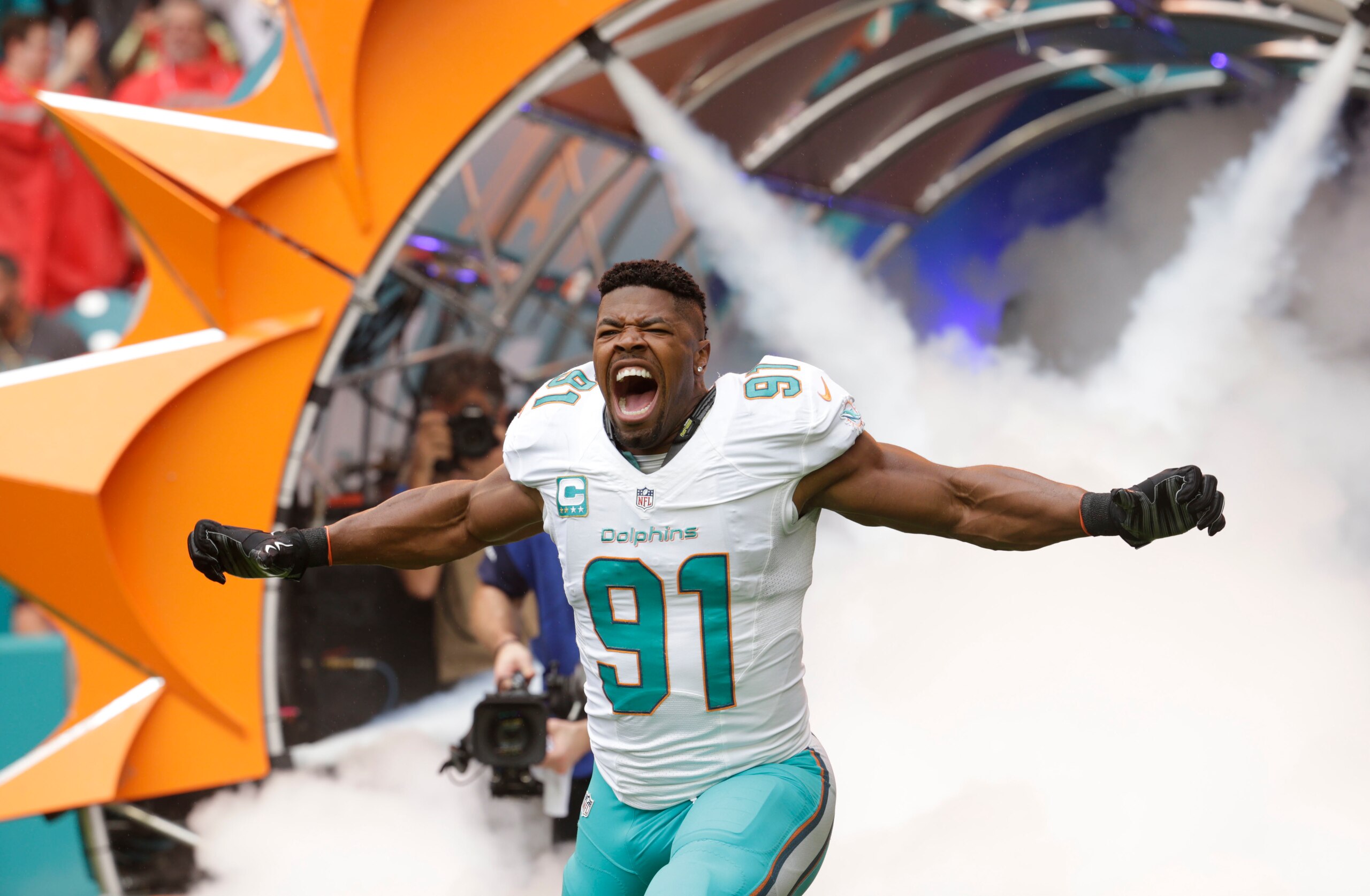
Scheme: 4-3
Starter: Cameron Wake
NFL1000 Score: 68.8/100
NFL1000 Position Rank: 15/68
While his snaps have decreased (626 in 2016) and his run defense has diminished, Cam Wake is still one of the premier edge-rushers in the NFL. His speed around the corner is among the best in the league, and with him, Miami will continue to apply pressure on opposing quarterbacks.
Starter: Andre Branch
NFL1000 Score: 65.8/100
NFL1000 Position Rank: 32/68
Andre Branch revived his career with the Dolphins in 2016 with a solid season. He accumulated 49 tackles and 5.5 sacks, but on tape, Branch was disruptive and energetic in both phases of the game. He's likely to start 2017 again at right defensive end after playing 814 snaps last season for Miami, but perhaps his snaps will be reduced with the acquisition of William Hayes.
Starter: William Hayes
NFL1000 Score: 66.9/100
NFL1000 Position Rank: 20/68
For the second straight offseason, Miami brought in edge help, this time via a trade with Los Angeles. William Hayes has been a solid producer for the Rams over the past few years in rotational duty. In 2016, Hayes played 514 snaps and recorded 43 tackles and five sacks. He can play left defensive end and rotate with the aging Wake (35) while also kicking inside in nickel packages to rush the passer.
Team Need: 3/10
Potential Draft Fits: Derek Rivers (Youngstown State), Trey Hendrickson (Florida Atlantic)
Defensive Tackle
11 of 18
Scheme: 4-3
Starter: Ndamukong Suh
NFL1000 Score: 76.2/100
NFL1000 Position Rank: 4/99
Ndamukong Suh had a dominant second season in Miami. Suh ranked as the fourth-best defensive tackle in the league behind Aaron Donald, Geno Atkins and Fletcher Cox. He's unblockable in every phase of the game. His career in Miami started off a bit slowly, but he's been on on top of his game since the midway point of the 2015 season. Continue to expect excellence from Suh in 2017.
Backup: Jordan Phillips
NFL1000 Score: 64.6/100
NFL1000 Position Rank: 42/99
Jordan Phillips took strides in his second year in Miami, but he's still a fairly inconsistent player. He has all the tools to be an above-average starter. However, he has stretches of play rife with mental lapses. As a rookie, most of his problems seemed to be effort-related. In 2016, the effort issues weren't prevalent, but he still struggled with diagnosing and recognizing blocking schemes. Phillips is a decent No. 2 defensive tackle right now with the potential to be a high-level supporting member to Suh.
Backup: Lawrence Okoye
NFL1000 Scores: Did not have enough snaps to qualify
Lawrence Okoye made headlines as a freak athlete with high upside when the 49ers signed him a few seasons ago, but he hasn't materialized into anything. He probably won't be on the final 53-man roster.
The Dolphins' defensive tackle situation is pretty weak. Suh is obviously still one of the best in the league, but the depth behind him is mediocre, at best. The Dolphins need to add more competition for Phillips and others.
Team Need: 8/10
Potential Draft Fits: Jaleel Johnson, Iowa; Caleb Brantley, Florida; Eddie Vanderdoes, UCLA
Outside Linebacker
12 of 18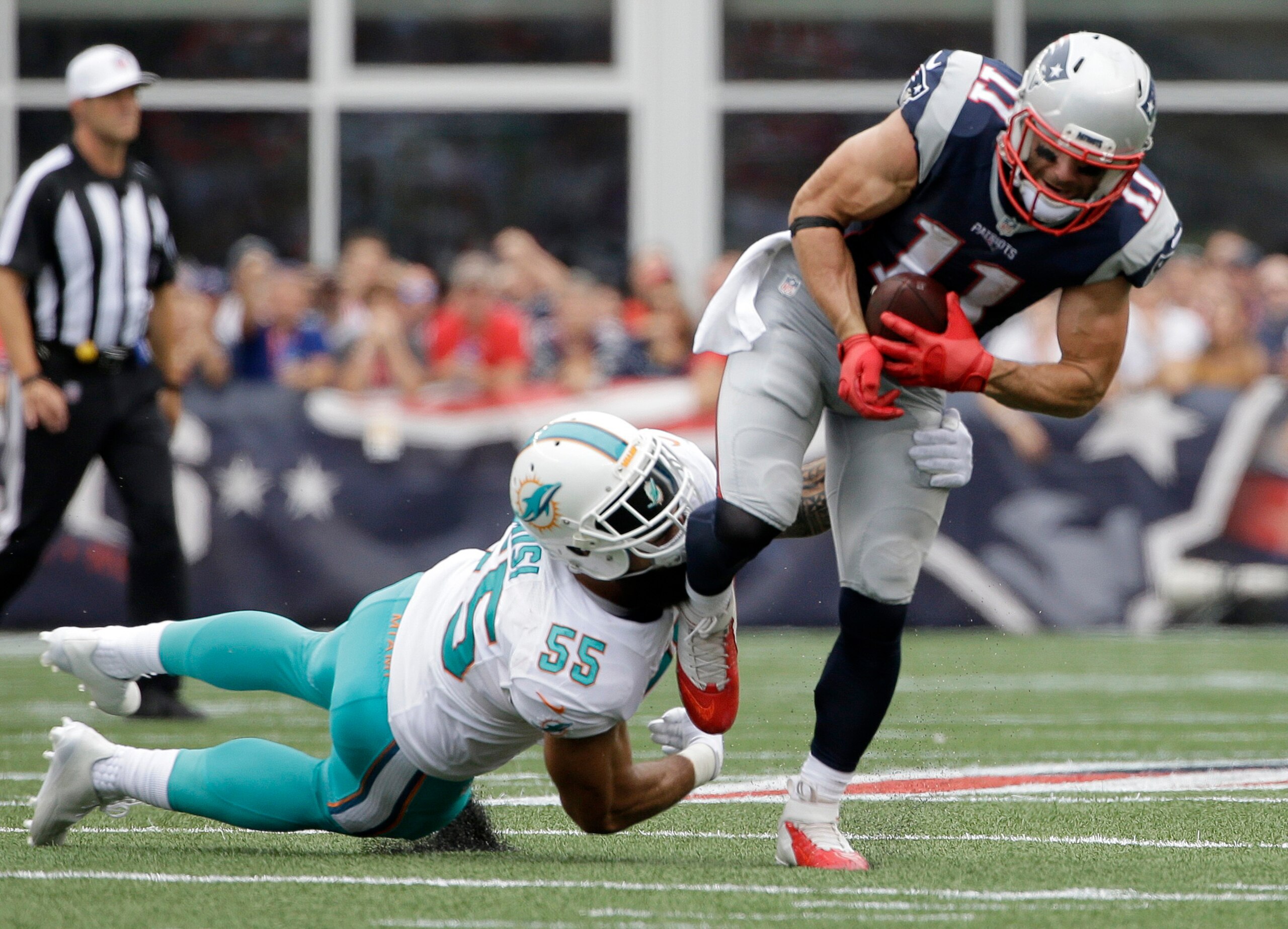
Scheme: 4-3
Starter: Kiko Alonso
NFL1000 Score: 65.1/100
NFL1000 Position Rank: 60/65 (Graded at ILB)
Kiko Alonso is one of the most overrated linebackers in the entire NFL. He's below-average as a run defender and is routinely outleveraged at the line of scrimmage against linemen with even solid physicality. Alonso tallies plenty of tackles every season, but those are largely due to weak technique in the box that forces him to race downfield to clean up 20-yard runs.
He was the middle linebacker in Miami's defense last year and should transition to outside linebacker in 2017. The Dolphins signed Lawrence Timmons, presumably to be the "Mike" linebacker, and Alonso will benefit greatly from lining up as the weak-side 'backer.
He'll be protected from facing strong-side runs often and can use his supreme athleticism to make tackles in space, perhaps his best quality. Alonso's a high-quality athlete with a lean frame (6'3", 239 lbs), and his speed can become an asset rather than detriment with a move to "Will" linebacker.
Starter: Koa Misi
NFL1000 Score: Did not have enough snaps to qualify
Injuries derailed Koa Misi's 2016 season. He opened the year as the Dolphins' featured outside linebacker and proved to be a somewhat valuable part of that defense. He is not a true playmaker, nor is he a versatile player who can be trusted much in coverage, but Misi offered an element of run defense that the other linebackers on the roster could not provide in his absence.
Misi is aggressive and strong enough to be a functional run defender—the only one of his kind in Miami last year. The Dolphins need to get a better player to be their starter, but Misi should be a nice depth option.
Backup: Neville Hewitt
NFL1000 Score: 58.2/100
NFL1000 Position Rank: 41/46
Neville Hewitt is one of only a few linebackers returning to Miami. In the final NFL1000 grading, four of the seven lowest-graded 4-3 outside linebackers were Miami Dolphins, but Hewitt is the only one of that bunch to return.
Hewitt is a "chase" linebacker who doesn't have the recognition skills or aggression to be that type of player. He has enough speed in space and can flow to the perimeter, but he gets abused at the point of attack and is often a tick behind the play. Hewitt provides nothing as a blitzer, either, due in part to his lacking size or strength (6'2", 232 lbs). As a backup, Hewitt is fine, but he should not see significant snaps.
Backup: Trevor Reilly
NFL1000 Score: Did not have enough snaps to qualify
Trevor Reilly is a career depth and special teams player. Even in the wake of a multitude of injuries throughout the Dolphins linebacker depth chart, Reilly still only suited up twice last year. He is a fairly athletic defensive end convert who now plays more of a traditional linebacker role.
Reilly is athletic and mean enough to continually warrant roster consideration, but he lacks the requisite linebacker skills, not to mention he is already 29 years old with just three years of experience under his belt. He's not going to suddenly get better at his stage in his career.
Team Need: 10/10
Potential Draft Fits: Zach Cunningham, Vanderbilt; Raekwon McMillan, Ohio State; Duke Riley, LSU
Inside Linebacker
13 of 18
Scheme: 4-3
Starter: Lawrence Timmons
NFL1000 Score: 69.6/100
NFL1000 Position Rank: 29/65
Lawrence Timmons had been a Pittsburgh Steeler for his entire 10-year career. As an unrestricted free agent, Timmons made an unexpected move from the Steelers to the Dolphins. He 30 years old but plays with enough athleticism and veteran savvy to be an immediate upgrade as a true inside linebacker.
Last year's starter, Kiko Alonso, was re-signed but is likely transitioning to weak-side 'backer. Timmons is an upgrade over Alonso as a run defender and plays with better gap leverage and consistency in support. Conversely, Timmons' age is showing up in coverage. He's a solid underneath zone defender but does not have the speed or change-of-direction skills to be effective in man coverage at any level. He's someone the Dolphins can win with, but not because of.
Backup: Mike Hull
NFL1000 Score: Did not have enough snaps to qualify
Mike Hull played briefly toward the end of the 2016 season and demonstrated the ideal qualities of a backup linebacker. He understands his assignment, can compete in run support and coverage while being a core special teams player.
Hull tallied 33 tackles last year and one interception, showing enough for the Dolphins to keep him as the primary backup inside. He fits the NFL's transition to undersized inside 'backers at 6'0" and 233 pounds, but Hull has the upper-body thickness to take on blocks when necessary. He's got the college pedigree as a former Penn State player and should erase the team's concerns about finding a quality backup early in the draft.
Team Need: 4/10
Potential Draft Fits: Duke Riley, LSU; Kendell Beckwith, LSU; Connor Harris, Lindenwood
Cornerback
14 of 18
Scheme: Cover 1
Starter: Byron Maxwell
NFL1000 Score: 64.8/100
NFL1000 Position Ranking: 42/133
Byron Maxwell had a nice bounce-back season after a down year in Philadelphia in 2015. He fit what Miami wanted to do a lot better and wasn't put in situations where he had to follow the best receivers. It's a shame he got hurt and missed the final two games, because the previous month he was playing excellent football.
Hopefully Maxwell can continue to build off his strong ending to the season. Though he only had two interceptions, he had a career high in pass breakups (15) and forced fumbles (4). The latter is an outstanding stat and tells you how often he was around the ball. With Maxwell heading into his second season in a scheme that helps mask his deficiencies, expect another solid year from him.
Starter: Xavien Howard
NFL1000 Score: 58.3/100
NFL1000 Position Ranking: 110/133
Xavien Howard, a second-rounder out of Baylor in 2016, is expected to get every opportunity to start next year. He played in eight games in 2016—the first four and final four (including the playoffs). Howard looked like a deer in headlights in six of his eight contests. He was our lowest-graded slot corner. That hints at his reaction time. Relying on athleticism might work in college, but he was unable to get away with that last year.
On the other hand, Howard graded out as our best tackler. For a team that will press as much as Miami, that's a great skill to have. He'll have to clean up things in coverage as far as his patience early on and balance throughout the route. The Dolphins are going to give him a chance to prove himself. Based on last year, he has a long way to go.
Third CB: Tony Lippett
NFL1000 Score: 61.5/100
NFL1000 Position Ranking: 79/133
For a receiver convert, Tony Lippett was impressive. Between him and Howard, Lippett is the better choice at starter. He has much better patience at the line of scrimmage and uses his 6'3" length to his advantage. Where he gets in trouble is in off coverage. That should be a simple fix. Just let Lippett play up at the line.
When he's up he's just explosive enough to be able to turn and run with receivers. When off, he has to rely on burst and route recognition, which isn't there. As he continues to play the position, expect him to improve. He'll never be a starter, but he has the capability of being a solid contributor.
Slot CB: Bobby McCain
NFL1000 Score: 59.6/100
NFL1000 CB ranking: 98/133
A fifth-round pick out of Memphis in 2015, Bobby McCain was the Dolphins' primary slot cornerback last season. He wasn't always successful in that regard, allowing four touchdowns and bagging just one interception, but he has a great deal of athletic potential.
Team Need: 6/10
Potential Draft Fits: Fabian Moreau, UCLA; Chidobe Awuzie, Colorado; Marlon Humphrey, Alabama; Ahkello Witherspoon, Colorado; Jalen Myrick, Minnesota
Free Safety
15 of 18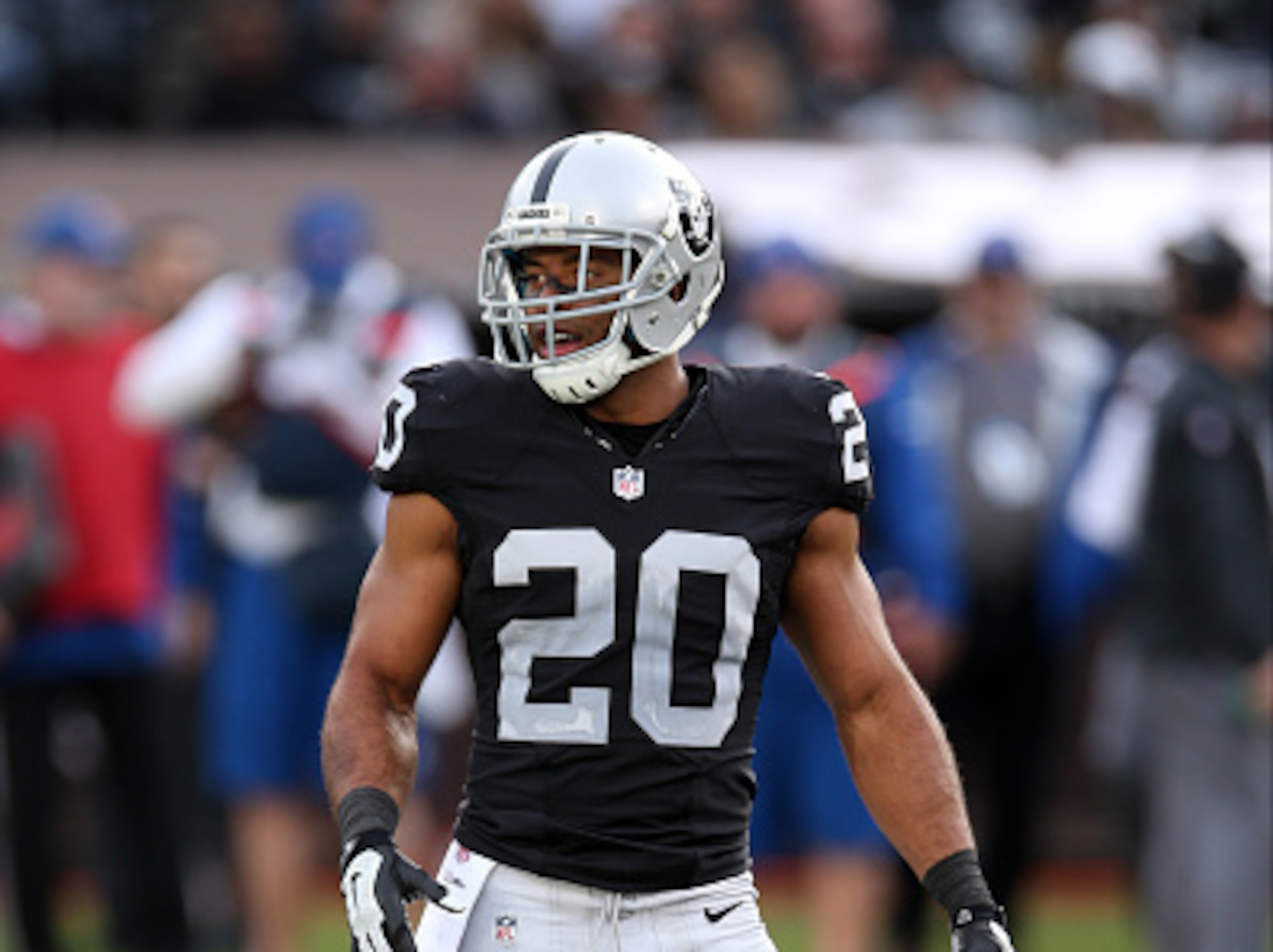
Scheme: Cover 1
Starter: Nate Allen
NFL1000 Score: 69.8/100
NFL1000 Position Rank: 38/53 (Graded at SS)
Nate Allen was the backup safety for the Raiders last year, where he ended up mostly playing strong safety in the box. That's not his best role, as he's more of a coverage safety than a physical presence against the run.
After Isa Abdul-Quddus was released following a neck injury that cast doubts over his ability to play again, the Dolphins had a need at safety and worked quickly to bring in Allen as his replacement. Allen should be more comfortable with a free safety role, playing off the ball and further from the line of scrimmage. That being said, he's not a long-term starter and could be upgraded in a deep safety class.
Backup: Michael Thomas
NFL1000 Scores: 67.6/100
NFL1000 FS Rank: 46/50
After starting the year as a backup, Michael Thomas was forced into action after a number of injuries to the Dolphins secondary. He filled in at various positions, playing both strong and free safety at times, while also rotating down to cover the slot.
He did, however, look exposed at points, struggling with eye discipline that made him vulnerable to play-action, misdirection and double moves. He's clearly not ready to be a starter but is still young enough (27) to develop and compete for reps down the road.
Team Need: 6/10
Potential Draft Fits: Obi Melifonwu, Connecticut; Budda Baker, Washington; Marcus Williams, Utah; Justin Evans, Texas A&M
Strong Safety
16 of 18
Scheme: Cover 1
Starter: Reshad Jones
NFL1000 Score: 80.5/100
NFL1000 Position Rank: 1/53
Reshad Jones had his season cut short due to a torn rotator cuff in October. He was having a dominant campaign—one in which he was clearly the top strong safety in both coverage and against the run. When he plays in the box, he not only fills his assignment, but he also bursts through the line of scrimmage and makes plays in the backfield.
He has great instincts and will take away routes in both man and zone coverage. Hopefully, Jones will come back just as good as he was before the injury and not suffer any setbacks. If he can pick up where he left off, he'll lead the contest for title of best safety in the NFL.
Backup: T.J. McDonald
NFL1000 Score: 71.3/100
NFL1000 Position Rank: 28/53
It was surprising to see T.J. McDonald last as long as he did in free agency, until it came to light that he was being suspended for the first eight games of the season due to an arrest in 2016 for driving under the influence of drugs.
Despite the suspension, the Dolphins signed the 26-year-old McDonald, who is still young and talented. He's a low-risk signing with plenty of upside, especially as a backup to Jones and third safety option in nickel and dime packages.
When at his best, McDonald is a versatile, multi-functional safety who can cover tight ends, generate pressure as a blitzer and is solid against the run. But he suffers from inconsistency issues. Perhaps this suspension and drawn-out free-agency period will make him motivated to improve in that area.
Backup: Walt Aikens
NFL1000 Score: Did not have enough snaps to qualify
Walt Aikens has been a backup since the Dolphins selected him in the fourth round of the 2014 draft. It appears as though he's been unable to earn the trust of his coaches and earn his way up the depth chart.
Despite a number of injuries in the secondary during the 2016 season, the Dolphins opted to sign Bacarri Rambo off the street and let him start over Aikens. Aikens played just a handful of snaps over the course of the season and will likely fight for a roster spot via special teams contributions in training camp.
Team Need: 0/10
Potential Draft Fits: None. The team could consider bringing in camp competition with undrafted free agents.
Kicker
17 of 18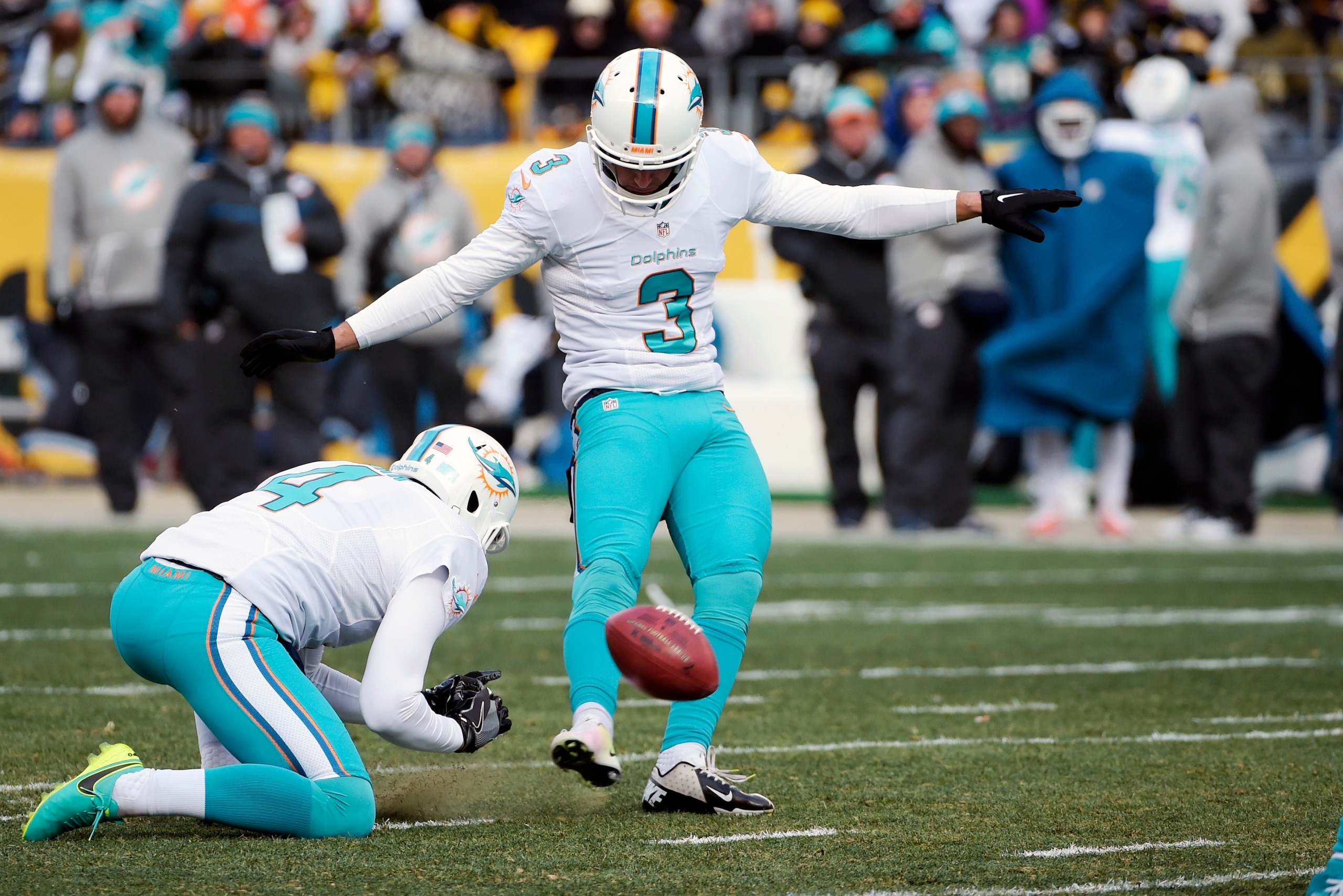
Starter: Andrew Franks
NFL1000 Score: 66.4/100
NFL1000 Position Rank: 22/34
Andrew Franks, following a surprising rookie season after going undrafted out of RPI, regressed in 2016, making 76.2 percent of his field-goal attempts. In particular, he was hurt by an 8-of-10 showing on kicks between 20 and 29 yards. He was also just 1-of-3 on attempts from 40 to 49 yards. Franks displays a capable leg but has issues with repeating his mechanics on a regular basis, which cause more variation in his ball flight than an NFL kicker typically displays.
At 24 years old and still on a cheap contract, Franks is likely to be back, but if he has another year similar to 2016, Miami could look to move on. Expect to see competition in camp this summer, but Franks is still the favorite to win the job.
Team Need: 6/10
Potential Draft Fits: None
Punter
18 of 18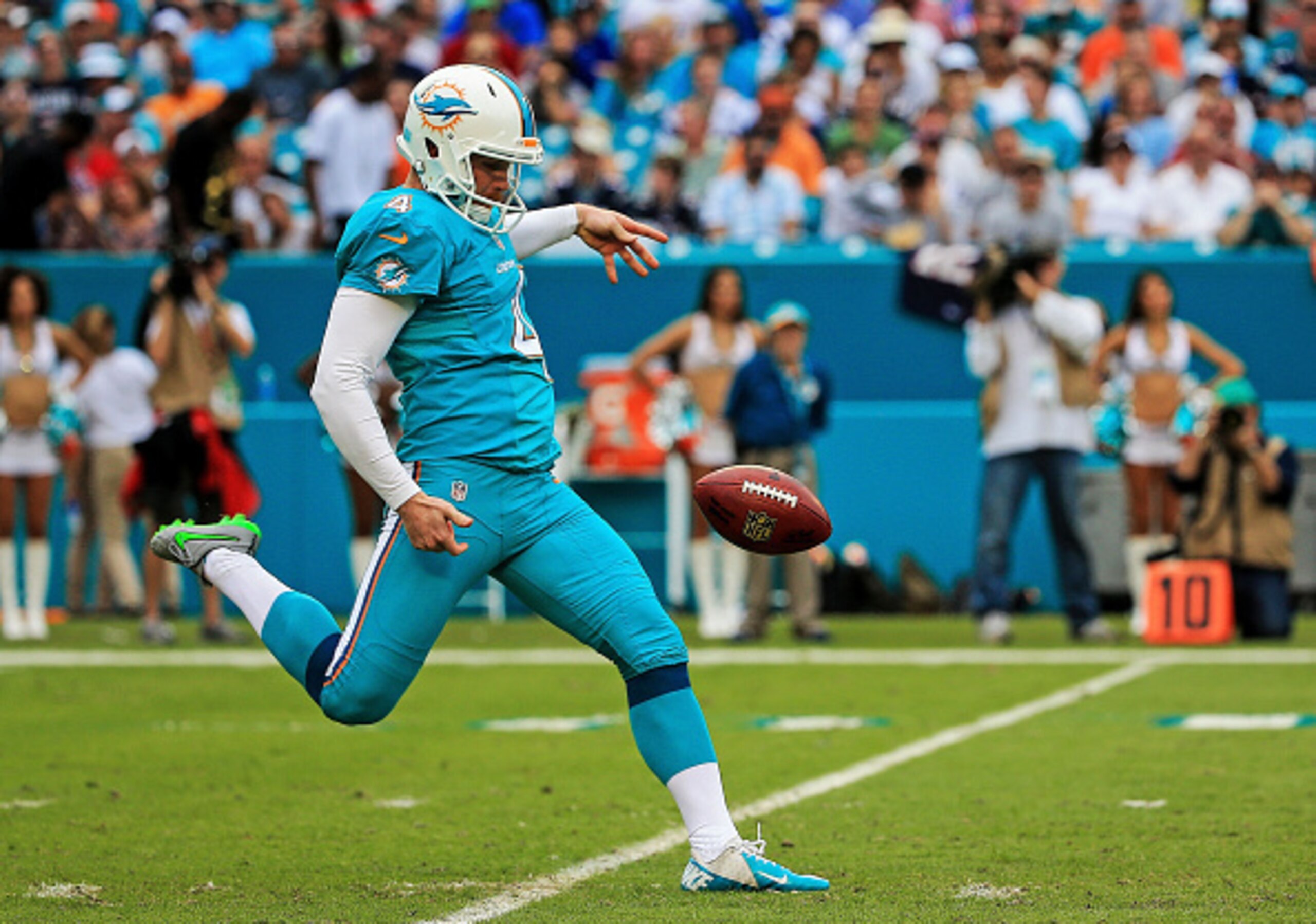
Punter: Matt Darr
NFL1000 Score: 66.6/100
NFL1000 Position Rank: 17/34
Matt Darr had an incredibly consistent showing in 2016, with just one week grading out below 60 for the season. Darr's calling card is his ball placement and accuracy, as he possesses adequate distance but slightly below-average hang time. His ability to move the ball around the field shows good feel for the directional game that typically takes a while to develop, and this bodes well for his continued refinement of this part of his game as he ages.
Punters also typically pick up a little distance as they get deeper into their 20s, so the lack of top-end power is not a major concern at this point. The 24-year-old Darr is never going to have a howitzer for a leg, but he should grow into having slightly above-average power and is a young punter on the rise heading into 2017. Miami would be wise to stick with him as he continues to grow.
Team Need: 3/10
Potential Draft Fits: None
Advanced statistics provided by Pro Football Focus, unless otherwise noted.
.jpg?w=2560)
.jpg?w=2560 "Cardinals Giants Football")







