
NFL1000: San Francisco 49ers 2017 NFL Draft Preview
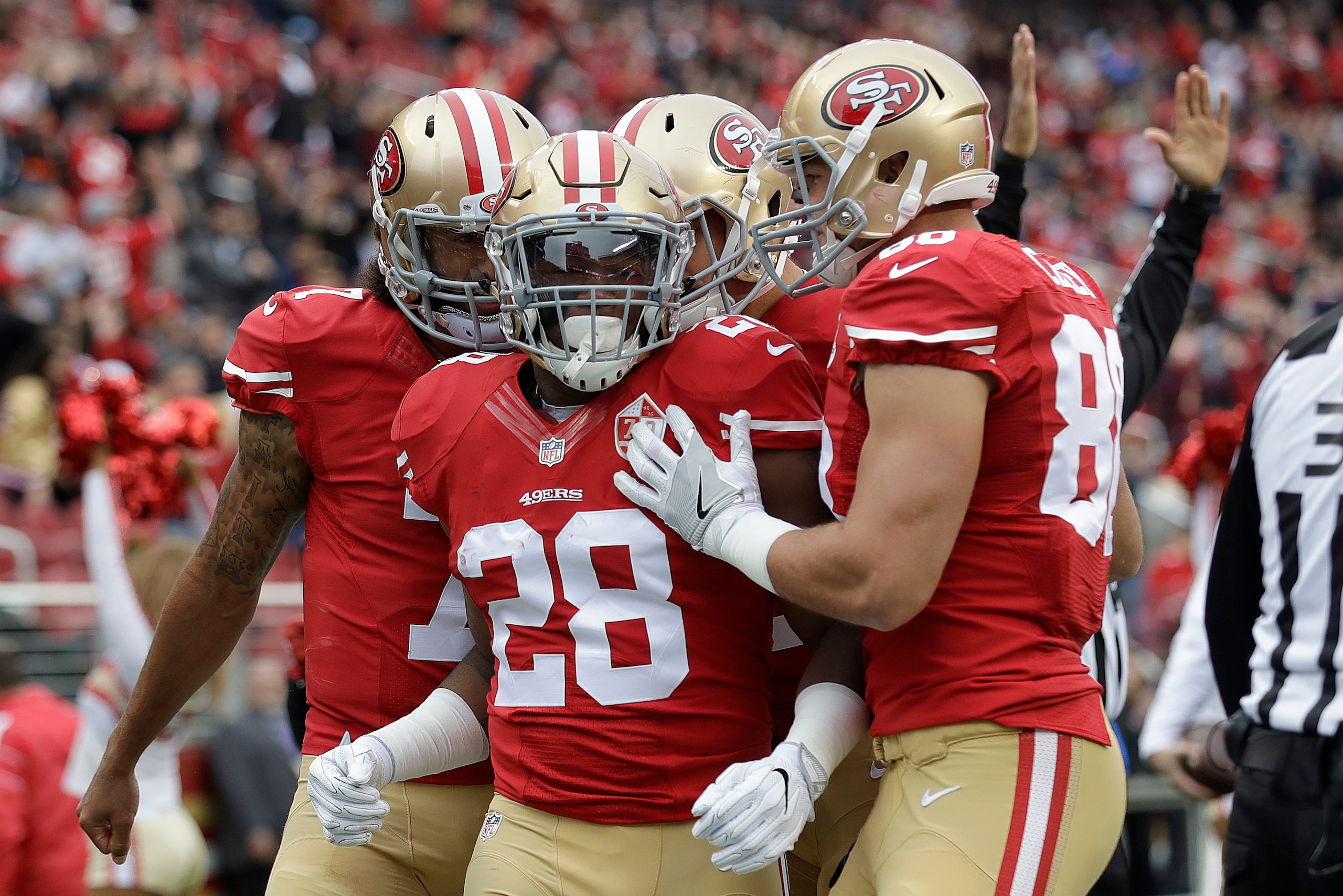
Finishing with a 2-14 record in 2016—the franchise's worst mark since 2004—meant that serious change was inevitable for the San Francisco 49ers. The organization fired head coach Chip Kelly and general manager Trent Baalke at season's end, and quarterback Colin Kaepernick opted out of his contract in March.
There's a positive for new head coach Kyle Shanahan and general manager John Lynch, though. After five horrid drafts by Baalke, the pair have a clean slate and some organizational patience—both received six-year contracts. The team passed on most major free agents, leaving itself a league-leading $76.5 million in cap space, per Over the Cap.
It's clear the 49ers view this as a long-term rebuild, which it should be. Baalke's whiffs in the draft over the last half-decade leave the franchise as talent-bereft as any, and there's no obvious immediate replacement for Kaepernick.
Clearly, quarterback has to be the team's priority. Shanahan is rightly lauded as a genius when it comes to making the most of his pieces on offense, but this would be a challenge for even three-time Super Bowl champion Bill Walsh.
The Niners acquired wide receivers Pierre Garcon and Marquise Goodwin in free agency, which at least gives the team's next quarterback a high-volume possession receiver and a relatively decent deep threat. But the offensive line is a problem outside of left tackle Joe Staley and newly acquired center Jeremy Zuttah. And with the exception of 26-year-old running back Carlos Hyde, San Francisco doesn't have any real blue-chip young prospects on that side of the ball.
On defense? Things are even worse. San Francisco allowed 4.8 yards per carry and 25 rushing touchdowns, both league-worst marks, and its pass defense wasn't much better (tied for 27th-worst in average yards allowed per play). The Niners still have a good group of linebackers, and 2016 first-round lineman DeForest Buckner appears to be a stud in the making. But the secondary needs a near-total overhaul.
Shanahan and Lynch do have that clean slate, but it may be a while before the 49ers resemble a decent team again—never mind a competitive one.
Methodology
1 of 19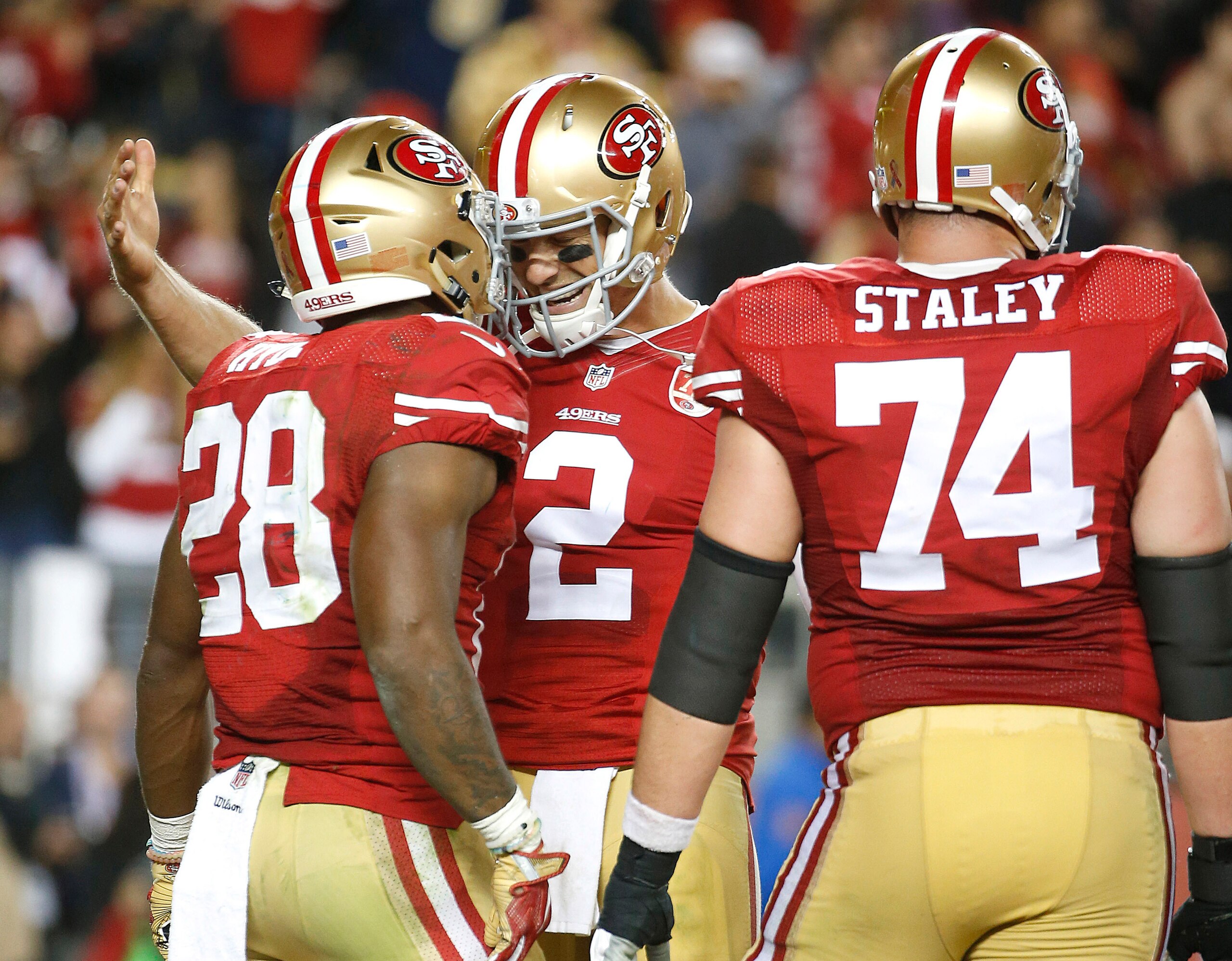
The NFL1000 team of scouts graded a series of important attributes for every player in their positional review. Using a scale starting at 0 and going up to anywhere from five to 50 based on the position and the attribute, our scouts graded each player based on their own expertise and countless hours of tape review over the years. Our evaluators had specific positional assignments based on their proven fields of expertise.
- Doug Farrar: Lead scout/quarterbacks
- John Middlekauff: Running backs/fullbacks
- Marcus Mosher: Wide receivers/tight ends
- Mark Schofield: Wide receivers/tight ends
- Duke Manyweather: Offensive tackles
- Ethan Young: Offensive guards
- Joe Goodberry: AFC defensive ends
- Justis Mosqueda: NFC defensive ends
- Charles McDonald: Defensive tackles
- Zach Kruse: 3-4 outside linebackers
- Derrik Klassen: 4-3 outside linebackers
- Jerod Brown: Inside linebackers
- Kyle Posey: Cornerbacks
- Ian Wharton: Cornerbacks
- Mark Bullock: Safeties
- Chuck Zodda: Special teams
Each corresponding position slide was written by the assigned scout.
Quarterback
2 of 19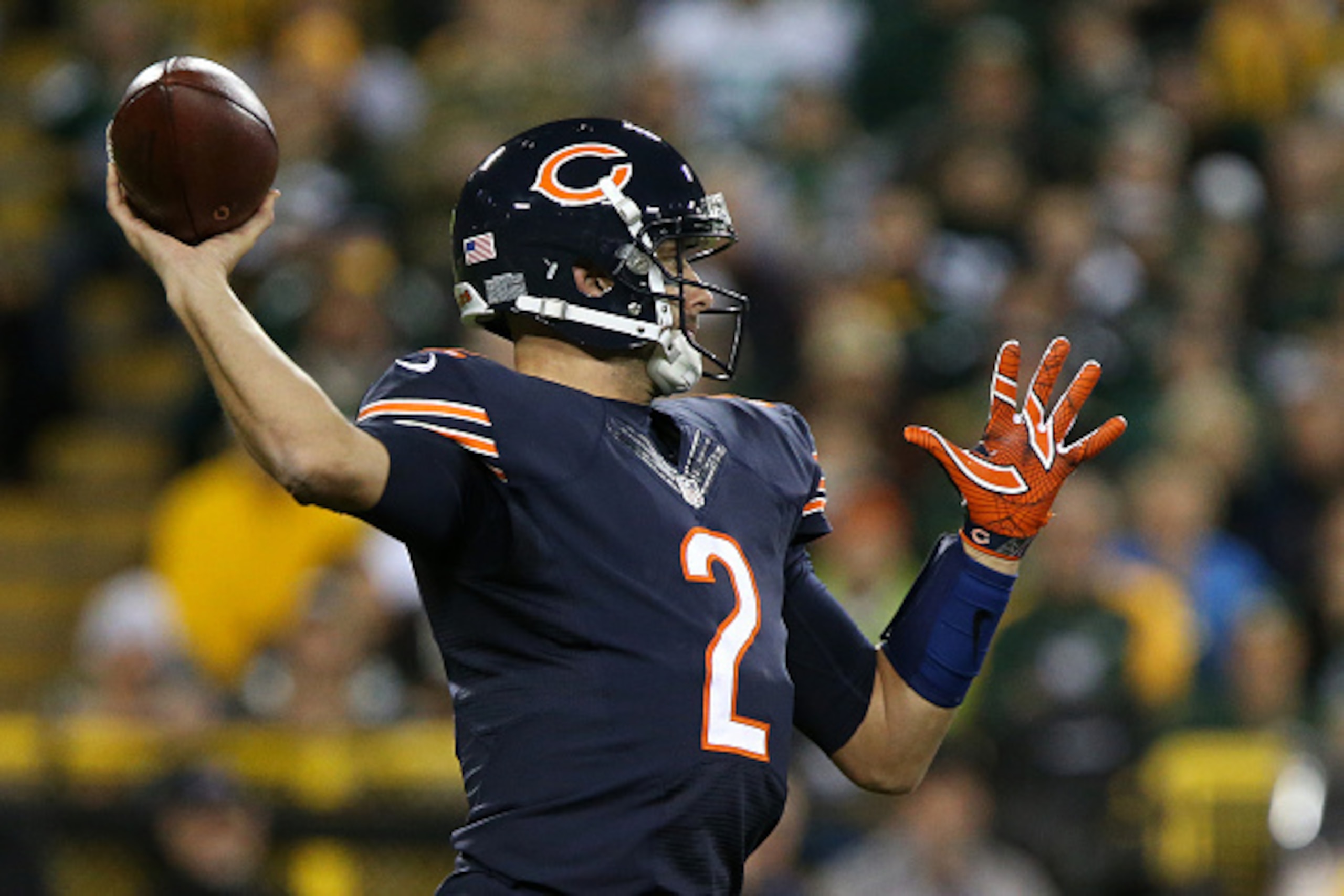
Scheme: West Coast/Zone
Starter: Brian Hoyer
NFL1000 Score: 66.3/100
NFL1000 QB Rank: 25/38
In March, Hoyer signed a two-year deal with the 49ers guaranteeing him nearly $10 million, which tells you all you need to know about how Coach Shanahan views him—as a competent backup and spot starter.
That's what Hoyer has been through his career: functionally efficient in short bursts but prone to having his limited arm and his mechanical issues bite him at the worst time. (The four-interception disaster he had for the Houston Texans in the 2015 wild-card game against the Kansas City Chiefs is the most negative example.)
On the plus side, Hoyer is a good fit for Shanahan's system. He's mobile enough to take advantage of the coach's boot-action concepts, and as long as he isn't tested too much with the deep ball, he can provide a bridge if the 49ers try to find their next franchise quarterback in the 2017 draft in April.
He's thrown 25 touchdowns to just seven interceptions in the last two seasons for the Texans and Chicago Bears, so he does have a bit on the ball when the right scheme is protecting him. Shanahan was the offensive coordinator of the Cleveland Browns in 2014 when Hoyer was there, and the signal-caller was less than amazing at that point in his career. So this is an interesting move.
Backup: Matt Barkley
NFL1000 Score: 65.0/100
NFL1000 QB Rank: 30/38
Barkley is the guy on the bottom rung of the 49ers' apparent plan to sign everyone who played quarterback for the Bears in 2016 and isn't named Jay Cutler. He wasn't as efficient as Hoyer, whom he replaced after Hoyer suffered a fractured forearm in October.
Barkley has been a limited, turnover-prone quarterback through his NFL career, and he threw just eight touchdowns to 14 interceptions in 216 attempts last season, including 10 picks in the final three games. If Barkley is starting for the 49ers at any point in 2017, something has gone wrong with the depth chart.
Team Need: 10/10
Potential Draft Fits: Deshaun Watson (Clemson), Mitchell Trubisky (North Carolina), DeShone Kizer (Notre Dame), Davis Webb (California)
Running Back
3 of 19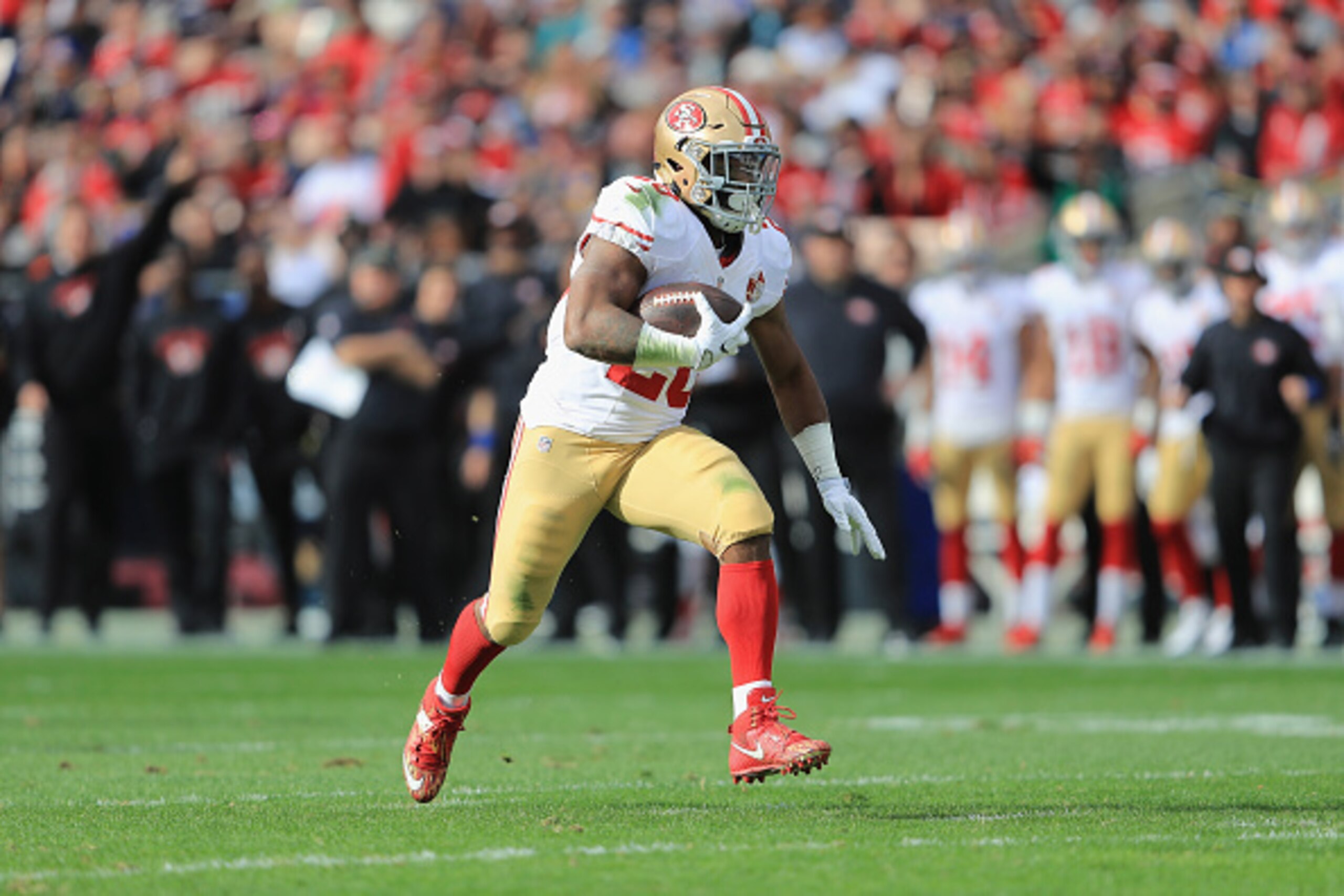
Scheme: Zone
Starter: Carlos Hyde
NFL1000 Scores: 73/100
NFL1000 Position Rank: 14/82
The 2014 second-round pick has proved he has the talent to play in the NFL, but durability over his short career has become a major question mark. He has yet to play all 16 regular-season games or run for over 1,000 yards in a campaign.
Despite Hyde's injury issues, he remains talented. He is a rare breed of size (6'0", 235 lbs) and explosiveness, but his physicality can be a detriment because he takes so many hits. Hyde does not look to avoid contact, which leads to a lot of his injuries. Running backs in the NFL have to pick their spots when taking on defenders. Being smarter in avoiding contact is the only way Hyde is going to hold up for a whole season.
The 26-year-old should benefit greatly from the new addition of Shanahan's zone scheme. He can run both the inside and outside zone. He took a big step in the passing game in 2016, when he had 27 catches for 163 yards and three touchdowns. Hyde has proved he can be a three-down back. He is also solid in pass protection.
There is no argument about Hyde's ability to be a starter based on talent; it is all about staying healthy.
Backup: DuJuan Harris
NFL1000 Scores: Did not have enough snaps to qualify
The 49ers re-signed DuJuan Harris to a one-year deal late into free agency. He will be competing for a spot on the 53-man roster entering training camp and will have to play well if the 49ers draft someone as expected. Harris did not do much as a backup in 2016, averaging only 3.6 yards per carry in 10 games.
He is not great in any one area, but his one-cut style fits what Shanahan wants to do. The problem is Harris lacks explosive speed and the change-of-direction ability to make plays in space. He has to take what he gets since he's not going to make a play when it's not blocked up for him.
On passing downs, Harris will not bring much to the table. He only has 21 career catches in six seasons.
Team Need: 8/10
Potential Draft Fits: Dalvin Cook (Florida State), Joe Mixon (Oklahoma), Alvin Kamara (Tennessee)
.jpg?w=2560 "Colts Football")
.jpg?w=2560 "Chiefs Giants Football")
.jpg?w=2560 "Titans Colts Football")
Fullback
4 of 19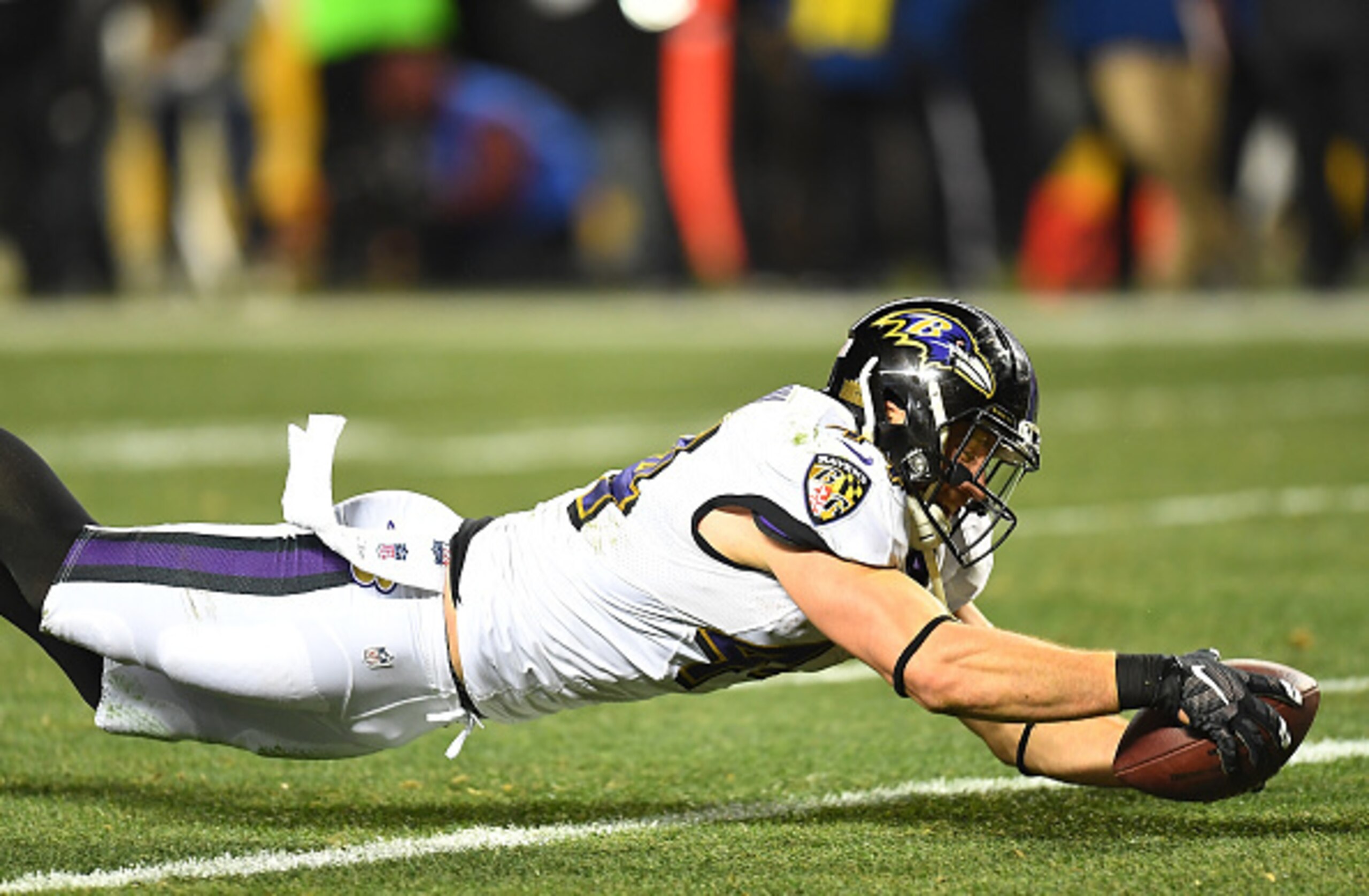
Scheme: Zone
Starter: Kyle Juszczyk
NFL1000 Scores: 76.1/100
NFL1000 Position Rank: 1/20
In typical Ozzie Newsome fashion, the Baltimore Ravens let one of their promising young players walk in free agency, and general manager John Lynch was waiting to pounce. The 49ers made Kyle Juszczyk the highest-paid fullback in the NFL, and it wasn't that wild of a move.
Juszczyk is coming off a career year after clearly established himself as the best fullback in 2016. While the Ravens offense struggled, he was arguably the best offensive skill player on the team.
Juszczyk is the total package. He can block, run the ball and excel in the passing game. He is an excellent athlete who hangs his hat on versatility. As a blocker, the 6'1", 240-pounder is a hammer, with the ability to adjust in space while locating defenders.
While the 25-year-old only has seven career carries, he's expected to carry the ball more in San Francisco. In the passing game, he is fantastic. He can flex all over the field, run any route and get open on linebackers in space. Once the ball is in his hands, he makes plays. He is also an exceptional blocker in pass protection. While the bar is low, the 49ers' new fullback immediately becomes one of their best players.
Team Need: 1/10
Potential Draft Fits: None
Wide Receiver
5 of 19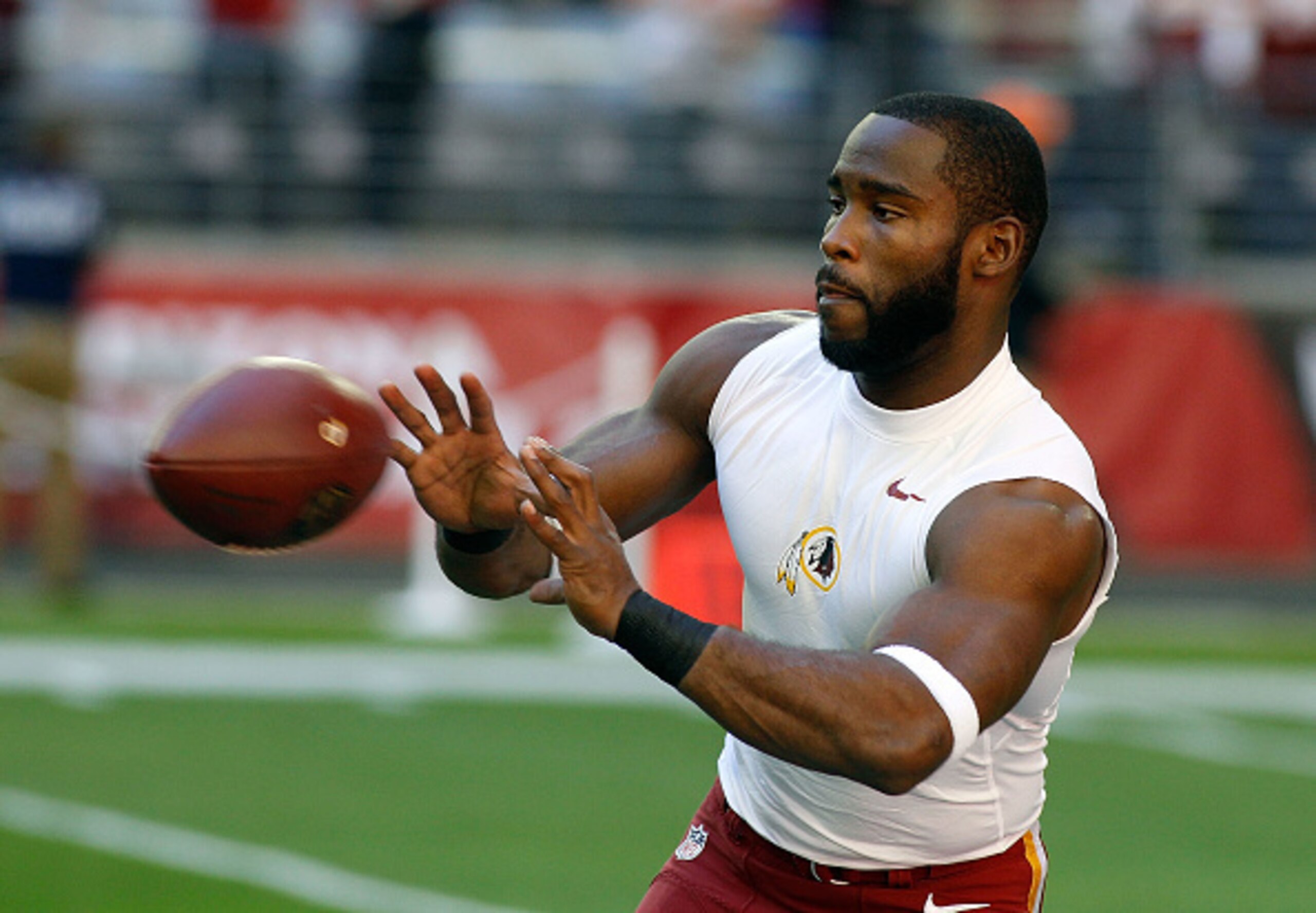
Scheme: West Coast
Starter: Pierre Garcon
NFL1000 Scores: 68.8/100
NFL1000 Rank: 28/155
Entering his age-31 season, Pierre Garcon finds himself as the No. 1 receiver in San Francisco. And while that may seem a little optimistic for Garcon and the 49ers offense, he’s now paired with a coach that knows how to use his skill set. When Garcon and Kyle Shanahan were together in Washington in 2013, Garcon caught 113 passes for over 1,300 yards.
Garcon’s best position is as a Z-receiver, but he can be an X-receiver in Shanahan’s scheme. He’s become a very reliable player over the past four years, never missing a game. While he’s not a true No. 1 receiver, he should be able to help solidify the team’s need at receiver.
Starter: Marquise Goodwin
NFL1000 Scores: 65.4/100
NFL1000 Rank: 70/155
Goodwin was signed early in the free-agency process by the 49ers to be the team’s No. 2 receiver. His track speed and ability to stretch the field are very similar to the traits of Taylor Gabriel, who Kyle Shanahan had in Atlanta.
His best position in is in the slot, which is interesting considering that the 49ers re-signed Jeremy Kerley. Goodwin knows how to sell defenders on vertical routes, and that speed scares defenders into playing off him, allowing him to get open on underneath routes with ease. It’s clear that general manager John Lynch and Kyle Shanahan wanted to add more speed to their offense, and Goodwin can certainly do that.
Starter: Jeremy Kerley
NFL1000 Scores:: 64/100
NFL1000 Rank: 85/155
As a full-time player for San Francisco, Kerley caught 64 balls for 667 yards and three scores. It was the fourth time in his career he failed to reach 11 yards per catch on the season. At 28, Kerley is a veteran route-runner who doesn't win with size or after the catch. He still possesses some quickness, but he's not as explosive as he once was earlier in his career with the Jets. He’s not a flashy player, but Kyle Shanahan should be able to make him a useful player on third downs.
Backup: Aldrick Robinson
NFL1000 Scores: 62.5/100
NFL1000 Rank: 103/155
Robinson followed Kyle Shanahan from Atlanta to San Francisco this offseason to be the team’s fourth receiver. He’s not expected to crack the starting roster or steal snaps from any of the top three receivers.
Robinson's best skill is his speed. He's a dangerous player when he has enough time to fully accelerate. He’s a linear player who sometimes struggles getting in and out of his breaks. There isn't much route diversity in his game, but as a deep threat, he can be useful. He has no problem tracking the ball over his head, but his hands are inconsistent.
Backup: Bruce Ellington
NFL1000 Scores: Did not have enough snaps to qualify
Ellington tore his hamstring in preseason before his supposed breakout year was set to begin. He’s a talented slot receiver who has struggled to stay healthy in the NFL.
Team Need: 8/10
Potential Draft Fits: Mike Williams (Clemson), Corey Davis (Western Michigan), Zay Jones (East Carolina)
Tight End
6 of 19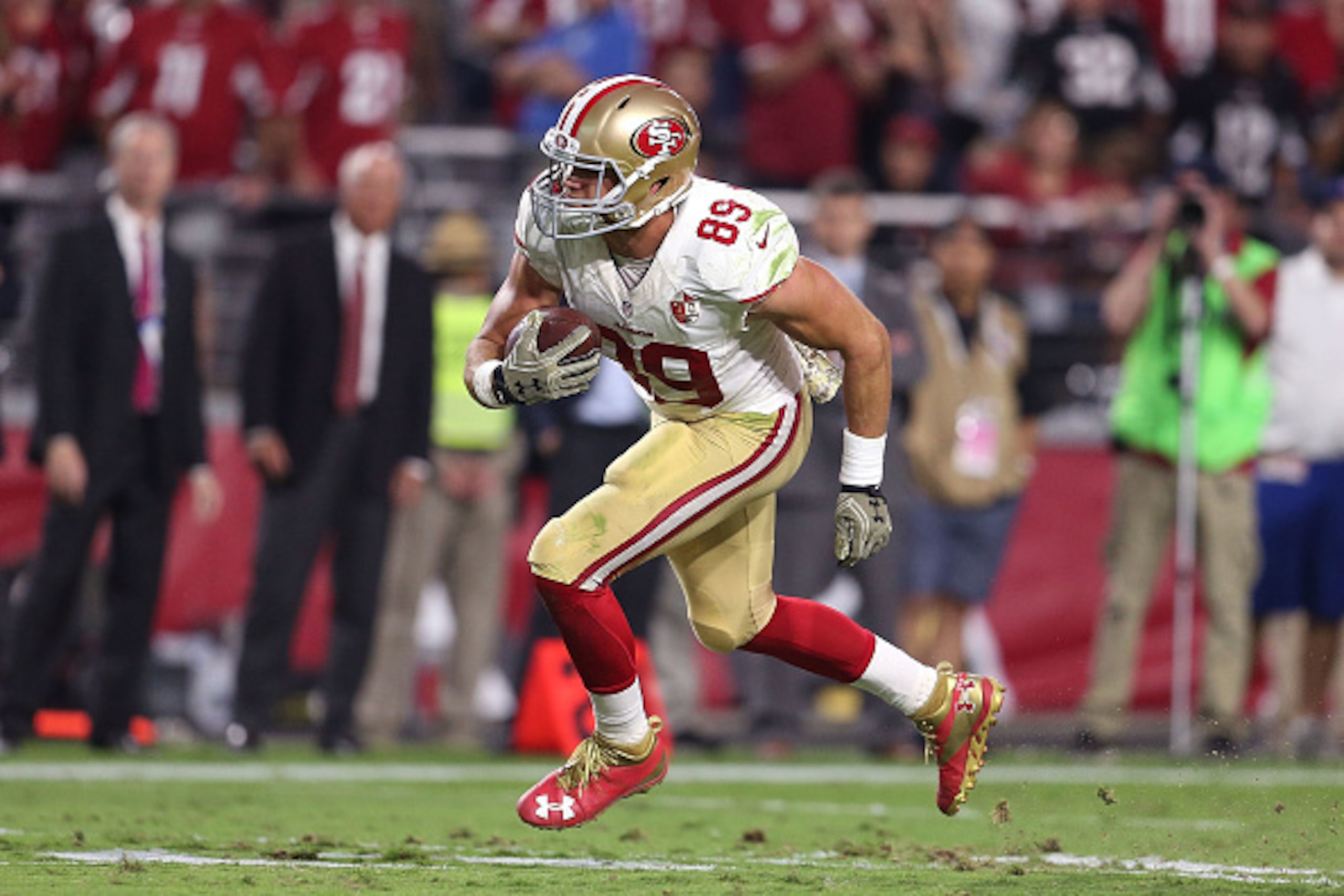
Scheme: West Coast
Starter: Vance McDonald
NFL1000 Scores: 64.7/100
NFL1000 Rank: 33/96
At 6’4, 265 pounds, Vance McDonald was supposed to be next in the wave of great receiving tight ends in the league. The 49ers agreed at the end of 2016, giving him a five-year, $35 million extension. It’s clear that the old administration believed he was a budding star, but he has just 866 receiving yards in four career seasons.
Injuries and poor hands have plagued McDonald’s career so far. He’s an athletic move tight end who does possess the ability to hold up inline as a blocker.
Backup: Garrett Celek
NFL1000 Scores: 61.3/100
NFL1000 Rank: 52/96
With Vance McDonald handling most of the receiving duties for the 49ers, Celek’s main role has been as a blocker in the NFL. However, in 2016, he set a career high in receiving yards at 350 and hauled in three touchdown passes. He’s a reliable backup who struggles with drops at times.
Backup: Blake Bell
NFL1000 Scores: Did not have enough snaps to qualify
Bell is a former quarterback convert who is still learning the position. He only caught four passes in 13 games in 2016. His roster spot is not assured in 2017.
Team Need: 7/10
Potential Draft Fits: Evan Engram (Ole Miss), Jake Butt (Michigan), Adam Shaheen (Ashland)
Left Tackle
7 of 19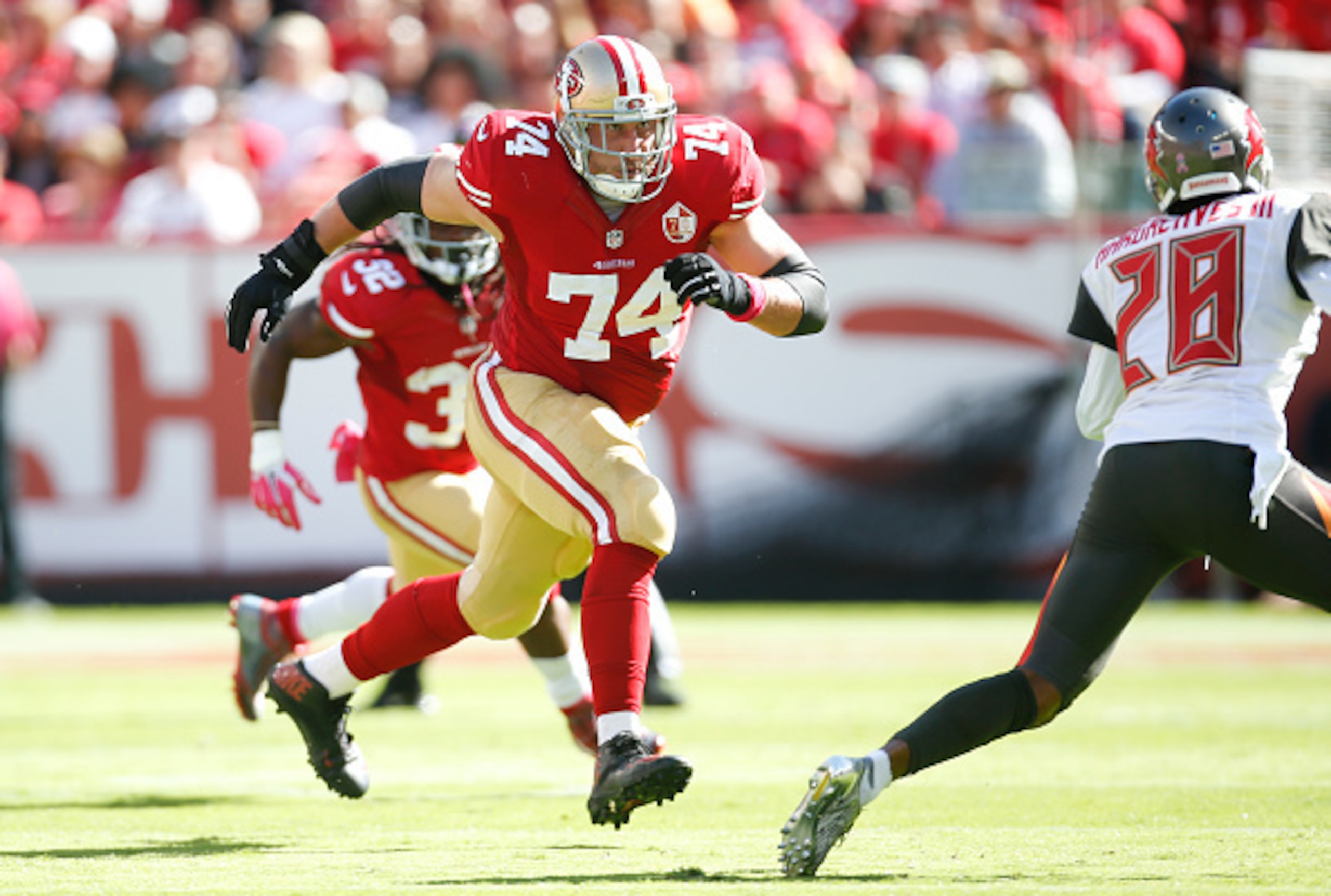
Scheme: Zone
Starter: Joe Staley
NFL1000 Scores: 76.0/100
NFL1000 Position Rank: 10/40
In the midst of all the changes and inconsistencies in three straight seasons in San Francisco, left tackle Joe Staley has been a constant. Staley was selected 28th overall out of Central Michigan in 2007 and has gone on to start 143 games, be named to five Pro Bowls and be voted as an All-Pro three times.
Overall, Staley is still a great left tackle as enters his 11th season, in which he will be 33 years old. Yet the veteran shows no signs of decline, especially in pass protection. Staley hasn't given up more than five sacks in a season the last four years and continues to win the edge as a run-blocker.
Backup: John Theus
NFL1000 Scores: Did not have enough snaps to qualify
Reserve swing-tackle John Theus is limited in overall ability and is unlikely to earn a starting role. San Francisco may look to add a young offensive tackle in the middle rounds so Staley can begin to groom and mentor for when he decides to call it a career.
Team Need: 3/10
Potential Draft Fits: Julie'n Davenport (Bucknell), Antonio Garcia (Troy)
Right Tackle
8 of 19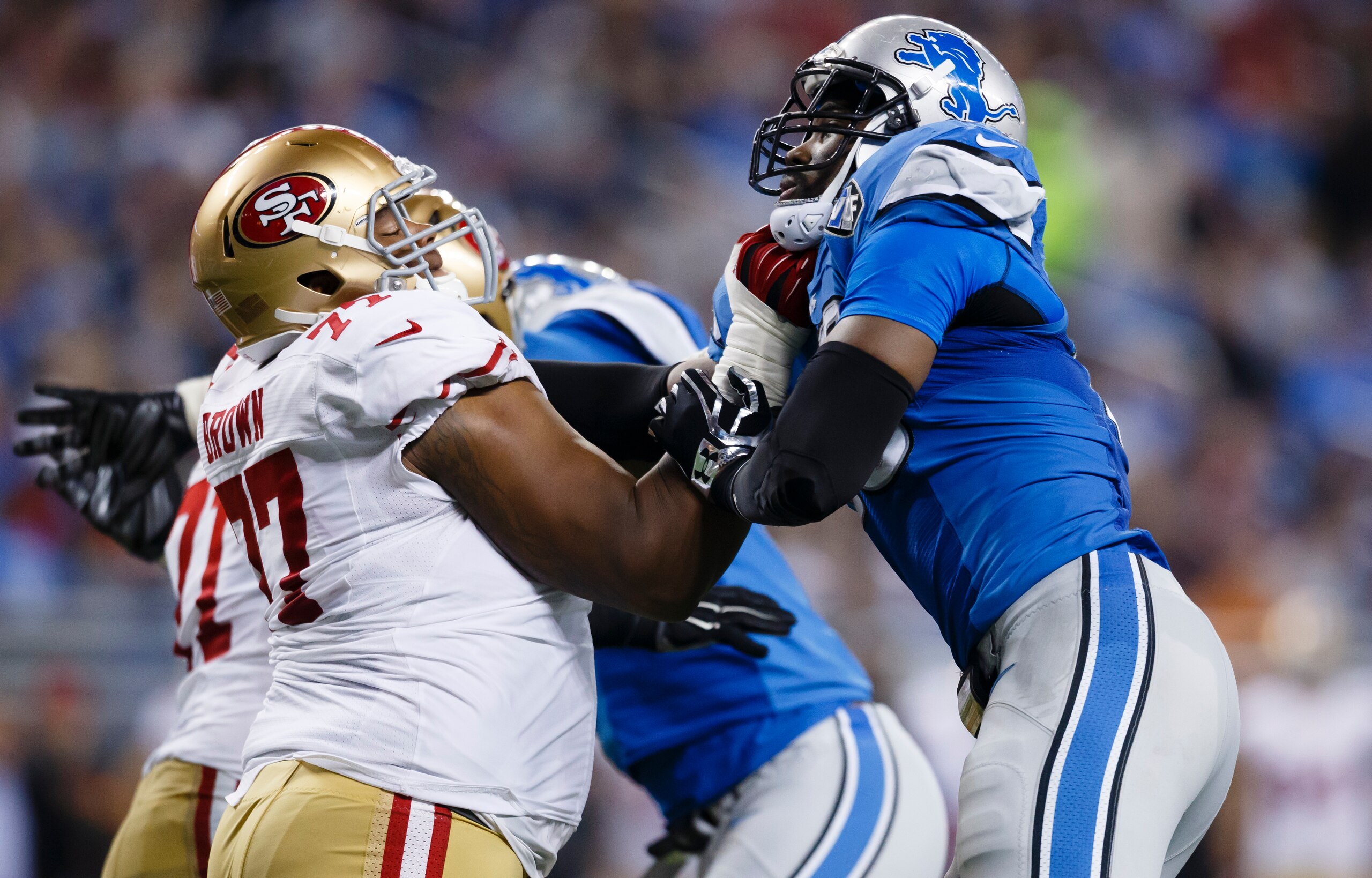
Scheme: Zone
Starter: Trenton Brown
NFL1000 Scores: 73.3/100
NFL1000 Position Rank: 11/38
Trenton Brown started every game for San Francisco in 2016, helping to provide continuity at the tackle positions.
Brown was a big and powerful run-blocker who consistently created movement at the point of attack. Despite his massive frame, Brown is an above-average pass protector when his conditioning and mobility are on point.
As the season went on, you could see Brown's conditioning and mobility caused some limitations in his overall range in pass protection, as he was not able to consistently move efficiently as he had earlier in the season.
Overall, Brown is a solid starting right tackle, who, if he stays in shape, can continue to be a solid option for the 49ers.
Team Need: 0/10
Potential Draft Fits: None. Could consider bringing camp competition with late-round draft pick or undrafted free agents.
Offensive Guard
9 of 19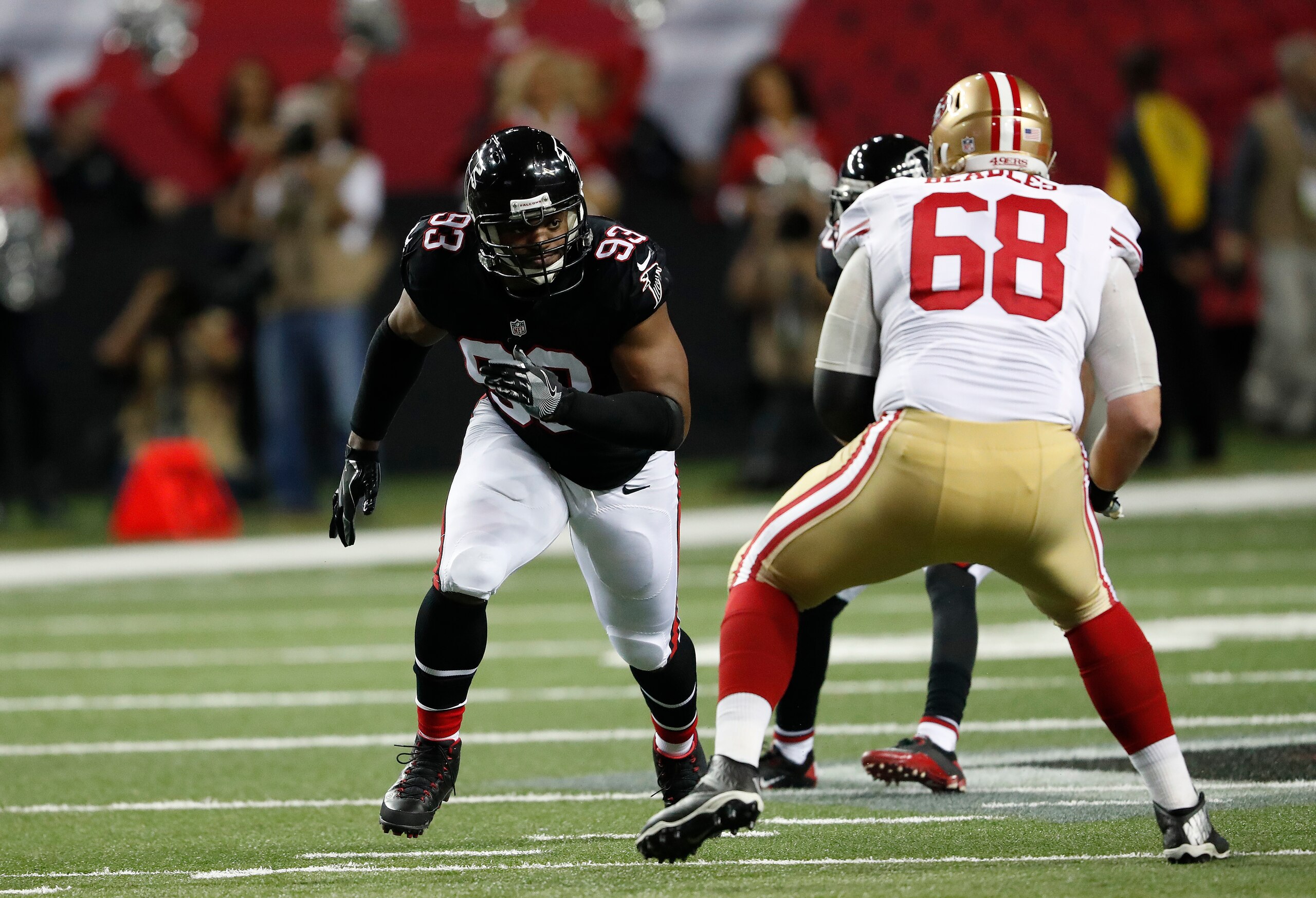
Scheme: Zone
Starter: Zane Beadles
NFL1000 Scores: 68/100
NFL1000 Position Rank: 60/78
The 49ers are in a weird spot along their interior OL. They have invested some assets there, they have depth, but the performance was not close to enough last year. The obvious spot to replace is Zane Beadles on the left side, but I’m not sure a mid-round pick from this class beats out Beadles or even Andrew Tiller behind him. If they address the position, they need to address it thoroughly. Picking at second overall, I just don’t see that happening as you don’t take a guard that high, and top options like Forrest Lamp and Dan Feeney may be off the board by the time the 49ers' second-round pick roles around. Trading up back into the first to grab one would be nice, but this is a team with a lot of needs going forward.
Starter: Josh Garnett
NFL1000 Scores: 66.7/100
NFL1000 Position Rank: 71/78
Josh Garnett was really inconsistent of the right side last year, and while his technique can be a mess, he flashed enough strength that this new coaching staff should give him a chance in his second year.
Backup: Andrew Tiller
NFL1000 Scores: 70.4/100
NFL1000 Position Rank: 34/78
Tiller was the 49ers' best interior lineman last year, but for some reason he wasn’t able to get consistent reps over Beadles and Garnett. Maybe that will change with a new regime, but in the meantime Tiller serves as a nice sixth lineman. I’m not sure how a great of a fit Tiller will be in Shanahan’s read-zone system, but he’s strong and nasty, and if he can figure it out, he’ll be an asset on the left side.
Team Need: 5/10
Potential Draft Fits: Forrest Lamp (Western Kentucky), Will Holden (Vanderbilt)
Center
10 of 19
Scheme: Zone
Starter: Jeremy Zuttah
NFL1000 Scores: 68.8/100
NFL1000 Position Rank: 26/38
Jeremy Zuttah is nothing special as a player at this point, but I love the move to bring him in for so cheap from a schematic standpoint. Zuttah had experience in a similar scheme to Kyle Shanahan’s when he played under Gary Kubiak, and getting someone with experience to call the shots at the line should help accelerate the implementation of this new offense.
Backup: Daniel Kilgore
NFL1000 Scores: 67.1/100
NFL1000 Position Rank: 31/38
I’ve always liked Kilgore, but he is best served as a depth option at this point. His medical is starting to stack up as well, as the 49ers can't count on him to make it through 16 games.
Team Need: 4/10
Potential Draft Fits: Jon Toth (Kentucky), Jay Guillermo (Clemson)
Defensive End
11 of 19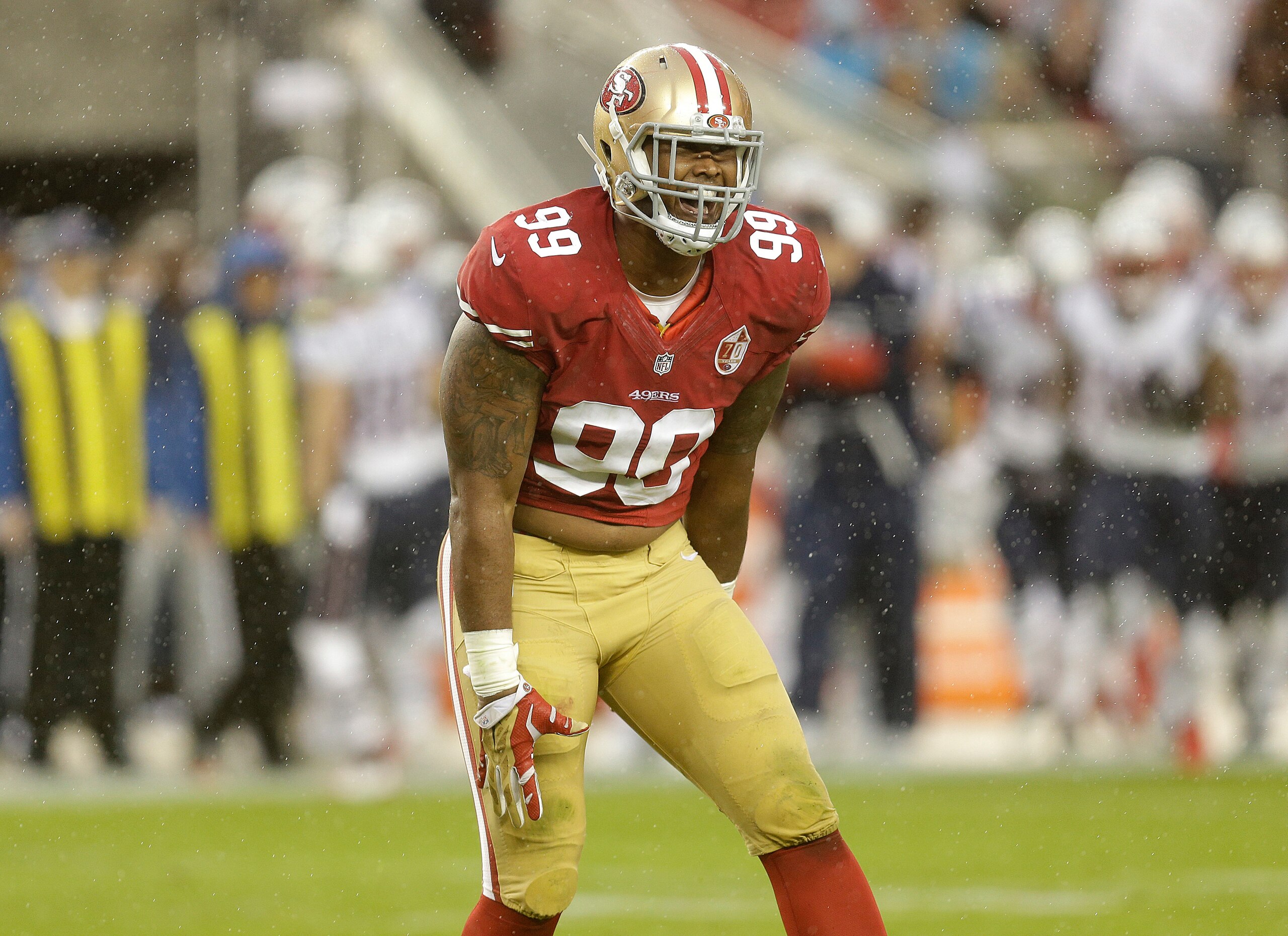
Scheme: 4-3
Starter: DeForest Buckner
NFL1000 Scores: 69.4/100
NFL1000 Position Rank: 5/53
As a rookie last season, DeForest Buckner was already a top-five 3-4 defensive end according to our grading system. San Francisco played as close to a true 3-4 defense as you’re going to see in the NFL, which comes down to the defensive philosophy of former head coach Chip Kelly and defensive line coach Jerry Azzinaro, who both recruited Buckner to play at the University of Oregon. After firing their old coaching staff, the 49ers will be moving to a 4-3 under defense that heavily uses a single-high safety, as new defensive coordinator Robert Saleh has spent the last six years molding himself for that scheme in both Seattle and Jacksonville. In that scheme, Buckner likely plays the “Michael Bennett role” where he is a base “big end” and kicks inside as a pressure tackle, which he already did often in 2016, on long and late downs. As far as 4-3 defenses go, this is about as good of a fit for Buckner as any.
Starter: Tank Carradine
NFL1000 Scores: 63.2/100
NFL1000 Position Rank: 53/65 (Graded at 3-4 OLB)
This is where the evaluation of San Francisco’s ends get tricky. Sure, the team could call Ahmad Brooks, Aaron Lynch or Eli Harold whatever it wants to in April, but until they are on the field, we have no idea if they are outside linebackers or defensive ends. If the 49ers think of those players as outside linebackers, since there is a dropdown 'backer in most 4-3 under looks, the player with the best chance of locking down that weak-side pass-rushing end role is Tank Carradine. Carradine was considered to be a top-10 talent by many coming out of Florida State, but injuries have set him back since his first season in 2012. In four years, the end only has four sacks to his name to go along with one career start. In the last two years, he’s only missed five games, but in his first two years in the NFL, he missed 23. Already a 28-year-old, the chances of him “breaking out” are slim.
Backup: Arik Armstead
NFL1000 Scores: 62.4/100
NFL1000 Position Rank: 29/53
In a 4-3 under, it’s going to be incredibly hard to find a spot for two giant defensive linemen, if they aren’t primary pass-rushers. There’s a dropdown outside linebacker and a weak-side pass-rusher, roles that Arik Armstead isn’t athletic enough to fill. There’s nose tackle, where Armstead’s 6’7” frame will be a negative on combo blocks and double-teams. There’s under tackle, where Armstead’s lack of relative explosion hurts him. Really, if your best attribute is length, the only situation where you can succeed in this defense is at base end. Unfortunately, that means Armstead will likely be DeForest Buckner’s backup, as the team spent back-to-back first-round picks on long linemen. Armstead has five starts in two NFL seasons and missed eight games last year. Only a 23-year-old, but a projected long-term backup in this situation, Armstead may be a draft weekend trade piece.
Backup: Ronald Blair
NFL1000 Scores: 65.9/100
NFL1000 Position Rank: 13/53
Last year, Ronald Blair showed flashes of above-average play as a pressure end for the 49ers. In their new 4-3 defense, he will likely be one of the team’s four pressure ends on long and late downs, as the Seattle/Jacksonville defenses tend to line up three defensive ends in the A- through C-gaps opposites of their primary pass-rusher. As a stunt rusher, despite the fact that he’s a bit short and heavy for your typical 4-3 end, he should do fine. Right now, he shouldn’t be considered to be on the roster bubble, as he can be a pressure three-technique tackle if nothing else. The team needs to add pass-rushers or convert a lot of their outside linebackers to defensive end. If that happens, Blair will slowly start getting buried in the depth chart, but he’s a talent worth having on any roster in the NFL considering his experience level.
Team Need: 8/10
Potential Draft Fits: Myles Garrett (Texas A&M), Solomon Thomas (Stanford), Tim Williams (Alabama)
Defensive Tackle
12 of 19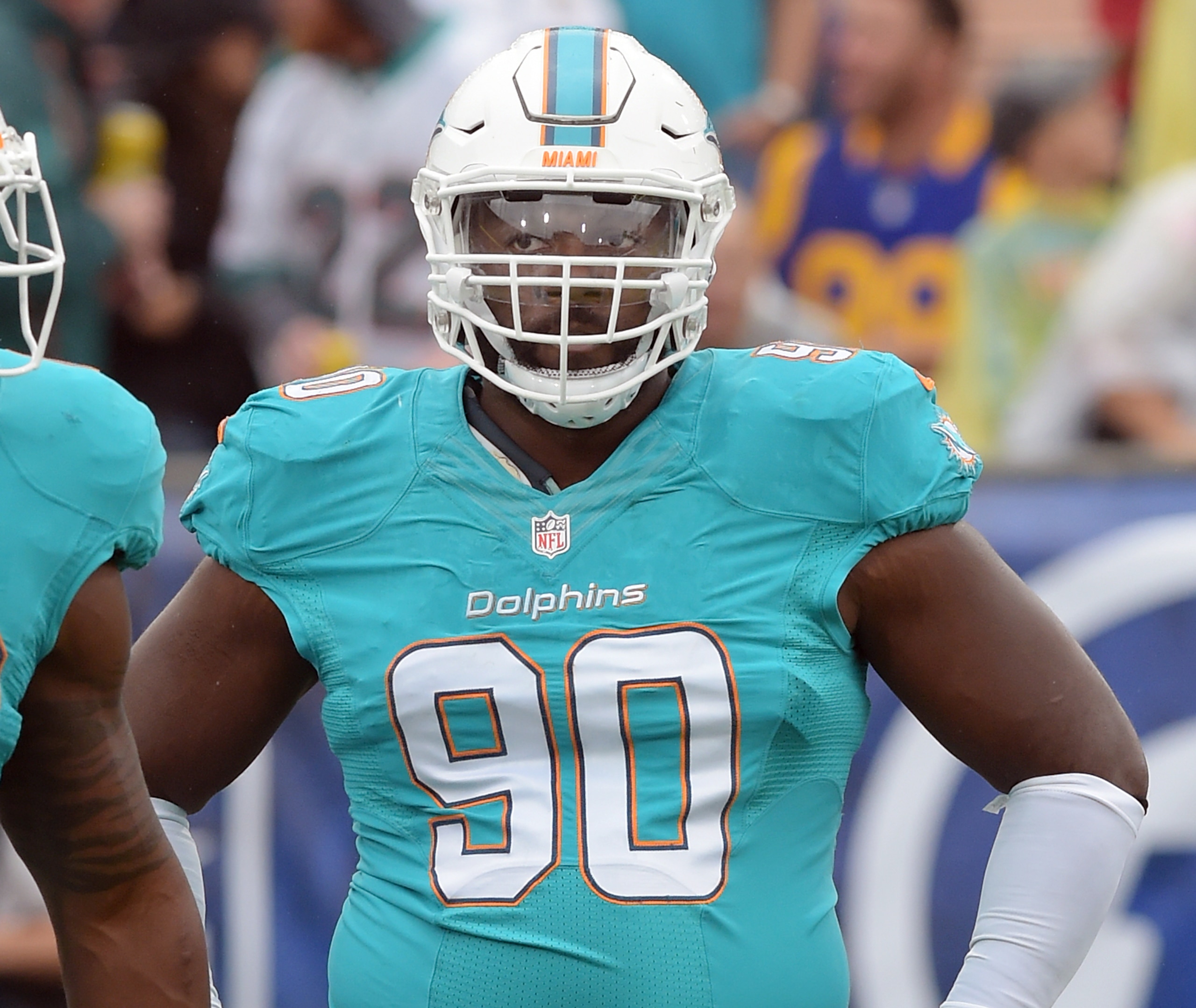
Scheme: 4-3
Starter: Earl Mitchell
NFL1000 Scores: 63.6/100
NFL1000 Position Rank: 46/99
Earl Mitchell had an injury-plagued 2016 season, but when he was on the field, he was capable of producing explosive plays against the run. He was cut from the Dolphins due to cap constrictions; however, he’s definitely a starting-caliber defensive tackle. The “offspring” of the Seattle defense has utilized smaller nose tackles (Brandon Mebane, Grady Jarrett, Roy Miller) in order to defend laterally, and Mitchell fits the mold there.
Backup: Quinton Dial
NFL1000 Scores: 63.3/100
NFL1000 Position Rank: 26/53 (Graded at 3-4 DE)
Quinton Dial played defensive end in the 49ers scheme under Jim O’Neill, but he’ll be kicking inside in the 49ers’ new defense. He was an above-average run defender at 4-technique, which should translate well to his new position at 3-technique and 1-technique. He’ll be rotating with Earl Mitchell, DeForest Buckner, Arik Armstead and Mike Purcell on the interior as the roster currently stands.
Backup: Mike Purcell
NFL1000 Scores: 55.2/100
NFL1000 Position Rank: 98/99
Mike Purcell is not an NFL-quality defensive tackle. He was a large reason why San Francisco gave up an absurd 176 rushing yards per game last season. Purcell was constantly bulldozed against the run and gave no pass rush to compensate. There’s no reason for him to be seeing legitimate reps this upcoming season.
Team Need: 9/10
Potential Draft Fits: Jaleel Johnson (Iowa), Caleb Brantley (Florida), Larry Ogunjobi (Charlotte), Tanzel Smart (Tulane)
Outside Linebacker
13 of 19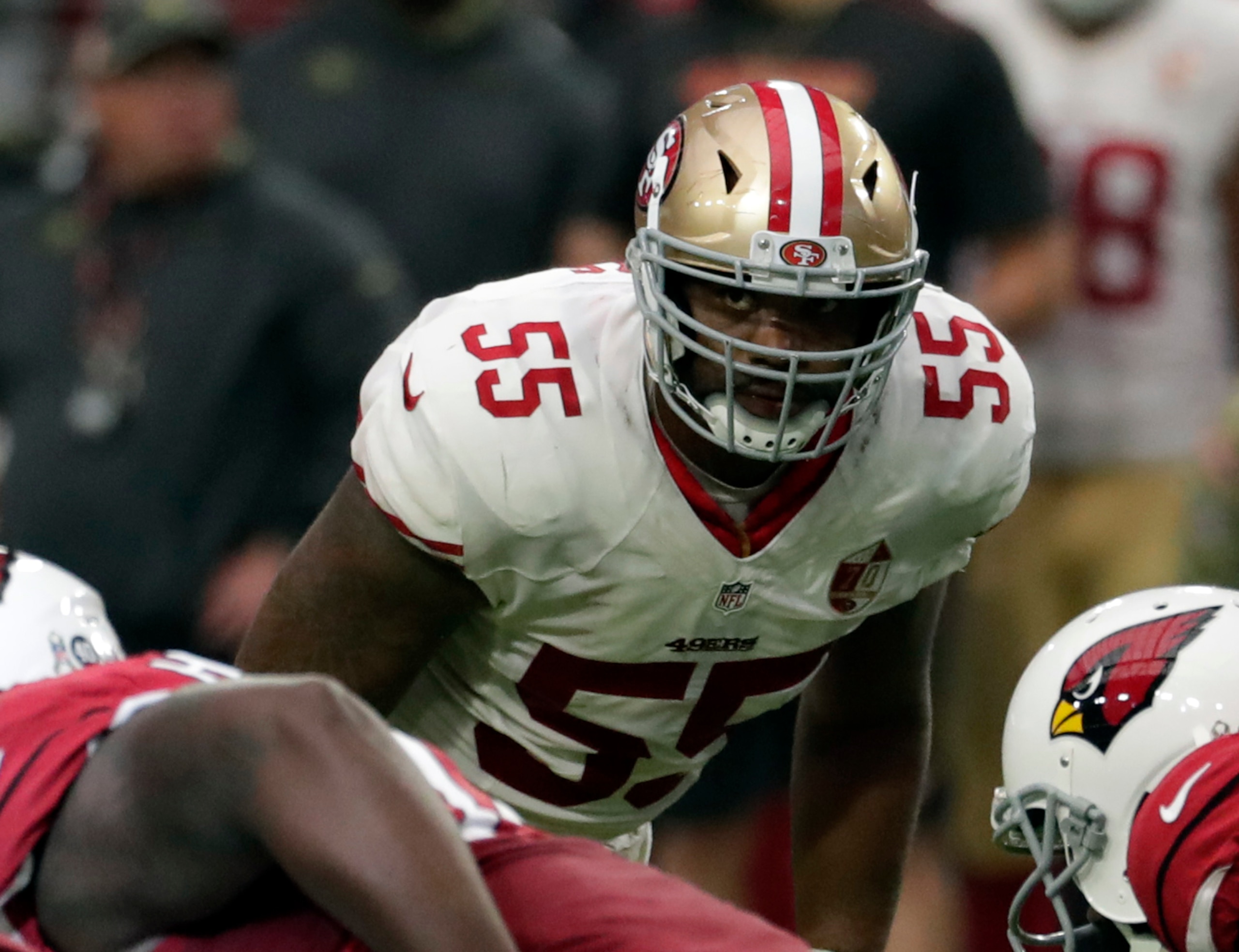
Scheme: 4-3
Starter: Malcolm Smith
NFL1000 Scores: 59.3/100
NFL1000 Position Rank: 38/46
Much like the rest of their defensive roster, the 49ers linebacker corps is desolate. Outside of Navorro Bowman, who has not had much luck staying healthy in recent years, the rest of the 49ers linebacker group is lackluster. The 49ers signed former Seahawks and Raiders linebacker Malcolm Smith in an effort to bolster the position group.
Smith is a “rebound” project. Smith once earned Super Bowl MVP honors with the Seahawks and had a solid 2015 season with the Raiders, but he was a disaster last year. Smith regressed in every way. His reaction time was slower, and his willingness to attack the line of scrimmage vanished. Smith often looked lost in coverage, too, which is odd considering that was what earned him playing time and contracts in the past. The 49ers must be hoping that they can get the former version of Smith, but it would not be wise to bet on that happening without hedging his starting job with a rookie.
Backup: Ahmad Brooks
NFL1000 Scores: 67.9/100
NFL1000 Position Rank: 30/65 (Graded at 3-4 OLB)
Ahmad Brooks is the toughest position fit for the 49ers new defense. Brooks has been an outside linebacker in the 49ers 3-4 system for some time now. Last year, Brooks was more often the “drop” backer, which would be the linebacker who drops back into coverage if the defense is in a base look (three down linemen and four linebackers) and the defense only wants to rush four defenders. Brooks was at his best in coverage. He’s lost some of his athleticism, being as he turned 33 years old in March, but he still has a natural feel for how to flow in space and stick to his assignments. As a run defender, however, Brooks doesn’t have the juice or strength to be more than mediocre. To his credit, he has a great understanding of where he needs to be, which means he rarely ruins the play for the rest of the defense. With Brooks’ contract being up after the 2017 season, the 49ers should plan on moving on from him.
Backup: Brock Coyle
NFL1000 Scores: Did not have enough snaps to qualify
Brock Coyle, like Smith, is a first-year 49er. Coyle is a former Seahawk. The Seahawks did not need Coyle for very long last season, but there was a short stretch where he was needed for significant snaps. Coyle proved to be a capable linebacker. Both in coverage and in run defense, Coyle held his own. He is not an overly aggressive or impressive player, but he showed that he could consistently carry out his assignment. As a backup, Coyle is a nice player to have on hand. He can start in a pinch and can be a quality rotational player.
Team Need: 8/10
Potential Draft Fits: Zach Cunningham (Vanderbilt), Jalen Reeves-Maybin (Tennessee), Marquel Lee (Wake Forest)
Inside Linebacker
14 of 19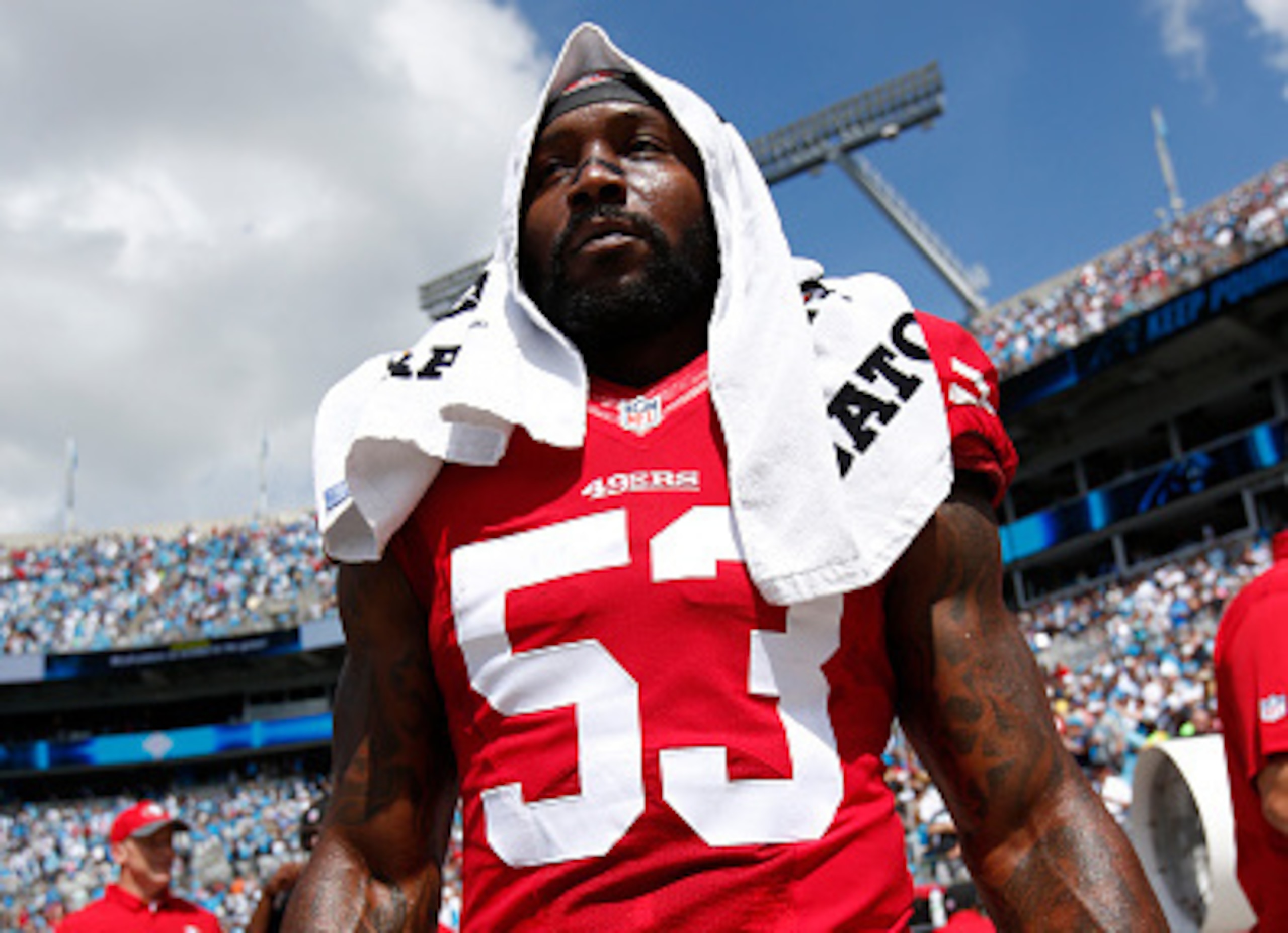
Scheme: 4-3
Starter: NaVorro Bowman
NFL1000 Scores: Did not have enough snaps to qualify
Had he remained healthy, NaVorro Bowman likely would’ve graded out as a top-five inside linebacker last season. Although the team as a whole struggled, Bowman looked good early in the season and seemed back to playing dominant football. Unfortunately, Bowman was placed on Injured Reserve and missed the rest of the season after tearing his Achilles in Week 4. Bowman has come back from devastating injuries before, but it’s hard to see him being the same player immediately.
There’s no doubt that, when healthy, Bowman can play the run and cover as well as any linebacker in the league. But lower-body injuries are piling up, and the team is surely looking for a backup and potential replacement should Bowman fail to return to form.
Backup: Dekoda Watson
NFL1000 Scores: Did not have enough snaps to qualify
Dekoda Watson was signed as an unrestricted free agent. He played for the Denver Broncos in 2016 and tallied just 17 tackles with one sack. Watson is entering his eighth year in the league and brings veteran experience, but he’s little more than a special teams player and depth piece. If he manages to stick around on the 53-man roster, it will be as the third inside linebacker and someone that could play all three linebacker positions in a pinch. Otherwise, he offers little value to a team that needs significant upgrades.
Team Need: 5/10
Potential Draft Fits: Alex Anzalone (Florida), Tanner Vallejo (Boise State), Dylan Cole (Missouri State)
Cornerback
15 of 19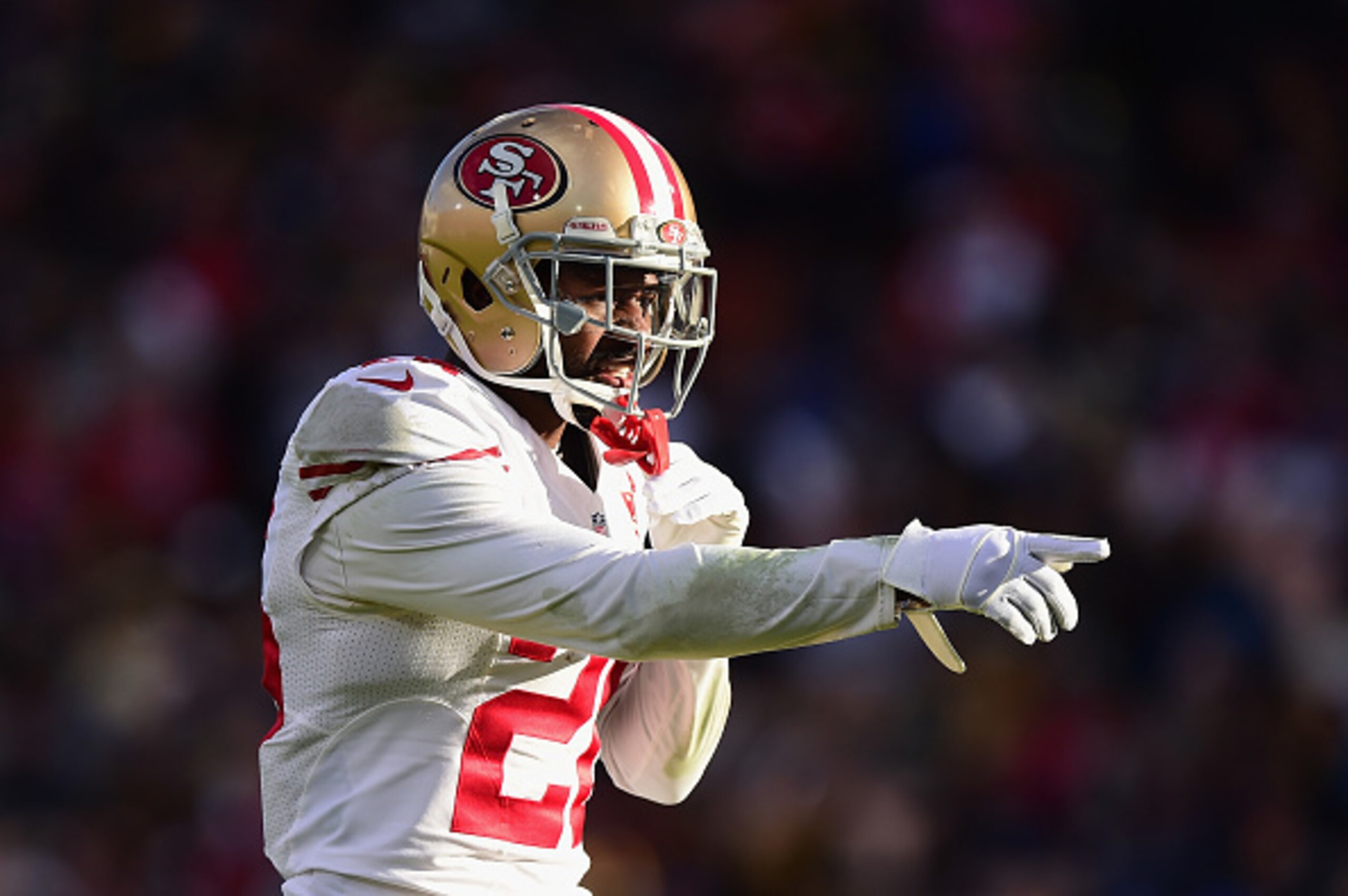
Scheme: Man-to-Man
Starter: Tramaine Brock
NFL1000 Scores: 65/100
NFL1000 Position Rank: 47/192
Throughout all of the turnover the San Francisco 49ers have endured the last few years, Tramaine Brock has been a constant presence. As he bounced back from an injury-shortened 2015, Brock again showed he’s a capable starter in 2016. Though not as dynamic as he was in the 2014 season, the 28-year old still has some good football left in him. Brock is not a long-term answer, but he’s enough for the 49ers to count on this year. If the 49ers get the chance to draft a replacement for 2018, though, they shouldn’t hesitate.
Starter: Rashard Robinson
NFL1000 Scores: 63/100
NFL1000 Position Rank: 71/192
The most promising player in the 49ers’ secondary is Rashard Robinson. Despite playing in an odd rotation last year, Robinson was constantly making plays when given the chance. Better in press man than anything else, Robinson has the potential to be a long-term starter for this young defense. His final grade was among our top rookies, and as he continues to get stronger and earn more of a full-time workload, he should continue his upward projection.
Slot: Jimmie Ward
NFL1000 Scores: 63.6/100
NFL1000 Position Rank: 60/192
This is a crucial season for Jimmie Ward. The former first-round pick is entering the final season of his rookie contract, and the 49ers seem unlikely to exercise his fifth-year option for 2018. Ward has split time as an outside and slot corner, but his natural position is in the slot. It’s conceivable he has a long-term future with the 49ers, especially since he and Robinson could be two-thirds of a good cornerback depth chart for the next few seasons. But he must fend off other young players in Keith Reaser and Dontae Johnson and be more consistent contesting catches and forcing incompletions. Even if he doesn't, the 49ers could move Ward over to free safety.
Team Need: 5/10
Potential Draft Fits: Marshon Lattimore (Ohio State), Chidobe Awuzie (Colorado), Sidney Jones (Washington), Quincy Wilson (Florida), Corn Elder (Miami)
Free Safety
16 of 19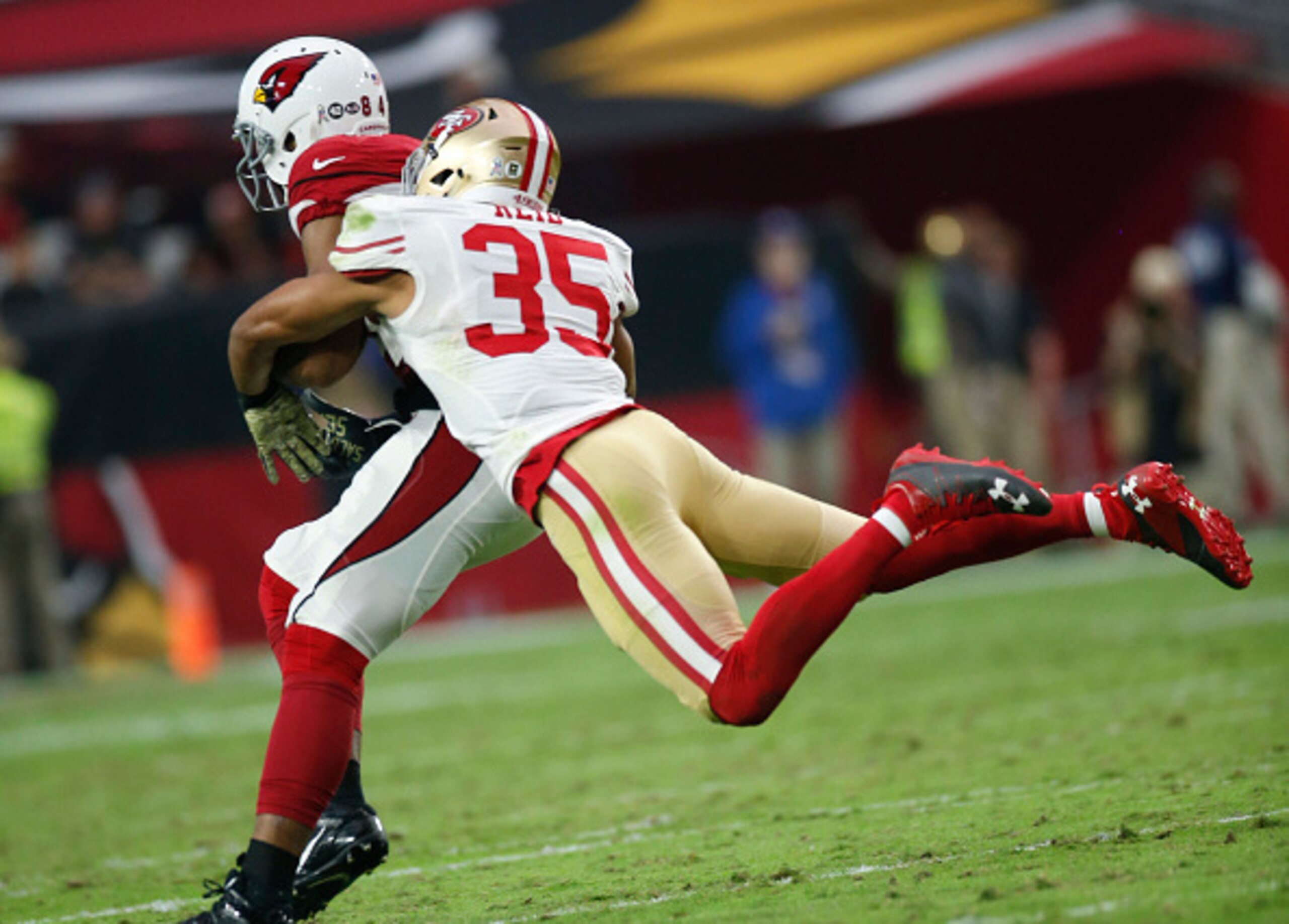
Scheme: Cover 3
Starter: Eric Reid
NFL1000 Scores: 72.9/100
NFL1000 Position Rank: 12/50
Reid is one of the few bright young talents on this 49ers defense. He’s a good, well-rounded safety that can play both deep and in the box. Last year, he played as the deep safety in base and then rotated down to cover tight ends on third down. With the 49ers expected to install their version of the Seahawks and Falcons Cover 3 base scheme, Reid could probably fill either safety spot, but his best fit is likely as the deep middle defender. That scheme asks a lot out of the deep safety, but Reid has the instincts and range to perform the role well and give the 49ers the insurance they need on the back end.
Backup: Marcus Ball
NFL1000 Scores: Did not have enough snaps to qualify
Ball is nothing more than an NFL journeyman at this point in his career. He went undrafted in 2012 and spent some time in the CFL before landing with the Saints in 2014. He was cut a year later and picked up by the Panthers, who went on to cut him midway through last season. He ended the 2016 season as a backup for the 49ers after a brief spell on the Jaguars practice squad. He has just 20 career tackles and is more of a special teams contributor. He’s not someone I would expect the 49ers to rely on as the primary back up at a key position.
Team Need: 3/10
Potential Draft Fits: Malik Hooker (Ohio State), Marcus Williams (Utah), Justin Evans (Texas A&M)
Strong Safety
17 of 19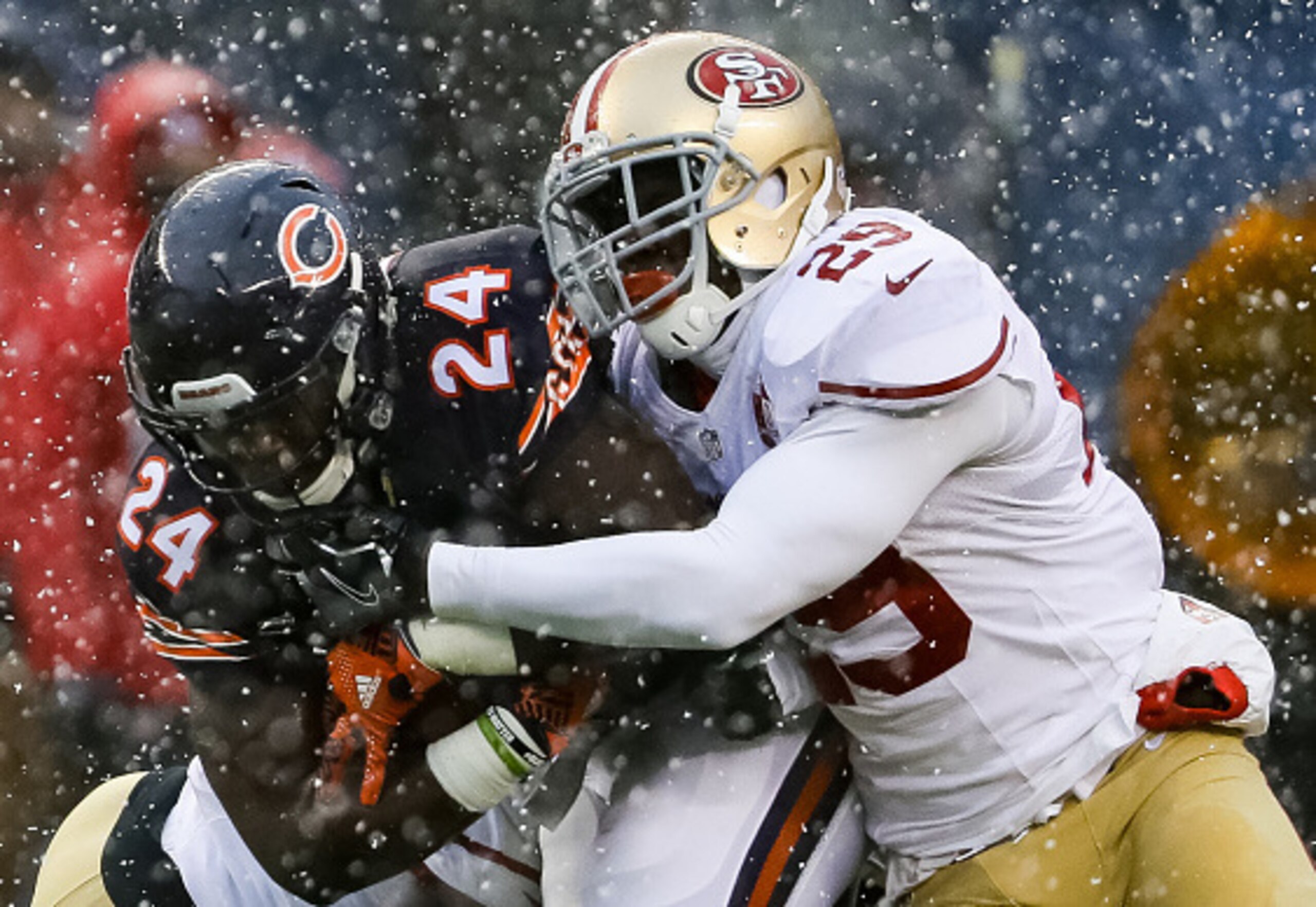
Scheme: Cover 3
Starter: Jaquiski Tartt
NFL1000 Scores: 70.5/100
NFL1000 Position Rank: 35/53
Tartt played mostly as a nickel and dime linebacker for the 49ers last year until Reid got hurt and he was needed to take over a bigger role. He played well as a dime linebacker, holding up against the run and covering tight ends and running backs out of the backfield. His experience as a dime linebacker should help him as he attempts to transition to the Kam Chancellor role, which essentially makes the strong safety an extra linebacker in the base defense. With Antoine Bethea now gone, Tartt has an opportunity to lock down the starting strong safety spot and expand his role beyond a sub-package player.
Backup: Vinnie Sunseri
NFL1000 Scores: Did not have enough snaps to qualify
Much like Ball, Sunseri is another journeyman. A fifth-round pick out of Alabama in 2014, Sunseri’s first two years of his rookie contract were with the Saints, though his second year was spent on injured reserve. The Saints released him after that and he was picked up by the Patriots, but he could only make the practice squad and not the final 53. In October last year, the Patriots released him, and the 49ers added him to their practice squad in November before promoting him to the active roster after Reid’s injury. He played a total of 16 snaps for San Francisco last year, per Pro Football Focus, and isn’t likely to see the field a great deal more than that this year.
Team Need: 6/10
Potential Draft Fits: Obi Melifonwu (Connecticut), Josh Harvey-Clemons (Clemson), Josh Jones (NC State), Lorenzo Jerome (St. Francis)
Kicker
18 of 19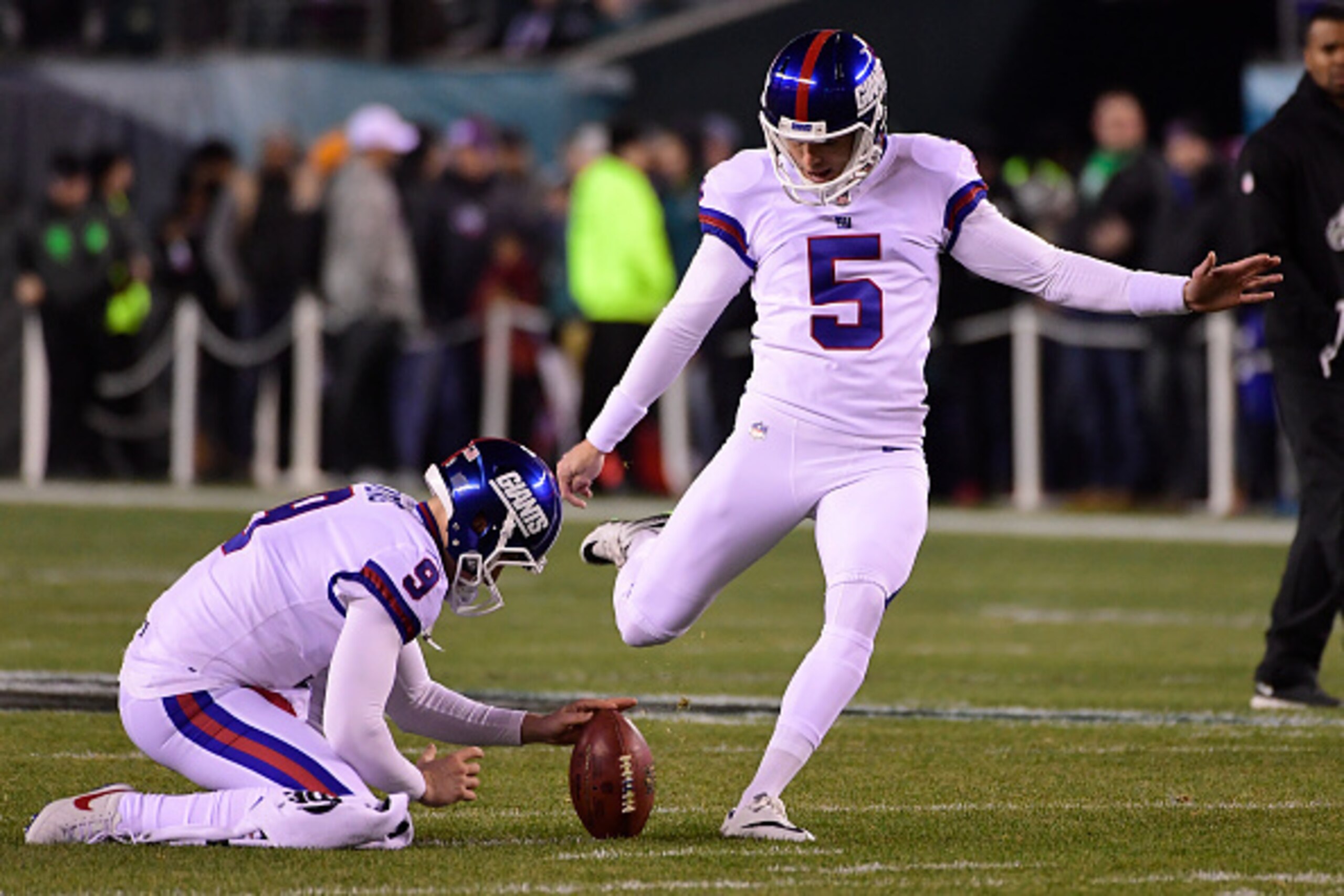
Starter: Robbie Gould
NFL1000 Scores: 65.6/100
NFL1000 Position Rank: 29/38
Gould took over kicking duties for the Giants in Week 7 and had an abbreviated 2016 season after being a surprise cut by the Bears in the preseason. Overall, Gould performed below his career norms for 2016, largely skewed by a terrible Week 11 performance because of windy conditions that caused an NFL record in league-wide extra-point misses for a single week. Aside from that performance, Gould was remarkably consistent in 2016, with only one other performance grading out below 60 on the year.
While Gould did miss two extra points during that Week 11 debacle, he was a perfect 10-of-10 on field goals last year in a small sample, including 4-of-4 from 40-49 yards, though he was untested from 50-plus. Gould might not have the high upside of a Steven Hauschka, but he is likely going to be a consistent option for the 49ers as they look to replace the dependable Phil Dawson.
Team Need: 3/10
Potential Draft Fits: None
Punter
19 of 19
Punter: Bradley Pinion
NFL1000 Scores: 65.4/100
NFL1000 Position Rank: 21/38
There is a lot to like about Pinion’s game, most notably his hang time and strong directional ability. Unfortunately, 2016 showed a healthy balance between those features and the bad parts of his game, which are the inconsistency in that directional game, and a lack of distance when his trajectory occasionally gets too steep. The tradeoff between distance and hang is one that takes young punters some time to master, so while this is an area that needs some growth in Pinion’s game, it is not something that is a glaring red flag for him.
Pinion has a ton of natural talent in his leg, but he is still growing into his role as an NFL punter. He is young enough that there is still a good chance he taps into more of his upside, and with two years remaining on a cheap rookie deal, he is not going anywhere anytime soon. Look to see him in San Francisco for at least the next two years, and possibly longer if the 49ers are smart.
Team Need: 2/10
Potential Draft Fits: None
.jpg?w=2560)
.jpg?w=2560 "Cardinals Giants Football")







