

Thursday NBA Roundup: Clippers Erasing Any Doubt They Are Among League's Best
The Los Angeles Clippers are true NBA title contenders.
Truthfully, we should've known as much before Thursday night's 113-94 victory over the Cleveland Cavaliers, but the three-game skid leading up to that second-half beatdown of the defending champions cast some doubt. The league's best teams don't typically drop three consecutive contests, much less to the shorthanded Detroit Pistons, Indiana Pacers and Brooklyn Nets.
This performance should sweep away any concerns. It by no means guarantees a title—the Clippers still shouldn't even be favored to advance out of the Western Conference—but it affirms their status as a dangerous outfit.
TOP NEWS

Brown with an all-time summary of relationship with Tatum

Heat, Giannis were down by 20+ in each of their 3 losses

Power Ranking Every NBA Team's Starting Lineup 🔢
"The true Clippers are much closer to the juggernaut that started the season 14-2 than the tired patsy of the past week," ESPN.com's Zach Lowe wrote before this latest showing. "They've already played 19 games, second-most in the league, and they rested Griffin during their bizarro loss in Brooklyn on Tuesday."
Numbers tell a similar story.
Even after the losing streak, the Clippers trailed only Golden State in simple rating system (Basketball-Reference.com's metric that grades teams based solely on strength of schedule and margin of victory). They entered Thursday ranked No. 5 in offensive rating and No. 2 in defensive rating—the only team to place top-five for both.
NBA Math's Team Rating also shows them falling behind only the Warriors:
That No. 2 finish is even more significant than you might initially imagine. If you click over in the above infographic, you'll see that only a dozen teams in NBA history have finished with a higher score. In fact, the Clippers' closest comparisons are the 2008-09 Cavaliers and 2012-13 Oklahoma City Thunder, both of whom won at least 60 games.
Offense or defense alone can't carry you to this lofty level, and that's not what's happening for Los Angeles. The Clippers showed off their wealth of offensive options against Cleveland while posting an impressive 113 points.
Blake Griffin recorded 11 assists, thriving with the rock in both transition and the half-court set. Chris Paul was his typical efficient self and recorded nine assists with no turnovers. J.J. Redick's shot kept falling, and DeAndre Jordan's rim-rolling abilities helped provide everyone with a bit more space on the perimeter.
Despite the widespread excellence, it was still the defense that stood out even more. As they've been wont to do throughout this young campaign, the Clippers constantly switched on screens and forced turnovers with aplomb.
"Switching is good practice for them [the Warriors]," Griffin told Lowe. "To get where you want to go, you have to get by them."
It's good practice for the Cavaliers, as well. Los Angeles forced 18 turnovers on the night, including an uncharacteristic five from LeBron James.
Keep in mind we're talking about a Cleveland team that entered the night coughing up the ball just 13.1 times per contest (No. 10 in the league) and had posted a turnover percentage of only 11.8 percent (No. 7). Plenty has gone into the Cavaliers' offense looking like a historically elite unit, but its ability to take care of the basketball has been a big factor.
In every facet of the game, the Clippers displayed attention to detail. They had to, in order to win a situation that had always led to the opposite result, per Warriors World's Justin Russo:
"For the first time in franchise history, the Los Angeles Clippers beat LeBron James on the road. Now 1-12 all-time.
— Justin Russo (@FlyByKnite) December 2, 2016"
There were no lengthy lapses of concentration on either end. There was no sloppiness. Every set was treated like a do-or-die affair. They played as if they had something to prove—an accurate mentality after the recent slippage.
If granular evidence is needed, just look at DeAndre Jordan's eight offensive rebounds. His efforts on the glass created plenty of second-chance opportunities for the Clippers, and those were awfully hard to come by during the losing streak.
Los Angeles will drop more contests in 2016-17 because not every weakness can be plugged in a single night. There will be outings that see a decline in performance from the small forwards, struggles from the bench, ineffectiveness on the offensive glass and a failure to rotate properly after defensive switches.
But we saw the Clippers play as well as possible against one of the league's toughest opponents, and that alone should be enough to negate any ill-founded concerns that emerged from the previous week.
Bedlam by the Bay

What more could you want in a basketball game?
This one had everything: Draymond Green earning a flagrant foul for kicking James Harden in the beard, Stephen Curry fouling out for the first time since 2013, the two teams combining for an NBA-record 88 threes (per the TNT broadcast), another Harden triple-double, a posterizing dunk from Montrezl Harrell and plenty of intense, back-and-forth play down the lengthy stretch run until the Houston Rockets won 132-127 in double-overtime.
OK.
Let's take a deep breath, then jump into the highlights.
You have to see the Harrell dunk:
You can't miss Curry's crossover and circus finish in transition:
For that matter, you should witness this southpaw shot, even if it didn't actually count as continuation:
You must witness Harden's precision passing, this time in the form of a feed to Sam Dekker:
And speaking of passing, how about this transition dish from Kevin Durant?
But the highlights also existed in box-score form:
- Curry had 28 points, three rebounds, five assists and three steals before fouling out.
- Durant filled up the sheet with 39 points, 13 rebounds, two assists, three steals and three blocks on 12-of-28 shooting from the field.
- Harden's triple-double included 29 points, 15 rebounds, 13 assists, two steals, a block and countless big plays.
- Green made innumerable defensive stops during crucial situations and nearly had a triple-double of his own with 20 points, 15 rebounds, nine assists, two steals and a block.
- Ryan Anderson went nuts for 29 points and five rebounds, including a 5-of-10 showing from beyond the arc.
But perhaps the weirdest part of this crazy contest was the importance placed on the role players. For a game that included so many stars and MVP candidates, it was often the non-Harden Rockets who made the biggest differences.
Harrell's energy off the bench was huge, and not just because of the massive slam over James Michael McAdoo. He finished with only 13 points and 10 rebounds, but his play gave Houston timely boosts whenever the grueling game made them appear stuck in molasses.
Sam Dekker's defense against Durant was fantastic at times. His anticipation on the glass and willingness to do the little things allowed head coach Mike D'Antoni to play him down the stretch, giving the Rockets even more size. Eric Gordon finished with 23 points and five assists, and his secondary playmaking was crucial when Golden State keyed on Harden too heavily.
But Anderson, oxymoronic as this may be, was the star role player—and not just because of this crucial step-back triple:
D'Antoni left Anderson on the court as a small-ball center against Golden State's lineup of depth, and the decision actually worked. His ability to space out the floor was huge, and he held his own on the interior numerous times.
Technically, this only counts as a single win for the Rockets, and they now have to prepare for the second half of a back-to-back, which will come at altitude against a desperate Denver Nuggets squad. But if the win imbues Anderson with confidence, it will be worth so much more than that.
We know the stretch 4 is a great fit for this pace-and-space offense, but his game has been conspicuously off ever since he transitioned away from the New Orleans Pelicans. An inability to do much beside drain threes has often made him an awkward presence on the court, and he's consistently lacked the internal fortitude to venture inside.
That changed on Thursday night. But whether the change is permanent remains to be seen.
Dallas, We Have a Problem
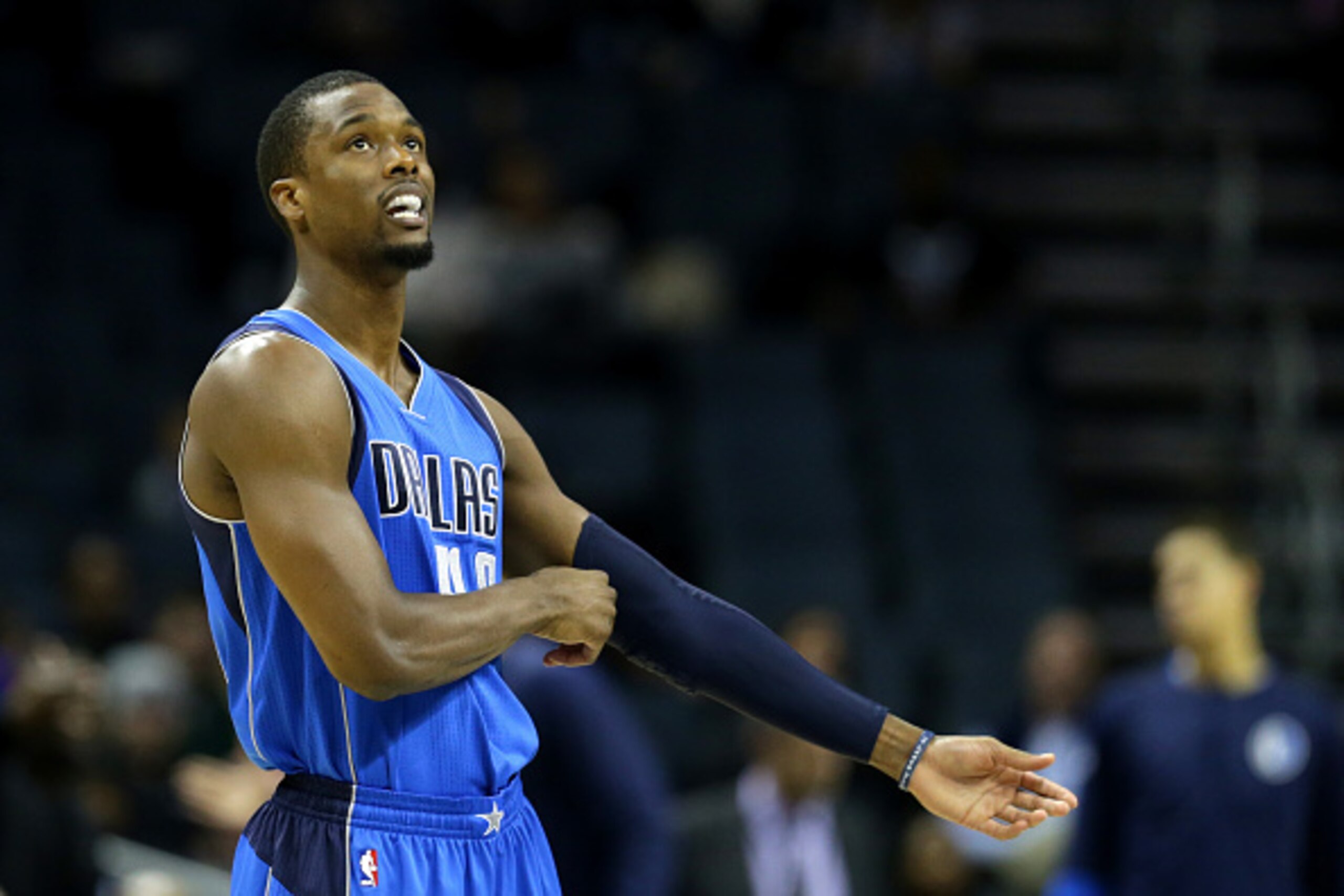
A 97-87 loss to the Charlotte Hornets is by no means a harbinger of doom, especially since Seth Curry, J.J. Barea and Dirk Nowitzki sat out of the Thursday night affair. But by only scoring 87 points, the Dallas Mavericks are continuing a troubling offensive trend.
This team just can't score.
At the conclusion of the contest, just 72 different performances in 2016-17 had seen a team fail to clear the 90-point benchmark—an average of 2.4 for each of the league's 30 squads. But this was Dallas' eighth such showing in 18 games.
Sure, the Mavericks had a cadre of players hit double figures. But how many of those were efficient outings?
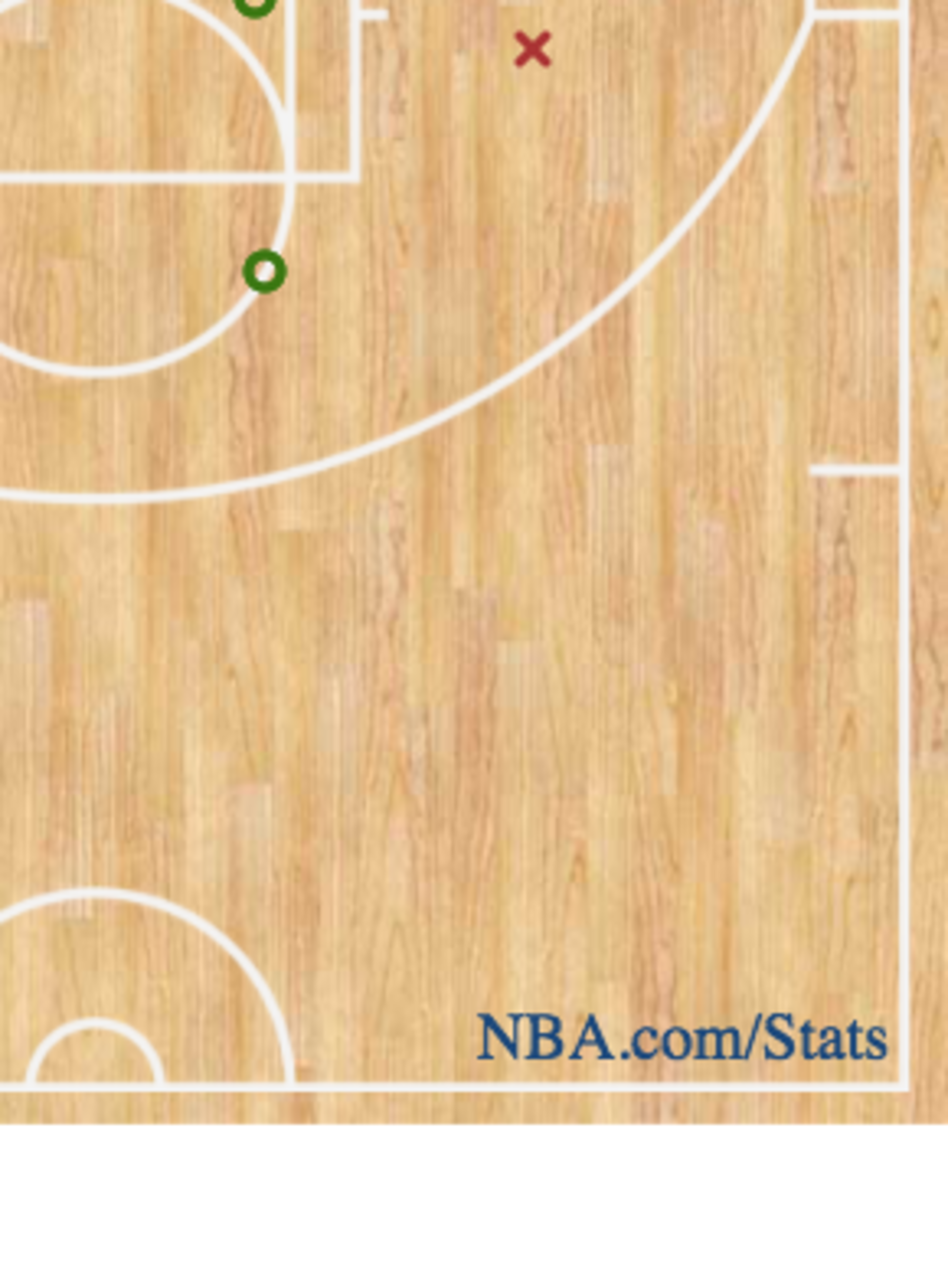
Harrison Barnes (17 points on 20 shots) certainly didn't qualify, and you can see above just how reliant he was on ineffective mid-range jumpers. That's now four times in the last five games he's failed to generate a single free throw—unacceptable for a player taking so many shots.
Joining him in the club were Deron Williams (14 points on 14 shots), Wesley Matthews (14 points on 15 shots) and Jonathan Gibson (11 points on 15 shots). Justin Anderson, who went for 15 points on 4-of-7 shooting from the field, a 3-of-3 outing from downtown and a 4-of-4 performance at the stripe, was the bright spot.
As a whole, Dallas could only muster up a 37.2 field-goal percentage after entering the game at a league-worst 41.1 percent. It recorded 18 assists while turning the ball over 11 times and generated just nine offensive rebounds in spite of the plethora of missed looks.
Prior to Thursday, the Mavericks had the worst offensive rating in the league, scoring just 98 points per 100 possessions. If we account for the league average (106.5), per NBA Math's methodology, they'd post an adjusted offensive rating of 92.02—better than only 10 teams in the Association's history.
That's now getting worse. According to NBA.com, they mustered up just 88.8 points per 100 possessions against Charlotte.
Whether the Mavericks look internally for improvement (giving Anderson and other youngsters more minutes) or seek new pieces in a trade, they have to do something. Otherwise, they might as well defy owner Mark Cuban's public statements and start tanking.
Stat. Sheet. Stuffer.

Let's just take a moment to marvel at Giannis Antetokounmpo. After all, he put together yet another masterpiece Thursday night, this time at the expense of the overmatched Brooklyn Nets.
During his Milwaukee Bucks' 111-93 victory, the Greek Freak exploded for 23 points, eight rebounds, eight assists, four steals and two blocks on 7-of-14 shooting. He recorded a goose egg in the turnover column, knocked down a pair of triples and did all this in just 30 minutes of run.
Then again, is that even a true explosion for the 21-year-old? After this latest outing, Antetokounmpo is averaging 22.8 points, 8.5 rebounds, 6.1 assists, 2.2 steals and 2.1 blocks.
Let's break that down, piece by piece.
The defensive stats alone are rather unique—just David Robinson and Hakeem Olajuwon have matched or exceeded both those marks throughout all of NBA history, and they were each 26 during their standout seasons.
But it's not like normal players score, rebound and dish out dimes like this, either. Only Larry Bird (six times), Wilt Chamberlain (twice), John Havlicek and Oscar Robertson (five times) have cleared the benchmarks set by Antetokounmpo in those per-game categories.
We've mentioned six Hall of Famers, but Antetokounmpo is the only member of both clubs. And scarily enough, it seems like he's still getting better.
Marvel at Russell Westbroook's constant triple-doubling. Scratch your head in an attempt to figure out James Harden's offensive excellence. Pick your jaw up off the floor after you look at the stellar, well-rounded lines of Anthony Davis, Karl-Anthony Towns and Kristaps Porzingis.
But don't forget about Antetokounmpo.
He's putting up some of the most unique numbers in NBA history. In fact, they may well be the most unique.
A Missing Piece
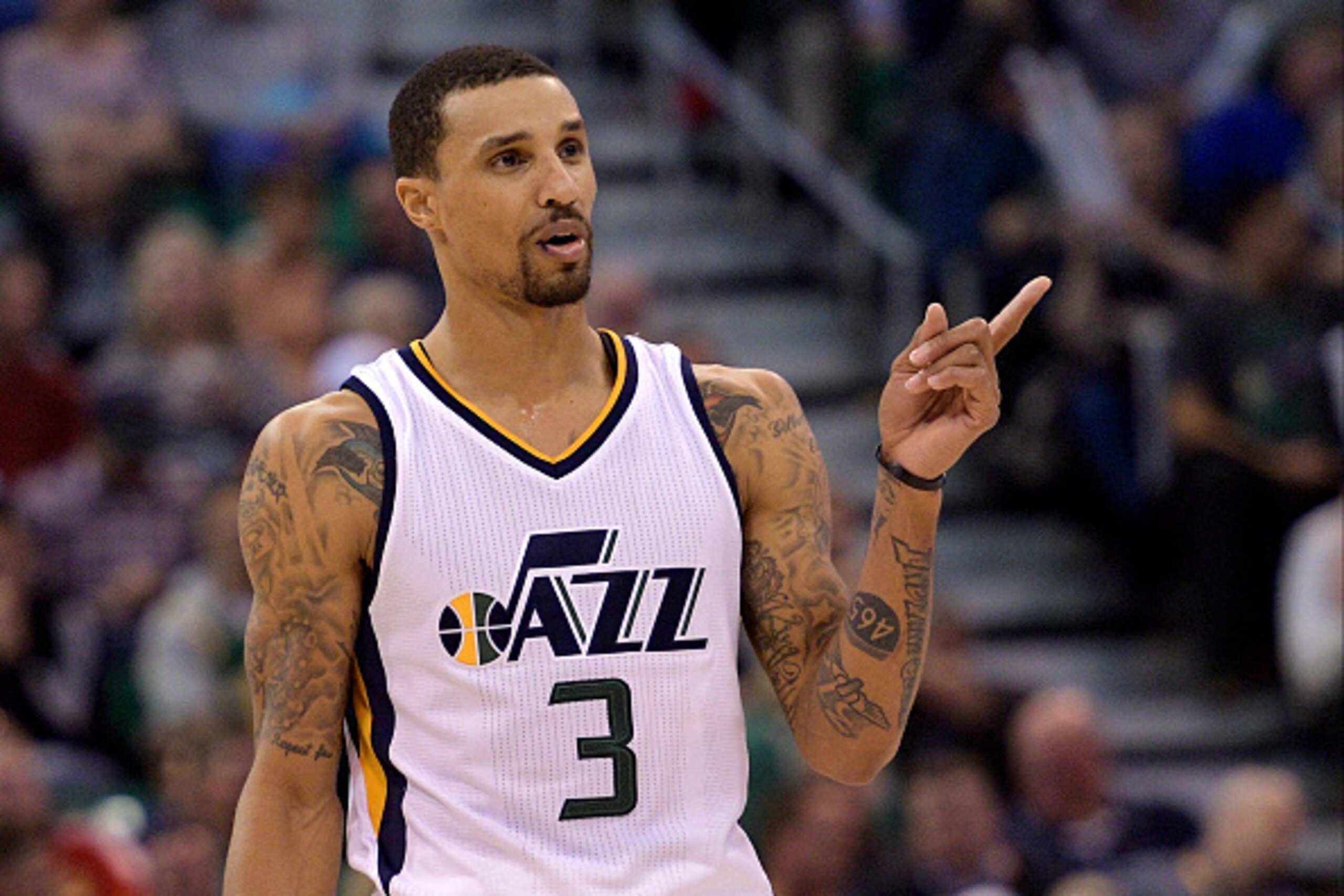
If it wasn't obvious before, it should be now: George Hill is undeniably vital to the success of the Utah Jazz.
While we could focus on the Miami Heat's unheralded bench players—Wayne Ellington (17 points on nine shots) and James Johnson (24 points, six rebounds and three assists on 11-of-15 shooting from the field)—during their 111-110 victory over the Jazz, it's important to remember what their opponents were missing.
Sure, the Heat were without Justise Winslow, Josh Richardson and Dion Waiters. But the Utah had to go into battle sans Hill, Derrick Favors and Rodney Hood. The latter two are both upper-tier contributors at their respective positions. But Hill has been the linchpin for the Jazz's success, as you can see in the chart below:
| With | 116.2 (No. 2) | 101.6 (No. 3) | 14.6 (No. 1) |
| Without | 103.4 (No. 22) | 103.6 (No. 6) | Minus-0.2 (No. 15) |
Utah should beat a shorthanded Miami team at home most nights, especially with the Heat coming off a victory over the Denver Nuggets on the front end of the elevated back-to-back. Without Hill, though, even that's a tough task.
"I think everybody has a little more responsibility," Gordon Hayward said at shootaround about his point guard's absence with a sprained toe, per Aaron Falk and Tony Jones of the Salt Lake Tribune. "He's been a huge part of our success this year. It's unfortunate he's injured again, but we have to find a way to pick it up without him."
The offense was able to impress in Hill's absence. But the defense, for once, looked lost.
Utah is still 11-9 on the season. It's been able to overcome plenty of injuries during the opening salvo. But this team has attainable aspirations of finishing near the top of the Western Conference.
Excuses can only be used so many times, no matter how legitimate they may be.
Adam Fromal covers the NBA for Bleacher Report. Follow him on Twitter: @fromal09.
Unless otherwise indicated, all stats are from Basketball-Reference.com, NBA.com or NBA Math and are current heading into games on Dec. 1.




.jpg?w=2560 "Jonathan Taylor Landing Spots 📍")


