Breaking Down New York Giants' Situation at Defensive End
After completing a thorough look at the New York Giants' offensive positions, let’s now begin breaking down the various positions on defense starting with the defensive ends.
2015 in Review
One word, ladies and gentlemen: Blech!
TOP NEWS

K9's Blunt Postgame Quote 😑
Rodgers Calls Out Owners After Paris Game
.jpg?w=2560 "LA Premiere of \"Chad Powers\"")
Latest Peyton-Colts Rumors
That’s right, the New York Giants defense, which heavily depends on the defensive front to generate a pass rush, was so dismal in getting much of anything done, the ripple effect could be felt all the way back to the defensive secondary and beyond.
Let’s start with the run defense, which allowed 121.4 yards per game, ranked 24th in the NFL.
According to TeamRankings.com. the Giants' run defense also allowed a whopping average of 6.5 first-downs via runs per game.
Want to talk about sacks? The Giants finished with 23 sacks, an average of just 1.4 sacks per game, placing them 30th in the league, per TeamRankings.com, just ahead of Buffalo and Atlanta in that category. That’s a sharp drop from the 47 they posted the year before and their lowest total since the turn of the century.

Of course, when evaluating the play of the defensive ends, it does need to be mentioned that Jason Pierre-Paul was being heavily counted on to provide the spark to this unit.
Unfortunately for the Giants, they put all their eggs in Pierre-Paul’s basket and all those eggs fell onto the floor when Pierre-Paul lost his index finger and part of his thumb in a July 4 fireworks accident.
Combine that with the year-long injury issues that third-rounder Owa Odighizuwa experienced and the Giants’ pass rush was dismal.
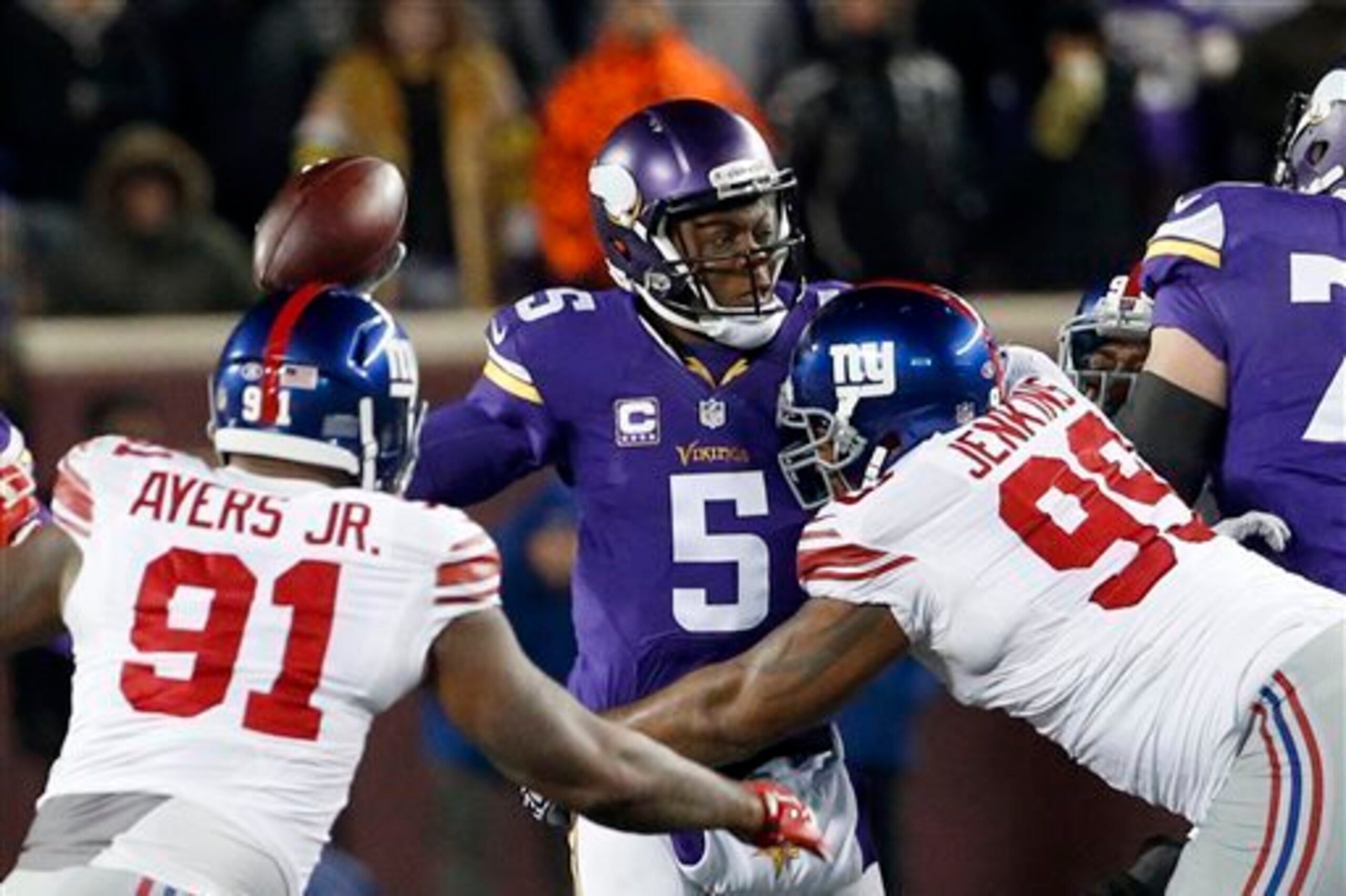
The team’s sack leader, now former defensive end Robert Ayers Jr., led the Giants with 9.5 sacks last year, tying him for 13th with Philadelphia’s Fletcher Cox.
That figure was also the first time since the 2013 season that a Giants' team sack leader didn’t record double digits and the first time New York didn’t have a sack leader in the top 10 league wide.
If all that’s not enough to convince you the showing up front was, well, “blech” (and on Friday I’ll break down how the defensive tackles’ play contributed to the disaster that was 2015), the Giants’ sacks per pass attempt was 3.61 percent, according to NFL Game Statistics and Information Systems, while the league’s average was 6.49 percent.
Want one piece of good news regarding the defensive ends? After logging just four batted passes in 2014, that total jumped up to 10 in 2015, with Pierre-Paul leading the defensive ends in that category with six.
That meant the defensive ends were getting their hands up to knock passes down even if they were stonewalled at the point of attack.
2016 Outlook: Where Can This Unit Improve?
Obviously, the pass rush is at the top of everyone’s list—the Giants defense lives and dies by its ability to rush the passer.
And by rushing the passer, that’s not strictly limited to sacks. Rather, that pass-rushing production also needs to include hurries and hits (backfield disruptions).
Per Pro Football Focus, Pierre-Paul managed just one sack and six hits while recording a team-leading 34 hurries in just half a season.
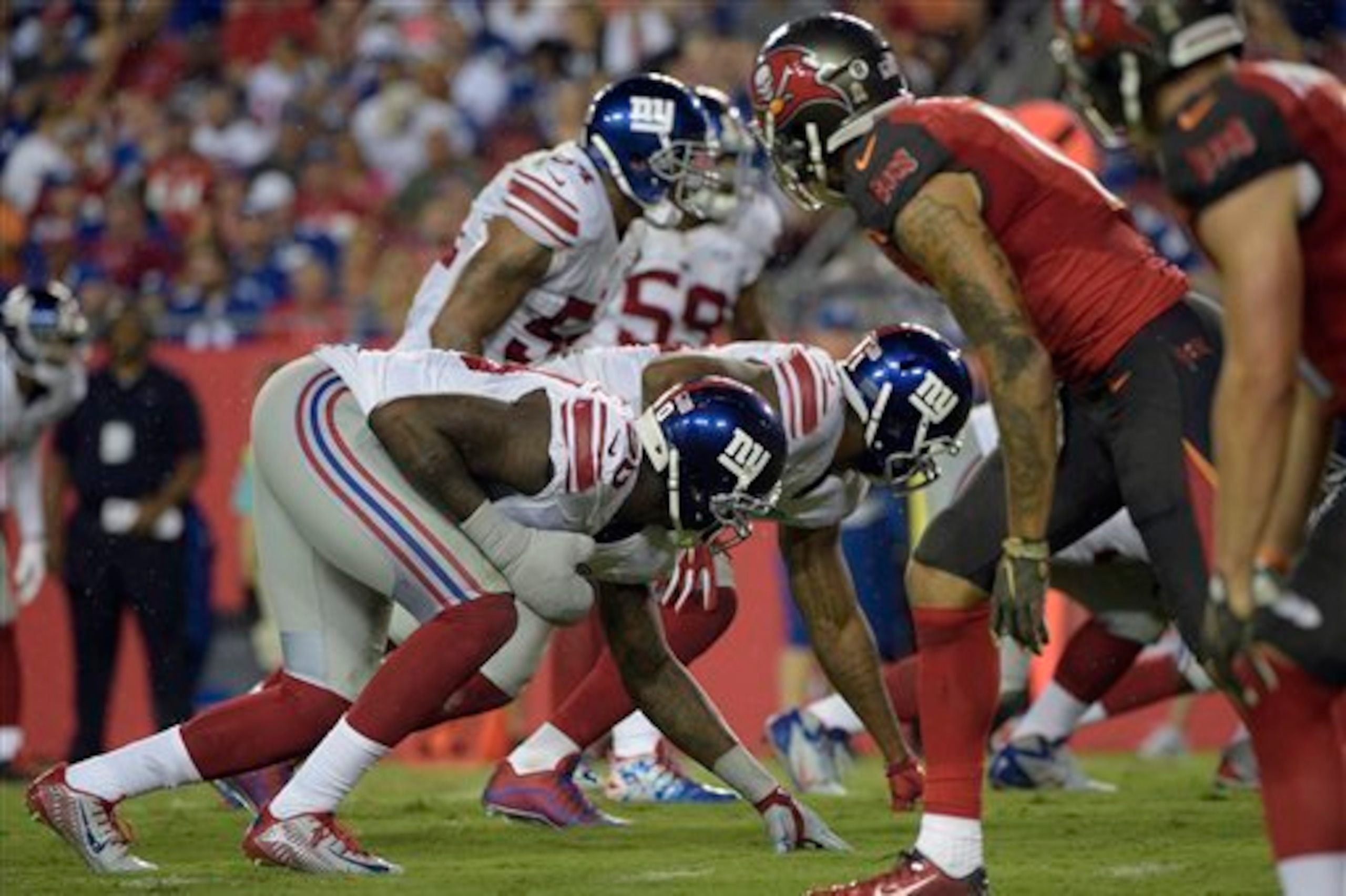
Ayers, who played in four more games than Pierre-Paul, finished two backfield disruptions shy of his teammate.
And just to get back to the run defense, there is certainly room for improvement there as well. Per Football Outsiders, the Giants’ defensive line,ranked 22nd overall, but it had their share of problems protecting the edges.
Opponents averaged 5.37 yards when running to the left end—30th in the NFL. The right side was a little better, with the Giants allowing opponents an average of 3.51 yards—19th in the league.
Still, both figures were either at or above the league averages of 3.60 on the left end and 3.51 on the right.
The X-Factor: Jason Pierre-Paul
Ask defensive end Jason Pierre-Paul if he can be the same player he was prior to his hand injury, and chances are he’ll tell you what he told reporters back in April.
“I am the player I used to be," he said. "There are just a couple of injuries here and there, but I’m OK. I want to be better than the player I was.”
The Giants sure hope he’s right.
In 2014, presumably healthy after back and shoulder issues were addressed, Pierre-Paul recorded 12.5 sacks, with nine of those sacks coming against offensive lines (Jacksonville, Tennessee, Washington, St. Louis and Philadelphia) that, per Football Outsiders, ranked in the bottom half of the league in pass blocking.
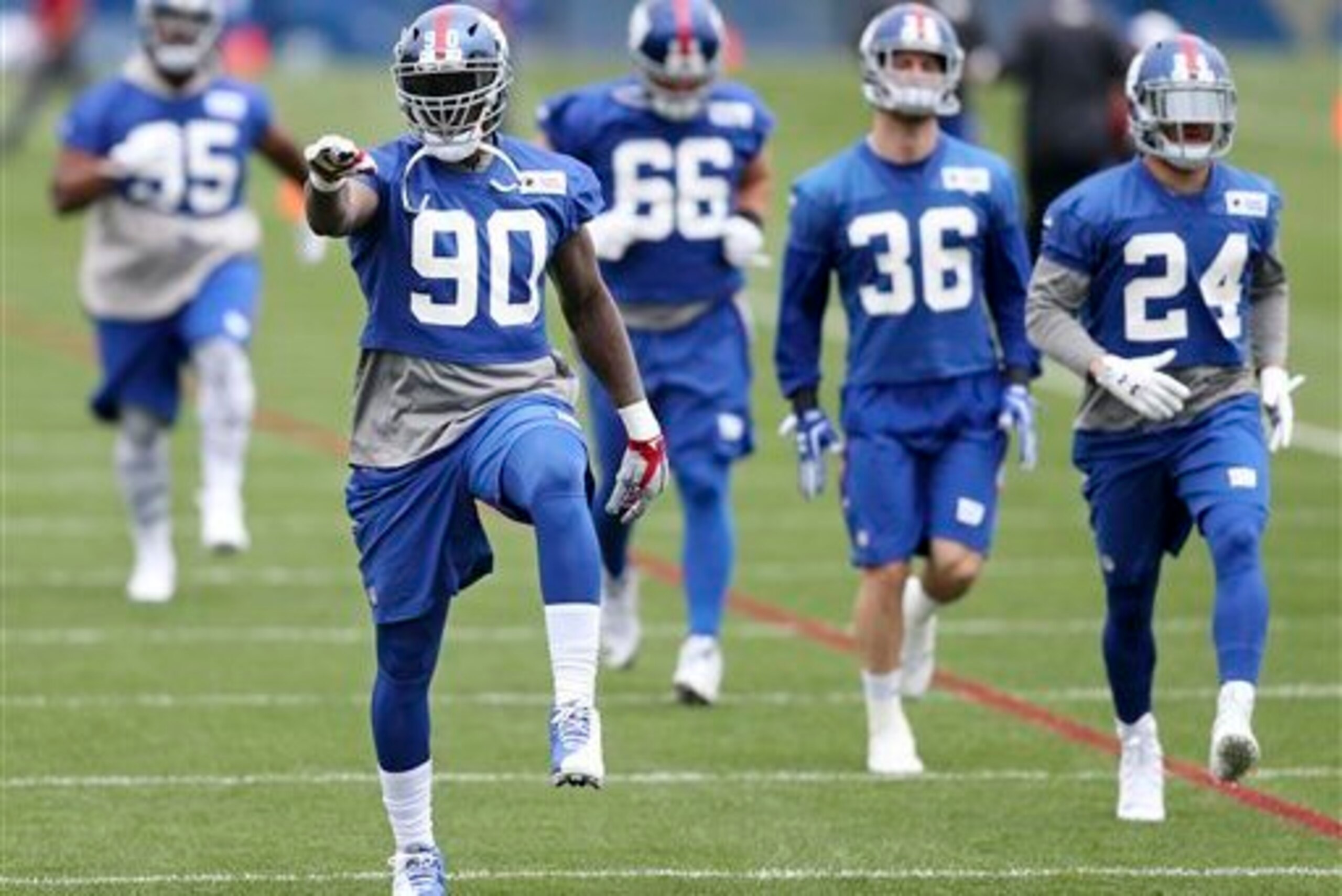
Since returning to the Giants after his hand injury, Pierre-Paul has displayed a newfound maturity that has been like night and day.
He seems more motivated than ever before to be the best player he possibly can, and routinely posts pictures and videos of himself working out via his Instagram account.
How all that eventually translates on the field remains to be seen.
While Pierre-Paul now has a specially made glove for his right hand, current offseason program rules don’t allow for contact, so there is still a matter of Pierre-Paul demonstrating he can grab and drag down quarterbacks and ball-carriers.
There is reason to hope, though, that he will be fine. In the team’s first OTA, he was able to pick off an Eli Manning pass, a play which he later told Kim Jones of the NFL Network he wouldn’t have been able to make last year with the club on his hand.
Questions
Who’s going to play that Justin Tuck role?
Former Giants defensive end Justin Tuck was such a student of the game and so versatile he lined up just about everywhere on the field—at defensive end, inside at tackle, in coverage—you name it.
Once Tuck left the Giants for Oakland, Robert Ayers took on that “Tuck” role, moving inside on pass-rushing downs, which is where he accumulated a fair number of sacks.
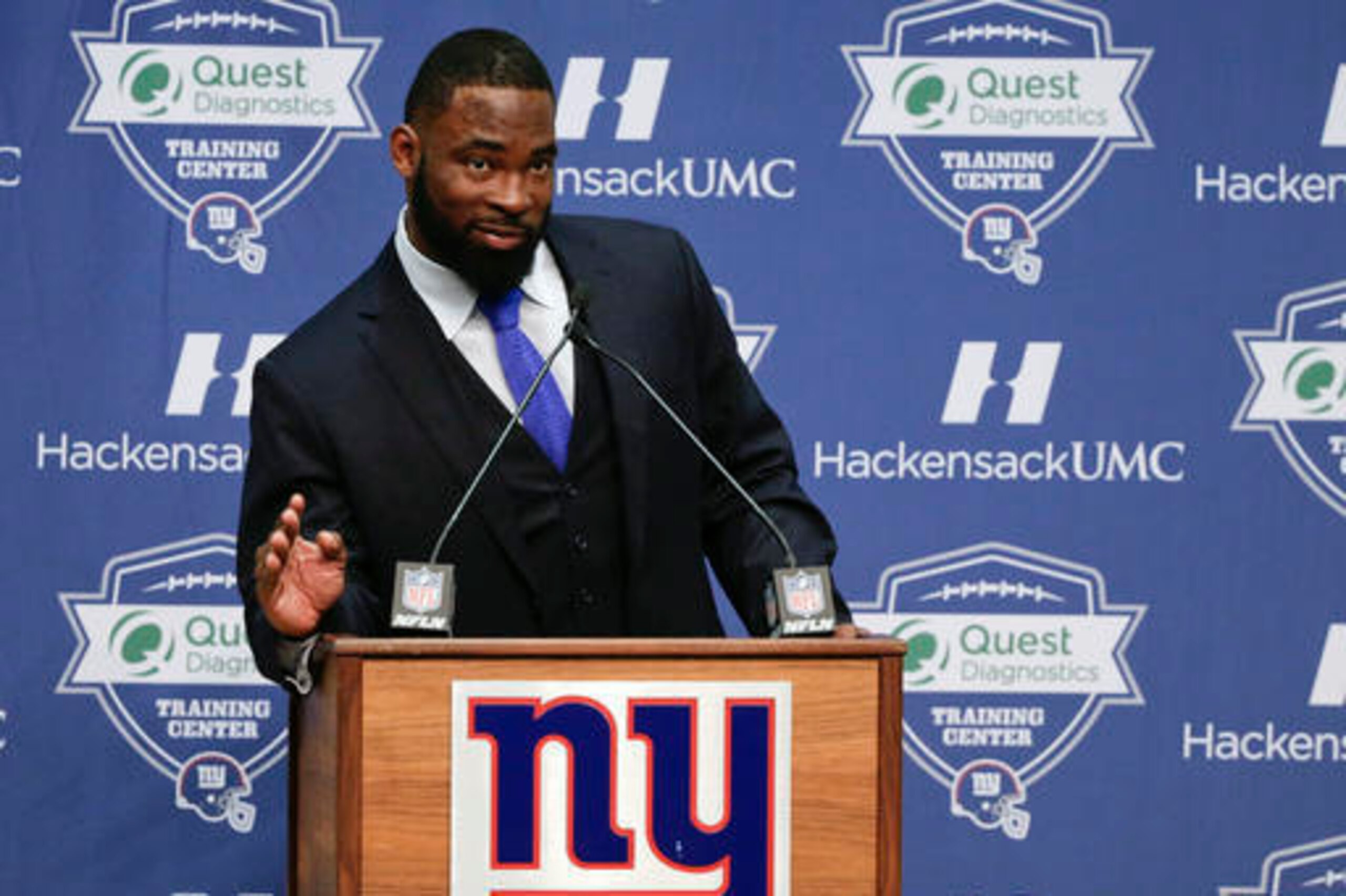
With Ayers now in Tampa Bay, the question becomes who will become the next Tuck—a versatile rover who can be lined up in multiple positions in order to gain the best matchups.
The early odds point to Jason Pierre-Paul, who had experience playing defensive tackle a few years back for the Giants, on passing downs.
Pierre-Paul has also lined up at both left and right defensive end, whereas Vernon has been primarily on the right side, while second-year man Owa Odighizuwa is still getting his feet wet.
What can they expect out of Owa Odighizuwa?
They’re certainly going to find out if in second-year player Owa Odighizuwa they at least have a third viable pass-rusher who, if Pierre-Paul moves on after this year, can ultimately move into the starting lineup.
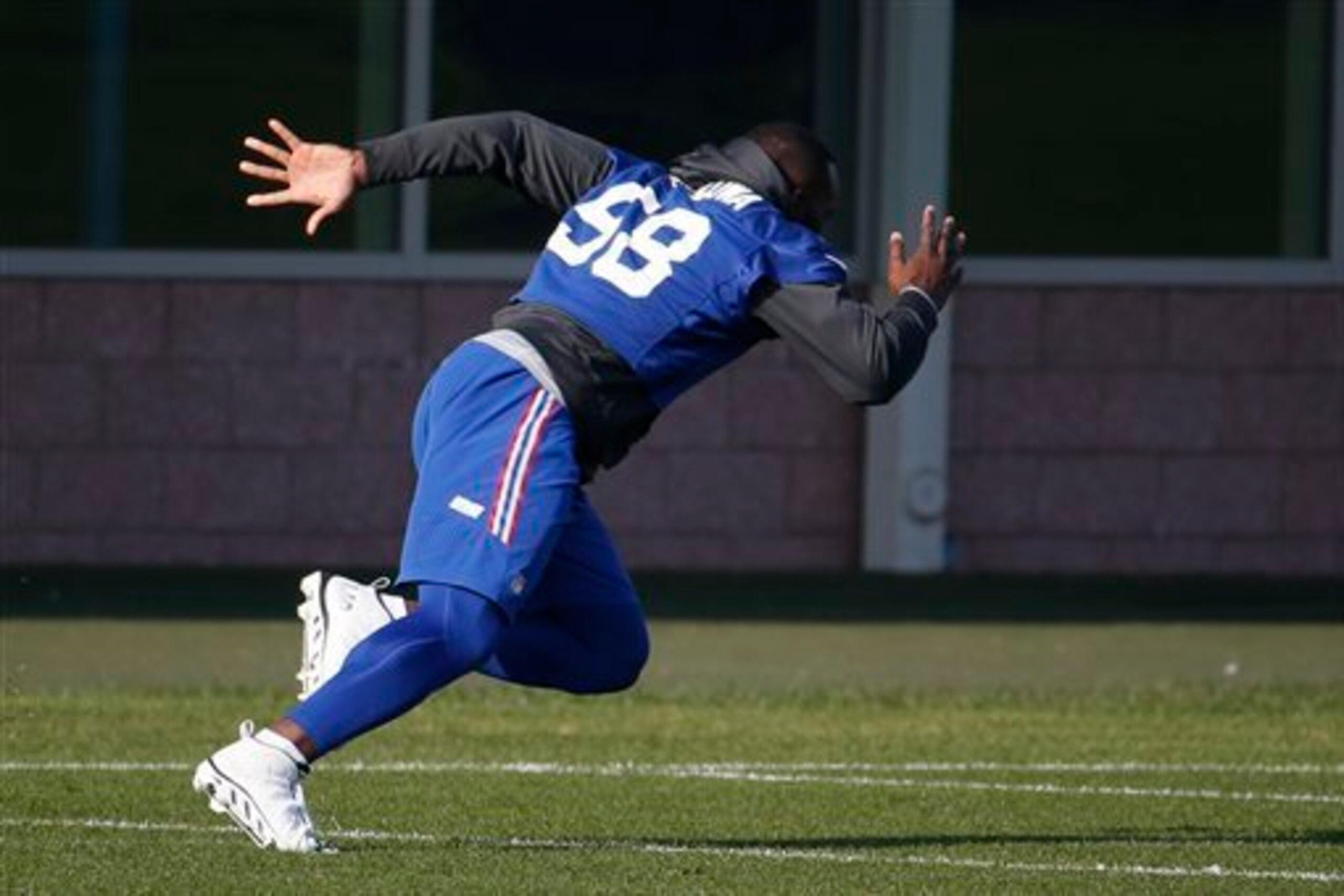
Odighizuwa spent the majority of his rookie season on the temporary injured reserve list and never really got untracked. However, he’s completely healthy and raring to go.
He told me during the media session at the team’s first OTA that he dropped some weight in order to improve his burst.
He also shared that he had a chance early last year to pick the brain of former Giants defensive end Osi Umenyiora, who is Odighizuwa’s idol.
Umenyiora shared some tips and tricks with Odighizuwa on how to read his keys, ensure he times that first step and how to become the pass-rushing force the Giants missed last year.
The key for Odighizuwa now is to stay on the field and put all those tips into practice.
If he can do that and if Pierre-Paul and Vernon come as advertised, the Giants will have three solid pass- rushers they can unleash at any given time, thus giving defensive coordinator Steve Spagnuolo a lot more options to explore with his personnel packages.
Who’s going to be the fourth defensive end?
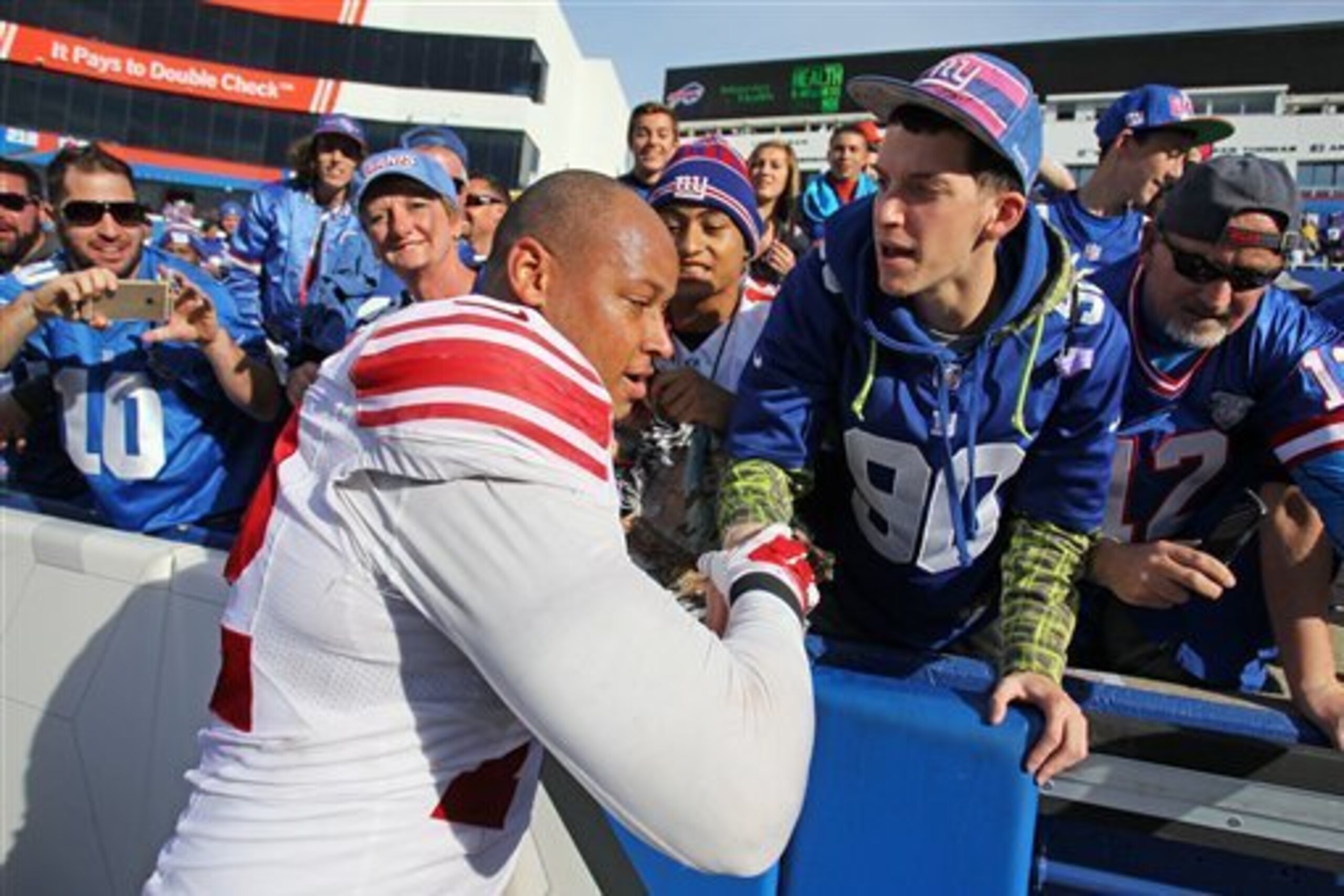
In the past, it probably wouldn’t have been a stretch to say Kerry Wynn, now entering his third season, was a lock for a roster spot.
However, while Wynn has always been an asset in run defense, his pass-rushing skills still haven’t fully developed.
Then there was a second-half drop-off last season in his showing against the run. In the first half of the year, Wynn recorded 40 of his 53 total tackles.
In the second half of the season, the most tackles he had in a game came in Week 12 when he recorded five, none of which were tackles for loss.
If undrafted free agent Romeo Okwara steps up and has a strong summer camp, Wynn’s spot could be in jeopardy.
Is Olivier Vernon the answer they’ve been looking for?
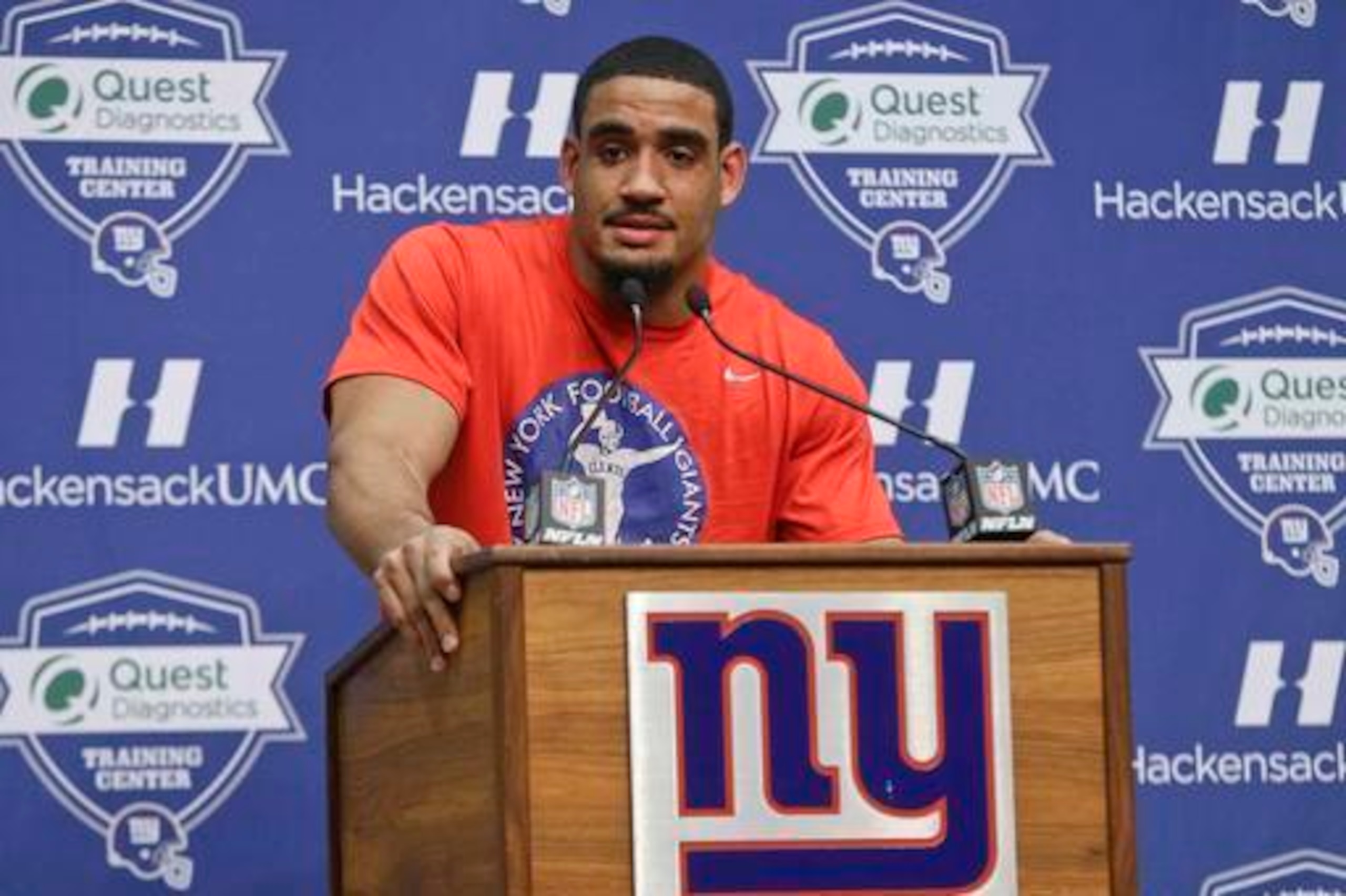
They believe so, and the stats would seem to support that. In the 25-year old Vernon, the Giants got themselves a three-down player who should be able to handle the run as well as the pass rush.
According to Pro Football Focus, Vernon’s production against both the run and the pass has improved every year since 2013 when measured against other 4-3 defensive ends who have taken at least 75 percent of their team’s snaps.
In that three-year span, Vernon has finished in the top-10 among 4-3 defensive ends with at least 75 percent of their team’s run defense snaps each year; as a pass-rusher, last year, Vernon finished with a 12.9 pass-rushing productivity score, second behind Seattle’s Michael Bennett.
Key Newcomer
Olivier Vernon, 6’2”, 275 pounds, Miami
The Giants went all-in on their pursuit of 25-year-old Olivier Vernon, a third-round pick of the Miami Dolphins in 2012.
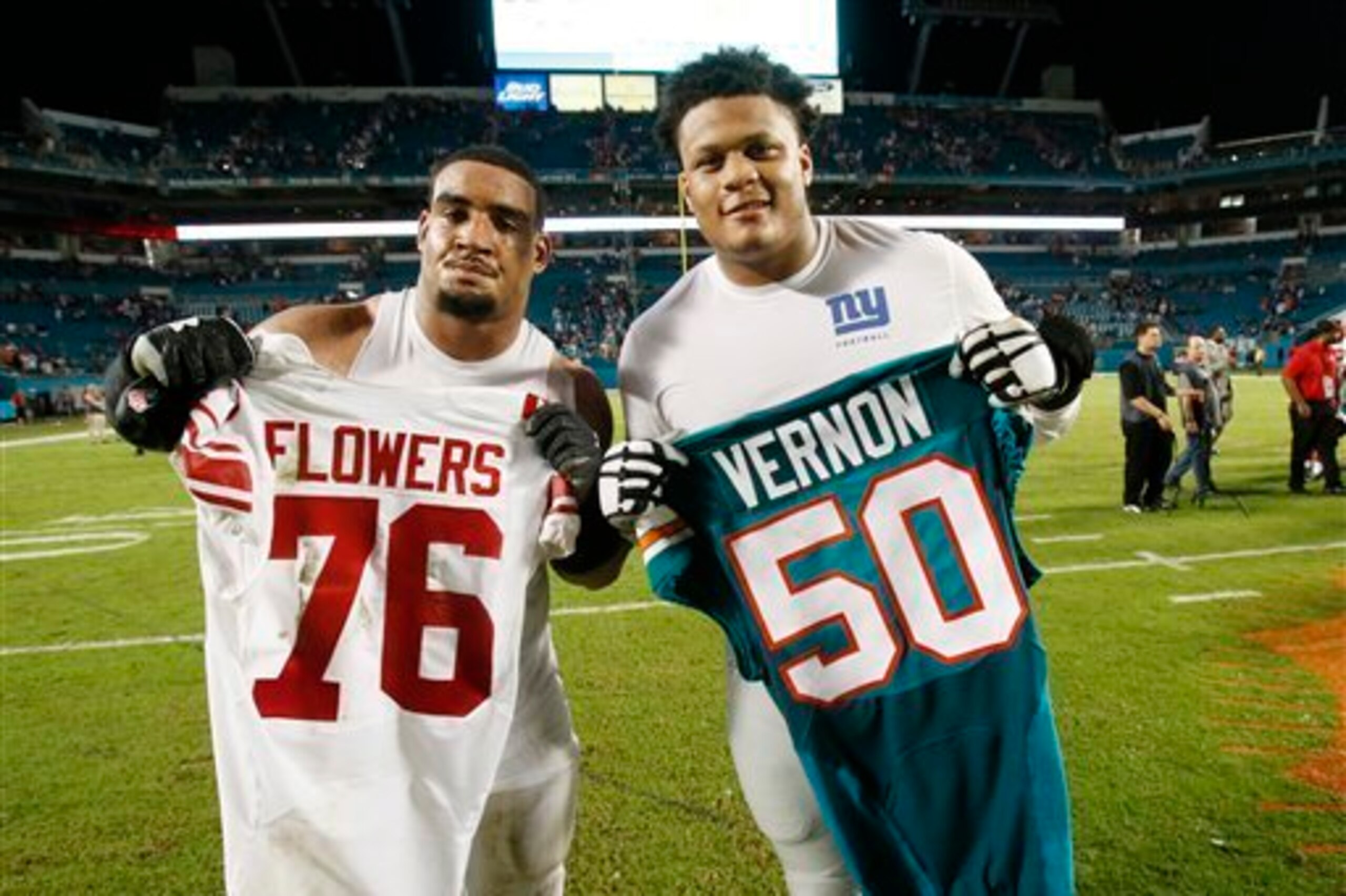
New York wasn’t alone in their pursuit of arguably the best pass-rusher on the 2016 free-agent market, outlasting Jacksonville to land Vernon’s services to what Paul Schwartz of the New York Post reported was the richest deal in NFL history for a defensive end as far as guaranteed money ($52 million, per Spotrac) and per-year average ($17 million).
Vernon, who comes to the Giants with a clean injury history, represents a mulligan of sorts for the Giants whose own third-round pick in 2013, defensive end Damontre Moore, never developed into the player they thought he might become.
Moore was cut by the Giants in December after he engaged in what Pro Football Talk characterized as a fight with then-teammate Cullen Jenkins over a pair of Beats by Dre headphones.
Patricia Traina covers the Giants for Inside Football, the Journal Inquirer and Sports Xchange. All quotes and information were obtained firsthand unless otherwise sourced. Advanced stats courtesy of Pro Football Focus.
Follow me on Twitter @Patricia_Traina.
.jpg?w=2560)


.jpg?w=2560 "Landing Spots for Trade Candidates 📍")