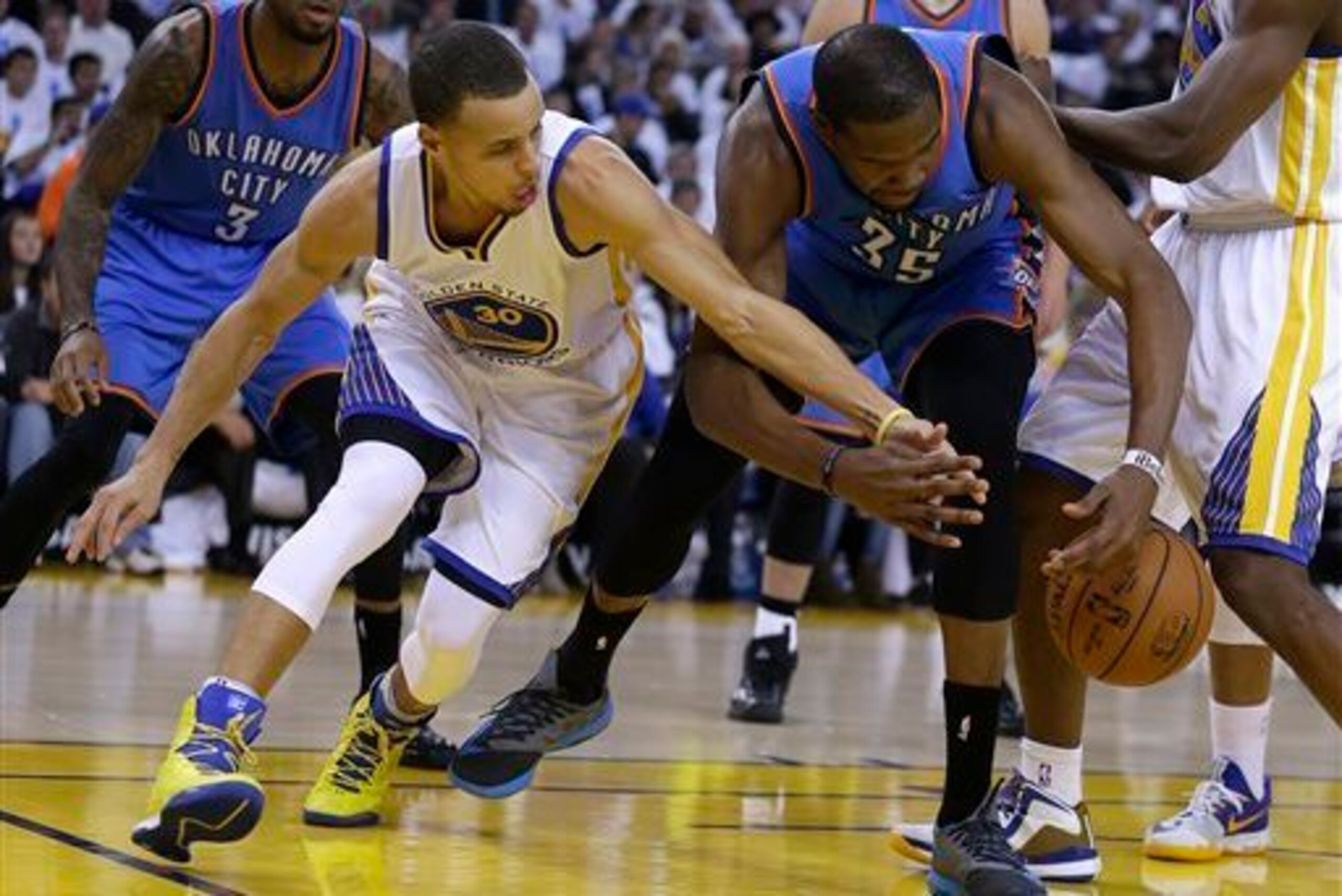

Ranking Every NBA Team's Starting 5, Post-2016 Trade Deadline
A relatively quiet trade deadline left most of the NBA's starting lineups intact after the All-Star break.
The Detroit Pistons, Phoenix Suns, Washington Wizards, Charlotte Hornets, Memphis Grizzlies, Los Angeles Clippers and Orlando Magic are among those with significant adjustments to make during the second half of the 2015-16 season.
For everyone else, it's business as usual until mid-April, with a few tweaks to bench units here and there. So, the race for the Larry O'Brien Championship Trophy is basically right where we left it, though the Clippers, Cleveland Cavaliers and Oklahoma City Thunder made moves to strengthen their pursuit of the ultimate prize.
What if we rank the entire league based solely on the expected starting fives? To paint that picture, we dug into lineup data on NBA.com and sorted them all from worst (30th) to first.
30. Philadelphia 76ers
1 of 30
The Five: Ish Smith—Nik Stauskas—Robert Covington—Nerlens Noel—Jahlil Okafor
Net Rating: Minus-24.7 points per 100 possessions (38 minutes)
It's only fitting that the worst team in the NBA would also run out the league's worst starting lineup.
In truth, the most recent iteration of Brett Brown's first five—unaffected by Joel Anthony's arrival and JaKarr Sampson's brief exile—might not be as bad as the numbers suggest. Statistically speaking, 38 minutes is too small a sample on which to judge the starting quintet in any meaningful way.
Still, between Stauskas' subpar shooting (37.6 percent from the field, 33.3 percent from three) and the awkward Okafor-Noel pairing up front, the Sixers can't help but stink from the opening tip.
(And if you thought Noel and Okafor were already weird together, just wait until Joel Embiid gets back from Qatar.)
29. Los Angeles Lakers
2 of 30
The Five: D'Angelo Russell—Jordan Clarkson—Kobe Bryant—Julius Randle—Roy Hibbert
Net Rating: Minus-14.6 points per 100 possessions (289 minutes)
Head coach Byron Scott hasn't called upon his opening-night fivesome to start since a 20-point loss to the Detroit Pistons on Dec. 6. That streak could come to an end soon, courtesy of Russell's improvement. A few more games of solid scoring and smart decisions should vault the rookie past Lou Williams on Scott's depth chart.
"Next time I put him in starting lineup, he’ll get a chance unless he’s playing terrible," Scott said, per the Los Angeles Daily News' Mark Medina. "If he’s playing reasonably well, he’ll get a chance to close them out."
Randle has already earned a permanent place at power forward in Larry Nance Jr.'s absence with 12.8 points, 11.8 rebounds and 1.8 assists per game with 45.8 percent shooting.
Not that the Lakers will be any better off this season. They're still slogging through Bryant's farewell tour, for better or worse. But as far as the long-term trajectory of the Purple and Gold goes, the return of Randle and Russell to the starting lineup before the end of 2015-16 would be a good sign for L.A.'s rebuild.
28. Phoenix Suns
3 of 30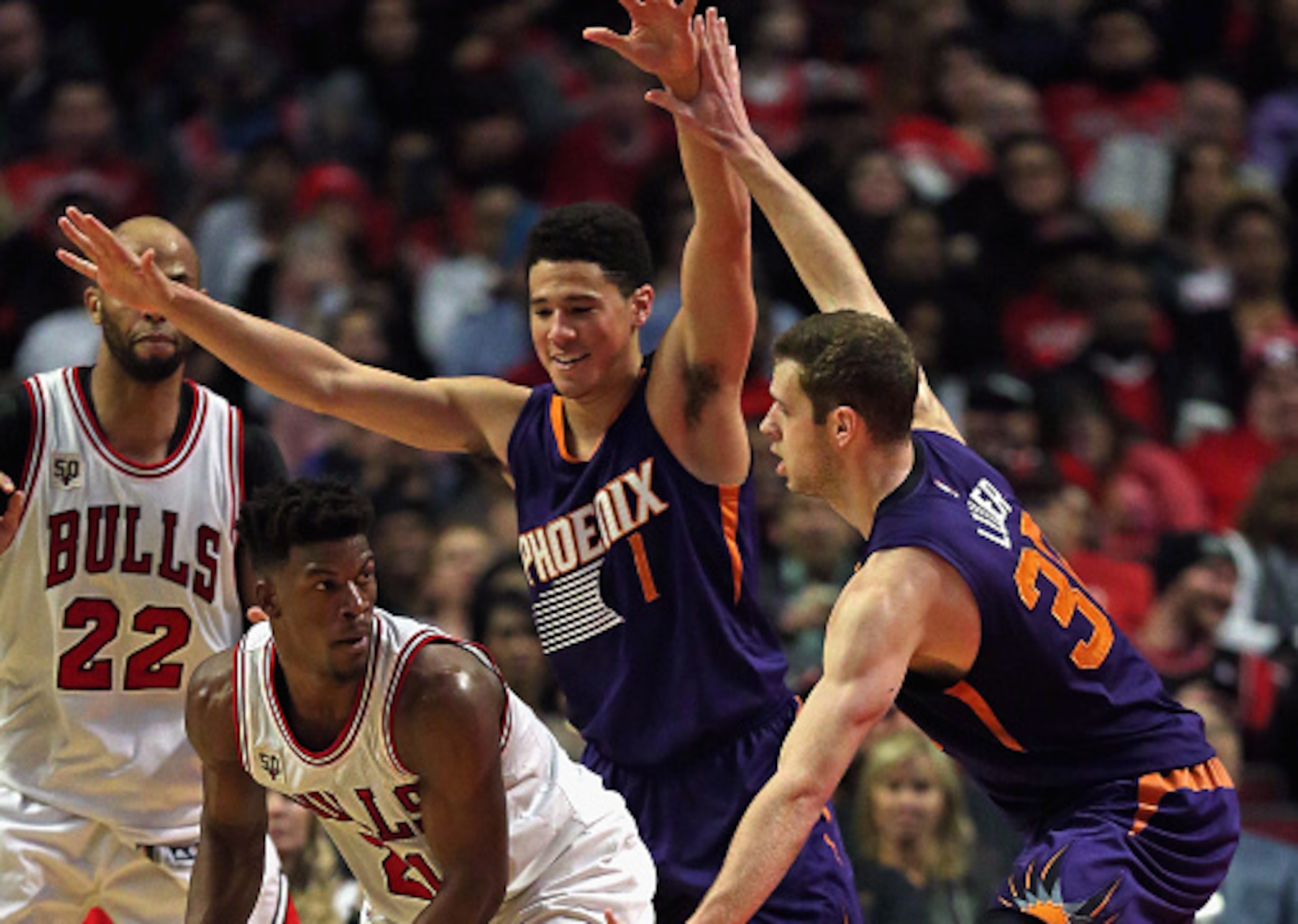
The Five: Archie Goodwin—Devin Booker—P.J. Tucker—Jon Leuer—Tyson Chandler
Net Rating: Minus-78.5 points per 100 possessions (eight minutes)
Eric Bledsoe is done for the year. Brandon Knight remains without a timetable for his return from a sports hernia, and Markieff Morris is (finally) gone. For the time being, that means Suns interim coach Earl Watson will have to lean on his Kentucky B-team of Goodwin and Booker to fill the backcourt, while Leuer gets the first crack at power forward ahead of Mirza Teletovic.
"For us, it’s an opportunity for Jon Leuer to step up," Watson said, per the Arizona Republic's Paul Coro. "For Mirza, who we all love to see play and he’s playing great lately, it’s an opportunity for us to be more creative with him. We’re going to need him scoring."
The Suns will need Knight's production, too, as soon as he's ready to play again. The sun has already set on Phoenix's season, but there's still plenty of time for this team to grow as it looks ahead to 2016-17.


27. New Orleans Pelicans
4 of 30
The Five: Norris Cole—Eric Gordon—Dante Cunningham—Anthony Davis—Omer Asik
Net Rating: Minus-3.4 points per 100 possessions (25 minutes)
Gordon is back at practice, which means he should return to game action from a fractured finger soon. That's good news for the New Orleans Pelicans, whose plague of injuries swept away Tyreke Evans for the rest of the season while Gordon was recovering.
Head coach Alvin Gentry will have some options on the wing once Gordon returns. He could stay big with Cunningham, go a bit more conventional with Alonzo Gee (plus-26.3 points per 100 possessions in 18 minutes with Norris Cole, Gordon, Davis and Asik) or throw the newly re-signed Bryce DeJean-Jones back into the mix.
Whichever path Gentry takes, the Pelicans, 12th in the West, won't have much time or margin for error if they're to leapfrog their way back into the playoffs.
26. Milwaukee Bucks
5 of 30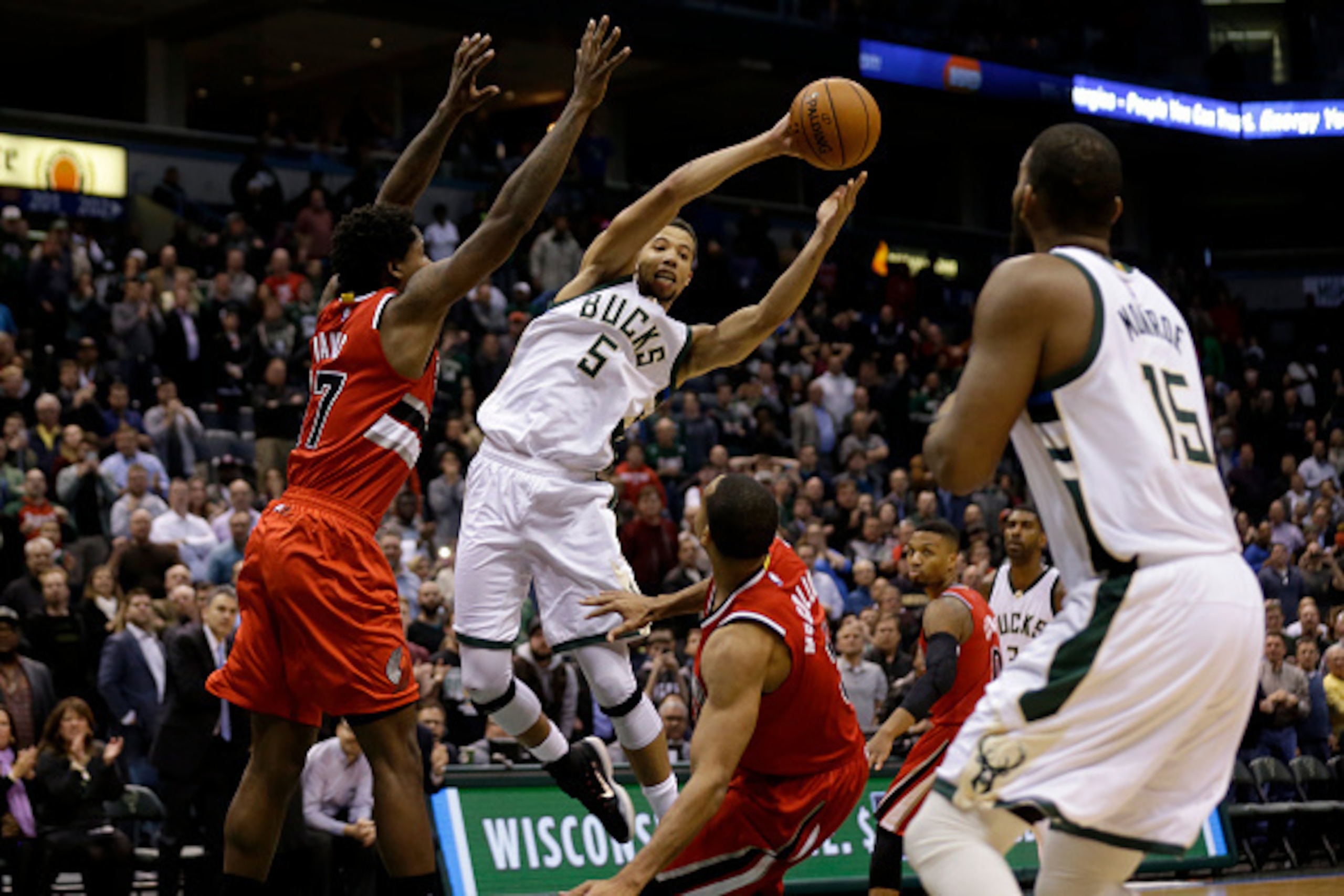
The Five: O.J. Mayo—Khris Middleton—Giannis Antetokounmpo—Jabari Parker—Miles Plumlee
Net Rating: Minus-39.8 points per 100 possessions (16 minutes)
Does Jason Kidd really plan to bring Michael Carter-Williams and Greg Monroe off the bench for the rest of the season? It's an unusual look, to be sure, but one that makes sense given Milwaukee's deadline musings.
According to ESPN's Marc Stein, the Bucks were among a handful of teams in the mix for Dwight Howard. And per multiple reports, Milwaukee made runs at Ricky Rubio and Jeff Teague.
If that's the case, don't be surprised if the Bucks make moves involving Carter-Williams and Monroe this summer.
25. Houston Rockets
6 of 30
The Five: Patrick Beverley—James Harden—Trevor Ariza—Corey Brewer—Dwight Howard
Net Rating: Minus-16 points per 100 possessions (119 minutes)
"We still feel good about this group," Houston Rockets general manager Daryl Morey told The Vertical's Chris Mannix after the trade deadline came and went.
Why does he feel good when Houston is on the outside of the Western Conference playoff picture? Because it's largely the same collection of talent that cracked last year's conference finals and will be poised to add talent via free agency this summer.
That doesn't change much for the Rockets now. And Morey's lone significant move—trading Donatas Motiejunas and Marcus Thornton to Detroit—did not shake up the makeup of Houston's starting five.
On the other hand, perhaps he should be worried. The Rockets have been awful whenever Harden and Howard have had Beverley, Ariza and Brewer at their side, which has been the case since late January. Dealing away Motiejunas and Thornton for little more than draft picks leaves Houston that much thinner for what could be a grueling stretch run.
24. Minnesota Timberwolves
7 of 30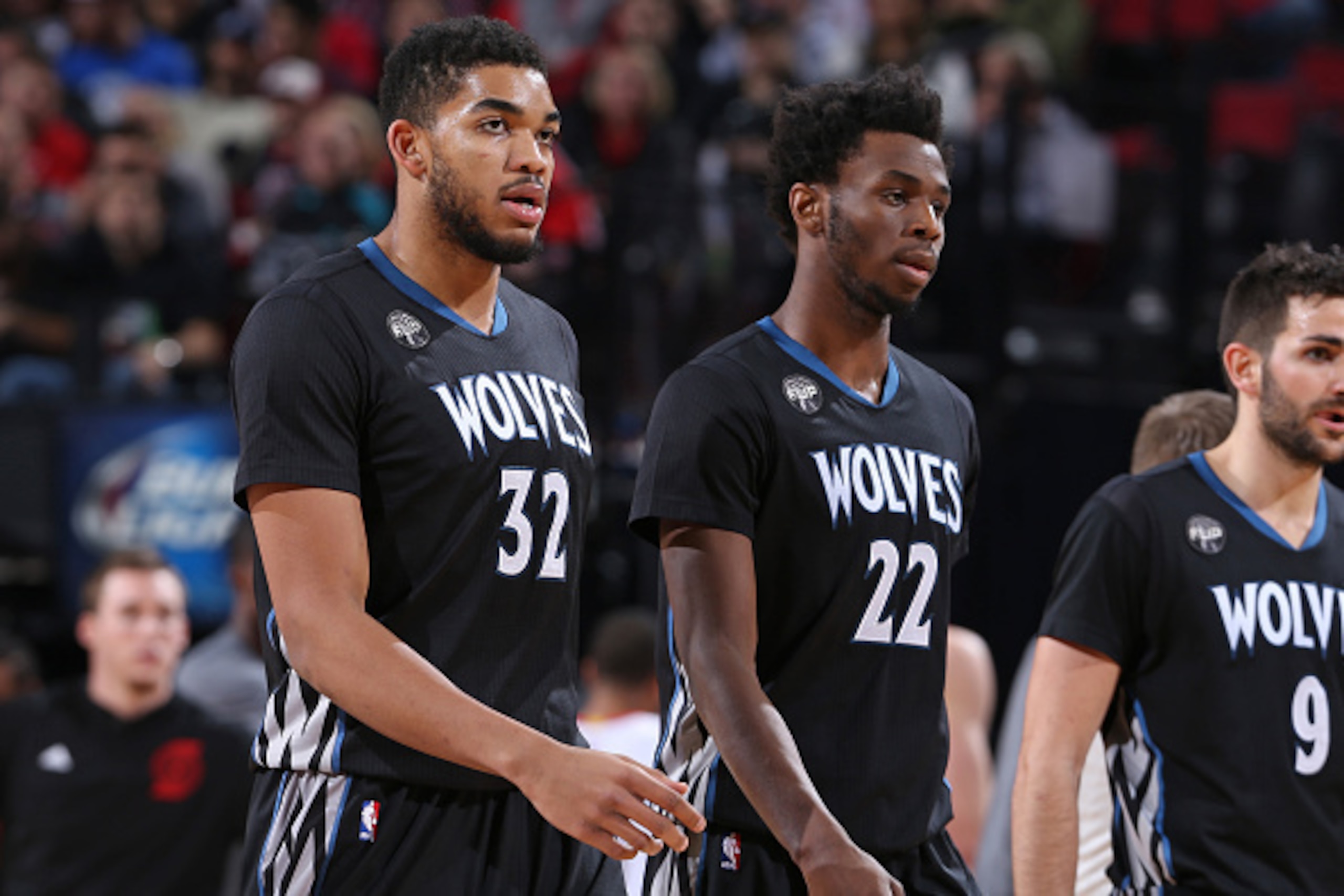
The Five: Ricky Rubio—Andrew Wiggins—Tayshaun Prince—Karl-Anthony Towns—Gorgui Dieng
Net Rating: Minus-3.2 points per 100 possessions (217 minutes)
If Kevin Garnett were healthy, the Timberwolves could boast one of the best starting fives in the league. According to NBA.com, Minnesota's most used lineup—with Garnett at power forward next to Karl-Anthony Towns, Andrew Wiggins, Ricky Rubio and Tayshaun Prince—has outscored its opposition by 10.7 points per 100 possessions.
But Garnett's nagging leg injury has held him out since late January and could keep him sidelined for a while longer. In the meantime, the Wolves will likely trudge ahead with Dieng, a productive young role player, albeit as an overall negative.
Not that Dieng is the problem, per se. For all that Prince brings to the table as a veteran mentor to Minnesota's Timberpups, the team may be better off spreading around the 35-year-old's minutes.
With Zach LaVine, the league's two-time dunk champion, in Prince's place, the Wolves have been 3.8 points per 100 possessions better than their foes. With Shabazz Muhammad, another former Bruin, subbing for Prince, that number jumps to 30.2 points per 100 possessions.
In any case, it may be time for coach Sam Mitchell to turn his full attention to the Wolves' future now that their 2015-16 season is all but lost.
23. Orlando Magic
8 of 30
The Five: Elfrid Payton—Victor Oladipo—Evan Fournier—Aaron Gordon—Nikola Vucevic
Net Rating: Minus-1.2 points per 100 possessions (91 minutes)
Aaron Gordon started 11 straight games for the Magic before the All-Star break. The pre-deadline ousters of Tobias Harris and Channing Frye should only further secure the high-flying forward's spot in Scott Skiles' preferred lineup.
Ersan Ilyasova and Brandon Jennings, who arrive in central Florida as recompense for Harris, are both proven veterans capable of starting. Ilyasova, in particular, started all 52 of his games in Detroit this season and brings the sort of shooting touch (36.3 percent from three) that the Magic so desperately need—and that Gordon (29.9 percent from three) can't reliably provide just yet.
That being said, Harris (31.1 percent from three) wasn't exactly a three-point threat either. So long as Gordon continues to explore his upside as part of a young, improving group, the Magic could make some noise on the outskirts of the East's playoff picture—perhaps enough so to attract a marquee free agent or two this summer, per Sporting News' Sean Deveney.
22. Memphis Grizzlies
9 of 30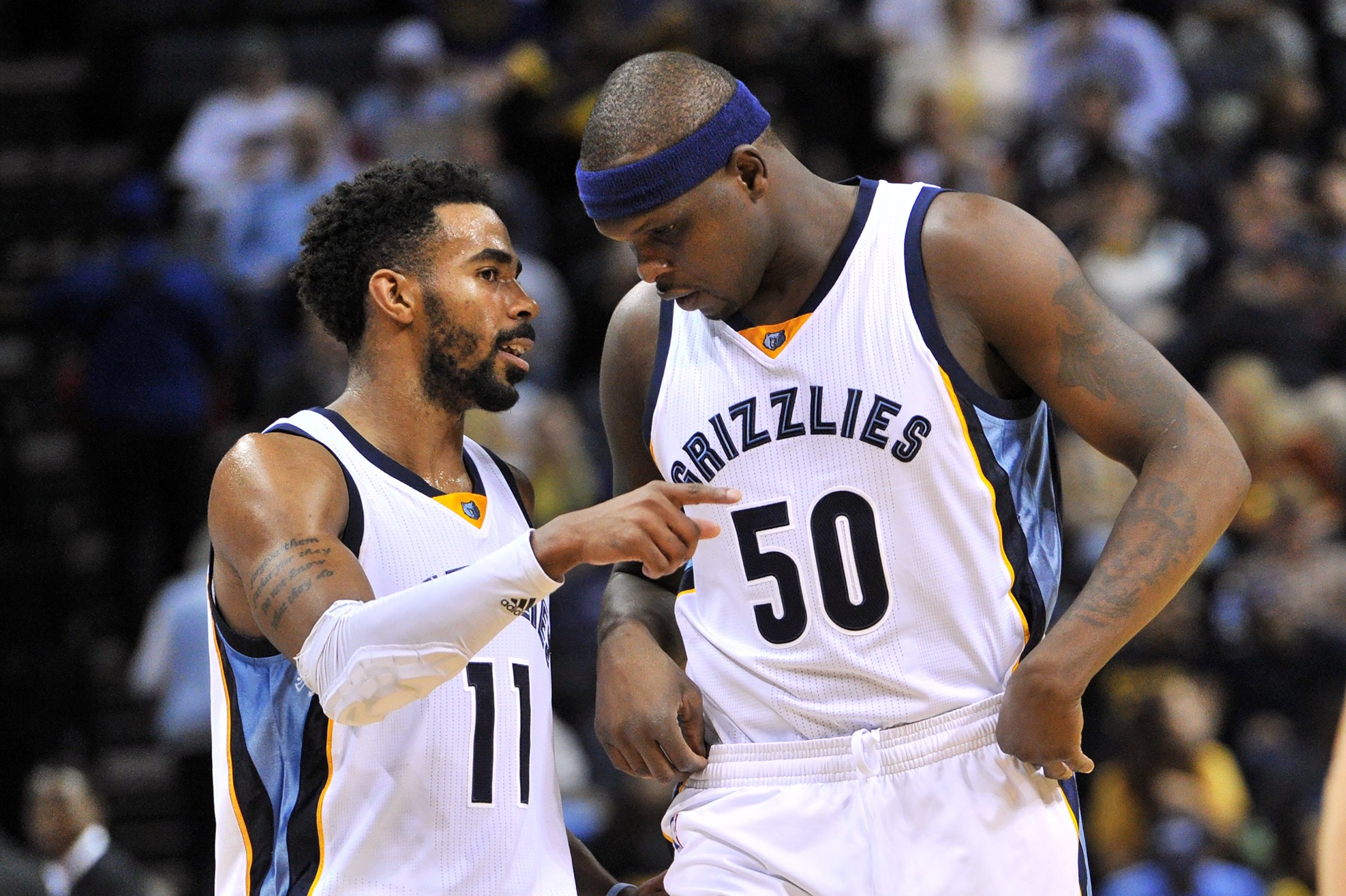
The Five: Mike Conley—Matt Barnes—Tony Allen—Zach Randolph—Chris Andersen
Net Rating: N/A
It's difficult to predict who Dave Joerger will pick to replace the departed Courtney Lee and the injured Marc Gasol to refill his starting five.
Will Joerger install Matt Barnes next to Conley? Could he keep JaMychal Green as Gasol's placeholder?
Or will he put Memphis' newest members to work? P.J. Hairston and Lance Stephenson figure to get looks at the 2 at some point. The same goes for Birdman at center. Those three could bring some much needed attitude and toughness to Memphis' operation.
"We have to be more nasty and play better defense," Conley told the Memphis Commercial Appeal's Ronald Tillery.
However things shake out in the River City, the Grizzlies figure to settle on a starting five that has never played significant minutes together.
21. Denver Nuggets
10 of 30
The Five: Emmanuel Mudiay—Gary Harris—Danilo Gallinari—Kenneth Faried—Nikola Jokic
Net Rating: Minus-0.4 points per 100 possessions (232 minutes)
There's plenty of promise packed into coach Michael Malone's fave five—which wasn't touched by the trade that sent Randy Foye to OKC and brought Steve Novak and D.J. Augustin to Denver.
Mudiay has started to find his footing as a bona fide NBA point guard since returning from a sprained ankle (2.1 assists to one turnover).
Jokic, another rookie, has drawn high praise for his skills from, among others, Bleacher Report's Adam Fromal: "He's one of the best rookies we've seen in a long time. This might be the first time you're hearing about him, but it won't be the last."
Harris (11.1 points, 36.5 percent from three) is showing plenty of promise after an injury-plagued rookie campaign. Faried (13 double-doubles) remains a productive, if limited, power forward. And Gallinari, now two years removed from major knee surgery, is scoring (19.7 points) and rebounding (5.4 boards) more than he ever has.
In time, these five could form the foundation of a perennial playoff contender in the Mile High City. For now, their proximity to the postseason fringes should inspire hope for the future.
20. Brooklyn Nets
11 of 30
The Five: Donald Sloan—Wayne Ellington—Joe Johnson—Thaddeus Young—Brook Lopez
Net Rating: Plus-1.2 points per 100 possessions (356 minutes)
Joe Johnson seems like a strong buyout candidate. But until the Brooklyn Nets pony up to push him out, we'll assume he's tops among shooting guards in the Big Apple's biggest borough.
As bad as Brooklyn has been this season, the team's current starting lineup has actually been OK—at least on the offensive end, where it's put up 107.7 points per 100 possessions.
That's how it should be with so many veteran scorers, from the aging Johnson (11.5 points) to the productive Thaddeus Young (15 points, 9.1 rebounds) to the skilled Brook Lopez (20.2 points, 8.2 rebounds). The last two were bandied about in trade rumors leading up to the deadline but wound up staying put while the team waited for Sean Marks to sign on as the next general manager.
As with so many terrible teams, Brooklyn's despair stems from its lack of depth and, in the bigger picture, the absence of stability among the organization's upper ranks.
19. New York Knicks
12 of 30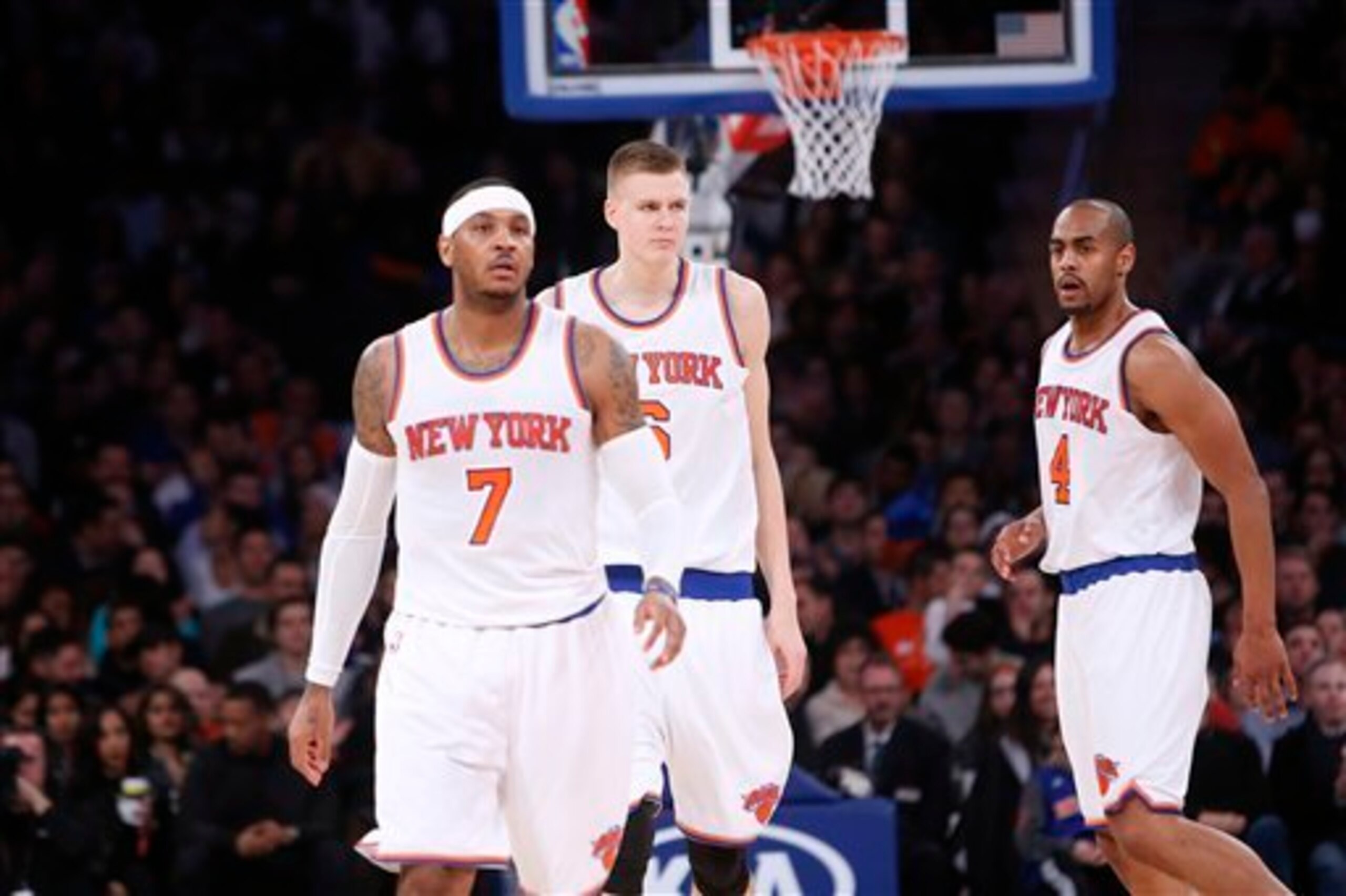
The Five: Jose Calderon—Arron Afflalo—Carmelo Anthony—Kristaps Porzingis—Robin Lopez
Net Rating: Minus-0.1 points per 100 possessions (589 minutes)
Without any real assets to trade for a bona fide point guard, the Knicks settled for signing former lottery pick Jimmer Fredette out of the NBA Development League.
Calderon remains the weakest link in a lineup that features two solid veterans (Afflalo and Lopez), a perennial All-Star (Anthony) and a burgeoning stud (Porzingis).
The Spaniard's spot would be up for grabs if either of New York's young guards (Langston Galloway and Jerian Grant) was ready to start. The Knicks don't have to find a perfect point guard—just one who comfortably complements Anthony and Porzingis, their two franchise pillars.
18. Atlanta Hawks
13 of 30
The Five: Jeff Teague—Kyle Korver—Kent Bazemore—Paul Millsap—Al Horford
Net Rating: Minus-1.3 points per 100 possessions (539 minutes)
For all the bluster about Teague and Horford being on the block, the Atlanta Hawks opted not to blow up their operation. According to head coach Mike Budenholzer, the team didn't come close to that while swapping out Shelvin Mack and Justin Holiday for Kirk Hinrich.
Perhaps Atlanta should have considered a more extreme makeover. The Hawks starters haven't been nearly as dynamic as they were last season, when they outscored their opponents by 8.1 points per 100 possessions with DeMarre Carroll in Bazemore's spot.
And now that Horford may be eyeing a return to Florida, per Sporting News' Sean Deveney, the Hawks could be left empty-handed come July.
17. Charlotte Hornets
14 of 30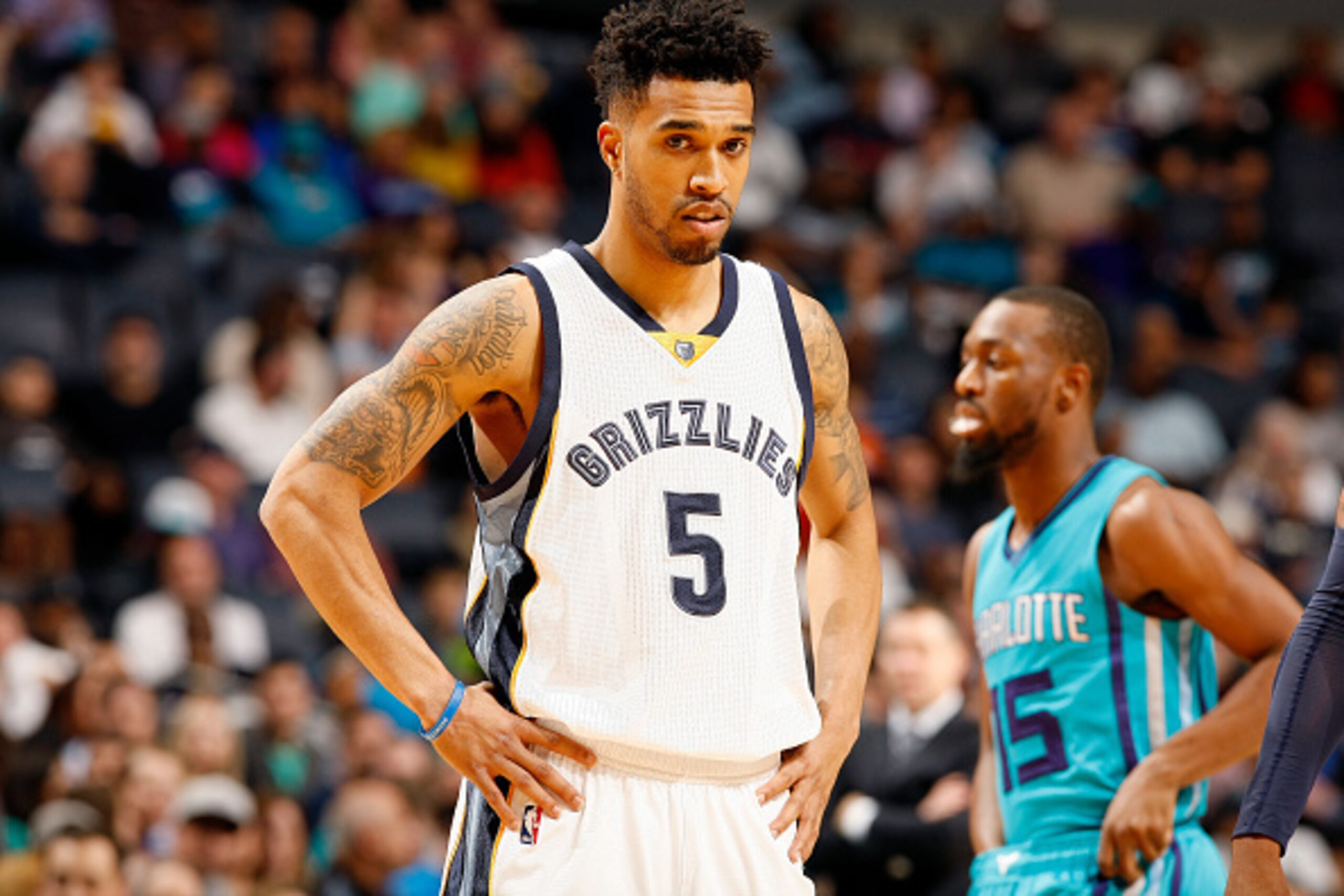
The Five: Kemba Walker—Courtney Lee—Nicolas Batum—Marvin Williams—Cody Zeller
Net Rating: N/A
The Charlotte Hornets pushed (some of) their chips into the pot before the deadline by betting on Lee. For the price of Brian Roberts, P.J. Hairston and a pair of second-round picks, the Hornets will get two to three months of a player who's knocked down 38.3 percent of his career threes while playing adequate perimeter defense.
Clearly, Michael Jordan wants his club back in the playoffs, and Lee could be the one to nudge it over the hump. The returning foursome of Walker, Batum, Williams and Zeller sports a sturdy, if unspectacular, net rating of plus-1.9 points per 100 possessions, according to NBA.com. With Hairston added in, that gap dropped to 0.5 points.
It's unlikely that Charlotte's new starting five will be as good as the one that featured the once-again-injured Michael Kidd-Gilchrist (plus-21.8 points per 100 possessions). But as Ian Levy wrote for Nylon Calculus, Lee looks to be a comfortable fit in the Queen City.
"The good news, for Lee, is that he is on his way to the Charlotte Hornets, a team who doesn’t need backcourt shot creation quite as much as the Grizzlies did," Levy wrote. "It will be much easier for him to sink in a three-and-D role with his new team, a role he is clearly well suited for."
16. Miami Heat
15 of 30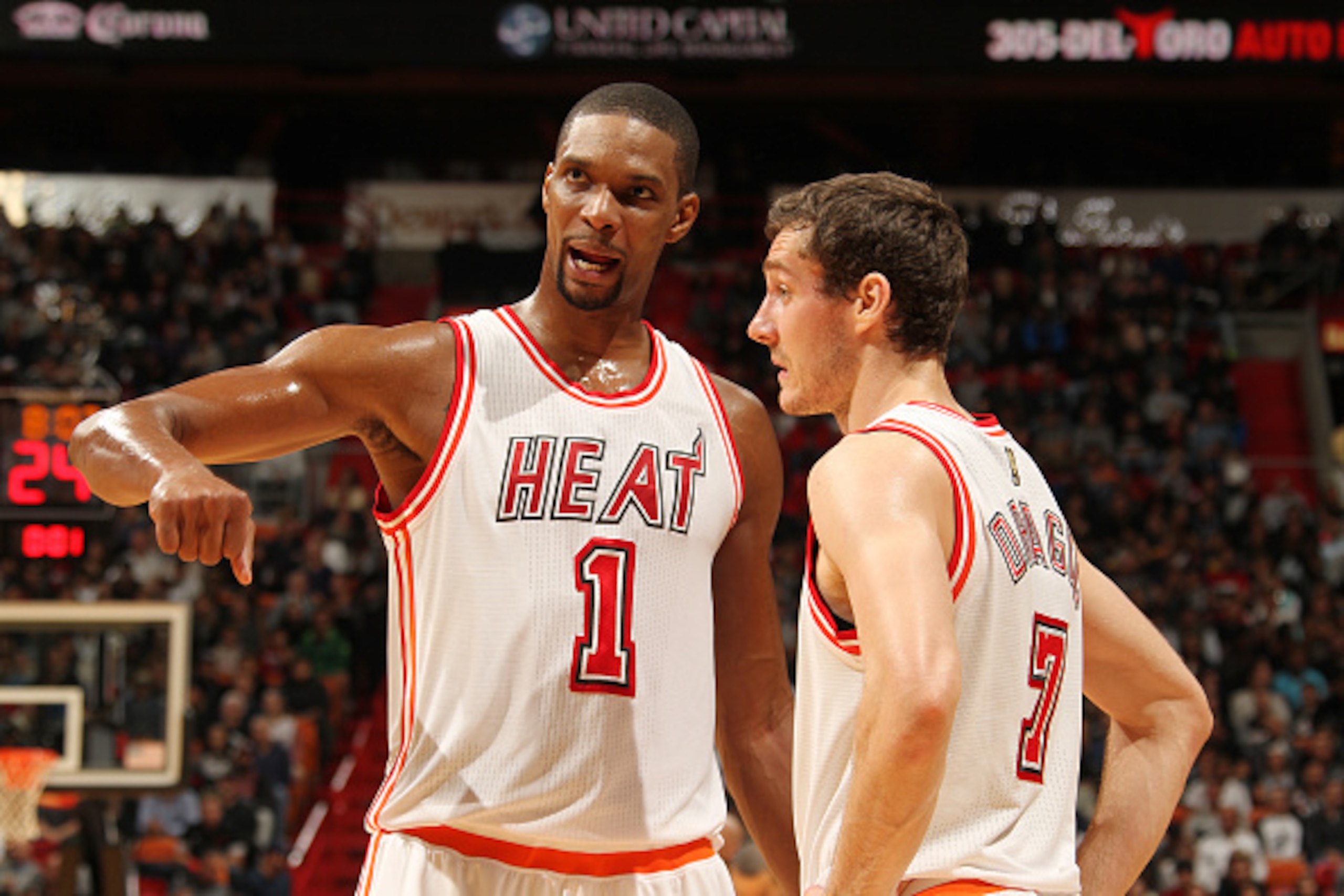
The Five: Goran Dragic—Dwyane Wade—Luol Deng—Chris Bosh—Hassan Whiteside
Net Rating: Plus-0.3 per 100 possessions (339 minutes)
The sum of Miami's talented parts still outstrips the whole. Even before Bosh's blood clots and Wade's sore knee returned to the surface, the Heat were struggling to find a consistent rhythm to suit the go-go Dragic and mercurial Whiteside.
"Phoenix was a different situation," Dragic told the Miami Herald's Barry Jackson. "I was the guy there. Here, I'm not getting those shots. But I don’t care about points. I know I need to get everybody involved so we can coexist; that's the most important thing. If you want to win a championship, everyone has to make sacrifices.
"Nobody said it was going to be easy. [But] the most important thing to me is winning."
The Heat, 29-24 before the break, didn't do a ton of that. It's no wonder, then, that Pat Riley could look to replace Dragic with Memphis' Mike Conley this summer, per Jackson.
In the meantime, there may be a silver lining to the cloud hovering over Bosh's health: The Heat have posted a net rating of plus-10.2 points per 100 possessions when rookie Justise Winslow has played with the other four starters, per NBA.com.
15. Washington Wizards
16 of 30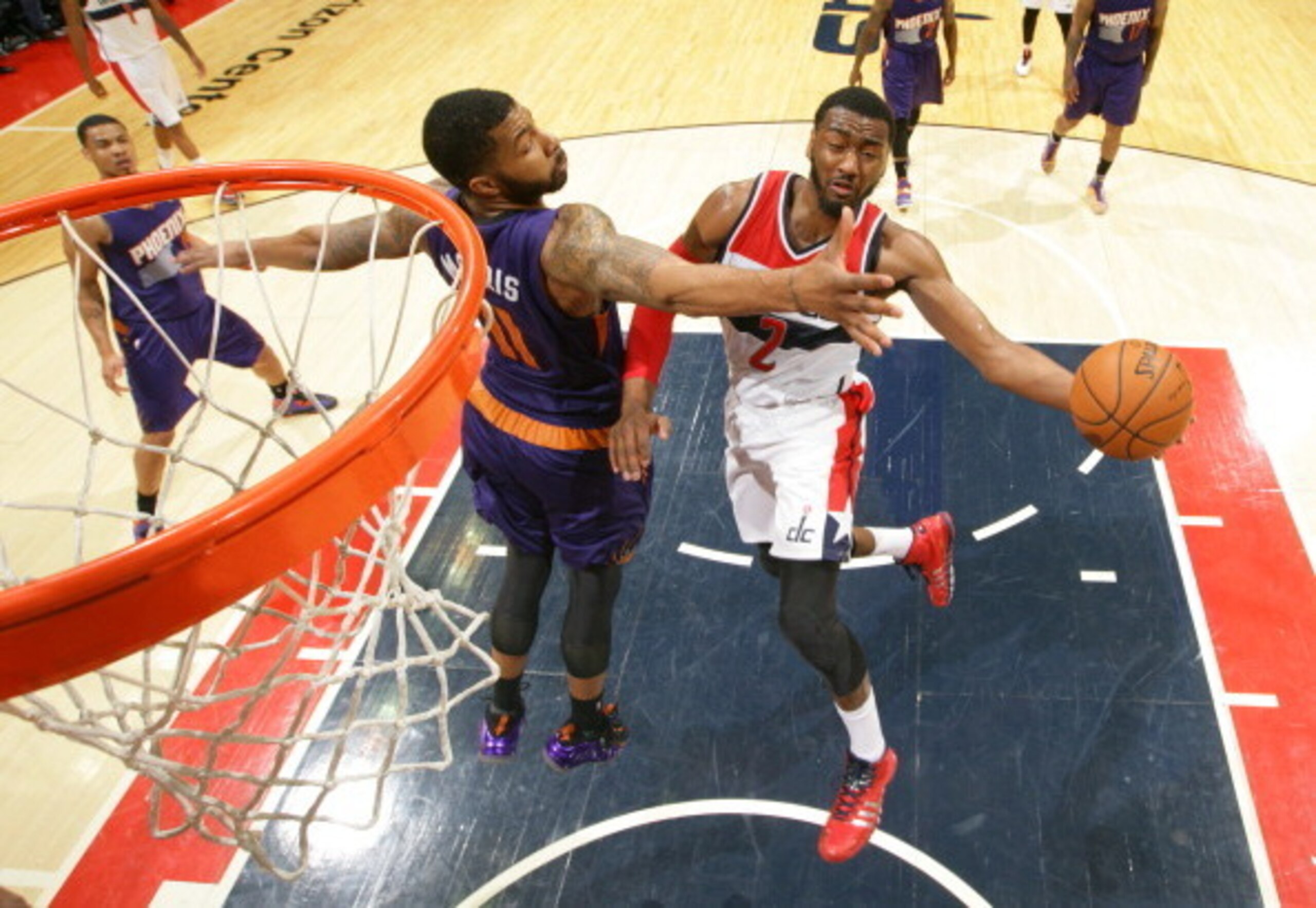
The Five: John Wall—Bradley Beal—Otto Porter Jr.—Markieff Morris—Marcin Gortat
Net Rating: N/A
Morris' talent and everything the Wizards gave up to get it (i.e., Kris Humphries, DeJuan Blair and a top-eight protected first-round pick in this year's draft) portend a place in Randy Wittman's starting five very soon. That doesn't mean Morris will be an easy fit, as SB Nation's Umair Khan explained:
"At the very least, this is a boon to their fourth quarter offense, a safety valve in case their offense shuts down, and a player that can reliably create in isolation. But it's going to be tricky, this isn't a clean fit, particularly if he never hones his three-point shooting or tries harder on defense. But for the first time in this era, the Wizards have a player that can create for himself on a given possession.
"
So much of this move will depend on how well Morris adapts to his new environs. When motivated and playing hard, he can be a multi-positional beast on both ends of the floor.
And when he's pissed off about one thing or another, Morris can wreak havoc in all the wrong ways.
Should he falter, Washington can turn its lonely eyes to Jared Dudley. According to NBA.com, the fivesome of Dudley, Wall, Beal, Porter Jr. and Gortat has posted a net rating of plus-6.6 points per 100 possessions in 162 minutes—better than what the Cleveland Cavaliers have done all season.
Either way, Randy Wittman's choice at power forward will be pivotal to propping up the Wall-Beal-Porter-Gortat quartet, which has been outscored by 1.8 points per 100 possessions this season.
14. Portland Trail Blazers
17 of 30
The Five: Damian Lillard—C.J. McCollum—Al-Farouq Aminu—Noah Vonleh—Mason Plumlee
Net Rating: Plus-1.1 points per 100 possessions (408 minutes)
The Portland Trail Blazers—led by head coach Terry Stotts, general manager Neil Olshey, should-have-been-an-All-Star Damian Lillard and Most Improved Player contender C.J. McCollum—deserve tremendous credit for keeping this team afloat in the Western Conference playoff picture.
Last year, the team's longtime starting five of Lillard, LaMarcus Aldridge, Nicolas Batum, Robin Lopez and Wesley Matthews was among the NBA's best, outpacing its opponents by 10.7 points per 100 possessions, per NBA.com.
Of that quintet, only Lillard remains in Rip City. Yet, the Blazers' newer, younger starters have more than held their own so far. Portland's deadline deals, which amounted mostly to absorbing contracts and grabbing picks, won't change that.
"A lot of guys on this roster are highly valued around the league," Olshey said, per CSNNW.com's Jason Quick, "they are just more valuable to us."
13. Toronto Raptors
18 of 30
The Five: Kyle Lowry—DeMar DeRozan—DeMarre Carroll—Luis Scola—Jonas Valanciunas
Net Rating: Minus-2.8 points per 100 possessions (213 minutes)
Carroll, sidelined since early January after knee surgery, is still weeks away from returning.
Not that the Toronto Raptors were taking the NBA by storm before their top free agent from last summer went down. The Raptors were outscored by nearly three points per 100 possessions with Carroll in the starting five and have registered a nearly identical net rating (minus-2.9 points per 100 possessions) with James Johnson in his place, per NBA.com.
Carroll, though, was never 100 percent healthy. The knee on which he had surgery is the same one he sprained in last year's Eastern Conference Finals with the Atlanta Hawks.
The Missouri product might not have time to get himself back up to full speed by the time the playoffs roll around. But if Carroll can be something closer to his ATL self, the Raptors, with All-Stars Lowry and DeRozan in the backcourt, will be a real threat in the East.
12. Dallas Mavericks
19 of 30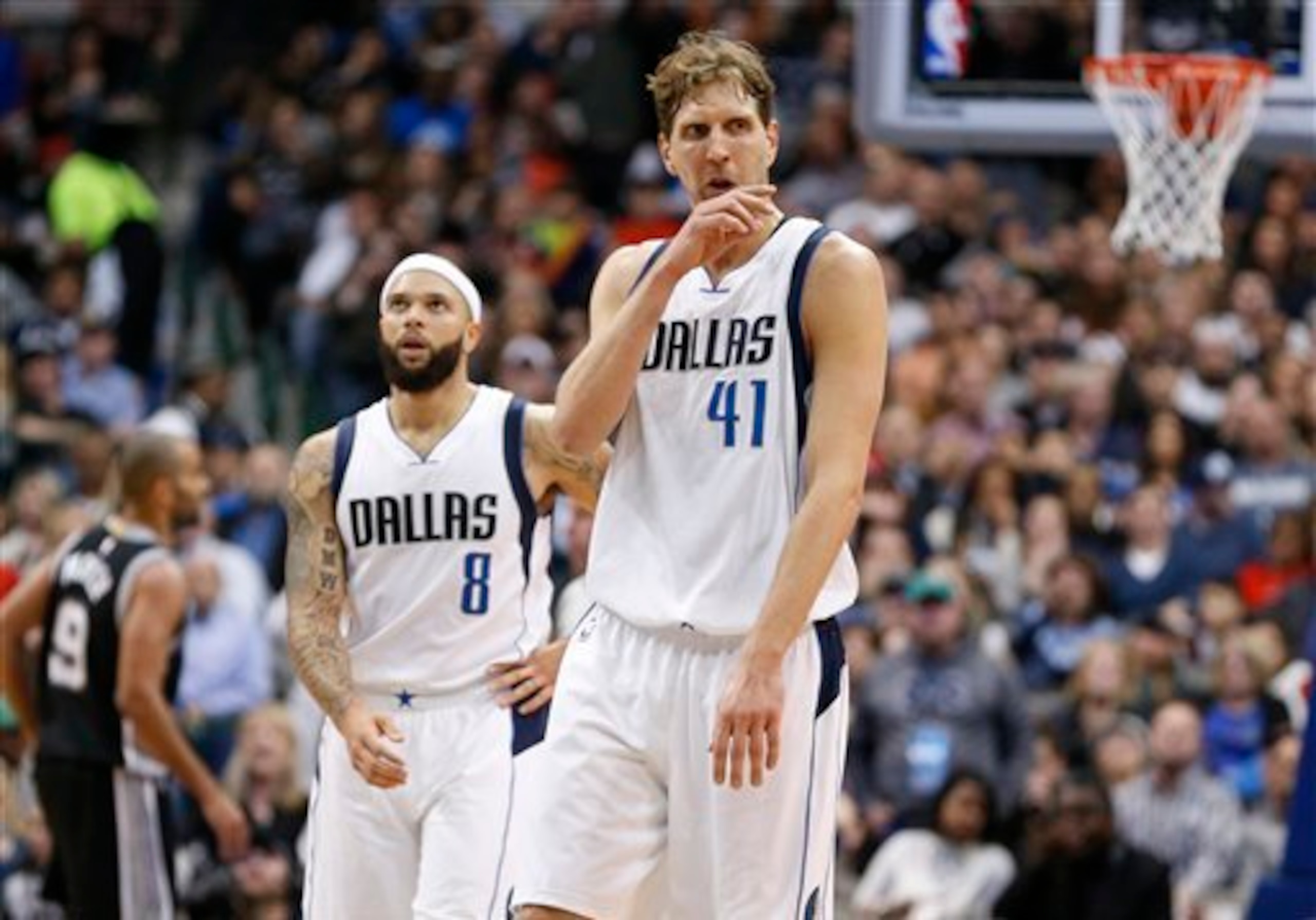
The Five: Deron Williams—Wesley Matthews—Chandler Parsons—Dirk Nowitzki—Zaza Pachulia
Net Rating: Plus-1.3 points per 100 possessions (291 minutes)
The Dallas Mavericks stood pat at the deadline but are poised to pluck David Lee off the waiver wire, per ESPN's Tim MacMahon.
Lee's arrival wouldn't do much to impact Dallas' starting five. What it would do, though, is give head coach Rick Carlisle another skilled veteran to deepen his frontcourt rotation behind Nowitzki and a bona fide offensive threat to prop up the Mavericks' second unit.
And if Dallas has proved anything in recent years, it's that it knows a thing or two about reclamation projects. Williams' pseudo-renaissance, Matthews' rapid recovery from Achilles surgery and Pachulia's near-All-Star selection are all testaments to the Mavericks' ability to turn other teams' trash into their own treasure.
11. Boston Celtics
20 of 30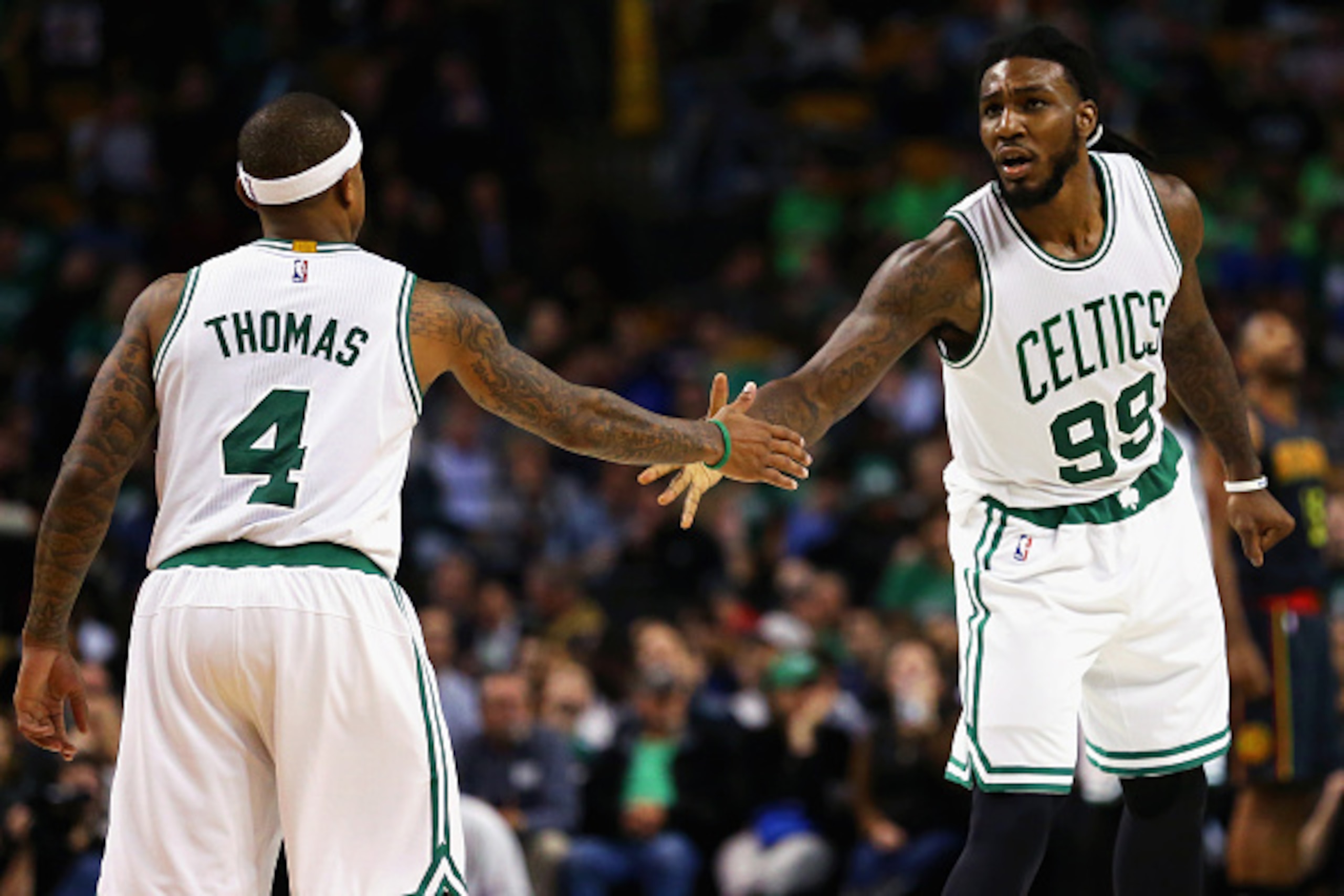
The Five: Isaiah Thomas—Avery Bradley—Jae Crowder—Jared Sullinger—Amir Johnson
Net Rating: Plus-2.8 points per 100 possessions (510 minutes)
Danny Ainge once again came up short in pursuit of a big piece, but not for a lack of effort.
Ainge told WEEI:
"We were close to pulling off what I would classify a big deal. But it just didn’t happen. You’ve got to have two [teams] that want to do it. These deals are tough. They’re not easy. It was not a no-brainer for us. A lot of deliberation went on over the last couple of days and we felt it something we should do. But ultimately, the other team we were dealing with just did not want to do it, and I certainly understand why. It’s a tough call.
"
Fortunately for coach Brad Stevens, the Boston Celtics' cupboard is far from bare. The young coach has overseen Thomas' All-Star rise, Crowder's emergence as a potential two-way stud and Avery Bradley's turn as a suffocating three-and-D guard.
The frontcourt rotation could still use some juice, especially now that David Lee is gone and Kelly Olynyk is injured. That said, Stevens has squeezed plenty out of Sullinger and Johnson so far.
10. Detroit Pistons
21 of 30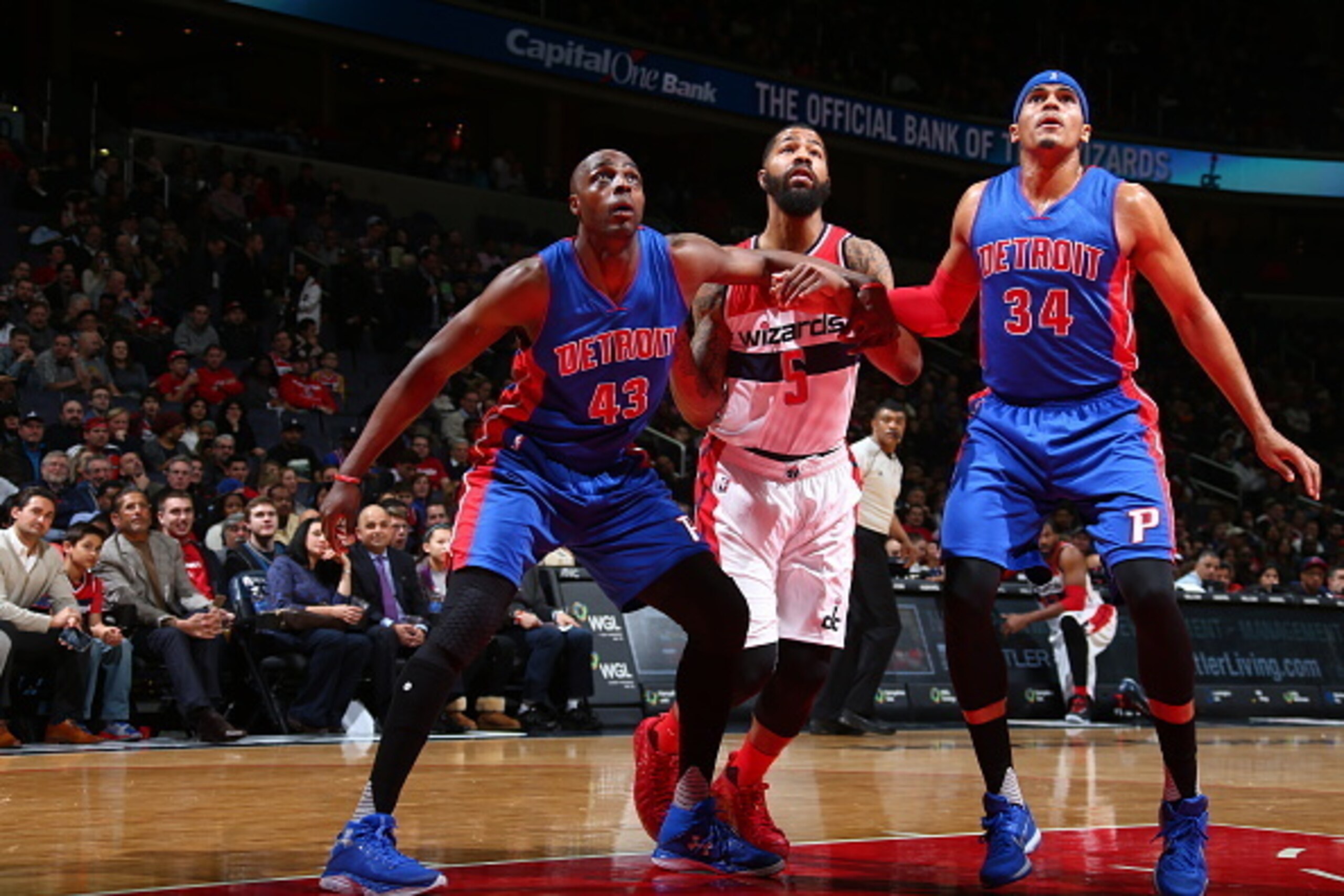
The Five: Reggie Jackson—Kentavious Caldwell-Pope—Marcus Morris—Tobias Harris—Andre Drummond
Net Rating: N/A
No team got more done before the deadline than the Detroit Pistons. Stan Van Gundy extended his bench by acquiring Donatas Motiejunas and Marcus Thornton from the Houston Rockets for Joel Anthony and a first-round pick, but he made a much bigger splash the day before when he sent Ersan Ilyasova and Brandon Jennings to Orlando for Tobias Harris.
In theory, Harris should settle in as a legitimate third option next to Jackson-Drummond pick-and-rolls while taking the lead on Detroit's subpar second unit. But as ESPN's Zach Lowe explained, Harris may not be a slam dunk in Detroit right away:
"Harris' long-range shooting has regressed after he drilled 44 percent of his corner 3s last season, and if the Pistons start Harris and Marcus Morris at the forward spots, the spacing will be cramped around the Reggie Jackson-Andre Drummond pick-and-roll. Morris and Harris are very similar players; there may be diminishing returns playing them together.
"
With Anthony Tolliver on hand to spread the floor, Van Gundy can take his time easing Harris into the starting lineup. The foursome of Jackson, Caldwell-Pope, Morris and Drummond is already reliable, posting a net rating of plus-six points per 100 possessions, per NBA.com.
9. Chicago Bulls
22 of 30
The Five: Derrick Rose—Jimmy Butler—Mike Dunleavy Jr.—Taj Gibson—Pau Gasol
Net Rating: N/A
Joakim Noah's season-ending injury and Dunleavy's season-starting back problems ensured the Bulls would never see last season's starting lineup take the floor together. Butler's knee sprain means Chicago won't see its next-best look for a bit longer either.
That beats never seeing what Rose, Butler, Dunleavy, Gibson and Gasol could do under Fred Hoiberg—which would have been the case had the front office pulled the trigger on a deal with the Kings, per the Sacramento Bee's Jason Jones.
Last season, that group posted a net rating of plus-3.2 points per 100 possessions, according to NBA.com. That differential, while positive, would still leave Chicago well short of ending LeBron James' reign atop the East.
Swapping out Kirk Hinrich for Justin Holiday won't move the needle much in any regard.
8. Utah Jazz
23 of 30
The Five: Raul Neto—Rodney Hood—Gordon Hayward—Derrick Favors—Rudy Gobert
Net Rating: Plus-8.9 points per 100 possessions (268 minutes)
Shelvin Mack's arrival isn't likely to dent Utah's steely starting lineup. Despite injuries to Dante Exum and Alec Burks, the Jazz have put together one of the league's most effective first fives.
The rookie Neto (6.1 points, 2.5 assists, 39.6 percent from three) has been steady in Exum's stead. The real revelation, though, is Hood, who's given the Jazz a jolt of scoring (15 points per game), shooting (36.6 percent from three), playmaking (2.7 assists) and perimeter defense (plus-5.1 defensive box plus minus) during his second pro season.
Throw in the versatile Hayward and the suffocating interior defense of Favors and Gobert, and Utah has the goods to end a three-year playoff drought so long as the bench holds up its end of the bargain.
7. Sacramento Kings
24 of 30
The Five: Rajon Rondo—Ben McLemore—Rudy Gay—DeMarcus Cousins—Willie Cauley-Stein
Net Rating: Plus-11.8 points per 100 possessions (113 minutes)
According to multiple reports, the Sacramento Kings pushed hard to acquire Pau Gasol ahead of the trade deadline, offering up McLemore as partial payment for the Chicago Bulls. In hindsight, Vlade Divac should thank his lucky stars that his counterparts in Chicago didn't pull the trigger.
With McLemore slotted at shooting guard alongside Rondo, Gay, Cousins and Cauley-Stein, the Kings can claim one of the NBA's most lethal starting lineups. Replace McLemore with Marco Belinelli, though, and the results are disastrous: a net rating of minus-29.1 points per 100 possessions, per NBA.com.
Granted, the Belinelli sample is small (44 minutes) but disconcerting nonetheless. As slow on the uptake as McLemore has been in his two-plus pro seasons, the Kings should be happy to have him back in the lineup with his right wrist in better shape.
6. Indiana Pacers
25 of 30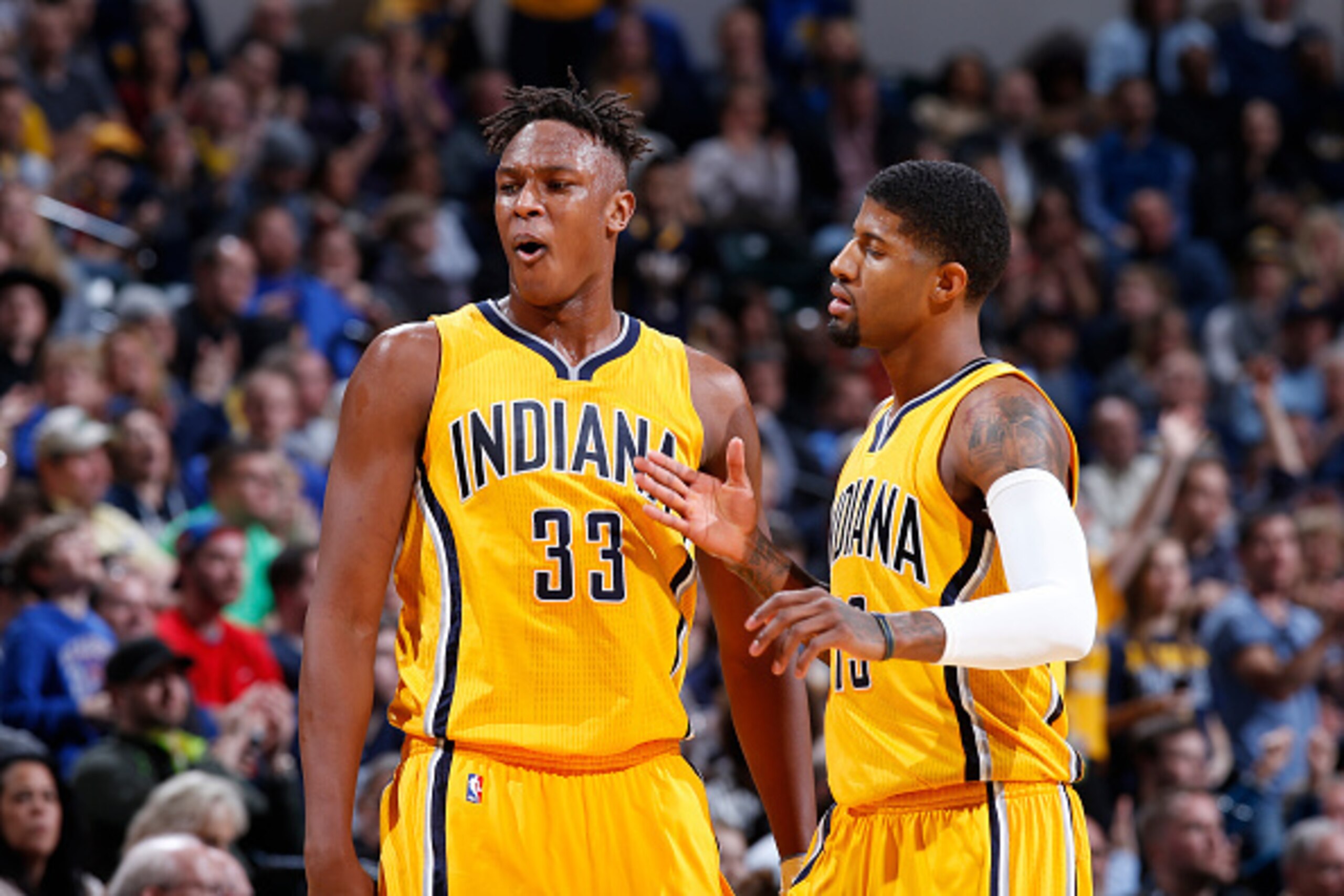
The Five: George Hill—Monta Ellis—Paul George—Ian Mahinmi—Myles Turner
Net Rating: Plus-19.2 points per 100 possessions (69 minutes)
Statistically speaking, the rookie Turner has turned the Pacers into a potential Eastern Conference powerhouse.
With C.J. Miles at the 4, Indiana has been outscored by 6.5 points per 100 possessions, per NBA.com. Swap Miles for Turner, though, and the Pacers improve by more than 25 points per 100 possessions, in part because George doesn't have to worry about guarding power forwards while working with two bigs.
At 19, Turner is exceedingly young, albeit with the skill and savvy to push the Pacers up the standings. Still, this team's fate rests in the hands of George, with Ellis and Hill providing veteran support. PG-13's career-best pace of production, in particular, will be paramount to Indy's pursuit of a top-four seed in the East.
5. Los Angeles Clippers
26 of 30
The Five: Chris Paul—J.J. Redick—Jeff Green—Blake Griffin—DeAndre Jordan
Net Rating: N/A
The Clippers won't see their new starting five in action until Griffin returns from both his hand injury and fight-related suspension. Until then, Green and Paul Pierce will probably split starting duties, with Luc Richard Mbah a Moute moving back to the bench.
As well as L.A. has played without Griffin, this team will be in much better shape to challenge the West's best once he's filling up the stat sheet again. According to NBA.com, the Clippers have outscored their foes by 12.7 points per 100 possessions when the core four of Griffin, Paul, Redick and Jordan have shared the floor.
Green should only help. He's capable of exploding for 20 points on any given night and is more than capable of serving as a fourth or fifth offensive option and defending multiple positions from game to game.
The Georgetown product may not be a savior, but he's a clear upgrade over the aging Pierce, the offensively limited Mbah a Moute and the never-did-fit Lance Stephenson (for whom he was traded)—enough so to close the gap between the Clippers and their chief competition ever so slightly.
4. San Antonio Spurs
27 of 30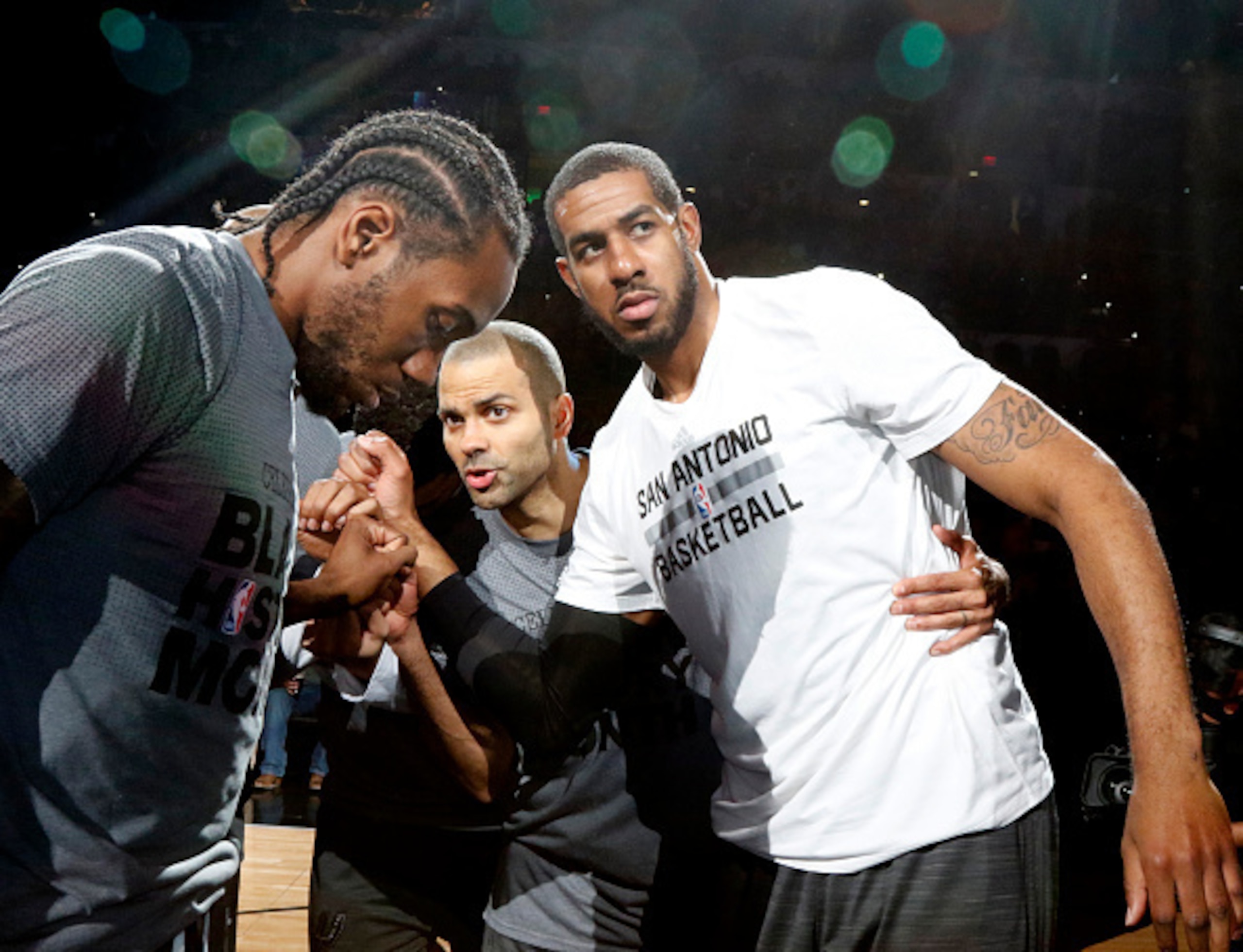
The Five: Tony Parker—Danny Green—Kawhi Leonard—LaMarcus Aldridge—Tim Duncan
Net Rating: Plus-6.8 points per 100 possessions (453 minutes)
The Spurs stood pat at the deadline as they typically do, and for good reason. They went into the All-Star break with a franchise-best 45-8 record and a starting five that could be great.
The pieces are all there: An experienced point guard (Parker), a deadly spot-up shooter (Green), a do-it-all wing (Leonard), a skilled scoring forward (Aldridge) and a defensive stalwart in the middle (Duncan).
In practice, San Antonio's first unit, while excellent, still has room for improvement. Leonard is still finding his way as the Spurs' top dog. Aldridge is acclimating to life as a second fiddle. Green (37.9 percent from the field) has been mired in a season-long shooting slump. Duncan and Parker, while effective, are clearly past their respective primes.
Where these Spurs have really drawn strength this season is from their bench, which features a fantastic mix of steady veterans (David West, Patty Mills, Manu Ginobili, Boris Diaw) and promising youngsters (Kyle Anderson, Boban Marjanovic, Jonathon Simmons).
3. Cleveland Cavaliers
28 of 30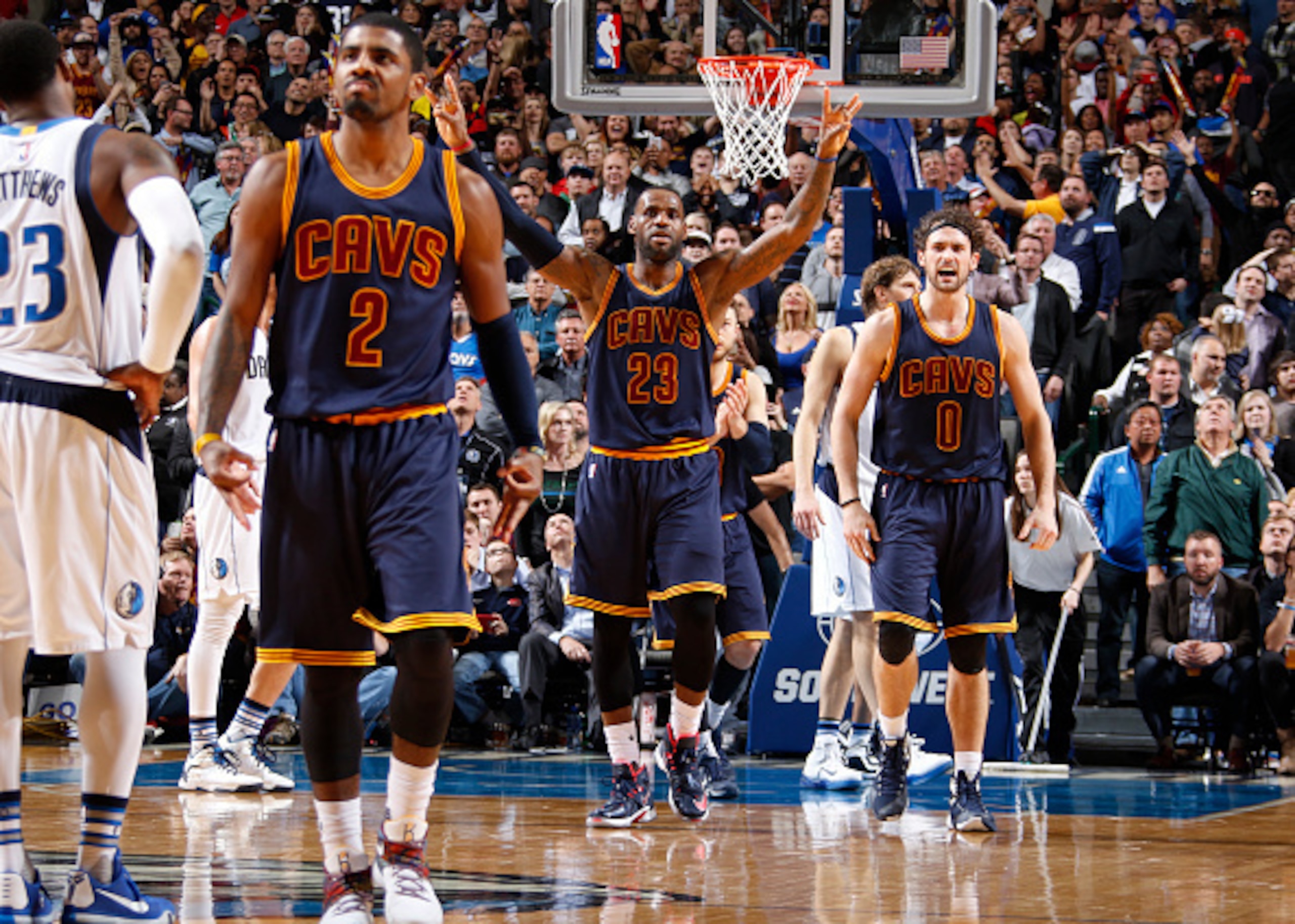
The Five: Kyrie Irving—J.R. Smith—LeBron James—Kevin Love—Tristan Thompson
Net Rating: Plus-15.6 points per 100 possessions (295 minutes)
With all the drama that's swirled around the Cavaliers this season, it's easy to forget that they're still one of the NBA's best teams, thanks to their star-studded starting five.
Despite the flood of rumors about Kevin Love's availability, Cleveland opted instead to keep him and bring on another sweet-shooting big (Channing Frye) in a deal that cost them a pretty penny (Anderson Varejao, Jared Cunningham and a first-round pick).
Not that Frye figures to find his way into coach Tyronn Lue's top five. He could get some run in Thompson's place, but the Arizona product's poor defensive chops may prove a net negative next to Love up front.
So while Lue now has more options at his disposal—and won't have to lean on the underperforming Timofey Mozgov as much anymore—his best bet still rests with the Big 3 of James, Love and Irving surrounded by Smith's perimeter shooting and Thompson's interior scrapping.
2. Oklahoma City Thunder
29 of 30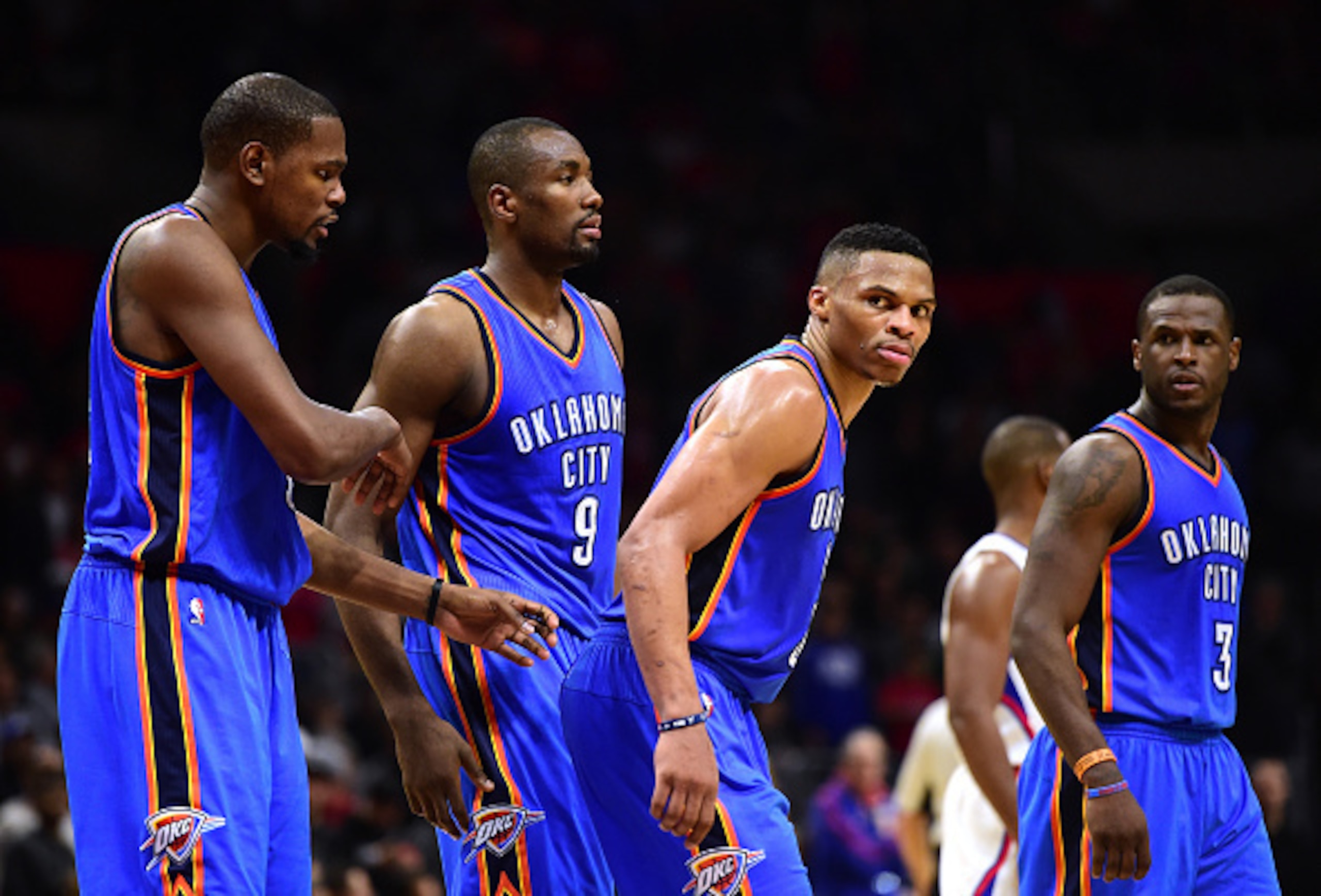
The Five: Russell Westbrook—Dion Waiters—Kevin Durant—Serge Ibaka—Steven Adams
Net Rating: Plus-15.3 points per 100 possessions (294 minutes)
The Thunder won't need much out of Randy Foye, who they acquired from Denver in exchange for D.J. Augustin, Steve Novak and a pair of second-round picks. They've been more than fine with Waiters at shooting guard and will be even better upon the return of Andre Roberson, who helped the other four starters destroy the league by 21.5 points per 100 possessions before he got hurt, per NBA.com.
In Foye, Oklahoma City adds another veteran to solidify its rotation on the wing, as ESPN.com's Royce Young wrote:
"Does this move the needle for the Thunder in terms of closing the perceived gap on the Warriors or Spurs? Foye is 32 years old and shooting a career-low 35 percent from the field this season. So definitely no, but it certainly doesn't set them back in any way. It does give them at least another option, especially against the guard-heavy Warriors, to play unique combinations.
"
That extra edge might be just the boost the Thunder will need come playoff time, when they'll have to survive a slog through the West's best to get back to the Finals following a four-year hiatus.
1. Golden State Warriors
30 of 30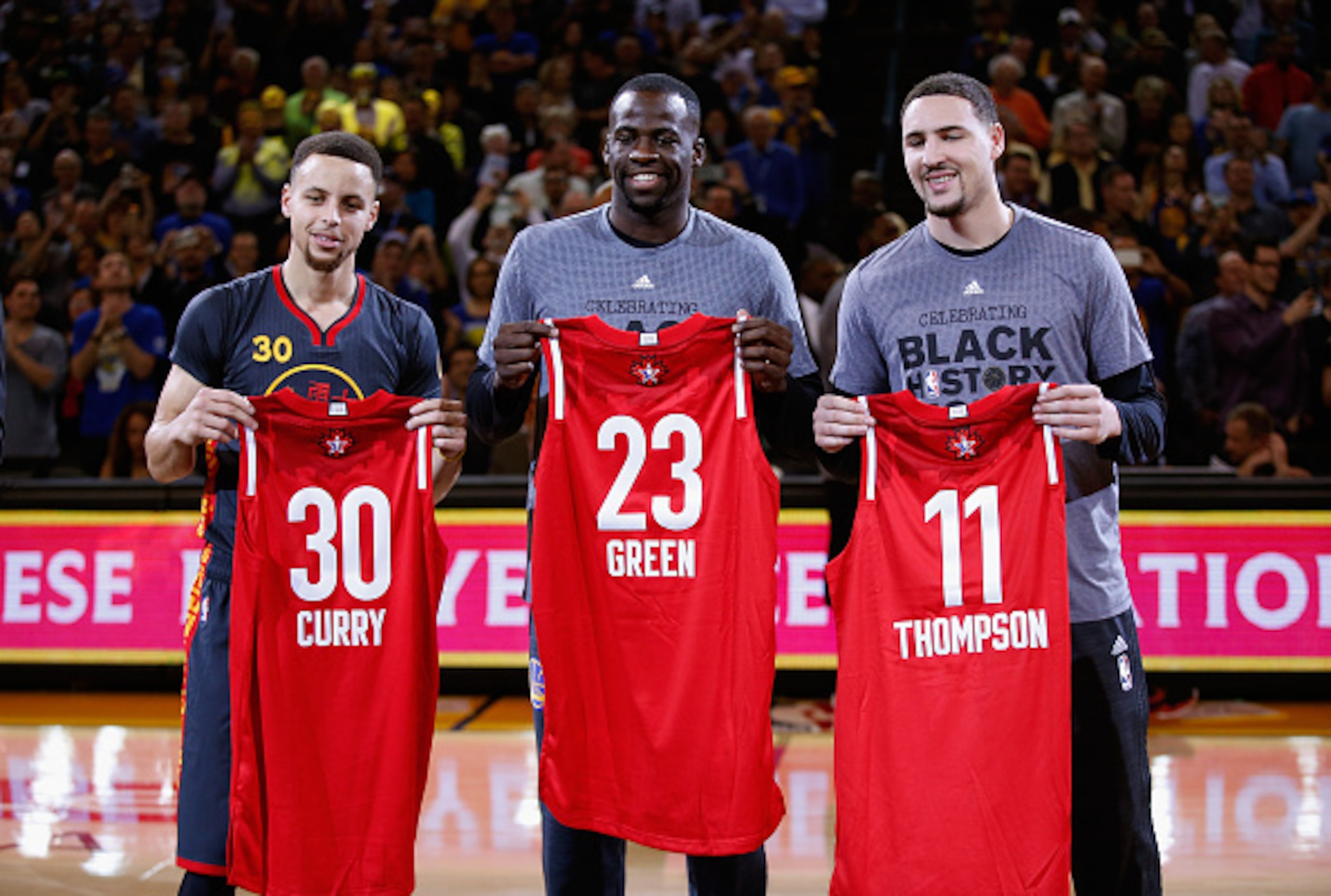
The Five: Stephen Curry—Klay Thompson—Harrison Barnes—Draymond Green—Andrew Bogut
Net Rating: Plus-9.9 points per 100 possessions (253 minutes)
Golden State's starting five is the best of its kind in the NBA, but it's not even the best group on the team. Heck, it might not even be in the Warriors' top five.
The best of the bunch is the Warriors' "Uh-Oh" small-ball lineup of Curry, Thompson, Barnes, Green and Andre Iguodala, which has obliterated the opposition by 52.1 points per 100 possessions in 123 minutes, per NBA.com. After that fivesome, coach Steve Kerr can turn to a handful of harrowing groups before he looks back to his starters for help.
| Lineup | Net Rating | Minutes |
| Curry-Thompson-Barnes-Green-Iguodala | plus-52.1 | 123 |
| Curry-Thompson-Iguodala-Green-Bogut | plus-47.1 | 126 |
| Curry-Livingston-Iguodala-Green-Ezeli | plus-46.3 | 69 |
| Curry-Thompson-Iguodala-Green-Ezeli | plus-26.5 | 117 |
| Curry-Thompson-Rush-Green-Bogut | plus-21.2 | 223 |
| Curry-Thompson-Barnes-Green-Bogut | plus-9.9 | 253 |
That depth of lineup excellence is what makes this Golden State squad not only far and away the best in the league this season but (perhaps) the best the Association has ever seen.
All stats courtesy of NBA.com/stats and accurate as of games played on Feb. 18, 2016.
Josh Martin covers the NBA for Bleacher Report. Follow him on Twitter (@JoshMartinNBA) and Facebook.


.jpg?w=2560 "NFL investigating 2 referees for separate viral exchanges")

.jpg?w=2560 "OBJ Calls Out Giants 😳")


.jpg?w=2560 "Ward Nearly Walks Out of Presser 😳")
.jpg?w=2560 "Tyreek makes another cryptic post amid Chiefs rumors")