Training camp and preseason revelations do, in fact, have a place in the NBA.
Exhibition play is too often dismissed as meaningless, because the games do not count toward the standings and rotations league-wide are littered with players who won't make the roster or get much regular-season burn.
But those caveats do not render the preseason worthless. To the contrary, the Assocation's beta period is a time for learning, for figuring out what a team has to work with and for small- or large-scale epiphanies.
These realizations can be anything, on- or off-court related. Is a certain player prepared to make the leap? Does a rotation long shot now deserve regular-season playing time? Have any key team pieces fallen out of favor? Is one squad unexpectedly good at something? Is another shockingly bad at something else?
Nothing and no one is off-limits here, folks. Surprises, disappointments, random but meaningful observations and everything else you can possibly think of are all rolled into one as we search for what to watch ahead of opening night.
Atlanta Hawks: Big Lineups Will Be a Thing
1 of 30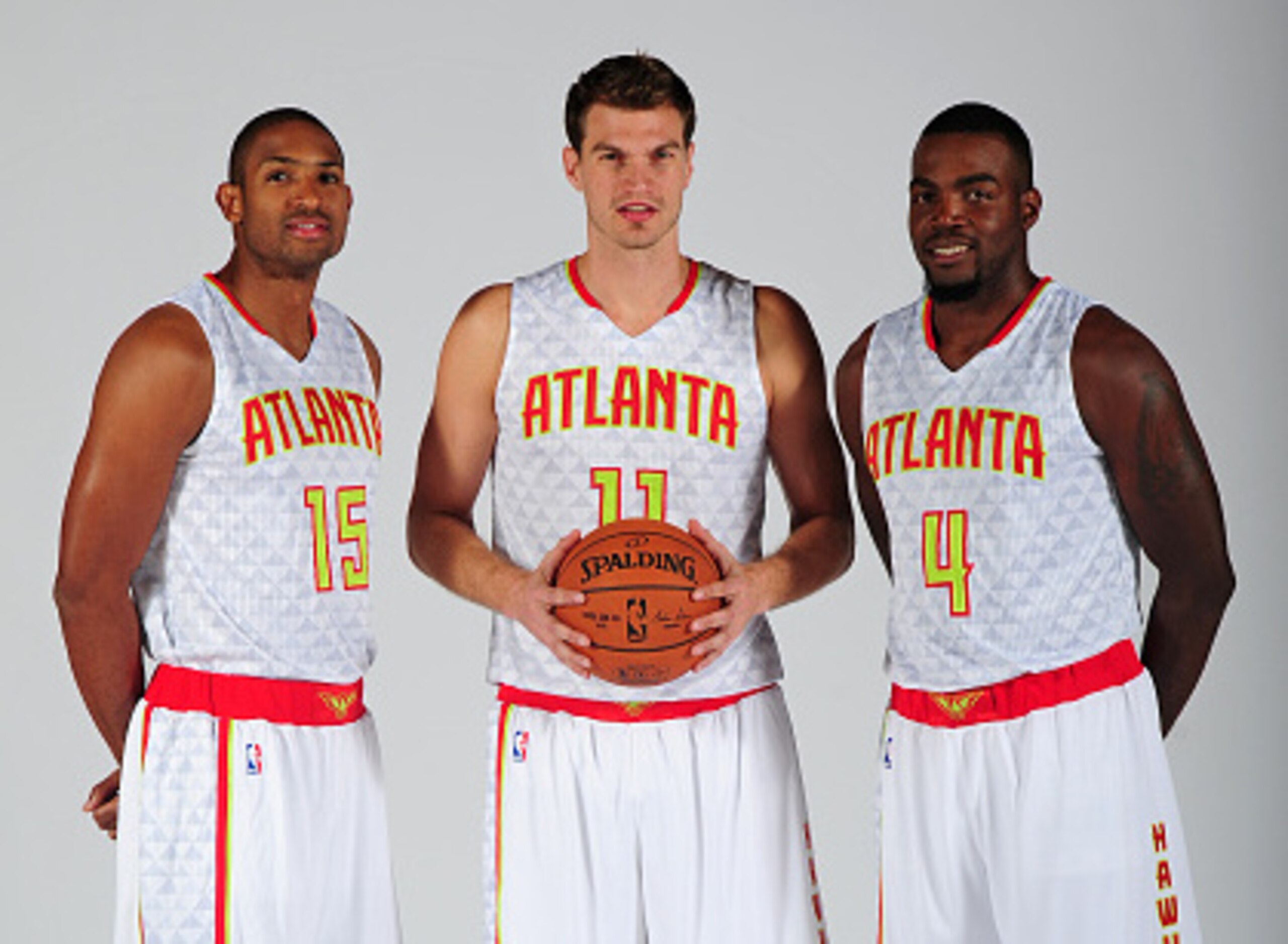
The Atlanta Hawks spent all of the 2014-15 season obliterating teams with their ultra-fungible lineups—smaller five-man combinations that featured at least four, though sometimes five, shooters dotting the three-point line and wearing defenses thin. And, to some degree, that's about to change.
Those fun-sized units will still be a part of the Hawks' identity. Head coach Mike Budenholzer is an extension of San Antonio Spurs head honcho Gregg Popovich, only with less facial hair. Stretch-everything programs are embedded in his DNA.
There just isn't as much room for them in Atlanta's playbook after losing DeMarre Carroll, trading for Tiago Splitter and learning that Walter Tavares is an offensive rebounding machine. Splitter's presence in particular will force Coach Bud's hand. He was a plus-defender last season inside 10 feet of the cup while battling injuries and is only one year removed from destroying rival shooters within that same area.
Expect to see more of Al Horford at the 4 and Paul Millsap at the 3.
Horford is a recovering power forward who made and attempted more threes last season than through his first seven campaigns combined, so the transition backward should be easy. But Millsap has spent just 5 percent of his career minutes at the 3 spot, which makes this entire frontcourt adaptation something to monitor.
Boston Celtics: Amir Johnson and Isaiah Thomas Are Made for Each Other
2 of 30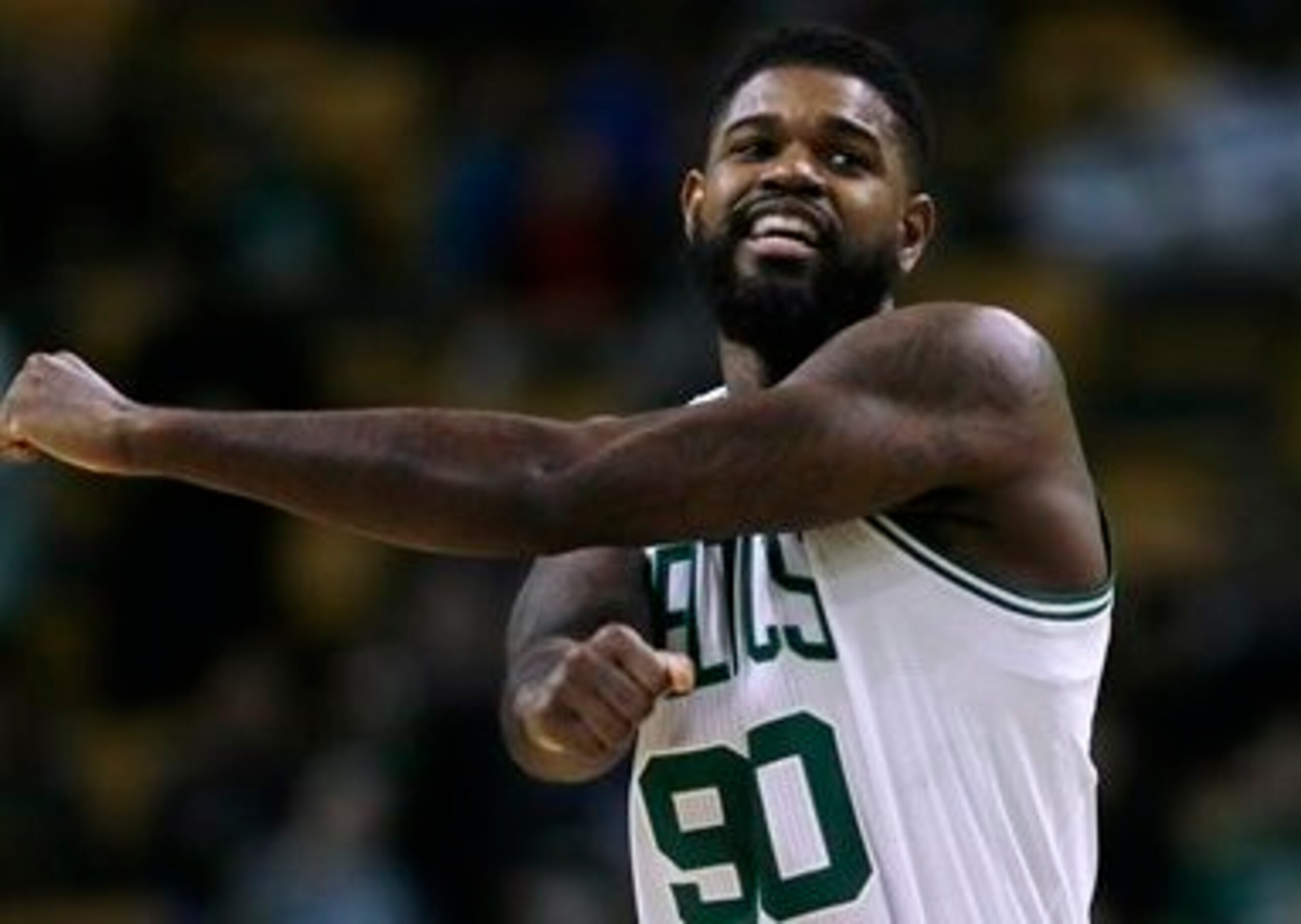
Isaiah Thomas will not start for the Boston Celtics. And that, in turn, means Amir Johnson also shouldn't start for the Celtics.
Johnson likely signed with Boston under the guise that he would compete for the starting center position. But the preseason chemistry he has developed with Thomas, one of the NBA's pre-eminent sixth men, is too tantalizing to ignore.
Exhibit A, from ESPN.com's Chris Forsberg:
"According to Synergy Sports data, Johnson has finished as the roll man in five pick-and-rolls with Thomas this preseason and generated 10 points (a ridiculous two points per play in a league where Boston's 0.963 points per play overall ranks sixth in the NBA). A desire to play Johnson and Thomas together might mean Johnson has to settle for a reserve role (assuming Thomas remains in his sixth man spot).
"
Boston's offense exploded with Thomas on the floor after last February's trade deadline, pumping in points at the rate of a top-three attack. And that was when he didn't have a clear-cut pick-and-roll partner.
Imagine what Thomas could accomplish over the course of an entire season alongside Johnson. The 6'9" rebound-wrangling fiend ranked in the 83rd percentile of all pick-and-roll finishers last year, and he's imposing enough on the defensive end to clean up Thomas' inevitable perimeter lapses.
That sound you're hearing isn't the latest "Punk Goes Frozen" album. It's the sweet, sweet music Johnson and Thomas are already making together.
Brooklyn Nets: Rondae Hollis-Jefferson Needs to Play
3 of 30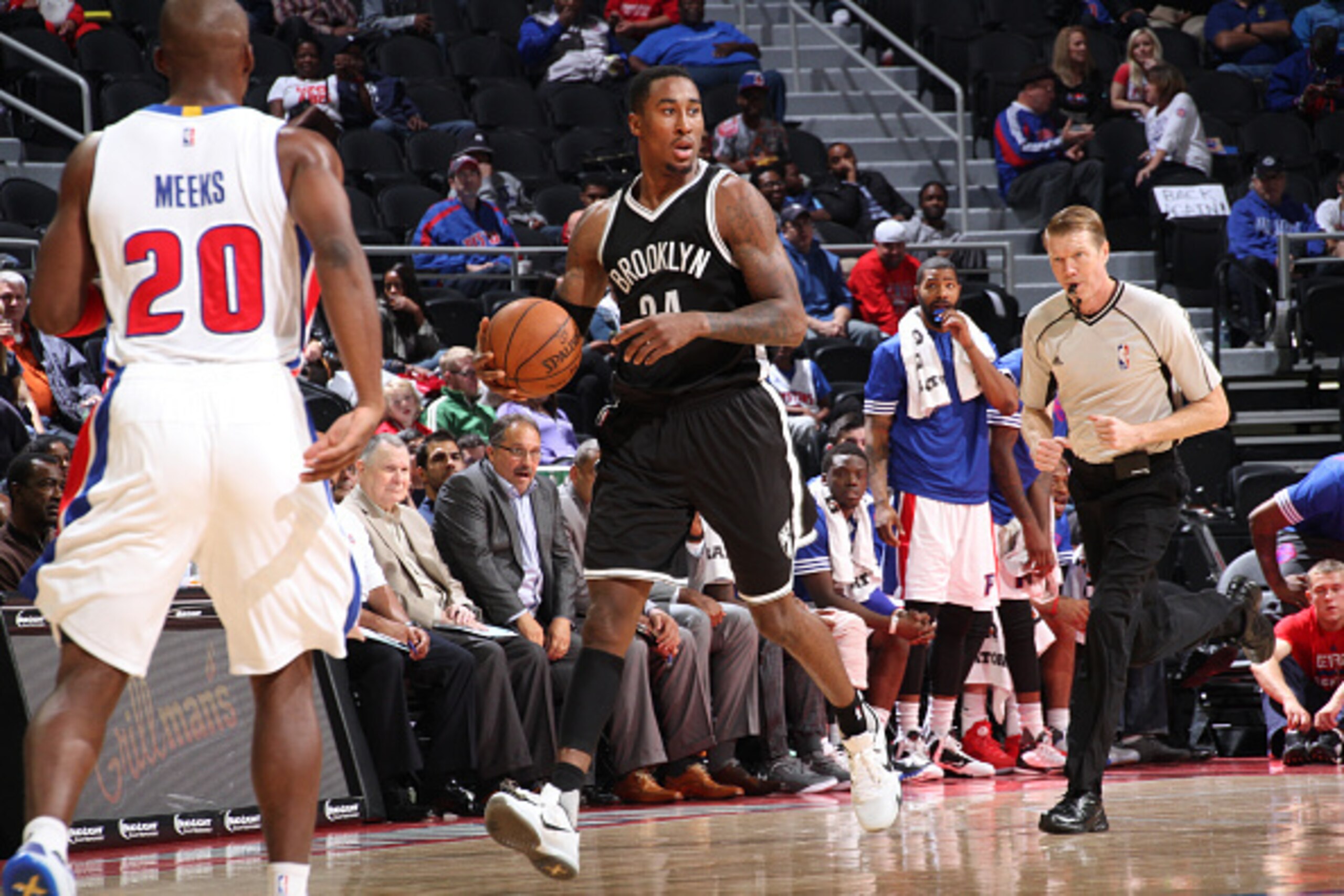
Re-signing Brook Lopez and Thaddeus Young over the summer proved the Brooklyn Nets aren't interested in biding time until their draft commitments expire and their overloaded cap sheet yields some financial breathing room. They also employ a head coach in Lionel Hollins who isn't one for playing projects.
All signs once again point to Brooklyn gunning for a mid-end Eastern Conference playoff seed (and failing). And with so many veteran wings on the roster, the pursuit of a first-round exit makes it unlikely that Rondae Hollis-Jefferson figures heavily into the rotation.
But the race toward mediocrity and Hollis-Jefferson's development need not be mutually exclusive. The rookie is already Brooklyn's top perimeter pest; he has the best preseason defensive rating of any Nets player who is averaging eight or more minutes per game.
Chaining a 20-year-old with immediate defensive upside to the bench would be, well, indefensible. The Nets have no chance of creating an offensive identity outside of Joe Johnson isolations and Brook Lopez everything. Investing on the defensive end gives them the best shot at forging a discernible play style.
And relying upon Hollis-Jefferson—as in, playing him more than the 16.9 minutes per game he's averaging now—is the best way to fund that investment.

Charlotte Hornets: This Group Can, and Will, Shoot Threes
4 of 30
Say goodbye to the old, three-pointer-eschewing Charlotte Hornets.
Steve Clifford's plodding band of perimeter-challenged players ranked 26th in three-pointers made and dead last in three-point percentage in 2014-15. The year before that, they ranked 25th and 23rd, respectively. But the 2015-16 crusade will be different—much different.
It remains to be seen whether the Hornets can continue draining threes with the best of the best. They're putting in 37.4 percent of their long balls in the preseason, the third-best mark of any (NBA) team. But, you know, it's preseason. And though Charlotte is stocked with more shooters than in years past, Jeremy Lin, Brian Roberts and Cody Zeller won't be drilling 45-plus percent or more of their triples forever.
The important thing to remember is that the Hornets have found the three-point line. They're jacking up more than 25 outside rainbows per game, which is nearly seven more than they averaged last season.
All the normal exhibition caveats and grains of salt apply, but preseason basketball is, if nothing else, usually a good indicator of how teams play. And it looks as if the Hornets are about to play like it's no longer 1995.
Chicago Bulls: Traditional Frontcourts Are Almost Obsolete
5 of 30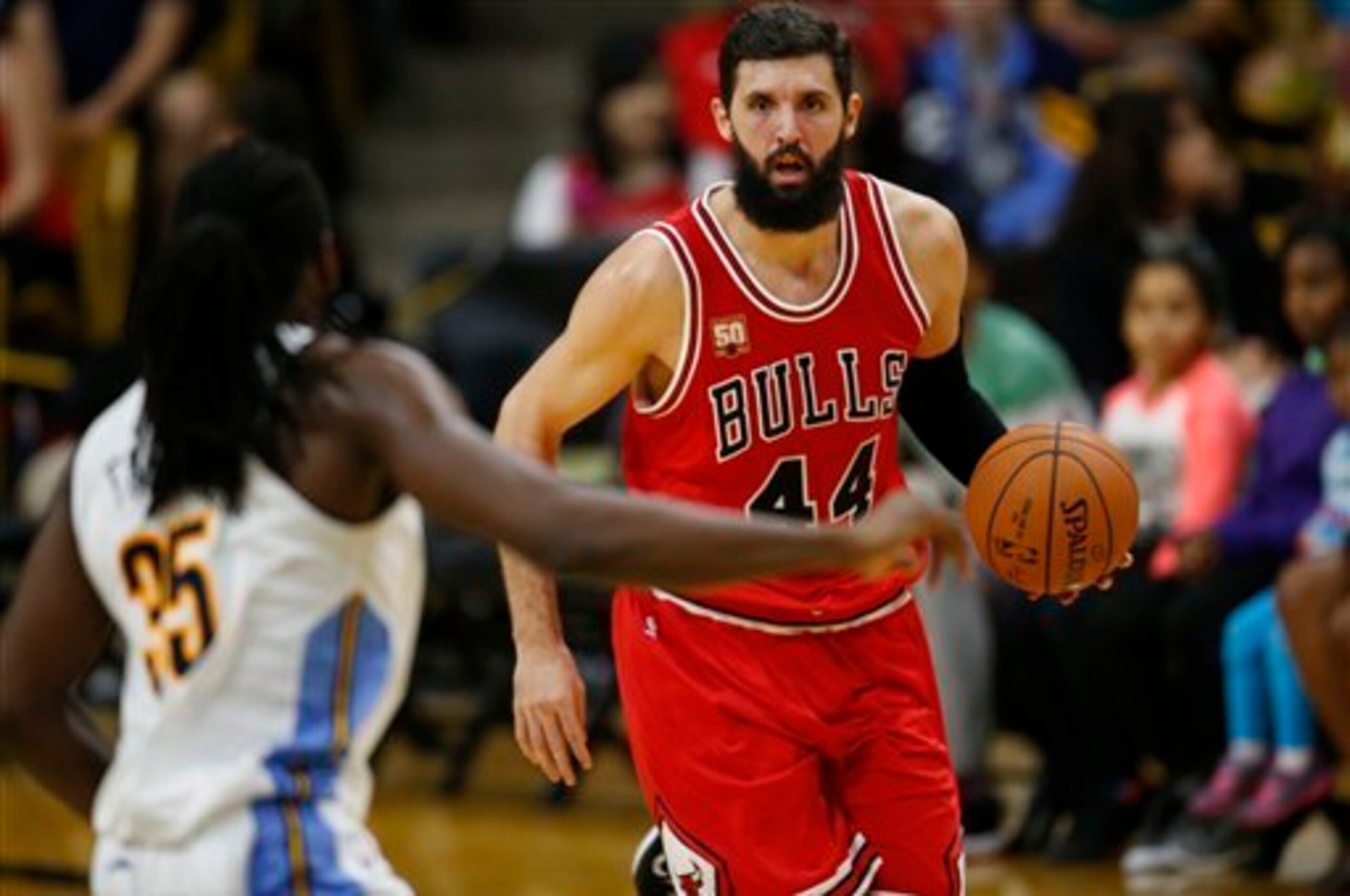
Brace yourselves, Joakim Noah hairdo groupies. This one is going to sting.
Sources told the Chicago Tribune's K.C. Johnson that Chicago Bulls head coach Fred Hoiberg is "leaning strongly toward" starting Nikola Mirotic over Noah to begin the season. That would free up the Bulls to trot out a one-in, four-out lineup with Pau Gasol as the starting center.
It's possible, if not likely, Hoiberg doesn't make the change. Noah is a two-time All-Star who has started 99.4 percent of his games since 2010-11, and Mirotic is a stretch 4 only in theory for now, since he shot just 31.6 percent from downtown as a rookie.
Stripping Noah of his starting job also isn't the ideal way to begin his contract year—assuming, of course, Chicago wants to keep him around. And yet, even if the Bulls roll with the Gasol-Noah tandem from the jump, chances are they won't feature it heavily thereafter.
Doug McDermott is already getting a chance to run at the 4 under Hoiberg. Bobby Portis has flashed more range than Gasol, Taj Gibson and Noah. Mirotic is still pegged as a stretch 4 prospect, and Hoiberg has the Bulls firing up seven more treys per game in the preseason (29.3) than last season.
That Noah is even being mentioned as a potential reserve says it all. The Bulls are preparing to embrace the latest offensive trends, even if that shift comes at the expense of a mainstay such as Noah.
(Related: That thing you smell is a midseason-trade casserole.)
Cleveland Cavaliers: Patience Is Worth About $12 Million
6 of 30
Tristan Thompson and the Cleveland Cavaliers, as first relayed by Northeast Ohio Media Group's Chris Haynes, (finally) came to terms on a five-year, $82 million deal. That's a lot of money.
But it could have been more.
Thompson was initially looking for a max contract worth around $94 million, per Haynes, while the Cavaliers stood firm at $80 million for months. One side needed to move, and though cap space had dried up around the league, costing Thompson precious leverage, Cleveland appeared to be the logical candidate.
Not only does Thompson share an agent with LeBron James, but the Cavaliers couldn't spend this money elsewhere. They were already over the cap, making it impossible for them to adequately replace their fourth-best player.
Well, Cleveland bent.
Thompson broke.
Shelling out $82 million for a backup forward-center still represents an absurd investment. But, by playing the waiting game, the Cavaliers saved themselves $12 million over the life of Thompson's deal and even more in potential luxury-tax penalties.
That's a lot of money, too—cash that can be spent on, say, I don't know, more fake jersey designs.
Dallas Mavericks: John Jenkins Everything, Basically
7 of 30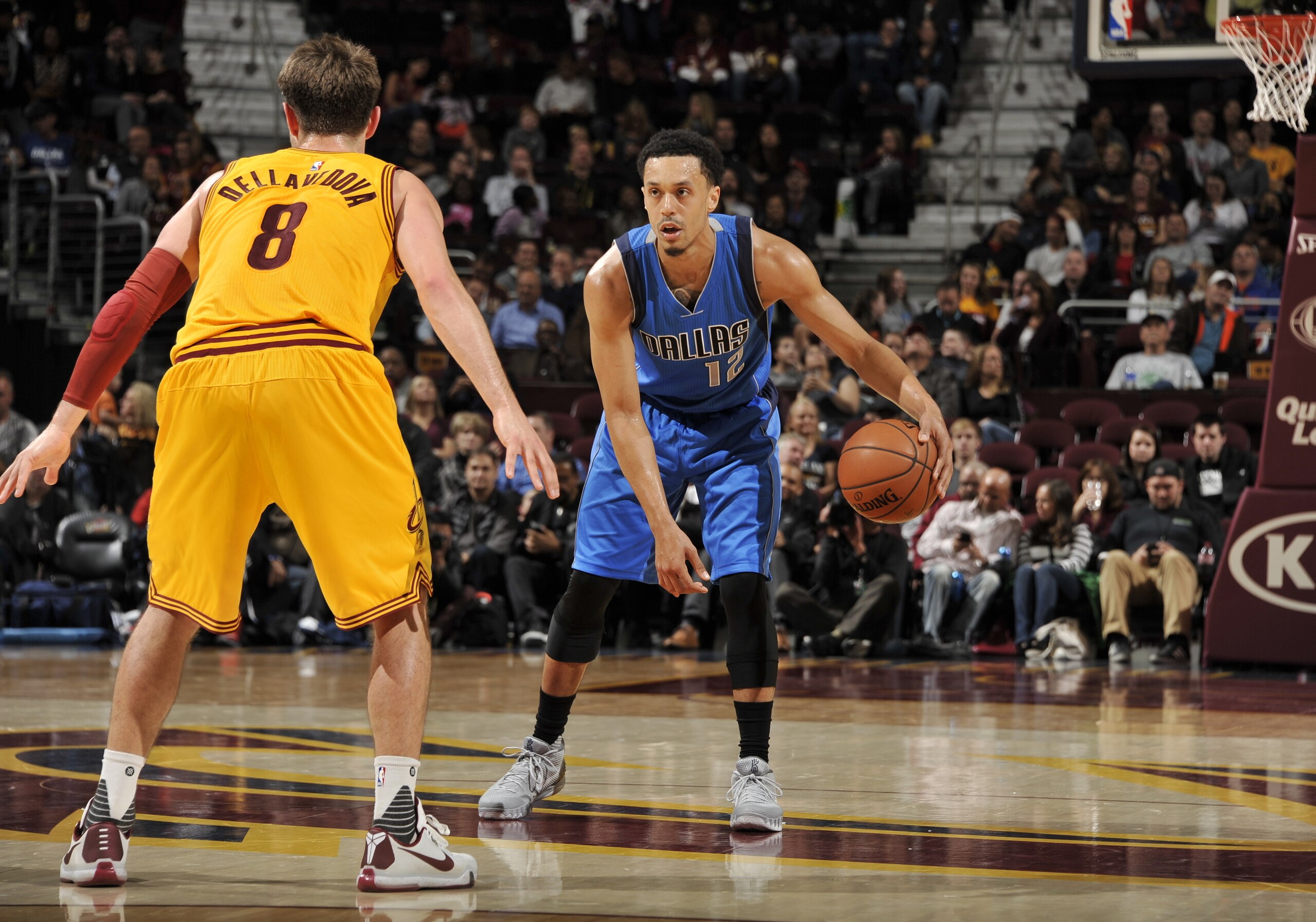
John Jenkins has turned the NBA's preseason into his offensive playground. He ranks fourth in points per game, behind only Anthony Davis, Kyle Lowry and Damian Lillard, and he is one of only two guards who are shooting 48 percent from the floor while averaging at least 12 field-goal attempts.
Playoff hopefuls such as the Dallas Mavericks seldom have room for reclamation projects, but Jenkins' preseason explosion should be enough to earn him a viable spot in the everyday rotation.
Chandler Parsons and Deron Williams aren't healthy. The only person who thinks Wesley Matthews will be ready for opening night is Wesley Matthews. Justin Anderson is playing like the rookie he is, and Raymond Felton is Raymond Felton. The Mavericks have minutes to spare on the perimeter, which can benefit Jenkins more than anyone else.
But Jenkins won't enjoy a team-high usage rate during the regular season. He'll have to play away from the ball more, chucking up threes off the catch on drive and kicks and outside pick-and-rolls. His success in that role isn't a given.
Jenkins is shooting 37.5 percent from deep for his career, but that success rate came in limited volume with the Hawks. He has buried just 27.5 percent of treys through six preseason tilts with the Mavericks and, for the most part, has been a defensive disaster.
For all he's done, Dallas still needs to see more.
Counterpoint: Jenkins has done enough, against all logic, to where Dallas still needs to see more.
Denver Nuggets: Stretch Centers Need Loving, Too
8 of 30
Nikola Jokic and Joffrey Lauvergne are going to open doors for the Denver Nuggets.
Jusuf Nurkic will be the team's primary prospect at center when healthy, and rightfully so, but Jokic and Lauvergne are the perfect change-of-pace options. Whereas Nurkic, like fellow frontcourt bros J.J. Hickson and Kenneth Faried, is limited in the damage he can do outside 10 feet of the hoop, Jokic and Lauvergne have three-point range.
Lauvergne especially has been a preseason epiphany. He is shooting 50 percent (3-of-6) from beyond the arc and has shown an ability to finish at the rim in stride, establishing himself as that inside-out option the Nuggets don't otherwise have at center.
Aside from Jokic, of course.
Denver doesn't have Jokic putting up as many three-pointers thus far, but he can shoot as well as put the ball on the floor. He's shooting better than 75 percent overall in the preseason and posting respectable rebounding and shot-blocking splits.
"Nikola Jokic, he's a young kid and I'm not saying he's ready, but he does things every practice that make you say 'Wow, this kid has a chance to be a [heck of a] player,'" Nuggets coach Mike Malone said, per the Denver Post's Christopher Dempsey. "For him to be that young and that skilled is really exciting to see."
Playing time isn't a given for either Jokic or Lauvergne, not with Faried, Nurkic and, to a lesser extent, Danilo Gallinari on the roster. But the offensive potential of a Nuggets unit that slots Jokic or Lauvergne at the 5 alongside three other shooters and rookie point guard Emmanuel Mudiay is #LeaguePassAlert high.
Detroit Pistons: Stanley Johnson Is Ready
9 of 30
Maybe the Detroit Pistons somehow knew Stanley Johnson was more NBA-ready than advertised. That would sure explain why they passed over Justise Winslow for him.
It would also explain Johnson's preseason performance.
There is a feasible scenario, perhaps in an alternate universe, where Johnson's 12.6 points, 4.4 rebounds, 2.1 assists and 1.6 steals per game carry over into the regular season. But this is less about his numbers—which are Rookie of the Year-ready at this point, mind you—and more about the way he's playing.
Almost half of Johnson's made buckets are coming off assists, much to the pleasure of a ball-dominant Reggie Jackson. The rookie's 38.5 percent shooting won't win him any awards, but his 40 percent clip from long range might.
Johnson is already there defensively as well. He's making NBA-level reads off screens, and his smothering on-ball defense has not betrayed him while transitioning from college to the pros.
Point being: Johnson is already comfortable, and thriving, as a three-and-D weapon. The Pistons' starting lineup is lucky to have him.
Golden State Warriors: One Title Isn't Enough
10 of 30
Last season's Golden State Warriors won a championship.
They became just the 10th team in NBA history to collect at least 67 wins.
Using TeamRtng+, which allows us to compare teams throughout history by measuring their offensive and defensive performance against league averages, we find that they rank as the eighth-best team the league has ever seen.
If you think that's enough to get them billed as favorites, you're wrong. Even though the Warriors are returning as basically the same team—92 percent of last season's minutes will be represented on the 2015-16 roster—they're not being touted as the group to beat.
According to Odds Shark and the Association's general managers, that honor belongs to the Cavaliers. After them, it's the Spurs. And then it's the Warriors.
What does a historically great, wholly intact juggernaut have to do in order to earn some respect around these basketball parts?
Houston Rockets: Kevin McHale Is Going to Experiment
11 of 30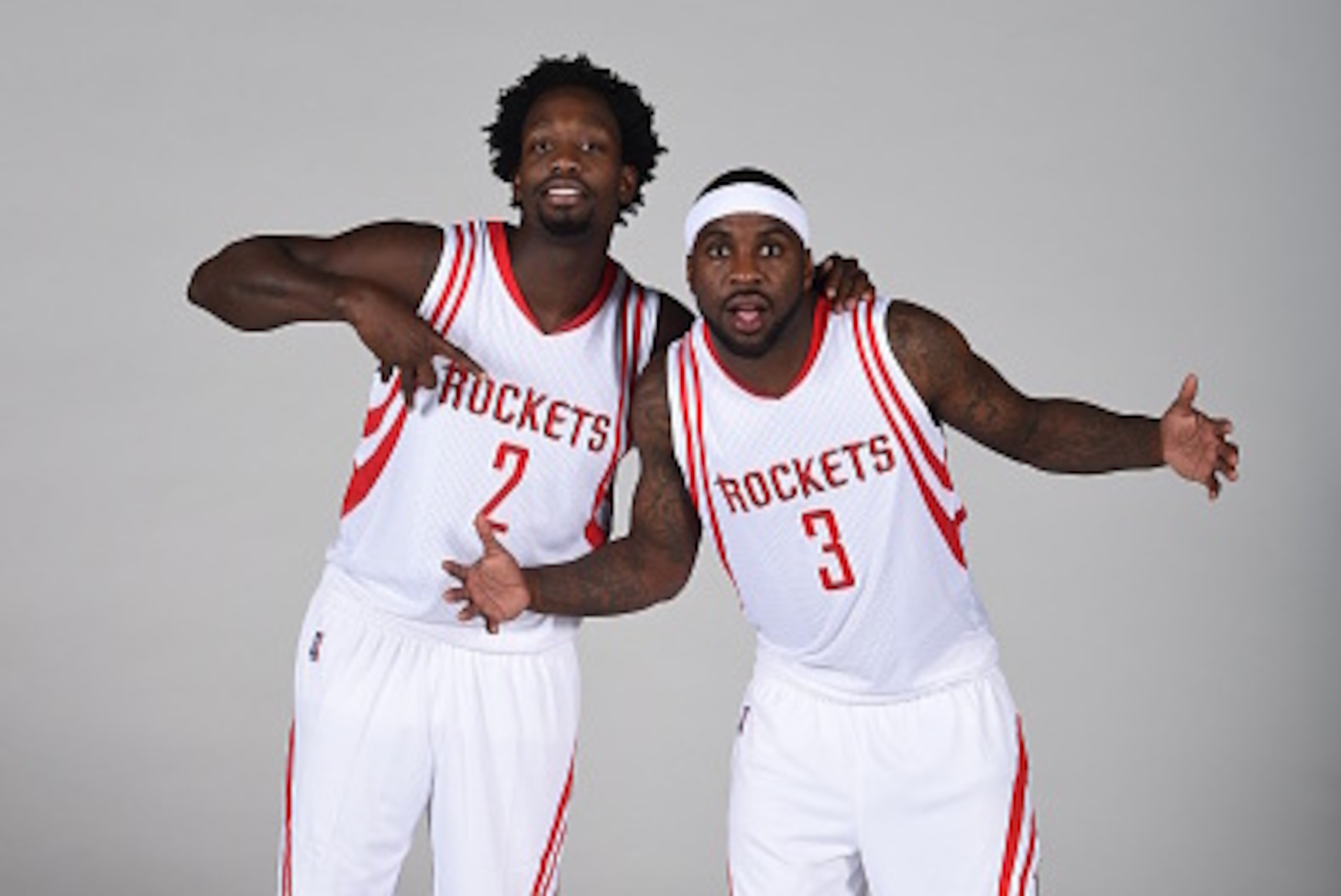
When it comes figuring out which point guard, Patrick Beverley or Ty Lawson, is more important to the Houston Rockets' immediate plans, head coach Kevin McHale has assumed a diplomatic, potentially exciting stance.
Why choose?
Beverley and Lawson have basically alternated starting games during the preseason, a trend that won't leak into the regular season, where consistency is paramount. McHale will inevitably name one as the starting floor general, thereby relegating the other to bench duty.
But he's also shown a willingness to play the two together. The Beverley-Lawson combo has seen some time together during the preseason, most notably in Houston's 105-100 loss to the Miami Heat, and it passes the eye test.
"I think that's when I like to really get creative when Pat's in the game," Lawson said afterward, via The Dream Shake. "I can play off the ball, Pat's bringing it down and I can come off down screens and things like I like to do."
Playing off Beverley is an extension of playing off James Harden. The Rockets are still giving Lawson ample time on the ball, and more than 75 percent of his made baskets have gone unassisted, but he is being asked to execute away from the action as a slasher and shooter.
If Lawson is comfortable in that role, the Rockets' lineup possibilities know no bounds. Beverley is scrappy enough to hang with opposing shooting guards, so he and Lawson can continue to play together, even though neither is taller than 6'1". And if the Beverley-Lawson dyad is a real thing, the Beverley-Lawson-Harden trio is a heartbeat away from becoming one, too.
Indiana Pacers: Paul George the Power Forward Has Potential
12 of 30
Paul George is now a power forward.
Despite his own initial pushback, and despite the Indiana Pacers throwing him out at small forward in their penultimate preseason tilt, he is officially a 4.
Six of his seven preseason appearances have seen him start at power forward. He's had no problems moving, the Pacers defense has made the necessary adjustments, and his All-Star stat lines are intact.
Making the switch has actually improved George's performance on the offensive end. He's launching threes with insane frequency yet putting them in at an above-average rate (39.3 percent), and his preseason offensive rating (110.3) would be by far and away the best mark of his career.
Even if you're not one for reading into individual exhibition lines, George's move to power forward has allowed the Pacers to play their desired style. They're faster, more three-point friendly and just flat-out better.
Early regular-season returns will determine just how invested Indiana is to playing this way. But right now, the offense is everything it wasn't over the last few years. And that's a good thing.
Los Angeles Clippers: There Is Such a Thing as Too Much Talent...For Now
13 of 30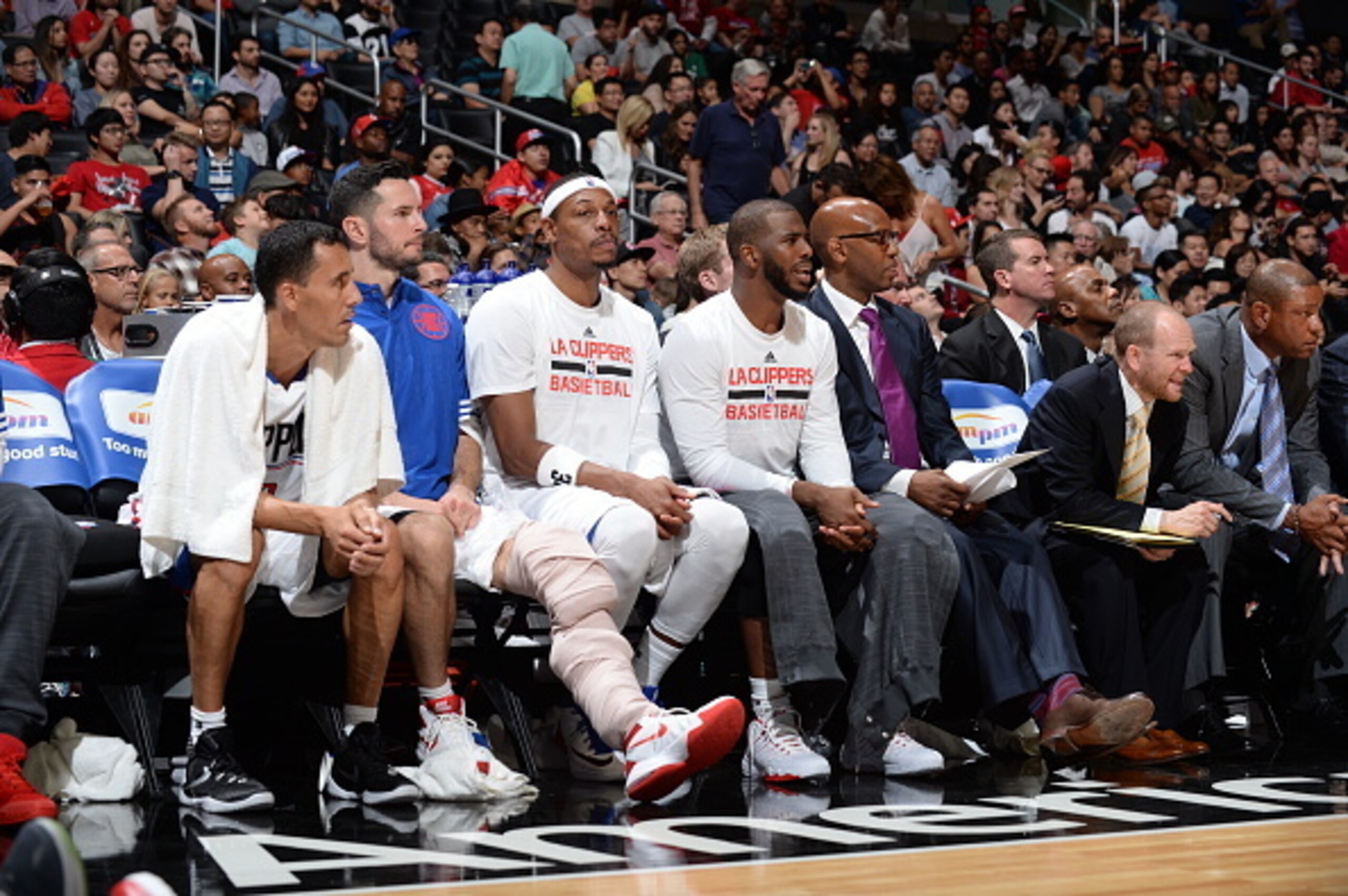
Chris Paul's diamond shoes are too tight. Blake Griffin's wad of $100 bills won't fit into his Dolce & Gabbana fanny pack. DeAndre Jordan's gold bars ripped the lining of his backpack. Paul Pierce's 2008 championship ring has lost part of its shimmer. Some of J.J. Redick's made three-pointers touch the rim.
This is to say: The Los Angeles Clippers have too much talent. And they know it.
"We've got a lot of talent, we've just got to put it together," Jordan said, per Clippers.com's Rowan Kavner. "That's not just offensively—that's defensively, too. We've just got to find a way to put it all together, figure out who plays well with whom, and if you don't play well with somebody, we've got to figure out how to."
Much of the team's preseason has been spent trying to solve the painstaking quandary of having too many capable bodies. The Clippers have 11 players averaging at least 14 minutes per game, all whom would be rotation staples on other squads.
Many of the lineups and combinations they're running now won't even see the light in the regular season, and such chaos has yielded one of the preseason's worst offenses. That's apparently what happens early on when your 12-man depth chart stretches two actual NBA players deep at every position:
| Chris Paul | J.J. Redick | Wesley Johnson | Blake Griffin | DeAndre Jordan |
| Austin Rivers | Jamal Crawford | Paul Pierce | Josh Smith | Cole Aldrich |
| Pablo Prigioni | Lance Stephenson |
Talk about problems.
Something tells me, though, that the too-good-for-their-own-good Clippers will be just fine.
Los Angeles Lakers: Julius Randle, Point Something
14 of 30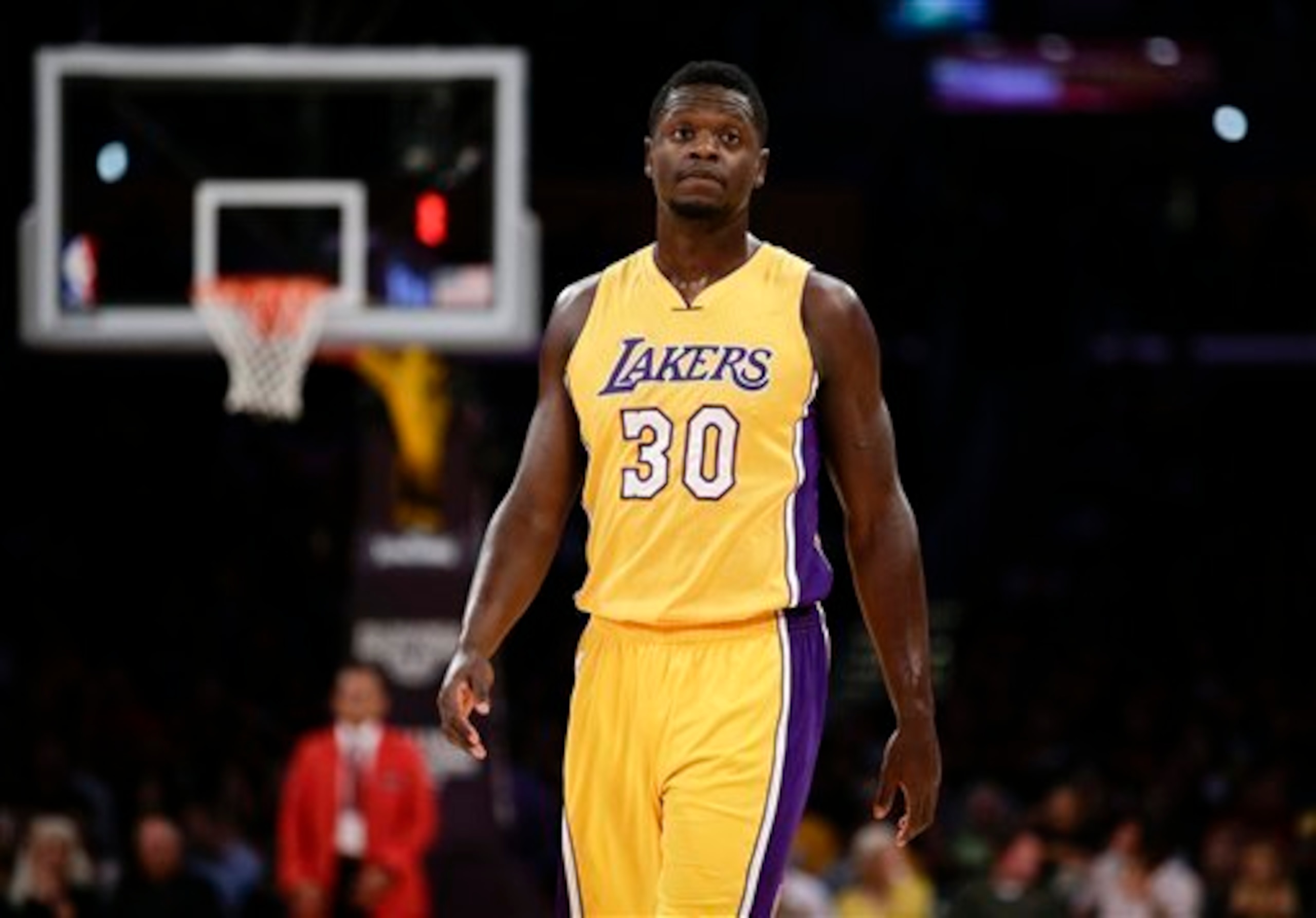
The Los Angeles Lakers have enough ball-dominant hands to feed, and their preseason performance has done little, if anything, to quell concerns about whether they have enough touches to go around.
Kobe Bryant, who is sidelined with a bruised calf, and Lou Williams lead the team in usage rate. That is not OK. The preseason is a time for prospects to shine, and if the Lakers are already featuring certain veterans over youngsters, there is no limit to the pecking-order warts they'll have during the regular season.
Using sophomore Julius Randle as a point forward (or something) would only seem to compound the issue. And it just might. But it's also a role for which Randle is suited.
"I told him every time he gets a defensive rebound, I want him to push it," Lakers coach Byron Scott previously said of Randle, per ESPN.com's Baxter Holmes.
Push it he has.
Randle can still be out of control with the ball in his hands, but he's shown a knack for hotfooting his way to the rim and setting up teammates. More than 70 percent of his shots have come inside eight feet of the hoop, and he has a higher assist percentage than Jordan Clarkson.
Of course, his on-ball accolades don't make it any easier for the Lakers to forge offensive structure, and the sophomore forward does need to develop a reliable touch beyond eight feet. But as a tweener forward lacking a definitive place in today's NBA, Randle is carving out a niche the team just can't ignore.
Memphis Grizzlies: JaMychal Green Is Home
15 of 30
JaMychal Green, the second-year undrafted forward out of Alabama, has found a role with the Memphis Grizzlies—a real role.
Head coach Dave Joerger, along with some of Green's teammates, entered training camp lauding the sophomore's energy and aggression. The 25-year-old has not disappointed in extensive preseason action. He embodies that Grizzlies' grit-and-grind mantra without binding himself to it. He is explosive on the offensive end but precise on the defensive side, almost like an oversized Tony Allen.
Green has even looked comfortable on the perimeter, serving as a quasi-floor spacer. Most of his shots are coming right at the rim, but he has routinely taken his jumper to 16 feet and beyond, showcasing the range Memphis doesn't otherwise have in its second-unit forwards.
Dating back to the Lionel Hollins era, the Grizzlies have never been ones to rest any part, however small, of their Western Conference status on a player with upside. But the younger Green has been a demonstrative plus on both ends of the floor, posting a higher net rating than any of Memphis' regular starters in comparable playing time, ostensibly forcing the Grizzlies to break character.
"Along the way, Green seems to have acquired something difficult to obtain for young players on playoff teams: The trust of his coach," wrote the Commercial Appeal's Chris Herrington. "He now seems a likely bet to open the season with a spot in the rotation."
Miami Heat: Playing Fast Is Hard
16 of 30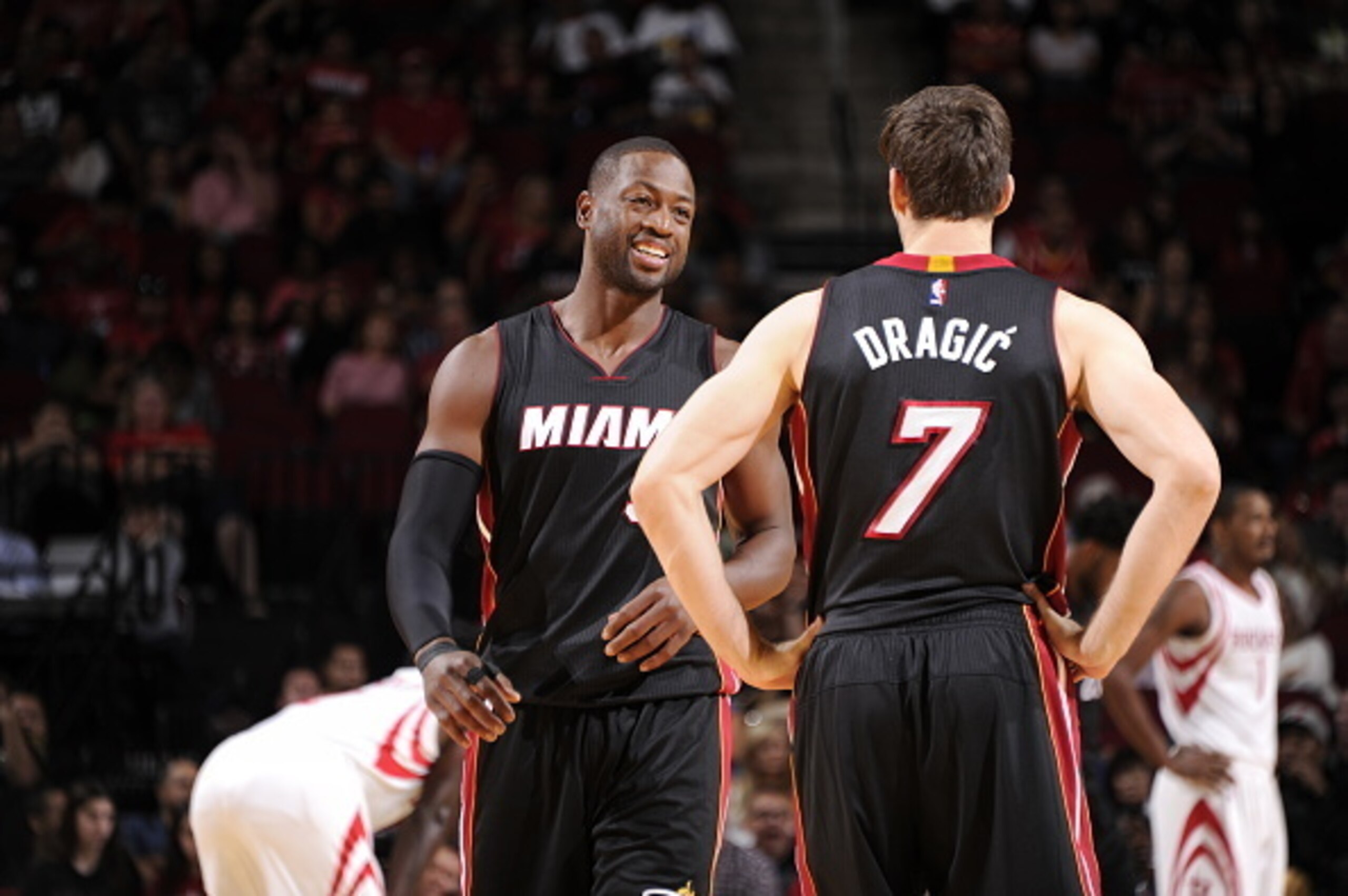
True to their post-Goran Dragic trade vision, the Miami Heat are playing faster than they did last season. They're averaging 99.66 possessions per 48 minutes, which would have ranked second in the league for 2014-15, a far cry from their actual 29th-place finish.
Here's the thing: Preseason basketball is typically faster than regular-season roundball.
Exhibition contests remain good barometers for how a team plans to play moving forward, but according to the Wall Street Journal's Andrew Beaton, the average offense was three possessions per 48 minutes slower than it was during the preseason in 2014-15. If the Heat follow that trend, they'll be measurably quicker but still sitting outside the top 10.
Here's the other thing: Faster hasn't meant better.
Maybe the Heat's preseason pace translates into the regular season possession for possession. Even then, they're still left knowing that they played basically bottom-10 basketball on both the offensive and defensive ends for much of the preseason.
Running at breakneck speeds has been good for some players, most notably Gerald Green and Tyler Johnson. But even Dragic, the inspiration for this offensive movement, is struggling to find his place.
Miami's spacing and movement and off-ball screens are ready for regular-season tests. The offensive chemistry most just assumed would take care of itself from the get-go is not.
Milwaukee Bucks: Jabari Needs Time; the Offense Needs Jabari
17 of 30
Torn ACLs are not the career-altering NBA injuries they once were. They can be, but they're no longer viewed with incurable fear.
So when Jabari Parker suffered a torn ACL in his left knee just 25 games into his rookie campaign, neither he nor the Milwaukee Bucks needed to panic. They needed to wait.
Now, more than 10 months later, they're still waiting.
Parker isn't expected to make his debut until sometime in November, per the Journal Sentinel's Charles F. Gardner, at which point he, a rookie masquerading as a sophomore, can begin playing catch-up. And the Bucks offense needs him to catch up quickly, because as of now, even Parker's lackluster jumper would be an upgrade over Milwaukee's present floor spacing.
Giannis Antetokounmpo has hit some threes, and Greg Monroe is at home as the Bucks' lone true post scorer, but all of last season's struggles remain. Milwaukee is tallying just 99 points per 100 possessions through five preseason contests, which is even worse than the 99.3 they mustered last year, when they ranked 25th in offensive efficiency.
Inserting Parker won't, by any means, solve everything. He still needs to prove that he can be an average three-point shooter who can remedy the Bucks' middle-of-the-road ball movement.
Next to Monroe, though, Parker is Milwaukee's most polished offensive weapon, even with only 25 games of experience.
Minnesota Timberwolves: Nemanja Bjelica Is Here, Too
18 of 30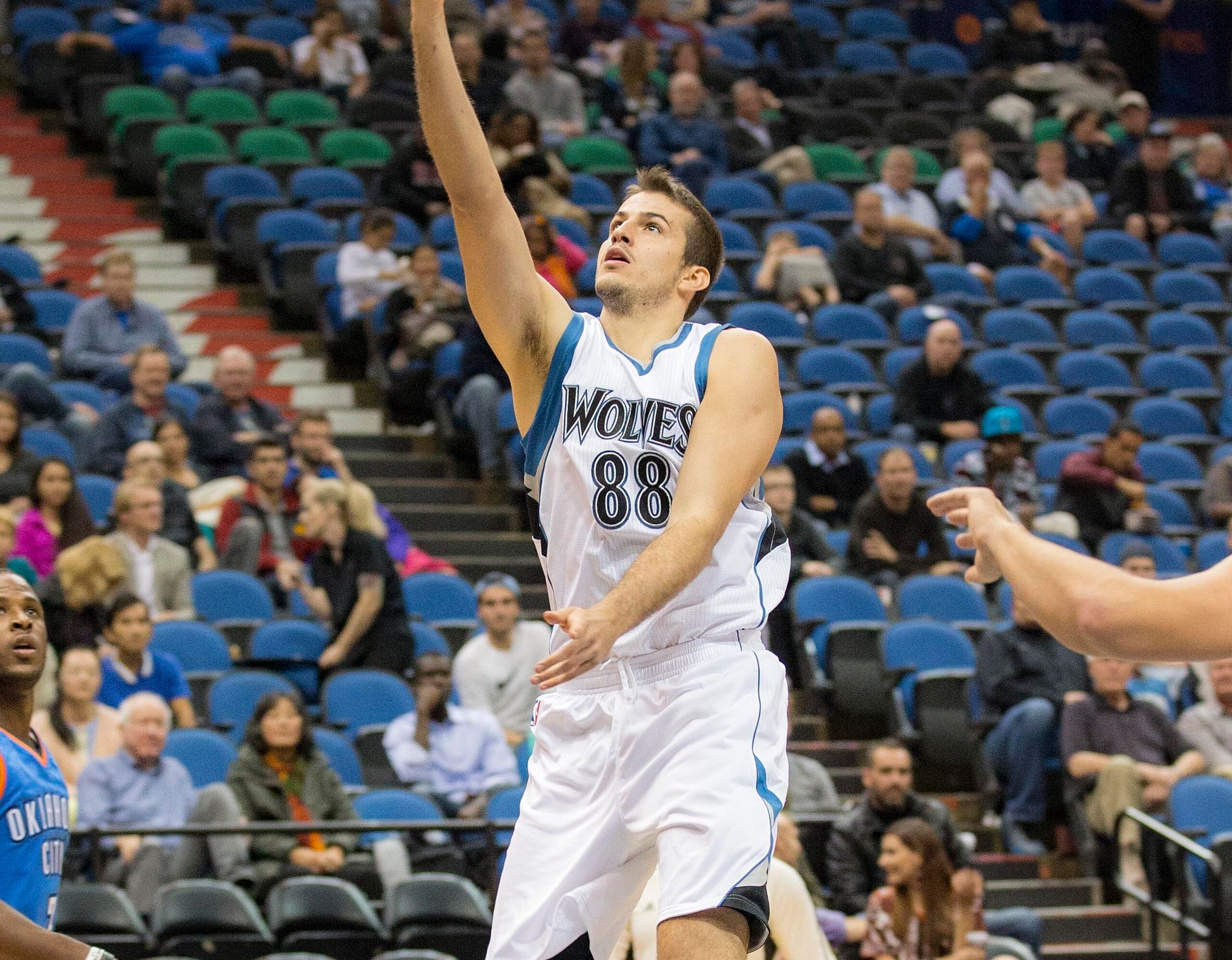
Andrew Wiggins' sophomore leap. Ricky Rubio's health and fit alongside the Timberpups. Shabazz Muhammad's blend of bruising and shooting. Zach LaVine's place in the NBA when standing on solid ground. Karl-Anthony Towns' stretch-5 development. Interim head coach Sam Mitchell's minutes dispersion.
Those are just a few of the players and storylines that have and will continue to generate attention as the Minnesota Timberwolves enter the second year of their latest rebuild. But Nemanja Bjelica wants you to know he's here too and that he may be Minnesota's best shooter.
For all this talk about Wiggins' superstar ceiling, Towns' futuristic skill set, Tyus Jones' playmaking and Kevin Garnett's angry face-teaching, Bjelica is still important to the Timberwolves' future. More than Towns is touted as that floor-spacing forward/center, something he wasn't really allowed to be at Kentucky, Bjelica is actually entering the NBA as a proven frontcourt shooter, albeit one from overseas.
Two players have knocked down 50 percent of their preseason threes while attempting more than 20. Lowry is one. Bjelica is the other.
That's legit, even in the preseason, making Bjelica crucial to the Timberwolves' search for an offensive identity. They ranked among the worst three-point-shooting factions in the league last year, and Bjelica works as that instant complement to the ball-dominant Rubio and Wiggins.
Plus: Two or three years down the line, imagine a starting frontcourt that features both Towns and Bjelica, each of them established enough to stretch defenses beyond proper function.
New Orleans Pelicans: Lady Luck Is Not a Fan
19 of 30
Injuries have found the New Orleans Pelicans.
Tyreke Evans will miss the next six to eight weeks after having surgery on his right knee, according to the Times-Picayune's John Reid. He joins an overcrowded sideline that already includes Alexis Ajinca (hamstring), Omer Asik (calf) and Norris Cole (ankle). Jrue Holiday also recently informed SI.com's Rob Mahoney that he would be on a strict minutes cap to start the season.
To sum up: Ugh.
Anthony Davis was created in the image of what NBA players will be during the 2315-2316 season, so the Pelicans aren't patently screwed. They're still favorites to land one of the final playoff spots out West, and new head coach Alvin Gentry's outside-in offense will maximize the contributions from Ryan Anderson, Eric Gordon, Quincy Pondexter and perhaps even Nate Robinson.
No matter how long Lady Luck decides to vomit injury bugs all over the city of New Orleans, the Pelicans will be fine. That is, unless one of those party-pooping critters finds its way over to Davis, an injury-bug magnet.
Then, yeah, the Pelicans would be screwed.
New York Knicks: Defense Is Fun
20 of 30
We could riff on the New York Knicks' decision to play faster than a slug stuck in mud. We could talk about Derrick Williams playing like an actual NBA player or Kyle O'Quinn playing like six actual NBA players rolled into one.
Heck, we could even talk about how, after just three limited preseason outings, rookie Kristaps Porzingis looks like the first coming of Dirk Nowitzki's offensive polish melded into DeAndre Jordan's raw explosion.
Instead, we're going to talk about the Knicks defense, because for the first time in years, it's good enough to talk about.
New York is holding opponents to just 91 points per 100 possessions through five preseason matchups. Unsustainable doesn't even begin to describe that level of stinginess. The Warriors paced the league in defensive efficiency last season, and they let up 98.2 points per 100 possessions.
But here's the poetically ugly truth: The Knicks' defensive rating could worsen by 15 points per 100 possessions leading into the regular season, and they would still be better than they were last year.
Not that we should prepare ourselves for such a steep drop-off. New York has amassed a quaint little well of defensive talent, from Robin Lopez and O'Quinn on the inside, to Arron Afflalo and Jerian Grant on the outside.
Besides, in 2014-15, defenses allowed, on average, 4.6 points more per 100 possessions during the regular season than they did during the preseason. Add those 4.6 points to the 91 that the Knicks are giving up now, and they'll check in at 95.6—still unsustainable.
Double that, though, and New York would be relinquishing 100.2—a far more realistic goal that assures the Knicks of deploying a top-seven defense. And considering where they were last year, as a 17-win dumpster fire, the notion that a top-seven finish isn't totally implausible counts as a win by itself.
Oklahoma City Thunder: Grace Periods Are Not for Kevin Durant
21 of 30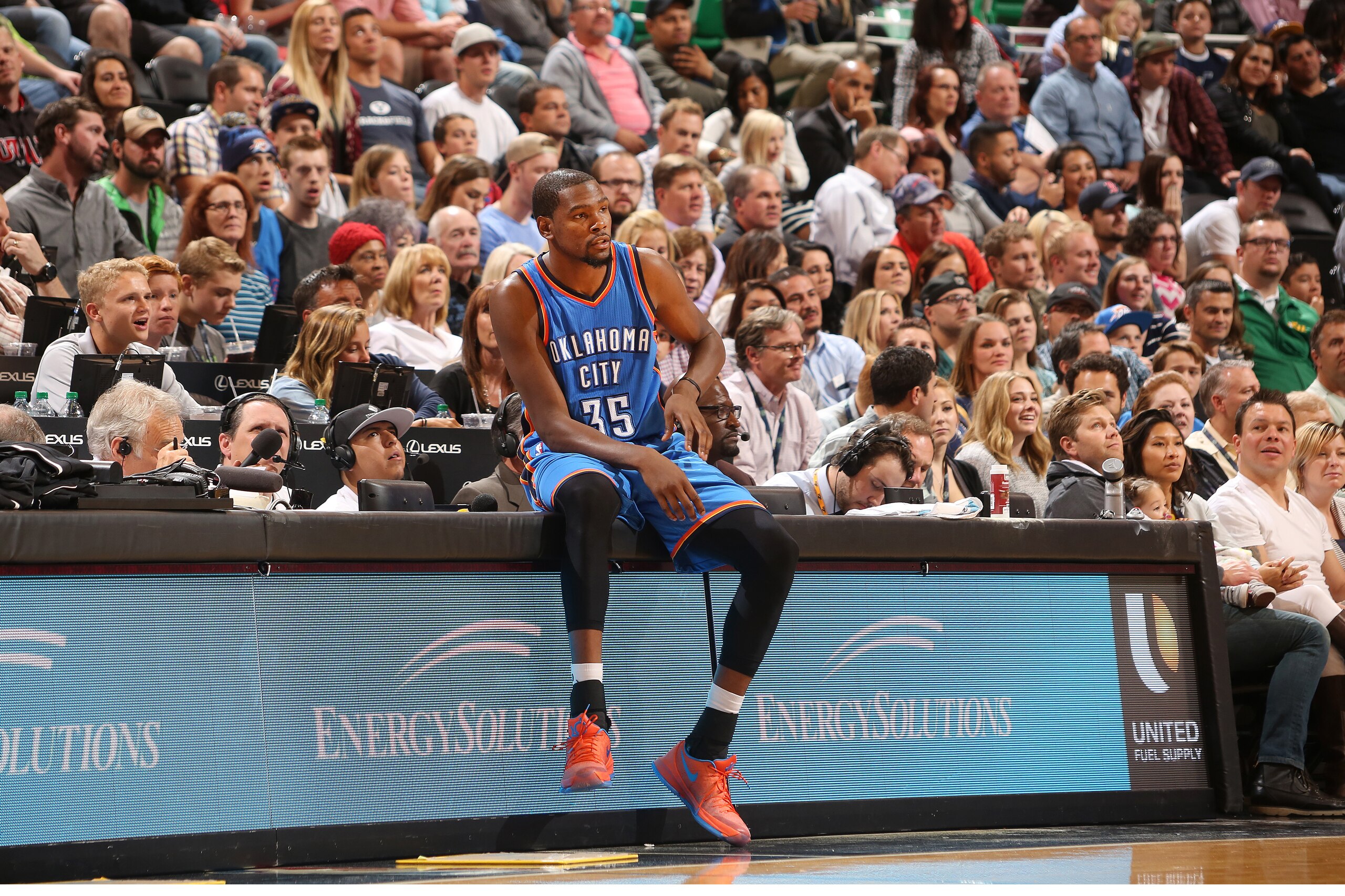
This isn't so much a revelation as it is a necessary reminder: Kevin Durant is still Kevin Durant.
Undergoing three foot surgeries in six months is no joke. Any resulting concern and skepticism is warranted. Foot injuries always seem to linger with big men. Durant isn't lugging around as much weight as Brook Lopez or Yao Ming, but human beings weren't meant to clean gutters without a ladder.
At the same time, there is no need to eulogize his right foot. And despite his complete disregard for the media's importance in the past, it's not hard to see why he's at wit's end with the concern, skepticism and questions.
As he told reporters, per ESPN.com's Royce Young: "I told myself I'm not going to answer that question no more."
Especially now.
Five preseason outings into his return, Durant looks better than fine. It hasn't always been smooth sledding for the 2013-14 MVP—he struggled mightily in 20 minutes of action against the Mavericks—but he's averaging 18 points on 59.3 percent shooting, including a 57.1 percent clip from three-point land.
Rule of thumb dictates the Oklahoma City Thunder take things slowly, hawkishly monitoring Durant, that right foot and any bump or bruise he may incur. But the rules have never once applied to him in the past, and as he's making clear with every breakaway dunk, swished three and acrobatic jumper, that's not about to change now.
Orlando Magic: Victor Oladipo Is an All-Star
22 of 30
Get those "Victor Oladipo #NBABallot" tweets ready. You're going to need them even before the NBA officially opens the 2016 All-Star Game polls, if only to make a point.
Oladipo had the makings of a future superstud as a sophomore. Now, entering his third season, he looks like a present-day All-Star.
In addition to averaging 16.6 points, 5.9 rebounds, 4.1 assists and two steals per 36 minutes through seven exhibition efforts, Oladipo is leading the way for an Orlando Magic defense that is angling for elite-level regular-season status.
Orlando is allowing just 97.8 points per 100 possessions thus far. That would have been tops in the league last season. Oladipo's own defensive rating is even better, and the Magic have the requisite talent to suggest their preseason tenacity isn't a fleeting aberration.
Scarier still, Oladipo can shoot now. He could shoot last season, when he drilled a good-enough 33.9 percent of his triples, but he's even better at the moment.
His 42.9 percent success rate from long range, while ambitious over the long haul, is coming amid career-high frequency; he's averaging 4.3 deep balls per 36 minutes, noticeably more than the 3.4 he produced over his first two seasons.
Per John Denton of Magic.com, hours upon hours of additional shooting drills have transformed Oladipo into the do-it-all-and-do-it-all-really-well threat he is now. And, even when accounting for obligatory preseason distrust, it's difficult to envision a 2016 All-Star tilt that doesn't include him.
Philadelphia 76ers: Hollis Thompson Is a Floor-Spacing Savior
23 of 30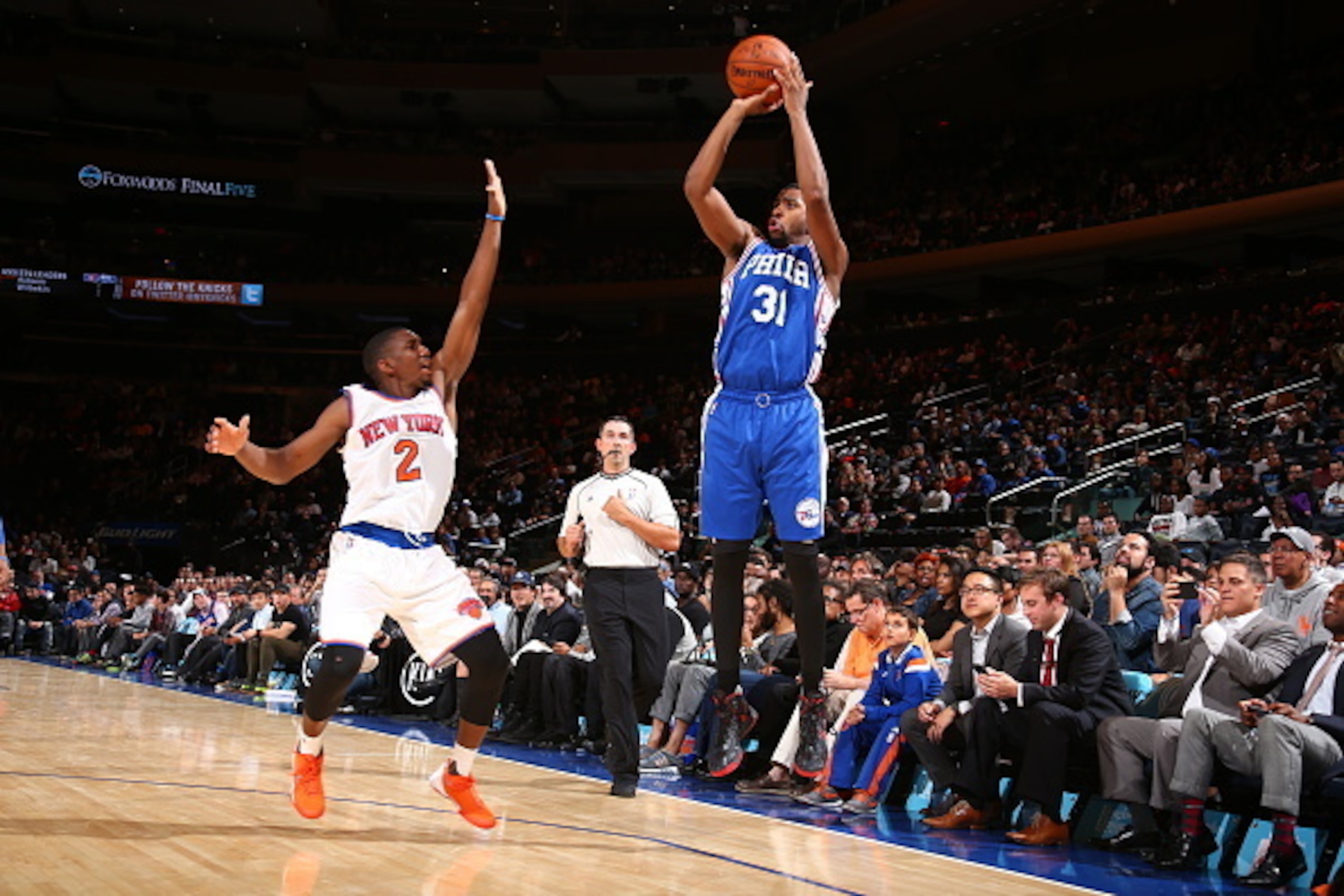
Hollis Thompson has won the Philadelphia 76ers' starting shooting guard job.
No, I'm not just saying that because Nik Stauskas is battling a leg injury and head coach Brett Brown has nowhere else to turn. Thompson has truly been one of the Sixers' only offensive bright spots of the preseason.
Jahlil Okafor is struggling to shoot even 40 percent from the floor amid increased defensive attention. Nerlens Noel is still warming up to shots that come more than eight feet away from the basket. The point guard position has been ravaged by injuries, and Isaiah Canaan, while surviving as a passer, isn't ready to run an NBA offense.
Thompson, meanwhile, is averaging 14.1 points, 5.5 rebounds, 1.1 steals and 1.1 blocks per 36 minutes while shredding string on 38.7 percent of his three-pointers. Only six other players have attempted at least 30 long-range missiles and are maintaining a 38 percent clip: Robert Covington, Stephen Curry, Paul George, Gerald Green, C.J. McCollum and Nick Young. That, for the most part, is good company to keep.
Remember: The Sixers were the NBA's second-worst three-point shooting team last season. They fielded the fourth-worst overall offense in league history. They need a player exactly like Thompson—that outside threat who can alleviate Okafor's burden, open up driving lanes with his shooting and attack off the dribble.
Glimpses into this version of Thompson have been provided over the last two seasons. He is shooting better than 40 percent from distance for his career and was one of only two Sixers players to accumulate at least one offensive win share in 2014-15.
Stauskas' arrival has come with a lot of pomp and promise. Finally, Philly acquired a legitimate 2-guard prospect. Finally, it had that lights-out backcourt shooter.
Really, it turns out the Sixers have had that prospect, that shooter, for the last two years.
Phoenix Suns: T.J. Warren Is Ready(ish)
24 of 30
Move over, P.J. Tucker. Las Vegas Summer League standout T.J. Warren is now just a standout, and he's coming for your minutes.
Actually, he's coming for minutes in general.
Warren is putting his heightened preseason exposure to good use. He's posting a usage rate north of 24, and his 13.7 points, five rebounds, two assists and 1.8 steals per game have him entrenched in the starting small forward discussion—a conversation that, admittedly, is being buoyed by the thoughtz and feelz of people (like yours truly) outside the Phoenix Suns organization.
If not for Warren's deficient jump shot, head coach Jeff Hornacek probably would have named him the starting 3 for not only this season but the next five years. Warren's lack of three-point range is nevertheless a problem. He is shooting just 10 percent from beyond the arc and only 27.3 percent outside of 16 feet.
But those iffy shooting slashes aren't as problematic when looking at everything else he does. Warren isn't especially athletic, but he can be a defensive hound and has found ways to finish around the rim. He's shooting an oh-my-god 73.5 percent inside five feet of the hoop during the preseason, and his mid-range jumper—which accounts for 25 percent of his total shot attempts—touches twine more than 42 percent of the time.
Looking at the rest of the roster, the Suns don't have room for an offensive project and defensive wild card in the starting lineup. They invested $140 million in their backcourt of Eric Bledsoe and Brandon Knight, signed a 33-year-old Tyson Chandler and resisted the temptation to trade Markieff Morris. By design, they're caught between rebuilding and competing, and bestowing veteran responsibility unto a sophomore could sway them more toward the rebuilding end.
To which we should all say: Whatever. Warren's place in the NBA, as either a small forward or power forward, is firmly in doubt, but he's done enough to be part of Phoenix's balancing act as a starter.
Portland Trail Blazers: Damian Lillard Will Take All the Shots
25 of 30
Fifty-seven. That's roughly the number of shots per game the Portland Trail Blazers lost with the departures of Arron Afflalo, LaMarcus Aldridge, Nicolas Batum, Robin Lopez and Wesley Matthews.
Those looks will have to be allocated elsewhere, to multiple players. And Lillard would like us all to know he'll use up as many of those extra attempts as possible.
Four preseason games isn't a large enough sample size to be considered gospel, but in that time, Lillard is averaging 29.1 shots per 100 possessions. For context: Russell Westbrook was the only qualified player last season to exceed the 29-look threshold. For additional context: The Blazers are averaging 84.4 field-goal attempts per 100 possessions as a team. Lillard's 29.1 would represent 34.5 percent of their shots if he was on the floor at all times.
For even more context: There's a chance that, with Portland doling out more minutes to less proven talent during the preseason, Lillard's per-100-possession shot attempts jump higher during the regular season.
For some final context: Oh me, oh my, that's a lot.
Sacramento Kings: DeMarcus Cousins Isn't Ready to Shoot Threes
26 of 30
DeMarcus Cousins is not ready to chuck threes.
Good on the Sacramento Kings for trying to turn him into the ultimate center, but let the record show: DeMarcus Cousins is not ready to chuck threes.
The sentiment itself is nice. If Cousins is able to shoot threes, it plays right into the structure of head coach George Karl's pace-and-space offense, allows him to play alongside fellow center Willie Cauley-Stein and mitigates the existence of Rajon Rondo. But, five preseason appearances later, Cousins is just 1-of-12 from behind the three-point line and shooting less than 40 percent overall.
More than 39 percent of all his looks are now coming outside the paint and restricted area. By comparison, last season, when he was named to the Western Conference All-Star squad, only 32.5 percent of his field-goal attempts were from beyond that range.
Perhaps one day Cousins should be free to let 'er rip from long range. That day may even come this season, after the Kings realize they're not a playoff team. (So, figure December.) But that day is not today, tomorrow or the day after that.
San Antonio Spurs: The Offense Needs Time
27 of 30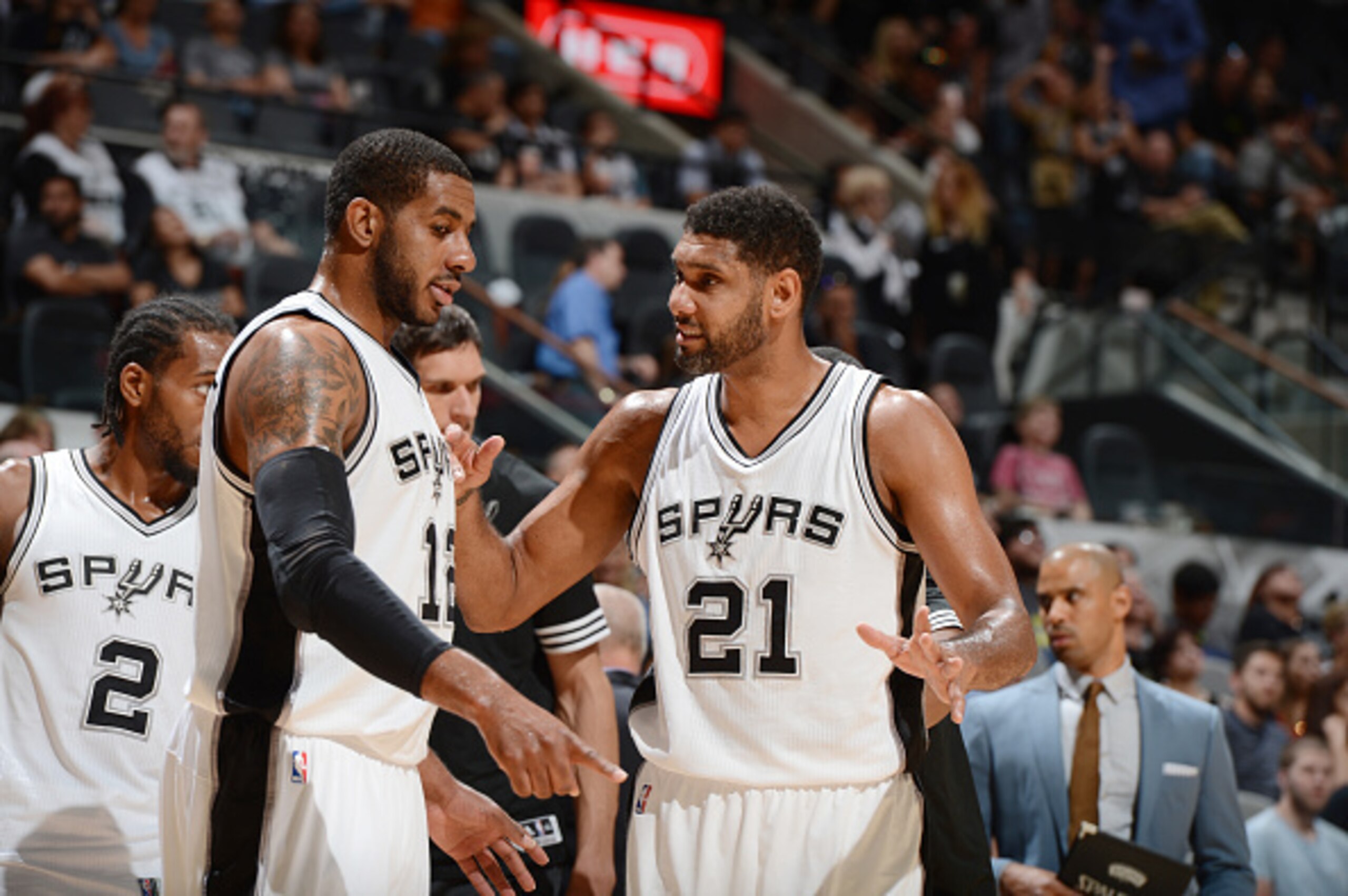
So much for the retooled Spurs running away with the 2016 NBA championship in October.
Some balked at the prospect of LaMarcus Aldridge's arrival keying an instant offensive titan. The Spurs would need time to adjust. Aldridge, Boris Diaw, Tim Duncan, Manu Ginobili, Danny Green, Kawhi Leonard, Tony Parker, David West—they all need a grace period to adapt and to find their fit in a well-oiled machine that just swapped out prominent parts.
Initially deemed first-rate killjoys, those naysayers now look like soothsayers. The Spurs offense has, by and large, been a mess of confusion and imperfect shot selection.
Sometimes, it looks good—great, even. You cherish those moments, those occasional sets when everything comes too easy, just like many thought it would. But the Spurs are notching just 91.8 points per 100 possessions, which, over the course of an entire 82-game season, would be bad enough to have them excommunicated from the NBA entirely.
All of this could just be preseason blues. Five outings isn't enough to tell us everything. But it's enough to show us that the Spurs are struggling to create the right shots.
Just over 32 percent of their total field-goal attempts (128) have come from mid-range. Less than 25 percent of their looks came from the same area last season, when they hovered around the top five in offensive efficiency.
San Antonio's shot distribution could change. It will probably change.
It better change.
Six teams took more than 30 percent of their shots from mid-range in 2014-15: Hornets, Knicks, Lakers, Pacers, Timberwolves and Wizards. None of them finished in the top half of offensive efficiency, and five of them wallowed inside the bottom 10.
Toronto Raptors: DeMar DeRozan Needs Work
28 of 30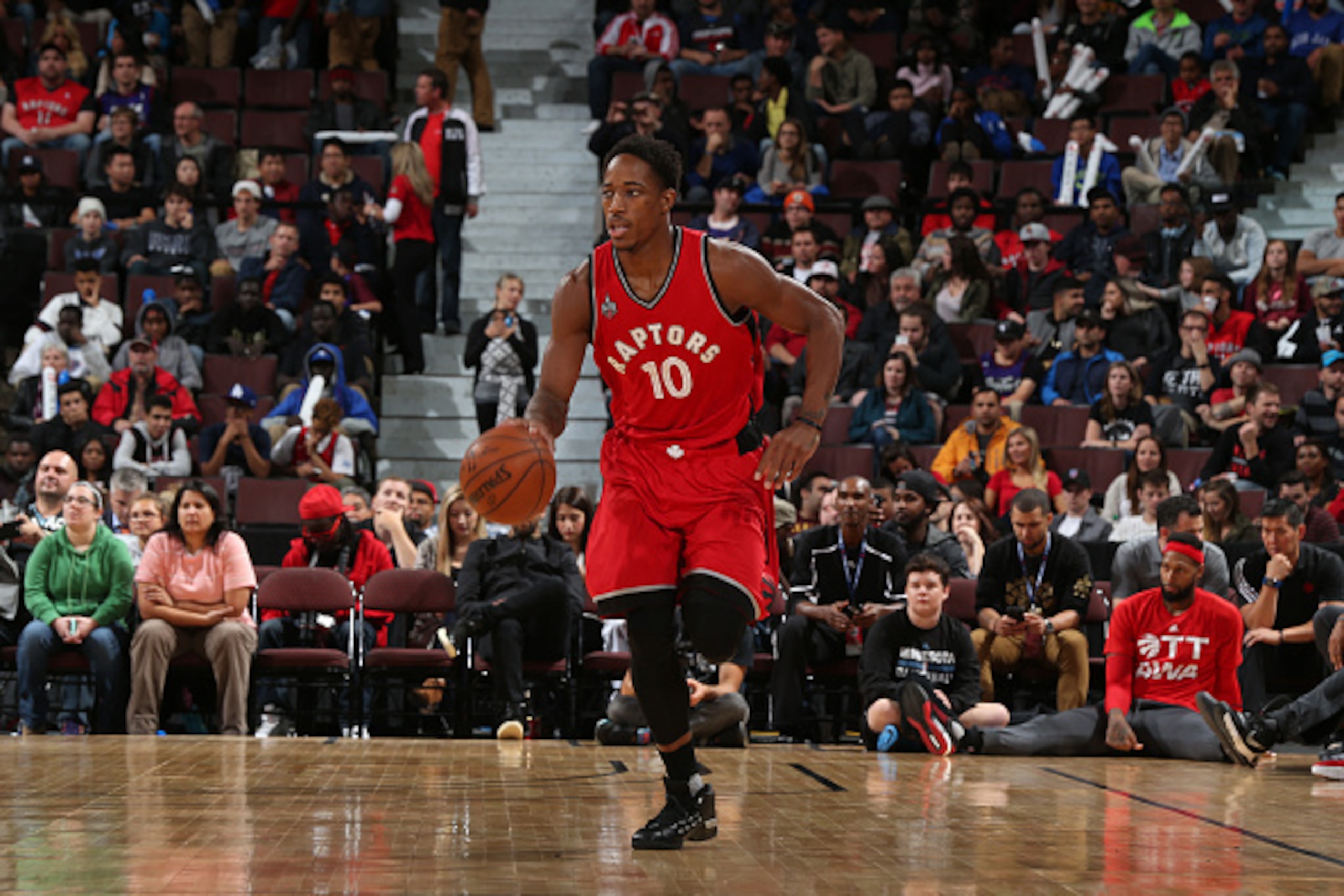
As the stock of the Toronto Raptors continues its fast and furious rise through the Eastern Conference, DeMar DeRozan's (hypothetical) shares are reaching unprecedented lows.
Last season's pitfalls were supposed to be isolated misfortunes. DeRozan battled a groin injury, missed 22 games and followed up his first All-Star campaign by registering the lowest effective field-goal percentage of his career.
Nothing about his preseason suggests he's on his way back to 2013-14 form. He is shooting just 28.9 percent from the floor and has been bageled from long distance, missing all seven of his three-point attempts. His defense has been solid against both full and half-court sets, but his offensive rating pales in comparison to DeMarre Carroll's and Kyle Lowry's.
This is legitimately concerning and not just a preseason bugaboo, because DeRozan's offensive game has always given the appearance of a glass ceiling. He's wildly athletic but doesn't thrive in transition. He can reach the rim at will but prefers to feast on mid-range jumpers. And he's shot better than 30 percent from deep just once in his career.
Kobe-cut offensive tenets will make DeRozan, now 26 years old, an interesting free-agent case study. But, at this moment, as he plays his game, he's failing to perform like a No. 4 offensive option, let alone an All-Star.
Utah Jazz: Long-Awaited Trey Burke Leap May Be Coming
29 of 30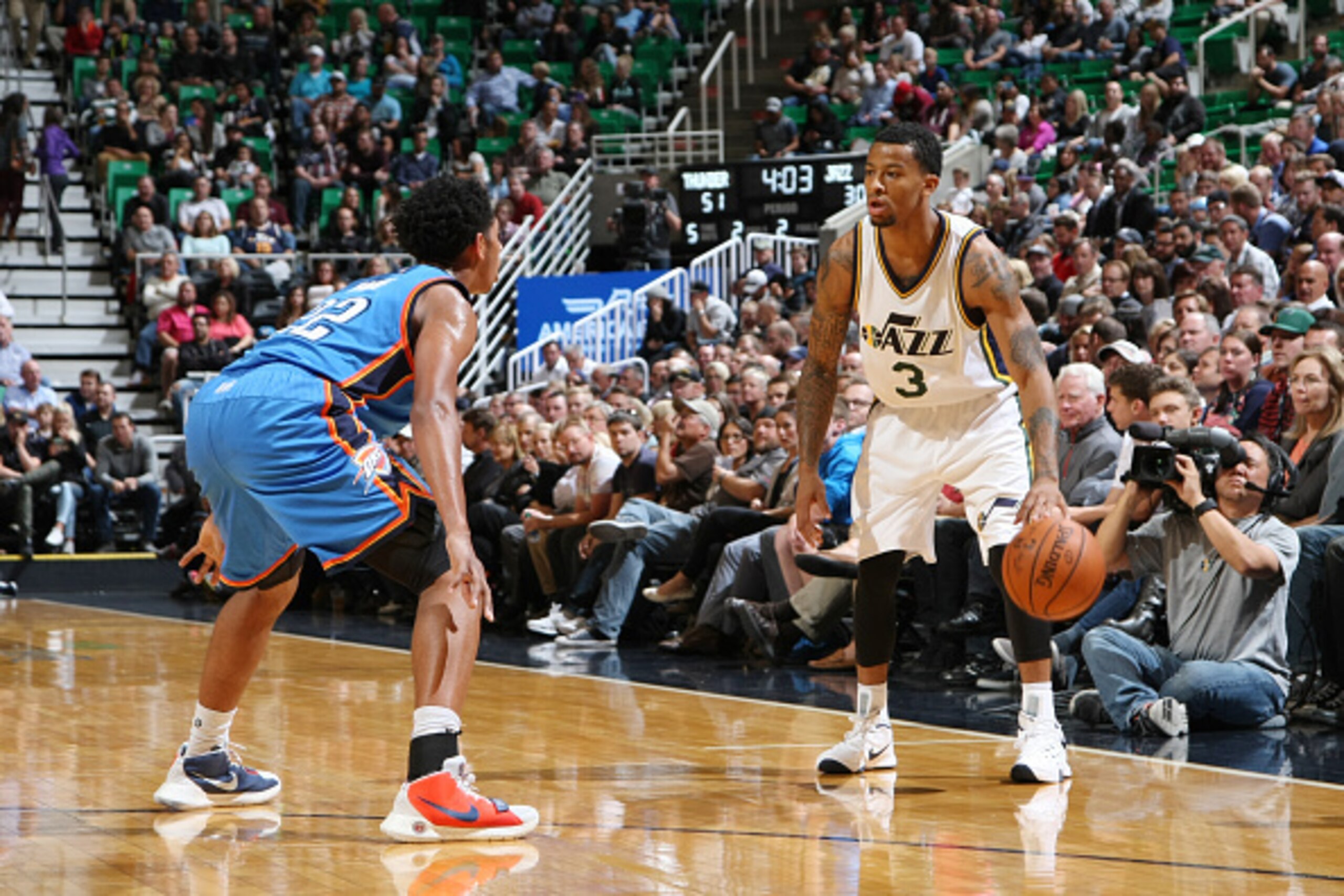
Trey Burke isn't doing enough to make the Utah Jazz forget about Dante Exum, but he's at least putting them at ease in his absence.
Utah isn't doing anything particularly different on the surface. Its defense is sound; its offense is tedious. Burke is just playing better. He is exuding refreshing levels of calm and restraint. His shot selection is smarter. More of his jumpers are falling. He's posting the third-best offensive rating of anyone on the team.
Burke's per-minute splits are, as a result, night and day compared to last season; he's averaging 22.1 points, 4.1 rebounds, 3.8 assists and 2.3 steals per 36 ticks through his first five preseason outings. His turnover rate is high, but he's connecting on 40 percent of his long balls while firing in volume (5.9 attempts per 36 minutes).
The Jazz will still run a mostly point guard-less offense, and head coach Quin Snyder is bound to place more stock in Alec Burks than Burke. But with Exum out, and given how much of a disappointment Burke has been through his first two seasons, his preseason jump, even if ultimately temporary, should not be dismissed.
Washington Wizards: Viva La Kris Humphries
30 of 30
Over the 11 years Kris Humphries has been in the NBA, he has shot a total of 26 three-pointers, making two of them.
Ahead of 2015-16, through six preseason games, Humphries has launched 24 treys, converting eight of them—good enough for a 33.3 percent clip.
Connecting on one-third of your three-point attempts isn't normally something to celebrate. In the Wizards' case, it's quite the contrary. They aren't loaded with floor-spacing options at the power forward position, and yet they've already committed to using Nene as a second-string center.
Small ball is in, and just as the Wizards did during their second-round playoff push last season, they're trying to get with the times. Having someone like Humphries—who's actually sized like a power forward—who can comfortably retreat behind the arc and stroke threes will, without question, be an offensive boon.
Washington is already fielding the best offense of the preseason, and it's statistically better with Humphries on the floor.
Pacing the league in offensive efficiency probably isn't in the long-term cards for these Wizards. They finished in the bottom half of points scored per 100 possessions last season, and eight made three-pointers isn't enough to say Humphries is what happens when you cross Ryan Anderson's shooting with Amir Johnson's rebounding resolve.
It is, however, fair to say the offense is gearing up for a meteoric rise through the point-piling ranks, in large part because Humphries, along with Otto Porter, has given Washington the means to permanently modernize its frontcourt.
Stats courtesy of Basketball-Reference.com and NBA.com unless otherwise cited and are accurate leading into games on Oct. 22. Draft pick information via RealGM. Salary information via Basketball Insiders.
Dan Favale covers the NBA for Bleacher Report. Follow him on Twitter, @danfavale.

.jpg?w=2560 "NBA Gambling Charges")

.jpg?w=2560 "Jonathan Taylor Landing Spots")
.jpg?w=2560 "NFL House in Paris Closes for Protests (AP)")

.jpg?w=2560 "Trevon Diggs Cut by Seahawks")