Why Mark Brunell Is Right About RG3 and Washington Redskins
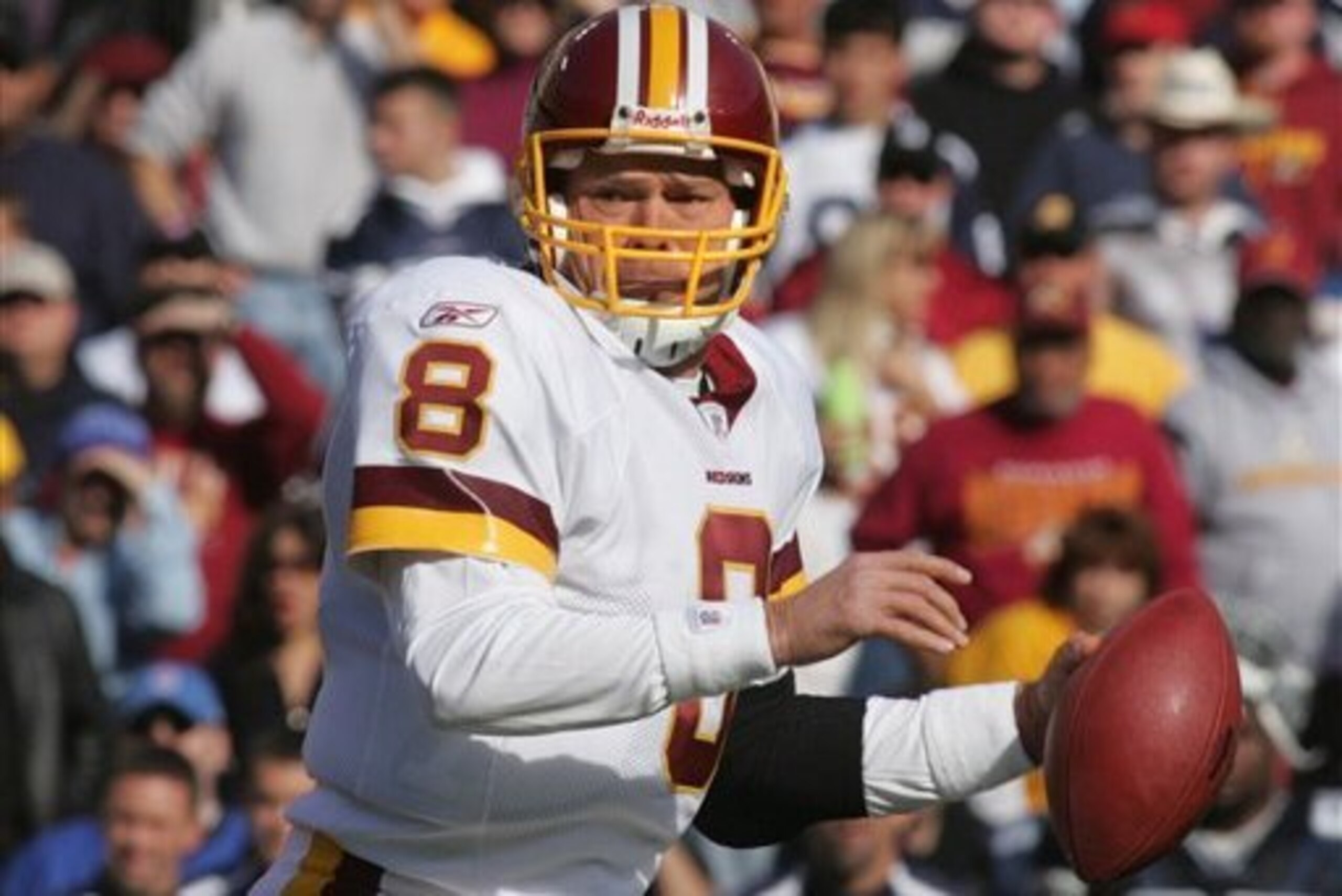
Mark Brunell won't win a popularity contest in Washington anytime soon. But the former NFL-quarterback-turned-ESPN-announcer was exactly right when he said Robert Griffin III isn't good enough to succeed as a starting quarterback for the Redskins.
"From what I’ve seen the last couple of years—listen, he burst onto the scene and that was impressive—but like I said, he has gone backwards. It’s not just his decision-making, it’s his fundamentals. He’s taking too many hits, he’s quick to get out of the pocket. Last year was difficult to watch. Does he have the skill set? Yes, but we haven’t seen it in some time.
"
.jpg?w=2560 "Texans Titans Football")
.jpg?w=2560)
.jpg?w=2560 "Cardinals Giants Football")
Those are the words Brunell used to describe the state of play with Griffin during an appearance on ESPN's NFL Live, per Scott Allen of the Washington Post. It's a pretty damning indictment of the player Washington gave away the farm to select second overall in the 2012 NFL draft.
But Brunell's statements do need some qualifying. First, they shouldn't necessarily be taken as absolute. Griffin isn't good enough now, but could that change in the future?
Phrases like "now" or "yet" belong at the end of any sentence that decrees Griffin "not good enough." His history with injuries, the upheaval of coaching staffs at Redskins Park and a succession of meagre offensive lines render any absolute judgements about his potential tricky to say the least.
They certainly need qualifying.
So what does Brunell's statement really mean for Griffin and, specifically, his career in Washington?
Answering that requires splitting the question raised by Brunell's critique into two parts. The first involves dealing with the question on a broader level:
Good Enough or Not Good Enough for the Pro Level?
Brunell's emphasis on fundamentals was a recurring theme throughout his critique. It's the necessary starting point when discussing a quarterback still woefully lacking in any mastery of the nuances of pro football.
In particular, Brunell singled out footwork, per Allen: "With video supporting each point, Brunell rattled off a few of Griffin’s biggest issues: poor footwork, including not stepping into his throws and transitioning his weight correctly, an inability to find open receivers and holding onto the ball for too long."
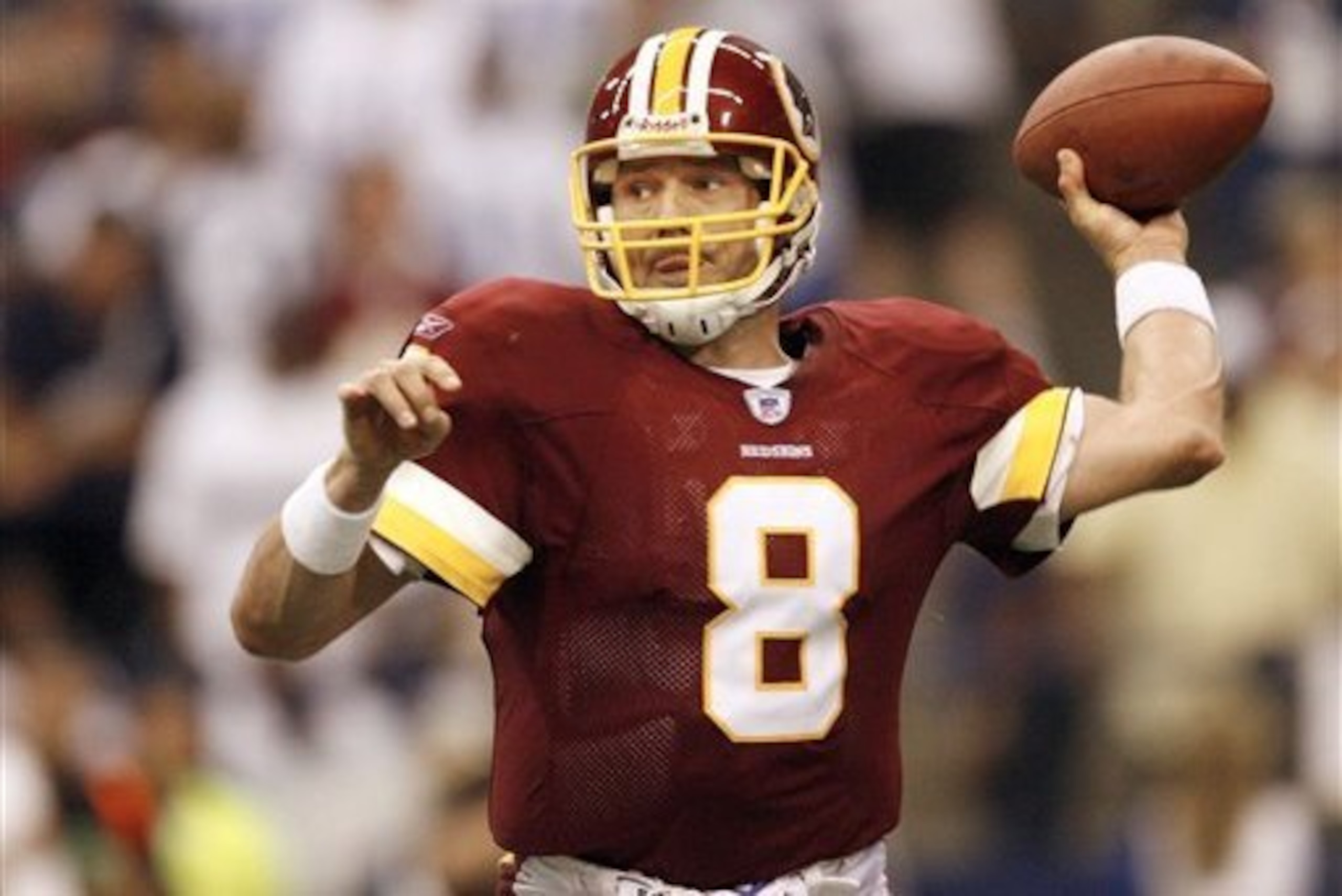
If that makes for depressing reading, it should. Brunell has provided a checklist of the basics needed to play quarterback well at any level, but particularly in the pro game.
Starting with footwork, any quarterback who can't even get his stance right is in major trouble. Awkward footing is why Griffin can't step into his throws and why so many of his passes are delivered at a wayward trajectory.
Good footwork has to be the launching pad for any even-competent NFL passer. But as much keeping himself set, or rather failing to, has plagued Griffin, it's nothing compared to what holding on to the ball in the pocket has done to damage his overall game.
Probably every Redskins fan who's followed Griffin's career can recount at least one particularly painful memory of screaming at Griffin to "get rid of the damn ball!" Sadly though, those screams are never heard.
Instead, it's become common to see multiple pass-rushers get multiple chances to bring Griffin down. Griffin's labored delivery from the pocket could make the tortoise feel better about losing to the hare.
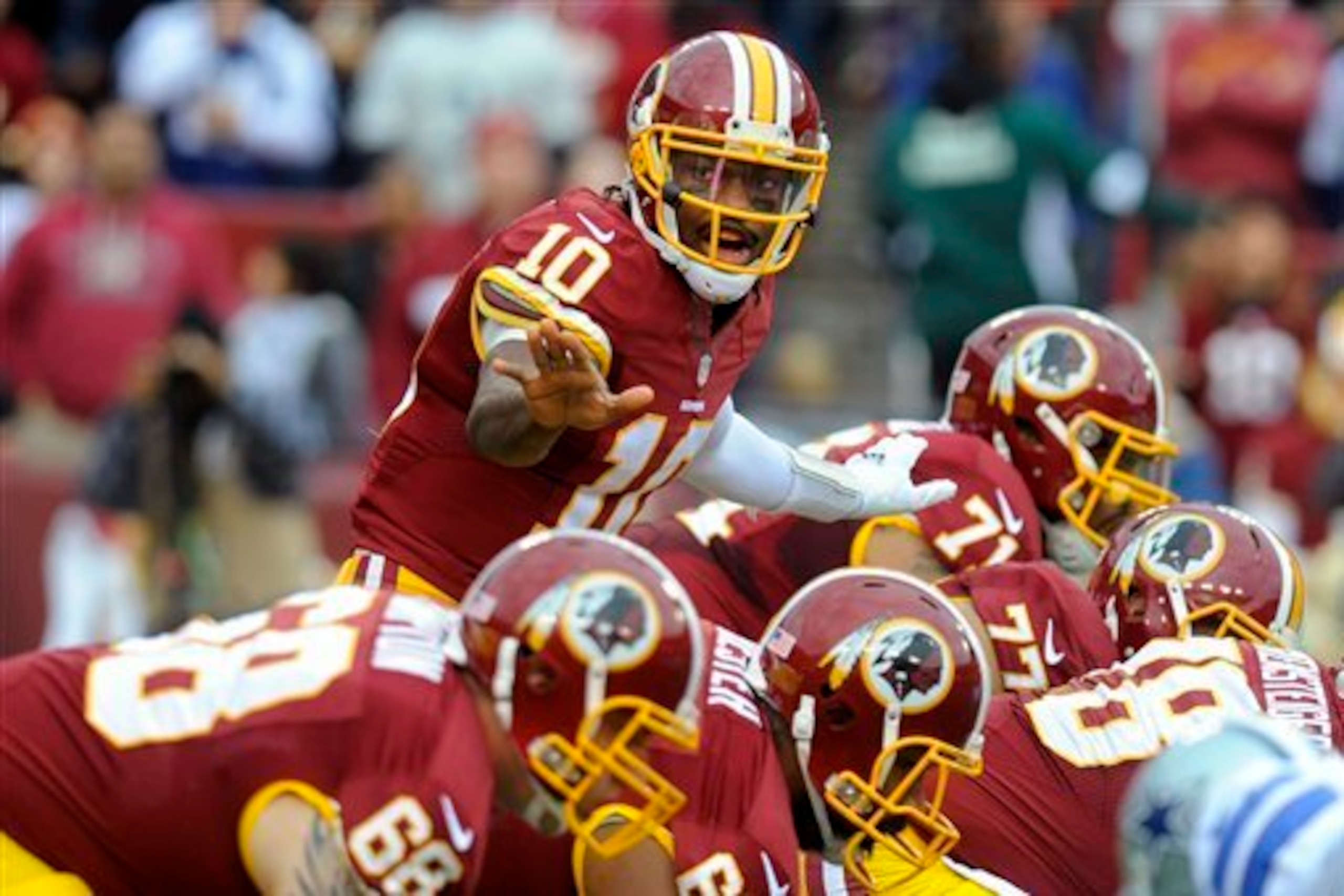
His penchant for waiting an age before finally pulling the trigger has a direct impact on those in front of him. As bad as the O-line was in 2014, 58 sacks bad to be precise, Washington's coaches don't place all the blame on the men in the trenches. In fact, far from it, according to ESPN's John Keim:
"...as I’ve said in the past, the coaches put perhaps half of the 58 sacks allowed last season on the protection; you can disagree or argue, but that’s their assessment but they also rightly felt the line needed to be upgraded and will have two new starters.
"
The connection between Griffin's indecisive streak and the lack of marquee talent in front of him really is a chicken and the egg argument. In reality, both issues add up to a pretty inept offense.
Yet there's one aspect of Griffin's game that has rarely helped his O-line, or his team for that matter. It concerns his temperament.
Specifically, it's the almost pathological desire to make every play a big one. This feast-or-famine frenzy was one of the first things head coach Jay Gruden noticed about Griffin when he was hired in 2014, per Dale Robertson of the Houston Chronicle: "Sometimes he just needs to take a step back, take a deep breath, have some poise, and let the game come to him (instead of feeling) like he's got to make a big play on every play."
Knowing when to throw it away and live to fight another play is a lesson the best quarterbacks learn early. Yet there are exceptions.
Certainly, Brett Favre stands as an enduring example of a franchise quarterback who took three seasons before he toned it down for the Green Bay Packers. At the other end of the spectrum, Vinny Testaverde, like Griffin a high draft pick, only grasped efficiency in his 12th season. Of course, Testaverde had the benefit of working with great football minds like Bill Parcells and Ron Erhardt for the New York Jets.
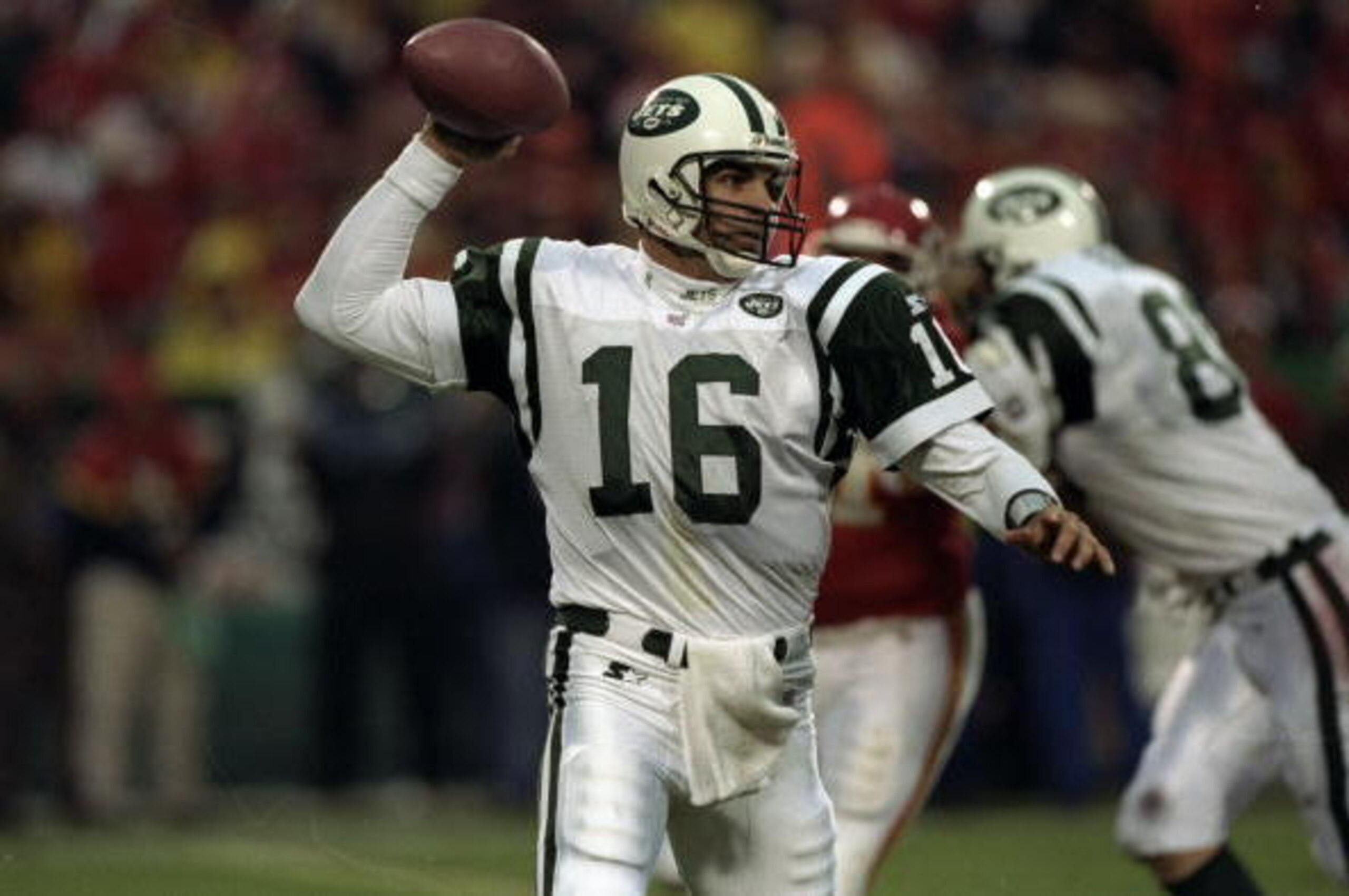
That last point is significant. It points to how big a role coaching, or at least a different kind of coaching, can possibly play in salvaging Griffin.
However harsh and definitive Brunell's words might have appeared, he did offer a slither of hope for the future. But not everyone is as optimistic, according to Keim: "Brunell did say that Griffin could still develop instincts in the pocket (not everyone in the organization agrees) and that he could 'get there.'"
The key figure in helping Griffin "get there" will be new quarterbacks coach Matt Cavanaugh.
The Most Important Man in Washington
Given how bad the offensive line has been, most of the attention on coaches this offseason has focused on new line guru Bill Callahan. But while his reputation commands respect, Callahan is not the most important new face on the Redskins' coaching staff. Actually, he's nowhere near that distinction.
The most important coach currently employed at Redskins Park is Cavanaugh. This season will ultimately hinge on his work—specifically, how much freedom and authority he is given to work, as well as how successfully he can remake Griffin.

Make no mistake, a full remake is necessary. Brunell wasn't wrong. As things stand, Griffin is nowhere near good enough to succeed as a starter.
Some are already screaming, "he was drafted second overall" and "Offensive Rookie of the Year in 2012." Those factors, weighed down by troubling context, have created a Bizarro World at Redskins Park, one where Griffin is judged more on what he did and what he might be, instead of what he is.
Griffin is not the franchise quarterback Washington hoped to get three years ago. He probably never will be. The blockbuster trade to get him, along with his surprise first season, led to reality creating its own fiction.
Well, it's time for Cavanaugh to pull back the curtain on Bizarro World and show Griffin what the real one looks like. The key to this NFL version of The Truman Show will be to stress fundamentals.
Fortunately, the new position coach is already busy doing just that, according to Jacob Feldman of the Washington Post: "Cavanaugh said he believes in focusing on the fundamentals, so he has worked with Griffin and the other quarterbacks on being comfortable in the pocket, creating a consistent base with their legs, and so on."
Cavanaugh is busy breaking down the quarterbacks he's inherited. It's a process that's taking place both on the field and in the classroom, per Nora Princiotti of the Washington Times: "No matter what, Cavanaugh expects all three quarterbacks to watch every play. He doesn’t refer to starters or backups when he talks to them and focuses on base and reading defenses, things not particular to any one player."
An adherence to the basics is not what a team wants to hear when it supposedly already has its franchise quarterback. But that's just not the world Griffin and the Redskins are living in.
Cavanaugh is here to provide a reality check: Getting the most from Griffin is not going to be an overnight thing. Instead, it's going to be a long process, one patiently plotted step by step.
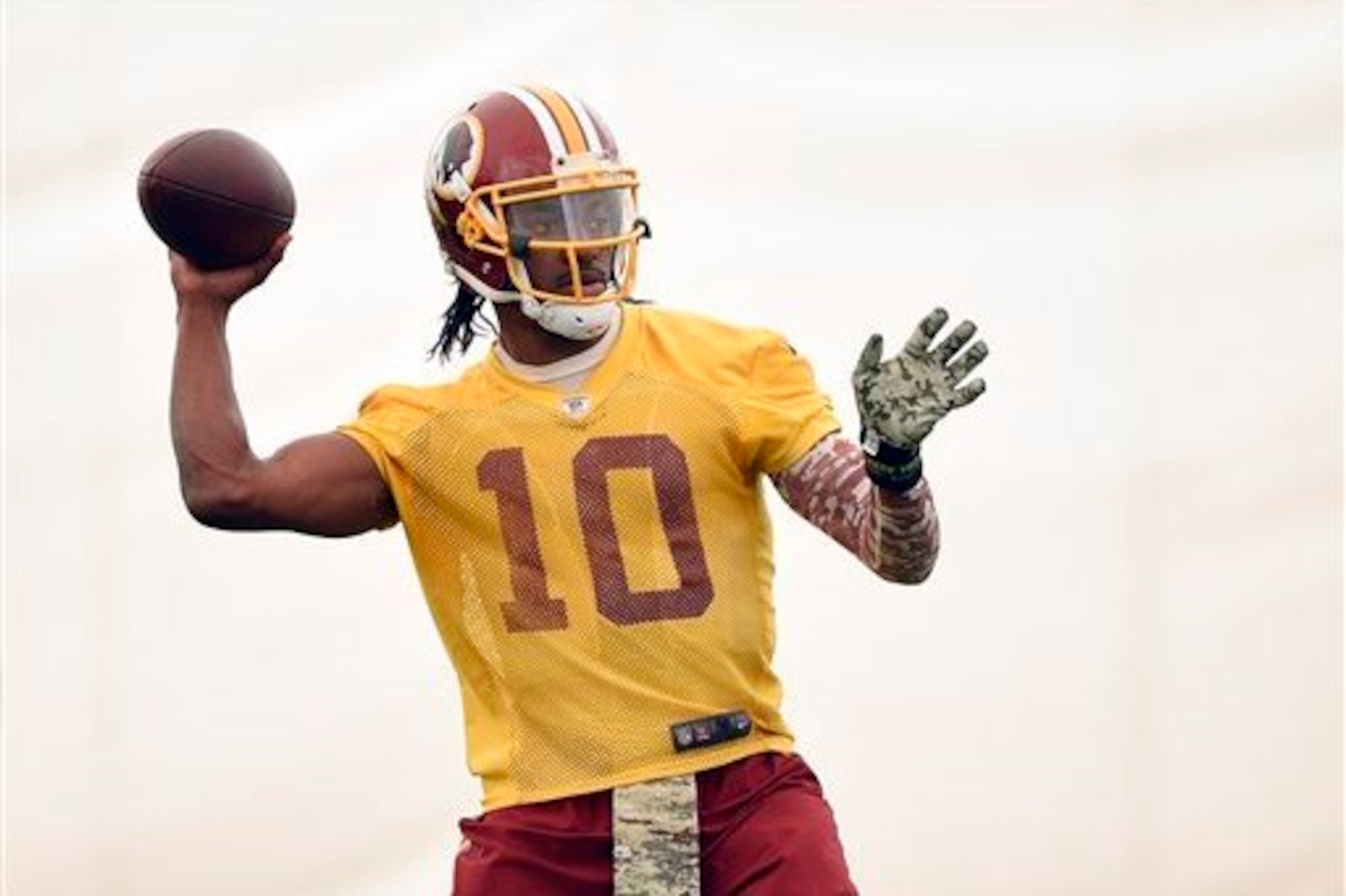
The way Cavanaugh is working on the minutest aspects of what Griffin does is certainly proof of that. Writing for CBS DC, 106.7 The Fan host Brian McNally detailed an example:
"According to Cavanaugh, Griffin has a long stride. Sometimes when he moves around in the pocket it is difficult for him to re-set and keep his mechanics sound. He’s worked with Griffin all spring to focus on setting himself again and then delivering the ball in rhythm. That comes naturally for some quarterbacks. For others, they have to drill it constantly to make it stick.
"
Redskins fans everywhere should love this. First, Cavanaugh is showing a practical approach to actually finding a solution to Griffin's problems.
It's certainly not enough to say the quarterback has problems with his footwork. The better way is to ask why he has those problems and then decide how they can be fixed.
Pinpointing a long stride as the culprit is the essential first step on the road to recovery.
But it's McNally's last line that's really encouraging. Learning by repetition may be monotonous and perhaps even patronizing for a former Heisman Trophy winner. Yet it's the only way the good habits of a steady quarterback will become second nature for a player who doesn't possess them naturally.
Brunell is right to say Griffin is not good enough. But that doesn't necessarily mean the latter is a lost cause as an NFL quarterback, at least not just yet.
Working closely with a position coach and going back to basics can create a new Griffin. It's one who may yet make the grade in the NFL.
But while Griffin can't be totally written off, it's dangerous to assume his reclamation will bear fruit in Washington. There are two major reasons why that's unlikely.
Good Enough to Succeed in Washington?
This is the more specific step toward answering the question Brunell has raised. In this context, the question is no longer "is Griffin good enough to succeed at the pro level?"
Instead, the question becomes "is Griffin good enough to win in Washington?"
To answer that, you have to start with the issue that just won't go away.
The Gruden-Headed Elephant
No matter how optimistic some fans and analysts may be about Griffin, no matter how many positive strides he makes this offseason, he's still working with a coach who doesn't want him.

The uneasy, and that's putting it politely, relationship between coach and quarterback wrecked Washington's season in 2014. It made Gruden look out of his depth as a sideline general, while also exposing every flaw in Griffin's game to a harsher spotlight than he's been used to.
B/R lead writer Mike Tanier examined both issues in his brilliant dissection of the team's offensive woes last season. His first step was to catalogue Griffin's more obvious failings, along with listing some of the contributory factors that also led to him being sent to the lumber in 2014.
Just like Brunell's roll call of shame, Tanier's list made for bleak reading. He highlighted dire offensive line play, penalties and play-calling as major follies.
But Tanier also paid particular attention to the amount of short passes Griffin threw in Gruden's offense. More important, he focused on the type of short passes Griffin threw.
Citing statistical definitions from Football Outsiders' Scott Kacsmar, Tanier offered this description of Griffin's limited range and its general lack of effectiveness: "Exactly one-third of Griffin's completions (49 of 147) were what Football Outsiders labels 'failed completions.' That means they either came up short of the sticks on third or fourth down or provided a tiny gain, like a two-yard completion on 1st-and-10."
That says a lot, both about Griffin's inability to read coverage downfield and, perhaps just as important, Gruden's play-calling. A short passing game can only work if the ball is consistently put into the hands of playmakers who have the space to turn those short throws into good gains.
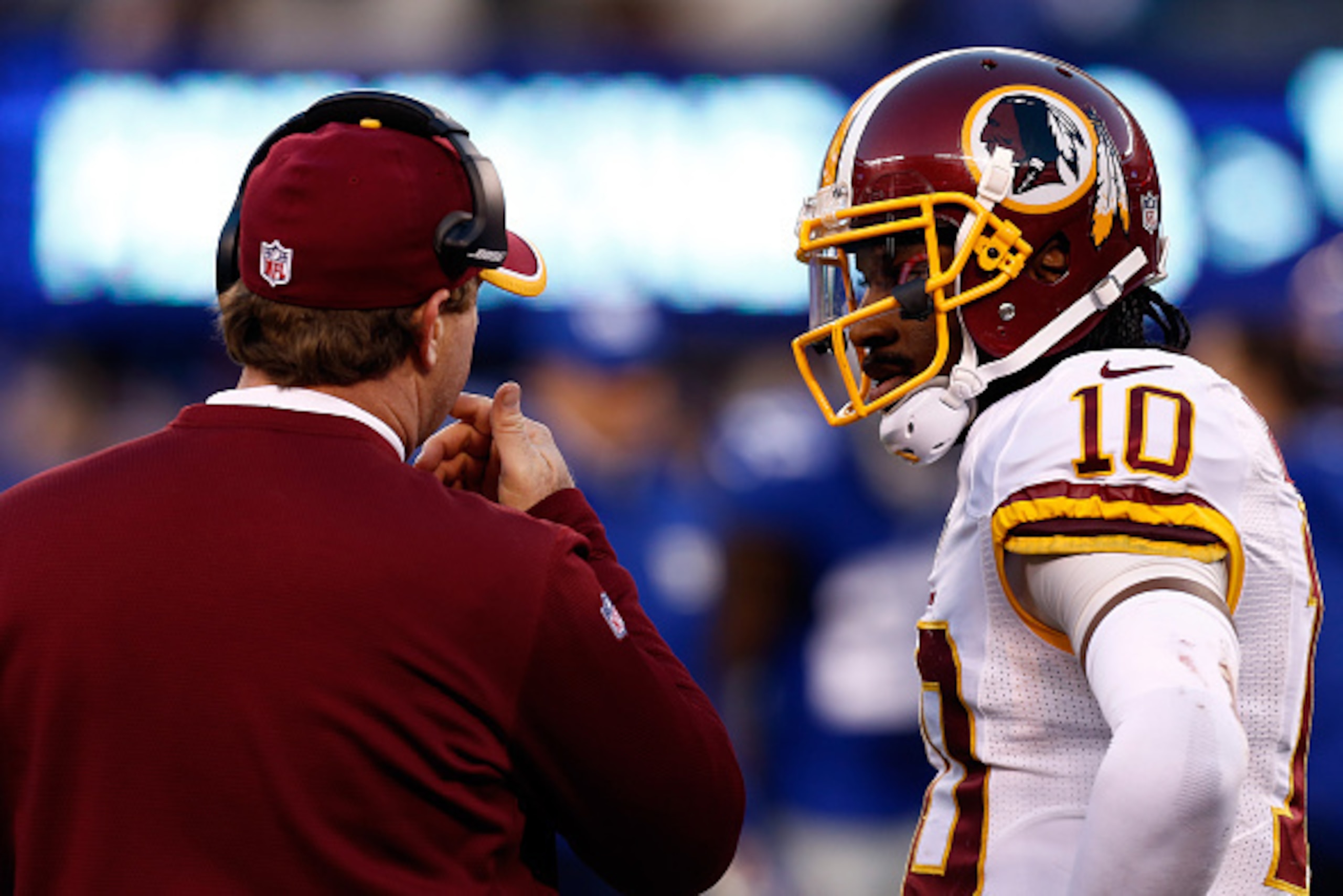
It's pointless targeting players like DeSean Jackson on throws that travel barely a yard laterally from the quarterback. That's just a recipe for going nowhere fast as an offense.
Griffin's looked good when he's been given plays of the former type. Think three quarters of Week 10's road defeat to the Minnesota Vikings in the 2013 season.
The Redskins routinely attacked the field via route combinations run from bunch looks. Those plays gave Griffin quick reads and created space for receivers catching the ball beyond the line of scrimmage.
Those plays form just one of the elements Gruden must add to make his offense more Griffin-friendly. In short, he has to package an offense around Griffin that emphasizes the quarterback's strong points while masking the weaker ones.
Or as Tanier succinctly put it:
"Gruden needs to play to the strengths of his quarterback and his offense. That doesn't mean a return to the extremes of Griffin's rookie year. But teams with read-option components in their offense like the Eagles (33 percent play action in 2014) and Seahawks (31 percent) use the threat of run-action far more consistently than the Redskins used it last year.
"
But, and here's the rub, does anyone really believe Gruden will make those kind of concessions for Griffin? He certainly made it clear last season the onus is on his quarterback to get better, not on the schemes around him to help that process.
While there may have been some merit in what he said, if not the way he said it, Gruden's public putdown of Griffin was brutal. It's not unreasonable to bet there will be few NFL fans of any age who can remember a coach going for his starter's jugular so ruthlessly in the court of public opinion.
The fact is Gruden did speak directly as to why this relationship will never work. It might for a time if things go well, but the first sign of trouble will bring the simmering animosity back to a boil.
Worryingly, things are likely to be tough early. Washington opens its season against the Miami Dolphins and St. Louis Rams, owners of two of the most fierce pass-rushing defenses in football.
These are units that have made passers the caliber of Tom Brady and Peyton Manning look ordinary. Gruden had better start practicing curling his lip, because he's unlikely to enjoy what he sees from Griffin during the season's first two weeks.

Co-existence between the pair is unlikely to ever happen because the two men involved are stubbornly entrenched at opposite ends of the spectrum.
Griffin believes he needs more support from his coach, along with the players around him. By contrast, Gruden believes his quarterback should be leading by example instead of looking to others for help.
The problem for Griffin is that he doesn't have the same kind of currency he had when he was butting heads with the Shanahans. His stunning debut season already seems like it belongs on back and white film.
His injury record and public critiques of teammates have damaged Griffin's reputation and standing. Not only is he working for a coach who didn't draft him, he's now under the umbrella of a general manager, Scot McCloughan, who also played no part in that decision.
Exactly how many regimes will owner Dan Snyder purge to preserve his belief in how good Griffin could be?
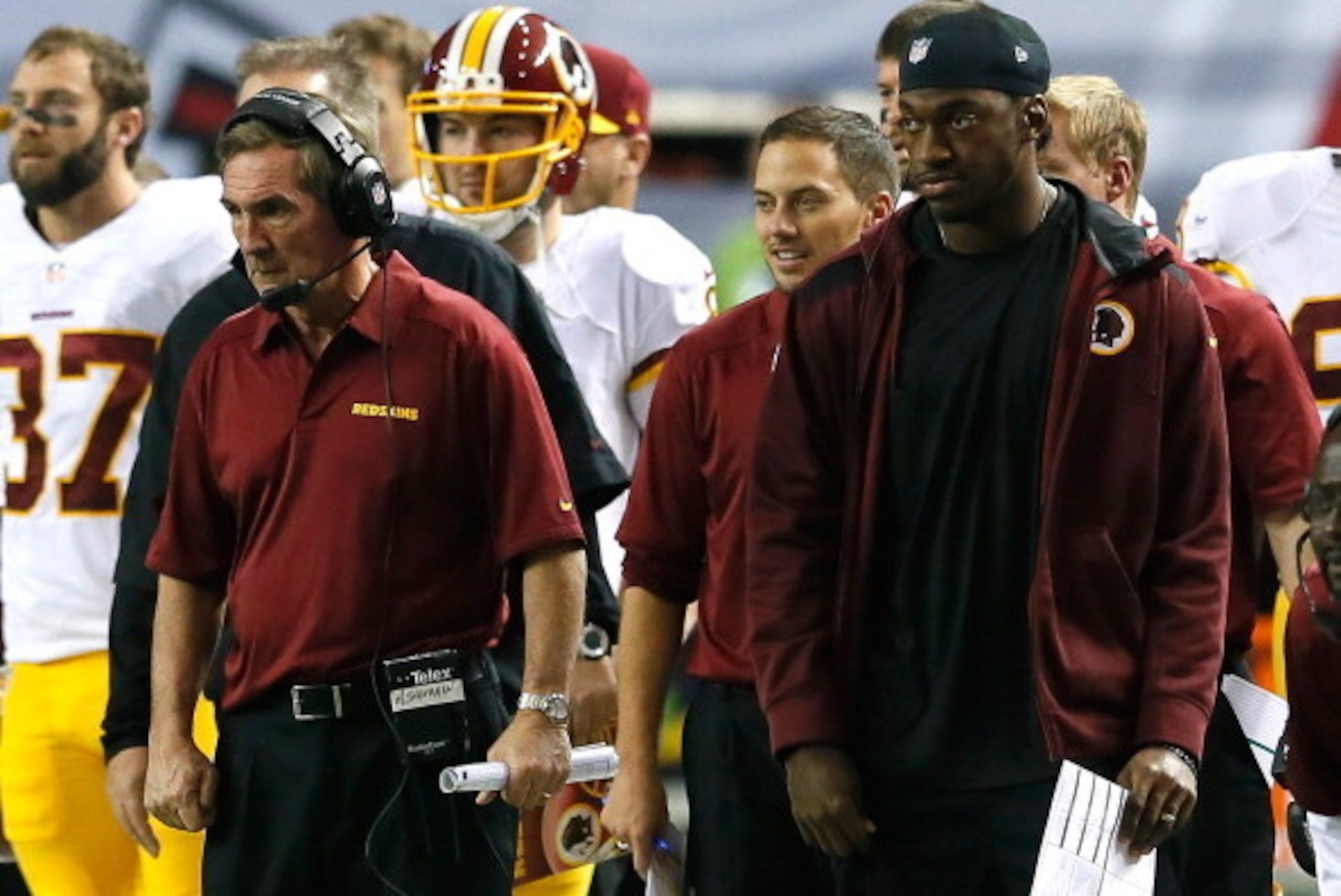
Ultimately, it's down to Griffin to respond. His willingness to get better will determine what happens to his career, both inside and outside Washington.
As Keim puts it, Griffin has to take his chance now: "He has a chance to flip the narrative; he has a chance to remind everyone of what he’s capable. Now that he’s entering his fourth season, it’s time for him to do so."
The Redskins can't wait much longer for Griffin to seize the many, many opportunities he's being given. They've already spent two years wasting a cast of playmakers that should be the envy of the rest of the NFL.
B/R analyst Chris Simms recently detailed just how much talent Griffin has around him:
At the moment though, Griffin's struggles are leaving that talent to rot on the vine. It's a situation that's long since past the point of being a joke. It's a travesty.
The injustice is likely to be repeated in 2015.
Griffin hasn't stayed healthy in three seasons, why should that be different now?
Gruden can't work with him. As soon as things go wrong, that elephant will stamp its way into the room and flatten another season.
But most important, Griffin has shown little to no willingness to properly address the fundamental flaws in his game. If he's still the same wait-wait-wait-run-run-and-maybe-release quarterback he's been in 2013 and '14, the Redskins won't get off the bottom of the NFC East.
As Christian Bale's Dark Knight did for Gotham City, the Redskins have given Griffin everything. There's nothing left.
If he can't succeed with a new position coach, a revamped offensive line and a deep contingent of playmakers, he'll never win in Washington.
Then the final verdict will be in on Griffin's place in the pro game. Brunell will just be the one who delivered it first.
.jpg?w=2560 "Broncos Chargers Football")

.jpg?w=2560 "MHJ Bought Own Jugs Machine")