Those waiting for Kevin Love and the Cleveland Cavaliers to go their separate ways in free agency this summer might want to take up knitting, birdhouse-building, high-stakes shuffleboard or some other time-consuming hobby.
You're waiting for something that, in all honesty, isn't going to happen.
Love is considered one of the offseason's biggest flight risks. The idea that he and the Cavaliers previously took part in some under-the-table agreement that guaranteed he would remain in Cleveland long term has since been replaced by doubt and, subsequently, speculation.

That speculation, borne from Love's demotion to third fiddle, is still alive and well now. In addition to Love's usage rate plummeting as part of Cleveland's superstar platoon, the Cavaliers barely felt the ramifications of his absence during the playoffs.
LeBron James piloted a skeleton crew into the NBA Finals and stole two games from a historically brilliant Golden State Warriors squad once there. Love, meanwhile, was relegated to bystander duty after undergoing shoulder surgery following a dustup with the Boston Celtics' Kelly Olynyk in Game 4 of Round 1.
Seeing the Cavaliers journey that far without him has only engendered more conjecture. They were barely a statistical plus while he was on the sidelines and could have certainly used him against the Warriors, but the gossip just won't die.
League executives aren't sold on Love's return to Cleveland, according to ESPN.com's Marc Stein. To the contrary, they believe he, along with LaMarcus Aldridge, are among the "likeliest" free agents to jump ship.
This keeps in theme with the sentiments shared by Grantland's Zach Lowe and ESPN.com's Brian Windhorst while they were chitchatting during a late-May episode of The Lowe Post podcast (h/t RealGM).
Said Windhorst at the time: "Every executive I talk to, every agent I talk to, every quasi-insider, every girlfriend's cousin's sister's boyfriend all says this guy is out of there."
So yes, the outside rumblings are real.
They also make no sense.
There isn't a scenario in which Love leaves Cleveland and at least one side doesn't come out of the offseason scrum looking foolish. Love, for starters, hasn't been coy with regard to his future. Asked if he planned on playing for the Cavaliers next season, per Northeast Ohio Media Group's Chris Haynes, Love didn't mince words.
"Yes sir," he said.
Answering in the affirmative—as he's done repeatedly—leaves Love with absolutely no wiggle room. He cannot change his mind when free agency begins and save face.
Verbal commitments are binding in the NBA world. Leaving Cleveland, on his own accord, would be a public relations disaster.
Think of how Dwight Howard openly flip-flopped his way off the Orlando Magic. And then envision a worse scenario, in which the player leaving lasted only one season and didn't have a team-carrying Finals appearance in 2009 to fall back on.
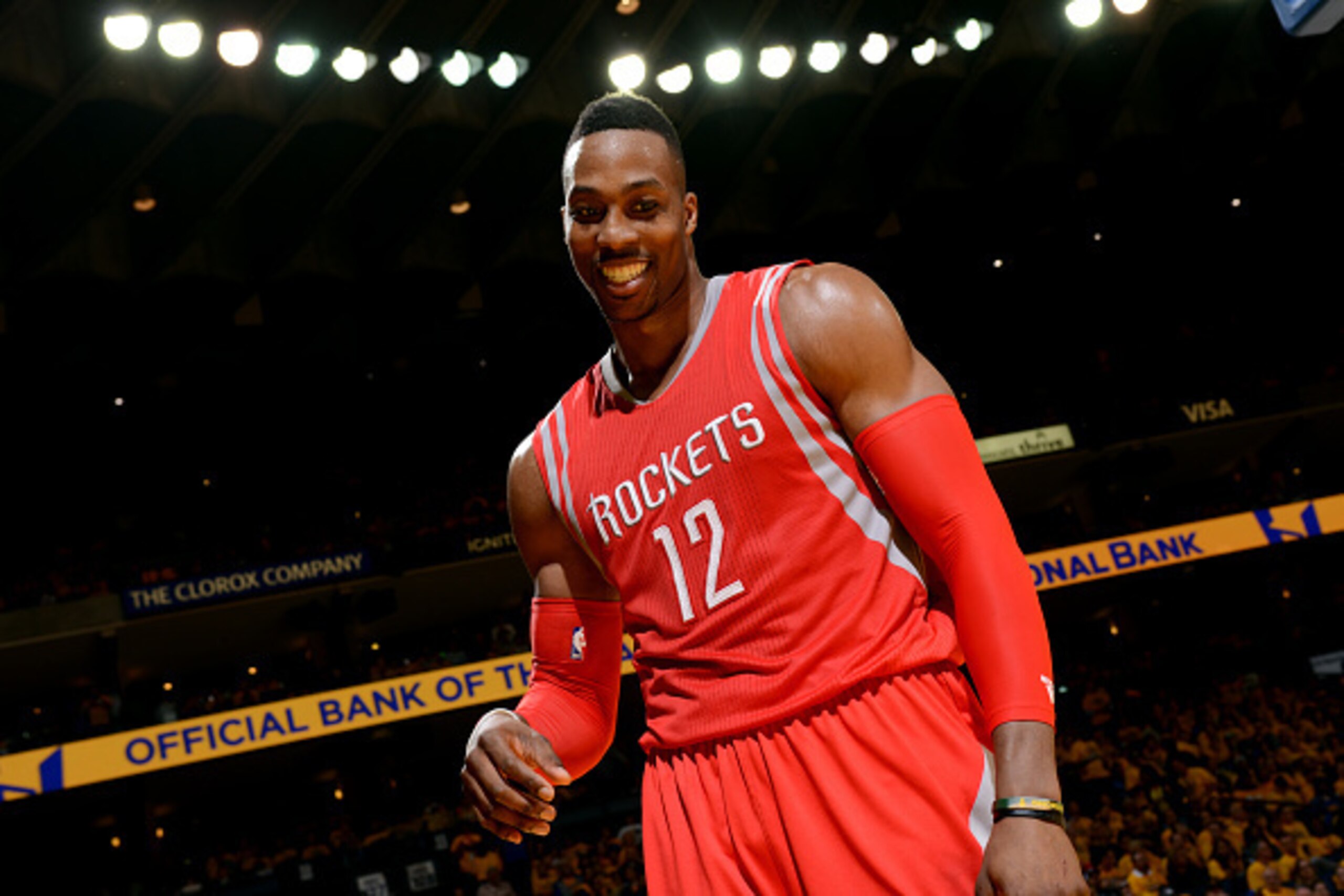
That's the perception-rending fate Love is up against if he opts out of his contract and signs elsewhere. Much like Howard hasn't been viewed in the same light since going from the Magic to the Los Angeles Lakers to the Houston Rockets, Love's seesawing wouldn't soon be forgotten.
Opting out of the last year of his deal is fine. Heck, Cavaliers general manager David Griffin expects him to, per Haynes:
Reaching free agency is just business. Rather than playing out the last season of his contract valued at just over $16.7 million, Love can gain a half-decade's worth of financial security by signing a five-year max with the Cavaliers.
He can also follow James' lead. Putting pen to paper on a two-year pact with a player option for 2016 allows him to explore free agency next summer after the salary cap explodes.
Whichever route Love takes, the road he travels must lead back to Cleveland—unless, of course, the Cavaliers push him out the door.
Again, the Cavaliers clinched an NBA Finals appearance without him. As they prepare to dole out new contracts to Matthew Dellavedova (restricted), Iman Shumpert (restricted), J.R. Smith (player option) and Tristan Thompson (restricted), the financial implications of keeping this core intact loom large.
As Lowe wrote:
"If they max out Love, retain Thompson at something close to the max, use Brendan Haywood’s nonguaranteed deal to land a key piece, and re-sign Shumpert and Dellavedova at reasonable numbers, they could set an all-time record for salary and tax payments next season with a bill north of $200 million. Blowing past the tax carries roster-building restrictions that make it harder to find supplementary players.
The Cavs will need another star around LeBron as he ages, and as the East inevitably snags a couple of big free agents from the West. But do they need two? Or could they get just as far redistributing the money from one star slot into role players who grind on defense and hit at least an average mark from 3-point range?
"
Severing ties with Love makes some semblance of sense when put that way. Financial flexibility is paramount in today's NBA, and with James, Love and Thompson in the rotation, the Cavaliers would have three max-level players who need to see ample time at power forward.
Still, letting Love walk isn't in play. It can't be. Not because Griffin already said he expects him back, or even because the Cavaliers' postseason net rating without him (plus-1.9) was barely playoff-worthy.
Trading for Love cost a pretty penny. The Cavaliers won't ever miss Anthony Bennett, but they gave up a protected first-rounder (via the Miami Heat) and, most notably, Andrew Wiggins, last year's No. 1 pick.
And Wiggins is already flashing superstardom. As a 19-year-old rookie (who turned 20 midseason), he surpassed 1,200 points, 350 rebounds, 75 steals and 45 blocks.
Only one other teenager has ever matched those benchmarks before: LeBron James.
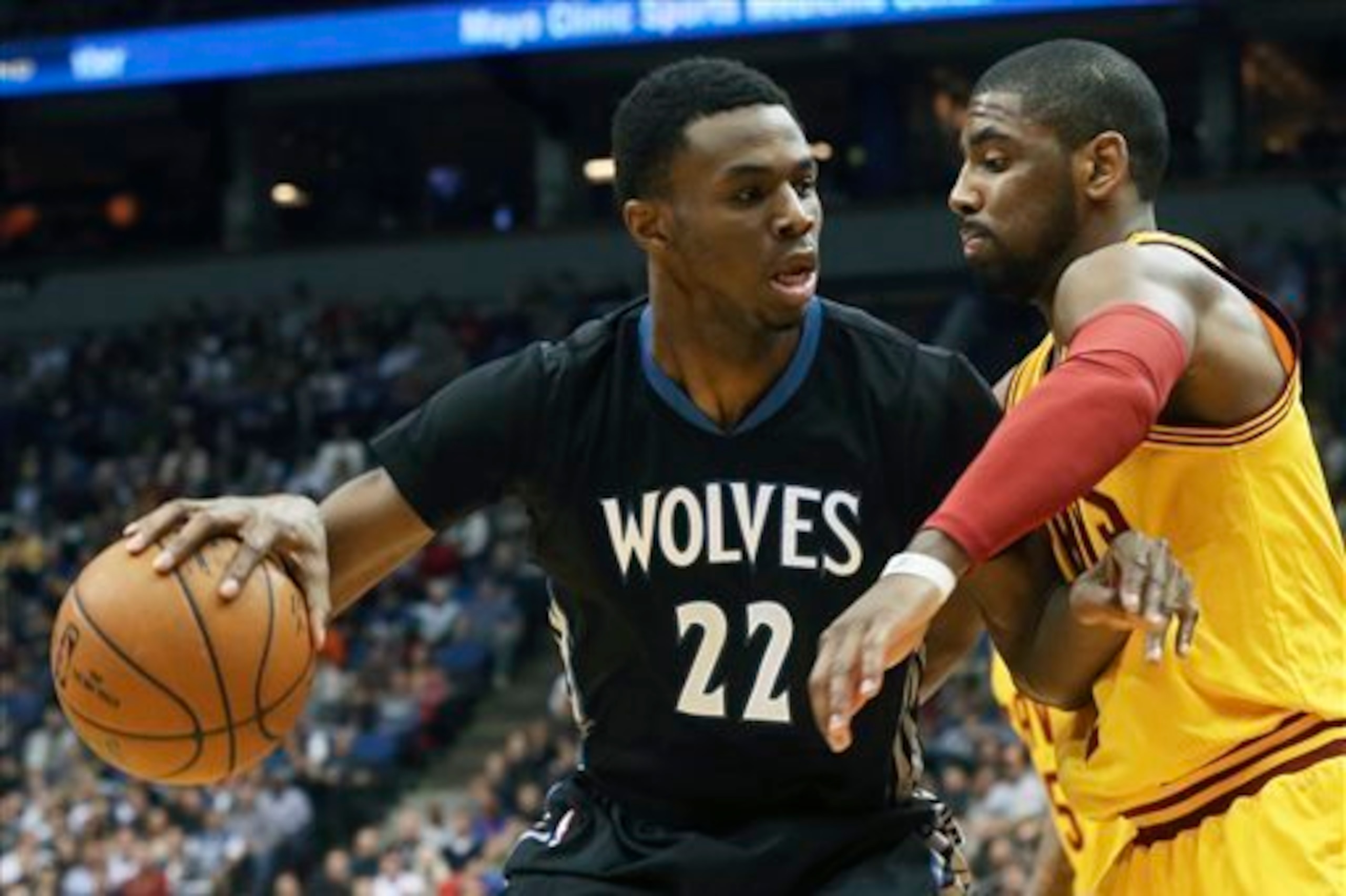
Even if the Cavaliers go on to win multiple championships after letting Love walk, even if they forge a dynasty headlined by Kyrie Irving and James, the sheer lunacy of turning Wiggins into a one-year rental will linger based on principle.
Signing and trading Love would admittedly ease the sting. Capitalizing on his departure is justifiable, and in theory, could end up being beneficial in the long run.
But sign-and-trades aren't standard free-agent practice anymore. There are no financial incentives for the players this side of the Heat's Big Three.
Deals inked in sign-and-trades cannot be for longer than four years and must span at least three seasons without any options. Only the first season must be guaranteed, but it takes three seasons for a team to gain Bird rights, so Love wouldn't be eligible for a full Bird-rights max again until at least 2018.
This only makes sense if he really, really (really) wants to play for a team that isn't projected to have cap space in any of the coming summers—a categorical impossibility with the salary cap set to erupt, mind you.
Contrary to the what the frenzied rumor mill would have us believe, perhaps none of this matters. Everything between the Cavaliers and Love could be hunky-dory, with the two sides gearing up for a long-term partnership.
If there's a hint of truth to the rampant speculation, well, that doesn't matter either. The Cavaliers and Love have too much riding on this marriage to bail.
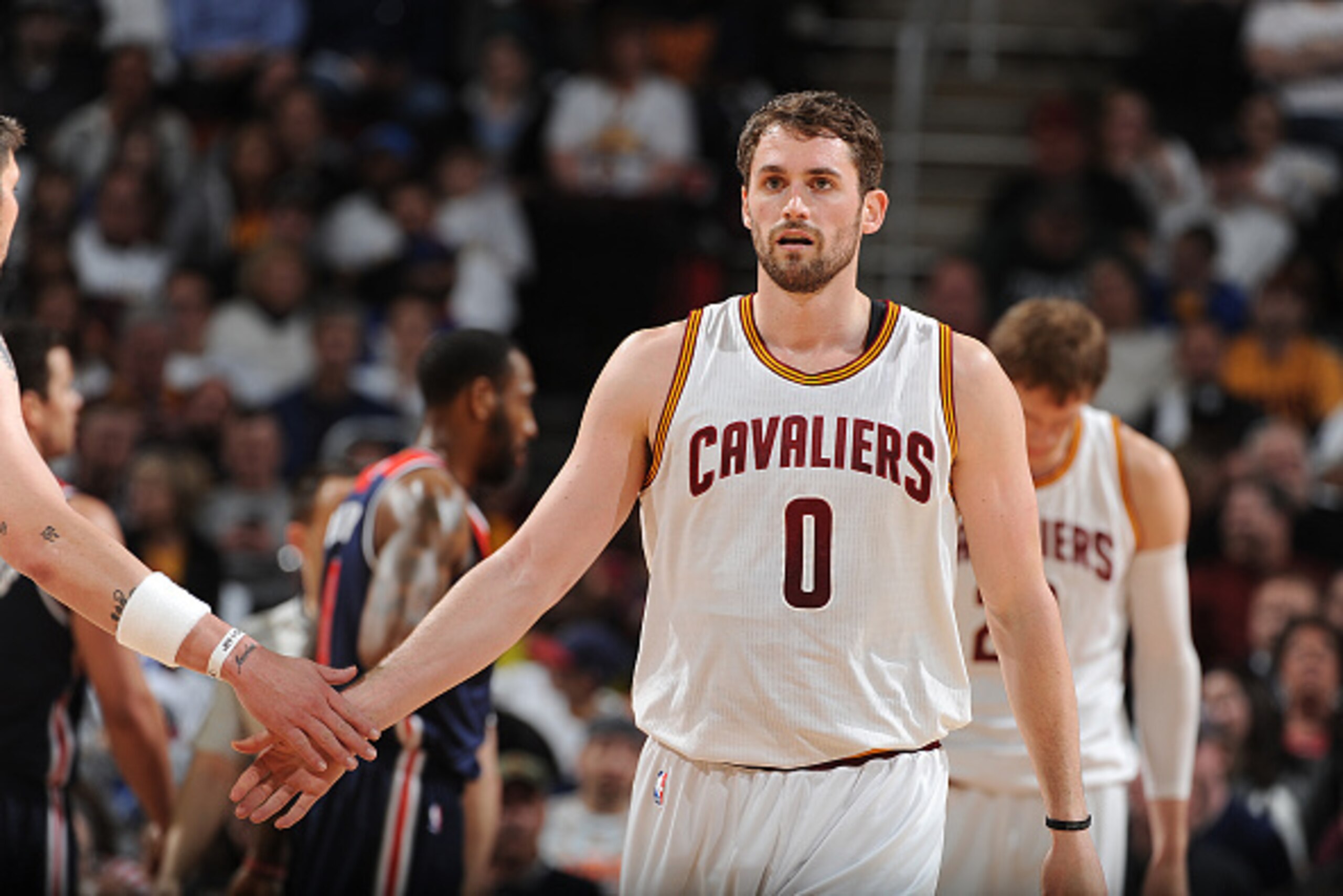
Next summer, assuming Love signs a short-term deal that allows he and the Cavaliers to revisit this situation, things could change. A rip cord that permits both sides to move on, unscathed, could be available.
For now, Love and the Cavaliers only have one logical option: push forward, through at least 2015-16, together.
Stats courtesy of Basketball-Reference.com and NBA.com unless otherwise cited. Salary information via Basketball-Insiders. Draft-pick commitments from RealGM.
Dan Favale covers the NBA for Bleacher Report. Follow him on Twitter: @danfavale.


.jpg?w=2560 "Chiefs, Steelers Eye WR Trades")