
Small-market teams unite!
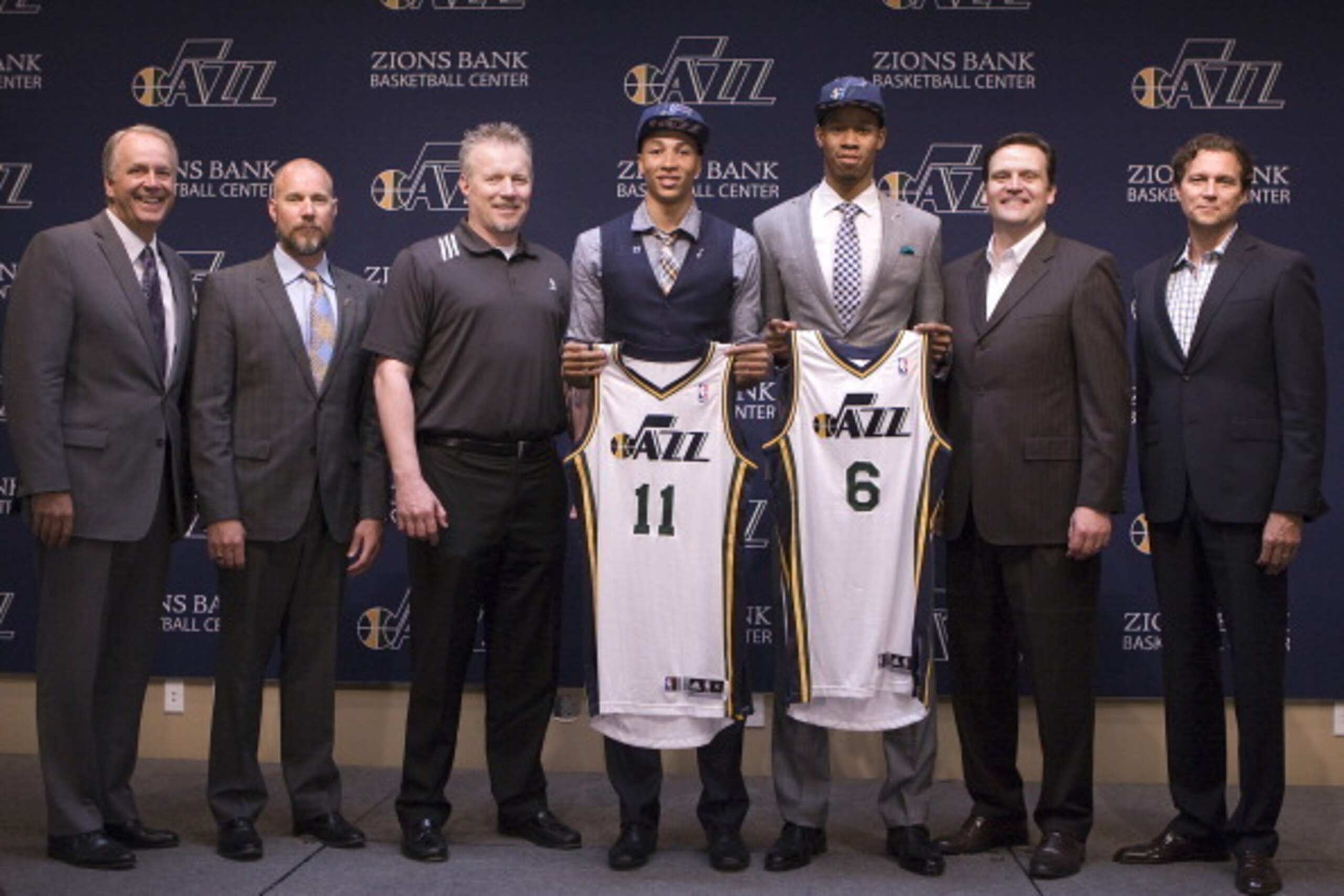
NBA draft season is here, when the Utah Jazz and other not-so-hot free-agent destinations can build teams through savvy scouting, pure luck and player development.
The Jazz are in a better position than most. Their last two general managers, Kevin O'Connor and Dennis Lindsey, have compiled a roster replete with young talent. And head coach Quin Snyder has shown the chops to be able to develop individual players.
That unique combination of ingredients affords Utah the opportunity to draft for need, while many lottery teams simply take the best available player.
As the Jazz prepare for the draft, and when they're on the clock June 25, the following should be the most important needs they address.
General Manager Dennis Lindsey's Thoughts
1 of 6Utah's front office operates with a decent amount of transparency, as evidenced by the regular appearances Lindsey makes in print, radio and video interviews. Each time, he gives fans and media a little window into how he's building this team.
Following the NBA draft lottery on May 20, Lindsey took questions from local media on the team's approach to the draft. When asked about which needs Utah might look to address, he rattled off a list that included:
- Ball security
- Making open shots
- Individual defensive integrity
- Building around the unique size and youth of the Jazz
- Someone who can quickly improve under Snyder
Utah will look at players at No. 12 who can provide some or all of those traits. "We'll add it all up," Lindsey said of evaluating prospects.
Whoever checks the most boxes in that column of needs would seem like the obvious choice, but sometimes there's a talent gap that can't be ignored.
Lindsey said, "It's still a little early to determine whether need or best player will carry the day." Every once in a while, a great talent, who might trump the needs above, will fall to the end of the lottery.
If not, need "will carry the day," as Lindsey said.
5. Readiness
2 of 6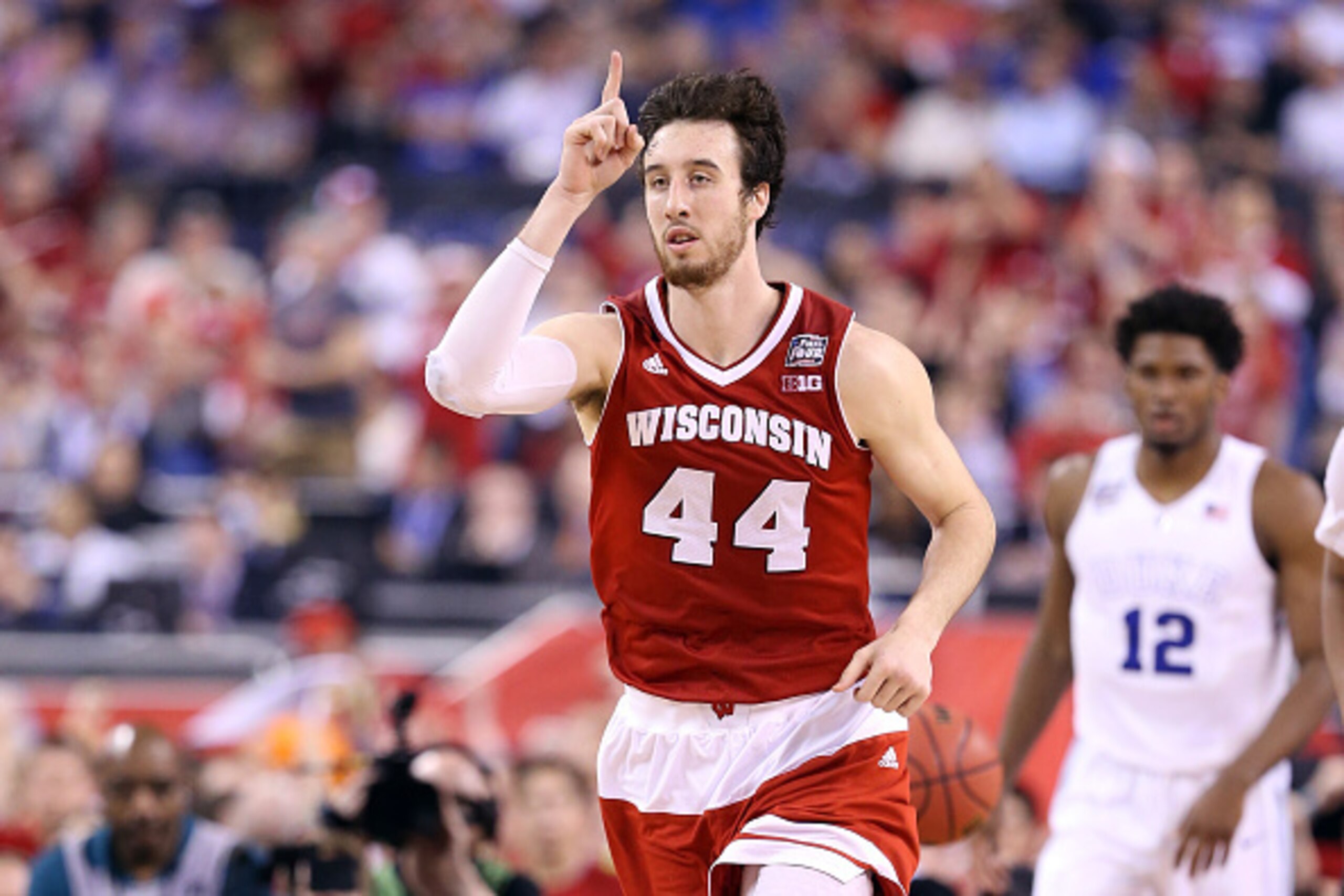
The Jazz are in a very unique position. They had the youngest roster in the NBA last season, which would suggest 50-plus losses and a boatload of project players who are a year or two away from NBA competence.
Those sort of teams generally draft the best player available and add him to the collection of assets already in place. Think the past few years of the Philadelphia 76ers, or the 2014-15 New York Knicks.
But Utah went 38-44, played at a 50-plus-win rate after the All-Star break and had the league's best defensive rating (98.1) from January 5 until the end of the regular season.
And they have core talent in place at all five positions with Gordon Hayward, Derrick Favors, Rudy Gobert, Dante Exum, Rodney Hood and Alec Burks.
For a team this young to be that complete and play that well over two or three months gives them some leeway with the No. 12 pick. "Best player available" isn't so automatic. And Lindsey said as much in his post-lottery chat with media.
"One of the things that we do try to evaluate... it's on our prospect summary page, is readiness. So there will be some players that in concept, given an even playing field, that they could come in and help us very quick. There's others that it would take some time and it's more of a projection pick. So that's part of the evaluation.
At the end of the day, we want to get the player that has the best career... Readiness to play does come into the equation. And again, once you start getting players who are in similar tiers, that's when you can start looking at readiness, and skill sets and positional need.
"
Outside of the top 10, the Jazz aren't likely to find anyone in the top couple tiers of talent from this class. There will be plenty of nice options in that third or fourth tier, so readiness will likely be a factor.
Utah is already on the fringe of playoff basketball. If they simply maintain pace from the end of last season (erroneously assuming none of the young core improves), they'd win over 50 games and make the postseason in the brutal West.
The opportunity to draft someone who can help with that goal as early as 2015-16 can't be ignored.
Among those expected to be available at or around the 12th pick, Wisconsin's Frank Kaminsky might be the most ready to contribute right away.
As a four-year college player, he may not have a superstar's ceiling. But the chances of finding that at 12 are very slim anyway.
Kaminsky, the 7'1" center who shot 41.6 percent from three as a senior, would be an excellent change-of-pace big who could stretch the floor for either Gobert or Favors.
4. Defense
3 of 6
Lindsey's desire to draft a player who has "individual defensive integrity" is in line with the trajectory Utah took in the second half of last season.
The Enes Kanter trade was a clear signal that Lindsey was building a defense-first team. The results proved it to be perhaps the biggest addition-by-subtraction deal of any last season. Yes, even bigger than the Detroit Pistons cutting Josh Smith.
The Jazz gave up 106.1 points per 100 possessions prior to jettisoning Kanter, good for 27th in the NBA. After the trade, they had a league-best defensive rating of 94.8. The notoriously stingy Memphis Grizzlies came in second, and their 99.4 wasn't even close.
Drafting a defensive slouch wouldn't necessarily crater the progress Utah made last season. But in the Western Conference, you can't take even a half-step back if you're looking to get into the playoffs.
Myles Turner, who might have to experience a slight draft-day slide to be available to the Jazz, may be able to check a lot of the boxes on Lindsey's list. Perhaps most importantly, he could help the reserves' defense keep pace with the starters'.
Turner measured 6'11.5" in shoes, with a 7'4" wingspan at the combine, physical gifts that were often on display during his lone season with the Texas Longhorns.
He averaged 2.6 blocks in just 22.2 minutes per game. He was a machine on the boards too, as evidenced by his per-40-minute production.
| 34 | 11.8 | 4.7 | 18.3 |
If he's available at 12, Turner almost seems like a no-brainer.


3. Size
4 of 6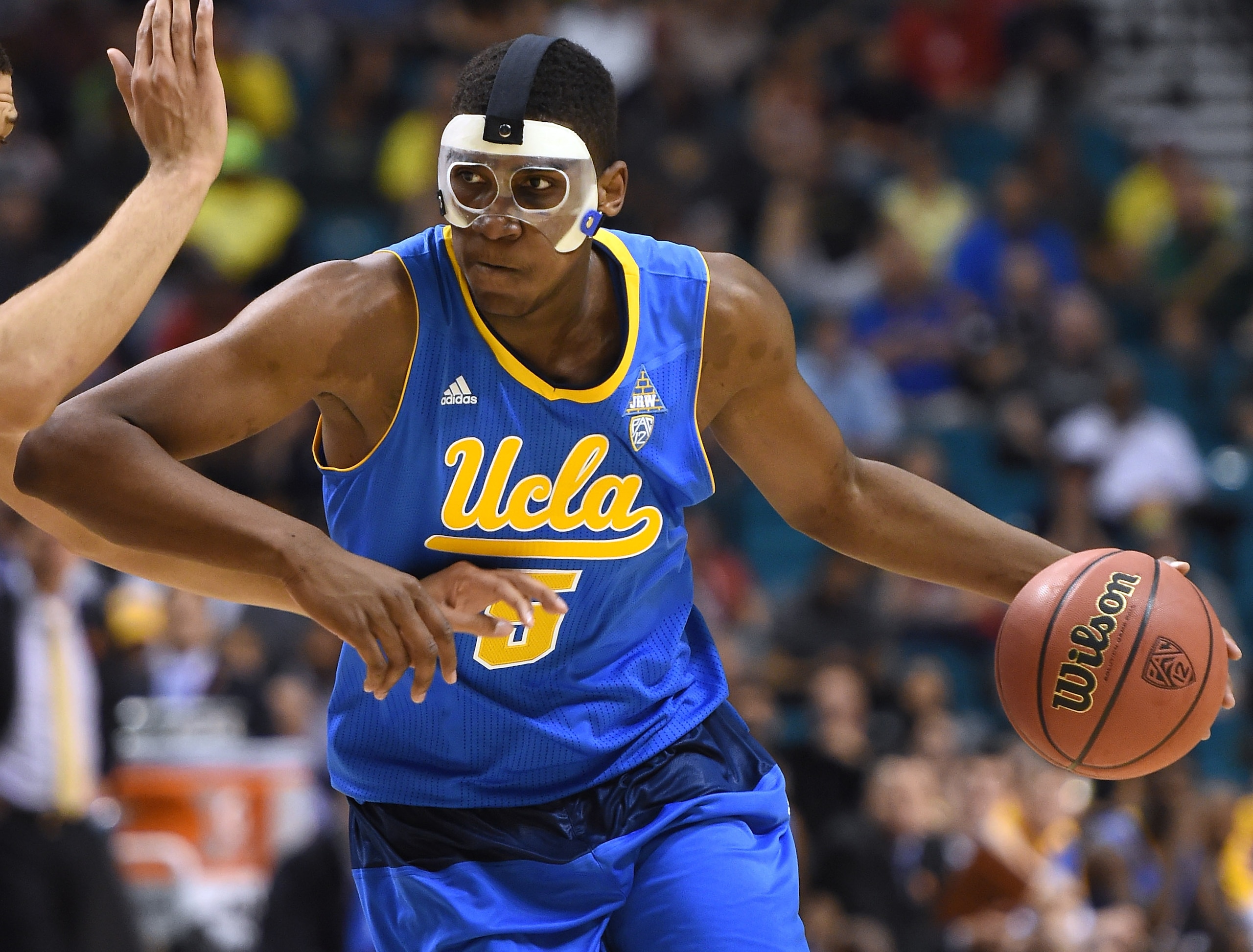
Positionless basketball is en vogue throughout the NBA, and the size in Utah's starting lineup to close the season was as good of an example as any.
| Rudy Gobert | C | 7-1 | 220 |
| Derrick Favors | PF | 6-10 | 246 |
| Gordon Hayward | SF | 6-8 | 207 |
| Rodney Hood | SG | 6-8 | 215 |
| Dante Exum | PG | 6-6 | 190 |
Traditional designations are still technically in play, but each of those five often did things out of positional character. Hayward and Hood initiated the offense like point guards. Exum spotted up off the ball like a 2. And Favors and Gobert guarded all over the floor.
Length and athleticism at all five positions makes switching 1-through-5 possible on defense and creates mismatches on the other end. Utah will likely draft another player who's big, versatile and pliable within positionless basketball.
Someone like UCLA's Kevon Looney makes sense. He measured 6'9.25", with a 7'3.5" wingspan at the combine, but has a number of guard skills, including a solid handle for his size and decent range on his jump shot.
2. Shooting
5 of 6
These playoffs have been as strong of an indicator as any that the NBA's best teams are three-point shooting teams.
The four conference finalists—the Houston Rockets, Cleveland Cavaliers, Golden State Warriors and Atlanta Hawks—were first, second, fourth and seventh in the league in regular-season three-point attempts.
Meanwhile, the Jazz were in the lower half of the league in both threes attempted and three-point percentage. To become more efficient offensively, they have to add shooting range.
That may come in the form of improvement in both volume and accuracy from Exum, Hood, Hayward, Burks and others. But it could also be a target in the draft.
Each of the three bigs already mentioned—Kaminsky, Turner and Looney—have solid potential to be stretch 4s or 5s. There are a couple of lights-out wings who may be even better.
When you watch film on Kentucky's Devin Booker, it's hard not to think of Klay Thompson. They have very similar frames and shot mechanics.
Booker almost always gets his shoulders square to the rim before firing, and his release and follow-through look the same every time. Regardless of situation—catch-and-shoot, off the dribble, you name it—that form looks the same.
Considering Thompson was just named Third Team All-NBA, it's a bit surprising Booker isn't a bit higher on most draft boards. As it stands right now, there's a decent chance he'd be available at No. 12.
Another option could be R.J. Hunter, the volume shooter from Georgia State who averaged 19.7 points this season.
His career three-point percentage of 35.4 doesn't blow you away, but several analytics models favor free-throw percentage as the most accurate forecast of NBA shooting success. From the stripe, Hunter shot 85.3 percent for his career and 87.8 percent in 2014-15.
1. Character
6 of 6
Each of the previous needs is tangible, measurable and concrete. This final and most important need ties them all together.
All of the readiness, defense, size and shooting in the world can go out the window if a player isn't on the same page emotionally and psychologically with his teammates and coaches.
I move to enter Enes Kanter as Exhibit A for this argument.
Kanter, a naturally gifted player with offensive skill that belies his youth, was visibly disinterested in playing defense or passing to his teammates on the other end as a member of the Jazz. Advanced metrics from a number of sources showed his negative impact on the team.
"I'm not in the camp that thinks Utah lost Kanter for nothing, and that the deal makes them worse in the short term. pic.twitter.com/hO37VL6QvV
— Andy Bailey (@AndrewDBailey) February 20, 2015"
Utah was one of the best teams in the league from the time Kanter was traded to the Oklahoma City Thunder to the end of the season.
Over that span, the Jazz had the sixth-best record and top-ranked defense in the league.
Having the right attitudes, or rather, the absence of the wrong attitudes, made all the difference. Lindsey talked about the need to find players with character, saying:
"Past behavior is the best predictor of future behavior. We'll look and take a deep dive into each player's behavior and intel and how they handle authority and how they handle themselves in a team setting.
"
Drafting someone who passes that test will help Utah maintain the chemistry it started to build toward the end of last season.
That kind of environment is one in which a burgeoning rebuild can flourish.
Unless otherwise noted, all stats and salary figures are courtesy of NBA.com and Basketball-Reference.com and are current as of June 1, 2015.
Andy Bailey covers the NBA for Bleacher Report. Follow him @AndrewDBailey.




.jpg?w=2560 "Latest Peyton-Colts Rumors")