


Despite taking a 2-0 lead over the Boston Celtics in their opening-round series, the Cleveland Cavaliers have appeared less than dominant.
While the offense has looked unstoppable at times given the Cavs' personnel and unselfishness, the defense may be their Achilles' heel. Boston has remained close in both losses, thanks to their ability to move the ball, dribble-penetrate and get to the free-throw line.
The Celtics put up 100 points against the Cavaliers on Sunday, April 19 before slipping to 91 in Game 2 on Tuesday. Only once in two games could Cleveland's lead truly be considered comfortable, as Boston's sixth man and leading scorer, Isaiah Thomas, has proven difficult to contain.
TOP NEWS

Brown with an all-time summary of relationship with Tatum

Heat, Giannis were down by 20+ in each of their 3 losses
Worst NBA Predictions 🫣
If Thomas is already giving the Cavs problems, what happens later in the playoffs where the competition only gets better? Offensively, Cleveland is championship-worthy. When it comes down to digging in on D, however, should the Cavaliers be worried?
Past Performance
The Cavaliers defense over the first two months was nothing short of awful.
LeBron James looked a bit sluggish, opponents could score at will in the paint and the Cavaliers were forced to show more on pick-and-rolls due to their lack of a shot-blocking big man inside. Kyrie Irving and Kevin Love's efforts were improving, but still far from there they needed to be.
To general manager David Griffin's credit, he recognized these inefficiencies and made the necessary adjustments. Trading for Timofey Mozgov, Iman Shumpert and J.R. Smith in early January made a monumental difference for the Cavs. Mozgov's ability to protect the rim meant they no longer had to show on pick-and-rolls, and could instead reduce rotations and challenge guards to drive on the 7'1" center.
Shumpert has become the team's best perimeter defender, holding players to 40.1 percent shooting from the field and 27.3 percent from deep. All defensive rankings should be counted from Jan. 23 on, the first game that Shumpert joined the rotation following a shoulder injury.
Cleveland has performed well with it's new-look roster, but definitely not to a championship level.
Over the past three months, the Cavaliers are sixth in points allowed (96.8), 10th in opponent field-goal percentage (44.1) and 12th in defensive rating (101.5). By all accounts, this is simply above-average, but it's certainly better than the kind of efforts being produced in November and December.
Stopping the Celtics

An offensive juggernaut, Boston is not.
The Celtics were 18th in offensive rating this season (104.7), while posting 101.4 points per game, good for 13th overall. Thomas is the team's only player producing over 14 points a night.
Still, the Cavaliers have struggled to contain Boston's quicker guards at times, a troubling sign so early in the postseason. The Celtics have tried to overcome their lack of offensive talent by moving the ball and working to get good looks no matter who ends up taking the shot. Six players averaged double digits in scoring during the regular season, led by Thomas' 19.0.
Think of Boston as a watered-down version of the Atlanta Hawks. The names won't scare anybody, but the style of play and passing ability certainly should. The Celtics finished the season an impressive sixth in assist ratio (18.1), fourth in assist percentage (62.9) and fourth in assist to turnover ratio (1.77).
This kind of ball movement is initiated by Thomas' drive-and-kick ability, something the Cavaliers have already gotten a taste of.
Thomas is averaging 22 points and 8.5 assists in the series' first two games. No other Celtic has scored more than 14 in either contest. Although listed at just 5'9", he's done an excellent job of getting to the basket and creating for others.
Head coach David Blatt has tried multiple defenders on Thomas, including Irving and Shumpert. Thomas uses an extremely quick first step to get by his man on the perimeter and is creative enough to finish around players nearly a foot-and-a-half taller than him at the rim. While Shumpert has done an adequate job on Thomas, he's definitely exposed the Cavaliers' weakness when trying to stop dribble penetration.
No one player besides Thomas has stood out offensively for Boston, although collectively the team's done a nice job keeping the ball away from Cleveland's best defenders. Apparently, forward Jae Crowder wasn't all that impressed with the Cavs' D after Game 1, according to his comments provided by The Boston Globes' Adam Himmelsbach:
Boston is shooting 52.7 percent from within five feet so far this series, taking advantage of Mozgov's questionably low playing time (25.5 minutes a game). Not a great three-point shooting team, the Celtics have struggled from the outside (31.8 percent), thanks in part to Shumpert's efforts.
Cleveland's focus on the arc has allowed Thomas to get inside often, connecting on a combined 18 of 18 free throws in the series.
While the Cavaliers can still sweep, despite a heroic effort from Thomas, their true test will come in the following rounds.
Looking Ahead
While Thomas is a terrific player, he is far from the most talented guard the Cavaliers will face this postseason.
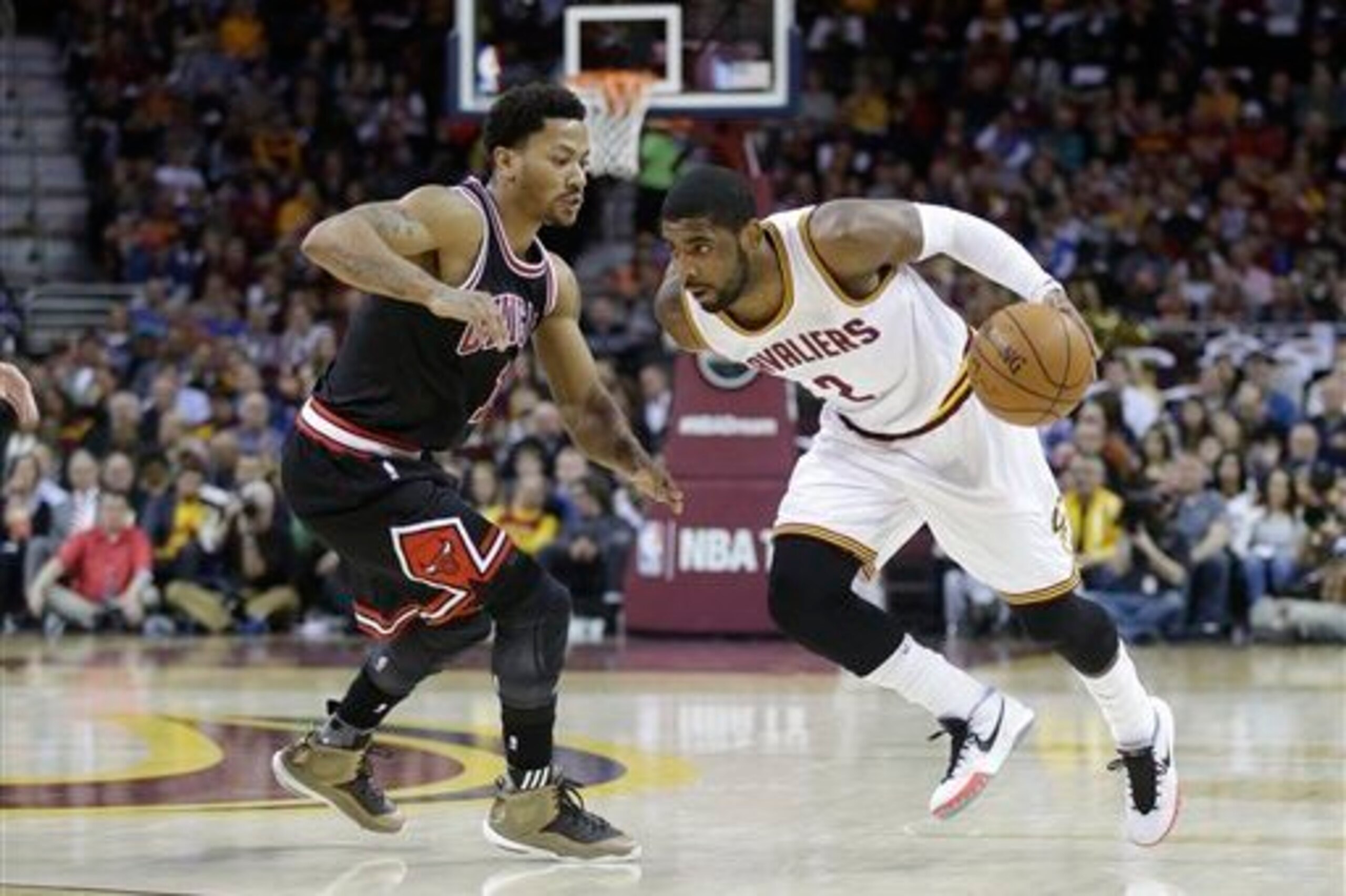
An Eastern Conference semifinal meeting with the Chicago Bulls seems inevitable. This means facing the Bulls' dynamic backcourt of Derrick Rose and Jimmy Butler, who are currently up 2-0 on the Milwaukee Bucks.
Should Cleveland make it past Chicago, it'd likely face the Atlanta Hawks or Washington Wizards in the conference finals. Both possess two of the quickest point guards in the league—Jeff Teague and John Wall.
If the Cavaliers advance to the NBA Finals, the competition only gets worse. From Steph Curry to Chris Paul, Tony Parker or James Harden, the list of offensively dominant guards goes on and on. As Ben Dowsett of Basketball Insiders wrote:
"A team like the Warriors presents a unique set of challenges with their Steph Curry-oriented offense, one that makes Cleveland’s starters’ typical strategy versus high pick-and-rolls – a generally conservative scheme that drops the big man and allows tougher off-the-dribble looks to most guards – completely ineffective.
"
Facing Thomas, a 34.5 percent three-point shooter this season, is a far cry from someone like Curry. Cleveland not only has to stop dribble penetration but also be ready to get a hand up to contest an outside shot as well.
The Cavs can try a number of different tactics to combat the dribble-drive. Improved pressure on the ball-hander can work, as long as help defense is available. Blatt has also experimented with a zone at times this season, which can force opponents to knock down outside shots. Given the Celtics' poor effort from deep this series, they could struggle should the Cavs switch to a zone.
Led by James, Love and Irving, the Cavaliers should continue to have little difficulty scoring the ball this postseason.
It's their defense, particularly stopping those quick, penetrating guards, that could ultimately decide how long they stay there.
Greg Swartz has covered the Cleveland Cavaliers and NBA for Bleacher Report since 2010. All stats provided by Basketball-Reference.com and NBA.com, unless otherwise noted.




.jpg?w=2560 "Mahomes Asked OT to Leave Meeting")
.jpg?w=2560 "Jonathan Taylor Landing Spots 📍")

.jpg?w=2560 "5 Teams Eyeing Jonathan Taylor")
