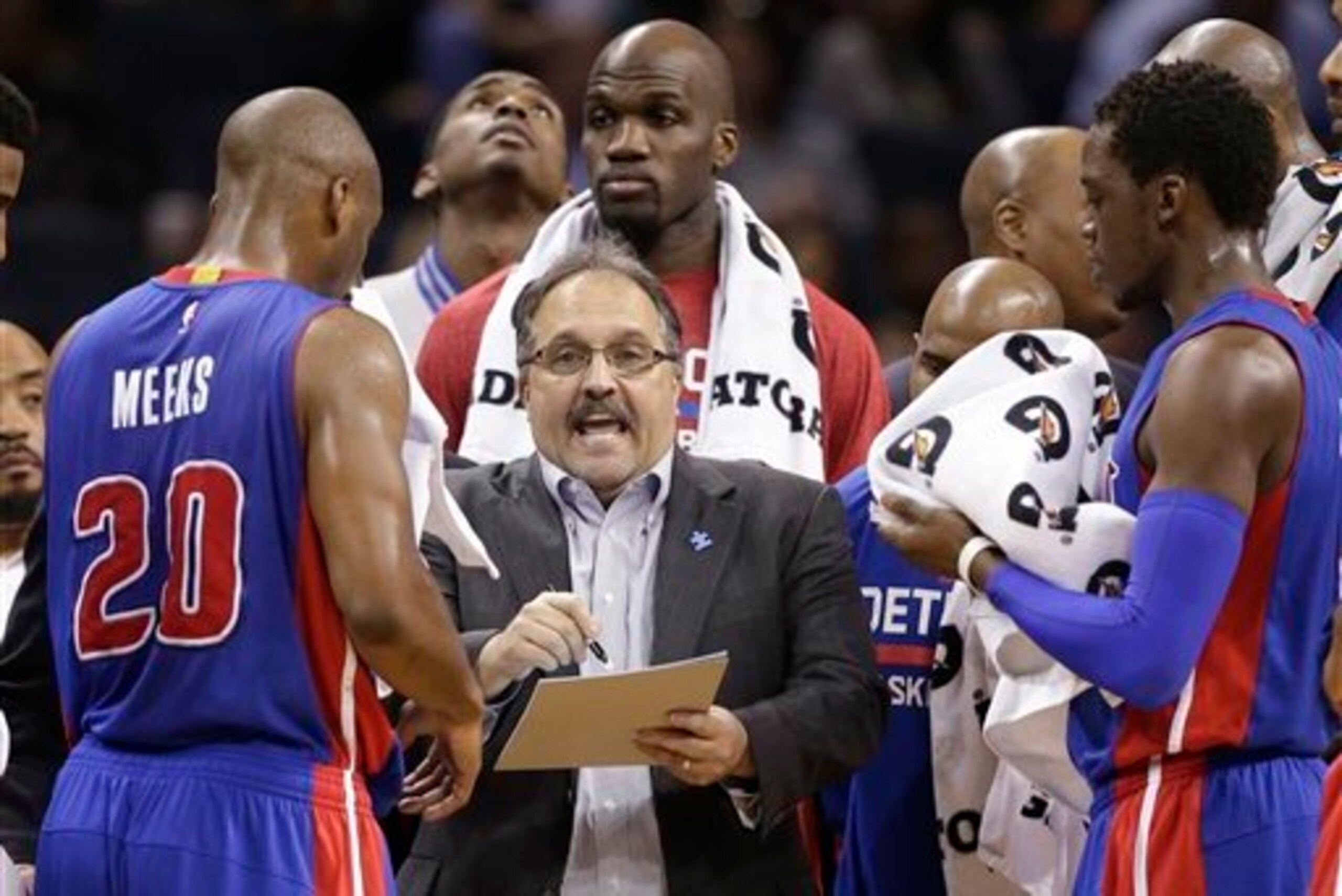

Final Regular-Season Grades for Every Detroit Pistons Player
With a seventh consecutive losing season and six years since their last playoff berth, the Detroit Pistons certainly disappointed in 2014-15.
They came into the campaign with playoff expectations, but a 5-23 start made the postseason seem like an impossibility. Coach and team president Stan Van Gundy then decided to release Josh Smith, and the Pistons promptly won 11 of 13 games to turn the season around.
On January 24, the season took another dramatic twist when point guard Brandon Jennings tore his Achilles and was ruled out for the season after playing the best basketball of his career. At the trade deadline, Van Gundy acquired guard Reggie Jackson from the Oklahoma City Thunder, but Detroit lost 10 straight games while figuring out the new roster, and the rejuvenated playoff hopes were quashed.
In this season of extreme peaks and valleys, there were bright spots to go along with the disappointments. And many individual players had seasons that should give the Pistons hope for the future.
Each player's season has been graded based on expectations for their year and how they fulfilled their role. This isn't a power-ranking exercise; a starter can easily receive a lower letter grade than an end-of-the-bench guy if his season was a disappointment. These are the rankings for all 15 Pistons.
End of the Bench
1 of 10
Cartier Martin
If it wasn't for Josh Smith, then Cartier Martin would have had the worst 2014-15 of anybody who put on a Pistons uniform. A career 37.2 percent three-point shooter, he shot just 6-of-33 (18.2 percent) from the arc. His 28.3 field-goal percentage was little better, and his 1.62 player efficiency rating (15 is league average) was among the worst in the NBA.
Final season grade: F
Quincy Miller
Van Gundy took a flier on 22-year-old forward Quincy Miller, and it didn't show dividends in 2014-15. He hit just 22.2 percent of his shots and 14.3 percent of his threes in the four games he played. But his age and athleticism could be intriguing enough to bring him back next season.
Final season grade: D
Shawne Williams
After the trade deadline moves, Shawne Williams was brought in to be a third power forward who could stretch the court. He had a real opportunity to earn minutes, but his jumper never fell; Williams made only 31.7 percent of his field goals and 15.4 percent of his threes. It was disappointing after hitting 42.5 percent of field goals and 39.5 percent of threes with the Miami Heat earlier in the year.
Final season grade: D+
John Lucas III
When Jennings went down for the season, John Lucas III was brought in to help provide minutes off the bench. But at times he was benched in favor of rookie Spencer Dinwiddie. As a scorer he was fine, but his outside jumper never fell (only 31 percent from three-point range) and his size (5'11", 165 pounds) made him a defensive liability.
Final season grade: C
Spencer Dinwiddie
The point guard position was loaded all season with Jackson, Jennings and D.J. Augustin all playing big minutes, but second-round pick Spencer Dinwiddie still managed a handful of big games in limited opportunities. He combined for 22 points and 19 assists in two wins over the Chicago Bulls, but his season highlight was the 20-point, eight-assist performance to nearly get the comeback win over the Washington Wizards. He just needs more chances to prove himself.
Final season grade: B-
Joel Anthony
With Andre Drummond and Greg Monroe on the roster, minutes at center were hard to come by, but Joel Anthony made the most of it when he saw the court. The 7.7 points and 8.2 rebounds he averaged per 36 minutes were the best marks of his career, and his 97.4 defensive rating was best among Pistons who played at least five games.
Final season grade: B+
Caron Butler
2 of 10
The Pistons knew they weren't getting the Caron Butler who made two All-Star Games when they signed him this summer, but his play was still a bit underwhelming at small forward.
Before 2014-15, Butler had never averaged fewer than nine points per game, and just last season he scored 10.5 points a night with the Thunder and Milwaukee Bucks. With the Pistons he averaged 5.9 points, and his per 36-minute scoring was the lowest of his career.
While he wasn't the scorer Detroit thought it was getting on the perimeter, Butler was a solid three-and-D guy in mostly a reserve role. He knocked down nearly 38 percent of his triples and held opposing small forwards to a 14.3 PER, according to 82games.com.
He was also surprisingly a rock in a season filled with injuries, playing 78 games—third-most on the team. That actually tied his career high for games played.
Butler was an acceptable bench player for Van Gundy's system, but at $4.5 million he didn't quite live up to the deal he signed in the offseason. The $4.5 million of his contract for next season is non-guaranteed, and the front office should choose to pass if it expects more regression from the 13-year veteran.
Final season grade: C
Jodie Meeks
3 of 10
Jodie Meeks was Detroit's biggest free-agent acquisition in 2014, signing a three-year, $18.8 million deal after a career year with the Los Angeles Lakers under coach Mike D'Antoni.
With the style and pace of the Lakers offense, it was expected that Meeks' production would fall. But it was his drop in efficiency that was the biggest letdown in his first season with the Pistons.
Above all else, Meeks was brought in to knock down threes. Only the Philadelphia 76ers shot worse from the arc than the 32.1 percent of triples the Pistons knocked down in 2013-14, and Meeks hit 40.1 percent of his that season.
But in 2014-15, that fell to 34.9 percent—the worst mark since his rookie campaign in 2009-10. He was particularly bad in January and February, hitting 26.2 percent and 24.4 percent of his threes, respectively.
Durability was also an issue, as he played in just 60 games due to a back injury to start the season. That wasn't the only reason for Detroit's struggles, but it certainly didn't help as it went 5-22 without him.
Meeks did close the season well, knocking down more than 40 percent of his threes in both March and April. But he is a scorer who does most of his damage from outside, and he gave them very little production there for too much of the season.
Final season grade: C-


Tayshaun Prince
4 of 10
When the Pistons acquired Jackson from the Thunder, they had to give up starting small forward Kyle Singler. To help fill the void, they sent Jonas Jerebko and Luigi Datome to the Boston Celtics to acquire small forward and former Piston Tayshaun Prince.
Now 35 years old, Prince was never going to produce like he did in his first stint at the Palace. This time around he was simply asked to provide solid defense and outside shooting while splitting minutes at the 3 with Butler.
Offensively, Prince continued the great shooting year he had been having in Boston and with the Memphis Grizzlies, knocking down 42.3 percent of his threes. He also showed some of the playmaking ability that helped define his first run with the Pistons, averaging 2.4 assists per 36 minutes.
But on the other end, lineups with Prince were a disaster, giving up 107.2 points per 100 possessions. The Pistons gave up 104.2 points per 100 possessions as a whole, and Datome was the only player who had a worse defensive rating.
As a backup small forward, the Pistons could do worse than Prince. On offense, he shot well enough to space the court for their bigs to operate down low, and his passing ability added an element they weren't getting from Singler. But his liabilities on the other end are impossible to overlook.
Final season grade: C
Greg Monroe
5 of 10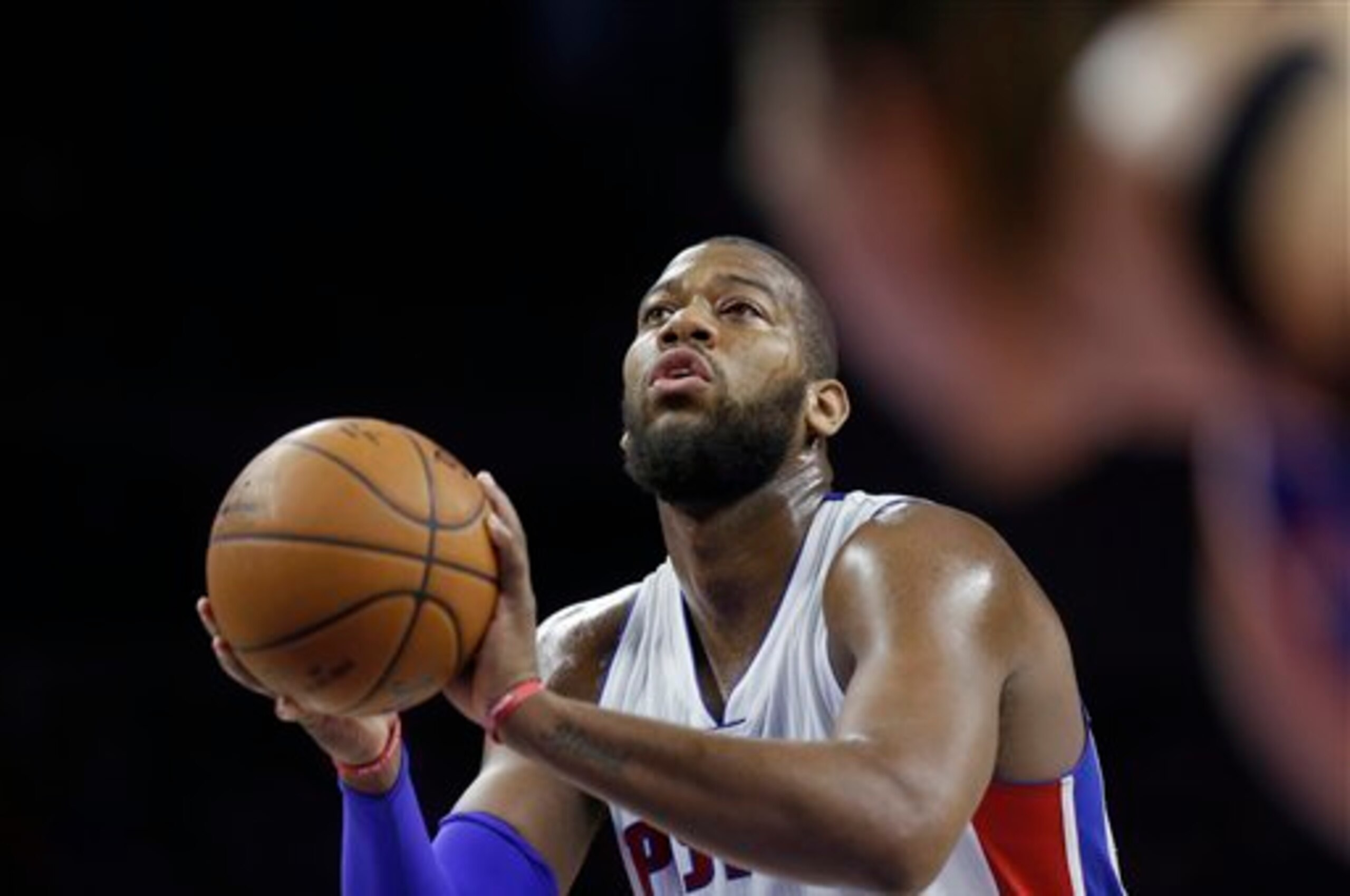
From a raw statistical standpoint, Greg Monroe had a big 2014-15 season. The 18.5 points and 11.9 rebounds he averaged per 36 minutes were both career highs, and his 4.9 free-throw attempts per game were solid for a low-post player.
But his fit with the rest of the roster—specifically Andre Drummond—once again proved less than ideal. Offensively, he was only effective near the basket. He shot less than 40 percent from five-to-nine feet, 10-to-14 feet and 15-to-19 feet, per NBA.com.
That was a big disappointment after his 2013-14 season, when he shot 41.6 percent from five-to-nine feet and 41.3 percent from 10-to-14 feet. With Drummond operating almost exclusively near the basket—76.6 percent of his field-goal attempts came from within five feet of the basket—Monroe's inability to stretch the floor bogged down the Pistons offense far too often.
Monroe is still a defensive liability; he is too slow to defend athletic power forwards on the perimeter, and he doesn't protect the rim like a modern-day center. In an ideal situation, he would play next to someone who can shoot from the perimeter and block shots. That isn't Drummond.
He is an unrestricted free agent and can sign anywhere he would like this offseason. Van Gundy may still think he can make the duo work, but he may not even have that opportunity if Monroe chooses to head elsewhere. And that might not be the worst thing for Detroit.
Final season grade: C+
Kentavious Caldwell-Pope
6 of 10
Second-year shooting guard Kentavious Caldwell-Pope made big strides in 2014-15, but he still has a long way to go as a player.
Defensively, he has the tools to be an elite wing stopper. At 6'5" and 205 pounds with lanky arms, he can be feisty on the ball—he has averaged a steal per game for his career. But nearly every game we get reminded that he is just 22 when he gets lost on a rotation or he loses his man on a backdoor cut.
Offensively, his numbers improved slightly from his rookie season. His PER is up to 11.3 from 9.5, though it is still below average. His field-goal percentages in the two seasons are almost identical, though from the arc he improved from 31.9 percent to 34.5 percent.
Caldwell-Pope's April is a great example of the inconsistency that plagued his entire season. Over the final seven games he averaged 14 points on 44.3 percent shooting from the field and 47.1 percent from the arc. But in their 102-78 loss the Charlotte Hornets he was a complete non-factor, scoring two points on 1-of-6 shooting.
Looking forward, the Pistons should be encouraged by Caldwell-Pope's play with Jackson once they started to figure things out. Over the last 16 games of the season, Caldwell-Pope averaged 15.6 points per game—nearly three more than his season average. They just need to see more of that going forward.
Final season grade: C+
Reggie Jackson
7 of 10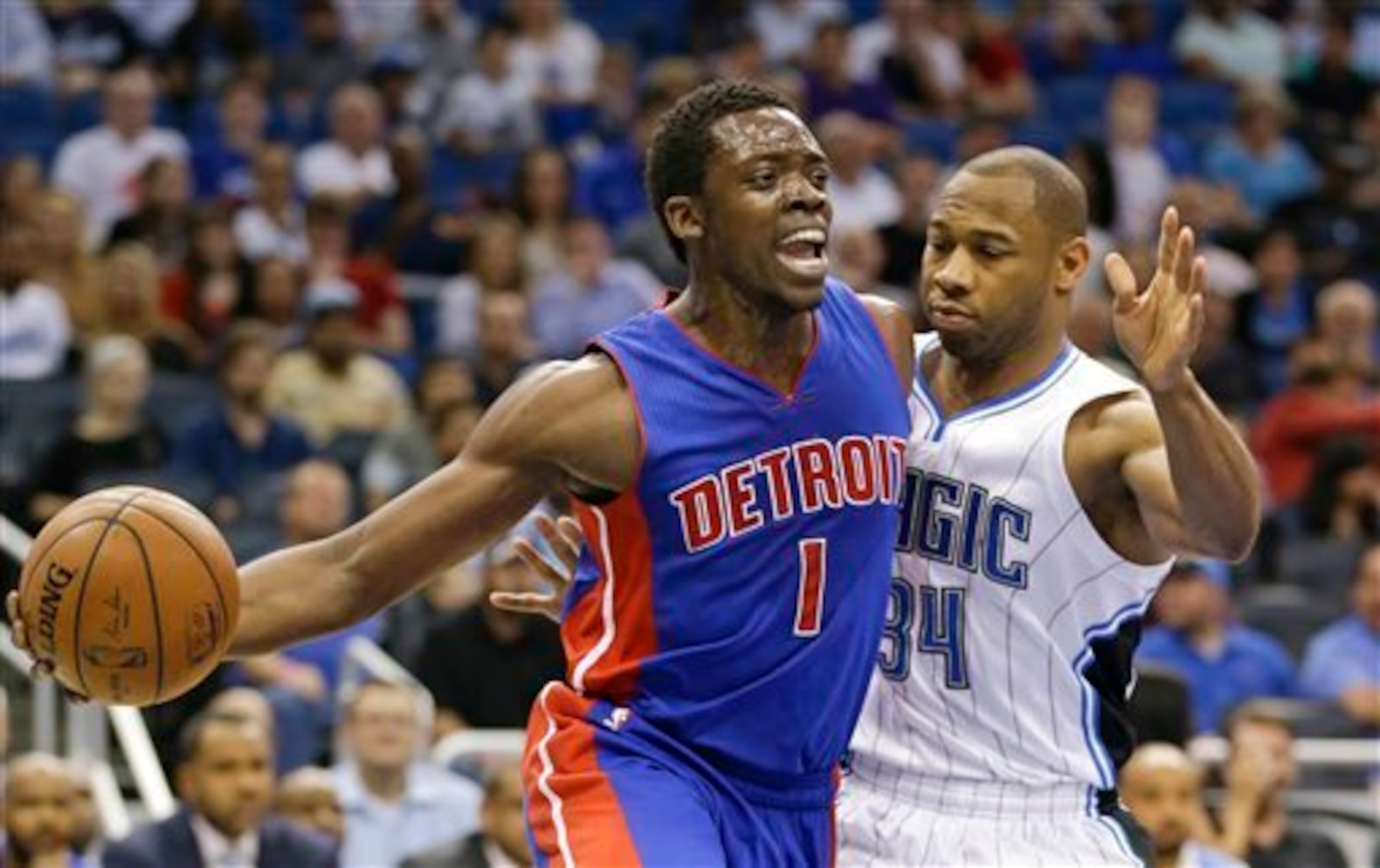
When looking at Reggie Jackson's 27 games with the Pistons, both his starter-caliber numbers and the team's 10-17 record have to be considered.
The Pistons' 10-game losing streak almost immediately after the trade deadline essentially ended any hope Detroit had of making the playoffs. But how much of that blame should be put on Jackson? He had some tough games, but he was joining a completely new roster and system, and they were playing without a quality small forward.
When Jackson did get comfortable, he really thrived. He averaged 17.6 points, 9.2 assists and 4.7 rebounds per game after the trade. That assist mark would have been fourth in the NBA this season. And his 33.7 percent three-point percentage was better than expected and good enough to make defenses respect him.
Defensively, Jackson has all the physical tools to be a ball hawk, but he is still undisciplined. However, the Pistons defense was actually slightly better when he was on the court, per NBA.com.
The hope when the Pistons traded for Jackson was that he would be talented enough to carry them to the playoffs after the injury to Jennings. That didn't happen, but there were multiple reasons for that. Jackson showed enough that Van Gundy should look to bring back the restricted free agent this offseason.
Final season grade: B-
Andre Drummond
8 of 10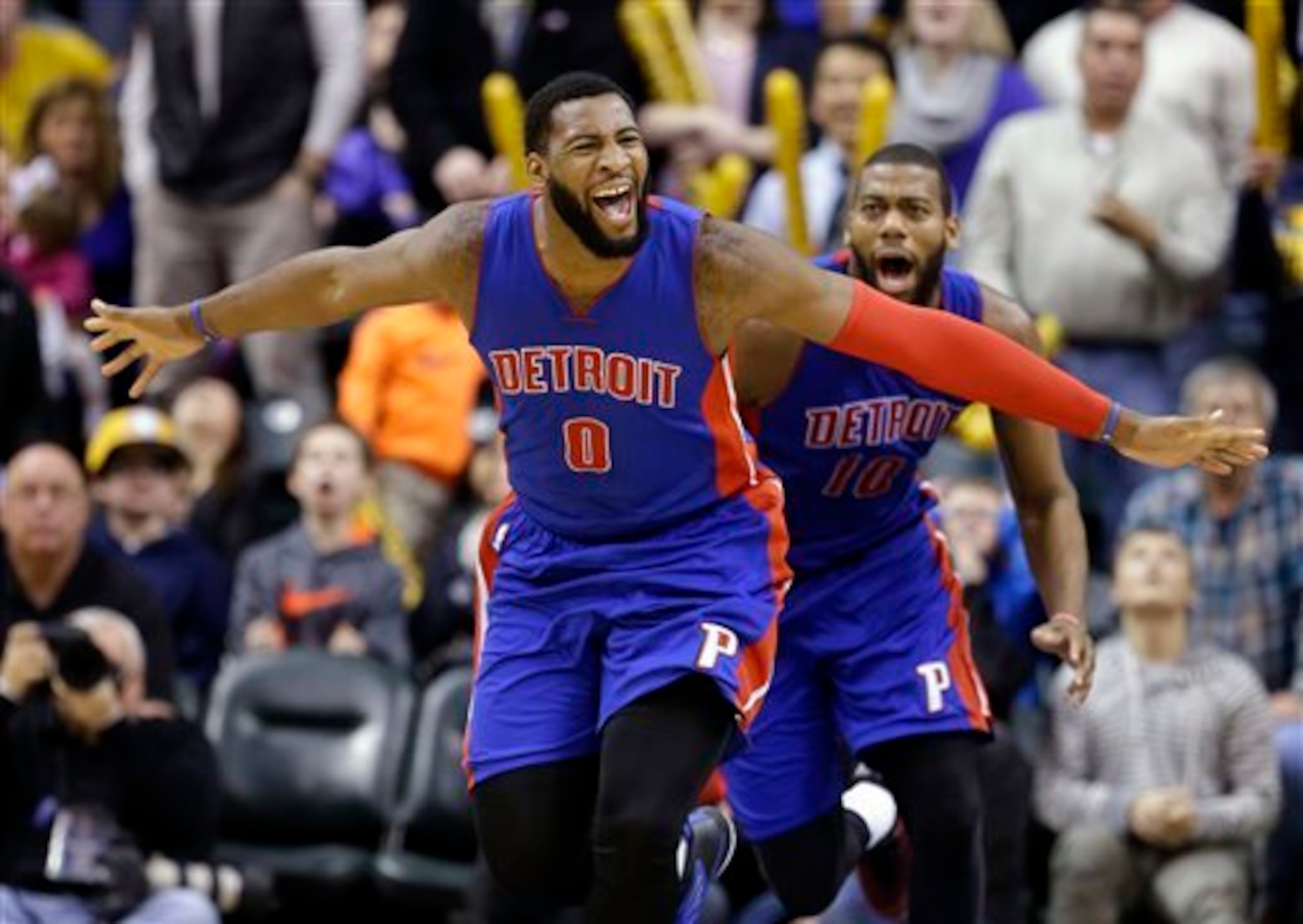
In his third NBA season, Andre Drummond was asked to take on a bigger offensive role under Van Gundy.
That had plenty of early-season bumps.
After shooting at least 60 percent from the field in his first two seasons, he shot below 50 percent in two of the first three months in 2014-15. Instead of emerging as an All-Star candidate, it looked like he had taken a step back.
That changed starting in February, as he averaged at least 15.4 points and 13.2 rebounds over each of the final three months of the season. He played well enough to average new career highs in points (13.8), rebounds (13.5) and blocks (1.9). His 21.5 PER was a touch lower than his previous two years, but it was still good enough to rank No. 23 in the NBA.
Drummond did more than just lay the ball up and dunk this season, with mixed results. He took 145 more shots from five-to-nine feet in 2014-15 than in 2013-14, but he still only made 35.6 percent of those shots, per NBA.com. The fact that he is trying to expand his offensive game is a positive, though.
Many of the issues that plagued Drummond in his first two seasons were still an issue in 2014-15. He is not a great individual defender and can be undisciplined in help defense looking for blocks. And he somehow got worse at shooting free throws, down from 41.8 percent in 2013-14 to 38.9 percent this season. That continues to make him a liability down the stretch of close games.
Drummond looked like a surefire All-Star heading into 2014-15, but his struggles to find a rhythm next to Smith and Monroe while playing for a new coach hurt the Pistons in the early going. His play over the final three months of the year was possibly the best of his career, but it was too little too late to get the Pistons to the playoffs.
He was their best player once again this season, but a true star could get this team to the playoffs in the Eastern Conference. They need him to become that player soon if they want to become a contender.
Final season grade: B
Anthony Tolliver
9 of 10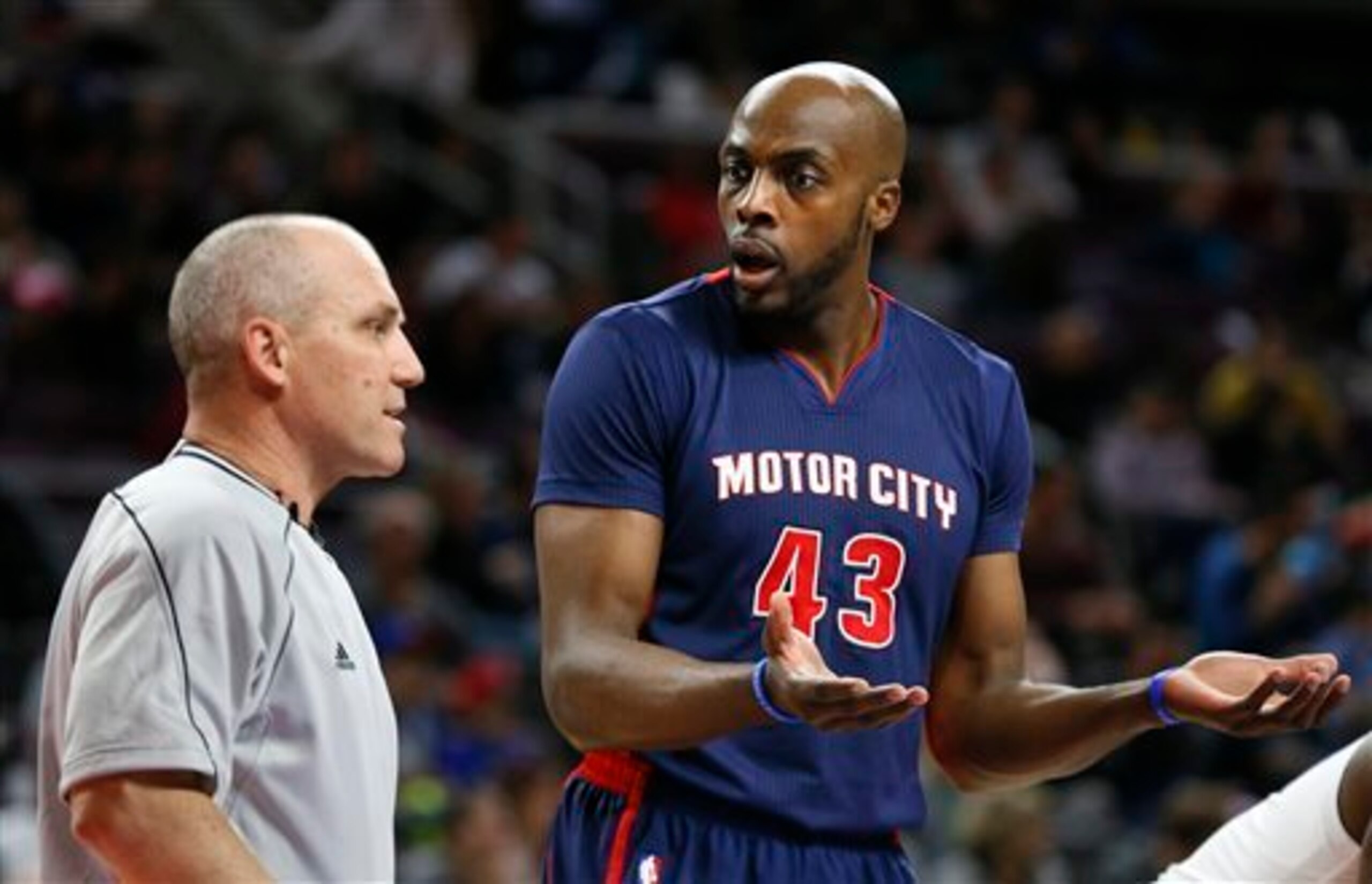
The end to Detroit's 5-23 start came immediately after the release of Smith, but a smaller transaction certainly helped in their turnaround.
When Van Gundy traded Tony Mitchell to the Phoenix Suns, it was merely a blip on the NBA radar. The headline from NBA.com read, "Suns trade Tolliver to Pistons in salary cap move." So it was a surprise when he became a key player in the Pistons' rotation.
While Smith bogged down the offense with a 25.1 percent usage rate and a 24.3 percent three-point mark, according to ESPN Insider, Tolliver rarely needed the ball on offense and knocked down his open looks when he got the chance. By hitting 36 percent of his triples, he was enough of a threat to pull his defender out of the paint. That opened up driving lanes for Jackson and Jennings and freed up space in the lane for Drummond and Monroe to work in the post.
Tolliver isn't the answer as the starting power forward in Detroit, but Van Gundy liked stretch 4s when he was with the Orlando Magic, and Drummond is at his best next to someone who can shoot. The biggest knock on Tolliver is that he is undersized on the boards and defensively. But his non-guaranteed $3 million salary for next season seems like it will be a great deal for the Pistons.
Final season grade: A-
Brandon Jennings
10 of 10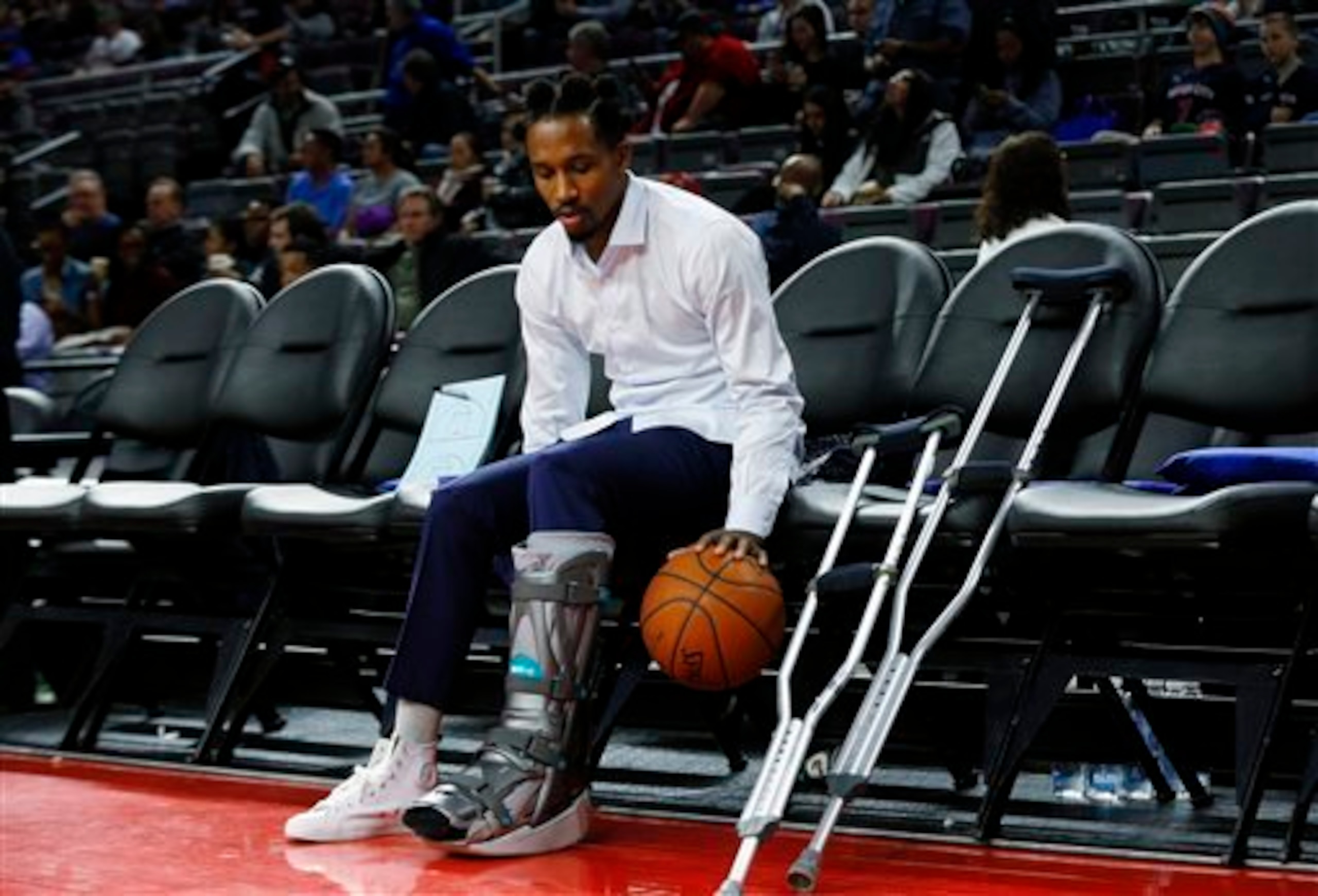
Beyond missing the playoffs, the most disappointing part of the Pistons' season was losing Brandon Jennings to an Achilles tear.
Jennings played the best basketball of his career after the Josh Smith trade. In January, he averaged 20.9 points on 43.5 percent shooting, hitting 38.8 percent of his threes. He added 7.2 assists while leading the Pistons to a 9-4 record before the injury.
His December was much less inspiring, as he averaged 9.3 points on 32.4 percent from the field and 27.3 percent from the arc. But otherwise, the only blemish on his season was the fact that it was incomplete.
Van Gundy will have big decisions this summer, with Jackson a restricted free agent and Jennings coming back from major surgery with just one year left on his contract. Had the injury never happened, he looked like the point guard of the future in Detroit. That is now in question.
Final season grade: A-
All records and statistics are accurate through April 2 and are from NBA.com and Basketball-Reference.com, unless otherwise noted. All salary information is from ShamSports.com.
Jakub Rudnik covers the Detroit Pistons as a Featured Columnist for Bleacher Report.

.jpg?w=2560 "Mahomes Told Teammate to Leave Meeting")
.jpg?w=2560 "5 Teams Eyeing Jonathan Taylor")



.jpg?w=2560 "NFL investigating Eagles")
.jpg?w=2560 "Jonathan Taylor Landing Spots 📍")