

L.A. Clippers Need Career Performance from J.J. Redick in 2015 NBA Playoffs
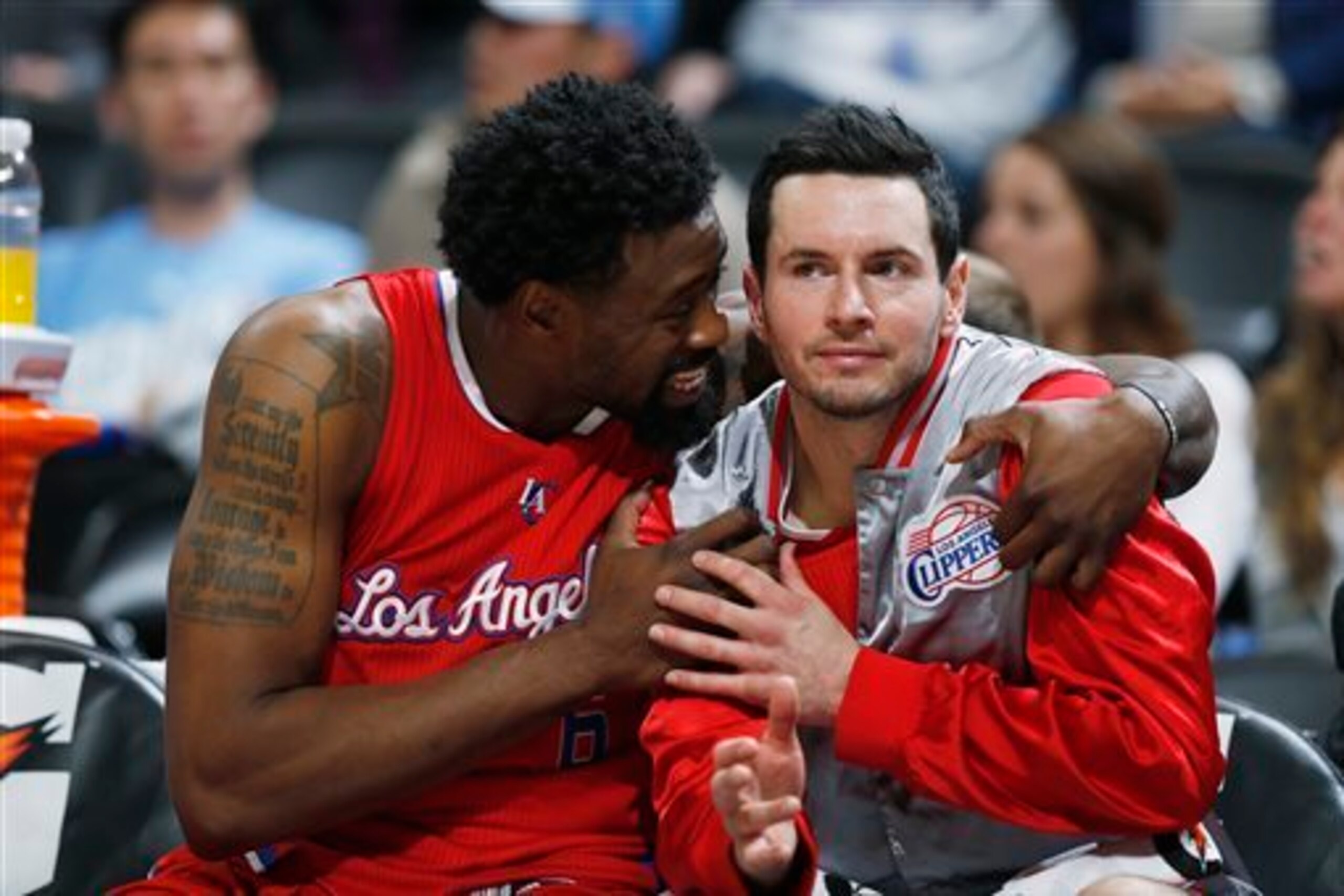
As the temperatures have gotten warmer, so has J.J. Redick.
The Los Angeles Clippers shooting guard is in the midst of a career season, and lately, it's only getting better.
Redick, who's easily shooting a career high from the field and from long range, is knocking in 3.1 threes a night over his past 16 games. And it's not like he's just chucking.
TOP NEWS

Brown with an all-time summary of relationship with Tatum
Jokic says booing fans not welcome in Denver
Worst NBA Predictions 🫣
This isn't a J.R. Smith type of situation. Redick is draining 47 percent of his long balls during those contests. It's not even just about the made shots, either. It's about the chaos his motion causes.
One of the reasons the Clippers rank first in points per possession (and the efficiency has gotten even better over Redick's hot streak) is because their offense is loaded with guys who can prod a defense.
Chris Paul dribbles, dribbles, dribbles, waiting for a defense to make a mistake. When it does, he capitalizes with a prompt dish. Blake Griffin posts up often just so he can get doubled and use his passing ability to find shooters on the wings, either to put up attempts themselves or to start swings around the perimeter.
Essentially, the Clippers make a living at waiting for a defense to lapse, and they capitalize quicker than maybe any other team in the league.

That's a concept plenty of offenses try to employ, but it is not one that all can execute properly. You need more than smart decision-makers and willing passers who read the floor well. You also need the guys off the ball who can cause those defensive blunders.
This is where Redick comes in handy.
There isn't another human (it's still unconfirmed what species Kyle Korver is) who runs off screens like Redick does. No one does it as actively. No one does it as intelligently. No one does it as consistently (Again, Korver is in his own category in this. Stay away, Atlanta Hawks fans. He's the best. We all agree on this).
Every time someone sets a screen, it forces communication. And every time someone else actually uses that screen, it causes the defense to talk even more.
Maybe a defense is going to switch defenders. Maybe two guys are both going to follow the player using the pick. There are a litany of ways to guard such plays. All of them require a defense to communicate.
That's true for all kinds of picks, too: ball/off-ball screens, pin-downs, flex screens and flair screens. We can get as technical as we want, but the reason screening is important is simple: It causes defenses to talk and make adjustments, and eventually, even the best defenses experience miscommunication.
Watch Redick run off a down screen on this early-season play against the Minnesota Timberwolves, and keep your eye on Corey Brewer, his defender who falls asleep for a split second only to realize that J.J. is already on the move.

By the time Brewer notices his error, it's already too late. Redick is going to get himself a wide-open three regardless.
The Clippers will be facing some of the best defenses in the playoffs, though it's still uncertain who they'll be matched up with come Round 1.
Teams like the Memphis Grizzlies and San Antonio Spurs might be the toughest matchups for the Clippers, because they have capable defenders who can bounce with Redick and guard Paul. San Antonio, for example, can let Danny Green stick with Redick while a longer Kawhi Leonard mans CP3 in crunch time.
Still, the Clippers could match up against anyone and probably find success.
They could play the Portland Trail Blazers, but Portland has struggled on defense since losing Wesley Matthews for the season. The team also has communication issues.
The Clippers could play the Dallas Mavericks, who don't respond well to a gluttonous diet of screens being thrown their way.
They could play the Houston Rockets, whom Redick historically rocks (on both sides of the floor, actually), averaging 18.8 points per game against them in six games as a Clipper. And if Houston uses Trevor Ariza to guard Paul for long stretches—a distinct possibility with Patrick Beverley out for the year—that leaves James Harden to pinball with Redick. The Rockets' best player has actually outplayed his embarrassing defensive reputation this season, but he's not particularly adept at the off-ball, screen-guarding game.
That's one of the last assignments Houston would want to give Harden for effort reasons, too. When you take into account that large of an offensive burden, expelling constant defensive effort becomes unrealistic. And whoever guards Redick needs to run with one of the most finely conditioned players on the court at any given moment.

The Duke alum is known for that conditioning and the workout regimens that lead to it. Others, such as Jared Dubin of Grantland, have brought up Redick's training before:
"Redick’s become such a beacon for the Duke ethos that Coach K apparently showed an inspirational video that detailed Redick’s accomplishments and work ethic to the Blue Devils in the summer of 2012 to set an example for his players to follow."
Show up early for a game at the Staples Center and you'll find Redick getting in his detailed pregame workout. He does the same one before every tipoff.
It's how he doesn't get tired late in games. It's how he finds space churning off all those screens. It's how he gets open on those curls he loves to run so much after starting on the left block.
Redick doesn't need to make shots to help the Clippers. He just needs to create space. But when the jumpers are going down, especially as often as they have over the past month or so, this Clippers attack advances to otherworldly levels. Considering the exploitable holes in the L.A. defense, "otherworldly" is how the offense has to perform to garner some playoff victories.
Follow Fred Katz on Twitter at @FredKatz.
All quotes obtained firsthand. Unless otherwise noted, all statistics are current as of April 6 and are courtesy of Basketball-Reference.com and NBA.com.

.jpg?w=2560 "Mahomes Told Teammate to Leave Meeting")
.jpg?w=2560 "5 Teams Eyeing Jonathan Taylor")

.jpg?w=2560 "NFL investigating Eagles")
.jpg?w=2560 "Jonathan Taylor Landing Spots 📍")

