
Breaking Down New York Knicks' Best Blueprint to Rebuild During 2015 Offseason
The 2015 offseason is shaping up to be one of the most important in the New York Knicks' recent history as they look to take a major step forward in their rebuilding project.
Outside of Carmelo Anthony, the Knicks don't have too many core pieces in place, but with the draft and free agency coming up, they will have a big opportunity to change that.
In its current incarnation, New York is one of the NBA's worst franchises, and that's very much by design. The Knicks' expiring contract-laden roster will set them up for plenty of flexibility this summer, and their consistent losing will lead to one of the league's top draft lottery seeds.
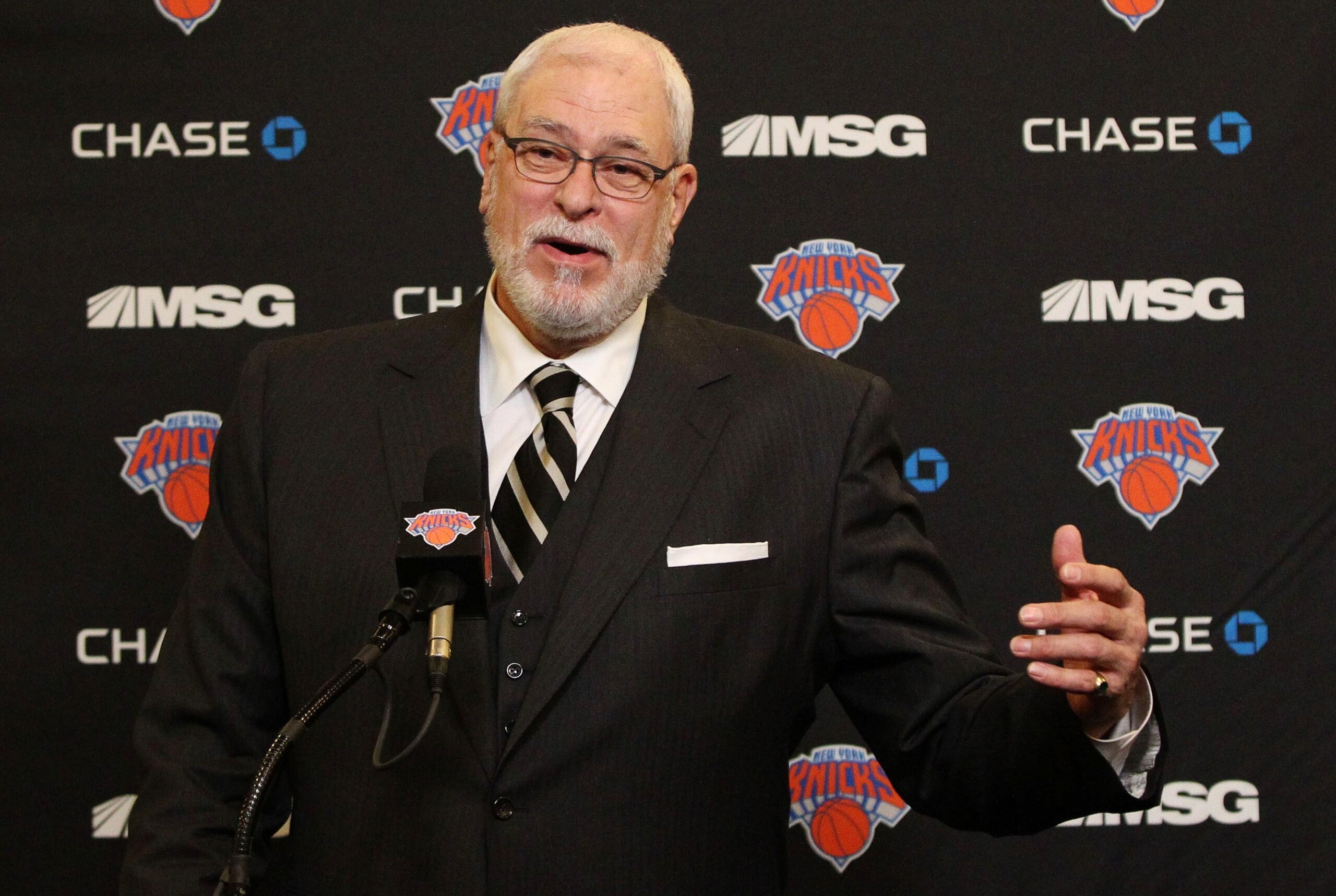
This may not have been the plan going into 2014-15, but after trading away Iman Shumpert and J.R. Smith, buying out Amar'e Stoudemire and shutting down Carmelo Anthony, it's clear Phil Jackson's eyes have been on the horizon for a while now.
New York could have a bright future if it plays its cards right, but making use of its resources effectively is far from a simple task, especially for an inexperienced executive. Let's break down the Knicks' blueprint for success this offseason, taking a look at returning players and potential targets and predicting the team's final moves.
The Cap Situation
1 of 6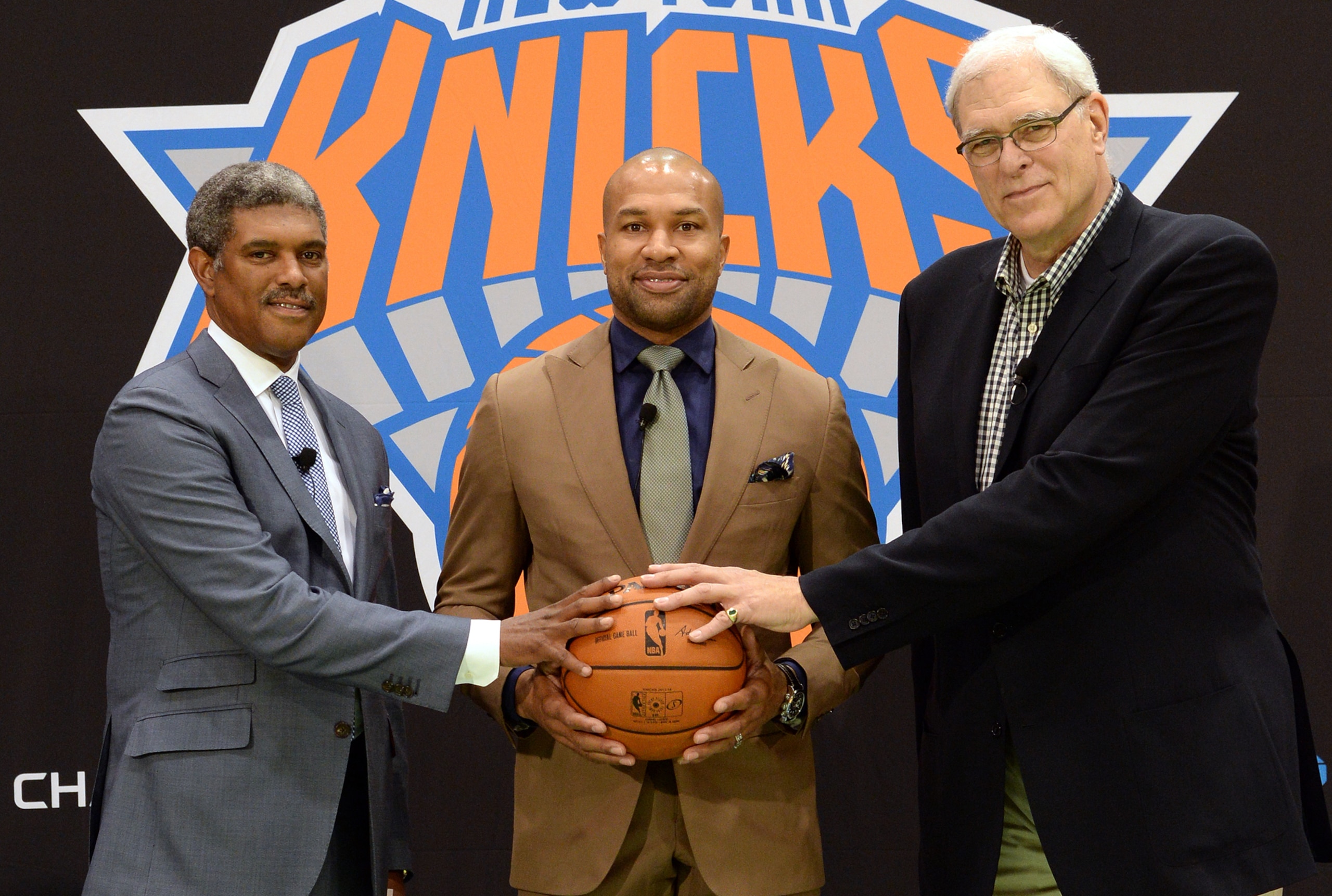
Before getting into specific targets, it's important to take a detailed look at the Knicks' cap situation. We know they're going to have a lot of money to spend, but it isn't as simple as just taking away their few guaranteed contracts from the projected salary cap.
According to Basketball Insiders, the cap is expected to jump to around $67 million next season. The Knicks have $31.6 million in guaranteed money going toward Carmelo Anthony, Jose Calderon and Tim Hardaway Jr., giving us a solid starting point of $35.4 million to spend.
Since they're so cheap—and two of the few talented young players on the team—it's also likely that Cleanthony Early and Langston Galloway will stick around, for a combined $1.7 million. This brings the total down to $33.7 million.
This is where things start to get more complicated. The NBA has cap holds for upcoming free agents (unless they are renounced), draft picks and incomplete roster spots, which add up to take a healthy chunk out of the team's actual spending money.
The Knicks have the option to give up any restricted free agent or Bird rights they have in return for getting rid of the player in question's cap hold. This doesn't necessarily mean he won't be back next year, just that New York is willing to let him test the unrestricted free-agent market in exchange for maximum flexibility.
This is a no-brainer for a player like Andrea Bargnani and his $17.3 million cap hold, but less cost-prohibitive players like Alexey Shved (who has a $4.1 million qualifying offer) aren't so obvious. For those on the minimum salary who are unrestricted (like Cole Aldrich), it may be worth keeping them, as empty roster spots incur a cap hold of $525,000 anyway. Aldrich's cap hold of $950,000 would take the Knicks down to roughly $32.85 million.
For the purposes of this article, we will assume the Knicks get the No. 1 overall pick, which comes with a cap hold of $4.75 million. This is far from a given, but as it stands they have the highest odds of landing the pick in the league. Factoring this in leaves the Knicks with $28.1 million to spend.
Finally, with seven players on the books (Anthony, Calderon, Hardaway, Early, Galloway, Aldrich and the No. 1 pick), New York would be charged for five empty roster spots for a total of $2.6 million. This leaves the team with a final estimation of $25.5 million to spend in free agency, but we must remember that this depends on who the Knicks renounce and which draft pick they end up with. It's even possible they could find a way to trade Calderon and Hardaway to save even more space.
Ultimately, we can't know for sure what the exact situation is until the offseason, but $25.5 million gives us a conservative figure to work with.
Draft Prospects
2 of 6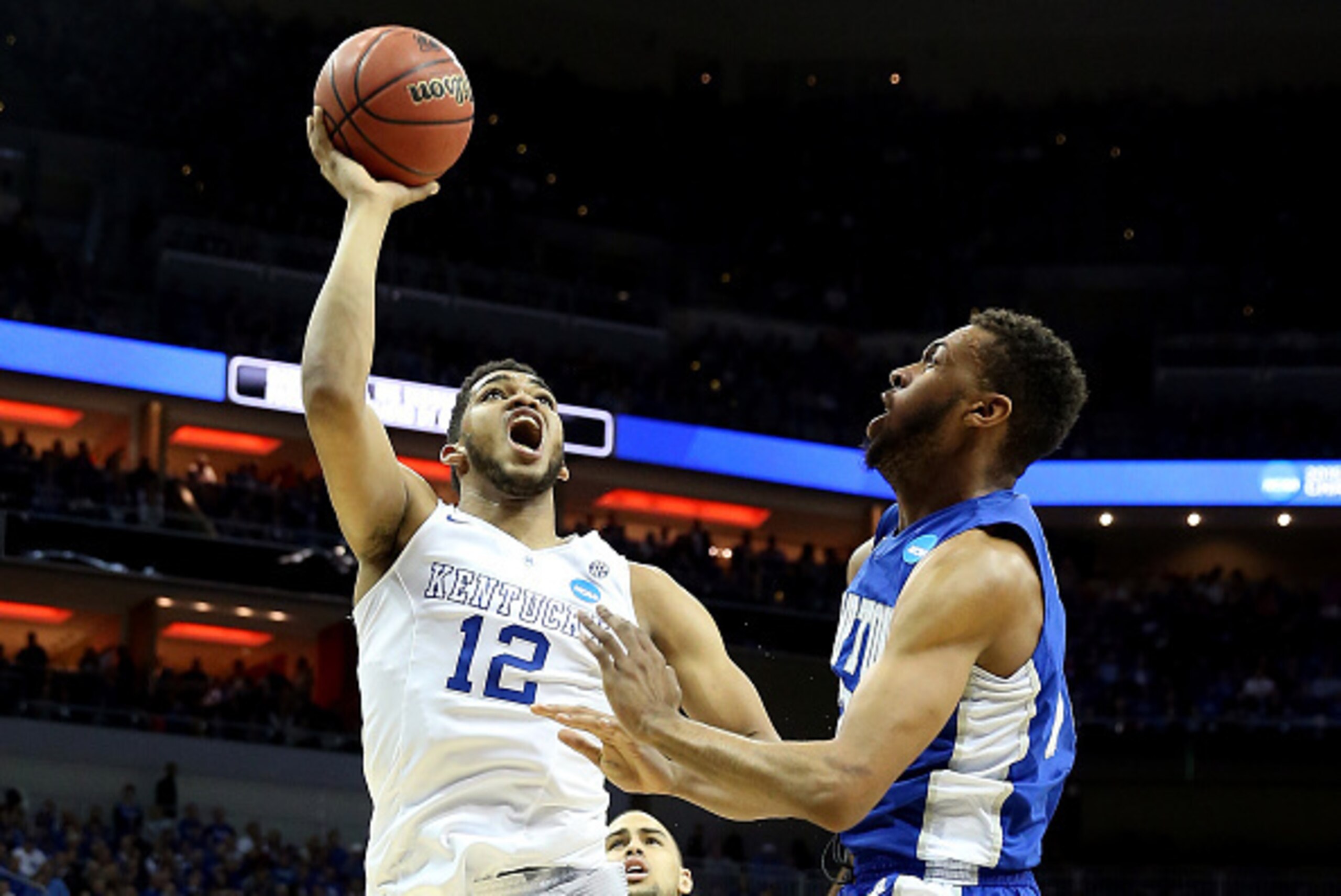
The Knicks have needs all over the court, and as long as they aren't ridiculously unlucky in the draft lottery, this year's crop of prospects gives them a solid chance of filling one of those needs.
New York could particularly use a long-term starting point guard or center, and as it happens, the top of the draft is projected to be stacked with both.
At center, Duke's Jahlil Okafor is the big name, and for many he would be the choice if the Knicks end up with the top pick. At his position, no one is better offensively in college hoops right now. The defensive end is a different story, but at just 19 years of age, he has time to grow.
Meanwhile, Karl-Anthony Towns of Kentucky could be another option in the middle, if the Knicks want to prioritize defense at the rim. We all remember what a huge difference a healthy Tyson Chandler made in 2012-13, and Towns has the potential to make a similar impact, with more to offer on offense.
Point guard options are interesting too. Emmanuel Mudiay and D'Angelo Russell, who are both 6'5", could be great fits in the triangle and finally get the Knicks close to what the rest of the league has at the NBA's most stacked position. Of course, the teams needs to decide if using such a valuable asset on a position that isn't emphasized in this system is worth it, and if a young point guard is really the route to go with Carmelo Anthony on the roster.
Depending on what pick they end up with, the Knicks should be satisfied with any of these players, but ultimately one of the two centers would be ideal for this system. Between them, Towns is potentially more well-rounded, but Okafor has been dominant on offense. By all accounts, there is no obvious choice between the two.
Returning Free Agents
3 of 6
As we touched on before, the Knicks have some fairly big decisions to make regarding their own free agents.
Between Andrea Bargnani, Alexey Shved, Cole Aldrich, Quincy Acy, Cleanthony Early and Langston Galloway, the Knicks have some solid role players, but they aren't all good enough for the team to sacrifice flexibility in order to re-sign them immediately.
Instead, the Knicks should let everyone but Aldrich, Early and Galloway hit unrestricted free agency and hope that the market for them is small enough that they can come back to them later. Those three have cap holds that are not much higher than that of an empty roster spot, so keeping them isn't too much of an issue.
With Bargnani, New York doesn't really have a choice in the matter—his cap hold is at least quadruple what it wants to pay him, so the team has to renounce his rights.
Shved, however, has a qualifying offer of $4.1 million, which is worth considering picking up but should ultimately be left alone. If the Knicks play their cards right, they could get him for around $2.6 million with the mid-level exception if and when they reach the salary cap and then offer the remainder of the exception to Bargnani (who would also receive $2.6 million). One year "prove-it" contracts are ideal, both financially and for motivation.
Acy also has a qualifying offer of $1.2 million, which will make him a restricted free agent if it's picked up. The Knicks will have to judge how valuable his restricted rights actually are and whether or not he's realistically going to get higher offers. They should be comfortable in letting him become unrestricted and taking the empty roster spot cap hold instead. That way, they could even end up re-signing him for the minimum.
Players like Lou Amundson, Shane Larkin and Lance Thomas aren't bad to have around, but it wouldn't be too much of an issue if New York lost out on bringing them back in unrestricted free agency.

Dream Free Agents
4 of 6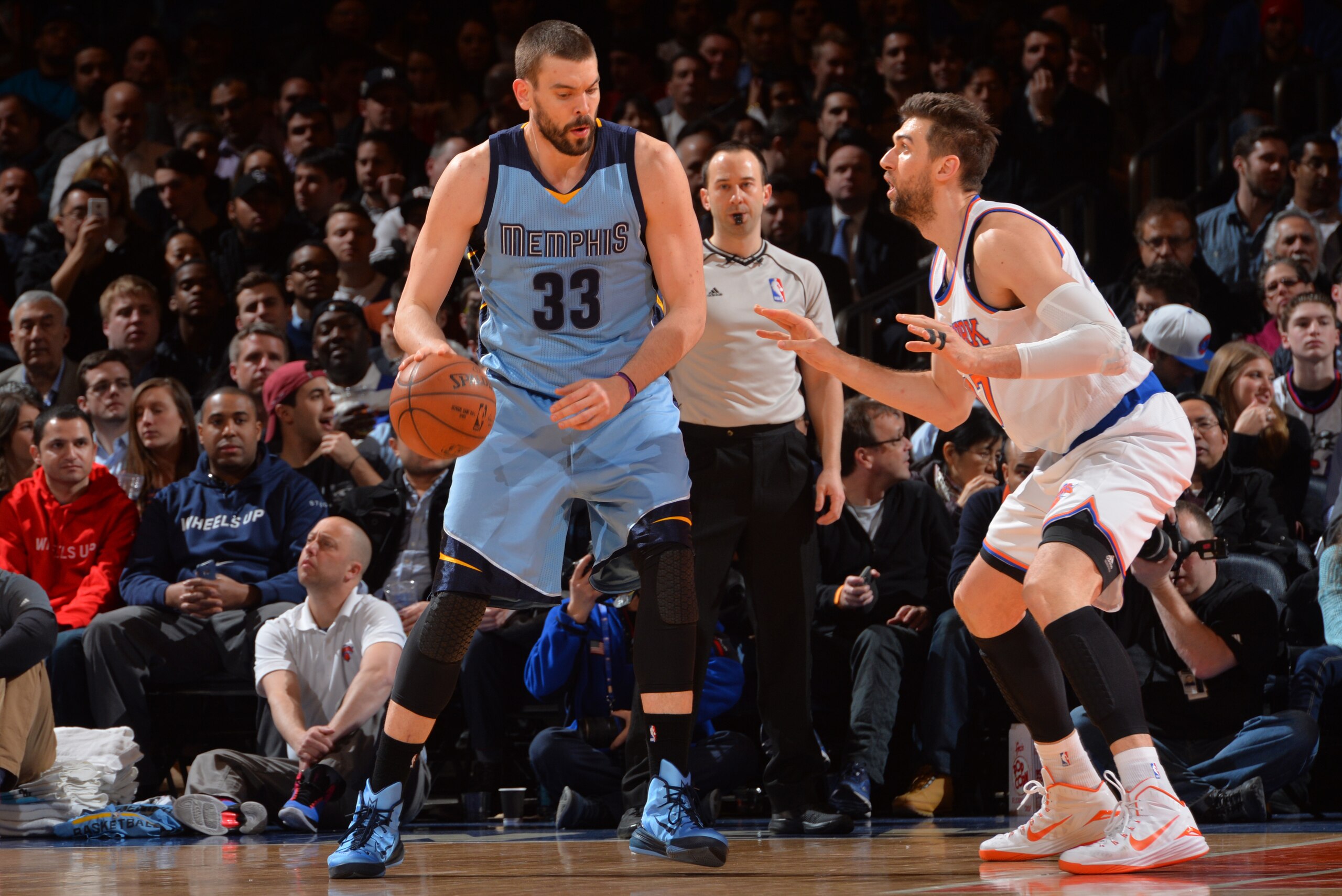
When Phil Jackson first arrived in New York, all eyes were on 2015 as the summer when the Knicks would finally add a worthy superstar to pair with Carmelo Anthony. Unfortunately, making that a reality is going to be difficult, as few free agents will be willing to join one of the worst teams in the NBA.
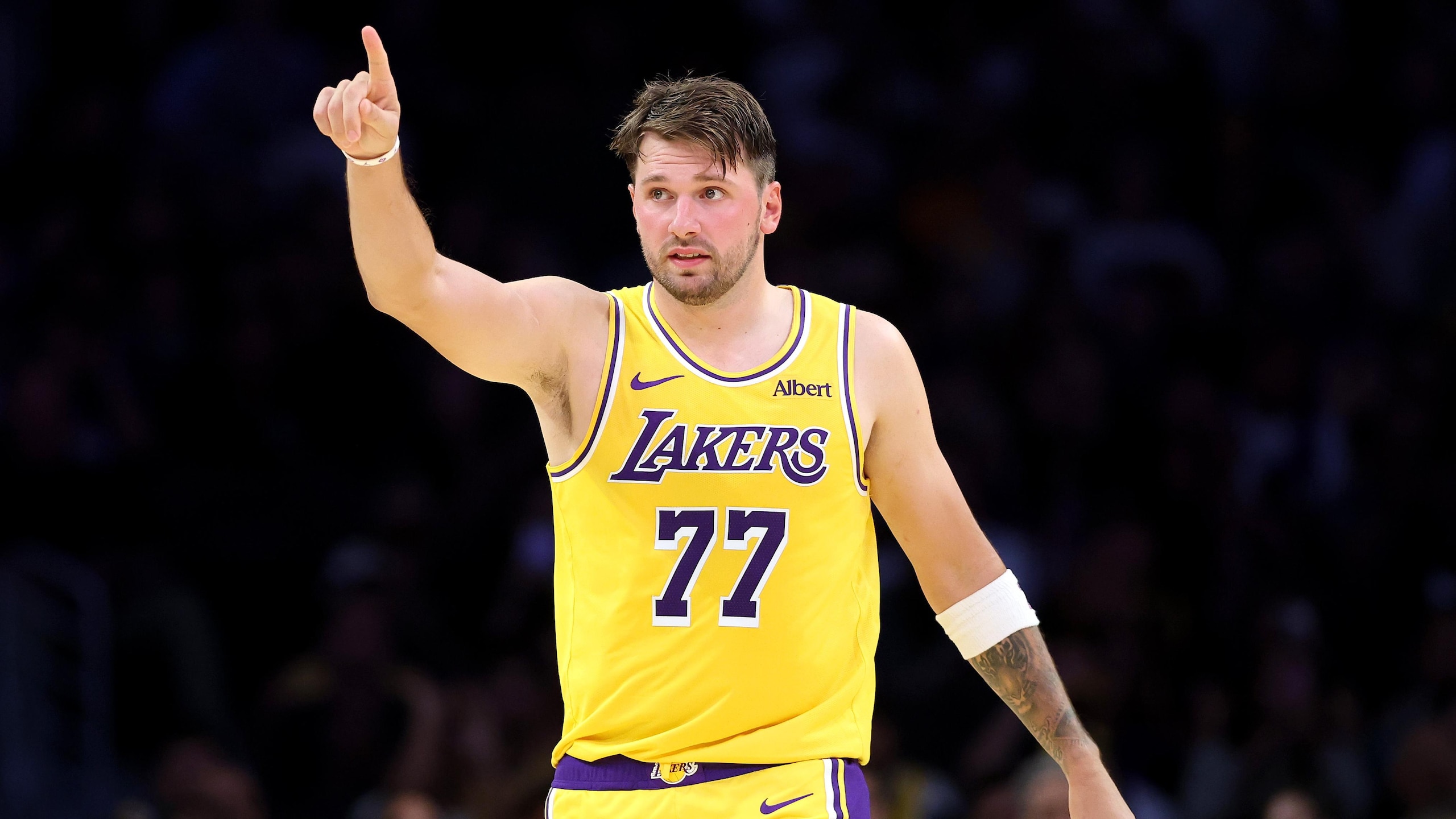
Still, according to Ian Begley of ESPN New York, Marc Gasol hasn't ruled out signing with New York, and as long as it has money, Jackson and Melo, there remains a chance, however small, that it will be able to complete a blockbuster signing. For Gasol, the presence of his Spain teammate Jose Calderon could be an influential factor too.
Whatever happens, major free agents should definitely be the Knicks' first point of call, although they'll want to avoid placing all their eggs in that basket. A player like Gasol could turn the franchise around in an instant—it's hard to envision a better fit at center in the triangle—but at the same time it would be crushing to strike out while also allowing second-tier free agents to find other destinations.
Besides Gasol, Rajon Rondo could be an option. Since being traded to the Dallas Mavericks, he's clashed with head coach Rick Carlisle and could be on the way out at season's end. He may not be the prototype fit in the triangle, but for a player of that level, the system doesn't necessarily have to be adhered to so strictly.
As for the likes of LaMarcus Aldrige and Kevin Love, it's hard to see them leaving their current situations in favor of the Knicks. Restricted free agents Kawhi Leonard and Jimmy Butler are worth a shot, but no matter how much the Knicks offer, it's unlikely their respective teams would refuse to match (although it is worth noting that the Chicago Bulls have previously been resistant to paying the luxury tax).
In terms of the financials, $25.5 million will be plenty to pay a maximum contract for one of these players and still have $6-10 million left over for another key starter.
Realistic Free Agents
5 of 6
If the Knicks strike out on a superstar as expected, there will be plenty of second-tier alternatives out there instead, as long as they don't leave it too late. With $25.5 million, it's possible that New York could pick up a few quality starters, with the mid-level exception left over.
Specific targets will depend on which position the Knicks target in the draft. At point guard they could take a look at Reggie Jackson, who is a restricted free agent but not a lock to be kept by the Detroit Pistons; they are already paying Brandon Jennings $8.3 million in 2015-16. The Knicks could try to make an offer in the sweet spot under $10 million, where they're getting a reasonable deal but still making Detroit think long and hard about matching.
A more cost-effective target would be Patrick Beverley, who would be the best defensive point guard New York has had in years. This could subtly be one of the biggest improvements the Knicks could make, and they could do a lot worse than a committee of Beverley, Shved and Galloway at the 1.
At center, Robin Lopez would be a reliable defensive-minded option for around $10 million, while Greg Monroe would provide a bit more upside (albeit at a higher price). The latter could definitely be an alternative to Okafor or Towns if one of them isn't taken in the draft.
On the wing, the Knicks could drop $8-10 million on Wesley Matthews or Arron Afflalo to play the 2. Matthews is particularly effective as a two-way player, and while his recent Achilles tear is a red flag, it should also keep his asking price not too far above his current $7.3 million salary.
According to Marc Berman of the New York Post, Tobias Harris wants to be a Knick, since he's from Long Island and regularly works out with Melo over the summer. If the chemistry between the two is as good as that piece of information hints it could be, their partnership in the frontcourt could be interesting. Both players are capable of playing inside and out, affording Anthony flexibility in where he wants to work on offense.
Even as a backup, Harris would be a nice fit, but the issue is prying him from the Orlando Magic for less than $10 million.
Elsewhere, the Knicks could make a serious run at Paul Millsap or Draymond Green. Millsap is unrestricted, but the top-seeded Atlanta Hawks would probably go to serious lengths to keep him around. Meanwhile, Green is restricted, but the Knicks can at least make an offer that is difficult for the Golden State Warriors to match.
Predictions
6 of 6
With so many options, it's difficult to make an accurate prediction of every single move the Knicks will make, but working under a set of assumptions, we can paint a fairly detailed scenario. If they end up with the No. 1 pick and don't make any major trades, their offseason could look something like this.
Draft Picks
- Karl-Anthony Towns, C ($4.75 million, with No. 1 overall pick)
Free Agents
- Tobias Harris, F ($9 million, with cap room)
- Patrick Beverley, G ($6.5 million, with cap room)
- Wesley Matthews, G ($10 million, with cap room)
- Alexey Shved, G ($2.6 million, with mid-level exception)
- Andrea Bargnani, F ($2.6 million, with mid-level exception)
- Cole Aldrich, C ($1.1 million, with minimum salary exception)
- Quincy Acy, F ($1 million, with minimum salary exception)
Obviously, the ideal scenario would be centered on a name like Marc Gasol or Rajon Rondo, but this is a realistic set of acquisitions. At first, the names may be underwhelming, but together they lay the foundation for a well-rounded, young roster. If the cap shoots up as expected when the new TV deal kicks in, the Knicks will be back under the cap in time for 2016.
This scenario is reliant on a few things, such as Matthews' torn Achilles keeping his free-agent value down, the Magic being unwilling to commit $9 million to a player who appears to want to be in New York and both Alexey Shved and Andrea Bargnani staying available as unrestricted free agents long enough for the Knicks to split the mid-level exception between the two of them.
The 2015 offseason is shaping up to be one of the most exciting and important summers in recent Knicks history. Let's hope they get things right and finally kick-start this rebuilding process.

.jpg?w=2560 "Mahomes Told Teammate to Leave Meeting")
.jpg?w=2560 "🚨 Week 8 AP Top 25 Poll")

.jpg?w=2560 "Baker Gets Glove From Rays 🧤")
.jpg?w=2560 "5 Teams Eyeing Jonathan Taylor")
.jpg?w=2560 "Steelers Roll Saints in Paris")
.jpg?w=2560 "NFL investigating Eagles")
