

Who Will Be L.A. Clippers' Most Important Player by NBA Playoff Time?
The Los Angeles Clippers don't have a ton of depth, which means their value situates at the top. In L.A., that cap is a tripod with legs made of Chris Paul, Blake Griffin and DeAndre Jordan.
Paul is the once-in-a-generation point guard. Griffin is the athletic freak who developed a skill set to match his alien capabilities. Jordan is the guy entrenched in a role carved specifically for him. But who is the most important to his team?
Well, it all depends on how you define "most important." Griffin and Paul are certainly the Clippers' best players—in some order—but isn't it possible Jordan is the most irreplaceable guy?
TOP NEWS

Jokic says booing fans not welcome in Denver

Brown with an all-time summary of relationship with Tatum
Worst NBA Predictions 🫣
We've seen in back-to-back years that the Clippers can win without either CP3 or the Flyin' Lion. (That Griffin nickname never really caught on, did it? Sorry, Mike Smith.)
When Paul missed 18 consecutive games last winter, Griffin dialed up his game, averaged 27.5 points and 8.2 rebounds, and the Clippers went 12-6.
This year, we've seen a similar process unfold, but the other way around. Though the Clips haven't been as dominant as they were with Paul gone a season ago, they're still 9-5 over the past 14 games with Griffin (elbow surgery) out of the lineup. Paul has averaged 21.2 points and 12.4 assists over those 14. Meanwhile, Jordan has gone Gwen Stefani-style bananas with Blake gone.
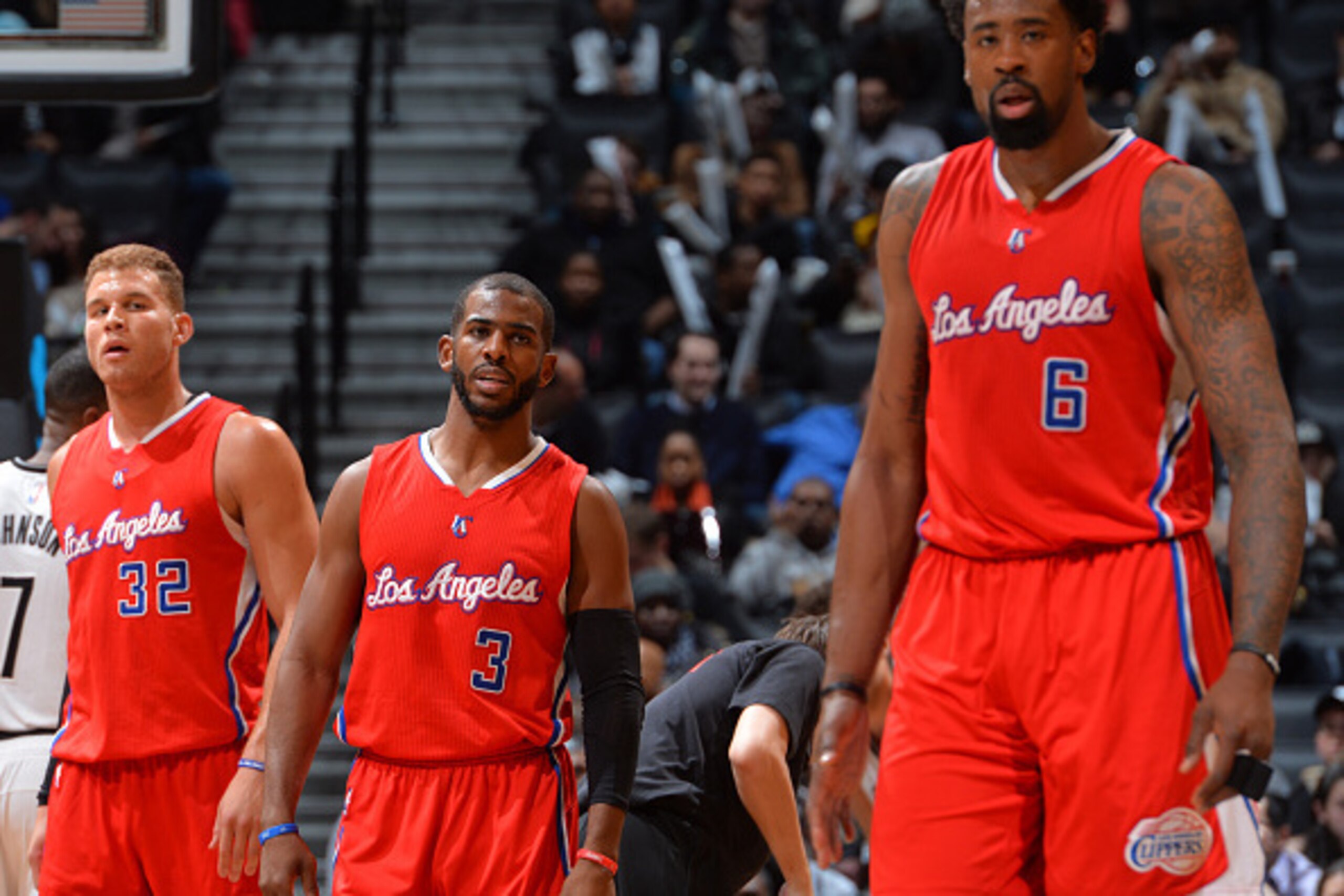
None of this is to say the Clippers are better with Griffin or with Paul out, one of the more insane hot takes in HotTakeville, USA. It does mean, though, that L.A. can tread water with those guys gone. After all, a Griffin-less team has beaten the likes of the Chicago Bulls, Memphis Grizzlies, San Antonio Spurs, Houston Rockets and Dallas Mavericks over its past 14.
Not bad. Not bad at all.
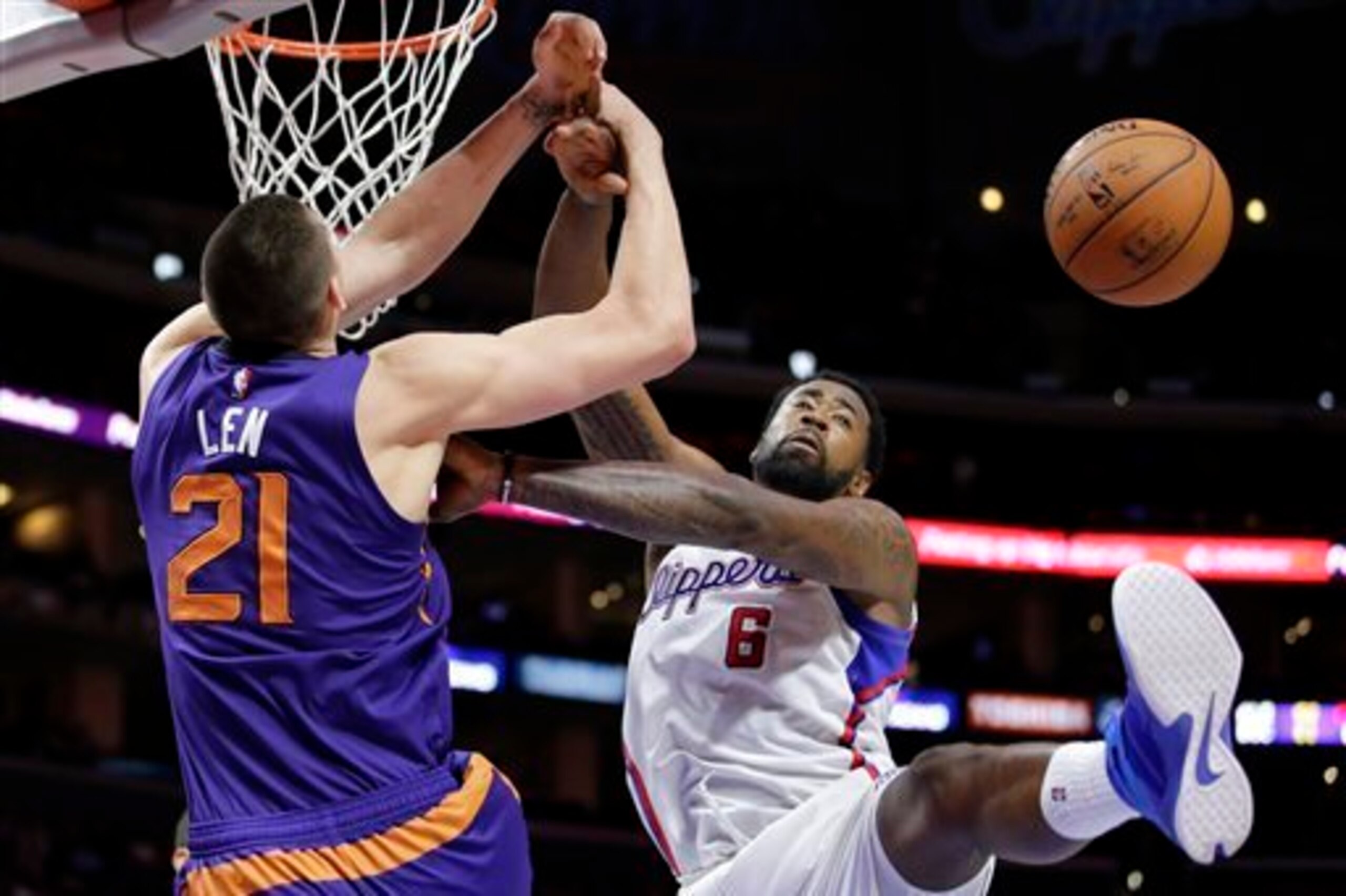
Now, let's try to imagine what would happen if the Clippers had to deal with the absence of D.J., the man who stands as their backline defense and really, their only true defensive weapon of high impact. (Chris Paul and Matt Barnes are above-average defenders, but point guard defenders can only affect a game so much and wing defenders who aren't spry with youthful legs and athleticism become neutralized without a quality big man helping behind them.)
The numbers may not back it up, but Jordan is the Clippers' defense, one that couldn't sustain stretches without him.
The first clause in that previous sentence is true to a degree. The numbers don't always stick up for Jordan's D. On/off statistics tell a different story than the usual narrative about his importance to the Clippers defense, which currently ranks 16th in points allowed per possession.
When the Texas A&M product is on the floor, his team gives up 103.5 points per 100 possessions, a middle-of-the-pack rating. When he isn't playing, though, the Clippers D has actually been 1.4 points per 100 better.
But how can that be the case? How can a defense anchored by Griffin and Hawes and Davis and Turkoglu actually be better than one with Jordan as the man in the middle? Well, regardless of what the numbers say, it's not.
Part of the reason the Clippers can't replace Jordan is because of his consistency. He's there every night. The simplest of numbers do actually back that one up; D.J. has the longest current consecutive games played streak in the NBA.
Because of that, those on/off numbers don't necessarily come with Jordan missing long stretches. They compile after he sits for short stints on the bench a few times a game in a time when Doc Rivers can pick and choose his spots. The Clippers coach has actually changed up when he plays D.J. throughout the year, trying to mesh him in more with the second unit now than he did at the start of the season, just because the reserves need that much help.
A Spencer Hawes-anchored defense wouldn't sustain over a long stretch. There's no chance.
On top of that, those on/off numbers are indicative of season-long performance, surely important when you're talking about Defensive Player of the Year—an award which, contrary to Rivers' steadfast beliefs, Jordan probably doesn't deserve—but they don't tell the whole story.
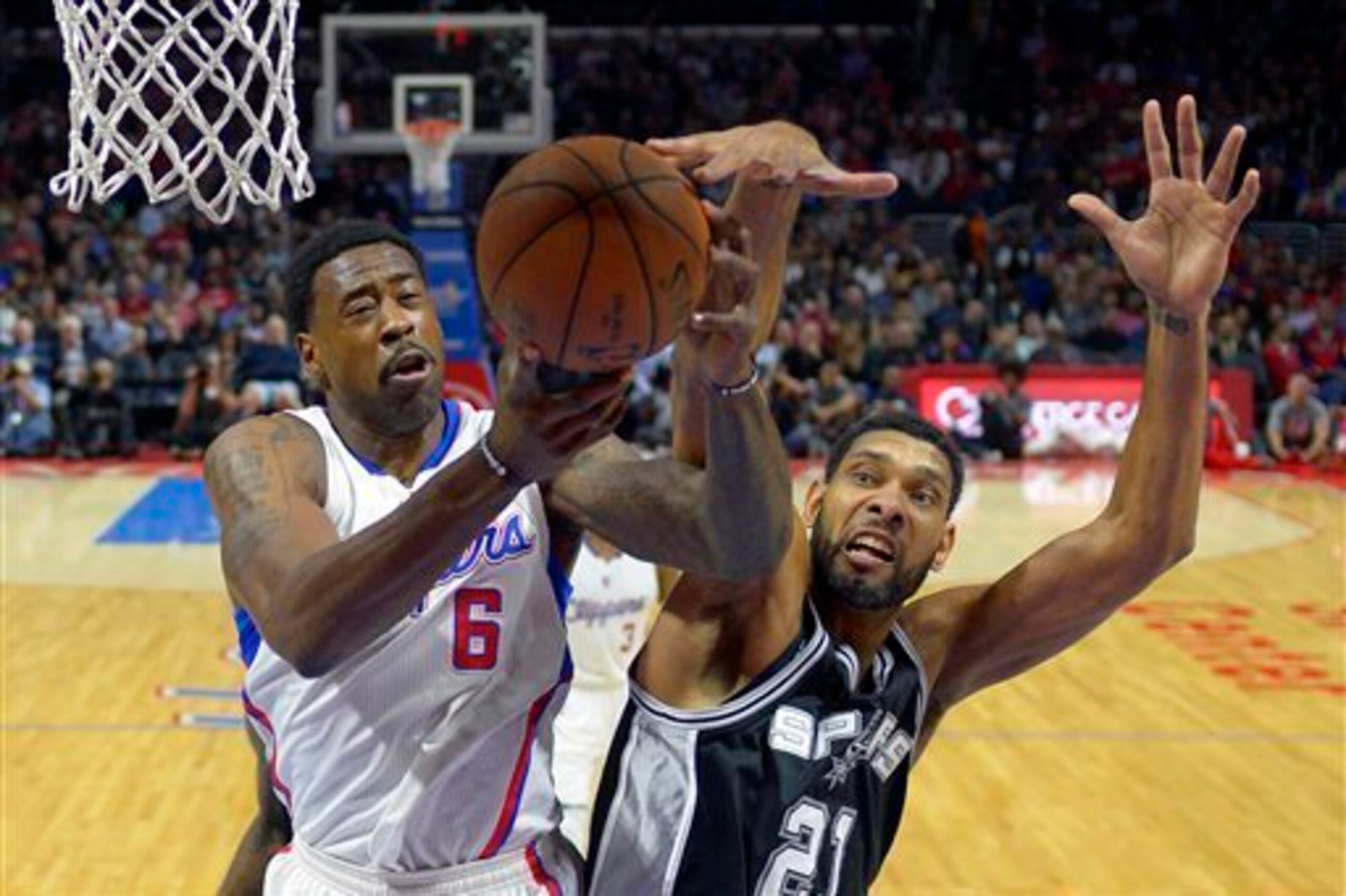
If we're talking about who is going to be most valuable heading into the playoffs, we have to discuss how guys are actually performing as we enter the postseason. And man, has D.J. been everywhere over the past month-and-a-half.
Yes, Jordan is averaging 15.4 points and 19.2 (!!) rebounds per game since Feb. 9. And yes, those counting numbers look nice, but anyone will tell you they're not everything. Most would preach correctly that grabbing a ton of rebounds doesn't automatically mean you know how to call out defensive signals or stifle the pick-and-roll or protect the rim or rotate to help in a timely manner on penetration in the lane. But Jordan's been better all around as the season has progressed.
How about those on/off numbers of late?
Over the past nine games, during which Jordan has played at the crest of his powers, the Clippers have been a whole 7.2 points per 100 possessions better with their starting center on the floor. That's the same as the difference between the No. 1-ranked Warriors defense and the No. 22-ranked one of the Toronto Raptors.
Jordan's in-season improvement is becoming a tradition. For the second year in a row, he's a noticeably better player after the All-Star break. Last year, it peaked in a dominant first-round playoff showing against the Andrew Bogut-less Golden State Warriors. Could we be in for a similar trajectory now?
In the end, if the Clippers lose any of these three players for a point beyond game 82, they become an automatic first-round piñata. The debate of "most important" is irrelevant in that sense. No aggregate can make up for whatever they would lose with Griffin, Paul or Jordan out of the lineup in the postseason.
That said, we've seen the team tread water with Blake gone. We've seen it even thrive without the best point guard of his generation. Griffin's and Paul's elite facilitating skills allow them to stand in for one another quite nicely.
But no one in blue, white and red can do what D.J. can. No one.
Hopefully for the Clippers, they'll never have to learn that firsthand.
Fred Katz averaged almost one point per game in fifth grade but maintains that his per-36-minute numbers were astonishing. Find more of his work on ESPN's TrueHoop Network at ClipperBlog. Follow him on Twitter at @FredKatz.
Unless otherwise noted, all statistics are current as of March 12 and are courtesy of Basketball-Reference and NBA.com.

.jpg?w=2560 "Mahomes Told Teammate to Leave Meeting")
.jpg?w=2560 "5 Teams Eyeing Jonathan Taylor")
.jpg?w=2560 "Jonathan Taylor Landing Spots 📍")
.jpg?w=2560 "Baker Gets Glove From Rays 🧤")

.jpg?w=2560 "NFL investigating Eagles")
