

Houston Rockets Have Adjusted Without Dwight Howard but Will Need Him Back
HOUSTON — Back when Dwight Howard and Terrence Jones most recently started together for the Houston Rockets, the Rockets were rolling. They won both ends of a back-to-back. They won on the road. They won easily.
That lasted for just the season's first four games. In the months since, the Rockets have gone from one adjustment to another. They lost Jones for three months and then lost Howard, too. They got Howard back and then lost him again, initially replacing him in the starting lineup with Joey Dorsey and then with Jones once he had returned and improved his conditioning enough to offer more than cameo minutes.


Through it all, the Rockets have retooled their offense around James Harden’s playmaking and made each adjustment work. They are 19-10 in games played without Howard, not far off their 22-10 record with him. They have fitted their style around the players taking over Howard’s frontcourt playing time with Jones emerging rapidly, Donatas Motiejunas bringing a scoring threat in the low post and Josh Smith adding much of the defensive versatility and scoring punch needed off the bench.
The Rockets have adapted by using Jones’ ball-handling and Motiejunas’ passing skills to play four-on-three against the opposing players that are not busy double-teaming Harden on the perimeter. Since Howard is not an option as a playmaker facing the basket, there will be more adjustments to make when he returns.
The Rockets, however, had no doubts they want the chance to adjust again, and that was before the Memphis Grizzlies manhandled them in the second half on Wednesday.
If any team knows the difference between regular season and postseason success it should be the Rockets. They have won one playoff series since 1997 when their big men were Hakeem Olajuwon and Charles Barkley.
As much as they have found a way without Howard in the regular season, the clock is ticking, with six weeks left to get him ready for the postseason and the tests to come.
“We’re getting better,” Rockets coach Kevin McHale said on Monday. “We haven’t had Dwight essentially all year long. I think we’re coming along. But I think this team still has levels we can get to. Our goal is to try to get there.”
The Rockets went into their game in Atlanta on Tuesday without Harden, who received a one-game suspension for kicking LeBron James in the groin. They had won their last five games and were at 11-4 since Howard most recently went out with the knee edema. Harden’s absence was more conspicuous than Howard’s, especially down the stretch when the Rockets crumbled without Harden’s playmaking and steadying influence.
Yet for all they have gotten from Jones and Motiejunas and all that Harden has done to fill every other void, they are not the threat without Howard they can be with him.
The Rockets had outscored opponents by 3.6 points per 100 possessions in the first 16 games of Howard's most recent absence (prior to the one game with Harden also unavailable). With Howard on the court this season, they have outscored opponents by 6.9 points per 100 possessions, and that was with him playing much of that time while his right leg was a relative anchor.
That was especially true in January when Howard averaged just 13.7 points per game before finally shutting it down to treat the fluid buildup in his knee.
Howard had an MRI last week, and his next step will be determined by his progress to date. In addition to his usual weight-room and pool training, he's been running on a weight-control treadmill, increasing the percentage of his body weight without any setbacks. He has not, however, been back on court for any more-intense “active rehab.”
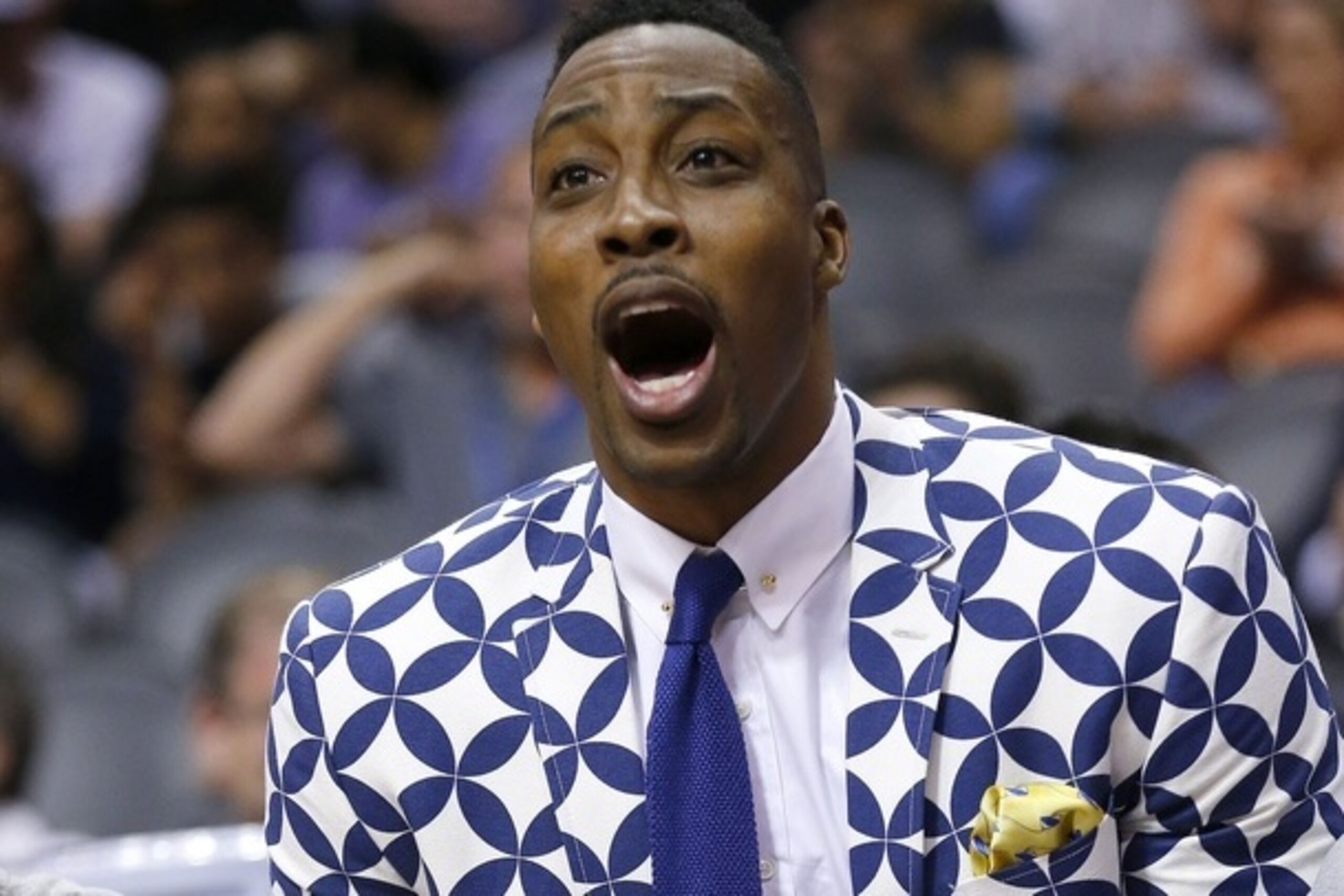
The Rockets have not offered any timetable on Howard’s next step, but he'll almost definitely need two to three weeks once he is cleared to begin running, cutting and jumping on the court.
Assuming he has no setbacks, that would still allow enough time for Howard to knock off some rust before the playoffs begin. McHale, however, could not predict how much game time Howard will need.
“I've seen great players take two months off and come back and it takes them a while,” McHale said. “It’s just the pace of the game and the NBA grind. The game, the size, the speed, when you’re away from it and you’re out there, it just takes a little time. You need timing. You can’t get timing one-on-one at three-quarters speed for three weeks and then doing it at full speed for five days and jumping on the court. It just takes a lot of time."
The Rockets will have to determine their place in the postseason without him. Howard could miss more games this season than the 37 he missed in the first 10 seasons of his career combined. The Rockets have had a combined 123 games out with injuries, most to starters Howard, Jones and Pat Beverley.
They might have benefited in some ways from the extra time and touches Motiejunas received when Howard and Jones were out. Jones seemed ready to have a breakout season before he went out after four games, but since returning to the starting lineup, has averaged 18.8 points on 64.4 percent shooting.
Motiejunas and Jones could be better prepared for the playoffs than they were last season when Motiejunas did not play at all and Jones was pulled from the starting lineup after two games.
The Rockets, however, need Howard to defend inside and control the boards as no one else on their roster can. Even in Sunday’s stirring win against the Cavaliers, the Rockets allowed 22 offensive rebounds.
The Clippers’ DeAndre Jordan has averaged 17.7 points and 17.3 rebounds against the Rockets. Tyson Chandler has averaged 10.3 points and 14 rebounds. Howard has not played against the Clippers or Mavericks this season, but both are potential first-round opponents the Rockets would not want to face without a center.
Howard's absence was most glaring against the Grizzlies on Wednesday. Memphis pounded the ball inside in the second half when it scored 32 points in the paint on 16-of-19 shooting. The Rockets became so desperate for someone to battle Zach Randolph for position they played Harden as a power forward defensively, a tactic that worked for a few minutes but would not be an option for an entire playoff series.
The Rockets are hoping Howard can most quickly regain his abilities in the parts of the game they need his help most.
"There's a list of things he's going to have to do for us to improve," McHale said. "His ability to run, his ability to rebound, his ability to defend the hole—I think those are things you get back quicker than you do your offensive moves or your touch."
Adding Howard back into the Rockets offense would require more adjustments. It is unclear how often he would expect low-post touches or how he will perform when he gets them. He dominated in the last postseason and struggled badly before going out in January. With Harden now firmly in control of the Rockets offense, they could use Howard more in pick-and-roll, where he has remained a force, as they have with Jones and Motiejunas.
There is no question, however, that as much as the Rockets have filled some of the void left by Howard’s absence, there remains shortcomings he needs to address. While teams have scrambled to make deadline moves or add free agents from the buyout scrap heap, the Rockets hope to plug in the center they still consider the league’s best.
In a season marked by necessary adjustments, adding Howard to the mix would allow them to make the corrections they actually want to.
Jonathan Feigen covers the Houston Rockets for the Houston Chronicle and Bleacher Report.




.jpg?w=2560 "Love's Body Already 'Tired'")
.jpg?w=2560 "Tyreek Deal May Come Soon")
.jpg?w=2560 "Ward Nearly Walks Out of Presser ▶️")
