

Who Deserves the Credit for Atlanta Hawks' Early-Season Dominance?
Figuring out who deserves the most credit for the Atlanta Hawks' blazing start to the 2014-15 campaign isn't a particularly easy task. There are plenty of deserving candidates on this squad, one that fully embodies the team-first mindset that can so often lead to success.
Heading into a Jan. 14 showdown with the Boston Celtics, the Hawks have reeled off nine victories in a row. They've won 23 of their past 25 outings, cementing themselves as the top team in the Eastern Conference and even enjoying a bit of wiggle room. After all, an easy Tuesday night victory without a trio of starters pushed them to a 30-8 record on the season, four games clear of the second-place Washington Wizards.
At this point, it's obvious that Atlanta is one of the better teams in the Association and has a tremendous shot to hold on to that No. 1 seed in the East through the end of the regular season. Less obvious, however, is determining where the biggest slice of the credit should go.
There's a reason that it's so hard to pick All-Stars from this squad. Jeff Teague, Al Horford, Paul Millsap and Kyle Korver are all deserving candidates, but it seems just as likely Atlanta could be left without any midseason representatives as it does that the Hawks could get all four players into the game. And the same is true for MVP votes, as this team doesn't have any clear-cut candidates who will earn consideration, despite the overall success of the squad and its exemplary win-loss record.
There's a lot of credit to go around here. Fortunately, there are quite a few players—and different aspects of the Atlanta organization—who deserve a share of it.
Jeff Teague
1 of 6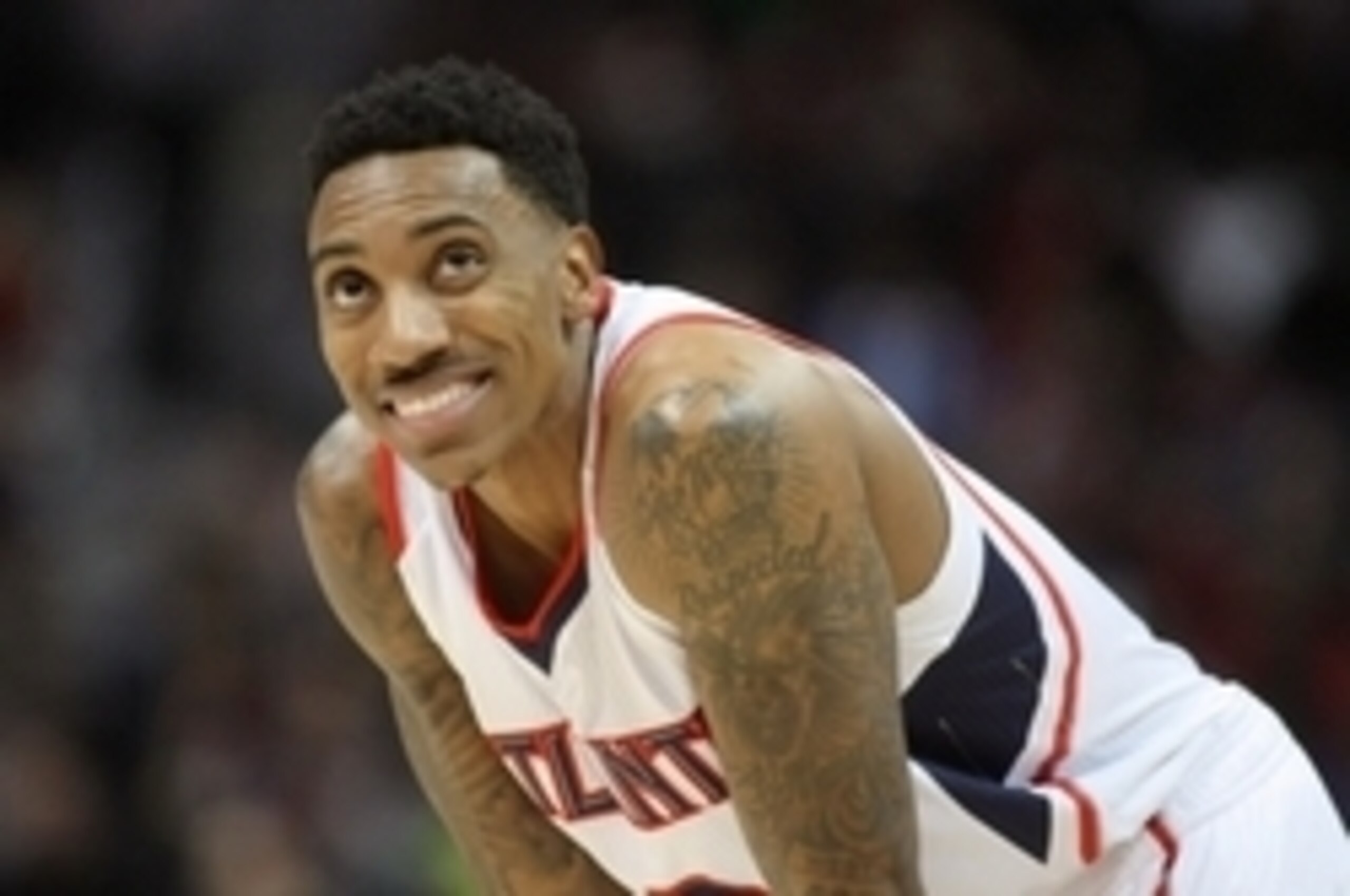
If there's been a breakout star on the Atlanta Hawks, it would have to be Jeff Teague.
The point guard has been a quality player for a while now, but he's taken that proverbial next step during the 2014-15 season, starting to stand out among his peers and draw serious consideration for a spot in the All-Star Game. It's one he would absolutely deserve, as he's been the head of the venomous snake that is the deadly Atlanta offense.
Teague is now averaging 17.4 points, 2.8 rebounds and 7.2 assists per game, all of which are career highs. He's shooting 48.2 percent from the field (another top mark during his NBA tenure), 35.3 percent from beyond the arc and 86.9 percent at the charity stripe. Those are solid numbers all around—ones that are only improved by his mere 2.7 cough-ups per contest, down from 2.9 each of the past two years.
But, much as has been the case with Tony Parker during his seasons with the San Antonio Spurs, the raw per-game numbers aren't all that important for this dynamic point guard. It's more about how he manages to produce them while staying within—and promoting—the flow of the Atlanta offense.
On top of that, it's about how Teague is the one player who's truly capable of taking over in the half-court set and carrying the team when the shooters are struggling. The number of shots he's hit over the top of taller defenders upon entering the paint is truly impressive this year, and NBASavant.com shows that he's knocking down 45.6 percent of his runners, floaters and driving jumpers. Last year, he was at just 41.8 percent.
Time after time, the Hawks have relied on him to do some heavy crunch-time lifting, and he's done his darnedest to prove fraudulent all the claims about how this team doesn't have that one star who can lift it in big moments.
According to NBA.com's statistical databases, Teague is scoring 27.5 points and dishing out 9.4 dimes per 36 minutes in the last five minutes of games separated by no more than five points. Among players who have spent at least 20 minutes on the court in such situations—and assuming each assist goes for exactly two points—only James Harden (51.2), Kevin Durant (52.4), Stephen Curry (55.2) and LeBron James (57.4) are producing more points for their teams than the Hawks point guard (46.3).
Obviously, that's not a bad group to be a part of.
Al Horford
2 of 6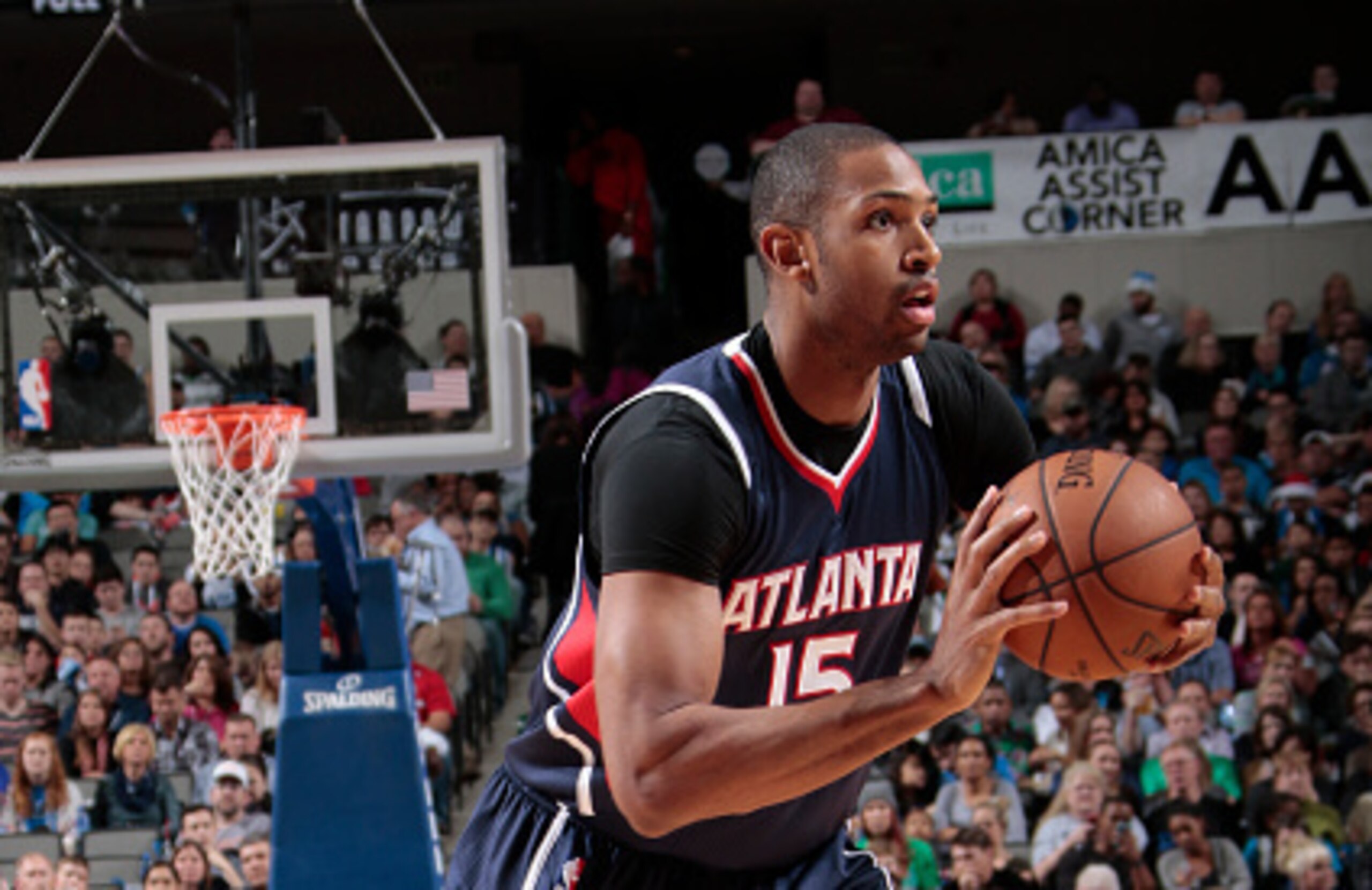
Al Horford doesn't care about numbers. He doesn't need to be heavily involved in the offense, and demands for touches in the paint aren't important because they would only hinder the flow of the team. Cliche as it may be, he just cares about winning basketball games.
At times, the big man has struggled in 2014-15. He's hesitated when he gets the ball in a mid-range zone, often pausing before he makes a decision. But that's only natural for a player who's still working back into top-notch playing shape after he missed most of the 2013-14 campaign with a torn pectoral.
All the same, Horford has been the heart and soul of the Hawks, especially on the defensive end of the floor, where he's one of the few players capable of steadily protecting the rim on the rare occasions that ball-handlers get past the speedy perimeter defenders and incessant ball hawks on the wings.
As Zach Lowe wrote for Grantland in a glowing review of the Florida product's game, the big man is widely viewed within the organization as the key player—not "a" key player but "the" key player:
"Horford probably won’t represent the Hawks in the All-Star Game, but there is something like universal recognition within the team that he is their best and most important player. And now, after some worry, Horford is slowly regaining his wind and his legs after avoiding all basketball activities for almost a year. The Hawks' defense has risen with him. Atlanta has had the league’s stingiest defense since December 1, and Horford has tightened up his rim protection during that stretch, according to SportVU data provided to Grantland.
"
What did Horford do to back up Lowe's praise? He messed around and recorded the first triple-double of his already impressive career, dropping 21 points, 10 rebounds and 10 assists against the overmatched Philadelphia 76ers to help Atlanta to its ninth consecutive victory on a night that saw Jeff Teague, Paul Millsap and DeMarre Carroll take some time to rest.
"He is our cornerstone," Kyle Korver told Lowe, referring, of course, to his bigger teammate. "His example—it's what the Hawks are. Or what we're trying to be."
And, scarily enough for the rest of the Eastern Conference, Horford still hasn't been all that he can be throughout the season. He's only trending in the right direction as he gains more confidence in the post-injury portion of his career.
Paul Millsap
3 of 6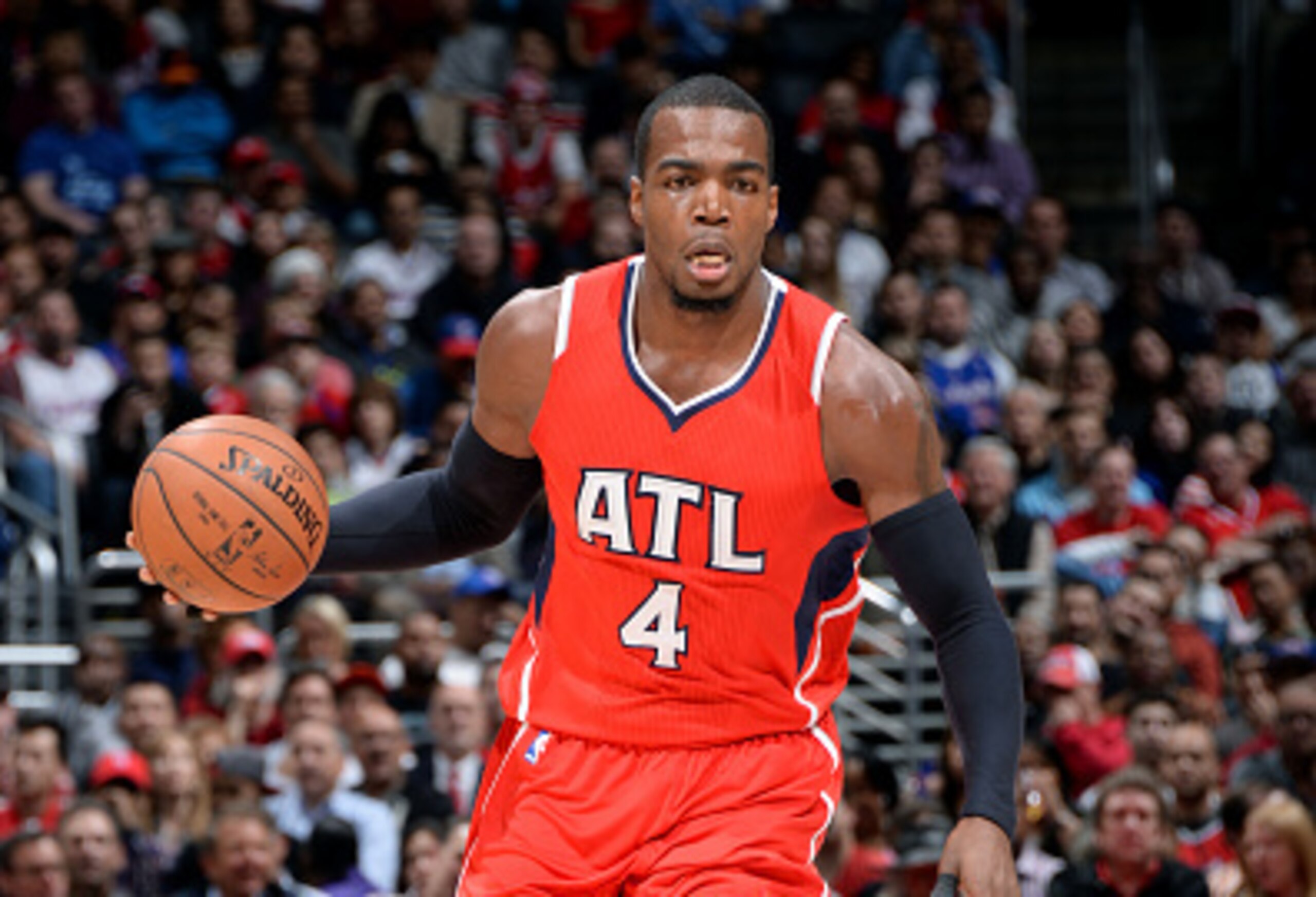
As Lang Whitaker explains for NBA.com's roundtable about which Hawks deserve to be All-Stars in 2014-15, his choices are Jeff Teague and Paul Millsap:
"Millsap has been Atlanta's best frontcourt player all season. He's averaging 16.9 ppg and leads them in rebounding (7.9 rpg), and surprisingly he's tied with Teague in steals (1.8). And on the rare occasions when the Hawks' pace-and-space offense bogs down, Teague and Millsap are Atlanta's best options to create a shot for themselves. It's hard to single out any of the Hawks, as their whole is greater than the sum of its parts. Horford and Kyle Korver certainly deserve All-Star consideration. But without Teague and Millsap, this team wouldn't be flying nearly as high.
"
Just as always seems to be the case, Millsap is flying under the radar a bit. It's easier to focus on Teague, since he's producing the gaudy statistics and leading the charge on both ends of the floor. Al Horford is the big name and the perceived "star" on the roster, while Kyle Korver's sharpshooting ways are about as glamorous as it gets in Philips Arena.
However, this forward is Mr. Everything for the Hawks, capable of filling any role necessary and compromising the intentions of a defense with his versatility. Some nights, he works the baselines and produces plenty of easy shots at the hoop, while he goes to work from mid-range zones on others. He can finish after receiving a pass, but he's perfectly comfortable creating looks for himself.
It just doesn't matter. Millsap is up for the challenge whenever head coach Mike Budenholzer gives him instructions.
You've heard the comparisons before. The Hawks are supposed to be the Eastern Conference's version of the San Antonio Spurs, thriving on ball movement and implementing a system that virtually negates individual effects. But while on/off numbers are largely irrelevant for most members of the Atlanta organization, just as they are with the defending champions, Millsap has proved to be the exception to the rule.
When he's on the floor, via Basketball-Reference.com, Atlanta is scoring 112.9 points per 100 possessions. But when he sits, that number plummets to just 101.5. Only the next featured player has had even more of a positive impact.

Kyle Korver
4 of 6
Kyle Korver is not the best player on the Atlanta Hawks. But that doesn't preclude him from any conversation about who's most important.
Though he might not showcase the all-around dominance of Al Horford or Paul Millsap and doesn't carry the offense like Jeff Teague, he's become an incredibly underrated player even when he's not shooting.
Korver sets some of the best, most effective screens on the Atlanta roster, his passing is always steady and leads to productive offense, and his defense works quite nicely in the Hawks' schemes. Though he's by no means a standout individual stopper, he isn't a liability on the less glamorous end of the floor under Budenholzer.
But it's still his shooting that stands out.
Korver is averaging 13 points per game, and he's doing so while connecting on 50.6 percent of his shots from the field, a league-best 52.5 percent of his looks from beyond the arc and 91.7 percent of his free-throw attempts.
Forget about the 50/40/90 club. According to Basketball-Reference.com, Korver is on pace to become the second qualified member of the 50/50/90 club. It's worth noting that the only one right now is Steve Kerr, who slashed a less impressive 50.6/51.5/92.9 during one of the years in which the NBA was experimenting with a shortened three-point arc.
But the shooting stud is doing more than just providing efficient offense. He's spacing out opposing defenses so much that he may as well be drawing and quartering them. His gravitational pull is perhaps stronger than any other player's in the league, as defenses simply can't afford to give him even the smallest modicum of space.
If they do, it's the same result every time—a three that splashes through the net, one that leads to celebrations from the Atlanta bench before the ball has even reached its zenith.
How strong are his effect on defenses and ability to function in Atlanta's schemes? Well, Korver has a bigger on/off impact than any of the other featured players in this article, according to my FATS projections (full explanation here):
| Kyle Korver | 56.2 | 33.4 | 22.8 |
| Paul Millsap | 51.4 | 42.3 | 9.1 |
| Jeff Teague | 53.2 | 46.2 | 7.0 |
| Al Horford | 52.5 | 48.0 | 4.5 |
Frankly, it's not even close. Even the combined impact of the other three All-Star candidates falls well short of Korver's individual mark.
There's a big difference between "best" and "most important."
Korver doesn't have a snowball's chance in hell at qualifying for the former, even if he's the best in the NBA at his No. 1 skill. But with the latter, he has a legitimate case on this Atlanta roster.
The Rotation
5 of 6
This Atlanta team wasn't supposed to be all that deep. The bench was largely a collection of declining veterans and unproven young talents who were widely expected to hold the stellar starters back.
But nothing could be further from the truth.
Who could have seen this type of breakout coming for Dennis Schroder? The German point guard has looked as though he deserves the comparisons to Rajon Rondo, even flashing that trademarked fake layup as he bursts to the hoop before spinning back and hitting an uncontested look. Though the second-year floor general can sometimes play out of control, he's been a spark plug off the pine with his speed and aggressiveness.
Thabo Sefolosha and Kent Bazemore have used their length and athleticism to wreak havoc on the defensive end whenever their numbers are called, and both have had a few brief moments of offensive success as well. Just not as much as Mike Scott, who seems to score with ease as soon as he steps onto the floor. On the season, the Virginia product is averaging 7.4 points per game while shooting 45.2 percent from the field and 38.9 percent from beyond the arc.
Then there's the big-man combination of Pero Antic and Elton Brand, which Budenholzer hasn't hesitated to play strategically. When a banger is needed, it's Brand. When offensive production and floor-spacing ability are desired, it's Antic.
No player is in the running for Sixth Man of the Year. In fact, according to Basketball-Reference.com, Mike Muscala is the only bench contributor with a player efficiency rating above the league-average mark of 15, and he's done so in only 9.7 minutes per game and a dozen appearances.
But it's the combined effort of this team that has allowed it to remain so competitive for so long. The bench, just like the starters, has been far greater than the sum of its parts.
Mike Budenholzer
6 of 6
We certainly can't overlook the man on the sidelines.
Budenholzer has pulled all the right strings for his team and established a great sense of camaraderie among virtually every member of the roster. These Hawks live to please one another both on and off the court, taking part in communal dinners on the road and sharing the ball with aplomb whenever they're working in the half-court set. Kevin Arnovitz elaborates for ESPN.com:
"One thing that often gets lost in the discussion about culture and chemistry -- the system installed in Atlanta by way of San Antonio demands a strict selflessness. Break off from the sequence of actions in the half court and the stuff falls apart. Everyone on the floor devotes himself to the idea that if you stay in motion, the ball will work its way to the logical recipient before the shot clock expires.
"
So when guys spend practices, shootarounds, walk-throughs and film sessions preaching the gospel of sharing the ball, it’s not at all weird or cultish to spend time together around a dinner table: 'Breaking bread is what coach calls it,' [DeMarre] Carroll said.
Credit Budenholzer for establishing the perfect type of culture in Atlanta.
It's not easy to manage a team while asking each player to sacrifice his touches for the good of the team. But we've seen every member of the team accept such decisions with nary an issue.
Early in the season, Teague found himself on the bench throughout the stretch run of a Dec. 2 comeback against the Boston Celtics. Schroder had sparked the run, and Budenholzer rewarded him by keeping him on the court for the crucial minutes. Did Teague complain? No, he was the first to stand and cheer for his backup whenever he made a positive play.
More recently, Antic had been rolling along and draining everything he looked at. In the three games prior to the Jan. 9 victory over the Detroit Pistons, he was coming off the bench to average 12 points on 61.1 percent shooting from the field and a 54.5 percent clip from downtown.
Normally, coaches play the hot hand, but Budenholzer kept Antic on the bench all contest in favor of Brand, who matched up better against the big Motor City frontcourt.
Did Antic complain? What do you think?
Budenholzer's work has been about more than implementing a movement-heavy system that seems to draw from both the triangle offense and Gregg Popovich's stylings with the San Antonio Spurs. It's about more than shoring up a lackluster defense and turning it into a swarming, pressuring unit that's been arguably the league's best for the last few weeks.
It's about building a team that supports every member on the roster, buys into the concepts and does everything possible to find success.
When determining who's most responsible for the Hawks' explosive success, there's really no wrong answer among these six options. But it's Budenholzer who has changed the fate of this previously middling organization, maximizing the talent of the largely overlooked pieces and steering Atlanta right to the top of the conference.
He won't make the All-Star squad (though he might get to coach it), and he's not guaranteed to win Coach of the Year with other strong candidates like Steve Kerr in the thick of that competition. However, the Hawks wouldn't be in this position—or even close to it—without him pacing the sidelines.
.jpg?w=2560 "Chiefs, Steelers Eye WR Trades")

.jpg?w=2560 "WWE Raw Live Grades 🔠")
.jpg?w=2560 "Multiple NFL Trades Predicted")


