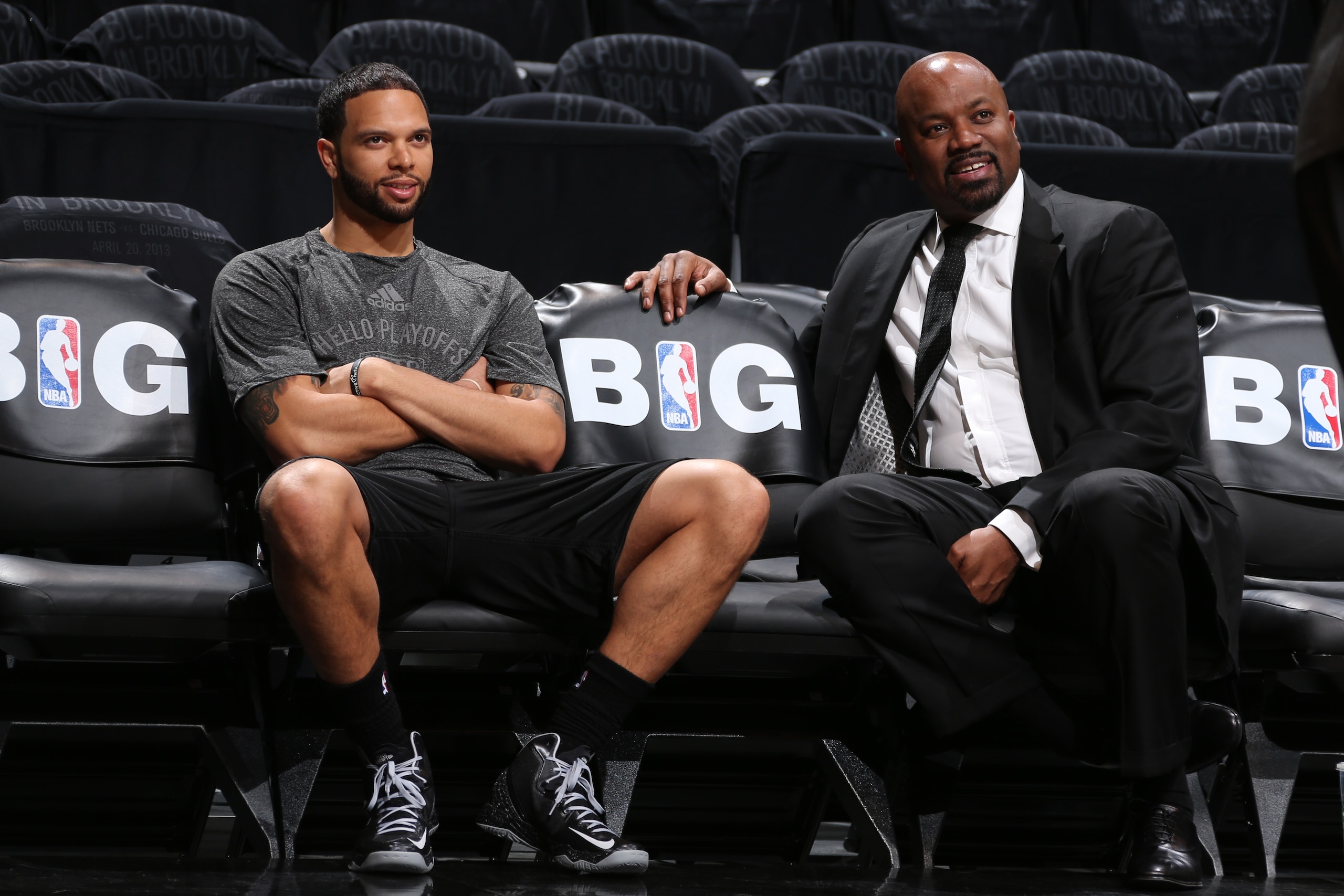

Blueprint for Brooklyn Nets to Rebuild Via NBA Trade Market
The Brooklyn Nets' plan is evolving.
After putting together one of the most expensive teams in NBA history before last season, even the Nets knew their championship window was small. But it didn't take them long to realize the window was never even open.
A 10-21 start, a disappointing 44-win finish and a second-round playoff loss bookended a discouraging season by management's standards. Now it seems as if general manager Billy King is looking to reconstruct his roster.
TOP NEWS
.jpg?w=2560 "NBA Gambling Charges")
Malik Beasley Negotiating Plea Deal (AP)

Yaxel: Luka Not MJ 🗣️
Knicks, Spurs On Wrong Side of History
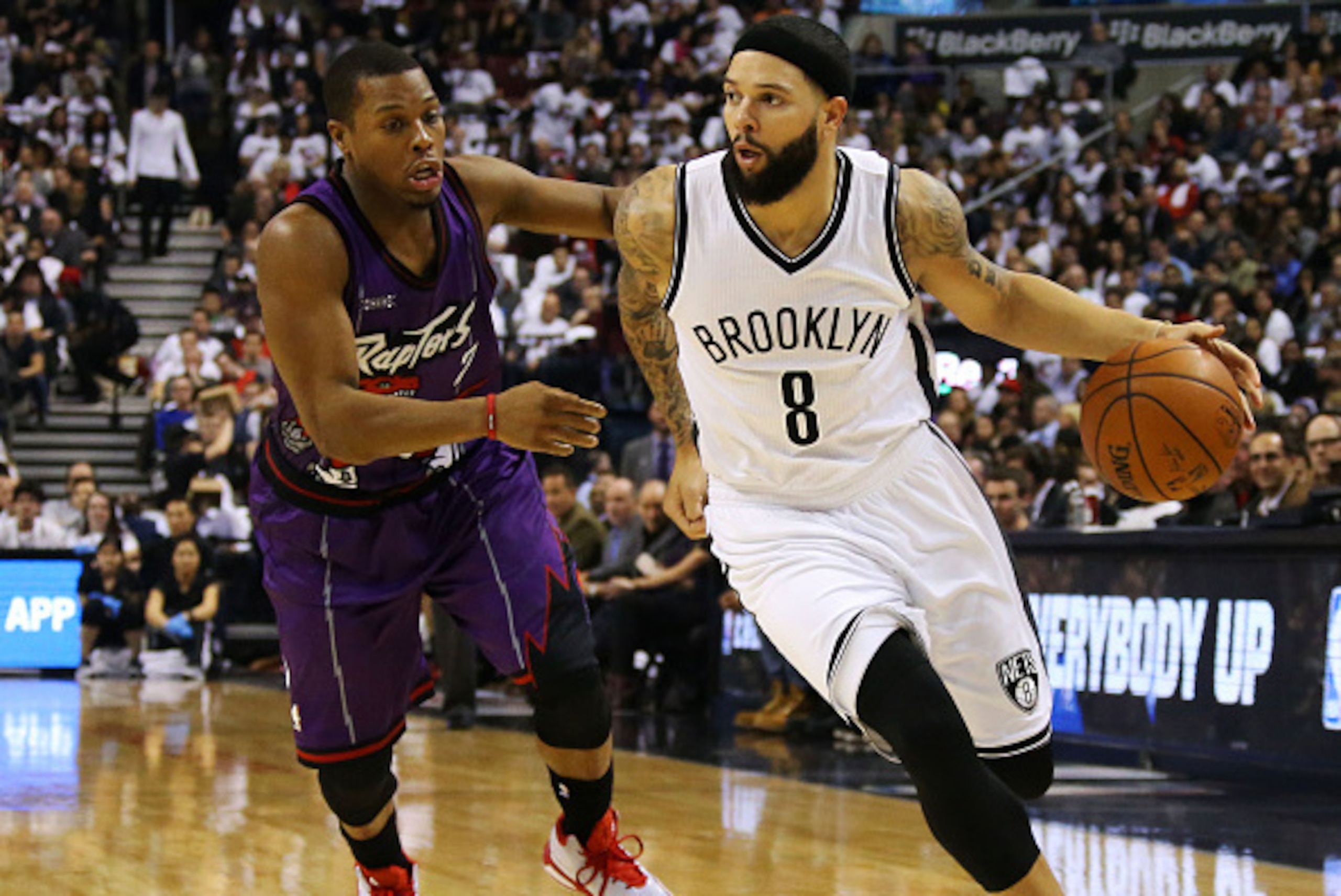
Brook Lopez, Deron Williams and Joe Johnson have all heard their names come up in trade conjecture, which have them going all over the country. The most recent and most publicized one is from Adrian Wojnarowski of Yahoo! Sports: The Nets are talking to the Sacramento Kings about a Williams swap.
Do the Nets have to make a trade? No. They could ride it out with this squad, contend for a low-seed playoff spot and probably get bounced during Round 1 of the postseason. It would be a relatively predictable year and a wholly unremarkable one at that.
So, what does a team that pays a bigger luxury tax than any other do when its season starts to implode? It begins to prioritize the money just a little bit more. And there's nothing wrong with that.
You can't blame an owner who wants to spend when he wins but doesn't when he loses. Actually, there are advantages to keeping salary lower on unsuccessful teams, considering that getting below the luxury tax for a season helps you avoid paying a repeater tax in future years.
Of course, the Nets are nowhere near falling out of luxury-tax territory for this season. Brooklyn has almost $94 million on its tab for 2014-15, which puts Billy King's roster about $17 million over the tax threshold. But the Nets can find ways to dip under that salary in the coming seasons.
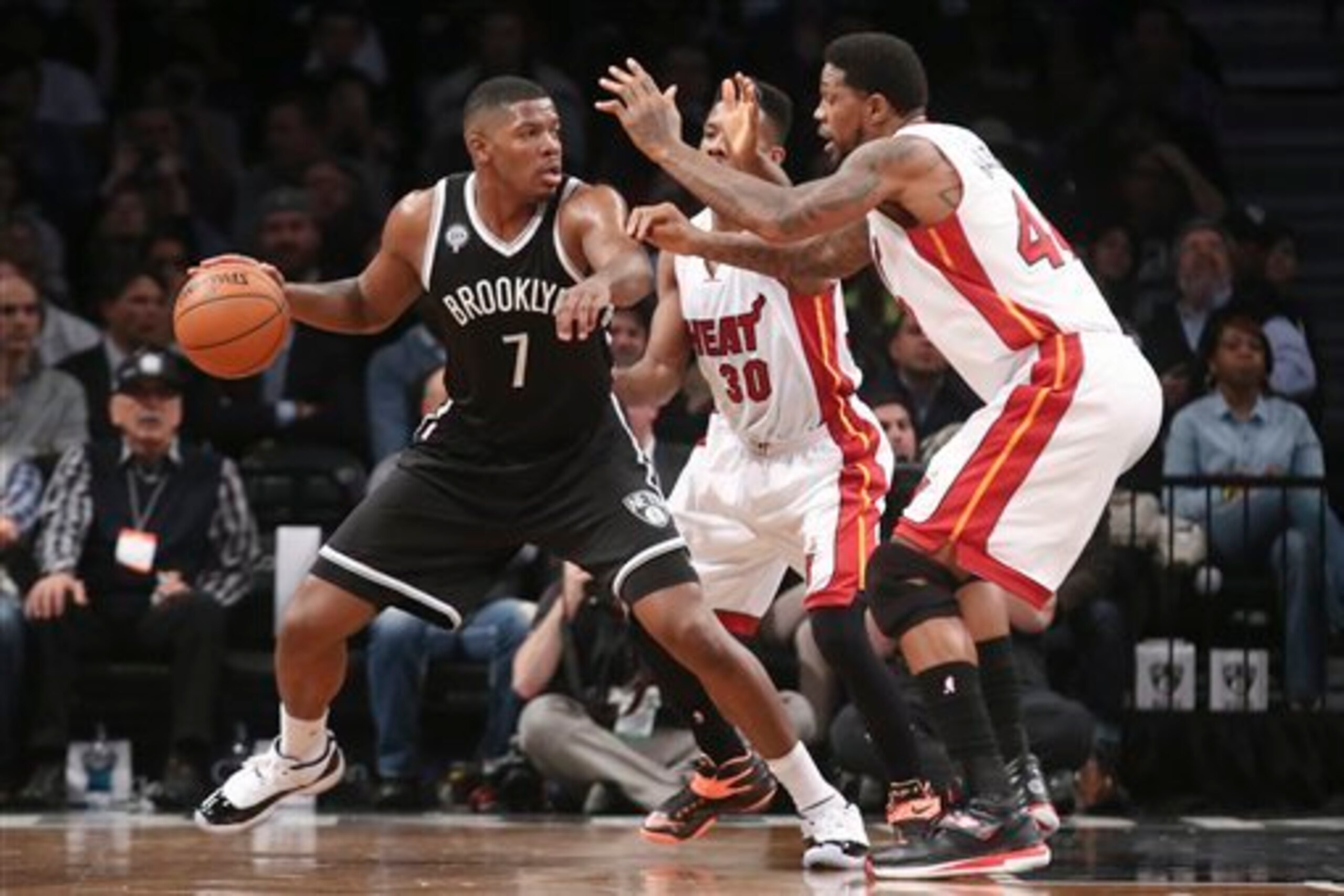
They could bring back one- or two-year deals while unloading Lopez ($16.7 million player option for next season), Johnson (two years, $48.1 million remaining on his deal, including this year) and Williams (three years, $63.1 million left).
Obviously, those contracts will be hard to move, but that's exactly why the Nets are open to parting ways with three of their biggest names. And the fact that Lopez and Williams each have 15 percent trade kickers (which means that if either is traded, their salary increases by 15 percent) doesn't exactly make things easier.
The Nets are in a unique situation: Most of the time, if an older team is underperforming and wants to deal away some of its bigger contracts, it'll look for young talent around which it can build.
The NBA's current climate promotes a sort of break-it-down-and-start-over environment for expensive teams that can't seem to find success. Except there is one problem which is specific to the Nets: The team doesn't have any valuable draft picks at any point in the near future.
We're talking nothing. Zilch.
The Atlanta Hawks have the right to swap first-rounders with them in the upcoming 2015 draft, which seems inevitable considering the Hawks are sitting pretty at 19-7. Their 2016 first-rounder goes to the Boston Celtics with no protection as part of the Kevin Garnett-Paul Pierce deal from last summer. Their 2017 pick could be theirs, but Boston has the right to swap if the Nets get the more desirable pick. Their 2018 pick goes to Boston, once again completely unprotected.
Now is a good time to give you a second to stop and gather yourself, because that paragraph is depressing for anyone to read.
Ready?
Brooklyn could go five straight years—after sending its first-rounder to the Celtics this past summer—without selecting with its own first-round pick. It's an extraordinary stretch in the post-Ted Stepien NBA.
There's no sense in tanking if you don't have your own pick. There's a reason the term "reconstruct" is more pertinent than "rebuild." It's not about bottoming out. It's about fresh blood, shaking up a roster that could use injections of younger talent and possibly convincing an opposing GM to give you his draft pick along the way.

That's why the rumored Williams-to-Sacramento trade feels funky, especially if the Kings really do value Darren Collison as much as they say.
Wojnarowski mentions, "The combination of Williams' massive salary and declining health and production leave the Nets with little leverage to take back much more than spare parts for the one-time All-Star guard." But if the Nets are bringing in Collison, who is in the first year of a three-year deal, would spare parts like Derrick Williams or Jason Thompson be enticing enough to pull the trigger?
So if the Kings package smells funny, what else is out there?
Maybe the Los Angeles Lakers would be interested and could be convinced to give up some combination of Jeremy Lin, Jordan Hill and a younger piece (considering we have no idea how the heck the Lakers want to play out the rest of Kobe Bryant's two-year deal).
How about the Indiana Pacers, who could be in the market for a point guard and who could maybe, possibly, kinda, sorta be enticed into a trade that includes George Hill and a protected first-rounder? (OK, a very protected first-rounder.)
Then, there's the elephant in the room, the one from Lincoln High School who lives down in Charlotte. Lance Stephenson may be on the block, but would the Hornets mortgage their future, one which includes potentially high first-round picks, to bring in Johnson's contract or take on Lopez as a potential rental?
The Hornets would have to give up more than just Stephenson, since his $9 million average annual value doesn't match up with those of Johnson or Lopez, who make far more. So would the Hornets give away Stephenson and another potential asset? (Playing devil's advocate, this scenario does give Charlotte an opportunity to drop an undesirable contract, like Gerald Henderson's, in a deal.)
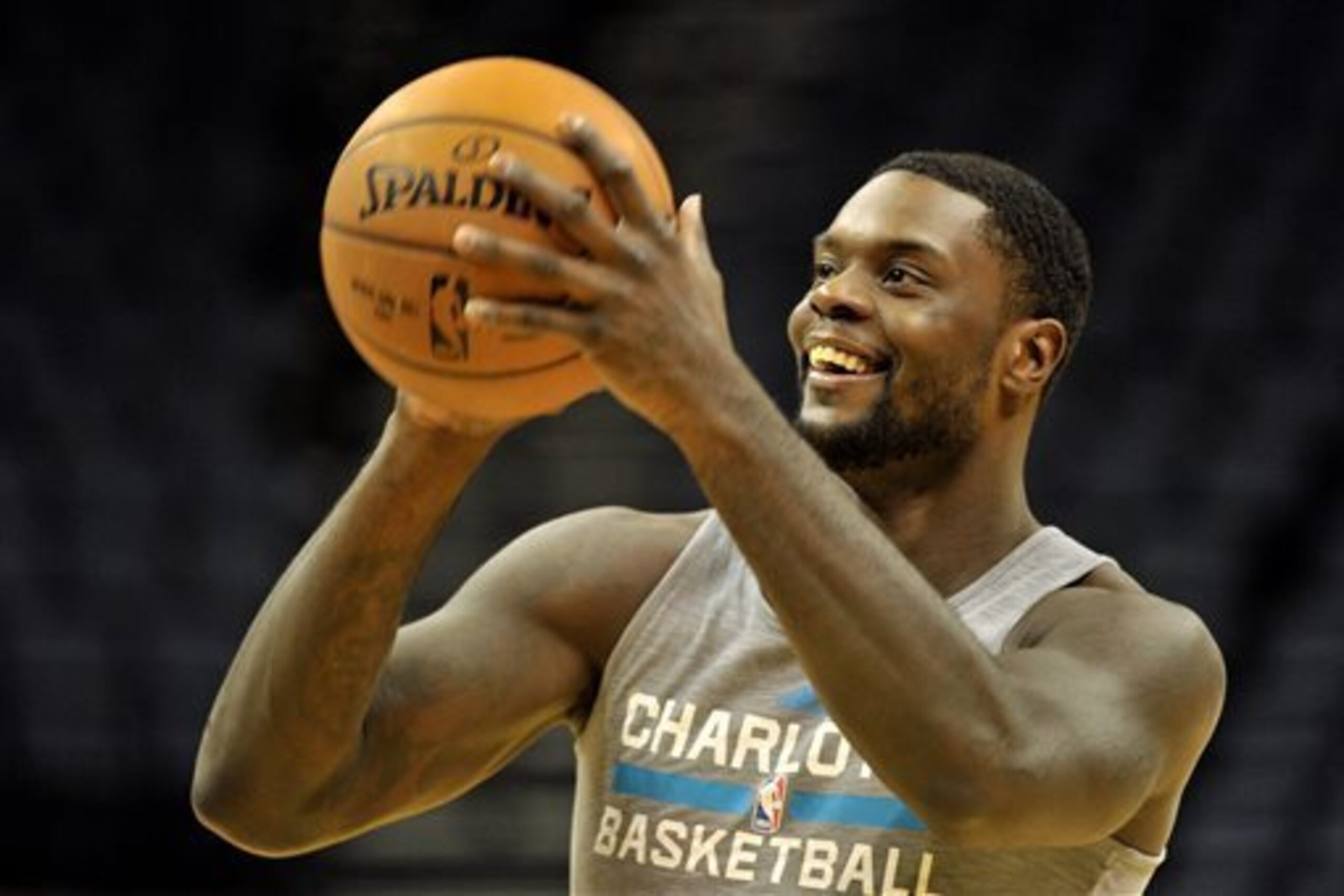
You know there's something unusual going on in Charlotte considering the way the organization is handling this situation. If, at 8-19, you believe you're out of it, then protocol would be to unload older players on expensive contracts, not send away 24-year-olds with fringe All-Star ceilings who are on contracts considered team-friendly only a few months ago.
Even if Stephenson has been underwhelming on the court—which is the nicest way of putting it—Lance's past as a locker room malcontent could lead a reasonable person to believe it's got to be more than a basketball decision. But that doesn't mean a small-market team who already has trouble luring free agents is going to shun a guy who just signed there in exchange for a poor return.
Brooklyn may be four under .500 right now, but the schedule is in one of its lighter periods, starting with Sunday's home game against the Detroit Pistons, which the Nets won 110-105. Tuesday, the Nets host the Denver Nuggets. They follow that up with one at Boston and then are at home for Indiana and Sacramento.
Those can all be wins.
Now, that doesn't necessarily mean they will be victories. This is the Nets we're talking about, a team which tends to beat sub-.500 squads but also makes it very interesting in the process (see: Sunday's Pistons game, which the Nets led by 15 with under five minutes to go only to see the result come down to the final seconds).
Maybe we see Brooklyn start a winning streak and come back to .500 by the end of the month. Or maybe we see the Nets continue to fall. Who knows?
Either way, treading water is a long way off from busting out your most graceful backstroke. So a trade does make sense for money reasons and basketball reasons alike, but only if it's the right one.
Unless otherwise noted, all statistics are current as of Dec. 21 and are courtesy of Basketball-Reference and NBA.com.
Fred Katz averaged almost one point per game in fifth grade but maintains that his per-36-minute numbers were astonishing. Find more of his work at WashingtonPost.com or on ESPN's TrueHoop Network at ClipperBlog.com. Follow him on Twitter at @FredKatz.



.jpg?w=2560 "Aikman Blasts Cowboys WR 🫣")
.jpg?w=2560 "Jonathan Taylor Landing Spots")