Washington Redskins vs. Arizona Cardinals: Breaking Down Washington's Game Plan
The Washington Redskins are already in save-the-season mode for their Week 6 meeting with the Arizona Cardinals. Head coach Jay Gruden's team has lost three straight and currently prop up the NFC East at 1-4.
A trip to take on the 3-1 Cardinals is hardly welcome in this context. However, Bruce Arians did see his normally vaunted defense ripped apart by the Denver Broncos in Week 5.
He's also dealing with a potential injury crisis at quarterback. Both Carson Palmer and Drew Stanton could miss out, potentially leaving fourth-round draft pick Logan Thomas to take the reins.
TOP NEWS
.jpg?w=2560 "NFL Paris Football")
NFL House in Paris Closes for Protests
.jpg?w=2560 "Seahawks Chiefs Football")
Trevon Diggs Cut by Seahawks
.jpg?w=2560)
B/R's Expert Week 7 NFL Picks 🔮
Of course, Washington is already starting its own fourth-rounder (from two years ago) under center in the form of Kirk Cousins. He'll have to avoid the Cardinals' dangerous blitz packages and be gutsy enough to test the secondary deep.
Here's a closer look at some things the Redskins can do on both sides of the ball to beat Arizona.
Avoid Todd Bowles' Creative Blitz Designs
The Cards' usually stout defense is expertly coordinated by one-time Redskins safety Todd Bowles. Creative blitz pressures are his speciality.

They have also become the only way a sack-shy unit generates pressure. Bowles has to blitz a lot to compensate for the loss of ace rush end John Abraham. His absence is reflected in the number of sacks the Cards have to their credit, per Zac Boyer of The Washington Times:
"Under defensive coordinator Todd Bowles, the Cardinals have ratcheted up the pressure, blitzing the quarterback more frequently than any other team this season. Astonishingly, they have just four sacks, tying them for the second-fewest in the league. The Redskins have struggled in pass protection this season and will need to be ready.
"
A play from Week 2's 25-14 road win over the New York Giants is a great example of how Bowles likes to scheme pressure. From a heavy dime (4-1-6) front that plays rookie safety Deone Bucannon as a linebacker, the Cards showed blitzers in both A-gaps, the spaces on either side of the center:

Behind the pressure, the secondary would rotate into a Cover 1, man coverage underneath with a single-high safety covering the deep zone:

At the snap, both rushers, Bucannon and inside linebacker Larry Foote, blitzed the A-gaps:

This drew a running back into pass protection and created one-on-one matchups for the Arizona D-line. Giants quarterback Eli Manning was soon put under intense pressure as he threw.
His errant pass into tight man coverage fell short of its target and Big Blue was forced to punt:
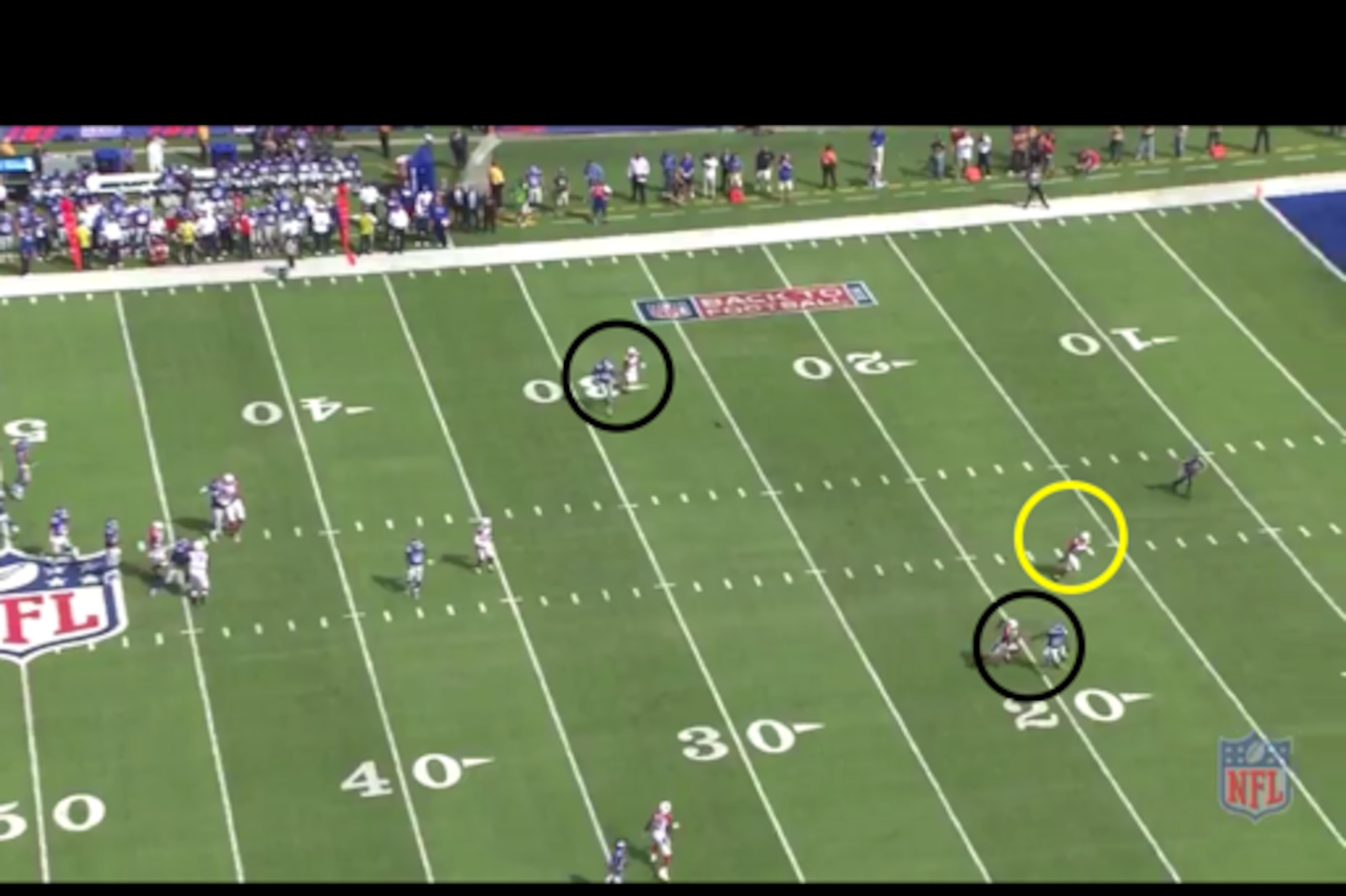
This play is an excellent snapshot of Bowles' daring and aggressive system. Many teams stack potential rushers in the A-gaps only to have them rotate back into coverage at the snap.
But Bowles rarely bluffs. He also rarely fails to trust single coverage, particularly on the outside. This combination could be a major problem for the Washington offense.
The team doesn't possess a running back capable in pass protection, something which is a necessity against A-gap blitz pressure. Gruden will also need his below-par offensive line to do a better job of keeping Cousins clean in the pocket.
The inexperienced quarterback doesn't always react well to pressure. But Bowles will also test Cousins' ability to diagnose where the rush is coming from.
A play from Week 3's 23-14 win over the San Francisco 49ers shows how the Cardinals have become masters of causing confusion pre-snap.
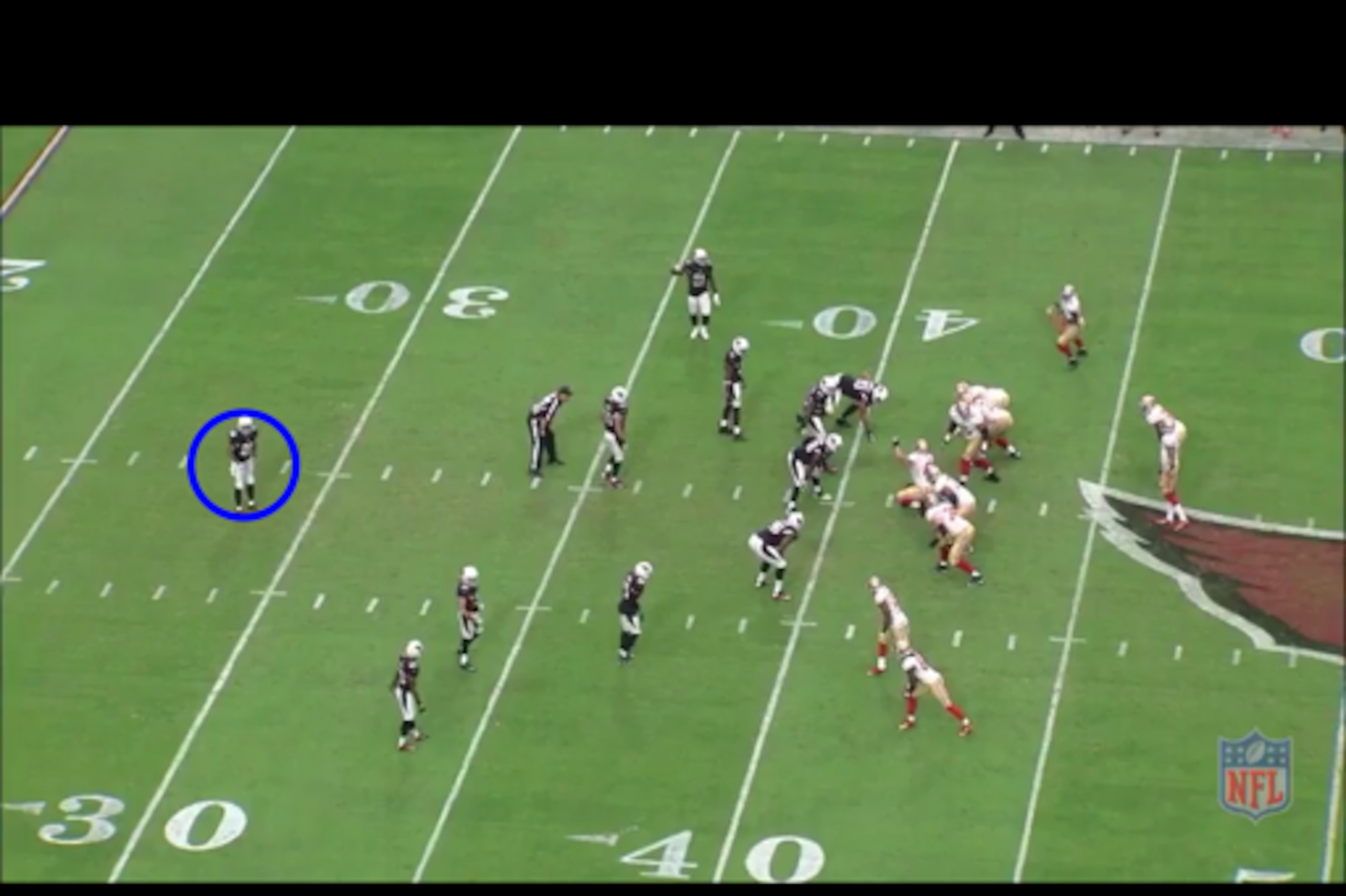
The play began with Arizona showing its familiar single-high coverage look:
However, the deep safety and another defensive back soon crept up to the line:
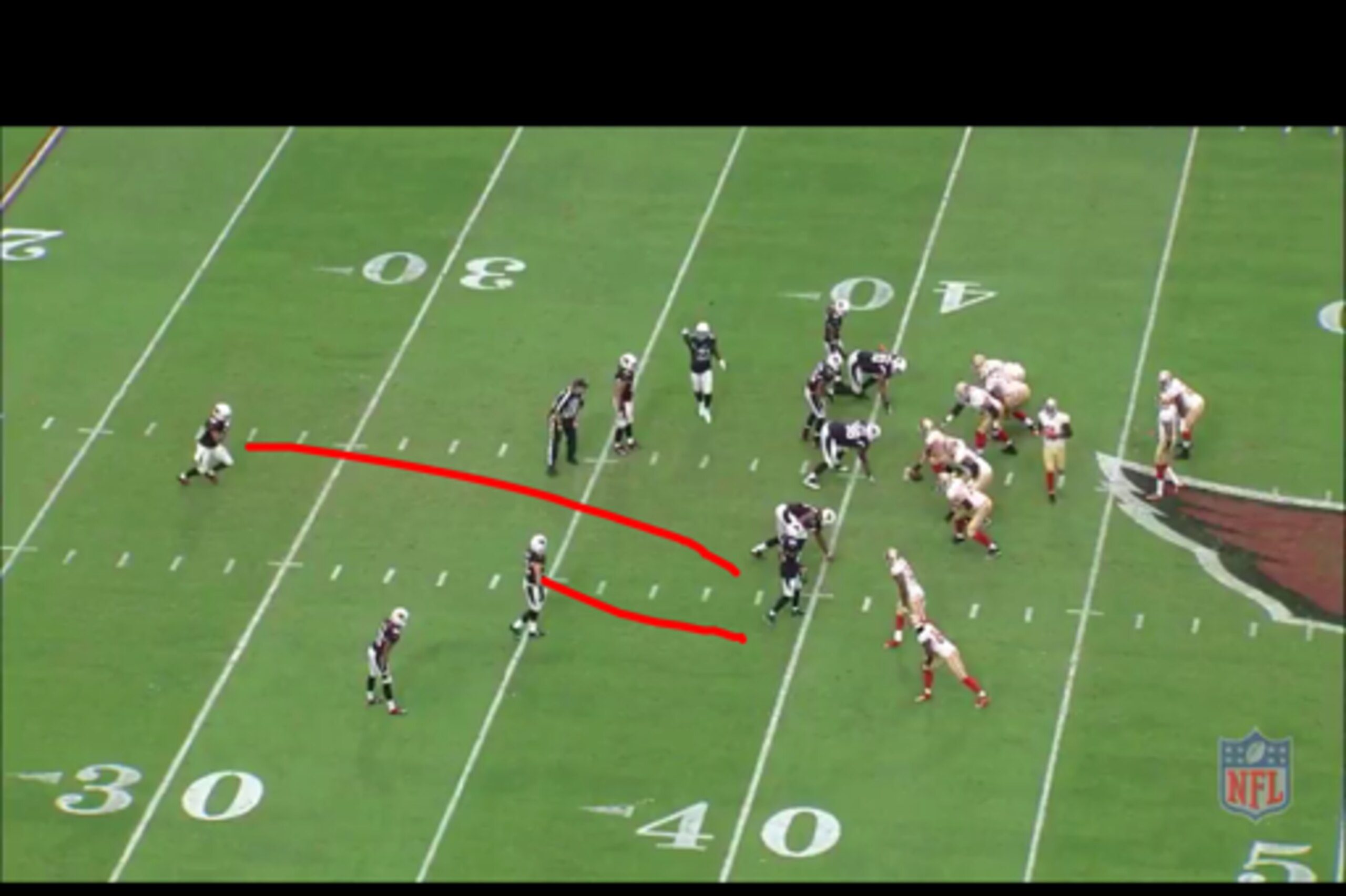
Bowles now had three defensive backs stacked on one side of the formation. But only two would blitz, while Foote and cornerback Antonio Cromartie would rush from the other side:

San Fran quarterback Colin Kaepernick couldn't release the ball quickly to beat the blitz because the Cardinals had clamped onto his receivers in man coverage:

By blitzing off both edges, the Arizona D successfully kept the mobile Kaepernick from escaping the pocket and forced him to throw the ball away:
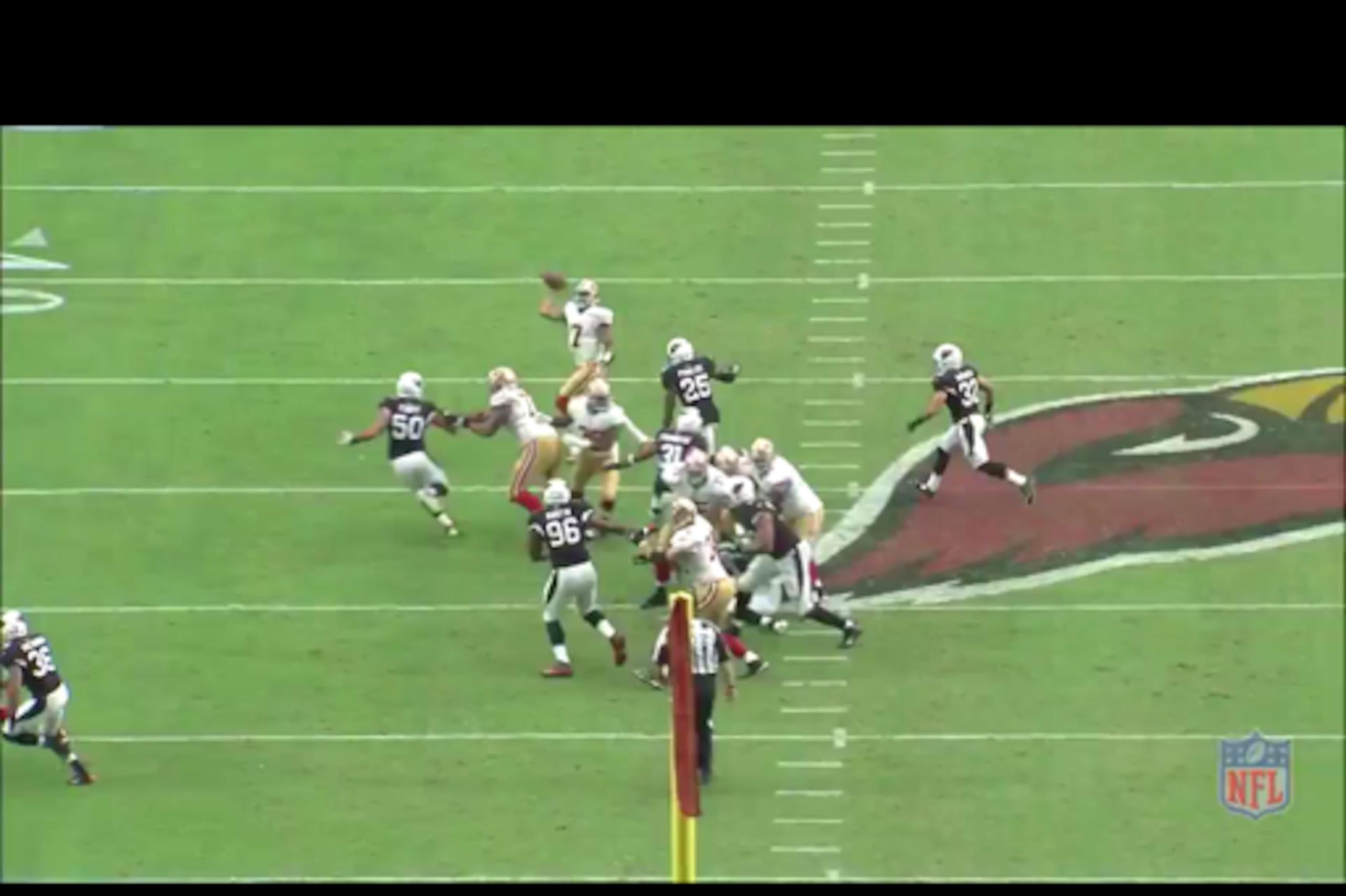
Cousins has to be aware of the many looks the Cardinals are sure to show him. Gruden will need to make sure his young passer has quick, simple adjustments to re-assign protection and locate potential hot reads.
Of course, the best way for the Washington offense to beat the pressure is to avoid it. That means staying out of obvious blitz situations, such as 3rd-and-long yardage.
Gruden recently made this clear during an interview, per CSNWashington.com. The key to doing that will be to lean on the running game, according to The Associated Press (via USA Today):
"Gruden said before the season the offense's strength would be the running game, which was understandable because quarterback Robert Griffin III was having some adjustment pains while learning to be more of a drop-back passer. Then Griffin got hurt in Week 2 and was replaced by backup Kirk Cousins, giving the coach yet another reason to keep the ball on the ground.
The Redskins as a team ran 42 times for 191 yards in a 31-point win over the Jacksonville Jaguars. Two weeks later, there were only 17 running plays in a blowout loss to the New York Giants, even though Morris and his teammates were averaging more than 5 yards per carry.
Striking the correct run-pass balance won't be any easier on Sunday. This week's opponent, the Arizona Cardinals, allows 3.0 yards per rush — second-best in the NFL.
"
Gruden certainly has to trust his running game more than he has in recent weeks. Even though it won't be easy against the stingy Cards, Gruden has to try to call a balanced game.
Otherwise, he is certain to leave Cousins and his suspect O-line at the mercy of Bowles' blitz packages.
Test Arizona's Secondary Deep
In Week 5, Gruden and Cousins proved they weren't afraid to test a vaunted secondary deep. Led by wide receiver DeSean Jackson, the Washington passing attack burned the Seattle Seahawks' "Legion of Boom" secondary more than once.
The Redskins must show the same willingness to challenge an Arizona defensive backfield headlined by cornerbacks Cromartie and Patrick Peterson. Peyton Manning and the Broncos certainly did.
Manning threw for 479 yards and a quartet of touchdowns last week. The highlight was an 86-yard bomb to Demaryius Thomas.
The Broncos planned to use three vertical routes against Arizona's Cover 1 structure:
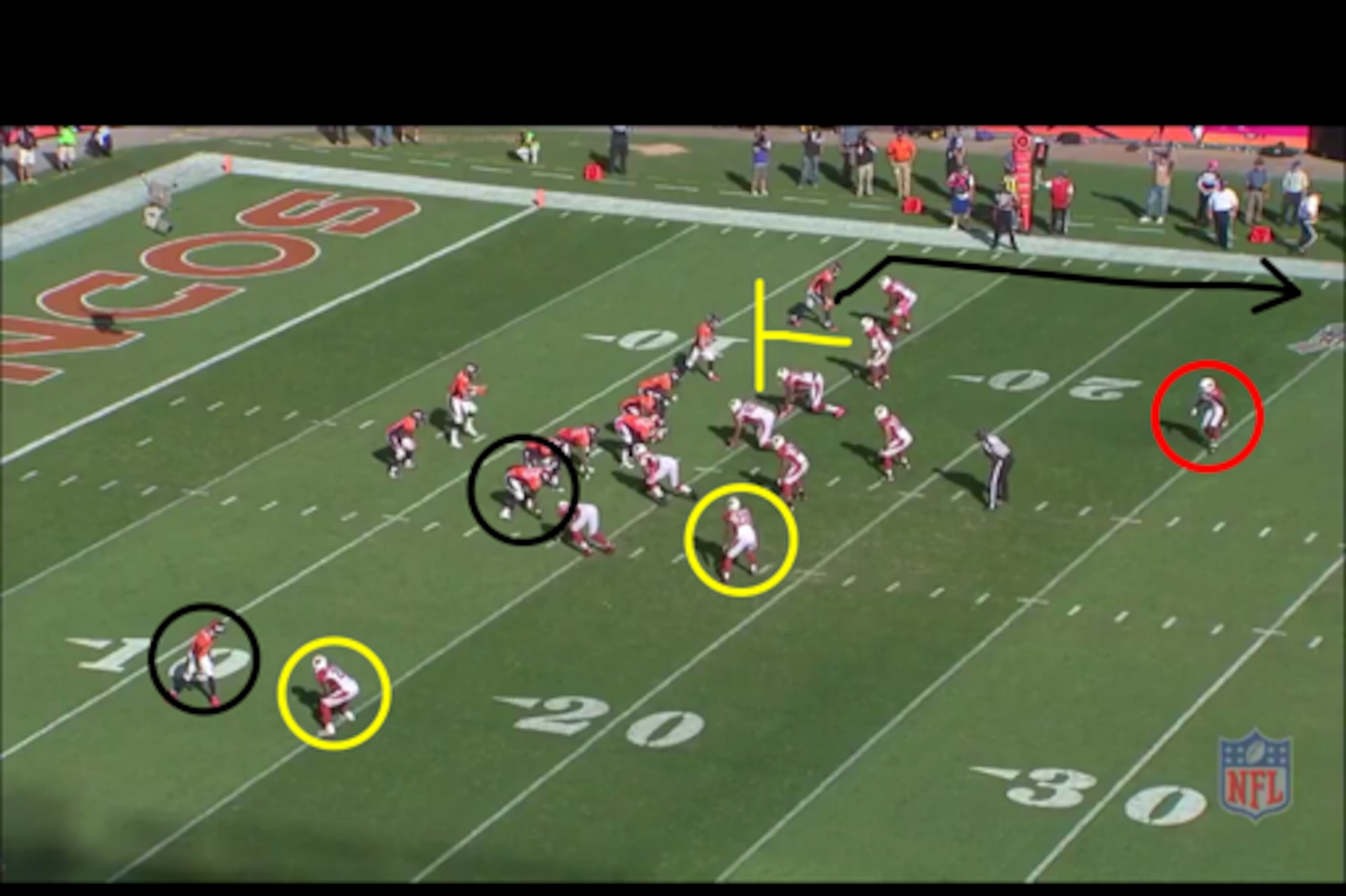
Thomas would use his size and speed to win on the outside and beat the rotation of the deep safety.
As the play developed, the safety looked infield first at the vertical release from the slot by Wes Welker:

That meant that once Thomas got free on the sideline there was no deep help. The safety had a bad angle and was too late coming across:

Manning hit Thomas in his stride, allowing the receiver to sprint the rest of the way for the easy score:
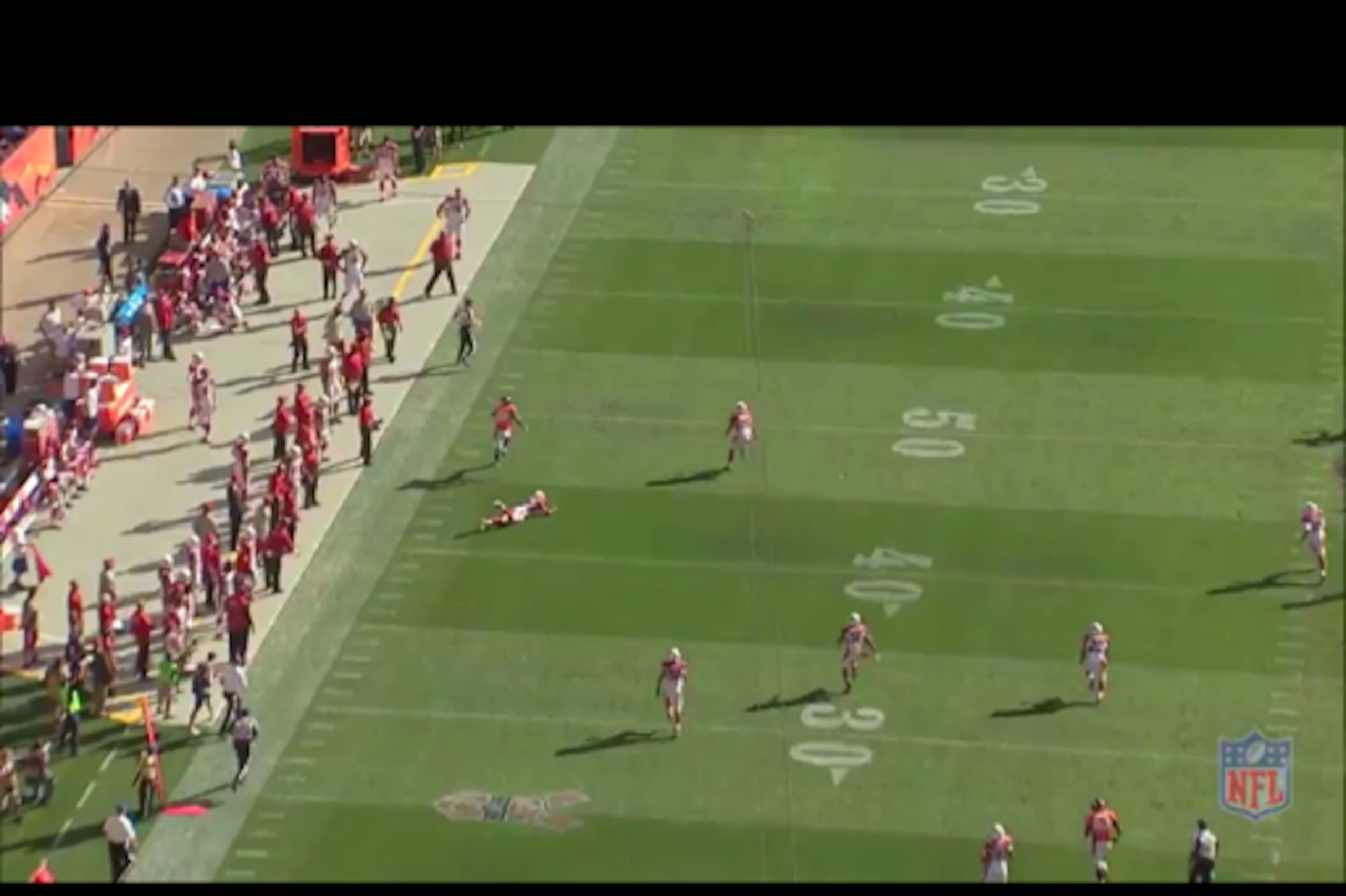
These are the kind of chances the Cardinals will take in coverage. They defend inside-out, meaning the coverage takes away the middle of the field first.
That strategy relies on cornerbacks who won't get beat in single coverage on the outside. That's a very risky strategy against Jackson.
He had five catches for 157 yards against the Seahawks, including grabs of 60 and 57 yards. His speed and Cousins' arm strength have formed a potent combination for most of this season.
Against the Philadelphia Eagles in Week 3, the two combined for an 81-yard score. Just as the Cardinals often do, the Eagles would rotate into a Cover 1 shell:
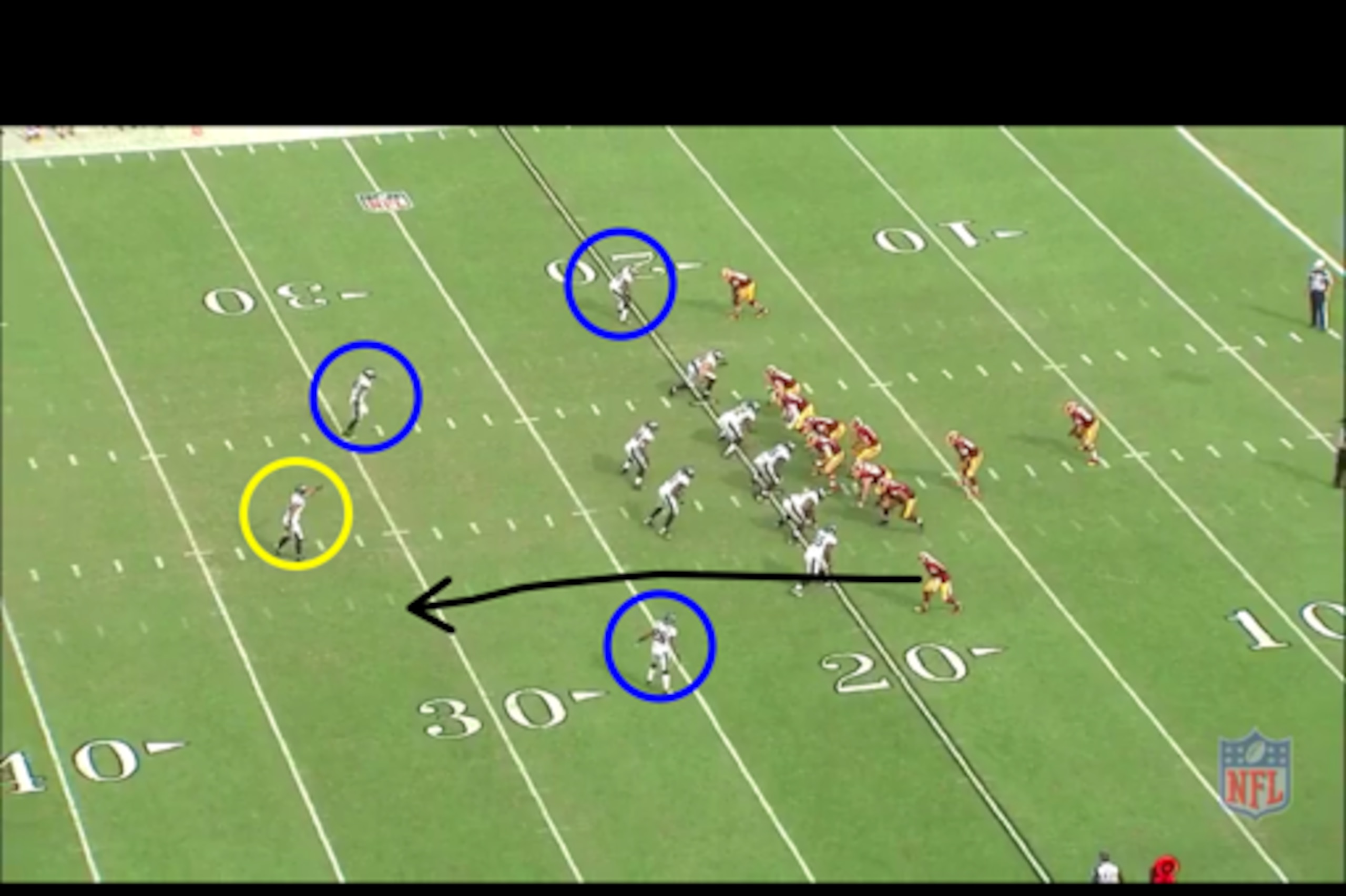
Jackson would exploit this by running an inside post.
A deep cross on the other side, ran by Pierre Garcon, gave the free safety a decision to make:
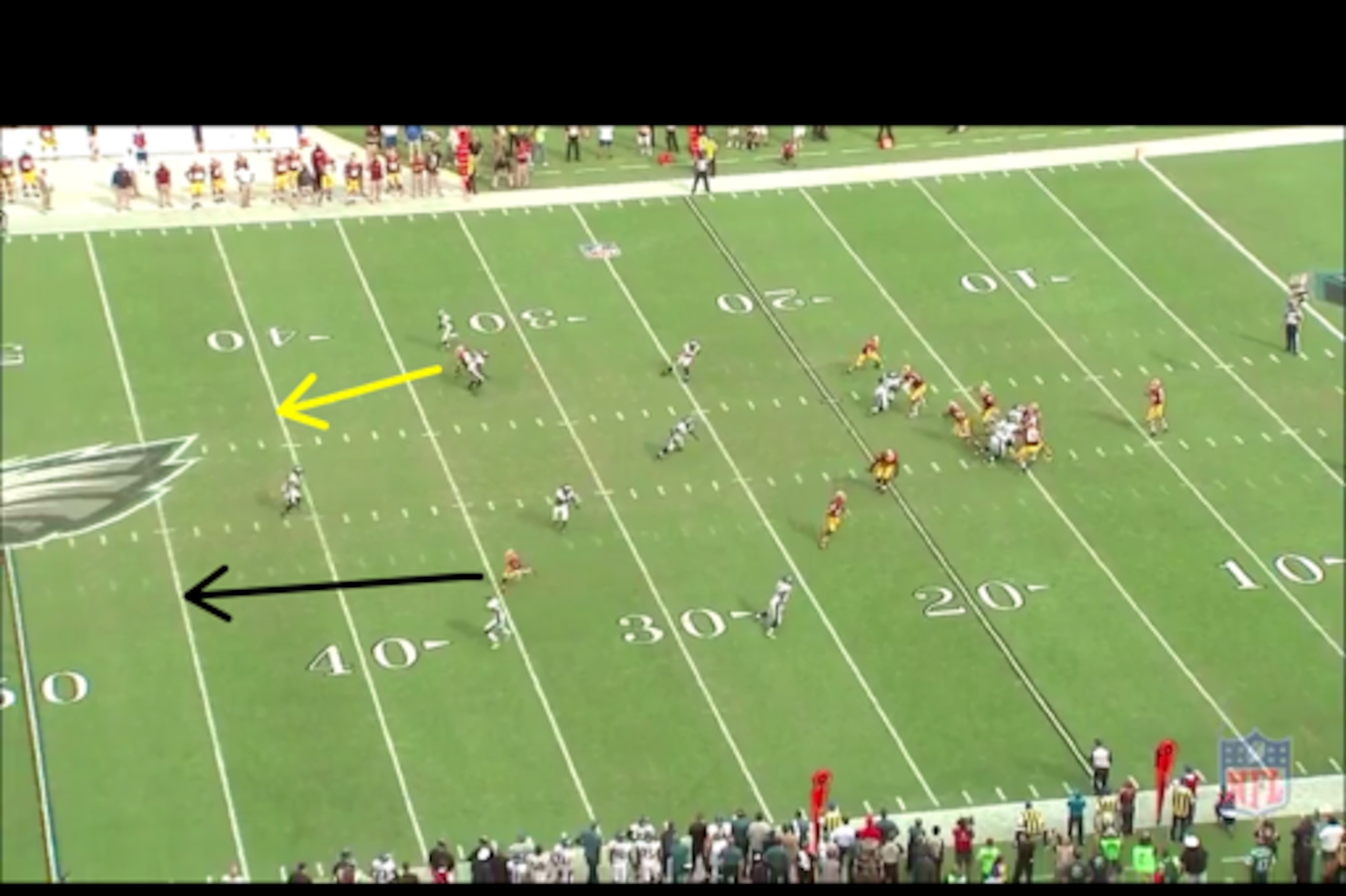
Once the safety looked inside, initially favouring Garcon's pattern, Jackson was already behind the coverage:

Cousins' well-timed and accurate heave hit Jackson on the run and he soon shrugged off the safety to score:
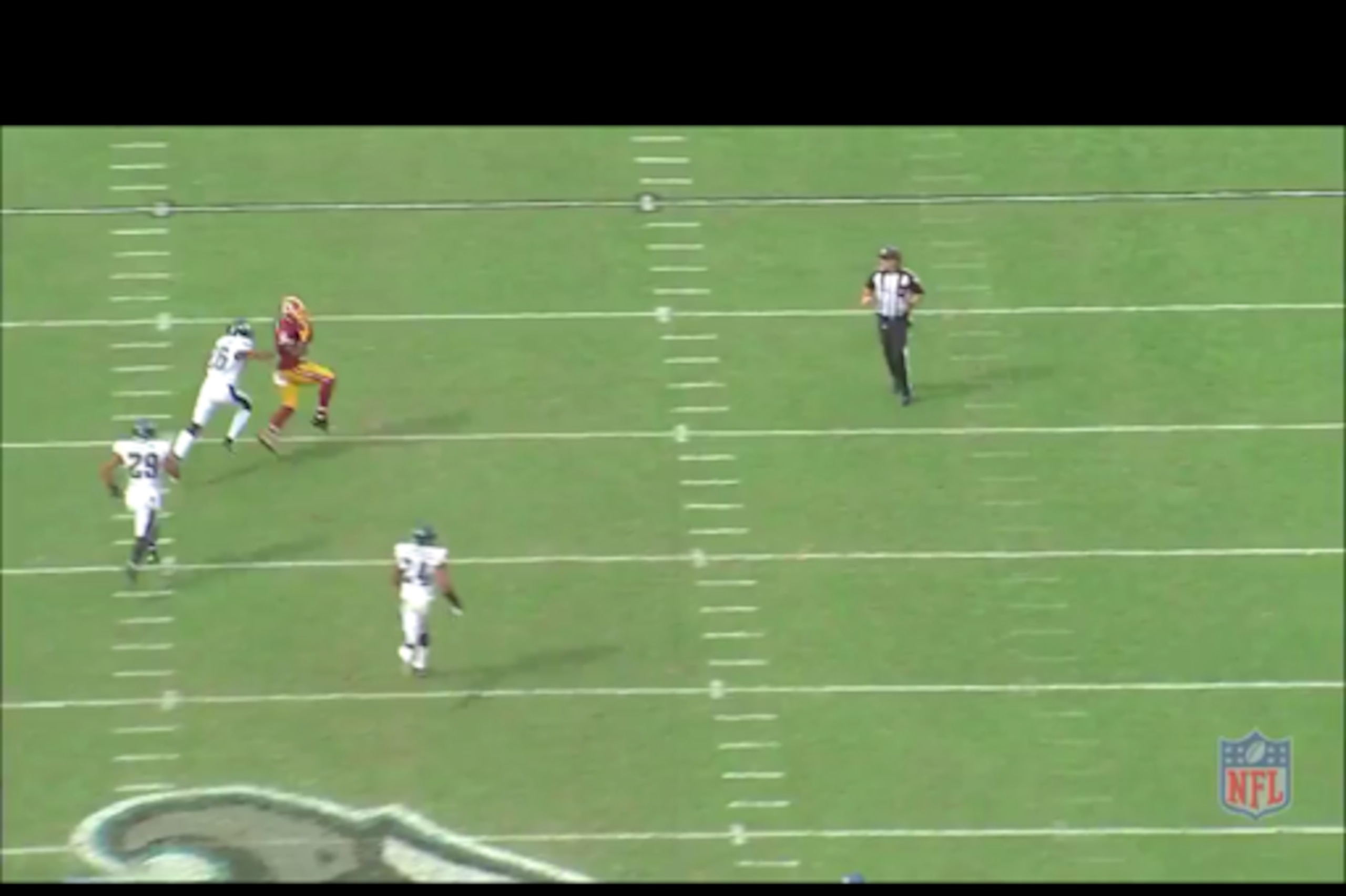
Deep passing is fast becoming a forte of this offense, as detailed in this article. If Gruden establishes the run early, he'll be able to set up some deep strikes to Jackson off play action.
Spy Andre Ellington
Defensive coordinator Jim Haslett doesn't want to see his unit surrender any more big plays, so he must focus a lot of attention on versatile running back Andre Ellington. The dynamic runner and receiver could be a matchup nightmare for Washington's defense.
He's lethal out of the backfield, as he proved in Denver last week. The Cardinals wanted to isolate Ellington against a linebacker, in this case middle 'backer Nate Irving:
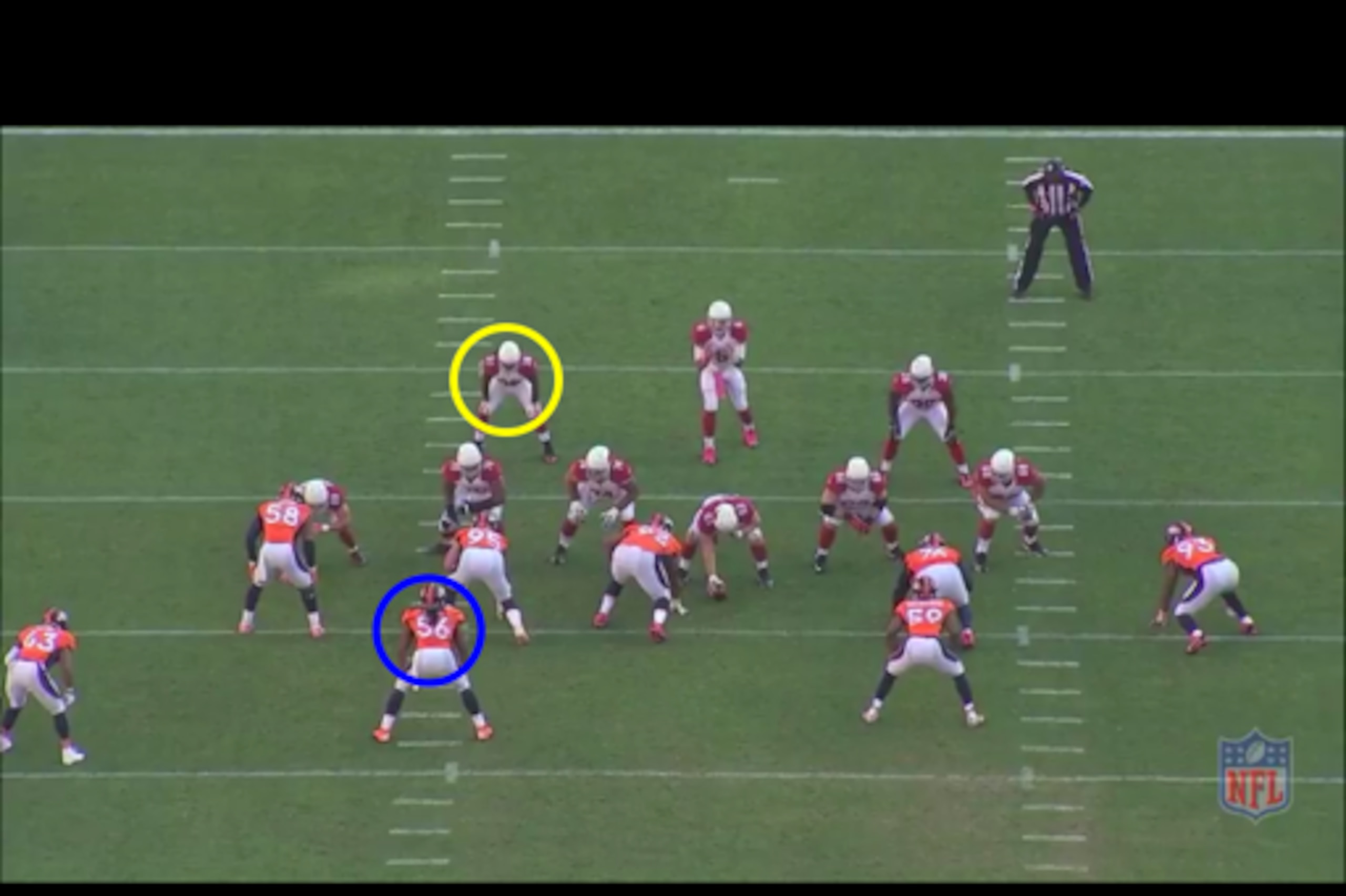
Ellington ran an initially short route to the flat, but soon turned upfield on a swing pattern:

This forced Irving to follow in man coverage:
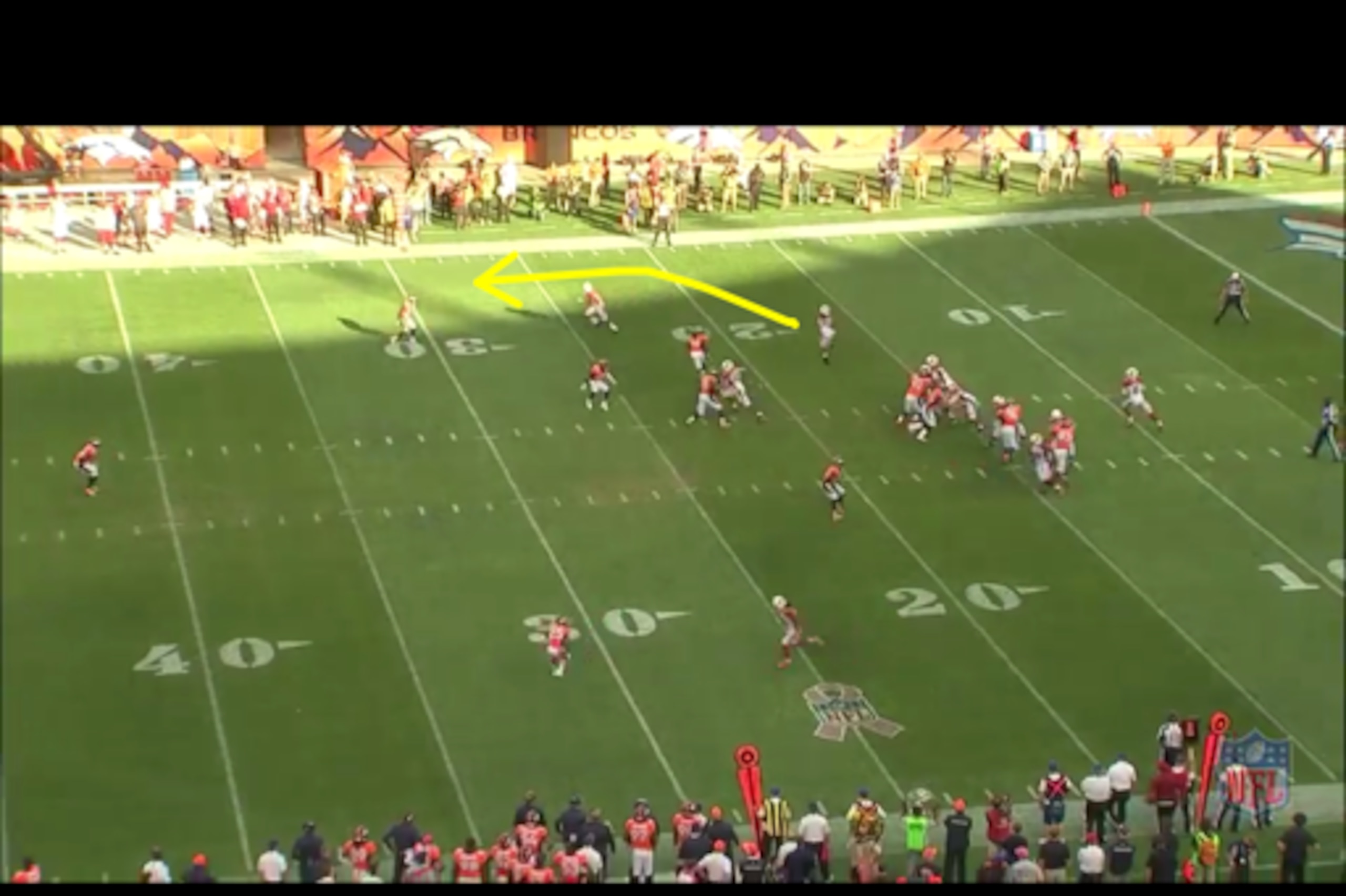
In this obvious mismatch, the bulky linebacker was soon left trailing by the nifty Ellington along the sideline. Once he caught the ball, the second-year running back simply blew past Broncos defenders and completed an 81-yard catch-and-run for six:
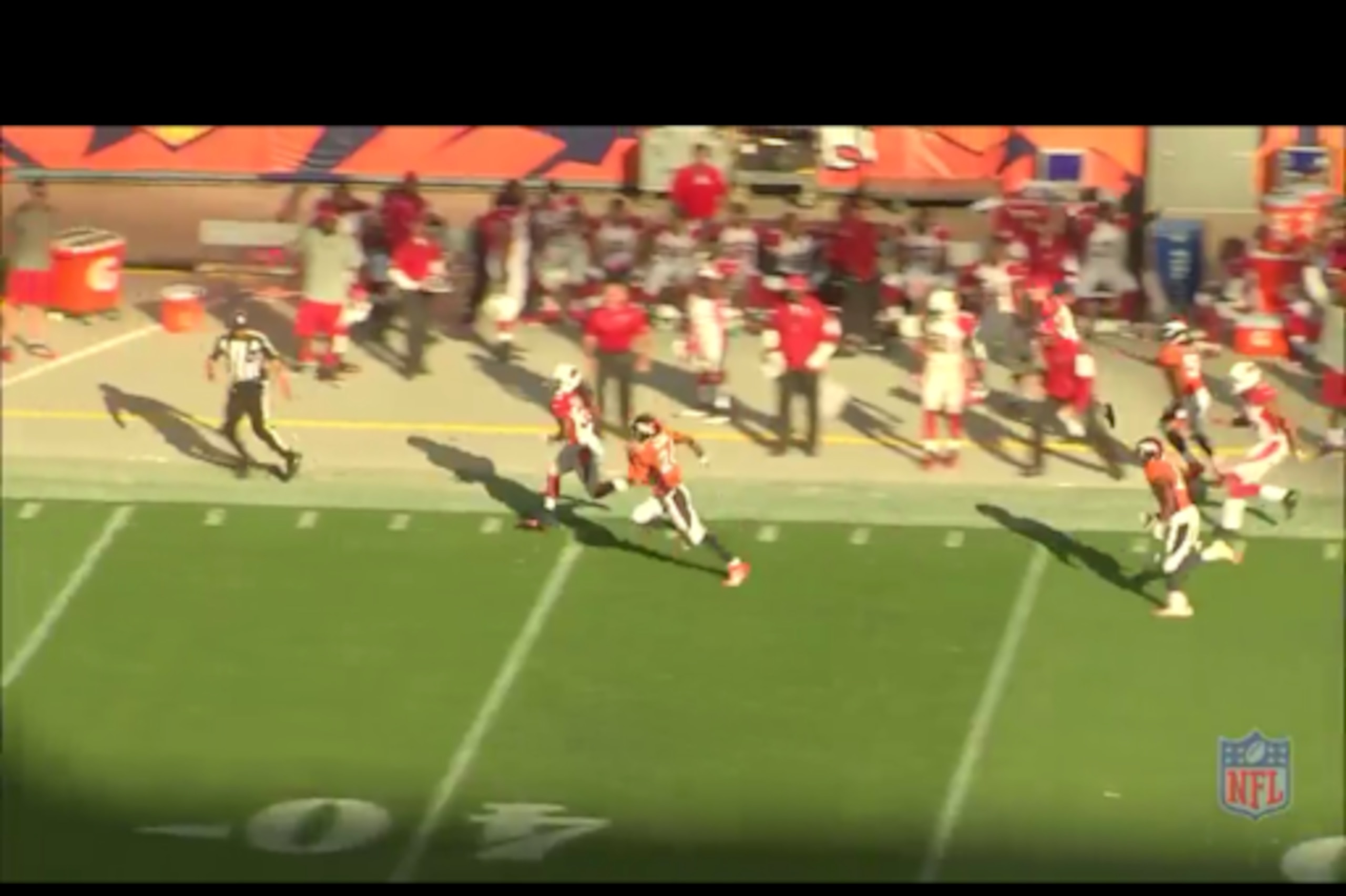
Haslett had better know that the Cardinals don't limit Ellington to short-range catches out of the backfield. They are much more expansive with his routes and pre-snap alignments, often splitting him out as a wide receiver.
The Redskins must be wary of Ellington's downfield threat. That means knowing where he is at all times. That knowledge can only be gained by spying the former Clemson star.
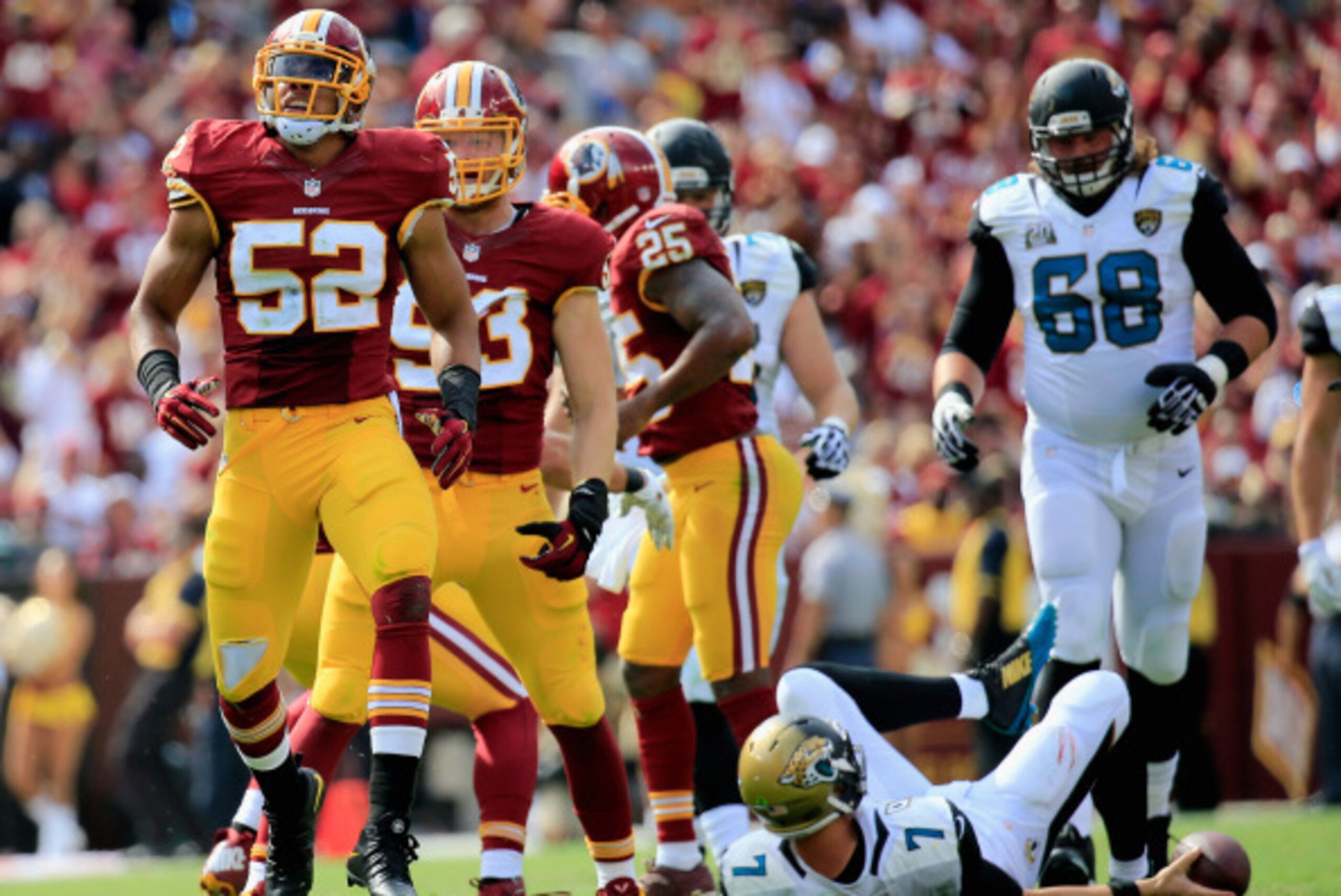
Haslett should dedicate his best athlete, probably inside linebacker Keenan Robinson, to shadowing Ellington. But even Robinson will need secondary help whenever Ellington lines up out wide.
Pressure Cardinals Quarterbacks off the Edges
Before he focuses on Ellington, Haslett will likely be preparing for every possible starting quarterback the Cardinals may deploy. With Palmer still nursing nerve damage, the options appear to have been narrowed to Stanton and Thomas, per AZCentral.com writer Zach Buchanan:
"The team is still hoping that Drew Stanton will be able to pass concussion tests in time to play Sunday against Washington, but most of the discussion Thursday centered on the 6-6, 23-year-old quarterback from Virginia Tech.
Thomas completed just 1 of 8 passes after coming in to relief Stanton against the Broncos last week. He has a strong arm — "His ball changes the direction of the wind," Fitzgerald said — but is still working on picking up the intricacies of an NFL offense.
"
Haslett is reportedly attempting to cover all bases by preparing for both passers, per Liz Clarke of The Washington Post:
"It’s hard because you’re not really sure [who will play], obviously. Carson [Palmer] has got a lot of skins on the wall. The young guy from Virginia Tech is a heck of an athlete, can throw the ball. Stanton’s a good football player. We’re not really sure who’s going to play. We’re prepared to handle all three, [but] you can’t simulate all three in practice.
"
Whoever ends up under center at University of Phoenix Stadium should be made to feel the heat from Washington's capable pass rush. In particular, Haslett must turn outside linebackers Brian Orakpo, Ryan Kerrigan and Trent Murphy loose off the edges.
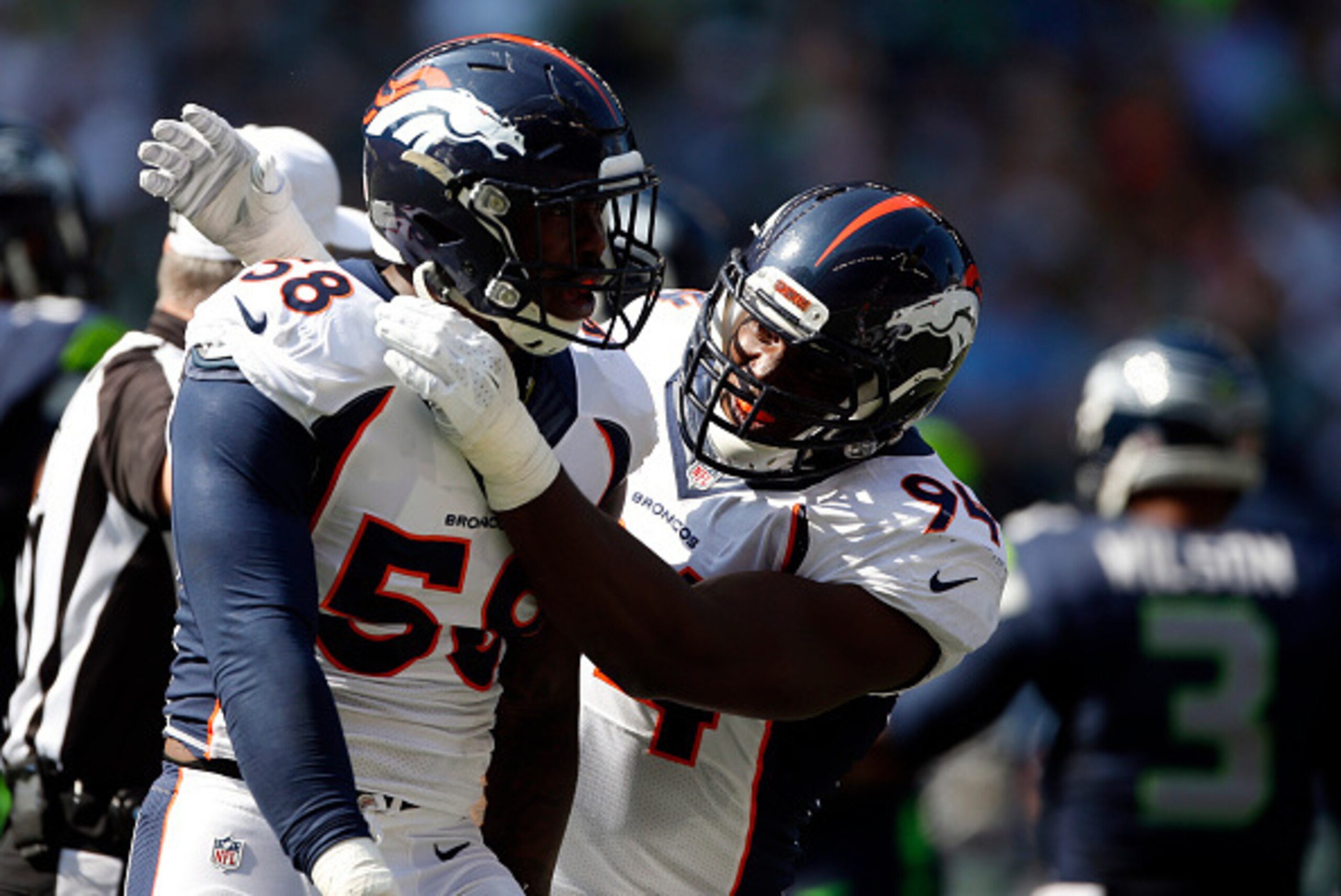
Arizona's offensive tackles had a torrid time dealing with premier edge-rushers in Denver last week. Bobby Massie and Jared Veldheer couldn't handle Von Miller and DeMarcus Ware. The pair combined for 2.5 sacks and put regular hits on both Stanton and Thomas.
Orakpo, Kerrigan and Murphy can certainly do the same. Haslett should get all three on the field as often as possible and use two to overload different sides of the Arizona O-line.
Orakpo is currently listed as questionable for the game, per Mike Jones of The Washington Post. But Haslett will need the player who led the team in sacks last season to help make this plan work.
If Gruden and his coaches are brave enough to attack the Cardinals on both sides of the ball, Washington can earn a mild upset that could kick-start a so far failing season.
All statistics via NFL.com.
All screen shots courtesy of Fox Sports and NFL.com Game Pass.
.jpg?w=2560 "Colts Football")