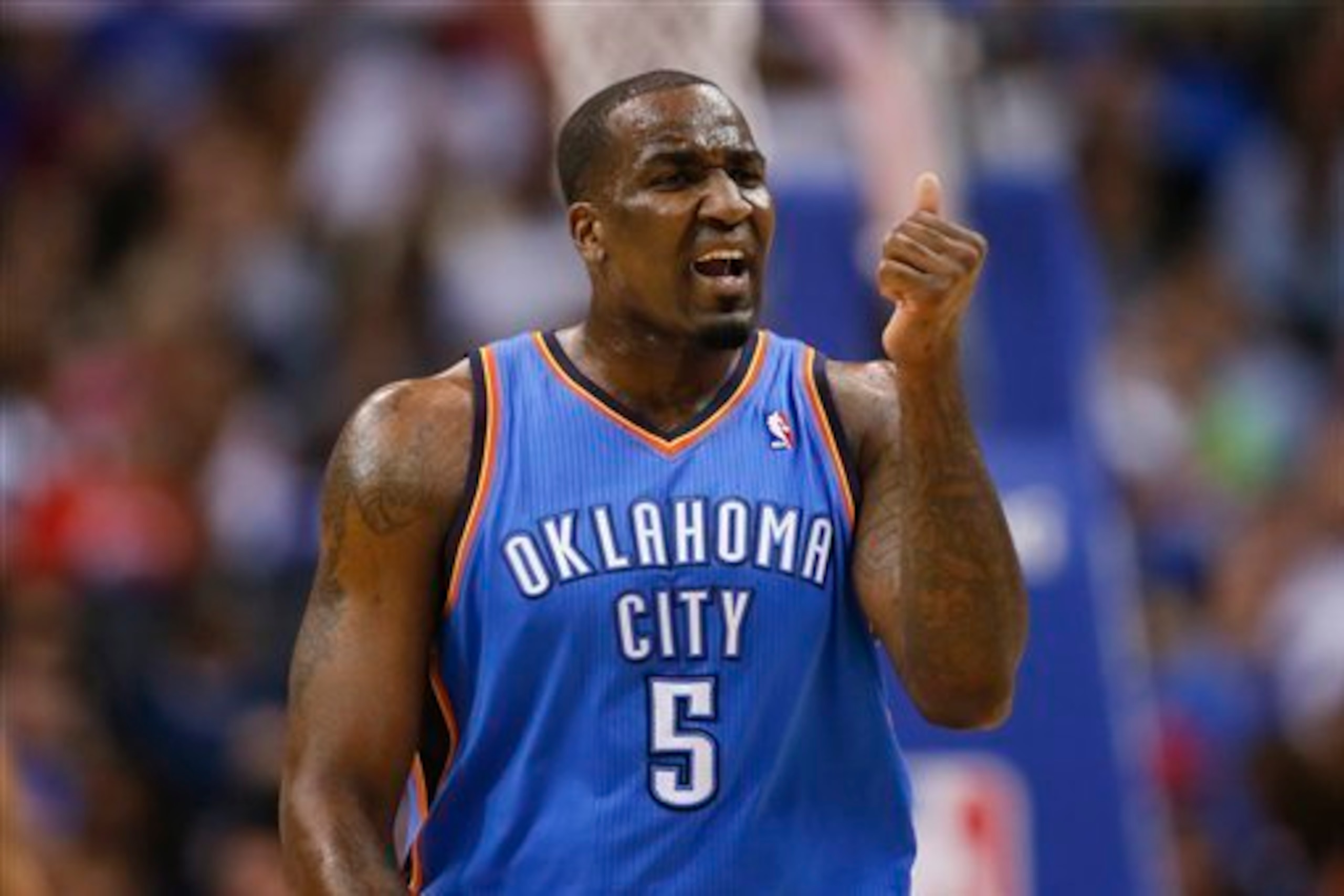
Breaking Down OKC Thunder's Center Position for 2014-15 Season
Though it’s far from a strength, the center position will be one of the more intriguing storylines for the Oklahoma City Thunder during the 2014-15 NBA season. The league may have transitioned away from the low post, but a strong paint presence on both ends of the floor is still an integral part of the championship formula.
Kendrick Perkins has been an electromagnet for criticism over the last few years, and head coach Scott Brooks has repeatedly drawn the ire of Thunder fans for sticking with the veteran. That was especially true last season after then-rookie Steven Adams exceeded everyone’s expectations and emerged as an instant contributor.

It’s clear that Adams is the future of the position in OKC, but there are still plenty of questions regarding when the proverbial torch will be passed.
Last Season’s Performance
In my breakdown of OKC’s point guard position, the statistics table was fun to look at. That’s not the case for these centers. Even combining numbers from all three (7.9 points, 10.7 rebounds and 1.6 blocks per game) results in a rather tame three-headed "monster."
| Kendrick Perkins | 19.5 | 3.4 | 4.9 | 0.5 | 45.1 | 6.32 |
| Steven Adams | 14.8 | 3.3 | 4.1 | 0.7 | 50.3 | 11.25 |
| Hasheem Thabeet | 8.3 | 1.2 | 1.7 | 0.4 | 56.5 | 2.58 |
That said, the Thunder don’t need their center to fill up the box score when they have three stars accomplishing that goal on a nightly basis. The primary function of an OKC center is to defend, rebound and set a physical tone. The duo of Perkins and Adams filled that role fairly well last season—especially the last part.
Adams was the better player for most of the season, but the combination of Perkins’ defensive savvy and Coach Brooks’ aversion to change resulted in the veteran maintaining a stranglehold on the starting job when he was healthy. To his credit, Perkins proved his value in the playoffs with tremendous post defense against the Memphis Grizzlies, Los Angeles Clippers and San Antonio Spurs.
The big New Zealander captured the hearts of Thunder fans with his early play, particularly a 17-point, 10-rebound outing against the Detroit Pistons, but he never hit those heights again. He didn’t produce anything more in his minutes as a starter when Perkins was injured aside from a significantly better field-goal percentage:
| Starter | 17.1 | 3.3 | 4.2 | 0.6 | 57.8 |
| Bench | 14 | 3.3 | 4.1 | 0.7 | 47.9 |
Rounding out last year's centers was Hasheem “The Dream” Thabeet, but he was rarely called upon and was a non-factor when Perkins was healthy. He was a big body to protect the rim, but the Thunder are no worse off for trading him away to the Philadelphia 76ers.
What’s Changed This Offseason?

OKC upgraded by adding Mitch McGary in the first round of the draft. Initially, it was puzzling to see the Michigan big man go off the board so early, but McGary delivered on the faith OKC showed in him with a very strong showing at the Orlando Summer League.
McGary’s defense is a question mark, but there is no doubting his offensive skills and the infectious energy he plays with. Thanks to that exuberance, the rookie has already endeared himself to his teammates, according to Anthony Slater of The Oklahoman.
From Kevin Durant calling him an “All-American teammate” to Coach Brooks raving about his spirit, McGary has done all the right things to start his professional career and has the talent to develop into a very nice rotational piece.
His role on the team is still unclear and will be largely determined by his play in training camp and the preseason. Given how Adams came out of nowhere last year, however, it would hardly be a surprise to see McGary carve out a niche for himself as an energy guy off the bench—especially since he is OKC’s best center on the offensive end thanks to a solid mid-range jumper, a soft touch around the basket and tremendous passing skills.
What to Expect in 2014-15
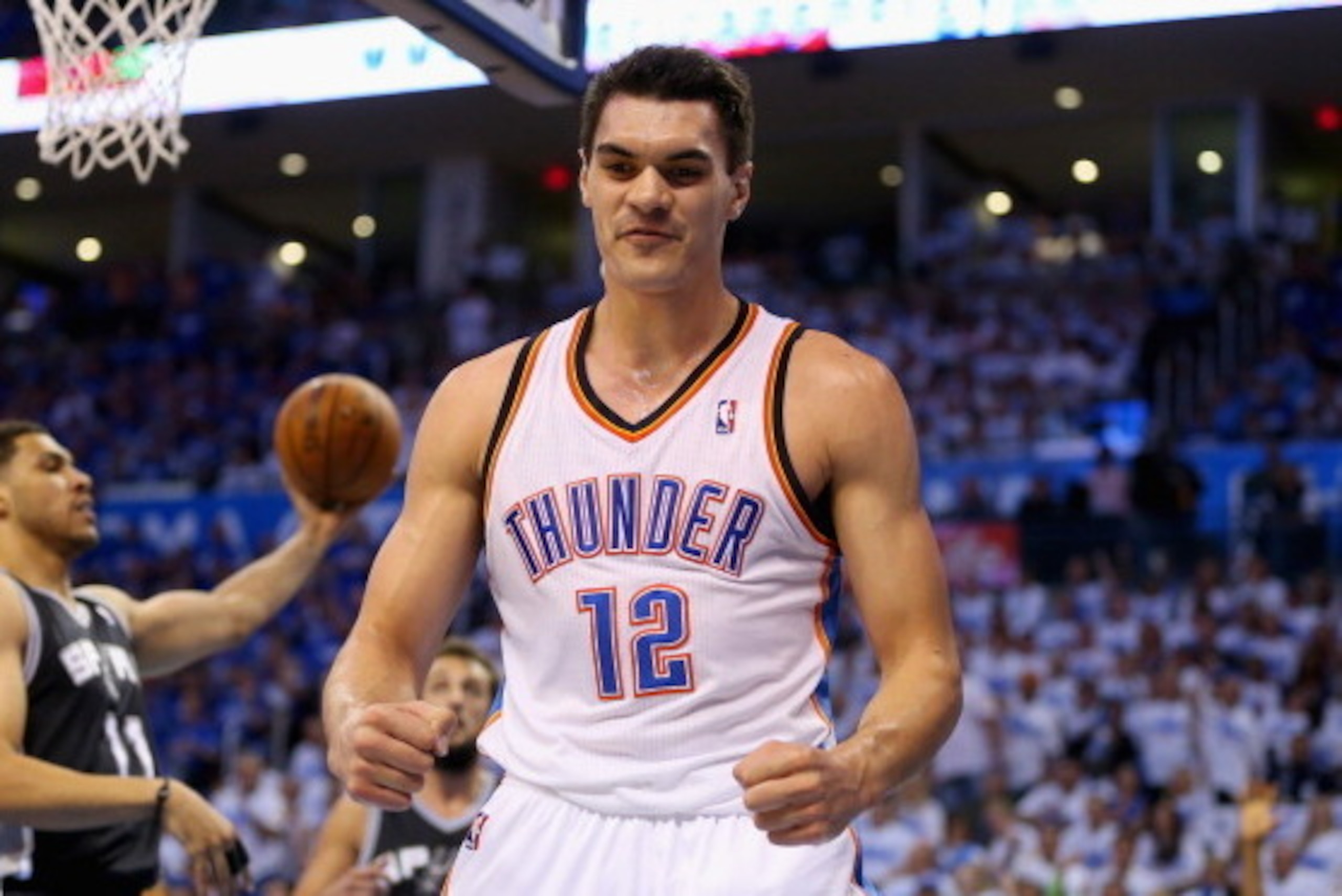
We entered the offseason knowing that the starting shooting guard spot was up for grabs. Coach Brooks revealed on media day that he views the starting center spot in the same light, per Berry Tramel of The Oklahoman:
"We always have to have that defensive mindset. That's what's made us a very good team over the years. Steven has improved over last season. Perk, obviously, will be re-evaluated with his quad injury the next few weeks. You need all players to compete at the level we want to compete at. It's all about professionalism, it's all about sacrifice. It's open. And we will see.
"
Brooks’ past tendencies suggest that Perkins holds the edge at this point thanks to his championship experience, but it’s already very close and Adams could capitalize on Perkins’ absence from the start of camp to take the lead in that race.
Anthony Slater of The Oklahoman made a strong case for why Adams should be the choice:
"This is a team that’ll win 55-60 games regardless of who starts at center. So it’s about maximizing the roster’s capabilities by the playoffs. That would include getting the young and emerging Adams as many opportunities as possible. Play him with the starters. Get him 30 minutes a night. He’s widely considered a key cornerstone for the future. Start the clock now.
"
Regardless of who starts the games, we will see less of Perkins than we have in the past. His playing time dipped below the 20-minute barrier for the first time in eight years last season, and the relatively even minutes split with Adams shifted in the rookie’s favor throughout the playoffs
| Memphis Grizzlies | 156 | 66 |
| Los Angeles Clippers | 117 | 129 |
| San Antonio Spurs | 111 | 136 |
While that disparity could be affected by the opponent, it’s telling that Coach Brooks trusted the rookie so much during the postseason in the first place. Moreover, we finally saw Brooks start to limit Perkins’ minutes based on the matchup. The most notable occasions were against the Miami Heat, where Perkins played only 12 total minutes in two regular-season encounters.
Perkins is still a valuable defender in the right matchup but, more often than not, his lack of athleticism and offensive skills mean that he’s not the best center for the Thunder. Adams’ defensive awareness improved steadily throughout the season, and he’s primed to take on a big role for this team—whether he’s starting or not.
Those two will take up the bulk of the center minutes, while McGary will fight for the scraps at both frontcourt positions. It’s also worthwhile to point out that Serge Ibaka will see some minutes at center, adding further confusion to the process of determining where McGary’s minutes will come from this season.
As a rookie, his role will be largely dependent on how he acclimates on the defensive end, but his offensive contributions and energy alone should be good enough for a limited role at the end of the frontcourt rotation.
OKC boasts a relatively deep pool of quality bigs, and Adams has the talent to make the center position an area of strength for the Thunder if he builds off a strong rookie campaign. Most importantly, the Thunder have some versatility with the types of centers they can play. With a center-by-committee approach depending on the matchups, OKC should be ready for anything their opposition can throw at them this season.

.jpg?w=2560 "NFL House in Paris Closes for Protests")
.jpg?w=2560 "Trevon Diggs Cut by Seahawks")