Washington Redskins vs Philadelphia Eagles: Breaking Down Washington's Game Plan
There are two simple things the Washington Redskins can do to upset the Philadelphia Eagles on the road in Week 3. Neither of them involves the quarterback.
With Kirk Cousins making a full start in the absence of Robert Griffin III, the spotlight will rightly focus on the man under center. However, Redskins head coach Jay Gruden can significantly ease the pressure on Cousins by leaning on the team's dominant ground game.
In fact, this an ideal week for Gruden to tweak the familiar zone schemes to include some of the power-based principles he often employed as offensive coordinator of the Cincinnati Bengals.
TOP NEWS

New NFL Power Rankings 📊
.jpg?w=2560 "Texans-Mixon Released Football")
Injury-stricken Seahawks signing veteran RB
.jpg?w=2560 "Commanders Eagles Football")
2 NFL Officials Suspended
Of course, no matter how well the offense plays, the main concern will be how to slow down the fast-break Eagles attack. Philly relies on a unit that has been feasting on big plays during the season's first two weeks.
But Washington defensive boss Jim Haslett can slow the pace considerably by employing a deep zone shell in coverage and relying on a strong and consistent front-four pass rush.
Here's a closer look at what Washington's coaches and players should focus on to beat the Eagles:
Overloaded Lines and Tight End-Heavy Sets
Running backs Alfred Morris and Roy Helu Jr. could combine for a huge day behind some lines supplemented by extra blockers. Gruden can overload his fronts with an additional lineman, or simply load up on tight ends.
In Week 2, the Indianapolis Colts did both to consistently overpower the Philadelphia front seven. One of their favorite plays was a counter run from a three-tight end set featuring a shifted line.
The Colts aligned with tight ends Coby Fleener and Dwayne Allen on either side of the line, bookending the offensive front. A third tight end, Jack Doyle, aligned in the backfield as a de facto fullback:
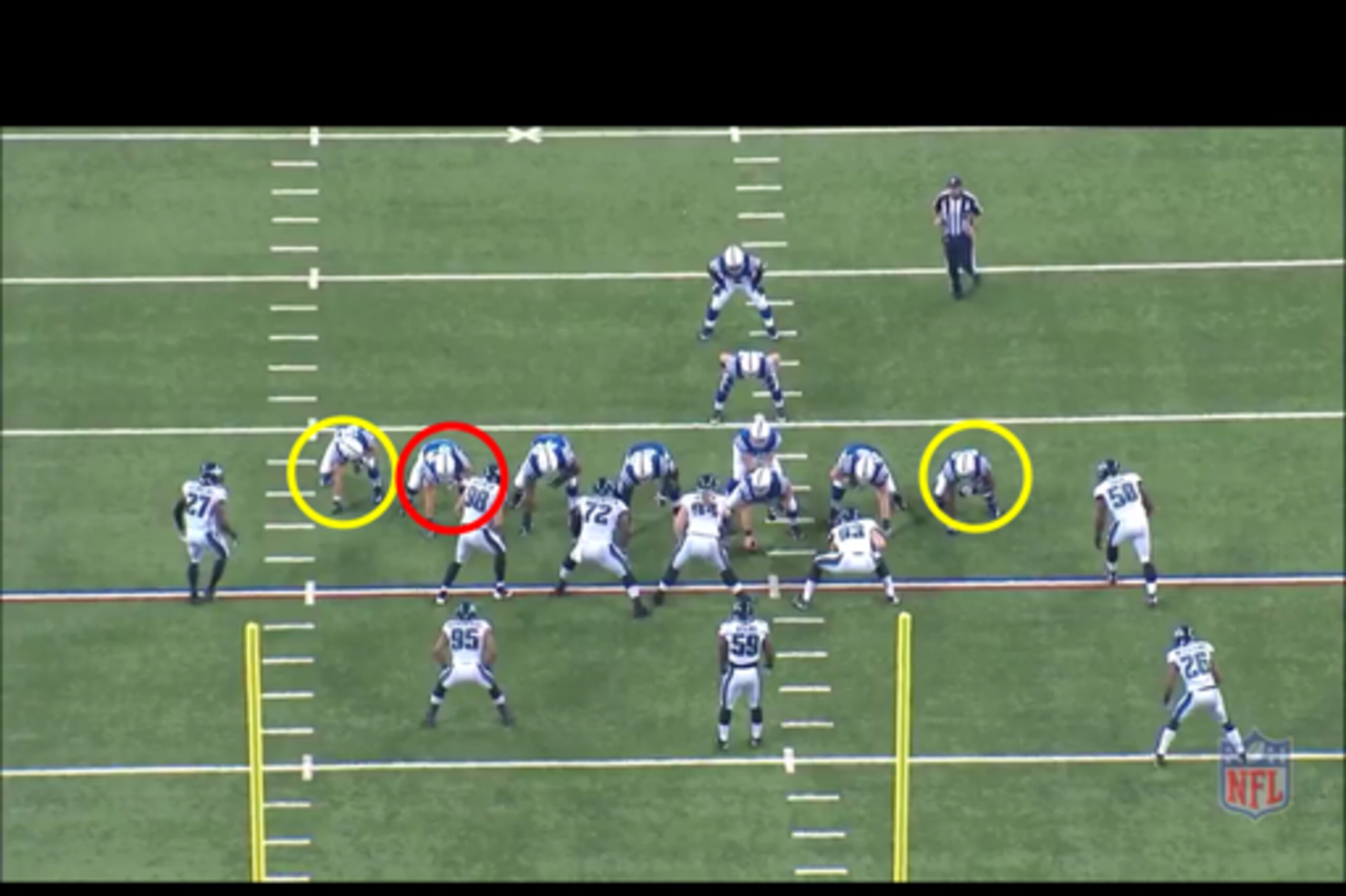
Indy offensive coordinator Pep Hamilton also shifted the left tackle over to the right side, creating an overload.
The Eagles immediately responded to the overload by shifting the strength of their defense toward it. Safety Malcolm Jenkins (27) dropped into the box on that side, while the D-line positioned itself to slant that way:

Inside linebackers Mychal Kendricks (95) and DeMeco Ryans (59) switched to fill gaps on that side.
That shift meant the Colts now had the defense set up for a counter run the other way. Room would be cleared on the backside by tight end Allen crashing down on end Brandon Bair (93):
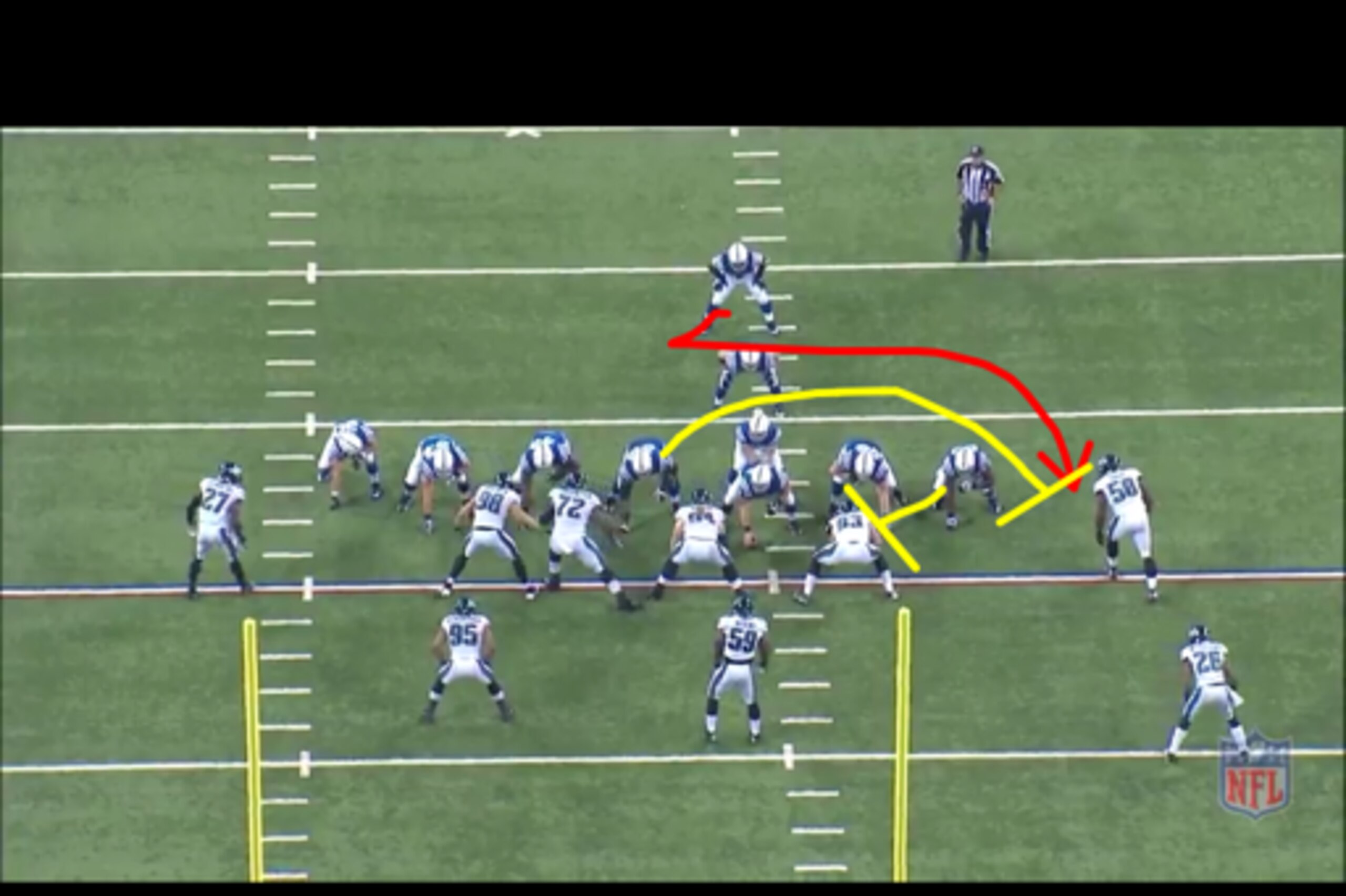
Additionally, guard Hugh Thornton would pull around the corner from the right side to block outside linebacker Trent Cole (58).
Once those blocks were set, Richardson had an open lane around the outside away the from the overload of the line:
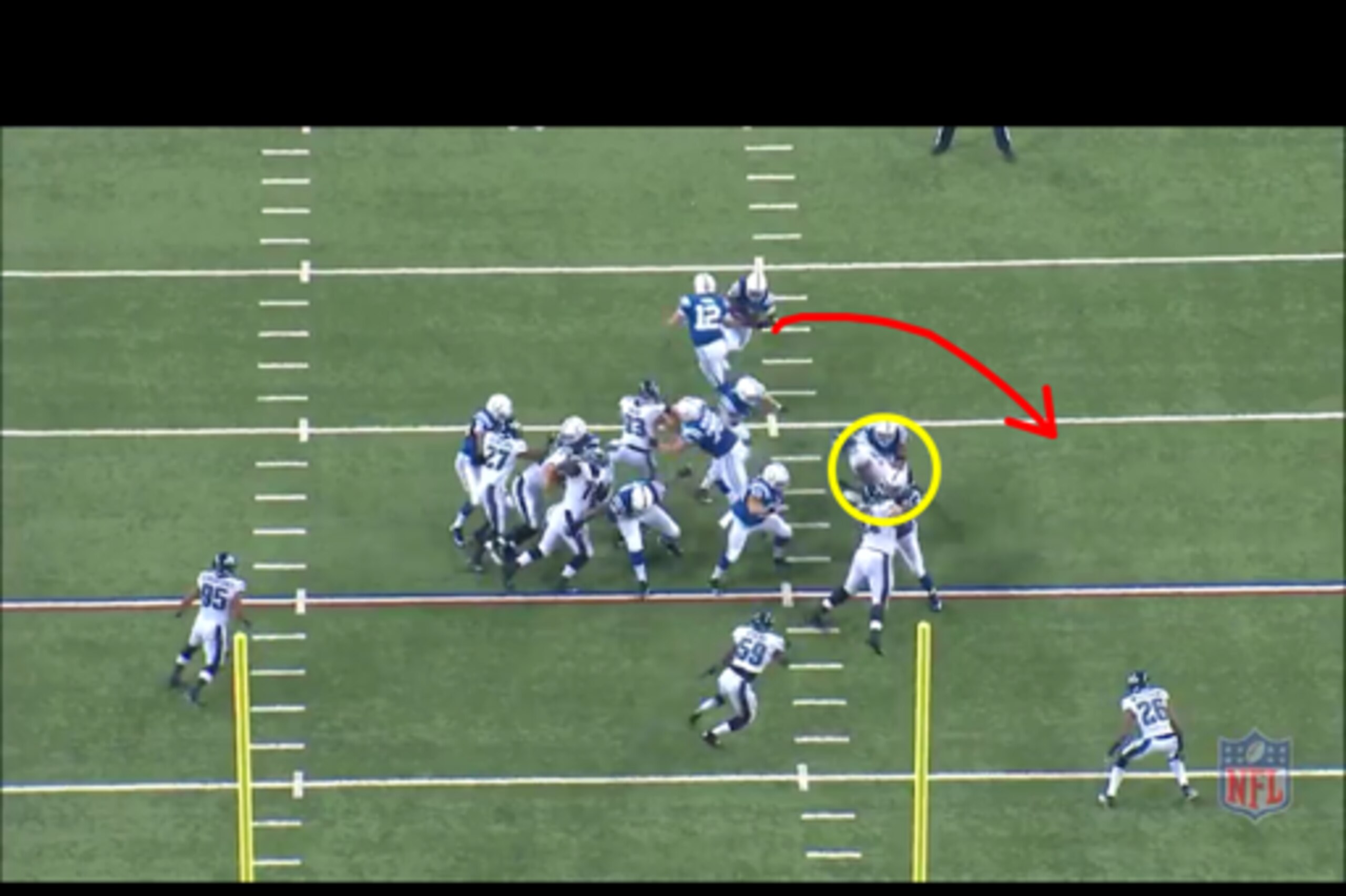
Notice how Ryan was in no position to pursue because of his pre-snap shift. Richardson would complete a 15-yard run.
The Colts terrorized the Eagles with this counter from an overload set all game. Defensive coordinator Billy Davis failed to adjust, although it's not hard to see why.
Whenever a defense is presented with a run-heavy, overloaded line, it has to set its strength that way. Ignore the overload and a smart offense, operating a flexible scheme, will simply audible from the counter and run behind it where there's a numbers advantage.
But overplay the supplemented side of the line and the counter will work every time. It's a nightmare bind for any defense, and one Washington can regularly put the Eagles in.
Gruden isn't shy about using overloaded fronts to wear down a defense and create inviting lanes for runners. He's also often featured pulling guards as part of his blocking schemes.
Both concepts helped Gruden's Cincy offense flatten the San Diego Chargers in a 17-10 road win in Week 13 of last season. Gruden's Bengals ran the ball 38 times for 164 yards.
They did a lot of it from looks like this three-tight end set, which had two of those tight ends flexed into the backfield on the same side:

That particular play created an eight-yard gain for running back BenJarvus Green-Ellis. On the next play, Gruden went with another three-tight end set.
This time he put two on the right side of the O-line to create an overload:

Gruden used a trap by having his line block down away from the overload, but sneaking left guard Andrew Whitworth (77) around to the right:
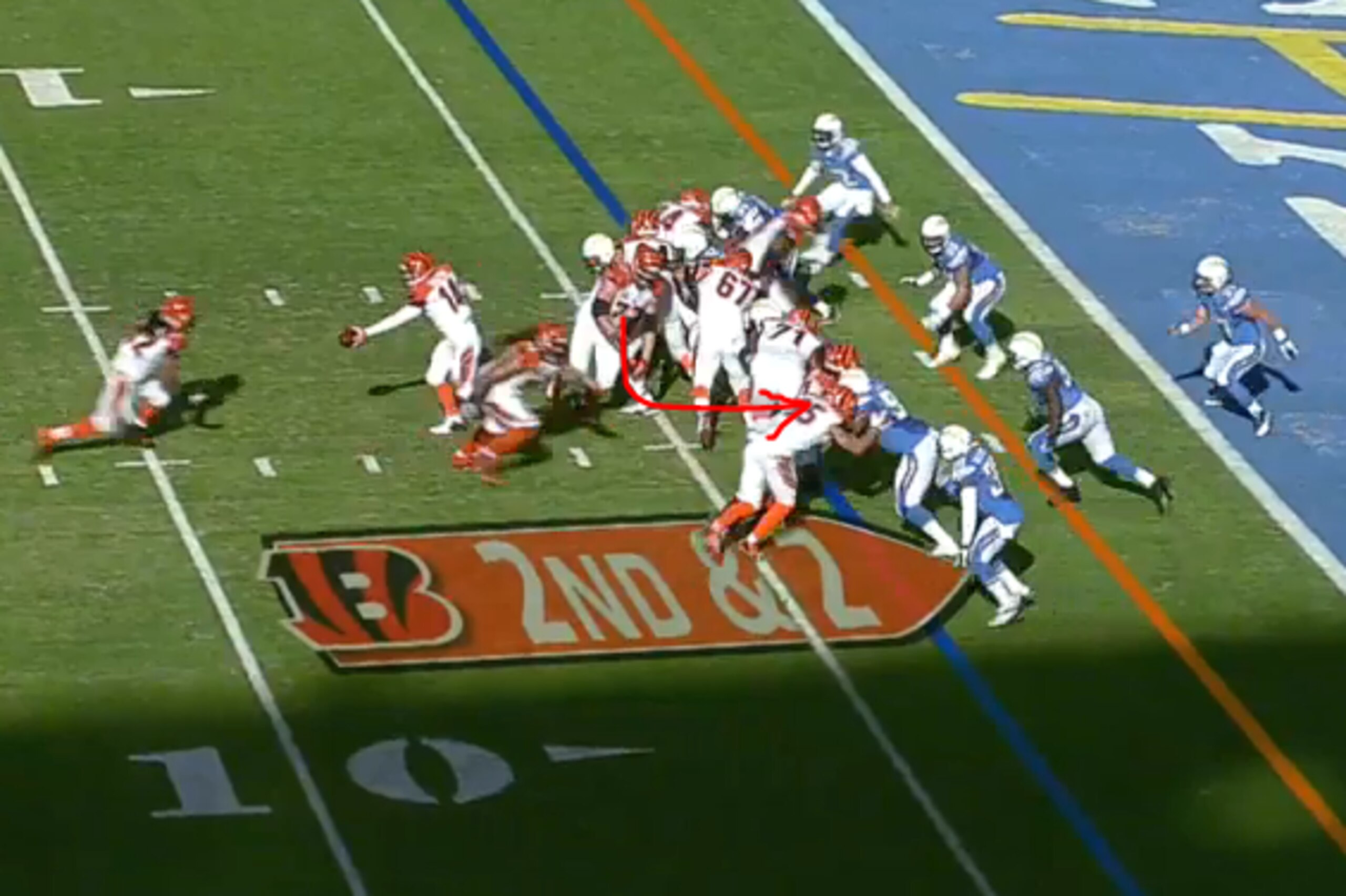
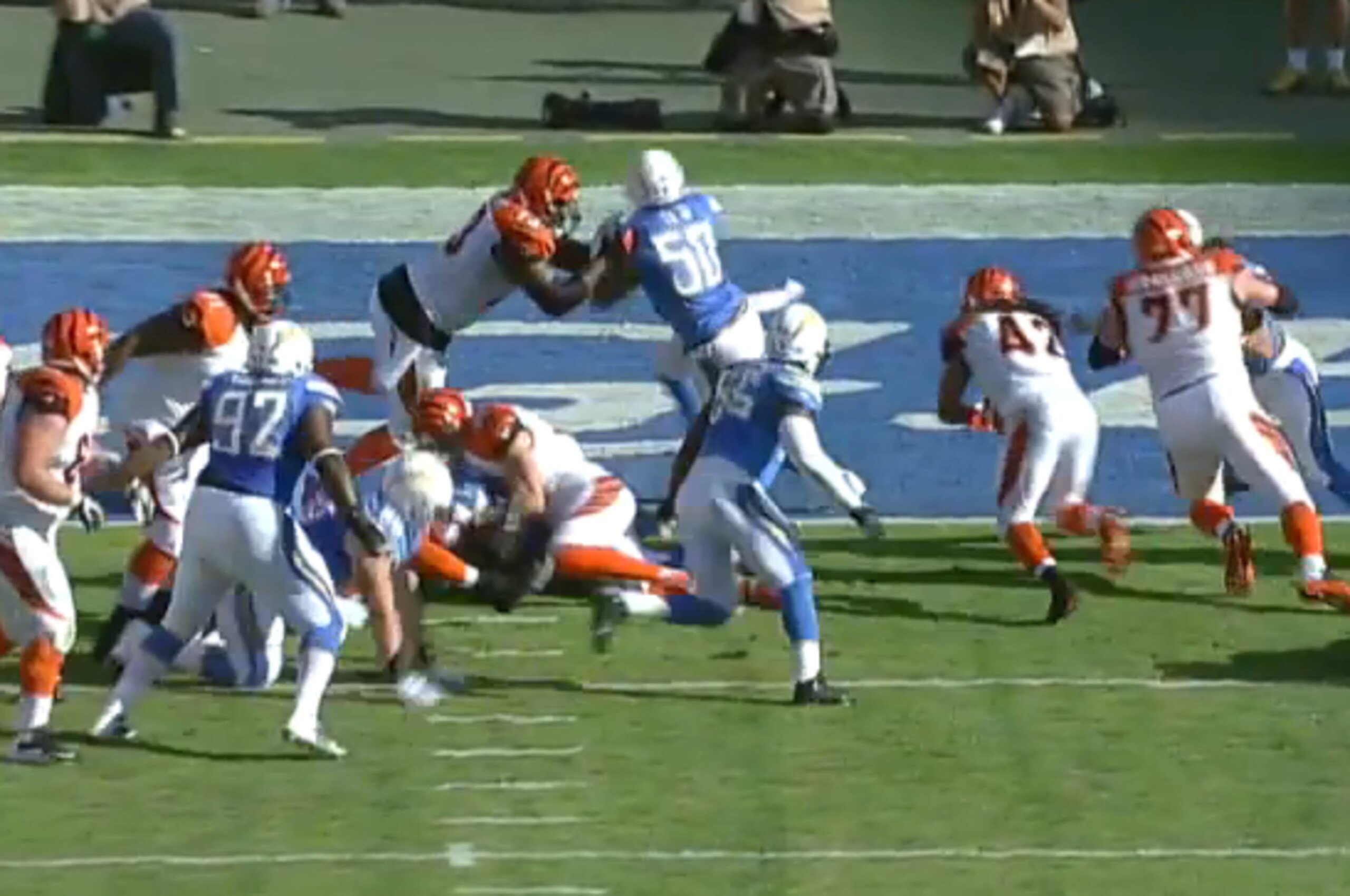
The counter blocking the other way helped split the defense, along with the two-tight end side collapsing the right edge. Whitworth's block widened the hole and Green-Ellis plunged through it for an easy four-yard touchdown run:
By combining the talents of Morris and Helu with some of these power concepts, Gruden can craft a ground scheme sure to give the Eagles fits. The Colts gained 169 yards on the ground in Week 2, averaging 4.4 yards per carry against the Philly defense.
Through two games, Washington's runners have averaged five yards per rush. Gruden must lean on this ground attack to pound the Eagles defense.
Consistent running will keep the offense out of long-yardage situations, which is when the Eagles love to attack with blitz pressure. More importantly, winning on the ground will control the clock and keep the big-play Philadelphia offense off the field.
Owning the time-of-possession battle against an offense that can score in two or three plays might seem like an exercise in futility. But the less time the Eagles have, the less margin for error there is on every play.
Forcing them to go for broke on every play will also suit what should be Haslett's defensive scheme of choice.
Play Three-Deep Zone to Box in Philadelphia's Weapons and Take Away the Deep Ball
Haslett has to rely on a loose and deep zone shell to try and limit the vertical strikes from Eagles quarterback Nick Foles. It would be safer for Haslett to deploy zone coverage at every level of his defense.
A three-deep shell is his best bet. That's the only way to box in the myriad of weapons the Eagles can unleash on defenses.
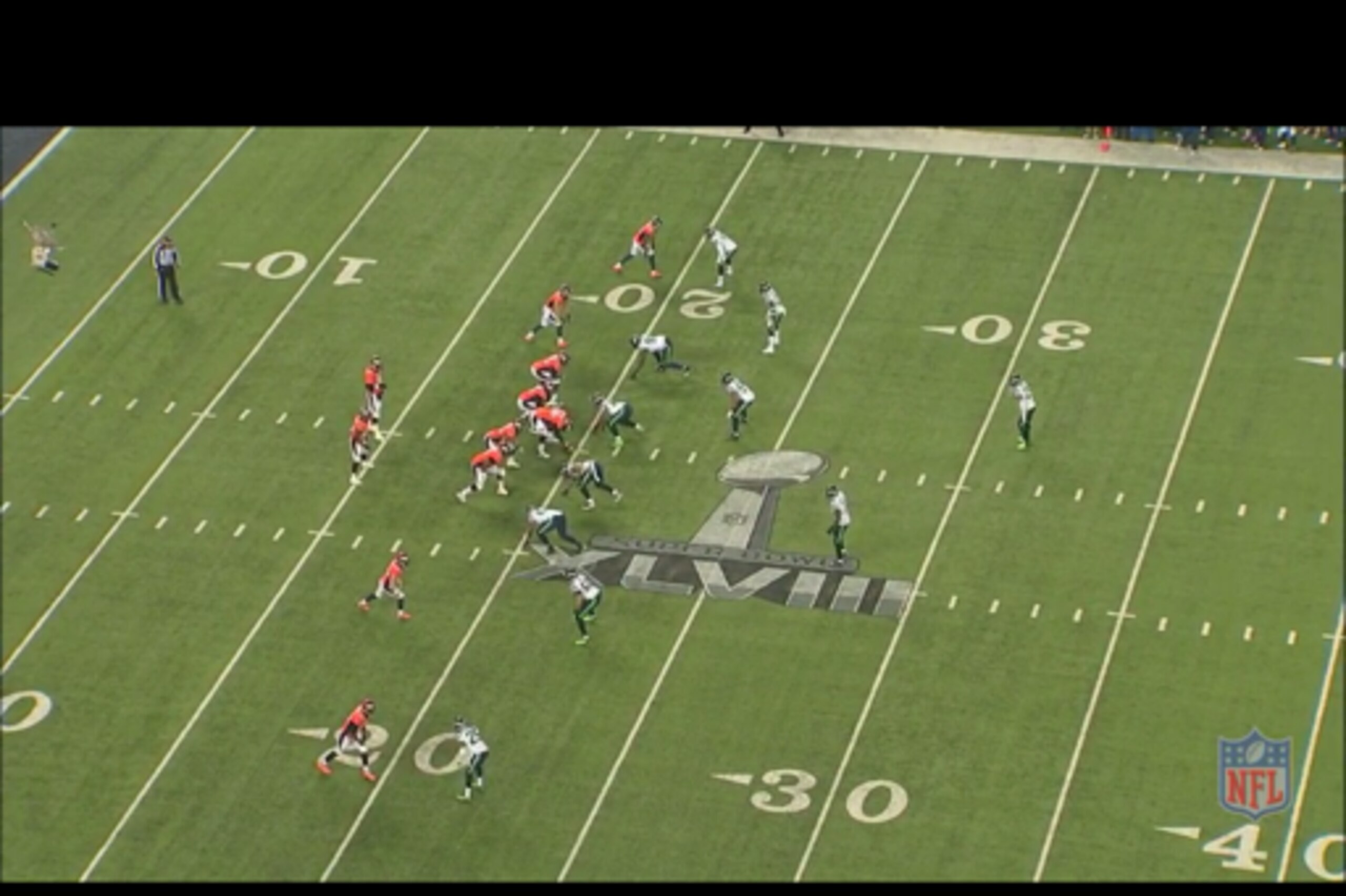
For a good example of the scheme at work, let's go back to the Seattle Seahawks shutting down the Denver Broncos in last season's Super Bowl.
On this particular play, the Seahawks were in a 4-2-5 nickel against Denver's four-receiver, one-back set:
As the play developed, Seattle's linebackers and defensive backs settled into a three-deep, four-under coverage structure:
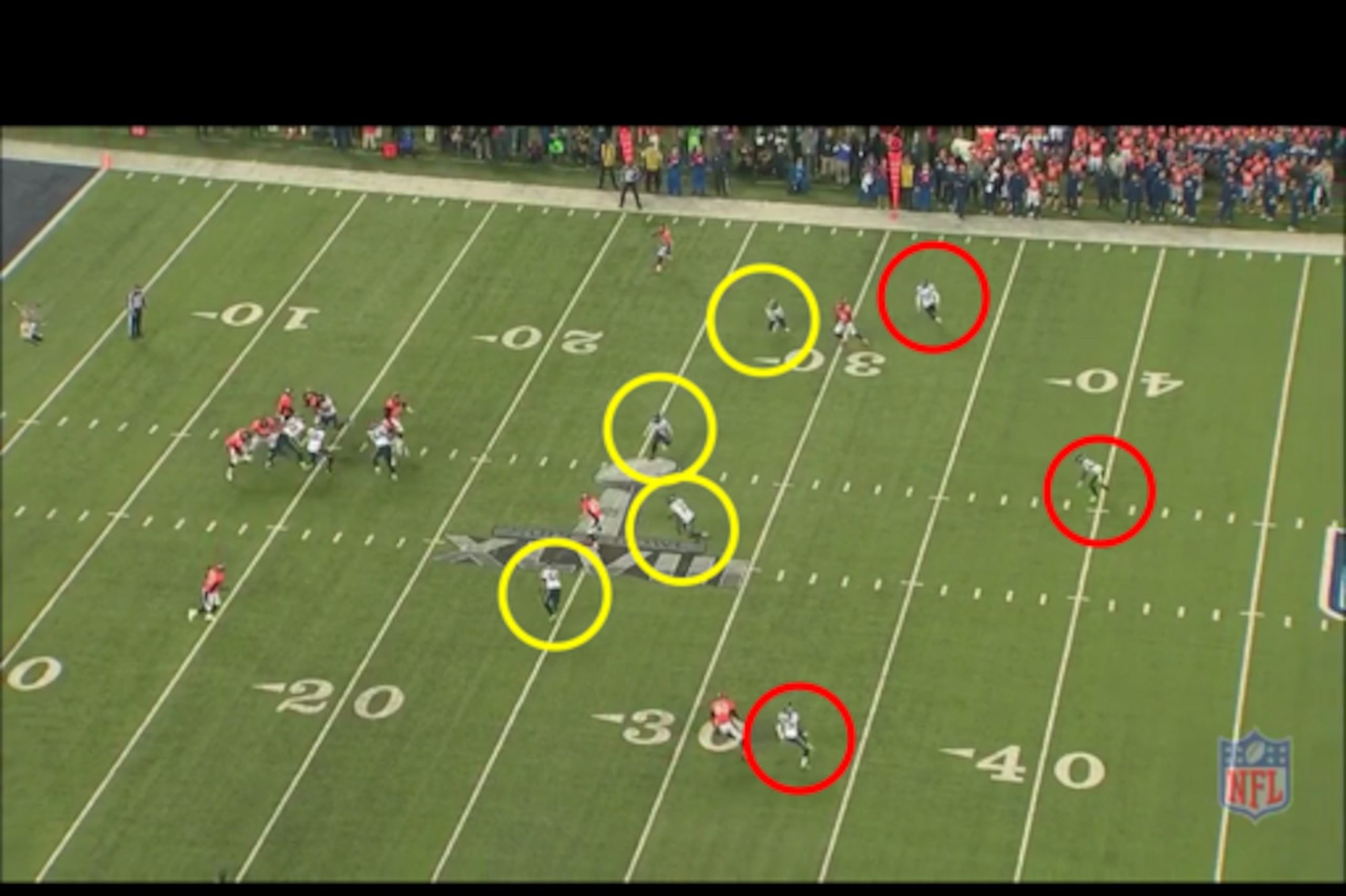
Notice how the vertical routes were taken away by the three deep defenders. Notice also how the Seahawks had a well-organized zone line across the middle to keep underneath receivers in front of the defense.
There really wasn't anywhere to throw where quarterback Peyton Manning could expect to gain significant yards.
But an offense is really disrupted when this level of coverage is combined with heavy pressure up front. The Seahawks were able to get the latter with a four-man rush:

The line swarmed around Manning as he threw, rushing him into a quick, short throw into the heart of the coverage:
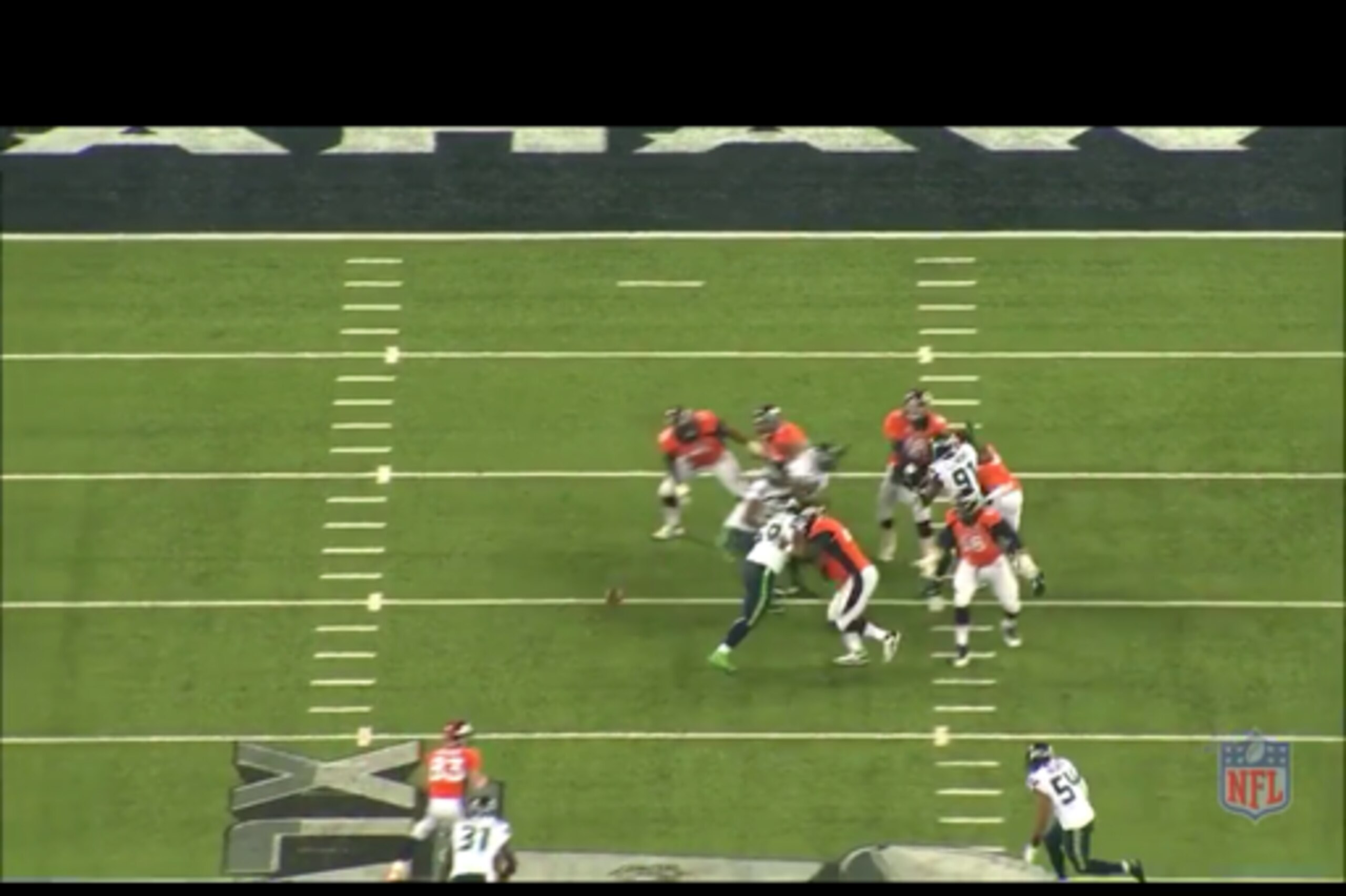
Manning's pass went to Wes Welker but gained only five yards because safety Kam Chancellor and the linebackers were waiting for him.

The Seahawks used a simple combination of rush and coverage to destroy arguably the most multiple offense in NFL history. Manning had more weapons than he knew what to do with in that game.
But targets such as Welker, tight end Julius Thomas and wideout Demaryius Thomas could do him no good because they were boxed in by the coverage. An offense like the one the Broncos operate doesn't succeed on five-yard plays.
Neither do the Eagles. Head coach Chip Kelly's lightning-fast scheme is predicated on its ability to strike quickly and gain yards in huge chunks.
Haslett has to use a smart and safe approach to slow the group down. He can use the same coverage scheme the Seahawks have made their mantra.
Haslett could even tweak things to include man coverage underneath, or simply play a Cover 1 look, with man coverage supported by a single-high safety. NFC East rivals the Dallas Cowboys and New York Giants used Cover 1 schemes to stifle the Eagles last season.
However, man coverage, particularly on underneath receivers, will be very risky against this season's Eagles. Kelly's 2014 offense is better than last year's vintage because he can turn bolt-of-lightning runner Darren Sproles loose as a receiver.
The matchbox-sized multi-purpose playmaker is a mismatch against linebackers in underneath coverage. So is tight end Zach Ertz, the second-year "move" pass-catcher who has become a clutch source of big plays.
Philly.com writer Jimmy Kempski noted this alarming statistic as proof of how dangerous Ertz is:
It's going to be pointless attempting to match up with pass-catchers of the quality of Ertz and Sproles underneath. The better option is to sit back and maintain good zone integrity to keep them in front of the defense.
Haslett knows he has a pass rush that can get to the often-static Foles. On the play detailed from the Super Bowl, the Seahawks used two wide-rushers, Cliff Avril and Chris Clemons. Think Ryan Kerrigan and Brian Orakpo for the Redskins.
Inside, the Seahawks deployed Clinton McDonald, a quick-twitch 3-technique rusher. Think the increasingly dominant Jason Hatcher.
Next to McDonald, end Michael Bennett shifted inside to tackle and caused havoc. That's just what rookie rush end Trent Murphy has been doing on Haslett's defense, something detailed in this article.
The Redskins can employ a host of front-line pass-rushers in a variety of combinations to slow down the Eagles passing game. The Washington defense logged 10 sacks in Week 2 without having to rely on the blitz. That's a good omen for facing Philadelphia.
If Haslett's unit can force Foles to work underneath, the D will take away the big plays through the air the Eagles have been killing teams with so far. That will be the real key to this game.
If the running game clicks and forces the Philadelphia offense to play right into a coverage scheme designed to take away the big play, Washington's complementary game plan can inspire a significant early-season divisional win.
All statistics via NFL.com.
All screen shots courtesy of CBS Sports, ESPN and NFL.com Game Pass.
.jpg?w=2560 "Rams Eagles Football")



.jpg?w=2560 "Mahomes' Wife Trolls Kubiak 💀")