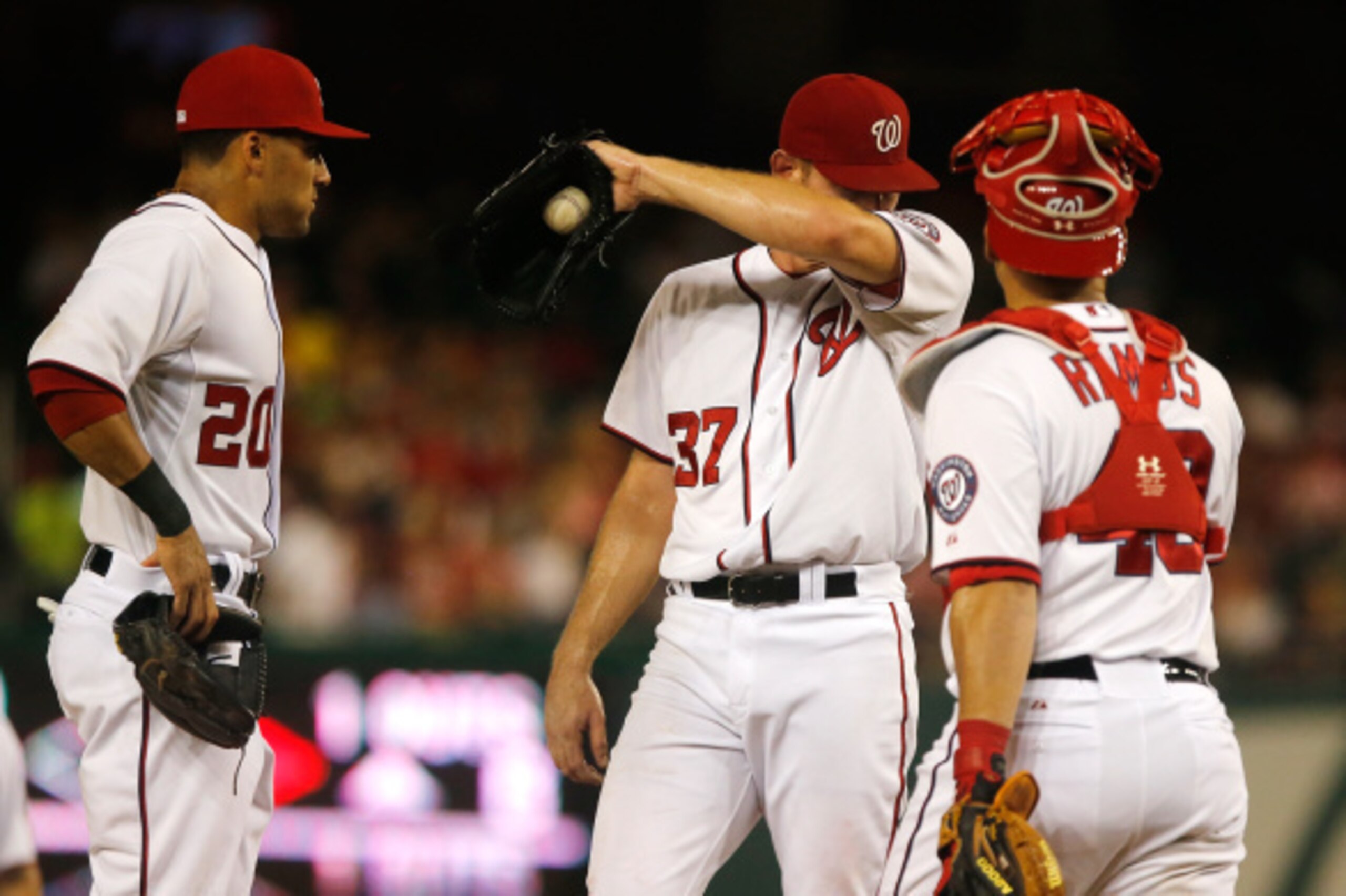

Ranking Each 2014 MLB Contender's Rotation, Lineup
With just over two weeks remaining in the MLB season, the list of teams in contention for a spot in the postseason has sufficiently solidified. That means that we can begin the process of ranking their lineups and starting rotations.
Now in order to be considered here, the contending club had to be within two games of the second wild card when play began on Wednesday.
That means that no matter how well they’ve played this season, the Miami Marlins are not included. The same goes for the Toronto Blue Jays, New York Yankees and Cleveland Indians.
To be sure, each of those teams could end up shocking folks around MLB and make the playoffs, but for the sake of conciseness, we will keep it to the criterion listed above.
Here are the starting rotation and lineup rankings for all 13 contending teams in advance of the 2014 MLB postseason.
Ranking Criteria and Methodology
1 of 28
Before getting started, it is important to take a look at the metrics we will use to rank each rotation and lineup.
Starting Rotation
- Fielding Independent Pitching (FIP): “FIP is an attempt to isolate the performance of the pitcher by using only those outcomes we know do not involve luck on balls in play or defense; strikeouts, walks, hit batters, and home runs allowed,” per FanGraphs. FIP is an indicator of future success as well, meaning that it is a more accurate representation of ability when compared with ERA.
- Wins Above Replacement (WAR): Composite ranking used to quantify a pitcher's value in comparison to a replacement available at Triple-A or on the bench. This is an especially valuable metric.
- Strikeout Rate (K/9): Keeping runners off base without the ball being put in play is the best way to limit the opponent. This metric is a difference-maker when looking at overall rotation composition.
- Strikeout-to-Walk Ratio (K/BB): This brings the number of walks into the conversation, while still keeping strikeouts involved in the rankings. The higher the number, the more dominant the group.
Lineup
- Weighted Runs Created Plus (wRC+): According to FanGraphs, “wRC+ is the most comprehensive rate statistic used to measure hitting performance because it takes into account the varying weights of each offensive action and then adjusts them for the park and league context in which they took place.” As a neutral metric, wRC+ levels the field.
- Offense (Off): This is a metric that combines ability at the plate and on the basepaths. In essence, it isolates a player’s value as it relates to generating runs. Unlike WAR, which takes defense into consideration, Off is a more accurate indicator of offensive worth.
- Isolated Power (ISO): This the difference between batting average and slugging percentage. In other words, how much pop does a lineup have?
- Weighted On-Base Average (wOBA): wOBA “combines all the different aspects of hitting into one metric, weighting each of them in proportion to their actual run value,” per FanGraphs.
We will evaluate all 13 contending teams on an individual basis. Thirteen points given to the club with the worst statistical measurement and one point for the team with the best.
The points will be totaled and listed in descending order. The lower the total, the better.
Additional Notes
2 of 28
There are a few other things to note.
First, if two rotations have the same cumulative score, FIP will be used to break the tie. For lineups, wRC+ will be used. They are the most specific measurements for each area.
Also, team statistics used for ranking purposes are accurate as of game time Tuesday, Sept. 9. Individual player stats are accurate as of game time Wednesday, Sept. 10.
Finally, this is a look back at each unit’s cumulative performance for the entire year. We will also identify trends or areas of concern for each as the season draws to a close.
No. 13 Lineup: Atlanta Braves
3 of 28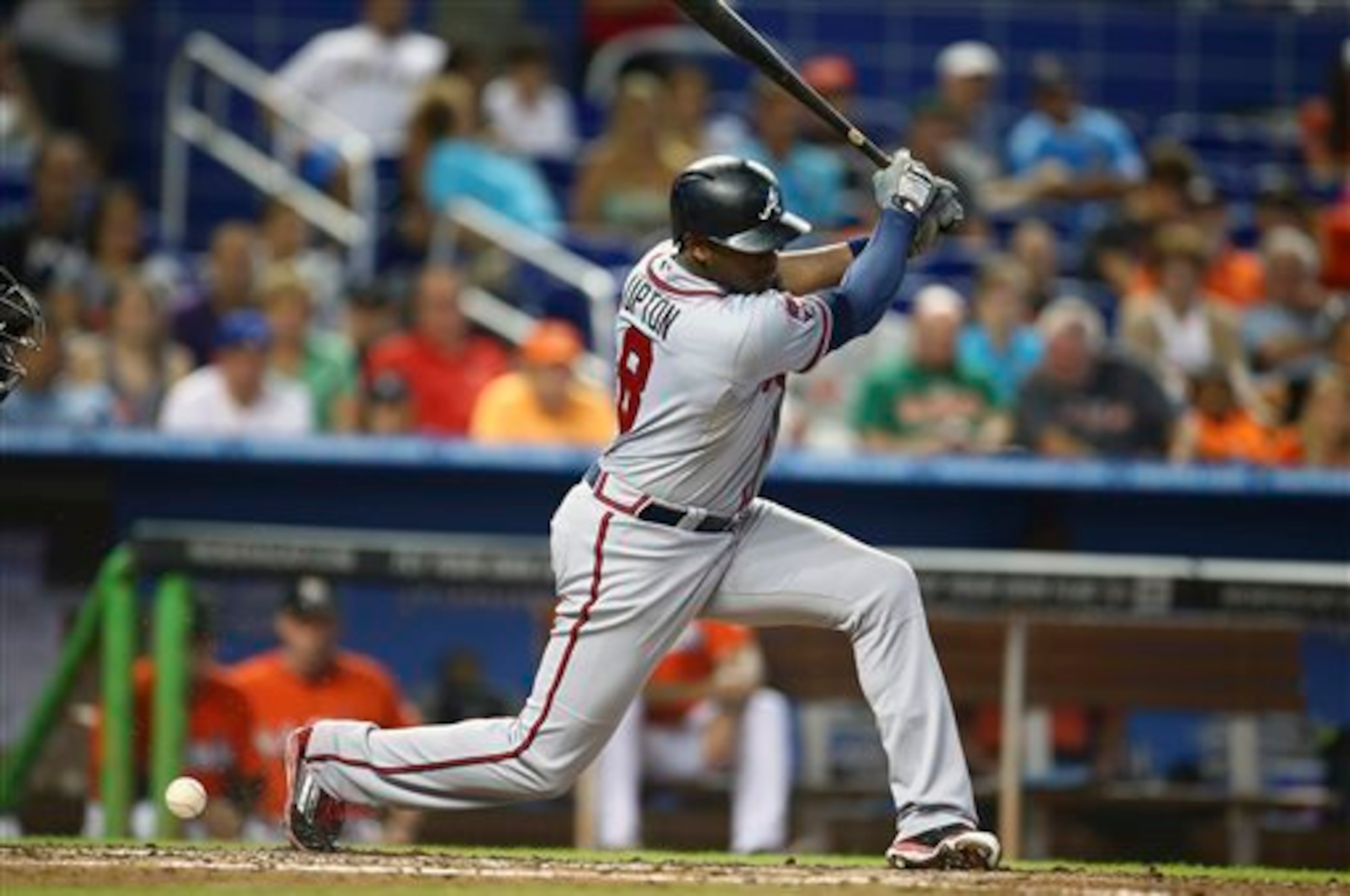
Metrics and Rank Among Contending Teams
| Off | -69.8 | 13 |
| wRC+ | 89 | 13 |
| ISO | .123 | 11 |
| wOBA | .300 | 13 |
| Cumulative | 50 |
Overview
In the month of August, the Atlanta Braves ranked 27th in MLB in runs scored. In September, the club had scored 19 runs and had been held scoreless three times in eight games going into action Wednesday.
That is not going to get them any closer to the second wild card, no matter how well the pitching staff does.
To be sure, there are bright spots.
Justin Upton, for example, has a .282/.358/.512 slash line with 27 home runs and 93 RBI. Freddie Freeman (.293/.389/.475), Jason Heyward (.273/.353/.393) and Evan Gattis (.270/.325/.507) are doing their fair share as well, but other than them, the production has been largely suspect.
Unfortunately, the struggles in August and September are nothing new and will limit their ability to advance should they make the postseason.
As David O’Brien from the Atlanta Journal-Constitution recently noted, "...would you feel good about this team’s chances against any NL playoff team in a best-of-five series? “
The answer has to be a resounding no.
And there isn’t much time to turn it around. Here’s hoping that Upton and company can get hot enough to carry the rest of the lineup down the stretch.


No. 13 Rotation: Baltimore Orioles
4 of 28
Metrics and Rank Among Contending Teams
| WAR | 8.4 | 10 |
| FIP | 4.24 | 13 |
| K/9 | 6.80 | 12 |
| K/BB | 2.26 | 13 |
| Cumulative | 48 |
Overview
All of the starters for the Baltimore Orioles have a sub-4.00 ERA. Three pitchers—Chris Tillman, Wei-Yin Chen and Bud Norris—have double-digit wins. That’s good, right?
Well, not necessarily. See if we take into account that manager Buck Showalter only has one pitcher—Kevin Gausman—with an FIP below 4.00, it becomes clear that the offense is largely carrying the club.
That will become problematic in the postseason when pitching typically rules the day. Now the bullpen has been fairly effective, but we are looking at starting rotations here, and the Orioles' success this season has been mixed.
Making matters worse for Showalter is the fact that the peripherals for each of his starters such as FIP, strikeouts per nine innings and walks per nine innings are almost identical. That is going to make for a tricky decision when it comes time to settle on a four-man rotation for the postseason.
Given his pedigree, however, fans have to have confidence in Showalter. And as MLB.com's Richard Justice wrote, "...if you measure October potential by a season's worth of performance, the O's are capable of playing with anyone."
No. 12 Lineup: Kansas City Royals
5 of 28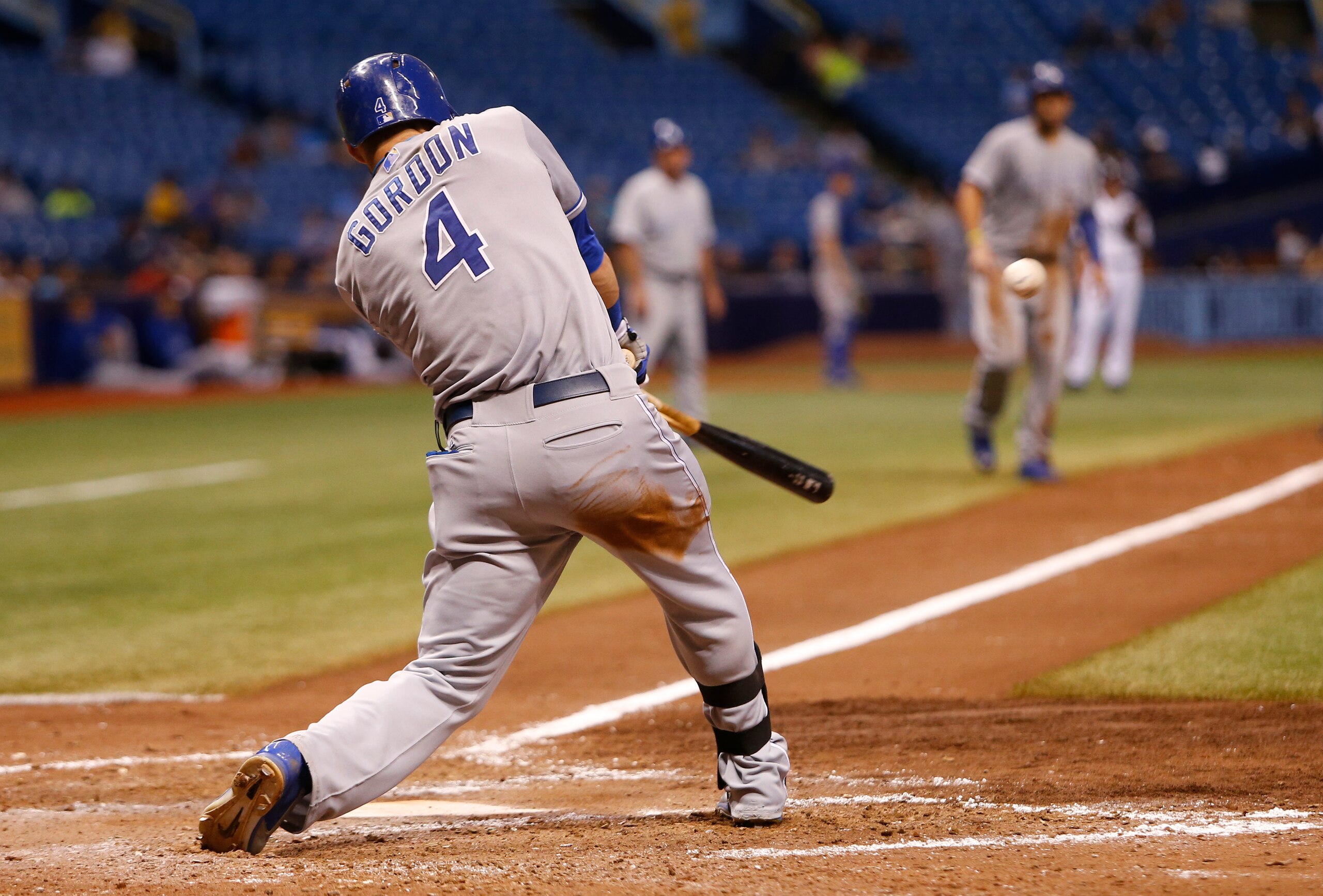
Metrics and Rank Among Contending Teams
| Off | -39.8 | 11 |
| wRC+ | 92 | 12 |
| ISO | .116 | 13 |
| wOBA | .304 | 11 |
| Cumulative | 47 |
Overview
Losers of two in a row and five out of their last 10 going into action on Wednesday, the Kansas City Royals control their own destiny.
That said, the offense needs to step up if they hope to hold off the Detroit Tigers. Having them do it is a different story altogether.
For example, Alex Gordon (.272/.354/.447) and Lorenzo Cain (.292/.329/.399) are the only two players with at least 300 plate appearances and positive offensive numbers, according to FanGraphs. That is not good.
It gets worse, though. Only Mike Moustakas (.209/.267/.374) and Gordon had the requisite number of plate appearances and an ISO over .150 when play began Wednesday. Simply put, the offense has not been up to the task most of the season.
To be fair, Josh Willingham has been on point since his acquisition from the Minnesota Twins, but the lineup has been going the wrong direction for some time. Vahe Gregorian from The Kansas City Star wrote that, “...it’s an aimless, numbing trend that stands to sabotage the stretch run if it lingers.”
Well said. Like the Atlanta Braves, the batting order could be the piece that prevents the Royals from making it to the postseason.
No. 12 Rotation: Pittsburgh Pirates
6 of 28
Metrics and Rank Among Contending Teams
| WAR | 5.5 | 13 |
| FIP | 3.94 | 11 |
| K/9 | 7.22 | 10 |
| K/BB | 2.34 | 12 |
| Cumulative | 46 |
Overview
The Pittsburgh Pirates' rotation picked a fine time to turn things around.
See, after struggling most of the season, the group took its pitch execution to a different level in August. Jeff Locke, Edinson Volquez and Gerrit Cole pitched to a sub-3.00 ERA, and both Francisco Liriano and Vance Worley turned in some exceptional performances.
True, the results weren’t always positive, and there was some fluctuation in a few of the peripherals, including FIP and walks per nine innings. On the whole, however, the group pitched well.
There are two other things to take into consideration.
First, Cole's return from the disabled list at the end of August gives manager Clint Hurdle another power arm. He needs to improve his control, but his ability to amass strikeouts will prove valuable should the club make it to the National League Division Series. And Liriano is pitching to a 3.21 ERA and a .213 batting average against over his last seven starts, according to Baseball-Reference.com.
The Pirates may not have a rotation as deep as a club like the Washington Nationals, but they have the arms they need. And if Cole and Liriano can continue to excel, the rotation should be fine.
No. 11 Lineup: Seattle Mariners
7 of 28
Metrics and Rank Among Contending Teams
| Off | -47.5 | 12 |
| wRC+ | 93 | 11 |
| ISO | .131 | 10 |
| wOBA | .301 | 12 |
| Cumulative | 45 |
Overview
For Seattle Mariners manager Lloyd McClendon, things are not as bad as the numbers indicate.
Yes, they have a negative offensive rating and are 7 percent below league average in wRC+, but things are trending in the right direction.
Dustin Ackley put together a .318/.351/.521 slash line with seven home runs, 33 RBI and 14 doubles in July and August, per Baseball-Reference.com. September has been a disappointment so far, and he will miss some time with bone spurs in his left foot, per Jayson Jenks from The Seattle Times, but he should return shortly.
Robinson Cano (.320/.386/.458, 12 HR, 75 RBI) and Kyle Seager (.276/.343/.474, 23, 88) have been on point all season. And considering how little protection they’ve had in the lineup the majority of the year, those are exceptional metrics.
And let’s not overlook how impactful Michael Saunders' return will be. He provides the ability to get on base, and he can drive the ball, completely changing the nature of the batting order.
No doubt, there are holes. Designated hitter remains a problem, and the production at shortstop leaves much to be desired, but things aren’t as bad as the data implies.
There can be no letdown from any of the above-mentioned players, however. If there is, advancing in the postseason will be a tall task indeed.
No. 11 Rotation: Milwaukee Brewers
8 of 28
Metrics and Rank Among Contending Teams
| WAR | 7.0 | 12 |
| FIP | 4.13 | 12 |
| K/9 | 6.94 | 11 |
| K/BB | 2.73 | 8 |
| Cumulative | 43 |
Overview
While the cumulative data isn’t impressive, there are a couple of reasons to be optimistic that the Milwaukee Brewers' rotation can do its share over the final weeks of the regular season.
For starters, Mike Fiers is “pitching beautifully,” per MLB.com’s Adam McCalvy. In six starts since entering the rotation on Aug. 9, he is 5-1 with a 1.94 ERA, 2.35 FIP and is averaging 9.94 strikeouts every nine innings, per splits at FanGraphs.
Matt Garza’s return is another positive sign. Sure he has a 9.00 ERA and .565 batting average on balls in play against him in September, but his FIP for the month sits at 2.98, via FanGraphs. And since that indicates what he should be doing moving forward, there is reason for optimism.
It must be noted here that Kyle Lohse and Yovani Gallardo have been shelled this month. Both are walking more than four batters every nine innings and have a double-digit ERA. True, Lohse had only made one start going into action on Wednesday, but he’d given up at least four earned runs in four of his last six starts.
All told, the Brewers are going the wrong direction, losing nine games in the standings since Aug. 17. It is imperative that the guys who have been pitching well continue to do so, while Lohse and Gallardo find a way to get the ball over the plate.
No. 10 Lineup: St. Louis Cardinals
9 of 28
Metrics and Rank Among Contending Teams
| Off | -27.1 | 10 |
| wRC+ | 97 | 9 |
| ISO | .119 | 12 |
| wOBA | .311 | 9 |
| Cumulative | 40 |
Overview
The bad news is that on the season, the St. Louis Cardinals offense does not have an impressive collection of statistics.
The good news is that for last two-plus months, the batting order has been raking up—by their standards, anyway. According to FanGraphs, the lineup has put together a .265/.335/.380 slash line, scored 202 runs and has a .320 wOBA along with a 103 wRC+ so far in the second half.
And it is the offense that has been the driving force behind their recent surge in the standings.
Matt Holliday, Peter Bourjos and Jon Jay, for example, all have an OPS over .850 and a wRC+ over 140 in the second half, per FanGraphs. Jhonny Peralta has an .827 OPS with a .165 ISO over that same stretch. It really is remarkable.
And with the return of Yadier Molina from the disabled list, manager Mike Matheny has a stable of bats to turn to. The wheels could fall off at any moment, of course, but for now the lineup seems to be up to the task.
No. 10 Rotation: St. Louis Cardinals
10 of 28
Metrics and Rank Among Contending Teams
| WAR | 9.3 | 9 |
| FIP | 3.72 | 7 |
| K/9 | 7.27 | 9 |
| K/BB | 2.45 | 11 |
| Cumulative | 36 |
Overview
Although they rank in the bottom half in every measurable, the St. Louis Cardinals' rotation is in fairly good shape.
See, with Michael Wacha's return from the disabled list, they now have three starters—Adam Wainwright, Lance Lynn and Wacha—with and ERA under 3.00 and an FIP at 3.20 or lower. That is as solid as they come.
The back end of the rotation is concerning. Shelby Miller, for example, has a 4.66 FIP and is walking 3.80 batters every nine innings. And while John Lackey was brought in for his talent and postseason experience, he was pitching to a 4.87 ERA and has a .326 batting average on balls in play against before taking the mound Wednesday.
That said, manager Mike Matheny has guys such as Carlos Martinez and Justin Masterson to turn to in a pinch, although the latter will be used as a last resort and was recently demoted to the bullpen.
Another thing to take into consideration is that, while the Cardinals have surged past the Milwaukee Brewers into first place in the NL Central, Lynn was the only starter in August to have an ERA below 4.23 and make more than one start, per FanGraphs.
Here’s hoping Wainwright and company can tighten things up before the end of the season.
No. 9 Lineup: Washington Nationals
11 of 28
Metrics and Rank Among Contending Teams
| Off | 0.8 | 8 |
| wRC+ | 98 | 8 |
| ISO | .141 | 7 |
| wOBA | .315 | 7 |
| Cumulative | 30 |
Overview
Led by Jayson Werth, Anthony Rendon and Adam LaRoche, the Washington Nationals' lineup is capable of doing very big things.
Unfortunately, there are guys in the batting order who are too inconsistent. Bryce Harper, for example, is one of the most talented young players in MLB, but he is striking out 28.0 percent of the time, and he only has one stolen base.
Ian Desmond is another guy who can carry the lineup, but he also does enough to impede it. Look no further than his 22 home runs and 83 RBI for proof that he has value, but his 29.0 percent strikeout rate and .303 OBP drag the team down at times.
All told, the Nationals offense is inconsistent, which is something that Peter Hailey from CSN Washington highlighted at the end of last month. Comparing their offense to that of the Baltimore Orioles, Hailey wrote that “...the difference between the two teams is clear: one offense seems to carry the momentum gained from big wins to their next game, while the other has trouble producing that well again.”
That is something that has to change. After all, every postseason victory is a big one, and if they can’t carry the success into the next game, trouble awaits.
No. 9 Rotation: Kansas City Royals
12 of 28
Metrics and Rank Among Contending Teams
| WAR | 11.8 | 4 |
| FIP | 3.88 | 9 |
| K/9 | 6.50 | 13 |
| K/BB | 2.65 | 9 |
| Cumulative | 35 |
Overview
They may not have the flashiest rotation in MLB, but the Kansas City Royals get the job done—for the most part.
James Shields, Jason Vargas and Yordano Ventura all have an ERA and an FIP solidly in the 3.00s. While not league-leading metrics by any means, they are certainly solid enough.
Shields, in particular, has a stat line that is unassuming, yet rather remarkable. Going into action Wednesday, he was averaging 7.1 strikeouts per nine innings, he had a 45.6 percent ground-ball rate and he had a 3.69 FIP in 30 starts. Individually, those are nice numbers, but as a whole, they are fantastic.
There are weak spots, of course. Jeremy Guthrie has given up at least four earned runs in four out of his last six starts, per FanGraphs, and Danny Duffy and Ventura are walked more than three batters every nine innings. Those are not the type of statistics that usually bode well come the playoffs.
All told, the rotation only has to pitch well enough to hand a lead to the bullpen. So far this season, it has been quite good at holding up its end of the bargain.
No. 8 Lineup: San Francisco Giants
13 of 28
Metrics and Rank Among Contending Teams
| Off | 15.8 | 6 |
| wRC+ | 103 | 5 |
| ISO | .139 | 8 |
| wOBA | .311 | 9 |
| Cumulative | 28 |
Overview
The San Francisco Giants have become a club built around the lineup. It felt strange typing that as they have long relied on solid pitching and key contributions from select offensive players, but this season is turning out differently.
As MLB.com’s Tracy Ringolsby noted at the beginning of the month, “an oft-overlooked offense has become the most explosive in baseball in recent days, and it has been the catalyst for a revival of a franchise that was in a fast fade in the postseason battle in mid-August”
Buster Posey has been a beast lately, posing a .366/.400/.627 slash line with eight home runs, 27 RBI and seven doubles since the beginning of August, per FanGraphs. Pablo Sandoval has been quite good himself over the same stretch, slashing out at .314/.351/.467 with four home runs, 23 RBI and seven doubles of his own.
And let’s not overlook the play of Joe Panik (.327/.369/.397) and Hunter Pence (.294/.347/.474). There are more players of course, but those four have turned things on lately.
If they can maintain their current clip, the Giants are in good shape. If they revert to their production level in July when they hit .229 with a .620 OPS as a team, however, success in October is very much in jeopardy.
No. 8 Rotation: Oakland A's
14 of 28
Metrics and Rank Among Contending Teams
| WAR | 9.7 | 8 |
| FIP | 3.89 | 10 |
| K/9 | 7.46 | 8 |
| K/BB | 2.76 | 7 |
| Cumulative | 33 |
Overview
Among others, Oakland A’s general manager Billy Beane added Jeff Samardzija, Jon Lester and Jason Hammel via trade during the season in an effort to give his club a rotation capable of shutting down the best lineups in the American League.
For the most part, the results have been as expected. Sure, Hammel is struggling to a 7.14 ERA, but Samardzija and Lester have largely lived up to expectations.
That said, they have five starters who aren’t exceptional right now. Even Lester’s 2.54 ERA is offset by his 3.31 FIP. Not that a 3.31 FIP is bad, of course, it’s just that it is almost a run higher than his ERA, and therefore it must be taken into consideration.
And across the rotation, there are a couple of disturbing trends that have developed during the season’s second half. The unit's ERA, for example has gone from 3.13 to 4.20, and its opponent’s slash line has jumped from .234/.296/.359 to .247/.304/.392, per splits at Baseball-Reference.com.
The A’s are trying to solidify a spot in the postseason. They need the starters to step up.
No. 7 Lineup: Milwaukee Brewers
15 of 28
Metrics and Rank Among Contending Teams
| Off | -21.1 | 9 |
| wRC+ | 96 | 10 |
| ISO | .152 | 2 |
| wOBA | .316 | 6 |
| Cumulative | 27 |
Overview
The Milwaukee Brewers can hit a baseball a long way and can reach base with the best of them, as evidenced by the ISO and wOBA listed above. Unfortunately, they can’t find a way to generate enough runs when they need them most.
There are several reasons for this, and they all relate to their ability to hit with runners in scoring position (RISP).
Overall, the Brewers' lineup has a .262/.334/.408 slash line with RISP. While that metric isn’t terrible, the numbers are concerning when we dig a bit deeper.
With runners on first and third and two outs, for example, they are hitting .216 with a .647 OPS. With two outs and runners on first and second, they have a .207 batting average and are slugging a meager .288, per splits at Baseball-Reference.com.
To be sure, the club is more effective at driving in runs from second and third with less than two outs, but clutch hitting will determine how far this team gets in the postseason—if they make it at all.
As it stands, the Brewers are in a tailspin right now. Jonathan Lucroy, Carlos Gomez and the rest of the lineup needs to do a better job in situational hitting if they hope to find a way back into a wild-card spot.
No. 7 Rotation: Seattle Mariners
16 of 28
Metrics and Rank Among Contending Teams
| WAR | 11.2 | 6 |
| FIP | 3.80 | 8 |
| K/9 | 7.50 | 7 |
| K/BB | 2.83 | 6 |
| Cumulative | 27 |
Overview
Led by Felix Hernandez (14-5, 2.12 ERA, 2.58 FIP) and Hisashi Iwakuma (14-6, 2.97, 3.15), the Seattle Mariners arguably have the one of the most feared rotations in MLB.
And it’s not just those two.
James Paxton has been sensational since returning from the disabled list, compiling a 1.76 ERA with 25 strikeouts in 41.0 innings pitched, per FanGraphs. He is walking 3.07 batters over that same stretch, but he has been able to limit the damage to this point.
In fact, Paxton may be the missing piece, according to manager Lloyd McClendon. From The Seattle Times’ Jayson Jenks:
""I think this kid has greatness written all over him,’ McClendon said. ‘He just needs to stay healthy."
McClendon also said Paxton could be the "glue" for the Mariners’ rotation. The fifth spot in the starting rotation hasn’t given the Mariners much this season, and McClendon views Paxton as a quality bridge between the back end of the rotation and the team’s three-headed monster of Felix Hernandez, Hisashi Iwakuma and Chris Young.
"
Strong words. If McClendon is right, however, and the Mariners can find their way into the American League Division Series, the AL could be in serious trouble.
No. 6 Lineup: Oakland A's
17 of 28
Metrics and Rank Among Contending Teams
| Off | 21.6 | 5 |
| wRC+ | 103 | 5 |
| ISO | .143 | 5 |
| wOBA | .315 | 7 |
| Cumulative | 22 |
Overview
Per splits at FanGraphs, the Oakland A’s hit .222 with a pedestrian .644 OPS, striking out 18.9 percent of the time as a team in August.
Because of the lack of production from what was once one of the most prolific offenses in the game, general manager Billy Beane acquired designated hitter Adam Dunn from the Chicago White Sox at the August waiver trade deadline.
It is a move that is paying off to this point.
In seven games going into action Wednesday, Dunn was slashing out at .286/.348/.571 and had two home runs and five RBI. Whether or not he can maintain that pace for the rest of the season is an entirely different matter, but Dunn is doing exactly what manager Bob Melvin needs him to.
And after an extended slump, Josh Donaldson may be on track following a 5-for-6 effort with four RBI and two runs scored against White Sox left-hander John Danks on Tuesday evening.
Either way, the A’s certainly have the talent and guile to make an offensive comeback before the postseason starts. Once there, it will be imperative that they execute and play their unique brand of baseball.
No. 6 Rotation: Los Angeles Angels
18 of 28
Metrics and Rank Among Contending Teams
| WAR | 10.6 | 7 |
| FIP | 3.68 | 6 |
| K/9 | 7.77 | 3 |
| K/BB | 2.60 | 10 |
| Cumulative | 26 |
Overview
We all know the story. Two of the top three pitchers based on WAR—Garrett Richards and Tyler Skaggs—are no longer in the Los Angeles Angels' rotation.
With the offense producing at such a high level, however, the effects of their loss hasn’t really hurt. To be sure, it helps that Hector Santiago is 2-0 with a 2.20 ERA over his last six starts, and Matt Shoemaker is 5-0 with a 1.31 ERA in his last six outings, but the unit is still putting up respectable numbers.
Jered Weaver has been a mess recently, but C.J. Wilson has actually been pitching respectably. Fact is, he's only given up more than three earned runs once in his last six starts, per game logs at FanGraphs. All told, the Angels have a rotation that is good enough to not get in the way of the offense.
The problem is that while all of this is fine for the regular season, the postseason is dominated by pitching. And without enough of it, the run that manager Mike Scioscia’s club will go on could be a short one.
No. 5 Lineup: Los Angeles Dodgers
19 of 28
Metrics and Rank Among Contending Teams
| Off | 32.2 | 4 |
| wRC+ | 105 | 4 |
| ISO | .135 | 9 |
| wOBA | .320 | 5 |
| Cumulative | 22 |
Overview
After slashing out at .262/.323/.366 with only 17 home runs and a 96 wRC+ in August, the Los Angeles Dodgers needed to turn things around in a hurry. They’ve done just that, posting a .262/.331/.422 slash line with 12 long balls and a 115 wRC+ in only eight September games.
Monthly splits aside, the Dodgers are one deep offensive club. Led by Yasiel Puig, Matt Kemp, Hanley Ramirez and Adrian Gonzalez, they have nine players with over 200 plate appearances, a wRC+ of at least 100 and an OPS over .700, via FanGraphs.
That is a rather impressive accomplishment.
Now, it must be noted that Puig has struggled mightily since the beginning of September, slashing out at .182/.333/.182 with no home runs and no doubles in 27 trips to the plate, per Baseball-Reference.com. And if he isn’t up to the challenge in the two-hole, the entire dynamic of the lineup changes.
For his part, manager Don Mattingly hasn’t really discussed the matter with his right fielder. “Right now, he knows what’s going on,” he said, via the Orange County Register’s Bill Plunkett. Mattingly did drop Puig in the batting order this week, however, in an attempt to shake things up.
We shall see how that plays out, but for now, the Dodgers have the fifth-best lineup among contending clubs.
No. 5 Rotation: San Francisco Giants
20 of 28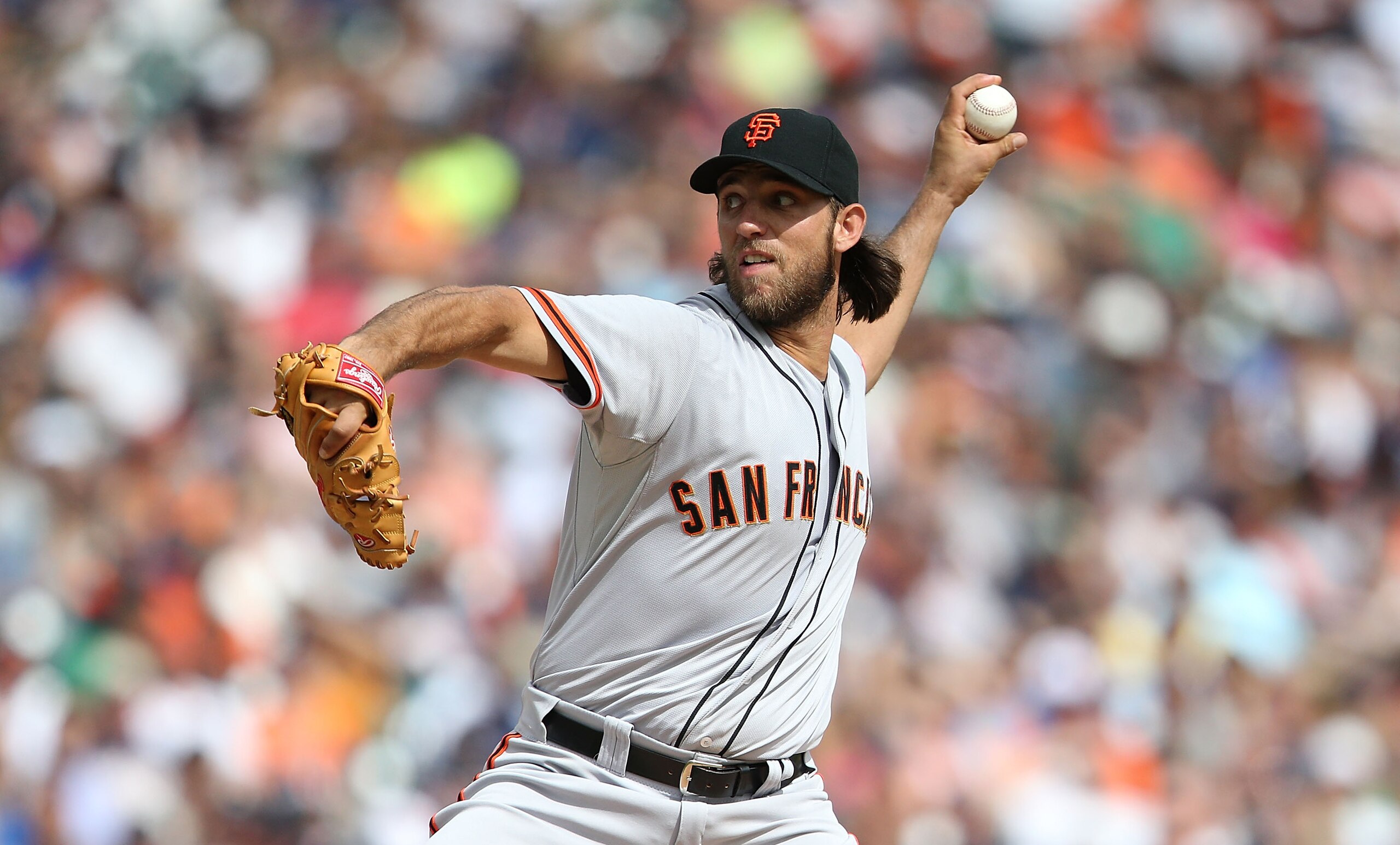
Metrics and Rank Among Contending Teams
| WAR | 7.2 | 11 |
| FIP | 3.65 | 5 |
| K/9 | 7.52 | 6 |
| K/BB | 3.18 | 3 |
| Cumulative | 25 |
Overview
The San Francisco Giants rotation was an absolute mess as the end of July approached, so general manager Brian Sabean traded for right-hander Jake Peavy.
Only Peavy—who is 4-4 with a 2.36 ERA and a 2.99 FIP since his acquisition—couldn’t solve the problems on his own. Tim Lincecum continued to struggle, earning a demotion to the bullpen at the end of August. Matt Cain remains entirely hittable and Ryan Vogelsong has a 5.40 ERA and a 5.91 FIP over his last five starts, per FanGraphs.
Thankfully, the Giants still have Madison Bumgarner (17-9, 3.02 ERA, 2.94 FIP) and a resurgent Tim Hudson (9-10, 3.12 ERA, 3.51 FIP). Hudson, in particular, has been quite good, surrendering three earned runs or fewer in eight of his last 10 starts.
And we’d be remiss if we overlooked Yusmeiro Petit. Since sliding into the rotation following the demotion of Lincecum, he has responded by sandwiching two one-run efforts around a forgettable six-run implosion against the Colorado Rockies. All things considered, though, Petit is pitching well.
As with every other team, we shall see what the future has in store, but the Giants rotation finally has some consistency.
No. 4 Lineup: Baltimore Orioles
21 of 28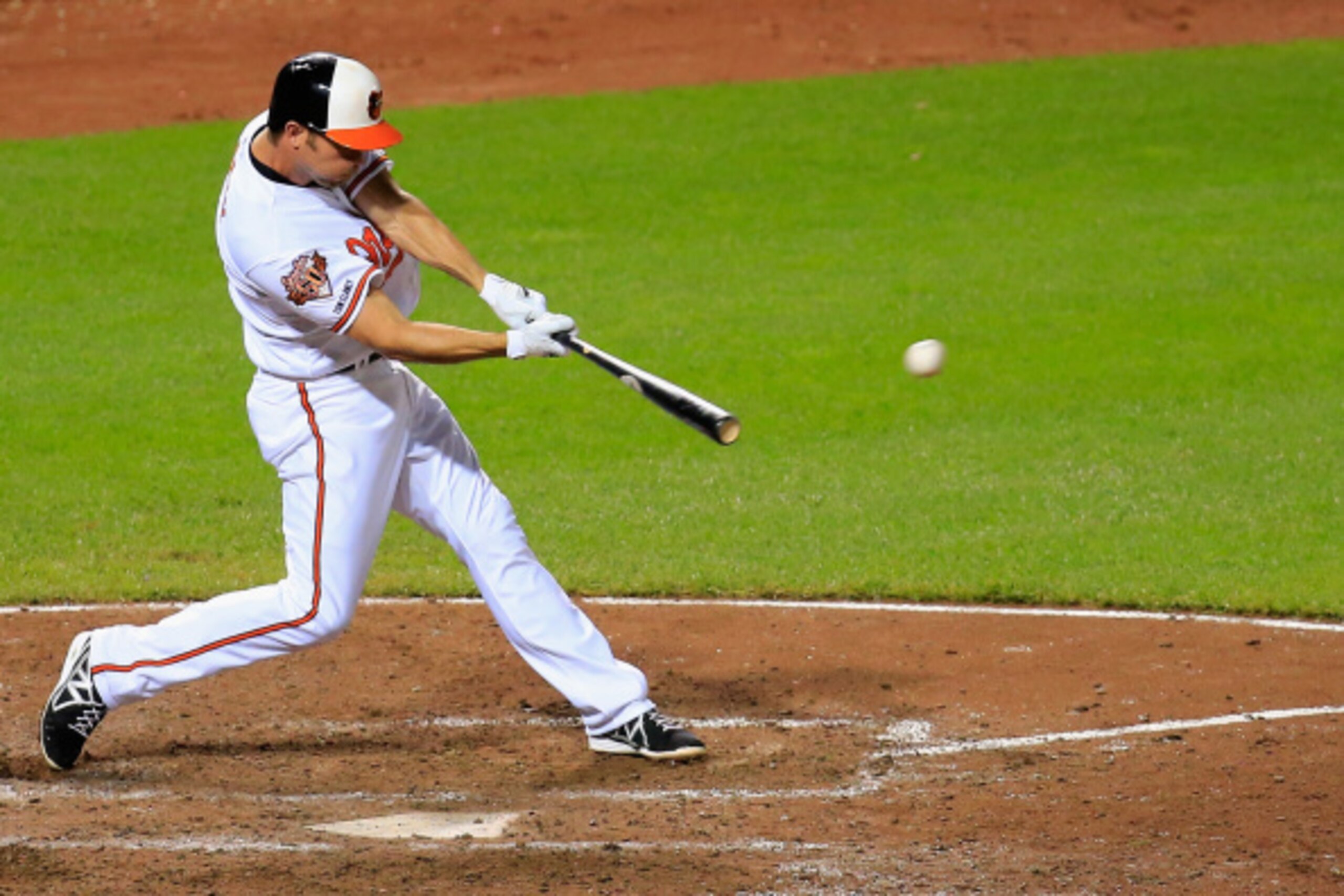
Metrics and Rank Among Contending Teams
| Off | 13.5 | 7 |
| wRC+ | 103 | 5 |
| ISO | .164 | 1 |
| wOBA | .322 | 4 |
| Cumulative | 17 |
Overview
The Baltimore Orioles are ripping the cover off the baseball this season. There is no other way to describe how impressive they have been at the plate.
Nelson Cruz had 39 home runs and .862 OPS going into action Wednesday. Steve Pearce had an .800 OPS and 16 home runs in only 332 plate appearances. And there is no way we can overlook the job center fielder Adam Jones has done this season.
All told, the Orioles have seven players with double-digit home runs and five with at least 20 doubles. While the pitching staff has done quite well since Aug. 1, there is no mistaking the fact that the offense rules the day.
One thing to keep an eye on is the health of shortstop J.J. Hardy. According to Dan Connolly from The Baltimore Sun, Hardy received a cortisone injection in his back and noted that “the club believes he could return to the starting lineup as early as Friday.”
That is good news indeed.
No. 4 Rotation: Atlanta Braves
22 of 28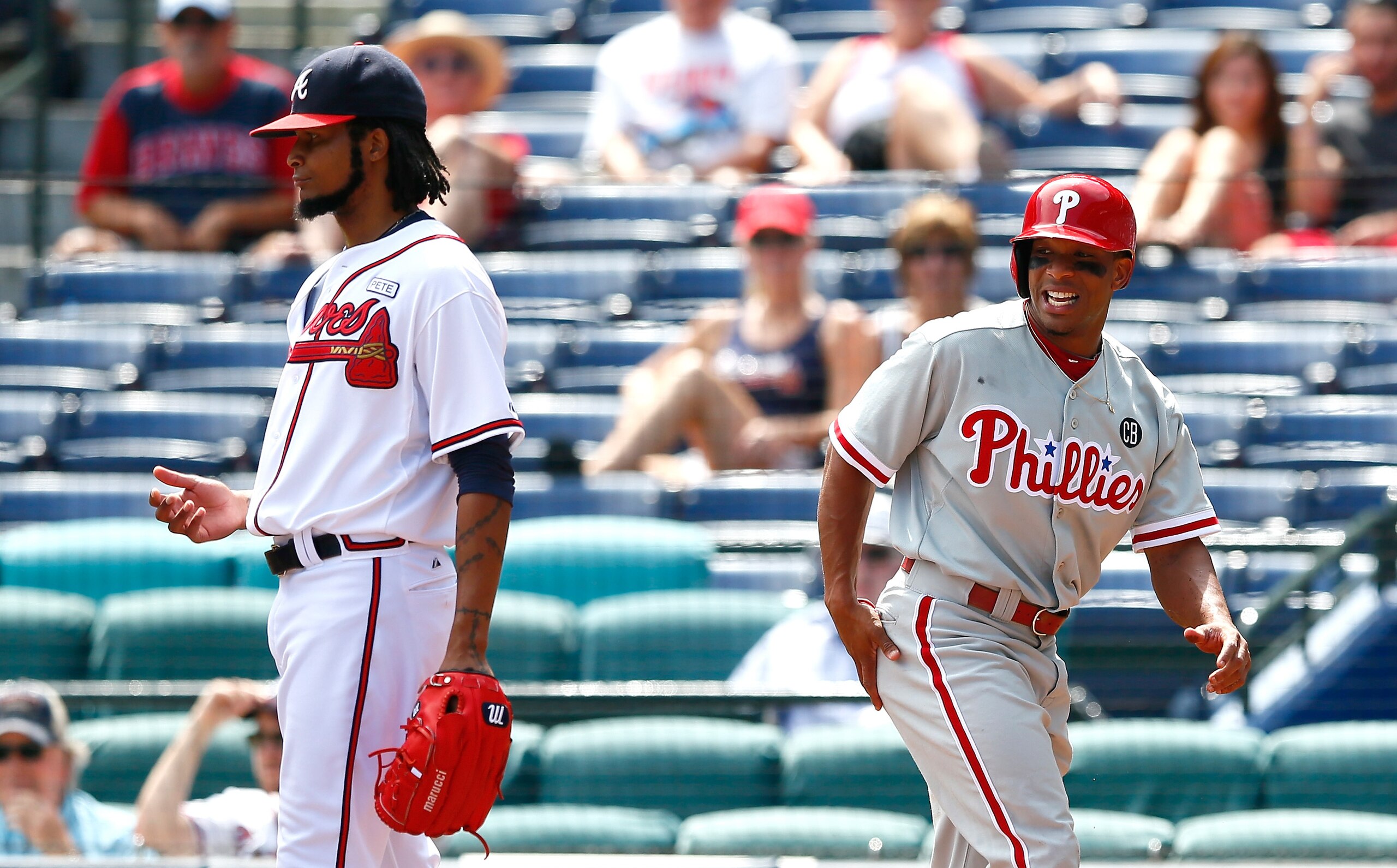
Metrics and Rank Among Contending Teams
| WAR | 11.3 | 5 |
| FIP | 3.58 | 4 |
| K/9 | 7.60 | 5 |
| K/BB | 2.91 | 5 |
| Cumulative | 19 |
Overview
For as inconsistent as their lineup is, the Atlanta Braves have a rotation that won’t quit. And as Dayn Perry from CBS Sports noted at the end of last month, it is “something of a low-grade miracle that we're in late August and doling out praise for Atlanta's starting pitchers.”
Perry is right.
As he noted, the Braves lost 40 percent of the projected Opening Day rotation during spring training when Kris Medlen and Brandon Beachy were lost to Tommy John surgery. Mike Minor opened the season on the DL, and multiple pitchers have had to step in to fill the void.
Through it all, though, the rotation has been consistent.
Julio Teheran, Ervin Santana, Aaron Harang and Alex Wood all have an FIP in the 3.00s and at least a 2.0 WAR. None of them are particularly exceptional at any one thing, but they are steady.
That said, they’d better turn things around. In eight September games going into action Wednesday, the starters were 1-6 with a 5.36 ERA and a .314/.361/.432 slash line against, per Baseball-Reference. That is not going to get them to the postseason.
No. 3 Lineup: Pittsburgh Pirates
23 of 28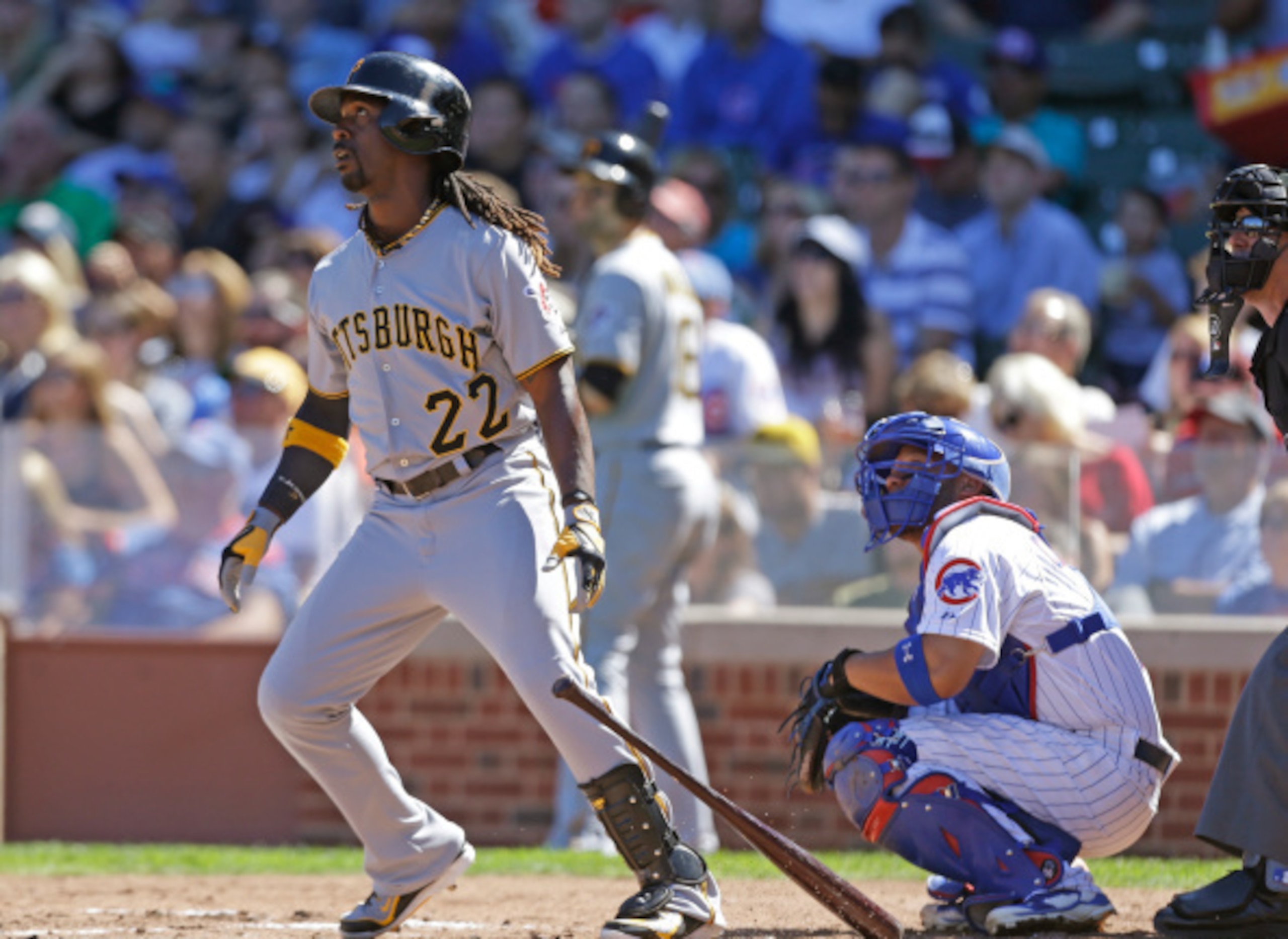
Metrics and Rank Among Contending Teams
| Off | 44.5 | 3 |
| wRC+ | 107 | 3 |
| ISO | .143 | 5 |
| wOBA | .323 | 2 |
| Cumulative | 13 |
Overview
With Andrew McCutchen and Josh Harrison at the wheel, the Pittsburgh Pirates offense is almost uncontrollable.
Consider: At minimum, the lineup has scored 111 runs with 40 doubles, 21 home runs and a .738 OPS every month since April, per Baseball-Reference. That is an extended run of excellence.
And they don’t appear to be slowing down. When play began Wednesday, they’ve already hit 21 doubles, 10 home runs and have scored 37 runs in only eight September contests.
To say that it is a collective endeavor would be an understatement.
McCutchen, Harrison, Starling Marte and Russell Martin all have a WAR over 3.0 and a wRC+ number over 125. Jordy Mercer and Neil Walker have combined to hit 30 home runs, drive in 114 and belt 46 doubles, making them one of the most productive middle infield tandems in MLB.
One concern is how well they will fare against a club like the Washington Nationals, whom they could face if they make it out of the Wild Card Round.
If we use their production this season as a barometer, it does not look good. All told, they have a .242 batting average with a .627 OPS and have scored a total of 24 runs in seven games against them.
First things first, though.
The Pirates have to hold on to their lead for the second wild-card spot.
No. 3 Rotation: Detroit Tigers
24 of 28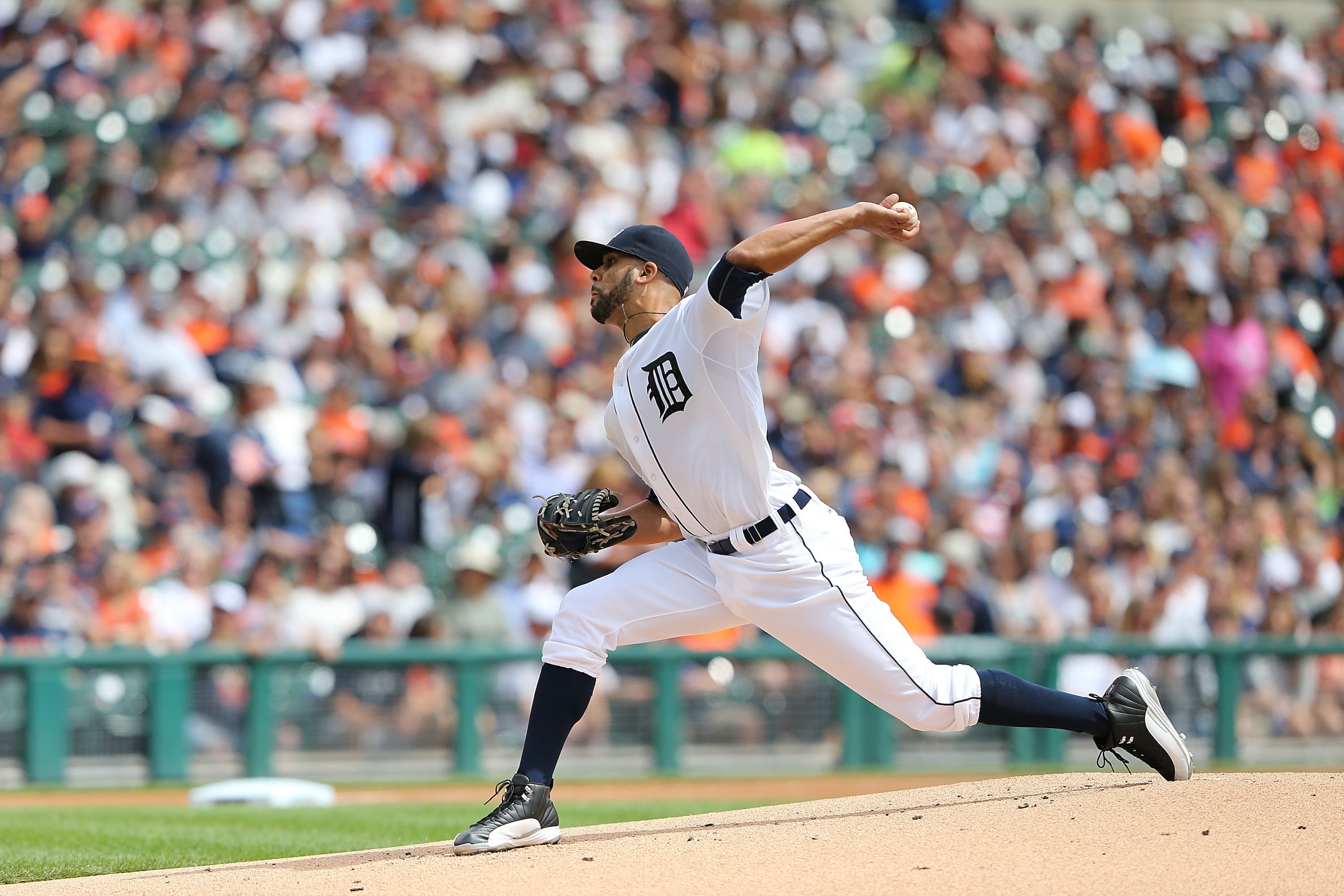
Metrics and Rank Among Contending Teams
| WAR | 17.3 | 1 |
| FIP | 3.41 | 2 |
| K/9 | 7.66 | 4 |
| K/BB | 3.15 | 4 |
| Cumulative | 11 |
Overview
After the acquisition of David Price, the Detroit Tigers starting rotation went 11-13 with a 4.10 ERA and a 2.90 FIP in the month of August, per FanGraphs. Since then, they have a 4.34 ERA and a 3.01 FIP in nine starts.
Notice a trend? They are pitching much better than the raw numbers would indicate but have little to show for it from a won-loss perspective.
The good news is that with Max Scherzer and David Price at the top of the rotation, it won’t take much for this group to take it to the next level.
One thing that will surely help their cause is the return of Anibal Sanchez from the disabled list, but that could be a stretch. As CBS Sports’ Mike Axisa noted, “everything in his rehab will need to go perfectly for him to return to the rotation during the final week of the regular season.”
Even without Sanchez, though, the Tigers have enough in the tank to reach the postseason. Whether or not they do it is a different story, but they have the arms.
No. 2 Lineup: Detroit Tigers
25 of 28
Metrics and Rank Among Contending Teams
| Off | 57.7 | 2 |
| wRC+ | 110 | 2 |
| ISO | .151 | 3 |
| wOBA | .332 | 1 |
| Cumulative | 8 |
Overview
What can’t the Detroit Tigers do on offense?
When play began Wednesday, they led MLB in hits (1,401), doubles (297), RBI (663), traditional on-base percentage (.331) and batting average (.277). They were also second in numerous categories, including slugging percentage (.428) and runs scored (685).
Individually, Miguel Cabrera (.311/.371/.518), Victor Martinez (.335/.406/.571) and J.D. Martinez (.305/.348/.545) stand out among a group that can inflict damage at any time.
They do have their struggles when facing some of the other playoff contenders, however.
Consider: Against the Los Angeles Angels, Seattle Mariners and Oakland A’s, they have an OPS under .700 and have 150 strikeouts in only 20 games, per Baseball-Reference. That does not bode well for a playoff run.
For as alarming as those statistics are, the offense is more than capable of driving the Tigers to their second World Series in the past three seasons.
No. 2 Rotation: Los Angeles Dodgers
26 of 28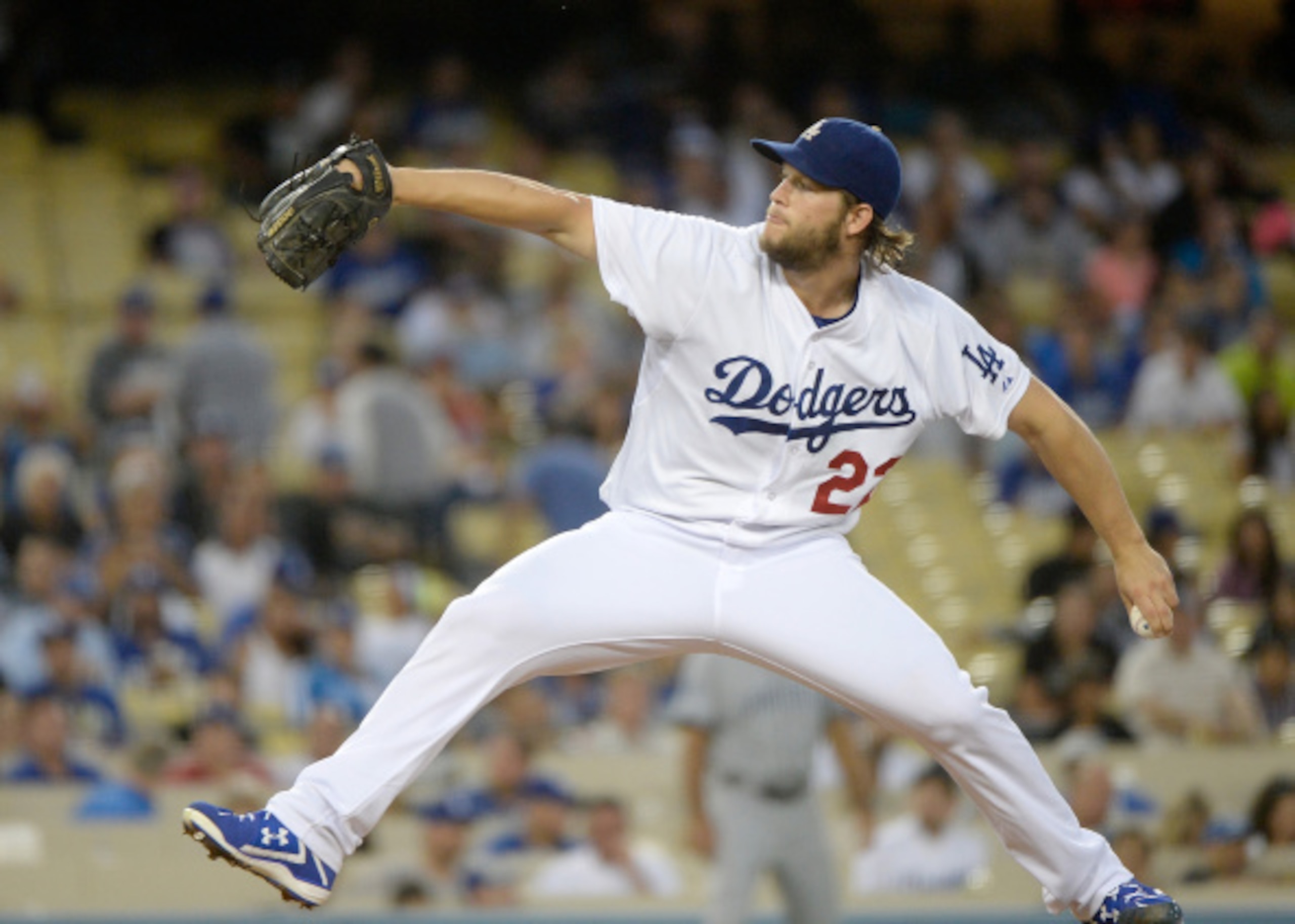
Metrics and Rank Among Contending Teams
| WAR | 12.7 | 3 |
| FIP | 3.41 | 2 |
| K/9 | 8.36 | 1 |
| K/BB | 4.05 | 1 |
| Cumulative | 7 |
Overview
Arguably, the Los Angeles Dodgers have the deepest rotation in the game. By that, of course, we mean that the triumvirate of Clayton Kershaw, Hyun-Jin Ryu and Zack Greinke is without equal.
Kershaw, for example, is running away with the NL Cy Young award, posting a ridiculous 1.67 ERA with a 1.88 FIP while averaging 10.66 strikeouts every nine innings. Meanwhile, Ryu and Greinke both have 14 wins entering action Wednesday and have peripherals that would qualify them to be the staff ace on a majority of MLB clubs.
The problem for the Dodgers is the back end of the rotation, which became significantly thinner when Josh Beckett and Paul Maholm were placed on the disabled list. Roberto Hernandez filled in admirably for a time, but he has a 6.38 ERA and a 6.50 FIP over his last four starts, per FanGraphs.
One option is Carlos Frias, who threw six scoreless innings earlier this month against the Washington Nationals. He has quite a bit of value coming out of the bullpen, however, so that is a situation that will have to sort itself out.
Either way, manager Don Mattingly has a few decisions to make as he preps his club for the postseason. But with Kershaw, Ryu and Greinke at the top of the rotation, he is in great shape already.
No. 1 Lineup: Los Angeles Angels
27 of 28
Metrics and Rank Among Contending Teams
| Off | 68.0 | 1 |
| wRC+ | 111 | 1 |
| ISO | .147 | 4 |
| wOBA | .323 | 2 |
| Cumulative | 8 |
Overview
The record for RBI from the second spot in the order is 114 and is shared by Alex Rodriguez and Eddie Matthews (h/t to Jeff Fletcher from the Los Angeles Register). Los Angeles Angels outfielder Mike Trout has 103, and there were 18 games left to play after Tuesday’s action.
To be sure, that says a lot about the quality of Trout on an individual level, but it says as much about the quality of manager Mike Scioscia’s lineup from the leadoff man to the No. 9 hitter.
Four players—Albert Pujols, Howie Kendrick, Erick Aybar and Trout—have scored at least 70 runs and driven in at least 60. And nine men with at least 200 plate appearances have a wRC+ over 100, via FanGraphs.
Like other offenses on this list, however, solid pitching stifles the Angels. For example, they have a .644 OPS and have only scored 39 runs in 12 contests with the Seattle Mariners. They’re worse against the Baltimore Orioles, compiling a .545 OPS and scoring a meager 17 runs in six games against the AL East leaders, per Baseball-Reference.
The postseason will certainly be a test for the best lineup in baseball.
No. 1 Rotation: Washington Nationals
28 of 28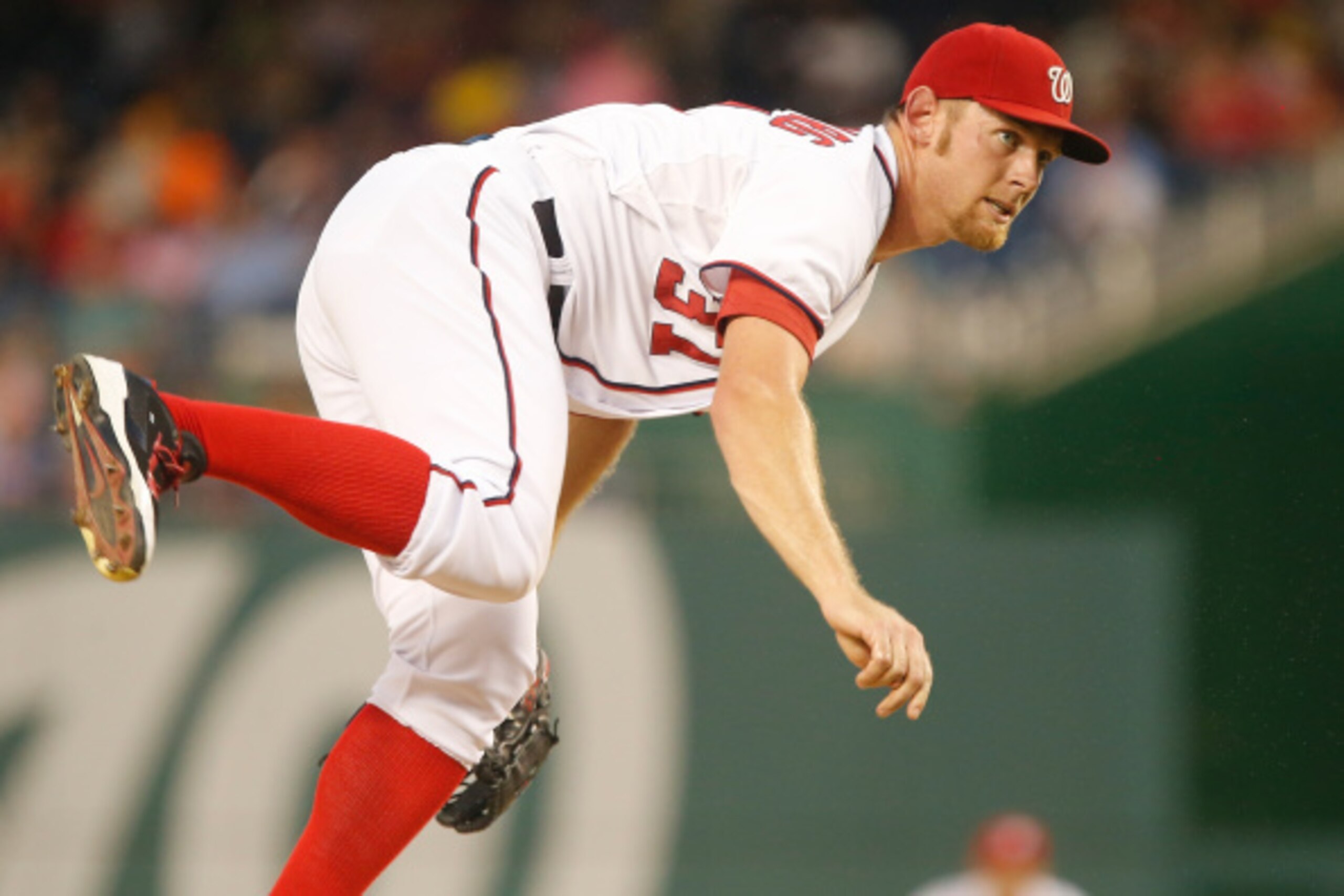
Metrics and Rank Among Contending Teams
| WAR | 14.2 | 2 |
| FIP | 3.32 | 1 |
| K/9 | 7.79 | 2 |
| K/BB | 3.85 | 2 |
| Cumulative | 7 |
Overview
You can pretty much take your pick. Any one of the top four starters in the Washington Nationals rotation is going to be the better pitcher on any given day.
Stephen Strasburg, for example, is striking out 10.24 batters every nine innings while only walking 1.90. Sure, he is giving up too many home runs and only has 11 victories, but he has commanded the strike zone all season and is pitching to a 3.06 FIP.
Jordan Zimmermann is even more dominant. Sure, he is “only” striking out 8.24 per nine innings, but he limits his walks effectively and has a 2.93 ERA and a 2.76 FIP.
And then there are Tanner Roark and Gio Gonzalez. Either one of them is capable of taking a game over. Combined, the group is worth a 12.0 WAR and has logged exactly 684.0 innings going into action Wednesday.
And looking at some of their potential opponents this postseason, there is even more reason for optimism. Consider: They have held the Los Angeles Dodgers, Pittsburgh Pirates and St. Louis Cardinals to a total of 59 earned runs in 20 games, per Baseball-Reference.
Any way you look at it, they are a force to be reckoned with. And if pitching is indeed what matters most in the postseason, manager Matt Williams has to like his chances.
Unless otherwise noted, all traditional and advanced player statistics are courtesy of FanGraphs and are accurate as of game time Wednesday, Sept. 10. Team statistics were also pulled from FanGraphs and are accurate as of game time Tuesday, Sept. 9 . Transaction, game and injury information are courtesy of MLB.com.
Follow @MatthewSmithBR


.jpg?w=2560 "Viral Rams Coach Vid 🖕")
.jpg?w=2560 "Injury-stricken Seahawks signing veteran RB")
.jpg?w=2560 "Grading WWE Raw 🔠")
.jpg?w=2560 "2 NFL Officials Suspended")

.jpg?w=2560 "Mahomes' Wife Trolls Kubiak 💀")

