

Washington Redskins vs. Houston Texans: Breaking Down Washington's Game Plan
Jay Gruden can score his first regular-season win as Washington Redskins head coach if he does four things to attack the Houston Texans on both sides of the ball.
Offensively, Gruden's primary focus has to be isolating suspect safeties, something that probably sounds familiar to Washington fans. But as much as the Redskins defense suffers at that position, the Texans have as many question marks.
Kendrick Lewis and D.J. Swearinger are the recognized starters, but that's not something anybody in Houston should brag about. Specifically, Gruden can target Lewis with some vertical routes.

.jpg?w=2560 "Commanders Eagles Football")

The free safety particularly struggled providing help over the top as a member of the Kansas City Chiefs in 2013. Here's one example from the Denver Broncos' 35-28, Week 13 win in Kansas City.
The Broncos were in "12" personnel, one running back and two tight ends. They would send three receivers out on vertical releases.
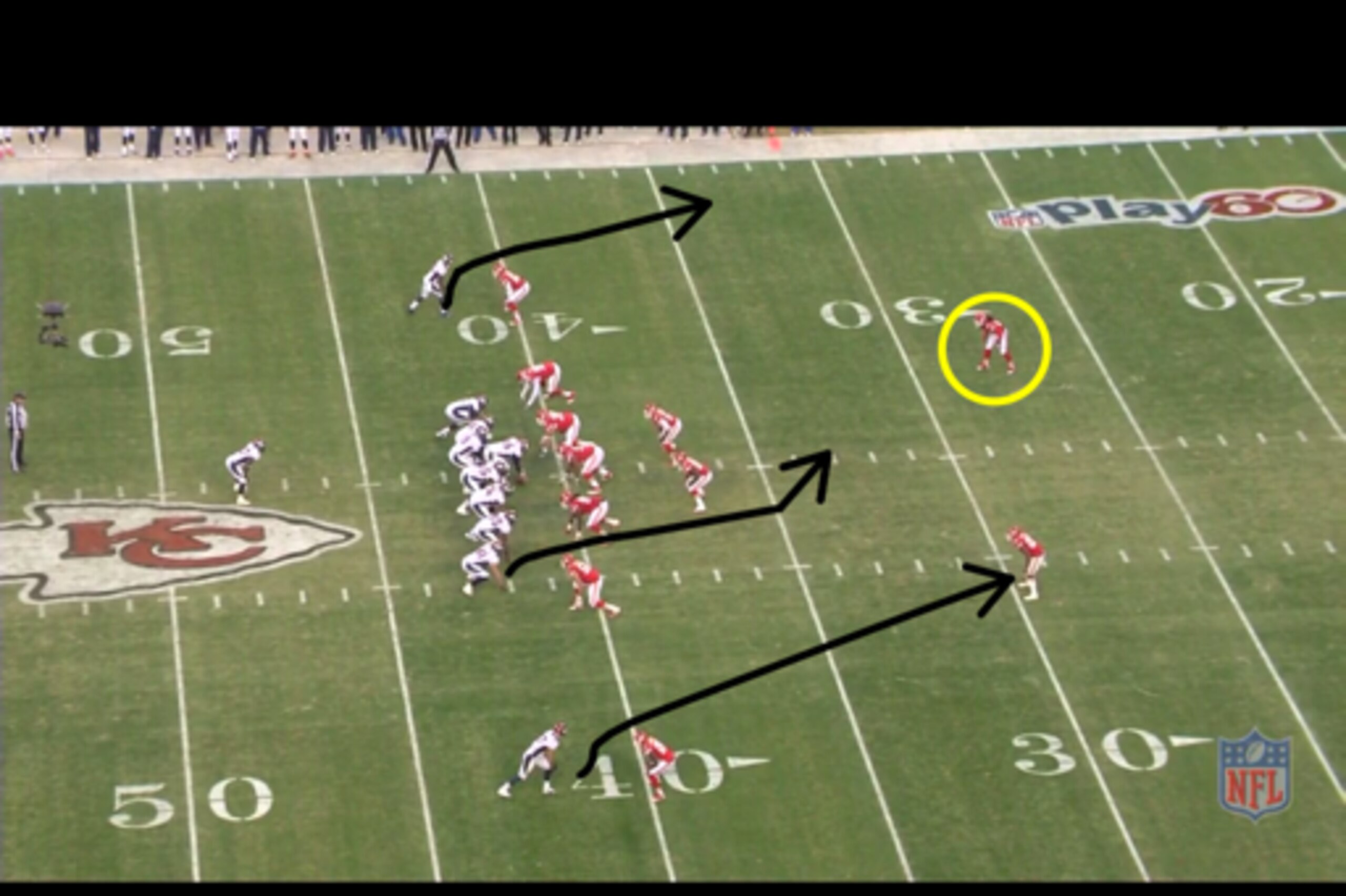
As the designated deep safety, Lewis would have a decision to make regarding which route he would help double.
As the play developed, he quickly turned to the near sideline where Demaryius Thomas was running his pattern. But on the other side, strong safety Eric Berry had been drawn down by the tight ends' vertical release up the seam. That left cornerback Brandon Flowers in single coverage against Eric Decker.
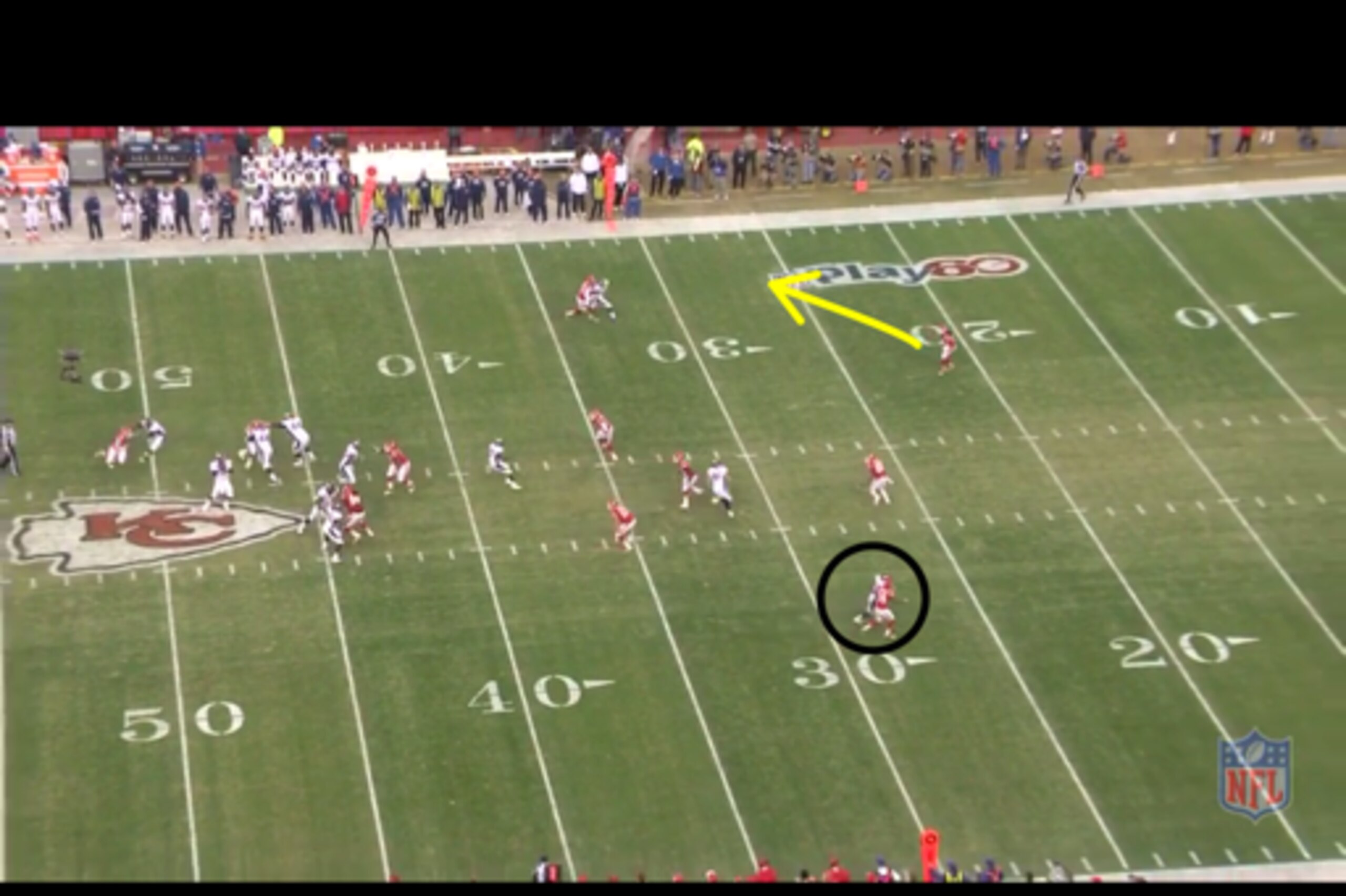
Seeing that Lewis was too far away to get across, Denver quarterback Peyton Manning quickly launched his pass toward Decker.
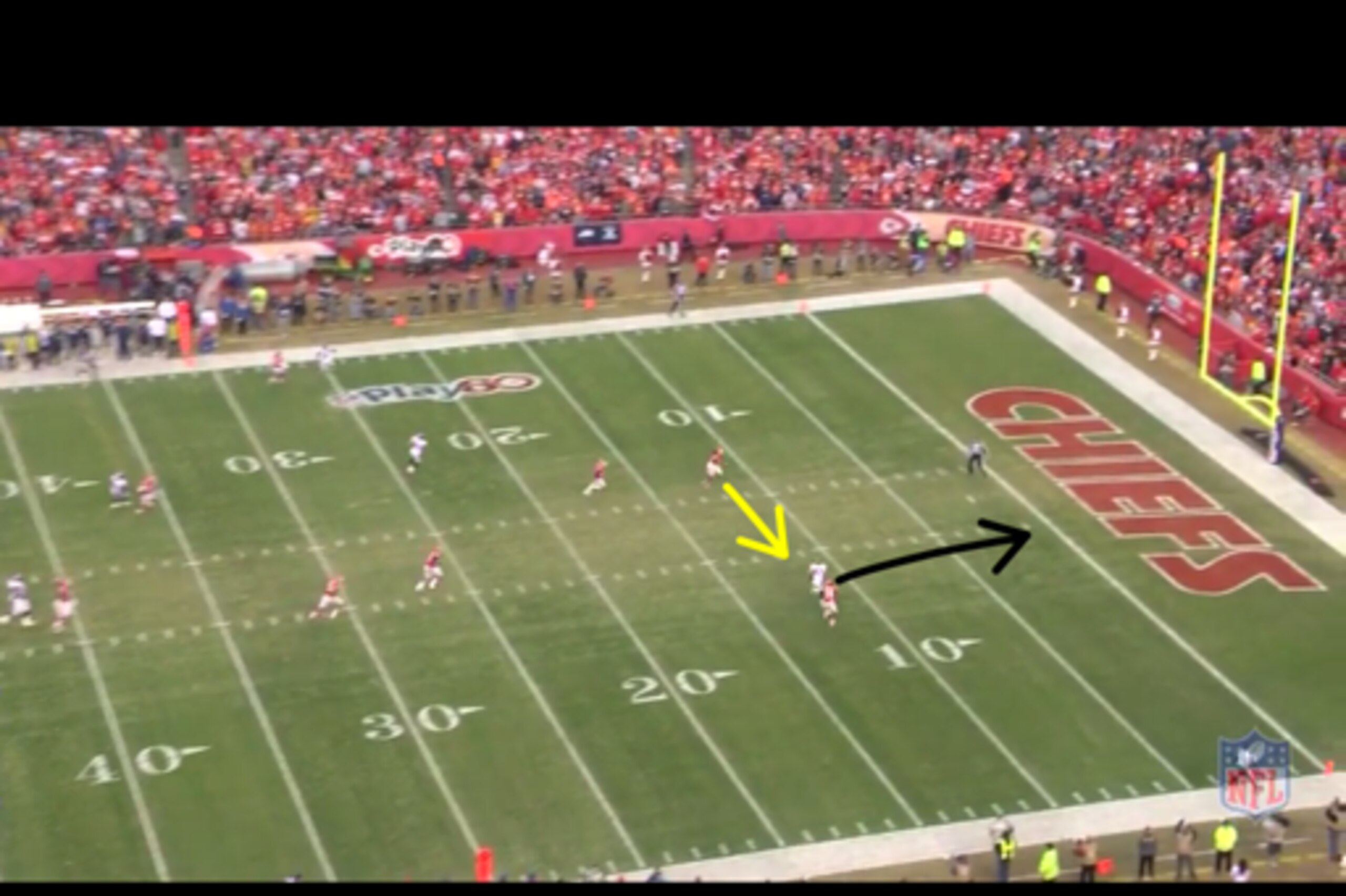
When the ball reached Decker, notice how far away Lewis was. The play resulted in an easy 41-yard touchdown strike.
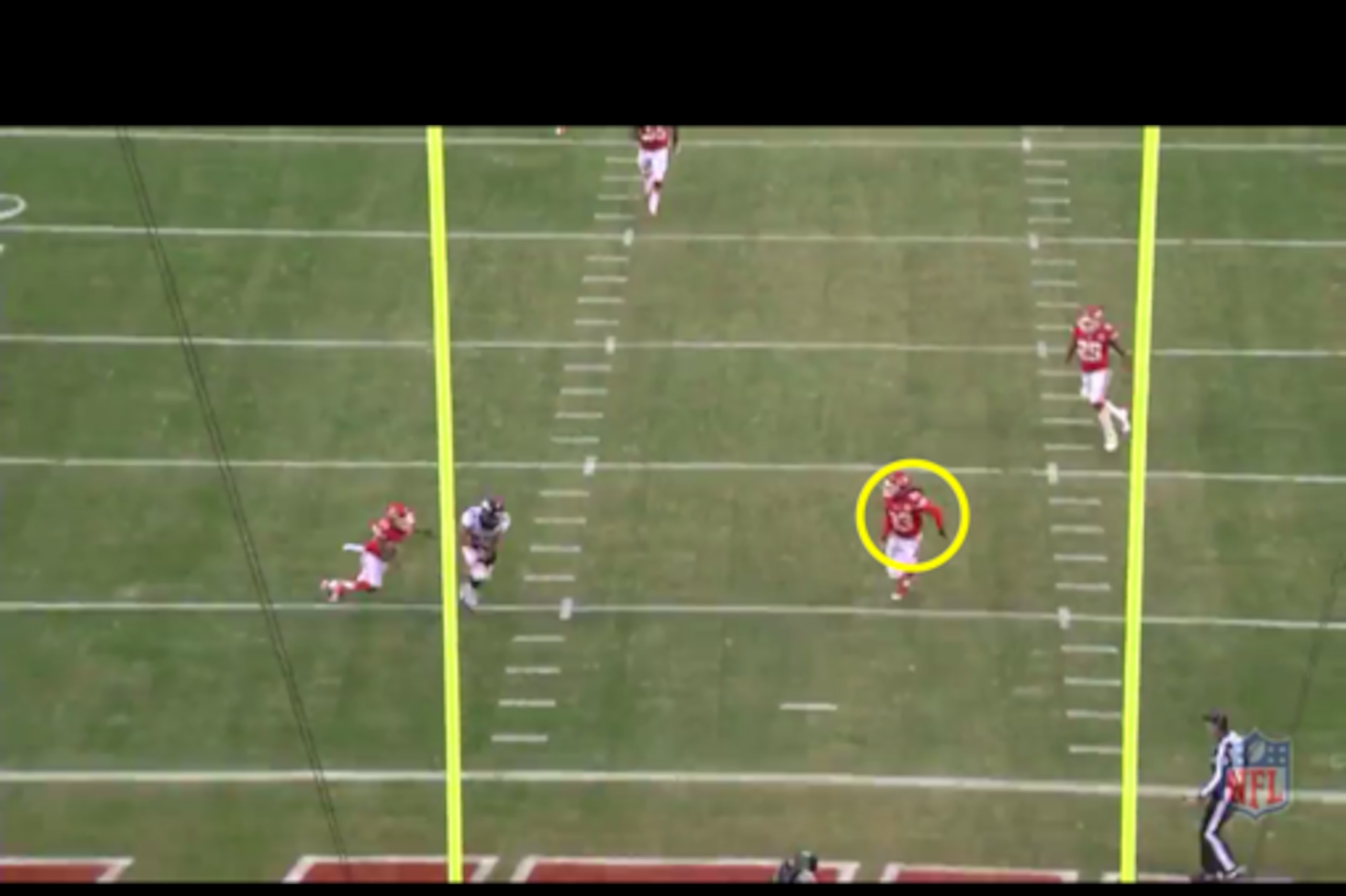
Lewis should have bailed quickly to a deep central position, where he could have spied the quarterback and been in position to take any of the three routes. Instead, he allowed himself to quickly be drawn out of position by the threat of Thomas.
Washington can do the same thing to Lewis. With DeSean Jackson guaranteed to draw attention on one side, along with tight end Jordan Reed stretching the middle, the Redskins can get a one-on-one matchup for Pierre Garcon.
Faced with those kind of weapons, Lewis will be lost. Quarterback Robert Griffin III should even be told to get cute and look off the deep safety as often as possible before launching the deep ball.
As well as targeting individual players, Gruden and offensive coordinator Sean McVay can exploit the loose Cover 2 concept often favored by veteran defensive coordinator Romeo Crennel.
In particular, Gruden can send receivers on deep crossing patterns designed to make yards in the considerable void behind the linebackers and in front of the two-deep shell.
A play against Crennel's 2012 Chiefs defense provides a perfect illustration of how this works. It comes from Kansas City's 40-24 loss to the Atlanta Falcons in Week 1 of that season.
Against Atlanta's four-receiver set, the Chiefs adopted their Cover 2 look. But notice how big the gap was between the linebackers and safeties.
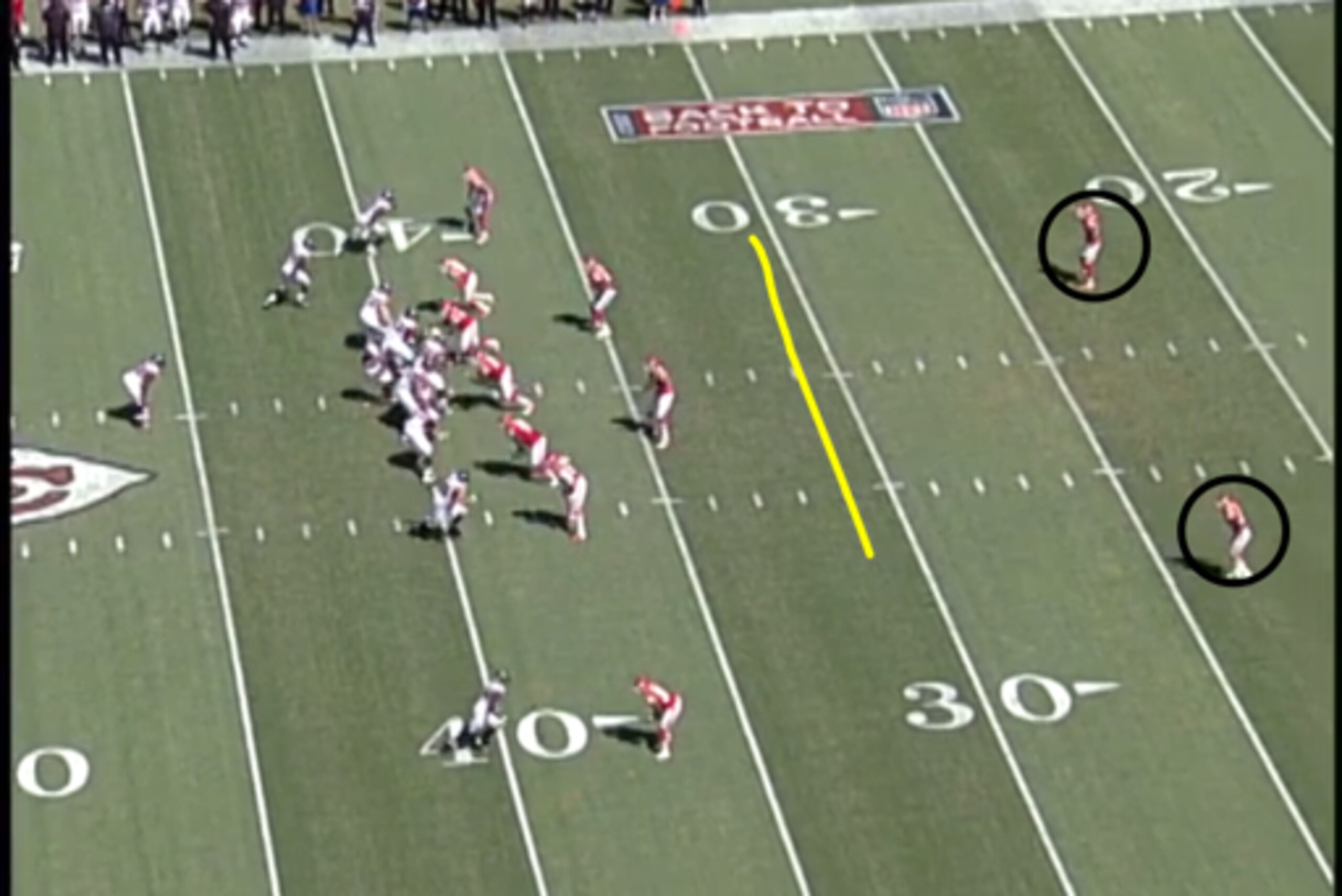
That put tremendous pressure on two levels of the coverage. First, it required a strong bump at the line from the cornerback, a crucial part of any Cover 2 concept, to slow down the receiver's release to the inside.
Second, it demanded that the linebackers got depth in their drops. The Chiefs failed miserably on both accounts.
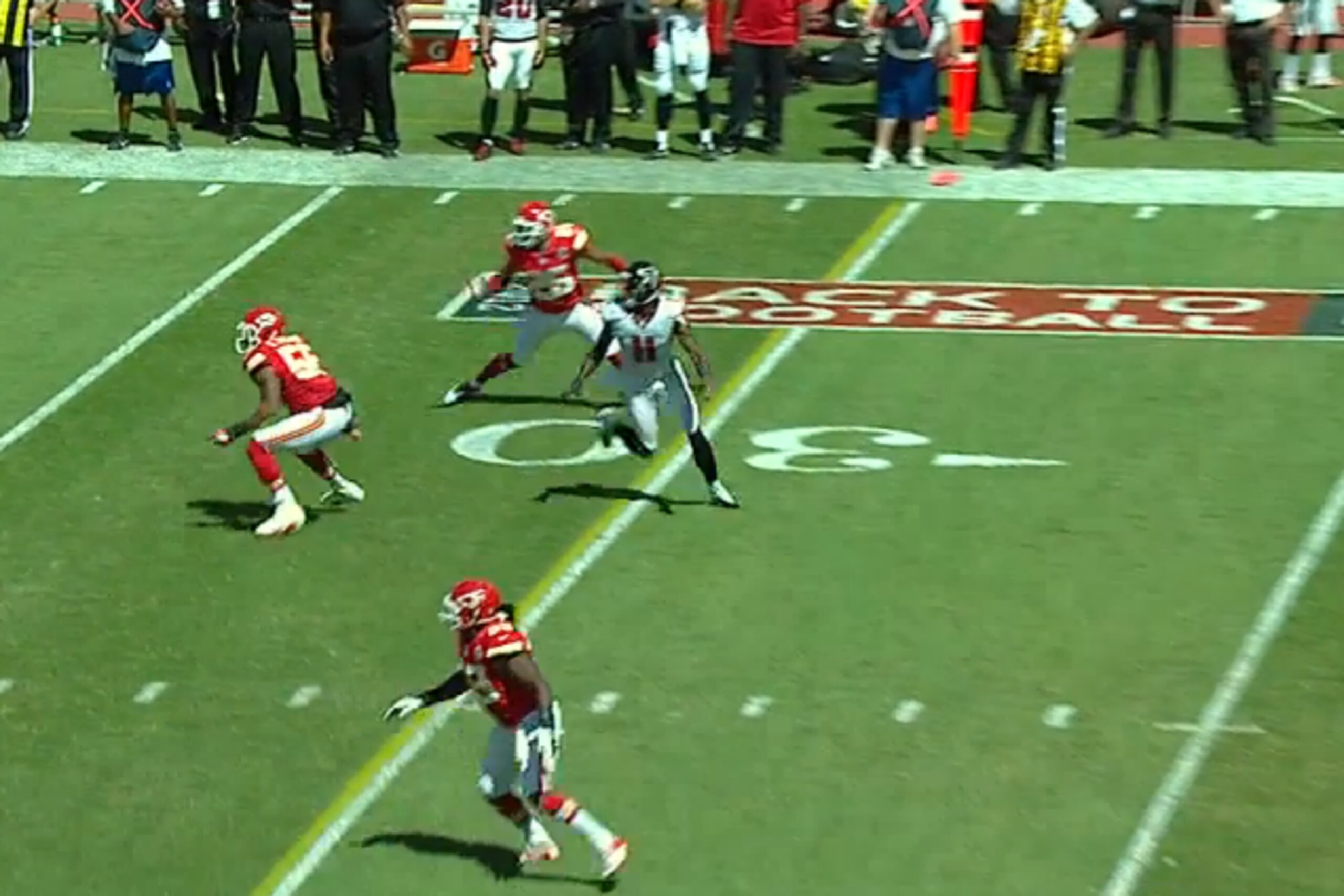
Derrick Johnson didn't get deep enough, as Fox Sports commentator Brian Billick pointed out. So when wide receiver Julio Jones was not bumped at the line, he was wide open in front the of the safeties.
Notice how far Johnson is trailing underneath and how far away the safety is from meeting Jones. The play was good for 19 yards, a gain the Falcons practically stole it was given away so easily.

It's a safe bet to assume Crennel's Texans will initially try this concept. They'll likely use it to deter the deep ball to Jackson.
If Gruden is smart, he'll have plenty of crossing patterns ready to start stretching this loose two-deep shell to its breaking point.
Of course, before the Washington offense can even think about these things, the unit will have to slow down Houston's pass rush. That means dealing with the terrifying tandem of J.J. Watt and Jadeveon Clowney.
The latter is converting to 3-4 rush linebacker after being selected first overall in the 2014 NFL draft. Clowney showed glimpses of his ability to dominate in the system during preseason.
His partnership with Watt presents some headaches for Washington's offensive line. The first step toward dealing with the problems has to be recognition.
This is where new center Kory Lichtensteiger will be put under pressure. He must quickly identify where Watt and Clowney are on each play, then set the protection accordingly.
If they are aligned together on the same side, a ploy Crennel used during preseason, Lichtensteiger must slide the protection that way. It would also help to keep fullback Darrel Young or an extra tight end in on that side.

But the bigger help will come from the speed of execution under center. That puts the spotlight on Griffin's decision-making and Gruden's play-calling.
Plans are already in place to slow down the rush with quick plays, per Liz Clarke of The Washington Post: "With an eye toward keeping his quarterback upright and offense flowing in Sunday’s regular season opener in Houston, Washington Redskins Coach Jay Gruden is planning a multipronged counter that’s predicated on a heavy dose of running and short, quick passes designed to get Griffin into a throwing rhythm."
Clarke also noted how Gruden has been stressing that Griffin must speed up making his reads and releasing the ball:
"The longer he pats the ball back there and gives those great pass-rushers in Houston — or Dallas or New York or Philadelphia — any pass-rushers, for that matter, time to get after him, it’s not going to be good. So the whole intent of this offense is when we do pass it, we know where our quick elements are, we get the ball to our players out in space and let them do the work for him.
"
It's vital that Griffin does things in a quicker fashion this season. An opening opponent boasting such a potentially strong pass rush will provide an accurate indicator of the quarterback's progress in this key area.
Defensively, it is essential that Washington's cover men jam Houston's receivers at the line. Long gone are the days when teams could simply double up on Andre Johnson. The presence of DeAndre Hopkins has seen to that.
Johnson and Hopkins are simply too big and too fast to be allowed a clean release. Fortunately, more physical coverage is something the Washington secondary can handle.
The unit looked good playing press for periods of a tough road loss to the Denver Broncos in Week 8 of last season. One play in particular stood out as a fine example of the benefits of jamming receivers at the line.
It came on 3rd-and-3 with the Broncos aligned in "12" personnel. Notice how the Redskins rolled up both cornerbacks tight on the outside wide receivers (blue circles). In the slot, Josh Wilson was also close enough to get a quick hit on Wes Welker.
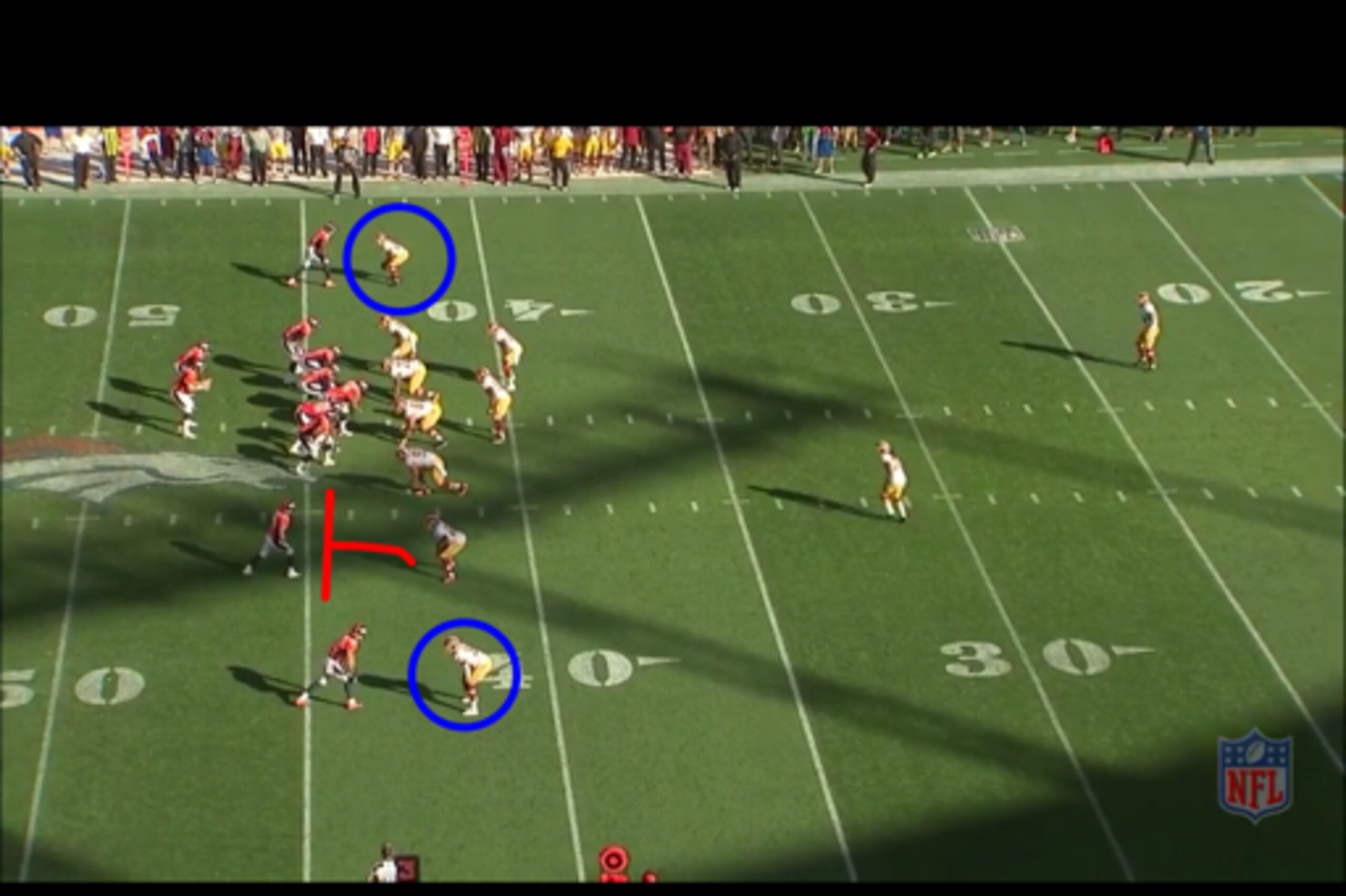
At the snap, Washington's cornerbacks quickly clamped down on their receivers. On the far side, DeAngelo Hall immediately got his hands on Thomas.
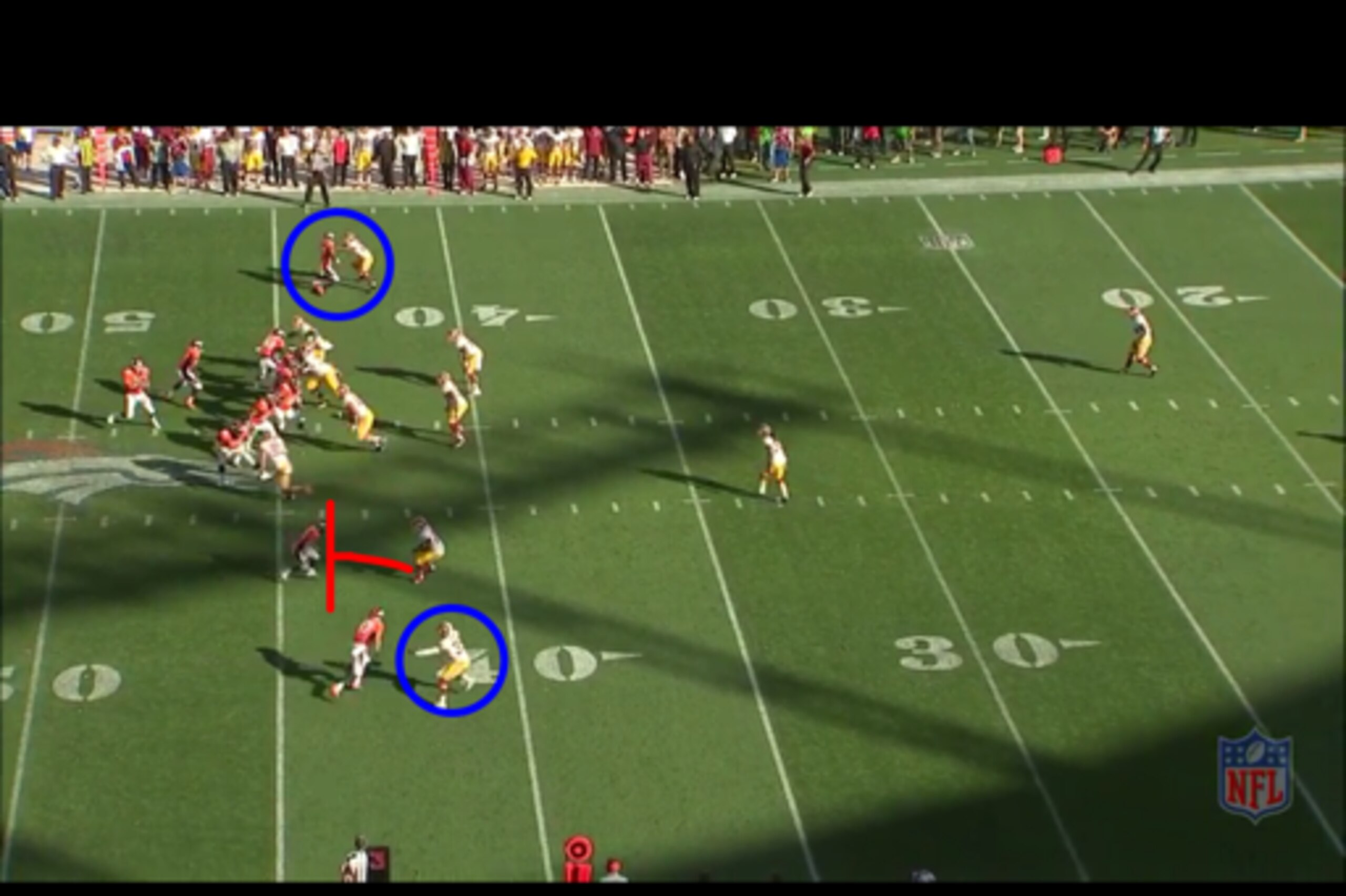
Meanwhile, on the near side, David Amerson was preparing to do the same with Decker. On the inside, Wilson was roving down to track Welker.
As the play developed, Washington's cover men adopted the classic plastering technique. They gave their receivers no room or chance to escape.
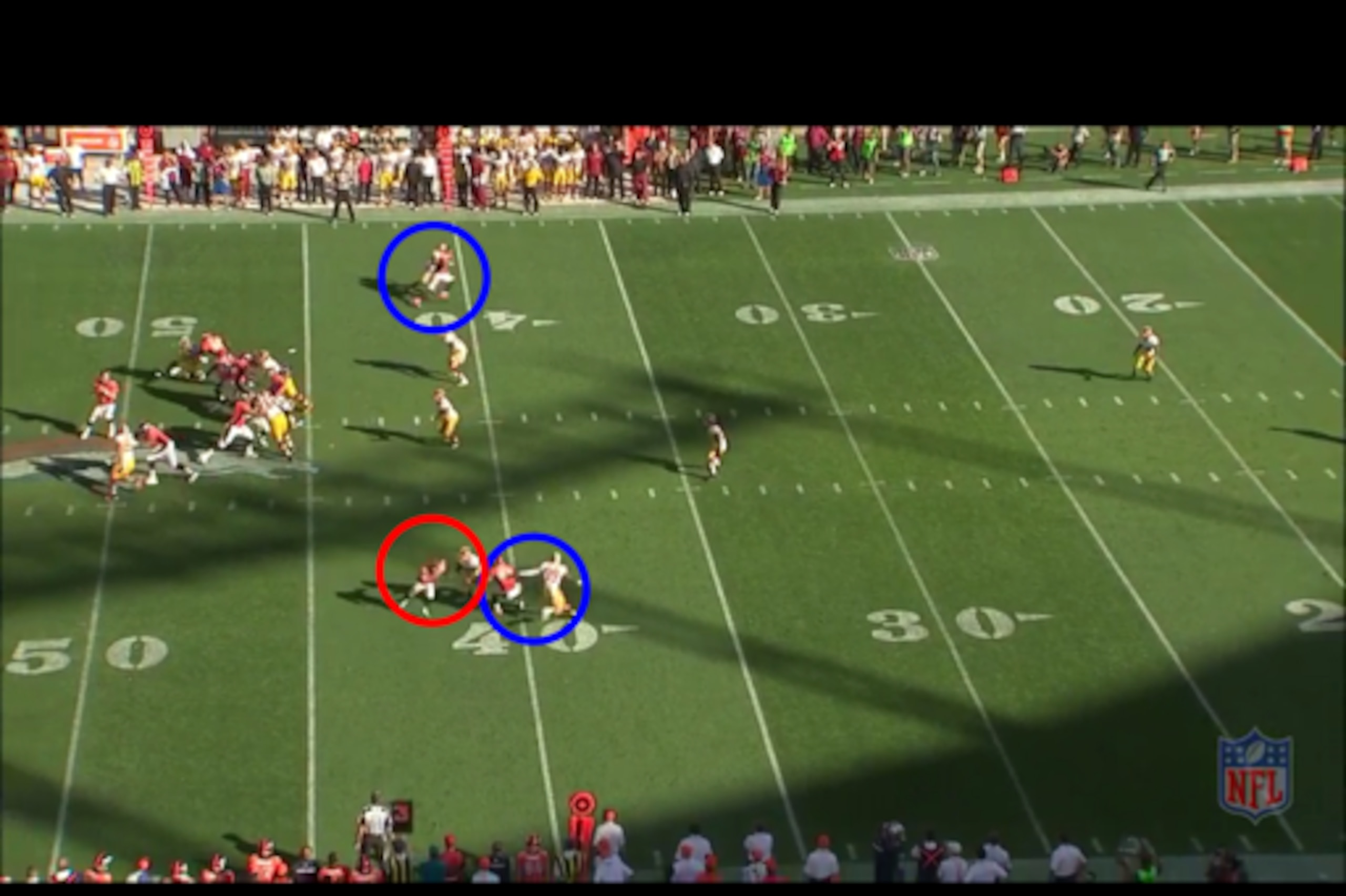
Taking the play a little further, look how tightly Wilson locked onto Welker. That type of close coverage demands a sensationally accurate throw from a quarterback.

Not even the great Manning could manage it on this play. He forced a throw that sailed harmlessly over the head of Welker and the Broncos had to punt.
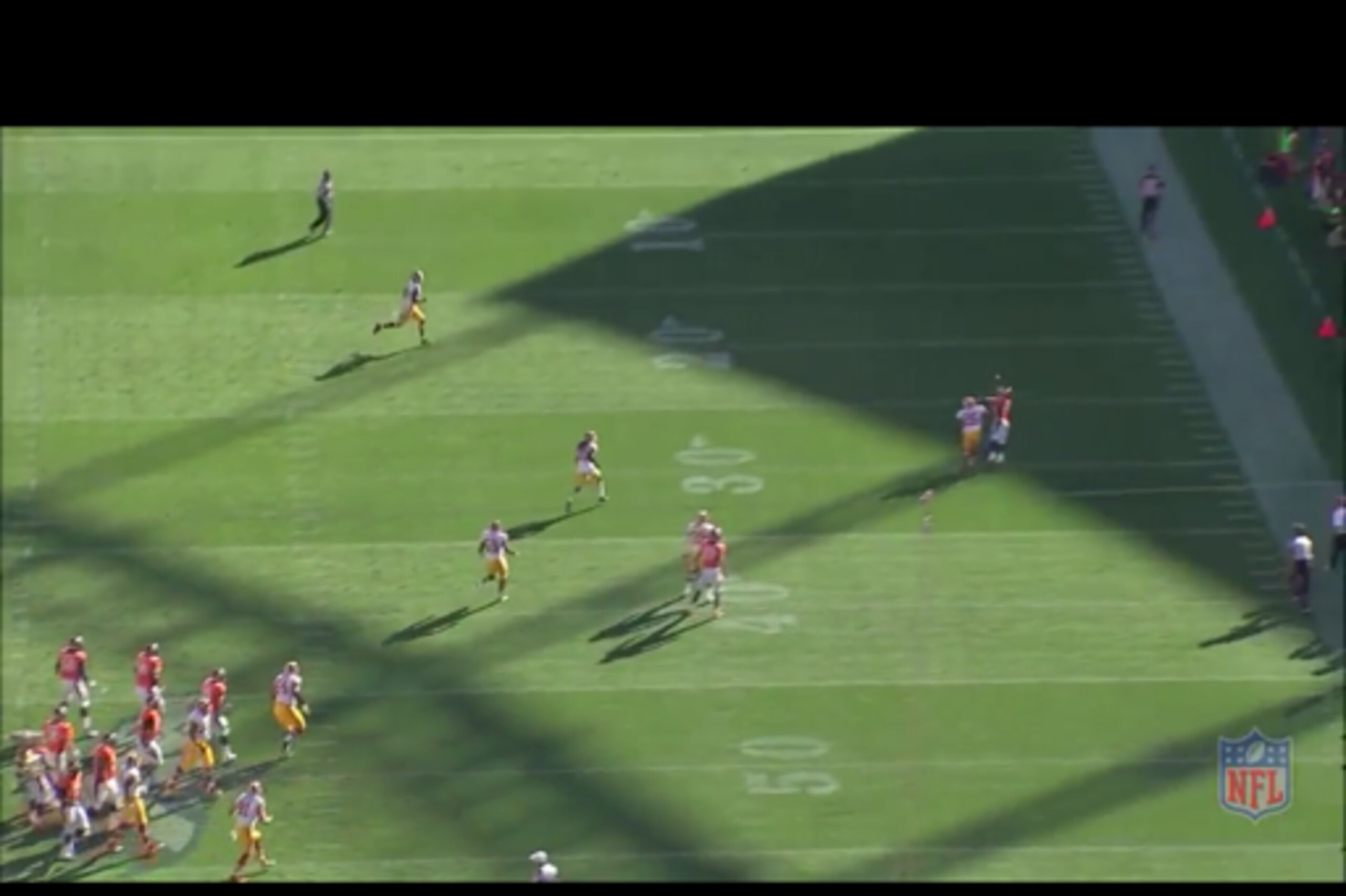
It's a safe bet that Texans quarterback Ryan Fitzpatrick will struggle to fit passes into windows so tight. Washington defensive boss Jim Haslett has to tell his corners to be physical in this game.
Haslett will also have a keen eye on how his defense deals with Arian Foster. The 28-year-old running back has rarely been fully healthy in recent seasons, but when he is, Foster can dominate any defense.
That's why Haslett should be wary about Foster declaring he feels "wonderful, physically," per Drew Dougherty of HoustonTexans.com. That could mean Foster is primed for a huge rebound in Houston's feared zone stretch system.

Of course, Washington know that system well. The offense runs it, and Haslett's defense practices against it. The trick will be to get to Foster early. Achieving that will require blitzing the run.
That's what opponents such as the Philadelphia Eagles did to the Redskins last season. It's also what the New England Patriots have regularly done against Foster.
Haslett has the weapons to make this daring ploy work. He must unleash speedy inside 'backers Perry Riley and Keenan Robinson on middle blitzes to slow Foster down as he runs laterally and to clog his cutback lanes inside.
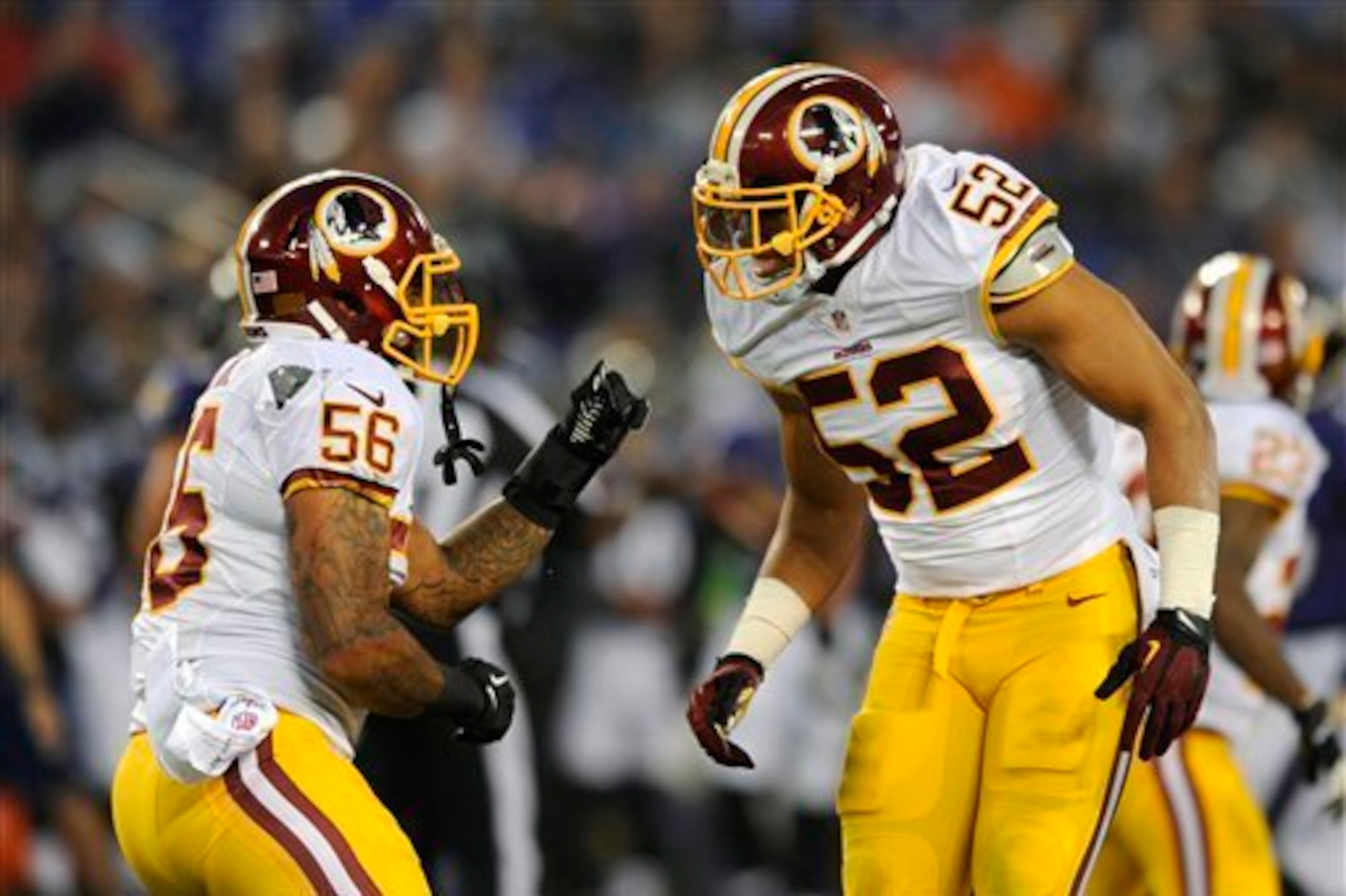
Stopping Foster puts the game in the hands of Fitzpatrick. That's exactly where Haslett should want it.
These two teams combined for only five wins last season, with the Texans propping up the NFL at 2-14. However, Washington should expect a tough game in Houston.
The Crennel-led defense will provide a stern first test of both Gruden's play-calling and Griffin's progress. Meanwhile, Houston's options in the passing game could punish Haslett's more aggressive system.
But the Redskins can't allow themselves to play passive football. Defeat lies that way. They must attack and force the Texans out of their comfort zones on both sides of the ball.
All screen shots courtesy of CBS Sports, Fox Sports and NFL.com Game Pass.
.jpg?w=2560 "Chiefs Dolphins Football")
.jpg?w=2560 "Texans-Mixon Released Football")



.jpg?w=2560 "Love's Body Already 'Tired'")