

4 Toronto Raptors Weaknesses to Exploit in the NBA Playoffs
The Toronto Raptors are one of the 2013-14 regular season's most surprising playoff teams. In early December, they traded their best player, Rudy Gay, and almost immediately turned around five straight years of losing.
They're stockpiled with emerging talent, and ended the year as one of just four teams to have a top-10 offense and a top-10 defense—the other three were the Los Angeles Clippers, Oklahoma City Thunder and San Antonio Spurs.
But, despite the unexpected solidity they displayed throughout the year, the Raptors are far from perfect and remain a ways away from title contention. In the first round, Toronto is facing the Brooklyn Nets. Here, ranked in order of their importance, are four reasons why the Nets should like their chances.
4. Pace of Play
1 of 4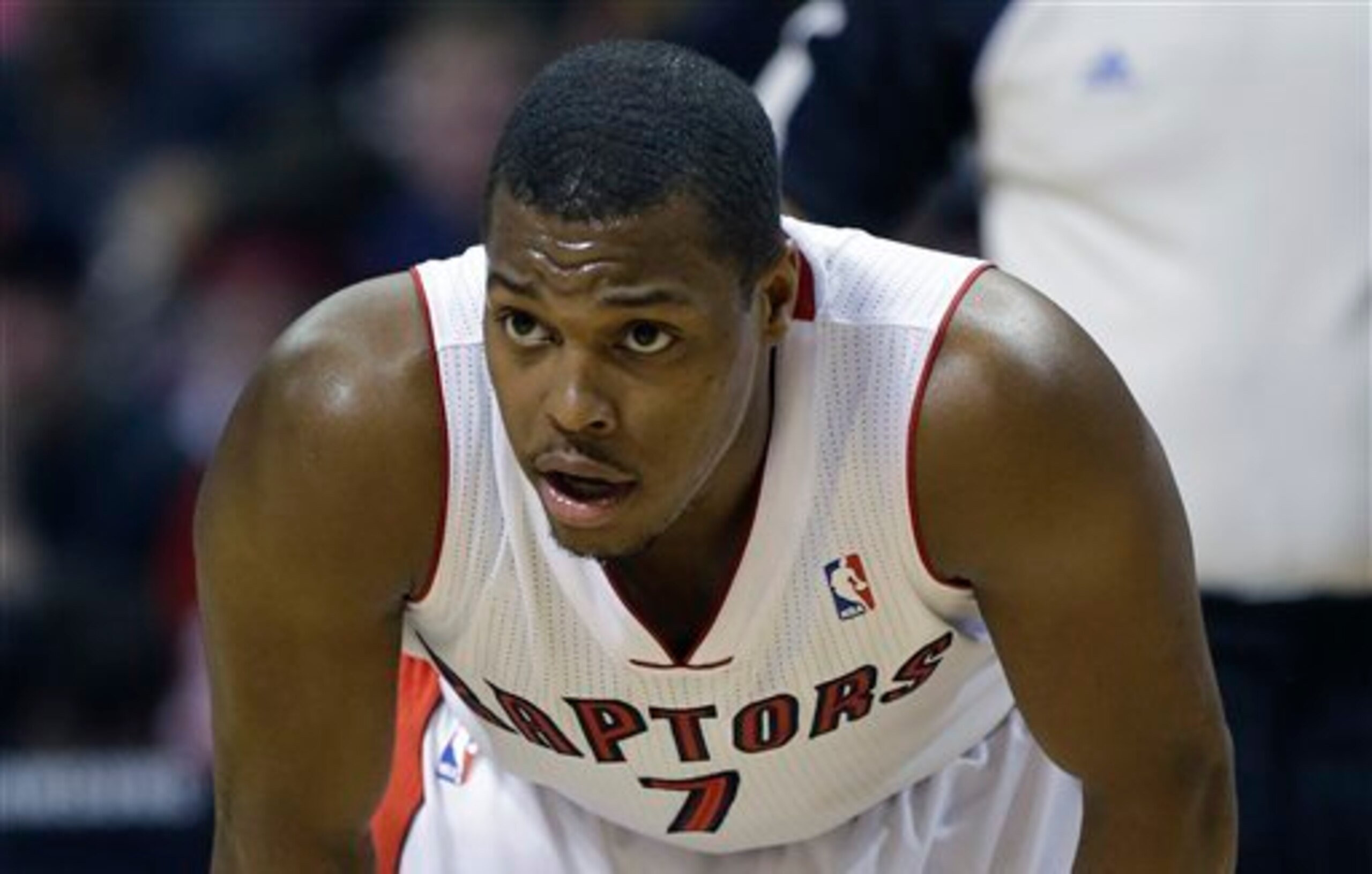
The Raptors are an effective offensive team, but despite having a pair of freak athletes on the wing and a point guard who can excel in transition, they don't like to run.
They ended the year ranked 23rd in pace. This could be a playoff strength in the playoffs, when the overall style of play slows down, but being able to attack in transition—before the opponent can set up their half-court offense—is also important.
On the year, 66 percent of Toronto’s baskets came with over 10 seconds elapsed from the shot clock—even though they posted an effective field goal percentage of 54.2 percent in those first 10 seconds. The lower the shot clock got, the less effective Toronto's offense became.
"As is the case in every seven-game series, each team will try to force the other to win by doing something that does not come naturally. For the Nets, that means packing the paint on defense and forcing the Raptors to beat them with shooting.
"
The Raptors are a slow team that spent the entire season carefully hunting for points in the half-court—and it worked. But if they don't attack a little quicker in the playoffs, they could run into more poor shots than they want.
3. Shaky Bench
2 of 4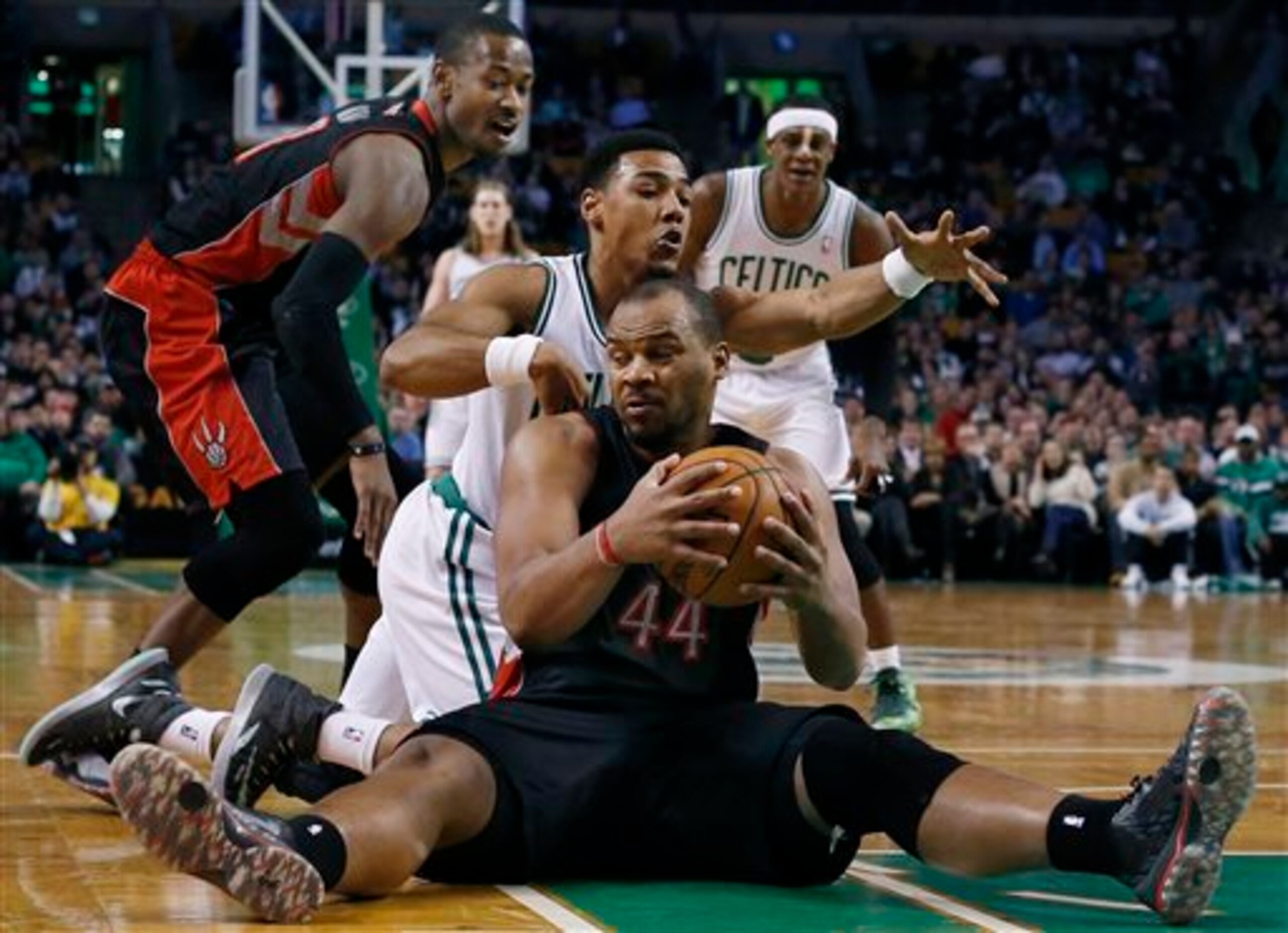
Toronto’s bench is far from worst in the league, but it’s not the most dependable unit either. Some of the apples are bad. After the All-Star break, John Salmons shot 35.2 percent from the floor. He also appeared in 29 of Toronto’s 30 games and averaged nearly 20 minutes of playing time.
The Raptors were outscored by 5.6 points per 100 possessions with Salmons on the court and outscored opponents by 8.8 when he sat, meaning their offense goes from best in the league to among its least effective when he's in the team. Salmons isn’t good.
Same goes for Tyler Hansbrough, who sometimes plays like he’s trying to cryogenically freeze Toronto’s offense. He’s a solid rebounder who also lives at the free-throw line, but converted just 68.1 percent of his attempts there—a career low.
Chuck Hayes and Steve Novak do what they can in limited minutes, but both are intensely one-dimensional, while Landry Fields doesn’t do anything at all. Hayes is an under-sized defense-first big, and Novak can only shoot three-pointers.
Greivis Vasquez and Patrick Patterson round out Toronto's bench, but both are quality performers who help far more than they hurt.
2. Experience
3 of 4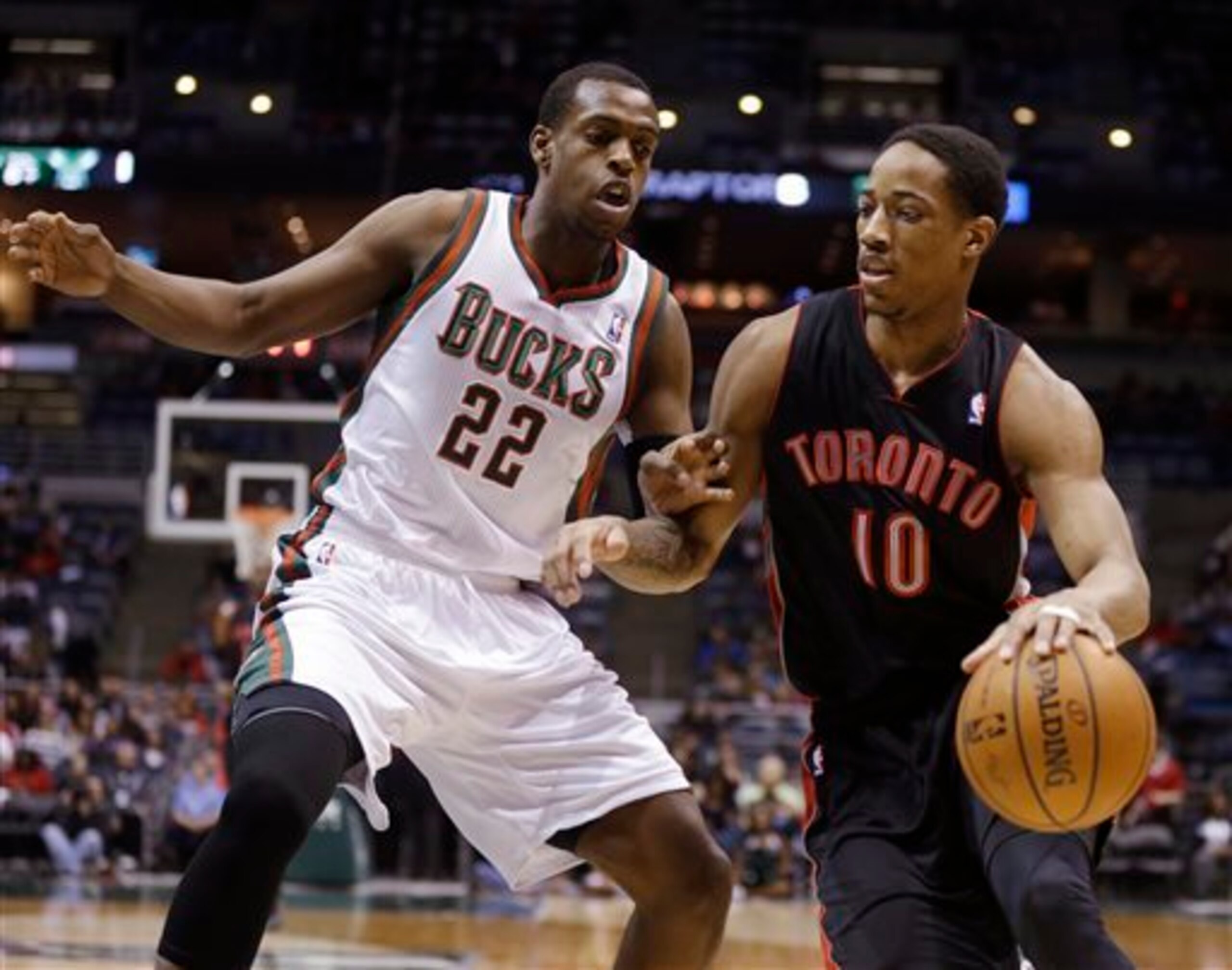
The Raptors aren’t “inexperienced,” per se. Their best player and leader is Kyle Lowry, a 28 years old seven-year veteran. Journeymen who play older than they really are, such as Patrick Patterson and Amir Johnson, line up the roster.
But outside of Tyler Hansbrough and John Salmons, nobody has any real playoff experience. That doesn’t guarantee failure, but it still carries weight. Thirty-year-old Chuck Hayes hasn’t been to the playoffs in half a decade, and Greivis Vasquez barely tasted it his rookie season.
Three of Toronto’s starters—DeMar DeRozan, Jonas Valanciunas and Terrence Ross—have yet to make their playoff debut. In the first round, they’ll be going up against decorated postseason paragons like Paul Pierce and Kevin Garnett. Joe Johnson, Deron Williams and Andrei Kirilenko have also skipped around the block once or twice.
Toronto executed its offense wonderfully throughout the regular season, but in a playoff series against grizzled warhorses who won’t hesitate to make fundamental adjustments as the series drags on, counteraction is necessary.
Some of that ability to react can only be obtained through trial and error. Toronto’s players need to feel the playoffs before they can exercise control over it.


1. Too Much Fouling
4 of 4
The Raptors ended their season with a top-10 defense. They held opponents to a sixth-best 59.9 percent shooting in the restricted area and a seventh-best 34 percent from above the break. Overall, Toronto are sound on defense, but they hack a ton.
Amir Johnson committed 271 fouls this year—two fewer than Andre Drummond for the most in the league. Kyle Lowry and Jonas Valanciunas aren’t far behind, finishing fifth and 10th, respectively. That's three Raptors in the top 10 for personal fouls. That’s hard to do.
Then we have Tyler Hansbrough and Chuck Hayes each averaging nearly five fouls per 36 minutes. If you said “zero” when asked how many teams committed more personal fouls this season than the Raptors, congratulations.
Fouling this much is bad, but what are the consequences? Besides the obvious fact that Johnson, Valanciunas and, most importantly, Lowry can’t log as many minutes as Dwane Casey would like to play them, Toronto ranks 26th in free-throw attempts per field goal attempt rate.
Giving up so many free points won’t fly in a playoff series where the margin for error is dramatically reduced.
All statistics in this article are from Basketball-Reference.com or NBA.com/Stats (subscription required) unless otherwise noted.
Michael Pina covers the NBA for Bleacher Report, ESPN’s TrueHoop Network, Sports On Earth, Fox Sports, Grantland and The Classical. His writing can be found here. Follow him @MichaelVPina.
.jpg?w=2560 "Dart Believed to Have Sprained MCL")
.jpg?w=2560 "Rams troll Jameis, Giants on social media")

.jpg?w=2560 "WWE Raw Live Grades 🔠")
.png?w=2560 "Davante's MONSTER MNF 🤯")

.png?w=2560 "McVay's Funny Travel Quote 🤣")