The Anatomy of the Perfect Baseball Trade
We have just two weeks to go until the July 31 MLB trade deadline. While it's no secret that each general manager would love to "win" a trade in every aspect, it doesn’t necessarily mean that a GM is trying to completely fleece the other.
Sure, those kinds of deals look great on a resume for the one who's done the fleecing. A GM on the wrong end of too many lopsided deals, however, will probably have a hard time finding another high-ranking position in the front office.
In reality, executing a trade involves at least two teams working together in hopes of finding what will be a win-win situation. Constructing a "perfect trade" that eventually turns out to benefit each team without it favoring one side too much isn't easy, though.
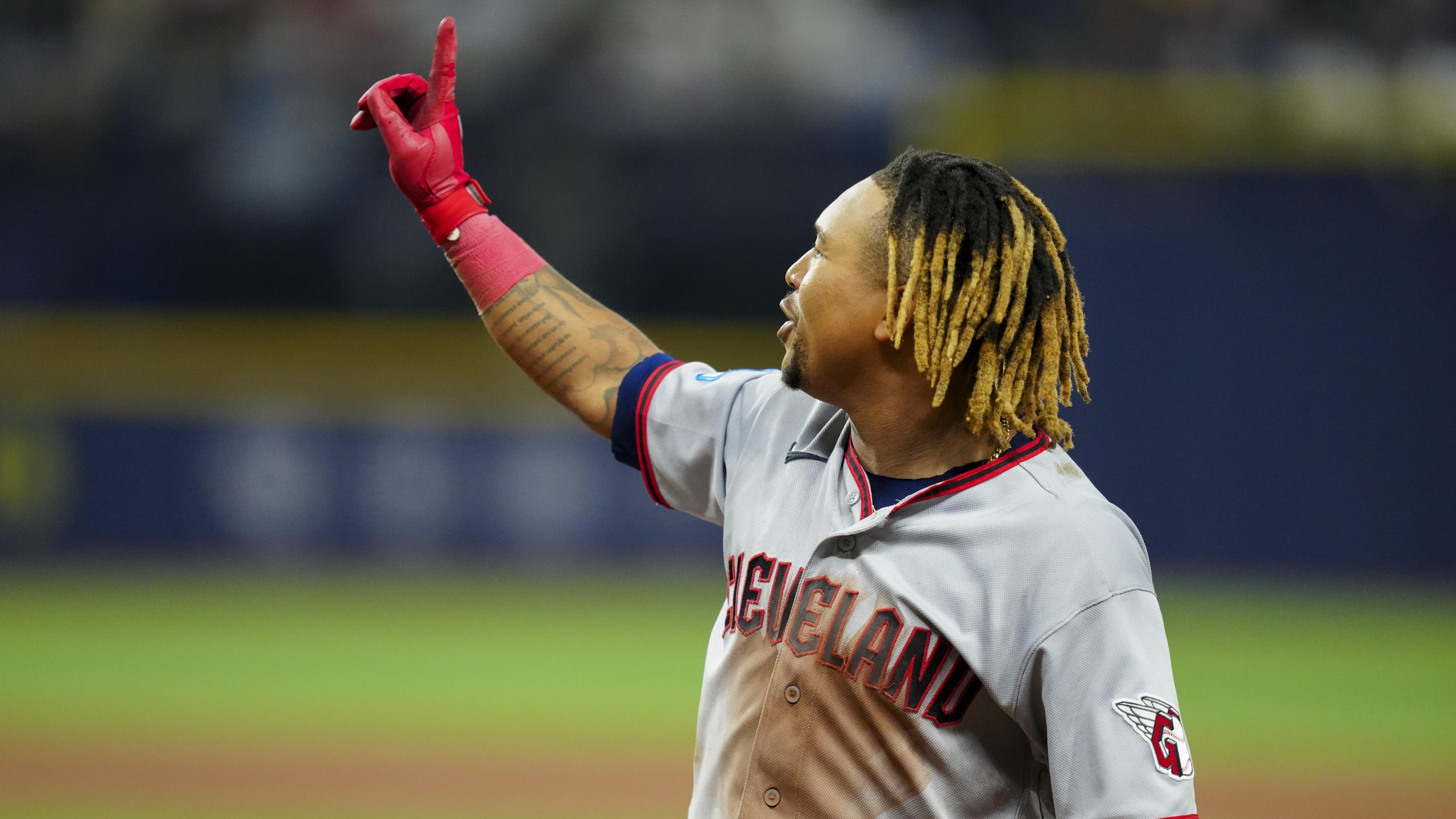
But how do teams construct the perfect deal that is beneficial for each side?
Taking a look back at 50 high-profile trades, most from the past decade (and a few dating back to the early '90s), there were only a couple that I’d consider to be “perfect.” Some are more one-sided than others; some had a major impact in shaping each organization over the subsequent seasons. Only two—made four-and-a-half years apart by the same two franchises—stand out as meeting each organization’s needs to a tee.
Those trades are revealed at the end of this article. Here are some more interesting tidbits that came up along the way.
Young and Unproven Rarely Wins Out
Eighteen of the 50 trades already appear to have a clear winner. But in only two of those cases are they one-sided because of what the young and unproven prospects in the deal have become as opposed to the impact a proven major leaguer had.
The Braves acquired outfielder Nate McLouth from Pittsburgh in early June of the 2009 season, giving up outfielder Gorkys Hernandez and pitchers Charlie Morton and Jeff Locke. McLouth was an All-Star the previous season, finishing with an .853 OPS, 26 homers, 46 doubles and 23 stolen bases.
At the time of the deal, McLouth had an .819 OPS, was 26 years old and was still under team control for two seasons thereafter. He finished '09 strong (.773 OPS) but regressed terribly over his last two seasons with Atlanta (.210 BA, 10 HR, 11 SB in 166 games).
It's taken a while, but the Bucs are finally reaping the benefits from the other half of the deal. Hernandez's value had dipped, but it was still enough to trade him to the Marlins in a 2012 deadline deal for first baseman Gaby Sanchez, who has been solid in a bench role. Morton struggled in his first two seasons in Pittsburgh but has a 3.91 ERA in 44 starts since 2011.
Locke, 25, has been the star of the deal, although he didn't appear to be a big part of Pittsburgh's future until his first-half performance this year (8-2, 2.15 ERA, 109 IP, 76 H, 47 BB, 73 K in 18 starts). The memory of McLouth's decline with the Braves probably won't go away as long as Locke, Morton and Sanchez continue to be valuable parts of a terrific Pirates squad.
Deal No. 2 that has turned heavily in the favor of a team acquiring young talent involves the Orioles and Mariners—two teams that have headed in opposite directions over the past couple of seasons. The inclusion of prospects Adam Jones and Chris Tillman in the trade that sent lefty starter Erik Bedard to Seattle prior to the 2008 season has a lot to do with that.
Bedard, who was fifth in the AL Cy Young voting in his last season with Baltimore, continued to pitch well with the Mariners, but he struggled to stay healthy, making just 46 starts in two-and-a-half seasons before being traded to Boston in July 2011.
At the time of the trade, Jones was only 22 and had a total of 73 big league games under his belt. In five-plus seasons with Baltimore, he has a .788 OPS, three All-Star appearances and two Gold Gloves.
Tillman has also come into his own after three rough seasons to begin his big league career (5.58 ERA in 36 starts from 2009-2011). The 25-year-old is 20-6 with a 3.51 ERA over his last 34 starts and was an All-Star selection this year.
These two trades were the misfits in the land of one-sided deals, where the one that sent Miguel Cabrera from Florida to Detroit for top prospects Cameron Maybin and Andrew Miller reigns as king. The Cardinals’ acquisition of Matt Holliday in July 2009 for prospects Brett Wallace, Shane Peterson and Clayton Mortensen has also turned out to be highway robbery for St. Louis.
Not only was Holliday’s impact tremendous for the remainder of the season (1.023 OPS, 13 HR in 63 games), his few months in one of the best baseball towns likely played a part in his decision to re-sign with the Cardinals the following offseason.
Even end-of-season rentals like CC Sabathia (Cleveland to Milwaukee) and Carlos Beltran (Kansas City to Houston) turned out to be great moves by the acquiring teams, and a three-team trade like the one that sent Manny Ramirez to the Dodgers and Jason Bay to the Red Sox ended up with the clear losers being the ones that took on the unproven prospects.
The Pirates received Andy LaRoche, Brandon Moss, Craig Hansen and Bryan Morris in the deal. Free agent-to-be or not, that’s not a lot of value for a player in Bay who had an .894 OPS in 106 games at the time of the deal, an .897 OPS in 49 games for the remainder of the regular season, and went 14-for-41 with three homers and three doubles in the playoffs.
Strong Rate of Success For Two- to Three-Month Rentals
As risky as they might appear, acquiring a player for the last two to three months of his contract typically results in success, even if a World Series title isn’t the end result. In the 10 instances of a rental-player acquisition in the list of 50 trades that were examined, there isn’t one case where a team (on the face of it) likely regrets making the deal.
Trading for Randy Johnson in '98 cost the Astros two top prospects for one of the premier starting pitchers in baseball. Carlos Guillen and Freddy Garcia both went on to have productive seasons with the Mariners, but Johnson’s short time in Houston was memorable.
The “Big Unit” had one of the most dominant runs of recent memory, winning 10 of 11 decisions and posting a 1.28 ERA with a 2.8 BB/9 rate and 12.4 K/9 rate in his 11 starts. While they were knocked out in the divisional round of the playoffs by the Padres, the team finished the season with a franchise-record 102 victories.
The Brewers also shouldn't look back with regret on the decision to acquire CC Sabathia in 2008. Not only has former top prospect Matt LaPorta, the centerpiece in the deal, become a bust, the Brewers finished the season strong behind their new ace (11-2, 1.65 ERA, 1.7 BB/9, 8.8 K/9) and reached the playoffs for the first time since 1982.
And sure, the Angels would love to still have Jean Segura, who has blossomed into a star with the Brewers one season after the Zack Greinke deadline deal. But anyone who was paying attention likely believed the Angels had a chance to win it all in 2012, especially with the addition of another top-line starting pitcher.
Greinke certainly didn’t hurt their chances—he went 6-2 with a 3.53 ERA in 13 starts with the Halos. It just wasn’t enough. The Angels were aggressive; you can’t blame them for going all in for their fanbase. It's good for business.
The same can probably be said for the Giants’ decision to send their top prospect, pitcher Zack Wheeler, to the Mets for outfielder Carlos Beltran. Like the Angels, SF fell short of the playoffs and Wheeler still has a front-line starter ceiling that could still make the Giants regret the move big time. Still, San Francisco won World Series titles in 2010 and 2012, and you can’t blame them for this 2011 deal.
Along with the aforementioned Cardinals trade and subsequent contract extension for Matt Holliday, three other deals out of the 10 resulted in contract extensions.
Ramirez re-signed with the Dodgers after he was acquired in the three-team trade with Boston and Pittsburgh that also included Jason Bay. Anibal Sanchez re-signed with the reigning AL champion Tigers this past offseason, which would make it extremely difficult to ever look back and think the Marlins got the better of a deal that sent Sanchez and second baseman Omar Infante to Detroit for catcher Rob Brantly and pitchers Jacob Turner and Brian Flynn.
After acquiring catcher Mike Piazza from the Marlins in 1998, just eight days after the Dodgers traded him in a blockbuster seven-player deal, the Mets were able to re-sign the catching great to a seven-year deal the following offseason.
If Piazza had signed elsewhere, outfielder Preston Wilson’s solid four-year run with the Marlins (.813 OPS, average of 26 HR, 82 RBI, 22 SB per season) would’ve been more notable. Wilson was one of three young players acquired in the deal (lefty pitchers Geoff Goetz and Ed Yarnall being the others). As it stands, Piazza helped lead the Mets to the NLCS in 1999 and a World Series appearance in 2000 while posting a .901 OPS with 197 homers during the span of the contract extension.
The Win-Win-Win Trade
Having a deal turn out great for two teams is hard enough. Executing a three-team win-win-win, however, is extremely rare. But that was the case when the Diamondbacks, Tigers and Yankees put their heads together and formulated a deal that sent seven players packing for a new destination.
In the team's inaugural year at new Yankee Stadium, the Yanks led the league in homers both overall (244) and at home (136). Acquiring Curtis Granderson, who just had a 30-homer season playing half of his games at pitcher-friendly Comerica Park, to replace free agent Johnny Damon made the team much younger and provided a power boost.
While his first season in New York (.792 OPS, 24 HR in 136 games) didn’t quite meet expectations, the power surge the Yankees were hoping for came the following two seasons (41 HR, 119 RBI in 2011; 43 HR, 106 RBI in 2012).
Landing Granderson, who was entering his 28-year-old season and had three years remaining on his contract (with a club option for 2013), cost the Yankees two highly touted prospects who had yet to produce at the big league level and were beginning to reach the point where that ability was being questioned.
But the Tigers took a shot on Austin Jackson, a center fielder with a good speed/power combination, and gave him a starting lineup spot from day one. Same with the Diamondbacks, who acquired Ian Kennedy and put him right into their starting rotation even after he missed nearly all of the 2009 season after an aneurysm was discovered in his right arm.
As expected, there were ups and downs with the youngsters. But Jackson, after showing flashes of brilliance in his first two big league seasons, broke out in Year 3 with a .300/.377/.479 slash line in 2012, including 16 homers, 29 doubles, 11 triples and 103 runs scored. Kennedy went 21-4 with a 2.88 ERA in his second season with Arizona, finishing fourth in NL Cy Young voting and 14th in MVP voting after helping lead the D’Backs to a 94-win season and division title.
If the D'Backs could take it back, they would probably rather have held on to Max Scherzer in the deal, as it’s safe to say that he has become the best player in the trade. In 115 career starts with the Tigers, Scherzer’s 56-28 with a 3.76 ERA, 2.8 BB/9 and 9.4 K/9, including a 13-1 mark in 2013.
In addition to Kennedy, Arizona also acquired right-hander Edwin Jackson from Detroit, where he was an All-Star in 2009. While he wasn’t very good overall in 21 starts for Arizona (5.16 ERA), he did pitch a no-hitter—an unforgettable 149-pitch, eight-walk performance.
Jackson was traded to the White Sox for Daniel Hudson, who was 23-13 with a 3.01 ERA in 44 starts between 2010-2011 until multiple Tommy John surgeries put his career on hold, and lefty pitching prospect David Holmberg, who has a 2.97 ERA as a 21-year-old in Double-A, to Arizona.
The emergence of Jackson and Scherzer, to go along with a couple of productive seasons from reliever Phil Coke (who came over from the Yankees), make it easy for the Tigers to forget that lefty relief prospect Daniel Schlereth, acquired from Arizona, was a bust.
So, while it can still turn in different directions—with most of the players involved still in the prime of their careers—we can look at this deal as a win for all three teams involved.
San Diego Padres: Kings of the Franchise-Changing Trade
There’s no doubt that the Padres have been part of some of the biggest trades in baseball history—some good, some very bad, some nearly perfect.
The 1981 trade that sent future Hall of Famer Ozzie Smith to the Cardinals for Garry Templeton was obviously a bad one. But it sure helped shape the Cardinals into the powerhouse they became soon after with a World Series championship in 1982 and two other World Series appearances in '85 and '87.
It wasn’t so much who they acquired as much as who they traded away in the early '90s, making them somewhat of a laughingstock throughout the league.
But acquiring first baseman Fred McGriff and shortstop Tony Fernandez from the Blue Jays before the 1991 season in exchange for a 22-year-old second baseman named Roberto Alomar—who had already been voted to an All-Star team in his third season and would be voted to 11 consecutive more—and future Blue Jays legend Joe Carter isn’t as bad as you’d think.
In fact, it was a pretty good deal for each team to start out with. And it would’ve been much better for San Diego had the return for McGriff been anything close to fair when it sent him to Atlanta during its 1993 fire sale.
In San Diego, the “Crime Dog” was one of the best and most-feared hitters in the game, posting a .910 OPS with averages of 33 homers, 105 RBI and 100 walks in his two seasons with the Padres. He was on a similar pace in 1993 when he was sent to the Braves for three prospects, notably future bust Melvin Nieves.
Fernandez didn’t last as long as McGriff, having been traded away before the '93 season, but he had two relatively solid seasons as the Padres shortstop, including an All-Star appearance in 1992.
The long-term production from Alomar (.833 OPS, 11 HR, 41 SB per season from 1991-1995, five All-Star appearances, five Gold Gloves) and Carter (.781 OPS, 29 HR, 85 RBI per season from 1991-1997, five All-Star appearances) in Toronto far outweigh what McGriff and Fernandez did in their short tenures with the Padres, making it a far from perfect deal. The potential was there, though.
One that was closer to being perfect was the huge 12-player blockbuster between the Padres and Astros prior to the 1995 season. The Padres were in dire straits after a fire sale that saw them sell off all their best assets outside of Tony Gwynn.
Following two awful seasons in 1993 and '94, general manager Randy Smith found a way to bring plenty of new faces, a new attitude and much-needed star power to San Diego.
The main players in the deal were third baseman Ken Caminiti and center fielder Steve Finley, who became instant fan favorites as Padres with their spectacular defense, home run power and fiery competitiveness. Young outfielder Derek Bell was the centerpiece of the package that went back to Houston.
Although Bell, who had a .771 OPS with an average of 15 homers, 89 RBI and 20 stolen bases with Houston between 1995-1999, was a solid player on some very good Astros teams in the mid-'90s, his impact doesn’t compare to what Caminiti and Finley were able to do with the Padres.
Only two winning seasons during the Caminiti/Finley era (1995-1998) doesn’t begin to tell the whole story. In 1996, the team clinched its first division title and playoff berth since 1984 with a dramatic three-game sweep to overtake the Dodgers on the last day of the regular season. Caminiti was the NL MVP that season.
Two years later, the Padres were back in the playoffs after a franchise-best 98-win season. This time, they went all the way to the World Series. Both Caminiti and Finley subsequently left in free agency, but their impact on the organization and the city will never be forgotten.
With the departure of the two, the Padres went through another dark period in their history with five consecutive losing seasons and either a fourth- or last-place finish in the division. But the following season, in 2004, the Padres moved into its beautiful new downtown ballpark and the start of four consecutive winning seasons—including two division titles—began.
There were several key acquisitions along the way in the team’s return to prominence, but none more so than a very rare August deal that brought home native San Diegan Brian Giles.
I say “rare” because the Padres weren’t contenders when they acquired Giles in late 2003. They were getting a head start on the offseason when they traded away prospects Bay and Oliver Perez to the Pirates for the two-time All-Star, who went on to finish his career in San Diego.
While the spacious confines of Petco Park made it impossible for Giles to continue being one of the top home run hitters in the league, he still made a significant impact at the plate. From 2004-2008, he had an .832 OPS with an average of 15 homers, 75 runs batted in, 35 doubles and 93 walks per season. His skills had diminished by 2009, but he had a huge part in making the inaugural Petco Park years an enjoyable one for the fanbase.
Now, was this trade perfect? I’d say it’s very close. There’s no telling how Bay’s career would’ve turned out if he would’ve been breaking in as a big leaguer at Petco Park, which was often in the headlines because of frustrated Padres hitters complaining about hitting a ball on the money and having it die at the warning track.
Bay did become a star in Pittsburgh, though, as Rookie of the Year in 2004 and All-Star appearances the following two seasons. Perez was great for one season, posting a 2.98 ERA with 3.7 BB/9 and 11.0 K/9 in 30 starts in 2004 but was completely awful after that.
The Pirates still weren’t very good, though, so I’d give the edge to San Diego for Giles' five very productive seasons to go along with his veteran leadership in the clubhouse, making it a trade that falls just short of being perfect.
Anatomy of Two Perfect Baseball Trades
Preceding the McGriff-to-Atlanta blunder the Padres executed in July 1993, the Padres traded 24-year-old third baseman Gary Sheffield, who had quickly become one of the best hitters in baseball after the team acquired him from Milwaukee prior to the 1992 season. As bad as the deal looked at the time, the Padres didn’t get fleeced in this one.
Sheffield was sent to the Florida Marlins, along with lefty reliever Rich Rodriguez, for three young pitchers that most people hadn’t ever heard of. One was a former shortstop who had converted to the mound two seasons earlier while in the Reds organization. That pitcher’s name was Trevor Hoffman, who may not be the best closer of all-time—that title belongs to Mariano Rivera—but could very well be considered the second-best.
The Hoffman-for-Sheffield deal took a few years to hit peak impact. Sheffield continued to mash in Florida, posting a 1.001 OPS with 43 homers and 124 runs batted in from 1994-1995, but he couldn’t stay healthy and only played in 150 games over that two-year span.
Over his next two seasons, though, he was able to play in 296 games and post a .988 OPS with 63 homers and 263 walks. He also had a huge postseason in 1997 (16-for-50, 3 HR, 7 RBI, 20 BB, 8 K) as the Marlins went on the win the World Series title. When he was traded early in the '98 season, Sheffield had 122 home runs during his Marlins tenure.
By the time Sheffield had left Florida and was playing for the rival Dodgers in 1998, Hoffman had already established himself as a top closer and was in the midst of one of the best seasons ever for a relief pitcher (53-for-54 in save opportunities, 1.48 ERA, 2.6 BB/9, 10.6 K/9). That season ended in Hoffman’s lone World Series appearance.
Hoffman stayed with the Padres for another decade, making the All-Star team in half of those seasons and adding 366 more saves to the 186 he had coming in. Including seven saves with the Marlins pre-trade, his grand total after his decorated Padres career stood at 554—the most all time until Rivera surpassed him in 2011.
Speaking of that magical 1998 season for the Padres, there was an all-important trade that happened prior to the season that turned a very good team into a great team.
If you’re ever wondering when it’s best to make a risky deal to acquire an impact rental for your best prospect, take a good look at who the Padres were heading into the offseason after the 1997 season. They were one very integral piece away; they went out and got it.
In December 1997, the Padres acquired Marlins ace Kevin Brown for first base prospect Derrek Lee and two other minor leaguers. While it would’ve been nice if they had Lee ready to take over for veteran Wally Joyner a year or two down the line, Lee was the Padres’ best trade chip and the only way they’d land a pitcher of Brown’s caliber.
But no one will argue that one season of Kevin Brown was totally worth the trade, as Lee spent the next six seasons as a very productive player with the Marlins (.863 OPS, averages of 27 HR, 81 RBI, 30 2B, 75 BB, 11 SB between 2000-2003). Lee struggled in the 2003 playoffs, but the Marlins won, nevertheless, and their first baseman's impact on that regular season (.888 OPS, 31 HR, 92 RBI) was huge.
Brown, at 33, proved that he was still every bit as dominant as he had ever been. Not only was he the best pitcher on that team, he was an “ace” in every aspect of the term. He was a workhorse. He threw a mid-to-upper 90s sinker, and his secondary offerings were “filthy.” He worked quickly, he was intimidating and brought a much-needed edge to a Padres team that had been beat up on too many times throughout its existence.
When Kevin Brown was on the mound, fans and players actually had reason to believe that a win was coming that day. A loss usually meant the offense didn't do its part. Brown allowed more than three earned runs in just three of his 35 regular-season starts, and was brilliant in the playoffs (39.1 IP, 11 ER, 24 H, 17 BB, 46 K).
Alright, already—you get the picture: Brown’s impact was tremendous. He was also one of the final pieces to the greatest Padres team ever assembled. And part of one of the rare “perfect” baseball trades where both general managers involved—in this case, Dave Dombrowski and Kevin Towers pulling off the trade (Dombrowski and Randy Smith put together the Hoffman-for-Sheffield deal)—can pat themselves on the back for a job well done.

.jpg?w=2560 "Grading WWE Raw 🔠")