

The new-look Los Angeles Lakers appear poised for a championship push next season, yet, ultimately, the star-laden roster that dons purple and gold will come up short. Just like the 2003-04 "legends" team before them.
You remember the team I'm referring to, the Kobe Bryant- and Shaquille O'Neal-led Lakers team that picked up perennial All-Stars Karl Malone and Gary Payton in hopes of cruising its way to a championship ring.
That team won 56 games in its first season. That team manhandled three respectable franchises—including the then-top-seeded Minnesota Timberwolves—as it traipsed its way to NBA Finals in its first season.
TOP NEWS

J-Dub, Wallace May Miss Entire Season
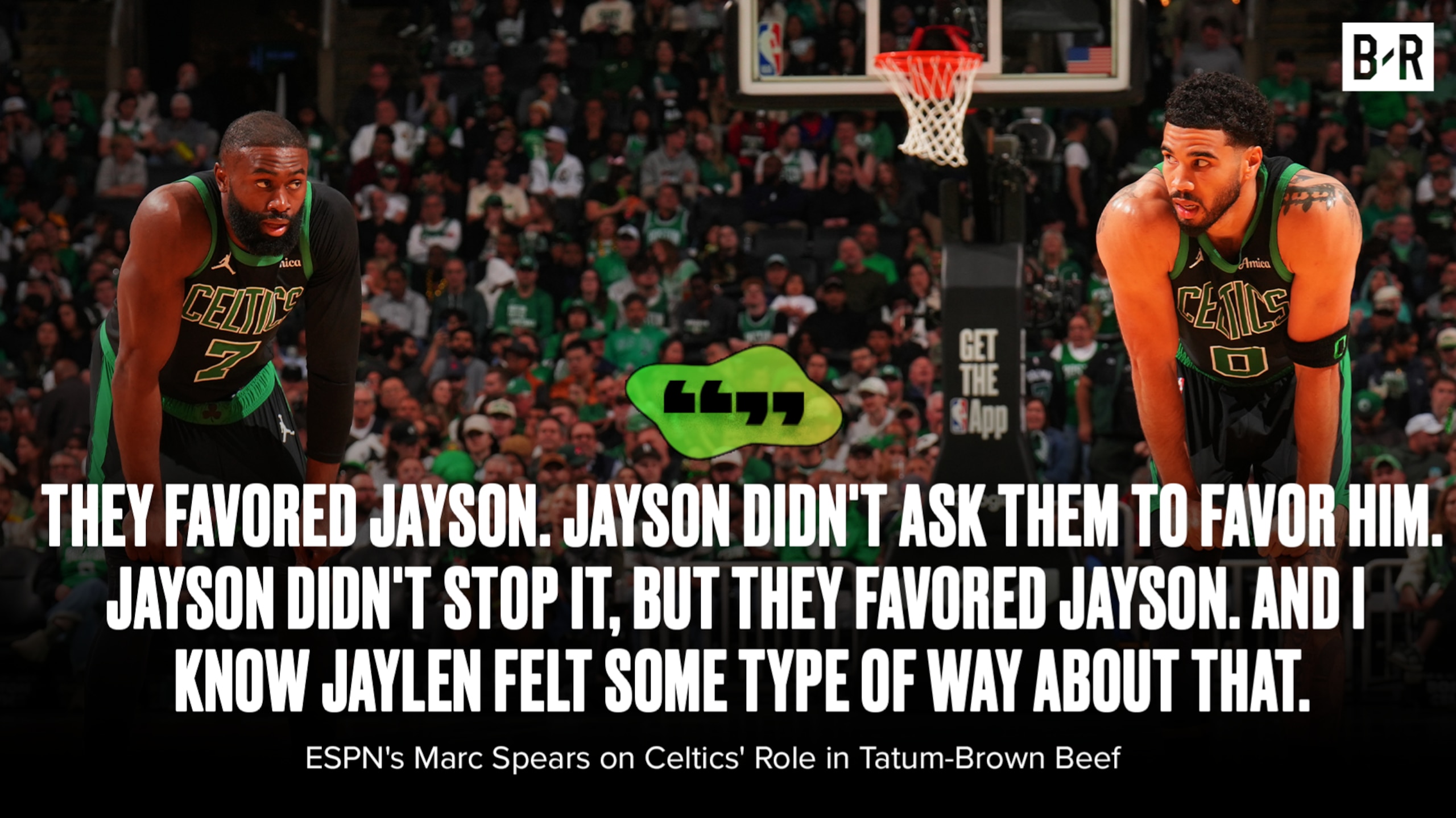
Celtics at Fault for JT-JB Beef? 🤔
Melo's Quote on Confidence 😎
And that team ultimately came within three victories of a title, in its first season.
The caveat? That first season was also its last.
Los Angeles gutted its roster soon after, as one Phil Jackson admitted that the team had "lacked the unity that had defined the Laker squads who won three straight titles."
To be clear, this Los Angeles squad is coming off two consecutive years of postseason meltdowns as opposed to three seasons' worth of triumphs, yet its dynamic remains strikingly similar.
Sure, the Lakers added Antawn Jamison and Steve Nash to the fold and are also hot on the heels of one Dwight Howard, but can immediate chemistry from moves of such magnitude even be established?
While it must be noted that Los Angeles' "Big Four" of today is easily in better shape than Big Four from back then, that doesn't necessarily ensure anything.
Yes Jamison, while not a starter, is better equipped to score than Malone was when he joined the Lakers, and yes, Nash has aged much better than the perpetually scowling Payton.
But with prolonged star power also come egos and stubbornness.
Will Nash allow Bryant to spend adequate time creating his own offense? Can Jamison find ways to score despite taking fewer shots? Will Andrew Bynum thrive amidst a bevy of trade rumors or Howard successfully cope with the pressure of playing on one of sports biggest stages? Can Pau Gasol revive his career surrounded by even more talent that demands the ball? And are there enough touches on the offensive end to go around?
The Lakers' newly formed rotation is undoubtedly formidable, but it's also fragile. And it would only become more delicate with the addition of Howard.
Powerhouse assemblies are angled at one thing: championships. But they often come at immediate, sometimes permanent, prices.
Though the suddenly revamped Lakers are eye popping on paper, they are not immune from growing pains, regardless of how many years of experience they boast.
In fact the more playing time they have under their belt, the harder a forming becomes.
Just like the core of the Lakers from 2003-04, the current collection of players is already set in its ways, and there may not be time for all pertinent parties involved to adapt to one another.
The "legends" team fell to a Detroit Pistons squad that was the epitome of familiarity, not unlike the way the new-and-improved Miami Heat fell to the Dallas Mavericks last year.
And to make matters more complicated, this team isn't built like the Heat—for both the present and the future.
This team is built to win now, once again like the faces of 2003-04.
Both Bynum and Howard—plant your flag—can explore the open market next summer, Jamison is in Tinseltown on a one-year deal, Bryant and Gasol have two years apiece left on their current deals, and Nash is signed on for three.
That's an incredibly small window for a team already burdened with a mountain of expectations. And let's not forget, that window is liable to close even faster. The "legends" team, after all, was dismantled after coming within three victories of a championship.
Championships are not to be rushed, nor are they won overnight. Like the Lakers of 2003-04, this team is built to pile up wins, but also like that team, its not constructed to grow together, not right away at least. That could take years, and as the "legends" team showed, egos can clash and patience may not be a prevalent virtue.
Names, faces and resumes don't win championships. Cohesion, familiarity and "unity" do.
And as of right now, the Lakers, these Lakers, just like their model of the past, aren't united. Two of their biggest pieces remain foreign ingredients, and the center position won't be shored up until the Howard saga is put to bed.
Even then, once the dust settles and the roster is solidified, unification is not a given. As it does with all superstar powerhouses, unification, trust and chemistry all take time to actualize.
They take patience.
And that's something for which this quartet, like the one before it, isn't built.
.jpg?w=2560 "Chiefs, Steelers Eye WR Trades")

.jpg?w=2560 "WWE Raw Live Grades 🔠")
.jpg?w=2560 "Multiple NFL Trades Predicted")


