
Steelers Forgotten Classics: A Sample Gallery of the Lost Games in Pitt History
The Pittsburgh Steelers have blessed their fans with an abundance of exhilarating games. The "Catalog of the Classics" runs deeper for the Black and Gold than most other NFL teams, especially in the modern era. For that reason, many of the team's greatest games are easily lost within its rich history, a lengthy volume that spans six Lombardi Trophies and an absurdity of spoils!
Periodically throughout the team's 2012 offseason, we will look back at one of the great Steelers games that many fans may not remember. In this way, the epic bouts will no longer be...
The Forgotten Classics!
The following is a taste of what this series has to offer: a refreshing perspective on some classic, albeit lost, games in a rich team chronology, and a reverence for the proud history of football's greatest modern team.
Please view the attached series samples on the adjacent slides, each of which is linked to the full article. Likewise, for an overview of the series to-date, a list of the published volumes will continue to be updated below, and each can be found in my writer's profile. Just click on my name above!
Please enjoy these previous installments. For links to volumes 1-10, please check out my writer's profile!
Vol. 1: The Immaculate Interception; 1997, at New England Patriots
Vol. 2: Streak Busters; 1982, at Dallas Cowboys
Vol. 3: Rookie Quarterbacks Collide; 2004, at New York Giants
Vol. 4: The Jinx Survives Sudden Death; 1978 and 1979, vs. Cleveland Browns
Vol. 5: A Rivalry Remembered; 2000, vs. Oakland Raiders
Vol. 6: Wild Win in the Windy City; 1995, at Chicago Bears
Vol. 7: Eighteen Wins, One Loss; 1984, at San Francisco 49ers
Vol. 8: Falling Giants; 1964, vs. New York Giants and at Cleveland Browns
Vol. 9: Elvis (Grbac) Has Left the Building; 2002, vs. Baltimore Ravens
Vol. 10: Jerry G. and Emperor C.; 1988 and 1989, at Houston Oilers
Vol. 11: "We Dey!"; 2006 at Cincinnati Bengals
Vol. 12: Buffaloed Bills; 1974 and 1996, vs. Buffalo Bills
Vol. 13: Marino vs. Tomczak; 1994, vs. Miami Dolphins
Vol. 14: Cowboy Collapses; 2004 and 2008, vs. Dallas Cowboys
Vol. 15: First Rounders and the Fifty-Two; 1984, vs. San Diego Chargers
Vol. 16: Snapped on the Fanny!; 1975, vs. Baltimore Colts
Vol. 17: Slash Carves Favre; 1998, vs. Green Bay Packers
Sample 1: 1975, Colts vs. Steelers
1 of 5
December 27, 1975 was a notable day in the Steel City for a few historic reasons, the most exhilarating of which was the defending champion Pittsburgh Steelers playoff win over the Baltimore Colts.
Other reasons included a playoff record that still stands...
And, well... I guess one could say that a hero was born. So to speak.
On the day listed as 27-Dec-75, Steeler Nation met arguably its most iconic creation, a little yellow piece of cloth that would grow from its infancy into a team staple that is not absent from the home of any true Steelers fan.
The moon...
The Great Wall...
The White House...
The Eiffel Tower...
What do these places all have in common? Many would say the Terrible Towel has encountered them.
They would be wrong.
The correct answer is: They've all encountered the Terrible Towel!
When sportscaster and beloved team enthusiast (Yoi! That may be understating it profoundly!) Myron Cope was asked to conjure up a gimmick, he replied to the requesting parties, "I'm not a gimmick guy!"
As it turned out, Cope was speaking to bosses at WTAE. Vice President and General Manager, Ted J. Atkins and President of Sales, Larry Garrett replied to Cope bluntly, stating their belief that such a creation would be great fodder for his upcoming contract renewal.
Suddenly, Cope was a gimmick guy.
The towel was to be unveiled during the Divisional Playoffs. The 12-2 defending champs were preparing to host the Baltimore Colts, who had rallied from a 1-4 start to win the Eastern Division and make the playoffs.
View the rest of this article here.
Sample 2: 1978 & 1979, Browns vs. Steelers
2 of 5
The Pittsburgh Steelers have played the Cleveland Browns more than any other opponent, and the fiery ire that fuels their all-time rivalry is enough to put the letters c-h-a-r into the term arch-rivals.
With Cleveland's recent series struggles and their absence from football from 1996-98, many are caused to question if the rivalry is still ignited with the same passion.
Nevertheless, both fanbases hate to lose to the other, and no matter how one perceives the teams' current shared disdain, nobody can deny the hatred between the clubs over the course of the past six decades.
Familiarity certainly breeds contempt, and perhaps no two teams epitomize this philosophy like the two traditionally blue-collar outfits that share many similarities.
Separated by only 143 miles, the proud cities play host to teams that both have fewer than two decals on their helmet and feature no cheerleaders.
Hell, the two squads even share odd bodies of water, located by the confluence of three rivers and a lake named "Eerie," minus the extra "e," of course.
More importantly, both franchises proudly boast championship eras, largely predicated on tough defense and hard running, with a little pizazz mixed in.
Still, don't whisper of these parallels to either the Browns or the Black and Gold. The teams and their fans may share a few characteristics, but most locals will tell you that it all "must be a coincidence."
In fact, a popular shirt in the Steel City states, "The Only Sign of Life in Cleveland." Pictured below is a road sign that reads: "Pittsburgh: 143 miles."
Similar or not, the two cities had ought as well be entirely different. When they play, the stakes are clear. Either the home team wins for the loyal faithful, or a week of depression and denial ensues. It's that simple.
Interestingly, while both franchises have a storied history, neither tends to win at the same time, a sort of yin-yang of NFL superiority.
The Browns dominated the NFL in the 1950's, carrying that success into the 60's and demonstrating superiority with a 31-11 record against paltry, pathetic Pittsburgh during the two decades.
Since then, the Steelers hold a 55-25 series edge.
In the 70's, fortunes changed. The teams split the season series for four straight years in 1970-73, both teams winning all of their home games during the span.
However, as Pittsburgh began to eke out victories at Cleveland Municipal Stadium, the Browns couldn't find a way to even the score by winning at the newly christened Three Rivers Stadium.
Pittsburgh won 10 of the final 11 games to complete its first dominant decade in the series.
After winning five NFL Championships in the previous 20 years, the 70's saw Cleveland fall back down to Earth. Meanwhile, the Steelers won their first playoff game in 1972, and the franchise entered a new orbit in the decade, ultimately winning four Super Bowls.
Never did the Browns' hatred and ire over the change in fortunes boil over more than in 1976, when defensive end Joe "Turkey" Jones picked up Terry Bradshaw in the process of a sack, pile-driving the quarterback in the cold Ohio turf. An injury from the occurrence cost Bradshaw two games.
Adding more frustration to their plight against Pittsburgh was Three Rivers Stadium, where the Browns entered 1978 as losers of their first eight appearances. Cleveland didn't merely lose because they were a bad football team.
Sure, the Browns didn't boast the same talent as the clearly superior Steelers, but the "no-namers" worked together well, finding a way to scrap out victories against other opponents. Yet, the Steel City was a bane to the Browns.
No matter how close quarterback Brian Sipe and crew came to finally ending the "cookie cutter curse," the Browns couldn't get a fix on how to win in this standard, bowl-shaped stadium.
Read the rest of this article here.
Sample 3: 1984, Steelers vs. 49ers
3 of 5
In the annals of NFL history, only three teams are able to reflect on enough Super Bowl victories to account for every finger on one hand. The Pittsburgh Steelers and San Francisco 49ers comprise 67 percent of the illustrious group, and only the Black and Gold have begun their conquest of the other set of digits.
For their divine histories, one would easily expect that their paths have crossed on Super Sunday, but the perceived "Pittsburgh power" and "49ers finesse," as accurate and inaccurate as those perceptions may have been, never battled for NFL supremacy on the league's grandest stage.
Instead, one of Pittsburgh's most proud wins over San Francisco came during their forgotten decade of the 80s, a time when "Joe Cool" and company would have been heavily favored to beat Pittsburgh in practically every season.
The Steelers enjoyed the type of gluttonous championship mystique during the 70s that San Francisco would revel in from the 80s into the early 90s.
Indeed, by the turn of the decade, the 70's Steelers, a homegrown squad heavily composed of draft choices molded into the epitome of "Pittsburgh excellence," began to see its shine dim. The limelight certainly didn't become a low-light overnight as the team continued to win into the new decade. However, as key members of the defensive front retired, blonde bombers lost capable elbows, and championship talent aged into mediocrity; December's wins suddenly became the last ones with each new season.
Conversely, Bill Walsh left the AFC Central's Cincinnati Bengals, where he spent his time as offensive coordinator grooming a sophisticated offensive philosophy known as "West Coast" and took the head job in the Silicon Valley of California.
With quarterback Joe Montana's aplomb, the offense's sheer versatility and the equipping of a solid defense and All-Pro secondary (Ronnie Lott, anyone?), San Francisco supplanted the Steelers as team of the new decade.
Yet, in the middle of that decade, a proud band of former champions sprinkled with players not nearly as well remembered would give the Black and Gold a flashback afternoon. The Men of Steel would travel to San Francisco to battle the 49ers in the midst of arguably their finest season.
In fact, the 1984 49ers came painstakingly close to being able to count their total losses on zero hands!
Instead of an undefeated season, the surprising 1984 Steelers would serve the "Scarlet Red and Metallic Gold" a scarlet letter: L. It would be the lone "L" amidst a slew of "W's."
Read the rest of the article here.


Sample 4: 2006, Steelers vs. Bengals
4 of 5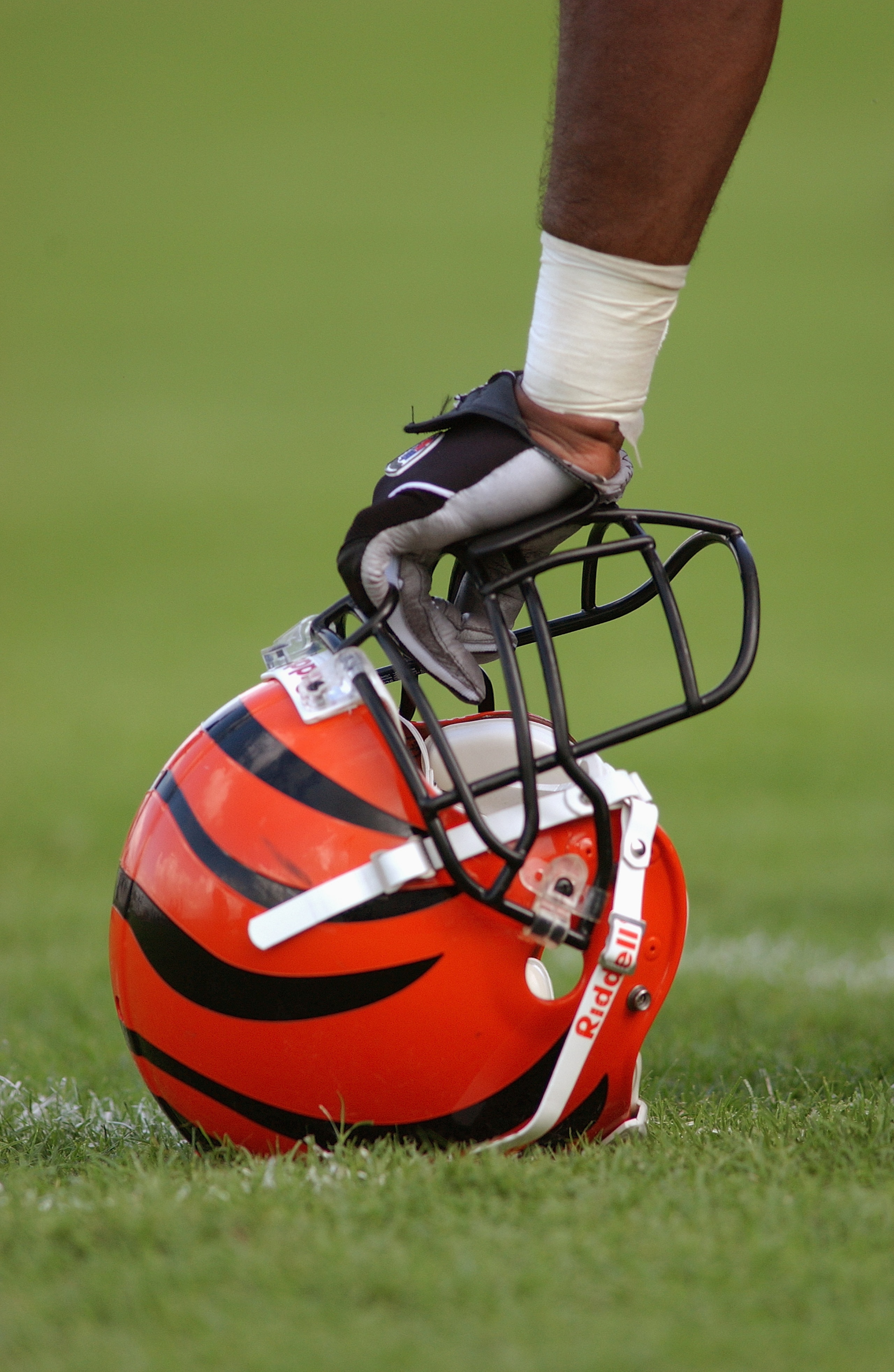
The Pittsburgh Steelers traveled to Paul Brown Stadium for their first-ever playoff game against the rival Cincinnati Bengals on January 8, 2006. The game is certainly not a forgotten classic, thus not quite meeting the qualifications necessary to be features in this series.
However, the events that unfolded during that contest reshaped the landscape of a rekindled rivalry, both between two division opponents and two peer quarterbacks that the public and mass media couldn't resist comparing.
Many factors allowed the wild-card playoff classic to have such meaning on both sides.
Carson Palmer was the big-armed quarterback alumnus of the prestigious University of Southern California, and his arrival in the NFL saw a certain early aplomb quite possibly only rivaled by his peer passer in the AFC North. With the down-for-the-count Bengals revived from putridity to mediocrity to contention, the hyped Palmer was largely considered one of the finest quarterbacks in professional football.
In fact, many considered the Cincinnati kid to be the superior field general to Pittsburgh's Ben Roethlisberger, despite Big Ben's record-breaking winning streak during his rookie season.
"Eh, he's just a game manager, winning on the heels of the team around him," people would emphatically respond, as if forgetting the Steelers' 6-10 record in 2003 and 30-13 blowout loss in Baltimore just prior to his arrival—the last defeat the Men of Steel would suffer in 2004.
Many in the media anointed Palmer the better quarterback, and the title seemed to fit whenever the Bengals handed Pittsburgh a third straight defeat in the middle of the 2005 season. Carson Palmer and the Cincy offense put up 38 points in victory, and the humiliating loss sent the spiraling Steelers to 7-5, two full games behind the division-leading Bengals.
Like an aspiring champion, the Black and Yellow rebounded like pesky insects of the same color, getting into the grill of opponents, swarming them on defense and stinging them on offense like killer bees. Four straight wins secured a playoff berth, and the Steelers would travel to Cincinnati.
Thus, the stage was set. At the onset, a raucous crowd came unhinged when their acclaimed passer showed off his studly arm with a perfectly placed deep bomb down the right sideline to receiver Chris Henry. Just like that, the Bengals were in business in the do-or-die NFL playoffs.
However, if their opening pass represented one side of that playoff coin, Carson Palmer's knee demonstrated how quickly the other side can rear its ugly head.
Defensive end Kimo von Oelhoffen rushed Palmer and rolled into his left leg from on the ground. The damage was severe—a tear of the anterior cruciate ligament and medial collateral ligament, a torn tendon and a dislocated kneecap.
Von Oelhoffen had become public enemy No. 1 in the stands and on the Cincinnati sideline, who boisterously claimed the damage was intentional. It made no difference. The Bengals rode their adrenaline to an early lead, but Pittsburgh's 24 unanswered points in the second half spelled the end of the season in western Ohio.
Like one more twisted knee or salt in the worst of wounds, fans who chanted "Who Dey?!" in the stands hours earlier watched highlights of Bill Cowher leading his locker room in a mock of their signature war cry.
Then, they watched as "The Chin" raised the Lombardi Trophy weeks later.
At home, his knee wrapped and rehabilitation not yet able to begin, Carson Palmer stewed on his ire, committed to getting even with the team that had taken "his Super Bowl," a sentiment shared by Ohioans and Bengals athletes alike during the 2006 offseason.
Read the rest of the article here.
Sample 5: 1994, Dolphins vs. Steelers
5 of 5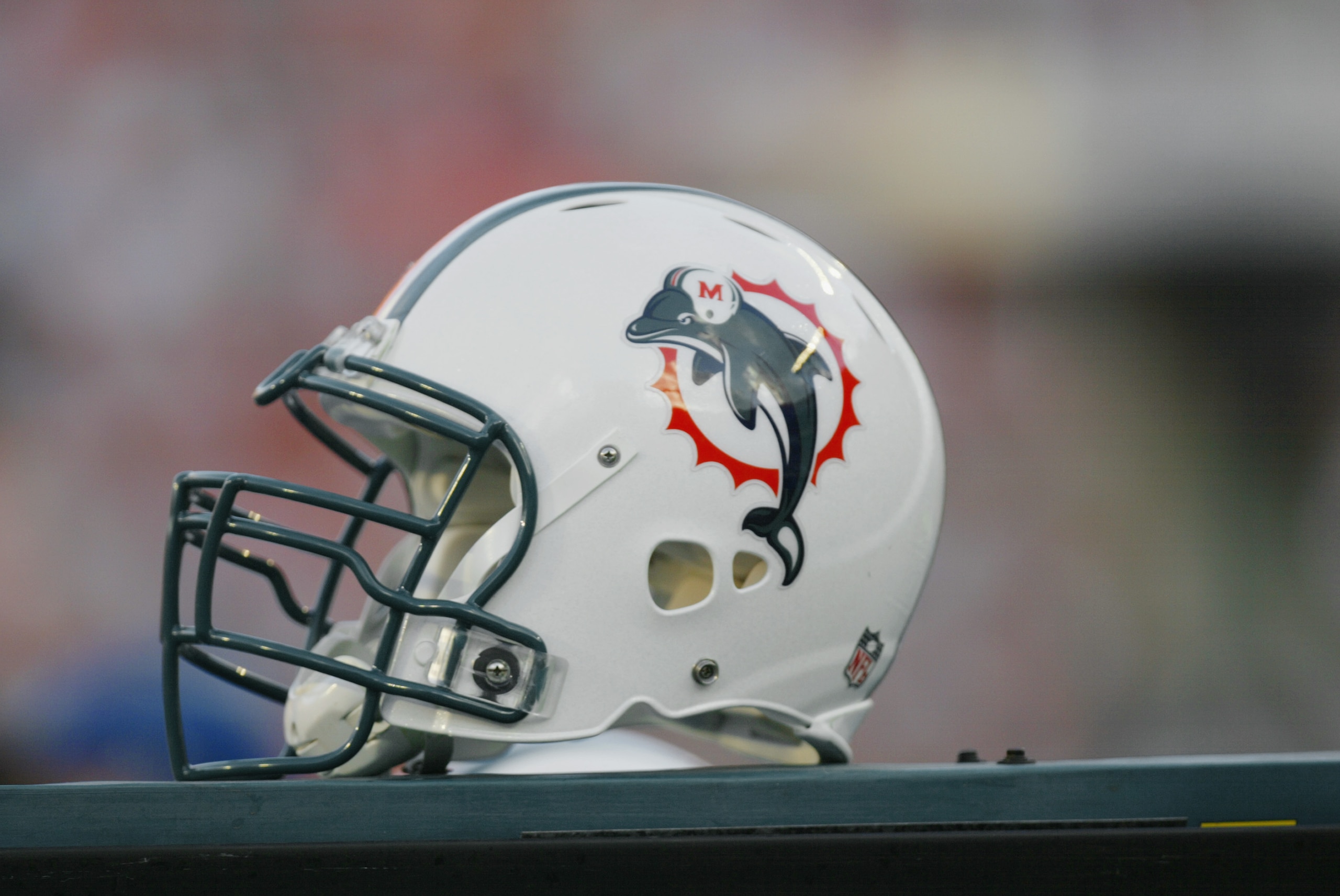
The Pittsburgh Steelers were filled with anxious adrenaline as they prepared to host the Miami Dolphins on November 20, 1994. After all, the two squads were mutually regarded among the list of favorites to represent the AFC in Super Bowl XXIX.
Beyond the hype and high expectations headed into the battle, who ever really could get a lick of sleep the night before dueling with legendary quarterback and Pittsburgh's own native son Dan Marino? This was no mere mortal quarterback, particularly prior to January.
For both 7-3 squads, the game had huge implications. Either could catch the San Diego Chargers in the race for the American Conference's best record, while the Steelers trailed the 8-2 Cleveland Browns in the AFC Central. Pittsburgh would have to catch their arch-rival in the standings despite an early season win over Bill Belichick and crew, 17-10 at Municipal Stadium.
If optimism was high in the Steel City, a conservative and often defunct offense certainly tempered local joy. Like the 2000 Ravens, who won consistently despite an offense that couldn't score touchdowns for long stretches, the Steelers entered play having gone 10 quarters without an offensive touchdown.
Adding to the concern was the loss of starting quarterback Neil O'Donnell six days earlier against the Buffalo Bills—a 23-10 Pittsburgh win that featured two defensive touchdowns and a legendary performance by Rod Woodson. Backup quarterback Mike Tomczak would make only his second start in 27 games with the Black and Gold and his first since a lopsided opening-day loss to the San Francisco 49ers to kick off 1993.
Conversely, the Miami Dolphins' faithful were enjoying the return of Dan Marino from a devastating injury in Week 5 of the '93 season. The future Hall of Fame passer jump started the '94 campaign with a five-touchdown performance in an electrifying duel with (and win over) Patriots quarterback Drew Bledsoe. Marino would come back from a horrendous ACL tear with another 30-touchdown campaign, leading Miami back to the playoffs as an AFC favorite.
So, immediately, the lauded "game of the week" seemed inherently stacked against the Steelers.
How many "Dan Marino vs. Mike Tomczak" posters would catch an eye? Few, if any.
On a day in which the Steelers grew from an improving roster under Bill Cowher and into true championship believers, the team would rally around their backup quarterback. The "Steel Trap" defense of Chad Brown, Kevin Greene, Rod Woodson, Levon Kirkland, Greg Lloyd, and crew would play their standard stand-out game, complete with hard hitting, blitzing, and overall chaos. Against Marino and the Dolphins, the Black and Gold defense would give a standout performance.
However, what few could have predicted would be the toe-to-toe nature of the quarterbacking duel on the field. Against two stingy defenses, both quarterbacks would find a way to come through in the clutch despite constant duress.
"Marino vs. Tomczak" would makes the headlines, indeed!
Read the rest of the article here.
.jpg?w=2560 "LA Premiere of \"Chad Powers\"")


.jpg?w=2560 "Landing Spots for Trade Candidates 📍")
.jpg?w=2560 "Ugly Jets Scoring Stat 😳")