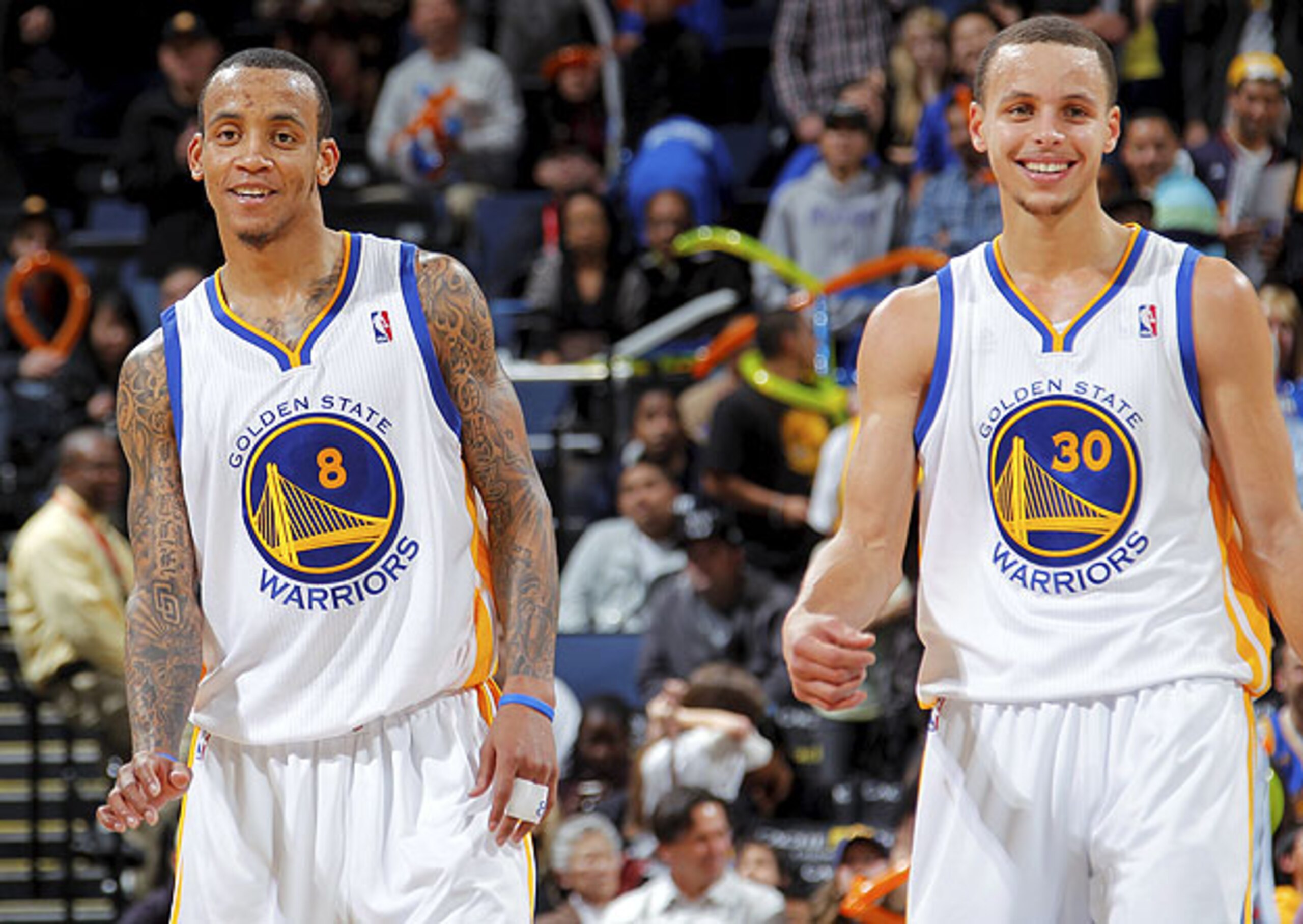

Monta Ellis and Stephen Curry: Can an Undersized Backcourt Succeed in the NBA?
The backcourt duo of Monta Ellis and Stephen Curry has been highly criticized. The two have been at the center of countless trade scenarios. This is mainly due to their height, or lack there of. It is widely believed that two guards shorter than 6'4" are automatic defensive liabilities.
The prototypical height for point guards in the NBA is 6'3" to 6'4" and 6'5" to 6'6" for a shooting guard.The majority of shooting guards are over 200 pounds, and to weigh less is seen as a size disadvantage.
Ellis and Curry are both listed at 6'3" and 185 pounds. Basically the height and weight of two typical point guards, rather than a point guard and shooting guard.
However, with such a disadvantage, the two are the most productive backcourt in the NBA.
Many still blame the two guards for the Warriors' defensive struggles, and claim that such a small backcourt can't lead their team to the promise land. Some even ask whether their has ever been a successful undersized backcourt.
This article will illustrate just how successful this young combo already is. As well as what can be expected of them as they mature. Additionally, the following slides will include 10 historic undersized backcourts that set the mold for Ellis and Curry.
Already the Most Productive Backcourt Duo
1 of 12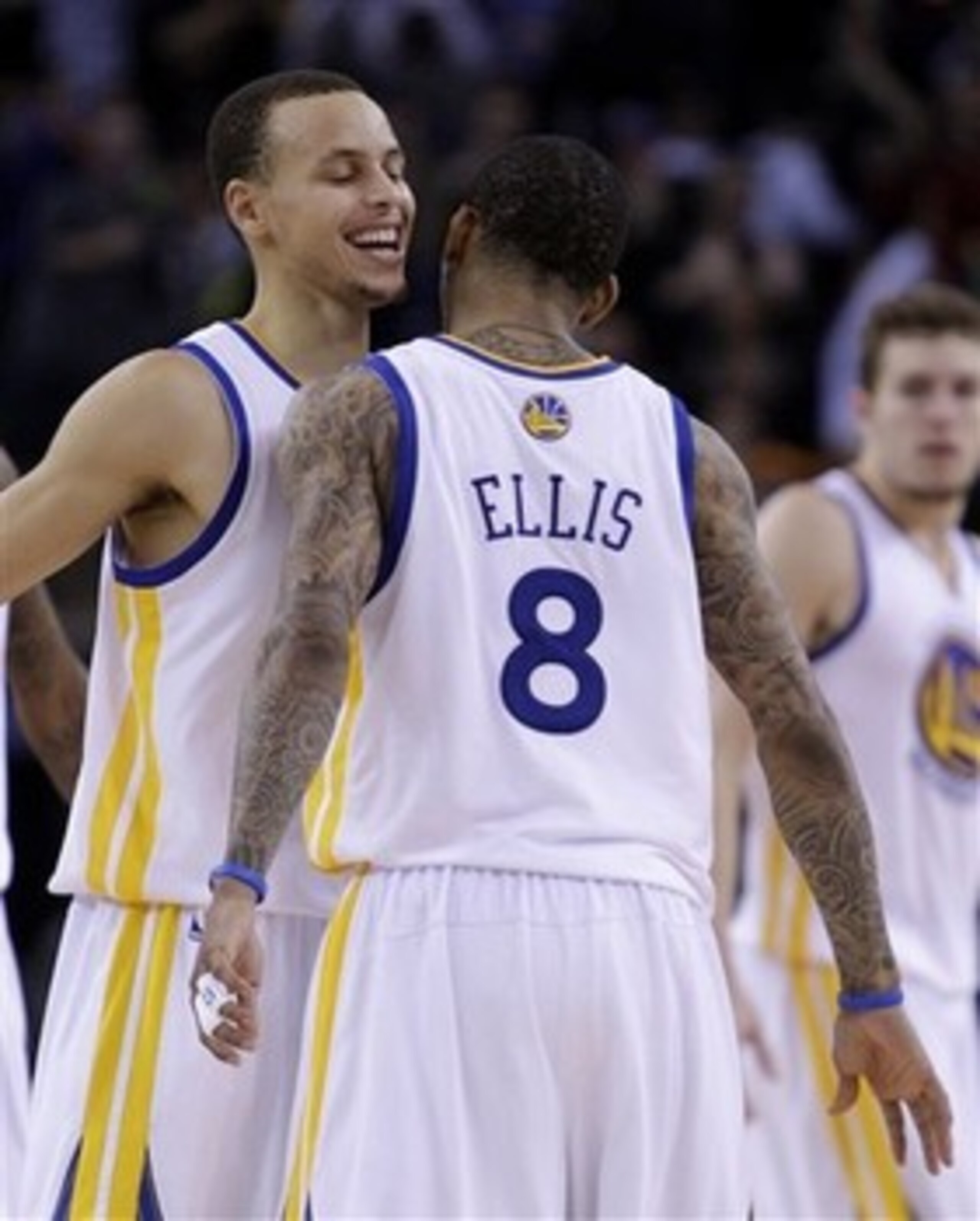
Below is a brief statistical comparison of the Warriors' young star guards and six other backcourts of high ranked playoff teams. The focus of this comparison is on each duo's combined averages of points per game (ppg), assists per game (apg), rebounds per game (rpg) and steals per game (spg).
The Heat and Bulls both lack a true starting guard to compliment their respective All-Star guard, Wade for the Heat and Rose for the Bulls. Both teams use an even rotation at the opposite guard position. Therefore, I've included all players of the Heat and Bulls' most common guard rotations.
Please note that Curry and Ellis blow away the competition in points, and remain among the elite in each other category. They even came close to matching the Chicago Bulls four-guard rotation.
In addition each of these playoff teams have strong post players and deeper benches than the Warriors. If Curry and Ellis had that kind of support they would be championship contenders.
Move on to the next slide to see who paved the way for Ellis and Curry.
| Team | Guards | PPG | APG | RPG | SPG |
| Warriors | Curry and Ellis | 42.7 | 11.4 | 7.4 | 3.6 |
| Lakers | Fisher and Bryant | 32.1 | 7.4 | 7 | 2.4 |
| Spurs | Parker and Ginobili | 34.9 | 11.5 | 6.8 | 2.7 |
| Celtics | Rondo and Allen | 27.1 | 13.9 | 7.8 | 3.3 |
| Thunder | Westbrook and Sefolosha | 27 | 9.6 | 9 | 3.1 |
| Heat | Bibby, Chalmers, and Wade | 40.5 | 10.4 | 10.9 | 3.2 |
| Bulls | Rose, Bogans, Brewer, and Korver | 43.9 | 12.1 | 10.9 | 3.2 |
Bob Cousy and Bill Sharman
2 of 12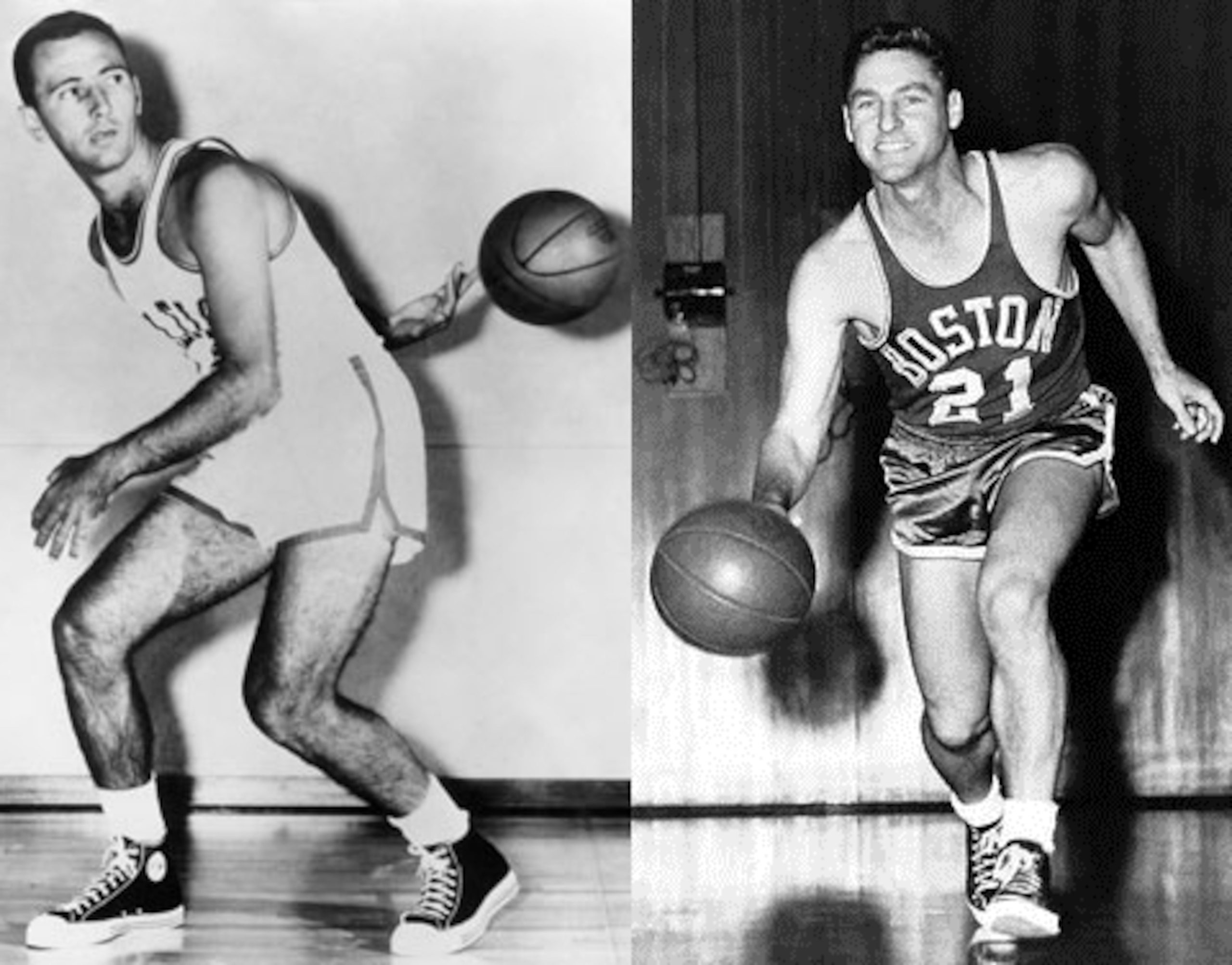
First on the list is the legendary Celtics' backcourt of Bob Cousy and Bill Sharman. They were both listed at 6'1" and 175 pounds.
Some may suspect that most players were smaller back then. Though that is partially true it is not completely true. They were still two of the smallest players of their time.
Together these two led the Celts to four NBA Championship Titles, spanning from 1957 to 1961. Cousy went on to win two more titles with the Celtics.
Cousy and Sharman were instrumental in each of their title runs. They did have the legend Bill Russell in the paint, but they were just as important to the franchise.
To this day Bob Cousy and Bill Sharman, together, are considered one of the greatest backcourts of all time. Many even argue that they are the greatest.
K.C. Jones and Sam Jones
3 of 12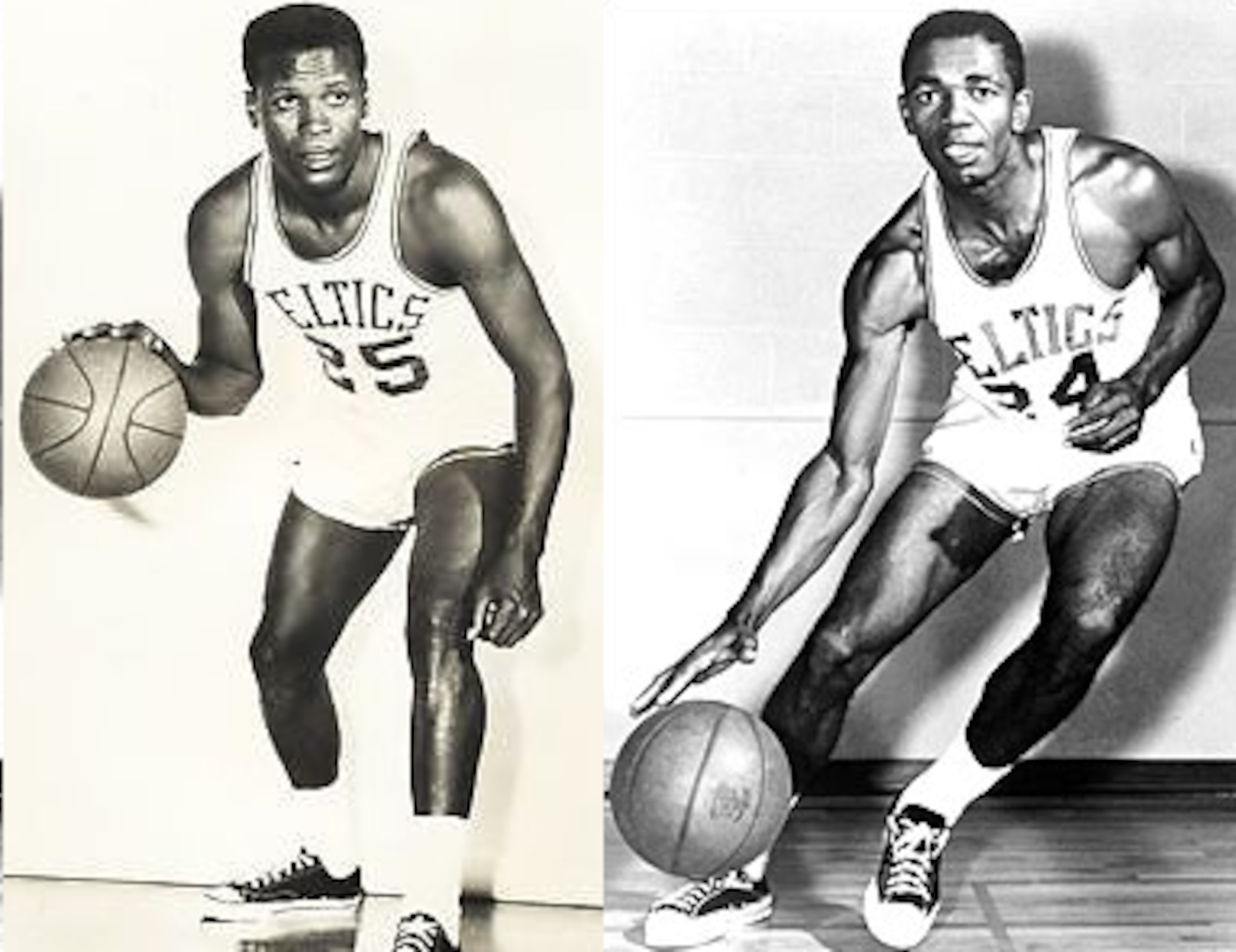
Next we have another legendary Celtic backcourt.
K.C. Jones and Sam Jones were just as crucial, as Cousy and Sharman, to the Celtics over the following years. K.C. Jones was listed as 6'1" and 200 pounds. Sam Jones measured in at 6'4" and 198 pounds.
"The Jones Boys" are also considered to be one of the greatest backcourt duos of all time, held in the same regard as Cousy and Sharman.
Would Bill Russell have been as great without these two guards and the previous two? He may have been, but these guards were huge contributing factors to his success.
K.C. and Sam won eight championships straight with the Celtics from 1959 to 1966. Shooting guard Sam Jones went on to win two more with the Celtics, totaling 10 rings for himself.


Gail Goodrich and Jerry West
4 of 12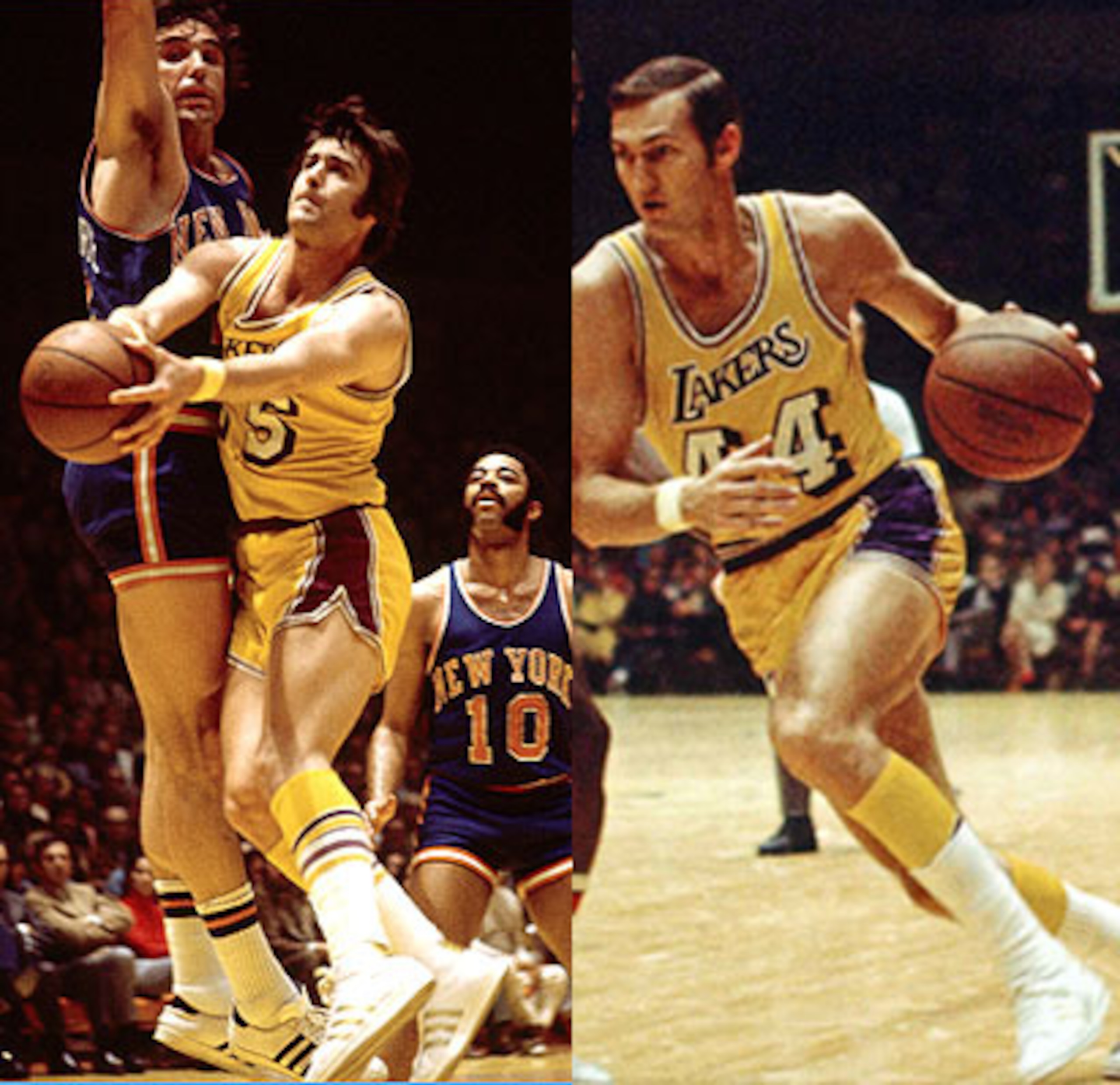
The 1970s brought a new breed of basketball.
In earlier years the ball was advanced up the court by passing, not dribbling, due to the ball's asymmetric shape. This led to the development of the basic offensive strategies we have today, and the fundamentals to ball movement.
As the game and the equipment evolved, the dribble began to be used more and more. Between the 1950s and the 1970s came the definition of "ball handling." In the 1970s, individual expression and creativity on the court took form and bred the modern style played today.
At the forefront of this movement was the backcourt team of Gail Goodrich and Jerry West.
Together they led the Lakers to two Western Conference Championships, and the 1972 NBA Championship Title. Their individual performances inspired a generation of basketball players. Goodrich was the Lakers' leading scorer for four straight seasons. West has been heralded as one of the top five shooting guards of all time, and he is even the model for the NBA's logo.
West and Goodrich were able to switch roles between point and off guard, just as Monta Ellis and Stephen Curry are interchangeable.
Goodrich stood 6'1" and weighed 170 pounds. West was 6'2" and 175 pounds. Two small guards among giants. This may be the greatest example of a successful undersized backcourt.
Again these two had their big man in the paint, Wilt Chamberlain.
Walt Frazier and Earl Monroe
5 of 12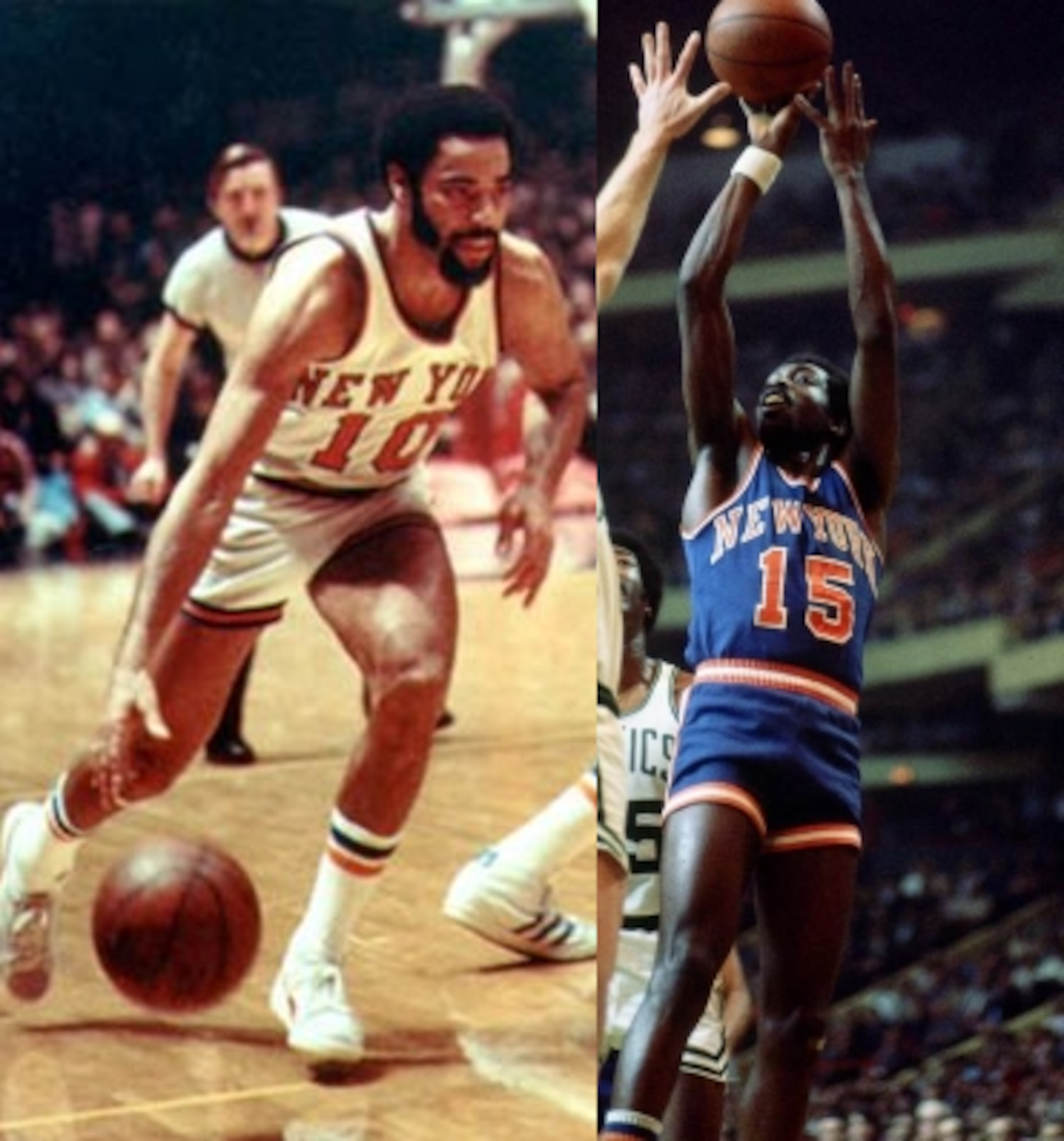
Walt Frazier and Earl Monroe also led their team to two consecutive Conference Championships in the East, and met the Lakers in the Finals. They were defeated in the 1972 Finals by the previous Lakers duo but bounced back to win the 1973 NBA Championship Title. And so the dawn of flamboyant guards began.
Earl Monroe was a dynamic guard and one of the first of his kind. He was renowned as a creative player who invented a number of moves. He would make a name for himself on the Baltimore Bullets.
In 1971, Monroe was traded to New York, and paired with Walt Frazier.
Frazier was known for his similar play, and boastful personality. Together the two were nicknamed the "Rolls Royce Backcourt", for their flamboyant style.
At first there was speculation as to whether they could coexist, just as Ellis and Curry. They proved they could, and led New York to it's second and last Championship. (New York has not won an NBA Championship since.)
Frazier actually had good size for a point guard, much like Curry. Although his backcourt mate, Monroe, was a bit undersized for a shooting guard. Sound familiar?
Walt Frazier was listed at 6'4" and 200 pounds. Earl Monroe was 6'3" and 185 pounds, at a time when shooting guards such as Pete Maravich stood 6'5" and weighed 197 pounds.
This small pair proved the doubters wrong, becoming one of the most formidable backcourts of their time. To this day they are counted among the greatest to play the game.
It should be noted that these two had their help in the paint as well, with Dave DeBusschere, Willis Reed and Jerry Lucas.
Maurice Cheeks and Andrew Toney
6 of 12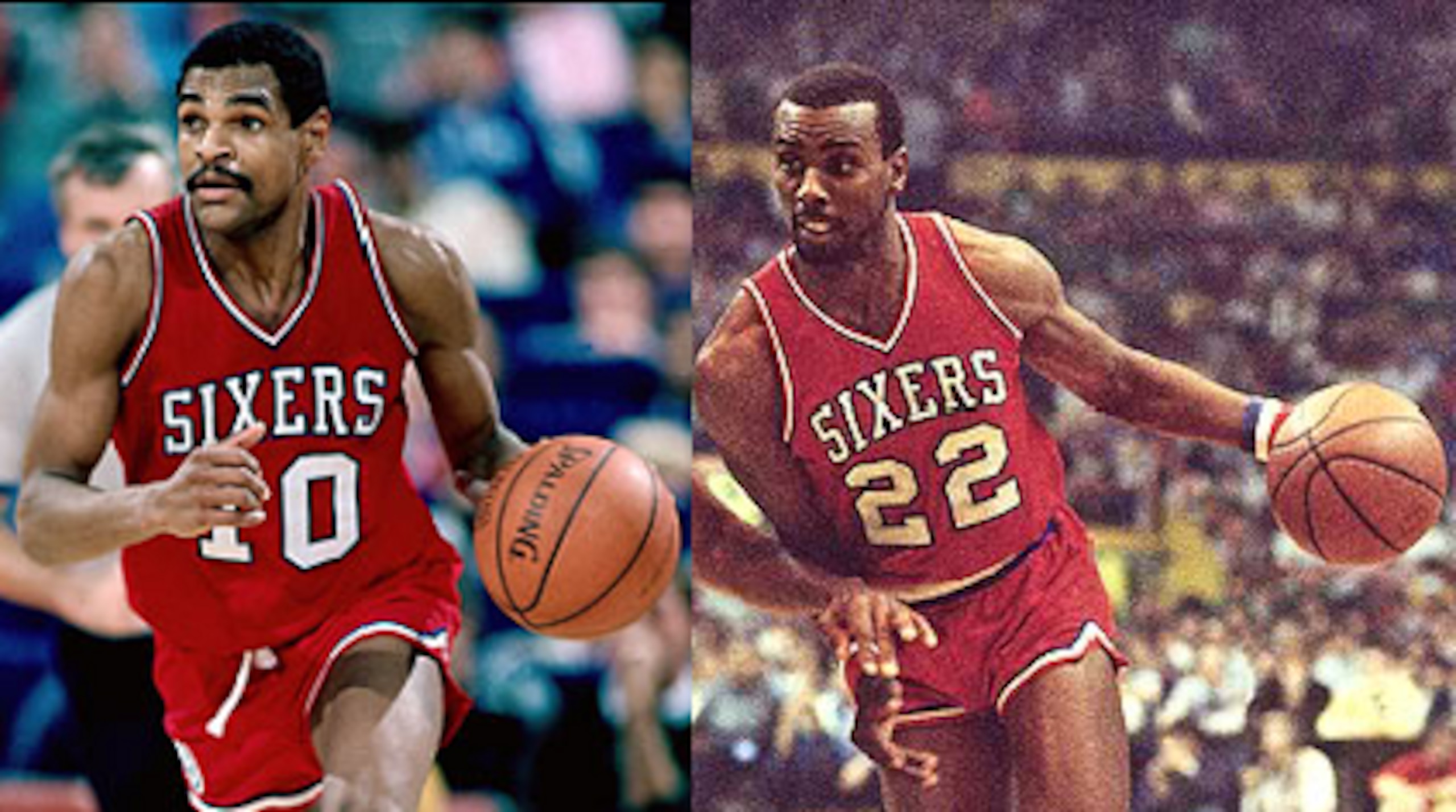
Maurice Cheeks led the Philadelphia 76ers to the 1980 NBA Finals, where they lost. That year the Sixers drafted Andrew Toney. Together they would lead Philly to two consecutive Eastern Conference Championships and the 1983 NBA Championship Title.
Point guard "Mo" Cheeks was 6'1" and 180 pounds. Shooting guard Andrew Toney was 6'3" and 178 pounds. These two small guards faced off against the Lakers' 6'9" point guard Magic Johnson and his backcourt mate Norm Nixon in both of their NBA Finals appearances.
In the 1982 Finals that the Sixers lost to the Lakers, Toney led both teams in scoring for three games. He also led the Sixers in scoring and assists for three games of those Finals.
The Lakers had three starters standing 6'9" and greater, including Magic and their legendary center Kareem Abdul-Jabbar. This was a tremendous team to overcome.
Although some critcs claim that the Lakers' injuries were to blame for their loss in the '83 Finals, L.A. still had height and youth advantages where it counted.
Cheeks and Toney not only led the Sixers to a win over the Lakers, they swept them winning four games straight.
Continuing with the formula of a balanced team these two were complimented by Julius Erving, Bobby Jones and Moses Malone in the paint. Yet they were just as important to the team's success as Erving and Malone. After all, it was both Erving and Malone's first and only championship each, after a prior decade of individual dominance.
Isiah Thomas and Joe Dumars
7 of 12
Now deeper into the 1980s came the emergence of another Hall of Fame undersized backcourt.
Joe Dumars and Isiah Thomas were two small guards during the 1980s, a decade said to be the most physical of all in basketball.
Thomas measured in at 6'1" and 180 pounds. Dumars was listed at 6'3" and 195 pounds. Together they were one of the smallest and most successful backcourts of their day.
The duo led Detroit to three straight Eastern Conference Championships and two straight NBA Championship Titles in 1989 and 1990.
Like "Mo" Cheeks and Andrew Toney they lost to Magic Johnson and the "Showtime" Lakers, but bounced back to sweep L.A. Thomas had an off-court friendship with Magic, as well as a documented on-court rivalry.
Thomas and Dumars also began a rivalry between Detroit and Chicago.
Michael Jordan was drafted a year before Joe Dumars, and the two shared some of the greatest battles between two players. This being despite Jordan having three inches and 20 pounds on Dumars.
Jordan made a famous statement in which he praised Dumars as the greatest defender he had ever faced.
A key contributing factor to their success was coach Chuck Daly's defensive strategy, which—while playing the Bulls—limited Jordan's possessions tremendously.
Detroit also boasted a front line of Dennis Rodman, John Salley and Bill Laimbeer. This big frontcourt was what was needed to compliment the small backcourt of Thomas and Dumars.
Kevin Johnson and Jeff Hornacek
8 of 12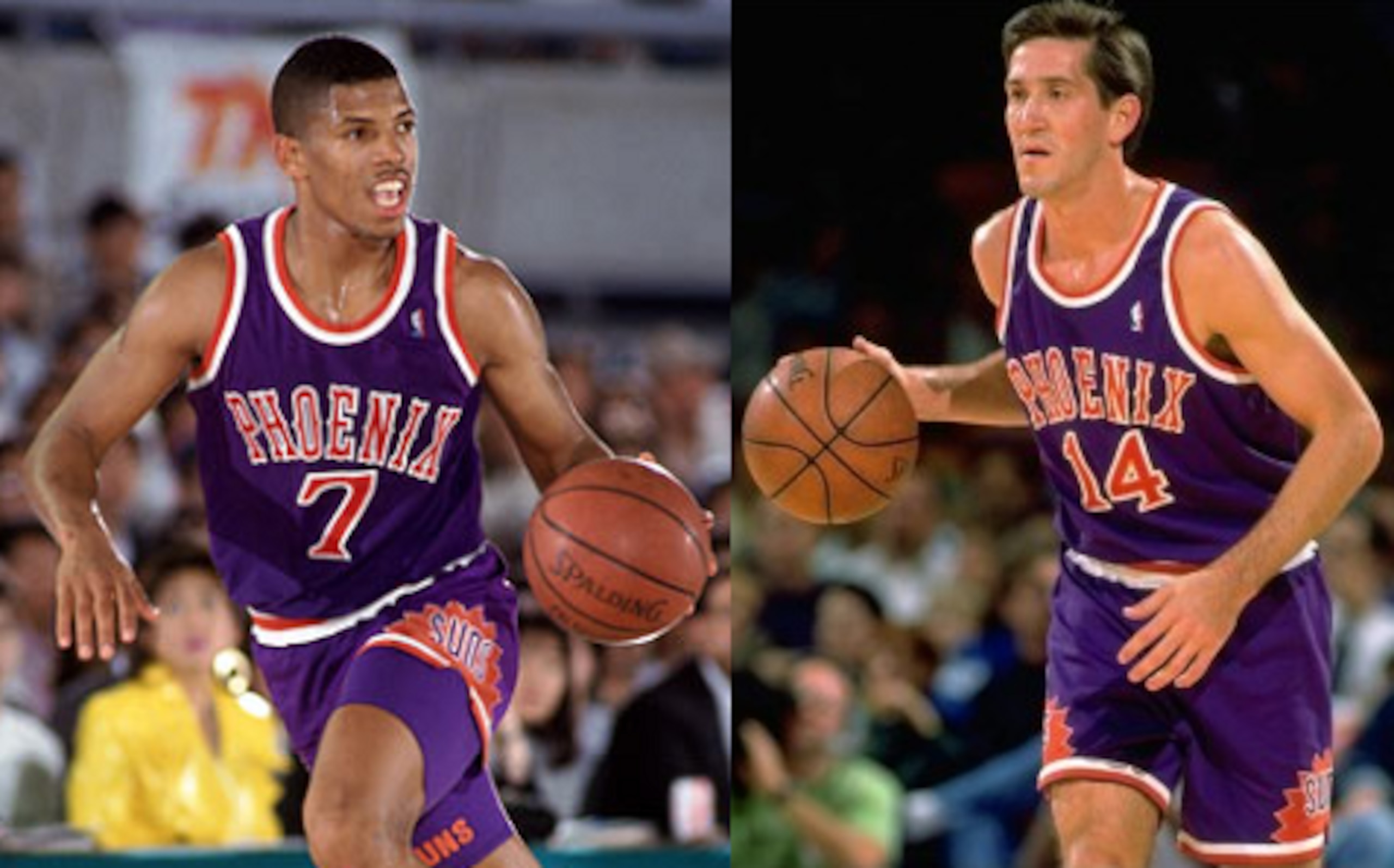
The Phoenix Suns' point guard Kevin Johnson and shooting guard Jeff Hornacek led their team to four straight playoffs and two consecutive Western Conference Finals in 1989 and 1990. Though these two together never made it passed their conference to make the NBA Finals, they came closer than most.
Johnson was 6'1" and 190 pounds. Jeff Hornacek was 6'4" and 190 pounds. Combined they were one of the smallest backcourts of the modern era.
Johnson and Hornacek met the mighty Lakers of the '80s on both of their trips together to the Western Conference finals.
In the 1989 Western Conference finals, they were swept by Magic's Lakers, but this duo proved just as resilient as the last three. They faced Los Angeles in the Western Conference semifinals the following year, and nearly swept them in return winning four games to one.
In the summer of 1992 Hornacek was traded for Charles Barkley. Phoenix then promoted Dan Majerle to Hornacek's position. The Suns felt Majerle was maturing well enough to take over.
After breaking up their backcourt to acquire Barkley, Phoenix never won a championship and only made it past the Western Conference finals once.
Gary Payton and Hersey Hawkins
9 of 12
In 1996, Gary Payton and Hersey Hawkins led the Sonics to a franchise best record of 64 wins and 18 losses. They won the Western Conference finals and faced Michael Jordan and the "Unstoppa-Bulls."
Jordan and the Bulls had a historic record of 72 wins and 10 losses. Jordan and Pippen were both elected to the All-NBA First Team, and they were also elected to the All-Defensive First Team with Dennis Rodman. This was the first and only time three players on the same team made the All-Defensive First Team.
With the Bulls breaking record after record, they were the favorite to win the championship, and all odds were against the Sonics.
With Payton at 6'4" and 180 pounds and Hawkins at 6'3" and 190 pounds, they would especially have their hands full guarding Michael Jordan. M.J. was 6'6" and 215 pounds, a mismatch for either player.
However Payton was up for the challenge. Gary wanted to guard Jordan for most of the series, but coach George Karl didn't want to wear down his best player and facilitator. Karl feared that the defensive assignment of guarding Jordan would deplete Payton's energy and lessen his production on offense.
In Game 4, Karl gave Payton the defensive assignment he'd wanted from day one. With Payton guarding him, Jordan was held to a career NBA Finals low of 23 points. Jordan would go on to score 26 and 22 in Games 5 and 6, this is in contrast to his usual above 30 outbreaks.
Critics claimed that Payton out played Jordan during the last three games of the series. Critics also claimed that coach Karl would regret not playing Payton on Jordan the first three games.
Hawkins was not as valuable as Payton, but he played a key role to that team. Hawkins was an off the ball outside threat who helped to spread the floor. He was also an underrated defender.
The 1996 Sonics are considered the greatest assembly of players on one team in franchise history. Their small backcourt was complimented by Detlef Schrempf, Shawn Kemp and Sam Perkins.
John Stockton and Jeff Hornacek
10 of 12
John Stockton and Jeff Hornacek were the quintessential backcourt. Their styles, skills, strengths and weaknesses compliment each other perfectly.
Stockton was not the most flashy player, but his IQ level and court vision were unmatched. To this day he holds the NBA record for most career assists and steals, by a sizable margin.
Hornacek makes this list of undersized guards twice. That's two successful teams that he started for, and made a difference on. Hornacek was not a flashy player either, but he was one of the most consistent and fundamentally sound.
The 2-guard, or shooting guard, is also known as the off-guard. This is because in basic strategies that guard moves without the ball, and plays "off the ball." The fundamental off-guard must have the court vision of a point guard but not for creating plays.
This guard reads the defense and either cuts to draw defenders and spread the floor or stays put at the right time setting himself up for a "catch and shoot" opportunity. Hornacek excelled without the ball.
The two helped make the Jazz a steady playoff contender, although they never won it all.
With this backcourt the Jazz won two consecutive Western Conference finals and faced the Bulls in the NBA Finals in 1997 and 1998.
John Stockton was listed at 6'1" and 175 pounds. Jeff Hornacek was 6'4" and 190 pounds. They had the same size disadvantage as the Sonics against the Bull's backcourt.
The duo had a decent support group to help them battle Jordan. Bryon Russell was a reserve player who made an impact on the team as a perimeter defender. Russell helped relieve the pressure on Hornacek of taking on M.J.
Stockton and Hornacek had quality reserve players to help them out. They also had Karl Malone, Antoine Carr and Greg Ostertag banging in the paint.
Eric Snow and Allen Iverson
11 of 12
Perhaps the least liked on the list, Allen Iverson and Eric Snow did make a great backcourt. The two led Philly to their first conference title and NBA Finals appearance since 1983. They faced the Los Angeles Lakers in the 2001 NBA Finals and lost in five games.
Monta Ellis is already comparable to Iverson, except he passes a lot more, and he's shown much more maturity.
Allen Iverson was one of the greatest scorers the NBA has ever seen. However, Iverson's small stature and huge attitude were hard to build on.
Eric Snow may have been the best backcourt match for Iverson. Snow was a pass-first point guard, with a defensive mindset. His style of play was the perfect contrast to the four time NBA Scoring Title winner.
Iverson stood just 6'0" and weighed a mere 165 pounds. Eric Snow was not much bigger at 6'3" and 190 pounds. Snow would make up for much of Iverson's defensive liabilities.
Snow ran the point on offense, and guarded the opposing teams shooting guards on defense. After the 2001 Finals Kobe Bryant endorsed Snow as a great defender, stating that no one in the league defended him better than Snow.
Though this duo didn't win an NBA Championship they came within reach of one.
Philadelphia has not seen such prominence since, despite all the praise of 2004 draftee Andre Iguodala.
Recap
12 of 12
There have been plenty of successful undersized backcourts throughout the history of the NBA. Those that made this list were all consistently in the playoffs. The first six examples were all NBA Champions. The last four came closer to a championship than the Warriors have in 30 years.
What makes a team great is not the size of its backcourt, it's the team chemistry. A team of complimentary pieces is a good foundation for a title run.
The Warriors have a solid core to build off of. With the right coaching staff, stronger performances from their post players and a deeper bench, Monta and Steph could lead us to a championship.

.jpg?w=2560)


.jpg?w=2560 "Latest Peyton-Colts Rumors")

.jpg?w=2560 "Landing Spots for Trade Candidates 📍")
.jpg?w=2560 "Ugly Jets Scoring Stat 😳")