
New York Knicks: 7 Factors That Will Make or Break Them in the NBA Playoffs
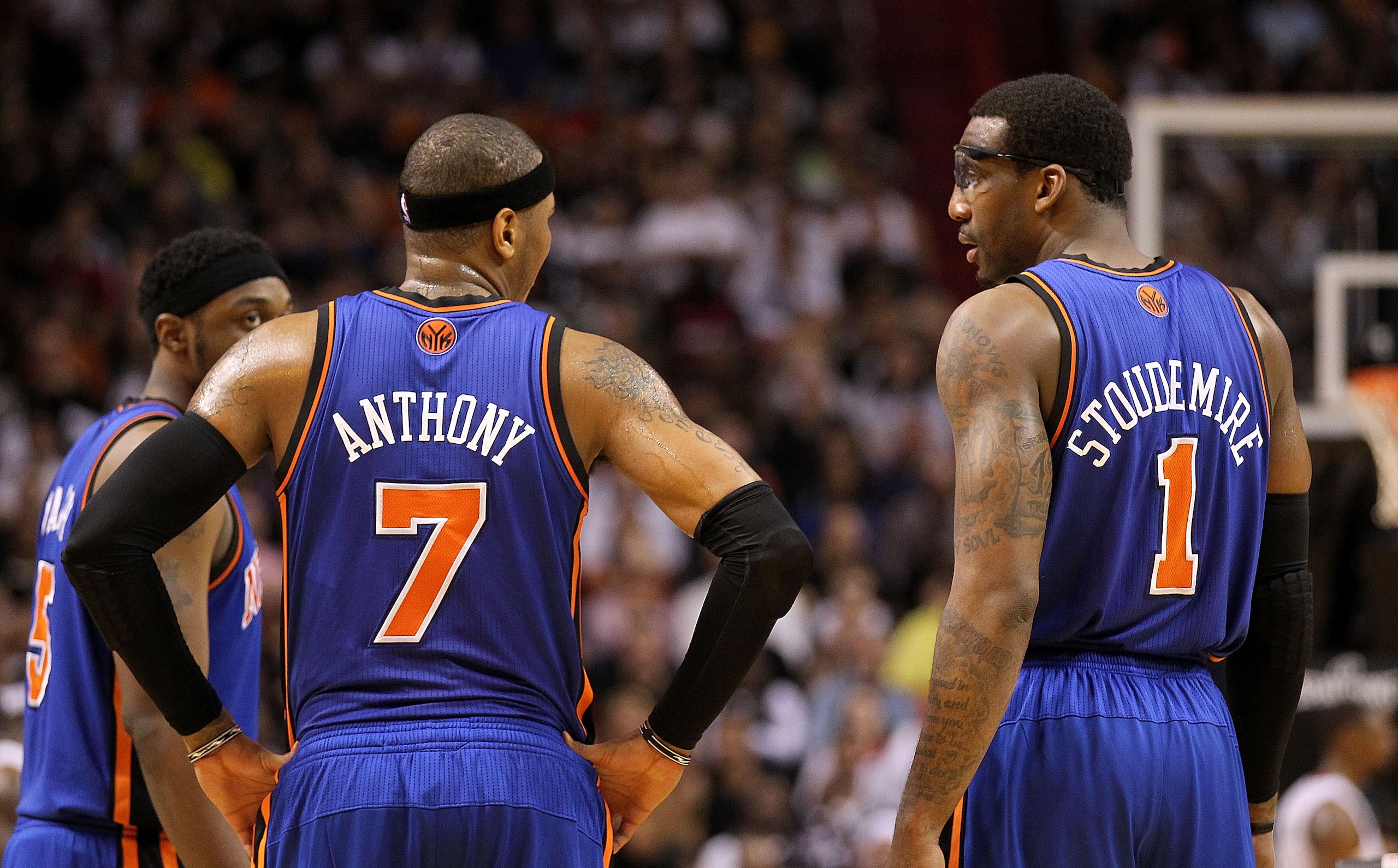
Since day one, Amar'e Stoudemire embraced the challenge of restoring the Knicks to respectability. Between then and now, we've learned a lot of things about the team's captain. Some good (he sure does have confidence )and some not so good (his defensive deficiencies are painfully persistent).
But on Sunday, April 3, we found out something else about Stoudemire.
He's no liar.
The Knicks ARE back.
(To the playoffs, anyway.)
For the first time since 2004, pro basketball will be played in the World's Most Famous Arena in the latter half of April. And Knicks fans are ecstatic.
Since it's a given that the Knicks will only go as far as Amar'e and Carmelo take them, it makes little sense to dedicate substantial space to them. Now, after losing six games in a row, the Knicks have gotten five straight W's.
Carmelo has emerged as the alpha male on the offensive end, and Amar'e—believe it or not—has been exerting more energy on the defensive end. Consider that during the Knicks' 97-92 victory over the Philadelphia 76ers on Wednesday night, Amar'e rolled his ankle chasing Thaddeus Young on a breakaway. There was no chance Amar'e was going to catch him, but you know what? He tried.
Likewise, it's safe to say that there are two versions of Toney Douglas. There's the somewhat careless, ball-stopping, shot-chucking second-year player...and there's Toney the Tiger, the guy who gave the Knicks 20 points—including four three pointers—and 11 assists back on March 18 in Detroit. Clearly, the Knicks need a dependable scorer off the bench, so the Knicks only real chance at assembling a decent playoff run rests on Toney the Tiger's ability to play GREEEEEEEEEEEAT!
So, let's focus elsewhere. And let's ask...
Aside from the aforementioned three—and aside from a miracle—what would it take for the New York Knicks to extend their season from late April to Memorial Day? What about representing the Eastern Conference for all of the marbles in early June?
As unlikely as it might be, never say never.
Without further ado, since it's been seven long years for Knicks fans, here are the seven factors that will make or break the 2011 New York Knicks' NBA Playoff run.
Factor No. 7: Madison Square Garden
1 of 7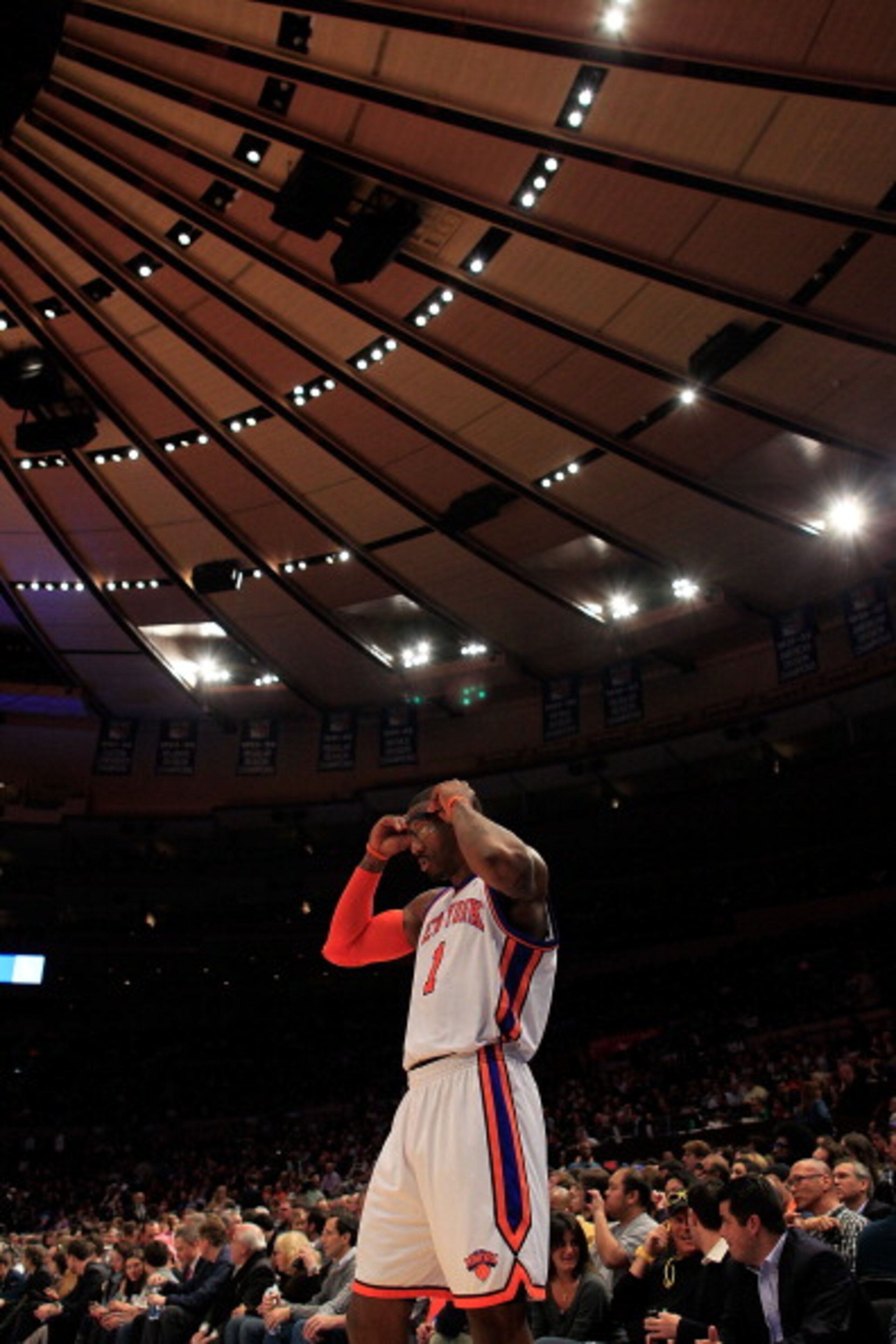
The World's Most Famous Arena will be full of rabid Knicks fans seeing playoff basketball in their building for the first time in nearly a decade.
The electricity in the building isn't likely to intimidate either Miami's or Boston's triad of talent. What it might do, however, is inspire the play of role players like Shelden Williams, Bill Walker, Shawne Williams and Landry Fields.
You can count on death and taxes, for sure. You can also count on your role players to play better at home than on the road.
Knicks fans fully expect Amar'e Stoudemire, Carmelo Anthony and Chauncey Billups to perform. It's the "other guys" who will make all the difference.
Hopefully, for Knicks fans, their energy, passion and will can rub off on their heroes and inspire the Knicks to play their best basketball when it matters most.
The playoffs are a new season, and the Knicks are probably better than a typical seventh seed. Whether the fans are simply happy to be there will be apparent. And whether or not they are might make more of a difference than one would think.
Factor No. 6: Ronny Turiaf
2 of 7
Stacey Augmon might be the original "Plastic Man," but Ronny Turiaf—albeit it for a far more dubious reason—looks to be deserving of the namesake.
Ronny Turiaf has a very unique skill set for a 6'10" big. His soft hands and decent mid-range jumper ensure that opponents don't ignore him on the offensive end.
His biggest assets, however, are his passing ability and shot blocking. One might laugh at his 1.5 assists per game average, but when you consider that he's only averaging about 18 minutes per game and barely handles the ball, it shows something. (For the record, the Orlando Magic practically run their offense through Dwight Howard, and in about 37 minutes per game, he actually averages 1.3 assists per game...it's food for thought).
In terms of his shot-blocking prowess, for his career, Turiaf averages an incredible 3.73 blocks-per-48-minutes. And while he is averaging a more modest 2.93 blocks-per-48-minutes this season, it is clear; he has the timing and skills to truly be a difference maker in the paint.
Unfortunately, he seems to lack the durability to stay on the floor. Thus far, he has missed 18 of the Knicks' 78 games. And while Donnie Walsh has constantly identified center as the team's biggest area of need this offseason, Turiaf can help them right now.
With him, the Knicks are clearly a better team. The only question is whether or not he will be healthy enough to be effective. If the Knicks are fortunate enough to get 25 good minutes out of Ronny Turiaf, they will be a much tougher team to deal with in the playoffs.
For those that don't believe that he makes a difference for this team, go ahead and try to explain the Knicks' 24-16 record in games in which he has blocked at least one shot.
Coincidence?
Probably not.
With his strengths, and his strength, the Knicks are a formidable foe for any playoff team. But whether or not he can stay healthy enough to be effective remains to be seen.
Factor No. 5: Ball Movement
3 of 7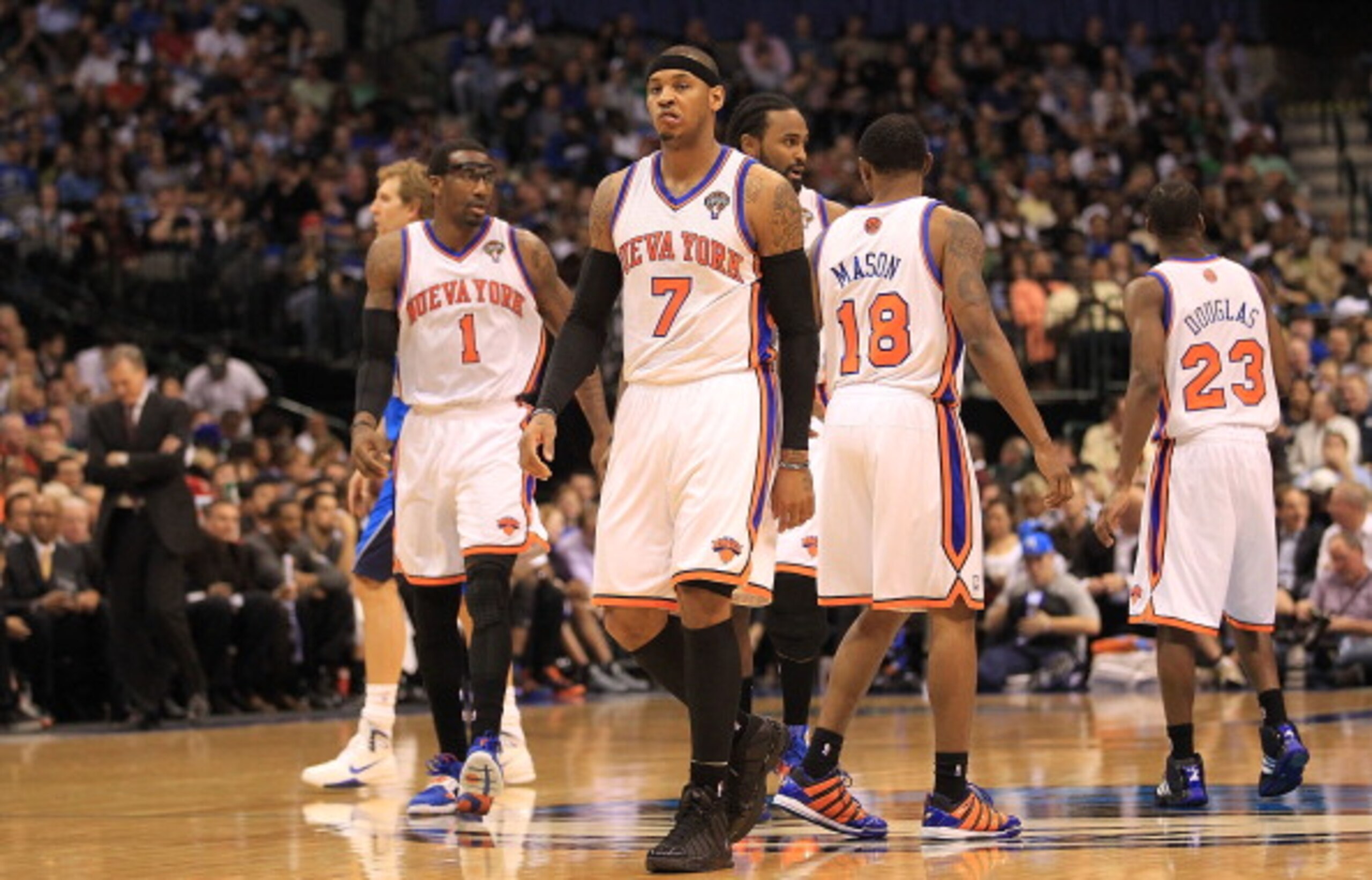
The success of a Mike D'Antoni team is predicated on ball movement, open shots and crisp passing. Here, the onus will ultimately fall on the broad shoulders of Amar'e Stoudemire and Carmelo Anthony.
Toney Douglas also must do a better job of facilitating since he is the primary backup at the most important position on the floor. On Wednesday night, down the stretch in Philadelphia, the Knicks' offense was noticeably predictable and stagnant in the absence of Chauncey Billups.
Normally, there is nothing wrong with running an ISO set for your best players, so long as your best players don't force the action and know when to and how to hit their open teammates.
Over the course of the season, both Amar'e Stoudemire and Carmelo Anthony have shown a propensity to be ball stoppers and to force the action when the team is going through tough stretches. In the playoffs, playing selfish ball is tantamount to attempting to swim in quicksand. Especially if you're facing a good defensive team like the Miami Heat or the Boston Celtics.
The main difference between the Knicks team that lost six straight games and the one that has now won five straight games is the willing passing of Carmelo Anthony and Amar'e Stoudemire out of double teams. Over the past five games—all wins—Carmelo and Amar'e are shooting a combined 52 percent from the field. (On the season, Carmelo and Amar'e are shooting 46 and 51 percent, respectively).
The team as a whole is averaging 21 assists per game, and assisting one another on a respectable 46 percent of the teams' field goals.
In Philadelphia on Wednesday night, the Knicks assisted one another on 58 percent of their field goals (21 assists on 36 field goals). And while Carmelo only had two assists, Amar'e Stoudemire led the team with seven. This bodes well for the Knicks, so long as they can continue the trend.
For the Knicks, if they can create open looks and find cutters out of double teams, they can create easy scoring opportunities, and perhaps steal a game or two on the other team's floor.

.jpg?w=2560 "NBA Gambling Charges")

Factor No. 4: 3-Point Shooting
4 of 7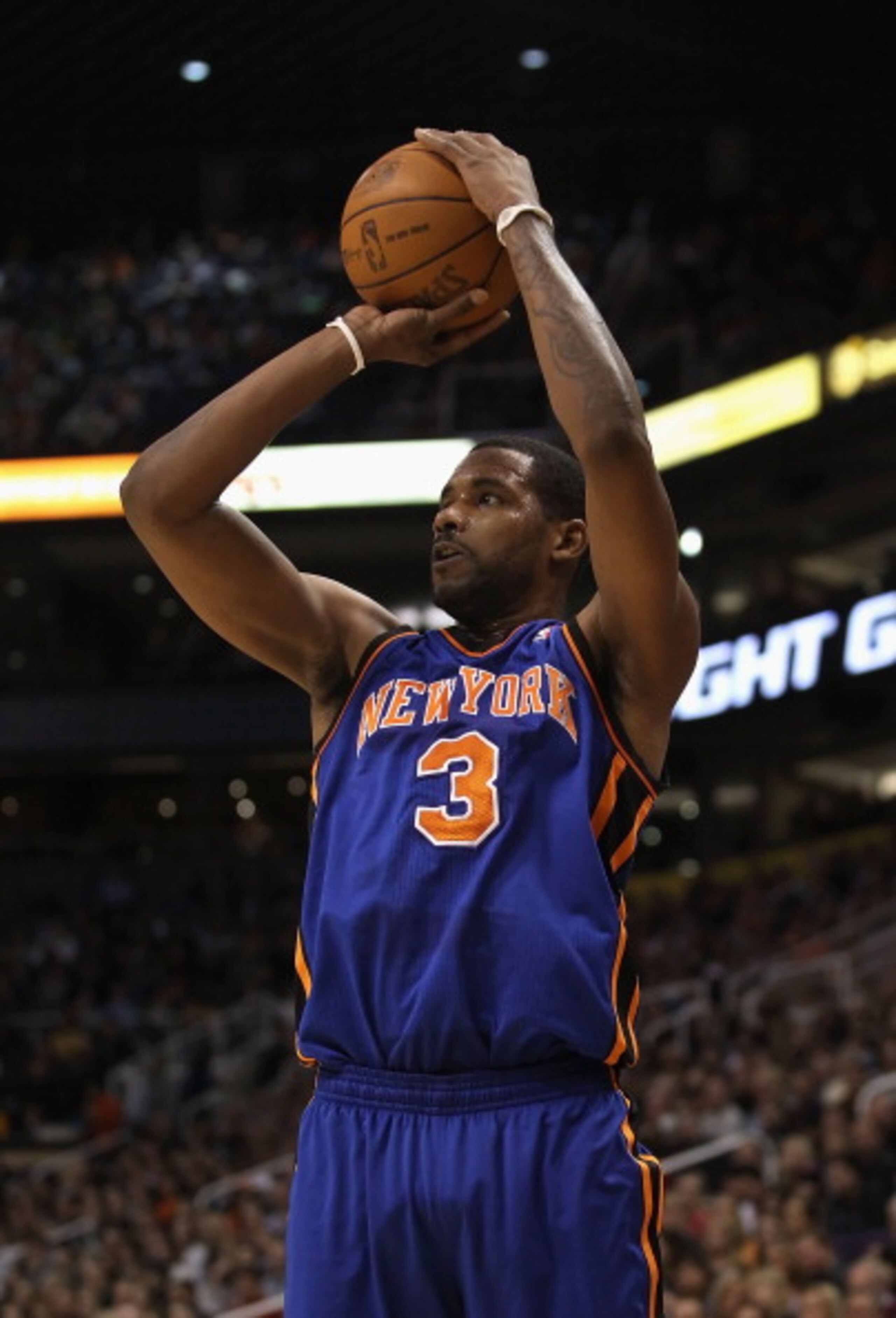
This one is actually pretty simple.
The Knicks are nearly unbeatable when they're hitting their three-point shots. Although the roster was turned over back at the All-Star Break, that is one theme that has been consistent throughout the entire season.
Behind solid three-point shooting, Knicks fans have seen their team beat the Chicago Bulls twice, force Gregg Popovich to waive the white flag at Madison Square Garden and utterly embarrass both the Utah Jazz and Toronto Raptors.
But everyone knows the old adage: You live by the three, and it might whack you.
It therefore comes as no coincidence that many of the Knicks' losses to lowly teams were accompanied by poor shooting from behind the arc.
Exhibit A: On November 9, 2010, the Knicks lost an 107-80 decision at Milwaukee after hitting on just five of 19 three-point attempts (26.3 percent).
Exhibit B: The Indiana Pacers outplayed and outhustled the Knicks on March 13 at Madison Square Garden, and won a 106-93 decision in which the Knicks only converted on seven of their 30 attempts (23.3 percent).
Exhibit C: Friday, March 25, 2011. Brandon Jennings takes Broadway. Bucks 102, Knicks 96. The Knicks converted on only four of 19 three-point attempts (21 percent).
Lastly, after winning five straight games, the Knicks, after losing six straight, are 6-6 in their past 12 games. In the six losses, they shot a combined 50-of-130 (38 percent) from behind the arc. In the six wins? They were a tidy 75-of-178 (42 percent).
Based on what we know about the Knicks, their apparent infatuation with the long ball and their record, it is probably safe to say that a first-round upset would require 40 percent shooting from distance.
It's a long shot (pun intended), but recall that Orlando used exceptional three-point shooting to upset LeBron's Cavaliers in the 2009 Eastern Conference Finals.
So, at least Knicks fans know, it's possible.
Factor No. 3: Chauncey Billups
5 of 7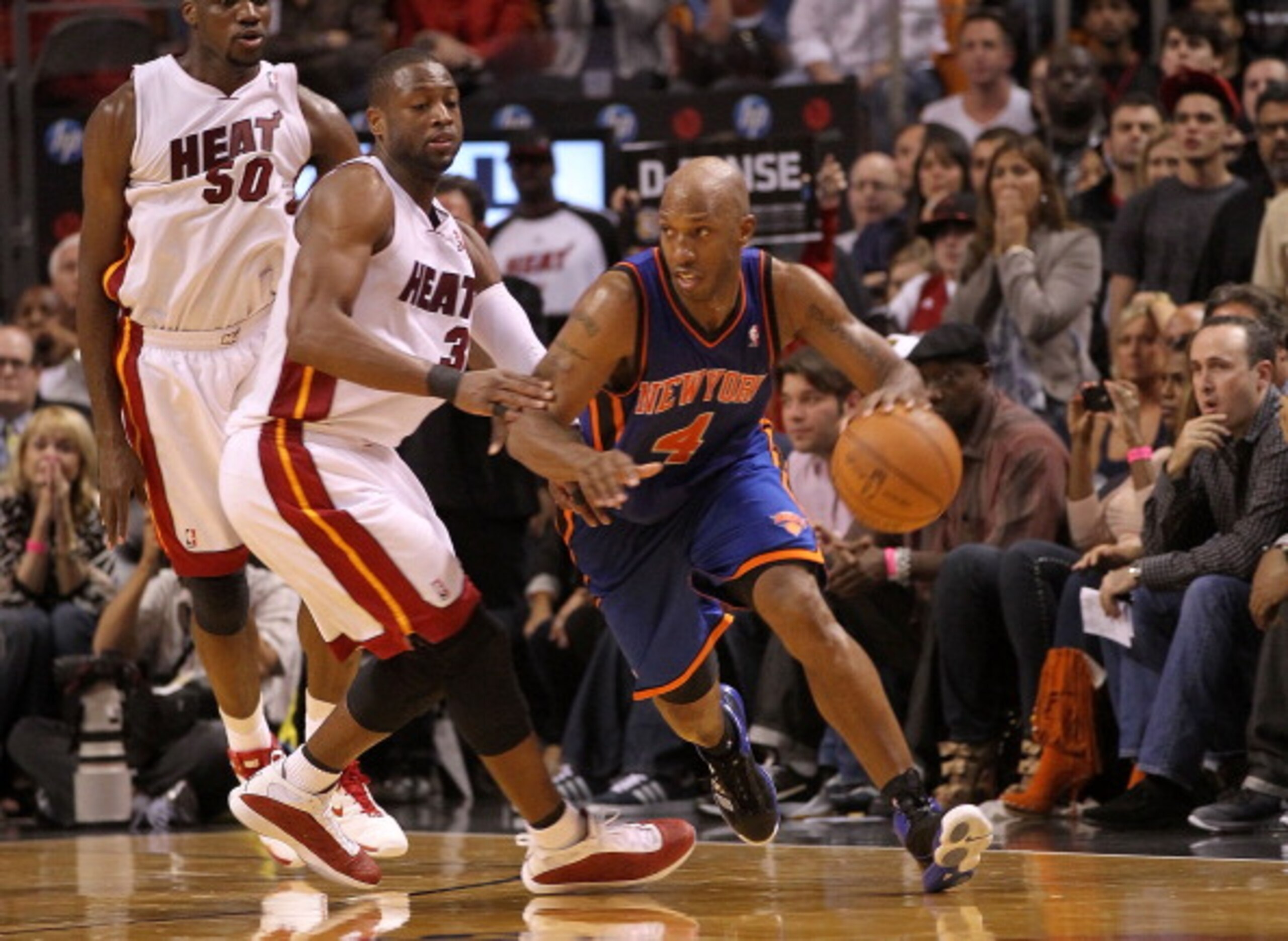
If there is one thing Knicks fans love to do with one another, it's debate.
Does Chauncey possess the skill set to play effectively with Amar'e Stoudemire?
Can he run the D'Antoni system?
Is he over the hill?
Questions abound, but for now, the answers remain unknown.
Since he was traded from DEN, Chauncey is averaging 1.7 more points per game. His assists, however, are about the same (5.4 per game).
After sustaining a deep thigh bruise during the Knicks' 110-106 loss at the Orlando Magic on March 1, he missed six consecutive games in which Toney Douglas started. The Knicks won four of their six during that stretch, including impressive wins over the Hornets, at Atlanta and at Memphis. In that stretch, Douglas averaged 6.83 assists per game.
Being that the Knicks play a faster pace than the Nuggets and run a system predicated on creation by the point guard, one should reasonably expect a veteran like Chauncey Billups to improve his assist numbers.
Thus far, that has not been the case.
Even worse, since the trade, Chauncey is taking more shots (10.5 prior, 12.8 since), but converting on a lower percentage (44 percent prior, 41 percent since). He is also taking more three-point shots (4.7 prior, 6.8 since), but hitting at a much lower percentage (44 percent prior, 32 percent since).
In all fairness, Chauncey took a few games to get over the previously mentioned injury, and it certainly affected his play. When he is missing as many shots as he has been recently, he looks more like "Mr. Bad Shot" than "Mr. Big Shot." Worse yet, his poor shot selection and inaccuracy sometimes ruin an important possession for the team. In the playoffs, each possession is valuable, since the game inevitably slows down.
All in all, Chauncey needs to rediscover his shooting touch, but do a better job of scoring within the flow of the offense and be a better facilitator. It's hard to believe that someone with his skills and experience can't put it all together. But until he does, it's nothing more than hypothetical banter.
The facts are that his shots are up, his conversion percentages are down and his assists are the same. For the Knicks to have any chance of advancing and having a good playoff run, Chauncey needs to get his teammates more easy baskets and convert more frequently on better selected shots.
On that, there is no debate.
Factor No. 2: Coaching
6 of 7
Since his hiring back in May 2008, Mike D'Antoni and his staff have had a bit of a honeymoon in New York.
No expectations, no complaints.
Now, the honeymoon is officially over.
Coach D'Antoni is applauded for his offensive genius based on his principles, but berated for his apparent acceptance of subpar defense.
Regardless, here's the truth: Coach D'Antoni has not done a stellar job of coaching the Knicks since they acquired Carmelo Anthony back on President's Day. Should he have lost his job? Certainly not. But has he done a poor job? Absolutely.
Their 12-12 record since acquiring Carmelo aside, Coach D'Antoni's questionable substitution patterns, lack of Xs and Os play calling, inconsistent rotation and failure to implement a dependable zone defensive scheme to help the Knicks' undersized interior protect the paint and rule the defensive glass are noteworthy. In a bad way.
It should be pointed out that the team has won five straight games, but that doesn't mean that the coach won't have to do better if the Knicks are to pull off an upset. Furthermore, in all fairness to Mike, his roster was blown up six weeks ago and his team immediately had to play a ridiculous 18 games in 30 days. They're still figuring it out, yet they're 40-38, they've clinched a playoff spot and they are currently in sixth place in the Eastern Conference.
But still, D'Antoni detractors have a fair amount of ammunition based on his performance.
In particular, the inability for the Knicks to figure out how to utilize Corey Brewer (waived) and Anthony Randolph (traded) ultimately falls on the coaching staff. And while the team does seem to be figuring it out on the offensive end, it's befuddling as to why D'Antoni hasn't tried to develop and implement a zone defense in order to help Amar'e and Carmelo preserve energy, encourage the opposition to shoot more jumpers and facilitate "gang rebounding."
Certainly, some of the detriments of lacking seven footers could have been addressed by going with a zone. Had it worked, the Knicks might be battling for homecourt advantage in the first round.
Is this classic second guessing? Absolutely.
But that's life as an NBA head coach.
In order for his team to advance, Coach D'Antoni and his staff will have to inspire, prepare and motivate. Let's remember, a playoff series is a joust between coaches. While talent normally prevails—especially over the course of seven games—inspiration, preparation, adjustments and motivation have gone a long way in writing history.
And as far as what history writes for the 2011 New York Knicks? Their coach will probably determine that.
Factor No. 1: Consistent Defensive Effort
7 of 7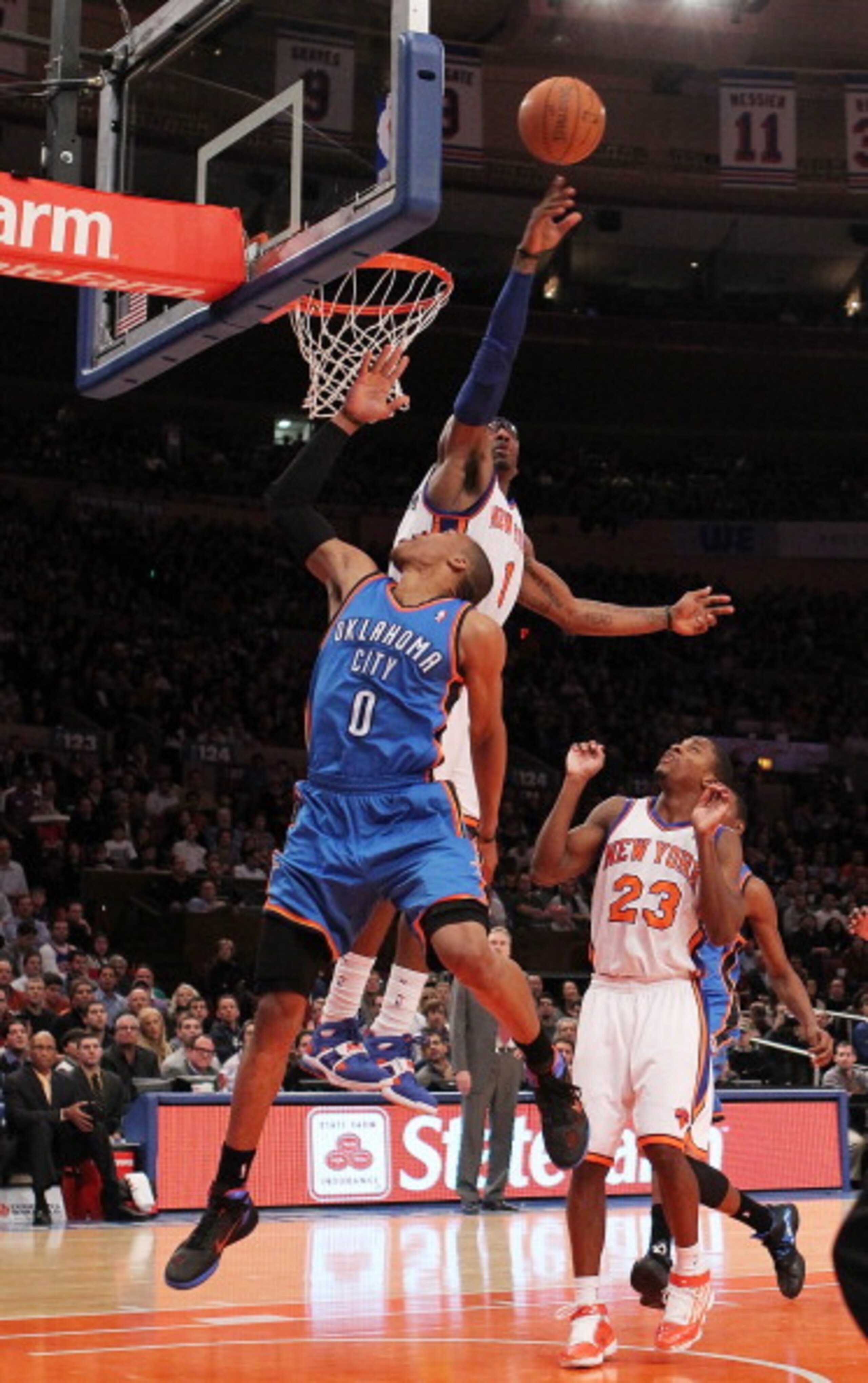
Notice the usage of the term "effort." The Knicks are not a defensive team. They will struggle to win a game in which they do not score at least 95 points. Nobody is asking or expecting them to be the 2004 Detroit Pistons; that simply is not their game.
What the Knicks have shown, though, is that they are capable of playing very solid defense. And because they play a faster-paced game, it's not all about how many points the other team scores, it's more so about how easily they score them. That's clear.
And it's mostly about effort.
For example, in the latter half of his career, Karl Malone was regarded as a good post defender, and he was obviously a great rebounder. He wasn't an exceptional athlete, illustrated by his .8 blocks per game average for his entire 19-year career.
Anyone that battled Karl Malone in the post knew two things. First, he was going to battle you for position on every possession. And second, you better keep the ball above your head.
While Amar'e Stoudemire is averaging a very good 1.9 blocks per game this season, his biggest deficiency on the defensive end has been the fact that he allows opposing bigs to get the ball wherever they want. Often, he attempts to recover and block shots using his athletic ability. That's not effective defending.
About 75 percent of playing defense is about not allowing the offensive player to get comfortable. All players have their sweet spots, and all players like to operate from certain spaces on the court. Effort is what it takes to deny a post player their desired position. And as any big will tell you, there's a huge difference between catching the ball six feet from the hoop versus nine feet from the hoop.
Again, look no further than the example that Karl Malone set.
Speaking of the Mailman, have a look at his other elite skill. Although he was one of the greats, Malone was never adept at blocking shots. So he took swipes at the ball whenever the opposing big brought it low enough for him to take a swipe at it. At worst, he'd wack a guy and be called for a foul. At best, he'd knock the ball loose and create a turnover and a transition opportunity for his team. Those little things add up. Good hands help here, but effort and attention are what makes all the difference.
During their five-game win streak, Shelden Williams and Amar'e Stoudemire have been doing a much better job of battling for post position and disrupting opposing bigs. Carmelo Anthony and Anthony Carter, meanwhile, have done an excellent job of swarming the ball and simply swiping at it when the opportunity has presented itself. Toney Douglas, as usual, gambles on shooting gaps and playing passing lanes, and collectively, the team has been clogging the paint and swarming the ball.
Perhaps the Knicks are figuring things out at the right time, and maybe the consistency on the defensive end will be there once the stakes are higher.
Again. It's all about effort. Defensive effort.
And the Knicks will certainly need tons of it if they'll have any hope of advancing past the first round for the first time since 2000.



.png?w=2560 "Week 8 Winners & Losers 📊")
.jpg?w=2560 "Jonathan Taylor Landing Spots")