
This has been the wildest offseason in NBA history.
Arguments for other summers are welcome, but good luck topping one that involved Anthony Davis, Mike Conley, Kemba Walker, Al Horford, Jimmy Butler, Kevin Durant, Kyrie Irving, D'Angelo Russell, Russell Westbrook, Chris Paul, Kawhi Leonard and Paul George changing teams through free agency and trades.
That all happened in less than one month, and I didn't even mention the draft.
Behind the frenzied player movement, of course, are the 30 organizations. Sure, player empowerment is largely driving this, but the team-employed decision-makers are certainly doing their part. And the endgame for all of them is winning.
Over the last five years, five have done a little—or, in one case, a lot—more right than others.
To determine the cream of the crop over the last half-decade, some objective (and some subjective) criteria were needed. The points system that was devised used the following from the last five years:
- Simple rating system (point differential combined with strength of schedule): 30 points for first place, 29 points for second place, down to one point for 30th place
- Winning percentage: same point values as the previous category
- NBA championships: five points apiece
- Conference championships: one point apiece
- Executive of the Year voting: three points for a first-place finish, two points for second and one point for third
- Stars acquired (the subjective part): three points for a star acquired in free agency or via trade, three points for drafting a star in the second round, two points for drafting a star in the non-lottery portion of the first round, one point for drafting a star in the lottery
Phew. Got all that?
As you may find, those first two bullets will be doing a lot of the heavy lifting in this formula. And that's fine. Again, the general goal in the NBA is winning. Simple rating system and winning percentage do a good job of capturing that. But the system didn't feel complete without some other key indicators for organizational stability.
When all those points are added up for the last five seasons, the top five passes the eye test. But before we get to the rankings, let's look at some notable organizations and front offices that fell short.
Worth Mentioning
1 of 6
Oklahoma City Thunder: Sam Presti losing Paul George and Russell Westbrook in the same summer isn't great. But OKC is fifth in the NBA in simple rating system over the last five years. And the haul from trading those two stars is massive. The Thunder have 10 incoming first-round picks (or pick swaps) between now and 2026, not to mention Shai Gilgeous-Alexander, Danilo Gallinari and Chris Paul.
Boston Celtics: This is another team that lost multiple big names this summer. Kyrie Irving and Al Horford are both out, but Danny Ainge should still get credit for landing those two, Gordon Hayward and Kemba Walker.
Cleveland Cavaliers: David Griffin, now with the New Orleans Pelicans, was at the helm of the Cavs squad that won the 2016 title. He's not responsible for the sense of duty LeBron James felt toward Cleveland, but he deserves credit for assembling a title-worthy supporting cast around him.
Utah Jazz: Dennis Lindsey has two top-three Executive of the Year finishes in the last three years. Utah's seventh in simple rating system. And he and new general manager Justin Zanik aced the 2019 offseason by adding Conley, Bojan Bogdanovic, Ed Davis and Jeff Green.
Milwaukee Bucks: Fresh off winning Executive of the Year in 2019, Jon Horst and the Bucks look set to compete for titles for the foreseeable future.
Denver Nuggets: Denver president of basketball operations Tim Connelly assembled an exciting young core that helped him earn some Executive of the Year votes. Landing Paul Millsap helped accelerate the team's timeline.
Brooklyn Nets: The outlook for the Nets was bleak when Sean Marks took over. They'd been devastated by the trade that cost them multiple first-round picks for Paul Pierce and Kevin Garnett. They won 21 games in the season Marks was hired (he was fired in February 2016), followed by 20 after his first full offseason. Three-and-a-half years since being hired, Marks has a playoff appearance to go along with landing KD and Kyrie this summer.
Los Angeles Lakers: L.A. finished 28th in both simple rating system and winning percentage over the last five years, which is why it didn't sniff the top five. LeBron and AD joining the team feels like it has much more to do with the organization's legacy than any recent trends. However, Rob Pelinka and company did get those two superstars and should be competing for titles for at least the next couple of years.
Philadelphia 76ers: After several years of "trusting the process" under Sam Hinkie, the 76ers have effectively pivoted into contention. The process brought them Ben Simmons and Joel Embiid. Supplementing that with veterans like Al Horford, Tobias Harris and Josh Richardson puts Philly firmly in title contention moving forward.
Portland Trail Blazers: Portland has made the postseason in each of the five seasons sampled here, slowly but surely climbing up to a conference finals appearance in the loaded West in 2019. It feels as though the Blazers will be a postseason staple as long as they hang onto the Damian Lillard/CJ McCollum backcourt they assembled through the draft.
Indiana Pacers: The Pacers are another team that wins consistently enough to earn a mention here. They've made the postseason in each of the last four years. They're a little different than the Blazers, though. While Portland is annually led by Lillard, Indiana has had a different leader in wins over replacement player in each of the last three seasons: Thaddeus Young in 2019, Victor Oladipo in 2018 and Paul George in 2017. Staying competitive in the face of roster turnover is a plus in today's constantly changing NBA.
5. Los Angeles Clippers
2 of 6
The Los Angeles Clippers have had some turnover in the front office over the last five years, but most of the major players have been around the whole time, just with some title changes.
Lawrence Frank was an assistant coach until he moved into the front office in 2016. Jerry West joined in 2017. Coach Doc Rivers even had front office duties at one point during this stretch. And Steve Ballmer has been at the head of the operation the whole time.
Together, they've engineered a rebuild—while staying competitive—that should make other front offices jealous.
The 2017 trade of Chris Paul landed the Clippers Patrick Beverley, Montrezl Harrell and Lou Williams. All three will be rotation players alongside the new super-duo.
A year-and-a-half later, they moved Blake Griffin for Tobias Harris and salary filler. Harris was then flipped the next year for Landry Shamet, salary filler and multiple picks. That haul helped the Clippers later acquire George.
This high-stakes game of dominoes culminated in that trade, a move that put Kawhi over the top in deciding to sign with the Clippers.
Jovan Buha and Sam Amick of The Athletic explained:
The Clippers could have stood pat, passed on trading for George, kept Gilgeous-Alexander, hoarded their assets and still possibly landed Leonard. That will always be one of the all-time what-ifs.
But the Clippers sought to eliminate the uncertainty around Leonard’s decision. They wanted to go above and beyond to earn his trust, showing that when they say they will do something for him — like, say, construct a championship roster — they mean it.
Now, the Clippers move forward with a loaded roster for 2019-20. And according to online oddsmaker BetOnline.ag, they're the favorite to win the 2020 title.
4. Houston Rockets
3 of 6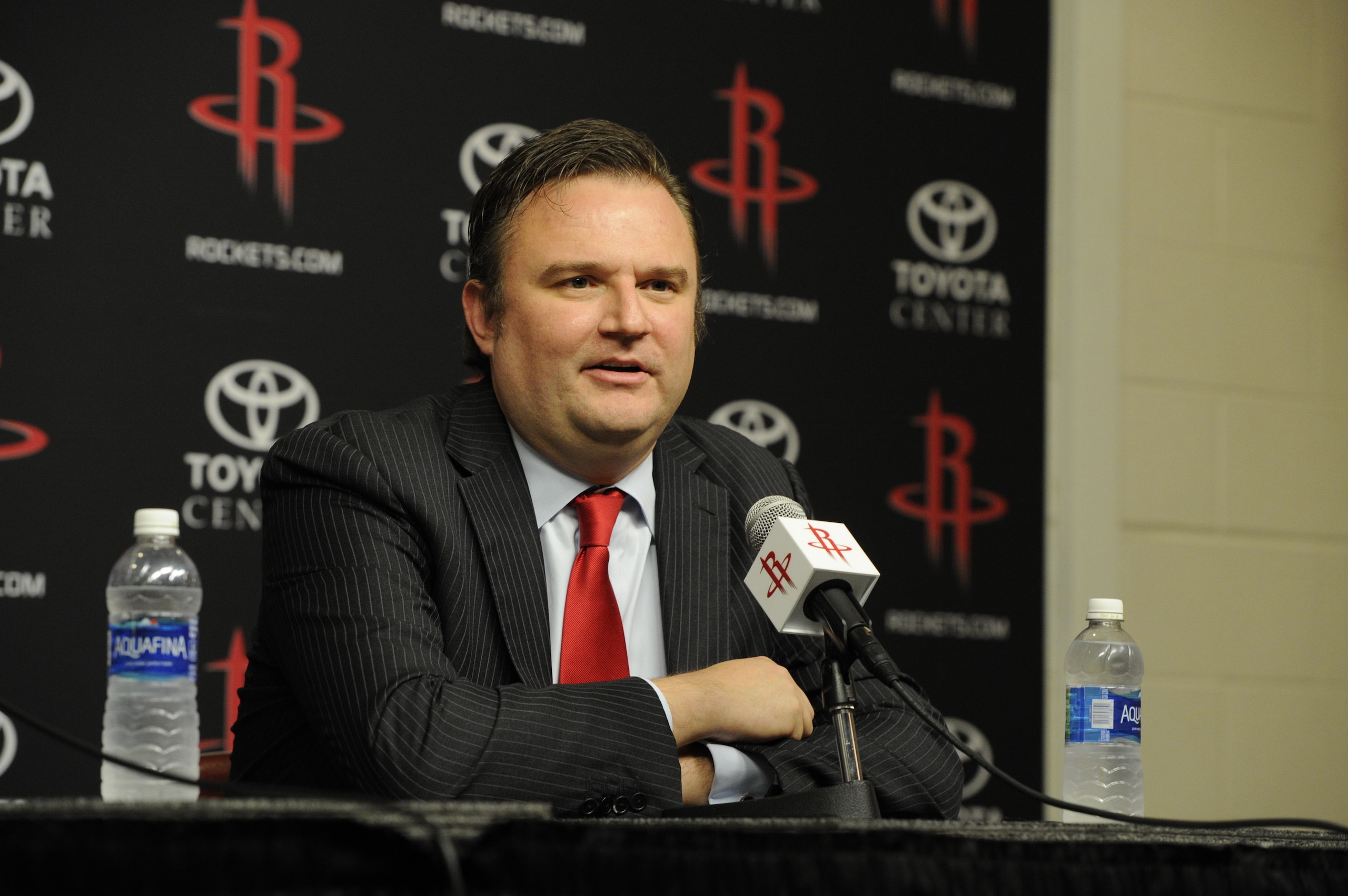
The Golden State Warriors were the only organization that came out of this exercise with more Executive of the Year points than Daryl Morey and the Houston Rockets.
And the aggressive Morey's willingness to regularly reinvent his team hasn't cost the squad many wins. Over the last five years, the Rockets are third in simple rating system and fourth in winning percentage.
An adjustment period would have been understandable in the wake of the CP3 acquisition, but Houston was a powerhouse in 2017-18. Just two years later, the Rockets will hope for similar success with Westbrook, even if his game doesn't seem to fit James Harden's quite as well.
"Russ and Harden are longtime friends who spent their first few seasons in the NBA together in Oklahoma City, but their games don't mesh nearly as well as Paul and Harden, who lasted two seasons before breaking up," The Ringer's Jonathan Tjarks wrote. "It will take a lot of sacrifice for this star pairing to end any differently. Each has to change the way they play to make the other comfortable."
It helps that Morey has assembled a strong supporting cast that includes Clint Capela, PJ Tucker and Eric Gordon to surround the two MVPs, but this is a gamble.
This front office has a strong track record, though. Though the Rockets don't have a title in this five-year span, there's an argument to be made that they were the second-best team in the NBA during this Warriors dynasty.
Years from now, when analysts and fans are trying to pick apart these five years, the Rockets pushing the #LightYears Warriors to seven games in 2018 will come up often.
The question about what might have happened had CP3 not suffered an injury in Game 5 is now firmly in the pantheon of NBA "what ifs."
3. San Antonio Spurs
4 of 6
Even after the departures of Tim Duncan, Tony Parker and Manu Ginobili, the San Antonio Spurs remain among the standard-bearers for organizational excellence.
Over the last five years, San Antonio is second in both simple rating system and winning percentage. RC Buford has an Executive of the Year win to his name in that stretch. And the acquisitions of LaMarcus Aldridge and DeMar DeRozan helped the team stay competitive despite Duncan's heir apparent, Kawhi, demanding out.
Because it's too early to call these players stars, the team didn't receive any points for drafting Derrick White, Dejounte Murray and Lonnie Walker IV. But that young guard stable the team assembled still deserves a mention.
The stability behind all of that is Gregg Popovich and Buford.
"RC Buford is one of the most highly respected leaders in professional sports," Spurs Sports and Entertainment Chairman Peter J. Holt said of Buford's promotion to CEO this week. "His vision, innovation and drive have helped shape our values and culture. We are thrilled to have RC leading the organization into the future."
Change is inevitable. Duncan, Parker and Ginobili couldn't play forever. But San Antonio has fostered a culture that keeps its most important faces around. Brent Barry is in the front office. Duncan is now on the coaching staff. And Buford figures to stick around a while after landing this new job.
2. Toronto Raptors
5 of 6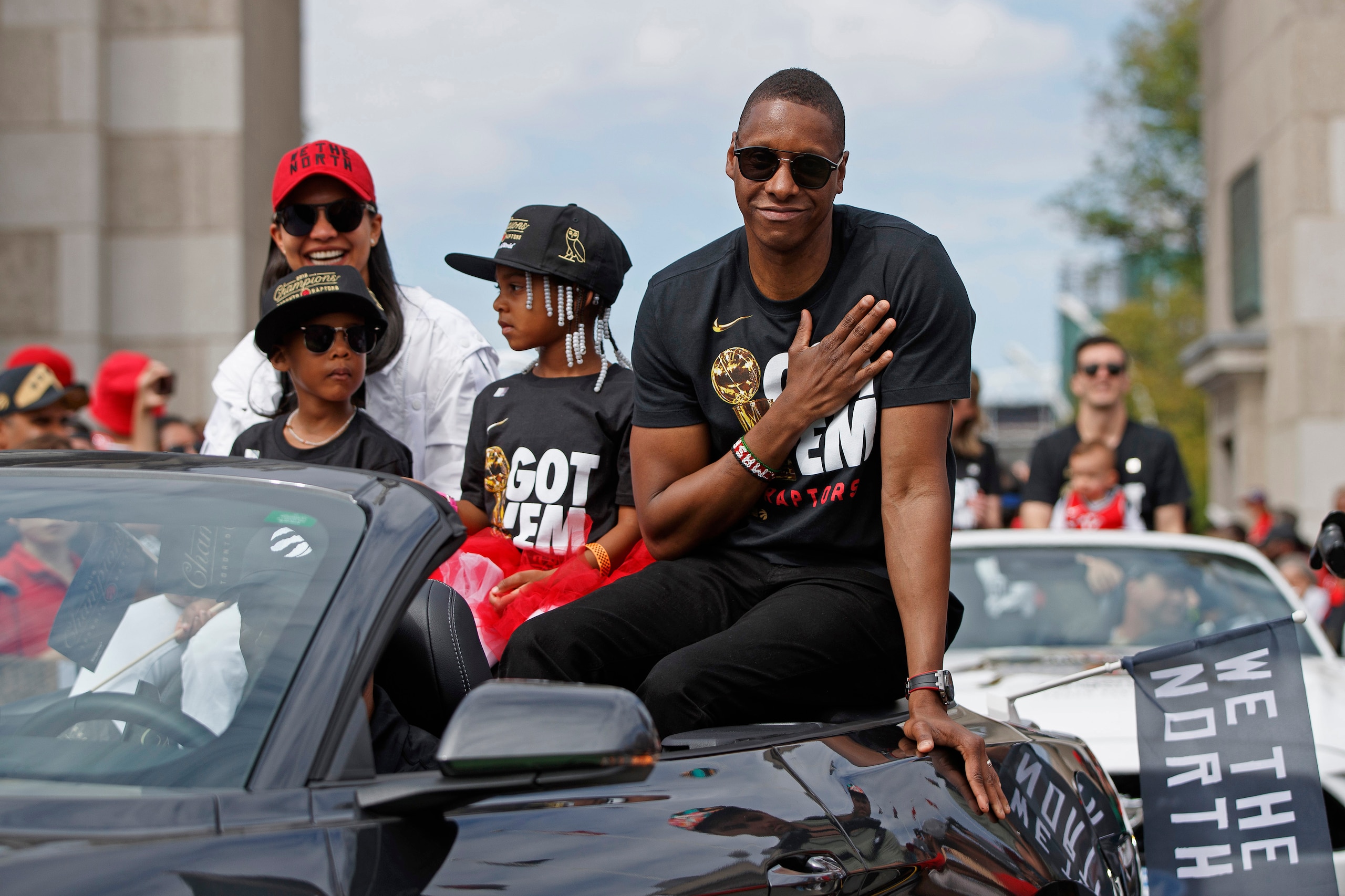
The Toronto Raptors' were 27th in simple rating system and 26th in winning percentage in their 18 pre-Masai Ujiri seasons. In the three seasons immediately preceding Ujiri's hire in Toronto, the team was 25th in both those categories.
And, most importantly, all that success eventually led to the Kawhi Leonard trade and the organization's first NBA championship.
Now, with Leonard gone and Kyle Lowry, Marc Gasol, Serge Ibaka and more on expiring contracts, Ujiri has a chance to do something he's seemingly wanted to for some time.
SB Nation's Tom Ziller explained:
"It’s legend that Ujiri arrived to the Raptors in 2013 intending to demolish what Bryan Colangelo had built and start fresh. In some ways, he started the process by trading Rudy Gay for spare parts and Andrea Bargnani for draft picks. Kyle Lowry was supposed to be next up on the docket, with rumors tying him to New York.
"But something weird happened once Gay and Bargnani were gone: the Raptors became a good team. Trading Lowry or DeMar DeRozan became non-starters. Toronto was too competitive to blow it all up."
Toronto had hit its ceiling with DeRozan and Lowry. Ujiri knew that. So, even if Kawhi only stayed a year (which obviously proved to be the case), that deal was a no-brainer. Winning a title only solidified that.
This is Ujiri's chance to really flex his front-office muscles. The Kawhi trade was a power clean for the ages. A quick, intense move that led to a title. If he can raise the bar all the way to the top again, it'll be more like a squat.
The Raptors may be on the verge of the kind of descent they haven't felt in a while. But Ujiri is as good a bet as any executive to lift them back up.
1. Golden State Warriors
6 of 6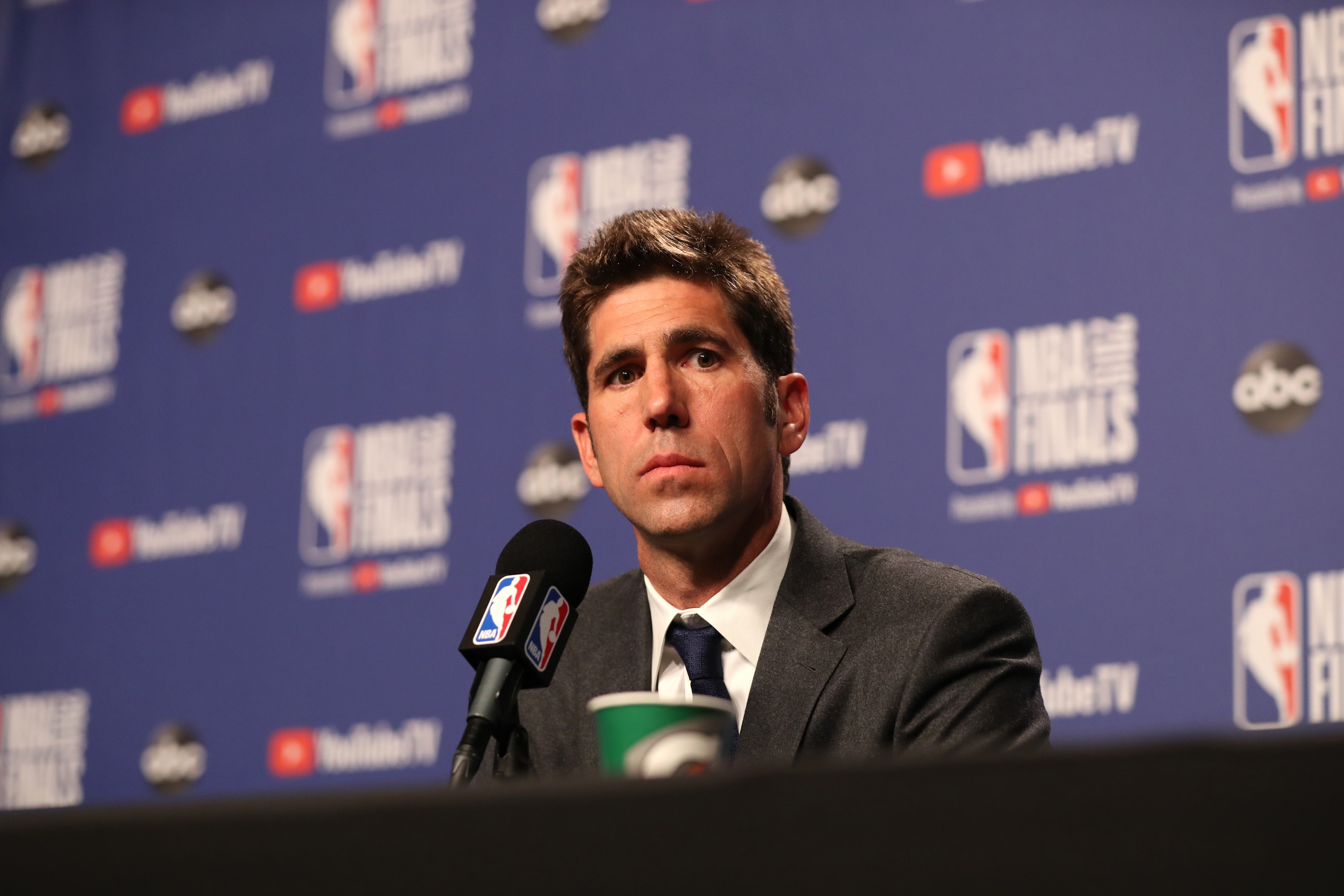
The Warriors just capped one of the most successful five-year runs the NBA has ever seen.
Their simple rating system over the last five seasons was 8.79. The best five-year run of Michael Jordan's Chicago Bulls was 7.39. Larry Bird's Celtics were at 6.73 from 1982 to 1986. Magic Johnson's best run with the Lakers yielded 6.57. Shaquille O'Neal and Kobe Bryant's Lakers were at 6.03 from 1998 to 2002.
None of those squads won more than three championships in those five-year windows. None of them, including the most recent Lakers clubs, had to deal with a 30-team league. None of them had to deal with LeBron James.
General manager Bob Myers helped engineer all of it.
In the points system introduced in the intro, teams two through seven—the Raptors, Spurs, Rockets, Clippers, Thunder and Celtics—were all within 10 points of each other. The Warriors were 28 points ahead of second-place Toronto.
Three titles, five conference titles, first in simple rating system, first in winning percentage, multiple Executive of the Year top-three finishes, Durant and D-Lo.
That's not just tough for any team of the last five years to live up to. That's tough for any team of the modern era.
.png?w=2560 "B/R CFB Top 25 After Week 7 🔢")

.jpg?w=2560 "AEW WrestleDream Live Grades 🔠")
.jpg?w=2560 "Myles Garrett Got Warning 👀")
.jpg?w=2560 "Ex-NFLer BLASTS Fitzpatrick🤬")