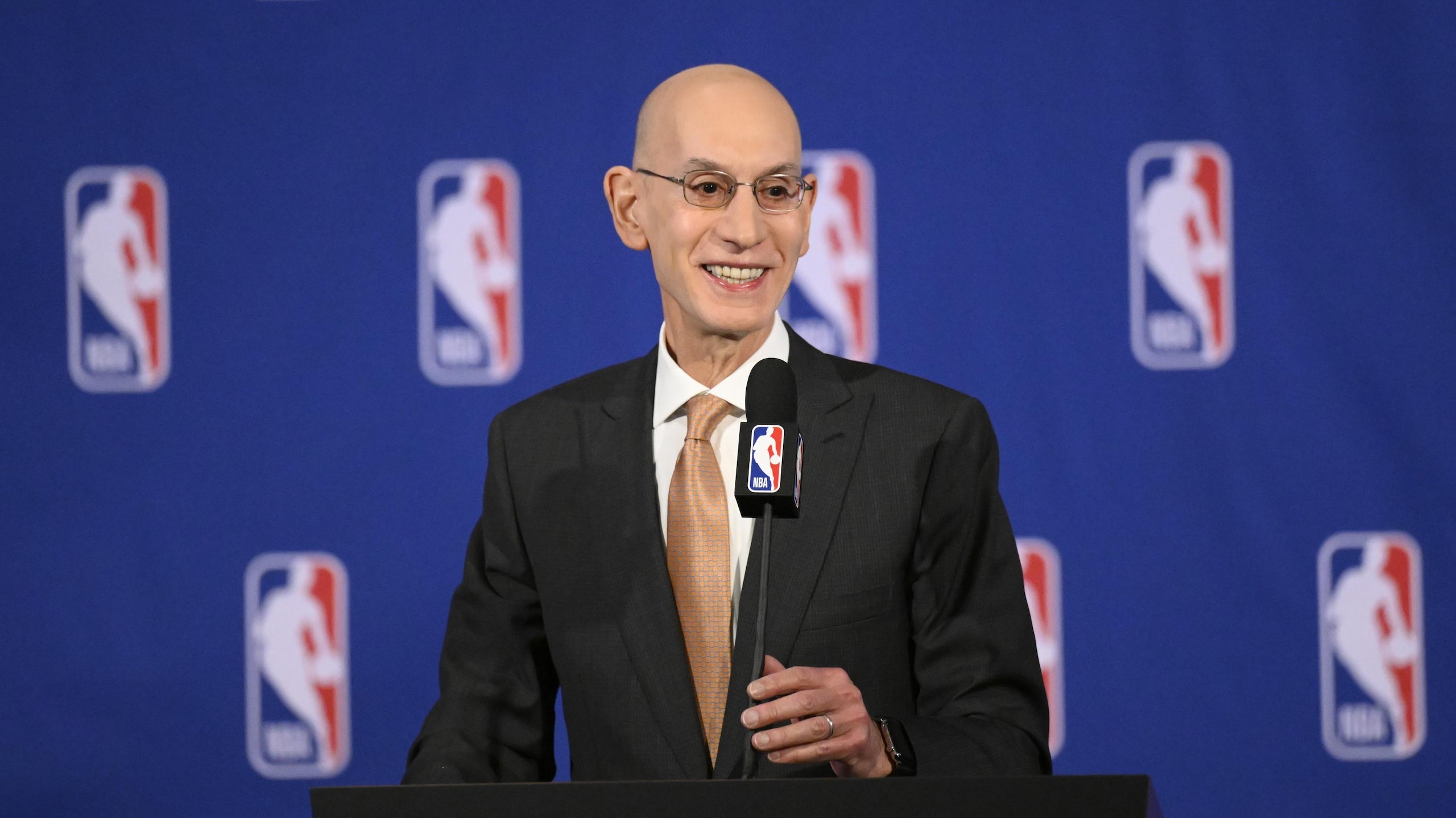


For much of this NBA season, everywhere you turned, it seemed like every NBA analyst, podcast and TV segment was consumed by one topic. Even the fans couldn't stop talking (or posting) about it. The commissioner spent much of his All-Star media availability talking about it.
And this week, it appears that the league has finally zeroed in on what it thinks is the solution to what it thinks is its biggest problem: tanking.
TOP NEWS

Offseason Grades for Every Team 🧑🏫
Final Record Predictions for Every NBA Team 🔮
NBA Opening Night Rosters 🔒
Remarkably, the league appears to be doubling down on a potential solution it already tried—one that almost certainly made the issue worse.
In 2017, the NBA announced that instead of the worst team having a 25 percent shot at the top pick and the second-worst team having a 19.9 percent shot, the three worst teams would all have a 14 percent chance. And the dropoff after those bottom three records, at least for the next few teams after that, was pretty small.
The change went into effect in 2019, and all it really did was incentivize more teams to lose.
For years now, we've seen teams hovering in or around the play-in tournament decide to steer away from that opportunity and toward those flattened lottery odds.
And now, despite that reform failing, the league looks poised to expand it.
"The '3-2-1 lottery' proposal, named to represent the number of lottery balls per team, would expand the lottery from 14 to 16 teams," ESPN's Shams Charania wrote. "Teams that do not qualify for the playoffs or play-in tournament but stay out of the relegation zone (spots four through 10) would receive three lottery balls each. Teams with a bottom-three record -- the relegation area -- would have only two lottery balls but have a floor of the No. 12 pick, and the rest of the 13 lottery teams could fall as far as the No. 16 pick."
The new proposal also precludes teams from winning the top pick in consecutive years or being able to win three consecutive top-five picks.
Never mind the fact that there are more pressing issues the league should be focusing on (like flopping, the interpretation of traveling calls, and ongoing questions about competitive balance and cap enforcement), further flattening the lottery odds is likely to have the same impact the original flattening had.
Increasing the chances at the No. 1 pick for more teams didn't push them closer to the playoffs. It pushed them closer to the bottom. And all this new proposal does is add more teams to that mix, while slightly moving the target.
Yes, teams with bottom-three records are penalized for ending up there, but increasing the likelihood of winning the lottery for 13 others is going to create a weird race to that section of the standings.
It's also, almost certainly, going to cause some teams hovering around fifth or sixth in their conference to tank for one of the lottery balls now afforded to teams finishing seventh or worse. That will be a terrible look.
Beyond that, this "fix" will only increase the gap between the haves and have-nots in the NBA. Free agency has effectively been killed off by the last couple of collective bargaining agreements. That's made trading more costly. For small-market teams, the only realistic path to star-level talent was the reverse-order draft.
Now, the small handful of teams that can consistently command interest from would-be free agents or trade targets also have a better chance at a cornerstone from the incoming class of players.
Maybe it's just the proliferation of social media use, but do you recall this level of tanking or the discourse surrounding it before the last attempt to fix it?
For over two decades, the weighted odds that gave the worst team in the league a 25 percent chance to land the top pick were, more or less, working fine.
In a given year, like this one, the level of the incoming talent might motivate a little more aggressive tanking, but it was harder to get to the very bottom or odds close to 25 percent. The chase wasn't worth it for as many teams as it is now. And in years without tantalizing draft classes, it wasn't worth it at all.
Simply returning to the previous set of odds would reduce the number of teams with an interest in losing. Presumably, that's the point of the hullabaloo we've heard over tanking for months.
Of course, there is a chance this adjustment moves the NBA closer to the utopia Adam Silver imagines. Maybe all 30 teams will start doing everything they can to win every game in every season.
But front offices are filled with smart people capable of gaming any system. And teams aren't going to want to be stuck in mediocrity if there's a shortcut away from it.
If that means tanking toward one of those spots with three lottery balls, teams will take it.
.jpg?w=2560 "Purdy Becomes Highest-Rated QB EVER 🤩")
.jpg?w=2560 "Grading WWE Raw 🔠")