

Josh Gordon Must Reverse the Patriots' Long History of Failed Experiments
If Monday's Josh Gordon trade gave you a feeling of deja vu, it's because the New England Patriots have a long history of Gordon-like experiments.
Patriots experiments are not like ordinary transactions. They always involve a player who is famous, troubled, controversial or some combination of all three. They are usually outside-the-box moves, like trades or in-season waiver claims, as opposed to offseason free-agent signings. They're bold, risky moves that other franchises are reluctant to make, and they often throw the football world into a Patriots-are-geniuses tizzy.
Everyone remembers the Randy Moss trade, just as everyone knows that Thomas Edison invented the light bulb. But no one thinks about Edison's thousands of failed light bulb experiments, and most fans forget that for every Moss trade, there are plenty more Patriots experiments that fizzled in the test tube.
TOP NEWS
.jpg?w=2560 "Chiefs Giants Football")
Mahomes Told Teammate to Leave Meeting

Geno Explains Wilson Exchange

McCarthy Wins 1st Giants Start
The Patriots get to noodle around in their transaction lab searching for the next Moss because they are great at so many other things. But time is running out on the Tom Brady era, and Gordon is getting low on extra chances after four-plus seasons ruined by substance abuse issues. Both sides need this latest experiment to succeed.
The following journey through New England's mad-scientist history can teach us a lot about what to expect from the Gordon trade, as well as the potential pitfalls Gordon and the Patriots face as he tries to turn his career (and life) around for the most demanding franchise in professional sports.
Martellus Bennett
The Patriots traded a fourth-round pick to the Bears to acquire Bennett and a sixth-rounder in March 2016. Bennett proved useful in both two-tight end sets and as Rob Gronkowski health insurance that year, playing through injuries and catching 55 regular-season passes, plus 11 more during the Super Bowl run.
Similarity to Gordon: Low. Bennett was a well-traveled veteran at a different position. While he may have caused Tom Coughlin types some agita during his career, the Black Unicorn was always more quirky than controversial.
Tizzy Factor: Low. The Bennett trade occurred amid a flurry of preseason deals around the NFL.
Lessons for Gordon: Bennett is proof that an offbeat personality can fit in with the Patriots and succeed if he does what's expected of him on and off the field.
LeGarrette Blount
Blount is perhaps the Patriots' most successful post-Moss experiment. They traded a seventh-round pick to the Buccaneers for him in 2013. Blount played well that year and rushed for four touchdowns in a playoff game, but the Patriots allowed him to sign with the Steelers in 2014.
Blount became Resident Malcontent No. 1 in Pittsburgh, earning his release after walking off the field before the end of a game. The Patriots brought him back after he cleared waivers in November 2014, and he stuck around for two-and-a-half seasons as a goal-line battering ram and fourth-quarter clock-muncher.
Similarity to Gordon: Moderate to high. Like Gordon, Blount was relatively young when the Patriots traded for him, and both were extremely talented players whose college and NFL careers kept getting sidetracked by off-field issues.
Tizzy Factor: Low. Blount's college incidents landed him in the high-risk category at the start of his career, and the Patriots don't have the star-maker reputation at running back that they have at receiver or on defense.
Lessons for Gordon: The Patriots stuck with Blount through a substance abuse violation in 2015, so they'll work with a troubled player if they feel as though he's worth the risk.
Kenny Britt, Eric Decker, Phillip Dorsett
The Patriots signed Britt to a two-year contract last December after the Browns released him. The well-traveled 2009 first-round pick caught two passes down the stretch of the regular season last year, but he was inactive throughout the playoffs. The Patriots released him in mid-August.
Decker signed with the Patriots at the beginning of August, struggled through the preseason and retired at the end of August. Dorsett arrived in exchange for quarterback Jacoby Brissett last September and will soon be fighting with Gordon for the same offensive role, and perhaps a roster spot.
Similarity to Gordon: High in Britt's case. The Browns made both of them available because of their unreliability. Dorsett is a big-play threat with roughly Gordon-like skills. Decker fits more squarely in the old "Patriots love white wide receivers" bin.
Tizzy Factor: Astoundingly high, considering Britt was a career-long disappointment who was dogging it for the NFL's worst team while Decker was 31 and three years removed from his last good season. Dorsett was a draftnik favorite, and the Patriots were hailed for acquiring high-upside talent in exchange for a third-string quarterback. These acquisitions got more attention than they warranted because of the next-Moss/next-Wes Welker angle.
Lessons for Gordon: The Patriots now stack their receiver experiments three to four at a time. (Cordarrelle Patterson and Jordan Matthews could well have been included in this section.) Expectations are high, competition is constant, and the Patriots won't hesitate to make another move in a few weeks if they don't like what they see from Gordon.
Brandin Cooks
The Patriots traded first- and third-round picks for Cooks and a fourth-round pick last March, got a great season from him, then traded him and a fourth-round pick in April for the Rams' first- and sixth-round picks. That sent New England on the offseason-long search for wide receiver depth that led eventually to the Gordon trade.
Similarity to Gordon: Moderate to high. Cooks is a talented young receiver with a habit of wearing out his welcome, though he lacks Gordon's off-field issues.
Tizzy Factor: High, although "tizzy" isn't the best term, because both Cooks trades were legitimately big news.
Lessons for Gordon: The one-year Cooks rental demonstrates how ruthless the Patriots can be with even a productive player: You have to fit the playbook, the culture and the always-tight salary cap. On the other hand, a productive year in New England could help Gordon, like Cooks, sign a massive contract elsewhere.
Michael Floyd
The Patriots claimed Floyd after the Cardinals released him in the wake of a DUI arrest in December, 2016. Floyd caught four late-season passes but was inactive throughout the playoffs. The Vikings signed Floyd in the 2017 offseason and he has played sparingly for multiple teams since.
Similarity to Gordon: High.
Tizzy Factor: Moderate-to-High. By Floyd's signing, "watch him catch 10 passes in the AFC Championship Game" was practically an Internet meme when the Patriots signed a receiver.
Lessons for Gordon: As we'll see throughout this article, it's hard for a receiver to stick with the Patriots, and second chances are almost nonexistent.
Joey Galloway
The Patriots signed the 38-year-old deep threat, two years removed from three straight 1,000-yard seasons for the Buccaneers, during 2009 free agency. Galloway caught only seven passes in three games for the Patriots and was a healthy scratch for much of the year.
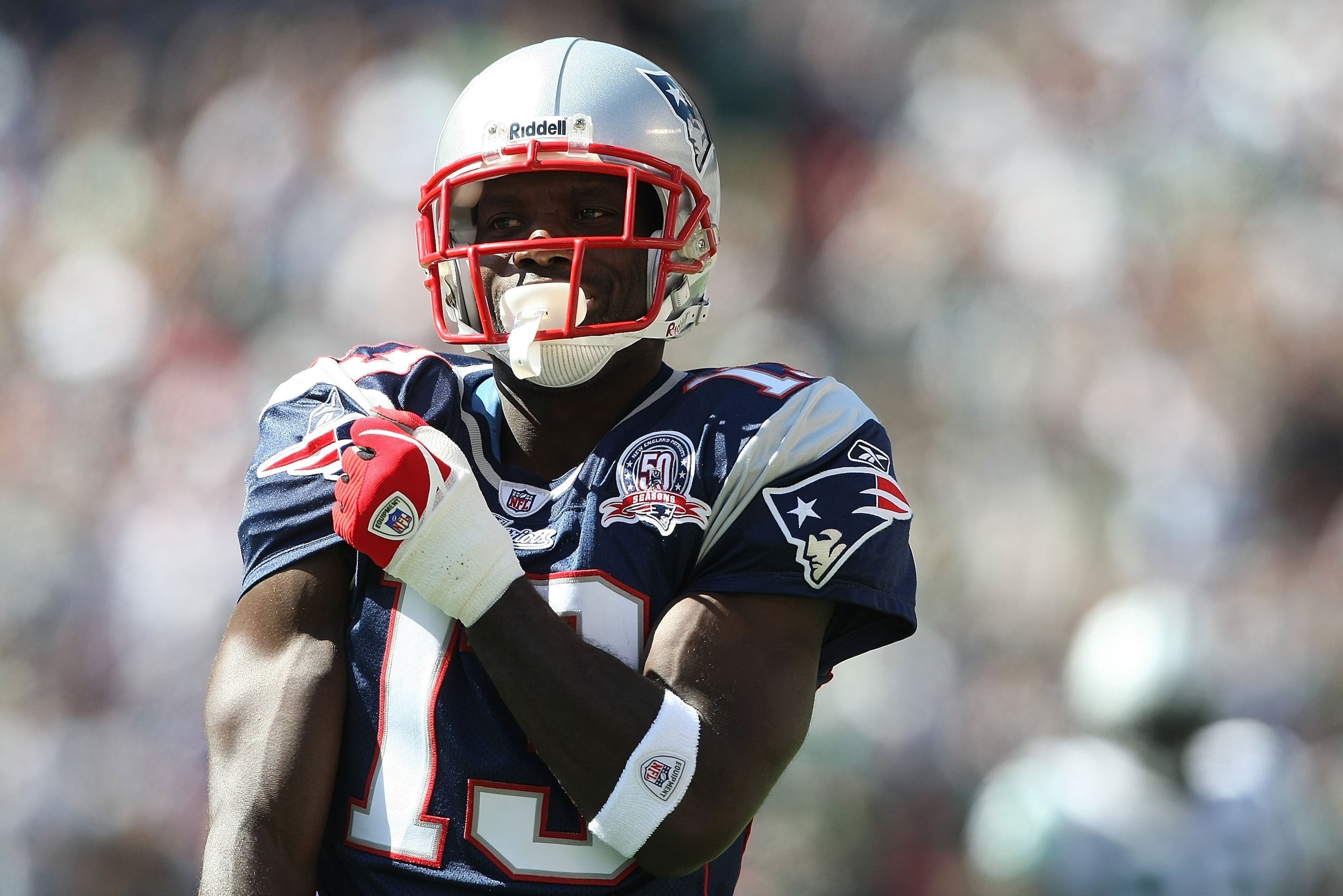
Similarity to Gordon: Low, though Galloway was a Gordon-like deep threat for most of his long career.
Tizzy Factor: Low. Galloway was old, and Randy Moss was still on the roster, so no one was looking for the Next Randy Moss yet.
Lessons for Gordon. Here's what Galloway said after his release in 2010, via ESPN.com's Mike Reiss: "There was a lot of talk that me and Brady were having issues and we couldn't get on the same page. Me and Tom Brady are great friends. ... But there is no page for the third receiver. We would go a week through practice. There would be one, maybe two balls thrown to the third guy. It just wasn't a good fit for what I thought I was going there to do."
The "vertical receiver" role in the Patriots offense sounds straightforward. But if a receiver with Galloway's experience felt like he didn't have the reps to pick it up after a full offseason, Gordon has some serious studying to do.
James Harrison
The Patriots signed the 39-year-old pass-rusher soon after the Steelers released him last December. Harrison recorded three sacks last season—two against the surrendering Jets in the season finale—but he had a limited impact in the postseason.
Similarity to Gordon: Very low. The only real similarity is that the Steelers were weary of an increasingly high-maintenance player, a situation the Browns found themselves in when Gordon got hurt filming a promotional video last week, according to Zac Jackson of The Athletic.
Tizzy Factor: High. This was hailed as a vintage Patriots genius move, complete with viral Harrison-Brady Instagram posts.
Lessons for Gordon: The excitement-to-impact ratio for Patriots experiments has spiraled out of control in recent years. Harrison became a footnote to a footnote in the story of the 2017 Patriots. Gordon could easily become the same.
Albert Haynesworth
The Patriots traded a 2013 fifth-round pick to Washington for the disgruntled former All-Pro defensive tackle in the summer of 2011. Haynesworth called New England a "career-saving place" during that preseason, according to Reiss. But he recorded only three tackles in six games before the Pats released him after a bad game and a sideline spat with coaches in November.
Similarity to Gordon: Moderate, despite the differences between a 320-pound defender and a speedy receiver. Like Gordon, Haynesworth was several years removed from his signature seasons and had become more like infamous vaporware than an actual star when the Patriots traded for him.
Tizzy Factor: Moderate. Haynesworth was a huge name in the late 2000s, and Bill Belichick had a reputation for rehabilitating down-and-out defensive players when the Pats acquired him.
Lessons for Gordon: Foxborough is not the "career-saving place" it's sometimes made out to be.
Chad Johnson
The Patriots traded fifth- and sixth-round picks to the Bengals to acquire Johnson (then Ochocinco) in July 2011. Johnson caught only 15 passes in 15 regular-season games and one more in the Super Bowl loss to the Giants.

Similarity to Gordon: Moderate. Both players could headline a highlight reel, but The Receiver Briefly Known as Ochocinco was a different kind of coach's headache, and he was nearing the end of the road when the Patriots traded for him.
Tizzy Factor: High. Johnson was a multimedia superstar. His age, personality and still-evident big-play potential made the Moss comparisons inevitable.
Lessons for Gordon: Here's Johnson's own take, from his 2016 A Football Life documentary (via Zack Cox of NESN): "Really, really, really great team. But not the right system for my type of style of play, or just a predominantly outside receiver in general. Unless your last name is (Randy) Moss."
Brandon Lloyd
The Patriots signed the 31-year-old Lloyd to a three-year contract in the 2012 offseason, two years after he had a career year with the Broncos. Lloyd finished the 2012 season with 74 receptions for 911 yards and four touchdowns, and he played well in the postseason, but the Patriots released him after just one season amid rumors that they were unsatisfied with his effort or late-season production.
Similarity to Gordon: High. Lloyd had none of Gordon's documented issues, but he wore out his welcome with several teams despite his exceptional deep-ball skills. From a sheer talent standpoint, Lloyd should have stuck in a Moss-like role with the Patriots.
Tizzy Factor: Low. The Lloyd acquisition was more like a standard free-agent signing than a mad science experiment, but it's included because of the Lloyd-Gordon similarities.
Lessons for Gordon. Here's former Patriots star Troy Brown criticizing Lloyd in 2012, via Reiss: "I don't think he's been showing up for Tom Brady, and Tom Brady is not trusting this guy down the stretch. He's going back to his bread-and-butter guys. ... Tom's not the most patient guy in the world when it comes to that."
That says it all.
Aqib Talib
The Patriots traded a fourth-round pick to the Buccaneers for Talib in November 2012 after the mercurial cornerback became available because of a four-game performance-enhancing-drug suspension. Talib entered the Patriots' lineup immediately after the suspension and played well for them in 2012 and 2013.
Similarity to Gordon: Very high, despite playing different positions. Talib's early career was littered with incidents and suspensions.
Tizzy Factor: Low. The deal made news, but no one reacted like Belichick outsmarted the universe.
Lessons for Gordon: The Patriots traded for Talib during a suspension, so they aren't completely unrealistic when it comes to acquiring players with pasts. Gordon may not get many second chances in New England, but he will get a clean slate.
Tim Tebow
No list of wacky Patriots experiments would be complete without Tebow. The Patriots signed him in June 2013 and released him two months later.
Similarity to Gordon: None except for the fame-to-production ratio.
Tizzy factor: Extreme. Placing Tebow and Patriots in the same article remains a reliable way to get attention even five years later (wink). The speculation was deafening in the spring of 2013. Would Tebow transfer to tight end? Would the Patriots make him a goal-line Wildcat? What brilliant scheme was Belichick hatching?
Lessons for Gordon: No matter how much excitement Gordon's arrival generates, it's nothing compared to Tebowmania. And all the attention in the world won't matter if he doesn't fit in.
Reggie Wayne
You may have forgotten Wayne's 12-day tenure with the Patriots. He signed in late August 2015, played two preseason game and then asked for his release. At the time, former Patriots quarterback Scott Zolak claimed that Wayne left because the Patriots system was "too tough" and "no fun," but Belichick called Wayne a consummate pro at the time, and Wayne has since clarified that he was simply ready for retirement.
Similarity to Gordon: Low, except for the same position and same receiver-depth-crisis circumstances.
Tizzy Factor: Moderate to high. Wayne's arrival and departure fueled a Colts-Patriots rivalry that was still at full Deflategate throttle in 2015, and the "no-fun" narrative cropped up again this offseason. Not bad for 12 days and two preseason games.
Lessons for Gordon: Like Galloway and Ochocinco, Wayne arrived as a distinguished veteran, but he couldn't fit in for whatever reason.
Kellen Winslow II
The Patriots signed Winslow early in the 2012 season after Aaron Hernandez sprained an ankle. Winslow played one game and caught a 12-yard pass, but he was also dealing with injuries and asked for his release at the end of September.
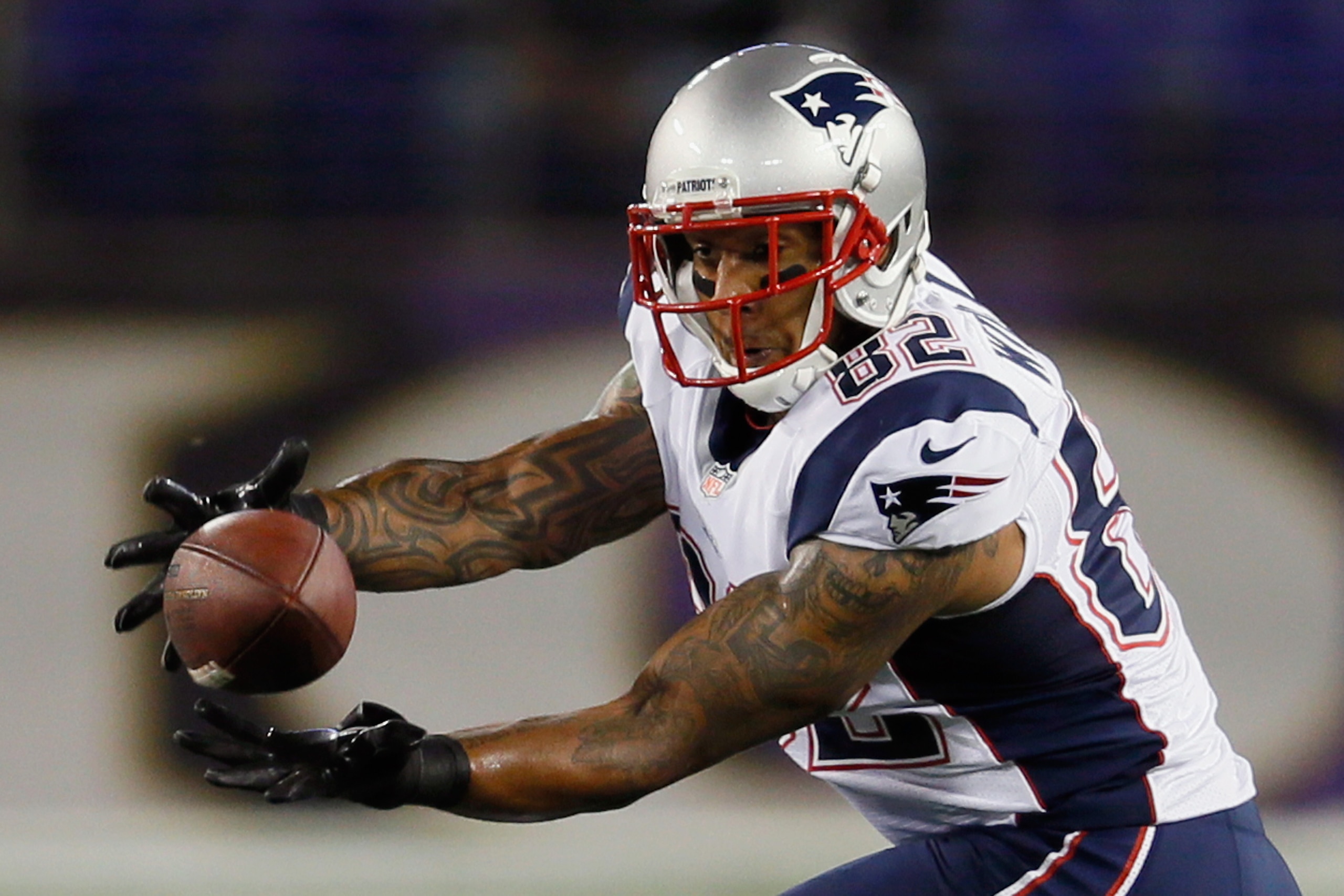
Similarity to Gordon: Moderate to high, as Winslow was also a troubled talent available in September because his previous team soured on him.
Tizzy factor: Moderate. Winslow was coming off a 75-catch season with the Buccaneers, so his sudden arrival in New England made waves.
Lessons for Gordon: The Patriots aren't shy about renting big-name veterans for a few games, so Gordon could quickly become expendable once Julian Edelman returns from his four-game PED suspension. And despite some success with players like Blount and Talib, the tragic names in this final tale remind us that the Patriots aren't in the personal rehabilitation business.
Lab Report Conclusions
Other Patriots experiments were considered: Steven Jackson, Kony Ealy, Jordan Matthews and so forth. But these were the ones most similar to the Gordon trade.
Relative successes were few: Bennett, Blount, Cooks, Talib, maybe Lloyd from purely a statistical standpoint. Failures are much more common, but that's how science works. And even the successes were short term. The Patriots leased some good role players, but they haven't outwitted the world and landed a true superstar since Moss.
The biggest takeaway from our review is how difficult it is to succeed as a Patriots big-play receiver. Gordon faces an uphill battle to play a significant role even before accounting for his substance history. And as Troy Brown suggested years ago, the Patriots aren't big on patience.
We're all rooting for Gordon, because we like seeing young individuals get their lives in order and also like watching touchdowns. There are enough semi-happy endings on this list to offer hope. And of course there's Moss, although that trade happened 11 years ago and shouldn't be held up as an example every time the Patriots don their lab coats.
Both Gordon and the Patriots need this experiment to succeed, because Brady and Gordon are both running out of tomorrows for different reasons. History suggests that it isn't likely. But at least it's possible.
.jpg?w=2560 "🚨 Week 8 AP Top 25 Poll")

.jpg?w=2560 "Updates from EVERY NFL Game 🏈")
.jpg?w=2560 "Baker Gets Glove From Rays 🧤")