

Metrics 101: Greatest Center Seasons in Modern NBA History
Need a rebound? Want to get a stop on the interior? Looking for a post-up move that can embarrass a defender?
You might want a dominant center.
Dating back to 1973-74, which serves as our cutoff for the modern era because that was the advent of expanded statistical tracking, the league has always featured dominated 5s. From Kareem Abdul-Jabbar and Bill Walton in the 1970s to Hakeem Olajuwon and David Robinson in the 1990s to a crop of youngsters just starting to break into the conversation, different player moulds have risen to the top. The position has never really died out, even if it hasn't been at peak performance in recent years.
But of the many studs, who's had the absolute best season?
Just as was the case in our point guard rankings, shooting guard countdown, small forward hierarchy and power forward pecking order, we're turning to NBA Math's total points added (TPA) metric, which weighs both per-possession efficiency and volume to show how much value a player added during a season. The calculation here is rather simple: Add together the regular-season and postseason scores so that both the first 82 games and the all-important playoffs are taken into account.
Each center is eligible just once, so we're taking only their best single seasons to determine the modern-era hierarchy.
15. Joakim Noah, 2013-14, Chicago Bulls: 356.49
1 of 15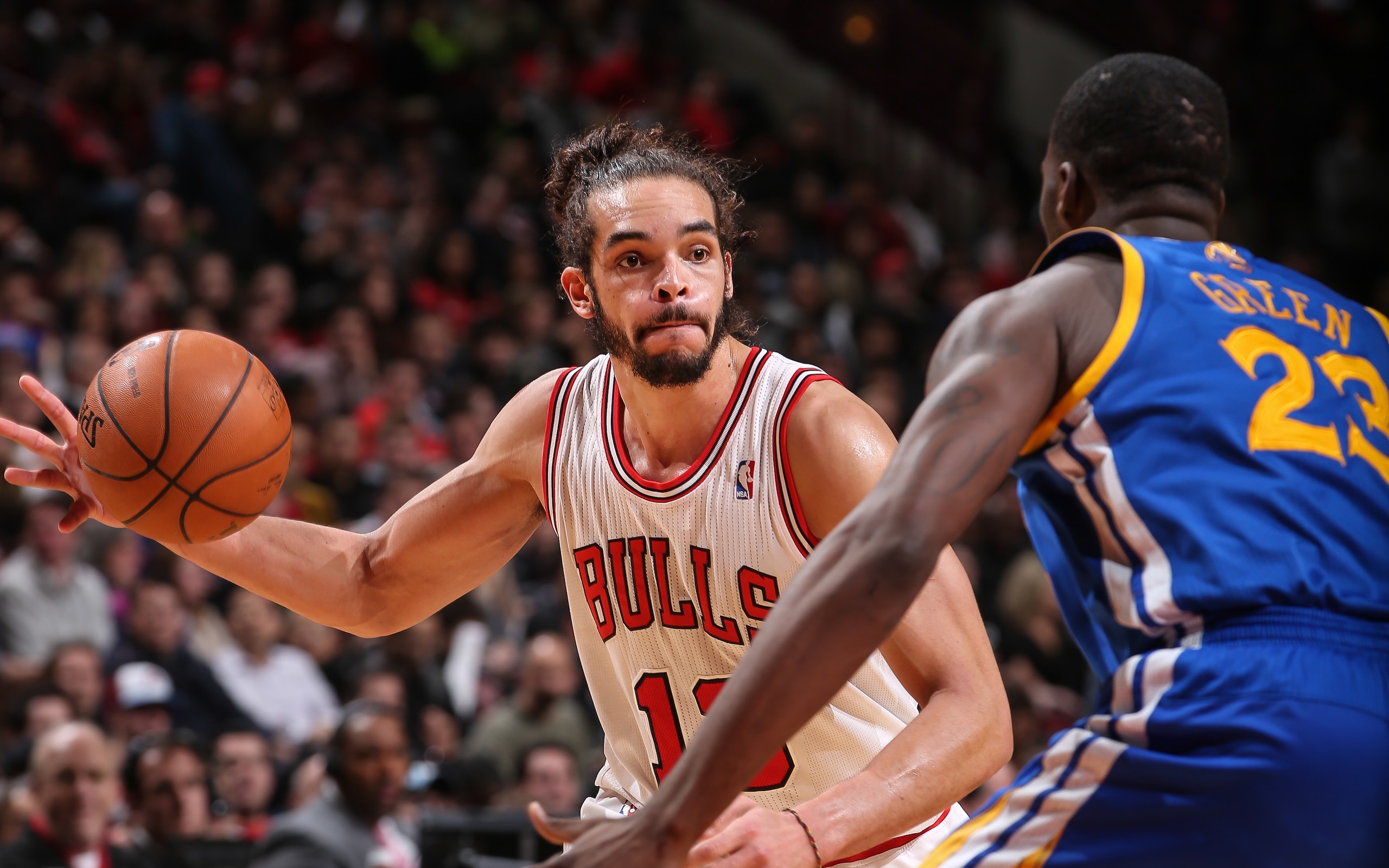
Regular-Season TPA: 349.74
Postseason TPA: 6.75
Per-Game Stats: 12.6 points, 11.3 rebounds, 5.4 assists, 1.2 steals, 1.5 blocks
Awards: All-Star, Defensive Player of the Year, All-Defensive First Team, All-NBA First Team
This version of Joakim Noah was far different than the injury-plagued one who struggled to justify his salary for the New York Knicks last year. His side-winding jumper still limited him and produced shaky results at the charity stripe, but his defensive abilities and passing acumen more than canceled out his questionable range.
Chicago Bulls head coach Tom Thibodeau built his pack-the-paint system around Noah, relying on the big man to shut down the interior and push the limits of zone defense so he could always defend the hoop. He exhibited the principles of verticality to perfection, proving that you didn't need to block too many shots to have a massive impact on the painted area.
And yet, his passing was just as special.
Noah bounding down the court and leading a transition charge was by no means an uncommon sight while he asserted himself as one of the greatest distributing centers the sport has ever seen. No window was too tight, and his teammates shot a staggering 52.4 percent of his feeds that led to field-goal attempts.
This former Florida Gator's true peak may have been short-lived, but it was still a high one.
Honorable Mentions: Nikola Jokic (2016-17), Patrick Ewing (1993-94), Artis Gilmore (1978-79), Rudy Gobert (2016-17), DeMarcus Cousins (2016-17)
14. Dwight Howard, 2008-09, Orlando Magic: 357.85
2 of 15
Regular-Season TPA: 238.71
Postseason TPA: 119.14
Per-Game Stats: 20.6 points, 13.8 rebounds, 1.4 assists, 1.0 steals, 2.9 blocks
Awards: All-Star, Defensive Player of the Year, All-Defensive First Team, All-NBA First Team
Dwight Howard wasn't just a defensive menace during his best years with the Orlando Magic. He couldn't have carried the 2008-09 squad past the Philadelphia 76ers, Boston Celtics and Cleveland Cavaliers for a Finals clash with the Los Angeles Lakers if he were only a one-way player.
Though Howard's popularity has since plummeted, he was one of the NBA's most likable players during his early years. Not only was he a goofy presence on the court who never seemed to take anything too seriously, but his relentless physicality and dominating presence on the interior also drew fans to his game.
Surrounded by shooters, Howard forced opponents to pick their poison.
He might not have developed go-to post moves, but he could still overpower the opposition on the interior if it left him alone in one-on-one situations. If opponents threw more defenders at him, his teammates were free to knock down wide-open triples. If they closed out too hard, he could grab an offensive board and finish the put-back attempt with ease. He was the perfect man in the middle for head coach Stan Van Gundy's patented four-out, one-in stylings.
Now, if only he could've shot better than 59.4 percent at the free-throw line...
13. Marc Gasol, 2012-13, Memphis Grizzlies: 375.8
3 of 15
Regular-Season TPA: 314.09
Postseason TPA: 61.71
Per-Game Stats: 14.1 points, 7.8 rebounds, 4.0 assists, 1.0 steals, 1.7 blocks
Awards: Defensive Player of the Year, All-Defensive Second Team, All-NBA Second Team
Big men aren't supposed to be this skilled in this many areas.
Among every Defensive Player of the Year winner in league history, Marc Gasol is the only one who averaged at least 14 points, seven rebounds, four assists, a steal and a block. None of those numbers are particularly overwhelming, but the total product paints the picture of a player who could make an impact in every area imaginable.
Gasol's touch helped him stand out, as did his hands. But his preternatural timing, which manifested itself in two primary areas, pushed him to that next level and allowed him to match the impact of so many legendary centers.
Many frontcourt players are capable of finding open teammates on the perimeter or timing passes perfectly on their counterparts' bursts toward the hoop. Few are able to pass them open by leading them into space and counting on them and the ball to arrive at the intended spot simultaneously. Gasol frequently showed a knack for doing exactly that, most notably when he'd drop off the ball behind his back or along the baseline for an easy layup.
But his timing was arguably even more impressive on defense, where he showed a fundamental understanding of opposing schemes that let him slide over to the right spot before the opposition. He'd gum up sets rather often simply with his positioning, to the point that the Memphis Grizzlies allowed 6.9 fewer points per 100 possessions while he was on the floor.



12. Bob McAdoo, 1974-75, Buffalo Braves: 396.94
4 of 15
Regular-Season TPA: 381.17
Postseason TPA: 15.77
Per-Game Stats: 34.5 points, 14.1 rebounds, 2.2 assists, 1.1 steals, 2.1 blocks
Awards: All-Star, MVP, All-NBA First Team
Bob McAdoo ends the run of three consecutive Defensive Players of the Year in these rankings—and we'll get back on that train at No. 11—but he provided more than enough scoring to make up for his point-preventing woes. Since the start of the modern era, which, for our purposes, dates back one year before this season, he and Moses Malone are the only centers to average at least 30 points for an entire campaign.
And McAdoo cleared that bar with room to spare.
While still keeping his eyes open for teammates, the Buffalo Braves star shot 51.2 percent from the field and made a whopping 9.7 trips to the free-throw stripe during his average appearance, where he connected at an 80.5 percent clip. Add it all together, and McAdoo was a versatile big who notched 34.5 points per game with a 56.9 percent true shooting percentage.
We can look at that last part in multiple ways, and it's impressive down either avenue.
Among the many players who have logged true shooting percentages of at least 56 percent during a qualified season, only Michael Jordan and Kareem Abdul-Jabbar have scored more points. But McAdoo was also playing in a more inefficient era that didn't feature a three-point arc, which makes it tough to compare him to modern studs.
During the 1974-75 campaign, he led the league in scoring and trailed only four players in true shooting percentage. Don Nelson, Larry Steele, Butch Beard and Happy Hairston, the men comprising the quartet ahead of him, combined to post 45.7 points per game.
11. Ben Wallace, 2003-04, Detroit Pistons: 401.44
5 of 15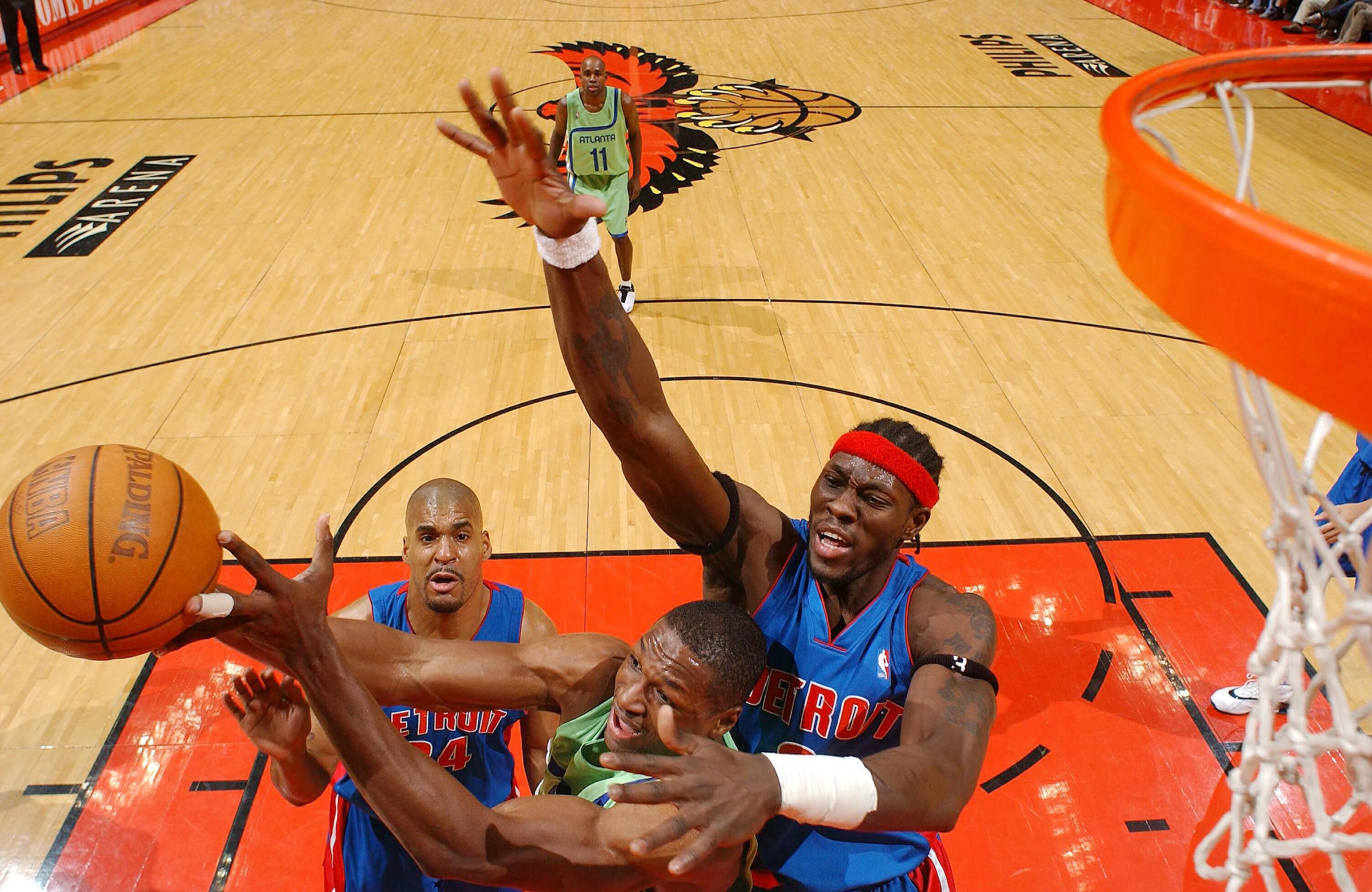
Regular-Season TPA: 290.42
Postseason TPA: 111.02
Per-Game Stats: 9.5 points, 12.4 rebounds, 1.7 assists, 1.8 steals, 3.0 blocks
Awards: All-Star, NBA Champion, All-Defensive First Team, All-NBA Second Team
"I didn't get to see [Bill] Russell or [Wilt] Chamberlain, but I can't remember a guy that wreaks so much havoc of the court like Ben does," Joe Dumars, who was then serving as the Detroit Pistons president of basketball operations, said after Ben Wallace earned his fourth Defensive Player of the Year trophy, per the Associated Press (h/t ESPN). "Olajuwon and Mutombo were great defenders, but they only guarded centers. Ben can basically guard 1s through 5s, and the closest guy I saw do that was Dennis Rodman."
Granted, that came in 2006. But the sentiment still stood a few years earlier, even during the lone season in a five-year stretch that saw Wallace fail to earn the relevant accolade. He finished second to the artist then known as Ron Artest and was by no means anything less than exemplary on the stopping side.
So what pushes this season ahead?
Wallace wasn't any better on offense than during his DPOY victories. He just played peak-level defense while suiting up in 81 regular-season contests, then kept dominating during the playoffs. And interestingly enough, he became a positive on the more glamorous end in the postseason.
While helping the Pistons win the title by continuing to spark a suffocating defense, Wallace upped his averages to 10.3 points and 1.9 assists while shooting 45.4 percent from the field. Those subtle strides, which made him less of a liability while Detroit was trying to score, served as the difference-makers and vaulted this season ahead of his other premier go-rounds.
10. Pau Gasol, 2008-09, Los Angeles Lakers: 409.46
6 of 15
Regular-Season TPA: 294.6
Postseason TPA: 114.86
Per-Game Stats: 18.9 points, 9.6 rebounds, 3.5 assists, 0.6 steals, 1.0 blocks
Awards: All-Star, NBA Champion, All-NBA Third Team
Fun fact: Kobe Bryant's score during the Los Angeles Lakers' entire run to the 2009 title came in at a stellar 399.5. That still leaves him in the 99th percentile among all campaigns during the modern era, but it also puts him slightly behind one notable teammate.
As you may have guessed, that would be Pau Gasol.
Whether the Spanish 7-footer was actually more valuable than his shooting guard counterpart is up for debate, but it should actually be a debate. Bryant wasn't the runaway leader of this team. Not during Gasol's prime, back when he could impact a both ends of the floor while putting up a hyper-efficient 20 points on any given night.
Gasol didn't take triples at this stage of his career. He just finished everything around the basket, thrived from mid-range zones and showed off the passing chops necessary to involve everyone else. He could simply do everything, and dragging opponents out of the paint was particularly valuable when paired with Bryant's athletic assaults on the rim.
That he could do all this without ever turning over the rock was almost unfathomable.
Plenty of players have averaged at least 18 points, nine rebounds and three assists during a qualified campaign, but only this big man and Kevin Garnett have done so without coughing the ball up even twice per contest. Gasol's ability to provide so many positives without making mistakes disheartened one opponent after another.
9. Wes Unseld, 1974-75, Washington Bullets: 438.17
7 of 15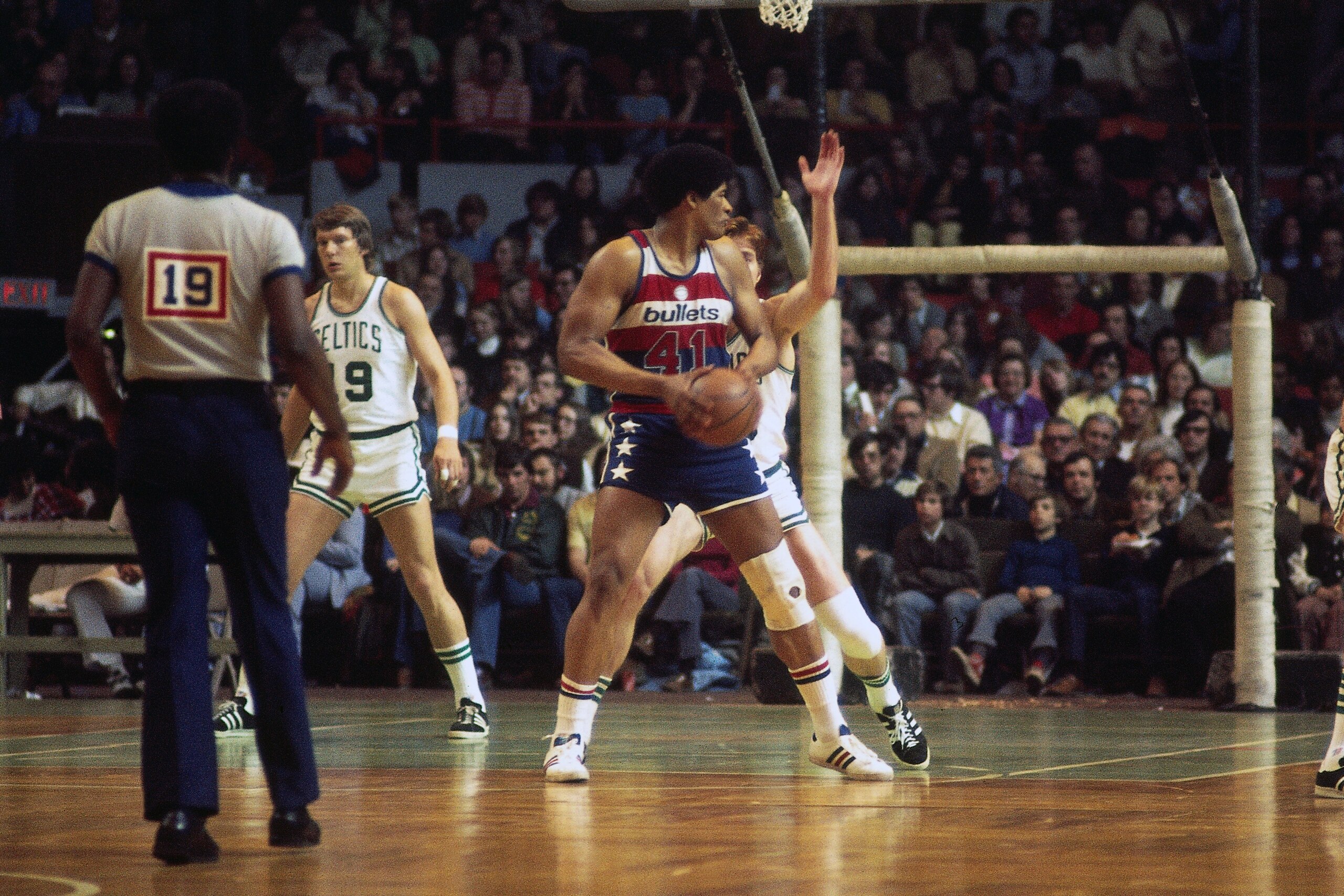
Regular-Season TPA: 353.05
Postseason TPA: 85.12
Per-Game Stats: 9.2 points, 14.8 rebounds, 4.1 assists, 1.6 steals, 0.9 blocks
Awards: All-Star
Talking about Wes Unseld without mentioning his outlet passing might be a federal offense. So let's get that out of the way from the start.
This big man was a tremendously gifted distributor who made a habit out of not just grabbing a defensive rebound, but pulling in the board and then immediately firing an on-target feed to a teammate sprinting down the court. He was a major part of the reason the Washington Bullets played with the sixth-fastest pace in 1974-75, even though he wasn't a particularly quick presence on the hardwood.
Unseld seemingly played without emotion, but he didn't need expressiveness in order to excel.
When those outlet passes and tenacious work on the glass weren't enough, he threw some of the toughest screens in league history. It was that attention to detail and willingness to leverage his physical frame in non-glamorous ways that allowed him to add so much value, even as he struggled to score.
Few players were more imposing on the defensive end, whether Unseld was protecting the interior or sliding out to the perimeter to overpower a speedier presence. And yet, he also managed to remain a positive on the scoring side, thanks both to that passing and a knack for finishing plays on the interior.
Unseld is disadvantaged by the definition of the modern era, though.
His rookie season back in 1968-69 may have been even more impressive, as he won both Rookie of the Year and MVP. We just don't have the numbers necessary to quantify it, forcing us to turn toward what was likely the second-best effort of his Hall of Fame career.
8. Dave Cowens, 1975-76, Boston Celtics: 458.5
8 of 15
Regular-Season TPA: 352.21
Postseason TPA: 106.29
Per-Game Stats: 19.0 points, 16.0 rebounds, 4.2 assists, 1.2 steals, 0.9 blocks
Awards: All-Star, NBA Champion, All-Defensive First Team, All-NBA Second Team
Try as I might, I can't shake this lengthy excerpt from Bill Simmons' The Book of Basketball. It remains the perfect description of Dave Cowens' relentless hustle, hinting at the tremendous stats that stemmed from his unwillingness to take even a portion of a possession off:
"I remember thinking the same thing as everyone else: 'Good God, Dave Cowens has a girlfriend!' How was this possible? The guy had a competitiveness disorder, playing every game in fifth gear, berating officials like they were busboys, bellowing out instructions to teammates, diving for loose balls, crashing over three guys for rebounds, battling bigger centers game after game and getting into fights at least once a month. Whenever Cowens fouled out, he stood in disbelief with his hands stuck on his hips, staring the offending official down and hoping the guy might change his mind. Don't you realize what you just did? This means I can't play anymore! Don't you realize what you just f--king did?
"...Even after all these years, he remains my father's favorite Celtic—the guy who never took a night off, the guy who cared just a little bit more than everyone else.
"And now he had a girlfriend? I was totally confused by the revelation. Does this mean they hold hands and go on dates? Do they sleep in the same bed together? I kept picturing her forgetting to buy milk and Cowens flipping out the same way he freaked after an especially terrible call. That's what separated Cowens from everyone else: He played with such unbridled ferocity that little kids couldn't even conceive of him having a girlfriend. Imagine Jason from Friday the 13th heading home from a weekend of killing camp counselors, showering, changing into clean clothes, then taking his lady to Outback Steakhouse. That was Cowens with a girlfriend."
Oh, Cowens also joins Kareem Abdul-Jabbar as one of only two players in the modern era to average at least 19 points, 16 rebounds and four assists. And he won a championship while serving as the featured piece for the Boston Celtics.
So there's that, in addition to the unquantifiable hustle.
7. Alvan Adams, 1975-76, Phoenix Suns: 472.85
9 of 15
Regular-Season TPA: 391.48
Postseason TPA: 81.37
Per-Game Stats: 19.0 points, 9.1 rebounds, 5.6 assists, 1.5 steals, 1.5 blocks
Awards: All-Star, Rookie of the Year, All-Rookie First Team
Alvan Adams could never quite replicate the success he found in his first season out of Oklahoma.
Not only did he make the lone All-Star appearance of his career and earn Rookie of the Year, but he helped propel the Phoenix Suns all the way to the NBA Finals. He was just as impactful while pushing the desert-based organization past the Seattle SuperSonics and Golden State Warriors, averaging 17.9 points, 10.1 rebounds, 5.2 assists, 1.3 steals and 1.1 blocks. But it just wasn't enough to take down the Boston Celtics in the boss battle, which is likely why this season has largely been lost to history.
The Suns couldn't possibly have expected him to be that good that quickly.
They drafted him at No. 4 overall following his career with the Sooners, taking him once David Thompson, Dave Meyers and Marvin Webster were off the board. Then, he blossomed faster than almost any first-year players ever have.
Not only did he continue scoring around the hoop like he had throughout his time in the Sooner State, but he showcased unbelievable passing chops. Big men weren't supposed to drop over five dimes per contest, but Adams just kept elevating the play of teammates such as Paul Westphal and Gar Heard.
He nearly replicated his regular-season numbers one year later, but his prime wouldn't last too much longer. His durability never faded, but his role shrunk as the Suns shifted gears, and the lack of historical recognition for his career as a whole might be to blame for this fantastic campaign getting overlooked as well.
6. Bill Walton, 1976-77, Portland Trail Blazers: 473.05
10 of 15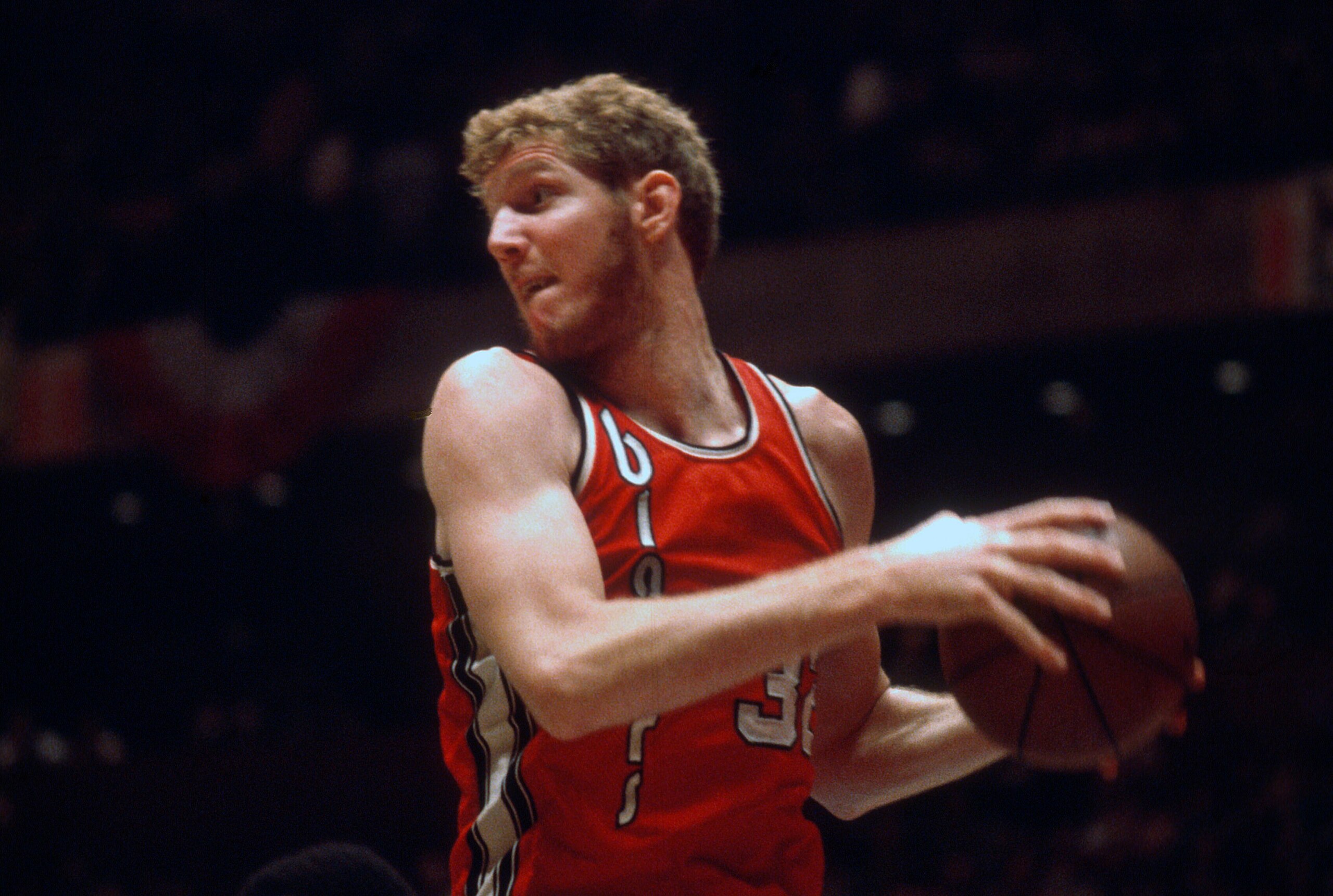
Regular-Season TPA: 356.58
Postseason TPA: 116.47
Per-Game Stats: 18.6 points, 14.4 rebounds, 3.8 assists, 1.0 steals, 3.2 blocks
Awards: All-Star, NBA Champion, Finals MVP, All-Defensive First Team, All-NBA Second Team
What couldn't Bill Walton do during the 1976-77 campaign?
He paced the NBA in rebounds and blocks per game. He chipped in with 18.6 points per contest while shooting 52.8 percent from the field. He got his teammates on the Portland Trail Blazers going with his premier passing. Even when he wasn't rejecting shots, his defense was fundamentally excellent and helped his troops finish fifth in defensive rating.
Everything worked, and it all culminated in Rip City's run to the 1977 title.
Walton was even more fantastic during those postseason efforts, contributing 18.2 points, 15.2 rebounds, 5.5 assists, 1.1 steals and 3.4 blocks per game while shooting 50.7 percent on his field-goal attempts. His entire game clicked alongside Maurice Lucas, Lionel Hollins, Bob Gross and everyone else who wore a Portland uniform.
But unfortunately, this peak was short-lived.
Injuries plagued the red-haired big man throughout his NBA career, contributing to his quick fall from grace and eventual exit from the Pacific Northwest. Even during this spectacular season, his knees limited him to just 65 appearances, which significantly capped his earning potential.
Had he maintained his exact rates and suited up in all 82 games, his score would've risen to 449.84 during the regular season, thereby pushing his overall total to 566.31.
5. Bob Lanier, 1973-74, Detroit Pistons: 613.81
11 of 15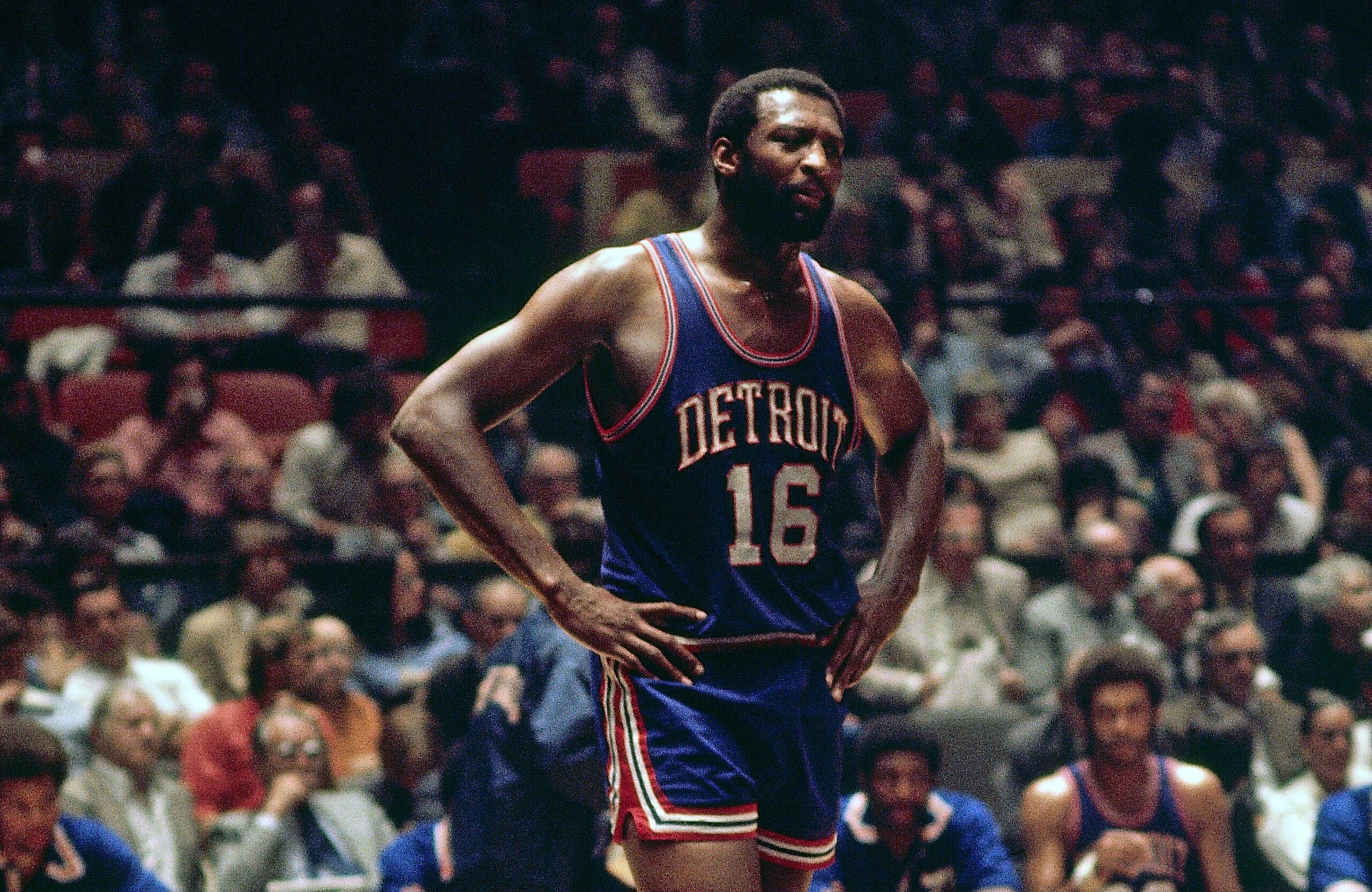
Regular-Season TPA: 574.68
Postseason TPA: 39.13
Per-Game Stats: 22.5 points, 13.3 rebounds, 4.2 assists, 1.4 steals, 3.0 blocks
Awards: All-Star
Bob Lanier's name doesn't typically get bandied about with those of NBA history's other dominant centers. But this Detroit Pistons legend and member of the Hall of Fame belongs in the same class, thanks primarily to his fantastic scoring outputs early in his career.
This ranking, however, isn't about his early-career work. It's just about one season, and that allows him to rise even higher as a destructive force on both ends. Lanier didn't only dominate on the glass and put up gaudy point totals in 1973-74, he also patrolled the paint and played stifling defense for 37.6 minutes per game.
Offensive and defensive box plus/minus—especially the latter—shouldn't be treated as gospel, but they can serve as useful baselines. During the campaign in question, Lanier became one of only five players in league annals to top four in both categories, indicating that he provided at least four more points per 100 possession than an average player would've in his situation on both ends of the floor. Not combined. On each end.
The other four to do so? Kareem Abdul-Jabbar, Kevin Garnett, David Robinson and Russell Westbrook (whose defensive numbers were inflated, as explained here).
Perhaps even more impressively, Lanier didn't decline against stiffer competition in the playoffs—on offense, at least. His defense was tested in a seven-game series against Bob Love and the Chicago Bulls, but he wasn't entirely overmatched in the first-round defeat, still emerging as a two-way positive.
4. Hakeem Olajuwon, 1993-94, Houston Rockets: 634.86
12 of 15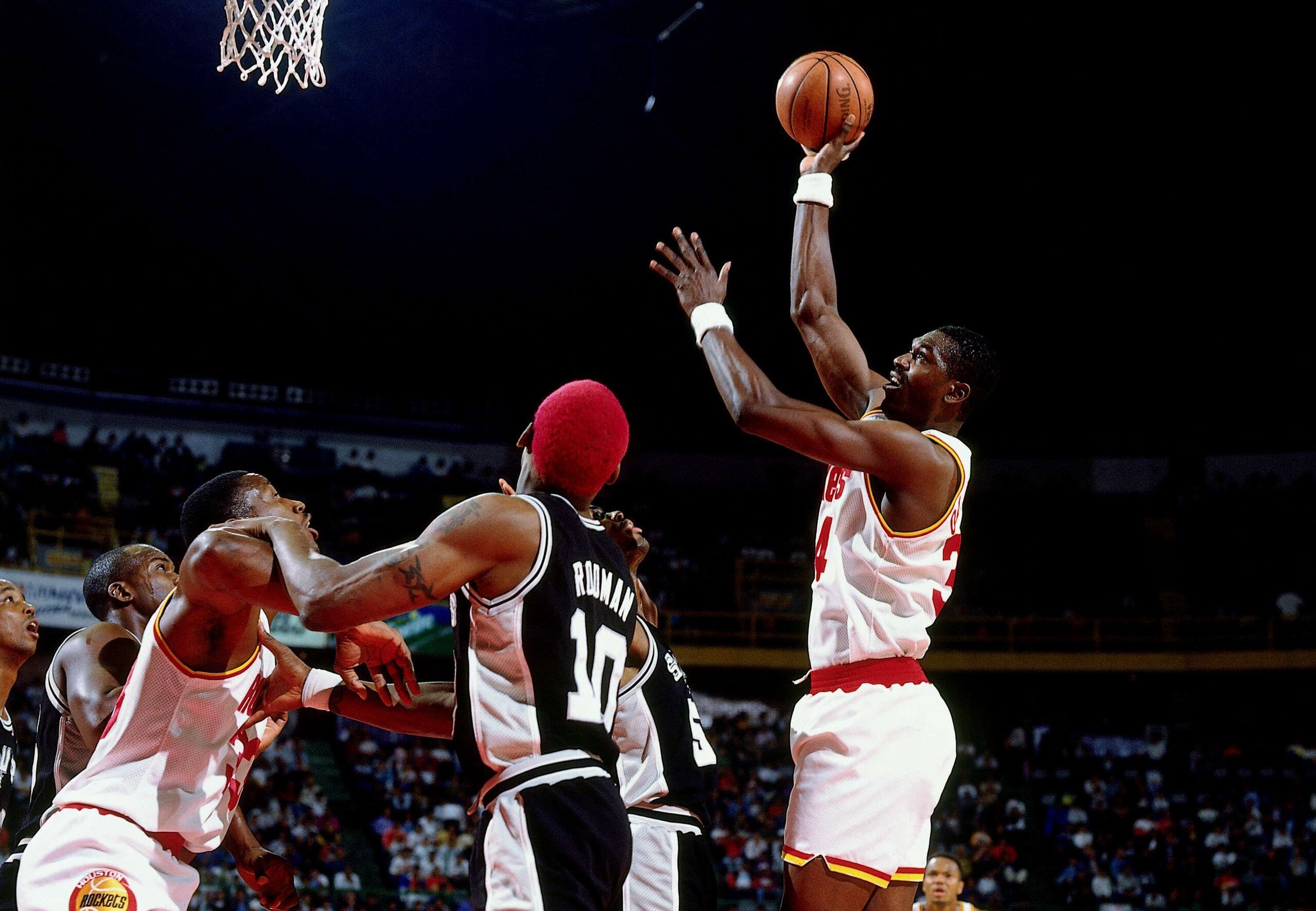
Regular-Season TPA: 535.58
Postseason TPA: 99.28
Per-Game Stats: 27.3 points, 11.9 rebounds, 3.6 assists, 1.6 steals, 3.7 blocks
Awards: All-Star, NBA Champion, Finals MVP, MVP, All-Defensive First Team, All-NBA First Team
Hakeem Olajwuon's game was so well-rounded that focusing on every special aspect of his playing profile would force us to write a novel the length of Moby Dick. We could wax poetic for pages about the merits of his patented Dream Shake, his work as a distributor for the Houston Rockets and his knack for putting up points in efficient fashion.
Instead, let's home in on his ability to rack up steals and blocks.
These days, whenever someone puts together a unique statistical line and the world searches for comparisons in Basketball-Reference's phenomenal Player Season Finder, Olajuwon's name seems to come up every time. More often than not, when defensive stats are involved, the results stem from his work in 1993-94.
Olajuwon was a point-preventing terror capable of ripping the ball away from unsuspecting ball-handlers, hopping into passing lanes with speed that shouldn't be allowed from a 7'0" center and rejecting a shot with ferocity.
Only five other seasons have been recorded in which a qualified player averaged at least 1.6 steals and 3.7 blocks—numbers Olajuwon actually improved upon in the playoffs (1.7 and 4.0, respectively) while propelling the Rockets to a title. The Houston hero himself was responsible for three more of those campaigns, and the last two belonged to the next center in this countdown.
3. David Robinson, 1993-94, San Antonio Spurs: 680.94
13 of 15
Regular-Season TPA: 669.24
Postseason TPA: 11.7
Per-Game Stats: 29.8 points, 10.7 rebounds, 4.8 assists, 1.7 steals, 3.3 blocks
Awards: All-Star, All-Defensive Second Team, All-NBA First Team
Seeing David Robinson ahead of Hakeem Olajuwon for their respective efforts in 1993-94 might be a bit strange. After all, it was 1994-95 that featured Robinson winning MVP (and then, admittedly, getting destroyed by his rival in the playoffs), whereas Olajuwon took home the honor during the season in question.
And yet, the numbers still like the San Antonio Spurs center just a bit more.
He couldn't do much during a first-round loss to the Utah Jazz—had he maintained his numbers but played in 25 postseason contests rather than just four, he'd jump to No. 2 in this positional hierarchy—but he was that dominant throughout the regular season. Robinson played 40.5 minutes per game, made 80 appearances and thrived on both ends of the floor.
Was his scoring title a bit cheap? Potentially, since the Spurs force-fed him on the final night of the season and watched as his 71-spot pushed him past Shaquille O'Neal. But The Admiral didn't need to win that race to have a monumental impact on the proceedings.
One of the greatest athletes the game has ever witnessed, the 28-year-old finished plenty of plays above the rim, tormented opponents by dragging them outside the paint and picking apart a defense from there, jumped into passing lanes and imposed his will around the hoop on defense. Much like Olajuwon, he was a well-rounded threat who could shift momentum to his troops in every way imaginable.
Oh, and just for good measure, Robinson made 10 of his 25 career threes during 1993-94.
2. Shaquille O'Neal, 1999-00, Los Angeles Lakers: 733.68
14 of 15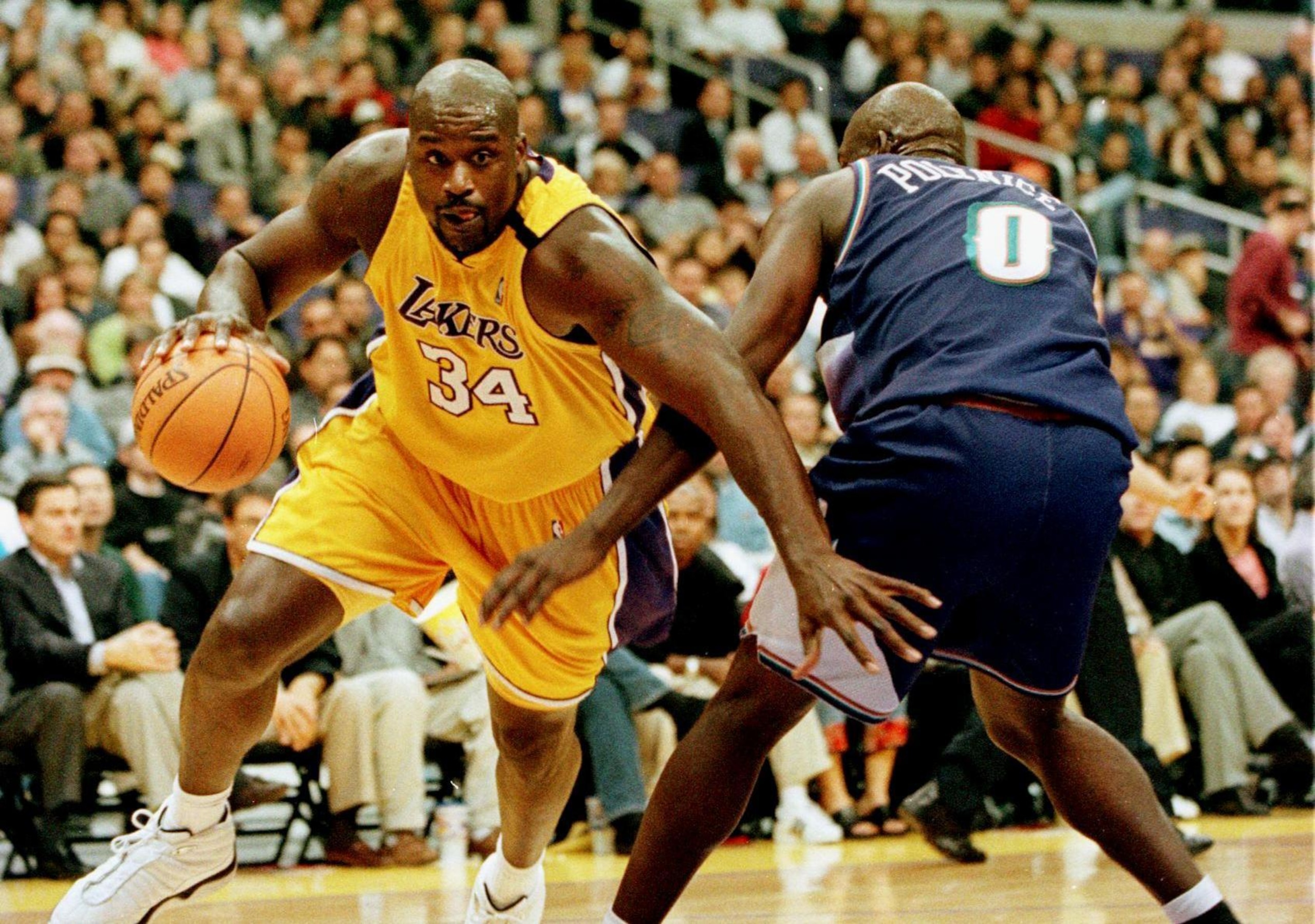
Regular-Season TPA: 596.36
Postseason TPA: 137.32
Per-Game Stats: 29.7 points, 13.6 rebounds, 3.8 assists, 0.5 steals, 3.0 blocks
Awards: All-Star, NBA Champion, MVP, Finals MVP, All-Defensive Second Team, All-NBA First Team
Though he couldn't find the bottom of the net when standing 15 feet away with the action around him halted, Shaquille O'Neal was still an unstoppable force. No defenders could withstand the combination of his relentless physicality and dazzling finesse, since he was capable of bowling over lesser figures and dancing past bigs with quick feet and quicker post moves.
O'Neal rarely took shots from outside the paint. He just didn't have to, because opponents knew what was coming and still couldn't stop him. Fouling was the only solution, and that could only slow The Diesel down so much.
Throughout the regular season, O'Neal thrived as the NBA's leading scorer, a devastating rebounder, a terrifying defensive presence and an underrated passer out of the Los Angeles Lakers' frontcourt. Then he just continued making the league his personal plaything while working past the Sacramento Kings, Phoenix Suns, Portland Trail Blazers and Indiana Pacers to win the first title of the new millennium.
Tougher defenses? Slow paces? Stingier whistles? Nothing affected this center in the postseason, as he averaged 30.7 points, 15.4 rebounds, 3.1 assists, 0.6 steals and 2.4 blocks while shooting 56.6 percent from the field during the championship run.
And yet, despite all these heroics, he doesn't even have the best modern-era season by a center wearing a Lakers uniform.
1. Kareem Abdul-Jabbar, 1976-77, Los Angeles Lakers: 853.13
15 of 15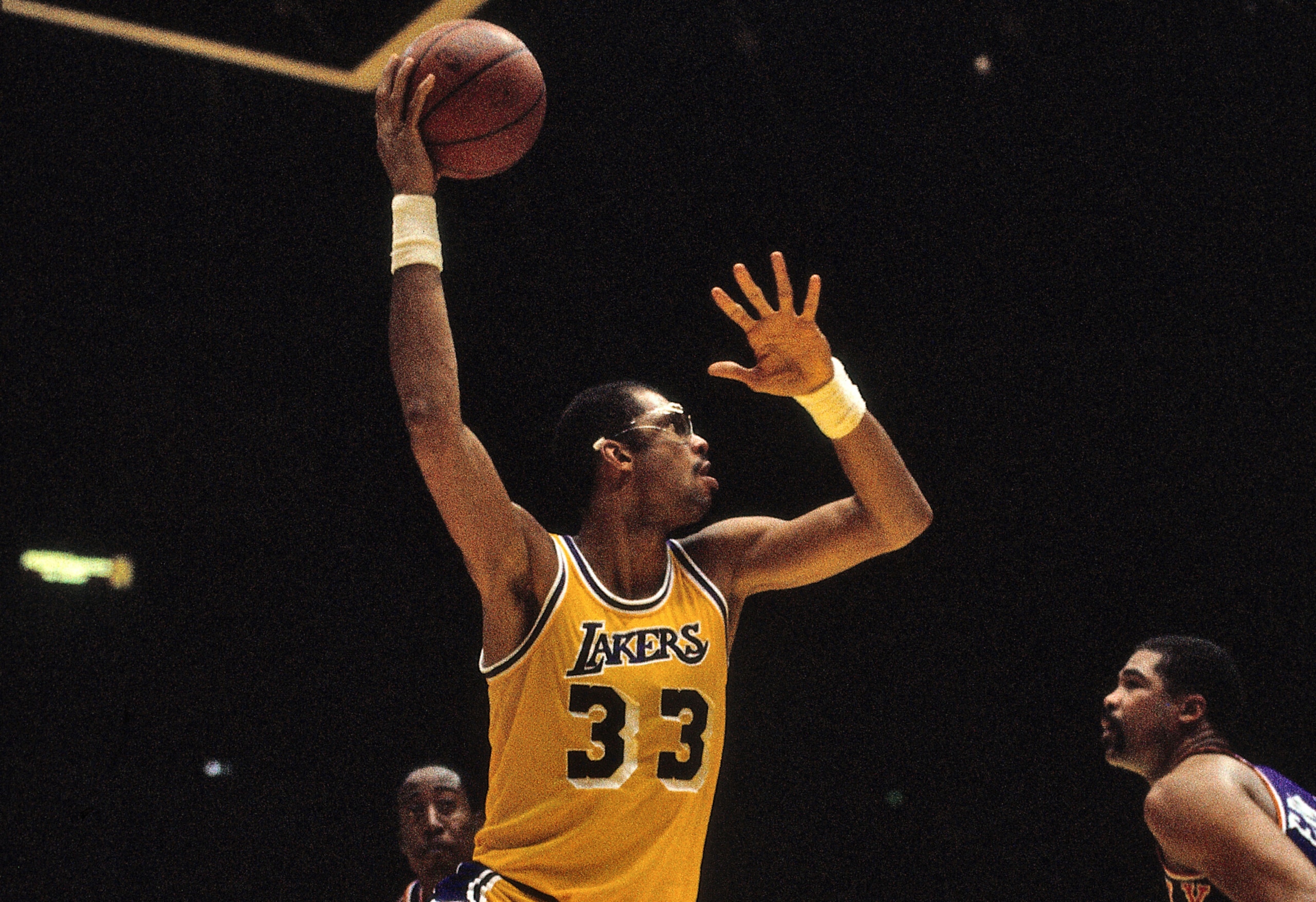
Regular-Season TPA: 703.95
Postseason TPA: 149.18
Per-Game Stats: 26.2 points, 13.3 rebounds, 3.9 assists, 1.2 steals, 3.2 blocks
Awards: All-Star, MVP, All-Defensive Second Team, All-NBA First Team
It's an enduring shame we can't calculate Kareem Abdul-Jabbar's early-career advanced metrics. This may be the best score he produced during the modern era, but win shares per 48 minutes suggest he was a superior player during the 1970-71, 1971-72 and 1972-73 seasons.
Considering he logged 110 more postseason minutes in the first aforementioned year than in 1976-77 and won a title for the Milwaukee Bucks while (arguably) playing at a higher level, that was likely the best go-round of his Hall of Fame career. But this one will still have to do, and it allows for plenty of separation between himself and the rest of the field.
This campaign hints at the possibility that in his prime, Abdul-Jabbar may actually have been the most dominant figure in NBA history. No disrespect meant to LeBron James or Michael Jordan, but the sky-hooking center really was that good.
Defensively, he was an unrelenting interior presence with the foot speed necessary to corral smaller players who dared wander into his domain. Offensively, he had the league's most unblockable weapon and used it to average 26.2 points on a league-best 57.9 percent shooting from the field. Between those two extremes, he was a gifted passer and glass-cleaning force who could do all the little things at a high level.
Abdul-Jabbar, in a word, might have been perfect.
Adam Fromal covers the NBA for Bleacher Report. Follow him on Twitter: @fromal09.
Unless otherwise indicated, all stats from Basketball Reference, NBA.com, NBA Math or ESPN.com.


.jpg?w=2560 "Grading WWE Raw 🔠")
.jpg?w=2560 "Viral Rams Coach Vid 🖕")
.jpg?w=2560 "Bijan's INSANE 1st Half 🤩")
.jpg?w=2560 "Injury-stricken Seahawks signing veteran RB")
.jpg?w=2560 "2 NFL Officials Suspended")
